

Bhagavad Gītā · Chapter 18 · Mokṣa Sannyāsa Yoga
व्यासप्रसादाच्छ्रुतवानेतद्गुह्यमहं परम्
योगं योगेश्वरात्कृष्णात्साक्षात्कथयतः स्वयम्
vyāsaprasādācchrutavānetadguhyamahaṃ param|yogaṃ yogeśvarātkṛṣṇātsākṣātkathayataḥ svayam||
Translation
Having been blessed with the divine vision by the grace of Sri Vyasa, I heard this supremely esoteric gospel from the Lord of Yoga, Sri Krsna Himself, imparting it to Arjuna before my very eyes.
Commentary
The commentators seated around this verse
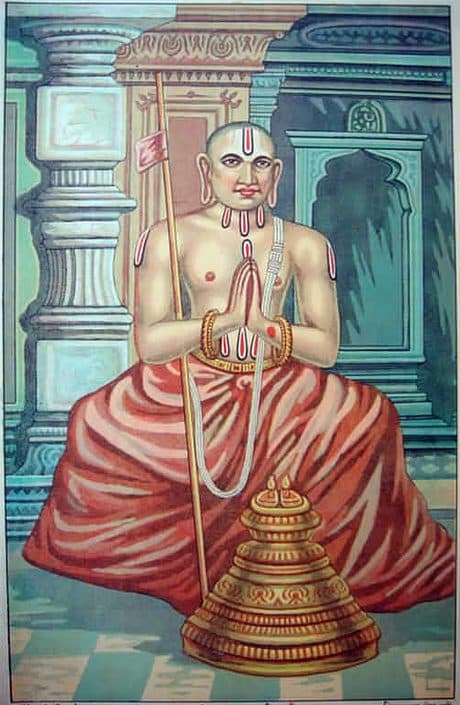
Rāmānuja · Viśiṣṭādvaita
English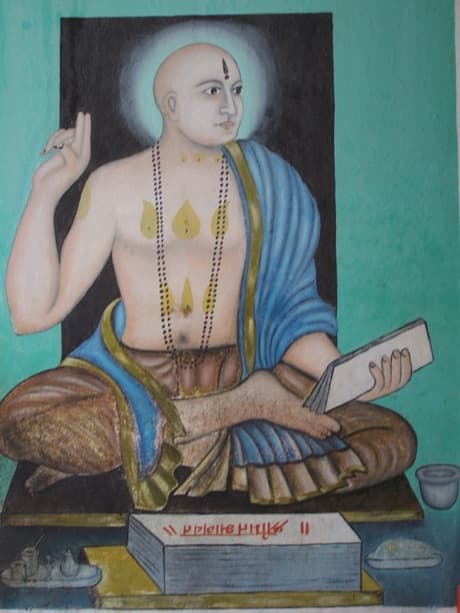
Madhvācārya · Dvaita
Madhva BhāṣyaSanskritEnglishOn verses 18.72–18.78
“यस्य त्रिष्वुदितानि वेदवचने रूपाणि दिव्यान्यलम् । वद तद्दर्शतमिध्यमेव निहितं देवस्य भर्गो महत् । वायो रामवचनोयं प्रथमकं पृक्षो द्वितीयं वपुः मध्ये यत्तु तृतीयकं कृतमिदं भाष्यं हि तेन प्रभो ॥ पूर्णां दोषमहाविष्णोर्गीतामाश्रित्य लेशतः । निरूपणं कृतं तेन प्रीयतां मे सदा विभुः ॥” – whose three blissful mystical forms have been narrated in vedic suktas whose content capable of bestowing eternal bliss and supremacy was eulogized in Treta Yuga by Hanuman the servitor of Lord Rama who discovered the whereabouts of Sita-devi, by Bhima of the Pandavas in Dvarpara Yuga and by sage Madhva in present age through his commentary, full of wisdom, extremely propitious and flawless may the Lord be pleased and may grant eternal bliss of beatitude,
इति मदानन्दतीर्थभगवत्पदाचार्यविरचिते श्रीभगवद्गीताभाष्ये अष्टादशोऽध्यायः । भारतीरमण मुख्यप्राणान्तर्गत श्रीकृष्णार्पणमस्तु ॥” – Thus ends the eighteenth chapter of the the commentary prepared by Srimad Anandtirtha the great Teacher at the feet of the Resplendent Lord, as an offerrng to Sri Krishna.
Madhvācārya · Dvaita
Gītā Tātparya NirṇayaSanskritEnglishOn verses 18.72–18.78
“यथेच्छसि तथा कुरु । इत्याक्षेपपरिहाराय - करिष्ये वचनं तव । इत्यनुसरति भगवन्तम् ॥” – Do whatever you desire, such statement is made to avoid any contrary actions being performed. Arjuna declares “I will do as ordained by You, the Resplendent Lord”.
“नमस्ते वासुदेवाय प्रेयसां मे प्रियोत्तम् । समस्तगुणसम्पूर्णनिर्दोषानन्ददायिने ॥ यस्य त्रिष्वुदितानि वेदवचने रूपाणि दिव्यान्तं वद तद्दर्शतमिध्यमेव निहितं देवस्य भर्गो महत् । वायो रामवचनोयं प्रथमकं पृक्षो द्वितीयं वपुः मध्ये यत्तु तृतीयमेतदमुना गन्धं कृतं केशवे । निःशेषदोषरहित कल्याणाखिलसद्गुण । भूतिस्वयम्भुशर्वादिवन्धं त्वां नौमि मे प्रियम् ॥” – Obeisance to Sri Vasudeva, the dearest to me among all the dearest ones, embodiment of all propitious attributes, faultless and bestower of Bliss, whose three blissful mystical forms have been narrated in vedic suktas, whose content capable of bestowing eternal bliss and supremacy was eulogized in Treta Yuga by Hanuman who spoke the whereabouts of Sita-devi, by Bhima of the Pandavas in Dvarpara Yuga and by sage Madhva in present age through this commentary for the pleasure of Sri Keshava, flawless, full of wisdom and propitiated by Sri Lakshmi, Brahma, Rudra and others may please the Lord.

Jñāneśvar · Vārkarī
English75 “Through (Sage) Vyāsa’s favour it was that I heard (directly) the Supreme Secret—this Yoga-as it was being actually imparted by (Lord) Krishna himself, the Master of the Yoga. (1608)
Then with the flow of the Bliss getting steady, he said, “I heard through the favour of Sage Vyāsa, what the Upanishads even did not know. Directly I heard it, the very Brahmic state enveloped me, with the result that the atmosphere of 'I'-ness and 'you-ness' (duality) got all dissolved. I could, through the favour of Sage Vyāsa, hear without any efforts on my part the very words of the Lord, in whom the Yoga paths all come and merge. To what extent I should praise the marvellous (independent) power of the preceptor (Sage Vyāsa) that made my ears best qualified to hear the talk, in regard to his own self delivered by Lord Krishna, who made Arjuna only an excuse and assumed artificially (like an actor) the role of duality.
Swami Ramsukhdas · Modern
English'Vyāsaprasādāt śrutavān'—Sañjaya was very much delighted, after hearing the dialogue between Lord Kṛṣṇa and great souled Arjuna. This supreme secret, was heard by him, by Vyāsa's grace. The Lord Himself addressing Arjuna, declares that He will speak to him His supreme word from a desire to do him good (10/1); He asks him, to listen again to His supreme word, the most secret of all, as he is very dear to him (18/64); He truly promises that
he will come to Him, for he is dear to Him (18/65); He asks him not to grieve, as He will release him from all sins (18/66). Sañjaya could get this golden opportunity of listening to the Lord's secret gospel, only by Vyāsa's grace.
'Etadguhyam param yogam'—This gospel of the Gītā, is the supreme and the most secret Yoga, because it has been imparted by the great Lord of all Yogas. The eternal affinity of the embodied soul, with the Lord is Yoga. In order to realize that union, a striver, has to practise the Disciplines of Action and Knowledge etc. This set of Yogas (Disciplines), described in the Gītā, has been called the scripture of the Yoga (yogaśāstra).
'Yogeśvarātkṛṣṇātsākṣātkathayataḥ svayam'—Sañjaya's joy knew no bound. Therefore overwhelmed with delight Sañjaya declares that he has heard this Yoga (Gospel), direct from Lord Kṛṣṇa, Himself declaring it. What was the need to Sañjaya to use the five words 'Yogeśvarāt, Kṛṣṇāt, Sākṣāt, Kathayataḥ and Svayam' here? Sañjaya by using these five words, wants to say that he has not heard this dialogue, by way of tradition or through any other person, but he has heard it direct from the holy lips of the Lord Himself.
Appendix—Arjuna said to the Lord 'tvatprasādat' viz., 'by Your grace' (18/73), while Sañjaya feeling obliged to Vedavyāsa here says, 'vyāsaprasād' viz., 'by the grace of Vyāsa'. The Lord by His grace bestowed upon Arjuna the divine eye while Vyāsajī by his grace bestowed upon Sañjaya the divine eye.

Ādi Śaṅkarācārya · Advaita
Sanskritव्यासप्रसादात् ततः दिव्यचक्षुर्लाभात् श्रुतवान् इमं संवादं गुह्यतमं परं योगम्, योगार्थत्वात् ग्रन्थोऽपि योगः, संवादं इमं योगमेव वा योगेश्वरात् कृष्णात् साक्षात् कथयतः स्वयम्, न परम्परया ॥
Ādi Śaṅkarācārya · Advaita
Hindiऔर इसे—
मैंने (भगवान्) व्यासजीकी कृपासे उनसे दिव्यचक्षु पाकर इस परम गुह्य संवादको और परम योगको (सुना) अथवा (यों समझो कि) योगविषयक होनेसे यह संवाद ही योग है, अतः इस संवादरूप योगको मैंने योगेश्वर भगवान् श्रीकृष्णसे, साक्षात् स्वयं कहते हुए सुना है, परम्परासे नहीं
Jñāneśvar · Vārkarī
Marathiतेव्हां बैसतेनि आनंदें । म्हणे जी जें उपनिषदें । नेणती तें व्यासप्रसादें । ऐकिलें मियां ॥ १६०९ ॥ ऐकतांचि ते गोठी । ब्रह्मत्वाची पडिली मिठी । मीतूंपणेंसीं दृष्टी । विरोनि गेली ॥ १६१० ॥ हे आघवेचि का योग । जया ठाया येती मार्ग । तयाचें वाक्य सवंग । केलें मज व्यासें ॥ १६११ ॥ अहो अर्जुनाचेनि मिषें । आपणपेंचि दुजें ऐसें । नटोनि आपणया उद्देशें । बोलिलें जें देव ॥ १६१२ ॥ तेथ कीं माझें श्रोत्र । पाटाचें जालें जी पात्र । काय वानूं स्वतंत्र । सामर्थ्य श्रीगुरुचें ॥ १६१३ ॥
Jñāneśvar · Vārkarī
Hindi(18.1609) तब आनन्द की बाढ़ के उतरने पर संजय ने कहा कि महाराज मैंने श्रीव्यास की कृपा से आज वह बात सुनी जो उपनिषद भी नहीं जानते।
(18.1610) यह संवाद सुनते ही मैंने ब्रह्मत्व को भेंट लिया। हम-तुम-भाव-सहित मेरी विषयदृष्टि जाती रही।
(18.1611) सम्पूर्ण योगरूपी मार्ग जिस स्थान को जा पहुँचते हैं उस श्रीकृष्ण के वचन मुझे व्यासजी ने सुलभ कर दिये। (18.1612) अजी! श्रीकृष्ण ने वास्तव में अर्जुन-रूप से निज को ही दूसरा भेष दे निज को ही जो कुछ उपदेश किया।
(18.1613) उसे सुनने के लिए मेरे कानों को भी योग्यता प्राप्त हो गई। श्री गुरु की सामर्थ्य स्वतन्त्र है। उसका क्या वर्णन करूँ!
Sri Udiya Baba · Modern
Hindiभावार्थ— मैंने भगवान् व्यासदेव की कृपा से यह परम गुह्य योग सुना है, जो स्वयं योगेश्वर श्रीकृष्ण ने ही कहा है।
Swami Ramsukhdas · Modern
Hindi'व्यासप्रसादात् श्रुतवान्'—संजयने जब भगवान् श्रीकृष्ण और महात्मा अर्जुनका पूरा संवाद सुना, तब वे बड़े प्रसन्न हुए। अब उसी प्रसन्नतामें वे कह रहे हैं कि ऐसा परम गोपनीय योग मैंने भगवान् व्यासजीकी कृपासे सुना! व्यासजीकी कृपासे सुननेका तात्पर्य यह है कि भगवान्ने 'यत्तेऽहं प्रीयमाणाय वक्ष्यामि हितकाम्यया' (१०।१), 'इष्टोऽसि मे दृढमिति ततो वक्ष्यामि ते हितम्' (१८।६४), 'मामेवैष्यसि सत्यं ते प्रतिजाने प्रियोऽसि मे' (१८।६५), 'अहं त्वा सर्वपापेभ्यो मोक्षयिष्यामि मा शुचः' (१८।६६) आदि-आदि प्यारे वचनोंसे अपना हृदय खोलकर अर्जुनसे जो बातें कही हैं, उन बातोंको सुननेमें केवल व्यासदेवजीकी कृपा ही है अर्थात् वे सब बातें मैंने व्यासजीकी कृपासे ही सुनी हैं।
'एतद् गृह्यं परं योगम्'—समस्त योगोंके महान् ईश्वरके द्वारा कहा जानेसे यह गीताशास्त्र 'योग' अर्थात् योगशास्त्र है। यह गीताशास्त्र अत्यन्त श्रेष्ठ और गोपनीय
**परिशिष्ट भाव**—अर्जुनने 'त्वत्प्रसादात्' कहा है (१८।७३) और संजयने 'व्यासप्रसादात्' कहा है। अर्जुनको भगवान्की कृपासे दिव्य दृष्टि मिली थी और संजयको व्यासजीकी कृपासे।
है। इसके समान श्रेष्ठ और गोपनीय दूसरा कोई संवाद देखने-सुननेमें नहीं आता।
जीवका भगवान्के साथ जो नित्य-सम्बन्ध है, उसका नाम 'योग' है। उस नित्ययोगकी पहचान करानेके लिये कर्मयोग, ज्ञानयोग आदि योग कहे गये हैं। उन योगोंके समुदायका वर्णन गीतामें होनेसे गीता भी 'योग' अर्थात् योगशास्त्र है।
'योगेश्वरात्कृष्णात्साक्षात्कथयतः स्वयम्'—संजयके आनन्दकी कोई सीमा नहीं रही है। इसलिये वे हर्षोल्लासमें भरकर कह रहे हैं कि इस योगको मैंने समस्त योगोंके महान् ईश्वर साक्षात् भगवान् श्रीकृष्णके मुखसे सुना है। संजयको 'योगेश्वरात्, कृष्णात्, साक्षात्, कथयतः, स्वयम्'—ये पाँच शब्द कहनेकी क्या आवश्यकता थी? संजय इन शब्दोंका प्रयोग करके यह कहना चाहते हैं कि मैंने यह संवाद परम्परासे नहीं सुना है और किसीने मुझे सुनाया हो—ऐसी बात भी नहीं है; इसको तो मैंने खुद भगवान्के कहते-कहते सुना है!
The phrase Vyāsa prasādāt means - by the grace of Krishna Dvaipāyana Vedavyāsa, the author of Vedānta Sutras, the Purāṇas, Mahābhārata, etc.
This grace gave Sanjaya celestial vision and clairaudience to directly see and hear all that transpired on the battlefield and thus he was able to recite verbatim the divine discourse spoken by Lord Krishna, known as Śrīmad Bhagavad-Gita exactly as Lord Krishna originally revealed it.