

Bhagavad Gītā · Chapter 18 · Mokṣa Sannyāsa Yoga
स्वे स्वे कर्मण्यभिरतः संसिद्धिं लभते नरः
स्वकर्मनिरतः सिद्धिं यथा विन्दति तच्छृणु
sve sve karmaṇyabhirataḥ saṃsiddhiṃ labhate naraḥ|svakarmanirataḥ siddhiṃ yathā vindati tacchṛṇu||
Word meanings
स्वे, स्वे = each in his own
कर्मणि = in action
अभिरतः = devoted to
नरः = a man
संसिद्धिम् = perfection
लभते = attains
स्वकर्मनिरतः = devoted to one's own duty
यथा = how
Translation
Keenly devoted to his own natural duty, man attains the highest perfection in the shape of God-Realization. hear the mode of performance whereby the man engaged in his inborn duty reaches that highest consummation.
Commentary
The commentators seated around this verse
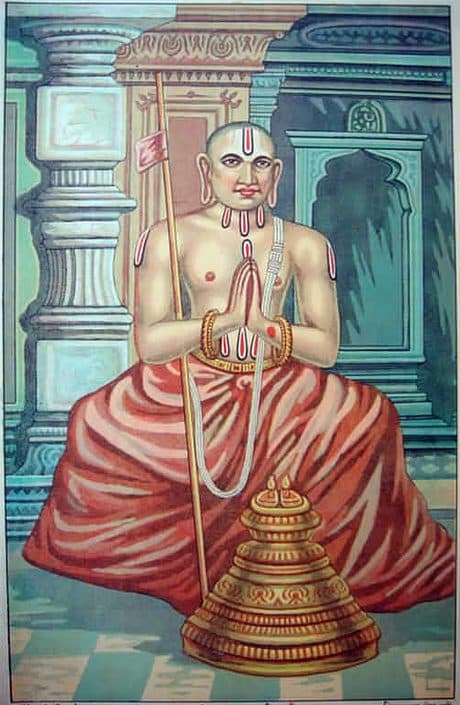
Rāmānuja · Viśiṣṭādvaita
English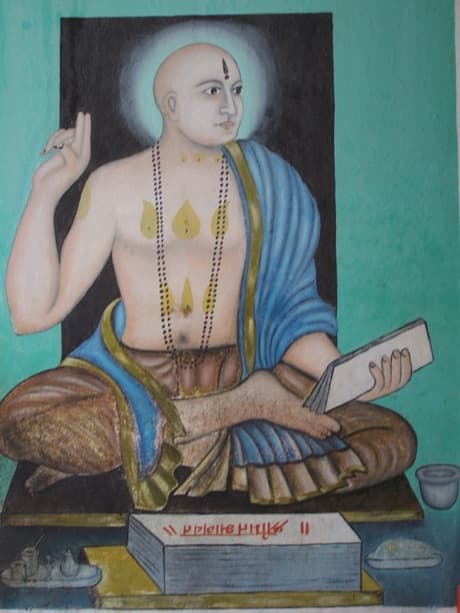
Madhvācārya · Dvaita
SanskritEnglishOn verses 18.44–18.48
“क्षत्रियोनब्रह्मगुणो वैश्यः कुप्यादिजीवनः | तत ऊनः शमाधैर्यः शुश्रुपुः शूद्र उच्यते | अधिकाश्चेद् गुणाः शूद्रे ब्रह्मणादिः स उच्यते | ब्रह्मणोऽप्यल्पगुणकः शूद्र एवेति कीर्तितः | नरोऽपि यो देवगुणो ज्ञेयो देवो नृतां गतः || इति ||” - Vaishyas are less serene and self-restrained than Kshatriyas and Brahmins because of their life being that of cattle breeders. Because of service to others as servers, others are known as Shudras. If there are superior attributes in a Shudra, he is known as Brahmin; and if a Brahmin has inferior attributes he will be known as Shudra. Even among human beings those who have the divine attributes are said to have traversed the divine Path.
“स्वकर्मणा तमभ्यर्च्य इति वचनात् | क्षत्रियादिष्वपि शमघनुवृत्तिर्ज्ञायते | न हि शमादिकं विना तस्य यज्ञदानतपः कर्म न त्याज्यम् | इत्युक्तवाच्च | शमो मन्निष्ठता बुद्धेर्दम इन्द्रियनिग्रहः इति हि भागवते || न हि क्षत्रियादिभिरपि शौचतपःक्षमादिभिर्हानैर्भावितव्यमिति तत्तद्भवमैपृच्यते | युक्ता ह्येतैः सर्वगुणोऽजैः ||” - It is seen that even when each one performs actions according to one's attributes, some Kshatriyas could be seen endowed with attributes like serenity and self-restraint, because without serenity and self-restraint propitiation of the Lord is not possible. Propitiation through serenity and self-restraint alone is the true propitiation and without them perfection is never possible. “Acts of sacrifice, charity, austerity etc. should never be renounced”. “Intellect, abidance in the Mind, self-restraint and sense-restraint” thus having been said in Bhagavat Purana. Kshatriyas are never prevented from purity, austerity, serenity etc. because being of righteous conduct, they would not lower them. All these attributes are appropriate as in Janaka's balanced behaviour. Those Kshatriyas who never desert battlefield are especially praise worthy.
“शौर्यं तेजो धृतिर्दाक्ष्यं दानं च क्षत्रियेऽधिकाः | तद्वीना ब्राह्मणे तस्माद् वैश्ये शूद्रे ततोऽल्पकाः | अध्यापनं च शुश्रुपा जीवनार्थमृते सताम् | विप्रादिशु क्रमाज्ज्ञेयाः शूद्रस्याध्यापनं विना | तस्माच्छूद्रोऽल्पशुश्रुपुः स्वभावाज्जीवनं विना | एते नैसर्गिका भावा स्याद् भावोऽन्योऽपि कुत्रचित् | बलाद् विरुद्धभावस्तु हेयः स्वाभाविकोऽपि यः | अनिसर्गोऽपि हि शुभो वर्धनीयः प्रयत्नतः | याजनैश्वर्यपूर्वास्तु नान्यैः कायाः शमा अपि | अपलायनं च शूद्राणां ब्रह्मक्षत्रार्थमिष्यते || इति च ||” - Valour, vigour, self-restraint, forbearance, charity these are primarily seen more in Kshatriyas than in others, less in Brahmins, lesser in Vaishyas and still less in Shudras. Not merely for the sake of livelihood but for the sake of educating the noble ones it is the predominant attribute of the Brahmins, which is progressively less in others. Teaching is never the proper assignment of the Shudras. Therefore, the Shudras should offer service, if not for livelihood, at least by attending on the noble ones. Sometime due to the force of events even natural attributes are desirable to be abandoned for performing other activities. And even those opposed to the natural attributes are required to be promoted for enhancing propitious attributes. In the alternative, sacrifices and splendour should not be given up, none other actions being more propitious. When the need arises for safeguarding Brahmins and Kshatriyas, Shudras may even desert the battle field.
“प्रसद्य विताहरणं शारीरो दण्ड एव च | अशिष्याणां शासनं च तथैवार्थविनाशनम् | एष ईश्वरभावः स्यान् कार्यः क्षत्रियेतैः | सर्वे विधर्मिणः शास्त्राः क्षत्रियैर्यन्तः सदा | अङ्गायहानिकृद् दण्डः शिष्येषु ब्रह्मवादिभिः | कार्यो देहेऽपि शिष्यश्च स्वामिना स्वेन वाऽर्पितः | पुत्रानुजादयः सर्वे शिष्या एव निसर्गतः | गुरवश्चैव मित्राणि सुखिस्वहसचारिणः | सम्बन्धितश्च सर्वेऽपि तत्तद्योग्यतयाऽखिलैः | शिक्षणीयेषु भावेषु शिक्षणीयाः प्रयत्नतः | उन्मादे बन्धनधैवां ताडनं न गुरोः क्वचित् | पापं चरन्तस्त्वन्येऽपि सर्वदृष्टिपथं गताः | शक्तितो वारणीयाः स्युर्देशकालानुसारतः | तदुत्तमविरोद्धाराः सन्त्याज्या गुरावोऽपि तु | यथाशक्त्यनुशासैव कालतोऽपि न चेच्छुभाः | विष्णोः परमभक्तस्तु न त्याज्यः शास्त्र एव च | शिक्षयश्च गुरून् शिष्यो गुरवन्नैव शिक्षयेत् | महान्तो नानुशास्त्राश्च विरुद्धाचरिता अपि | यदि च स्वाधिकानां तु विरोधं नैव कुर्वते || इत्यदि च ||”
- Confiscating wealth and giving physical penalty, disciplining those who are disobedient, and destroying their economic power - these are the marks of supremacy. These should be done by none other than Kshatriyas. Those who are non-followers of Dharma should be properly governed by the Kshatriyas. Brahmins can punish their disciples without causing any bodily harm. Now here the disciple is one who has willingly accepted such position or a servant who has been accepted by his master and also naturally the children and relations. The Teachers, the associates, well-read relatives all these can dispense with punishment according to their capacity and capability. If the teacher is demented then he should be bound but never be harmed physically. If he is found to follow undesirable actions then he should be dealt with according to the laws of the situation, place and time. If the Teacher opposes one who is superior to him, then this fact should be brought to his notice. They should be treated with discipline but should never be abandoned as that would not be meritorious. Those Teachers who are devoted to Sri Vishnu should neither be deserted nor penalised. The disciples should not punish (the Teacher) in the same manner as the Teacher would have punished a disciple. Even if a great person is seen to perform acts contrary to the scriptures, he should not be punished if their action does not interfere with that of their superiors.
“आपत्तु विप्रः क्षात्रं तु विशां वा धर्ममाचरेत् | क्षात्रासिद्धौ न शूद्रस्तु विप्रक्षत्रिययोः क्वचित् | क्षत्रियो ब्राह्ममापत्तु तदापत्तु विशामपि | क्षत्रियो विप्रधर्मोऽपि नैवभैक्ष्यप्रतिग्रही | वैश्य आपत्तु शौद्रं तु धर्ममेकं नचापरम् | शूद्र आपत्तु विद्वधर्मा तदापत्तु च कारुकः | शूद्रस्तु वैश्यधर्मोऽपि नैव वदोक्षरो भवत्वे | अत्यापदि क्षत्रियोऽपि पादशुश्रुषणं विना | शौद्रधर्मं चरन् विप्रक्षत्रियेषु न दुष्यति | येषु कर्मसु याच्यः स्यात् स्वामिनाऽपि न याचिता | शौद्रण्यपि स्वधर्मत्वे क्षत्रियस्यापदो यदि | अस्मानाश्चेद् बलाधिक्यं सानुवन्धादपि प्रभोः | धर्मार्थं सेवतोऽर्थो विप्रधर्मा धिकाद वरः | प्रभुणा याच्यवृत्तिस्तु विशेषाणापि धर्मभाक् | वात्स्योर्यलाधिको यः स्यात् क्षत्रियो विद्ययाऽधिकः | विप्रो भागवती चेतो सेशा लोकास्तयोरिमे | इत्यादि व्यासस्मृती ||” - In times of adversity the Brahmins may perform occupations ordained for the Kshatriyas or the Vaishyas. But Shudras should never perform the occupations ordained for Brahmins or Kshatriyas. Kshatriyas may perform the occupation of Brahmins or of the Vaishyas in times of adversity. But they should never beg for their food. In times of adversity the Vaishyas may accept the occupations of the Shudras and of none other. If the trade is not beneficial to him then he may perform the occupations of carpenter or iron-smith etc. Even though the Shudras accept the occupation of the Vaishyas, they should never endeavour to study the Vedas. In the event of great adversity a Kshatriya may perform the service like a Shudra towards the Brahmins and other Kshatriyas. But they should not offer service to their feet. The Kshatriya performing the actions of Shudras towards the wise ones or his superiors is not unworthy. Such acts performed for the purpose of concealing oneself, when living incognito, are superior even to the acts of Brahmins. It is more meritorious to perform the actions enjoined by the master than remaining without opposing him. Such action become meritorious. If the Kshatriya is strong in his powerful shoulders and the Brahmin is full of wisdom, coupled with devotion to the Resplendent Lord, then the protectors of the world along with the world comes under their way. Thus s'peaks the Vyasa Smriti.
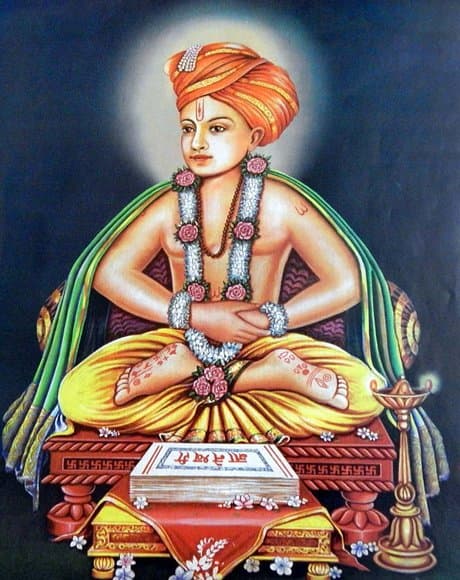
Jñāneśvar · Vārkarī
English45 *'Joyfully discharging one's own proper activities, a man attains true Perfection. The way he attains Perfection while finding delight in his own proper activity: listen to it (now): (885)*
Now, the different organs such as the organ of hearing and others, have got their proper and respective duties such as (hearing) words etc., or the rain (water) descending down from the clouds, has as its proper destination the river, or the rivers the sea, Oh Son of Pāndu; in that way there are different functions 'proper' for the (different) four castes. The due performance of whatever duties come to (one's) lot according to the religious precepts of one's own caste and creed, is (becoming to him) like 'fair complexion' to a fair (complexioned) one. The intellect should therefore be steadied for setting it up to perform the prescribed duties that by nature have devolved on one, as laid down in the Scriptures. One intending to purchase a gem of his own should have it tested by an expert (tester); in that way, a duty even though one's own should be verified as such, by a reference to the Scriptures (and also performed as laid down in the Scriptures). Vision is there in its own place, yet it cannot be enjoyed, without a lamp (light); or there are the legs, yet, of what avail are they, if the way is not found (on which to use them)? Therefore one has to make definite, by a reference to the Scriptures, the duties one may be qualified to perform following his caste-religion. Then where can there be an obstacle to take a thing (treasure) kept in one's own house when it is shown by a lamp (light), Oh Son of Pāndu? In that way he performs his prescribed duties that have by nature come to his lot and which have the sanction of the Scriptures. He gets busy in the performance of those duties, dropping all idleness and pushing far away the desire for fruit. Water joining a water course, runs along that course without diverting itself in any way; in that way he proceeds along with the performance of actions in an ordinary way. One performing his prescribed duties in this way, Oh Arjuna, reaches the bank on this (ऐल) side of liberation. He is liberated (lit. loses) from the mundane existence which is hostile to self-knowledge, since he never comes in contact with any objectionable or prohibited actions. He never casts a wistful glance at actions pregnant with desire for fruit even by way of curiosity, and thereby he wisely saves himself from falling in stocks,* even though made of sandal wood. (The fruit-yielding power of) other day-to-day actions, he performs, is fully exhausted in the absence of fruit-motive with the result that he reaches the borders of (the region of) liberation. He goes along the way of asceticism and stands on the very threshold of liberation since he has in this way freed himself from the mundane affairs—good or bad. The seeker lays down his foot gently (lightly), like a black bee, on that asceticism which is the very perfection of all pious acts (lit. the flower of the tree of good acts) makes certain the attainment of liberation, (which is a pledge of the fruit of liberation) and which is the climax of activism. The seeker secures (keeps well in mind) non-attachment to mundane affairs which is the dawn heralding the approach of the sunrise in the form of the light of self-knowledge. He applies to his (inward) eye wholeheartedly the unique collyrium in the form of total non-attachment to worldly affairs, which enables him to obtain the buried and unknown treasure in the form of the knowledge of self. In this way, Of Son of Pāṇḍu, a seeker makes himself eligible for liberation, by the performance of prescribed actions. These prescribed duties are, Oh Son of Pāṇḍu, the sole support (ओलावा—moisture) to the being and their performance alone is equivalent to the highest service to my Supreme Essence. A chaste (ideal) wife enjoys all sorts of pleasures in the company of her husband and considers that by gladdening the heart of her husband through her playful behaviour she has (reaped the fruit of) many hard penances or a child has no other source of subsistence except its mother and whose sole duty is therefore to render service to her; even if the fish were not to leave the Ganges solely because of her waters, still it would secure, by reaching the sea through the Ganges, the merit accruing from the association with all the holy waters in the world: in that way the performance of prescribed duties, with the full faith that there is no other alternative for the seeker, automatically imposes his lien (burden) on the Lord of the universe (God). It is God's inten-
* Stocks represent enjoyments in heaven which ultimately bind the man to the miserable cycle of birth and death. tion that each and every being should be doing his own prescribed duties and if this is done, one invariably attains God. A maid servant, standing the test of risking her own life (in the interest of her lord), attains the status of his mistress (गोसावीण); or a servant prepared to sacrifice his very head (life) in the service of his master is borne on his head (i.e. highly esteemed and loved) by his master; in that way not failing to render service in consonance with the master's wishes, is the greatest service; any other sort, Oh Son of Pāṇḍu, being only a (marketable commodity constituting a) deal in the market, (i.e. base and selfish act.).
Swami Ramsukhdas · Modern
English'Sve sve karmaṇyabhirataḥ saṁsiddhiṁ labhate naraḥ'—A study of the Gītā reveals, that a man's nature, may lead him to salvation if he remains free from attachment and aversion, as well as fruit of action. If a man performs his natural duties scrupulously, without self-interest and attachment, the impetus to action calms down, and he becomes detached from objects and actions etc. So a striver, gets established in the self, which is natural. Then, he is naturally attracted towards the Lord. A man, should perform his duty promptly and enthusiastically, for the welfare of others. By doing so, he experiences a sort of pleasure, called, 'Abhirati', for action. But if an act is done with attachment, having an eye on its return—this is called 'Āsakti', for action. The former leads him to perfection (salvation), while the latter leads him to bondage.
In this context in 'Sve sve karmaṇi', 'Svakarmaṇā tamabhyārya', 'Svabhāvaniyataṁ karma' and 'Sahajam karma' etc., the term 'Karma' (action) has been used, in singular number. It means that if a man performs an action or several actions
promptly and enthusiastically, in order to realize God, and all his actions merge, in that aim of God-realization. It means, that all of these are conducive to God-realization. The Ganges having risen in the Himālayas, flows to the Gaṅgā-Sāgara. On the way several streams, drains and small rivers, join it and they become the Ganges. Similarly, all the actions of a person, whose aim is to attain God, join that aim. But, he who is attached to action and who has a desire for several rewards, by performing action or several actions, instead of God-realization, the intellect of such an undecided person, is scattered in many directions, and is endlessly diffused (Gītā 2/41) and he cannot attain, perfection.
'Svakarmanirataḥ siddhiṁ yathā vindati tacchṛṇu'—The Lord, exhorts Arjuna to hear from Him and grasp properly, how a man, who is devoted to his duty, attains perfection (God-realization).
An Important Fact
Even a servant, who is paid wages, renders service to his master, even when his service is limited to actions and fixed hours. But it cannot be called, real service. When a man considers others venerable, either through birth, learning, caste or stage of life, capability, status or virtues, he has only one central idea, how they should get comfort, and how they should be pleased. To render service to them, according to their will and taste, for their pleasure is called, real service. The servant, in such service has no self-interest and ego. He looks, only at the interest of the people, he has to serve—this is real service. Real service involves the feelings, of a devotee. His only aim is to please the Lord, keeping in mind only His taste. The same service, if rendered with hearty devotion, becomes adoration. Smearing the forehead with sandalwood paste, offering flowers, garlanding and offering of prayers, and praises and such other activities of devotion, are included in adoration. When a devotee, either beholds his master, or the Lord, touches His feet, his body is thrilled, and
he feels much delighted. When he is thrilled, there may be a bit of slackness in his service to his master, (preceptor or the Lord), but it purifies his heart and enables him to behold the Lord or to realize Him. When, this devotion enhances, a devotee attains God-realization immediately. Such a devotee, always thinks how to provide happiness and comfort, to his master, preceptor or God, without thinking of his own happiness and comfort, at all. By doing so, he is highly delighted.
All the activities of such a devotee, whether these are performed, with his physical, subtle or causal body, become worship of the Lord. Even his daily routine, and his eating, drinking etc., becomes the material for his worship.
As a follower of the Discipline of Knowledge, always thinks, that he does nothing, similarly a staunch devotee worships, God by performing several duties, only for God's sake, and in that state, his egoistic notion, is renounced.
**Appendix**—Besides the inherent duty according to one's Varṇa (social order), whatever other duties have been accepted by a man, all of them should also be included within 'sve sve karmani'. As a man adopts the profession of a lawyer, a servant, a teacher or a physician etc., the discharge of that duty justly in a loving, respectful and selfless manner is also 'svakarma' (own duty) for him.
When a man performs an action with the sense of selfishness, partiality and desire etc., it is called 'āsakti' (attachment). But if he performs an action in a loving manner, without the desire for fruit and for the welfare of others, it is called 'abhirati'. The Lord has negated 'attachment' in actions—'na karmasvanuṣajjate' (Gītā 6/4). If a man has neither the superiority complex nor the inferiority complex, on the basis of his caste, but performs his duty properly, just like the part of a machine (watch), and does not blame and humiliate others, and is not proud of himself, then it is 'abhirati'.
In fact an action (duty) is not important but it is the 'attitude'
which is predominant. If the doer of an action has the pure feeling, it will lead him to salvation, though he may belong to any 'varṇa'. In performing an action there is predominance of 'varṇa' while in 'feeling' there is predominance of the divine nature or the demoniac nature. Therefore all the people can be endowed with the divine or the demoniac nature without the distinction of 'varṇa'. Divine nature leads to salvation and the demoniac nature is conducive to bondage. Therefore even if a Brāhmaṇa is boastful of his hight varṇa, he will be endowed with the demoniac nature viz., he will have a downfall—
nīca nīca saba tara gaye, rāma bhajana lavalina jāti ke abhimāna se, dūbe sabhi kulīna
(The people of low castes who remained engrossed in the worship to God attained salvation while all the people belonging to the high caste because of their pride were ruined).
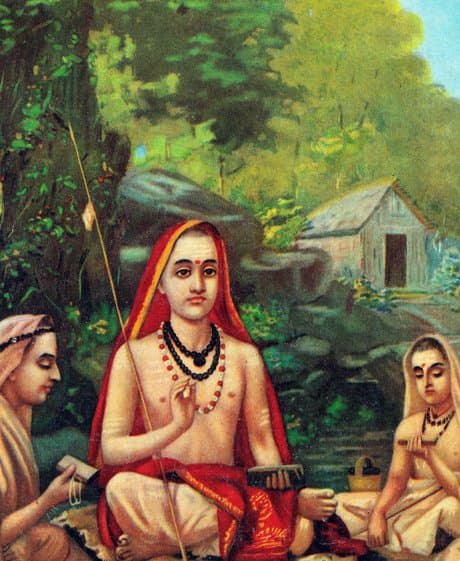
Ādi Śaṅkarācārya · Advaita
Sanskritस्वे स्वे यथोक्तलक्षणभेदे कर्मणि अभिरतः तत्परः संसिद्धिं स्वकर्मानुष्ठानात् अशुद्धिक्षये सति कार्येन्द्रियाणां ज्ञाननिष्ठायोग्यतालक्षणां संसिद्धिं लभते प्राप्नोति नरः अधिकृतः पुरुषः; किं स्वकर्मानुष्ठानत एव साक्षात् संसिद्धिः? न; कथं तर्हि? स्वकर्मनिरतः सिद्धिं यथा येन प्रकारेण विन्दति, तत् शृणु ॥
Ādi Śaṅkarācārya · Advaita
Hindiजातिके उद्देश्यसे कहे हुए इन कर्मोंका भली प्रकार अनुष्ठान किये जानेपर स्वर्गकी प्राप्तिरूप स्वाभाविक फल होता है।
क्योंकि 'अपने कर्मोंमें तत्पर हुए वर्णाश्रमावलम्बी मरकर, परलोकमें कर्मोंका फल भोगकर, बचे हुए कर्मफलके अनुसार श्रेष्ठ देश, काल, जाति, कुल, धर्म, आयु, विद्या, आचार, धन, सुख और मेधा आदिसे युक्त, जन्म ग्रहण करते हैं' इत्यादि स्मृति- वचन हैं और पुराणमें भी वर्णाश्रमियोंके लिये अलग- अलग लोकप्राप्तिरूप फलभेद बतलाया गया है।
परंतु दूसरे कारणसे (उनका प्रकारान्तरसे अनुष्ठान करनेपर) यह अब बतलाया जानेवाला फल होता है—
कर्माधिकारी मनुष्य, उक्त लक्षणोंवाले अपने-अपने कर्मोंमें अभिरत—तत्पर हुआ, संसिद्धि लाभ करता है अर्थात् अपने कर्मोंका अनुष्ठान करनेसे अशुद्धिका क्षय होनेपर, शरीर और इन्द्रियोंकी ज्ञाननिष्ठाकी योग्यतारूप सिद्धि प्राप्त कर लेता है ।
तो क्या अपने कर्मोंका अनुष्ठान करनेसे ही साक्षात् संसिद्धि मिल जाती है ? नहीं । तो किस तरह मिलती है ? अपने कर्मोंमें तत्पर हुआ मनुष्य, जिस प्रकार सिद्धि लाभ करता है, वह तू सुन
Jñāneśvar · Vārkarī
Marathiआतां इयेचि विचक्षणा । वेगळालिया वर्णा । उचित जैसें करणां । शब्दादिक ॥ ८८५ ॥ नातरी जळदच्युता । पाणिया उचित सरिता । सरितेसी पंडुसुता । सिंधु उचितु ॥ ८८६ ॥ तैसें वर्णाश्रमवशें । जें करणीय आलें असे । गोरेया आंगा जैसें । गोरेपण ॥ ८८७ ॥ तया स्वभावविहिता कर्मा । शास्त्राचेनि मुखें वीरोत्तमा । प्रवर्तावयालागीं प्रमा । अढळ कीजे ॥ ८८८ ॥ पैं आपुलेंचि रत्न थितें । घेपे पारखियाचेनि हातें । तैसें स्वकर्म आपैतें । शास्त्रें करावीं ॥ ८८९ ॥ जैसी दिठी असे आपुलिया ठायीं । परी दीपेंवीण भोग नाहीं । मार्गु न लाहतां काई । पाय असतां होय ? ॥ ८९० ॥ म्हणौनि ज्ञातिवशें साचारु । सहज असे जो अधिकारु । तो आपुलिया शास्त्रें गोचरु । आपण कीजे ॥ ८९१ ॥ मग घरींचाचि ठेवा । जेवीं डोळ्यां दावी दिवा । तरी घेतां काय पांडवा । आडळु असे ? ॥ ८९२ ॥ तैसें स्वभावें भागा आलें । वरी शास्त्रें खरें केलें । तें विहित जो आपुलें । आचरे गा ॥ ८९३ ॥ परी आळसु सांडुनी । फळकाम दवडुनी । आंगें जीवें मांडुनी । तेथेंचि भरु ॥ ८९४ ॥ वोघीं पडिलें पाणी । नेणें आनानी वाहणी । तैसा जाय आचरणीं । व्यवस्थौनी ॥ ८९५ ॥ अर्जुना जो यापरी । तें विहित कर्म स्वयें करी । तो मोक्षाच्या ऐलद्वारीं । पैठा होय ॥ ८९६ ॥ जे अकरणा आणि निषिद्धा । न वचेचि कांहीं संबंधा । म्हणौनि भवा विरुद्धा । मुकला तो ॥ ८९७ ॥ आणि काम्यकर्मांकडे । न परतेचि जेथ कोडें । तेथ चंदनाचेही खोडे । न लेचि तो ॥ ८९८ ॥ येर नित्य कर्म तंव । फळत्यागें वेंचिलें सर्व । म्हणौनि मोक्षाची शींव । ठाकूं लाहे ॥ ८९९ ॥ ऐसेनि शुभाशुभीं संसारीं । सांडिला तो अवधारीं । वौराग्यमोक्षद्वारीं । उभा ठाके ॥ ९०० ॥ जें सकळ भाग्याची सीमा । मोक्षलाभाची जें प्रमा । नाना कर्ममार्गश्रमा । शेवटु जेथ ॥ ९०१ ॥ मोक्षफळें दिधली वोल । जें सुकृततरूचें फूल । तयें वैराग्यीं ठेवी पाऊल । भंवरु जैसा ॥ ९०२ ॥ पाहीं आत्मज्ञानसुदिनाचा । वाधावा सांगतया अरुणाचा । उदयो त्या वैराग्याचा । ठावो पावे ॥ ९०३ ॥ किंबहुना आत्मज्ञान । जेणें हाता ये निधान । तें वैराग्य दिव्यांजन । जीवें ले तो ॥ ९०४ ॥ ऐसी मोक्षाची योग्यता । सिद्धी जाय तया पंडुसुता । अनुसरोनि विहिता । कर्मा यया ॥ ९०५ ॥ हें विहित कर्म पांडवा । आपुला अनन्य वोलावा । आणि हेचि परम सेवा । मज सर्वात्मकाची ॥ ९०६ ॥ पैं आघवाचि भोगेंसीं । पतिव्रता क्रीडे प्रियेंसीं । कीं तयाचीं नामें जैसीं । तपें तियां केलीं ॥ ९०७ ॥ कां बाळका एकी माये । वांचोनि जिणें काय आहे । म्हणौनि सेविजे कीं तो होये । पाटाचा धर्मु ॥ ९०८ ॥ नाना पाणी म्हणौनि मासा । गंगा न सांडितां जैसा । सर्व तीर्थ सहवासा । वरपडा जाला ॥ ९०९ ॥ तैसें आपुलिया विहिता । उपावो असे न विसंबितां । ऐसा कीजे कीं जगन्नाथा । आभारु पडे ॥ ९१० ॥ अगा जया जें विहित । तें ईश्वराचें मनोगत । म्हणौनि केलिया निभ्रांत । सांपडेचि तो ॥ ९११ ॥ पैं जीवाचे कसीं उतरली । ते दासी कीं गोसावीण जाली । सिसे वेंचि तया मविली । वही जेवीं ॥ ९१२ ॥ तैसें स्वामीचिया मनोभावा । न चुकिजे हेचि परमसेवा । येर तें गा पांडवा । वाणिज्य करणें ॥ ९१३ ॥
Jñāneśvar · Vārkarī
Hindi(18.885) ज्ञानी! इन जुदे-जुदे वर्णों के लिए यही कर्म उचित हैं। जैसे जुदी-जुदी इन्द्रियों के लिए शब्द आदि विषय योग्य हैं, (18.886) अथवा दे पाण्डुसुत! मेघों से घिरे हुए जल के लिए नदी, और नदी के लिए समुद्र ही उचित है,
(18.887) इसी प्रकार वर्णाश्रम के अनुरूप जो कर्तव्य गोरे मनुष्य के गोरेपन के समान स्वभावतः प्राप्त हुआ हो।
(18.888) उस स्वभाव-विहित कर्म का शास्त्रानुसार आचरण करने के लिए हे वीरोत्तम! अपनी बुद्धि अचल रखनी चाहिए।
(18.889) जैसे रत्न अपना ही हो परन्तु परखैये के हाथ से परखा लिया जाता है वैसे ही स्वकर्म भी शास्त्र के द्वारा अवगत करना चाहिए।
(18.890) जैसे अपने पास दृष्टि रहती है पर दीपक के बिना उसका उपभोग नहीं लिया जा सकता, अथवा रास्ता ही न मिलना हो तो पाँव होने से ही क्या उपयोग हो सकता है?
(18.891) वैसे ही जाति के अनुसार जो अपना स्वाभाविक अधिकार हो उसे अपने शास्त्र से प्रत्यक्ष कर लेना चाहिए।
(18.892) फिर जैसे घर में ही द्रव्य रक्खा हुआ हो और वह दीपक के द्वारा दिखाई दे तो हे पाण्डव! उसकी प्राप्ति में क्या प्रतिबन्ध हो सकता है? (18.893) वैसे ही जो स्वभावतः अपने बाँट में आया है और शास्त्र से भी जिसकी प्रतीति होती है वह विहित कर्म जो करता है,
(18.894) तथा आलस्य का छोड़ फल की आशा का त्याग कर शरीर से और मन से जो उसी कर्म का आदर करता है,
(18.895) प्रवाह का जल जैसे इधर-उधर बहना नहीं जानता वैसे ही जो उस कर्म के आचरण में ठीक प्रबन्ध से रहता है,
(18.896) हे अर्जुन! इस प्रकार जो स्वयं विहित-कर्म करता है वह मोक्ष के इस पार तक पहुँच जाता है।
(18.897) क्योंकि वह अकर्तव्य और निषिद्ध कर्म से कुछ भी सम्बन्ध नहीं रखता इस लिए मोक्ष के विपरीत जो संसार है सो उससे छूट जाता है;
(18.898) और बेड़ी चन्दन की बनी हो। तथापि जैसे उसका कोई स्वीकार नहीं करता वैसे ही काम्य कर्म की ओर वह कुतूहल से भी नहीं फिरता।
(18.899) और नित्य कर्म तो वह सब फलत्याग द्वारा छोड़ ही चुकता है इसलिए वह मोक्ष की सीमा प्राप्त कर सकता है।
(18.900) इस प्रकार वह शुभ और अशुभ संसार से मुक्त हुआ पुरुष वैराग्य-रूपी मोक्ष के द्वार में जा खड़ा होता है। (18.901) जो सकल भाग्य की सीमा है, मोक्ष-लाभ का निश्चय है, अथवा कर्म-मार्ग के श्रमों का जहाँ अन्त हो जाता है,
(18.902) जो मानों मोक्ष-फल का रक्खा हुआ रहन है, जो सत्कर्मरूपी वृक्ष का फूल है, उस वैराग्यपद पर वह पुरुष भ्रमर की तरह पाँव रखता है।
(18.903) और देखो, वह आत्मज्ञानरूपी सूर्य के उदय की सूचना देनेहारे अरुणोदयरूपी वैराग्य की प्राप्ति कर लेता है।
(18.904) बहुत क्या कहें, वह पुरुष मानों वैराग्यरूपी एक दिव्यांजन ही लगा लेता है जिससे आत्मज्ञान-रूपी गड़ा हुआ धन इसके हाथ लग जाता है।
(18.905) इस प्रकार हे पाण्डुसुत! उस मनुष्य का विहित कर्म के आचरण से मोक्ष-प्राप्ति की योग्यता प्राप्त हो जाती है।
(18.906) हे पाण्डव! यह विहित कर्म अपना एक ही आधार है, और इसका आचरण करना ही मुझ सर्वात्मक ईश्वर की परम सेवा है।
(18.907) सम्पूर्ण उपभोगों (-सहित जैसे पतिव्रता अपने प्रिय पति के संग क्रीडा करे तो इसके लिए वही उसका तप है (18.908) अथवा बालक के एक माता के अतिरिक्त जीवन के लिए कौन-सी वस्तु है? अतः उसकी सेवा करना ही उसका श्रेष्ठ धर्म है;
(18.909) अथवा गंगा में जल है यह जान कर मछली जैसे गंगा का न छोड़ कर सब तीर्थों के सहवास का लाभ प्राप्त करती है,
(18.910) वैसे ही यदि विहित कर्म इस बुद्धि से किया जाय कि उसे छोड़ दूसरा उपाय ही नहीं है तो ईश्वर पर उसका बोझ पड़ता है।
(18.911) जिसका जो विहित कर्म है वही उसे करना चाहिए। यह ईश्वर की इच्छा है, अतः उस कर्म का आचरण करने से निःसन्देह उसे ईश्वर की प्राप्ति होती है।
(18.912) हृदय-रूपी कसौटी की जाँच से जो उत्तम पाई जाती हैं वह दासी भी हो तथापि स्वामिनी बन जाती है; इस प्रकार उस दासी की सेवा विवाह में परिणत हो जाती है।
(18.913) अतः स्वामी के इच्छानुसार आचरण करने में भूल न करना ही उसकी परम सेवा है। हे पाण्डव! इसके अतिरिक्त आचरण करना वाणिज्य है।
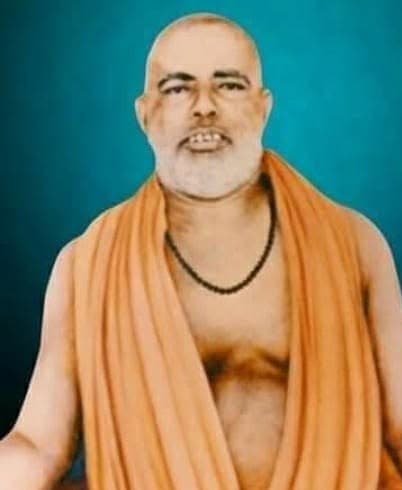
Sri Udiya Baba · Modern
Hindiभावार्थ— मनुष्य अपने-अपने कर्म में लगे रहने पर सम्यक् सिद्धि (अन्तःकरण की शुद्धि या क्रममुक्ति) प्राप्त कर लेता है। अपने कर्म में निरत रहने पर जिस प्रकार सिद्धि मिलती है वह सुनो—
Swami Ramsukhdas · Modern
Hindi‘स्वे स्वे कर्मण्यभिरतः संसिद्धिं लभते नरः’—गीताके अध्ययनसे ऐसा मालूम होता है कि मनुष्यकी जैसी स्वतःसिद्ध स्वाभाविक प्रकृति (स्वभाव) है, उसमें अगर वह कोई नयी उलझन पैदा न करे, राग-द्वेष न करे तो वह प्रकृति उसका स्वाभाविक ही कल्याण कर दे। तात्पर्य है कि प्रकृतिके द्वारा प्रवाहरूपसे अपने-आप होनेवाले जो स्वाभाविक कर्म हैं, उनका स्वार्थ-त्यागपूर्वक प्रीति और तत्परतासे आचरण करे; परन्तु कर्मोंके प्रवाहके साथ न राग हो, न द्वेष हो और न फलेच्छा हो। राग-द्वेष और फलेच्छासे रहित होकर क्रिया करनेसे ‘करनेका वेग’ शान्त हो जाता है और कर्ममें आसक्ति न होनेसे नया वेग पैदा नहीं होता। इससे प्रकृतिके पदार्थों और क्रियाओंके साथ निलिप्तता (असंगता) आ जाती है। निलिप्तता होनेसे प्रकृतिकी क्रियाओंका प्रवाह
स्वाभाविक ही चलता रहता है और उनके साथ अपना कोई सम्बन्ध न रहनेसे साधककी अपने स्वरूपमें स्थिति हो जाती है, जो कि प्राणिमात्रकी स्वतः-स्वाभाविक है। अपने स्वरूपमें स्थिति होनेपर उसका परमात्माकी तरफ स्वाभाविक आकर्षण हो जाता है। परन्तु यह सब होता है कर्मोंमें ‘अभिरति’ होनेसे, आसक्ति होनेसे नहीं।
कर्मोंमें एक तो ‘अभिरति’ होती है और एक ‘आसक्ति’ होती है। अपने स्वाभाविक कर्मोंको केवल दूसरोंके हितके लिये तत्परता और उत्साहपूर्वक करनेसे अर्थात् केवल देनेके लिये कर्म करनेसे मनमें जो प्रसन्नता होती है, उसका नाम ‘अभिरति’ है। फलकी इच्छासे कुछ करना अर्थात् कुछ पानेके लिये कर्म करना ‘आसक्ति’ है। कर्मोंमें अभिरतिसे कल्याण होता है और आसक्तिसे बन्धन होता है।
इस प्रकरणके 'स्वे स्वे कर्मणि', 'स्वकर्मणा तमभ्यर्च्य', 'स्वभावनियतं कर्म', 'सहजं कर्म' आदि पदोंमें 'कर्म' शब्द एकवचनमें आया है। इसका तात्पर्य है कि मनुष्य प्रीति और तत्परतापूर्वक चाहे एक कर्म करे, चाहे अनेक कर्म करे, उसका उद्देश्य केवल परमात्मप्राप्ति होनेसे उसकी कर्तव्यनिष्ठा एक ही होती है। परमात्मप्राप्तिके उद्देश्यको लेकर मनुष्य जितने भी कर्म करता है, वे सब कर्म अन्तमें उसी उद्देश्यमें ही लीन हो जाते हैं अर्थात् उसी उद्देश्यकी पूर्ति करनेवाले हो जाते हैं। जैसे गंगाजी हिमालयसे निकलकर गंगासागरतक जाती हैं तो नद, नदियाँ, झरने, सरोवर, वर्षाका जल—ये सभी उसकी धारामें मिलकर गंगासे एक हो जाते हैं, ऐसे ही उद्देश्यवालेके सभी कर्म उसके उद्देश्यमें मिल जाते हैं। परन्तु जिसकी कर्मोंमें आसक्ति है, वह एक कर्म करके अनेक फल चाहता है अथवा अनेक कर्म करके एक फल चाहता है; अतः उसका उद्देश्य एक परमात्माकी प्राप्तिका न होनेसे उसकी कर्तव्यनिष्ठा एक नहीं होती (गीता—दूसरे अध्यायका इकतालीसवाँ श्लोक)।
**'स्वकर्मनिरतः सिद्धिं यथा विन्दति तच्छृणु'**— अपने कर्मोंमें प्रीतिपूर्वक तत्परतासे लगा हुआ मनुष्य परमात्माको जैसे प्राप्त होता है, वह सुनो अर्थात् कर्ममात्र परमात्मप्राप्तिका साधन है, इस बातको सुनो और सुन करके ठीक तरहसे समझो।
विशेष बात
मालिककी सुख-सुविधाकी सामग्री जुटा देना, मालिकके दैनिक कार्योंमें अनुकूलता उपस्थित कर देना आदि कार्य तो वेतन लेनेवाला नौकर भी कर सकता है और करता भी है। परन्तु उसमें 'क्रिया' की (कि इतना काम करना है) और 'समय' की (कि इतने घंटे काम करना है) प्रधानता रहती है। इसलिये वह काम-धंधा 'सेवा' नहीं बन पाता। यदि मालिकका वह काम-धंधा आदरपूर्वक सेव्यबुद्धिसे, महत्त्वबुद्धिसे किया जाय तो वह 'सेवा' हो जाता है।
सेव्यबुद्धि, महत्त्वबुद्धि चाहे जन्मके सम्बन्धसे हो, चाहे विद्याके सम्बन्धसे; चाहे वर्ण-आश्रमके सम्बन्धसे हो; चाहे योग्यता, अधिकार, सद्गुण-सदाचारके सम्बन्धसे। जहाँ महत्त्वबुद्धि हो जाती है, वहाँ सेव्यको सुख-आराम कैसे मिले? सेव्यकी प्रसन्नता किस बातमें है? सेव्यका
क्या रुख है? क्या रुचि है?—ऐसे भाव होनेसे जो भी काम किया जाय, वह 'सेवा' हो जाता है।
सेव्यका वही काम पूजाबुद्धि, भगवद्बुद्धि, गुरुबुद्धि आदिसे किया जाय और पूज्यभावसे चन्दन लगाया जाय, पुष्प चढ़ाये जायँ, माला पहनायी जाय, आरती की जाय, तो वह काम 'पूजन' हो जाता है। इससे सेव्यके चरणस्पर्श अथवा दर्शनमात्रसे चित्तकी प्रसन्नता, हृदयकी गदगदता, शरीरका रोमांचित होना आदि होते हैं और सेव्यके प्रति विशेष भाव प्रकट होते हैं। उससे सेव्यकी सेवामें कुछ शिथिलता आ सकती है; परन्तु भावोंके बढ़नेपर अन्तःकरण-शुद्धि, भगवत्प्रेम, भगवदर्शन आदि हो जाते हैं।
मालिकका समय-समयपर काम-धंधा करनेसे नौकरको पैसे मिल जाते हैं और सेव्यकी सेवा करनेसे सेवकको अन्तःकरण-शुद्धिपूर्वक भगवत्प्राप्ति हो जाती है; परन्तु पूज्यभावके बढ़नेसे तो पूजकको तत्काल भगवत्प्राप्ति हो जाती है। तात्पर्य है कि चरणचाँपी तो नौकर भी करता है, पर उसको सेवाका आनन्द नहीं मिलता; क्योंकि उसकी दृष्टि पैसोंपर रहती है। परन्तु जो सेवाबुद्धिसे चरणचाँपी करता है, उसको सेवामें विशेष आनन्द मिलता है; क्योंकि उसकी दृष्टि सेव्यके सुखपर रहती है। पूजामें तो चरण छूनेमात्रसे शरीर रोमांचित हो जाता है और अन्तःकरणमें एक पारमार्थिक आनन्द होता है। उसकी दृष्टि पूज्यकी महत्तापर और अपनी लघुतापर रहती है। ऐसे देखा जाय तो नौकरके काम-धंधेसे मालिकको आराम मिलता है, सेवामें सेव्यको विशेष आराम तथा सुख मिलता है और पूजामें पूजकके भावसे पूज्यको प्रसन्नता होती है। पूजामें शरीरके सुख-आरामकी प्रधानता नहीं होती।
अपने स्वभावज कर्मोंके द्वारा पूजा करनेसे पूजकका भाव बढ़ जाता है तो उसके स्थूल, सूक्ष्म और कारणशरीरसे होनेवाली (चेष्टा, चिन्तन, समाधि आदि) सभी छोटी-बड़ी क्रियाएँ सब प्राणियोंमें व्यापक परमात्माकी पूजन-सामग्री बन जाती है। उसकी दैनिकचर्या अर्थात् खाना-पीना आदि सब क्रियाएँ भी पूजन-सामग्री बन जाती हैं।
जैसे ज्ञानयोगीका 'मैं कुछ भी नहीं करता हूँ' यह भाव हरदम बना रहता है, ऐसे ही अनेक प्रकारकी क्रियाएँ करनेपर भी भक्तके भीतर एक भगवद्भाव हरदम बना रहता है। उस भावकी गाढ़तामें उसका अहंभाव भी छूट जाता है।
**परिशिष्ट भाव**—अपने वर्णके सिवाय जिसने जो-जो कर्म स्वीकार कर लिये हैं, वे सब भी 'स्वे स्वे कर्मणि' के अन्तर्गत लेने चाहिये। जैसे, मनुष्य अपनेको वकील, नौकर, अध्यापक अथवा चिकित्सक आदि मानता है तो उसके कर्तव्यका प्रेमपूर्वक, आदरपूर्वक निःस्वार्थभावसे ठीक-ठीक पालन करना भी उसके लिये 'स्वकर्म' है।
मनुष्य स्वार्थबुद्धि, पक्षपात, कामना आदिको लेकर कर्म करता है तो वह 'आसक्ति' होती है। वह प्रेमपूर्वक, निष्कामभावसे और लोकहितके लिये कर्म करता है तो वह 'अभिरति' होती है। भगवान्ने कर्मोंमें 'आसक्ति' का निषेध किया है—'न कर्मस्वनुषज्जते' (गीता ६।४)। मनुष्य जाति आदिको लेकर न अपनेको ऊँचा समझे, न नीचा समझे, प्रत्युत घड़ीके पुर्जेकी तरह अपनी जगह ठीक कर्तव्यका पालन करे और दूसरेकी निन्दा, तिरस्कार न करे तथा अपना अभिमान भी न करे, तब 'अभिरति' होगी।
वास्तवमें 'कर्म' की प्रधानता नहीं है, प्रत्युत 'भाव' की प्रधानता है। कर्ताका भाव शुद्ध होगा तो वह कल्याण करनेवाला हो जायगा, चाहे कर्ता किसी वर्णका हो। 'कर्म' में वर्णकी मुख्यता है और 'भाव' में दैवी अथवा आसुरी-सम्पत्तिकी मुख्यता है। अतः दैवी-आसुरी-सम्पत्ति किसी वर्णको लेकर नहीं होती, प्रत्युत सबमें हो सकती है। दैवी-सम्पत्ति मोक्ष देनेवाली और आसुरी-सम्पत्ति बाँधनेवाली है। इसलिये अगर ब्राह्मणमें भी अभिमान हो तो वह आसुरी-सम्पत्तिवाला हो जायगा अर्थात् उसका पतन हो जायगा—
नीच नीच सब तर गये, राम भजन लवलीन। जाति के अभिमान से, डूबे सभी कुलीन॥
Every human achieves saṃsiddhiṃ or self-realisation by perfectly executing their own natural prescribed duty according to qualification as ordained by Vedic scriptures.
How this is accomplished is explained next by Lord Krishna.