

Bhagavad Gītā · Chapter 18 · Mokṣa Sannyāsa Yoga
पृथक्त्वेन तु यज्ज्ञानं नानाभावान्पृथग्विधान्
वेत्ति सर्वेषु भूतेषु तज्ज्ञानं विद्धि राजसम्
pṛthaktvena tu yajjñānaṃ nānābhāvānpṛthagvidhān|vetti sarveṣu bhūteṣu tajjñānaṃ viddhi rājasam||
Word meanings
तु = but
यत् = which
ज्ञानम् = knowledge
सर्वेषु = in all
भूतेषु = among beings
पृथक्त्वेन = separately
नानाभावान् = the many distinct existences
पृथक्त्विधान् = of various kinds
वेत्ति = knows
तत् = that
ज्ञानम् = that knowledge
राजसम् = rajasic
विद्धि = know
Translation
That, however, by which man cognize many existences of various kinds as apart from one another in all beings, know that knowledge to be Rajasika.
Commentary
The commentators seated around this verse

Rāmānuja · Viśiṣṭādvaita
English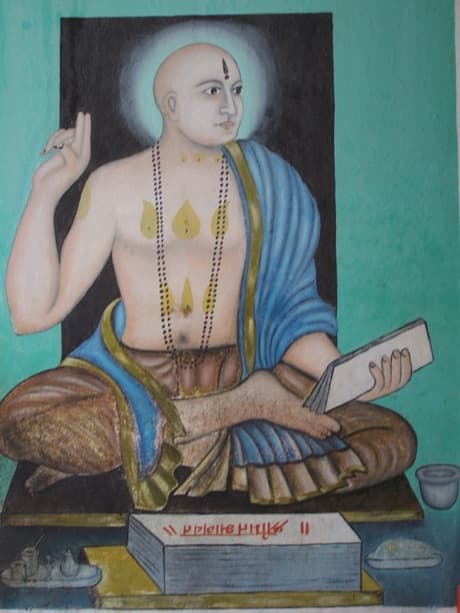
Madhvācārya · Dvaita
SanskritEnglishOn verses 18.21–18.22
“विष्णोरन्यस्य यथार्थज्ञानं राजसमुच्यते | यदि विष्णुं न जानाति यदि वा मिश्रतत्त्ववित् | अन्यथाकरणीयत्वात् कार्यार्थं जीवमेव यः | अकार्यं ब्रह्म जानाति स एवाखिलमित्यपि | एकजीवपरिज्ञानात् कृत्स्नज्ञोऽस्मीति मन्यते | युक्तिभिर्ज्ञानराहित्यत् स्वपक्षस्याल्पयुक्तितः | अयुक्ततामेव गुणं मन्यते चाल्पदर्शनः | अतत्त्वार्थं जगत् वृते तत्त्वार्थज्ञानवर्जनात् | स मुख्यतामसज्ञानी ह्येकेकेनापि किं पुनः | सर्वैरतिर्विशेषश्च युक्तः पापमधिकः | इति पादमे ||” - The knowledge which is contrary to the supremacy of Sri Vishnu and therefore imperfect, is known as raajasic. If one does not know Sri Vishnu or knows Him with confused understanding or thinks Jiva to be the performer when he is known not to be so or even thinks Brahma to be the creator when he is not the Creator or thinks knowing one Jiva is similar to knowing all the other Jivas, then such ones devoid of proper knowledge become contentious in justifying their own inadequate knowledge. These men who have little knowledge, not being able to place their arguments correctly and properly insist that their claim alone is the correct perception. Each of such person is primarily of taamsik knowledge. All those who revel thus in erroneous knowledge are associated with extreme demerits, thus in Padma Parana.
“पृथक्त्वेन तु यज्ञज्ञानम् इत्यस्य व्याख्यानम् - नानाभावात् इत्यादि | सर्वगतमेकमीश्वरं न जानातीत्येतावतैव राजसत्त्वम् | कस्य कृत्स्नवज्ञानमेव कृत्स्नेन ब्रह्मणैकज्ञानं च महातामसम् | किं पुनस्तावन्मात्रं सर्वमिति ज्ञानम् | किं पुनस्तत्राप्येकजीवादन्यत् किमपि नास्तीति अहेतुकं ज्ञानं सर्वमपि तामसम् | किमु तदेवोक्तलक्षणम् | अतत्त्वार्थवत् सदसद्वैतक्षण्याद्यन्यथार्थकल्पनायुक्तमेकं तामसम् | किमु तदेवोक्तविशेषणैयुक्तम् | प्रायोऽल्पज्ञानमपि तामसम् | अज्ञानबहुलत्वात् किमु तदेवोक्तमिथ्यानम् | एकस्मिन् सर्वविज्ञानं कार्यं जीवे पूर्णं ब्रह्मेति सक्तं ज्ञानं नियुक्तिकं चातत्त्वार्थकल्पनायुक्तमल्पज्ञानं च पृथक् सर्वेषु ||” - The statement ‘what is known as distinct’ is in further clarification of the latter remark: ‘by multiplicity of instincts’. Those who do not know that the all pervading one is the Supreme Lord, they are of raajasik attributes. Clinging to one’s own view (without considering other views) is the attribute of taamasik people. And if one thinks that after being delivered by the Lord and acquiring wisdom the Jiva would be united with the All-Intelligent, Entirely Independent Lord - when in reality the Jiva would remain entirely subservient to Him - that one would be an extreme case of de-merits. Assuming nothing else to be in existence other than Jiva is also de-meritorious. What then is there to emphasize that acquiring unreasonable wisdom is the source of great obscurity, when their marks have already been specified? Unprincipled knowledge i.e. the knowledge associated with unconventional perception of the relation of Truth and non-Truth is taamasic. In which case, what is the purpose of mentioning such knowledge to be obscure, when it is already associated with the marks mentioned above ? In fact, little knowledge can be the reason for obscurity. And its excess becomes the cause of ignorance and non-awareness. When clarified that illusion due to non-awareness is on account of such excess obscurity, would not then it would be a case of repetition. Similarly, it would also not be repetition to clarify that the knowledge that Jiva is embodiment of all-pervasiveness, that Jivas are not separate from the Lord of all comprehensive attributes, that such knowledge is devoid of all rationality. Such knowledge which contributes to unprincipled conclusions, which is associated with little knowledge are all cases of taamasa, obscurity. In the case of those who propagate the theory of Illusion (maayaavaada), all these misconceptions do exist. In other philosophies also similar misconceptions like creation without definite purpose, do prevail.

Jñāneśvar · Vārkarī
English21 *'That knowledge which, amidst all the beings, perceives the several characteristics of manifold nature in their distinctness (from one another): that knowledge, understand, is Rajas-dominated.* (538)
Oh Pārtha, now do hear; that knowledge which prevails on the support of distinction is Rājasic knowledge. It breaks into pieces all beings through distinctness, misguides the knowing agent, and creates diversity. Slumber puts a door (screen) in the form of forgetfulness on the objects actually visible and makes (the being) experience the troubles of the dream. In that way, that knowledge makes, before the beings a display of the sport of the three states (wakefulness, dream and deep slumber), in the courtyard (trenches) in the form of false infatuation, outside the fortification (mansion) of the real knowledge of the Self. That knowledge does not see the nondualistic essence hidden behind names and forms, in the way a child does not know gold hidden behind the form of ornaments. One ignorant cannot identify the earth appearing in the form of an earthen pot or jar, or one finds it difficult to recognise fire in a lamp on account of its lamp state. A fool forgets the thread, on account of the super-imposed state of cloth or ignoramuses lose sight of the canvas when shown the picture (painted) on it. In that way, that knowledge (Rajas) makes individual beings appear diverse, and thus obscures all notion of unity. The fire is (falsely) accused of distinction on account of the diversity of fire-wood, or the fragrance, on account of the diversity of flowers or the Moon on account of different receptacles of water; in that way that knowledge which makes distinction in objects, such as big and small according to their different forms, is Rajas knowledge. Now I shall explain the signs of Tamas, bear them well in mind, in order to avoid it (Tamas), as one would, the house of a Mātanga (lowest class criminal).
Swami Ramsukhdas · Modern
English'Pr̥thaktvena tu* yajjñānaṁ nānābhāvānpr̥thagvidhān'—There is predominance of passion, in rājasika knowledge. The Lord declares, "Know thou Rajas to be of the nature of passion" (Gītā 14/7). This passion, causes attachment and aversion.
*The term 'Tu' has been used to denote that the Rājasika knowledge is different from the Sāttvika one.
It is because of this passionate knowledge, that a man sees diversity in different persons, gods, devils, demons, birds, beasts, moths, insects, trees and plants etc., according to their shapes, nature, names, forms and attributes etc. He loses the perception of unity, and does not see the Imperishable Supreme Lord abiding equally, in all the perishable beings, in the form of an imperishable soul.
'Vetti sarveṣu bhūteṣu tajjñānaṁ vidhi rājasam'—The knowledge, by which one sees the manifold entities of different kinds, as varying from one another, according to their different bodies, senses, inner sense, temperaments and life-breaths etc., that knowledge, is rājasika. A man, possessing rājasika knowledge cannot discriminate between, the sentient and the insentient.
Appendix—A man cognises the existence of both—actions and objects and gets attached to them, so he perceives diversity in different beings.
Link:—Now, the Lord describes tāmasika knowledge (the knowledge of the mode of ignorance).
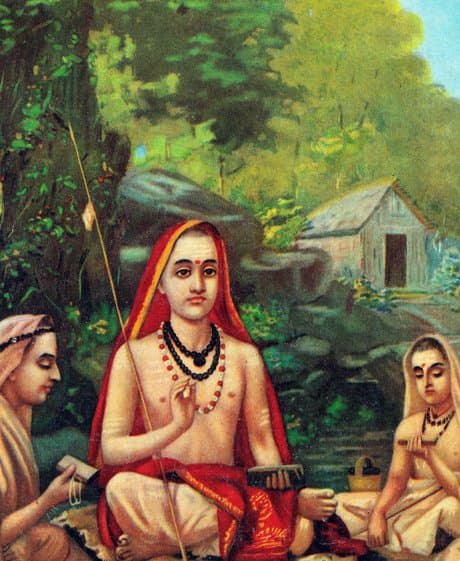
Ādi Śaṅkarācārya · Advaita
Sanskritपृथक्त्वेन तु भेदेन प्रतिशरीरं अन्यत्वेन यत् ज्ञानं नानाभावान् भिन्नान् आत्मनः पृथग्विधान् पृथक्प्रकारान् भिन्नलक्षणान् इत्यर्थः, वेत्ति विजानाति यत् ज्ञानं सर्वेषु भूतेषु, ज्ञानस्य कर्तृत्वासंभवात् येन ज्ञानेन वेत्ति इत्यर्थः, तत् ज्ञानं विद्धि राजसं रजोगुणनिर्वृत्तम् ॥
Ādi Śaṅkarācārya · Advaita
Hindiऔर जो ज्ञान, सम्पूर्ण भूतोंमें भिन्न-भिन्न प्रकारके भिन्न-भिन्न भावोंको, आत्मासे अलग विलक्षण पृथक्-रूपसे देखता है, अर्थात् प्रत्येक शरीरमें अलग-अलग अपनेसे दूसरा आत्मा समझता है, उस ज्ञानको तू राजस यानी रजोगुणसे उत्पन्न हुआ जान। ज्ञानमें कर्तापन होना असम्भव है, इसलिये 'जो ज्ञान देखता है' इसका आशय यह है कि 'जिस ज्ञानके द्वारा मनुष्य देखता है'
Jñāneśvar · Vārkarī
Marathiतरी पार्था परीयेस । तें ज्ञान गा राजस । जें भेदाची कांस । धरूनि चाले ॥ ५३८ ॥ विचित्रता भूतांचिया । आपण आंतोनि ठिकरिया । बहु चकै ज्ञातया । आणिली जेणें ॥ ५३९ ॥ जैसें साचा रूपाआड । घालूनि विसराचें कवाड । मग स्वप्नाचें काबाड । ओपी निद्रा ॥ ५४० ॥ तैसें स्वज्ञानाचिये पौळी । बाहेरि मिथ्या महीं खळीं । तिहीं अवस्थांचिया वह्याळी । दावी जें जीवा ॥ ५४१ ॥ अलंकारपणें झांकलें । बाळा सोनें कां वायां गेलें । तैसें नामीं रूपीं दुरावलें । अद्वैत जया ॥ ५४२ ॥ अवतरली गाडग्यां घडां । पृथ्वी अनोळख जाली मूढां । वन्हि जाला कानडा । दीपत्वासाठीं ॥ ५४३ ॥ कां वस्त्रपणाचेनि आरोपें । मूर्खाप्रति तंतु हारपे । नाना मुग्धा पटु लोपे । दाऊनि चित्र ॥ ५४४ ॥ तैशी जया ज्ञाना । जाणोनि भूतव्यक्ती भिन्ना । ऐक्यबोधाची भावना । निमोनि गेली ॥ ५४५ ॥ मग इंधनीं भेदला अनळु । फुलांवरी परीमळु । कां जळभेदें शकलु । चंद्रु जैसा ॥ ५४६ ॥ तैसें पदार्थभेद बहुवस । जाणोनि लहानथोर वेष । आंतलें तें राजस । ज्ञान येथ ॥ ५४७ ॥ आतां तामसाचेंही लिंग । सांगेन तें वोळख चांग । डावलावया मातंग\- । सदन जैसें ॥ ५४८ ॥
Jñāneśvar · Vārkarī
Hindi(18.538) हे पार्थ! सुनो. भेद का आश्रय कर जो ज्ञान प्रवृत्त होता है वह राजस है।
(18.539) भूतमात्र में भिन्नत्व से व्याप्त हो जिस ज्ञान ने उसे विचित्रता प्राप्त करा दी है और उससे ज्ञाता को जिसने अटल भ्रम में डाल दिया है,
(18.540) जैसे निद्रा सत्यस्वरूप पर विस्मृतिरूपी परदा डाल कर जीव को स्वप्नरूपी कष्ट का अनुभव कराती है
(18.541) वैसे ही आत्मज्ञान के मन्दिर के बाहर — मिथ्या मोह के वर्तुल के भीतर — जो ज्ञान जीव को जागृति, स्वप्न और सुषुप्ति इन तीनों अवस्थाओं का खेल दिखाता है, (18.542) अलंकारत्व से ढका हुआ सोना जैसे बालकों को प्रतीत नहीं होता वैसे ही जिस ज्ञान से नाम और रूप का ही ज्ञान होता और अद्वैत दूर रह जाता है,
(18.543) मूर्ख लोग जैसे घड़ों या मटको के रूपवाली पृथ्वी को नहीं पहचान सकते, दीपक का
रूप लेने से जैसे अग्नि अपरिचित हो जाती है,
(18.544) अथवा वस्त्रता का आरोपण होने के कारण मूर्ख मनुष्य यह नहीं पहचानता कि वह तन्तु का ही रूप है, अथवा चित्र देख कर जैसे अज्ञानी मनुष्य को पट की विस्मृति होती है
(18.545) वैसे ही जिस ज्ञान के कारण भूत-व्यक्तियों को भिन्न देख कर एकता-ज्ञान की भावना नष्ट हो जाती है,
(18.546) और ईधन भिन्न होने से जैसे अग्नि भिन्न जान पड़ती है, फूल जुदे-जुदे होने से जैसे सुगन्ध भिन्न जान पड़ती है, अथवा जुदे-जुदे जलाशय होने से जैसे चन्द्रमा, पूर्ण होने पर भी, भिन्न दिखाई देता है,
(18.547) वैसे ही पदार्थों में अनेक भेद देख कर जो सर्वत्र छोटा-बड़ा इत्यादि वेष से भरा हुआ है उसे राजस ज्ञान कहते हैं। (18.548) अब तामस ज्ञान का लक्षण कहते हैं। उसे भी भली भाँति पहचान लो, जैसे कि डोम के घर से बचने के हेतु उसे पहचान रखते हैं।

Sri Udiya Baba · Modern
Hindiसंगति— अब राजस ज्ञान बतलाते हैं—
भावार्थ— जिस ज्ञान के द्वारा सम्पूर्ण भूतों में अनेक पदार्थों को भिन्न-भिन्न पात्रों के रूप में जाना जाता है उस ज्ञान को राजस जानो।
व्याख्या— एक को अनेक रूपों में देखना, अर्थात् मिट्टी को भिन्न-भिन्न पात्रों में जानना राजस ज्ञान है। इस प्रकार कारणज्ञान सात्विक है और कार्य-ज्ञान राजस। यह नियम है कि प्रीति कार्य में होती है, कारण में नहीं। जब हम किसी वस्तु को देखते हैं तो पहले कारण पर ही दृष्टि जाती है, किन्तु उसका कोई आकर्षण नहीं होता। यदि कारण में प्रीति होती भी है तो कार्य के लोभ से ही होती है। यदि घड़ा अच्छा बना हो तो मिट्टी भी अच्छी लगती है और उसे लेने के लिये दूर देश में भी चले आते हैं। कार्य में प्रीति होना ही जीवभाव है, क्योंकि परिच्छिन्न दृष्टि होने पर ही कार्य में प्रीति होती है। व्यापक दृष्टि हुए बिना कार्य का मोह निवृत्त नहीं होता और न जीवत्व ही नष्ट होता है। इसी से बोध होने पर कार्य का आकर्षण नहीं रहता और यही कल्याण का हेतु है।
Swami Ramsukhdas · Modern
Hindi‘पृथक्त्वेन तु यज्ञानं नानाभावान् पृथग्विधान्’—राजस ज्ञानमें ‘राग’ की मुख्यता होती है—‘रजो रागात्मकं विद्धि’ (गीता १४।७)। रागका यह नियम है कि वह जिसमें आ जाता है, उसमें किसीके प्रति आसक्ति, प्रियता पैदा करा देता है और किसीके प्रति द्वेष पैदा करा देता है। इस रागके कारण ही मनुष्य, देवता, यक्ष-राक्षस, पशु-पक्षी, कीट-पतंग, वृक्ष-लता आदि जितने भी चर-अचर प्राणी हैं, उन प्राणियोंकी विभिन्न आकृति,
स्वभाव, नाम, रूप, गुण आदिको लेकर राजस ज्ञानवाला मनुष्य उनमें रहनेवाली एक ही अविनाशी आत्माको तत्त्वसे अलग-अलग समझता है।
‘वेत्ति सर्वेषु भूतेषु तज्ज्ञानं विद्धि राजसम्’—इसी तरह जिस ज्ञानसे मनुष्य अलग-अलग शरीरोंमें अन्तःकरण, स्वभाव, इन्द्रियाँ, प्राण आदिके सम्बन्धसे प्राणियोंको भी अलग-अलग मानता है, वह ज्ञान ‘राजस’ कहलाता है। राजस ज्ञानमें जड़-चेतनका विवेक नहीं होता।
परिशिष्ट भाव—क्रिया और पदार्थ—दोनोंको सत्ता देकर उनके साथ रागपूर्वक सम्बन्ध जोड़नेके कारण सब अलग-अलग दीखते हैं।
सम्बन्ध—अब तामस ज्ञानका वर्णन करते हैं।
The word pṛthaktvena means separate individuality alluding to differences in appearance between jīvas or embodied beings.
The words nānā bhāvān refers to plurality of substance in falsely surmising that the ātma varies in quality or quantity with the variance of the physical body inhabited by the jīva or to wrongly conclude that the ātma varies in size and potency according to the body it is in.
This mentality is indicative of those situated in raja guṇa, the mode of passion and includes those desirous of receiving rewards for their actions.