

Bhagavad Gītā · Chapter 18 · Mokṣa Sannyāsa Yoga
चेतसा सर्वकर्माणि मयि संन्यस्य मत्परः
बुद्धियोगमुपाश्रित्य मच्चित्तः सततं भव
cetasā sarvakarmāṇi mayi saṃnyasya matparaḥ|buddhiyogamupāśritya maccittaḥ satataṃ bhava||
Word meanings
चेतसा = with mind
सर्वकर्माणि = all actions
मयि = in Me
सन्यस्य = having surrendered
मत्परः = intent on me
बुद्धियोगम् = the yoga of equanimity
उपाश्रित्य = having taken refuge in
सततम् = constantly
मच्चित्तः = mind fixed on me
भव = become
Translation
Mentally resigning all your duties to Me, and taking recourse to Yoga in the form of even-mindedness, be solely devoted to Me and constantly give your mind to Me.
Commentary
The commentators seated around this verse

Rāmānuja · Viśiṣṭādvaita
English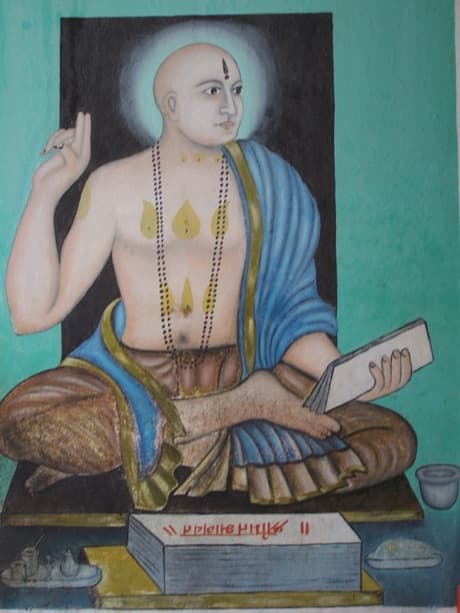
Madhvācārya · Dvaita
SanskritEnglish“भगवत्संस्थितस्य त्रैविध्यस्य च चेतसैव विशेष इत्याह । चेतसा सर्वकर्माणीति । स एव सर्वस्मान् ।” - Sri Krishna says in this verse that both in those who have surrendered to the Resplendent Lord and also in those versed in the three-fold knowledge, there is no difference. All those actions are performed with the intention of surrendering them to Him alone.

Jñāneśvar · Vārkarī
English57 *'Having in thought dedicated: all activities unto Me—making Me thy final goal-and cultivating equanimity of spirit, do thou uninterruptedly fix thy mind in Me.*
It is for this, Oh Dhananjaya, that you should renounce into myself all your actions in their entirety, viz. dedicate them all to Me. But that renunciation, Oh Warrior, should only be of such (actions) as could be renounced (and not such as the day-to-day and other enjoined actions as could not be renounced). You should engage your mind in the contemplation of the Self. On the strength of that contemplation you will be able to see clearly in Me your own self-as separated from the actions. You will also see as being far away from yourself that Prakriti-Māyā (Illusion) which is the source (birth place) of activism. Prakriti cannot however remain distinct from the self (soul) in the way the shadow cannot remain distinct from the original object. In this way, when Māyā (illusion) is destroyed, there will be brought about without any effort, complete renunciation of actions. Then, with the elimination of actions as a class, there will remain behind only 'I', the pure Self (soul), and then there will abide faithfully with the soul, the intellect as does a chaste wife. When the intellect thus abides wholly and with unswerving devotion in Me, the mind even begins to worship Me casting off its normal activity (fickleness). In that way you should always be doing something that will make (your) mind remain steady in Me, shearing it of all its wayward tendencies.
Swami Ramsukhdas · Modern
English[In this verse the Lord has laid emphasis on four points:—
- (i) Mentally surrender all actions to Me. - (ii) Regard Me, as the Supreme Goal, (Surrender yourself to Me).
(iii) Renounce your affinity, with the world through equanimity.
(iv) Have your mind constantly fixed, on Me.]
'Cetāsā sarvakarmāṇi mayi sannyasya'—A man, mentally should regard the body, mind, senses, intellect, things, incidents, actions and persons etc., as belonging, only to God. Due to egoism, he regards them, as his own, which is sheer foolishness. The Lord, has appointed him, as an agent, to make proper use of things, persons, body, senses and mind etc., given to him. All actions, whether mundane or spiritual, which are sanctioned by scriptures, are performed by His will. So he should surrender, all of these to Him, without having any sense of mineness.
'Matparaḥ'—A devotee, should think that the Lord is his only Supreme Goal, none else besides Him is his, and so he should surrender himself, to Him. He has nothing to do at all, with worldly affairs, things and persons etc., as they are different from him. If he regards wealth, family, body, senses and mind etc., as his own, he has to depend on them, and thus he becomes a slave to them, though he thinks, that he is their master.
In fact, the Lord is one's own, and He has the greatest regard, for His devotee. He becomes a servant of him and makes him a jewel of His crown, while worldly people try to suppress and making him their slave. Therefore, a person surrendering himself to Him, should regard Him, as his Supreme Goal.
'Buddhiyogamupāśritya'—In the Gītā, great importance has been attached to equanimity. If a man becomes equanimous, he becomes a man of knowledge, of meditation, a Yogī and a devotee. But, if he is not equanimous, the Lord does not regard him as perfect, even though, he possesses several other virtues. Equanimity is naturally found, in man. But, he becomes happy and sad, by identifying himself with happy and sad circumstances. So a man should not identify himself, with given circumstances. He, in fact remains, the same while circumstances appear and disappear. So, one should remain established, in the self. By remaining established in the self, he will have equanimity.
Equanimity is worship of God (Viṣṇu Purāṇa 1/17/90). So the Lord, exhorts Arjuna, to resort to the Yoga of equanimity.
'Maccittāḥ satataṁ bhava'—The mind of a devotee, who surrenders himself to God, is obeisant at His feet. Then his natural claim over the Lord, is revealed and He takes His seat, in his mind. This is fixing of the mind, on Him.
The Lord uses the term 'Satataṁ' (constantly) with 'Maccittāḥ', to exhort Arjuna to have his mind constantly fixed, on Him. When a devotee knows the fact, or even assumes, that he is God's, his mind is automatically fixed, on Him. When a disciple accepts his relationship with his preceptor, he constantly thinks of him. Even when, he does not think of his preceptor, a thought remains established in him, because he (the self) has accepted the relationship. As far as his relationship with God is concerned, it has been so since time immemorial. But, by assuming his affinity with the world, he has forgotten the real relationship. So, in order to remind him, of his real connection with Him, He exhorts him, to have his mind constantly fixed, on Him.
While performing mundane activities, a striver, should not allow his heart to be affected, by being completely absorbed in these. He should keep his heart rigid. But, while performing spiritual activities, such as chanting, the Lord's name silently or loudly, adoration and meditation etc., the heart, should be absorbed, in these activities. By doing so, his mind will be quickly fixed on Him.
An Important Fact Pertaining to Love**
When a striver, mentally surrenders all actions to God, he realizes his real disunion, from the world\* and when he surrenders
\* In fact, a man can never be united with the world. He ever remains disunited from it. When the thought of a thing, which he lacks, comes to mind, it is his assumed union, with that thing. The lack of thing makes him sad. But when he receives the thing, it goes out of his mind and this disunion makes him happy. Similarly, when a thing is lost or destroyed, a man is sad,
himself to God, he is eternally united, with Him i.e., the Lord becomes, the dearest object of his love. As far as, a mental state, in love (union and disunion) is concerned, it can be of four kinds—union in eternal union, disunion in eternal union, eternal union in disunion, and disunion in disunion. These, can be explained by an illustration:—
When there is union of Lord Kṛṣṇa and Śrī Rādhā, that is union, in eternal union. When they are united, Śrī Rādhā thinks that Lord Kṛṣṇa, has gone away from her and so she cries, 'O dear, where have You gone?' This is disunion, in eternal union. Lord Kṛṣṇa is not with Śrī Rādhā, but she constantly thinks of Him and feels that He is with her. This is eternal union in disunion. Lord Kṛṣṇa, has gone out of sight. But Śrī Rādhā thinks that she has not met Lord Kṛṣṇa, for a long time. She has a desire to meet Him. This is disunion in disunion.
In fact, in all the above-mentioned four states, there is ever an union of the devotee with the Lord, and there is no possibility of disunion. This union is called love, in which the lover and the beloved, both remain united. This sport of union and disunion, goes on between a devotee and the Lord, in order to exchange love.
This love enhances every moment. When a devotee meets the Lord, he is afraid lest, He should again disappear.* So he is never satisfied, he is attracted more and more towards Him, by thinking lest He should disappear again. Thus love enhances.
In love (devotion), a devotee can have four kinds of sentiment—of service, of friendship, of affection and of conjugal
because he has internal union with it. But if through disinclination he realizes, that it was not his and it could not be his, he is not sad. It means that there is external disunion in assumed internal union, and there is internal disunion, in assumed external union. Thus in fact, there is no union of man with the world, he assumes his union with it, by an error of judgment.
* Both union and disunion enhance love. If there is ever-union of the two, love will not enhance, it will remain the same. Therefore the Lord disappears (conceals Himself) in order to enhance love.
love. Out of these four, the sentiment of friendship is superior, to that of service, the sentiment of affection, is superior to that of friendship, while the sentiment of conjugal love, is superior to that of affection because the thought of His glories, majesty and supremacy goes on decreasing from the first sentiment, to the fourth one. But, out of these four, even if one sentiment attains perfection, the remaining three are, also included in it. The reason is, that the Lord is perfect, and so is love for Him and so is man (soul), being a fragment of the Lord. He remains imperfect, because of his affinity with the world. If he develops his love for Him, in anyway, this love will become perfect.
In the sentiment of service, a devotee regards himself as a servant of the Lord, who is his master. So, the Master has full control over him and can use his service in anyway, according to His own sweet will, without consulting him.
In the sentiment of friendship, the Lord is a friend of the devotee. The Lord is loving to the devotee, while the devotee loves God. God has full claim on the devotee, and the devotee also on God. So, if a devotee satisfies the desire of the Lord, the Lord is also expected to fulfil a devotee's desire.
In the sentiment of affection, a devotee thinks that he is the parent or preceptor of the Lord, Who is a child and so it is his duty, to bring Him up and to look after Him, lest he should hurt himself. When Kṛṣṇa, went to a forest, Nandabābā and Yaśodā, sent Balarāma to look after Him.
In the sentiment of Mādhurya (conjugal love)* a devotee
*In the sentiment of Mādhurya (conjugal love) generally people think that it is the relationship between a man and a woman. But in fact it is not confined to a husband and a wife. 'Mādhurya' means sweetness and that sweetness develops by becoming one with the Lord. The more a devotee identifies himself with the Lord, the more sweetness develops. So if there is perfection in anyone of the sentiments either of service or friendship or affection, there will be perfect sweetness.
There is a difference between 'Abheda' (Non-duality) and 'Abhinnatā' (identification). In non-duality a devotee regards himself as the Lord while in identification there is internal intimacy in spite of being two as are two intimate friends. The more intimacy a devotee develops, the more sweetness
does not remember the Lord's supremacy. He thinks, that he is one with Him, because of his intimacy. He longs to provide Him, with every comfort.
Love is divine and spiritual. Only the Lord, deserves its bliss. The lover and the beloved, both are spiritual. In this sentiment of love, sometimes a lover becomes the beloved, while the beloved becomes a lover. In fact, it is the Lord Himself, Who becomes two, in order to relish love.
Some worldly ignorant people, do not understand the true nature of love. They regard lust, as love. But lust can be seen in all beings, and specially among ghosts, devils, demons and fiends etc. But, only the liberated souls, deserve love.
In lust, both the persons want to receive something or the other, from each other, while in love, a devotee wants to offer everything to the Lord. In lust, a person wants to satisfy his senses, while in love he wants to serve the Lord, without any desire for reward. Lust is physical, while love is spiritual. Lust involves delusion and pain, while love is totally free from delusion and pain, and involves emancipation and infinite bliss. In lust, there is attachment and dependence, while in love, there is relinquishment and independence. Lust is selfish while love is selfless. A lustful man, becomes a slave to others, while the Lord Himself becomes a slave, to a devotee, who possesses love. Lust changes into insipidity, while love enhances every moment, and provides bliss. Lust is born of depression, while love is revealed out of the happiness, of the beloved. In lust, a man wants to derive pleasure, while in love a devotee, wants to please the Lord. Lust leads to hell, while love leads to the abode of God. In lust, man and woman ever remain two, while in love, the devotee and the Lord, become one and the same.
**Appendix**—In the preceding verse the Lord, having declared the attainment of the eternal imperishable state, now tells the
is revealed. This is known as sentiment of love. The Lord reveals Himself in different forms to taste this love.
method how to attain that state. For a striver there are two important duties—to renounce affinity with the world and to have affinity (love) with God. In the term 'madvyapāśrayaḥ' used in the preceding verse, there is predominance of the affinity with God; while in the verse in the term 'buddhiyogamupāśritya' there is predominance of the renunciation of affinity with the world.
The Lord by the term 'buddhiyogamupāśritya' means that there should not persist even the subtle affinity with the world—'dureṇa hyavaraṃ karma buddhiyogāddhanañjaya' (Gītā 2/49); the striver should be totally free from attachment and aversion.
By fixing the mind constantly only on God equanimity (buddhiyoga) is naturally attained, therefore the expression 'maccittaḥ satataṃ bhava' has been used.
*Link:—The Lord, in the next two verses, points out to Arjuna the reward of obeying His command, and the harm which would befall him, if he did not obey Him.*
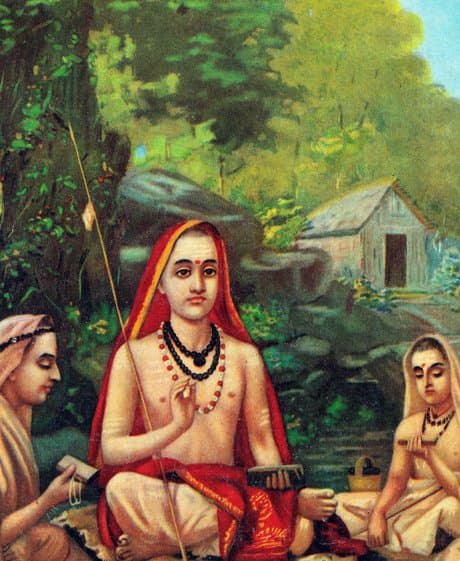
Ādi Śaṅkarācārya · Advaita
Sanskritचेतसा विवेकबुद्ध्या सर्वकर्माणि दृष्टादृष्टार्थानि मयि ईश्वरे संन्यस्य ``यत् करोषि यदश्नासि'' (भ. गी. ९-२७) इति उक्तन्यायेन, मत्परः अहं वासुदेवः परो यस्य तव सः त्वं मत्परः सन् मय्यर्पितसर्वात्मभावः बुद्धियोगं समाहितबुद्धित्वं बुद्धियोगः तं बुद्धियोगं उपाश्रित्य आश्रयः अनन्यशरणत्वं मच्चित्तः मय्येव चित्तं यस्य तव सः त्वं मच्चित्तः सततं सर्वदा भव ॥
Ādi Śaṅkarācārya · Advaita
Hindiजब कि यह बात है इसलिये—
तू दृष्ट और अदृष्ट फलवाले समस्त कर्मोंको विवेक-बुद्धिसे अर्थात् 'यत्करोषि यदशनासि' इस श्लोकमें बतलाये हुए भावसे, मुझ ईश्वरमें समर्पण करके तथा मेरे परायण होकर, अर्थात् मैं वासुदेव ही जिसका पर (परमगति) हूँ, ऐसा होकर, मुझमें बुद्धिको स्थिर करनारूप बुद्धि-योगका आश्रय लेकर—बुद्धियोगके अनन्यशरण होकर, निरन्तर मुझमें चितवाला हो, अर्थात् जिसका निरन्तर मुझमें ही चित रहे, ऐसा हो
Jñāneśvar · Vārkarī
Marathiयाकारणें गा तुवां इया । सर्व कर्मा आपुलिया । माझ्या स्वरूपीं धनंजया । संन्यासु कीजे ॥ १२६० ॥ परी तोचि संन्यासु वीरा । करणीयेचा झणें करा । आत्मविवेकीं धरा । चित्तवृत्ति हे ॥ १२६१ ॥ मग तेणें विवेकबळें । आपणपें कर्मावेगळें । माझ्या स्वरूपीं निर्मळें । देखिजेल ॥ १२६२ ॥ आणि कर्माचि जन्मभोये । प्रकृति जे का आहे । ते आपणयाहूनि बहुवे । देखसी दूरी ॥ १२६३ ॥ तेथ प्रकृति आपणयां । वेगळी नुरे धनंजया । रूपेंवीण का छाया । जियापरी ॥ १२६४ ॥ ऐसेनि प्रकृतिनाशु । जालया कर्मसंन्यासु । निफजेल अनायासु । सकारणु ॥ १२६५ ॥ मग कर्मजात गेलया । मी आत्मा उरें आपणपयां । तेथ बुद्धि घापे करूनियां । पतिव्रता ॥ १२६६ ॥ बुद्धि अनन्य येणें योगें । मजमाजीं जैं रिगे । तैं चित्त चैत्यत्यागें । मातेंचि भजे ॥ १२६७ ॥ ऐसें चैत्यजातें सांडिलें । चित्त माझ्या ठायीं जडलें । ठाके तैसें वहिलें । सर्वदा करी ॥ १२६८ ॥
Jñāneśvar · Vārkarī
Hindi(18.1260) इस लिए हे धनंजय! तुम्हें अपने सब कर्मों का मुझमें संन्यास करना चाहिए।
(18.1261) परन्तु हे वीर! संन्यास केवल बाह्यतः मत करो। चित्तवृत्ति आत्मविचार में स्थिर रखो।
(18.1262) उस विचार के बल से तुम स्वयं कर्म से भिन्न हो जाओगे और सब कर्म मेरे निर्मल स्वरूप में ही दिखाई देंगे
(18.1263) और कर्म की जन्मभूमि जो प्रकृति है वह तुमसे अत्यन्त दूर दिखाई देगी।
(18.1264) अनन्तर हे धनंजय! रूप के बिना जैसे छाया नहीं रह सकती वैसे ही आत्मा के बिना प्रकृति भी नहीं रहती।
(18.1265) इस प्रकार प्रकृति का नाश होने पर अनायास ही कारण-सहित कर्मों का संन्यास हो जावेगा।
(18.1266) फिर कर्मों का नाश होने पर मैं — केवल आत्मा — शेष रहता हूँ उस मुझमें बुद्धि का पतिव्रता स्त्री के समान स्थिर करनी चाहिए। (18.1267) ऐसी अनन्यता-पूर्वक जब बुद्धि मुझमें प्रवेश करती है तब चित्त सब विषयों का त्याग कर मेरा ही भजन करता है।
(18.1268) इस प्रकार सदा और शीघ्र ही ऐसी चेष्टा करनी चाहिए

Sri Udiya Baba · Modern
Hindiसंगति— यह श्लोक सगुणपरक है इसी की पुष्टि अगले श्लोक में करते हैं—
भावार्थ— सब कर्मों को चित्त से मुझे अर्पण करके मेरे परायण हुआ बुद्धि-योग का आश्रय लेकर तू निरन्तर मेरे में ही चित्त लगाने वाला हो जा।
व्याख्या— भक्तों के लिए भगवान् के अतिरिक्त सबको माया समझना अथवा सबको भगवत्स्वरूप समझना तथा निरन्तर भगवदाकार वृत्ति रखना ही बुद्धियोग है। तथा ज्ञानियों को श्रवण, मनन, निदिध्यासन करने पर जब निरन्तर आत्माकारा वृत्ति रहती है वह बुद्धियोग है।
जो निष्काम कर्म नहीं कर सकते उनके लिए यहाँ दो शब्द 'मच्चित्तः' और 'मत्परः' कहे गये हैं। अर्थात् विराट या निर्गुण में नहीं मुझ मुरलीधारी कृष्ण में ही चित्त लगाओ। तर्क-वितर्क छोड़कर मेरे परायण हो जाओ इसका फल यह होगा कि तुम मेरे ही स्वरूप हो जाओगे। ऐसा ही श्री तुलसीदास जी ने कहा है—
मम दर्शन फल परम अनूपा। जीव पाव निज सहज स्वरूपा॥
Swami Ramsukhdas · Modern
Hindi[इस श्लोकमें भगवान्ने चार बातें बतायी हैं—
(१) ‘चेतसा सर्वकर्माणि मयि सन्यस्य’—सम्पूर्ण कर्मोंको चित्तसे मेरे अर्पण कर दे।
(२) ‘मत्परः’—स्वयंको मेरे अर्पित कर दे।
(३) ‘बुद्धियोगमुपाश्रित्य’—समताका आश्रय लेकर संसारसे सम्बन्ध-विच्छेद कर ले।
(४) ‘मच्चित्तः सततं भव’—निरन्तर मेरेमें चित्तवाला हो जा अर्थात् मेरे साथ अटल सम्बन्ध कर ले।]
‘चेतसा सर्वकर्माणि मयि सन्यस्य’—चित्तसे कर्मोंको अर्पित करनेका तात्पर्य है कि मनुष्य चित्तसे यह दृढ़तासे मान ले कि मन, बुद्धि, इन्द्रियाँ, शरीर आदि और संसारके
व्यक्ति, पदार्थ, घटना, परिस्थिति आदि सब भगवान्के ही हैं। भगवान् ही इन सबके मालिक हैं। इनमेंसे कोई भी चीज किसीकी व्यक्तिगत नहीं है। केवल इन वस्तुओंका सदुपयोग करनेके लिये ही भगवान्ने व्यक्तिगत अधिकार दिया है। इस दिये हुए अधिकारको भी भगवान्के अर्पण कर देना है।
शरीर, इन्द्रियाँ, मन आदिसे जो कुछ शास्त्रविहित सांसारिक या पारमार्थिक क्रियाएँ होती हैं, वे सब भगवान्की मरजीसे ही होती हैं। मनुष्य तो केवल अहंकारके कारण उनको अपनी मान लेता है। उन क्रियाओंमें जो अपनापन हैं, उसे भी भगवान्के अर्पण कर देना है; क्योंकि वह अपनापन केवल मूर्खतासे माना हुआ है, वास्तवमें है नहीं। इसलिये
* ये यथा मां प्रपद्यन्ते तांस्तथैव भजाम्यहम्। (गीता ४।११)
उनमें अपनेपनका भाव बिलकुल उठा देना चाहिये और उन सबपर भगवान्की मुहर लगा देनी चाहिये।
‘मत्तः’—भगवान् ही मेरे परम आश्रय हैं, उनके सिवाय मेरा कुछ नहीं है, मेरेको करना भी कुछ नहीं है, पाना भी कुछ नहीं है, किसीसे लेना भी कुछ नहीं है अर्थात् देश, काल, वस्तु, व्यक्ति, घटना, परिस्थिति आदिसे मेरा किंचिन्मात्र कोई प्रयोजन नहीं है—ऐसा अनन्यभाव हो जाना ही भगवान्के परायण होना है।
एक बात खास ध्यान देनेकी है—रुपये-पैसे, कुटुम्ब, शरीर आदिको मनुष्य अपना मानते हैं और मनमें यह समझते हैं कि हम इनके मालिक बन गये, हमारा इनपर आधिपत्य है; परन्तु वास्तवमें यह बात बिलकुल झूठी है, कोरा वहम है और बड़ा भारी धोखा है। जो किसी चीजको अपनी मान लेता है, वह उस चीजका गुलाम बन जाता है और वह चीज उसका मालिक बन जाती है। फिर उस चीजके बिना वह रह नहीं सकता। अतः जिन चीजोंको मनुष्य अपनी मान लेता है, वे सब उसपर चढ़ जाती हैं और वह तुच्छ हो जाता है। वह चीज चाहे रुपया हो, चाहे कुटुम्बी हो, चाहे शरीर हो, चाहे विद्या-बुद्धि आदि हो। ये सब चीजें प्राकृत हैं और अपनेसे भिन्न हैं, पर हैं। इनके अधीन होना ही पराधीन होना है।
भगवान् स्वकीय हैं, अपने हैं। उनको मनुष्य अपना मानेगा, तो वे मनुष्यके वशमें हो जायेंगे। भगवान्के हृदयमें भक्तका जितना आदर है, उतना आदर करनेवाला संसारमें दूसरा कोई नहीं है। भगवान् भक्तके दास हो जाते हैं और उसे अपना मुकुटमणि बना लेते हैं—‘मैं तो हूँ भगतनका दास भगत मेरे मुकुटमणि’, परन्तु संसार मनुष्यका दास बनकर उसे अपना मुकुटमणि नहीं बनायेगा। वह तो उसे अपना दास बनाकर पददलित ही करेगा। इसलिये केवल भगवान्के शरण होकर सर्वथा उन्हींके परायण हो जाना चाहिये।
‘बुद्धियोगमुपाश्रित्य’—गीताभरमें देखा जाय तो समताकी बड़ी भारी महिमा है। मनुष्यमें एक समता आ गयी तो वह ज्ञानी, ध्यानी, योगी, भक्त आदि सब कुछ बन गया। परन्तु यदि उसमें समता नहीं आयी तो अच्छे-अच्छे लक्षण आनेपर भी भगवान् उसको पूर्णता नहीं मानते। वह समता मनुष्यमें स्वाभाविक रहती है। केवल आने-जानेवाली परिस्थितियोंके साथ मिलकर वह सुखी-दुःखी हो जाता है। इसलिये उनमें मनुष्य सावधान रहे कि आने-जानेवाली
परिस्थितिके साथ मैं नहीं हूँ। सुख आया, अनुकूल परिस्थिति आयी तो भी मैं हूँ और सुख चला गया, अनुकूल परिस्थिति चली गयी तो भी मैं हूँ। ऐसे ही दुःख आया, प्रतिकूल परिस्थिति आयी तो भी मैं हूँ और दुःख चला गया, प्रतिकूल परिस्थिति चली गयी तो भी मैं हूँ। अतः सुख-दुःखमें, अनुकूलता-प्रतिकूलतामें, हानि-लाभमें मैं सदैव ज्यों-का-त्यों रहता हूँ। परिस्थितियोंके बदलनेपर भी मैं नहीं बदलता, सदा वही रहता हूँ। इस तरह अपने-आपमें स्थित रहे। अपने-आपमें स्थित रहनेसे सुख-दुःख आदिमें समता हो जायगी। यह समता ही भगवान्की आराधना है—‘समत्वमाराधनमच्युतस्य’ (विष्णुपुराण १।१७।१०)। इसीलिये यहाँ भगवान् बुद्धियोग अर्थात् समताका आश्रय लेनेके लिये कहते हैं।
‘मच्चित्तः सततं भव’—जो अपनेको सर्वथा भगवान्के समर्पित कर देता है, उसका चित्त भी सर्वथा भगवान्के चरणोंमें समर्पित हो जाता है। फिर उसपर भगवान्का जो स्वतः-स्वाभाविक अधिकार है, वह प्रकट हो जाता है और उसके चित्तमें स्वयं भगवान् आकर विराजमान हो जाते हैं। यही ‘मच्चित्तः’ होना है।
‘मच्चित्तः’ पदके साथ ‘सततम्’ पद देनेका अर्थ है कि निरन्तर मेरेमें (भगवान्में) चित्तवाला हो जा। भगवान्का निरन्तर चिन्तन तभी होगा, जब ‘मैं भगवान्का हूँ’ इस प्रकार अहंता भगवान्में लग जायगी। अहंता भगवान्में लग जानेपर चित्त स्वतः-स्वाभाविक भगवान्में लग जाता है। जैसे, शिष्य बननेपर ‘मैं गुरुका हूँ’ इस प्रकार अहंता गुरुमें लग जानेपर गुरुकी याद निरन्तर बनी रहती है। गुरुका सम्बन्ध अहंतामें बैठ जानेके कारण इस सम्बन्धकी याद आये तो भी याद है और याद न आये तो भी याद है; क्योंकि स्वयं निरन्तर रहता है। इसमें भी देखा जाय तो गुरुके साथ उसने खुद सम्बन्ध जोड़ा है; परन्तु भगवान्के साथ इस जीवका स्वतःसिद्ध नित्य सम्बन्ध है। केवल संसारके साथ सम्बन्ध जोड़नेसे ही नित्य सम्बन्धकी विस्मृति हुई है। उस विस्मृतिको मिटानेके लिये भगवान् कहते हैं कि निरन्तर मेरेमें चित्तवाला हो जा।
साधक कोई भी सांसारिक काम-धंधा करे, तो उसमें यह एक सावधानी रखे कि अपने चित्तको उस काम-धंधेमें द्रवित न होने दे, चित्तको संसारके साथ घुलने-मिलने न दे अर्थात् तदाकार न होने दे, प्रत्युत उसमें अपने चित्तको कठोर रखे। परन्तु भगवन्नामका जप, कीर्तन, भगवत्कथा,
भगवच्चिन्तन आदि भगवत्सम्बन्धी कार्योंमें चित्तको द्रवित करता रहे, तल्लीन करता रहे, उस रसमें चित्तको तरान्तर करता रहे। इस प्रकार करते रहनेसे साधक बहुत जल्दी भगवान्में चित्तवाला हो जायगा।
प्रेम-सम्बन्धी विशेष बात
चित्तसे सब कर्म भगवान्के अर्पण करनेसे संसारसे नित्य-वियोग हो जाता है। और भगवान्के परायण होनेसे नित्ययोग (प्रेम) हो जाता है। नित्ययोगमें योग, नित्ययोगमें वियोग, वियोगमें नित्ययोग और वियोगमें वियोग—ये चार अवस्थाएँ चित्तकी वृत्तियोंको लेकर होती हैं। इन चारों अवस्थाओंको इस प्रकार समझना चाहिये—
जैसे, श्रीराधा और श्रीकृष्णका परस्पर मिलन होता है, तो यह 'नित्ययोगमें योग' है। मिलन होनेपर भी श्रीजीमें ऐसा भाव आ जाता है कि प्रियतम कहीं चले गये हैं और वे एकदम कह उठती हैं कि 'प्यारे! तुम कहाँ चले गये!' तो यह 'नित्ययोगमें वियोग' है। श्यामसुन्दर सामने नहीं हैं, पर मनसे उन्हींका गाढ़ चिन्तन हो रहा है और वे मनसे प्रत्यक्ष मिलते हुए दीख रहे हैं, तो यह 'वियोगमें नित्ययोग' है। श्यामसुन्दर थोड़े समयके लिये सामने नहीं आये, पर मनमें ऐसा भाव है कि बहुत समय बीत गया, श्यामसुन्दर मिले नहीं, क्या करूँ? कहाँ जाऊँ? श्यामसुन्दर कैसे मिलें? तो यह 'वियोगमें वियोग' है।
वास्तवमें इन चारों अवस्थाओंमें भगवान्के साथ नित्ययोग ज्यों-का-त्यों बना रहता है, वियोग कभी होता ही नहीं, हो सकता ही नहीं और होनेकी संभावना भी नहीं। इसी नित्ययोगको 'प्रेम' कहते हैं; क्योंकि प्रेममें प्रेमी और प्रेमास्पद दोनों अभिन्न रहते हैं। वहाँ भिन्नता कभी हो ही नहीं सकती। प्रेमका आदान-प्रदान करनेके लिये ही भक्त
और भगवान्में संयोग-वियोगकी लीला हुआ करती है।
यह प्रेम प्रतिक्षण वर्धमान किस प्रकार है? जब प्रेमी और प्रेमास्पद परस्पर मिलते हैं, तब 'प्रियतम पहले चले गये थे, उनसे वियोग हो गया था; अब कहीं ये फिर न चले जायँ!' इस भावके कारण प्रेमास्पदके मिलनेमें तृप्ति नहीं होती, सन्तोष नहीं होता। वे चले जायँगे—इस बातको लेकर मन ज्यादा खिंचता है। इसलिये इस प्रेमको प्रतिक्षण वर्धमान बताया है।
'प्रेम'-(भक्ति-)में चार प्रकारका रस अथवा रति होती है—दास्य, सख्य, वात्सल्य और माधुर्य। इन रसोंमें दास्यसे सख्य, सख्यसे वात्सल्य और वात्सल्यसे माधुर्य-रस श्रेष्ठ है; क्योंकि इनमें क्रमशः भगवान्के ऐश्वर्यकी विस्मृति ज्यादा होती चली जाती है। परन्तु जब इन चारोंमेंसे कोई एक भी रस पूर्णतामें पहुँच जाता है, तब उसमें दूसरे रसोंकी कमी नहीं रहती अर्थात् उसमें सभी रस आ जाते हैं। जैसे, दास्यरस पूर्णतामें पहुँच जाता है तो उसमें सख्य, वात्सल्य और माधुर्य—तीनों रस आ जाते हैं। यही बात अन्य रसोंके विषयमें भी समझनी चाहिये। कारण यह है कि भगवान् पूर्ण हैं, उनका प्रेम भी पूर्ण है और परमात्माका अंश होनेसे जीव स्वयं भी पूर्ण है। अपूर्णता तो केवल संसारके सम्बन्धसे ही आती है। इसलिये भगवान्के साथ किसी भी रीतिसे रति हो जायगी तो वह पूर्ण हो जायगी, उसमें कोई कमी नहीं रहेगी।
'दास्य' रतिमें भक्तका भगवान्के प्रति यह भाव रहता है कि भगवान् मेरे स्वामी हैं और मैं उनका सेवक हूँ। मेरेपर उनका पूरा अधिकार है। वे चाहे जो करें, चाहे जैसी परिस्थितिमें रखें और मेरेसे चाहे जैसा काम लें। मेरेपर अत्यधिक अपनापन होनेसे ही वे बिना मेरी सम्मति
१-काठिन्यं विषये कुर्याद् द्रवत्वं भगवत्पदे। उपायैः शास्त्रनिर्दिष्टैरनुक्षणमतो बुधः ॥ ( भक्तिरसायन १। ३२ )
२-वास्तवमें संसारके साथ कभी संयोग हो नहीं सकता। उसका तो नित्य ही वियोग रहता है। जैसे, मनमें किसी वस्तुका चिन्तन होता है, तो वह उस वस्तुका माना हुआ संयोग है, जिससे उस वस्तुके न मिलनेका दुःख होता है। जब वस्तु (बाहरसे) मिल जाती है, तब उस वस्तुका भीतरसे वियोग हो जाता है, जिससे सुख होता है। ऐसे ही किसी कारणसे बाहरसे वस्तु चली जाय, नष्ट हो जाय, तो मनसे उस वस्तुका संयोग होनेपर दुःख होता है और विवेक-विचारके द्वारा 'यह वस्तु हमारी थी ही नहीं, हमारी हो सकती ही नहीं' इस प्रकार वस्तुको मनसे निकाल देनेपर सुख होता है। तात्पर्य यह है कि भीतरसे संयोग माना तो बाहरसे वियोग है और बाहरसे संयोग माना तो भीतरसे वियोग है। अतः वास्तवमें संसारके साथ नित्य वियोग ही रहता है। मनुष्य केवल भूलसे संसारके साथ संयोग मान लेता है।
३-योग और वियोगमें प्रेम-रसकी वृद्धि होती है। यदि सदा योग ही रहे, वियोग न हो, तो प्रेम-रस बढ़ेगा नहीं, प्रत्युत अखण्ड और एकरस रहेगा। अतः प्रेम-रसको बढ़ानेके लिये भगवान् अर्न्तधान भी हो जाते हैं।
लिये ही मेरे लिये सब विधान करते हैं।
‘सख्य’ रतिमें भक्तका भगवान्के प्रति यह भाव रहता है कि भगवान् मेरे सखा हैं और मैं उनका सखा हूँ। वे मेरे प्यारे हैं और मैं उनका प्यारा हूँ। उनका मेरेपर पूरा अधिकार है और मेरा उनपर पूरा अधिकार है। इसलिये मैं उनकी बात मानता हूँ, तो मेरी भी बात उनको माननी पड़ेगी।
‘वात्सल्य’ रतिमें भक्तका अपनेमें स्वामिभाव रहता है कि मैं भगवान्की माता हूँ या उनका पिता हूँ अथवा उनका गुरु हूँ और वह तो हमारा बच्चा है अथवा शिष्य है; इसलिये उसका पालन-पोषण करना है। उसकी निगरानी भी रखनी है कि कहीं वह अपना नुकसान न कर ले; जैसे—नन्दबाबा और यशोदामैया कन्हैयाका खयाल रखते हैं और कन्हैया वनमें जाता है तो उसकी निगरानी रखनेके लिये दाऊजीको साथमें भेजते हैं!
‘माधुर्य’* रतिमें भक्तको भगवान्के ऐश्वर्यकी विशेष विस्मृति रहती है; अतः इस रतिमें भक्त भगवान्के साथ अपनी अभिन्नता (घनिष्ठ अपनापन) मानता है। अभिन्नता माननेसे ‘उनके लिये सुखदायी सामग्री जुटानी है, उन्हें सुख-आराम पहुँचाना है, उनको किसी तरहकी कोई तकलीफ न हो’—ऐसा भाव बना रहता है।
प्रेम-रस अलौकिक है, चिन्मय है। इसका आस्वादन करनेवाले केवल भगवान् ही हैं। प्रेममें प्रेमी और प्रेमास्पद दोनों ही चिन्मय-तत्त्व होते हैं। कभी प्रेमी प्रेमास्पद बन जाता है और कभी प्रेमास्पद प्रेमी हो जाता है। अतः एक चिन्मय-तत्त्व ही प्रेमका आस्वादन करनेके लिये दो रूपोंमें हो जाता है।
प्रेमके तत्त्वको न समझनेके कारण कुछ लोग सांसारिक कामको ही प्रेम कह देते हैं। उनका यह कहना बिलकुल गलत है; क्योंकि काम तो चौरासी लाख
योनियोंके सम्पूर्ण जीवोंमें रहता है और उन जीवोंमें भी जो भूत, प्रेत, पिशाच होते हैं, उनमें काम (सुखभोगकी इच्छा) अत्यधिक होता है। परन्तु प्रेमके अधिकारी जीवन्मुक्त महापुरुष ही होते हैं।
काममें लेने-ही-लेनेकी भावना होती है और प्रेममें देने-ही-देनेकी भावना होती है। काममें अपनी इन्द्रियोंको तृप्त करने—उनसे सुख भोगनेका भाव रहता है और प्रेममें अपने प्रेमास्पदको सुख पहुँचाने तथा सेवा-परायण रहनेका भाव रहता है। काम केवल शरीरको लेकर ही होता है और प्रेम स्थूलदृष्टिसे शरीरमें दीखते हुए भी वास्तवमें चिन्मय-तत्त्वसे ही होता है। काममें मोह (मूढ़भाव) रहता है और प्रेममें मोहकी गन्ध भी नहीं रहती। काममें संसार तथा संसारका दुःख भरा रहता है और प्रेममें मुक्ति तथा मुक्तिसे भी विलक्षण आनन्द रहता है। काममें जड़ता-(शरीर, इन्द्रियाँ आदि-) की मुख्यता रहती है और प्रेममें चिन्मयता-(चेतन स्वरूप-) की मुख्यता रहती है। काममें राग होता है और प्रेममें त्याग होता है। काममें परतन्त्रता होती है और प्रेममें परतन्त्रताका लेश भी नहीं होता अर्थात् सर्वथा स्वतन्त्रता होती है। काममें ‘वह मेरे काममें आ जाय’ ऐसा भाव रहता है और प्रेममें ‘मैं उसके काममें आ जाऊँ’ ऐसा भाव रहता है। काममें कामी भोग्य वस्तुका गुलाम बन जाता है और प्रेममें स्वयं भगवान् प्रेमीके गुलाम बन जाते हैं। कामका रस नीरसतामें बदलता है और प्रेमका रस आनन्दरूपसे प्रतिक्षण बढ़ता ही रहता है। काम खिन्नतासे पैदा होता है और प्रेम प्रेमास्पदकी प्रसन्नतासे प्रकट होता है। काममें अपनी प्रसन्नताका ही उद्देश्य रहता है और प्रेममें प्रेमास्पदकी प्रसन्नताका ही उद्देश्य रहता है। काम-मार्ग नरकोंकी तरफ ले जाता है और प्रेम-मार्ग
* लोग प्रायः माधुर्यभावमें स्त्री-पुरुषका भाव ही समझते हैं; परन्तु यह भाव स्त्री-पुरुषके सम्बन्धमें ही होता है—यह नियम नहीं है। माधुर्य नाम मधुरता अर्थात् मिठासका है और वह मिठास आती है भगवान्के साथ अभिन्नता होनेसे। वह अभिन्नता जितनी अधिक होगी, मधुरता भी उतनी ही अधिक होगी। अतः दास्य, सख्य और वात्सल्यभावमेंसे किसी भी भावमें पूर्णता होनेपर उसमें मधुरता कम नहीं रहेगी। भक्तिके सभी भावोंमें माधुर्यभाव रहता है।
अभेद और अभिन्नतामें भेद हैं। जिसमें केवल एक तत्त्व ही रह जाय, द्वैतभाव सर्वथा समाप्त हो जाय, उसका नाम ‘अभेद’ है और दो होते हुए भी एक रहनेका नाम ‘अभिन्नता’ है; जैसे—दो मित्रोंमें भीतरसे घनिष्ठता होनेसे अभिन्नता रहती है। अभिन्नता जितनी गाढ़ होती है, उतना ही माधुर्यरस प्रकट होता है। इसीको प्रेम-रस कहते हैं। भगवान् भी इस प्रेम-रसके लोभी हैं। इस प्रेम-रसका आस्वादन करनेके लिये ही भगवान् एकसे अनेक रूपोंमें हो जाते हैं—‘एकाकी न रमते’ (बृहदारण्यक० १।४।३), ‘सदैक्षत बहु स्यां प्रजायेयेति’ (छान्दोग्य० ६।२।३)।
भगवानकी तरफ ले जाता है। काममें दो होकर दो ही रहते हैं अर्थात् द्विधीभाव (भिन्नता या भेद) कभी मिटता नहीं। और प्रेममें एक होकर दो होते हैं अर्थात् अभिन्नता कभी मिटती नहीं।
**परिशिष्ट भाव**—पूर्वश्लोकमें शाश्वत पदकी प्राप्ति बताकर अब उसकी विधि बताते हैं कि वह कैसे प्राप्त होगा। साधकके लिये दो ही खास काम हैं—संसारके सम्बन्धका त्याग और भगवानके साथ सम्बन्ध (प्रेम)। पूर्वश्लोकमें आये 'मद्व्यपाश्रयः' पदमें भगवानके साथ सम्बन्धकी मुख्यता है और इस श्लोकमें आये 'बुद्धियोगमुपाश्रित्य' पदमें संसारसे सम्बन्ध-विच्छेदकी मुख्यता है।
'बुद्धियोगमुपाश्रित्य' कहनेका तात्पर्य है कि संसारका सूक्ष्म सम्बन्ध भी न रहे—'दूरेण हावरं कर्म बुद्धियोगाद्भनंजय' (गीता २। ४९), किसीके प्रति किंचिन्मात्र भी राग-द्वेष न रहे।
एकमात्र भगवानका चिन्तन करनेसे समता (बुद्धियोग) स्वतः आ जाती है, इसलिये 'मच्चित्तः सततं भव' कहा है।
सम्बन्ध—पूर्वश्लोकमें दी हुई आज्ञाको अब भगवान आगेके दो श्लोकोंमें क्रमशः अन्वय और व्यतिरेक-रीतिसे दृढ़ करते हैं।
Lord Krishna and His manifestations are constantly in the thoughts of His devotees in His impersonal form as the Brāhman or spiritual substratum pervading all existence,
as paramātma the Supreme Soul pervading within the etheric hearts of all living entities simultaneously and in His original two armed blackish form bedecked with peacock feather and attended by flute as well as in His authorised incarnations and expansions.
Dedicating all efforts and actions unto the Supreme Lord with devotion, considering Him as the sole goal and ultimate reward, constitutes the essence of consciousness and the apex of attainment.