

Bhagavad Gītā · Chapter 18 · Mokṣa Sannyāsa Yoga
न तदस्ति पृथिव्यां वा दिवि देवेषु वा पुनः
सत्त्वं प्रकृतिजैर्मुक्तं यदेभिः स्यात्त्रिभिर्गुणैः
na tadasti pṛthivyāṃ vā divi deveṣu vā punaḥ|sattvaṃ prakṛtijairmuktaṃ yadebhiḥ syāttribhirguṇaiḥ||
Word meanings
पृथिव्याम् = in the earth
वा = or
दिवि = in heaven
वा = or
देवेषु = among the gods
पुनः = or again
तत् = that
सत्त्वम् = being
न = not
अस्ति = is
यत् = which
प्रकृतिजैः = born of prakṛti
एभिः = by these
त्रिभिः = the three
गुणैः = by the guṇas
मुक्तम् = free
स्यात् = may be
Translation
There is no being on earth or in the middle region or even among the gods or anywhere else, which is free from these three Gunas born of Prakrti.
Commentary
The commentators seated around this verse
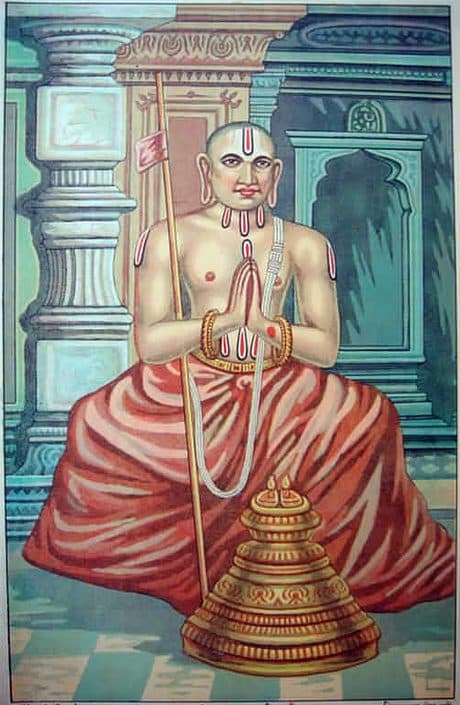
Rāmānuja · Viśiṣṭādvaita
English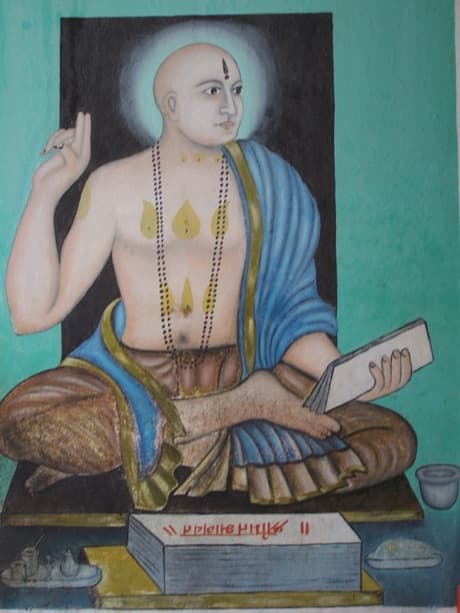
Madhvācārya · Dvaita
SanskritEnglishOn verses 18.38–18.41
“सच्चं जीवजातम् | मुक्तानां गुणातीतत्वात् - पृथिव्यां दिवि देवविव्यादि च विशेषः || यथेष्टं सच्चरन्तोऽपि मुक्ता भूम्यादिगा न तु | ग्रामस्था अपि न ग्राम्या वैलक्षण्याद्वि सज्जनाः | नराधमास्तामसेषु साच्चिकास्तत्र राजसाः | दैतभूत्या महादैत्या मुख्यतामसतामसाः | राजसस्तु नरास्तत्र विप्रा राजससाच्चिकाः | तत्रस्थशुद्धसच्चास्तु परहंसा प्रकीर्तिताः | हंसो बहुदकः कुटिजो वनस्थो नैष्टिको गृही | क्रमाद् राजोथिका बाह्यं कर्म पामधिकं यतः | धर्माः परमहंसानां बाह्या एव शमादिकाः | देवादेः कर्मवाहुल्यं न लिङ्गं राजसः क्वचित् | न हि विष्णोश्चलेत् तेषां मनः कर्मकृतवापि | अन्येषां चलचितत्वात् प्रायः स्यात् कर्म राजसम् | यदि तत् स्मारकं विष्णोर्विद्यात् साच्चिकमेव तत् | धर्मार्थहिंसनाऽग्निश्च विशेषो ब्रह्मचारिणः | पैतृकं चापि यतितो दारास्तु गृहीणस्ततः | असर्गो ग्राम्यसन्त्यागः पश्वहिंसा गृहस्ततः | वनस्थस्य विशेषोऽयं सर्वपामितरत् समम् || इति च ||”
- satvam means the living creatures. To show that the liberated beings are not bound by the attributes, they are specially referred to as the gods on the earth. The liberated ones even though move about freely in this world they are not bound by the defects of the world. For instance even though noble people dwell in samsara, the primordial world they are unlike the common people dwelling in samsara. Among the taamasik the meanest are those whose minds are obscure even though capable of being luminous. The followers of the unenlightened asuras are those who are obscure though capable of being raajasik. The great asuras are those who continue to remain extremely taamasik, obscure. The raajasik are those human beings, among whom there are Brahmins (men of Wisdom) who are raajasik combined with satva. Among them the pure saatviks are known as Paramhamsa. Hamsa, Bahuda, Kutaja, Vanastha, Naisthika, Householders, these being in stages and in that order open to outside influences, their activities becoming progressively raajasic. The Paramahamsas are known by their serenity, self-control and outward marks of righteousness. In the case of the Gods, even though they are excessively energetic they are rarely endowed with any marks of raja. Because even when they perform energetic actions their mind is always in communion with Sri Vishnu. As far as others are concerned because of their indecisive, wavering mind their actions are normally marked as raajasik. But if their actions are attuned to Sri Vishnu, then these ones should be considered saatvik. Inquiry in Dharma and performance of sacrificial acts are the special attributes of a Brahmachari – one who is engaged in wisdom of the Brahman. Assuming together with wife the parental responsibilities and leading temporal life is the mark of a Grihastha, householder. Remaining aloof, giving up attachment to progeny and possessions, and being non-injurious to animals is the mark of one Vanaprastha, a forest-dweller. For the rest, the mark of a Sanyaasi, ascetic is similar and equanimous attitude towards all.
“साच्चिकाः स्वल्परजसः क्षत्रियाः सच्चराजसाः | वैश्याः शूद्रा अतिस्वल्पसच्चधिक्येन तामसाः | ये तु भागवता वर्णास्तेषां भेदोऽयमीरितः | सच्चाधिकः पुल्कसोऽपि यस्तु भागवतः सदा | त्रैविद्यमात्रा विष्णोर्वे सर्वाधिक्ये संसंशयाः | अन्याधिक्यं न मन्यन्ते श्रीशाद् राजसराजसाः | पितृगन्धर्वपूर्वाच्च मुनयो देवता इति | साच्चिकास्त्रीविधास्तत्र श्रेष्ठा एवोत्तरात्तराः | देवा इन्द्रो विरिञ्चद्या इति त्रैधैव देवताः | क्रमोत्तराः शिवो वाणी ब्रह्मा चैवोत्तरोत्तराः | सच्चसच्चमहासच्चमूक्ष्मसच्चश्चतुर्मुखः | तस्माद् यावद् विमुक्तिः स्यान्मुक्तावेवं सुखक्रमः ||
इति च ||” - The one who is saatvik could also be to some extent raajasik. Kshatriyas could be raajasik together with satva. Vaishyas and Shudras are normally taamasik, obscure with more or less of satva, luminosity. Amongst those who are devoted to the Resplendent One, such natural differences are visible. Having excess of satva, luminosity, even Pulaska (born in taamasik family) becomes entitled to be called the devotee of the Resplendent One. Those who perform actions commended in Vedas but are skeptical about the superiority of Sri Vishnu over all others, or consider others as superior to Sri Vishnu, are extremely energetic -raajas-raajasah. Those who are neutral, neither accepting the supremacy of Sri Vishnu nor despising him, they are said to be raja-tamasah. Ancestors, gandharvas and ancient seers and gods are all luminous, saatvik in three-fold manner, each one progressively superior to the previous one. Gods, Indra, Brahma are progressively to one another and Shiva Saraswati and Brahma are progressively superior to the previous ones. Luminous among the luminous, extremely and subtly luminous is four-faced Brahma. Such progressive gradation continues even in liberation. Even though the attributes do not exist in the state of liberation, gradation is determined by the extent of bliss which they revel in.
“विष्णो किञ्चिदप्रीतियुक्तास्तामममध्ये साच्चिका नराधमा इत्यर्थः | राजसानां मध्ये भागवता एव साच्चिकं विप्रादयः | राजसस्थसाच्चिकेप्येव शुद्धसाच्चिकाः इति वर्णभेदः | सत्त्वप्रधानत्वादे तानारभ्योत्तरोत्तरं सर्वेपि मोक्षयोग्याः | सत्त्वात् सञ्जायते ज्ञानम् इत्यादेः | सच्चाधिको मोक्षयोग्यो योग्योऽन्यतमसत्तथा | तम उत्तरो रजोभूयान् समो वा मृत्तिपात्रकः || इति ||” - Among the meanest of the human beings, taamasik ones are those who have least enmity to Sri Vishnu. Among the raajasik ones, the luminous are the wise ones devoted to the Resplendent Lord. The saatvik ones who are purely saatvik. raajasik ones who are saatvik to some extent, saatvik ones associated in equal measure with raajasik and those saatvik ones associated with taamasik become differentiated in classification according to the predominance of one or the other of the attributes. Beginning with the saatvic attributes each person becomes fit for deliverance starting from the Gods downwards. ‘With luminosity comes wisdom’, thus has it been said. Those who are more saatvic and similarly those who are not so fit go to the obscure darkness become fit for deliverance. Those who are more raajasic or the three attributes are more or less equal, they become the ‘nitya samsaari’, those who are ever engaged in temporal life.
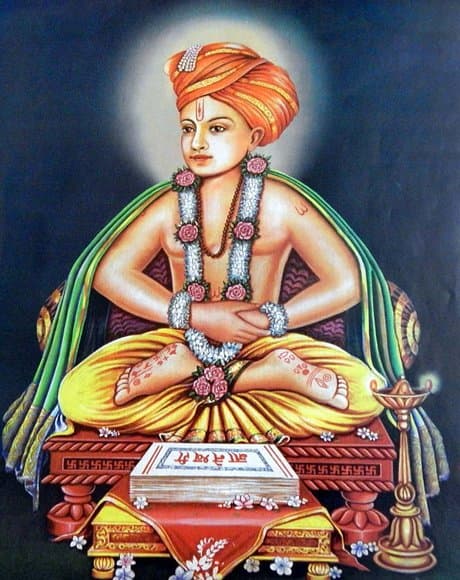
Jñāneśvar · Vārkarī
English40 "There exists not on the earth, nor again in the Heaven amongst the Gods, an entity which can be exempt from these three Guna-constituents that are born of the Prakṛti (Primal Matter). (813)
Therefore, there is not a single thing, either in the heaven or on this earth, that is not fettered by the three Guna-constituents such as Sattva and others, born of the Prakṛti (Primal Matter), in the way there cannot be a blanket without wool, or lump of clay without earth, or a ripple without water. Similarly, there is no aspect of the aggregate of beings that could make possible the formation of the universe without the existence in them of the three Guna-constituents. Therefore know it, that this entire universe is all formed (solely and wholly) of the three-Guna-constituents, and it is these three that have classified the Gods in three groups, and have created the three worlds, and have assigned three different functions to the four different castes.
Swami Ramsukhdas · Modern
English[At the beginning of this chapter, Arjuna desired to know severally, the true nature of renunciation (Sannyāsa) and Tyāga (Karmayoga). So the Lord, first described Karmayoga. Winding up the topic the Lord declared, "Pleasant, unpleasant and mixed—threefold, is the fruit of action, accruing to those who have not relinquished the fruit. But there is none whatever, for those who have relinquished the fruit." Having declared so, in the thirteenth verse, by beginning the topic of Sāṅkhyayoga (Discipline of Knowledge), He explained five factors, which contribute to the accomplishment of action. In the sixteenth and seventeenth verses, He decried those, who look upon the self, as doer and praised those, who are free from egoistic notion. In the eighteenth verse, He mentioned the factors, which motivate action and also the constituents of actions, while the self is free, from incitement and constituents. Then, He classified knowledge, action, agent, intellect, dhṛti and happiness into three kinds. While describing the three kinds of happiness, He explained the superiority of sāttvika happiness to rājasika and tāmasika, though all the three are derived by having affinity with Prakṛti. But, the real joy which transcends, the three modes of nature, is unique and supreme (Gītā 6/21).
Even the sāttvika happiness, is not eternal, because the Lord
has declared, that it springs from placidity of mind and whatever is born, is not eternal. The Lord means that a striver, has to rise above this sāttvika happiness, also. By transcending the nature and its three modes, he has to realize the real bliss of God or the self. So the Lord declares—]
'Na tadasti pṛthivyām vā divi deveṣu vā punaḥ'—Here, the term 'Pṛthivyām', denotes mortal worlds, as well as, other lower worlds, than the earth. 'Divi' denotes heaven, 'Deveṣu', denotes all beings, such as men, gods, demons, devils, birds, beasts, insects, trees and plants etc., whether moving or non-moving, while the expression 'Vā punaḥ', denotes infinite universes. It means, that either in the celestial world, or in the middle region or in the terrestrial world, in infinite universes, there is no object or being, free from these three modes of nature. All of these are connected with the three modes of nature.
'Sattvam prakṛtijairmuktam yadebhiḥ syāttribhirguṇaiḥ'—Nature and its evolutes, are of three modes and are ever changing. A man, is bound by having connection with these and he is liberated, by renouncing a connection with them, because the self is pure and it undergoes no modifications. Connection with nature, gives birth to egoism, which makes one dependent, though he feels, that he is independent. An egoistic notion gives birth to attachment and desire etc. Therefore, in fact he becomes dependent on persons and things etc. So, one should be free from the modes, of nature.
A striver, first of all should enhance the mode of goodness by abandoning modes of passion and ignorance. In the mode of goodness also, a man should not be attached to happiness and knowledge, because attachment to them, binds him. So he should transcend the mode of goodness, by abandoning attachment. First, he should mould his life, by possessing sāttvika knowledge, action, intellect, dhṛti and happiness etc., because discrimination (wisdom), remains aroused in them. This discrimination induces him to be free from affinity, with 'Prakṛti'. But, finally he should transcend them also, by abandoning attachment for them.
**Appendix**—In the tenth chapter from the devotion (faith) point of view, the Lord declared that all things originate from Him—'na tadasti vinā yatsyānmayā bhūtam carācāram' (10/39). Here from the view point of knowledge (discrimination), the Lord declares that all beings emanate from the modes born of nature. The reason is that from the view point of a discriminative person the real and the unreal—both exist; but from the viewpoint of a devotee only God exists—'sadasaccāhamarjuna' (Gītā 9/19). In the path of discrimination, the renunciation of the unreal viz., of the modes is important but in devotion relationship with God is important.
An ignorant person, rather than an enlightened soul, holds that there is no being in the universe that is free from the three modes. An enlightened soul has an eye on the Self which is by nature free from guṇas (modes) (Gītā 13/31).
*Link:—While discussing the nature of 'Tyāga', the Lord declared, 'Abandonment of any duty, that ought to be done, is not right. Its abandonment through ignorance, is declared to be, of the nature of ignorance' (18/7). 'He who gives up duty for fear of physical suffering, performs 'Tyāga' of the 'Rājasika' kind (18/8), while he who performs a prescribed duty, as a thing that ought to be done, abandoning attachment and the fruit—his Tyāga is regarded as, Sāttvika' (18/9). 'In the Sāṅkhyayoga, while explaining the five factors for accomplishment of actions, the Lord declared, 'An action which is obligatory, is performed without attachment, or hate, by one who seeks no reward, is said to be sāttvika' (18/23). The Lord, resumes the topic of obligatory actions (duties), allotted to members of four Varṇas (Castes)—Brāhmaṇa, Kṣatriya, Vaiśya and Śūdra, also of Bhaktiyoga.*
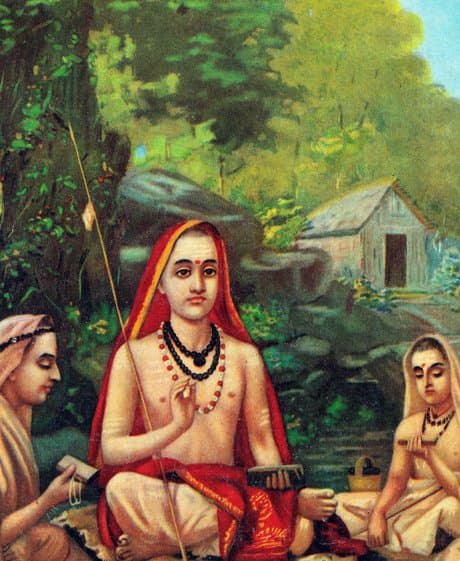
Ādi Śaṅkarācārya · Advaita
Sanskritन तत् अस्ति तत् नास्ति पृथिव्यां वा मनुष्यादिषु सत्त्वं प्राणिजातम् अन्यद्वा अप्राणि, दिवि देवेषु वा पुनः सत्त्वम्, प्रकृतिजैः प्रकृतितः जातैः एभिः त्रिभिः गुणैः सत्त्वादिभिः मुक्तं परित्यक्तं यत् स्यात्, न तत् अस्ति इति पूर्वेण संबन्धः ॥
सर्वः संसारः क्रियाकारकफललक्षणः सत्त्वरजस्तमोगुणात्मकः अविद्यापरिकल्पितः समूलः अनर्थः उक्तः, वृक्षरूपकल्पनया च ``ऊर्ध्वमूलम्'' (भ. गी. १५-१)इत्यादिना, ``तं च असङ्गशस्त्रेण दृढेन च्छित्त्वा ततः पदं तत्परिमार्गितव्यम्'' (भ. गी. १५-३), (भ. गी. १५-४) इति च उक्तम् । तत्र च सर्वस्य त्रिगुणात्मकत्वात् संसारकारणनिवृत्त्यनुपपत्तौ प्राप्तायाम्, यथा तन्निवृत्तिः स्यात् तथा वक्तव्यम्, सर्वश्च गीताशास्त्रार्थः उपसंहर्तव्यः, एतावानेव च सर्ववेदस्मृत्यर्थः पुरुषार्थम् इच्छद्भिः अनुष्ठेयः इत्येवमर्थं ``ब्राह्मणक्षत्रियविशाम्'' इत्यादिः आरभ्यते -
Ādi Śaṅkarācārya · Advaita
Hindiइसके उपरान्त अब प्रकरणका उपसंहार करनेवाला श्लोक कहा जाता है—
ऐसा कोई सत्त्व अर्थात् मनुष्यादि प्राणी या अन्य कोई भी प्राणरहित वस्तुमात्र पृथिवीमें, स्वर्गमें अथवा देवताओंमें भी नहीं है, जो कि इन प्रकृतिसे उत्पन्न हुए सत्त्वादि तीनों गुणोंसे मुक्त अर्थात् रहित हो। 'ऐसा कोई नहीं है' इस पूर्वके पदसे इस वाक्यका सम्बन्ध है
Jñāneśvar · Vārkarī
Marathiम्हणौनि प्रकृतीच्या आवलोकीं । न बंधिजे इहीं सत्वादिकीं । तैसी स्वर्गीं ना मृत्युलोकीं । आथी वस्तु ॥ ८१३ ॥ कैंचा लोंवेवीण कांबळा । मातियेवीण मोदळा । का जळेंवीण कल्लोळा । होणें आहे ? ॥ ८१४ ॥ तैसें न होनि गुणाचें । सृष्टीची रचना रचे । ऐसें नाहींचि गा साचें । प्राणिजात ॥ ८१५ ॥ यालागीं हें सकळ । तिहीं गुणांचेंचि केवळ । घडलें आहे निखिळ । ऐसें जाण ॥ ८१६ ॥ गुणीं देवां त्रयी लाविली । गुणीं लोकीं त्रिपुटी पाडिली । चतुर्वर्णा घातली । सिनानीं उळिगें ॥ ८१७ ॥
Jñāneśvar · Vārkarī
Hindi(18.813) इसलिए स्वर्ग में या मृत्युलोक में ऐसी कोई वस्तु ही नहीं जो सत्त्व इत्यादि से (जो प्रकृति का आभास है) सम्बद्ध न हो। (18.814) ऊन के बिना कम्बल कैसे रह सकता है, मिट्टी के बिना ढेला कैसे रह सकता है, अथवा जल के बिना तरंग कैसे हो सकती है?
(18.815) वैसे ही गुण के न होने पर सृष्टि का व्यापार करनेहारा कोई प्राणी हुई नहीं।
(18.816) अतः यह सम्पूर्ण सृष्टि केवल तीनों गुणों की बनी हुई है।
(18.817) गुणों से ही देवों की — ब्रह्मा, विष्णु और महेश-रूपी — त्रयी की है। गुणों से ही लोकों की, स्वर्ग, मृत्यु, और पाताल-रूपी त्रिपुटी हुई हैं, और गुणों से ही चारों वर्णों के जुदे-जुदे कर्म नियत हुए हैं।
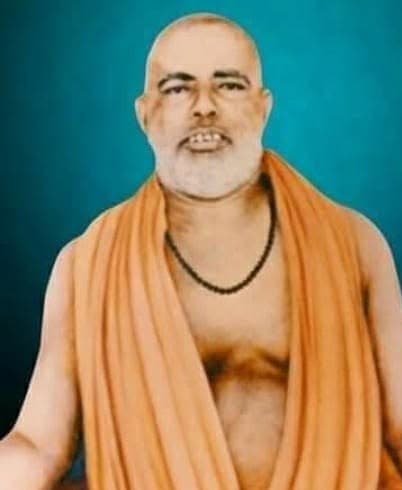
Sri Udiya Baba · Modern
Hindiभावार्थ— पृथिवी में, स्वर्ग में तथा देवताओं में भी कोई ऐसा प्राणी नहीं है, जो प्रकृति से उत्पन्न इन तीन गुणों से मुक्त हो।
व्याख्या— उन्नसीवें से लेकर उनचालीसवें श्लोक तक यह बतलाया गया है कि स्वर्ग, पाताल, इहलोक, परलोक पर्यन्त जो कुछ है सब त्रिगुणात्मक है। परन्तु इन सबसे परे भी एक तत्त्व है, जिसे भगवान् गुणातीत कहते हैं। किन्तु उसकी प्राप्ति तत्त्वज्ञ महापुरुषों को ही हो सकती है। वह परमानन्द अवर्णनीय है, संसारी जीव तो त्रिगुणात्मक है। परन्तु इन सबसे परे भी एक तत्त्व है, जिसे भगवान् गुणातीत कहते हैं। किन्तु उसकी प्राप्ति तत्त्वज्ञ महापुरुषों को ही हो सकती है। वह परमानन्द अवर्णनीय है, संसारी जीव तो त्रिगुणात्मक सुखों में ही फँसे हुए हैं।
परमात्मा का साक्षात् दर्शन वेदशास्त्र भी नहीं करा सकते। वे भी केवल संकेतमात्र करते हैं। एक बार श्री जानकीजी से वनवासिनी नारियों ने पूछा कि तुम्हारे साथ ये दो पुरुषसिंह कौन हैं। तब उन्होंने उत्तर दिया कि इनमें जो गौरवर्ण हैं वे मेरे छोटे देवर हैं। इससे निश्चय हो गया कि दूसरे इनके पति देव हैं। इसी प्रकार शास्त्रों ने नेति-नेति कहकर सबका निषेध किया है और इसी प्रकार निषेधावधिभूत तत्त्व को परमात्मा बतलाया है।
Swami Ramsukhdas · Modern
Hindi[इस अध्यायके आरम्भमें अर्जुनने संन्यास और त्यागका तत्त्व जानना चाहा तो भगवान्ने पहले त्याग—कर्मयोगका वर्णन किया। उस प्रकरणका उपसंहार करते हुए भगवान्ने कहा कि जो त्यागी नहीं हैं, उनको अनिष्ट, इष्ट और मिश्र—यह तीन प्रकारका कर्मोंका फल मिलता है और जो संन्यासी हैं, उनको कभी नहीं मिलता। ऐसा कहकर तेरहवें श्लोकसे संन्यास—सांख्ययोगका प्रकरण आरम्भ करके पहले कर्मोंके होनेमें अधिष्ठानादि पाँच हेतु बताये। सोलहवें-सत्रहवें श्लोकोंमें कर्तृत्व माननेवालोंकी निन्दा और कर्तृत्वका त्याग करनेवालोंकी प्रशंसा की। अठारहवें श्लोकमें कर्म-प्रेरणा और कर्म-संग्रहका वर्णन किया। परन्तु जो वास्तविक तत्त्व है, वह न कर्म-प्रेरक है और न कर्म-संग्राहक। कर्म-प्रेरणा और कर्म-संग्रह तो प्रकृतिके गुणोंके साथ सम्बन्ध रखनेसे ही होते हैं। फिर गुणोंके अनुसार ज्ञान, कर्म, कर्ता, बुद्धि, धृति और सुखके तीन-तीन भेदोंका वर्णन किया। सुखका वर्णन करते हुए यह बताया कि प्रकृतिके साथ यत्किंचित् सम्बन्ध रखते हुए ऊँचा-से-ऊँचा जो सुख होता है, वह सात्त्विक होता है। परंतु जो स्वरूपका वास्तविक सुख है, वह गुणातीत है, विलक्षण है, अलौकिक है (गीता—छठे अध्यायका इक्कीसवाँ श्लोक)।
सात्त्विक सुखको 'आत्मबुद्धिप्रसादजम्' कहकर भगवान्ने उसको जन्म (उत्पन्न होनेवाला) बताया। जन्म वस्तु नित्य नहीं होती। इसलिये उसको जन्म बतानेका तात्पर्य है कि उस जन्म सुखसे भी ऊपर उठना है अर्थात् प्रकृति और प्रकृतिके तीनों गुणोंसे रहित होकर उस परमात्मतत्त्वको प्राप्त करना है, जो कि सबका अपना
स्वाभाविक स्वरूप है। इसलिये कहते हैं—]
'न तदस्ति पृथिव्यां वा दिवि देवेषु वा पुनः'—यहाँ 'पृथिव्याम्' पदसे मृत्युलोक और पृथ्वीके नीचेके अतल, वितल आदि सभी लोकोंका, 'दिवि' पदसे स्वर्ग आदि लोकोंका, 'देवेषु' पदको प्राणिमात्रके उपलक्षणके रूपमें उन-उन स्थानोंमें रहनेवाले मनुष्य, देवता, असुर, राक्षस, नाग, पशु, पक्षी, कीट, पतंग, वृक्ष आदि सभी चर-अचर प्राणियोंका, और 'वा पुनः' पदोंसे अनन्त ब्रह्माण्डोंका संकेत किया गया है। तात्पर्य यह हुआ कि त्रिलोकी और अनन्त ब्रह्माण्ड तथा उनमें रहनेवाली कोई भी वस्तु ऐसी नहीं है, जो प्रकृतिसे उत्पन्न इन तीनों गुणोंसे रहित हो अर्थात् सब-के-सब त्रिगुणात्मक हैं—'सत्त्वं प्रकृतिजैर्मुक्तं यदेभिः स्यात्त्रिभिर्गुणैः।'
प्रकृति और प्रकृतिका कार्य—यह सब-का-सब ही त्रिगुणात्मक और परिवर्तनशील है। इनसे सम्बन्ध जोड़नेसे ही बन्धन होता है और इनसे सम्बन्ध-विच्छेद करनेसे ही मुक्ति होती है; क्योंकि स्वरूप असंग है। स्वरूप 'स्व' है और प्रकृति 'पर' है। प्रकृतिसे सम्बन्ध जुड़ते ही अहंकार पैदा हो जाता है, जो कि पराधीनताको पैदा करनेवाला है। यह एक विचित्र बात है कि अहंकारमें स्वाधीनता मालूम देती है, पर है वास्तवमें पराधीनता! कारण कि अहंकारसे प्रकृतिजन्य पदार्थोंमें आसक्ति, कामना आदि पैदा हो जाती है, जिससे पराधीनतामें भी स्वाधीनता दीखने लग जाती है। इसलिये प्रकृतिजन्य गुणोंसे रहित होना आवश्यक है।
प्रकृतिजन्य गुणोंमें रजोगुण और तमोगुणका त्याग करके सत्त्वगुण बढ़ानेकी आवश्यकता है। सत्त्वगुणमें भी प्रसन्नता और विवेक तो आवश्यक है; परन्तु सात्त्विक सुख
और ज्ञानकी आसक्ति नहीं होनी चाहिये; क्योंकि सुख और ज्ञानकी आसक्ति बौधनेवाली है। इसलिये इनकी आसक्तिका त्याग करके सत्त्वगुणसे ऊँचा उठे। इससे ऊँचा उठनेके लिये ही यहाँ गुणोंका प्रकरण आया है।
साधकको तो सात्त्विक ज्ञान, कर्म, कर्ता, बुद्धि, धृति और सुख—इनपर ध्यान देकर इनके अनुरूप अपना जीवन बनाना चाहिये और सावधानीसे राजस-
तामसका त्याग करना चाहिये। इनका त्याग करनेमें सावधानी ही साधन है। सावधानीसे सब साधन स्वतः प्रकट होते हैं। प्रकृतिसे सम्बन्ध-विच्छेद करनेमें सात्त्विकता बहुत आवश्यक है। कारण कि इसमें प्रकाश अर्थात् विवेक जाग्रत रहता है, जिससे प्रकृतिसे मुक्त होनेमें बड़ी सहायता मिलती है। वास्तवमें तो इससे भी असंग होना है।
**परिशिष्ट भाव**—दसवें अध्यायमें भगवान्ने भक्ति (विश्वास)-की दृष्टिसे सम्पूर्ण वस्तुओंको अपनेसे उत्पन्न होनेवाली बताया था—‘**न तदस्ति विना यत्स्याम्यया भूतं चराचरम्**’ (१०। ३९)। यहाँ भगवान् ज्ञान (विवेक)-की दृष्टिसे सम्पूर्ण वस्तुओंको प्रकृतिजन्य गुणोंसे उत्पन्न होनेवाली बताते हैं। कारण कि विवेकीकी दृष्टिमें सत् और असत् दोनों रहते हैं, पर भक्तकी दृष्टिमें एक भगवान् ही रहते हैं—‘**सदसच्चाहमर्जुन**’ (गीता ९। १९)। विवेकमार्गमें असत्का, गुणोंका त्याग मुख्य है, पर भक्तिमार्गमें भगवान्का सम्बन्ध मुख्य है।
‘संसारकी कोई भी वस्तु तीनों गुणोंसे रहित नहीं है’—यह बात अज्ञानीकी दृष्टिमें है, तत्त्वज्ञानीकी दृष्टिमें नहीं। तत्त्वज्ञानीकी दृष्टि सत्तामात्र स्वरूपकी तरफ रहती है, जो स्वतः-स्वाभाविक निर्गुण है (गीता—तेरहवें अध्यायका इकतीसवाँ श्लोक)।
सम्बन्ध—त्यागके प्रकरणमें भगवान्ने यह बताया कि नियत कर्मोंका त्याग करना उचित नहीं है। उनका मूढ़तापूर्वक त्याग करनेसे वह त्याग तामस हो जाता है; शारीरिक क्लेशके भयसे नियत कर्मोंका त्याग करनेसे वह त्याग राजस हो जाता है और फल एवं आसक्तिका त्याग करके नियत कर्मोंको करनेसे वह त्याग सात्त्विक हो जाता है (इसी अध्यायका सातवाँ, आठवाँ और नवाँ श्लोक)। सांख्ययोगकी दृष्टिसे सम्पूर्ण कर्मोंकी सिद्धिमें पाँच हेतु बताते हुए जहाँ सात्त्विक कर्मका वर्णन हुआ है, वहाँ नियत कर्मको कर्तृत्वाभिमानसे रहित, राग-द्वेषसे रहित और फलेच्छासे रहित मनुष्यके द्वारा किये जानेका उल्लेख किया है (इसी अध्यायका तेईसवाँ श्लोक)। उन कर्मोंमें किस वर्णके लिये कौन-से कर्म नियत कर्म हैं और उन नियत कर्मोंको कैसे किया जाय—इसको बतानेके लिये और साथ ही भक्तियोगकी बात बतानेके लिये भगवान् आगेका प्रकरण आरम्भ करते हैं।
Now Sri Krishna, proceeds to teach about the vocations of the various social classes —the Brāhmaṇas (Intellectuals), Kṣatriyas (administrators), Vaiśyas and Śūdras (workers) based upon their previous Karmas; all of which He classifies according to the Guṇas.
He declares that all such activities when performed in the spirit of renunciation and as acts of worship are a means to final Liberation which is the attainment of the Supreme Being.