

Bhagavad Gītā · Chapter 18 · Mokṣa Sannyāsa Yoga
यत्तु कृत्स्नवदेकस्मिन्कार्ये सक्तमहैतुकम्
अतत्त्वार्थवदल्पं च तत्तामसमुदाहृतम्
yattu kṛtsnavadekasminkārye saktamahaitukam|atattvārthavadalpaṃ ca tattāmasamudāhṛtam||
Word meanings
तु = but
यत् = that which
एकस्मिन् = in one
कार्ये = effect
शरीरमें ही = in the body
कृत्स्नवत् = as if it were the whole
सक्तम् = clinging
च = and
अहैतुकम् = irrational
अतत्त्वार्थवत् = not grasping the real object
अल्पम् = trivial
तत् = that
तामसम् = tamasic
उदाहृतम् = has been described
Translation
Again, that knowledge which clings to one body as if it were the whole, and which is irrational, has no real object and is trivial, has been declared as Tamasika.
Commentary
The commentators seated around this verse
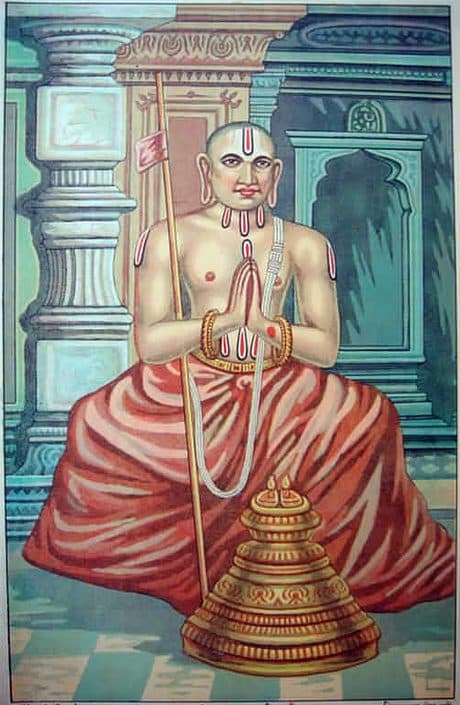
Rāmānuja · Viśiṣṭādvaita
English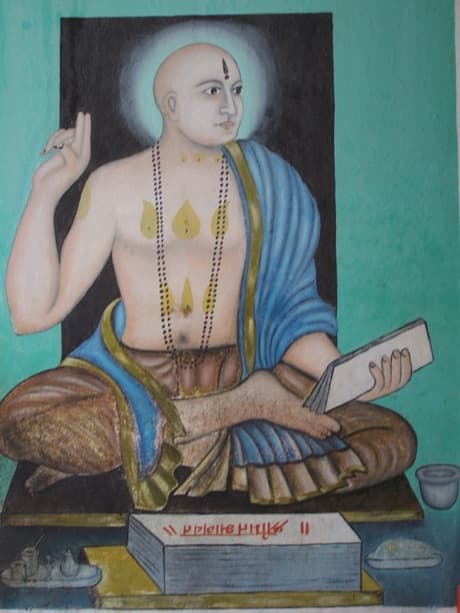
Madhvācārya · Dvaita
SanskritEnglishOn verses 18.21–18.22
“विष्णोरन्यस्य यथार्थज्ञानं राजसमुच्यते | यदि विष्णुं न जानाति यदि वा मिश्रतत्त्ववित् | अन्यथाकरणीयत्वात् कार्यार्थं जीवमेव यः | अकार्यं ब्रह्म जानाति स एवाखिलमित्यपि | एकजीवपरिज्ञानात् कृत्स्नज्ञोऽस्मीति मन्यते | युक्तिभिर्ज्ञानराहित्यत् स्वपक्षस्याल्पयुक्तितः | अयुक्ततामेव गुणं मन्यते चाल्पदर्शनः | अतत्त्वार्थं जगत् वृते तत्त्वार्थज्ञानवर्जनात् | स मुख्यतामसज्ञानी ह्येकेकेनापि किं पुनः | सर्वैरतिर्विशेषश्च युक्तः पापमधिकः | इति पादमे ||” - The knowledge which is contrary to the supremacy of Sri Vishnu and therefore imperfect, is known as raajasic. If one does not know Sri Vishnu or knows Him with confused understanding or thinks Jiva to be the performer when he is known not to be so or even thinks Brahma to be the creator when he is not the Creator or thinks knowing one Jiva is similar to knowing all the other Jivas, then such ones devoid of proper knowledge become contentious in justifying their own inadequate knowledge. These men who have little knowledge, not being able to place their arguments correctly and properly insist that their claim alone is the correct perception. Each of such person is primarily of taamsik knowledge. All those who revel thus in erroneous knowledge are associated with extreme demerits, thus in Padma Parana.
“पृथक्त्वेन तु यज्ञज्ञानम् इत्यस्य व्याख्यानम् - नानाभावात् इत्यादि | सर्वगतमेकमीश्वरं न जानातीत्येतावतैव राजसत्त्वम् | कस्य कृत्स्नवज्ञानमेव कृत्स्नेन ब्रह्मणैकज्ञानं च महातामसम् | किं पुनस्तावन्मात्रं सर्वमिति ज्ञानम् | किं पुनस्तत्राप्येकजीवादन्यत् किमपि नास्तीति अहेतुकं ज्ञानं सर्वमपि तामसम् | किमु तदेवोक्तलक्षणम् | अतत्त्वार्थवत् सदसद्वैतक्षण्याद्यन्यथार्थकल्पनायुक्तमेकं तामसम् | किमु तदेवोक्तविशेषणैयुक्तम् | प्रायोऽल्पज्ञानमपि तामसम् | अज्ञानबहुलत्वात् किमु तदेवोक्तमिथ्यानम् | एकस्मिन् सर्वविज्ञानं कार्यं जीवे पूर्णं ब्रह्मेति सक्तं ज्ञानं नियुक्तिकं चातत्त्वार्थकल्पनायुक्तमल्पज्ञानं च पृथक् सर्वेषु ||” - The statement ‘what is known as distinct’ is in further clarification of the latter remark: ‘by multiplicity of instincts’. Those who do not know that the all pervading one is the Supreme Lord, they are of raajasik attributes. Clinging to one’s own view (without considering other views) is the attribute of taamasik people. And if one thinks that after being delivered by the Lord and acquiring wisdom the Jiva would be united with the All-Intelligent, Entirely Independent Lord - when in reality the Jiva would remain entirely subservient to Him - that one would be an extreme case of de-merits. Assuming nothing else to be in existence other than Jiva is also de-meritorious. What then is there to emphasize that acquiring unreasonable wisdom is the source of great obscurity, when their marks have already been specified? Unprincipled knowledge i.e. the knowledge associated with unconventional perception of the relation of Truth and non-Truth is taamasic. In which case, what is the purpose of mentioning such knowledge to be obscure, when it is already associated with the marks mentioned above ? In fact, little knowledge can be the reason for obscurity. And its excess becomes the cause of ignorance and non-awareness. When clarified that illusion due to non-awareness is on account of such excess obscurity, would not then it would be a case of repetition. Similarly, it would also not be repetition to clarify that the knowledge that Jiva is embodiment of all-pervasiveness, that Jivas are not separate from the Lord of all comprehensive attributes, that such knowledge is devoid of all rationality. Such knowledge which contributes to unprincipled conclusions, which is associated with little knowledge are all cases of taamasa, obscurity. In the case of those who propagate the theory of Illusion (maayaavaada), all these misconceptions do exist. In other philosophies also similar misconceptions like creation without definite purpose, do prevail.
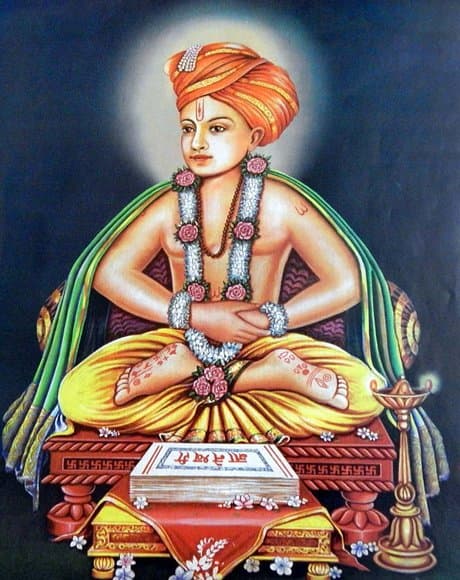
Jñāneśvar · Vārkarī
English22 *'But, that which adheres—without reason—to one solitary objective as though it were the entirety; which is slight and not partaking of reality; that knowledge is declared to be Tamas-dominated.* (549)
Oh Kiriti, that knowledge (which) wanders about naked, stripped of all clothes in the form of Scriptural mandates, and therefore, the Shruti (Vedas) turns its back on it. Being boycotted also by other putative Scriptures, which to avoid all contact even of hearing its ill repute, banish it to the mountain in the form of non-Aryan i.e. heinous (म्लेच्छ) creed miscalled religion. The knowledge being in this way possessed by the Tamas demon roams about like a lunatic (getting mad). That knowledge observes no restrictions in regard to forming bodily contacts and holds no object as prohibited, in the way a stray dog in a desolate village devours everything, except such as cannot (on account of its size) be held in his mouth, or if taken it would only burn his mouth; then only he lets the thing alone. A rat stealing gold (ornaments) takes no account (of the fact) whether it is fine or alloyed; or a flesh-eater takes no account whether the flesh is (of) fair or dark (animals). The conflagration in a forest does not discriminate while burning the forest growth: or a fly sitting (on a body) does not care to see if it is dead or alive. A crow does not consider if his find is a vomit or served food, or whether it is fresh or completely rotten. In that way, while dealing with objects, that knowledge has no discretion to abandon what is prohibited, and to accept only what is permitted by Scriptures. Whatever he sees he takes it as intended for enjoyment, and (if it happens to be) a woman and riches, he assigns them to the male generative organ and the stomach respectively. He does not know how to discriminate between holy and unholy waters: quenching the thirst and feeling happy is alone what he cares for. Similar is the case in regard to eatables and non-eatables, or forbidden and unforbidden; his only criterion is: what is agreeable to the palate is holy and pure. As regards womenfolk, the only relation through which he can understand them is the sense of touch: he knows (entertains) no other idea about them except one viz. sexual enjoyment. Whoever serves (its) selfish purpose is (alone) considered as a relative, blood relationship being no consideration at all with such knowledge. Death devours all, as also the fire consumes all: in that way Tamas knowledge considers the entire world as its own wealth. Thus, to one who considers the entire universe as only an object of enjoyment, its only end and purpose (fruit) being the preservation (feeding) of his body. The sea is the only final place of repose for the water descending down from the sky (clouds); in that way all the endeavours of Tamasic knowledge culminate in the feeding of his belly. The Tamasic knowledge is ever in the dark in regard to the realisation of the fact that there are in existence places like Heaven and Hell, or the desirability of securing Heaven and avoiding Hell. That knowledge does not extend beyond taking the body (mortal frame) as the soul and the stone idol as God. According to that knowledge the soul dies (disappears) together with all its actions at the fall of the body, and then there remains no one to enjoy the action's fruit. Further (according to it) if the existence of God is presumed, and if it is accepted that He dispenses pleasure and pain to the people according to their acts, then that very God is fit to be sold away and the proceeds used for subsistence. If the (stone) idols of God in the village temple should be taken as ruling (the universe) would the mountains in the country remain idle (i.e. the mountains have a far superior claim to rule the universe vis-a-vis the stone idols) asks the Tamasic knowledge? Further, in short, if the existence of God is somehow accepted—then that God must be taken to be a stone and the soul the body. That knowledge thus regards merit and sin and other things as bare lies, and further regards as of benefit to be always (in the enjoyment of objects, etc.) devouring all like the wild fire. According to the experience (of that knowledge) only the objects that are perceptible to the physical eye and are palatable (pleasing) to the senses are real. In short, Oh Pārtha, such line of thinking goes on widening to such an extent, that it proves unavailing, like the coil of smoke ascending the sky or like the vigorous shoot of pith (भेड़ा), whether dry or fresh, getting overgrown and broken, or like the ear of corn (कणीस) of a sugarcane, or a neuter amongst men, or a pasture of prickly pear, or the mind of a child, or the riches in the house of a thief, or the nipples hanging down from the neck of a she-goat. Knowledge unavailing like all these, and lustreless in appearance, I call as Tamas-knowledge. The very name 'knowledge' given to it carries no greater sense than that attached to the broad 'eyes' in the case of one born blind or to the fine 'ears' in the case of one deaf, or to the term 'drink' applied to wine. In that way the term knowledge applied to Tamas is only a misnomer (आडनांवाचे—nominal). Well, how far to proceed with this! Such Tamas i.e. knowledge is no real knowledge at all. It is only a visual darkness. In this way has been explained to you—the head gem amongst the hearers—the knowledge with its three-fold distinctions, consequent on the three Guna-constituents, with the signs of all these. (Similarly) it is with the help of the light of the three-fold knowledge, that all actions of the active agent, become discernible, Oh Dhanurdhara. All actions follow (the three ways of) the three-fold knowledge, in the way a water-flow, joining a current coming from the front, flows in a different (third) direction. The actions also become similarly three-fold following the three-fold knowledge, the Sattvic one of which hear first.
Swami Ramsukhdas · Modern
English'Yattu* kṛtsnavadekasminkārye saktam'—A tāmasika person, regards a perishable body, consisting of five gross elements, as his own Self. He thinks, that first he was a child, now he is young
*The particle 'Tu' here conveys that the Tāmasika knowledge is different from the Rājasika knowledge.
and then he will grow old. He holds, that he is the enjoyer, he is successful, mighty and happy and there is none else like him. He is entangled, in the meshes of delusion (16/15).
'**Aḥaitukam**'—His knowledge, is irrational and it is against the scriptures. He does not realize, that he (the soul), is imperishable and uniform, while a body is kaleidoscopic and perishable. He identifies the soul, with the body.
'**Atattvārthavadalpaṁ ca**'—Such a person, does not know the truth, that the soul is different from the body. His knowledge, is very poor and insignificant. So the Lord, has not used the term 'Knowledge', in this verse. A tāmasika person lacks knowledge, he is ignorant. So the Lord instead of using the term 'Knowledge' has used the terms 'Yat' (which) and 'Tat' (that) only.
'**Tattāmasamudāhṛtam**'—That understanding which is without reason, without foundation in truth, and is trivial, is declared to be tāmasika.
If Tāmasika knowledge, is not knowledge at all, and the Lord hesitates in calling it so, why has it been described? The reason is, that the Lord in the nineteenth verse of this chapter, asked Arjuna to hear three kinds of knowledge, action and agent. So after describing the sāttvika and rājasika knowledge, it was necessary for Him to describe it also as such.
**Appendix**—In Tāmasa knowledge, demoniac nature is predominant. In this verse the term 'Jñāna' has not been given which means that in fact it is no knowledge at all, it is mere ignorance. It is the intellect of Tāmasa people which has been called 'paśu buddhi' (beastly intellect)—
**tvam tu rājan mariṣyeti paśubuddhimimām jahi na jātaḥ prāgabhūto'dya dehavattvam na naṅkṣyasi**
(Śrīmadbhā. 12/5/2)
Śrī Śukadevajī said—'O King! now you, give up this beastly intellect that you will die. The body had no existence in the past, it was born afterwards and then it will die but it is not the case
with you (the Self) that you did not exist in the past, you were born afterwards and then you will die.'
*Link:—Now the Lord describes the Sāttvika action (action of goodness).*
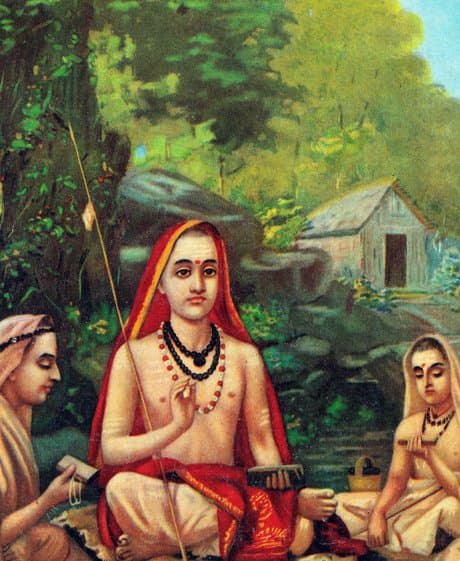
Ādi Śaṅkarācārya · Advaita
Sanskritयत् ज्ञानं कृत्स्नवत् समस्तवत् सर्वविषयमिव एकस्मिन् कार्ये देहे बहिर्वा प्रतिमादौ सक्तं ``एतावानेव आत्मा ईश्वरो वा, न अतः परं अस्ति'' इति, यथा नग्नक्षपणकादीनां शरीरान्तर्वर्ती देहपरिमाणो जीवः, ईश्वरो वा पाषाणदार्वादिमात्रम्, इत्येवं एकस्मिन् कार्ये सक्तं अहैतुकं हेतुवर्जितं निर्युक्तिकम्, अतत्त्वार्थवत् अयथाभूतार्थवत्, यथाभूतः अर्थः तत्त्वार्थः, सः अस्य ज्ञेयभूतः अस्तीति तत्त्वार्थवत्, न तत्त्वार्थवत् अतत्त्वार्थवत्; अहैतुकत्वादेव अल्पं च, अल्पविषयत्वात् अल्पफलत्वाद्वा । तत् तामसं उदाहृतम् । तामसानां हि प्राणिनां अविवेकिनां ईदृशं ज्ञानं दृश्यते ॥
अथ इदानीं कर्मणः त्रैविध्यं उच्यते -
Ādi Śaṅkarācārya · Advaita
Hindiजो ज्ञान, किसी एक कार्यमें, शरीरमें या शरीरसे बाहर प्रतिमादिमें, सर्ववस्तुविषयक सम्पूर्ण ज्ञानकी भाँति आसक्त है, अर्थात् (यह समझता है कि) यह आत्मा या ईश्वर इतना ही है इससे परे और कुछ भी नहीं है, जैसे दिगम्बर जैनियोंका (माना हुआ) आत्मा शरीरमें रहनेवाला और शरीरके बराबर है और पत्थर या काष्ठ (की प्रतिमा)-मात्र ही ईश्वर है, इसी प्रकार जो ज्ञान किसी एक कार्यमें ही आसक्त है।
तथा जो हेतुरहित—युक्तिरहित और तत्त्वार्थसे भी रहित है। यथार्थ अर्थका नाम तत्त्वार्थ है, ऐसा तत्त्वार्थ जिस ज्ञानका ज्ञेय हो, वह ज्ञान तत्त्वार्थयुक्त होता है और जो तत्त्वार्थयुक्त न हो वह अतत्त्वार्थवत् अर्थात् तत्त्वार्थसे रहित होता है। एवं जो हेतुरहित होनेके कारण ही अल्प है अथवा अल्पविषयक होनेसे या अल्प फलवाला होनेसे अल्प है, वह ज्ञान तामस कहा गया है; क्योंकि अविवेकी तामसी प्राणियोंमें ही ऐसा ज्ञान देखा जाता है
Jñāneśvar · Vārkarī
Marathiतरी किरीटी जें ज्ञान । हिंडे विधीचेनि वस्त्रेंहीन । श्रुति पाठमोरी नग्न । म्हणौनि तया ॥ ५४९ ॥ येरींही शास्त्र बटिकरीं । जें निंदेचे विटाळवरी । बोळविलेंसे डोंगरीं । म्लेंच्छधर्माच्या ॥ ५५० ॥ जें गा ज्ञान ऐसें । गुणग्रहें तामसें । घेतलें भवें पिसें । होऊनियां ॥ ५५१ ॥ जें सोयरिकें बाधु नेणें । पदार्थीं निषेधु न म्हणे । निरोविलें जैसें सुणें । शून्यग्रामीं ॥ ५५२ ॥ तया तोंडीं जें नाडळे । कां खातां जेणें पोळे । तेंचि येक वाळे । येर घेणेचि ॥ ५५३ ॥ पैं सोनें चोरितां उंदिरु । न म्हणे थरुविथरु । नेणे मांसखाइरु । काळें गोरें ॥ ५५४ ॥ नाना वनामाजीं बोहरी । कडसणी जेवीं न करी । कां जीत मेलें न विचारी । बैसतां माशी ॥ ५५५ ॥ अगा वांता कां वाढिलेया । साजुक कां सडलिया । विवेकु कावळिया । नाहीं जैसा ॥ ५५६ ॥ तैसें निषिद्ध सांडूनि द्यावें । कां विहित आदरें घ्यावें । हें विषयांचेनि नांवें । नेणेंचि जें ॥ ५५७ ॥ जेतुलें आड पडे दिठी । तेतुलें घेचि विषयासाठीं । मग तें स्त्री\-द्रव्य वाटी । शिश्नोदरां ॥ ५५८ ॥ तीर्थातीर्थ हे भाख । उदकीं नाहीं सनोळख । तृषा वोळे तेंचि सुख । वांचूनियां ॥ ५५९ ॥ तयाचिपरी खाद्याखाद्य । न म्हणे निंद्यानिंद्य । तोंडा आवडे तें मेध्य । ऐसाचि बोधु ॥ ५६० ॥ आणि स्त्रीजात तितुकें । त्वचेंद्रियेंचि वोळखे । तियेविषयीं सोयरिकें । एकचि बोधु ॥ ५६१ ॥ पैं स्वार्थीं जें उपकरे । तयाचि नाम सोयिरें । देहसंबंधु न सरे । जिये ज्ञानीं ॥ ५६२ ॥ मृत्यूचें आघवेंचि अन्न । आघवेंचि आगी इंधन । तैसें जगचि आपलें धन । तामसज्ञाना ॥ ५६३ ॥ ऐसेनि विश्व सकळ । जेणें विषयोचि मानिलें केवळ । तया एक जाण फळ । देहभरण ॥ ५६४ ॥ आकाशपतिता नीरा । जैसा सिंधुचि येक थारा । तैसें कृत्यजात उदरा\- । लागिंचि बुझे ॥ ५६५ ॥ वांचूनि स्वर्गु नरकु आथी । तया हेतु प्रवृत्ति निवृत्ती । इये आघवियेचि राती । जाणिवेची जें ॥ ५६६ ॥ जें देहखंडा नाम आत्मा । ईश्वर पाषाणप्रतिमा । ययापरौती प्रमा । ढळों नेणें ॥ ५६७ ॥ म्हणे पडिलेनि शरीरें । केलेनिसीं आत्मा सरे । मा भोगावया उरे । कोण वेषें । ॥ ५६८ ॥ ना ईश्वरु पाहातां आहे । तो भोगवी हें जरी होये । तरी देवचि खाये । विकूनियां ॥ ५६९ ॥ गांवींचें देवळेश्वर । नियामकचि होती साचार । तरी देशींचे डोंगर । उगे कां असती ? ॥ ५७० ॥ ऐसा विपायें देवो मानिजे । तरी पाषाणमात्रचि जाणिजे । आणि आत्मा तंव म्हणिजे । देहातेंचि ॥ ५७१ ॥ येरें पापपुण्यादिकें । तें आघवेंचि करोनि लटिकें । हित मानी अग्निमुखे । चरणें जें कां ॥ ५७२ ॥ जें चामाचे डोळे दाविती । जें इंद्रियें गोडी लाविती । तेंचि साच हे प्रतीती । फुडी जया ॥ ५७३ ॥ किंबहुना ऐसी प्रथा । वाढती देखसी पार्था । धूमाची वेली वृथा । आकाशीं जैसी ॥ ५७४ ॥ कोरडा ना वोला । उपेगा आथी गेला । तो वाढोनि मोडला । भेंडु जैसा ॥ ५७५ ॥ नाना उंसांचीं कणसें । कां नपुंसकें माणुसें । वन लागलें जैसें । साबरीचें ॥ ५७६ ॥ नातरी बाळकाचें मन । कां चोराघरींचें धन । अथवा गळास्तन । शेळियेचे ॥ ५७७ ॥ तैसें जें वायाणें । वोसाळ दिसे जाणणें । तयातें मी म्हणें । तामस ज्ञान ॥ ५७८ ॥ तेंही ज्ञान इया भाषा । बोलिजे तो भावो ऐसा । जात्यंधाचा कां जैसा । डोळा वाडु ॥ ५७९ ॥ कां बधिराचे नीट कान । अपेया नाम पान । तैसें आडनांव ज्ञान । तामसा तया ॥ ५८० ॥ हें असो किती बोलावें । तरी ऐसें जें देखावें । तें ज्ञान नोहे जाणावें । डोळस तम ॥ ५८१ ॥ एवं तिहीं गुणीं । भेदलें यथालक्षणीं । ज्ञान श्रोतेशिरोमणी । दाविलें तुज ॥ ५८२ ॥ आतां याचि त्रिप्रकारा । ज्ञानाचेनि धनुर्धरा । प्रकाशें होती गोचरा । कर्तयांच्या क्रिया ॥ ५८३ ॥ म्हणौनि कर्म पैं गा । अनुसरे तिहीं भागां । मोहरे जालिया वोघा । तोय जैसे ॥ ५८४ ॥ तेंचि ज्ञानत्रयवशें । त्रिविध कर्म जें असे । तेथ सात्विक तंव ऐसें । परीसे आधीं ॥ ५८५ ॥
Jñāneśvar · Vārkarī
Hindi(18.549) हे किरीटी! जो ज्ञान, विधिरूपी वस्त्र से विहीन है, संचार करता है उसके नग्न होने के कारण श्रुति उसकी ओर पीठ फेर लेती है;
(18.550) तथा जिस ज्ञान को दूसरे शास्त्र भी बाह्य समझ कर अपवित्र ठहराते और निन्दा कर म्लेच्छ-धर्म रूपी पर्वत की ओर हाँक देते हैं,
(18.551) जो ज्ञान ऐसा है कि तमोगुणरूपी नक्र उसका ग्रहण करते ही भ्रमिष्ट हो घूमता है,
(18.552) जो ज्ञान किसी सम्बन्ध की बाधा नहीं समझता, किसी पदार्थ का निषिद्ध नहीं समझता, जैसे ओस पड़े हुए किसी गाँव में छूटा हुआ कुत्ता
(18.553) जो वस्तु मुँह में समा नहीं सकती अथवा जिसके खाने से मुँह जलता है उसी को छोड़ता है, बाकी सब कुछ खाता है; (18.554) सोने की चीज चुरा ले जाते हुए जैसे चूहा भला-बुरा नहीं देखता, अथवा मांस खानेहारा जैसे यह नहीं देखता कि यह मांस काले जानवर का है या गोरे का,
(18.555) अथवा जंगल में लगी हुई आग जैसे कोई विचार नहीं करती, अथवा मक्खी जैसे जीता या मरा हुआ जीव न देख कर हर कहीं बैठती है,
(18.556) कौए का जैसे यह विवेक नहीं है कि यह उबका हुआ अन्न है या परोसा हुआ, अथवा यह ताजा अन्न है या सड़ा हुआ,
(18.557) वैसे ही जो ज्ञान विषयों में व्यापार करता हुआ यह नहीं जानता कि निषिद्ध आचरण छोड़ देना चाहिए अथवा विहित आचरण करना चाहिए,
(18.558) जो कुछ उसकी दृष्टि के सन्मुख आता है उस सब विषय का जो सेवन करता है; स्त्री-विषय शिश्न को और द्रव्य-विषय उदर को बाँट देता है,
(18.559) जिससे तृषा शान्त हो उसी को जो सुखकारक जल समझता है, इसके सिवा जो जल के विषय में पवित्र या अपवित्र ये नाम भी नहीं जानता, (18.560) उसी प्रकार जो यह भी नहीं कहता कि यह खाने योग्य है, यह खाने योग्य नहीं है, अथवा यह निन्द्य है, यह अनिन्द्य है; जो समझता है कि जो मुँह को भावे वही पवित्र है,
(18.561) और जितनी स्त्रीजाति है उतनी जो केवल स्पर्शेन्द्रिय से ही पहचानता है, उसकी मित्रता करने के लिए जो सदा अभिलाषी रहता है,
(18.562) जिस ज्ञान से अपना उपकार करनेहारा ही मित्र समझा जाता है, तथा जिससे देह-सम्बन्ध का अन्त नहीं होता,
(18.563) जैसे मृत्यु का सभी कुछ खाद्य है, और अग्नि के लिए सभी ईंधन है वैसे ही जो सारे जगत् का ही अपना धन समझता है वह तामस ज्ञान है।
(18.564) इस प्रकार जो सम्पूर्ण विश्व को विषय ही समझता है उसे देहपोषण ही एक हेतु रहता है।
(18.565) आकाश से गिरे हुए जल का एक आश्रय जैसे समुद्र ही होता है वैसे हो वह सब कर्म केवल एक उदर के ही हेतु समझता है।
(18.566) इसके अतिरिक्त कोई स्वर्ग या नरक है अथवा प्रवृत्ति या निवृत्ति उसका हेतु है इत्यादि ज्ञान की उसे रात्रि ही रहती है। (18.567) जो ज्ञान इस छोटे से देह को ही आत्मा कहता है और पत्थर की मूर्ति को ईश्वर समझता है, इसके परे जिसकी बुद्धि ही प्रवृत्त नहीं होती;
(18.568) जो समझता है कि शरीर-पात होते ही कर्म-सहित आत्मा का नाश हो जाता है फिर भोगनेवाला किस स्वरूप से शेष रह सकता है?
(18.569) अथवा ईश्वर देखता है, वह फलभोग करवाता है ऐसा कहिए, तो जो देव की मूर्ति ही बेच खाता है;
(18.570) नगर के मन्दिरों के देवता कर्म-फल देते हैं कहिए तो जो उत्तर देता है कि फिर दूर दिखाई देनेवाले पर्वत क्यों चुप रहते हैं?
(18.571) इस प्रकार जो कदाचित् देवता को माने तो उसे पत्थर की मूर्ति ही समझता है तथा देह का ही आत्मा समझता है,
(18.572) और जो पाप, पुण्य इत्यादि हैं उन सब को जो मिथ्या कहता और अग्नि-मुख के समान चाहे जिस वस्तु का उपभोग लेना ही जो भला समझता है;
(18.573) जिसकी यही सत्य प्रतीति है कि चर्म-चक्षु जो वस्तु दिखावे, इन्द्रियाँ जिसका चसका लगा दें वही उत्तम है; (18.574) बहुत क्या कहें, हे पार्थ! जैसे धूम की बेल वृथा ही आकाश में ऊँची उठती है वैसे ही जिसकी स्थिति बढ़ती हुई दिखाई दे,
(18.575) भेड़ नाम का वृक्ष (जो न गीला न सूखा उपयोगी होता है) जैसे बढ़ा हुआ हो। तथापि टूटे के ही समान है,
(18.576) अथवा ईख के भुट्टे अथवा नपुंसक मनुष्य, या निवड़ंग (सेमर?) का लगा हुआ वन,
(18.577) अथवा बालक के मनोरथ या चोरों के घर का धन या बकरी के गले के स्तन
(18.578) की तरह जो ज्ञान निष्फल और बुरा दिखाई देता है उसे मैं तामस ज्ञान कहता हूँ।
(18.579) इसे ज्ञान नाम देना ऐसा ही है जैसे जन्मान्ध के लिए यह कहना कि इसकी आँखें बड़ी हैं,
(18.580) अथवा बहिरे के विषय में कहना कि इसके कान बड़े तीक्ष्ण हैं, अथवा जो पीने-योग्य नहीं है उसे पेय वस्तु कहना, वैसे ही इस तामस ज्ञान को 'ज्ञान' नाम झूठमूठ दिया गया है।
(18.581) अस्तु, कहाँ तक वर्णन करें। तात्पर्य यह कि ऐसा जो ज्ञान देखा उसे ज्ञान नहीं प्रत्यक्ष अन्धकार जानो। (18.582) हे श्रोताओं के शिरोमणि! तीनों गुणों से भिन्न ज्ञान के जो लक्षण हैं वे हम तुम्हें बतला चुके।
(18.583) अब हे धनुर्धर! इन्हीं तीन प्रकार से कर्ता की क्रियाएँ भी ज्ञान के प्रकाश से गोचर होती हैं।
(18.584) इसलिए जैसे बहते हुए जल के विभाग हो जाय वैसे ही कर्म के भी तीन विभाग हो जाते हैं।
(18.585) उस ज्ञानत्रय के कारण त्रिधा हुए कर्म के विभागों में से सात्विक कर्म ऐसा है, सुनो।
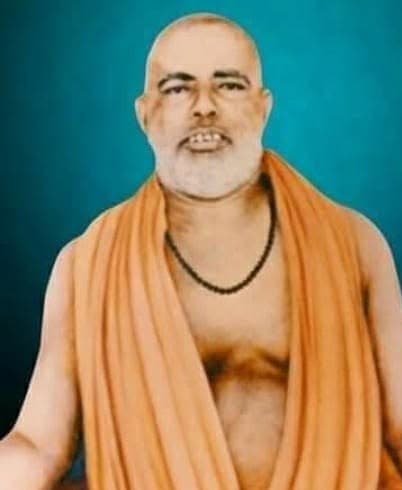
Sri Udiya Baba · Modern
Hindiभावार्थ— जबकि एक कार्यरूप शरीर में ही अकारण पूर्णतया आसक्ति हो जाय तथा जिसमें तत्त्वदृष्टि भी न हो ऐसा तुच्छ ज्ञान तामस कहा गया है।
व्याख्या— जो पुरुष कार्यरूप शरीर में ही पूर्णरूप से आसक्त हो जाय और जिसमें कोई तत्त्वदृष्टि भी न हो वह तुच्छ ज्ञान तो तमोगुणी ही है। यह ज्ञान ऐसा ही है जैसे रज्जु में सर्प का और स्थाणु में पुरुष का ज्ञान।
Swami Ramsukhdas · Modern
Hindi‘यत्तु कृत्स्नवदेकस्मिन्कार्यं सक्तम्’—तामस मनुष्य एक ही शरीरमें सम्पूर्णकी तरह आसक्त रहता है अर्थात् उत्पन्न और नष्ट होनेवाले इस पांचभौतिक शरीरको ही अपना स्वरूप मानता है। वह मानता है कि मैं ही छोटा बच्चा था, मैं ही जवान हूँ और मैं ही बूढ़ा हो जाऊँगा; मैं भोगी, बलवान् और सुखी हूँ; मैं धनी और बड़े कुटुम्बवाला हूँ; मेरे समान दूसरा कौन है; इत्यादि। ऐसी मान्यता मूढ़ताके कारण ही होती है—‘इत्यज्ञानविमोहिताः’ (१६।१५)।
‘अहैतुकम्’—तामस मनुष्यकी मान्यता युक्ति और शास्त्रप्रमाणसे विरुद्ध होती है। यह शरीर हरदम बदल रहा है, शरीरादि वस्तुमात्र अभावमें परिवर्तित हो रही है,
दृश्यमात्र अदृश्य हो रहा है और इनमें तू सदा ज्यों-का-त्यों रहता है; अतः यह शरीर और तू एक कैसे हो सकते हैं?—इस प्रकारकी युक्तियोंको वह स्वीकार नहीं करता।
‘अतत्त्वार्थवदल्पं च’—यह शरीर और मैं दोनों अलग-अलग हैं—इस वास्तविक ज्ञान-(विवेक) से वह रहित है। उसकी समझ अत्यन्त तुच्छ है अर्थात् तुच्छताकी प्राप्ति करानेवाली है। इसलिये इसको ‘ज्ञान’ कहनेमें भगवान्को संकोच हुआ है। कारण कि तामस पुरुषमें मूढ़ताकी प्रधानता होती है। मूढ़ता और ज्ञानका आपसमें विरोध है। अतः भगवान्ने ‘ज्ञान’ पद न देकर ‘यत्’ और ‘तत्’ पदसे ही काम चलाया है।
१-यहाँ ‘तु’ पद राजस ज्ञानको सात्त्विक ज्ञानसे भिन्न बतानेके लिये आया है।
२-इस श्लोकमें राजस ज्ञानसे भी तामस ज्ञानको भिन्न बतानेके लिये ‘तु’ पद आया है।
‘तत्तामसमुदाहृतम्’—युक्तिरहित, अल्प और अत्यन्त तुच्छ समझको ही महत्त्व देना ‘तामस’ कहा गया है।
जब तामस समझ ‘ज्ञान’ है ही नहीं और भगवानको भी इसको ‘ज्ञान’ कहनेमें संकोच हुआ है, तो फिर इसका
वर्णन ही क्यों किया गया? कारण कि भगवानने उन्नीसवें श्लोकमें ज्ञानके त्रिविध भेद कहनेका उपक्रम किया है, इसलिये सात्त्विक और राजस-ज्ञानका वर्णन करनेके बाद तामस समझको भी कहनेकी आवश्यकता थी।
**परिशिष्ट भाव**—तामस ज्ञानमें आसुरी सम्पत्ति विशेष है। इस श्लोकमें ‘ज्ञान’ शब्द न देनेका तात्पर्य है कि वास्तवमें यह ज्ञान नहीं है, प्रत्युत अज्ञान ही है। यह तामस मनुष्योंकी बुद्धि है, जिसको ‘पशुबुद्धि’ कहा गया है—
त्वं तु राजन् मरिष्येति पशुबुद्धिमिमां जहि। न जातः प्रागभूतोऽद्य देहवत्त्वं न नङ्क्ष्यसि॥
(श्रीमद्भगवद्गीता १२।५।२)
(श्रीशुकदेवजी बोले—) ‘हे राजन्! अब तुम यह पशुबुद्धि छोड़ दो कि मैं मर जाऊँगा। जैसे शरीर पहले नहीं था, पीछे पैदा हुआ और फिर मर जायगा, ऐसे तुम पहले नहीं थे, पीछे पैदा हुए और फिर मर जाओगे—यह बात नहीं है।’
सम्बन्ध—अब भगवान् सात्त्विक कर्मका वर्णन करते हैं।
One who clings to a single activity in a stagnant and obstinate manner, such as the worship of an impersonal conception of God and considers that such an insignificant activity has the highest perfection in existence to the exclusion of all other possibilities
and not considering any other conception as tenable and in stagnation ceases to develop and grow, is the epitome of one shackled in tama guṇa.
The word ahaitukam means irrational, without reason, imagining that which gives meagre results to give great results.
The words atattva arthavad means devoid of reality, without substantiation of the Vedic scriptures.
The word alpaṃ means limited in scope and relates to foolish, trivial pagan acts such as worshiping ghosts and spirits for material power.
So thus showing how the three guṇas or modes of material nature have a direct effect on the knowledge possessed by the performer of any action; Lord Krishna will next expound their direct influence upon actions themselves.
The Threefold Division of Acts