

Bhagavad Gītā · Chapter 18 · Mokṣa Sannyāsa Yoga
स्वभावजेन कौन्तेय निबद्धः स्वेन कर्मणा
कर्तुं नेच्छसि यन्मोहात्करिष्यस्यवशोऽपि तत्
svabhāvajena kaunteya nibaddhaḥ svena karmaṇā|kartuṃ necchasi yanmohātkariṣyasyavaśo'pi tat||
Word meanings
कौन्तेय = O son of Kuntī
स्वेन = your own
स्वभावजेन = born of your nature
कर्मणा = by the action
निबद्धः = bound
मोहात् = out of delusion
यत् = which
न = not
कर्तुम् = to do
इच्छसि = you wish
तत् = that
अपि = also
अवशः = helplessly
करिष्यसि = you will do
Translation
That action too which you are not willing to undertake through ignorance,—bound by your own duty born of your nature, you will helplessly perform.
Commentary
The commentators seated around this verse
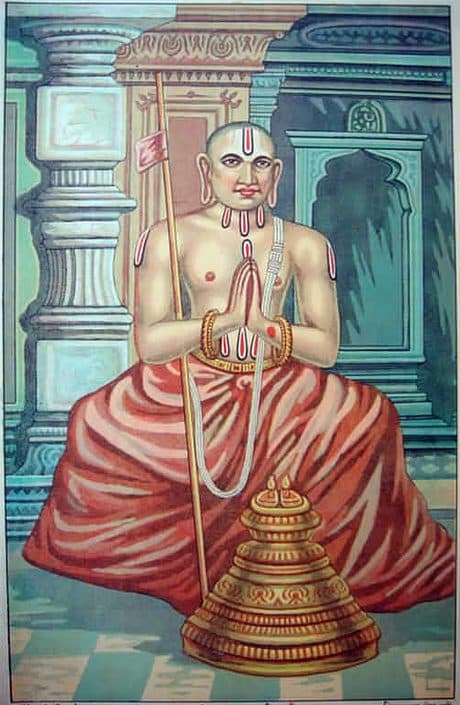
Rāmānuja · Viśiṣṭādvaita
English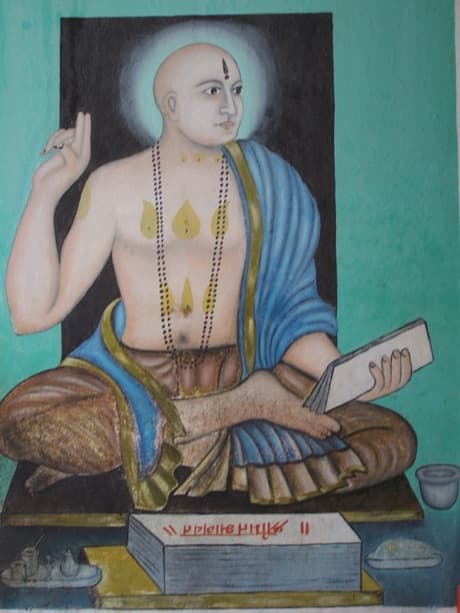
Madhvācārya · Dvaita
SanskritEnglishOn verses 18.58–18.60
“प्रकृतिरीश्वरेच्छा - प्रकृतिवासनोत्पुक्तां नैवेद्यचनन्त कथ्यते । इतादिवचनात् । एषा तु प्रकृत्यैव च कर्माणि इत्यादिष्वपि युज्यते । तस्या एव हि मुख्यतो नियोक्तृत्वं स्वभावकर्मादिभिर्बद्ध्वा ॥” - Prakriti, nature is the Will of the Supreme Lord. Because it is said, “Your Will, verily is spoken as Prakriti, Attachment etc”. Therefore, “prakriti and also the Actions” are also proper usage. The nature and the actions are primarily bound by the Will of the Lord, being verily, “I am the supreme Lord among all the creatures”.

Jñāneśvar · Vārkarī
English60 "Constrained, O Son of Kunti, by thy own inborn urge to act, what thou, through self-delusion, dost not wish to do: even that thou wilt do in sheer helplessness. (1286)
Were one to (try to) swim towards the West when the current is flowing Eastward, it would be simply perverse on the part of the swimmer, the (powerful) current would drag him down along its own line (direction) of flow. Were a grain of rice seed to say that it would neither germinate nor grow as rice, could it go against (its own) nature? In that way, Oh you wise one, (your) inborn nature formed of the Kshatriya tradition, would make you rise up, and (your) protestation viz. 'I would remain passive at this stage', is sheer perversity. Bravery, high spirit, mindfulness, and other qualities have been bestowed upon you while getting born, by your (Kshatriya) nature, Oh Son of Pāṇḍu, and so that Prakriti will not permit you to sit quiet, Oh Dhananjaya, unless you do actions conforming to the group of your (inherent) qualities. Therefore, Oh Kodandapāṇi, (कोदण्डपाणी-one with a bow in his hand, Arjuna) being fettered by the (Kshatriya) qualities, (mentioned above), you are bound to follow the traditional duties prescribed for the Kshatriyas, and there is no doubt about it. And were you, without taking into account your birth and origin thoughtlessly to take a vow not to fight, you would, I feel sure, do (fighting) in spite of your persistently saying that you would not do anything, in the way one bound hands and feet, and put into a chariot, travels over far distant lands (दिगंत) even though he himself does not walk. Why did you give fight when Uttara, the eldest son of the King of Virāta, began to flee (from the battle-field)? That very Kshatriya nature of yours (that made you fight then) will make you fight (even now). You made Akshouhinis (अक्षौहिणी—made up of 218700 units in the army) of great warriors eat dust in the battlefield, and that very nature of yours will make you fight here, Oh Kodandapāṇi. Oh, does a patient ever like illness? Or does a poverty-stricken man ever like poverty? Yet, the powerful destiny makes them suffer these. That destiny will not act differently (in your case) working as it does, under the control of God Almighty, and that God Almighty is in your heart.
Swami Ramsukhdas · Modern
English'Svabhāvajena kaunteya nibaddhaḥ svena karmaṇā'—Svabhāva (nature), consists of a total sum of actions and inclinations of the previous birth, the influence of parents of this birth, the environment and the education, he receives. The same nature has been called Svadharma (own duty)—"Considering your own duty, you should not waver" (Gītā 2/31).
'Kartuṁ necchasi yanmohātkariṣyasyavaśo'pi tat'—Lord Kṛṣṇa says to Arjuna, that endowed with martial qualities, such as prowess and valour etc., of the warrior class, being bound by
your Kṣatriya nature, you will have to do irresistibly, what you do not want to perform, out of delusion. The scriptures have also sanctioned the duties, according to one's own nature. Lord Kṛṣṇa declared, 'One's own duty, though devoid of merit, is preferable to the duty of another, well performed' (Gītā 3/35; 18/47). So, he is bound to perform the act of fighting, born of his nature. It is out of delusion, that he is thinking not to fight.
The nature of liberated souls, is perfectly pure. So, they are not driven to action, by their nature. But still, they perform actions, according to their nature. Common people are driven to action, under the sway of their nature (3/33). So Lord Kṛṣṇa tells Arjuna, that he will also have to perform action of fighting, according to the nature of a member of the warrior class, and that will not bear good fruit. As if he fights, by obeying either the scriptures or the saints or Him, it will lead him to salvation, because this action, will be free from attachment and aversion. When a man performs actions, in accordance with ordinances of scriptures, or His order, his attachment and aversion for actions, automatically melt away, as he has an eye on the ordinance or the order. Thus, he is not swayed, by attachment and aversion.
An Important Fact
In the Gītā, it has been mentioned several times, that men act, as swayed by their own nature (3/5; 8/19; 9/8). And it has been specially mentioned in 3/33 and here in 18/59.* This proves, the predominance of one's own nature. A being's nature, accompanies him to his birth, in good and evil wombs. If he is pure of nature, having no attachment to persons and things etc., he will not be reborn. It is attachment, to the modes of nature, which is the cause of birth of the soul (self), in good or evil wombs (Gītā 13/21).
* In Jñānayoga (the Discipline of Knowledge) the man of wisdom renounces his affinity with Prakṛti (Nature) and so he is not compelled to perform actions by Prakṛti (Nature).
Now, a question arises, when a man is compelled to perform actions according to his nature, how will prescription and prohibition of scriptures be applied? How will the preaching of preceptors, be translated into practice? How will strivers inculcate virtues, by discarding evils and vices?
The answer to the above questions is that, as a man cannot stop the flow of the Ganges, but can redirect it, similarly he cannot renounce the duty of his caste (Varna), but can purify his nature, by being free from attachment and aversion, by having the aim of God-realization. It means, that a man is powerful and free, in purifying his nature.
In the Gītā the Lord, has described two disciplines—of action and of devotion, to improve one's nature.
(1) Discipline of Action:—In the thirty-fourth verse of the third chapter, the Lord declared, 'Attachment and aversion are a man's foes. So a man, should never come under their sway.' It means, that instead of performing actions out of attachment and aversion, he should perform these according to the ordinance of scriptures. If a disciple, carries out the behest of his preceptor, with zeal and pleasure, his attachment and aversion get obliterated. Similar, is the case with a son in relation to his parents, a wife to her husband and a servant in relation to his master. By doing so happily, a man becomes free from attachment and aversion. But, if he performs action according to his own sweet will, attachment and aversion are firmly established. When he performs only prescribed actions happily though his mind misguides him to do otherwise, his attachment is rooted out. When one is prompted not to do some action but if he does it according to the ordinance of the scripture his aversion vanishes.
(2) Discipline of Devotion:—When a man takes refuge in God, and becomes merely an instrument in His hand, he performs actions, as sanctioned by Him and so attachment and aversion of his nature, are rooted out.
It means, that in the Discipline of Action, when a striver does
not come under the sway of attachment and aversion, his nature is purified (Gītā 3/34). In the Discipline of Devotion, when a striver takes refuge in Him, his nature is purified (Gītā 18/62). When nature is purified, there remains no ground for bondage.
A man performs actions, either after being swayed by attachment and aversion, or by following scriptural injunctions. Attachment and aversion, are strengthened if he performs these under the sway of attachment and aversion. Thus, his nature becomes impure. But, if he acts according to the set principles, his nature, is purified. Strivers, who act according to ordinance of scriptures, advice of great men and liberated souls, having only an aim of God-realization, set examples and standards, for others. So do, great men and emancipated souls (Gītā 3/21).
**Appendix**—Nature is of two kinds—(1) Nature of performing prescribed actions (2) Nature of performing forbidden actions. Out of these, the nature of performing prescribed actions, being natural, is ‘sva’—one’s own nature; while the nature of the performance of forbidden actions, being ‘āgantuka’ (visiting nature) is ‘para’ (not one’s own). The nature of the performance of prescribed actions, being natural, is not ‘janya’ (born); but the nature of the performance of forbidden actions being alien is ‘janya’ (born of attachment, born of bad company). A man’s main duty is to improve and purify his nature viz., he should give up the nature of performing forbidden actions and he should conduct himself well according to the nature which he has formed by performing the prescribed actions. The Lord has ordered Arjuna to perform his prescribed duty according to his ‘varṇa’ (order of life) (caste) sanctioned by the scripture.
The Lord says to Arjuna that either as a matter of duty, or as obedience to His order, he will have to fight. Without taking refuge in Him, his egoism will persist by which even the prescribed actions will lead him to bondage. But if he takes refuge in Him, he will get rid of egoism. It is egoism which leads to bondage. When even a wise man, who is not swayed by nature and whose
nature is perfectly pure, acts in accordance with his nature, then how can a man, who is swayed by his nature and whose nature is impure, act contrary to (against) his nature?
*Link:—Soul (the self) is a fragment of God, and is sentient, while nature is self-made and insentient. So how does soul, come under the sway of nature? The Lord answers the question, in the next verse.*

Ādi Śaṅkarācārya · Advaita
Sanskritस्वभावजेन शौर्यादिना यथोक्तेन कौन्तेय निबद्धः निश्चयेन बद्धः स्वेन आत्मीयेन कर्मणा कर्तुं न इच्छसि यत् कर्म, मोहात् अविवेकतः करिष्यसि अवशोऽपि परवश एव तत् कर्म ॥
यस्मात् -
Ādi Śaṅkarācārya · Advaita
Hindiक्योंकि—
हे कौन्तेय! तू उपर्युक्त शूरवीरता आदि अपने स्वाभाविक कर्मोंद्वारा निबद्ध हुआ—दृढ़तासे बँधा हुआ है, इसलिये जो कर्म तू मोहसे—अविवेकके कारण नहीं करना चाहता है, वही कर्म विवश होकर करेगा
Jñāneśvar · Vārkarī
Marathiपैं पूर्वे वाहतां पाणी । पव्हिजे पश्चिमेचे वाहणीं । तरी आग्रहोचि उरे तें आणी । आपुलिया लेखा ॥ १२८६ ॥ कां साळीचा कणु म्हणे । मी नुगवें साळीपणें । तरी आहे आन करणें । स्वभावासी ? ॥ १२८७ ॥ तैसा क्षात्रंस्कारसिद्धा । प्रकृती घडिलासी प्रबुद्धा । आता नुठी म्हणसी हा धांदा । परी उठवीजसीचि तूं ॥ १२८८ ॥ पैं शौर्य तेज दक्षता । एवमादिक पंडुसुता । गुण दिधले जन्मतां । प्रकृती तुज ॥ १२८९ ॥ तरी तयाचिया समवाया\- । अनुरूप धनंजया । न करितां उगलियां । नयेल असों ॥ १२९० ॥ म्हणौनियां तिहीं गुणीं । बांधिलासि तूं कोदंडपाणी । त्रिशुद्धी निघसी वाहणीं । क्षात्राचिया ॥ १२९१ ॥ ना हें आपुलें जन्ममूळ । न विचारीतचि केवळ । न झुंजें ऐसें अढळ । व्रत जरी घेसी ॥ १२९२ ॥ तरी बांधोनि हात पाये । जो रथीं घातला होये । तो न चाले तरी जाये । दिगंता जेवीं ॥ १२९३ ॥ तैसा तूं आपुलियाकडुनी । मीं कांहींच न करीं म्हणौनि । ठासी परी भरंवसेनि । तूंचि करिसी ॥ १२९४ ॥ उत्तरु वैराटींचा राजा । पळतां तूं कां निघालासी झुंजा ? । हा क्षात्रस्वभावो तुझा । झुंजवील तुज ॥ १२९५ ॥ महावीर अकरा अक्षौहिणी । तुवां येकें नागविले रणांगणीं । तो स्वभावो कोदंडपाणी । झुंजवील तूंतें ॥ १२९६ ॥ हां गा रोगु कायी रोगिया । आवडे दरिद्र दरिद्रिया ? । परी भोगविजे बळिया । अदृष्टें जेणें ॥ १२९७ ॥ तें अदृष्ट अनारिसें । न करील ईश्वरवशें । तो ईश्वरुही असे । हृदयीं तुझ्या ॥ १२९८ ॥
Jñāneśvar · Vārkarī
Hindi(18.1286) पानी पूर्व की ओर बहता हो तो पश्चिम की ओर तैरना केवल हठ करना है, क्योंकि तैरनेहारे को पानी अपने प्रवाह की ओर ही खींचता है,
(18.1287) अथवा धान का कण कहे कि मैं धानरूप से न उर्गूँ तो स्वभाव-धर्म के विपरीत होने के कारण क्या ऐसी बात हो सकती है (18.1288) वैसे ही हे प्रबुद्ध! प्रकृति ने तुम्हें क्षात्र संस्कारों से युक्त रचा है, अतः तुम्हारा यह कहना कि हम युद्ध नहीं करते केवल एक व्यापार है; परन्तु तुम्हें युद्ध करना ही पड़ेगा।
(18.1289) हे पाण्डुसुत! प्रकृति ने तुम्हें जन्म से ही शूरता, तेज, दक्षता इत्यादि गुण दिये हैं।
(18.1290) अतः हे धनंजय! उस गुण-समुदाय के अनुरूप कर्म न करके तुम चुपचाप नहीं बैठ सकते।
(18.1291) अतएव हे कोदण्डपाणि! तुम तीन गुणों से तीनों ओर बँधे रहने के कारण अवश्य ही क्षात्रधर्म के मार्ग में प्रवृत्त होगे,
(18.1292) अथवा यद्यपि तुम अपने जन्म के मूल का विचार न करते हुए केवल यही अटल निश्चय कर लो कि मैं युद्ध न करूँगा
(18.1293) तथापि जिसे हाथ-पाँव बाँध कर रथ में बैठा रक्खा हो वह जैसे स्वयं न चल कर भी देशान्तर का चला जाता है
(18.1294) वैसे ही तुम अपनी ओर से यह कह कर चुपचाप रहो कि मैं कुछ कर्म नहीं करता तथापि तुम्हें अवश्य ही करना पड़ेगा। (18.1295) गोग्रहण के समय जब राजा उत्तर युद्ध में से भागता था तब तुमने क्यों युद्ध किया? यही तुम्हारा क्षत्रिय-स्वभाव तुमसे अब भी युद्ध करावेगा।
(18.1296) जिस स्वभाव-बल से ग्यारह अक्षौहिणी सेना का तुमने अकेले ही युद्ध में पराजित किया वही स्वभाव है कोदण्डपाणि! तुम्हें अब भी लड़ावेगा।
(18.1297) अजी! रोगी को क्या रोग की चाह रहती है, दरिद्री को क्या दरिद्रता की इच्छा रहती है, तथापि जिस बलिष्ठ प्रारब्धानुसार उन्हें रोग या दरिद्रता भोगनी ही पड़ती है
(18.1298) वह प्रारब्ध ईश्वर के वश होने के कारण अन्यथा कभी नहीं होता। वह ईश्वर भी तुम्हारे हृदय में बसता है।
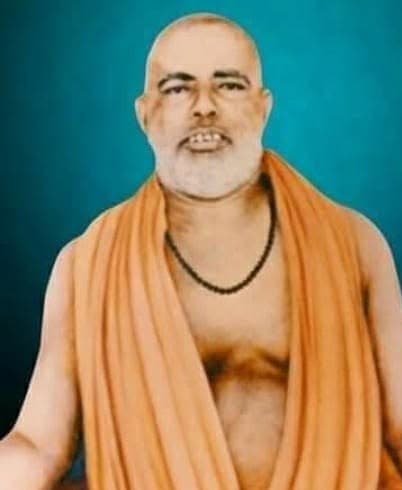
Sri Udiya Baba · Modern
Hindiभावार्थ— हे कुन्तिनन्दन! अपने स्वाभाविक कर्म से बँधा होने के कारण जो कार्य तू मोहवश नहीं करना चाहता वह तुझे विवश होकर भी करना पड़ेगा।
व्याख्या— मनुष्य अपने पूर्व जन्मों के कर्मानुसार जन्म लेता है और उसी के अनुरूप कर्म करता है। इस प्रकार सब अपने स्वभाव से बँधे हुए हैं। परन्तु यह स्वभाव की प्रधानता अविवेकियों के लिये है। विचारवान् तो स्वभाव को पलट देते हैं—'स्वभावविजयः शौर्यम्'। क्योंकि ज्ञान-द्वारा स्वभाव भी जीत लिया जाता है। योगिजन तो
पाँच-छः शरीर धारण करके पाँच-छः जन्मों का प्रारब्ध एक ही साथ भोग लेते हैं।
Swami Ramsukhdas · Modern
Hindi‘स्वभावजेन कौन्तेय निबद्धः स्वेन कर्मणा’—पूर्वजन्ममें जैसे कर्म और गुणोंकी वृत्तियाँ रही हैं, इस जन्ममें जैसे माता-पितासे पैदा हुए हैं अर्थात् माता-पिताके जैसे संस्कार रहे हैं, जन्मके बाद जैसा देखा-सुना है, जैसी शिक्षा प्राप्त हुई है और जैसे कर्म किये हैं—उन सबके मिलनेसे अपनी जो कर्म करनेकी एक आदत बनी है, उसका नाम स्वभाव है। इसको भगवान्ने स्वभावजन्य स्वकीय कर्म कहा है। इसीको स्वधर्म भी कहते हैं—‘स्वधर्ममपि चावेक्ष्य न विकम्पितुमर्हसि’ (गीता २। ३१)।
‘कर्तुं नेच्छसि यन्मोहात् करिष्यस्यवशोऽपि तत्’—स्वभावजन्य क्षात्र प्रकृतिसे बँधा हुआ तू मोहके कारण जो नहीं करना चाहता, उसको तू परवश होकर करेगा। स्वभावके अनुसार ही शास्त्रोंने कर्तव्य-पालनकी आज्ञा दी है। उस आज्ञामें यदि दूसरोंके कर्मोंकी अपेक्षा अपने कर्मोंमें कमियाँ अथवा दोष दीखते हों, तो भी वे दोष बाधक (पाप-जनक) नहीं होते—‘श्रेयान्स्वधर्मो विगुणः परधर्मात्स्वनुष्ठितात्’ (गीता ३। ३५; १८। ४७)। उस स्वभावज कर्म (क्षात्र-धर्म)-के अनुसार तू युद्ध करनेके लिये परवश है। युद्धरूप कर्तव्यको न करनेका तेरा विचार मूढ़तापूर्वक किया गया है।
जो जीवन्मुक्त महापुरुष होते हैं, उनका स्वभाव सर्वथा शुद्ध होता है। अतः उनपर स्वभावका आधिपत्य नहीं रहता अर्थात् वे स्वभावके परवश नहीं होते; फिर भी वे किसी काममें प्रवृत्त होते हैं, तो अपनी प्रकृति-(स्वभाव-) के अनुसार ही काम करते हैं। परन्तु साधारण मनुष्य प्रकृतिके परवश होते हैं, इसलिये उनका स्वभाव उनको जबर्दस्ती कर्ममें लगा देता है (गीता—तीसरे अध्यायका तैतीसवाँ श्लोक)। भगवान् अर्जुनसे कहते हैं कि तेरा क्षात्र-स्वभाव भी तुझे जबर्दस्ती युद्धमें लगा देगा; परन्तु उसका फल तेरे लिये बढ़िया नहीं होगा। यदि तू शास्त्र या सन्त-महापुरुषोंकी आज्ञासे अथवा मेरी आज्ञासे युद्धरूप कर्म करेगा, तो
वही कर्म तेरे लिये कल्याणकारी हो जायगा। कारण कि शास्त्र अथवा मेरी आज्ञासे कर्मोंको करनेसे, उन कर्मोंमें जो राग-द्वेष हैं, वे स्वाभाविक ही मिटते चले जायेंगे; क्योंकि तेरी दृष्टि आज्ञाकी तरफ रहेगी, राग-द्वेषकी तरफ नहीं। अतः वे कर्म बन्धनकारक न होकर कल्याणकारक ही होंगे।
विशेष बात
गीतामें प्रकृतिकी परवशताकी बात सामान्यरूपसे कई जगह आयी है (जैसे—तीसरे अध्यायका पाँचवाँ, आठवें अध्यायका उन्नीसवाँ और नवें अध्यायका आठवाँ श्लोक आदि); परन्तु दो जगह प्रकृतिकी परवशताकी बात विशेषरूपसे आयी है—‘प्रकृतिं यान्ति भूतानि’ (३। ३३) और यहाँ ‘प्रकृतिस्त्वां नियोक्ष्यति’ (१८। ५९)। इससे स्वभावकी प्रबलता ही सिद्ध होती है; क्योंकि कोई भी प्राणी जिस-किसी योनिमें भी जन्म लेता है, उसकी प्रकृति अर्थात् स्वभाव उसके साथमें रहता है। अगर उसका स्वभाव परम शुद्ध हो अर्थात् स्वभावमें सर्वथा असंगता हो तो उसका जन्म ही क्यों होगा? यदि उसका जन्म होगा तो उसमें स्वभावकी ही मुख्यता रहेगी—‘कारणं गुणसंगोऽस्य सदसद्योनिजन्मसु’ (गीता १३। २१)। जब स्वभावकी ही मुख्यता अथवा परवशता रहेगी और प्रत्येक क्रिया स्वभावके अनुसार ही होगी, तो फिर शास्त्रोंका विधि-निषेध किसपर लागू होगा? गुरुजनोंकी शिक्षा किसके काम आयेगी? और मनुष्य दुर्गुण-दुराचारोंका त्याग करके सद्गुण-सदाचारोंमें कैसे प्रवृत्त होगा?
उपर्युक्त प्रश्नोंका उत्तर यह है कि जैसे मनुष्य गंगाजीके प्रवाहको रोक तो नहीं सकता, पर उसके प्रवाहको मोड़ सकता है, घुमा सकता है। ऐसे ही मनुष्य अपने वर्णचित स्वभावको छोड़ तो नहीं सकता, पर भगवत्प्राप्तिका उद्देश्य रखकर उसको राग-द्वेषसे रहित परम शुद्ध, निर्मल बना सकता है। तात्पर्य यह हुआ कि
* ज्ञानयोगमें ज्ञानी प्रकृतिसे सम्बन्ध-विच्छेद कर लेता है, इसलिये उसके लिये प्रकृतिकी परवशताकी बात नहीं आयी है।
स्वभावको शुद्ध बनानेमें मनुष्यमात्र सर्वथा सबल और स्वतन्त्र है, निर्बल और परतन्त्र नहीं है। निर्बलता और परतन्त्रता तो केवल राग-द्वेष होनेसे प्रतीत होती है।
अब इस स्वभावको सुधारनेके लिये भगवान्ने गीतामें कर्मयोग और भक्तियोगकी दृष्टिसे दो उपाय बताये हैं—
(१) **कर्मयोगकी दृष्टिसे**—तीसरे अध्यायके चौंतीसवें श्लोकमें भगवान्ने बताया है कि मनुष्यके खास शत्रु राग-द्वेष ही हैं। अतः राग-द्वेषके वशमें नहीं होना चाहिये अर्थात् राग-द्वेषको लेकर कोई भी कर्म नहीं करना चाहिये, प्रत्युत शास्त्रकी आज्ञाके अनुसार ही प्रत्येक कर्म करना चाहिये। शास्त्रके आज्ञानुसार अर्थात् शिष्य गुरुजी, पुत्र माता-पिताकी, पत्नी पतिकी और नौकर मालिककी आज्ञाके अनुसार प्रसन्नतापूर्वक सब कर्म करता है तो उसमें राग-द्वेष नहीं रहते। कारण कि अपने मनके अनुसार कर्म करनेसे ही राग-द्वेष पुष्ट होते हैं। शास्त्र आदिकी आज्ञाके अनुसार कार्य करनेसे और कभी दूसरा नया कार्य करनेकी मनमें आ जानेपर भी शास्त्रकी आज्ञा न होनेसे हम वह कार्य नहीं करते तो उससे हमारा 'राग' मिट जायगा; और कभी कार्यको न करनेकी मनमें आ जानेपर भी शास्त्रकी आज्ञा होनेसे हम वह कार्य प्रसन्नतापूर्वक करते हैं तो उससे हमारा 'द्वेष' मिट जायगा।
(२) **भक्तियोगकी दृष्टिसे**—जब मनुष्य ममतावाली
**परिशिष्ट भाव**—स्वभाव दो तरहका होता है—(१) विहित कर्मोंका स्वभाव और (२) निषिद्ध कर्मोंका स्वभाव। इनमें विहित कर्मोंका स्वभाव तो स्वतः होनेसे 'स्व-स्वभाव' है, पर निषिद्ध कर्मोंका स्वभाव आगन्तुक होनेसे 'पर-स्वभाव' है। विहित कर्मोंका स्वभाव तो सजातीय होनेसे जन्म नहीं है, पर निषिद्ध कर्मोंका स्वभाव विजातीय होनेसे जन्म (आसक्तिजन्म, कुसंगजन्म) है। मनुष्यका खास कर्तव्य है—अपना स्वभाव ठीक करना अर्थात् निषिद्ध कर्मोंके स्वभावका त्याग करके विहित कर्मोंके स्वभावके अनुसार आचरण करना। भगवान्ने विहित कर्मोंके स्वभावके अनुसार ही अपने वर्ण-धर्मका पालन करनेकी आज्ञा दी है।
भगवान् कहते हैं कि चाहे कर्तव्यमात्र समझकर युद्ध कर, चाहे मेरी आज्ञा मानकर युद्ध कर, युद्ध तो तेरेको करना ही पड़ेगा। मेरा आश्रय न लेनेसे तेरा अहंकार रहेगा, जिससे विहित कर्म भी बाँधनेवाला हो जायगा। परन्तु मेरा आश्रय लेनेसे अहंकार नहीं रहेगा। अहंकार ही बाँधनेवाला होता है। जो प्रकृतिके परवश नहीं होता, जिसकी प्रकृति महान् शुद्ध होती है, ऐसा ज्ञानी महापुरुष भी जब प्रकृतिके अनुसार क्रिया करता है, फिर प्रकृतिके परवश हुआ तथा अशुद्ध प्रकृतिवाला मनुष्य प्रकृतिके विरुद्ध कर्म कैसे कर सकता है?
**सम्बन्ध**—जीव स्वयं परमात्माका अंश है और स्वभाव प्रकृतिका अंश है; स्वयं स्वतःसिद्ध है और स्वभाव खुदका बनाया हुआ है; स्वयं चेतन है और स्वभाव जड़ है—ऐसा होनेपर भी जीव स्वभावके परवश कैसे हो जाता है? इस प्रश्नके उत्तरमें भगवान् आगेका श्लोक कहते हैं।
It is a natural tendency for the kṣatriyas or royal warriors to be heroically predisposed to fight for a righteous cause.
In the case of mohad out of delusion having the false notion to abstain from fulfilling their natural duty, so strong is it that one will definitely be compelled to plunge into battle even against one's own will,
when one has been hurled the bitter sting of insults and deprecations of cowardice from one's opponents.
Indeed all jīvas or embodied beings are bound by the indomitable laws of karma or reactions from past actions assuming various physical bodies to invariably adhere to the influence of the predominant guṇa or mode of material nature.