

Bhagavad Gītā · Chapter 18 · Mokṣa Sannyāsa Yoga
यदग्रे चानुबन्धे च सुखं मोहनमात्मनः
निद्रालस्यप्रमादोत्थं तत्तामसमुदाहृतम्
yadagre cānubandhe ca sukhaṃ mohanamātmanaḥ|nidrālasyapramādotthaṃ tattāmasamudāhṛtam||
Word meanings
निद्रालस्यप्रमादोत्थम् = arising from sleep, indolence, and negligence
यत् = which
सुखम् = happiness
अग्रे = in the beginning
च = and
अनुबन्धे = in the end
च = even
आत्मनः = oneself
मोहनम् = stupefying
तत् = that
तामसम् = tamasic
उदाहृतम् = has been described
Translation
That which stupefies the self during its enjoyment as well as in the end,—derived from sleep, indolence and obstinate error; such delight has been called Tamasika.
Commentary
The commentators seated around this verse
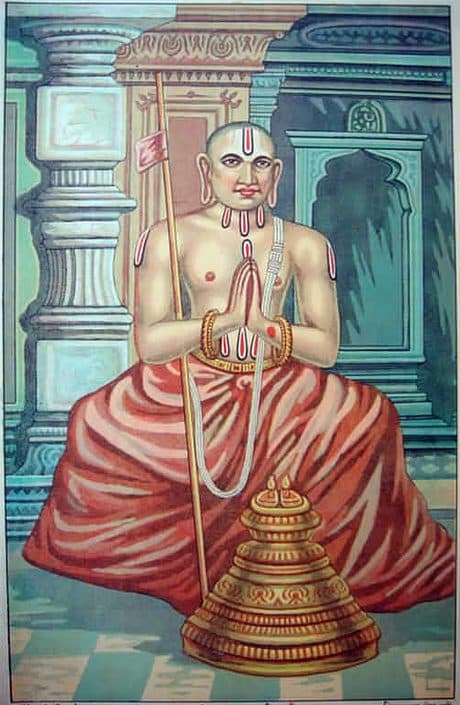
Rāmānuja · Viśiṣṭādvaita
English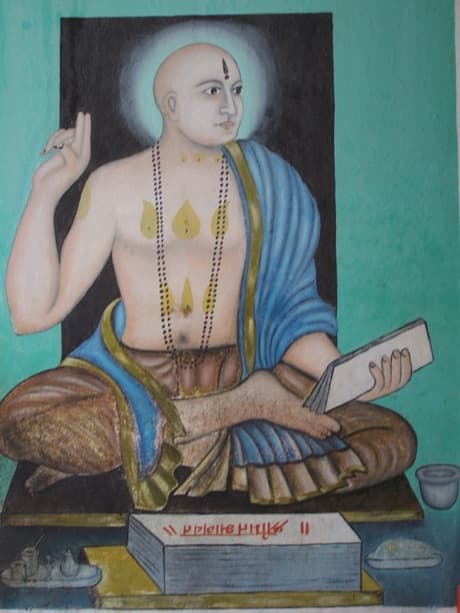
Madhvācārya · Dvaita
SanskritEnglishOn verses 18.38–18.41
“सच्चं जीवजातम् | मुक्तानां गुणातीतत्वात् - पृथिव्यां दिवि देवविव्यादि च विशेषः || यथेष्टं सच्चरन्तोऽपि मुक्ता भूम्यादिगा न तु | ग्रामस्था अपि न ग्राम्या वैलक्षण्याद्वि सज्जनाः | नराधमास्तामसेषु साच्चिकास्तत्र राजसाः | दैतभूत्या महादैत्या मुख्यतामसतामसाः | राजसस्तु नरास्तत्र विप्रा राजससाच्चिकाः | तत्रस्थशुद्धसच्चास्तु परहंसा प्रकीर्तिताः | हंसो बहुदकः कुटिजो वनस्थो नैष्टिको गृही | क्रमाद् राजोथिका बाह्यं कर्म पामधिकं यतः | धर्माः परमहंसानां बाह्या एव शमादिकाः | देवादेः कर्मवाहुल्यं न लिङ्गं राजसः क्वचित् | न हि विष्णोश्चलेत् तेषां मनः कर्मकृतवापि | अन्येषां चलचितत्वात् प्रायः स्यात् कर्म राजसम् | यदि तत् स्मारकं विष्णोर्विद्यात् साच्चिकमेव तत् | धर्मार्थहिंसनाऽग्निश्च विशेषो ब्रह्मचारिणः | पैतृकं चापि यतितो दारास्तु गृहीणस्ततः | असर्गो ग्राम्यसन्त्यागः पश्वहिंसा गृहस्ततः | वनस्थस्य विशेषोऽयं सर्वपामितरत् समम् || इति च ||”
- satvam means the living creatures. To show that the liberated beings are not bound by the attributes, they are specially referred to as the gods on the earth. The liberated ones even though move about freely in this world they are not bound by the defects of the world. For instance even though noble people dwell in samsara, the primordial world they are unlike the common people dwelling in samsara. Among the taamasik the meanest are those whose minds are obscure even though capable of being luminous. The followers of the unenlightened asuras are those who are obscure though capable of being raajasik. The great asuras are those who continue to remain extremely taamasik, obscure. The raajasik are those human beings, among whom there are Brahmins (men of Wisdom) who are raajasik combined with satva. Among them the pure saatviks are known as Paramhamsa. Hamsa, Bahuda, Kutaja, Vanastha, Naisthika, Householders, these being in stages and in that order open to outside influences, their activities becoming progressively raajasic. The Paramahamsas are known by their serenity, self-control and outward marks of righteousness. In the case of the Gods, even though they are excessively energetic they are rarely endowed with any marks of raja. Because even when they perform energetic actions their mind is always in communion with Sri Vishnu. As far as others are concerned because of their indecisive, wavering mind their actions are normally marked as raajasik. But if their actions are attuned to Sri Vishnu, then these ones should be considered saatvik. Inquiry in Dharma and performance of sacrificial acts are the special attributes of a Brahmachari – one who is engaged in wisdom of the Brahman. Assuming together with wife the parental responsibilities and leading temporal life is the mark of a Grihastha, householder. Remaining aloof, giving up attachment to progeny and possessions, and being non-injurious to animals is the mark of one Vanaprastha, a forest-dweller. For the rest, the mark of a Sanyaasi, ascetic is similar and equanimous attitude towards all.
“साच्चिकाः स्वल्परजसः क्षत्रियाः सच्चराजसाः | वैश्याः शूद्रा अतिस्वल्पसच्चधिक्येन तामसाः | ये तु भागवता वर्णास्तेषां भेदोऽयमीरितः | सच्चाधिकः पुल्कसोऽपि यस्तु भागवतः सदा | त्रैविद्यमात्रा विष्णोर्वे सर्वाधिक्ये संसंशयाः | अन्याधिक्यं न मन्यन्ते श्रीशाद् राजसराजसाः | पितृगन्धर्वपूर्वाच्च मुनयो देवता इति | साच्चिकास्त्रीविधास्तत्र श्रेष्ठा एवोत्तरात्तराः | देवा इन्द्रो विरिञ्चद्या इति त्रैधैव देवताः | क्रमोत्तराः शिवो वाणी ब्रह्मा चैवोत्तरोत्तराः | सच्चसच्चमहासच्चमूक्ष्मसच्चश्चतुर्मुखः | तस्माद् यावद् विमुक्तिः स्यान्मुक्तावेवं सुखक्रमः ||
इति च ||” - The one who is saatvik could also be to some extent raajasik. Kshatriyas could be raajasik together with satva. Vaishyas and Shudras are normally taamasik, obscure with more or less of satva, luminosity. Amongst those who are devoted to the Resplendent One, such natural differences are visible. Having excess of satva, luminosity, even Pulaska (born in taamasik family) becomes entitled to be called the devotee of the Resplendent One. Those who perform actions commended in Vedas but are skeptical about the superiority of Sri Vishnu over all others, or consider others as superior to Sri Vishnu, are extremely energetic -raajas-raajasah. Those who are neutral, neither accepting the supremacy of Sri Vishnu nor despising him, they are said to be raja-tamasah. Ancestors, gandharvas and ancient seers and gods are all luminous, saatvik in three-fold manner, each one progressively superior to the previous one. Gods, Indra, Brahma are progressively to one another and Shiva Saraswati and Brahma are progressively superior to the previous ones. Luminous among the luminous, extremely and subtly luminous is four-faced Brahma. Such progressive gradation continues even in liberation. Even though the attributes do not exist in the state of liberation, gradation is determined by the extent of bliss which they revel in.
“विष्णो किञ्चिदप्रीतियुक्तास्तामममध्ये साच्चिका नराधमा इत्यर्थः | राजसानां मध्ये भागवता एव साच्चिकं विप्रादयः | राजसस्थसाच्चिकेप्येव शुद्धसाच्चिकाः इति वर्णभेदः | सत्त्वप्रधानत्वादे तानारभ्योत्तरोत्तरं सर्वेपि मोक्षयोग्याः | सत्त्वात् सञ्जायते ज्ञानम् इत्यादेः | सच्चाधिको मोक्षयोग्यो योग्योऽन्यतमसत्तथा | तम उत्तरो रजोभूयान् समो वा मृत्तिपात्रकः || इति ||” - Among the meanest of the human beings, taamasik ones are those who have least enmity to Sri Vishnu. Among the raajasik ones, the luminous are the wise ones devoted to the Resplendent Lord. The saatvik ones who are purely saatvik. raajasik ones who are saatvik to some extent, saatvik ones associated in equal measure with raajasik and those saatvik ones associated with taamasik become differentiated in classification according to the predominance of one or the other of the attributes. Beginning with the saatvic attributes each person becomes fit for deliverance starting from the Gods downwards. ‘With luminosity comes wisdom’, thus has it been said. Those who are more saatvic and similarly those who are not so fit go to the obscure darkness become fit for deliverance. Those who are more raajasic or the three attributes are more or less equal, they become the ‘nitya samsaari’, those who are ever engaged in temporal life.
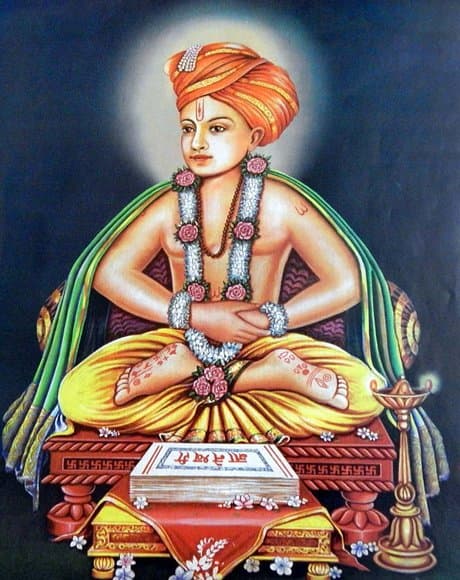
Jñāneśvar · Vārkarī
English39 “That which is, at the outset as also in the ensuants, a pleasure that inveigles the self with delusion, springing (as it does) from slumber, indolence or heedlessness that is pronounced to be Tamas-dominated. (806)
And that pleasure, which is derived from drinking undrinkables (potent liquors), or enjoying a meal of uneatable dishes, or in the company of females of ill-repute or that is derived from killing others, robbing others of their property (money etc.) or hearing the (false) praise sung by a bard (flatterer), that which is fed on laziness, or is found in slumber, and which from the first to the last misleads the being in regard to the right path, and leads him into a wrong one—such pleasure, O Pārtha, is entirely Tamas (dominated) pleasure, and I would not talk (more) on it, the thing being quite impossible (being indecent and despicable). I have made discernible to you following the scriptures (in the proper way) the three types of (actions) fruit viz, pleasure, following the distinctive features of the actions. The agent, the action as also the action-fruit—this triad is all in all, there being nothing else pervading the entire world both gross and subtle. And this triad is woven by the three Guna-constituents in the way the threads do the entire yarn, Oh Kiriti.
Swami Ramsukhdas · Modern
English'Nidrālasyapramādotthaṃ'—Excessive attachment, transforms itself into a mode of ignorance, which is called delusion. It is because of delusion, that a man wants to sleep for a long time, even though he does not get sound sleep. Without sound sleep, he remains lethargic and he goes on dreaming. His time is wasted. But a man, of tāmasika nature, derives happiness out of this sort of sleep.
A man of the mood of ignorance, remains indolent. He wastes
his time in idleness and goes on postponing, even obligatory duties. He derives pleasure, out of this indolence. Being idle his senses and mind etc., become inactive, and he only thinks of futile worldly affairs, which lead him to pain, sorrow, worry and disquietude.
He becomes careless, and the mode of ignorance, is enhanced. He does not perform his obligatory duties, but indulges in idle pursuits, such as smoking, drinking, displays etc., and evil, such as theft, robbery, falsehood, fraud, forgery and in the forbidden food etc.
Such a person, derives pleasures out of indolence, as well as heedlessness. It is because of this nature, labourers want to get full wages, without performing their duty honestly and sincerely, physicians charge fees from patients again and again, without giving them proper treatment, and milkmen, mix water in milk, though they charge the cost of the pure milk. This, sinful heedlessness, leads them to hell.
Heedlessness, veils discrimination, while sleep and indolence, covers the mode of goodness. When discrimination is veiled, heedlessness is revealed, and when light is covered, indolence and sleep are exposed. A tāmasika person, derives pleasure out of sleep, indolence and heedlessness. So tāmasika happiness is said to arise, from these three.
An Important Fact
Sleep is of two kinds—moderate and excessive.
(1) Moderate sleep—sleep provides rest, purity and freshness. It provides strength and zeal, for mundane, as well as, spiritual activities. Sleep is not a defect, it is essential (Gītā 6/17) and provides one freshness and energy to perform mundane and spiritual acts promptly.
Sleep is essential for a striver, for his invigoration. A striver, free from worldly pursuits gets sleep, very soon. He who is engrossed in worldly thoughts, cannot get sleep quickly. This
proves, that affinity with the world, does not allow a person to enjoy sleep. In sound sleep, connection with the world snaps, and one gets linked with God. Thus sound sleep, gives vitality and energy to be engaged, in spiritual practice.
Sleep is tāmasika. It contains two elements—unconsciousness and rest. The former, causes delusion which is to be shunned, while the latter, is moderate which is to be adopted. Good strivers, through spiritual discipline, can get much rest and happiness, even during wakefulness, because they remain fixed in God, without thinking of worldly affairs. If they do not get attached, even to rest, and happiness, they attain God-realization.
Strivers, should not go to bed, for rest but they should think that they are going to devote that time, in adoration and devotion, by lying down on a cot, as they adore the Lord, during a day, by performing various duties.
(2) Excessive sleep—Excessive sleep, makes a man indolent and he feels drowsy, all the time. In the eighth verse of the fourteenth chapter, the Lord used first heedlessness, then indolence and finally sleep, while He has reversed the order here. The reason is, that there is a link how they bind all embodied beings, but here the context is, how they degrade, a man. As far as binding force, is concerned, the first and foremost position, goes to heedlessness. It conduces a man to perform forbidden actions, which ruin him. Indolence hinders a man, from performing virtuous actions. So, it has been given, the second place. As far as sleep is concerned, it is only excessive sleep, not a moderate one, which binds a man. So, the third place has been allowed to sleep. But in this verse, the order is changed, because moderate sleep, does not cause harm and it is only excessive sleep, which is conducive to ruin. Indolence leads more to ruin than sleep, while heedlessness contributes the most. Excessive sleep will lead a man to lower births, while indolence and heedlessness, will lead him to hell*
*Heedlessness conduces a man to undertake idle pursuits for the sake of diversion. But when passion (attachment) joins heedlessness, both give
by depriving him, of his discrimination.
'Yadagre cānubandhe ca sukham mohanamātmanaḥ'—Happiness, which arises, from sleep, indolence and heedlessness, deludes the self both at the beginning, and at the end. Beings lose their discrimination, under the influence of this happiness. So birds, beasts, moths and insects etc., do not think, what ought to be done, at the beginning and also do not think of consequences. Such happiness, is declared to be tāmasika.
An Important Fact
(1) Prakṛti (matter) and Puruṣa (Soul or Spirit), are two different entities, and both of them are without beginning. The knowledge, by which one knows their difference, is also beginningless. Knowledge (discrimination), is possessed by Puruṣa (Soul or Spirit or Self), not by Prakṛti. But, when Puruṣa disregarding this discrimination, assumes affinity with Prakṛti, because of this affinity, attachment arises.*
When attachment, remains in its subtle form, there is dominance of discrimination. But when attachment enhances, discrimination is covered. But if discrimination, is revealed properly, attachment perishes and then, a person is called, liberated. It is because of attachment, that a man runs after worldly pleasure, born of Prakṛti. If he wants to gain sattvika happiness, he faces difficulty in renouncing rājasika, and tāmasika happiness. But when attachment perishes, the poison-like happiness, turns into nectarine happiness. It is because of attachment, that rājasika (passionate) happiness, seems like nectar at first, but like poison at the end. Attachment to passionate happiness, leads a man to endless pain and sorrow.
birth to desire. It is out of desire that a man commits several sins and crimes whose consequences are very horrible.
* Because of attachment several evils are born in Prakṛti, not in Puruṣa. A man (Self) by identifying himself with Prakṛti (Matter) assumes the evils of Prakṛti in him and so he has to be an enjoyer (Bhogī). But when he realizes that the evils appear and disappear while he remains the same without any modification, he becomes equanimous (a Yogī).
When this attachment is transformed into the mode of ignorance, a man, wastes his time in sleep, indolence, and he indulges in idle pursuits, by giving up his duty. But a tāmasika person, derives happiness out of it. So it deludes the self, both at the beginning and at end.
(2) Actually the kaleidoscopic world, does not exist, while God, Who is Truth, Knowledge and Bliss consolidated, and Who is the base and illuminator of the unreal, always exists. Man (soul or self), being a fragment of God, is also truth, knowledge and bliss consolidated. But, when he has desire for the unreal, his bliss, becomes veiled. But, as soon as, he abandons desire, his natural bliss is revealed.
When sāttvika intellect, merges in eternal bliss, it becomes pure. Natural bliss, which is experienced by pure intellect, is called sāttvika happiness. When man's affinity with this pure intellect, is renounced, there remains, natural bliss, only. Bliss is named sāttvika happiness, because of its affinity with sāttvika intellect, otherwise, it is nothing, besides eternal bliss.
When a man has a desire to gain something, the mind and the intellect get attached to it. But, as soon as, he gains it, his attachment or attraction is abandoned, and he becomes free from pain, which he suffered because of its deficit and he realizes the reflection of the eternal self-evident bliss, immediately. In fact, he does not gain happiness, by acquiring a thing, but by being free from attachment to it. But, a rājasika person, out of ignorance, thinks that it is so, because he has got the thing. Union, with the thing is external, while happiness is, something internal. So, how can external union cause, internal happiness? The fact is, that internal happiness is derived by renouncing internal affinity, with a thing. It means, that when the thing is secured, internal affinity with the thing, is renounced. As soon as, this affinity is renounced, eternal natural bliss, is experienced.
During sleep, when intellect merges with the mode of ignorance, a man forgets all things and objects, of his wakeful
state. Their memory, is cause of pain. So, by forgetting these he derives happiness, out of sleep. But, because of the impurity of intellect, he does not experience natural bliss. So, the happiness which arises from sleep, is called 'tāmasika', (of the mode of ignorance).*
It means, that a sāttvika person derives happiness, by having disinclination for the world, when his intellect merges in the self; a rājasika person, by abandonment of attachment to things, while a tāmasika person, by forgetting his duty and indulging in idle pursuits. Thus, natural bliss is veiled, by assumed affinity with, the unreal. But happiness experienced, by all the Sāttvika, Rājasika and Tāmasika people, is nothing, but a reflection of the eternal natural, bliss. So, if we renounce attachment to the three kinds of happinesses, we may progress, spiritually. So a striver should abandon, the three kinds of happinesses.
Appendix—A Tāmasa person is endowed with delusion—'tamastvajñānajam vidhi mohanam sarvadehinām' (Gītā 14/8). Delusion is an obstacle in the use of discrimination. Because of the Tāmasi disposition, discrimination is not aroused. Therefore the discrimination of a Tāmasi person, because of delusion disappears, so he does not see the beginning or the end at all.
Link:—The Lord, classified knowledge, action and happiness, under three heads, characterized by the three modes of nature. In
* During sleep a man's intellect gets deluded i.e., it becomes unconscious. The man derives happiness, by forgetting the world. So this happiness is called Tāmasika. If intellect with senses is not deluded, it becomes a state of trance, which provides rest. A man can transcend the three modes of nature only, if he is not attached to this happiness derived out of trance.
Prakṛti is active and kaleidoscopic, while God is eternal, calm, immutable, flawless, steady and He does not undergo any modifications. During sleep, a man gets established in Him. But as his mind is attracted towards pleasure and prosperity, after waking, he hankers after prosperity and pleasure. Thus because of his attachment to prosperity and pleasure he cannot remain established either in God or the self. If one renounces this attachment, he can remain established, in the self naturally.
*the next verse, He winds up the topic, by declaring that all the objects of this creation, are classified under these three heads, characterized by three modes of nature.*
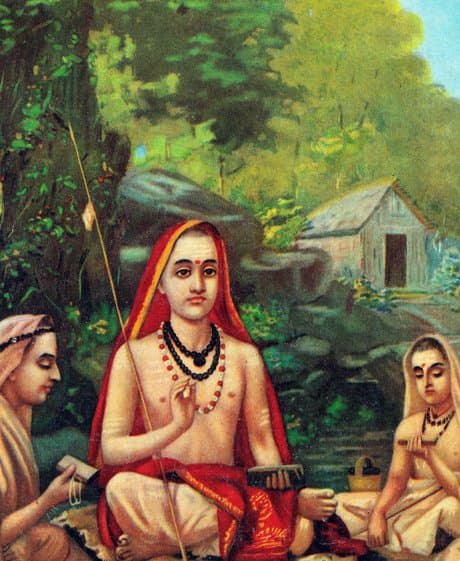
Ādi Śaṅkarācārya · Advaita
Sanskritयत् अग्रे च अनुबन्धे च अवसानोत्तरकाले च सुखं मोहनं मोहकरम् आत्मनः निद्रालस्यप्रमादोत्थं निद्रा च आलस्यं च प्रमादश्च तेभ्यः समुत्तिष्ठतीति निद्रालस्यप्रमादोत्थम्, तत् तामसं उदाहृतम् ॥
अथ इदानीं प्रकरणोपसंहारार्थः श्लोकः आरभ्यते -
Ādi Śaṅkarācārya · Advaita
Hindiजो सुख आरम्भमें और परिणाममें भी अर्थात् उपभोगके पीछे भी आत्माको मोहित करनेवाला होता है तथा निद्रा, आलस्य और प्रमादसे उत्पन्न हुआ है, अर्थात् जो निद्रा, आलस्य और प्रमाद—इन तीनोंसे उत्पन्न होता है, वह सुख तामस कहा गया है
Jñāneśvar · Vārkarī
Marathiआणि अपेयाचेनि पानें । अखाद्याचेनि भोजनें । स्वैरस्त्रीसंनिधानें । होय जें सुख ॥ ८०६ ॥ का पुढिलांचेनि मारें । नातरी परस्वापहारें । जें सुख अवतरे । भाटाच्या बोलीं ॥ ८०७ ॥ जें आलस्यावरी पोखिजे । निद्रेमाजीं जें देखिजे । जयाच्या आद्यंतीं भुलिजे । आपुली वाट ॥ ८०८ ॥ तें गा सुख पार्था । तामस जाण सर्वथा । हें बहु न सांगोंचि जें कथा । असंभाव्य हे ॥ ८०९ ॥ ऐसें कर्मभेदें मुदलें । फळसुखही त्रिधा जालें । तें हें यथागमें केलें । गोचर तुज ॥ ८१० ॥ ते कर्ता कर्म कर्मफळ । ये त्रिपुटी येकी केवळ । वांचूनि कांहींचि नसे स्थूल । सूक्ष्मीं इये ॥ ८११ ॥ आणि हे तंव त्रिपुटी । तिहीं गुणीं इहीं किरीटी । गुंफिली असे पटीं । तांतुवीं जैसी ॥ ८१२ ॥
Jñāneśvar · Vārkarī
Hindi(18.806) अपेय वस्तु के पीने से, अखाद्य वस्तु के खाने से, और इच्छानुसार स्त्रीसंग करने से जो सुख होता है,
(18.807) अथवा दूसरों को मारने से या दूसरों का द्रव्य हर लेने से, अथवा भाटों के मुख से की कीर्तिश्रवण करने से जो सुख उत्पन्न होता है, (18.808) जो आलस्य से पुष्ट होता है, जो निद्रा में दिखाई देता है, जिसके आरम्भ में तथा परिणाम में मनुष्य आत्मलाभ का मार्ग भूल जाते हैं
(18.809) उस सुख को हे पार्थ! सर्वथा तामस जानो। इसका वर्णन विशेष नहीं बढ़ाते हैं क्योंकि वह निन्द्य ही है।
(18.810) इस प्रकार मुख्य फल का सुख भी, जो कर्मभेद से त्रिधा हुआ है, हम तुमसे शास्त्रानुसार व्यक्त कर चुके।
(18.811) तात्पर्य यह कि इस स्थूल या सूक्ष्मसृष्टि में केवल कर्ता, कर्म और फलरूपी त्रिपुटी के अतिरिक्त और कुछ नहीं है।
(18.812) और यह त्रिपुटी तो, हे किरीटी! पट जैसे तन्तुओं से बुना हुआ रहता है, वैसे तीन गुणों से बुनी हुई है।
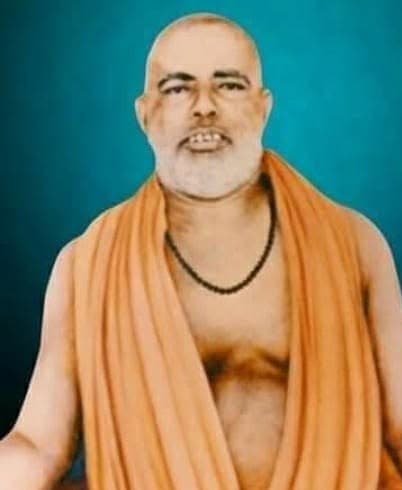
Sri Udiya Baba · Modern
Hindiभावार्थ— जो आरम्भ में और अन्त में मन को मोह में ही डालने वाला होता है वह निद्रा, आलस्य और प्रमाद से होने वाला सुख तामस कहा गया है।
Swami Ramsukhdas · Modern
Hindi‘निद्रालस्यप्रमादोत्थम्’—जब राग अत्यधिक बढ़ जाता है, तब वह तमोगुणका रूप धारण कर लेता है। इसीको मोह कहते हैं। इस मोह-(मूढ़ता-)के कारण मनुष्यको अधिक सोना अच्छा लगता है। अधिक सोनेवाले मनुष्यको गाढ़ नींद नहीं आती। गाढ़ नींद न आनेसे तन्द्रा ज्यादा आती है और स्वप्न भी ज्यादा आते हैं। तन्द्रा और स्वप्नमें तामस मनुष्यका बहुत समय बरबाद हो जाता है। परन्तु तामस मनुष्यको इसीसे ही सुख मिलता है, इसलिये इस सुखको निद्रासे उत्पन्न बताया है।
जब तमोगुण अधिक बढ़ जाता है, तब मनुष्यकी वृत्तियाँ भारी हो जाती हैं। फिर वह आलस्यमें समय बरबाद कर देता
है। आवश्यक काम सामने आनेपर वह कह देता है कि ‘फिर कर लेंगे, अभी तो आराम कर रहे हैं।’ इस प्रकार आलस्य-अवस्थामें उसको सुख मालूम देता है। परन्तु निकम्मा रहनेके कारण उसकी इन्द्रियों और अन्तःकरणमें शिथिलता आ जाती है, मनमें संसारका फालतू चिन्तन होता रहता है और मनमें अशान्ति, शोक, विषाद, चिन्ता, दुःख होते रहते हैं।
जब इससे भी अधिक तमोगुण बढ़ जाता है, तब मनुष्य प्रमाद करने लग जाता है। वह प्रमाद दो तरहका होता है—अक्रिय प्रमाद और सक्रिय प्रमाद। घर, परिवार, शरीर आदिके आवश्यक कामोंको न करना और निठल्ले बैठे रहना ‘अक्रिय प्रमाद’\* है। व्यर्थ क्रियाएँ (देखना, सुनना,
* आलस्य और अक्रिय प्रमाद एक-जैसे दीखते हुए भी उनमें थोड़ा अन्तर है। आलस्यमें वृत्तियोंके भारी होनेसे सुख होता है और अक्रिय प्रमादमें कर्तव्य-कर्मोंको छोड़नेसे सुख होता है।
सोचना आदि) करना; बीड़ी, सिगरेट, शराब, भाँग, तम्बाकू, खेल-तमाशा आदि दुर्व्यसनोंमें लगना और चोरी, डकैती, झूठ, कपट, बेईमानी, व्यभिचार, अभक्ष्य-भक्षण आदि दुराचारोंमें लगना 'सक्रिय प्रमाद' है।
प्रमादके कारण तामस पुरुषोंको निरर्थक समय बरबाद करनेमें तथा झूठ, कपट, बेईमानी आदि करनेमें सुख मिलता है। जैसे काम-धंधा करनेवाले पैसे (मजदूरी या वेतन) तो पूरे ले लेते हैं, पर काम पूरा और ठीक ढंगसे नहीं करते। चिकित्सकलोग रोगियोंका ठीक ढंगसे इलाज नहीं करते, जिससे रोगीलोग बार-बार आते रहें और पैसे देते रहें। दूध बेचनेवाले पैसे के लोभमें दूधमें पानी मिलाकर बेचते हैं। पैसे अधिक देनेपर भी वे पानी मिलाना नहीं छोड़ते। ऐसे पापरूप प्रमादसे उनको घोर नरकोंकी प्राप्ति होती है।
जब तमोगुणी प्रमाद-वृत्ति आती है, तब वह सत्त्वगुणके विवेक-ज्ञानको ढक देती है और जब तमोगुणी निद्रा-आलस्य-वृत्ति आती है, तब वह सत्त्वगुणके प्रकाशको ढक देती है। विवेक-ज्ञानके ढकनेपर प्रमाद होता है तथा प्रकाशके ढकनेपर आलस्य और निद्रा आती है। तामस पुरुषको निद्रा, आलस्य और प्रमाद-तीनोंसे सुख मिलता है, इसलिये तामस सुखको इन तीनोंसे उत्पन्न बताया गया है।
विशेष बात
निद्रा दो प्रकारकी होती है—युक्तनिद्रा और अतिनिद्रा। (१) 'युक्तनिद्रा'—निद्रामें एक विश्राम मिलता है। विश्रामसे शरीर, मन, बुद्धि, अन्तःकरणमें नीरोगता, स्फूर्ति, स्वच्छता, निर्मलता और ताजगी आती है। ताजगी आनेसे साधन-भजन करनेमें और सांसारिक काम करनेमें भी शक्ति मिलती है और उत्साह रहता है। इसलिये युक्तनिद्रा दोषी नहीं है, प्रत्युत सबके लिये आवश्यक है। भगवान्ने भी युक्तनिद्राको आवश्यक बताया है—'युक्तस्वप्नावबोधस्य योगो भवति दुःखहा' (गीता ६।१७)।
ताजगीमात्रके लिये निद्रा साधकके लिये आवश्यक है। जिस साधकके रागपूर्वक सांसारिक संकल्प नहीं होते, उसको नींद बहुत जल्दी आ जाती है और जो ज्यादा संकल्पशील है, उसको नींद जल्दी नहीं आती। इससे यह सिद्ध हुआ कि संसारका जो सम्बन्ध है, वह निद्राका सुख भी नहीं लेने देता। निद्रा आवश्यक क्यों है? कारण कि निद्रामें जो स्थिर तत्त्व है, वह साधकको साधनमें प्रवृत्त करनेमें और सांसारिक कार्य करनेमें बल देता है, इसलिये
निद्रा आवश्यक है।
यद्यपि नींद तामसी है, तथापि नींदका जो बेहोशीपना है, वह त्याज्य है और जो विश्रामपना है, वह ग्राह्य है। परन्तु हरेक आदमी बेहोशीके बिना विश्रामपना ग्रहण नहीं कर सकता; अतः उनके लिये नींदका बेहोशीभाग भी ग्राह्य है। हाँ, जो साधना करके ऊँचे उठ गये हैं, उनको नींदके बेहोशीभागके बिना भी जाग्रत्-सुषुप्तिमें विश्राम मिल जाता है। कारण कि जाग्रत्-अवस्थामें संसारके चिन्तनका सर्वथा त्याग होकर परमात्मतत्त्वमें स्थिति हो जाती है तो महान् विश्राम, सुख मिलता है; इस स्थितिसे भी असंग होनेपर वास्तविक तत्त्वकी प्राप्ति हो जाती है।
जो साधक हैं, उनको विश्रामके लिये नहीं सोना चाहिये। उनका तो यही भाव होना चाहिये कि पहले काम-धंधा करते हुए भगवान्का भजन करते थे, अब लेटे-लेटे भजन करना है।
(२) 'अतिनिद्रा'—समयपर सोना और समयपर जागना युक्तनिद्रा है और अधिक सोना अतिनिद्रा है। अतिनिद्राके आदि और अन्तमें शरीरमें आलस्य भरा रहता है। शरीरमें भारीपन रहता है। अधिक नींद लेनेका स्वभाव होनेसे हरेक कार्यमें नींद आती रहती है।
चौदहवें अध्यायके आठवें श्लोकमें भगवान्ने पहले प्रमादको, दूसरे नम्बरमें आलस्यको और तीसरे नम्बरमें निद्राको रखा है—'प्रमादालस्यनिद्राभिस्तन्निबध्नाति भारत।' परन्तु यहाँ पहले निद्राको, दूसरे नम्बरमें आलस्यको और तीसरे नम्बरमें प्रमादको रखा है—'निद्रालस्यप्रमादोत्थम्।' इस व्यतिक्रमका कारण यह है कि वहाँ इन तीनोंके द्वारा मनुष्यको बाँधनेका प्रसंग है और यहाँ मनुष्यका पतन करनेका प्रसंग है। बाँधनेके विषयमें प्रमाद सबसे अधिक बन्धनकारक है; अतः इसको सबसे पहले रखा है। कारण कि प्रमाद निषिद्ध आचरणोंमें प्रवृत्त करता है, जिससे अधोगति होती है। आलस्य केवल अच्छी प्रवृत्तिको रोकनेवाला होनेसे इसको दो नम्बरमें रखा है। निद्रा आवश्यक होनेसे बन्धनकारक नहीं है, प्रत्युत अतिनिद्रा ही बन्धनकारक है; अतः इसको तीसरे नम्बरमें रखा है। यहाँ उससे उलटा क्रम रखनेका अभिप्राय है कि सबके लिये आवश्यक होनेसे निद्रा इतना पतन करनेवाली नहीं है। निद्रासे अधिक आलस्य पतन करता है और आलस्यसे भी अधिक प्रमाद पतन करता है। कारण कि मनुष्य ज्यादा नींद लेगा तो वृक्ष आदि मूढ़ योनियोंकी प्राप्ति होगी; परन्तु
आलस्य और प्रमाद करेगा तो कर्तव्यच्युत होकर दुराचार करनेसे नरकमें जाना पड़ेगा।
‘यदग्रे चानुबन्धे च सुखं मोहनमात्मनः’—निद्रा, आलस्य और प्रमादसे उत्पन्न हुआ सुख आरम्भमें और परिणाममें अपनेको मोहित करनेवाला है। इस सुखमें न तो आरम्भमें विवेक रहता है और न परिणाममें विवेक रहता है अर्थात् यह सुख विवेको जाग्रत् नहीं होने देता। पशु-पक्षी, कीट-पतंग आदिमें भी विवेक-शक्ति जाग्रत् न रहनेसे वे क्रियाके आरम्भ और परिणामको सोच नहीं पाते। ऐसे ही जिस सुखके कारण मनुष्य यह सोच ही नहीं सकता कि इस निद्रा आदिसे उत्पन्न हुए सुखका परिणाम हमारे लिये क्या होगा? उससे क्या लाभ होगा? क्या हानि होगी? क्या हित होगा? क्या अहित होगा? उस सुखको तामस कहा गया है—‘तत्तामसमुदाहृतम्’।
विशेष बात
(१) प्रकृति और पुरुष—दोनों अनादि हैं, और ‘ये दो हैं’ इस प्रकार इनकी पृथक्ताका विवेक भी अनादि है। यह विवेक पुरुषमें ही रहता है, प्रकृतिमें नहीं। जब यह पुरुष इस विवेकका अनादर करके अविवेकके कारण प्रकृतिके साथ सम्बन्ध जोड़ लेता है, तब इस सम्बन्धके कारण पुरुषमें राग पैदा हो जाता है।
जब राग बहुत सूक्ष्म रहता है, तब विवेक प्रबल रहता है। जब राग बढ़ जाता है, तब विवेक दब जाता है, मिटता नहीं। पर विवेक ठीक तरहसे जाग्रत् हो जाय तो फिर राग टिकता नहीं अर्थात् रागका अभाव हो जाता है और उस समय पुरुष मुक्त कहलाता है।
उस रागके कारण मनुष्यकी प्रकृतिजन्य सुखमें आसक्ति हो जाती है। उस आसक्तिके रहते हुए जब मनुष्य किसी कारणवश सात्त्विक सुखको प्राप्त करना चाहता है, तब राजस और तामस सुखका त्याग करनेमें उसे कठिनता मालूम देती है—‘यत्तदग्रे विषमिव।’ परन्तु जब राग मिट
जाता है, तब वह सुख अमृतकी तरह हो जाता है—‘परिणामेऽमृतोपमम्’।
रागके कारण ही रजोगुणी सुख आरम्भमें अमृतकी तरह दीखता है। पर वह सुख परिणाममें प्राणीके लिये जहरकी तरह अनिष्टकारक अर्थात् महान् दुःखरूप हो जाता है। प्रकृतिजन्य सुखकी आसक्ति होनेपर दुःखकी परम्पराका कोई अन्त नहीं आता।
जब वही राग तमोगुणका रूप धारण कर लेता है, तब मनुष्यकी वृत्तियाँ भारी हो जाती हैं। फिर मनुष्य नींद और आलस्यमें समय बरबाद कर देता है तथा आवश्यक कर्तव्यसे विमुख होकर अकर्तव्यमें लग जाता है। परन्तु तामस पुरुषको इन्हींमें सुख मालूम देता है। इसलिये यह तामस सुख आदि और अन्तमें मोहित करनेवाला है।
(२) जो प्रतिक्षण अभावमें जा रहा है, वह वास्तवमें ‘नहीं’ है। पर जो ‘नहीं’ को प्रकाशित करनेवाला तथा उसका आधार है, वह वास्तवमें ‘है’ तत्त्व है। उसी तत्त्वको ‘सच्चिदानन्द’ कहते हैं। निरन्तर सत्तारूपसे रहनेके कारण उसे ‘सत्’ कहते हैं, ज्ञानस्वरूप होनेके कारण उसे ‘चित्’ कहते हैं और आनन्दस्वरूप होनेके कारण उसे ‘आनन्द’ कहते हैं। उस सच्चिदानन्द परमात्माका ही अंश होनेसे यह प्राणी भी सच्चिदानन्दस्वरूप है। परन्तु जब प्राणी असत् वस्तुकी इच्छा करता है कि अमुक वस्तु मुझे मिले, तब उस इच्छासे वह स्वतःस्वाभाविक आनन्द—सुख ढक जाता है। जब असत् वस्तुकी इच्छा मिट जाती है, तब उस इच्छाके मिटते ही वह स्वतःस्वाभाविक सुख प्रकट हो जाता है।
नित्य-निरन्तर रहनेवाला जो सुखरूप ‘तत्त्व’ है, उसमें जब सात्त्विकी बुद्धि तल्लीन हो जाती है, तब बुद्धिमें स्वच्छता, निर्मलता आ जाती है। उस स्वच्छ और निर्मल बुद्धिसे अनुभवमें आनेवाला वह स्वाभाविक सुख ही सात्त्विक कहलाता है। बुद्धिसे भी जब सम्बन्ध छूट जाता है, तब वास्तविक सुख रह जाता है। सात्त्विकी बुद्धिके सम्बन्धसे ही
१-तमोगुणकी वृत्ति जो प्रमाद है, वह तो अच्छी प्रवृत्तिको रोककर खेल-कूद आदि सामान्य फालतू क्रियाओंमें लगाता है; परन्तु जब प्रमादके साथ राग मिल जाता है (जो कि रजोगुणका रूप है), तब उससे कामना पैदा हो जाती है। कामनासे फिर अनेक तरहके पाप, अनर्थ होते हैं, जिनका परिणाम बड़ा भयंकर होता है।
२-रागसे अनेक विकार पैदा होते हैं, पर वे सब विकार प्रकृतिमें ही होते हैं, पुरुषमें नहीं। प्रकृतिके साथ तादात्म्य होनेसे पुरुष प्रकृतिके उन विकारोंको अपनेमें मान लेता है तो यह पुरुष भोगी हो जाता है। परन्तु जब इसको यह बोध हो जाता है कि विकार आते हैं और जाते हैं, उत्पन्न होते हैं और नष्ट होते हैं, पर विकारोंके आदि और अन्तको देखनेवाली अपनी नित्य सत्ता ज्यों-की-त्यों ही रहती है, तब उस अवस्थामें पुरुष योगी हो जाता है।
उस सुखकी 'सात्त्विक' संज्ञा होती है। बुद्धिसे सम्बन्ध छूटते ही उसकी 'सात्त्विक' संज्ञा नहीं रहती।
मनमें जब किसी वस्तुको प्राप्त करनेकी इच्छा होती है, तब वह वस्तु मनमें बस जाती है अर्थात् मन और बुद्धिका उसके साथ सम्बन्ध हो जाता है। जब वह मनोवाञ्छित वस्तु मिल जाती है, तब वह वस्तु मनसे निकल जाती है अर्थात् वस्तुका मनमें जो खिंचाव था, वह निकल जाता है। उसके निकलते ही अर्थात् वस्तुसे सम्बन्ध-विच्छेद होते ही वस्तुके अभावका जो दुःख था, वह निवृत्त हो जाता है और नित्य रहनेवाले स्वतःसिद्ध सुखका तात्कालिक अनुभव हो जाता है। वास्तवमें यह सुख वस्तुके मिलनेसे नहीं हुआ है, प्रत्युत रागके तात्कालिक मिटनेसे हुआ है, पर राजस पुरुष भूलसे उस सुखको वस्तुके मिलनेसे होनेवाला मान लेता है। वास्तवमें देखा जाय तो वस्तुका संयोग बाहरसे होता है और प्रसन्नता भीतरसे होती है। भीतरसे जो प्रसन्नता होती है, वह बाहरके संयोगसे पैदा नहीं होती, प्रत्युत भीतर (मनमें) बसी हुई वस्तुके साथ जो सम्बन्ध था, उस वस्तुसे सम्बन्ध-विच्छेद होनेपर पैदा होती है। तात्पर्य यह है वस्तुके मिलते ही अर्थात् बाहरसे वस्तुका संयोग होते ही भीतरसे उस वस्तुसे सम्बन्ध-विच्छेद हो जाता है और सम्बन्ध-विच्छेद होते ही नित्य रहनेवाले स्वाभाविक सुखका आभास हो जाता है।
जब नींदमें बुद्धि तमोगुणमें लीन हो जाती है, तब बुद्धिकी स्थिरताको लेकर वह सुख प्रकट हो जाता है। कारण कि तमोगुणके प्रभावसे नींदमें जाग्रत् और स्वप्नके पदार्थोंकी विस्मृति हो जाती है। पदार्थोंकी स्मृति दुःखोंका कारण है। पदार्थोंकी विस्मृति होनेसे निद्रावस्थामें पदार्थोंका
वियोग हो जाता है तो उस वियोगके कारण स्वाभाविक सुखका आभास होता है, इसीको निद्राका सुख कहते हैं। परन्तु बुद्धिकी मलिनतासे वह स्वाभाविक सुख जैसा है, वैसा अनुभवमें नहीं आता। तात्पर्य है कि बुद्धिके तमोगुणी होनेसे बुद्धिमें स्वच्छता नहीं रहती और स्वच्छता न रहनेसे वह सुख स्पष्ट अनुभवमें नहीं आता। इसलिये निद्राके सुखको तामस कहा गया है*।
इन सबका तात्पर्य यह है कि सात्त्विक मनुष्यको संसारसे विमुख होकर तत्त्वमें बुद्धिके तल्लीन होनेसे सुख होता है; राजस मनुष्यको रागके कारण अन्तःकरणमें बसी हुई वस्तुके बाहर निकलनेसे सुख होता है और तामस मनुष्यको वस्तुओंके लिये किये जानेवाले कर्तव्य-कर्मोंकी विस्मृतिसे और निरर्थक क्रियाओंमें लगनेसे सुख होता है। इससे यह सिद्ध हुआ कि जो नित्य-निरन्तर रहनेवाला सुखरूप तत्त्व है, वह असत् के सम्बन्धसे आच्छादित रहता है। विवेकपूर्वक असत् से सम्बन्ध-विच्छेद हो जानेपर, रागवाली वस्तुओंके मनसे निकल जानेपर और बुद्धिके तमोगुणमें लीन हो जानेपर जो सुख होता है, वह उसी सुखका आभास है। तात्पर्य यह हुआ कि संसारसे विवेकपूर्वक विमुख होनेपर सात्त्विक सुख, भीतरसे वस्तुओंके निकलनेपर राजस सुख और मूढ़तासे निद्रा-आलस्यमें संसारको भूलनेपर तामस सुख होता है; परन्तु वास्तविक सुख तो प्रकृतिजन्य पदार्थोंसे सर्वथा सम्बन्ध-विच्छेदसे ही होता है। इन सुखोंमें जो प्रियता, आकर्षण और (सुखका) भोग है, वही पारमार्थिक उन्नतिमें बाधा देनेवाला और पतन करनेवाला है। इसलिये पारमार्थिक उन्नति चाहनेवाले साधकोंको इन तीनों सुखोंसे सम्बन्ध-विच्छेद करना अत्यन्त आवश्यक है।
**परिशिष्ट भाव—**तामस मनुष्यमें मोह रहता है—**‘तमस्त्वज्ञानं विद्धि मोहनं सर्वदेहिनाम्’** (गीता १४।८)। मोह विवेकमें बाधक होता है। तामसी वृत्ति विवेक जाग्रत् नहीं होने देती। इसलिये तामस मनुष्यका विवेक मोहके कारण लुप्त हो जाता है, जिससे वह आरम्भ या अन्तको देखता ही नहीं।
* निद्राको तामस सुख कहनेका अभिप्राय यह है कि इसमें बुद्धि मोहित हो जाती है अर्थात् उसमें बेहोशी आ जाती है। उस बेहोशीसे संसारकी सर्वथा विस्मृति हो जाती है और जाग्रत्-अवस्था सर्वथा दब जाती है, इसलिये इसको तामस सुख कहा गया है। अगर इन्द्रियोंसहित बुद्धि मोहित न हो तो यही अवस्था 'समाधि' हो जाती है। समाधिसे भी विश्राम मिलता है। इस विश्राममें निद्रासे मिलनेवाली जो ताजगी है, वह मिल जाती है; परन्तु इस ताजगीका सुख लेनेसे गुणातीत नहीं होता। गुणातीत तो समाधिके सुखसे असंग होनेसे ही होता है।
प्रकृति क्रियाशील, परिवर्तनशील है और परमात्मतत्त्व अपरिवर्तनशील, निर्विकार, शान्त, निश्चल है। निद्रावस्थामें उस निश्चल तत्त्वमें स्थिति हो जाती है; परन्तु अन्तःकरणमें भोगोंका महत्त्व रहनेसे निद्राके बाद मनुष्यकी फिर भोग और संग्रहमें ही रुचि हो जाती है और वह उसीमें लग जाता है। इस प्रकार रागके कारण मनुष्य उस निश्चल तत्त्वसे लाभ नहीं ले सकता और निद्रासे केवल थकावट दूर कर लेता है। अगर वह भोग और ऐश्वर्यकी आसक्तिका सर्वथा त्याग कर दे तो उसकी निद्रामें और निद्राके बाद भी स्वरूपमें स्वतः-स्वाभाविक अटल स्थिति रहेगी।
सम्बन्ध—बीसवेंसे उन्तालीसवें श्लोकतक भगवान्ने गुणोंकी मुख्यताको लेकर ज्ञान, कर्म आदिके तीन-तीन भेद बताये। अब इनके सिवाय गुणोंको लेकर सृष्टिकी सम्पूर्ण वस्तुओंके भी तीन-तीन भेद होते हैं—इसका लक्ष्य कराते हुए भगवान् आगेके श्लोकमें प्रकरणका उपसंहार करते हैं।
That sukham or happiness which enthrals the jīva or embodied being both at the beginning and as well at the end, even after the habitual, repetitive experience exhibits its true nature of enslavement and bondage to samsāra, the perpetual cycle of birth and death, is affirmed by Lord Krishna as tama guṇa the mode of ignorance.
The word mohanam means delusion and is the obscuration of the true nature of reality.
Nidrā or slumber denotes unconsciousness which can transpire even while engaging in an act of enjoyment.
Alasya is slothfulness, the lassitude which comes from habitually dulled senses and which certainly contributes to dullness of mind.
Pramāda is inattention to what is required and is connected to dullness of mind.
So the delusive nature of nidrā, alasya and pramāda are all situated firmly in tama guṇa and along with the characteristics of raja guṇa are very detrimental to the aspiring jīva.