

Bhagavad Gītā · Chapter 18 · Mokṣa Sannyāsa Yoga
अधिष्ठानं तथा कर्ता करणं च पृथग्विधम्
विविधाश्च पृथक्चेष्टा दैवं चैवात्र पञ्चमम्
adhiṣṭhānaṃ tathā kartā karaṇaṃ ca pṛthagvidham|vividhāśca pṛthakceṣṭā daivaṃ caivātra pañcamam||
Word meanings
अत्र = here
अधिष्ठानम् = the seat [of action]
तथा = and likewise
कर्ता = the doer
च = and
पृथग्विधम् = of various kinds
करणम् = the instrument
च = and
विविधाः = various
पृथक् = separately
चेष्टा = movements
च, एव = and indeed
पञ्चमम् = the fifth
दैवम् = destiny
Translation
The following are the factors operating towards the accomplishment of actions, viz., the seat of action and the agent, the organs of different kinds and the separate movements of divergent types; and the fifth is Daiva or destiny.
Commentary
The commentators seated around this verse

Rāmānuja · Viśiṣṭādvaita
EnglishOn verses 18.13–14
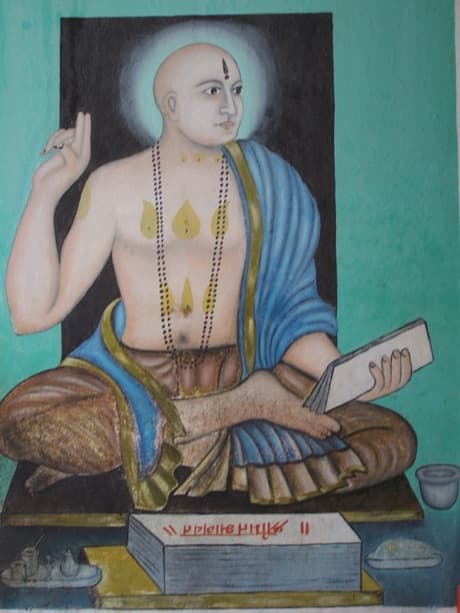
Madhvācārya · Dvaita
Madhva BhāṣyaSanskritEnglish“अधिष्ठानम् देहादिः | कर्ता विष्णुः | स हि कर्ता इत्युक्तम् | जीवस्य चाकर्तृत्वे प्रमाणमुक्तम् | करणम् इन्द्रियादि | चेष्टा क्रियाः | हस्तादिकियाभिर्हि होमादिकर्माणि जायन्ते | ध्यानादेरपि मानसी चेष्टा कारणम् | पूर्वं तनीचेष्टाऽपि संस्कारकारणत्वेन भवति | देवम् अदृष्टम् | तथाच आयास्यश्रुतिः - देहो ब्रह्मार्थेन्द्रियाद्याः क्रियाश्च तथाऽदृष्टं पञ्चमं हेतु इति | केवलम् निष्क्रियम् | एनं केवलमात्मानं निष्क्रियत्वाद् वदन्ति हि | इति तत्रैव ||” - अधिष्ठानम् means the basis and the rest. कर्ता is Sri Vishnu. He alone is said to be the creator of everything. Besides, Jiva has already been explained as not the independent creator but करणम् are the instrument of senses. चेष्टा means actions. With the use of hands etc. the activities of sacrifice etc. come to be performed. ध्यान, meditation etc. is the activity of the Mind. By such various actions alone संस्कार, the tradition becomes established born. Divine is that which is not visible. “The body, Brahman, the sense-instruments and their activities, similarly the fifth one, the unseen, these are the causes for the actions” thus in aayaasya scripture.
Madhvācārya · Dvaita
Gītā Tātparya NirṇayaSanskritEnglish“अधिष्ठानं शरीरादि ॥” - अधिष्ठानं means the body and the rest.

Jñāneśvar · Vārkarī
English14 “(To wit), the locus (of the action, viz. the body), the agent, the diverse means of action (viz., bodily organs), and the diverse and distinct operations; and, further, the Destiny (the supernatural factor) as the fifth. (314)
Hear now also of the characteristics of the five causes of actions. The body is the first of these. It is called the ‘Locus’, for the reason that the enjoyer lives in it together with the objects to be enjoyed. Prakriti secures pleasures and pains with the help of ten hands in the form of the (bodily) organs, exerting herself day and night. Purusha has no other place but the body where he could experience these, and therefore the body is called the 'Locus'. This is the home of the family in the form of all the 24 elements, and here are disentangled the tangle of fetters and deliverance. Nay, this (body) being also the locus of the three states (viz. wakeful, sleepy and dreamy) it is, Oh Dhananjaya, aptly given the same name. And the doer (agent) is the second cause of the actions, and he is called the reflection of the sentience. The rains descend from the sky and form a lake on the earth, and then reflected in it the sky assumes the form of the lake; or a king loses cognisance of his own position (as the king) when in profound sleep and experiences in a dream the state of a poverty-stricken person. The sentience also in the same way forgets its own self and there is created in it an illusion of a body-form and then it identifies itself with that body-form. The sentience, on account of forgetfulness on its part of its own self, is known in the parlance of philosophy as the (personal) soul, who has tacitly agreed to associate himself intimately with the body-form in all matters. Really it is Prakriti that does all the actions, yet, through illusion, the (individual) soul says that he does them all. Therefore the soul is called the doer (agent). Vision is only one single faculty, yet it appears torn (चिरलेली—split up) as a Chowri (चवरी—made of the tail of Bosgrun-neeus) on account of the eye-lashes. The lamp (wick) inside a house is only one, yet it appears more than one on account of the plurality of interstices in the lattice—windows through which it is seen: or one and the same man (actor) making a display (through his skill of acting) of the nine different emotional states (such as the erotic—शृंगार and others) is felt as possessing a nine-fold personality: in that way, the discerning power of the intellect is only one, yet it displays itself in different forms through different senses such as ears, eyes, etc. Therefore, the different body-organs constitute the third cause, know ye, Prince (Arjuna). Water-flows (currents), running separately towards the Eastern and Western directions, combine together and their water, even though one and the same, appears different in the form of big and small rivers. In that way the power of functioning pertaining to wind is constant, but when it operates in different spheres (of the body) it appears to be of different types. Operating through the faculty of speech it brings about talk, operating through the hands it brings about 'give-and-take' transactions, operating through the feet it results in a walk (motion), while operating through both the lower outlets (annus, etc.) it results in making urine and excreta to trickle down. When operating in the region between the navel and the heart it displays 'Pranava' (ओंकार) and there it is called the life-wind (प्राण); when it forces itself in the upward direction it is called 'Udāna' (उदान); when it descends in the downward direction, through the anus it is called 'Apāna' (अपान); when it pervades the entire body, it is called 'Vyāna' (व्यान). It distributes to the several parts of the body (the energy produced from) the food taken in and consumed, and pervades every joint (nook and corner) of the body. When in this way it (the wind) conducts all its activities and then steadies itself in the navel it is called 'Samāna' (समान), Oh Kiriti. The actions such as yawning, sneezing, belching, etc. that take place, are respectively called 'Nāga' (नाग), 'Kūrma' (कूर्म) and 'Krikara' (ककर). Thus the activity of the wind even though one and the same derives different names from the part it plays. This power of the wind appearing in different forms, according to different functions, is the fourth cause of actions, know ye. Imagine the best amongst the six seasons the *Sharad* (शरद), and then a night not only Moon lit, a night of the Full Moon; in it is a lovely garden in the Vasant (Spring) season and added to is the sweet company of the beloved, and further, the presence of all the appurtenances necessary for erotic enjoyment (उपचार),—in such an assemblage there is no limit to the happiness one feels. Or it is a lotus, Oh Son of Pāṇḍu, and that too fully open and accompanied with abundance of fragrance scattered from its pollen: or again the poetic power in the faculty of speech and added to it is the charm of the poetry and that charm is impregnated (touched) with the highest spiritual truth. In that way the intellect is superior to all the glorious emotions (of the body) and its glory is enhanced with the happy concord of the senses, and this concord of the senses is adorned by (the agreeable disposition of) the respective Gods and Goddesses presiding over and supporting the different senses. There is, therefore, the assemblage of Gods and Goddesses viz. the Sun and others, that support through their favour the ten senses viz. the eyes and others standing at their bases. And this assemblage of Gods and Goddesses is the fifth cause of the actions, Oh Arjuna,' God said. (He again said) 'In this way has been made clear to you in detail and in a way you can understand, the underlying principle (mine) of the causes of all the actions and you have heard it all. With the expansion of this mine (of causes), takes place the creation of the action-world. I shall now expose (lay bare) to you lucidly the rationale of the five-fold cause.
Swami Ramsukhdas · Modern
English'Adhiṣṭhānam'—This term stands for both the body and the country (earth's surface), in which this body stays.
'Kartā'—All actions, are performed by prakṛti, not by the self. But, when a man by ignorance, regards actions as his own,
performs all actions by thinking, "Nothing is mine, I need nothing and I have to do nothing for me," his attachment is renounced. As soon as his attachment is renounced, his egoism will also be renounced.
A Karmayogi performs all the actions with his physical, subtle and causal bodies for the welfare of others. With his physical body he works for the welfare of other, with his subtle body he thinks for the welfare of others and with his causal body, his trance is for the welfare of others. By doing so his egoism and attachment are renounced and he attains peace.
The peace which is attained after renouncing the world is a means (Gītā 6/3) while the peace which one attains by God-realization is the supreme (Gītā 6/15). So if a striver does not enjoy the peace which is a means, he attains to the supreme peace.
he becomes a doer or an agent.* Such a doer, is contributory to the accomplishment of actions.
'Karaṇaṃ ca pṛthagvidham'—There are thirteen instruments (senses)—the hand, the foot, the mouth (organ of voice), anus and genital organ—these five organs of actions and ear, eye, skin, tongue and nose—these five sense-organs—these ten are external instruments or senses, while mind, intellect and egoism, are internal instruments.
'Vividhāśca pṛthakceṣṭā'—Various kinds of efforts, are made by above-mentioned, thirteen senses, as hands are used for exchange of things, feet for moving, the organ of voice for speaking, anus for discharging excrement, genital organ for discharging urine, ear for hearing, eye for seeing, skin for touch, tongue for taste, nose for smell, mind for thought, intellect for determination and egoism, for pride.
'Daivaṃ caivātra pañcamam'—The fifth factor, for the accomplishment of all actions, is 'Daiva'. Here the term 'Daiva' stands for saṃskāra (Impressions). If a person performs, good actions, they leave good impressions, but if he performs bad or evil actions, their impression is bad. Those impressions instigate him to act. Good impressions, inspire him to perform good actions while evil impressions instigate him to perform, evil actions.
These five factors—body, the doer, instrument, efforts and Daiva or impressions, are contributory to the accomplishment
*All the actions are performed by Prakṛti, it has been described in the Gītā in several ways—
(1) All actions are performed by the modes of nature (3/27; 13/29). (2) The modes are acting on the modes (3/28) and when the seer perceives no agent other than the modes (14/19). (3) The senses act on sense-objects (5/9). (4) Here in 18/14 five factors are contributory to the accomplishment of actions.
All these statements mean that actions are performed by nature only and not by the self, but a man by identifying himself with nature assumes that he is a doer (3/27). But a wise man realizes that all actions are performed by nature, so he does nothing at all (5/8).
of all actions. No action can be performed, without the body, which is the base. Without a doer, who will perform actions? Actions can be performed by a doer, with the help of senses, only. There cannot be accomplishment of actions, without efforts. The doer will act, according to the impressions imprinted, on his mind and heart.
Thus, these five factors contribute to the accomplishment of all actions.
**Appendix**—'Kartā'—Ego is 'aparā prakṛti' and the Self is 'parā prakṛti'. The Soul's affinity is with God but it being identified with ego thinks itself as the doer.
'Daivam'—Good and bad latencies of the past abide in the hearts of all persons—'sumati kumati saba keṁ ura rahahīṁ' (Mānasa, Sundara. 40/3). The company, the scripture and thoughts—these three intensify the good or bad latencies which give inspiration for new actions.
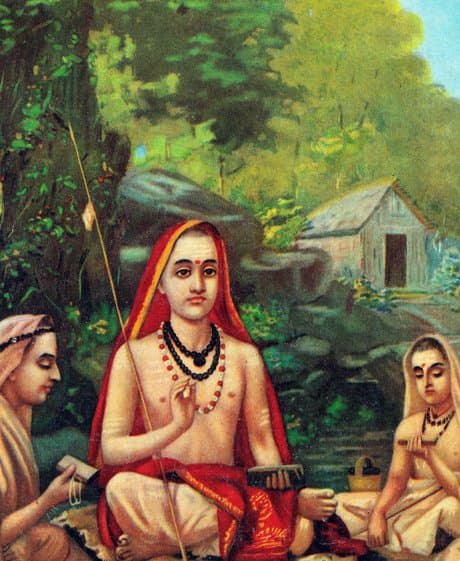
Ādi Śaṅkarācārya · Advaita
Sanskritअधिष्ठानं इच्छाद्वेषसुखदुःखज्ञानादीनां अभिव्यक्तेराश्रयः अधिष्ठानं शरीरम्, तथा कर्ता उपाधिलक्षणः भोक्ता, करणं च श्रोत्रादि शब्दाद्युपलब्धये पृथग्विधं नानाप्रकारं तत् द्वादशसंख्यं विविधाश्च पृथक्चेष्टाः वायवीयाः प्राणापानाद्याः दैवं चैव दैवमेव च अत्र एतेषु चतुर्षु पञ्चमं पञ्चानां पूरणं आदित्यादि चक्षुराद्यनुग्राहकम् ॥
Ādi Śaṅkarācārya · Advaita
Hindiवे (पाँच कारण) कौन-से हैं! सो बतलाते हैं—
अधिष्ठान—इच्छा-द्वेष, सुख-दुःख और ज्ञान आदिकी अभिव्यक्तिका आश्रय शरीर, कर्ता— उपाधिस्वरूप भोक्ता जीव, भिन्न-भिन्न प्रकारके कारण—शब्दादि विषयोंको ग्रहण करनेवाले श्रोत्रादि अलग-अलग बारह करण, नाना प्रकारकी
चेष्टाएँ—श्वास-प्रश्वास आदि अलग-अलग वायुसम्बन्धी क्रियाएँ और इन चारोंके साथ पाँचवाँ—पाँचकी संख्याको पूर्ण करनेवाला कारण दैव है। अर्थात् चक्षु आदि इन्द्रियोंके अनुग्राहक सूर्यादि देव हैं
Jñāneśvar · Vārkarī
Marathiतैसीं यथा लक्षणें । आइकें कर्म\-कारणें । तरी देह हें मी म्हणें । पहिलें एथ ॥ ३१५ ॥ ययातें अधिष्ठान ऐसें । म्हणिजे तें याचि उद्देशें । जे स्वभोग्येंसीं वसे । भोक्ता येथ ॥ ३१६ ॥ इंद्रियांच्या दाहें हातीं । जाचोनियां दिवोराती । सुखदुःखें प्रकृती । जोडीजती जियें ॥ ३१७ ॥ तियें भोगावया पुरुखा । आन ठावोचि नाहीं देखा । म्हणौनि अधिष्ठानभाखा । बोलिजे देह ॥ ३१८ ॥ हें चोविसांही तत्वांचें । कुटुंबघर वस्तीचें । तुटे बंधमोक्षाचें । गुंथाडे एथ ॥ ३१९ ॥ किंबहुना अवस्थात्रया । हें अधिष्ठान धनंजया । म्हणौनि देहा यया । हेंचि नाम ॥ ३२० ॥ आणि कर्ता हें दुजें । कर्माचें कारण जाणिजे । प्रतिबिंब म्हणिजे । चैतन्याचें जें ॥ ३२१ ॥ आकाशचि वर्षे नीर । तें तळवटीं बांधे नाडर । मग बिंबोनि तदाकार । होय जेवीं ॥ ३२२ ॥ कां निद्राभरें बहुवें । राया आपणपें ठाउवें नव्हे । मग स्वप्नींचिये सामावे । रंकपणीं ॥ ३२३ ॥ तैसें आपुलेनि विसरें । चैतन्यचि देहाकारें । आभासोनि आविष्करें । देहपणें जें ॥ ३२४ ॥ जया विसराच्या देशीं । प्रसिद्धि गा जीवु ऐसी । जेणें भाष केली देहेंसी । आघवाविषयीं ॥ ३२५ ॥ प्रकृति करी कर्में । तीं म्यां केलीं म्हणे भ्रमें । येथ कर्ता येणें नामें । बोलिजे जीवु ॥ ३२६ ॥ मग पातेयांच्या केशीं । एकीच उठी दिठी जैसी । मोकळी चवरी ऐसी । चिरीव गमे ॥ ३२७ ॥ कां घराआंतुल एकु । दीपाचा तो अवलोकु । गवाक्षभेदें अनेकु । आवडे जेवीं ॥ ३२८ ॥ कां एकुचि पुरुषु जैसा । अनुसरत नवां रसां । नवविधु ऐसा । आवडों लागे ॥ ३२९ ॥ तेवीं बुद्धीचें एक जाणणें । श्रोत्रादिभेदें येणें । बाहेरी इंद्रियपणें । फांके जें कां ॥ ३३० ॥ तें पृथग्विध करण । कर्माचें इया कारण । तिसरें गा जाण । नृपनंदना ॥ ३३१ ॥ आणि पूर्वपश्चिमवाहणीं । निघालिया वोघाचिया मिळणी । होय नदी नद पाणी । एकचि जेवीं ॥ ३३२ ॥ तैसी क्रियाशक्ति पवनीं । असे जे अनपायिनी । ते पडिली नानास्थानीं । नाना होय ॥ ३३३ ॥ जैं वाचे करी येणें । तैं तेंचि होय बोलणें । हाता आली तरी घेणें । देणें होय ॥ ३३४ ॥ अगा चरणाच्या ठायीं । तरी गति तेचि पाहीं । अधोद्वारीं दोहीं । क्षरणें तेचि ॥ ३३५ ॥ कंदौनि हृदयवरी । प्रणवाची उजरी । करितां तेचि शरीरीं । प्राणु म्हणिजे ॥ ३३६ ॥ मग उर्ध्वींचिया रिगानिगा । पुढती तेचि शक्ति पैं गा । उदानु ऐसिया लिंगा । पात्र जाहली ॥ ३३७ ॥ अधोरंध्राचेनि वाहें । अपानु हें नाम लाहे । व्यापकपणें होये । व्यानु तेचि ॥ ३३८ ॥ आरोगिलेनि रसें । शरीर भरी सरिसें । आणि न सांडितां असे । सर्वसंधीं ॥ ३३९ ॥ ऐसिया इया राहटीं । मग तेचि क्रिया पाठीं । समान ऐसी किरीटी । बोलिजे गा ॥ ३४० ॥ आणि जांभई शिंक ढेंकर । ऐसैसा होतसे व्यापार । नाग कूर्म कृकर । इत्यादि होय ॥ ३४१ ॥ एवं वायूची हे चेष्टा । एकीचि परी सुभटा । वर्तनास्तव पालटा । येतसे जे ॥ ३४२ ॥ तें भेदली वृत्तिपंथें । वायुशक्ति गा एथें । कर्मकारण चौथें । ऐसें जाण ॥ ३४३ ॥ आणि ऋतु बरवा शारदु । शारदीं पुढती चांदु । चंद्री जैसा संबंधु । पूर्णिमेचा ॥ ३४४ ॥ कां वसंतीं बरवा आरामु । आरामींही प्रियसंगमु । संगमीं आगमु । उपचारांचा ॥ ३४५ ॥ नाना कमळीं पांडवा । विकासु जैसा बरवा । विकासींही यावा । परागाचा ॥ ३४६ ॥ वाचे बरवें कवित्व । कवित्वीं बरवें रसिकत्व । रसिकत्वीं परतत्व । स्पर्शु जैसा ॥ ३४७ ॥ तैसी सर्ववृत्तिवैभवीं । बुद्धिचि एकली बरवी । बुद्धिही बरव नवी । इंद्रियप्रौढी ॥ ३४८ ॥ इंद्रियप्रौढीमंडळा । शृंगारु एकुचि निर्मळा । जैं अधिष्ठात्रियां कां मेळा । देवतांचा जो ॥ ३४९ ॥ म्हणौनि चक्षुरादिकीं दाहें । इंद्रियां पाठीं स्वानुग्रहें । सूर्यादिकां कां आहे । सुरांचें वृंद ॥ ३५० ॥ तें देववृंद बरवें । कर्मकारण पांचवें । अर्जुना एथ जाणावें । देवो म्हणे ॥ ३५१ ॥ एवं माने तुझिये आयणी । तैसी कर्मजातांची हे खाणी । पंचविध आकर्णीं । निरूपिली ॥ ३५२ ॥ आतां हेचि खाणी वाढे । मग कर्माची सृष्टि घडे । जिहीं ते हेतुही उघडे । दाऊं पांचै ॥ ३५३ ॥
Jñāneśvar · Vārkarī
Hindi(18.315) – वैसे ही इन पाँचों कारणों का लक्षण-सहित वर्णन सुनो। इन में पहला कारण देह है। (18.316) इसे अधिष्ठान कहते हैं, वह इसी लिए कि इसमें भोक्ता अपने भोग्य के साथ रहता है।
(18.317) इन्द्रिय-रूपी दसों हाथों से, रात और दिन कष्ट करके, प्रकृति के द्वारा जो सुख और दुःख प्राप्त होते हैं,
(18.318) उन्हें भागने के लिए पुरुष को और दूसरा स्थान ही नहीं है, इसलिए देह का अधिष्ठान कहा गया है।
(18.319) यह देह चौबीस तत्वों के रहने का कुटुम्बघर है। बन्ध और मोक्ष का उलझाव यहीं टूटता है।
(18.320) बहुत क्या कहें, हे धनंजय! यह देह जागृति, स्वप्न और सुषुप्ति तीनों अवस्थाओं का अधिष्ठान है, इसलिए इसे अधिष्ठान लाभ दिया गया है।
(18.321) कर्म का दूसरा कारण कर्ता है जो चैतन्य का प्रतिबिम्ब कहाता है।
(18.322) आकाश ही पानी बरसाता है, और जब वह पानी डबरों (गड्ढों) में भर जाता है तो वही आकाश आप ही इसमें प्रतिबिम्बित होता और तदाकार हो जाता है,
(18.323) अथवा घोर निद्रा के वश हो राजा अपना राजत्व भूल जाता और स्वप्न में रंक बन जाता है (18.324) वैसे ही अपनी विस्मृति के कारण जो चैतन्य ही देहाकार से प्रतिभासित होता और देह के रूप में प्रकट होता है,
(18.325) विचार-पूर्ण जनों में जो जीव नाम से प्रसिद्ध है, जिसने मानों देह का सम्पूर्ण विषय प्राप्त करा देने की प्रतिज्ञा की है,
(18.326) प्रकृति कर्म करती है तथापि जो भ्रम में पड़ा हुआ कहता है कि मैं करता हूँ उस जीव को यहाँ कर्ता नाम दिया गया है।
(18.327) फिर दृष्टि एक होते हुए वह जैसी पलकों के बालों (बरुनियों) के कारण खुले हुए चँवर की तरह फटी हुई सी मालूम होती है,
(18.328) अथवा घर में रक्खा हुआ एक ही दीपक जैसे झिलमिली में से अनेक रूपों में दिखाई देता है,
(18.329) अथवा एक ही पुरुष जैसे नवों रसों का अनुभव लेता हुआ नवविध जान पड़ता है,
(18.330) वैसे ही बुद्धि का एक ही ज्ञान इन श्रोतृ इत्यादि भेदों के कारण जिन जुदी-जुदी इन्द्रियों-द्वारा बाहर आविष्कृत होता है,
(18.331) उन जुदी-जुदी इन्द्रियों का होना, हे अर्जुन! कर्म का तीसरा कारण है। (18.332) अब, पूर्व या पश्चिम मार्ग से बहते हुए नाले जब नदियों में जा मिलते हैं तो उनका पानी जैसे एक ही हो जाता है,
(18.333) वैसे ही प्राणवायु में जो अविनाशी क्रियाशक्ति है वह जुदे-जुदे स्थानों में प्रकट होने के कारण जुदी-जुदी जान पड़ती है।
(18.334) वाचा में दिखाई देती है तब उसे वाणी कहते हैं। हाथों में प्रकट होती है तब उसे लेने-देने की क्रिया कहते हैं।
(18.335) चरणों में वही क्रियाशक्ति गति कहलाती है और मल-मूत्र द्वारों का क्षरण भी उसी शक्ति की क्रिया है।
(18.336) शरीर में नाभिस्थान से हृदय तक जो ओंकार की अभिव्यक्ति होती है उसी को प्राण कहते हैं,
(18.337) अनन्तर ऊपर की ओर जो श्वासोच्छ्वास होता है वह वही शक्ति है, पर वह उदान नाम से जानी जाती है।
(18.338) गुद द्वार से निकलने के कारण उसे अपान कहते हैं और सब शरीर में व्यापक होने से उसे व्यान नाम दिया गया है।
(18.339) खाये हुए रस का वह सब शरीर में एकसा भर देती है और आप उस शरीर का न छोड़ कर सब सन्धियों में बनी रहती हैं; (18.340) इस व्यापार के कारण हे किरीटी! वही क्रियाशक्ति समान अथवा नाभिस्थ वायु कहलाती है।
(18.341) और जमुहाई लेना, छींकना, डकारना आदि जो व्यापार हैं वे नाग, कूर्म, कूकर इत्यादि उपप्राण हैं;
(18.342) एवं ये सब व्यापार एक वायु के ही हैं, परन्तु हे सुभट! व्यापार के कारण उस वायु में जो भिन्नता जान पड़ती है
(18.343) वह वृत्तियों के कारण भिन्न होनेवाली वायुशक्ति ही कर्म का चौथा कारण है;
(18.344) तथा ऋतुओं में जैसे शरदूतु उत्तम होती है और शरदूतु में भी शुक्लपक्ष और उसमें भी जैसे पूर्णमासी की रात्रि उत्तम होती है,
(18.345) अथवा बसन्त ऋतु में जैसे बगीचा सुखकारक होता है; बगीचे में जैसे प्रिया का सहवास, और उसमें भी स्रक्, चन्दन इत्यादि उपचारों का रहना सुखकारक होता है,
(18.346) अथवा हे पाण्डव! कमल का विकास सुन्दर होता है और उस विकास में भी पराग का उद्भव अधिक सुन्दर होता है; (18.347) वाणी का कवित्व शोभा देता है, कवित्व में रसिकता अधिक शोभा देती है, और उस रसिकता में जैसे ब्रह्मनिरूपण और भी अधिक शोभा देता है
(18.348) वैसे ही सब वृत्ति-वैभव से युक्त एक बुद्धि ही उत्तम है, और बुद्धि में भी नूतन इन्द्रियबल का होना उत्तम है।
(18.349) इन्द्रिय-मण्डल की भी शोभा तभी है जब हे निष्पाप! उनके अधिष्ठाता देवताओं की अनुकूलता हो;
(18.350) एवं सूर्य इत्यादि देवताओं के समूह कृपालु हो चक्षु इत्यादि दसों इन्द्रियों के अधिष्ठाता होते हैं।
(18.351) हे अर्जुन! यह देव-समूह ही कर्म का पाँचवाँ कारण है।
(18.352) इस प्रकार जिसमें तुम समझ सको ऐसी रीति से, हमने सब कर्मों के पंचविध कारणों का निरूपण किया।
(18.353) अब इन्हीं कारणों की वृद्धि होते-होते जिन हेतुओं से कर्म-सृष्टि की रचना होती है उन पाँच हेतुओं के भी स्पष्ट कर बताते हैं।

Sri Udiya Baba · Modern
Hindiभावार्थ— [वे पाँच कारण ये हैं]—अधिष्ठान (शरीर), कर्ता (चिदाभास), भिन्न-भिन्न प्रकार के कारण (इन्द्रियों), तरह-तरह की चेष्टाएँ और पाँचवाँ दैव (विधाता या इन्द्रियों के अधिष्ठात् देव)।
Swami Ramsukhdas · Modern
Hindi‘अधिष्ठानम्’—शरीर और जिस देशमें यह शरीर स्थित है, वह देश—ये दोनों ‘अधिष्ठान’ हैं।
‘कर्ता’—सम्पूर्ण क्रियाएँ प्रकृति और प्रकृतिके कार्योंके द्वारा ही होती हैं। वे क्रियाएँ चाहे समष्टि हों, चाहे व्यष्टि हों; परन्तु उन क्रियाओंका कर्ता ‘स्वयं’ नहीं है। केवल अहंकारसे मोहित अन्तःकरणवाला अर्थात् जिसको चेतन और जड़का ज्ञान नहीं है—ऐसा अविवेकी पुरुष ही जब प्रकृतिसे होनेवाली क्रियाओंको अपनी मान लेता है, तब वह ‘कर्ता’ बन जाता है। ऐसा ‘कर्ता’ ही कर्मोंकी सिद्धिमें हेतु बनता है।
‘करणं च पृथग्विधम्’—कुल तेरह करण हैं। पाणि, पाद, वाक्, उपस्थ और पायु—ये पाँच कर्मेन्द्रियाँ और श्रोत्र, चक्षु, त्वक्, रसना और घ्राण—ये पाँच ज्ञानेन्द्रियाँ—ये दस ‘बहिःकरण’ हैं तथा मन, बुद्धि और अहंकार—ये तीन ‘अन्तःकरण’ हैं।
‘विविधाश्च पृथक्चेष्टाः’—उपर्युक्त तेरह करणोंकी अलग-अलग चेष्टाएँ होती हैं; जैसे—पाणि (हाथ)—आदान-प्रदान करना, पाद (पैर)—आना-जाना, चलना-फिरना, वाक्—बोलना, उपस्थ—मूत्रका त्याग करना, पायु (गुदा)—मलका त्याग करना, श्रोत्र—सुनना, चक्षु—
देखना, त्वक्—स्पर्श करना, रसना—चखना, घ्राण—सूँघना, मन—मनन करना, बुद्धि—निश्चय करना और अहंकार—‘मैं ऐसा हूँ’ आदि अभिमान करना।
‘दैवं चैवात्र पञ्चमम्’—कर्मोंकी सिद्धिमें पाँचवें हेतुका नाम ‘दैव’ है। यहाँ दैव नाम संस्कारोंका है। मनुष्य जैसा कर्म करता है, वैसा ही संस्कार उसके अन्तःकरणपर पड़ता है। शुभ-कर्मका शुभ संस्कार पड़ता है और अशुभ-कर्मका अशुभ संस्कार पड़ता है। वे ही संस्कार आगे कर्म करनेकी स्फुरणा पैदा करते हैं। जिसमें जिस कर्मका संस्कार जितना अधिक होता है, उस कर्ममें वह उतनी ही सुगमतासे लग सकता है और जिस कर्मका विशेष संस्कार नहीं है, उसको करनेमें उसे कुछ परिश्रम पड़ सकता है। इसी प्रकार मनुष्य सुनता है, पुस्तकें पढ़ता है और विचार भी करता है तो वे भी अपने-अपने संस्कारोंके अनुसार ही करता है। तात्पर्य है कि मनुष्यके अन्तःकरणमें शुभ और अशुभ—जैसे संस्कार होते हैं, उन्हींके अनुसार कर्म करनेकी स्फुरणा होती है।
इस श्लोकमें कर्मोंकी सिद्धिमें पाँच हेतु बताये गये हैं—अधिष्ठान, कर्ता, करण, चेष्टा और दैव। इसका कारण यह है कि आधारके बिना कोई भी काम कहाँ किया
* सम्पूर्ण क्रियाएँ प्रकृतिके द्वारा ही होती हैं—इसका वर्णन गीतामें कई रीतियोंसे आता है; जैसे—
(१) सब कर्म प्रकृतिके द्वारा ही किये जाते हैं—‘प्रकृत्यैव च कर्माणि क्रियमाणानि सर्वशः’ (१३। २९), सम्पूर्ण कर्म प्रकृतिके गुणोंद्वारा किये जाते हैं—‘प्रकृतेः क्रियमाणानि गुणैः कर्माणि सर्वशः’ (३। २७)।
(२) गुण ही गुणोंमें बरतते हैं—‘गुणा गुणेषु वर्तन्ते’ (३। २८); द्रष्टा गुणोंके सिवाय अन्य किसीको कर्ता नहीं देखता—‘नान्यं गुणेभ्यः कर्तारं यदा द्रष्टानुपश्यति’ (१४। १९)।
(३) सब इन्द्रियाँ अपने-अपने अर्थों—(विषयों—) में बरतती हैं—‘इन्द्रियाणीन्द्रियार्थेषु वर्तन्ते’ (५। ९)।
(४) यहाँ (१८। १४ में) कर्मोंकी सिद्धिमें अधिष्ठान आदि पाँच हेतु बताये गये हैं।
इन सबका तात्पर्य यह है कि प्रकृति और पुरुष—इन दोनोंमेंसे केवल प्रकृतिमें ही क्रियाएँ होती हैं, पुरुषमें नहीं। प्रकृतिके साथ तादात्म्य करनेसे ही पुरुष उन क्रियाओंको अपनी मान लेता है। जैसे, कोई मनुष्य वायुयानमें बैठकर यह मान लेता है कि मैं वायुयानद्वारा जा रहा हूँ, जबकि वास्तवमें वायुयान ही चलता है, मनुष्य नहीं। ऐसे ही पुरुष अपनेको प्रकृतिकी क्रियाओंका कर्ता मान लेता है—‘अहंकारविमूढात्मा कर्ताहमिति मन्यते’ (३। २७)।
तत्त्वको जाननेवाला विवेकी पुरुष ऐसा अनुभव करता है कि सब क्रियाएँ प्रकृति और प्रकृतिके कार्यमें ही हो रही हैं, इनमें मैं कुछ भी नहीं करता हूँ—‘नैव किंचित्करोमीति युक्तो मन्येत तत्त्ववित्’ (५। ८)।
जायगा ? इसलिये 'अधिष्ठान' पद आया है। कर्ताके बिना क्रिया कौन करेगा ? इसलिये 'कर्ता' पद आया है। क्रिया करनेके साधन (करण) होनेसे ही तो कर्ता क्रिया करेगा, इसलिये 'करण' पद आया है। करनेके साधन होनेपर भी क्रिया नहीं की जायगी तो कर्मसिद्धि कैसे होगी ?
इसलिये 'चेष्टा' पद आया है। कर्ता अपने-अपने संस्कारोंके अनुसार ही क्रिया करेगा, संस्कारोंके विरुद्ध अथवा संस्कारोंके बिना क्रिया नहीं कर सकेगा, इसलिये 'दैव' पद आया है। इस प्रकार इन पाँचोंके होनेसे ही कर्मसिद्धि होती है।
**परिशिष्ट भाव—'कर्ता'—**अहंकार अपरा प्रकृति है और जीव परा प्रकृति है। जीवका सम्बन्ध (सजातीयता) परमात्माके साथ है, पर वह अहंकारके साथ सम्बन्ध जोड़कर अपनेको कर्ता मान लेता है।
'दैवम्'—अच्छे-बुरे संस्कार सबके भीतर रहते हैं—'सुमति कुमति सब के उर रहहीं' (मानस, सुन्दर ४०।३)। संग, शास्त्र और विचार—इन तीनोंसे अच्छे या बुरे संस्कारोंको बल मिलता है, जिससे नये कर्म होते हैं।
The word Sānkhya means rational, analytical reasoning and refers to the Sānkhya philosophy established by Lord Krishna's incarnation of Kapila Deva.
The word kṛtānte means deriving the perfect conclusion of the categorical and essential nature of all things based upon the tenets, ordinances and injunctions of the Vedic scriptures.
The five causes Lord Krishna will reveal are component factors combining to manifest individual acts.
The word nibodha meaning “comprehend” denotes that they must be contemplated and reflected upon.
The absolute conclusion of the Vedic scriptures verily regards Lord Krishna's expansion as paramātma, the Supreme Soul, existing simultaneously in the etheric heart of all living entities as the sole author of all acts.
The body, the Prāṇa or life airs, the ego, the senses, these are the four instruments of the ātma or individual soul which is powered by paramātma the Supreme Soul.
Evidence confirming this is found in the Taittirīya Upaniṣad II.III.I beginning Prāṇa deva anu Prāṇanti meaning:
“That which is within the body is the Prāṇa and that which is seated within the body is the ātma and that which rules the immortal ātma is paramātma.”