

Bhagavad Gītā · Chapter 18 · Mokṣa Sannyāsa Yoga
अध्येष्यते च य इमं धर्म्यं संवादमावयोः
ज्ञानयज्ञेन तेनाहमिष्टः स्यामिति मे मतिः
adhyeṣyate ca ya imaṃ dharmyaṃ saṃvādamāvayoḥ|jñānayajñena tenāhamiṣṭaḥ syāmiti me matiḥ||
Word meanings
यः = he who
आवयोः = of us two
इमम् = this
धर्म्यम् = righteous
संवादम् = dialogue
अध्येष्यते = will study
तेन = by that
च = even
अहम् = I
ज्ञानयज्ञेन = by the sacrifice of knowledge
इष्टः = worshipped
स्याम् = I shall be
इति = thus (saying)
मे = my
मतिः = conviction
Translation
Whosoever studies this sacred dialogue of ours in the form of the Gita, by him too shall I be worshipped through wisdom-sacrifice; such is My mind.
Commentary
The commentators seated around this verse
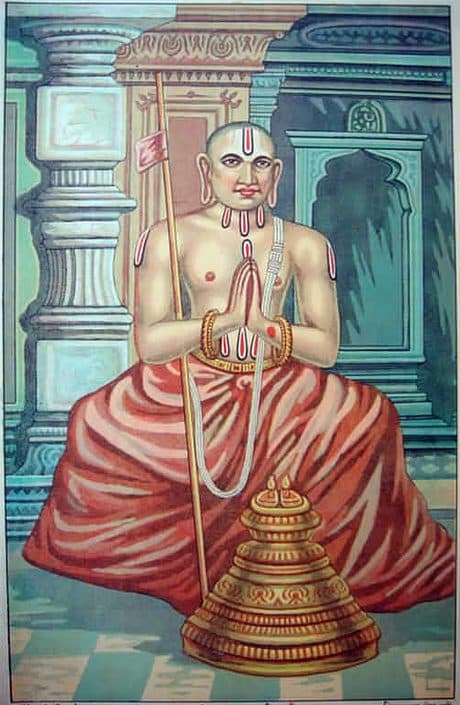
Rāmānuja · Viśiṣṭādvaita
English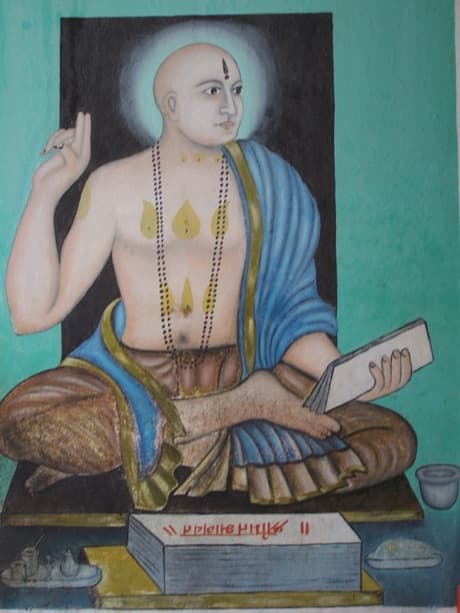
Madhvācārya · Dvaita
SanskritEnglishOn verses 18.68–18.71
“सोऽपि मुक्तः | न च तस्मान्मनुष्येषु | इत्युक्तेर्मुक्तानां महत् तारतम्यं ज्ञायते | मनुष्येषु इति विशेषणात् तत्रापि देवानामधिक्यं च || मुक्तिर्ज्ञात्वाऽपि विष्णुं स्याच्छास्त्रं श्रुत्वा ततोऽधिकम् | मुक्तौ सुखं तत् पठतस्ततोऽप्यधिकमिष्यते | व्याख्यातुरस्तु समं मुक्तौ सुखं नान्यस्य कस्यचित् | ततोऽधिकं तु देवानां मुख्यव्याख्याकृतो यतः || इति च ||” - He, verily, is the liberated, There is no human like him having spoken such words the gradation of the men is shown. Specially in the case of human beings and more specially among the gods. Even through listening, the science leads one to liberation the knowledge of Sri Vishnu’s supremacy brings additional energy. By listening the liberated one receives pleasure, by austerity it becomes established. There is no greater pleasure than to the one than this who has spoken about the Gita. But the gods receive immense pleasure because it is they who primarily sing the Divine Song.

Jñāneśvar · Vārkarī
English70 "And those who will study this our Dialogue concerning Duty, by that 'sacrifice' (in the form) of knowledge, I shall be-such is My thought-(amply) worshipped. (1524) And one who would recite without analysing the words of the stanzas the dialogue between yourself and myself, containing all-round (universal) knowledge; and which while getting developed gives birth to the philosophy leading towards liberation, will have kindled the blazing sacrificial fire of knowledge and given therein oblation of primeval Nescience and thereby propitiated Me, Supreme Soul, Oh you Good Talent. Whatever could be attained by the learned and the wise by research of the Gītā teachings-that very thing would also be secured by those that simply repeat it (Gītā). Thus the one simply reciting the Gītā will secure the same fruit as the one knowing its interpretations does. The mother-the Gītā teachings-makes no distinction between a knowing child and an infant.
Swami Ramsukhdas · Modern
English‘Adhyeṣyate ca ya imaṁ dharmyaṁ saṁvādamāvayoḥ’—Lord Kṛṣṇa says to Arjuna, that this dialogue is the gist of scriptures.
Though they had been living together for years, yet they could not have such a rare dialogue. This sort of dialogue takes place on rare occasions.
Real curiosity, is not aroused, so long as a man does not get disenchanted of mundane affairs, and is not dispassionate. When he becomes restless, in the mundane maze, to find out the way, he has a heart-to-heart talk with a person, from whom he expects right guidance. He becomes his pupil, takes refuge in him and puts questions to him freely.
The more curious a pupil is, to satisfy his curiosity, the more enthusiastic the preceptor is to satisfy it, with new explanations and arguments. When a cow feeds a calf with her milk, the more hungry the calf is, with more force he pulls the udders and so the whole milk of the cow comes to her udders, from other areas. Similarly, when an inquisitive striver, asks questions again and again, new ideas and answers crop up, in the mind of the speaker. Then, a dialogue between the speaker and the listener, becomes excellent.
The real dialogue, between Lord Kṛṣṇa and Arjuna, begins with 2/54 when Arjuna curiously asks Him 'What are the marks of the man, who has steady wisdom?' Before this, Arjuna never asked a question with such curiosity, nor did the Lord so spontaneously express His views, before. This dialogue is the gist of the Vedas and the scriptures. It can lead a man to salvation, very easily, even in the most adverse circumstances, if he translates this gospel into practice. In adverse circumstances, he instead, of losing heart should make the best possible use i.e., he should renounce, the desire for favourable circumstances, because unfavourable circumstances destroy his sins, and enable him to renounce desire, for desirable circumstances. The more desire, a man has for favourable circumstances, the more fearful are the unfavourable circumstances. As soon as, he starts renouncing his desire for desirable circumstances by degrees, to that extent his
attachment to the agreeable will be renounced, and his fear of the disagreeable, will perish. When he becomes totally free from attachment and fear, he will become equanimous. This equanimity, has been called Yoga and those who are established in equanimity, are established in God. In the Gītā, different disciplines, as of action, of knowledge, of Devotion, of Meditation, as means to realize God, have been described.
The term 'Adhyeyate' (will study), denotes that the one who studies the dialogue, in the form of the Gītā, learns it by heart, tries to understand its gospel, will develop a curiosity to know this gospel, more and more. The more curious he is, the more clearly, it will be unfolded to him. When its secret is revealed to him, he will translate it into practice. By thoroughly practising its teachings, he will become the very image of the Gītā. By seeing him, people will be reminded of the Gītā, in the same way as people of Ayodhyā, were reminded of Lakṣmaṇa, by seeing Guha, the chief (king), of the primitive tribe called 'Niṣāda'.
'Jñāṇayajñena tenāhamistāḥ syām'—Sacrifice is of two kinds—of wealth and of knowledge. In the former, there is predominance of things and actions, while in the latter, there is predominance of knowledge. In the sacrifice of knowledge, a striver, puts questions to a saint or a preceptor, in order to know the real essence, and the saint or preceptor explains it. A striver, reflects seriously upon it. Then he realizes, where he stands. Having known the real essence, nothing remains to be known by him. This is called the sacrifice of knowledge. But here, Lord Kṛṣṇa says to Arjuna, that He will be worshipped through the sacrifice of knowledge, by him who studies this secret dialogue, between them. The reason is, as a loving devotee is pleased and thrilled, when he is reminded of the Lord by someone, similarly, when the Lord sees anyone studying the Gītā, He is reminded of his devotee, having exclusive devotion to Him, and the teaching imparted by him to others. So he gets pleased, and thrilled and
by assuming this study, as the sacrifice of knowledge, He is worshipped. By studying this gospel, knowledge, specially wells forth, in his mind.
'*Iti me matiḥ*'—When the Lord declares, that it is His conviction, He means to say that, He listens to the gospel of the Gītā, when anyone studies it, because He pervades everywhere (Gītā 9/4) and His ears are everywhere (Gītā 13/13). Having heard this gospel, He is overwhelmed with knowledge, love and grace, and His intellect, is immersed in his memory. Thus, though he does not worship Him, he merely studies the Gītā, yet He accepts it as worship to Him, i.e., He by His grace awards him, the fruit of the sacrifice of knowledge.
Secondly, while one studies the Gītā or learns it by heart, he has a sweet memory of this dialogue, so He assumes, that he is rendering a great service, to Him.
Once, a boy was brought by a priest. The priest had trained him in the art of oration, and had given him a written speech. The boy had learnt it by heart. When the boy delivered the speech, with right gestures and expressions, the chairman and the audience were so much pleased with him, that they showered money on him and congratulated him from their hearts. But in fact, that boy did not understand the subject matter of the speech, as he was not well educated. He had merely learnt it by heart, without understanding it. Similarly, when a person recites the verses of the Gītā, even without understanding these, the Lord is worshipped through the sacrifice of knowledge, because the Lord understands them well, in the same way, as the chairman and the audience understood, the speech of the boy. Moreover, He Himself resides at such a place; and as an audience was present at the speech of the boy, at the place, where Gītā is studied, all sacred-places (places of pilgrimage), such as Prayāga etc., as well as gods, sages, divine snakes, cowherds, cowherdesses and ascetics, such as Nārada and Uddhava etc., also reside there.
**Appendix**—The Lord regards the knowledge—sacrifice as superior to material sacrifice—‘śreyān dravya mayādyajñāj jñāna yajñāḥ parantapa’ (Gītā 4/33). When there is so much glory of the study of the Gītā, then how much glory should be thereof translating the gospel of the Gītā into practice?
*Link:—There are some people who are unable, even to study the dialogue. What should they do? The answer comes, in the next verse.*
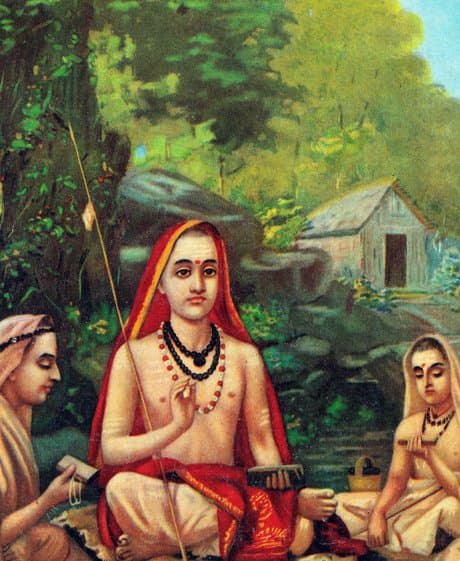
Ādi Śaṅkarācārya · Advaita
Sanskritअध्येष्यते च पठिष्यति यः इमं धर्म्यं धर्मादनपेतं संवादरूपं ग्रन्थं आवयोः, तेन इदं कृतं स्यात् । ज्ञानयज्ञेन - विधिजपोपांशुमानसानां यज्ञानां ज्ञानयज्ञः मानसत्वात् विशिष्टतमः इत्यतः तेन ज्ञानयज्ञेन गीताशास्त्रस्य अध्ययनं स्तूयते; फलविधिरेव वा, देवतादिविषयज्ञानयज्ञफलतुल्यं अस्य फलं भवतीति - तेन अध्ययनेन अहं इष्टः पूजितः स्यां भवेयम् इति मे मम मतिः निश्चयः ॥
अथ श्रोतुः इदं फलं -
Ādi Śaṅkarācārya · Advaita
Hindiजो भी कोई—
जो मनुष्य, हम दोनोंके संवादरूप इस धर्मयुक्त गीताग्रन्थको पढ़ेगा, उसके द्वारा यह होगा कि मैं ज्ञानयज्ञसे (पूजित होऊँगा), विधियज्ञ, जपयज्ञ, उपांशुयज्ञ और मानसयज्ञ—इन चार यज्ञोंमें ज्ञानयज्ञ मानस है इसलिये श्रेष्ठतम है। अतः उस ज्ञानयज्ञकी समानतासे गीताशास्त्रके अध्ययनकी स्तुति करते हैं।
अथवा यों समझो कि यह फलविधि है, यानी इसका फल देवतादिविषयक ज्ञानयज्ञके समान होता है।
उस अध्ययनसे मैं (ज्ञानयज्ञद्वारा) पूजित होता हूँ, ऐसा मेरा निश्चय है
Jñāneśvar · Vārkarī
Marathiपैं माझिया तुझिया मिळणीं । वाढिनली जे हे कहाणी । मोक्षधर्म का जिणीं । आलासे जेथें ॥ १५२४ ॥ तो हा सकळार्थप्रबोधु । आम्हां दोघांचा संवादु । न करितां पदभेदु । पाठेंचि जो पढे ॥ १५२५ ॥ तेणें ज्ञानानळीं प्रदीप्तीं । मूळ अविद्येचिया आहुती । तोषविला होय सुमती । परमात्मा मी ॥ १५२६ ॥ घेऊनि गीतार्थ उगाणा । ज्ञानिये जें विचक्षणा । ठाकती तें गाणावाणा । गीतेचा तो लाहे ॥ १५२७ ॥ गीता पाठकासि असे । फळ अर्थज्ञाचि सरिसें । गीता माउलियेसि नसे । जाणें तान्हें ॥ १५२८ ॥
Jñāneśvar · Vārkarī
Hindi(18.1524) उसी प्रकार तुम्हारे-हमारे समागम की जो यह कथा है जिसमें मोक्षधर्म भी पराजित हो गया है,
(18.1525) उस सम्पूर्ण अर्थप्रद संवाद का — पदों का अर्थ न करके भी — जो केवल पाठ ही करेगा
(18.1526) वह मानों ज्ञानाग्नि प्रज्वलित कर उसमें मूल अविद्या की आहुति दे मुझ परमात्मा को सन्तुष्ट कर लेगा।
(18.1527) हे बुद्धिमान! ज्ञानी जिस गीतार्थ को खोज कर प्राप्त करता है वहाँ उस पाठ करनेहारे को भी प्राप्त हो जाता है।
(18.1528) अतः गीतापाठक को अर्थज्ञानी के समान ही फल मिलता है। गीता माता के पास ऐसा भेद नहीं है कि यह ज्ञानी बालक है और यह अज्ञानी बालक।
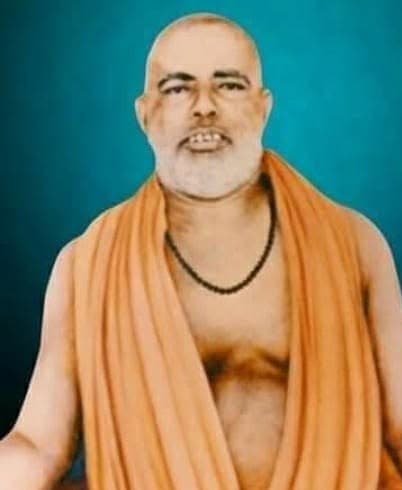
Sri Udiya Baba · Modern
Hindiभावार्थ— जो पुरुष हम दोनों के इस धर्ममय संवाद का अध्ययन करेगा उसके द्वारा मानो ज्ञानयज्ञ से मेरा पूजन किया जायगा—ऐसा मेरा मत है।
Swami Ramsukhdas · Modern
Hindi‘अध्येष्यते च य इमं धर्म्यं संवाद-मावयोः’—तुम्हारा और हमारा यह संवाद शास्त्रों, सिद्धान्तोंके साररूप धर्मसे युक्त है। यह बहुत विचित्र बात है कि परस्पर साथ रहते हुए तुम्हारे-हमारे बहुत वर्ष बीत गये; परन्तु हम दोनोंका ऐसा संवाद कभी नहीं हुआ! ऐसा धर्ममय संवाद तो कोई विलक्षण, अलौकिक अवसर आनेपर ही होता है।
जबतक मनुष्यकी संसारसे उकताहट न हो, वैराग्य या उपरति न हो और हृदयमें जोरदार हलचल न मची हो, तबतक उसकी असली जिज्ञासा जाग्रत नहीं होती। किसी कारणवश जब यह मनुष्य अपने कर्तव्यका निर्णय करनेके लिये व्याकुल हो जाता है, जब अपने कल्याणके लिये कोई रास्ता नहीं दीखता, बिना समाधानके और कोई
करनेके लिये नहीं कहती, प्रत्युत परिमार्जन करनेके लिये कहती है अर्थात् केवल अपने भाव और उद्देश्यको शुद्ध बनानेके लिये कहती है। गीताकी ऐसी युक्तियोंको जो भगवान्की तरफ चलनेवाले भक्तोंमें कहेगा, उससे उन भक्तोंको पारमार्थिक मार्गमें बढ़नेकी युक्तियाँ मिलेंगी, शंकाओंका समाधान होगा, साधनकी उलझनें सुलझेंगी, पारमार्थिक मार्गकी बाधाएँ दूर होंगी, जिससे वे उत्साहसे सुगमतापूर्वक बहुत ही जल्दी अपने लक्ष्यको प्राप्त कर सकेंगे। इसलिये वह भगवान्को सबसे अधिक प्यारा होगा; क्योंकि भगवान् जीवके उद्धारसे बड़े राजी होते हैं, प्रसन्न होते हैं।
सांसारिक वस्तु, व्यक्ति, घटना, परिस्थिति आदि किंचिन्मात्र भी अच्छी नहीं लगती, एकमात्र हृदयका सन्देह दूर करनेकी धुन (चटपटी) लग जाती है, एक ही जोरदार जिज्ञासा होती है और दूसरी तरफसे मन सर्वथा हट जाता है, तब यह मनुष्य जहाँसे प्रकाश और समाधान मिलनेकी सम्भावना होती है, वहाँ अपना हृदय खोलकर बात पूछता है, प्रार्थना करता है, शरण हो जाता है, शिष्य हो जाता है।
पूछनेवालेके मनमें जैसी-जैसी उत्कण्ठा बढ़ती है, कहनेवालेके मनमें वैसी-वैसी बड़ी विचित्रता और विलक्षणतासे समाधान करनेवाली बातें पैदा होती हैं। जैसे दूध पीनेके समय बछड़ा जब गायके थनोपर मुँहसे बार-बार धक्का मारता है और थनोसे दूध खींचता है, तब गायके शरीरमें रहनेवाला दूध थनोंमें एकदम उतर आता है। ऐसे ही मनमें
जोरदार जिज्ञासा होनेसे जब जिज्ञासु बार-बार प्रश्न करता है, तब कहनेवालेके मनमें नये-नये उत्तर पैदा होते हैं। सुननेवालेको ज्यों-ज्यों नयी बातें मिलती हैं, त्यों-त्यों उसमें सुननेकी नयी-नयी उत्कण्ठा पैदा होती रहती है। ऐसा होनेपर ही वक्ता और श्रोता—इन दोनोंका संवाद बढ़िया होता है।
अर्जुनने ऐसी उत्कण्ठासे पहले कभी बात नहीं पूछी और भगवान्के मनमें भी ऐसी बातें कहनेकी कभी नहीं आयी। परन्तु जब अर्जुनने जिज्ञासापूर्वक 'स्थितप्रज्ञस्य का भाषा ...' (२।५४)—यहाँसे पूछना प्रारम्भ किया, वहाँसे उन दोनोंका प्रश्नोत्तररूपसे संवाद प्रारम्भ हुआ है। इसमें वेदों तथा उपनिषदोंका सार और भगवान्के हृदयका असली भाव है, जिसको धारण करनेसे मनुष्य भयंकर-से-भयंकर परिस्थितिमें भी अपने मनुष्यजन्मके ध्येयको सुगमतापूर्वक सिद्ध कर सकता है। प्रतिकूल-से-प्रतिकूल परिस्थिति आनेपर भी घबराये नहीं, प्रत्युत प्रतिकूल परिस्थितिका आदर करते हुए उसका सदुपयोग करे अर्थात् अनुकूलताकी इच्छाका त्याग करे; क्योंकि प्रतिकूलता पहले किये पापोंका नाश करने और आगे अनुकूलताकी इच्छाका त्याग करनेके लिये ही आती है। अनुकूलताकी इच्छा जितनी ज्यादा होगी, उतनी ही प्रतिकूल अवस्था भयंकर होगी। अनुकूलताकी इच्छाका ज्यों-ज्यों त्याग होता जायगा, त्यों-त्यों अनुकूलताका राग और प्रतिकूलताका भय मिटता जायगा। राग और भय—दोनोंके मिटनेसे समता आ जायगी। समता परमात्माका साक्षात् स्वरूप है। गीतामें समताकी बात विशेषतासे बतायी गयी है और गीताने इसीको योग कहा है। इस प्रकार कर्मयोग, ज्ञानयोग, भक्तियोग, ध्यानयोग, प्राणायाम आदिकी विलक्षण-विलक्षण बातोंका इसमें वर्णन हुआ है।
'अध्येष्यते' का तात्पर्य है कि इस संवादको कोई ज्यों-ज्यों पढ़ेगा, पाठ करेगा, याद करेगा, उसके भावोंको समझनेका प्रयास करेगा, त्यों-ही-त्यों उसके हृदयमें उत्कण्ठा बढ़ेगी। वह ज्यों-ज्यों समझेगा, त्यों-त्यों उसकी शंकाका समाधान होगा। ज्यों-ज्यों समाधान होगा, त्यों-त्यों इसमें अधिक रुचि पैदा होगी। ज्यों-ज्यों रुचि अधिक पैदा होगी, त्यों-त्यों गहरे भाव उसकी समझमें आयेंगे और फिर वे भाव उसके आचरणोंमें, क्रियाओंमें, बर्तावमें आने
लगेंगे। आदरपूर्वक आचरण करनेसे वह गीताकी मूर्ति बन जायगा, उसका जीवन गीतारूपी साँचेंमें ढल जायगा अर्थात् वह चलती-फिरती भगवद्गीता हो जायगी। उसको देखकर लोगोंको गीताकी याद आने लगेगी; जैसे निषादराज गुहको देखकर माताओंको और दूसरे लोगोंको लखनलालकी याद आती है*।
'ज्ञानयज्ञेन तेनाहमिष्टः स्याम्'—यज्ञ दो प्रकारके होते हैं—द्रव्ययज्ञ और ज्ञानयज्ञ। जो यज्ञ पदार्थों और क्रियाओंकी प्रधानतासे किया जाता है, वह 'द्रव्ययज्ञ' कहलाता है और उत्कण्ठासे केवल अपनी आवश्यक वास्तविकताको जाननेके लिये जो प्रश्न किये जाते हैं, विज्ञ पुरुषोंद्वारा उनका समाधान किया जाता है, उनपर गहरा विचार किया जाता है, विचारके अनुसार अपनी वास्तविक स्थितिका अनुभव किया जाता है तथा वास्तविक तत्त्वको जानकर ज्ञात-ज्ञातव्य हो जाता है, वह 'ज्ञानयज्ञ' कहलाता है। परन्तु यहाँ भगवान् अर्जुनसे कहते हैं कि तुम्हारे-हमारे संवादका कोई पाठ करेगा तो मैं उसके द्वारा भी ज्ञानयज्ञसे पूजित हो जाऊँगा। इसमें कारण यह है कि जैसे प्रेमी भक्तको कोई भगवान्की बात सुनाये, उसकी याद दिलाये तो वह बड़ा प्रसन्न होता है, ऐसे ही कोई गीताका पाठ करे, अभ्यास करे तो भगवान्को अपने अनन्य भक्तकी, उसकी उत्कण्ठापूर्वक जिज्ञासाकी और उसे दिये हुए उपदेशकी याद आ जाती है और वे बड़े प्रसन्न होते हैं एवं उस पाठ, अभ्यास आदिको ज्ञानयज्ञ मानकर उससे पूजित होते हैं। कारण कि पाठ, अभ्यास आदि करनेवालेके हृदयमें उसके भावोंके अनुसार भगवान्का नित्यज्ञान विशेषतासे स्फुरित होने लगता है।
'इति मे मतिः'—ऐसा कहनेका तात्पर्य है कि जब कोई गीताका पाठ करता है तो मैं उसको सुनता हूँ; क्योंकि मैं सब जगह रहता हूँ—'मया ततमिदं सर्वम्' (गीता ९।४) और सब जगह ही मेरे कान हैं—'सर्वतः श्रुतिमल्लोके' (गीता १३।१३)। अतः उस पाठको सुनते ही मेरे हृदयमें विशेषतासे ज्ञान, प्रेम, दया आदिका समुद्र लहराने लगता है और गीतोपदेशकी यादमें मेरी बुद्धि सराबोर हो जाती है। वह पूजन करता है—ऐसी बात नहीं है, वह तो पाठ करता है; परन्तु मैं उससे पूजित हो जाता हूँ अर्थात् उसको ज्ञानयज्ञका फल मिल जाता है।
* जानि लखन सम देहि असीसा। जिअहु सुखी सय लाख बरीसा॥
निरखि निषादु नगर नर नारी। भए सुखी जनु लखनु निहारी॥ (मानस २।१९६।३)
दूसरा भाव यह है कि पाठ करनेवाला यदि उतने गहरे भावोंमें नहीं उतरता, केवल पाठमात्र या यादमात्र करता है तो भी उससे मेरे हृदयमें तेरे और मेरे सारे संवादकी (उत्कण्ठापूर्वक किये गये तेरे प्रश्नोंकी और मेरे दिये हुए गहरे वास्तविक उत्तरोंकी) एक गहरी मीठी-मीठी स्मृति बार-बार आने लगती है। इस प्रकार गीताका अध्ययन करनेवाला मेरी बड़ी भारी सेवा करता है, ऐसा मैं मान लेता हूँ।
विदेशमें किसी जगह एक जलसा हो रहा था। उसमें बहुत-से लोग इकट्ठे हुए थे। एक पादरी उस जलसेमें एक लड़केको ले आया। वह लड़का पहले नाटकमें काम किया करता था। पादरीने उस लड़केको दस-पन्द्रह मिनटका एक बहुत बढ़िया व्याख्यान सिखाया। साथ ही ढंगसे उठना, बैठना, खड़े होना, इधर-उधर ऐसा-ऐसा देखना आदि व्याख्यानकी कला भी सिखायी। व्याख्यानमें बड़े ऊँचे दर्जेकी अंग्रेजीका प्रयोग किया गया था। व्याख्यानका विषय भी बहुत गहरा था। पादरीने व्याख्यान देनेके लिये उस बालकको मेजपर खड़ा कर दिया। बच्चा खड़ा हो गया और बड़े मिजाजसे दायें-बायें देखने लगा और बोलनेकी जैसी-जैसी रिवाज है, वैसे-वैसे सम्बोधन देकर बोलने लगा। वह नाटकमें रहा हुआ था, उसको
**परिशिष्ट भाव**—भगवान् ज्ञानयज्ञको द्रव्यमय यज्ञसे भी श्रेष्ठ मानते हैं—‘श्रेयान्द्रव्यमयाद्यज्ञाज्ञानयज्ञः परन्तप’ (गीता ४। ३३)। जब गीताके अध्ययनका ही इतना माहात्म्य है तो फिर उसके अनुसार आचरण करनेका तो कहना ही क्या?
**सम्बन्ध**—जो गीताका प्रचार और अध्ययन भी न कर सके, वह क्या करे? इसके लिये आगेके श्लोकमें उपाय बताते हैं।
The Supreme Lord Krishna has resolved and made it eternal by speaking it, that whenever His devotee adhyeṣyete studies the Śrīmad Bhagavad-Gita; He will accept it as an offering consider Himself served in jñāna- yajñena, as direct propitiation and worship unto Him.
Such propitiation and worship is what is inculcated in this divine discourse where by its transcendental potency a mere reciting of the verses equates to offering direct propitiation and worship unto the Supreme Lord which He affirms He accepts.