

Bhagavad Gītā · Chapter 18 · Mokṣa Sannyāsa Yoga
ब्रह्मभूतः प्रसन्नात्मा न शोचति न काङ्क्षति
समः सर्वेषु भूतेषु मद्भक्तिं लभते पराम्
brahmabhūtaḥ prasannātmā na śocati na kāṅkṣati|samaḥ sarveṣu bhūteṣu madbhaktiṃ labhate parām||
Word meanings
ब्रह्मभूतः = having become one with Brahman
प्रसन्नात्मा = serene minded
न = not
शोचति = grieves
न = not
काङ्क्षति = craves
सर्वेषु = in all
भूतेषु = among beings
समः = equal-minded
पराम्, मद्भक्तिम् = my supreme devotion
लभते = attains
Translation
Established in identity with Brahma (who in Truth, Consciousness and Bliss solidified); and cheerful in mind, the Sankhyayogi no longer grieves nor craves for anything. The same to all beings, such a Yogi attains supreme devotion to Me.
Commentary
The commentators seated around this verse
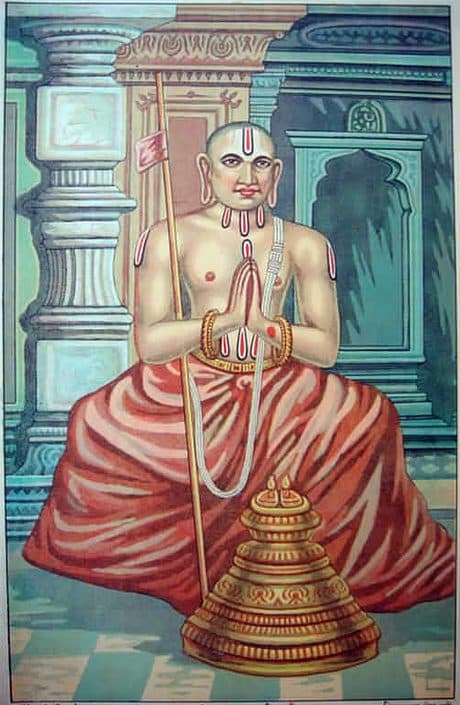
Rāmānuja · Viśiṣṭādvaita
English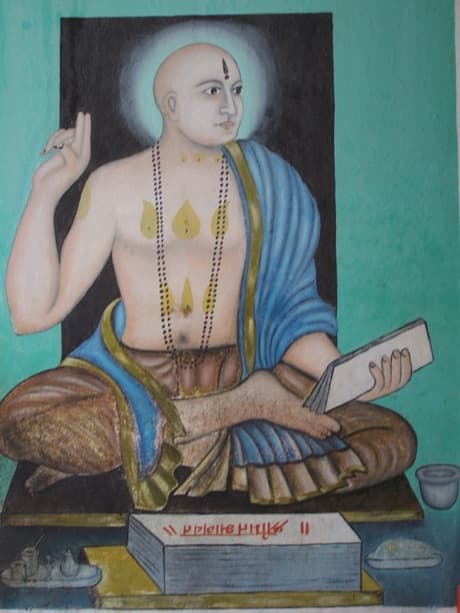
Madhvācārya · Dvaita
Madhva BhāṣyaSanskritEnglishOn verses 18.54–18.56
“पुनरन्तरङ्गसाधनान्युक्तवोपसंहरति - सर्वकर्माणि इत्यादिना ||” - By way of conclusion, he speaks again the means for internal saadhanaa (practices).
Madhvācārya · Dvaita
Gītā Tātparya NirṇayaSanskritEnglishOn verses 18.54–18.56
“विहितानि सर्वकर्माण्यपि मद्यापाश्रयो भूत्वा सदा कुर्वाणः | नहि यथेष्टचरणे तात्पार्यमत्र | तथा सति मामनुस्मर युद्धय च | ततः स्वधर्मकीर्तिं च | इत्यादिप्रस्तुतविरोधः | अपिशब्दस्त्वेकमपि कर्मातदाश्रयेण न कार्यं मित्यर्थः ||” - Making the Lord the refuge, one should offer to Him the performance of all ordained actions. It is not the intention here that one should perform actions both which are ordained as well as those not ordained. Otherwise, one may have separate opinion about the ordained actions. In which case statements like fix your mind on Me, according to one righteous duty and for fame etc. would have been contradictory. In the statement सर्वकर्माण्यापि the conjunction अपि signifies that without surrendering to him no actions should be performed.
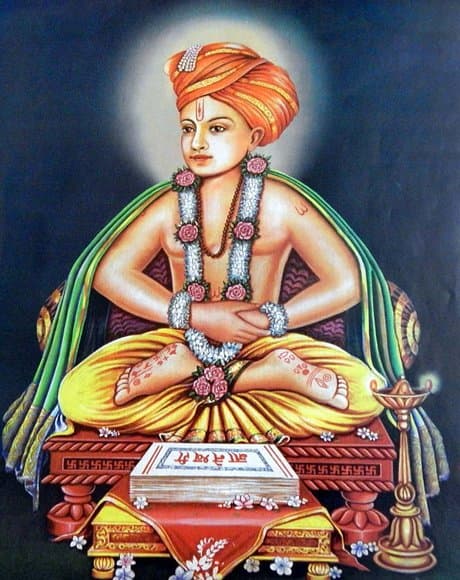
Jñāneśvar · Vārkarī
English54 "Realising his oneness of essence with Brahman, he in the serenity of his self, has nothing to grieve for, nothing to long for; and maintaining an even disposition towards all beings, he attains highest Devotion to Me. (1091)
Then he, Oh Son of Pându, with his qualification for his oneness of essence with Supreme Brahman, occupies the seat of serenity of his self secured by the realization of the 'self'. The dish becomes satisfactory (fit) for being taken in, when it rids itself of the heat with which it is cooked; or a river resumes its useful calm, after it rids itself of the hurry and bustle of its monsoon floods; or the music of all the subsidiary musical instruments ceases, when the vocal song (of which the former is the accompaniment) comes to an end. In that way the labour put forth to achieve the realization of the 'self' becomes quiescent with the realization of the self. This peaceful serene state is known by the name 'the serenity of the (realisation of the) self' and he (such perfected one) secures it Then (when he has attained this blissful state) he does not grieve for anything that he possesses not, nor does he display any longing to obtain some object in particular—both receive quietus at his hand, since for him everything in the universe is saturated with the same spiritual principle. With the rising of the Sun, the stars lose their brilliance; in that way, with the realisation of the self, whatever direction he may look to, the (usual) order of distinction between being and being is obliterated, Oh Pārtha. The writing on a slate can be wiped out by the palm, in that way all sense of distinction (about diverse things disappears when he looks at them. Similarly, all adverse and unreal knowledge, created during the dreamy and wakeful states, gets extinguished in the non-manifest, and then as the realisation of Supreme Brahman increases, that non-manifest too wears out and it is (ultimately) dissolved completely in that full realisation. Hunger gradually decreases with each morsel of food taken in during meal, and then it completely disappears when it (hunger) is fully satiated; or as one marches on, the distance (of the road to be covered) becomes shorter and shorter and when the destination is reached, that distance is fully covered; or as the awakened state develops, the slumber is gradually lost, and disappears altogether, with the return of the state of full awakening; or as the moon gets into full phase, the growth of her brilliance stops, and there also ends the bright fortnight of the lunar month. In that way it is only when the knowing agent absorbs in himself all objects of knowledge and along with such absorption (he) merges himself into my essence, that the ignorance completely disappears. At the world dissolution, the entire universe becomes one vast and unlimited sheet of water dissolving therein clearly differentiated entities such as rivers, seas, etc.; or when both the (earthen) pot (घट) and the hermitage (मठ) cease to exist, there only remains the uniform and all-abiding sky: or with the burning out of fire-wood there remains only the fire; or with the melting of different sorts of ornaments in the mould, there remains behind only gold, robbed of different names and shapes; or with one getting awake and the dream disappearing, there remains the person all alone by himself. In that way, excepting my own self, there remains nothing else for him (the seeker) including his own self, and he thus secures what is known as the fourth kind of devotion for Me. This fourth kind of devotion is so named, since its ways differ from the ways followed by those in distress, or those eager to know, or those desiring the fulfilment of some cherished object. Practically this is neither the third nor the fourth or yet neither the first nor the last; in fact this is my own innate state (of Brahman). That (innate) light which sheds light on the state of ignorance in regard to myself, and reveals my true aspect which is different from what the worldly people take it to be and makes the devotee cognisant of the totality of the spiritual principle (which inheres in him) in all things everywhere, that light which makes one abide in faith, where one feels one should sit (fix up), and reveals its all-pervading continuity, thus enlightening him; that light which makes felt the 'being' or 'not being' of the universe in the way the appearance or non-appearance, of a dream depends on the existence of the one (dreamer)—that innate light of mine, Oh Kapidhwaja, (one with a monkey as an emblem on his chariot) is what is named as devotion. Therefore in the case of 'affliction' in one afflicted, against which relief is expected, that expectation of relief i.e. devotion I am turned into; in the case of one eager to know (me), Oh Warrior, the object of knowing constitutes this devotion, and I am represented as that object of knowing; in the case of one seeking some end, the desire for that end constitutes this devotion and it identifies me with that end and designates me as that end, Oh Arjuna. In that way this devotion operates, taking the support of ignorance and shows me (who am) the seer as the object to be seen. There is no mistaking the fact that there is only one (single) face and it is visible in a mirror, the mirror being responsible for the apparent duality (of face); the vision only sees one Moon and this is correct; but that there should appear two Moons (where there is really one) is illusion caused by the eye-disease called 'Timir' (तिमिर). Thus everywhere, through this devotion I make myself the cynosure (to the devotees) but that delusion of (myself being) the object of knowledge, which (even though it is not in Me), they fancy is in Me persists because they are obsessed by ignorance. As that ignorance has vanished now, the state of seeing inherent in the seeing agent merges into me, in the way the reflection merges itself into the original. The quality as gold is there unshaken, even though gold is mixed with alloy; yet when the alloy is completely burnt out, the residue is pure gold. Is not the Moon the very same even before the Full Moon night? (The only difference is that) on the Full Moon night she gets complete (in all her phases). In that way what is seen through knowledge is only myself. When I am thus seen it is myself (complete having secured my own self), and in such a state, the intermediate phenomenon in the form of the state of seeing disappears. Therefore, I say that this fourth (path of) devotion of mine transcends others involving dualism (of the seer and the object of seeing), Oh Arjuna.
Swami Ramsukhdas · Modern
English'Brahmabhūtaḥ'—When, mind does not attach importance to the perishable, its evil propensities, such as egoism and pride, etc., are renounced. Then man has no feeling of 'mine', for them. Then, he does not accumulate or hoard things, for pleasure. When, he is not attached to pleasure and prosperity etc., naturally the mind becomes tranquil.
Thus, when a striver transcends the unreal, he becomes qualified to attain Brahma. Then from his point of view he becomes, one with Brahma and he realizes this fact, that he is Brahma. This state is called 'Brahmabhūtaḥ' here and in 5/24.
'Prasannātmā'—When mind attaches importance, to unreal things, man desires to obtain those things. This desire, disturbs peace of mind. But, when importance is not attached to unreal things, a striver's mind, remains calm and cheerful. The reason is, that in the eyes of such a Yogī, the world ceases to exist, only Brahma exists.
'Na śocati na kānkṣati'—Such a Yogī, who has attained oneness with Brahma, does not grieve at the heaviest loss, nor does he crave for favourable circumstances. It means, that he remains unruffled in perishable circumstances, because he does not behold anything, other than Brahma.
'Samaḥ sarveṣu bhūteṣu'—So long as, a striver does not become free, from the pairs of opposites, such as pleasure and
pain, attachment and aversion etc., he cannot realize his identity, with God. Without realizing his identity with Him, he cannot regard, all beings as alike. But, as soon as, he becomes free from the pairs of opposites, he realizes his oneness, with God. Then, he has no separate personality or existence of his own,* and he becomes one, with Him. Thus, he regards all beings as alike, in the same way, as the Lord is alike to all beings (Gītā 9/29). As in a dream, everything is created by the mind, there is nothing except mind. The mind exists in creation and creation exists, in the mind. Similarly, God as Self, abides in all beings, and all beings, exist in the Self (God) (Gītā 6/29). This is, what the Lord means, by 'Samah sarveṣu bhūteṣu'.
'Madbhaktim labhate parām'—When a Yogī having realized his identity with God, regards all beings alike, he has a unique attraction, towards God and it enhances every moment. That attraction has been called here 'Parābhakti', (Supreme devotion).
As, in the twenty-fourth verse of the fifth chapter, there is mention that a Sāṅkhyayogī, identified with Brahma, attains Brahma Who is all Peace, similarly, a Yogī having realized his identity with Brahma, attains supreme devotion, to Him.
Appendix—The striver, who follows the Path of Knowledge, has latencies of devotion, does not insist on his opinion, does not regard salvation the ultimate end, does not refute and censure devotion, he is not satisfied with the attainment of salvation. Therefore having attained salvation, he also attains devotion (love).
He who from his viewpoint holds that he is Brahma, though actually he has not attained Brahma, for him the term 'brahmabhūtāḥ' has been used. Being 'brahmabhūta' the Self becomes identical in attributes with Brahma viz., he enters into the Lord's Being—'mama sādharmyamāgatāḥ' (Gītā 14/2). To be identical in attributes with Brahma is salvation. Then he merges (surrenders) himself in the all-pervading Lord of infinite universes, the Supreme Soul and becomes verily the Lord's own
* When a man accepts his separate existence, it leads him to bondage.
Self (inseparable with Him)—'jñānī tvātmaiva me matam' (Gītā 7/18). This intimate relationship in which the devotee becomes the Lord's own self viz., inseparable with Him, is the attainment of 'parā bhakti' (love which increases every moment).
In the Path of Knowledge, renunciation of matter is important which is done by discrimination. When the matter is renounced in the light of discrimination, the objects renounced may leave their latent impression, which causes philosophical differences of opinions. But having attained love, there is no latent impression of the objects renounced, because a devotee renounces nothing but he regards all objects and beings etc., as the manifestation of God—'sadasaccāham' (Gītā 9/19). Love is not attained by the use of discrimination but is attained by faith. In faith there is dependence only on God's grace. Therefore the striver who has the latent impression of devotion, the God's grace, does not let him be satisfied with salvation, the relish of salvation (integral relish) becomes insipid for him and by God's grace the relish of love (infinite relish) is bestowed upon him.
The affinity with the world causes disquietude; therefore by Karmayoga, with the breach of affinity with the world, 'serene bliss' is attained. By Jñānayoga a striver by getting established in the Self, attains Bliss of the Self. In Bhaktiyoga by becoming one with God, the devotee attains the Supreme Bliss viz., infinite Bliss (love which enhances every moment).
Link:—In the next verse, the Lord points out, the reward of supreme devotion.
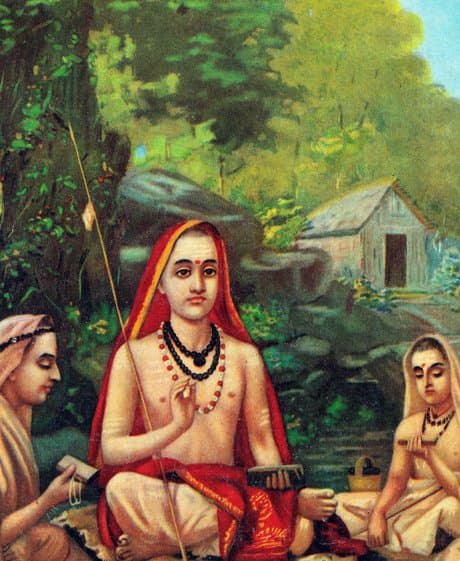
Ādi Śaṅkarācārya · Advaita
Sanskritब्रह्मभूतः ब्रह्मप्राप्तः प्रसन्नात्मा लब्धाध्यात्मप्रसादस्वभावः न शोचति, किंचित् अर्थवैकल्यं आत्मनः वैगुण्यं वा उद्दिश्य न शोचति न संतप्यते; न काङ्क्षति, न हि अप्राप्तविषयाकाङ्क्षा ब्रह्मविदः उपपद्यते; अतः ब्रह्मभूतस्य अयं स्वभावः अनूद्यते - न शोचति न काङ्क्षति इति । ``न हृष्यति'' इति वा पाठान्तरम् । समः सर्वेषु भूतेषु, आत्मौपम्येन सर्वभूतेषु सुखं दुःखं वा सममेव पश्यति इत्यर्थः । न आत्मसमदर्शनं इह, तस्य वक्ष्यमाणत्वात् ``भक्त्या मामभिजानाति'' (भ. गी. १८-५५) इति । एवंभूतः ज्ञाननिष्ठः, मद्भक्तिं मयि परमेश्वरे भक्तिं भजनं पराम् उत्तमां ज्ञानलक्षणां चतुर्थीं लभते,``चतुर्विधा भजन्ते माम्'' (भ. गी. ७-१६) इति हि उक्तम् ॥
ततः ज्ञानलक्षणया -
Ādi Śaṅkarācārya · Advaita
Hindiब्रह्मको प्राप्त हुआ, प्रसन्नात्मा अर्थात् जिसको अध्यात्मप्रसाद लाभ हो चुका है ऐसा पुरुष न शोक करता है और न आकांक्षा ही करता है। अर्थात् न तो किसी पदार्थकी हानिके या निजसम्बन्धी विगुणताके उद्देश्यसे सन्ताप करता है और न किसी वस्तुको चाहता ही है।
'न शोचति न काङ्क्षति' इस कथनसे ब्रह्मभूत पुरुषके स्वभावका अनुवादमात्र किया गया है।
क्योंकि ब्रह्मवेत्तामें अप्राप्त विषयोंकी आकांक्षा बन ही नहीं सकती। अथवा 'न काङ्क्षति' की जगह 'न ह्यपि' ऐसा पाठ समझना चाहिये।
तथा जो सब भूतोंमें सम है अर्थात् अपने सदृश सब भूतोंमें सुख और दुःखको जो समान देखता है। इस वाक्यमें आत्माको समभावसे देखना नहीं कहा है; क्योंकि वह तो 'भक्त्या मामभिजानाति' इस पदसे आगे कहा जायगा।
ऐसा ज्ञाननिष्ठ पुरुष, मुझ परमेश्वरकी भजनरूप पराभक्तिको पाता है, अर्थात् 'चतुर्विधा भजन्ते माम्' इसमें जो चतुर्थ भक्ति कही गयी है उसको पाता है
Jñāneśvar · Vārkarī
Marathiते ब्रह्मभावयोग्यता । पुरुषु तो मग पंडुसुता । आत्मबोधप्रसन्नता\- । पदीं बैसे ॥ १०९१ ॥ जेणें निपजे रससोय । तो तापुही जैं जाय । तैं ते कां होय । प्रसन्न जैसी ॥ १०९२ ॥ नाना भरतिया लगबगा । शरत्काळीं सांडिजे गंगा । कां गीत रहातां उपांगा । वोहटु पडे ॥ १०९३ ॥ तैसा आत्मबोधीं उद्यमु । करितां होय जो श्रमु । तोही जेथें समु । होऊनि जाय ॥ १०९४ ॥ आत्मबोधप्रशस्ती । हे तिये दशेची ख्याती । ते भोगितसे महामती । योग्यु तो गा ॥ १०९५ ॥ तेव्हां आत्मत्वें शोचावें । कांहीं पावावया कामावें । हें सरलें समभावें । भरितें तया ॥ १०९६ ॥ उदया येतां गभस्ती । नाना नक्षत्रव्यक्ती । हारवीजती दीप्ती । आंगिका जेवीं ॥ १०९७ ॥ तेवीं उठतिया आत्मप्रथा । हे भूतभेदव्यवस्था । मोडीत मोडीत पार्था । वास पाहे तो ॥ १०९८ ॥ पाटियेवरील अक्षरें । जैसीं पुसतां येती करें । तैसीं हारपती भेदांतरें । तयाचिये दृष्टी ॥ १०९९ ॥ तैसेनि अन्यथा ज्ञानें । जियें घेपती जागरस्वप्नें । तियें दोन्ही केलीं लीनें । अव्यक्तामाजीं ॥ ११०० ॥ मग तेंही अव्यक्त । बोध वाढतां झिजत । पुरलां बोधीं समस्त । बुडोनि जाय ॥ ११०१ ॥ जैसी भोजनाच्या व्यापारीं । क्षुधा जिरत जाय अवधारीं । मग तृप्तीच्या अवसरीं । नाहींच होय ॥ ११०२ ॥ नाना चालीचिया वाढी । वाट होत जाय थोडी । मग पातला ठायीं बुडी । देऊनि निमे ॥ ११०३ ॥ कां जागृति जंव जंव उद्दीपे । तंव तंव निद्रा हारपे । मग जागीनलिया स्वरूपें । नाहींच होय ॥ ११०४ ॥ हें ना आपुलें पूर्णत्व भेटें । जेथ चंद्रासीं वाढी खुंटे । तेथ शुक्लपक्षु आटे । निःशेषु जैसा ॥ ११०५ ॥ तैसा बोध्यजात गिळितु । बोधु बोधें ये मज आंतु । मिसळला तेथ साद्यंतु । अबोधु गेला ॥ ११०६ ॥ तेव्हां कल्पांताचिये वेळे । नदी सिंधूचें पेंडवळें । मोडूनि भरलें जळें । आब्रह्म जैसें ॥ ११०७ ॥ नाना गेलिया घट मठ । आकाश ठाके एकवट । कां जळोनि काष्ठें काष्ठ । वन्हीचि होय ॥ ११०८ ॥ नातरी लेणियांचे ठसे । आटोनि गेलिया मुसे । नामरूप भेदें जैसें । सांडिजे सोनें ॥ ११०९ ॥ हेंही असो चेइलया । तें स्वप्न नाहीं जालया । मग आपणचि आपणयां । उरिजे जैसें ॥ १११० ॥ तैसी मी एकवांचूनि कांहीं । तया तयाहीसकट नाहीं । हे चौथी भक्ति पाहीं । माझी तो लाहे ॥ ११११ ॥ येर आर्तु जिज्ञासु अर्थार्थी । हे भजती जिये पंथीं । ते तिन्ही पावोनी चौथी । म्हणिपत आहे ॥ १११२ ॥ येऱ्हवीं तिजी ना चौथी । हे पहिली ना सरती । पैं माझिये सहजस्थिती । भक्ति नाम ॥ १११३ ॥ जें नेणणें माझें प्रकाशूनि । अन्यथात्वें मातें दाऊनि । सर्वही सर्वीं भजौनि । बुझावीतसे जे ॥ १११४ ॥ जो जेथ जैसें पाहों बैसे । तया तेथ तैसेंचि असे । हें उजियेडें कां दिसे । अखंडें जेणें ॥ १११५ ॥ स्वप्नाचें दिसणें न दिसणें । जैसें आपलेनि असलेपणें । विश्वाचें आहे नाहीं जेणें । प्रकाशें तैसें ॥ १११६ ॥ ऐसा हा सहज माझा । प्रकाशु जो कपिध्वजा । तो भक्ति या वोजा । बोलिजे गा ॥ १११७ ॥ म्हणौनि आर्ताच्या ठायीं । हे आर्ति होऊनि पाहीं । अपेक्षणीय जें कांहीं । तें मीचि केला ॥ १११८ ॥ जिज्ञासुपुढां वीरेशा । हेचि होऊनि जिज्ञासा । मी कां जिज्ञास्यु ऐसा । दाखविला ॥ १११९ ॥ हेंचि होऊनि अर्थना । मीचि माझ्या अर्थीं अर्जुना । करूनि अर्थाभिधाना । आणी मातें ॥ ११२० ॥ एवं घेऊनि अज्ञानातें । माझी भक्ति जे हे वर्ते । ते दावी मज द्रष्टयातें । दृश्य करूनि ॥ ११२१ ॥ येथें मुखचि दिसे मुखें । या बोला कांहीं न चुके । तरी दुजेपण हें लटिकें । आरिसा करी ॥ ११२२ ॥ दिठी चंद्रचि घे साचें । परी येतुलें हें तिमिराचें । जे एकचि असे तयाचे । दोनी दावी ॥ ११२३ ॥ तैसा सर्वत्र मीचि मियां । घेपतसें भक्ति इया । परी दृश्यत्व हें वायां । अज्ञानवशें ॥ ११२४ ॥ तें अज्ञान आतां फिटलें । माझें दृष्टृत्व मज भेटलें । निजबिंबीं एकवटलें । प्रतिबिंब जैसें ॥ ११२५ ॥ पैं जेव्हांही असे किडाळ । तेव्हांही सोनेंचि अढळ । परी तें कीड गेलिया केवळ । उरे जैसें ॥ ११२६ ॥ हां गा पूर्णिमे आधीं कायी । चंद्रु सावयवु नाहीं ? । परी तिये दिवशीं भेटे पाहीं । पूर्णता तया ॥ ११२७ ॥ तैसा मीचि ज्ञानद्वारें । दिसें परी हस्तांतरें । मग दृष्टृत्व तें सरे । मियांचि मी लाभें ॥ ११२८ ॥ म्हणौनि दृश्यपथा- । अतीतु माझा पार्था । भक्तियोगु चवथा । म्हणितला गा ॥ ११२९ ॥
Jñāneśvar · Vārkarī
Hindi(18.1091) फिर हे पाण्डुसुत! ब्रह्म होने की योग्यता के द्वारा वह पुरुष आत्मज्ञान-प्रसन्नता के पद पर जा बैठता है।
(18.1092) जिस अग्नि पर रसोई तैयार की जाती है वह जब शान्त हो जाती है तब रसोई का आनन्द लिया जाता है;
(18.1093) अथवा शरत्काल में ज्वार-भाटा छोड़ जैसे गंगा शान्त हो जाती है, अथवा गीत समाप्त होते ही उसके उपांग — तबला-तम्बूरा इत्यादि — भी जैसे बन्द हो जाते हैं,
(18.1094) वैसे ही आत्मज्ञान के लिए उत्तम करने के जो श्रम होते हैं वे भी जहाँ शान्त हो जाते हैं,
(18.1095) उस दशा का नाम आत्मज्ञान-प्रसन्नता है। हे महामति! वह योग्य पुरुष उस दशा का उपभोग लेता है। (18.1096) उस समय “यह वस्तु मेरी है” ऐसा समझ कर सोच करना, अथवा किसी वस्तु की प्राप्ति की इच्छा करना आदि बातों का अन्त हो जाता है। उस में केवल एक्यभाव भरा हुआ रहता है।
(18.1097) सूर्य का उदय होते ही सम्पूर्ण नक्षत्र जैसे अपनी दीप्ति खो देते हैं
(18.1098) वैसे ही हे पार्थ! आत्मानुभव प्राप्त होते ही वह पुरुष अनेक भूतव्यक्तियों की रचना तोड़ते-तोड़ते सब आकाशरूप ही देखता है।
(18.1099) जैसे पाटी पर लिखे हुए अक्षर हाथ से पोछ लिये जाये, वैसे हो उसकी दृष्टि से सब भेदान्तरों का लोप हो जाता है।
(18.1100) जागृति और स्वप्न ये दो अवस्थाएँ जो विपरीत ज्ञान का ग्रहण करती है उन्हें वह सुषुप्तिरूपी अज्ञान में लीन कर देता है।
(18.1101) फिर ज्यों-ज्यों ज्ञान बढ़ता है त्यों-त्यों वह अव्यक्त भी घटता जाता है और पूर्ण ज्ञान होते ही सम्पूर्ण विलीन हो जाता है।
(18.1102) जैसे भोजन करते समय भूख धीरे-धीरे बुझती जाती है और तृप्ति के समय सम्पूर्ण शान्त हो जाती है, (18.1103) अथवा चलते-चलते जैसे रास्ता कटता जाता है और इष्ट स्थान के पहुँचते ही समाप्त हो जाता है,
(18.1104) अथवा ज्यों-ज्यों जागृति आती जाती है त्यों-त्यों नींद छूटती जाती है और पूर्ण जागृत होने पर उसका पता ही नहीं रहता,
(18.1105) अथवा वृद्धि समाप्त होने पर जब चन्द्र अपनी पूर्णता प्राप्त कर लेता है तो शुक्लपक्ष भी निःशेष समाप्त हो जाता है
(18.1106) वैसे ही वह पुरुष जब ज्ञेय विषयों को लील कर ज्ञान के द्वारा मुझमें आ मिलता है तब सम्पूर्ण अज्ञान का नाश हो जाता है।
(18.1107) तब कल्पान्त के समय जैसे नदी या समुद्र की सीमा के टूट जाने से ब्रह्मलोक तक जल ही जल भर जाता है,
(18.1108) अथवा घट या मठ का नाश होने पर जैसे एक आकाश ही सर्वत्र रहता है. अथवा लकड़ी जला कर जैसे अग्नि ही रह जाती है,
(18.1109) अथवा जैसे अलंकारों को साँचे में डाल कर गलाने से उनके नाम और रूपों का नाश हो सोना ही रह जाता है, (18.1110) यह भी रहने दो, जागने पर जैसे स्वप्न का नाश हो जाता और मनुष्य केवल आप ही रह जाता है
(18.1111) वैसे ही उस पुरुष को केवल एक मेरे अतिरिक्त स्वयं अपने समेत और कुछ भी नहीं रहता। इस प्रकार वह मेरी चौथी भक्ति प्राप्त करता है।
(18.1112) दूसरे आर्त, जिज्ञासु और अर्थार्थी जिन रीतियों से मेरी भक्ति करते हैं उनकी अपेक्षा से हम इसे चौथी भक्ति कहते हैं।
(18.1113) अन्यथा यह न तीसरी है, न चौथी है, न पहली है, न अन्तिम है। वास्तव में मेरी ब्रह्मरूपी स्थिति का ही नाम भक्ति है।
(18.1114) जो मेरे अज्ञान को प्रकाशित कर, मुझे अन्यरूप से दिखा कर, सबको सब विषयों की रुचि लगा उनका ज्ञान करा देता है,
(18.1115) जिस अखण्ड प्रकाश से जो जहाँ जिस वस्तु का देखना चाहे वह वस्तु उसे वहाँ वैसी ही दिखाई देती है,
(18.1116) स्वप्न का दिखाई देना न देना जैसे अपने अस्तित्व पर निर्भर है वैसे ही जिस प्रकाश से ही विश्व की उत्पत्ति या लय होता है, (18.1117) वह मेरा जो स्वाभाविक प्रकाश है उसी को हे कपिध्वज! भक्ति कहते हैं।
(18.1118) अतः आर्तों में यह भक्ति इच्छारूप हो जिस वस्तु की अपेक्षा करती है वह मैं ही हूँ।
(18.1119) जिज्ञासु में भी हे वीरेश! यही भक्ति जिज्ञासारूप हो मुझे जिज्ञास्य रूप से प्रकट करती है।
(18.1120) और है अर्जुन! यही भक्ति अर्थप्राप्ति की इच्छा बन मानो मुझे ही अपनी प्राप्ति के पीछे लगा मुझे अर्थ नाम का पात्र बनाती है;
(18.1121) एवं यदि मेरी भक्ति अज्ञान के साथ हो तो वह मुझ सर्वसाक्षी को दृश्यरूप से बचाती है।
(18.1122) दर्पण में मुख से ही मुख दिखाई देता है, इसमें कुछ सन्देह नहीं; परन्तु यह जो मिथ्या द्वितीयत्व है उसका हेतु दर्पण है।
(18.1123) दृष्टि वास्तव में चन्द्रमा का ही ग्रहण करती है पर एक चन्द्र के जो दोष दिखाई देते हैं वह नेत्र-रोग के कारण। (18.1124) वैसे ही हे धनंजय! वास्तव में मैं ही सर्वत्र निज का ही देखता हूँ परन्तु जो मिथ्या दृश्य-पदार्थ दिखाई देते हैं वह अज्ञान का कारण हैं।
(18.1125) वह अज्ञान उस चौथे भक्त का मिट जाता है; और प्रतिबिम्ब जैसे बिम्ब में मिल जाय, वैसे ही मेरी साक्षिरूपता मुझमें ही समा जाती है।
(18.1126) सोना जब मिश्रित स्थिति में रहता है तब भी सोना हो रहता है, परन्तु मिश्रण अलगाने पर जैसे वह शुद्ध रूप से शेष रहता है,
(18.1127) अजी! पूर्णमासी के पहले चन्द्रमा क्या सावयव नहीं रहता, परन्तु जैसे उस दिन उसकी पूर्णता उससे आ मिलती है,
(18.1128) वैसे ही दिखाई तो मैं ही देता हूँ पर अज्ञान के कारण दृश्यरूप से और भिन्न दिखाई देता हूँ, और दृष्टत्व विलीन होने पर मुझे ही अपनी प्राप्ति हो जाती है।
(18.1129) अतएव हे पार्थ! दृश्यपथ के परे जो मेरा भक्तियोग है उसे मैंने चौथा कहा है।
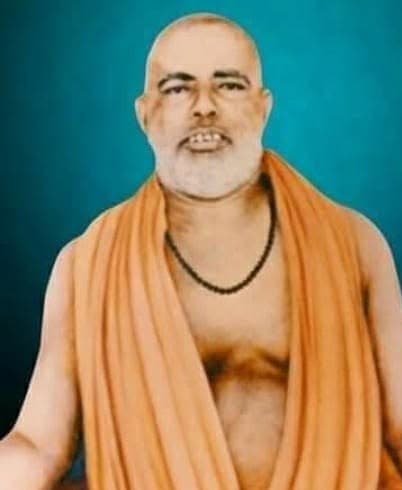
Sri Udiya Baba · Modern
Hindiसंगति— ब्रह्म को प्राप्त होने पर उसका स्वभाव कैसा हो जाता है यह बात अगले श्लोक में बतायी जाती है—
भावार्थ— ब्रह्म को प्राप्त हुआ प्रसन्न चित्त पुरुष न तो शोक करता है, न कुछ चाहता है। उसकी सब प्राणियों में समदृष्टि होती है और वह मेरी परा भक्ति प्राप्त करता है।
व्याख्या— श्लोक ५१ से ५३ तक ज्ञान की परानिष्ठा के साधन बतलाये गये हैं। जो अहन्ता-ममता से युक्त था इन साधनों के द्वारा वह उनसे मुक्त हो जाता है। परन्तु अभी जीव भाव ही रहता है। इसे ज्ञान नहीं कह सकते। अभी केवल प्रकृति और पुरुष का विवेक हुआ है। यही सांख्य दर्शन का सिद्धान्त है। यह ब्रह्मभूत कहा जाता है। इस स्थिति में प्रसन्नता को प्राप्त हुआ पुरुष बीती हुई बात के लिए शोच नहीं करता और आने वाली के लिए आकांक्षा नहीं करता। अर्थात् उसे भूत-भविष्यत् का चिन्तन नहीं होता। वह वर्तमान में स्थिर रहता है।
अथवा 'न शोचति न काङ्क्षति' कहकर अन्तःकरण का निषेध किया है। अन्तःकरण से असंग हो जाने के कारण उस में शोक और आकांक्षा का प्रसंग ही नहीं रहता। असह्य कष्ट पड़ने पर भी वह उद्विग्न नहीं होता। किसी के वर-शाप का भी उसे कोई भय नहीं रहता उसे किसी भी वस्तु की इच्छा नहीं रहती, क्योंकि वह सभी को मायिक देखता है। उसकी सब वस्तुओं में समबुद्धि हो जाती है क्योंकि वह सबको दृश्यमात्र देखता है। जब ऐसी समबुद्धि होती है तब उसे मेरी पराभक्ति प्राप्त होती है। परन्तु अभी दृश्य में सत्यत्व और आत्माओं का भेद निवृत्त नहीं होता। इसलिए यह ब्रह्मसाक्षात्कार नहीं आत्म साक्षात्कार है। यह ब्रह्मभाव है, ब्रह्मज्ञान नहीं। 'तत्त्वमसि' आदि महावाक्यों का उपदेश होने पर जब दृश्य का अत्यन्ताभाव हो जाता है तब ब्रह्मसाक्षात्कार होता है।
प्रश्न— यह श्लोक समवाद का है या ब्रह्मवाद का?
उत्तर— समवाद में द्वैत की सत्ता रहती है और ब्रह्मवाद में नहीं रहती। इस श्लोक में द्वैत की सत्ता स्वीकार की है, इसलिए यह समवाद का है। यहाँ तो सांख्यवाद की ही परिपक्व अवस्था बतलाई है। यह पराभक्ति ज्ञान नहीं, ज्ञान का साधन है। तत्त्वज्ञान का स्वरूप तो श्लोक ५५ में कहेंगे। ब्रह्म भूत शब्द से भी यहाँ द्रष्टा का बोध कराया है, जैसा कि योग सूत्र में कहा है—‘तदा द्रष्टुः स्वरूपेऽवस्थानम्।’ सांख्य में द्रष्टा की स्वरूप-स्थिति को ही समबुद्धि कहते हैं। भक्ति में ‘सब भगवान्’ इसी को समबुद्धि कहते हैं और ज्ञान में ‘सब मैं हूँ, अन्य सत्ता का अत्यन्ताभाव है’ यह समबुद्धि है।
Swami Ramsukhdas · Modern
Hindi‘ब्रह्मभूत’—जब अन्तःकरणमें विनाश-शील वस्तुओंका महत्त्व मिट जाता है, तब अन्तःकरणकी अहंकार, घमंड आदि वृत्तियाँ शान्त हो जाती हैं अर्थात् उनका त्याग हो जाता है। फिर अपने पास जो वस्तुएँ हैं, उनमें भी ममता नहीं रहती। ममता न रहनेसे सुख और भोग-बुद्धिसे वस्तुओंका संग्रह नहीं होता। जब सुख और भोग-बुद्धि मिट जाती है, तब अन्तःकरणमें स्वतः-स्वाभाविक ही शान्ति आ जाती है।
इस प्रकार साधक जब असत् से ऊपर उठ जाता है, तब वह ब्रह्मप्राप्तिका पात्र बन जाता है। पात्र बननेपर उसकी ब्रह्मभूत-अवस्था अपने-आप हो जाती है। इसके लिये उसको कुछ करना नहीं पड़ता। इस अवस्थामें ‘मैं ब्रह्मस्वरूप हूँ और ब्रह्म मेरा स्वरूप है’ ऐसा उसको अपनी दृष्टिसे अनुभव हो जाता है। इसी अवस्थाको यहाँ (और गीता—पाँचवें अध्यायके चौबीसवें श्लोकमें भी) ‘ब्रह्मभूत’ पदसे कहा गया है।
‘प्रसन्नात्मा’—जब अन्तःकरणमें असत् वस्तुओंका महत्त्व हो जाता है, तब उन वस्तुओंको प्राप्त करनेकी कामना पैदा हो जाती है। कामना पैदा होते ही अन्तःकरणकी शान्ति भंग हो जाती है और अशान्ति (हलचल) पैदा हो जाती है। परन्तु जब असत् वस्तुओंका महत्त्व मिट जाता है, तब साधकके चित्तमें स्वाभाविक ही प्रसन्नता रहती है। अप्रसन्नताका कारण मिट जानेसे फिर कभी अप्रसन्नता होती ही नहीं। कारण कि सांख्ययोगी साधकके अन्तःकरणमें अपनेसहित संसारका अभाव और परमात्मतत्त्वका भाव अटल रहता है।
‘न शोचति न काङ्क्षति’—उस प्रसन्नताकी पहचान यह है कि वह शोक-चिन्ता नहीं करता। सांसारिक कितनी ही बड़ी हानि हो जाय, तो भी वह शोक नहीं करता और अमुक परिस्थिति प्राप्त हो जाय—ऐसी इच्छा भी नहीं करता। तात्पर्य है कि उत्पन्न और नष्ट होनेवाली तथा आने-
जानेवाली परिवर्तनशील परिस्थिति, वस्तु, व्यक्ति, पदार्थ आदिके बनने-बिगड़नेसे उसपर कोई असर ही नहीं पड़ता। जो परमात्मामें अटलरूपसे स्थित है, उसपर आने-जानेवाली परिस्थितियोंका असर हो ही कैसे सकता है?
‘समः सर्वेषु भूतेषु’—जबतक साधकमें किंचिन्मात्र भी हर्ष-शोक, राग-द्वेष आदि द्वन्द्व रहते हैं, तबतक वह सर्वत्र व्याप्त परमात्माके साथ अभिन्नताका अनुभव नहीं कर सकता। अभिन्नताका अनुभव न होनेसे वह अपनेको सम्पूर्ण भूतोंमें सम नहीं देख सकता। परन्तु जब साधक हर्ष-शोकादि द्वन्द्वोंसे सर्वथा रहित हो जाता है, तब परमात्माके साथ स्वतः-स्वाभाविक अभिन्नता (जो कि सदासे ही थी)-का अनुभव हो जाता है। परमात्माके साथ अभिन्नता होनेसे, अपना कोई व्यक्तित्व* न रहनेसे अर्थात् ‘मैं हूँ’ इस रूपसे अपनी कोई अलग सत्ता न रहनेसे वह सम्पूर्ण प्राणियोंमें सम हो जाता है। जैसे परमात्मा सम्पूर्ण प्राणियोंमें सम है—‘समोऽहं सर्वभूतेषु’ (गीता—नवें अध्यायका उन्तीसवाँ श्लोक), ऐसे ही वह भी सम्पूर्ण प्राणियोंमें सम हो जाता है।
वह सम्पूर्ण प्राणियोंमें सम किस प्रकार होता है? जैसे—मनोराज्य और स्वप्नमें जो नाना सृष्टि होती है, उसमें मन ही अनेक रूप धारण करता है अर्थात् वह सृष्टि मनोमयी होती है। मनोमयी होनेसे जैसे सब सृष्टिमें मन है और मनमें सब सृष्टि है, ऐसे ही सब प्राणियोंमें (आत्मरूपसे) वह है और उसमें सम्पूर्ण प्राणी हैं (गीता—छठे अध्यायका उन्तीसवाँ श्लोक)। इसीको यहाँ ‘समः सर्वेषु भूतेषु’ कहा है।
‘मद्भक्ति लभते पराम्’—जब समरूप परमात्माके साथ अभिन्नताका अनुभव होनेसे साधकका सर्वत्र समभाव हो जाता है, तब उसका परमात्मामें प्रतिक्षण वर्धमान एक विलक्षण आकर्षण, खिंचाव, अनुराग हो जाता है। उसीको यहाँ पराभक्ति कहा है।
* व्यक्तित्व उसे कहते हैं, जिसमें मनुष्य अपनी सत्ता अलग मानता है और जिससे बन्धन होता है।
पाँचवें अध्यायके चौबीसवें श्लोकमें जैसे ब्रह्मभूत-अवस्थाके बाद ब्रह्मनिर्वाणकी प्राप्ति बतायी है—‘स योगी’। ‘ब्रह्मनिर्वाणं ब्रह्मभूतोऽधिगच्छति’, ऐसे ही यहाँ ब्रह्मभूत-अवस्थाके बाद पराभक्तिकी प्राप्ति बतायी है।
**परिशिष्ट भाव**—ज्ञानयोगके जिस साधकमें भक्तिके संस्कार होते हैं, जो अपने मतका आग्रह नहीं रखता, मुक्ति अर्थात् संसारसे सम्बन्ध-विच्छेदको ही सर्वोपरि नहीं मानता और भक्तिका खण्डन, निन्दा नहीं करता, उसको मुक्तिमें सन्तोष नहीं होता। अतः उसको मुक्ति प्राप्त होनेके बाद भक्ति (प्रेम)-की प्राप्ति हो जाती है।
जो अपनी दृष्टिसे अर्थात् अपनी मान्यतासे ब्रह्मरूप बना हुआ है, ब्रह्म हुआ नहीं है, उसके लिये यहाँ ‘ब्रह्मभूतः’ पद आया है। ब्रह्मभूत होनेके बाद जीवका ब्रह्मके साथ तात्त्विक सम्बन्ध (साधर्म्य) हो जाता है—‘मम साधर्म्यमागताः’ (गीता १४। २)। तात्त्विक सम्बन्ध होना ही मुक्ति है। फिर सर्वत्र परिपूर्ण अनन्तब्रह्माण्डनायक परमात्मामें अपने-आपको विलीन (समर्पित) कर देनेसे परमात्माके साथ आत्मीय सम्बन्ध (अभिन्नता) हो जाता है—‘ज्ञानी त्वात्मैव मे मतम्’ (गीता ७। १८)। आत्मीय सम्बन्ध होना ही पराभक्ति (प्रेम)-की प्राप्ति है।
ज्ञानमार्गमें जड़ताका त्याग मुख्य है। जड़ताका त्याग विवेकसाध्य है। विवेकपूर्वक जड़ताका त्याग करनेपर त्याग्य वस्तुका संस्कार शेष रह सकता है, जिससे दार्शनिक मतभेद पैदा होते हैं। परन्तु प्रेमकी प्राप्ति होनेपर त्याग्य वस्तुका संस्कार नहीं रहता; क्योंकि भक्त त्याग नहीं करता, प्रत्युत सबको भगवान्का स्वरूप मानता है—‘सदसच्चाहम्’ (गीता ९। १९)। प्रेमकी प्राप्ति विवेकसाध्य नहीं है, प्रत्युत विश्वाससाध्य है। विश्वासमें केवल भगवत्कृपापर ही भरोसा है। इसलिये जिसके भीतर भक्तिके संस्कार होते हैं, उसको भगवत्कृपा मुक्तिमें सन्तुष्ट नहीं होने देती, प्रत्युत मुक्तिके रस (अखण्डरस)-को फीका करके प्रेमका रस (अनन्तरस) प्रदान कर देती है।
संसारके सम्बन्धसे अशान्ति होती है, इसलिये कर्मयोगमें संसारसे सम्बन्ध छूटनेपर ‘शान्त आनन्द’ मिलता है। ज्ञानयोगमें निजस्वरूपमें स्थिति होनेसे निजानन्द अर्थात् ‘अखण्ड आनन्द’ मिलता है। भक्तियोगमें भगवान्से अभिन्नता होनेपर परमानन्द अर्थात् ‘अनन्त आनन्द’ (प्रतिक्षण वर्धमान प्रेम) मिलता है।
सम्बन्ध—अब आगेके श्लोकमें पराभक्तिका फल बताते हैं।
Lord Krishna gives further characteristics of the spiritually qualified. The words brahma-bhūtaḥ means comprehending the eternal nature of the ātma or immortal soul, the infinite nature of its consciousness and its essential relationship with the Supreme Lord.
This essential relationship consists in realising that one is dependent upon the Supreme Lord in every aspect of existence and to be grateful to Him for everything.
The word prasanna means pure hearted, lucid and clear internally, uncluttered by turbid and painful experiences.
Na śocati means - does not grieve. Na kāṅkṣati means does not crave.
Since all the love that such an aspirant feels is totally and exclusively for the Supreme Lord, the only grief such an aspirant ever experiences is separation from Lord Krishna and the only craving such an aspirant ever experiences is communion with Lord Krishna.
Samaḥ means equanimity and as such looks at all jīvas or embodied beings equally, knowing the ātma resides equally in all.
It also can manifest as an attitude of indifference to anything not related directly to the Supreme Lord, avoiding mundane actions and shunning worldly attachments.
Mad- bhaktiṃ means exclusive loving devotion unto the Supreme Lord Krishna in the form of sublime and exquisite bliss, occasioned by the ātmas rapturous communion with Him, the Supreme Lord of all lords.