

Bhagavad Gītā · Chapter 18 · Mokṣa Sannyāsa Yoga
पञ्चैतानि महाबाहो कारणानि निबोध मे
सांख्ये कृतान्ते प्रोक्तानि सिद्धये सर्वकर्मणाम्
pañcaitāni mahābāho kāraṇāni nibodha me|sāṃkhye kṛtānte proktāni siddhaye sarvakarmaṇām||
Word meanings
महाबाहो = O mighty-armed one
कृतान्ते = in the doctrine that ends action
साङ्ख्ये = in the Sankhya teaching
सर्वकर्मणाम् = of all actions
सिद्धये = for the accomplishment
एतानि = these
पञ्च = five
कारणानि = causes
प्रोक्तानि = have been declared
मे = from me
निबोध = know
Translation
In the branch of learning known by the name of Sankhya, which prescribes means for neutralizing all action, these five factors have been mentioned as contributory to the accomplishment of all actions; know them from Me, Arjuna.
Commentary
The commentators seated around this verse
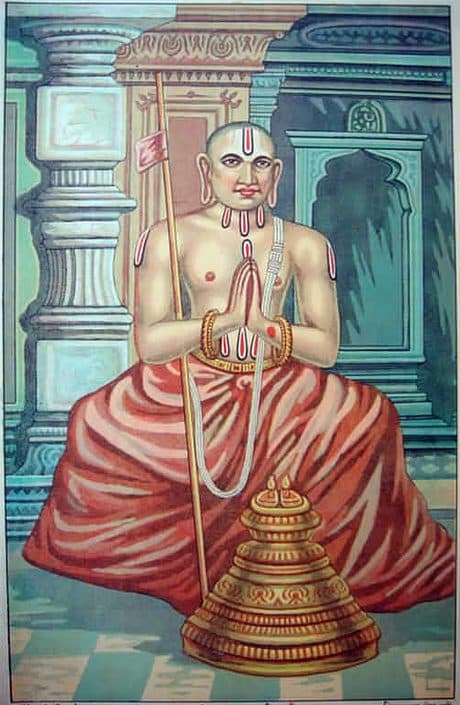
Rāmānuja · Viśiṣṭādvaita
EnglishOn verses 18.13–14
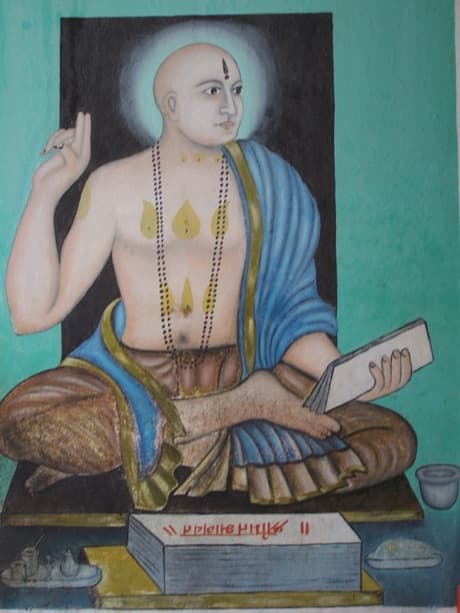
Madhvācārya · Dvaita
Madhva BhāṣyaSanskritEnglish“पुनः सन्न्यासं प्रपञ्चयितुं कर्मकारणान्याह - पञ्च इत्यादिना | साङ्ख्यकृतान्ते ज्ञानसिद्धान्ते ||” - Sri Krishna again reiterates संन्यास, the relinquishment of the actions, सङ्ख्यकृतान्ते means in the philosophy (siddhant) of Wisdom.
Madhvācārya · Dvaita
Gītā Tātparya NirṇayaSanskritEnglish“कथितं परम साङ्ख्यं कपिलाख्येन विष्णुना | सेञ्चर वैदिकं साक्षाञ्चेयमन्यदवैदिकम् || इति च ||” - Sankhya philosophy spoken here is the one propounded by Sri Vishnu in the form Sage Kapila. This is the one which accepts the existence of the Supreme Lord according to the Vedas. There also exists another Sankhya philosophy known as Sankhya which does not accept the authority of Vedas.
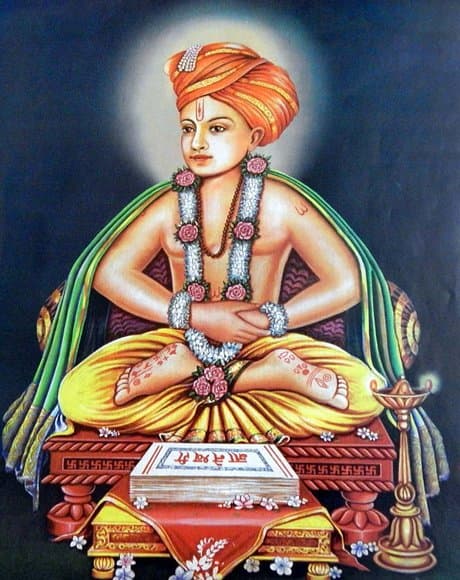
Jñāneśvar · Vārkarī
English13 "These five, O Long-armed, learn from me as the causes,— declared in the Sāmkhya doctrinal system—(as operating) in the accomplishment of all actions: (278)
You might even know the five causes which the Scriptures have described with upraised arms. These are proclaimed loudly through the beating of the big drums in the form of preaching, in the palace in the form of Sāmkhya philosophy, in the capital town of the King the Vedas. Since these alone are the root causes in this world of the genesis of all actions, the attributeless soul should not in any way be connected with them. These (causes) are well known in the world, Oh Kiriti, since they have been proclaimed, accompanied by such tom-tom and it is but fitting that they should be wafted to your ears. Possessing in your hands as you do, the supreme gem of knowledge in the form of myself, why should you be burdened with hearing (about them) through other sources? With a mirror placed in front of you, why give importance to the vision of others, and importune them to see and tell you how you look? I assume that very form, and appear in that particular direction, realizing the aim and the object with which my devotee looks in a particular direction for a particular form. That selfsame person (i.e. myself) has today become a plaything in your hands'. Lord Krishna forgot himself while talking in this way in the rush of affection, while (Arjuna) on the other hand, got dissolved in bliss. A mountain of moonstone, oozes out and gets dissolved forming a lake with a copious shower of moonshine; in that way Arjuna became the very idol of happiness, the barriers (walls) between happiness and self-realization getting smashed. The Lord being himself all-powerful and all-knowing, regained his normal self and ran forward spiritedly to drag out (Arjuna) as he was getting drowned in the ocean of pleasure. The rushing torrent of pleasure was so strong and powerful that Arjuna, although a prodigy of talent, was engulfed in it having lost self-consciousness: yet Lord Krishna checked it (torrent) and said, 'Oh Pārtha, see (do not lose sight of) your own self! At this, Arjuna heaved a sigh and bending low his neck said, 'You are a generous donor and you already know, that I got tired of living with you on the plane of duality as a separate individual, and I was trying to attain unison, which is the primal state, with you. Should you feel pleased to look with fervour on such a state of mind, why then remind me over and over again of my state as a (individual) being?' Hearing this, Lord Krishna said, 'You silly one, you have not come yet to know this properly: Are the Moon and her splendour distinct from each other? Having spoken of this (inner) identity (subsisting between us), I feel really afraid lest you experience the same and resent this (behaviour of mine); the bond (of love) is greatly strengthened thereby, such is the unique nature of the love I bear towards you: and so long as our mutual affection is intact the distinction as individual and individual between us is bound to remain, and therefore let this discussion stop here. We were, Oh Son of Pāṇḍu, just now talking of the actions being distinct from the soul.' Arjuna said at this, 'You have read my mind correctly and well introduced this problem to be solved. You promised to explain to me how there were five causes that were at the root of all actions, and you have also to explain to me what you said about the soul being in no way concerned with the actions.' At this, the Lord of the Universe said with great pleasure, 'Where (else) could there be found one (hearer) who would be firmly importunate and persist in asking questions on this topic. Therefore, Oh Arjuna, I shall now tell you as I said I would; but that will mean putting an additional burden (debt) of affection on you.” At this Arjuna said, “Oh God, have you forgotten what was said (by you) before? It is for this (affection) that you are maintaining the distinction between you and me.” At this Lord Krishna said, “Is it so? Well, I now broach what I began before and hear it lending full attention. Oh Dhanurdhara, verily the five causes bring about the event of actions, without the soul getting any cognisance of it. These five causes combine together and give formation to the actions, and five causes are patently at the root of all actions. Distinct from these is the spirit of the self (soul), which abides neutral. It (soul) is neither the instrumental nor the material cause, nor does it ever exert itself in bringing about the formation of actions. The actions good or bad take place (in the soul) in the way night and day take place in the sky. Water, heat and smoke (vapour) getting combined with the wind create clouds in the sky; yet the sky knows nothing about it. A small boat is built of several wooden planks and is rowed by the boatman or moved by the breeze, water remaining only a neutral onlooker: or an earthen pot is moulded out of a lump of clay which is placed on a wheel and is whirled round and round with a stick fixed in it, along with the wheel. Here all this is the doing of the potter, the earth taking no other part but the one of giving support. Just consider all this: let this however alone. All the diverse world affairs are carried on in the light of the Sun; does the Sun ever take any part in all this? In that way, the creeping plants of actions get firmly fixed (in the soil) through these five causes only, when they are in union, the soul keeping itself entirely aloof. Now I shall describe the five causes, each one separately, in the way pearls should be picked up and weighed each one separately.
Swami Ramsukhdas · Modern
English'Sāṅkhye kṛtānte proktānī siddhaye sarvakarmaṇām'—These five factors are contributory to the performance of all actions, whether prescribed or prohibited, physical or mental or oral, and whether these are gross, or subtle. When a person regards himself as a doer of actions, he performs actions, and those actions being accumulated, bear fruit for him. But when he renounces doership, those actions are performed, but they do not bear fruit for him i.e., they do not lead him, to sin, virtue or bondage. Then only four factors remain, by which, all actions are accomplished. These are—1. the seat of action (body), 2. the organs (senses), 3. efforts and 4. destiny (Gītā 18/14).
In the Sāṅkhya doctrine, there is predominance of knowledge or discrimination. Then, why has the Lord started the topic of accomplishment of actions? The reason is, that Arjuna belongs to the warrior class and it is his duty to fight. So Lord Kṛṣṇa, exhorts Arjuna to fight, being unattached to it, either through Sāṅkhyayoga or Karmayoga. Arjuna, wants to know the true nature of Sāṅkhyayoga. So Lord Kṛṣṇa, begins the topic of action through Sāṅkhya doctrine.
Arjuna, wanted to abandon actions. So Lord Kṛṣṇa clarifies that neither performance of action, nor abandonment, leads to salvation. But, when a man (the soul), renounces his affinity with the perishable Prakṛti, he attains salvation. That can be renounced, either through Karmayoga (the Discipline of Action), or through Sāṅkhyayoga (the Discipline of Knowledge). In Karmayoga, there is predominance of renouncement of fruit viz., mineness and attachment, while in the Sāṅkhyayoga, there is predominance of renouncement of egoism. But, if a man renounces attachment, his egoism is naturally renounced* and if he renounces egoism,
* A man (the soul) being a fragment of God has identity with Him. But having disinclinations for Him he has the sense of egoism as 'I am worldly, I am intelligent, I am learned' etc. He is attached to this egoism. But if he
his attachment and mineness is naturally renounced as mineness depends upon only egoism.
**Appendix**—The Lord describes the five factors contributory to the accomplishment of all actions in order to explain that the Self is not the doer. Out of these five, when the sense of doership is renounced, then actions totally come to an end viz., affinity with them is renounced.
*Link:—The Lord now enumerates these five factors.*
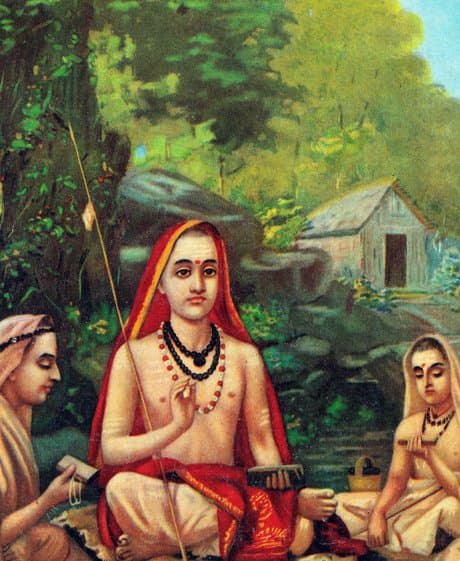
Ādi Śaṅkarācārya · Advaita
Sanskritपञ्च एतानि वक्ष्यमाणानि हे महाबाहो, कारणानि निर्वर्तकानि । निबोध मे मम इति उत्तरत्र चेतःसमाधानार्थम्, वस्तुवैषम्यप्रदर्शनार्थं च । तानि च कारणानि ज्ञातव्यतया स्तौति - सांख्ये ज्ञातव्याः पदार्थाः संख्यायन्ते यस्मिन् शास्त्रे तत् सांख्यं वेदान्तः । कृतान्ते इति तस्यैव विशेषणम् । कृतं इति कर्म उच्यते, तस्य अन्तः परिसमाप्तिः यत्र सः कृतान्तः, कर्मान्तः इत्येतत् । ``यावानर्थ उदपाने'' (भ. गी. २-४६) ``सर्वं कर्माखिलं पार्थ ज्ञाने परिसमाप्यते'' (भ. गी. ४-३३) इति आत्मज्ञाने संजाते सर्वकर्मणां निवृत्तिं दर्शयति । अतः तस्मिन् आत्मज्ञानार्थे सांख्ये कृतान्ते वेदान्ते प्रोक्तानि कथितानि सिद्धये निष्पत्त्यर्थं सर्वकर्मणाम् ॥
कानि तानीति, उच्यते -
Ādi Śaṅkarācārya · Advaita
Hindiइसलिये क्रिया, कारक और फल आदि आत्मामें अविद्यासे आरोपित होनेके कारण परमार्थदर्शी (आत्माज्ञानी) ही सम्पूर्ण कर्मोंका अशेषतः त्यागी हो सकता है । कर्म करनेवाले अधिष्ठान (शरीर)
कर्ता-क्रिया आदि कारणोंको, आत्मभावसे देखनेवाला अज्ञानी, सम्पूर्ण कर्मोंका अशेषतः त्याग नहीं कर सकता। यह बात अगले श्लोकसे दिखलाते हैं—
हे महाबाहो! इन आगे कहे जानेवाले पाँच कारणोंको अर्थात् कर्मके साधनोंको, तू मुझसे जान।
अगले उपदेशमें अर्जुनके चित्तको लगानेके लिये और अधिष्ठानादिके ज्ञानकी कठिनता दिखानेके लिये, उन पाँचों कारणोंको जाननेयोग्य बतलाकर, उनकी स्तुति करते हैं।
जिस शास्त्रमें जाननेयोग्य पदार्थोंकी संख्या (गणना) की जाय उसका नाम सांख्य अर्थात् वेदान्त है। कृतान्त भी उसीका विशेषण है। 'कृत' कर्मको कहते हैं, जहाँ उसका अन्त अर्थात् जहाँ कर्मोंकी समाप्ति हो जाती है वह 'कृतान्त' है—यानी कर्मोंका अन्त है। 'यावानर्थ उदपाने' 'सर्वं कर्माखिलं पार्थ ज्ञाने परिसमाप्यते' इत्यादि वचन भी आत्मज्ञान उत्पन्न होनेपर समस्त कर्मोंकी निवृत्ति दिखलाते हैं।
इसलिये (कहते हैं कि) उस आत्मज्ञानप्रद कृतान्त—सांख्यमें यानी वेदान्तशास्त्रमें समस्त कर्मोंकी सिद्धिके लिये कहे हुए (उन पाँच कारणोंको तू मुझसे सुन)
Jñāneśvar · Vārkarī
Marathiआणि पांचही कारणें तियें । तूंही जाणसील विपायें । जें शास्त्रें उभऊनी बाहे । बोलती तयांते ॥ २७८ ॥ वेदरायाचिया राजधानीं । सांख्यवेदांताच्या भुवनीं । निरूपणाच्या निशाणध्वनीं । गर्जती जियें ॥ २७९ ॥ जें सर्वकर्मसिद्धीलागीं । इयेंचि मुद्दलें हो जगीं । तेथ न सुवावा अभंगीं । आत्मराजु ॥ २८० ॥ ह्या बोलाचि डांगुरटी । तियें प्रसिद्धीचि आली किरीटी । म्हणौनि तुझ्या हन कर्णपुटीं । वसों हें काज ॥ २८१ ॥ आणि मुखांतरीं आइकिजे । तैसें कायसें हें ओझें । मी चिद्रत्न तुझें । असतां हातीं ॥ २८२ ॥ दर्पणु पुढां मांडलेया । कां लोकांचियां डोळयां । मानु द्यावा पहावया । आपुलें निकें ॥ २८३ ॥ भक्त जैसेनि जेथ पाहे । तेथ तें तेंचि होत जाये । तो मी तुझें जाहालों आहें । खेळणें आजी ॥ २८४ ॥ ऐसें हें प्रीतीचेनि वेगें । देवो बोलतां से नेघे । तंव आनंदामाजीं आंगें । विरतसे येरु ॥ २८५ ॥ चांदिणियाचा पडिभरु । होतां सोमकांताचा डोंगरु । विघरोनि सरोवरु । हों पाहे जैसा ॥ २८६ ॥ तैसें सुख आणि अनुभूती । या भावांची मोडूनि भिंती । आतलें अर्जुनाकृति । सुखचि जेथ ॥ २८७ ॥ तेथ समर्थु म्हणौनि देवा । अवकाशु जाहला आठवा । मग बुडतयाचा धांवा । जीवें केला ॥ २८८ ॥ अर्जुना येसणें धेंडें । प्रज्ञा पसरेंसीं बुडे । आलें भरतें एवढें । तें काढूनि पुढती ॥ २८९ ॥ देवो म्हणे हां गा पार्था । तूं आपणपें देख सर्वथा । तंव श्वासूनि येरें माथा । तुकियेला ॥ २९० ॥ म्हणे जाणसी दातारा । मी तुजशीं व्यक्तिशेजारा । उबगला आजी एकाहारा । येवों पाहें ॥ २९१ ॥ तयाही हा ऐसा । लोभें देतसां जरी लालसा । तरी कां जी घालीतसां । आड आड जीवा ? ॥ २९२ ॥ तेथ श्रीकृष्ण म्हणती निकें । अद्यापि नाहीं मा ठाऊकें । वेडया चंद्रा आणि चंद्रिके । न मिळणें आहे ?॥ २९३ ॥ आणि हाही बोलोनि भावो । तुज दाऊं आम्ही भिवों । जे रुसतां बांधे थांवो । तें प्रेम गा हें ॥ २९४ ॥ एथ एकमेकांचिये खुणें । विसंवादु तंवचि जिणें । म्हणौनि असो हें बोलणें । इयेविषयींचें ॥ २९५ ॥ मग कैशी कैशी ते आतां । बोलत होतों पंडुसुता । सर्व कर्मा भिन्नता । आत्मेनिसीं ॥ २९६ ॥ तंव अर्जुन म्हणे देवें । माझिये मनींचेंचि स्वभावें । प्रस्ताविलें बरवें । प्रमेय तें जी ॥ २९७ ॥ जें सकळ कर्माचें बीज । कारणपंचक तुज । सांगेन ऐसी पैज । घेतली कां ॥ २९८ ॥ आणि आत्मया एथ कांहीं । सर्वथा लागु नाहीं । हें पुढारलासि ते देईं । लाहाणें माझें ॥ २९९ ॥ यया बोला विश्वेशें । म्हणितलें तोषें बहुवसे । इयेविषयीं धरणें बैसे। ऐसें कें जोडे ? ॥ ३०० ॥ तरी अर्जुना निरूपिजेल । तें कीर भाषेआंतुल । परी मेचु ये होईजेल । ऋणिया तुज ॥ ३०१ ॥ तंव अर्जुन म्हणे देवो । काई विसरले मागील भावो ? । इये गोंठीस कीं राखत आहों । मीतूंपण जी ? ॥ ३०२ ॥ एथ श्रीकृष्ण म्हणती हो कां । आतां अवधानाचा पसरु निका । करूनियां आइका । पुढारलों तें ॥ ३०३ ॥ तरी सत्यचि गा धनुर्धरा । सर्वकर्मांचा उभारा । होतसे बहिरबाहिरा । करणीं पांचें ॥ ३०४ ॥ आणि पांच कारण दळवाडें । जिहीं कर्माकारु मांडे । ते हेतुस्तव घडे । पांच आथी ॥ ३०५ ॥ येर आत्मतत्त्व उदासीन । तें ना हेतु ना उपादान । ना ते अंगें करी संवाहन । कर्मसिद्धीचें ॥ ३०६ ॥ तेथ शुभाशुभीं अंशीं । निफजती कर्में ऐसीं । राती दिवो आकाशीं । जियापरी ॥ ३०७ ॥ तोय तेज धूमु । ययां वायूसीं संगमु । जालिया होय अभ्रागमु । व्योम तें नेणें ॥ ३०८ ॥ नाना काष्ठीं नाव मिळे । ते नावाडेनि चळे । चालविजे अनिळें । उदक तें साक्षी ॥ ३०९ ॥ कां कवणे एकें पिंडे । वेंचितां अवतरे भांडें । मग भवंडीजे दंडें । भ्रमे चक्र ॥ ३१० ॥ आणि कर्तृत्व कुलालाचें । तेथ काय तें पृथ्वीयेचें । आधारावांचूनि वेंचे । विचारीं पां । ॥ ३११ ॥ हेंहि असो लोकांचिया । राहाटी होतां आघविया । कोण काम सवितया । आंगा आलें ? ॥ ३१२ ॥ तैसें पांचहेतुमिळणीं । पांचेंचि इहीं कारणीं । कीजे कर्मलतांची लावणी । आत्मा सिना ॥ ३१३ ॥ आतां तेंचि वेगळालीं । पांचही विवंचूं गा भलीं । तुकोनि घेतलीं । मोतियें जैसीं ॥ ३१४ ॥
Jñāneśvar · Vārkarī
Hindi(18.278) वे पाँच कारण कदाचित् तुम भी जानते होगे। क्योंकि जिनका वर्णन शास्त्रों ने हाथ उठा कर किया है,
(18.279) जो वेदराज की राजधानी में सांख्य और वेदान्त के मन्दिरों में निरूपण-रूपी डंके की ध्वनि से गर्जना करते हैं,
(18.280) वही संसार में सब कर्मों की सिद्धि की पूँजी है। यह निश्चय जानो कि आत्मराज कर्मसिद्धि का कारण नहीं है।
(18.281) ऐसे वचनों का डंका बजाने से उनकी प्रसिद्धि हुई है। अतः तुम्हें उनका वर्णन सुनना चाहिए।
(18.282) और जब कि तुम्हारे हाथ मुझ जैसा ज्ञानरत्न है तो वह वर्णन ऐसा कौन भारी है कि दूसरों के मुख से सुनना चाहिए?
(18.283) सामने दर्पण रक्खा हुआ है तो फिर अपना मुख देखने के लिए क्या दूसरों के नेत्रों का सन्मान करना चाहिए? यानी शीशा रहने पर भी क्या दूसरों से यह पूछना चाहिए कि — कहो, मेरा स्वरूप कैसा है!
(18.284) जहाँ जिस भाव से भक्त मुझे देखें वहाँ मैं वही वस्तु बन जाता हूँ। मैं आज तुम्हारे हाथ का खिलौना बन रहा हूँ।
(18.285) इस प्रकार जब श्रीकृष्ण प्रीति के वेग में बोलते हुए निज का स्मरण भूल गये तब अर्जुन स्वयं आनन्द में डूब गया। (18.286) जैसे चाँदनी चटक रही हो तो चन्द्रकान्तमणि-रूपी पर्वत पसीजता है और वहाँ एक सरोवर ही होता सा दिखाई देता है,
(18.287) वैसे ही जब सुख और अनुभव इस दोनों भावों की भीत टूट गई और वे भाव केवल अर्जुनरूप से ही मूर्तिमान दिखाई देने लगे,
(18.288) तब श्रीकृष्ण समर्थ थे इस लिए उन्हें उसकी स्मृति हुई और वे उस डूबे हुए अर्जुन को बचाने के लिए दौड़ गये।
(18.289) अर्जुन का ऐसे आनन्द की बाढ़ आई थी कि वह इतना ज्ञानी होने पर भी अपने बुद्धिविस्तार के साथ उसमें डूब गया। उस बाढ़ को श्रीकृष्ण ने खींच लिया
(18.290) और कहा कि है पार्थ! सावधान हो। तब अर्जुन ने सावधान हो माथा नवाया
(18.291) और कहा हे गुरु! मैं आपके जुदे व्यक्तिसान्निध्य से ऊब कर आपसे एकरूप हुआ चाहता हूँ।
(18.292) वह कौतूहल यद्यपि आप प्रेम से पूर्ण करते हैं, लेकिन महाराज! फिर यह जीव-रूपी प्रतिबन्ध क्यों बनाये रखते हैं (18.293) तब श्रीकृष्ण ने कहा कि ठीक! अजी दीवाने! तुम क्या अब तक यही नहीं जानते कि चन्द्र और चन्द्रिका को मिलने की आवश्यकता ही नहीं रहती।
(18.294) परन्तु यह भाव भी हम तुम से प्रकट करने में डरते हैं क्योंकि प्रेम तो वियोग होने से ही बल पाता है।
(18.295) तथापि एक दूसरे के संकेत-द्वारा वियोग तत्काल नष्ट हो जाता है। परन्तु अब इस विषय की चर्चा रहने दो।
(18.296) हे पाण्डुसुत! हम यह वर्णन कर रहे थे कि आत्मा और कर्म किस प्रकार भिन्न हैं।
(18.297) तब अर्जुन ने कहा कि हे देव! मैं भी यही चाहता था। मैं जो चाहता था उसी का आपने प्रस्ताव किया।
(18.298) आपने प्रतिज्ञा की थी कि तुम्हें सकल कर्मों का बीज जो कारण-पंचक है वह सुनावेंगे
(18.299) और यह भी कहा था कि उससे और आत्मा से सर्वथा सम्बन्ध नहीं है। वह प्रतिज्ञा-ऋण अब चुकाइए।
(18.300) इन वचनों से श्रीकृष्ण अत्यन्त सन्तुष्ट हो बोले कि इस विषय में धरना दे बैठनेवाला कौन मिलता है? (18.301) अतः हे अर्जुन! हम उस शब्दाभिप्राय का निरूपण करते हैं और तुम्हारे ऋण से मुक्त होते हैं।
(18.302) तब अर्जुन ने कहा कि हे देव। क्या आप पिछली बातें भूल गये ऐसा कहने से तुम-हम-रूपी द्वैत की रक्षा होती है।
(18.303) इस पर श्रीकृष्ण ने कहा, भला अब जो हम निरूपण कर रहे थे उसे भली भाँति ध्यान से सुनो।
(18.304) हे धनुर्धर! यह सत्य है कि सब कर्मों की घटना परस्पर पाँच साधनों के द्वारा होती है।
(18.305) और इन पाँच कारणों का समूह जिनके द्वारा कर्माकृति को प्राप्त होता है वे हेतु भी पाँच हैं।
(18.306) इस विषय में आत्मा उदासीन रहता है। वह न कर्मों का हेतु है न उपादान है, और न वह कर्मसिद्धि का सहकारी होता है।
(18.307) जैसे आकाश में दिन और रात होते रहते हैं वैसे ही आत्मा के अधिष्ठान पर शुभ और अशुभ कर्म होते हैं।
(18.308) अग्नि, जल और धूम का वायु से सम्मेलन हो तो हो अभ्र बन जाता है, पर आकाश जैसे उससे जुदा रहता है; (18.309) अथवा काठ की नाव बनाई जाती है, उसे केवट चलाता है और वह वायु के सहाय से चलती है परन्तु पानी जैसे केवल उसका साक्षी रहता है;
(18.310) अथवा जैसे किसी मिट्टी के पिण्ड से कुम्हार के चक्के पर किसी बासन का आकार बनता है और डण्डे से घुमाने से वह चक्का घूमता है
(18.311) उसमें कर्तृत्व कुम्हार का है, और पृथ्वी का आधार के अतिरिक्त क्या खर्च होता है!
(18.312) यह भी रहने दो जैसे लोगों के सम्पूर्ण व्यापार होते हैं, पर उनमें से क्या कोई सूर्य का व्यापार कहा जा सकता है?
(18.313) वैसे ही पाँच हेतुओं से उत्पन्न पाँच कारणों के द्वारा कर्मलताएँ गाई जाती हैं पर आत्मा उनसे जुदा रहता है।
(18.314) अब हम भली भाँति इन पाँचों का अलग-अलग विवेचन करते हैं। जैसे मोती परख कर लिये जाते हैं
Sri Udiya Baba · Modern
Hindiसंगति— कर्म करने वाले पाँच हैं। अर्थात् कोई भी क्रिया पाँच के द्वारा निष्पन्न होती है। इन पाँचों को बतलाने से पहले भगवान् यह संकेत करते हैं कि मैं अपनी ओर से कुछ नहीं कह रहा हूँ। जो कुछ भी कहा जाता है वह सांख्यशास्त्र के अनुसार है।
भावार्थ— हे महाबाहो! सम्पूर्ण कर्मों निष्पत्ति में सांख्य सिद्धान्त में कहे हुए ये पाँच कारण हैं, वह मुझसे सुनो।
Swami Ramsukhdas · Modern
Hindi‘पञ्चैतानि महाबाहो कारणानि’—हे महाबाहो! जिसमें सम्पूर्ण कर्मोंका अन्त हो जाता है, ऐसे सांख्यसिद्धान्तमें सम्पूर्ण विहित और निषिद्ध कर्मोंके होनेमें पाँच हेतु बताये गये हैं। ‘स्वयं’ (स्वरूप) उन कर्मोंमें हेतु नहीं है।
‘निबोध मे’—इस अध्यायमें भगवान्ने जहाँ सांख्य-सिद्धान्तका वर्णन आरम्भ किया है, वहाँ ‘निबोध’ क्रियाका प्रयोग किया है (इसी अध्यायका तेरहवाँ और पचासवाँ श्लोक), जबकि दूसरी जगह ‘शृणु’ क्रियाका प्रयोग किया है (इसी अध्यायका चौथा, उन्नीसवाँ, उन्तीसवाँ, छत्तीसवाँ, पैतालीसवाँ और चौंसठवाँ श्लोक)। तात्पर्य यह है कि सांख्यसिद्धान्तमें तो ‘निबोध’ पदसे अच्छी तरह समझनेकी बात कही है और दूसरी जगह ‘शृणु’ पदसे सुननेकी बात कही है। अतः सांख्यसिद्धान्तको गहरी रीतिसे समझना चाहिये। अगर उसे अपने-आप (स्वयं)-
से गहरी रीतिसे समझा जाय, तो तत्काल तत्त्वका अनुभव हो जाता है।
‘साङ्ख्ये कृतान्ते प्रोक्तानि सिद्धये सर्वकर्मणाम्’—कर्म चाहे शास्त्रविहित हों, चाहे शास्त्रनिषिद्ध हों, चाहे शारीरिक हों, चाहे मानसिक हों, चाहे वाचिक हों, चाहे स्थूल हों और चाहे सूक्ष्म हों—इन सम्पूर्ण कर्मोंकी सिद्धिके लिये पाँच हेतु कहे गये हैं। जब पुरुषका इन कर्मोंमें कर्तृत्व रहता है, तब कर्मसिद्धि और कर्मसंग्रह दोनों होते हैं और जब पुरुषका इन कर्मोंके होनेमें कर्तृत्व नहीं रहता, तब कर्मसिद्धि तो होती है, पर कर्मसंग्रह नहीं होता, प्रत्युत क्रियामात्र होती है। जैसे, संसारमात्रमें परिवर्तन होता है अर्थात् नदियाँ बहती हैं, वायु चलती है, वृक्ष बढ़ते हैं आदि-आदि क्रियाएँ होती रहती हैं, परन्तु इन क्रियाओंसे कर्मसंग्रह नहीं होता अर्थात् ये क्रियाएँ पाप-पुण्यजनक
* एवं स्वभक्तयो राजन् भगवान् भक्तभक्तिमान्। ( श्रीमद्भगवद्गीता १०। ८६। ५९ )
अथवा बन्धनकारक नहीं होतीं। तात्पर्य यह हुआ कि कर्तृत्वाभिमानसे ही कर्मसिद्धि और कर्मसंग्रह होता है। कर्तृत्वाभिमान मिटनेपर क्रियामात्रमें अधिष्ठान, करण, चेष्टा और दैव—ये चार हेतु ही होते हैं (गीता—इसी अध्यायका चौदहवाँ श्लोक)।
यहाँ सांख्यसिद्धान्तका वर्णन हो रहा है। सांख्यसिद्धान्तमें विवेक-विचारकी प्रधानता होती है, फिर भगवान्ने 'सर्वकर्मणां सिद्धये' वाली कर्मोंकी बात यहाँ क्यों छेड़ी? कारण कि अर्जुनके सामने युद्धका प्रसंग है। क्षत्रिय होनेके नाते युद्ध उनका कर्तव्य-कर्म है। इसलिये कर्मयोगसे अथवा सांख्ययोगसे ऐसे कर्म करने चाहिये, जिससे कर्म करते हुए भी कर्मोंसे सर्वथा निलिप्त रहे—यह बात भगवान्को कहनी है। अर्जुनने सांख्यका तत्त्व पूछा है, इसलिये भगवान् सांख्यसिद्धान्तसे कर्म करनेकी बात कहना आरम्भ करते हैं।
अर्जुन स्वरूपसे कर्मोंका त्याग करना चाहते थे; अतः
**परिशिष्ट भाव**—आत्माको अकर्ता बतानेके लिये पाँच कारणोंका वर्णन करते हैं। इन पाँचोंमें कर्तृत्वका त्याग होनेपर कर्मोंका सर्वथा अन्त (सम्बन्ध-विच्छेद) हो जाता है।
*सम्बन्ध—सम्पूर्ण कर्मोंकी सिद्धिमें पाँच हेतु कौन-से हैं? अब यह बताते हैं।*
The word Sānkhya means rational, analytical reasoning and refers to the Sānkhya philosophy established by Lord Krishna's incarnation of Kapila Deva.
The word kṛtānte means deriving the perfect conclusion of the categorical and essential nature of all things based upon the tenets, ordinances and injunctions of the Vedic scriptures.
The five causes Lord Krishna will reveal are component factors combining to manifest individual acts.
The word nibodha meaning “comprehend” denotes that they must be contemplated and reflected upon.
The absolute conclusion of the Vedic scriptures verily regards Lord Krishna's expansion as paramātma, the Supreme Soul, existing simultaneously in the etheric heart of all living entities as the sole author of all acts.
The body, the Prāṇa or life airs, the ego, the senses, these are the four instruments of the ātma or individual soul which is powered by paramātma the Supreme Soul.
Evidence confirming this is found in the Taittirīya Upaniṣad II.III.I beginning Prāṇa deva anu Prāṇanti meaning:
“That which is within the body is the Prāṇa and that which is seated within the body is the ātma and that which rules the immortal ātma is paramātma.”