

Bhagavad Gītā · Chapter 2 · Sāṅkhya Yoga
एषा ब्राह्मी स्थितिः पार्थ नैनां प्राप्य विमुह्यति
स्थित्वाऽस्यामन्तकालेऽपि ब्रह्मनिर्वाणमृच्छति
eṣā brāhmī sthitiḥ pārtha naināṃ prāpya vimuhyati|
sthitvā'syāmantakāle'pi brahmanirvāṇamṛcchati||
Word meanings
पार्थ = O Pārtha
एषा = this
ब्राह्मी = the divine (brahmic)
स्थितिः = state
एनाम् = this
प्राप्य = having attained
न, विमुह्यति = is not deluded
अस्याम् = in this state
अन्तकाले = at the last moment
अपि = also
स्थित्वा = being established
ब्रह्मनिर्वाणम् = the peace of Brahman
ऋच्छति = attains
Translation
Arjuna, such is the state of the God-realized soul; having reached this state, he overcomes delusion. And established in this state, even at the last moment, he attains Brahmic Bliss.
Commentary
The commentators seated around this verse
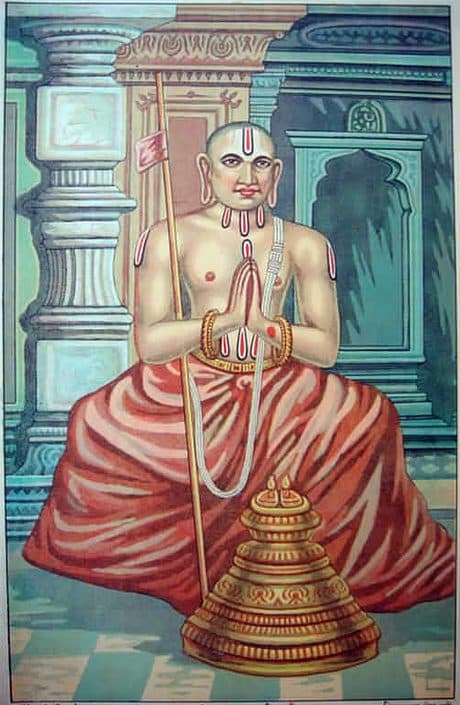
Rāmānuja · Viśiṣṭādvaita
English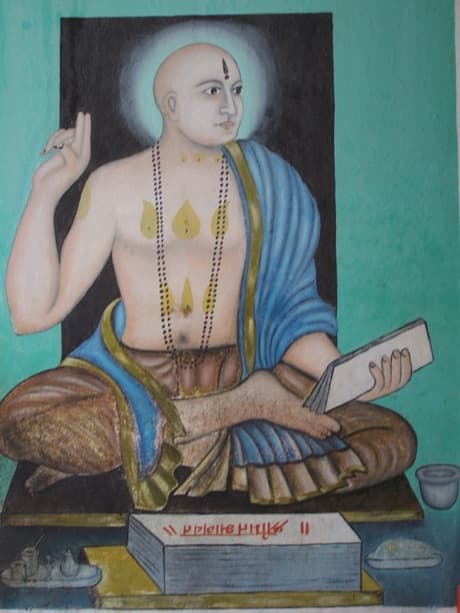
Madhvācārya · Dvaita
Madhva BhāṣyaSanskritEnglish“उपसंहरति - एषा इति | ब्रह्मी स्थितिः ब्रह्मविषया स्थितिलक्षणम् | अन्तकालेऽपि अस्याम् स्थितैव ब्रह्म गच्छति, अन्यथा जन्मान्तरं प्राप्नोति | यं यं वापि इति वक्ष्यमाणत्वात् | ज्ञानिनमपि सति प्रारब्धकर्माणि शरीरान्तरं युक्तम् | भोगनि त्वितरे इति ह्युक्तम् | सन्ति बहुशरीरफलानिकर्माणि - सप्तजमानि विप्रः स्याद् इत्यादेः | दृष्टेश्च ज्ञानिनामपि बहुशरीरप्राप्तेः | तथाह्युक्तम् - स्थितप्रज्ञोऽपि यस्तूर्ध्वः प्राप्य रुद्रपदं ततः | साङ्कर्षो ततो मुक्तिमगाद् विष्णुप्रसादतः ५५ ति गारुडे ५ महादेव परे जन्मस्तव मुक्तिर्निरूपते | इति नारदीये ||”
- Thus, he concludes His advise, in this verse. The state of Brahman is the sign concerning the experience of Brahman. Abiding in that state, verily, he attains the Brahman. Or else, he acquires re-birth. The same having been said earlier यं यं वापि (VIII.6). Even for the wise ones, re-birth comes about if there exists effect of previous actions. Only by undergoing the same, (it gets) dissolved, thus it has been spoken (in Brahma Sutras). Effect of the actions (gets destroyed) through many lives. Through seven births one becomes a Brahmin by such statements. Even for the men of wisdom realization comes after many bodies. - Just as one established in awareness acquiring higher status as that of the Rudra or of Sankarshana (Shesha) attains deliverance by the Grace of Sri Vishnu, thus, in Garuda Puraana. “महादेव परे जन्मस्तव मुक्तिर्नि रूप्यते ||” - O Mahadeva, deliverance for you is spoken to be in your subsequent life thus, in Narada Puraana.
“निश्चितफलं च ज्ञानम् | तस्य तावदेव चिरम् | यदु च नार्चिपमेवाभिसम्भवति | इत्यादिश्रुतिभ्यः | न च कायव्यूहापेक्षा - तद्यथैपीकातुलम्, तद्यथा पुष्करपलशे, ज्ञानाग्निः सर्वकर्माणि इत्यादिवचनेभ्यः प्रारब्धे त्वविरोधः | प्रमाणभावाच्च | न च तच्छास्त्रं प्रमाणम् - अक्षयपादकणादानां साङ्ख्ययोगजटाभूताम् | मतमलम्ब्य ये वेदं दृषयन्त्यल्पचेतसः | इति निन्दनात् || यत्र तु स्तुतिस्तत्र शिवभक्तानां स्तुतिपरत्वमेव न सत्यत्वम् | न हि ते पामपीतरगन्धविरुद्धार्थं प्रामाण्यम् | तथात्युक्तम् - एष मोहंमुजाम्याशु यो जनान्मोहयिष्यति | त्वं च रुद्रं महावाहो मोहशास्त्राणि कारय | अतथ्यानि वितथ्यानि दर्शयस्व महाभुज | प्रकाशं कुरु चालानमप्रकाशं च मां कुरु | इति वराहे || कुत्सितानि च मिश्राणि रुद्रो विष्णुप्रचोदिताः | दधीचाद्याः पुराणानि तच्छास्त्रसमयेन तु | चकुर्वादेस्तु ब्राह्मणि वैष्णवान् विवेदतः | पञ्चरात्रं भारतं च मूलरामायणं तथा | तथा पुराणं भागवतं विष्णुवेद इति रितः | अतः शैवपुराणानि योज्यान्यन्याविरोधतः || इति नारदीये ||” - Wisdom assures definite results. For him (the wise one release from consequential Karmas), verily, is the only delay. For him there is definite assurance of luminous path, thus scriptures having declared. For him (the wise one) there is no expectation of being in कायव्यूह being in several bodies at the one and the same time. Even as cotton burns, even like water not touching the lotus leaf. Even as fire of wisdom destroying the effect of all actions, on account of such statements. (If it is said that some wise men take many lives for destruction of) accumulated actions, even then there is no contradiction. However, there is no evidence to such statement or any scriptural authority. Those who accept the views of Akshapada-Kaanada-Sankhya-Yoga-Pashupatas, opposed to the Vedas are, verily, men of little intelligence, hence they are rejected. The invocation of the devotees of Shiva should be treated as the invocation of the Supreme Lord himself. Not that these views are untruth. But these other texts cannot be accepted as evidence. Therefore it is said: - I will create such Illusion by which people will be deluded. And you, O Rudra, the great one, arrange to create sciences which will create such delusion. Propagate those principles which do not in truth ever exist, O The Powerful One. Make yourself known extensively and arrange to conceal Me, thus declared in Varaha Puraana. Unacceptable and confusing teachings were taught by Rudra as encouraged by Sri Vishnu. Influenced by these teachings, Dadhichi and other seers created sciences and Puraanas in course of time. The four Vedas, Brahmanas, Panchraatra, Mahabharata and also Mula Ramayana are declared as Vaishnava texts eulogizing Sri Vishnu. Similarly Bhagavat Puraana eulogizes Sri Vishnu. Therefore, the Shaiva Purina's should be interpreted without contradicting (the above texts), thus, in Narada Puraana.
“तच्चोक्तम् - ज्ञानिनां कर्मयुक्तानां कायत्यागक्षणो यदा | विष्णुमाया तदा तेषां मनो बाह्यं करोति हि || इति गारुडे | नचान्येषां तदा स्मृतिर्भवति - बहुजन्मविपक्वेन भक्तिज्ञानेन ये हरिम् भजन्ति | तस्मृति त्वन्ते देवो याति नचान्यथा || इत्युक्तैर्ब्रह्मवैवर्ते | निर्वाणं अशरीरम् कायो वाणं शरीरं च इत्यभिधानात् | एत वाणवष्टभ्यः इति प्रयोगाच्च | निर्वाणं शब्दप्रतिपादनम् | अनीन्द्रियाः इत्यादिवत् | कथमन्यथा सर्वपुराणादिप्रसिद्धाऽकृतिर्भगवत उपपद्यते? न चान्यद्भगवत उत्तमं ब्रह्म - ब्रह्मेति परमात्मेति भगवानिति शब्दात् इति भागवते || भगवन्तं परं ब्रह्म, परं ब्रह्म जनार्दनः, यस्मात् क्षरमतीतोऽहम्, योऽसावतीन्द्रियग्राह्यः, नास्ति नरायणसमं न भूतं न भविष्यति,
कुतोऽन्यः इत्यादिभ्यः |” - Hence for the man of wisdom, deliverance surely arrives. For Bhishma and others at the appropriate moment (of death) were appropriately in a state of complete equipoise. One should, therefore, depart (from the body) ever thinking of the Lord. For the men of wisdom and for those equanimous in action, at the time of departure from body, the Illusion of Sri Vishnu diverts their minds outward, thus in Garuda Puraana. After many lives, when devotion to and wisdom of Sri Hari matures, one eulogizes remembering Him to the end (of his life), but not others, thus in Brahma Vaivarta Puraana. निर्वाणम् means being without a body.
कायो वाणं शरीरं च, having been used as equivalent words. Myself having acquired this body having used such statements. The word निर्वाण has also been used to convey as one not having any sense organs. How else would all the Puraana's have been able to describe the form of the Resplendent One? The Resplendent One (Sri Vishnu) is none other than the Excellent Brahman, having spoken thus according to Bhagavat Puraana. Brahman, the Supreme Self, the Resplendent One, the Resplendent One, the Supreme Brahman, the Supreme Brahman is Janardana, the Supreme, who is the Great Brahman, On account of whom, I transcend all the mutable ones and supreme even to the Immutable One, He who is superior even to those which are accessible to senses, no one similar to Narayan, neither in the past nor in the future, none similar to you; how can, then, there be any one superior to You?
“न च तद्वह्मणोऽशरीरत्वादेतत् कल्पयम् | तस्यापि शरीरश्रवणात् - आनन्दरूपममृतम्, सुवर्णज्योतिः, दहारोऽस्मिन्नन्तराकाशः इत्यादिपु | यदि रूपं न स्यात्, आनन्दम् इत्येव स्यात्, न तु आनन्दरूपम् इति | कथं च सुवर्णरूपत्वं स्याद् अरूपस्य? कथं च दहरत्वम्? दहारस्थश्च केचिद् स्वदेह इत्यादि रूपवृत्त्यते | सहस्रशीर्षा पुरुषः, रुग्मवर्णं कर्तारम्, आदित्यवर्णं तमसः परस्तात्, सर्वतः पाणिपादं तत्, विश्वतश्चक्षुः इत्यादिवचनात् विश्वरूपाध्यायादेश्च रूपवानवसीयते || अतिपरिपूर्णतमज्ञानैश्वर्यवीर्यानन्दश्रीशक्त्यादिमांश्च भगवान् - परास्य शक्तिः, यः सर्वज्ञः, आनन्दं ब्रह्मणः, एतस्यैवाऽनन्दस्यान्यानि भूतानि मात्रामुपजीवन्ति, अनादिमध्यान्मनन्तवीयम्, सहास्रलक्षामितकान्तिकान्तः, मध्यनन्तगुणोऽनन्ते गुणतोऽनन्तविग्रहे, विज्ञानशक्तिरहमासमनन्तशक्तेः, तुर्ये तत् सर्वं दृक् सदा, आत्मानमन्यं च स वेद विद्वान्, अन्यतामो मुकुटात् को नाम लोके भगवत्पदार्थः, ऐश्वर्यस्य समग्रस्य, अतीव परिपूर्णं तां सुखं ज्ञानं च सोभाग्यम् | यच्चात्ययुक्तं स्मर्तुं वा शक्तः कर्तुमतः परः || इत्यादिभ्यः |” - Brahman should not be conceived as one without body, He having heard to possess body, described of Blissful form, of Golden Glow, one to be meditated in the form abiding in the inner space, described merely as Bliss; not as of Blissful form, how can there be Golden Form for one who is formless? how can He be meditated as one abiding in the inner space? having one's own form, he is referred as Purusha having thousands of heads, the Creator having Golden Colour, the Sun-coloured, transcending Darkness, That One having hands and feet in all directions, having universal sight. Bhagavan, the Resplendent One having Wisdom, Glory, Valour, Bliss, Splendour, Energy is said to be complete in all respects.
In the Supreme One are heard having the various forms of Energy, which are natural like Wisdom, Valour and Action, He who is Knower of All, Blissful is the Brahman, On a fragment of His Bliss other creatures live, Without beginning, middle or an end; of everlasting energy, Transcending the brilliance of the thousands of moons, Having endless attributes and endless facets in each one of those endless attributes, having further endless forms, having Knowledge and Power, having immeasurable energy, Turiya, i.e. having a form with all-pervading vision, the Wise One knowing Brahma) and all the others, who other than Mukunda can call himself as Bhagavan ?, His is the Glory, all pervading, Extremely Complete in all sense are His Pleasures, Wisdom and Glory. Even if one considers oneself having accomplished, that is entirely due to Yourself being the Supreme
“तानि च सर्वाण्यन्योन्यस्वरूपाणि - विज्ञानमानन्दं ब्रह्म, अनन्दं ब्रह्मेति व्यजानात्, सत्यं ज्ञानमनन्तं ब्रह्म, यस्य ज्ञानमयं तपः, स मा भग, न तस्य प्राकृता मूर्तिमांसमेदोऽस्थिसम्भवा | न योगित्वादिवरत्वात् सत्यरूपाच्युतो विभुः || सदेहः सुखगन्धश्च ज्ञानभाः सत्यराक्रमः | ज्ञानज्ञानः सुखसुखाः स विष्णुः परमाक्षरः || इति पेडगीखिलेषु || देहोऽयं मे सदानन्दो नायं प्रकृतिनिर्मितः | परिपूर्णश्च सर्वत्र तेन नारायणोऽस्यहम् || इति ब्रह्मवैवर्ते | तदेव लीलया चासौ परिच्छिन्नादिरूपाणि दर्शयति मायया - न च गर्भेऽवसद्देव्या नचापि वसुदेवतः | नचापि राघवज्जातो नचापि जमदग्नितः | नियानन्दोऽऽद्वयोऽप्येवं क्रीडते मोघदर्शनः | इति पादमे | न वै स आत्माऽऽस्मवतावधीश्वरो भुङ्क्ते हि दुःखं भगवान् वासुदेवः || सगदिरिशिताऽजः परमसुखनिधिर्वा धरणोऽप्यवोधम् | लोकानां दर्शयन् यो मुनिमुतहतात्मप्रियार्थे जगाम | स ब्रह्मवन्धचरणो नरवत् प्रलापी स्त्रीसङ्गीनामिति रति प्रथयंश्चार || पूर्तरचिन्त्यवीर्यो यो यश्च दाशरथीः स्वयम् | रुद्रवाख्यामृतं कर्तुमजितो जितवत् स्थितः | योऽजितो विजितो भक्त्या गांगेयं न जघान ह | न चाम्बां ग्रहयमास करुणः कोऽपरस्ततः || - इत्यादिभ्यः स्कान्दे न तत्र संसारधर्माः निरूप्याः ||” - All these (attributes) are not exclusive from one another. ‘The Brahman is Wisdom and Bliss’ ‘Bliss, indeed, is Brahman’ ‘Truth, Wisdom and Eternal is the Brahman’ ‘Whose austerity, verily, is Wisdom’ ‘You do enter That Resplendent One. Hail ! - thus in upanishads. Who has no gross body made up of flesh, corpulence or bones. ‘The all pervading nature of the immutable is not due to Yoga, but because of His being Supreme and Truth’, thus in Varaha Puraana. - His body being fragrant due to illuminating wisdom and strength of the Truth, Wisdom and Ignorance, Pleasure and Displeasure are That Sri Vishnu, the Supreme, and Immutable, thus, in Paingi Text. This body of mine is ever blissful; I am not created by Nature. Being Complete in all respects and all pervading I am Narayana Himself, thus in Brahm Vaivarta Puraana. Therefore, by Impulse (as it were), all these distinct forms are shown by inherent Power. He was neither born from the womb of Devaki, nor was He born of Vasudeva, Dasharatha nor Jamadagni. Even though ever Blissful and undecaying, He revels in this manner for creating delusion, thus, in Padma Puraana. Creator of Universe, indestructible, enjoyer of Supreme Pleasures, (Sri Rama); even though the embodiment of Wisdom Himself, for the sake of people, displays his ignorance (as it were) wandering in search for His beloved (Sita). He, whose feet are adored by Brahma, who mourns like a normal human being and shows extreme attachment for woman wandering over all places. Even though he was complete in all respects, the valourous son of Dasharatha to make the words of Rudra true, behaved as though he was defeated, even though he was not, ever victorious Parashurama being devoted to Bhishma did not kill him, even when the latter did not marry Amba. Who can be more compassionate than him, thus, in Skanda Puraana.
“यत्र च परावरभेदोऽवगम्यते तत्राज्ञानबुद्धिमपेक्ष्यावर्तम् | विश्वरूपमपेक्ष्यान्यत्र | तच्चोक्तम् | परिपूर्णा निरूपानि समान्यखिलरूपतः | तथाऽप्यपेक्ष्य मदानां दृष्टिं त्वामुपयाऽपि तु | परावरं वदन्त्येव ह्यहभक्तानां विमोहने || इति गारुडे | न चात्र किञ्चिदुपचरितादि वाच्यम् | अचिन्त्यशक्तेः पदार्थवैचित्राश्चेत्युक्तम् || कृष्णरामादिरूपाणि परिपूर्णानि सर्वदा | नचाणुमात्रं भिन्नानि तथाऽप्यस्मान् विमोहसि || इत्यादेश्च नारदीये | तस्मात्, सर्वदा सर्व रूपेश्वपि अपरिगणितानन्तगुणगणं नित्यनिरस्ताशेषदोषं च नारायणाख्यं परं ब्रह्मापरोक्षज्ञानी ऋच्छति इति सिद्धम् ||” - Therefore, miseries of worldly life should not be spoken with reference to the Lord. Some texts mention superiority and inferiority relating the Lord. Disregarding the Lord's transfiguration, (superiority of descents is spoken), in other contexts. Therefore, it is spoken, “परिपूर्णानि रूपाणि सामान्यखिलरूपतः | तथाऽप्यपेक्ष्य मदानां दृष्टिं त्वामुपयाऽपि तु | परावरं वदन्त्येव ह्यभक्तानां विमोहने ||” - (He is) complete in all attributes, in all forms and similar in all the manifestations. Even then according to the wishes of the ignorant and the Seers as well and to convince the devotees, the Supreme and Mundane qualities are attributed to your form, thus, in Garuda Puraana. There is no under-statement at all here. Because of His Inconceivable Power. Because of the variety of the objects spoken. “कृष्णरामादिरूपाणि परिपूर्णानि सर्वदा | नचाणुमात्रं भिन्नानि तथाऽप्यस्मान् विमोहसि ||” - The forms of Krishna and Rama are ever complete. There is not even a fragment of variation in them. Even then you delude us (through them), thus in Narada Puraana. Therefore, it is established that only the person of supra-sensory sensitivity experiences. Sriman Narayana, the Supreme Brahman, ever immeasurable in all forms, in His all-comprehensive attributes, eternal and beyond defects.
Madhvācārya · Dvaita
Gītā Tātparya NirṇayaSanskritEnglish“ब्रह्मी ब्रह्मविषया ज्ञानिनामप्यन्तकालेऽन्यमनसां प्रारब्धकर्मभावाज्जन्मान्तरम् | प्रारब्धकर्मनाशकाल नियमेन भगवत्स्मृतिर्भवति || ततो मोक्षश्च | यं यं वाऽपि स्मरन् भावम् | इति वक्ष्यति | वाणं शरीरम् || अभावाज्जडदेहस्य विष्णुर्निवाण उच्यते | भिन्नदेहाभावतो वा स सहस्रशिरा अपि || इति च ||” - ‘Brahmi’ means related to Brahman. Even for the men of Wisdom, because of diversity of thoughts at the time of departure, there is life hereafter, on account of the accumulated effects of Karma (actions). With the destruction of the accumulated effects of Karma (actions), there springs about the memory of the Lord without fail. Then comes the deliverance. ‘In such of the forms as conceived’ thus having been told (in Gita). वाण means the body. Since Sri Vishnu does not have a gross body or is also not different from the body, He is known as ‘nir-vaana’ or as having Thousand Heads, also.
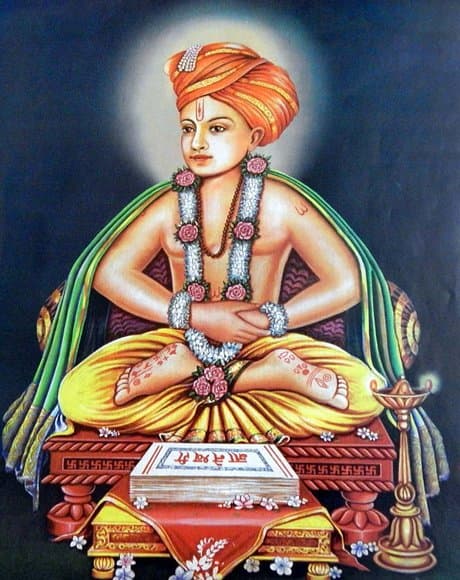
Jñāneśvar · Vārkarī
English72 “This is the Brahmic state, O Son of Pṛthā, having attained it, one does not lapse into delusion. Abiding in this (same state) even at the final hour, one reaches extinguishment in Brahman.” (367)
Such is the Brahmic state unique and boundless. Those that are desireless, experience it, and attain the Supreme state without efforts in the long run. This Brahmic state through which the Sthitaprajna is enabled to become absorbed in the Brahman without being obstructed by the agitation of the heart arising at the time of death, that state is personally preached by Lord Krishna to Arjuna”—so said Samjaya.
Hearing Lord Krishna, Arjuna said to himself, that the Lord’s line of thinking was just what he wanted to his advantage. Since Lord Krishna has condemned all actions, the advice that I should wage the war automatically becomes void. With this idea Arjuna felt thrilled in his mind on hearing Lord Krishna, and he will now raise doubts and ask grave questions. It will be a very beautiful occasion since the talk is as the very abode of all religion or the deep and fathomless ocean of the nectar of true knowledge. The all-knowing God Almighty will himself narrate that account and the same will be narrated by Jñāneshwar, the disciple of Nivrittināth. (374)
सांख्ययोगो नाम द्वितीयोऽध्यायः ॥ २ ॥
Swami Ramsukhdas · Modern
English'Eṣā brāhmī sthitiḥ pārtha'—This is the Brāhmī state viz., the state of a God-realized soul. On being free from egoism, individuality is completely wiped out and then a striver is automatically established in God. Individuality persisted only due to affinity with the world. With renunciation of affinity individuality is completely gone. The term 'Eṣā' refers to 'very near'. It denotes the expressions 'vihāya kāmān' (giving up desires), 'niḥspr̥haḥ' (free from thirst for necessities), 'nirmamaḥ' (free from the sense of mine) and 'nirahaṅkāraḥ' (free from egoism), used in the preceding verse.
Having heard the Lord's declaration—"When your intellect transcends the mire of delusion and confusion, by hearing conflicting doctrines, you will realize union with God", Arjuna was inquisitive to know about that state of union with God. So Arjuna, raised four questions, in order to know the marks of a man of steadfast wisdom. Having answered those four questions, the Lord declares here that this is a state of Godhood (union with God). In this state of eternal union with God, no individuality remains, only the Divinity pervades. In order to point out this important fact the Lord addresses Arjuna as 'Pārtha' here.
'Nainām prāpya vimuhyati'—So long as, a man has egoism (the feeling of 'I') in the body, he is deluded. Lack of discrimination between the real and the unreal, is delusion. The man's self being real, if he identifies himself with the unreal; this identification is delusion. When a striver knows the unreal as unreal, his affinity to it ceases* and he realizes that he is already established in the real. With this realization he is never deluded (Gītā 4/35).
'Sthitvāsyāmantakāle'pi brahmanirvāṇamṛcchati'—The human body has been bestowed upon man, only for God-realization. So the Lord gives an opportunity, even to vilest sinner, to attain Him by establishing himself in Him, even at the time of death viz., by breaking off his affinity with matter. Lord Kṛṣṇa has also announced it, in the thirtieth verse of the seventh chapter, 'One who knows My integral being, comprising Adhibhūta (the field of matter), Adhidaiva (Brahma) and Adhiyajña (the unmanifest Divinity) even at the time of death, attains Me.' Similarly, He has also announced in the fifth verse of the eighth chapter, 'He who departs from this body, thinking of Me alone, even at the time of death, attains Me; there is no doubt about it.'
By the above expression, the Lord declares the glory of this Brāhmī state (Godhood). By being established in this state, even at the time of death, one attains Brahma. As the Lord declared about equanimity that even a little practice of it protects one from great fear (of birth and death) (2/40), so He declares here that if one gets established in this Brāhmī state, even at the time of death by breaking off his affinity with matter, he attains Brahma. Attachment to matter (non-
* By knowing the unreal as unreal, a man becomes free from it, because in fact the unreal has no existence. The unreal seems to exist in the light of the real. If a person does not become free from the unreal even after knowing it as unreal, it proves that he has not actually known it.
self), is the only obstacle to the attainment of this state. If a person renounces the attachment, even at the time of death, he realizes his real axiomatic state of Godhood.
Now, a question arises, how a man who could not attain God throughout his life, attains Him at the time of death, when his body and intellect both grow weak. The answer is that man's union with Him is natural, only he has to realize this fact* and this can be realized, either by God's or saints' grace or by good influences of past actions.
The word 'api' (even) means, that during life if he attains a state of Godhood (Brāhmī state) he becomes a liberated soul. But, even at the time of death if he becomes free from a sense of mine and egoism, he attains Him immediately without any sort of practice, meditation and trance etc.
By using the terms 'Brahmanirvāṇam' (Oneness with Brahma), Lord Kṛṣṇa means to say, that the striver of the Discipline of Disinterested Action (Karmayoga), attains the same Brahma as striver of the Discipline of Knowledge (Jñānayoga) (Gītā 5/24—26). The same fact has been pointed out, in the fifth verse of the fifth chapter when he declares, 'The supreme state which is attained by a Sāṅkhyayogī (the follower of the Discipline of Knowledge), is attained also by the Karmayogī (the follower of the Discipline of Disinterested Action).
Something Noteworthy
Man himself is sentient but he accepts his affinity for the insentient. Therefore, instead of attaining salvation or God-realization, he goes to ruin. By using his discrimination he aims to attain God, while out of delusion he wants to have affinity to the Matter.
Delusion is born of egoism, and a sense of mine or desire. To accept the body as 'I' or 'Mine' is, delusion born of egoism, a sense of mine, while the wish to acquire or
preserve something, is the delusion born of desire. Arjuna like other worldly people, had delusion born of egoism and a sense of mine, as well as desire. In the sentence used in the first chapter—'We who are righteous persons clearly see the sin,' is an example of delusion, born of egoism; 'These kinsmen will be destroyed', is that of delusion born of the sense of mine and 'We should not fight otherwise, we shall incur sin and go to hell', is that born of desire.
To remove this delusion, Lord Kṛṣṇa has talked about two kinds of discrimination—discrimination between the real and the unreal (2/11—30) and discrimination between discharging one's duty and abandoning it (2/31—53).
While discriminating between the body and the soul, Lord Kṛṣṇa explained, that there was never a time when he or those kings were non-existent nor they would cease to exist in future. It is a fact that these bodies did not exist before, nor will they exist in future and in the interim also, they are changing every moment, as every born one passes through babyhood, youth and old age. He also explained, that as a man discarding worn-out clothes, takes new ones, likewise, the embodied soul, casting off worn-out bodies, enters into others, which are new. So he should not grieve.
While explaining discrimination between discharging one's duty and abandoning it, He said, 'There is nothing more welcome for a man of the warrior class, than a righteous war, which is an open gateway to heaven; if you do not wage it, you will incur sin. But if you fight treating pleasure and pain, gain and loss, victory and defeat, alike, you will not incur sin. Your right is to perform your duty, but never to its fruit. Let not the fruit of action, be your object, nor let your attachment be, to inaction. Therefore, perform your duty being fixed in Yoga, because equanimity consists in remaining even-minded, in success and failure. A man who, endowed with equanimity
performs his duty, becomes free from virtues and vices in his lifetime. When your intellect transcends the mire of delusion, and the confusion by hearing conflicting statements, it becomes poised and firmly fixed, in meditation (on God), you will attain union with God.'
**Appendix**—The striver devoid of the sense of mine and egoism gets dissociated from the material world called as 'Asat division' and realizes his natural owner abidance in Brahma i.e., Sat division. This abidance is known as 'Brāhmī sthiti'. Having attained this state no owner of this body remains, in other words there is none who assumes this body as 'I' or 'mine' and individuality is wiped out. It means that our reality is not dependent on egoism. Even rid of egoism ever Reality stands which is called 'Brāhmī sthiti' or 'abidance in Brahma'. Once this 'Brāhmī sthiti' (eternal union) is realized, then a man never gets deluded (Gītā 4/35). If even at the time of death, being free from the sense of mine and egoism, he realizes this 'Brāhmī sthiti' (state of Godhood), he attains brahmic bliss (identification with the absolute state) immediately.
By being free from the sense of mine and egoism, Brahma (the Absolute) or enlightenment is attained. Then a man becomes free from the sense of mine, from desire and from doership. The reason is that the embodied soul has sustained the universe because of egoism—'ahaṅkāravimūḍhātmā kartāhamiti manyate' (Gītā 3/27), 'Jīvabhūtām mahābāho yayedam dhāryate jagat' (Gītā 7/5). If he renounces egoism, the universe will not exist any more. Having attained the Absolute (if he has the latencies or impressions of devotion), he will know God in entirety naturally because the universal soul is the support of Brahma.
Nothing is mine—by accepting this truth, a man becomes free from the sense of mine. I need nothing—by accepting this fact, a man becomes free from the interested motive. I have
to do nothing for myself—by accepting it, a man becomes free from egoism.
ॐ तत्सदिति श्रीमद्भगवद्गीतासूपनिषत्सु ब्रह्मविद्यायां योगशास्त्रे श्रीकृष्णार्जुनसंवादे साङ्ख्ययोगो
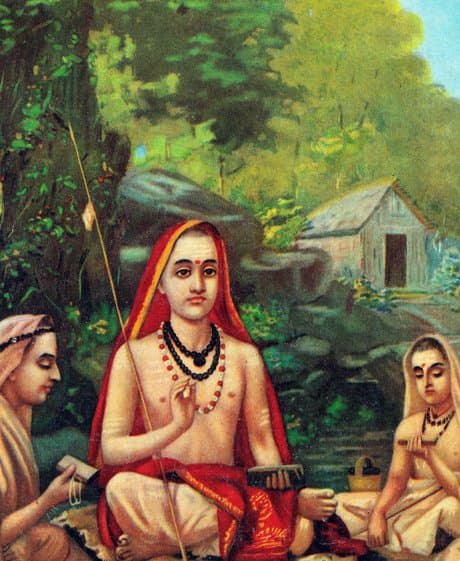
Ādi Śaṅkarācārya · Advaita
Sanskritएषा यथोक्ता ब्राह्मी ब्रह्मणि भवा इयं स्थितिः सर्वं कर्म सन्न्यस्य ब्रह्मरूपेणैव अवस्थानं इत्येतत् । हे पार्थ, न एनां स्थितिं प्राप्य लब्ध्वा न विमुह्यति न मोहं प्राप्नोति । स्थित्वा अस्यां स्थितौ ब्राह्म्यां यथोक्तायां अन्तकालेऽपि अन्त्ये वयस्यपि ब्रह्मनिर्वाणं ब्रह्मनिर्वृतिं मोक्षं ऋच्छति गच्छति । किमु वक्तव्यं ब्रह्मचर्यादेव सन्न्यस्य यावज्जीवं यो ब्रह्मण्येव अवतिष्ठते स ब्रह्मनिर्वाणमृच्छति इति ॥
Ādi Śaṅkarācārya · Advaita
Hindi(अब) उस उपर्युक्त ज्ञाननिष्ठाकी स्तुति की जाती है—
यह उपर्युक्त अवस्था ब्राह्मी यानी ब्रह्ममें होनेवाली स्थिति है, अर्थात् सर्वकर्मोंका संन्यास करके केवल ब्रह्मरूपसे स्थित हो जाना है।
हे पार्थ ! इस स्थितिको पाकर मनुष्य फिर मोहित नहीं होता अर्थात् मोहको प्राप्त नहीं होता।
अन्तकालमें—अन्तके वयमें भी इस उपर्युक्त ब्राह्मी स्थितिमें स्थित होकर मनुष्य, ब्रह्ममें लीनतारूप मोक्षको लाभ करता है। फिर जो ब्रह्मचर्याश्रमसे ही संन्यास ग्रहण करके जीवनपर्यन्त ब्रह्ममें स्थित रहता है वह ब्रह्मनिर्वाणको प्राप्त होता है, इसमें तो कहना ही क्या है ?
Jñāneśvar · Vārkarī
Marathiहे ब्रह्मस्थिती निःसीम । जे अनुभवितां निष्काम । पातलें परब्रह्म । अनायासें ॥ ३६८ ॥
जे चिद्रूपीं मिळतां । देहांतीची व्याकुळता । आड ठाकों न शके चित्ता । प्राज्ञा जया ॥ ३६९ ॥
तेचि हे स्थिति । स्वमुखें श्रीपति । सांगत अर्जुनाप्रति । संजयो म्हणे ॥ ३७० ॥
ऐसे कृष्णवाक्य ऐकिलें । तेथ अर्जुने मनीं म्हणितलें । आतां आमुचियाचि काजा आलें । उपपत्ति इया ॥ ३७१ ॥
जे कर्मजात आघवें । एथ निराकारिलें देवें । तरी पारुषलें म्यां झुंजावें । म्हणूनियां ॥ ३७२ ॥
ऐसा श्रीअच्युताचिया बोला । चित्तीं धनुर्धरु उवायिला । आतां प्रश्नु करील भला । आशंकोनियां ॥ ३७३ ॥
तो प्रसंगु असे नागरु । जो सकळ धर्मासि आगरु । कीं विवेकामृतसागरु । प्रांतहीनु ॥ ३७४ ॥
जो आपणपे सर्वज्ञनाथु । निरुपिता होईल श्रीअनंतु । ते ज्ञानदेवो सांगेल मातु । निवृत्तीदासु ॥ ३७५ ॥
Jñāneśvar · Vārkarī
Hindi(2.368) एस निःसीम ब्रह्मस्थिति को जिन निष्काम जनों को अनुभव होता है वे बिना कष्ट के परब्रह्मपद को पहुँच जाते हैं।
(2.369) जिस स्थिति के कारण ज्ञान-स्वरूप में मिलते समय ज्ञानियों के चित्त में देहान्त का व्याकुलतारूपी प्रतिबन्ध नहीं हो सकता,
(2.370) वहीं यह स्थिति लक्ष्मीपति श्रीकृष्ण ने अर्जुन से वर्णन की। इस प्रकार संजय ने राजा से निवेदन किया।
(2.371) श्रीकृष्ण के ये वचन सुनकर अर्जुन ने मन में कहा कि यह युक्ति हमारे हित की हुई।
(2.372) देव ने सब कर्ममात्र का निषेध किया इससे मेरा युद्ध करना भी टल गया।
(2.373) इस प्रकार श्रीकृष्ण के वचनों से अर्जुन चित्त में प्रसन्न हुआ और अब आशंका-सहित उत्तम प्रश्न करेगा। (2.374) इस सुन्दर संवाद मानों सब धर्मों का उत्पत्तिस्थान है, अथवा विवेकरूपी अमृत का अमर्याद समुद्र है।
(2.375) इस संवाद का निरूपण स्वयं सर्वज्ञान श्रीकृष्ण करेंगे और वह कथा में निवृत्ति का दास ज्ञानदेव वर्णन करूँगा।
इति श्रीज्ञानदेवकृत भावार्थदीपिकायां द्वितीयोऽध्यायः।
Sri Udiya Baba · Modern
Hindiसंगति— अब अगले श्लोक में यह बताते हैं कि जिसे बोध प्राप्त हो जाता है उसे फिर अज्ञान नहीं होता और वह मुक्त हो जाता है—
भावार्थ— पार्थ! यही ब्राह्मी स्थिति है। इसे प्राप्त कर लेने पर फिर मोह नहीं होता। अन्तकाल में भी इस स्थिति में स्थित होने पर ब्रह्म-निर्वाण को प्राप्त हो जाता है।
व्याख्या— सम्पूर्ण कामनाओं को त्यागकर निरन्तर आत्माकार वृत्ति में स्थित रहना ही ब्राह्मी स्थिति है। यह अन्तकाल में एक क्षण
को भी प्राप्त हो जाय तो फिर अज्ञान या अज्ञान के कार्य जन्म-मरणादि नहीं होते। बोधवान् का किसी में राग नहीं होता, इसलिए उसकी देहादि में अहंबुद्धि और स्त्री-पुत्रादि में ममबुद्धि नहीं होती। वह ब्रह्मनिर्वाण को प्राप्त हो जाता है, अर्थात् जीवत्व की उपाधि से मुक्त होकर ब्रह्मस्वरूप में स्थित हो जाता है। देहत्याग के समय भी ऐसी स्थिति हो जाय तो राजा खट्वांग के समान उसकी मुक्ति हो जाती है।
प्रश्न— ब्राह्मी स्थिति और बोध में क्या अन्तर है?
उत्तर— सम्पूर्ण दृश्य को सत्ताशून्य अनुभव करते हुए अपने को उससे अलग देखना 'ब्राह्मीस्थिति' है और 'सब मैं ही हूँ' यह बोध है।
Swami Ramsukhdas · Modern
Hindi‘एषा ब्राह्मी स्थितिः पार्थ’—यह ब्राह्मी स्थिति है अर्थात् ब्रह्मको प्राप्त हुए मनुष्यकी स्थिति है। अहंकाररहित होनेसे जब व्यक्तित्व मिट जाता है, तब उसकी स्थिति स्वतः ही ब्रह्ममें होती है। कारण कि संसारके साथ सम्बन्ध रखनेसे ही व्यक्तित्व था। उस सम्बन्धको सर्वथा छोड़ देनेसे योगीकी अपनी कोई व्यक्तिगत स्थिति नहीं रहती।
अत्यन्त नजदीकका वाचक होनेसे यहाँ ‘एषा’ पद पूर्वश्लोकमें आये ‘विहाय कामान्’, ‘निःसूहः’, ‘निर्ममः’ और ‘निरहङ्कारः’ पदोंका लक्ष्य करता है।
भगवान्के मुखसे ‘तेरी बुद्धि जब मोहकलिल और श्रुतिविप्रतिपत्तिसे तर जायगी, तब तू योगको प्राप्त हो जायगा’—ऐसा सुनकर अर्जुनके मनमें यह जिज्ञासा हुई कि वह स्थिति क्या होगी? इसपर अर्जुनने स्थितप्रज्ञके विषयमें चार प्रश्न किये। उन चारों प्रश्नोंका उत्तर देकर भगवान्ने यहाँ वह स्थिति बतायी कि वह ब्राह्मी स्थिति है। तात्पर्य है कि वह व्यक्तिगत स्थिति नहीं है अर्थात् उसमें व्यक्तित्व
नहीं रहता। वह नित्ययोगकी प्राप्ति है। उसमें एक ही तत्त्व रहता है। इस विषयकी तरफ लक्ष्य करानेके लिये ही यहाँ ‘पार्थ’ सम्बोधन दिया गया है।
‘नैनां प्राप्य विमुह्यति’—जबतक शरीरमें अहंकार रहता है, तभीतक मोहित होनेकी सम्भावना रहती है। परन्तु जब अहंकारका सर्वथा अभाव होकर ब्रह्ममें अपनी स्थितिका अनुभव हो जाता है, तब व्यक्तित्व टूटनेके कारण फिर कभी मोहित होनेकी सम्भावना नहीं रहती।
सत् और असत् को ठीक तरहसे न जानना ही मोह है। तात्पर्य है कि स्वयं सत् होते हुए भी असत् के साथ अपनी एकता मानते रहना ही मोह है। जब साधक असत् को ठीक तरहसे जान लेता है, तब असत् से उसका सम्बन्ध-विच्छेद हो जाता है* और सत् में अपनी वास्तविक स्थितिका अनुभव हो जाता है। इस स्थितिका अनुभव होनेपर फिर कभी मोह नहीं होता (गीता—चौथे अध्यायका पैंतीसवाँ श्लोक)।
‘स्थित्वास्यामन्तकालेऽपि ब्रह्मनिर्वाणमृच्छति’—यह मनुष्य-शरीर केवल परमात्मप्राप्तिके लिये ही मिला है।
* असत् को जाननेसे असत् की निवृत्ति हो जाती है; क्योंकि असत् की स्वतन्त्र सत्ता है ही नहीं। सत् से ही असत् को सत्ता मिलती है। अगर असत् को जाननेसे असत् की निवृत्ति न हो तो वास्तवमें असत् को जाना ही नहीं है; प्रत्युत सीखा है। सीखे हुए ज्ञानसे असत् की निवृत्ति नहीं होती; क्योंकि मनमें असत् की सत्ता रहती है।
इसलिये भगवान् यह मौका देते हैं कि साधारण-से-साधारण और पापी-से-पापी व्यक्ति ही क्यों न हो, अगर वह अन्तकालमें भी अपनी स्थिति परमात्मामें कर ले अर्थात् जडतासे अपना सम्बन्ध-विच्छेद कर ले, तो उसे भी निर्वाण (शान्त) ब्रह्मकी प्राप्ति हो जायगी, वह जन्म-मरणसे मुक्त हो जायगा। ऐसी ही बात भगवान्ने सातवें अध्यायके तीसवें श्लोकमें कही है कि 'अधिभूत, अधिदैव और अधियज्ञ एक भगवान् ही हैं—ऐसा प्रयाणकालमें भी मेरेको जो जान लेते हैं, वे मेरेको यथार्थरूपसे जान लेते हैं अर्थात् मेरेको प्राप्त हो जाते हैं।' आठवें अध्यायके पाँचवें श्लोकमें कहा कि 'अन्तकालमें मेरा स्मरण करता हुआ कोई प्राण छोड़ता है, वह मेरेको ही प्राप्त होता है, इसमें सन्देह नहीं है।'
दूसरी बात, उपर्युक्त पदोंसे भगवान् उस ब्राह्मी स्थितिकी महिमाका वर्णन करते हैं कि इसमें यदि अन्तकालमें भी कोई स्थित हो जाय, तो वह शान्त ब्रह्मको प्राप्त हो जाता है। जैसे समबुद्धिके विषयमें भगवान्ने कहा था कि इसका थोड़ा-सा भी अनुष्ठान महान् भयसे रक्षा कर लेता है (दूसरे अध्यायका चालीसवाँ श्लोक), ऐसे ही यहाँ कहते हैं कि अन्तकालमें भी ब्राह्मी स्थिति हो जाय, जडतासे सम्बन्ध-विच्छेद हो जाय, तो निर्वाण ब्रह्मकी प्राप्ति हो जाती है। इस स्थितिका अनुभव होनेमें जडताका राग ही बाधक है। यह राग अन्तकालमें भी कोई छोड़ देता है तो उसको अपनी स्वतःसिद्ध वास्तविक स्थितिका अनुभव हो जाता है।
यहाँ यह शंका हो सकती है कि जो अनुभव उपभरमें नहीं हुआ, वह अन्तकालमें कैसे होगा? अर्थात् स्वस्थ अवस्थामें तो साधककी बुद्धि स्वस्थ होगी, विचार-शक्ति होगी, सावधानी होगी तो वह ब्राह्मी स्थितिका अनुभव कर लेगा; परन्तु अन्तकालमें प्राण छूटते समय बुद्धि विकल हो जाती है, सावधानी नहीं रहती—ऐसी अवस्थामें ब्राह्मी स्थितिका अनुभव कैसे होगा? इसका समाधान यह है कि मृत्युके समयमें जब प्राण छूटते हैं, तब शरीर आदिसे स्वतः ही सम्बन्ध-विच्छेद होता है। यदि उस समय उस स्वतःसिद्ध तत्त्वकी तरफ लक्ष्य हो जाय, तो उसका अनुभव सुगमतासे हो जाता है। कारण कि निर्विकल्प अवस्थाकी प्राप्तिमें तो बुद्धि, विवेक आदिकी आवश्यकता है, पर अवस्थातीत तत्त्वकी प्राप्तिमें केवल लक्ष्यकी आवश्यकता है।\* वह लक्ष्य
चाहे पहलेके अभ्याससे हो जाय, चाहे किसी शुभ संस्कारसे हो जाय, चाहे भगवान् या सन्तकी अहैतुकी कृपासे हो जाय, लक्ष्य होनेपर उसकी प्राप्ति स्वतःसिद्ध है।
यहाँ 'अपि' पदका तात्पर्य है कि अन्तकालसे पहले अर्थात् जीवित-अवस्थामें यह स्थिति प्राप्त कर ले तो वह जीवन्मुक्त हो जाता है; परन्तु अगर अन्तकालमें भी यह स्थिति हो जाय अर्थात् निर्मम-निरहंकार हो जाय तो वह भी मुक्त हो जाता है। इसका तात्पर्य यह है कि यह स्थिति तत्काल हो जाती है। स्थितिके लिये अभ्यास करने, ध्यान करने, समाधि लगानेकी किंचिन्मात्र भी आवश्यकता नहीं है।
भगवान्ने यहाँ कर्मयोगके प्रकरणमें 'ब्रह्मनिर्वाणम्' पद दिया है। इसका तात्पर्य है कि जैसे सांख्ययोगीको निर्वाण ब्रह्मकी प्राप्ति होती है (गीता—पाँचवें अध्यायके चौबीसवेंसे छब्बीसवें श्लोकतक), ऐसे ही कर्मयोगीको भी निर्वाण ब्रह्मकी प्राप्ति होती है। इसी बातको पाँचवें अध्यायके पाँचवें श्लोकमें कहा है कि सांख्ययोगीद्वारा जो स्थान प्राप्त किया जाता है, वही स्थान कर्मयोगीद्वारा भी प्राप्त किया जाता है।
विशेष बात
जड और चेतन—ये दो पदार्थ हैं। प्राणिमात्रका स्वरूप चेतन है, पर उसने जडका संग किया हुआ है। जडकी तरफ आकर्षण होना पतनकी तरफ जाना है और चिन्मय-तत्त्वकी तरफ आकर्षण होना उत्थानकी तरफ जाना है, अपना कल्याण करना है। जडकी तरफ जानेमें 'मोह' की मुख्यता होती है और परमात्मतत्त्वकी तरफ जानेमें 'विवेक' की मुख्यता होती है।
समझनेकी दृष्टिसे मोह और विवेकके दो-दो विभाग कर सकते हैं—(१) अहंता-ममतायुक्त मोह एवं कामनायुक्त मोह, (२) सत्-असत् का विवेक एवं कर्तव्य-अकर्तव्यका विवेक।
प्राप्त वस्तु, शरीरादिमें अहंता-ममता करना—यह अहंता-ममतायुक्त मोह है और अप्राप्त वस्तु, घटना, परिस्थिति आदिकी कामना करना—यह कामनायुक्त मोह है। शरीरी (शरीरमें रहनेवाला) अलग है और शरीर अलग है, शरीरी सत् है और शरीर असत् है, शरीरी चेतन
* निर्विकल्प-अवस्थाकी प्राप्तिमें ही अभ्यास, विचार, निदिध्यासन आदि काम करते हैं, पर निर्विकल्प बोध (अवस्थातीत ब्राह्मी स्थिति) की प्राप्तिमें बुद्धि काम नहीं करती। उसमें बुद्धि छूट जाती है। कारण कि निर्विकल्प बोध करण-निरपेक्ष है अर्थात् उसमें करणकी किंचिन्मात्र भी अपेक्षा नहीं है। उसकी प्राप्तिमें करणसे सम्बन्ध-विच्छेद ही कारण है।
है और शरीर जड़ है—इसको ठीक तरहसे अलग-अलग जानना सत्-असत् का विवेक है और कर्तव्य क्या है, अकर्तव्य क्या है, धर्म क्या है, अधर्म क्या है—इसको ठीक तरहसे समझकर उसके अनुसार कर्तव्य करना और अकर्तव्यका त्याग करना कर्तव्य-अकर्तव्यका विवेक है।
पहले अध्यायमें अर्जुनको भी दो प्रकारका मोह हो गया था, जिसमें प्राणिमात्र फँसे हुए हैं। अहंताको लेकर 'हम दोषोंको जाननेवाले धर्मात्मा हैं' और ममताको लेकर 'ये कुटुम्बी मर जायेंगे'—यह अहंता-ममतायुक्त मोह हुआ। हमें पाप न लगे, कुलके नाशका दोष न लगे, मित्रद्रोहका पाप न लगे, नरकोंमें न जाना पड़े, हमारे पितरोंका पतन न हो—यह कामनायुक्त मोह हुआ।
उपर्युक्त दोनों प्रकारके मोहको दूर करनेके लिये भगवान्ने दूसरे अध्यायमें दो प्रकारका विवेक बताया है—शरीरी-शरीरका, सत्-असत् का विवेक (दूसरे अध्यायके ग्यारहवेंसे तीसवें श्लोकतक) और कर्तव्य-अकर्तव्यका विवेक (दूसरे अध्यायके इकतीसवेंसे तिरपनवें श्लोकतक)।
शरीरी-शरीरका विवेक बताते हुए भगवान्ने कहा कि मैं, तू और ये राजा लोग पहले नहीं थे—यह बात भी नहीं और आगे नहीं रहेंगे—यह बात भी नहीं अर्थात् हम सभी पहले भी थे और आगे भी रहेंगे तथा ये शरीर पहले
**परिशिष्ट भाव**—निर्मम और निरहंकार होनेसे साधकका असत्-विभागसे सम्बन्ध-विच्छेद हो जाता है और सत्-विभागमें अर्थात् ब्रह्ममें अपनी स्वतः-स्वाभाविक स्थितिका अनुभव हो जाता है, जिसको 'ब्राह्मी स्थिति' कहते हैं। इस ब्राह्मी स्थितिको प्राप्त होनेपर शरीरका कोई मालिक नहीं रहता अर्थात् शरीरको मैं-मेरा कहनेवाला कोई नहीं रहता, व्यक्तित्व मिट जाता है। तात्पर्य यह हुआ कि हमारी स्थिति अहंकारके आश्रित नहीं है। अहंकारके मिटनेपर भी हमारी स्थिति रहती है, जो 'ब्राह्मी स्थिति' कहलाती है। एक बार इस ब्राह्मी स्थिति (नित्ययोग) का अनुभव होनेपर फिर कभी मोह नहीं होता (गीता—चौथे अध्यायका पैंतीसवाँ श्लोक)। अगर अन्तकालमें भी मनुष्य निर्मम-निरहंकार होकर ब्राह्मी स्थितिका अनुभव कर ले तो उसको तत्काल निर्वाण ब्रह्मकी प्राप्ति हो जाती है।
निर्मम-निरहंकार होनेसे ब्रह्मकी प्राप्ति, तत्त्वज्ञान हो जाता है। फिर मनुष्य ममतारहित, कामनारहित और कर्तृत्वरहित हो जाता है। कारण कि जीवने अहम् के कारण ही जगत् को धारण किया है—'अहङ्कारविमूढात्मा कर्ताहमिति मन्यते' (गीता ३।२७), 'जीवभूतां महाबाहो ययेदं धार्यते जगत्' (गीता ७।५)। यदि वह अहम् का त्याग कर दे तो फिर जगत् नहीं रहेगा। ब्रह्मकी प्राप्ति होनेपर (अगर भक्तिके संस्कार हों तो) समग्र परमात्माकी प्राप्ति स्वतः हो जाती है, क्योंकि समग्र परमात्मा ब्रह्मकी प्रतिष्ठा है।
मेरा कुछ नहीं है—इसको स्वीकार करनेसे मनुष्य 'निर्मम' हो जाता है, मेरेको कुछ नहीं चाहिये—इसको स्वीकार करनेसे मनुष्य 'निष्काम' हो जाता है। मेरेको अपने लिये कुछ नहीं करना है—इसको स्वीकार करनेसे मनुष्य 'निरहंकार' हो जाता है।
भी नहीं थे और आगे भी नहीं रहेंगे तथा बीचमें भी प्रतिक्षण बदल रहे हैं। जैसे शरीरमें कुमार, युवा और वृद्धावस्था—ये अवस्थाएँ बदलती हैं और जैसे मनुष्य पुराने वस्त्रोंको छोड़कर नये वस्त्र धारण करता है, ऐसे ही जीव पहले शरीरको छोड़कर दूसरा शरीर धारण करता है, यह तो अकाट्य नियम है। इसमें चिन्ताकी, शोककी बात ही क्या है ?
कर्तव्य-अकर्तव्यका विवेक बताते हुए भगवान्ने कहा कि क्षत्रियके लिये युद्धसे बढ़कर कोई धर्म नहीं है। अनायास प्राप्त हुआ युद्ध स्वर्गप्राप्तिका खुला दरवाजा है। तू युद्धरूप स्वधर्मका पालन नहीं करेगा तो तुझे पाप लगेगा। यदि तू जय-पराजय, लाभ-हानि और सुख-दुःखको समान करके युद्ध करेगा तो तुझे पाप नहीं लगेगा। तेरा तो कर्तव्य-कर्म करनेमें ही अधिकार है, फलमें कभी नहीं। तू कर्मफलका हेतु भी मत बन और कर्म न करनेमें भी तेरी आसक्ति न हो। इसलिये तू कर्मोंकी सिद्धि-असिद्धिमें सम होकर और समतामें स्थित होकर कर्मोंको कर; क्योंकि समता ही योग है। जो मनुष्य समबुद्धिसे युक्त होकर कर्म करता है, वह जीवित-अवस्थामें ही पुण्य-पापसे रहित हो जाता है।
जब तेरी बुद्धि मोहरूपी दलदलको और श्रुतिविप्रति-पत्तिको पार कर जायगी, तब तू योगको प्राप्त हो जायगा।
Lord Krishna concludes chapter two by revealing the state of consciousness achieved by one who performs all actions unattached and equipoised based on knowledge of the eternal nature of the immortal soul.
This process has for its goal the attainment of transcendent meditation. It is Brāhmī or that which leads to brahma the ultimate truth. Knowing the philosophy of actions is like this, one will no longer be subject to bewilderment and delusion.
The results of this are one will no longer be compelled to enter samsāra the endless cycle of birth and death in the mirage of material existence.
If one begins this process with determination even in old age one will have the opportunity to attain cognition of the eternal soul within and brahma-nirvana final liberation from the material existence.
Summary
Thus in this second chapter one who is not knowledgeable about the exact nature of the soul, or how by performing ones prescribed duties unattached can lead to liberation,
or how by the misconception of identifying oneself as the physical body one will not be properly situated
and how by the process of Sānkhya in jñāna-yoga teaching the knowledge of the eternal nature of the soul as well as in karma-yoga performing all activities with unattachment leads one to the consciousness state of transcendent meditation.
The following doctrine is what is summarised in chapter two:
1) That the immortal soul is eternal.
2) All activities should be performed as a matter of duty devoid of desire for reward.
3) One who is spiritually intelligent of illuminated consciousness understands that through either jñāna-yoga or karma-yoga the goal of transcendent meditation can be attained.
These three spiritual truths have been revealed in the second chapter of the Bhagavad-Gita for curing ignorance and dispelling delusion.
This has been clarified in the following verse by Śrī Yāmunācāryā: —
"Sānkhya and Yoga, which comprehend within their scope the understanding of the nature of the eternal Self and the practical way of disinterested action respectively, were imparted in order to remove Arjuna's delusion. Through them the state of steady wisdom can be reached."