

Bhagavad Gītā · Chapter 2 · Sāṅkhya Yoga
प्रसादे सर्वदुःखानां हानिरस्योपजायते
प्रसन्नचेतसो ह्याशु बुद्धिः पर्यवतिष्ठते
prasāde sarvaduḥkhānāṃ hānirasyopajāyate|
prasannacetaso hyāśu buddhiḥ paryavatiṣṭhate||
Word meanings
for verses 2.64–2.65
तु = but
विधेयात्मा = with a disciplined mind
रागद्वेषवियुक्तैः = free from attachment and aversion
आत्मवश्यैः = brought under his control
इन्द्रियैः = through the senses
विषयान् = sense-objects
चरन् = engaging with
प्रसादम् = clarity of mind
अधिगच्छति = attains
प्रसादे = when clarity of mind is attained
अस्य = of this practitioner
सर्वदुःखानाम् = of all sorrows
हानिः = destruction
उपजायते = arises
प्रसन्नचेतसः = of one whose mind is serene
बुद्धिः = understanding
हि = indeed
आशु = quickly
पर्यवतिष्ठते = becomes established
Translation
With the attainment of such placidity of mind, all his sorrows come to an end; and the intellect of such a person of tranquil mind, soon withdrawing itself from all sides, becomes firmly established in God.
Commentary
The commentators seated around this verse

Rāmānuja · Viśiṣṭādvaita
English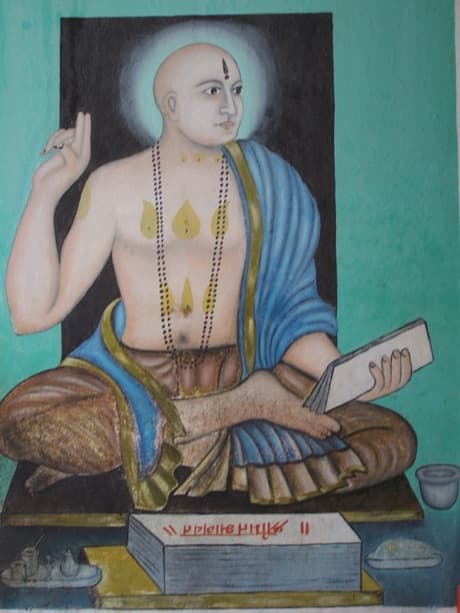
Madhvācārya · Dvaita
SanskritEnglish“कथं प्रसादमात्रेण सर्वदुःखहनिः? प्रसन्नचेतसो हि बुद्धि पर्यवतिष्ठति | ब्रह्मापरोक्ष्येण सम्यक् स्थितिं करोति | प्रसादो नाम स्वतोऽपि प्रायो विषयागतिः ||” - How are all the sorrows destroyed on attaining state of Satisfaction? Because, with satisfactory state of consciousness, the intellect becomes well established with the realization of Brahman. . प्रसाद means not going by natural tendency towards the objects of senses.

Jñāneśvar · Vārkarī
English65 "On attaining perfect serenity there results for him extinction of all sorrows; for, the discerning faculty of the man with a peaceful and serene mind quickly stabilises itself. (338)
The worldly troubles never enter into a mind wherein always dwells uninterrupted bliss. How could hunger and thirst have any fear for one, in whose stomach has sprung up a spring of nectar? In the same way, when the heart is ever full with bliss, how can it have any fear? His intellect naturally dwells in the vision of the Supreme. Just as a lamp continues to blaze unflicking in a breezeless place in the same way the discerning vision in a Yogi fastens itself on the Absolute Being.
Swami Ramsukhdas · Modern
EnglishOn verses 2.64–2.65
'Tu'—In the previous verse, Lord Kṛṣṇa said, that by contemplating on the objects of senses a man goes to complete ruin, while here He says that the striver, free from attachment while using the sense-objects with the senses, becomes firmly established in God. So the Lord has used the term 'tu' (but), to differentiate between the two.
'Vidheyātmā'—To achieve his aim it is very necessary for a striver, specially for a Karmayogī, to control his mind, otherwise he may have attachment for pleasure and thus may go to ruin.
'Ātmavaśyaiḥ rāgadveṣaviyuktaiḥ indriyaiḥ'—As the term 'vidheyātmā' has been used for controlling the mind, so the word 'ātmavaśyaiḥ' is used, for sense-control. In worldly dealings, senses should be kept under control, and for sense-control they should be free from attachment and aversion. Therefore, Lord Kṛṣṇa, in the thirty-fourth verse of the third chapter, has warned strivers and said, 'attachment and aversion are rooted, in all sense-objects. A striver should not come under their sway, because they are verily his enemies.' Similarly He has said in the third verse of the fifth chapter, 'The striver who is free from the pairs of opposites, such as attachment and aversion etc., is easily set free from bondage.'
'Viṣayān caran'—A striver, who has controlled his mind and whose senses are controlled and free from attachment and aversion, uses the sense-objects, but does not enjoy them viz., he does not derive pleasure from them. And it is enjoyment, rather than use, which leads him to ruin.
**'Prasādamadhigacchati'**—A striver who utilizes the sense-objects being free from attachment and aversion attains placidity (purity) of mind. This placidity (serenity) of mind, is called mental austerity (Gītā 17/16) which is superior to the austerity of body and austerity of speech. So a striver should neither enjoy the sense-objects with attachment, nor should renounce them with aversion, because both attachment and aversion lead him to affinity for the world. Such a striver attains placidity of mind and if that placidity of mind, is not enjoyed, that leads to God-realization.
**'Prasāde sarvaduḥkhānām hānirasyopajāyate'**—With the attainment of such placidity of mind, all his sorrows come to an end, because it is attachment only, which causes sorrows. These sorrows give birth to desire which again causes sorrow. When attachment goes away, the mind becomes serene and that serenity destroys all sorrows. Actually all the sorrows are born because of affinity for matter and its evolutes—the world and the body. A striver has affinity for the world, with the desire to enjoy pleasures. This desire is born of despair or the feeling of something lacking in himself. When there is placidity of mind, despair disappears. When despair is lost, there is no desire for pleasures, and when there is no desire for pleasures, affinity for the world automatically breaks off, and then sorrows disappear. It means that placidity of the mind, results in breaking off affinity for the world and establishment of the self in God.
Here 'Sarvaduḥkhānām hāniḥ' does not mean that a striver will not come across unfavourable and sorrowful circumstances; but it means that those circumstances cannot create commotion and agitation in his mind.
**'Prasannacetaso hyāsu buddhiḥ paryavatiṣṭhate'**—The intellect of such a person of tranquil mind, soon becomes firmly established in God viz., the striver himself becomes established in God and his intellect has no doubts, in the least.
Something Remarkable
Enhancement of either placidity or uneasiness for God, enables a striver to realize God. The Gopīs were locked up by their husbands, brothers and parents and prevented from meeting Lord Kṛṣṇa. The uneasiness to meet the Lord, destroyed their sins and the placidity of mind by meditation on God, destroyed their virtues. Thus, being free from sins and virtues, and leaving their bodies, they were the first to meet God. But in the worldly affairs, placidity and uneasiness of mind, lead a man to bondage and strengthen the bondage, because his aim is to enjoy the worldly pleasures. The living examples are common worldly people who are entangled in the worldly snare, because of placidity and uneasiness, in mundane affairs.
The inner self, is overwhelmed in placidity and uneasiness. Just as the colour which is added to liquid wax becomes a permanent part of it, in the same way, whatever thoughts are put into the overwhelmed inner self these become a permanent part of it and lead the striver to salvation or to damnation. Therefore a striver should neither be pleased nor displeased, while gaining or losing the most charming objects of the world.
**Appendix**—There are two divisions—one of ‘Bhoga’ (pleasures) and one of ‘Yoga’. If a ‘Bhogī’ (voluntary) having attachment and aversion dwells upon the objects of senses, he goes to ruin (fall) (Gītā 2/62-63). But if a ‘Yogī’ freed from attachment and aversion utilizes sense-objects, he does not go to ruin, rather he attains God.
A person freed from likes and dislikes does not enjoy and relish pleasures because it is not his aim. He utilizes the sense-objects without coming under the sway of attachment, having the sense of detachment (Gītā 3/34). Therefore he attains placidity (purity) of mind. The use of sense-objects with the sense of renunciation, is indeed not ‘Bhoga’. From the view-point of
people it appears that he is using sense-objects; therefore here the expression 'viṣayān caran' has been used.
By being free from attachment and aversion, placidity of mind is attained. There should be cheerfulness every time, there should not be any distress, there should not be monotony—this is 'Prasāda' (placidity of mind). If a striver is not satiated with this placidity and he does not enjoy it, it will very quickly lead him to God-realization.
Link:—Lord Kṛṣṇa clarifies the point of view expressed in the previous two verses by negative inference.
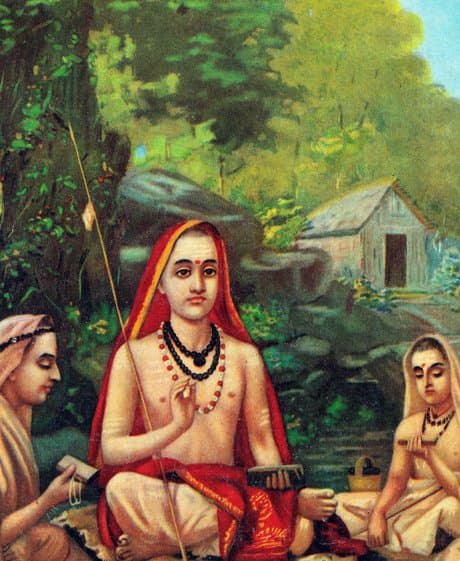
Ādi Śaṅkarācārya · Advaita
Sanskritप्रसादे सर्वदुःखानां आध्यात्मिकादीनां हानिः विनाशः अस्य यतेः उपजायते । किञ्च -- प्रसन्नचेतसः स्वस्थान्तःकरणस्य हि यस्मात् आशु शीघ्रं बुद्धिः पर्यवतिष्ठते आकाशमिव परि समन्तात् अवतिष्ठते, आत्मस्वरूपेणैव निश्चलीभवतीत्यर्थः ॥
एवं प्रसन्नचेतसः अवस्थितबुद्धेः कृतकृत्यता यतः, तस्मात् रागद्वेषवियुक्तैः इन्द्रियैः शास्त्राविरुद्धेषु अवर्जनीयेषु युक्तः समाचरेत् इति वाक्यार्थः ॥ सेयं प्रसन्नता स्तूयते --
Ādi Śaṅkarācārya · Advaita
Hindiप्रसन्नता होनेसे क्या होता है? सो कहते हैं—
प्रसन्नता प्राप्त होनेपर इस यतिके आध्यात्मिकादि तीनों प्रकारके समस्त दुःखोंका नाश हो जाता है।
क्योंकि (उस) प्रसन्नचित्तवालेकी अर्थात् स्वस्थ अन्तःकरणवाले पुरुषकी बुद्धि शीघ्र ही सब ओरसे आकाशकी भाँति स्थिर हो जाती है—केवल आत्मरूपसे निश्चल हो जाती है।
इस वाक्यका अभिप्राय यह है कि इस प्रकार प्रसन्नचित्त और स्थिरबुद्धिवाले पुरुषको कृतकृत्यता मिलती है, इसलिये साधक पुरुषको चाहिये कि राग-द्वेषसे रहित की हुई इन्द्रियोंद्वारा शास्त्रके अविरोधी अनिवार्य विषयोंका सेवन करे
Jñāneśvar · Vārkarī
Marathiदेखें अखंडित प्रसन्नता । आथी जेथ चित्ता । तेथे रिगणें नाहीं समस्तां । संसारदुःखां ॥ ३३८ ॥
जैसा अमृताचा निर्झरु । प्रसवे जयाचा जठरु । तया क्षुधेतृष्णेचा अडदरु । कहींचि नाहीं ॥ ३३९ ॥
तैसें हृदय प्रसन्न होये । तरी दुःख कैचें कें आहे । तेथ बुद्धि आपैसी राहे । परमात्मरूपीं ॥ ३४० ॥
जैसा निर्वातीचा दीपु । सर्वथा नेणे कंपु । तैसा स्थिरबुद्धि स्वस्वरूपु । योगयुक्तु ॥ ३४१ ॥
Jñāneśvar · Vārkarī
Hindi(2.338) देखो, जहाँ चित्त में निरन्तर प्रसन्नता है वहाँ इन सब संसार-दुःखों का प्रवेश नहीं हो सकता।
(2.339) जैसे, जिनके पेट से अमृत का प्रवाह उत्पन्न हो उसे कभी भूख और प्यास का डर नहीं रहता,
(2.340) वैसे ही यदि हृदय प्रसन्न हो तो दुःख काहे का हो और कहाँ रहे? उस समय बुद्धि अपने आप परमात्मा के स्वरूप में जा बसती है।
(2.341) जैसे वायुरहित स्थान में रक्खा हुआ दीपक कभी कम्प नहीं जानता, वैसे ही जिसकी बुद्धि स्थिर है वह आत्मस्वरूप के योग में निश्चल हो रहता है।
Sri Udiya Baba · Modern
Hindiसंगति— अब चित्त की शान्ति से प्राप्त होने वाला फल बतलाते हैं—
भावार्थ— चित्त की शान्ति से इसके सब दुःखों की निवृत्ति हो जाती है। तथा प्रसन्नचित्त वाले की बुद्धि शीघ्र ही निश्चल हो जाती है।
व्याख्या— यहाँ जिस बुद्धि का उल्लेख है वह विज्ञानमय कोष वाली बुद्धि नहीं है, अपितु सत् और असत् का विवेक करने वाली बुद्धि है, क्योंकि विज्ञानमय कोष वाली बुद्धि तो घट-पट आदि विषयों का ही निश्चय कराती है। यहाँ मुमुक्षु के लिये तीन कर्तव्य कहे गये हैं— (१) इन्द्रियों का उनके विषयों से वैराग्य, (२) राग-द्वेष का त्याग और (३) समाधि का अनुष्ठान। जब तक विषयों से सम्बन्ध नहीं छूटेगा तब तक चित्त प्रसन्न नहीं होगा और न शान्ति ही होगी। शान्ति के बिना ब्रह्माकार वृत्ति नहीं हो सकती और वृत्ति ब्रह्माकार हुए बिना जीवनमुक्ति का विलक्षण आनन्द प्राप्त नहीं हो सकता। तथा जीवनमुक्ति हुए बिना विदेहमुक्ति भी नहीं हो सकती। ये परम्परा से एक-दूसरे के कारण हैं। भगवान् का अभिप्राय यह है कि चाहे कितना भी पठन-
पाठन करो, जब तक ब्रह्माभ्यास नहीं करोगे तब तक तुम्हें ज्ञाननिष्ठा नहीं हो सकती। इसी की पुष्टि अगले श्लोक में करते हैं—
Swami Ramsukhdas · Modern
HindiOn verses 2.64–2.65
‘तु’—पूर्वश्लोकमें भगवान्ने कहा कि आसक्ति रहते हुए विषयोंका चिन्तन करनेमात्रसे पतन हो जाता है और यहाँ कहते हैं कि आसक्ति न रहनेपर विषयोंका सेवन करनेसे उत्थान हो जाता है। वहाँ तो बुद्धिका नाश बताया और यहाँ बुद्धिका परमात्मामें स्थित होना बताया। इस प्रकार पहले कहे गये विषयसे यहाँके विषयका अन्तर बतानेके लिये यहाँ ‘तु’ पद आया है।
‘विधेयात्मा’—साधकका अन्तःकरण अपने वशमें रहना चाहिये। अन्तःकरणको वशीभूत किये बिना कर्मयोगकी सिद्धि नहीं होती, प्रत्युत कर्म करते हुए विषयोंमें राग होनेकी और पतन होनेकी सम्भावना रहती है। वास्तवमें देखा जाय तो अन्तःकरणको अपने वशमें रखना हरेक साधकके लिये आवश्यक है। कर्मयोगीके लिये तो इसकी विशेष आवश्यकता है।
‘आत्मवश्यैः रागद्वेषवियुक्तैः इन्द्रियैः’—जैसे
‘विधेयात्मा’ पद अन्तःकरणको वशमें करनेके अर्थमें आया है, ऐसे ही ‘आत्मवश्यैः’ पद इन्द्रियोंको वशमें करनेके अर्थमें आया है। तात्पर्य है कि व्यवहार करते समय इन्द्रियाँ अपने वशीभूत होनी चाहिये और इन्द्रियाँ वशीभूत होनेके लिये इन्द्रियोंका राग-द्वेषरहित होना जरूरी है। अतः इन्द्रियोंसे किसी विषयका ग्रहण रागपूर्वक न हो और किसी विषयका त्याग द्वेषपूर्वक न हो। कारण कि विषयोंके ग्रहण और त्यागका इतना महत्त्व नहीं है, जितना महत्त्व इन्द्रियोंमें राग और द्वेष न होने देनेका है। इसीलिये तीसरे अध्यायके चौतीसवें श्लोकमें भगवान्ने साधकके लिये सावधानी बतायी है कि ‘प्रत्येक इन्द्रियके विषयमें राग और द्वेष रहते हैं। साधक इनके वशीभूत न हो; क्योंकि ये दोनों ही साधकके शत्रु हैं।’ पाँचवें अध्यायके तीसरे श्लोकमें भगवान्ने कहा है कि ‘जो साधक राग-द्वेषादि द्वन्द्वोंसे रहित हो जाता है, वह सुखपूर्वक मुक्त हो जाता है।’
‘विषयान् चरन्’—जिसका अन्तःकरण अपने वशमें है और जिसकी इन्द्रियाँ राग-द्वेषसे रहित तथा अपने वशमें की हुई हैं, ऐसा साधक इन्द्रियोंसे विषयोंका सेवन अर्थात् सब प्रकारका व्यवहार तो करता है, पर विषयोंका भोग नहीं करता। भोगबुद्धिसे किया हुआ विषय-सेवन ही पतनका कारण होता है। इस भोगबुद्धिका निषेध करनेके लिये ही यहाँ ‘विषयात्मा’, ‘आत्मवश्यैः’ आदि पद आये हैं।
‘प्रसादमधिगच्छति’—राग-द्वेषरहित होकर विषयोंका सेवन करनेसे साधक अन्तःकरणकी प्रसन्नता-(स्वच्छता-)को प्राप्त होता है। यह प्रसन्नता मानसिक तप है (गीता-सत्रहवें अध्यायका सोलहवाँ श्लोक), जो शारीरिक और वाचिक तपसे ऊँचा है। अतः साधकको न तो रागपूर्वक विषयोंका सेवन करना चाहिये और न द्वेषपूर्वक विषयोंका त्याग करना चाहिये; क्योंकि राग और द्वेष—इन दोनोंसे ही संसारके साथ सम्बन्ध जुड़ता है।
राग-द्वेषसे रहित इन्द्रियोंसे विषयोंका सेवन करनेसे जो प्रसन्नता होती है, उसका अगर संग न किया जाय, भोग न किया जाय, तो वह प्रसन्नता परमात्माकी प्राप्ति करा देती है।
‘प्रसादे सर्वदुःखानां हानिरस्योपजायते’—चित्तकी प्रसन्नता (स्वच्छता) प्राप्त होनेपर सम्पूर्ण दुःखोंका नाश हो जाता है अर्थात् कोई भी दुःख नहीं रहता। कारण कि राग होनेसे ही चित्तमें खिन्नता होती है। खिन्नता होते ही कामना पैदा हो जाती है और कामनासे ही सब दुःख पैदा होते हैं। परन्तु जब राग मिट जाता है, तब चित्तमें प्रसन्नता होती है। उस प्रसन्नतासे सम्पूर्ण दुःख मिट जाते हैं।
जितने भी दुःख हैं, वे सब-के-सब प्रकृति और प्रकृतिके कार्य शरीर-संसारके सम्बन्धसे ही होते हैं और शरीर-संसारसे सम्बन्ध होता है सुखकी लिप्सा से। सुखकी लिप्सा होती है खिन्नतासे। परन्तु जब प्रसन्नता होती है, तब खिन्नता मिट जाती है। खिन्नता मिटनेपर सुखकी लिप्सा नहीं रहती। सुखकी लिप्सा न रहनेसे शरीर-संसारके साथ सम्बन्ध नहीं रहता और सम्बन्ध न रहनेसे सम्पूर्ण दुःखोंका अभाव हो जाता है—‘सर्वदुःखानां हानिः।’
तात्पर्य है कि प्रसन्नतासे दो बातें होती हैं—संसारसे सम्बन्ध-विच्छेद और परमात्मामें बुद्धिकी स्थिरता। यही बात भगवान्ने पहले तिरपनेव श्लोकमें ‘निश्चला’ और ‘अचला’ पदोंसे कही है कि उसकी बुद्धि संसारमें निश्चल और परमात्मामें अचल हो जाती है।
यहाँ ‘सर्वदुःखानां हानिः’ का तात्पर्य यह नहीं है कि उसके सामने दुःखदायी परिस्थिति आयेगी ही नहीं, प्रत्युत इसका तात्पर्य यह है कि कर्मोंके अनुसार उसके सामने दुःखदायी घटना, परिस्थिति आ सकती है; परन्तु उसके अन्तःकरणमें दुःख, सन्ताप, हलचल आदि विकृति नहीं हो सकती।
‘प्रसन्नचेतसो ह्याशु बुद्धिः पर्यवतिष्ठते’—प्रसन्न (स्वच्छ) चित्तवालेकी बुद्धि बहुत जल्दी परमात्मामें स्थिर हो जाती है अर्थात् साधक स्वयं परमात्मामें स्थिर हो जाता है, उसकी बुद्धिमें किंचिन्मात्र भी सन्देह नहीं रहता।
मार्मिक बात
भगवद्विषयक प्रसन्नता हो अथवा व्याकुलता हो—इन दोनोंमेंसे कोई एक भी अगर अधिक बढ़ जाती है, तो वह शीघ्र ही परमात्माकी प्राप्ति करा देती है। जैसे, भगवान्के पास जाती हुई गोपियोंको माता-पिता, भाई, पति आदिने रोक दिया, मकानमें बंद कर दिया, तो उन गोपियोंमें भगवान्से मिलनेकी जो व्याकुलता हुई, उससे उनके रजोगुण-तमोगुण नष्ट हो गये और भगवान्का चिन्तन करनेसे जो प्रसन्नता हुई, उससे उनका सत्त्वगुण नष्ट हो गया। इस प्रकार गुणसंगसे रहित होकर वे शरीरको वहीं छोड़कर सबसे पहले भगवान्से जा मिलीं। परन्तु सांसारिक विषयोंको लेकर जो प्रसन्नता और खिन्नता होती है, उन दोनोंमें ही भोगोंके संस्कार दृढ़ होते हैं अर्थात् संसारका बन्धन दृढ़ होता है। इसके उदाहरण संसारमात्रके सामान्य प्राणी हैं, जो प्रसन्नता और खिन्नताको लेकर संसारमें फँसे हुए हैं।
प्रसन्नता और व्याकुलता-(खिन्नता-) में अन्तःकरण द्रवित हो जाता है। जैसे द्रवित मोममें रंग डालनेसे मोममें वह रंग स्थायी हो जाता है, ऐसे ही अन्तःकरण द्रवित
* अन्तर्गृहगताः काश्चिद् गोप्योऽलब्धविनिर्गमाः। कृष्णं तद्वावनायुक्ता दध्युर्मीलितलोचनाः॥ दुःसहप्रेष्ठविरहतीव्रतापधुताशुभाः । ध्यानप्राप्ताच्युताश्लेषनिर्वृत्या क्षीणमङ्गलाः॥ तमेव परमात्मानं जारबुद्ध्यापि सङ्गताः। जहुर्गुणमयं देहं सद्यः प्रक्षीणबन्धनाः॥
( श्रीमद्भा० १०। २९। ९—११ )
(—इन श्लोकोंकी विस्तृत व्याख्याके लिये गीताप्रेससे प्रकाशित ‘मेरे तो गिरधर गोपाल’ पुस्तकके अन्तर्गत ‘अलौकिक प्रेम’ लेख पढ़ना चाहिये।)
होनेपर उसमें भगवत्सम्बन्धी अथवा सांसारिक—जो भी भाव आते हैं, वे स्थायी हो जाते हैं। स्थायी होनेपर वे भाव उत्थान अथवा पतन करनेवाले हो जाते हैं। अतः साधकके
लिये उचित है कि संसारकी प्रिय-से-प्रिय वस्तु मिलनेपर भी प्रसन्न न हो और अप्रिय-से-अप्रिय वस्तु मिलनेपर भी उद्विग्न न हो।
**परिशिष्ट भाव**—एक विभाग भोगका है और एक विभाग योगका है। राग-द्वेषसे युक्त 'भोगी' मनुष्य अगर विषयोंका चिन्तन भी करे तो उसका पतन हो जाता है (गीता—दूसरे अध्यायका बासठवाँ-तिरसठवाँ श्लोक)। परन्तु राग-द्वेषसे रहित 'योगी' मनुष्य अगर विषयोंका सेवन भी करे तो उसका पतन नहीं होता, प्रत्युत वह परमात्मतत्त्वको प्राप्त हो जाता है।
राग-द्वेषसे रहित मनुष्य भोगबुद्धिसे विषयोंका सेवन नहीं करता अर्थात् भोगजन्य सुख (रस) नहीं लेता; क्योंकि यह उसका ध्येय नहीं है। वह भोगोंको रागपूर्वक न भोगकर त्यागपूर्वक भोगता है (गीता—तीसरे अध्यायका चौतीसवाँ श्लोक)। इसलिये उसका अन्तःकरण निर्मल हो जाता है। त्यागपूर्वक भोग वास्तवमें भोग है ही नहीं। लोगोंकी दृष्टिमें उसके द्वारा भोगका आचरण दीखता है, इसीलिये यहाँ 'विषयान् चरन्' पद आये हैं।
राग-द्वेषसे रहित होनेपर 'प्रसाद' की प्राप्ति होती है। हरदम प्रसन्नता रहे, कभी खिन्नता न आये, नीरसता न आये—यह 'प्रसाद' है। इस प्रसादकी प्राप्तिमें भी सन्तोष न करे, इसका उपभोग न करे तो बहुत जल्दी परमात्माकी प्राप्ति हो जाती है।
सम्बन्ध—पीछेके दो श्लोकोंमें जो बात कही है, उसीको आगेके दो श्लोकोंमें व्यतिरेक रीतिसे पुष्ट करते हैं।
नास्ति बुद्धिरयुक्तस्य न चायुक्तस्य भावना।
Lord Krishna now explains that when the mind is placid and pure it has enacted for itself the cessation of all miseries arising from conjunction with prakṛti materialism.
Prasanna-chetah refers to that delightful one whose mind is expunged of all impediments that hinders it from realising the eternal soul while bestowing the spiritual intelligence needed for illumination.
Thus when the mind has been purified all sorrow is terminated.