

Bhagavad Gītā · Chapter 2 · Sāṅkhya Yoga
नासतो विद्यते भावो नाभावो विद्यते सतः
उभयोरपि दृष्टोऽन्तस्त्वनयोस्तत्त्वदर्शिभिः
nāsato vidyate bhāvo nābhāvo vidyate sataḥ|
ubhayorapi dṛṣṭo'ntastvanayostattvadarśibhiḥ||
Word meanings
असतः = of the unreal
भावः = existence
न, विद्यते = does not exist
तु = then
सतः = of the real
अभावः = non-existence
न, विद्यते = does not exist
तत्त्वदर्शिभिः = by the seers of truth
अनयोः = of these two
उभयोः = both
अपि = indeed
अन्तः = the truth
दृष्टः = has been perceived
Translation
The unreal has no existence, and the real never ceases to be, the reality of both has thus been perceived by the seers of truth.
Commentary
The commentators seated around this verse
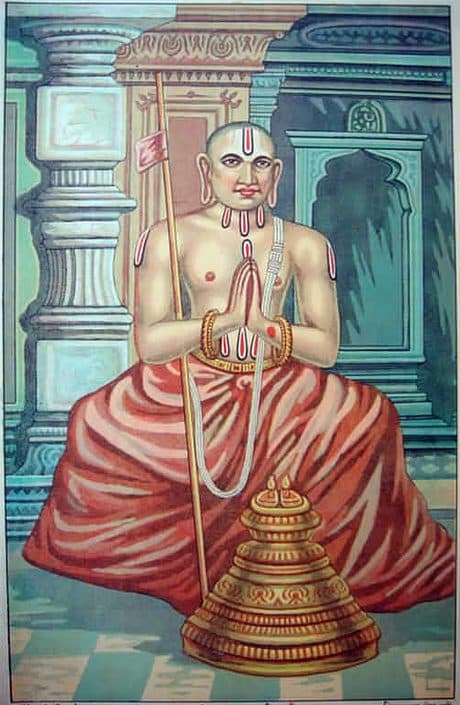
Rāmānuja · Viśiṣṭādvaita
English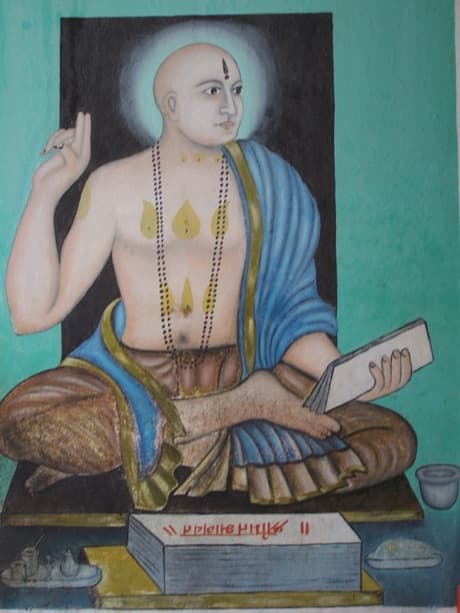
Madhvācārya · Dvaita
Madhva BhāṣyaSanskritEnglish“नित्य आत्मा इत्युक्तम् | किं आत्मैव नित्य आहोस्विदन्यदपि? - अन्यदपि | तत् किं? इति आह - नासत इति | असतः कारणस्य, सतो ब्रह्मणश्च, अभावो न विद्यते - प्रकृतिः पुतुपचैव नित्यो कालश्च सत्तम इति वचनाच्छ्रीविष्णुपुराणे || पृथक् विद्यत इत्यादार्थः | असतः कारणत्वं च - सदसद्रूपया चासौ गुणमव्याऽगुणो विभुः | इति श्रीभागवते || असदतः सदजायत इति च | अव्यक्तेश्च | सम्प्रदायतश्चैतत् सिद्धम् इत्याह - उभयोरपि इति अन्तो निर्णयः ||” - Eternal is the self, thus it has been spoken. Why the self is eternal? Is there anything else (eternal), anything else? Hence, it has been said in the verse starting, नासतो विद्यते .. There is no annihilation of असतः Prakriti the cause or सत् Brahman, because it is declared in Vishnu Puraana, “Prakriti, Purusha and Time are eternal”. Because the word विद्यते has been separately used (in relation to सत् and असत् and also because it has been said in Bhagavat Puraana that असत् is gross and सत् is of the subtle form and attribute of the Reality. Besides, असत् is manifestation of सत्, the unmanifest. According to normal understanding also, it is so established - for both of them. अन्त is conclusion.
Madhvācārya · Dvaita
Gītā Tātparya NirṇayaSanskritEnglish“न च यद्वात्परलोकदुःखम् इति शोकः | असत्कर्मणः सकाशत् भावो नास्ति सत्कर्मणः सकाशत् अभावो नास्ति | इति नियतत्वात् || सद्भाववाचिनः शब्दाः सर्वे ते सुखवाचकाः | अभाववाचिनः शब्दाः सर्वे ते दुःखवाचकाः || इति शब्दनिर्णये || सद्भावे साधुभावे च सदित्वेतत् प्रयुज्यते | प्रशस्ते कर्मणि तथा सच्छब्दः पार्थ युज्यते || इति वक्ष्यमाणत्वात् | एक असन्नेव स भवति असद्ब्रह्मेति वे चेत् इत्यादेश्च | अन्तो निर्णयः ||” - The sorrow is not because the war leads to misery in the other world. Even as by evil deeds there can be no happiness even so by good deeds there can be no unhappiness, this is the rule. Therefore the words which promote meritorious disposition, all end in creating happiness; the words which promote evil disposition, all end in creating unhappiness, thus in Shabda Nirnaya. सद्भाव means that which promotes meritorious disposition, thus the word having been used later. Therefore for meritorious deeds the word सत् is used. The one who thinks ‘He becomes 'a-sat', 'asat brahmeti'’ for him Brahman becomes ‘a-sat’, consequently he becomes sorrowful.
“न चाविद्यमानविद्यमानयेतुत्पातिनाशनिषेधकोऽयं लोकः | प्रत्यक्षविरोधात् | सन्निति व्यवह्रियमाणेव पदार्थ स्वरूपमुत्पत्तेः प्राङ्नासोत्तरं च नास्ति इति सर्वलोको व्यवहरति | न च विपर्यये किंचिन्मानम् | इदं तु वाक्यमन्यथासिद्धम् | आद्यनन्तयोः सर्वकार्यनसदेति निश्चितम् | यदसन्न विशेषोऽत्र जायतप कोऽत्र जायते || व्यक्तावपि समं ह्येतदनवस्थाऽन्यथा भवेत् | एवं नाशेऽपि बोद्धव्यमतोऽसन्नेव जायते | तथाऽप्यभेदानभवात् कार्यकारणयोः सदा | भेदस्य चाविशेषेण देहोऽगात् क्षितितामिति || व्यवहारो भवेद्यमाद्वैत्येवानुभवः सदा || इति ब्रह्मतर्के ||” - It is not the purpose of this verse to deny that which is seen to exist now, was non-existent before creation and would be non-existent after destruction. That would be contradiction in itself. Because in normal practice every one deals in life with such objects as if they did not exist before and will also cease to exist hereafter. There is no reason to assume that this is due to delusion. There is also no evidence to say that the statements like नास्तो विधत्ते भावः are due to delusion, thus in Brahma Tarka.
“न च सदसद्विलक्षणं किञ्चिदति इत्यत्र किञ्चिनानम् | न चासतः ख्यात्ययोगात्सतो वाधायोगदुभयविलक्षणं भान्तिविषयम् | असतः ख्यातयोगात् इति वदतो असतः ख्यातिरभून्न वा? | यदि नाभून्न तत्त्वातिनिराकरणम् | यद्यभूत्, तथाऽपि | नाचासतोऽसत्त्वेन भान्तौ सत्त्वेन च ख्यातिनास्ति इत्यत्र किञ्चिन्मानम् | असद्वयवहारलोपप्रसङ्गाशाच्च | यदविद्यमानं रूपं तस्य सत्त्वेन प्रतीतैरेव भान्तित्वाच्च अनिर्वचनीयत्वपक्षेऽपि सदिदं रजतम् इत्यविद्यमानसत्त्वप्रतीतिं विना नहि भान्तित्वम् | भान्तिसत्त्वागीकारेऽपि अभान्तं सदिदं रजतम् इत्यविद्यमानसत्त्वप्रतीतौ हि प्रवर्तते तस्मादुभयविलक्षणं न किञ्चित् ||” - All acts, prior to creation and after the dissolution, do not exist, is the Vedic statement. If (it is assumed that) in each action, the specific form was not manifest before it was born, but came to be formed only later, then wisdom and normal circumstances would not justify such statement. If (it is assumed that) according to wisdom and normal circumstances, an archetype existed before the form came to exist then (it will have to be accepted that) before any thing is born it did not, in fact, exist Even due to the experiences of change, there would be the action and its result. Because of this change, the experience of body becomes apparent. Normal affairs of the world take place on the basis of this change and the experience of the change alone. It is not correct to accept that this world is made up of any special attributes as सत् and असत् - Existence and non-Existence; सत् being the Real and the असत् being the Appearance. Both the सत् and the असत् are subject to delusion. The असत् is spoken as such because it is perceived, not because it is experienced. If it be Appearance, then its knowledge is of no relevance, even when it is the un-manifest. असत् cannot be proved by another असत्. If the सत् appears as असत् in delusion, it cannot be accepted as सत्. In common practice in any event, the असत् cannot cease to be. That which exists as its form also may appear as सत्. Same is the case with delusion. Even though it is indescribable, where silver appears as सत् such appearance cannot be treated as असत्, असत् only on the basis of its being delusion. Thus, the सत् which appears as असत् should also be accepted. Then, there would be no contradiction.
“विश्वं सत्यम् | यच्चिकेत सत्येमत् | कविर्मनीषि परिभूः स्वयम्भूयापथातथ्यतोऽर्थान् | व्यदधाच्छाश्वतीभ्यः समाभ्यः || इत्यादिश्रुतेभ्यः ||” - In the Vedic scriptures it is stated the cosmic manifestation is truth. What is created is the truth. The sages and seers who contemplating deeply describe the Ultimate Truth as self-evolved and self-evident and by such words declare the eternal existence of all things created.
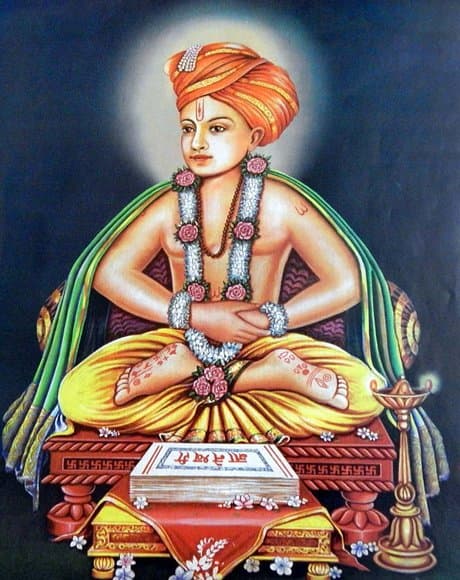
Jñāneśvar · Vārkarī
EnglishOn verses 2.15–2.16
15 "He, the manly one, whom these, O Best of men perturb not: he the steadfast one, even-poised betwixt pain and pleasure, he can properly claim deathlessness.
16 For the non-existent there is no coming into existence, nor passing out of existence for the existent. The true nature of these twain has alike been seen by the Seers of Truth.
(123)
One that does not get entangled in the sense-objects is affected neither by happiness nor by sorrow and he is ever free from the evil of being born a mother's son. He does not get involved in the sense objects for the pleasure of the senses and is alone, know ye, eternal. Now Arjuna, hear another thing I tell you. Those who are thoughtful only know it. There is in this world one all-pervading and hidden spiritual essence which only the learned always accept as real. Just as milk mixed with water appears one but can be separated by the swan alone, or just as the intelligent can separate pure gold from the alloy by burning the latter in a furnace, or just as butter can be extracted by skilfully churning the curds, or just as from mixed up seed and chaff, when winnowed, the chaff is blown away leaving behind only the seed—even so the wise and the learned truth-seers easily get free from the shackles of empirical existence seeing it to be unreal after deep thinking and then their gaze is fixed on the real alone. Therefore the wise seers have no attachment for things which are not eternal since they have realized that only the eternal Atman is real while the non-eternal and changing world of sense is unreal.
Swami Ramsukhdas · Modern
English'Nāsato vidyate bhāvo'—This body, neither existed in the past, before birth, nor will exist in the future after death, and is also perishing, at present. Thus, actually it is non-existent. This body is the world in miniature. The change in the body signifies the change, in the world. Similarly, the non-existence of a body signifies the non-existence of the world, in all the times.
The entire world is burning like wood continuously in the
fire, of time. On firewood being burnt, ash remains. But this time-fire consumes the world, in such a way that no remains, are left. There is total annihilation of the world. Therefore, it has been said, that the unreal has no existence.
'Nābhāvo vidyate sataḥ'—The real never ceases to be. The Ātmā (spirit or soul) remains constant. It existed, before the birth of the body, exists now, when the body is undergoing change and will exist, after the death of the body. Similarly, God also ever remains the same, while the world undergoes a change, every moment.
A Vital Fact
The world is kaleidoscopic, it changes every moment. So it cannot be seen in the same state, the very next moment. Bodies are taking birth, and dying every moment, but the process is not perceived, with these dull physical eyes.* Similarly, the world is also perishing, all the time. But it is not perceived, because the senses, mind and intellect etc., also belong to the same class, to which the world belongs. So, how can the perishable perceive, the perishable? Only the imperishable (self), (spirit) can perceive it.
Secondly the self cannot perform any activity, without assistance of the world (body, senses, mind and intellect). It proves, that all activities take place in the world rather than, in the self. The self has no affinity with activities, and objects. It proves, that the world, with body, mind, senses and intellect etc., is non-existent. Only the super soul (God), is ever existent, who ever remains untainted and is the basis and illuminator, of the entire world.
'Ubhayorapi drṣṭo'ntastvanayostattvadarśibhiḥ'—Seers of truth, have perceived the truth, about the real, and the unreal, or the
* Though there is a continuous process of birth and death of bodies, yet the process is not perceived because of the subtle speed of time.
soul and the body. The fact is, that the real is ever-existent, the unreal has no existence, but it seems to exist because of the light of the real. Therefore the essence of the real (Sat), and the unreal (asat) is 'sat', (ever-existent). The real has been called as 'Parā Prakṛti' (higher or sentient nature) (Gītā 7/5), 'Kṣetrajñā (self, soul) (Gītā 13/1-2), 'Puruṣa' (spirit) (Gītā 13/19) and 'akṣara' (the imperishable) (Gītā 15/16), while the unreal has been called 'aparā prakṛti' (lower or insentient nature), Kṣetra (non-self), prakṛti (matter) and 'Kṣara' (the perishable).
Arjuna is grieved by thinking, that the warriors will die. So, the Lord explains that the real never dies, and the unreal never exists as it is continuously dying. Therefore, it is not wise, to grieve.
In the eleventh verse, it has been said, that 'paṇḍita' (the wise) grieve neither for the living, nor for the dead. In the twelfth and thirteenth verses the word 'dhīra' (wise or enlightened) has been used for the person, who realizes the distinction, between the soul and the body; in the fifteenth verse also 'dhīra', has been used for a person who does not grieve over, the decay of the body and the world. In the sixteenth verse 'tattvadarśī' (the seers of truth), has been used for a discerning person, who distinguishes between the real and unreal. All these words dhīra etc., show that the wise do not grieve and if they grieve, it means, that they are not wise.
Appendix—The ever-existent entity (self) is real and except that entity whatever Prakṛti (Nature) and its evolutes (actions and objects) are, they are all unreal and kaleidoscopic. Those great souls who have perceived the truth about both the real and the unreal viz., those, who have realized the self, hold that the unreal has no existence and the real never ceases to be viz., there is nothing except that entity (the real).
The Lord in the fourteenth and fifteenth verses described the transitory nature of the body; here the same has been described by the expression—'nāsato vidyate bhāvaḥ' (the unreal has no
existence); and in the twelfth and thirteenth verses the eternal nature of the 'Śarīrī' (self) was described, that has been mentioned here by the expression—'nābhāvo vidyate sataḥ' (the real never ceases to be).
'Nāsato vidyate bhāvo nābhāvo vidyate sataḥ'—In these sixteen letters there is the gist of all the Vedas, Purāṇas and scriptures. 'Asat' and 'Sat'—these two have been called by several names such as 'Prakṛti' (Nature) and 'Puruṣa' (self), 'Kṣara' (perishable) and 'Akṣara' (imperishable), 'Śarīra' (body) and 'Śarīrī' (self), transitory and eternal, perishable and imperishable etc. Whatever is seen, heard, understood, thought of and determined etc., is 'unreal' and the organs of senses, by which the actions of seeing, hearing and thinking etc., are done, are also 'unreal' and whatever seen is also 'unreal'.
In the half verse (sixteen letters) three roots have been used—
(1) 'bhū sattāyām'—as 'abhāvaḥ' and 'bhāvaḥ' (2) 'as'bhuvi'—as 'asataḥ' and 'sataḥ' (3) 'vid sattāyām'—as 'vidyate' and 'na vidyate'
Although these three roots mean only an 'entity' yet in their subtle form they have also their independent meanings—as the meaning of 'bhū' root is 'utpatti' (origin), the meaning of 'as' root is 'sattā' (entity) existence and the meaning of 'vid' root is 'vidyamānatā' (existence of the present).
The meaning of the expression 'nāsato vidyate bhāvaḥ' means 'asataḥ bhāvaḥ na vidyate' viz., the unreal has no existence or the unreal is non-existent because it is continuously perishing (changing). The unreal is not present. The unreal is not acquired. The unreal is not constant. The thing which is born, certainly dies—this is the rule. As soon as it is born, it starts perishing at once. It perishes so quickly that no one can see it two times viz., having seen it once, it can't be seen in the same condition the second time. This is the principle that the thing which has no existence at any time is always non-existent. Therefore the
world is always non-existent. However existence we may give to the world, however importance (value) we may attach to it, but it doesn't exist at all. The unreal is neither acquired, nor was acquired nor will ever be acquired. It is not possible to acquire the unreal.
'Nābhāvo vidyate sataḥ'—This expression means—'sataḥ abhāvaḥ na vidyate' viz., the real never ceases to be rather the real is existent, it is never non-existent (changeable). The entity which ceases to be is not called the real. The entity of the real is ever-existent. The real is ever present. The real is ever attained. The real is ever constant.
The real never ceases to be in any place, thing, person, action, incident, circumstance, state and time etc. The reason is that the place, time and thing etc., are unreal (kaleidoscopic) but the real ever exists the same, in it there is never any change, it never ceases to be. Therefore the real is ever-existent. To whatever extent we may deny the existence of the Supreme Soul, to whatever extent we may neglect Him, to whatever extent we may have disinclination for Him, to whatever extent we may disregard Him, to whatever extent we may contradict His existence by giving arguments but He never ceases to be. The non-existence of the real is not possible. No one can destroy the imperishable entity (Gītā 2/17).
'ubhayorapi dṛṣṭaḥ'—Seers of truth have not created (produced) the real entity but they have seen it viz., perceived the truth about it. It means that non-existence of the unreal and existence of the real—the truth of both of these have been perceived by the liberated enlightened souls who perceive only the real entity viz., realize the self-evident 'Is'. The base of the unreal is also real and the truth about the real is also real—by knowing this, in the view of the exalted souls no other entity except the real entity 'Is' remains.
The non-existence of the unreal and the existence of the
real prove that only the real exists. In that real entity there is no such duality as 'deha' (body) and 'dehī' (self).
So long as the unreal's existence is assumed, there is discrimination. But when the unreal ceases to exist, then discrimination changes into Self-realization. 'Ubhayorapi drṣṭo'-ntastvanayostattvadarśibhiḥ'—in this expression in 'Ubhayorapi' there is discrimination; in 'antaḥ' there is Self-realization and in 'drṣṭaḥ' there is perception of the real viz., discrimination changed into Self-realization and only the entity remained. There is nothing except that entity—this is the most important fact of the Discipline of Knowledge.
The unreal has no existence—this is true and the real never ceases to be—this is also true. It is the duty of a striver to accept this truth. A striver may have this realization or not, he has to accept this fact. One has to accept the entity 'Is' and to deny 'No'—this is Vedānta, this is the main gist of the Vedas.
In the world in spite of the appearance of both—existence and non-existence there is predominance of 'non-existence'. In God also both of them appear, but there is predominance of 'existence.' In the world within 'non-existence' there are existence and non-existence and in God within 'existence' there are existence and non-existence. In other words in the world within 'eternal disunion' there are union and disunion while in God within 'eternal union' there are union and disunion (meeting-separation). Therefore in the world only non-existence persists while in God only existence persists.
*Link:—In the next two verses, there is description, of the real and the unreal.*
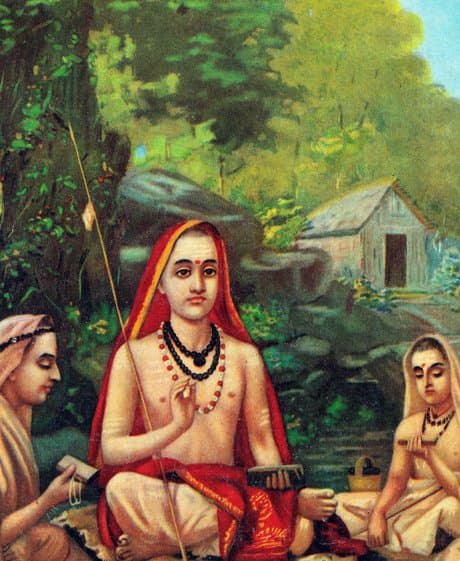
Ādi Śaṅkarācārya · Advaita
Sanskritन असतः अविद्यमानस्य शीतोष्णादेः सकारणस्य न विद्यते नास्ति भावो भवनं अस्तिता ॥ न हि शीतोष्णादि सकारणं प्रमाणैर्निरूप्यमाणं वस्तुसद्भवति । विकारो हि सः, विकारश्च व्यभिचरति । यथा घटादिसंस्थानं चक्षुषा निरूप्यमाणं मृद्व्यतिरेकेणानुपलब्धेरसत्, तथा सर्वो विकारः कारणव्यतिरेकेणानुपलब्धेरसन् । जन्मप्रध्वंसाभ्यां प्रागूर्ध्वं च अनुपलब्धेः कार्यस्य घटादेः मृदादिकारणस्य च तत्कारणव्यतिरेकेणानुपलब्धेरसत्त्वम् ॥ तदसत्त्वे सर्वाभावप्रसङ्ग इति चेत्, न ; सर्वत्र बुद्धिद्वयोपलब्धेः, सद्बुद्धिरसद्बुद्धिरिति । यद्विषया बुद्धिर्न व्यभिचरति, तत् सत् ; यद्विषया व्यभिचरति, तदसत् ; इति सदसद्विभागे बुद्धितन्त्रे स्थिते, सर्वत्र द्वे बुद्धी सर्वैरुपलभ्येते समानाधिकरणे न नीलोत्पलवत्, सन् घटः, सन् पटः, सन् हस्ती इति । एवं सर्वत्र तयोर्बुद्ध्योः घटादिबुद्धिः व्यभिचरति । तथा च दर्शितम् । न तु सद्बुद्धिः । तस्मात् घटादिबुद्धिविषयः असन्, व्यभिचारात् ; न तु सद्बुद्धिविषयः, अव्यभिचारात् ॥
घटे विनष्टे घटबुद्दौ व्यभिचरन्त्यां सद्बुद्धिरपि व्यभिचरतीति चेत्, न ; पटादावपि सद्बुद्धिदर्शनात् । विशेषणविषयैव सा सद्बुद्धिः ॥ सद्बुद्धिवत् घटबुद्धिरपि घटान्तरे दृश्यत इति चेत्, न ; पटादौ अदर्शनात् ॥ सद्बुद्धिरपि नष्टे घटे न दृश्यत इति चेत्, न ; विशेष्याभावात् सद्बुद्धिः विशेषणविषया सती विशेष्याभावे विशेषणानुपपत्तौ किंविषया स्यात् ? न तु पुनः सद्बुद्धेः विषयाभावात् ॥ एकाधिकरणत्वं घटादिविशेष्याभावे न युक्तमिति चेत्, न ; ``इदमुदकम्'' इति मरीच्यादौ अन्यतराभावेऽपि सामानाधिकरण्यदर्शनात् ॥ तस्माद्देहादेः द्वन्द्वस्य च सकारणस्य असतो न विद्यते भाव इति । तथा सतश्च आत्मनः अभावः अविद्यमानता न विद्यते, सर्वत्र अव्यभिचारात् इति अवोचाम ॥ एवं आत्मानात्मनोः सदसतोः उभयोरपि दृष्टः उपलब्धः अन्तो निर्णयः सत् सदेव असत् असदेवेति, तु अनयोः यथोक्तयोः तत्त्वदर्शिभिः । तदिति सर्वनाम, सर्वं च ब्रह्म, तस्य नाम तदिति, तद्भावः तत्त्वम्, ब्रह्मणो याथात्म्यम् । तत् द्रष्टुं शीलं येषां ते तत्त्वदर्शिनः, तैः तत्त्वदर्शिभिः । त्वमपि तत्त्वदर्शिनां दृष्टिमाश्रित्य शोकं मोहं च हित्वा शीतोष्णादीनि नियतानियतरूपाणि द्वन्द्वानि ``विकारोऽयमसन्नेव मरीचिजलवन्मिथ्यावभासते'' इति मनसि निश्चित्य तितिक्षस्व इत्यभिप्रायः ॥ किं पुनस्तत्, यत् सदेव सर्वदा इति ; उच्यते --
Ādi Śaṅkarācārya · Advaita
Hindiइसलिये भी शोक और मोह न करके शीतोष्णादिको सहन करना उचित है, जिससे कि—
वास्तवमें अविद्यमान शीतोष्णादिका और उनके कारणोंका भाव—होनापन अर्थात् अस्तित्व है ही नहीं, क्योंकि प्रमाणद्वारा निरूपण किये जानेपर शीतोष्णादि और उनके कारण कोई पदार्थ ही नहीं ठहरते !
क्योंकि वे शीतोष्णादि सब विकार हैं, और विकार सदा बदलता रहता है । जैसे चक्षुद्वारा निरूपण किया जानेपर घटादिका आकार मिट्टीको छोड़कर और कुछ भी उपलब्ध नहीं होता इसलिये असत् है, वैसे ही सभी विकार कारणके सिवा उपलब्ध न होनेसे असत् हैं ।
क्योंकि उत्पत्तिसे पूर्व और नाशके पश्चात् उन सबकी उपलब्धि नहीं है ।
पू०—मिट्टी आदि कारणकी और उसके भी कारणकी अपने कारणसे पृथक् उपलब्धि नहीं होनेसे उनका अभाव सिद्ध हुआ, फिर इसी तरह उसका भी अभाव सिद्ध होनेसे सबके अभावका प्रसङ्ग आ जाता है ।
उ०—यह कहना ठीक नहीं, क्योंकि सर्वत्र सत्-बुद्धि और असत्-बुद्धि ऐसी दो बुद्धियाँ उपलब्ध होती हैं ।
जिस पदार्थकी विषय करनेवाली बुद्धि बदलती नहीं वह पदार्थ सत् है और जिसको विषय करनेवाली बुद्धि बदलती हो वह असत् है । इस प्रकार सत् और असत् का विभाग बुद्धिके अधीन है ।
सभी जगह समानाधिकरणमें (एक ही अधिष्ठानमें) सबको दो बुद्धियाँ उपलब्ध होती हैं ।
नील कमलके सदृश नहीं, किंतु घड़ा है, कपड़ा है, हाथी है, इस तरह सब जगह दो-दो बुद्धियाँ उपलब्ध होती हैं ।
उन दोनों बुद्धियोंसे घटादिको विषय करनेवाली बुद्धि बदलती है, यह पहले दिखलाया जा चुका है परंतु सत्-बुद्धि बदलती नहीं ।
अर्थात् 'नीलोत्पलम्' इस ज्ञानमें जैसे कमलमें कमलत्वकी और नीलापनकी दो बुद्धियाँ होती हैं उसी प्रकार गुण-गुणी-भावसे यहाँ दो बुद्धियाँ नहीं ली गयी हैं; किंतु मृगत्पुष्पिकामें भ्रान्तिके कारण जैसे अधिष्ठानसे अतिरिक्त जलबुद्धि भी रहती है उसी तरहकी दो बुद्धियाँ दिखायी गयी हैं ।
अतः घटादि बुद्धिका विषय (घटादि) असत् है क्योंकि उसमें व्यभिचार (परिवर्तन) होता है। परंतु सत्-बुद्धिका विषय (अस्तित्व) असत् नहीं है, क्योंकि उसमें व्यभिचार (परिवर्तन) नहीं होता।
पू०—घटका नाश हो जानेपर घटविषयक बुद्धिके नष्ट होते ही सत्-बुद्धि भी तो नष्ट हो जाती है।
उ०—यह कहना ठीक नहीं; क्योंकि वस्त्रादि अन्य वस्तुओंमें भी सत्-बुद्धि देखी जाती है। वह सत्-बुद्धि केवल विशेषणको ही विषय करनेवाली है।
पू०—सत्-बुद्धिकी तरह घट-बुद्धि भी तो दूसरे घटमें दीखती है।
उ०—यह ठीक नहीं; क्योंकि वस्त्रादिमें नहीं दीखती। पू०—घटका नाश हो जानेपर उसमें सत्-बुद्धि भी तो नहीं दीखती।
उ०—यह ठीक नहीं; क्योंकि (वहाँ) घटरूप विशेष्यका अभाव है। सत्-बुद्धि विशेषणको विषय करनेवाली है, अतः जब घटरूप विशेष्यका अभाव हो गया तब बिना विशेष्यके विशेषणकी अनुपपत्ति होनेसे वह (सत्-बुद्धि) किसको विषय करे? पर विषयका अभाव होनेसे सत्-बुद्धिका अभाव नहीं होता।
पू०—घटादि विशेष्यका अभाव होनेसे एकाधिकरणता (दोनों बुद्धियोंका एक अधिष्ठानमें होना) युक्तियुक्त नहीं होती।
उ०—यह ठीक नहीं, क्योंकि मृगतृष्णिकादिमें अधिष्ठानसे अतिरिक्त अन्य वस्तुका (जलका) अभाव है तो भी 'यह जल है' ऐसी बुद्धि होनेसे समानाधिकरणता देखी जाती है।
इसलिये असत् जो शरीरादि एवं शीतोष्णादि द्वन्द्व और उनके कारण हैं उनका किसीका भी भाव— अस्तित्व नहीं है।
वैसे ही सत् जो आत्मतत्त्व है उसका अभाव अर्थात् अविद्यमानता नहीं है; क्योंकि वह सर्वत्र अटल है यह पहले कह आये हैं।
समानाधिकरणताका अभिप्राय दो वस्तुओंकी प्रतीतिसे है, वास्तविक सत्तासे नहीं!
इस प्रकार सत्-आत्मा और असत्-अनात्मा इन दोनोंका ही यह निर्णय तत्त्वदर्शियोंद्वारा देखा गया है अर्थात् प्रत्यक्ष किया जा चुका है कि सत् सत् ही है और असत् असत् ही है ।
‘तत्’ यह सर्वनाम है और सर्व ब्रह्म ही है । अतः उसका नाम ‘तत्’ है, उसके भावको अर्थात् ब्रह्मके यथार्थ स्वरूपको तत्त्व कहते हैं, उस तत्त्वको देखना जिनका स्वभाव है वे तत्त्वदर्शी हैं, उनके द्वारा उपर्युक्त निर्णय देखा गया है ।
तू भी तत्त्वदर्शी पुरुषोंकी बुद्धिका आश्रय लेकर शोक और मोहको छोड़कर तथा नियत और अनियतस्व शीतोष्णादि द्रन्द्वोंको, इस प्रकार मनमें समझकर कि ये सब विकार हैं, ये वास्तवमें न होते हुए ही मृगतृष्णाके जलकी भाँति मिथ्या प्रतीत हो रहे हैं, (इनको) सहन कर । यह अभिप्राय है
Jñāneśvar · Vārkarī
Marathiआतां अर्जुना आणिक कांही एक । सांगेन मी आइक । जें विचारें परलोक । वोळखिती ॥ १२५ ॥
या उपाधिमाजि गुप्त । चैतन्य असे सर्वगत । तें तत्वज्ञ संत । स्वीकारिती ॥ १२६ ॥
सलिलीं पय जैसें । एक होऊन मीनलें असे । परीं निवडूनि राजहंसें । वेगळें कीजे ॥ १२७ ॥
कीं अग्निमुखें किडाळ । तोडोनियां चोखाळ । निवडिती केवळ । बुद्धिमंत ॥ १२८ ॥
ना तरी जाणिवेच्या आयणी । करितां दधिकडसणी । मग नवनीत निर्वाणीं । दिसे जैसें ॥ १२९ ॥
कीं भूस बीज एकवट । उपणितां राहे घनवट । तेथ उडे तें फलकट । जाणों आले ॥ १३० ॥
तैसें विचारितां निरसलें । तें प्रपंचु सहजें सांडवलें । मग तत्वता तत्व उरलें । ज्ञानियांसी ॥ १३१ ॥
म्हणोनि अनित्याचां ठायीं । तयां आस्तिक्यबुद्धि नाहीं । निष्कर्ष दोहींही । देखिला असे ॥ १३२ ॥
Jñāneśvar · Vārkarī
Hindi(2.125) हे अर्जुन! अब सुनो, मैं एक बात सुनाता हूँ, जो विचारवान् लोग जानते हैं। (2.126) इस जगद्रूप उपाधि में सर्वव्यापी चैतन्य गुप्त है। तत्त्वज्ञानी सदा उसी का स्वीकार करते हैं।
(2.127) पानी और दूध जैसे एक ही में मिला रहता है पर राजहंस उसे अलग देता है,
(2.128) अथवा जैसे बुद्धिमान् लोग सोने को आग में तपा कर हीन सोने से शुद्ध सोना अलग कर लेते हैं,
(2.129) अथवा चतुराई से दही का मन्थन करने से निदान में जैसे नवनीत हाथ लगता है,
(2.130) अथवा भूसे सहित बीज की उड़ावनी करने से जैसे घनीभूत धान्य रह जाता है और भूसी उड़ जाती है;
(2.131) वैसे ही विचार करने से ज्ञानियों की दृष्टि में प्रपंच अलग हो सहज ही छूट जाता और केवल तत्व ही रह जाता है।
(2.132) इसलिए अनित्य वस्तु में उनकी सत्यबुद्धि नहीं रहती।
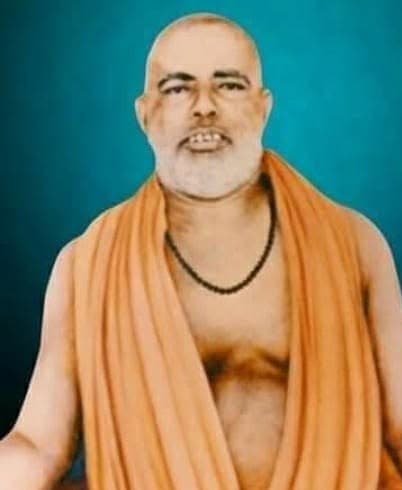
Sri Udiya Baba · Modern
Hindiभावार्थ— असत् वस्तु का अस्तित्व नहीं है और सत् का कभी अभाव नहीं होता। इस प्रकार इन दोनों का ही भेद तत्त्वदर्शियों ने देखा है।
व्याख्या— भक्त और वेदान्ती दोनों यही मानते हैं संसार माया है। 'माया' उसे कहते हैं जो हो नहीं, किन्तु दिखायी दे; जैसे इन्द्रजाल। संसार प्रतीत तो होता है, परन्तु प्रत्यक्ष, अनुमान, अपमान, शब्द किसी भी प्रमाण से सिद्ध नहीं हो सकता।
प्रश्न— जो वस्तु सामने दिखायी दे रही है उसे सिद्ध करने के लिये क्या किसी प्रमाण की आवश्यकता है?
उत्तर— देखने वाले नेत्र भी तो संसार ही हैं। इसलिये प्रत्यक्ष प्रमाण से संसार सिद्ध नहीं हो सकता। अनुमान प्रमाण तब माना जाता है जब वस्तु सामने न हो। संसार तो सामने है, इसलिये अनुमान की इसमें प्रवृत्ति नहीं हो सकती। उपमा अन्य सदृश वस्तु की दी जाती है, जैसे मुख की उपमा चन्द्रमा से। परन्तु इस संसार के समान कोई दूसरा संसार है नहीं, इसलिये उपमान द्वारा इसकी सिद्धि नहीं हो सकती। शब्द प्रमाण भी तभी माना जाता है जब वस्तु सामने न हो, इसलिये उससे भी संसार की सिद्धि नहीं हो सकती। ऐसा भी नियम नहीं है कि जो वस्तु सामने दिखायी दे वह हो ही। मरुभूमि का जल सामने दिखायी देता है, परन्तु होता नहीं। अतः यह निश्चय हुआ कि संसार मिथ्या है और मैं (द्रष्टा) सत्य हूँ, क्योंकि मैं तीनों अवस्था और तीनों कालों का साक्षी हूँ।
प्रश्न— असत् का अत्यन्ताभाव है और सत् का कभी अभाव नहीं होता— ये दोनों ज्ञान बुद्धि को एक साथ कैसे हो सकते हैं?
उत्तर— जैसे नेत्रों से मरुभूमि के जल की तरंगों को देखते हुए भी बुद्धि से हम जल का अत्यन्ताभाव देखते हैं, इसी प्रकार देहादि
प्रपंच है नहीं, ऐसा अनुभव होते हुए भी उसके साथ आत्मा का अनुभव होता रहता है।
प्रश्न— भगवान् ने इस श्लोक के द्वारा गीता के आरम्भ में ही सिद्धान्त क्यों कह दिया?
उत्तर— आचार्यों की सर्वदा यही शैली रही है कि पहले सिद्धान्त कहकर फिर साधन बतलाते हैं, क्योंकि सिद्धान्त जाने बिना साधन में प्रवृत्ति नहीं होती। यदि किसी से कोई कार्य कराना हो और उसे पहले ही उसका लाभ बता दिया जाय तो उसका उत्साह बढ़ जाता है। इस दृष्टि से भी गुरुजन पहले सिद्धान्त बता देते हैं; जिससे शिष्य को पता लग जाय कि उसे कहाँ पहुँचना है। ऐसा होने पर वह विघ्नरूप से साधन के बीच में आने वाले चमत्कारों को ही लक्ष्य नहीं मानेगा। इसी से भगवान् ने इस श्लोक द्वारा सिद्धान्त का उल्लेख कर दिया है।
वेदान्त शास्त्र में निष्काम कर्म से अन्तःकरण की शुद्धि और उपासना से एकाग्रता मानी गयी है तथा शुद्ध और एकाग्र मन में ही ज्ञान का उदय होता है। अतः इसलिये भी सबसे पहले ज्ञान का सिद्धान्त कह दिया है कि यदि शिष्य का अन्तःकरण शुद्ध हो तो उत्तम अधिकारी होने पर इतने से ही उसे ज्ञान हो जायगा। और यदि उसमें कुछ मलिनता हो तो साधन द्वारा अन्तःकरण शुद्ध होने पर उसे इस लक्ष्य की प्राप्ति होगी।
इस श्लोक में 'तु' शब्द से यह दिखलाया है कि असत् से सत् की विशेषता है। यहाँ अनित्य को 'असत्' इस रूप में कहा है जैसे घर अनित्य होने के कारण असत् और मृत्तिका सत् है। असत् अर्थात् जिनका अत्यन्ताभाव है, जो तीनों कालों में कभी नहीं हुआ। भगवान् ने भिन्न-भिन्न श्लोकों में आत्मा का प्रतिपादन तीन प्रकार से किया है—
(१) इस श्लोक में व्यतिरेक-दृष्टि से बतलाया है कि केवल एक परमात्मा ही है, और कुछ कभी हुआ ही नहीं।
(२) अध्याय ९ के श्लोक १९ में अन्वय-दृष्टि से कहा है कि सत्-असत् में ही हूँ—'सदसच्चाहमर्जुन।'
(३) अध्याय १३ के श्लोक १२ में साक्षी रूप से आत्मा का निरूपण किया है कि वह सबका साक्षी है, सत् और असत् दोनों से विलक्षण है— 'न सत्तन्नासदुच्यते।'
Swami Ramsukhdas · Modern
Hindi[यहाँ (पूर्वार्धमें) भगवान्ने ‘भू सत्तायाम्’ (भावः, अभावः), ‘अस् भुवि’ (असतः, सतः) और ‘विद् सत्तायाम्’ (विद्यते)—इन तीन सत्तावाचक धातुओंका प्रयोग किया है। इन तीनोंके प्रयोगका तात्पर्य नित्य-तत्त्वकी ओर लक्ष्य करानेमें ही है।]
‘नासतो विद्यते भावः’—शरीर उत्पत्तिके पहले भी नहीं था, मरनेके बाद भी नहीं रहेगा और वर्तमानमें भी इसका क्षण-प्रतिक्षण अभाव हो रहा है। तात्पर्य है कि यह शरीर भूत, भविष्य और वर्तमान—इन तीनों कालोंमें कभी भावरूपसे नहीं रहता। अतः यह असत् है। इसी तरहसे इस संसारका भी भाव नहीं है, यह भी असत् है। यह शरीर तो संसारका एक छोटा-सा नमूना है; इसलिये शरीरके परिवर्तनसे संसारमात्रके परिवर्तनका अनुभव होता है कि इस संसारका पहले भी अभाव था और पीछे भी अभाव होगा तथा वर्तमानमें भी अभाव हो रहा है।
संसारमात्र कालरूपी अग्निमें लकड़ीकी तरह निरन्तर जल रहा है। लकड़ीके जलनेपर तो कोयला और राख बची रहती है, पर संसारको कालरूपी अग्नि ऐसी विलक्षण रीतिसे जलाती है कि कोयला अथवा राख कुछ भी बाकी नहीं रहता। वह संसारका अभाव-ही-अभाव कर देती है। इसलिये कहा गया है कि असत्की सत्ता नहीं है।
‘नाभावो विद्यते सतः’—जो सत् वस्तु है, उसका अभाव नहीं होता अर्थात् जब देह उत्पन्न नहीं हुआ था, तब भी देही था, देह नष्ट होनेपर भी देही रहेगा और वर्तमानमें देहके परिवर्तनशील होनेपर भी देही उसमें ज्यों-का-त्यों ही रहता है। इसी रीतिसे जब संसार उत्पन्न नहीं हुआ था, उस समय भी परमात्मतत्त्व था, संसारका अभाव होनेपर भी परमात्मतत्त्व रहेगा और वर्तमानमें संसारके परिवर्तनशील होनेपर भी परमात्मतत्त्व उसमें ज्यों-का-त्यों ही है।
मार्मिक बात
संसारको हम एक ही बार देख सकते हैं, दूसरी बार नहीं। कारण कि संसार प्रतिक्षण परिवर्तनशील है; अतः एक क्षण पहले वस्तु जैसी थी, दूसरे क्षणमें वह वैसी नहीं रहती, जैसे—सिनेमा देखते समय परदेपर दृश्य स्थिर दीखता है; पर वास्तवमें उसमें प्रतिक्षण परिवर्तन होता रहता है। मशीनपर फिल्म तेजीसे घूमनेके कारण वह परिवर्तन इतनी तेजीसे होता है कि उसे हमारी आँखें नहीं पकड़ पातीं। इससे भी अधिक मार्मिक बात यह है कि वास्तवमें संसार एक बार भी नहीं दीखता। कारण कि शरीर, इन्द्रियाँ, मन, बुद्धि आदि जिन करणोंसे हम संसारको देखते हैं—अनुभव करते हैं, वे करण भी संसारके ही हैं। अतः वास्तवमें संसारसे ही संसार दीखता है। जो शरीर-संसारसे सर्वथा सम्बन्धरहित है, उस स्वरूपसे संसार कभी दीखता ही नहीं। तात्पर्य यह है कि स्वरूपमें संसारकी प्रतीति नहीं है। संसारके सम्बन्धसे ही संसारकी प्रतीति होती है। इससे सिद्ध हुआ कि स्वरूपका संसारसे कोई सम्बन्ध है ही नहीं।
दूसरी बात, संसार (शरीर, इन्द्रियाँ, मन, बुद्धि)-की सहायताके बिना चेतन-स्वरूप कुछ कर ही नहीं सकता। इससे सिद्ध हुआ कि मात्र क्रिया संसारमें ही है, स्वरूपमें नहीं। स्वरूपका क्रियासे कोई सम्बन्ध है ही नहीं।
संसारका स्वरूप है—क्रिया और पदार्थ। जब स्वरूपका न तो क्रियासे और न पदार्थसे ही कोई सम्बन्ध है, तब यह सिद्ध हो गया कि शरीर-इन्द्रियाँ-मन-बुद्धिसहित सम्पूर्ण संसारका अभाव है। केवल परमात्मतत्त्वका ही भाव (सत्ता) है, जो निलिप्तरूपसे सबका प्रकाशक और आधार है।
‘उभयोरपि दृष्टोऽन्तस्त्वनयोस्तत्त्वदर्शिभिः’—इन दोनोंके अर्थात् सत्-असत्, देही-देहके तत्त्वको जाननेवाले
**परिशिष्ट भाव**—सत्तामात्र ‘सत्’ है और सत्ताके सिवाय जो कुछ भी प्रकृति और प्रकृतिका कार्य (क्रिया और पदार्थ) है, वह ‘असत्’ अर्थात् परिवर्तनशील है। जिन महापुरुषोंने सत् और असत्—दोनोंका तत्त्व देखा है अर्थात् जिनको सत्तामात्रमें अपनी स्वतःसिद्ध स्थितिका अनुभव हो गया है, उनकी दृष्टि (अनुभव)-में असत्की सत्ता विद्यमान
महापुरुषोंने इनका तत्त्व देखा है, इनका निचोड़ निकाला है कि केवल एक सत्-तत्त्व ही विद्यमान है।
असत् वस्तुका तत्त्व भी सत् है और सत् वस्तुका तत्त्व भी सत् है अर्थात् दोनोंका तत्त्व एक ‘सत्’ ही है, दोनोंका तत्त्व भावरूपसे एक ही है। अतः सत् और असत्—इन दोनोंके तत्त्वको जाननेवाले महापुरुषोंके द्वारा जाननेमें आनेवाला एक सत्-तत्त्व ही है। असत्की जो सत्ता प्रतीत होती है, वह सत्ता भी वास्तवमें सत्की ही है। सत्की सत्तासे ही असत् सत्तावान् प्रतीत होता है। इसी सत्की ‘परा प्रकृति’ (गीता ७।५), ‘क्षेत्रज्ञ’ (गीता १३।१-२), ‘पुरुष’ (गीता १३।१९) और ‘अक्षर’ (गीता १५।१६) कहा गया है; तथा असत्की ‘अपरा प्रकृति’, ‘क्षेत्र’, ‘प्रकृति’ और ‘क्षर’ कहा गया है।
अर्जुन भी शरीरोंको लेकर शोक कर रहे हैं कि युद्ध करनेसे ये सब मर जायेंगे। इसपर भगवान् कहते हैं कि क्या युद्ध न करनेसे ये नहीं मरेंगे? असत् तो मरेगा ही और निरन्तर मर ही रहा है। परन्तु इसमें जो सत्-रूपसे है, उसका कभी अभाव नहीं होगा। इसलिये शोक करना तुम्हारी बेसमझी ही है।
ग्यारहवें श्लोकमें आया है कि जो मर गये हैं और जो जी रहे हैं, उन दोनोंके लिये पण्डितजन शोक नहीं करते। बारहवें-तेरहवें श्लोकोंमें देहीकी नित्यताका वर्णन है और उसमें ‘धीर’ शब्द आया है। चौदहवें-पंद्रहवें श्लोकोंमें संसारकी अनित्यताका वर्णन आया है, तो उसमें भी ‘धीर’ शब्द आया है। ऐसे ही यहाँ (सोलहवें श्लोकमें) सत्-असत्का विवेचन आया है, तो इसमें ‘तत्त्वदर्शी’ शब्द आया है। इन श्लोकोंमें ‘पण्डित’, ‘धीर’ और ‘तत्त्वदर्शी’ पद देनेका तात्पर्य है कि जो विवेकी होते हैं, समझदार होते हैं, उनको शोक नहीं होता। अगर शोक होता है, तो वे विवेकी नहीं हैं, समझदार नहीं हैं।
१-नित्यदा ह्यंग भूतानि भवन्ति न भवन्ति च। कालेनालक्ष्यवेगेन सूक्ष्मत्वात्तन्न दृश्यते॥ (श्रीमद्भा० ११।२२।४२) ‘यद्यपि प्रतिक्षण ही शरीरोंकी उत्पत्ति और नाश होता रहता है, तथापि कालकी गति अत्यन्त सूक्ष्म होनेके कारण उनका प्रतिक्षण उत्पन्न और नष्ट होना दिखायी नहीं देता।’
२-‘नानुशोचन्ति पण्डिताः’ (२।११), ‘धीरस्तत्र न मुह्यति’ (२।१३), ‘समदुःखसुखं धीरम्’ (२।१५)—इन तीन जगह जिनको ‘पण्डित’ और ‘धीर’ कहा है, उन्हींको यहाँ ‘तत्त्वदर्शी’ कहा गया है।
है ही नहीं और सत्का अभाव विद्यमान है ही नहीं अर्थात् सत्तामात्र (सत्-तत्त्व)-के सिवाय कुछ भी नहीं है। भगवान्ने चौदहवें-पन्द्रहवें श्लोकोंमें शरीरकी अनित्यताका वर्णन किया था, उसको यहाँ 'नासतो विद्यते भावः' पदोंसे कहा है और बारहवें-तेरहवें श्लोकोंमें शरीरकी नित्यताका वर्णन किया था, उसको यहाँ 'नाभावो विद्यते सतः' पदोंसे कहा है।
'नासतो विद्यते भावो नाभावो विद्यते सतः'—इन सोलह अक्षरोंमें सम्पूर्ण वेदों, पुराणों, शास्त्रोंका तात्पर्य भरा हुआ है! असत् और सत्—इन दोनोंको ही प्रकृति और पुरुष, क्षर और अक्षर, शरीर और शरीरी, अनित्य और नित्य, नाशवान् और अविनाशी आदि अनेक नामोंसे कहा गया है। देखने, सुनने, समझने, चिन्तन करने, निश्चय करने आदिमें जो कुछ भी आता है, वह सब 'असत्' है। जिसके द्वारा देखते, सुनते, चिन्तन आदि करते हैं, वह भी 'असत्' है और दीखनेवाला भी 'असत्' है।
इस श्लोकार्थ (सोलह अक्षरों)-में तीन धातुओंका प्रयोग हुआ है—
(१) 'भू सत्तायाम्'—जैसे 'अभावः' और 'भावः'।
(२) 'अस् भुवि'—जैसे, 'असतः' और 'सतः'।
(३) 'विद् सत्तायाम्'—जैसे, 'विद्यते' और 'न विद्यते'।
यद्यपि इन तीनों धातुओंका मूल अर्थ एक 'सत्ता' ही है, तथापि सूक्ष्मरूपसे ये तीनों अपना स्वतन्त्र अर्थ भी रखते हैं; जैसे—'भू' धातुका अर्थ 'उत्पत्ति' है, 'अस्' धातुका अर्थ 'सत्ता' (होनापन) है और 'विद्' धातुका अर्थ 'विद्यमानता' (वर्तमानकी सत्ता) है।
'नासतो विद्यते भावः' पदोंका अर्थ है—'असतः भावः न विद्यते' अर्थात् असत्की सत्ता विद्यमान नहीं है, प्रत्युत असत्का अभाव ही विद्यमान है; क्योंकि इसका निरन्तर अभाव (परिवर्तन) होता ही रहता है। असत् वर्तमान नहीं है। असत् उपस्थित नहीं है। असत् प्राप्त नहीं है। असत् मिला हुआ नहीं है। असत् मौजूद नहीं है। असत् कायम नहीं है। जो वस्तु उत्पन्न होती है, उसका नाश अवश्य होता है—यह नियम है। उत्पन्न होते ही तत्काल उस वस्तुका नाश शुरू हो जाता है। उसका नाश इतनी तेजीसे होता है कि उसको दो बार कोई देख ही नहीं सकता अर्थात् उसको एक बार देखनेपर फिर दुबारा उसी स्थितिमें नहीं देखा जा सकता। यह सिद्धान्त है कि जिस वस्तुका किसी भी क्षण अभाव है, उसका सदा अभाव ही है। अतः संसारका सदा ही अभाव है। संसारको कितनी ही सत्ता दें, कितना ही महत्त्व दें, पर वास्तवमें वह विद्यमान है ही नहीं। असत् प्राप्त है ही नहीं, कभी प्राप्त हुआ ही नहीं, कभी प्राप्त होगा ही नहीं। असत्का प्राप्त होना सम्भव ही नहीं है।
'नाभावो विद्यते सतः' पदोंका अर्थ है—'सतः अभावः न विद्यते' अर्थात् सत्का अभाव विद्यमान नहीं है, प्रत्युत सत्का भाव ही विद्यमान है; क्योंकि इसका कभी अभाव (परिवर्तन) होता ही नहीं। जिसका अभाव हो जाय, उसको सत् कहते ही नहीं। सत्की सत्ता निरन्तर विद्यमान है। सत् निरन्तर वर्तमान है। सत् निरन्तर उपस्थित है। सत् निरन्तर प्राप्त है। सत् निरन्तर मिला हुआ है। सत् निरन्तर मौजूद है। सत् निरन्तर कायम है। किसी भी देश, काल, वस्तु, व्यक्ति, क्रिया, घटना, परिस्थिति, अवस्था आदिमें सत्का अभाव नहीं होता। कारण कि देश, काल, वस्तु आदि तो असत् (अभावरूप अर्थात् निरन्तर परिवर्तनशील) है, पर सत् सदा ज्यों-का-त्यों रहता है। उसमें कभी किंचिन्मात्र भी कोई परिवर्तन नहीं होता, कोई कमी नहीं आती। अतः सत्का सदा ही भाव है। परमात्मतत्त्वको कितना ही अस्वीकार करें, उसकी कितनी ही उपेक्षा करें, उससे कितना ही विमुख हो जायें, उसका कितना ही तिरस्कार करें, उसका कितनी ही युक्तियोंसे खण्डन करें, पर वास्तवमें उसका अभाव विद्यमान है ही नहीं। सत्का अभाव होना सम्भव ही नहीं है। सत्का अभाव कभी कोई कर सकता ही नहीं (गीता—दूसरे अध्यायका सत्रहवाँ श्लोक)।
'उभयोरपि दृष्टः'—तत्त्वदर्शी महापुरुषोंने सत्-तत्त्वको उत्पन्न नहीं किया है, प्रत्युत देखा है अर्थात् अनुभव किया है। तात्पर्य है कि असत्का अभाव और सत्का भाव—दोनोंके तत्त्व (निष्कर्ष)-को जाननेवाले जीवन्मुक्त, तत्त्वज्ञ महापुरुष एक सत्-तत्त्वको ही देखते हैं अर्थात् स्वतः-स्वाभाविक एक 'है' का ही अनुभव करते हैं। असत्का तत्त्व भी सत् है और सत्का तत्त्व भी सत् है—ऐसा जान लेनेपर उन महापुरुषोंकी दृष्टिमें एक सत्-तत्त्व 'है' के सिवाय और किसीकी स्वतन्त्र सत्ता रहती ही नहीं।
असत्की सत्ता विद्यमान न रहनेसे उसका अभाव और सत्का अभाव विद्यमान न रहनेसे उसका भाव सिद्ध हुआ। निष्कर्ष यह निकला कि असत् है ही नहीं, प्रत्युत सत्-ही-सत् है। उस सत्-तत्त्वमें देह और देहिका विभाग नहीं है। जबतक असत्की सत्ता है, तबतक विवेक है। असत्की सत्ता मिटनेपर विवेक ही तत्त्वज्ञानमें परिणत हो जाता है। 'उभयोरपि दृष्टोऽन्तस्त्वनयोस्तत्त्वदर्शिभिः'—इसमें 'उभयोरपि' में विवेक है, 'अन्तः' में तत्त्वज्ञान है और 'दृष्टः' में अनुभव है अर्थात् विवेक तत्त्वज्ञानमें परिणत हो गया और सत्तामात्र ही शेष रह गयी। एक सत्ताके सिवाय कुछ नहीं है—यह ज्ञानमार्गकी सर्वोपरि बात है।
असत्की सत्ता नहीं है—यह भी सत्य है और सत्का अभाव नहीं है—यह भी सत्य है। सत्यको स्वीकार करना साधकका काम है। साधकको अनुभव हो अथवा न हो, उसको तो सत्यको स्वीकार करना है। 'है' को स्वीकार करना है और 'नहीं' को अस्वीकार करना है—यही वेदान्त है, वेदोंका खास निष्कर्ष है।
संसारमें भाव और अभाव—दोनों दीखते हुए भी 'अभाव' मुख्य रहता है। परमात्मामें भाव और अभाव—दोनों दीखते हुए भी 'भाव' मुख्य रहता है। संसारमें 'अभाव' के अन्तर्गत भाव-अभाव हैं और परमात्मामें 'भाव' के अन्तर्गत भाव-अभाव हैं। दूसरे शब्दोंमें, संसारमें 'नित्यवियोग' के अन्तर्गत संयोग-वियोग हैं और परमात्मामें 'नित्ययोग' के अन्तर्गत योग-वियोग (मिलन-विरह) हैं। अतः संसारमें अभाव ही रहा और परमात्मामें भाव ही रहा।
सम्बन्ध—सत् और असत् क्या है—इसको आगेके दो श्लोकोंमें बताते हैं।
'The unreal' (Asat) refers to the physical body which can never be eternal. 'The real' (Sat) refers to the Self (jīva), which can never cease to exist.
The literal meaning of anta is end. Here it means the summation or conclusion of the essential natures of sat and asat. The authoritative conclusion arrived at by elevated sages in this matter is that the nature of the physical body is asat being temporary and that the nature of the spiritual soul is sat being eternal. That which is asat is therefore known by its perishable nature and that which is sat is known by its imperishable nature. Hence it is clear that what is indicated by sattva and asattva are the soul and the body.
[Here follows the justification for describing the body as 'unreal' and as having 'never come into being.' —Ed.]
Non-existence has, indeed, the character of destructibility, and what is Existent (Real) has the character of indestructibility, as Bhagavan Parāśara has said: —
'O Brahmin, apart from consciousness nothing else exists anywhere and at any time. Thus have I taught you what is real existence—how consciousness is real, and all else is unreal' (Viṣṇu Purāṇa .P. 2.12 vs. 43-45).
'The Supreme Reality is considered as imperishable by the wise. There is no doubt that what can be obtained from a perishable substance is also perishable.
'That entity which is never changed or modified by a change in time etc., is real! What is that entity, O King? (It is the jīvātman who retains its knowledge)' (Viṣṇu Purāṇa 2.13.100).
It is seen from the foregoing that this (i.e., perishableness of the body and imperishableness of the jīva) is the reason for designating the jīva as 'existence' (Sattva) and the body as 'non-existence' (asattva).
This verse has no bearing on the doctrine of satkārya-vāda of the Sānkhya philosophy which vaguely states: what is not cannot come to be and what is cannot cease to be.
For in this context the Supreme Lord Krishna is specifically instructing Arjuna to dispel his delusion, due to not correctly understanding the difference between the perishable nature of the body and the imperishable nature of the soul.
It was in order to emphasise this that the previous verse Chapter 2, verse 2 was spoken and it is to further elaborate this subject that the subsequent two verses are revealed.
But how is it that the soul’s imperishable nature is known?
The next verse states this.