

Bhagavad Gītā · Chapter 2 · Sāṅkhya Yoga
कार्पण्यदोषोपहतस्वभावः
पृच्छामि त्वां धर्मसंमूढचेताः
यच्छ्रेयः स्यान्निश्चितं ब्रूहि तन्मे
शिष्यस्तेऽहं शाधि मां त्वां प्रपन्नम्
kārpaṇyadoṣopahatasvabhāvaḥ
pṛcchāmi tvāṃ dharmasaṃmūḍhacetāḥ|
yacchreyaḥ syānniścitaṃ brūhi tanme
śiṣyaste'haṃ śādhi māṃ tvāṃ prapannam||
Translation
With my very being tainted by the vice of faint-heartedness and my mind puzzled with regard to duty, I am asking you. Tell me that which is decidedly good; I am Your disciple. Pray instruct me, who have put myself into Your hands.
Commentary
The commentators seated around this verse
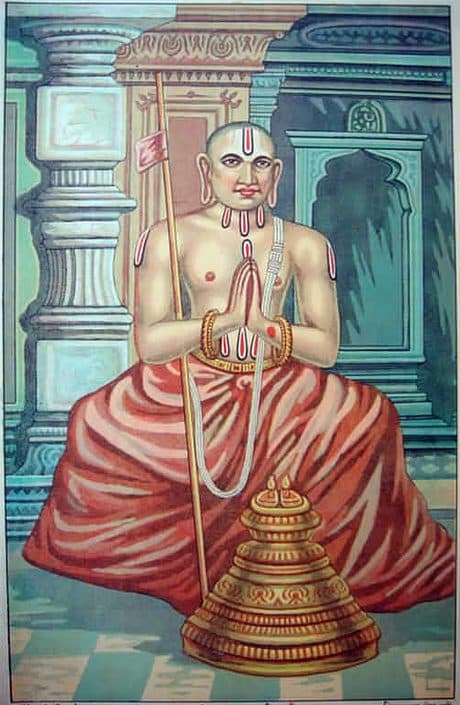
Rāmānuja · Viśiṣṭādvaita
EnglishOn verses 2.1–9
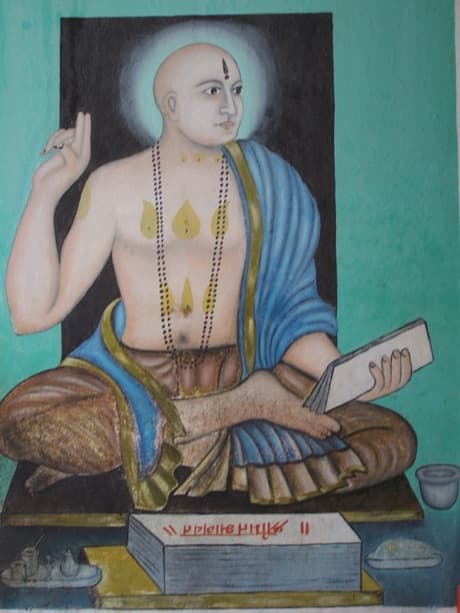
Madhvācārya · Dvaita
SanskritEnglishOn verses 2.6–2.10
“तत्र सोनयोरमध्ये वान्धवादिमोहजालसंवृतं वपीदन्त अर्जुनं भगवान् उवाच - प्रज्ञावादान् स्वमनीपोत्यवचनानि | कथं अशोच्या ? गतामून् ||” - To the sorrowing Arjuna, enveloped by entanglement of fraternal delusion, as he stood between the two armies, Resplendent One spoke these words.
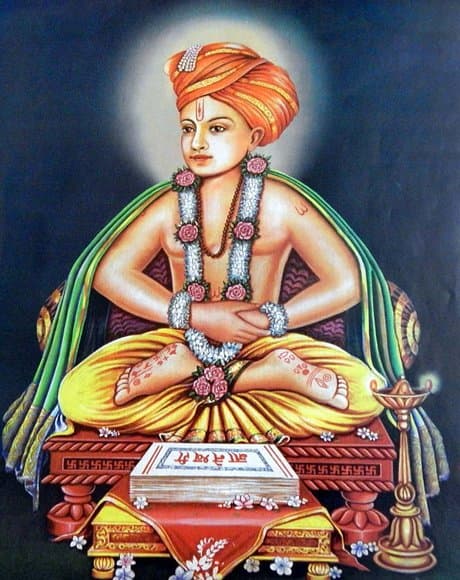
Jñāneśvar · Vārkarī
English7 “With my normal-self obsessed by the foible of a pitiable lack of discernment (kārpaṇya), and my mind perplexed in regard to my (proper) duty (Dharma), I inquire of thee. Do tell me for certain what were the better for me. I am thy disciple: teach me who am seeking refuge in thee. (55)
My mind has become so much distressed that I cannot discern what is proper for us now. Just as a thing although quite at hand is not discernible when the power of vision gets dimmed, being surrounded by darkness,—the same thing has happened to me,—so I cannot know what is the best course for me, my normal vision having become blurred. There, O Lord Krishna, you are our sole kith and kin, and you are all in all to us, tell me what is to our good. You are our preceptor, brother, father, you are our propitious deity, you are our protector in difficulties at all times. Just as a preceptor never forsakes his disciple or just as an ocean does not abandon (tributary) rivers, Lord Krishna! how can a child survive were the mother to forsake it. In that way, O God, you alone are our entire (support): If you consider my former talk unreasonable, just tell me immediately, O Purushottam what is better for me, and that which also is not repugnant to the path of duty.
Swami Ramsukhdas · Modern
English'Kārpaṇyadoṣopahatasvabhāvaḥ prcchāmi tvām dharmasammūḍhacetāḥ'—Arjuna did not think it desirable to turn away totally, from the war, but to escape the sin, he did not find any other alternative. So he wanted to turn away from war and he thought of such action, as a virtue, rather than a vice of faint-heartedness. But, when Lord Kṛṣṇa called his action faint-hearted and unmanly, Arjuna was reminded of his duty, as a member of the warrior-class for whom it was not befitting to run. So Arjuna by conceding his faint-heartedness, says that first his nature even as a member of the warrior-class, was weighed down with the weakness of faint-heartedness and secondly, his mind was confused with regard to his duty. Being overpowered by delusion, he could not take the right decision, about its righteousness.
In the third verse Lord Kṛṣṇa advised Arjuna, 'Cast off your petty faint-heartedness and stand up, for war.' So his doubt should have been removed. But he still had some doubt, because, on the one hand he thought that it was a sin to kill the
kinsmen and the adorable elders, but on the other hand, being a member of the warrior-class it was his duty to wage war. So he was confused with regard to his duty, and he entreats Lord Kṛṣṇa to tell him, what his real duty is.
'Yacchreyaḥ syāmiścitāṁ brūhi tanme'—In the second verse of this chapter, Lord Kṛṣṇa told him that his dejection was a shame and it should be shunned by noble souls. So Arjuna thought, that he should also follow the path, adopted by noble souls. Therefore, he prays to Lord Kṛṣṇa, to tell him what is decidedly good for him.
First Arjuna was agitated and distressed, and he asks what was good for him. It shows that, an awakening for salvation as a goal is not aroused in a man, so long as he is satisfied with his present situation. But when he is dissatisfied and he wants to rise above it, he becomes aware of his real aim i.e., salvation.
'Śiṣyaste'ham'—When Arjuna entreated Lord Kṛṣṇa, to tell him what was decidedly good for him, he thought that such a question could be put to a teacher, not to a chariot-driver. Arjuna's conviction, that he was a chariot-warrior, while Kṛṣṇa was his charioteer, whom he ordered to place the chariot between the two armies, had gone. So he becomes His disciple and declares, 'I am your disciple, so tell me what is decidedly, good for me.'
'Śādhī māṁ tvāṁ prapannam'—Arjuna thinks, that the preceptor can guide the disciple and a disciple will have to shoulder the responsibility to translate his teachings into practice, and then make effort to attain salvation. But he wants to hand over this responsibility, to his preceptor. As the mother of a breast-sucking child, not the child who falls sick, takes medicine for his recovery, the teacher take over responsibility of the disciple, who takes refuge in him. So Arjuna, by depending on the teacher and surrendering to Him says, 'I have taken refuge in You, instruct me.'
Here, Arjuna by using the phrase 'Tvāṁ prapannam' says,
that he has taken refuge in Him. But actually he had not taken completely refuge in Him. Had he done this, he would not have uttered the words 'Instruct me', because a disciple has no responsibility of his own, the full responsibility lies with the teacher. Secondly, in the ninth verse he says, 'I shall not fight.' It also shows that he had not really taken refuge in Him, otherwise he might have not uttered these words. A disciple, who takes refuge in his teacher has no say, no responsibility of his own, he becomes merely an instrument, in the hands of his preceptor and does whatever his teacher wants him, to do. Therefore, Lord Kṛṣṇa in the sixty-sixth verse of the eighteenth chapter says, 'Seek refuge in Me, alone' (18/66). Then Arjuna, in the seventy-third verse of the eighteenth chapter says, 'I shall act according to Your word.' It is here, that Arjuna really takes refuge, in Him.
In this verse, there are four points spoken by Arjuna, which need attention—
(i) My nature is weighed down, with the vice of faint-heartedness and I entreat you because my mind is confused with regard to my duty. (ii) Tell me he entreats, what is decidedly good for me. (iii) I am Your disciple. (iv) Instruct me who has taken refuge in You. If we think over these four points, one by one, we realise that as far as the first point is concerned, the person to whom the question is asked, is free, whether he answers the question or not. The second point, shows that it is his duty to answer. In the third, the responsibility to guide the disciple, so that he may attain salvation is that of the teacher. In the fourth, the full responsibility for salvation of the disciple, is the teacher's.
*Link:— In the previous verse, Arjuna takes refuge in Lord Kṛṣṇa, but he thinks that Lord Kṛṣṇa wants him to wage the war, which he regards as unrighteous and so He will again order him*
to wage war. Secondly, he thinks that perhaps he has not been able to convey his feelings to Him. So in the next verse, Arjuna clearly expresses his feelings to Him, against the war.
Jñāneśvar · Vārkarī
Marathiआम्हां काय उचित । तें पाहतां न स्फुरे एथ । जे मोहें येणें चित्त । व्याकुळ माझे ॥ ५५ ॥
तिमिरावरुद्ध जैसें । दृष्टीचे तेज भ्रंशे । मग पांसीच असतां न दिसे । वस्तुजात ॥ ५६ ॥
देवा मज तैसे जाहले । जें मन भ्रांती ग्रासिलें । आतां काय हित आपुलें । तेंही नेणे ॥ ५७ ॥
तरी श्रीकृष्णा तुवां जाणावें । निकें तें आम्हां सांगावें । जे सखा सर्वस्व आघवें । आम्हांसी तूं ॥ ५८ ॥
तूं गुरु बंधु पिता । तूं आमची इष्ट देवता । तूंचि सदा रक्षिता । आपदीं आमुतें ॥ ५९ ॥
जैसा शिष्यांते गुरु । सर्वथा नेणे अव्हेरु । कीं सरितांते सागरु । त्यजी केवीं ॥ ६०॥
नातरी अपत्यातें माये । सांडुनि जरी जाये । तरी ते कैसेनिं जिये । ऐकें कृष्णा ॥ ६१ ॥
तैसा सर्वांपरी आम्हांसी । देवा तूंचि एक आहासी । आणि बोलिलें जरी न मानिसी । मागील माझें ॥ ६२ ॥
तरी उचित काय आम्हां । जे व्यभिचरेना धर्मा । तें झडकरी पुरुषोत्तमा । सांगें आतां ॥ ६३ ॥
Jñāneśvar · Vārkarī
Hindi(2.55) कौन-सी बात उचित है सो मुझे विचार करने पर भी जान नहीं पड़ती, क्योंकि मोह से मेरा चित्त व्याकुल हो गया है।
(2.56) अंधेरा छा जाने से जैसे नेत्रों का तेज चला जाता है और पास रक्खी हुई वस्तु भी दिखाई नहीं देती
(2.57) वैसे ही, हे देव! मेरा हाल हो गया है, क्योंकि मेरा मन भ्रम से ग्रस्त हो गया है और मैं अपना हित नहीं जान सकता।
(2.58) इसलिए हे श्रीकृष्ण, आप जो ठीक समझते हों सो बताइए, क्योंकि आप हमारे मित्र और हमारे सर्वस्व हैं।
(2.59) आप ही हमारे गुरु, भ्राता और पिता हैं। आप हमारे इष्ट देवता हैं और आप ही आपत्काल में सदा हमारी रक्षा करने वाले हैं। (2.60) गुरु कभी शिष्य को दूर करना नहीं जानता। समुद्र नदी का त्याग क्योंकर कर सकता है?
(2.61) अथवा हे कृष्ण! सुनिए, माता बालक को छोड़कर चली जाय तो वह कैसे जी सकता है?
(2.62) उसी प्रकार, हे देव! हमारे लिए सब तरह से आप ही एक हैं। मैंने जो कुछ अभी कहा वह यदि आपको मान्य न हो
(2.63) तो हे पुरुषोत्तम, जो उचित हो और हमारे धर्म के विरुद्ध न हो सो हमें बताइए।
Sri Udiya Baba · Modern
Hindiसंगति— अगले श्लोक में अर्जुन भगवान् का शिष्य होना स्वीकार करता है और उनकी शरण ग्रहण करता है—
भावार्थ— कायरतारूपी दोष से मेरा [अधर्म-विरोधी] स्वभाव नष्ट हो गया है। अतः धर्म के विषय में विमूढ़चित्त हुआ मैं आपसे पूछता हूँ कि जो मेरे लिये निश्चित कल्याणकारक हो वही मुझे बताइये। मैं आपका शिष्य हूँ, मुझ शरणागत को आप उपदेश दीजिये।
प्रश्न— अर्जुन तो भगवान् को अपना मित्र मानता था, फिर शिष्य बनना क्यों स्वीकार किया?
उत्तर— धन का अधिकारी ज्येष्ठ पुत्र होता है और ज्ञान का अधिकारी शिष्य होता है। अतः यह सोचकर कि मित्र भाव से सम्भव है, भगवान् ज्ञान का उपदेश न करें, अर्जुन ने उनका शिष्यत्व स्वीकार कर लिया। ज्ञान का उपदेश गुरुदेव वैराग्यवान् शिष्य को ही करते हैं, इसलिए अपना वैराग्य प्रकट करते हुए वह कहता है—
Swami Ramsukhdas · Modern
Hindi‘कार्पण्यदोषोपहतस्वभावः पृच्छामि त्वां धर्मसम्भूढचेताः’—यद्यपि अर्जुन अपने मनमें युद्धसे सर्वथा निवृत्त होनेको सर्वश्रेष्ठ नहीं मानते थे, तथापि पापसे बचनेके लिये उनको युद्धसे उपराम होनेके सिवाय दूसरा कोई उपाय भी नहीं दीखता था। इसलिये वे युद्धसे उपराम होना चाहते थे और उपराम होनेको गुण ही मानते थे, कायरतारूप दोष नहीं। परन्तु भगवान्ने अर्जुनकी इस उपरतिको कायरता और हृदयकी तुच्छ दुर्बलता कहा, तो भगवान्के उन निःसंदिग्ध वचनोंसे अर्जुनको ऐसा विचार हुआ कि युद्धसे निवृत्त होना मेरे लिये उचित नहीं है। यह तो एक तरहकी कायरता ही है, जो मेरे स्वभावके बिलकुल विरुद्ध है; क्योंकि मेरे क्षात्र-स्वभावमें दीनता और पलायन (पीठ दिखाना)—ये दोनों ही नहीं हैं। इस तरह भगवान्के द्वारा कथित कायरतारूप दोषको अपनेमें स्वीकार करते हुए अर्जुन भगवान्से कहते हैं कि एक तो कायरतारूप दोषके कारण मेरा क्षात्र-स्वभाव एक तरहसे दब गया है और दूसरी बात, मैं अपनी बुद्धिसे धर्मके विषयमें कुछ निर्णय नहीं कर पा रहा हूँ। मेरी बुद्धिमें ऐसी मूढ़ता छा गयी है कि धर्मके विषयमें मेरी बुद्धि कुछ भी काम नहीं कर रही है!
तीसरे श्लोकमें तो भगवान्ने अर्जुनको स्पष्टरूपसे आज्ञा दे दी थी कि ‘हृदयकी तुच्छ दुर्बलताको, कायरताको छोड़कर युद्धके लिये खड़े हो जाओ’। इससे अर्जुनको धर्म-(कर्तव्य-) के विषयमें कोई सन्देह नहीं रहना चाहिये था। फिर भी सन्देह रहनेका कारण यह है कि एक तरफ
तो युद्धमें कुटुम्बका नाश करना, पूज्यजनोंको मारना अधर्म (पाप) दीखता है और दूसरी तरफ युद्ध करना क्षत्रियका धर्म दीखता है। इस प्रकार कुटुम्बियोंको देखते हुए युद्ध नहीं करना चाहिये और क्षात्रधर्मकी दृष्टिसे युद्ध करना चाहिये—इन दो बातोंको लेकर अर्जुन धर्म-संकटमें पड़ गये। उनकी बुद्धि धर्मका निर्णय करनेमें कुण्ठित हो गयी। ऐसा होनेपर ‘अभी इस समय मेरे लिये खास कर्तव्य क्या है? मेरा धर्म क्या है?’ इसका निर्णय करानेके लिये वे भगवान्से पूछते हैं।
‘यच्छ्रेयः स्यान्निश्चितं ब्रूहि तन्मे’—इसी अध्यायके दूसरे श्लोकमें भगवान्ने कहा था कि तू जो कायरताके कारण युद्धसे निवृत्त हो रहा है, तेरा यह आचरण ‘अनार्यजुष्ट’ है अर्थात् श्रेष्ठ पुरुष ऐसा आचरण नहीं करते, वे तो जिसमें अपना कल्याण हो, वही आचरण करते हैं। यह बात सुनकर अर्जुनके मनमें आया कि मुझे भी वही करना चाहिये, जो श्रेष्ठ पुरुष किया करते हैं। इस प्रकार अर्जुनके मनमें कल्याणकी इच्छा जाग्रत् हो गयी और उसीको लेकर वे भगवान्से अपने कल्याणकी बात पूछते हैं कि जिससे मेरा निश्चित कल्याण हो जाय, ऐसी बात मेरेसे कहिये।
अर्जुनके हृदयमें हलचल (विषाद) होनेसे और अब यहाँ अपने कल्याणकी बात पूछनेसे यह सिद्ध होता है कि मनुष्य जिस स्थितिमें स्थित है, उसी स्थितिमें वह संतोष करता रहता है तो उसके भीतर अपने असली उद्देश्यकी जागृति नहीं होती। वास्तविक उद्देश्य—कल्याणकी
१-यहाँ ‘चेतस्’ शब्द बुद्धिका वाचक है।
२-अर्जुनस्य प्रतिज्ञे द्वे न दैन्यं न पलायनम्।
जागृति तभी होती है, जब मनुष्य अपनी वर्तमान स्थितिसे असन्तुष्ट हो जाय, उस स्थितिमें रह न सके।
‘शिष्यस्तेऽहम्’—अपने कल्याणकी बात पूछनेपर अर्जुनके मनमें यह भाव पैदा हुआ कि कल्याणकी बात तो गुरुसे पूछी जाती है, सारथिसे नहीं पूछी जाती। इस बातको लेकर अर्जुनके मनमें जो रथीपनका भाव था, जिसके कारण वे भगवान्को यह आज्ञा दे रहे थे कि ‘हे अच्युत! मेरे रथको दोनों सेनाओंके बीचमें खड़ा कीजिये’, वह भाव मिट जाता है और अपने कल्याणकी बात पूछनेके लिये अर्जुन भगवान्के शिष्य हो जाते हैं और कहते हैं कि ‘महाराज! मैं आपका शिष्य हूँ, शिक्षा लेनेका पात्र हूँ, आप मेरे कल्याणकी बात कहिये’।
‘शाधि मां त्वां प्रपन्नम्’—गुरु तो उपदेश दे देंगे, जिस मार्गका ज्ञान नहीं है, उसका ज्ञान करा देंगे, पूरा प्रकाश दे देंगे, पूरी बात बता देंगे, पर मार्गपर तो स्वयं शिष्यको ही चलना पड़ेगा। अपना कल्याण तो शिष्यको ही करना पड़ेगा। मैं तो ऐसा नहीं चाहता कि भगवान् उपदेश दें और मैं उसका अनुष्ठान करूँ; क्योंकि उससे मेरा काम नहीं चलेगा। अतः अपने कल्याणकी जिम्मेवारी मैं अपनेपर क्यों रखूँ? गुरुपर ही क्यों न छोड़ दूँ! जैसे केवल माँके दूधपर ही निर्भर रहनेवाला बालक बीमार हो जाय, तो उसकी बीमारी दूर करनेके लिये औषधि स्वयं माँको खानी पड़ती है, बालकको नहीं। इसी तरह मैं भी सर्वथा गुरुके ही शरण हो जाऊँ, गुरुपर ही निर्भर हो जाऊँ, तो मेरे कल्याणका पूरा दायित्व गुरुपर ही आ जायगा, स्वयं गुरुको ही मेरा कल्याण करना पड़ेगा—इस भावसे अर्जुन कहते हैं कि ‘मैं आपके शरण हूँ, मेरेको शिक्षा दीजिये’।
यहाँ अर्जुन ‘त्वां प्रपन्नम्’ पदोंसे भगवान्के शरण होनेकी बात तो कहते हैं, पर वास्तवमें सर्वथा शरण हुए नहीं हैं। अगर वे सर्वथा शरण हो जाते, तो फिर उनके
द्वारा ‘शाधि माम्’ ‘मेरेको शिक्षा दीजिये’ यह कहना नहीं बनता; क्योंकि सर्वथा शरण होनेपर शिष्यका अपना कोई कर्तव्य रहता ही नहीं। दूसरी बात, आगे नवें श्लोकमें अर्जुन कहेंगे कि ‘मैं युद्ध नहीं करूँगा’—‘न योत्ये’। अर्जुनकी वह बात भी शरणागतिके विरुद्ध पड़ती है। कारण कि शरणागत होनेके बाद ‘मैं युद्ध करूँगा या नहीं करूँगा; क्या करूँगा और क्या नहीं करूँगा’—यह बात रहती ही नहीं। उसको यह पता ही नहीं रहता कि शरण क्या करायेंगे और क्या नहीं करायेंगे। उसका तो यही एक भाव रहता है कि अब शरण जो करायेंगे, वही करूँगा। अर्जुनकी इस कमीको दूर करनेके लिये ही आगे चलकर भगवान्को ‘मामेकं शरणं व्रज’ (१८। ६६) ‘एक मेरी शरणमें आ जा’— ऐसा कहना पड़ा। फिर अर्जुनने भी ‘करिष्ये वचनं तव’ (१८। ७३) ‘आपकी आज्ञाका पालन करूँगा’—ऐसा कहकर पूर्ण शरणागतिको स्वीकार किया।
इस श्लोकमें अर्जुनने चार बातें कहीं हैं—(१) ‘कार्पण्यदोषो ... धर्मसमूहचेताः’ (२) ‘यच्छ्रेयः स्यान्निश्चितं ब्रूहि तन्मे’ (३) ‘शिष्यस्तेऽहम्’ (४) ‘शाधि मां त्वां प्रपन्नम्’। इनमेंसे पहली बातमें अर्जुन धर्मके विषयमें पूछते हैं, दूसरी बातमें अपने कल्याणके लिये प्रार्थना करते हैं, तीसरी बातमें शिष्य बन जाते हैं और चौथी बातमें शरणागत हो जाते हैं। अब इन चारों बातोंपर विचार किया जाय, तो पहली बातमें मनुष्य जिससे पूछता है, वह कहनेमें अथवा न कहनेमें स्वतन्त्र होता है। दूसरीमें, जिससे प्रार्थना करता है, उसके लिये कहना कर्तव्य हो जाता है। तीसरीमें, जिनका शिष्य बन जाता है, उन गुरुपर शिष्यको कल्याणका मार्ग बतानेका विशेष दायित्व आ जाता है। चौथीमें, जिसके शरणागत हो जाता है, उस शरण्यको शरणागतका उद्धार करना ही पड़ता है अर्थात् उसके उद्धारका उद्योग स्वयं शरण्यको करना पड़ता है।
सम्बन्ध—पूर्वश्लोकमें अर्जुन भगवान्के शरणागत तो हो जाते हैं, पर उनके मनमें आता है कि भगवान्का तो युद्ध करानेका ही भाव है, पर मैं युद्ध करना अपने लिये धर्मयुक्त नहीं मानता हूँ। उन्होंने जैसे पहले ‘उत्तिष्ठ’ कहकर युद्धके लिये आज्ञा दी, ऐसे ही वे अब भी युद्ध करनेकी आज्ञा दे देंगे। दूसरी बात, शायद मैं अपने हृदयके भावोंको भगवान्के सामने पूरी तरह नहीं रख पाया हूँ। इन बातोंको लेकर अर्जुन आगेके श्लोकमें युद्ध न करनेके पक्षमें अपने हृदयकी अवस्थाका स्पष्टरूपसे वर्णन करते हैं।
न हि प्रपश्यामि ममापनुद्याद् यच्छोकमुच्छोषणमिन्द्रियाणाम्।
Thus, the Lord, the Supreme Being, introduces the teaching regarding the Self for the sake of Arjuna whose natural courage was lost due to love and misplaced compassion.
Arjuna considered the war to be unrighteous even though it is the greatest duty for warriors (Kṣatriyas). He then took refuge in Śrī Krishna to learn what the correct course of action was.
Śrī Krishna understood that Arjuna's delusion would only be overcome by the knowledge of the real nature of the Self,
and the knowledge that war (action) is an ordained duty [for Kshatriyas] which, when performed without attachment to the fruits thereof is a means for Self-realisation.