

Bhagavad Gītā · Chapter 6 · Dhyāna Yoga
जितात्मनः प्रशान्तस्य परमात्मा समाहितः
शीतोष्णसुखदुःखेषु तथा मानापमानयोः
jitātmanaḥ praśāntasya paramātmā samāhitaḥ|
śītoṣṇasukhaduḥkheṣu tathā mānāpamānayoḥ||
Word meanings
जितात्मनः = of one who has conquered the self
दुःखेषु = in cold and heat, pleasure and pain
तथा = and likewise
मानापमानयोः = in honor and dishonor
प्रशान्तस्य = of the perfectly serene one
परमात्मा = the Supreme Self
समाहितः = is ever established
Translation
The Supreme Spirit is rooted in the knowledge of the self-controlled man whose mind is perfectly serene in the midst of pairs of opposites, such as cold and heat, joy and sorrow, and honour and ignominy.
Commentary
The commentators seated around this verse
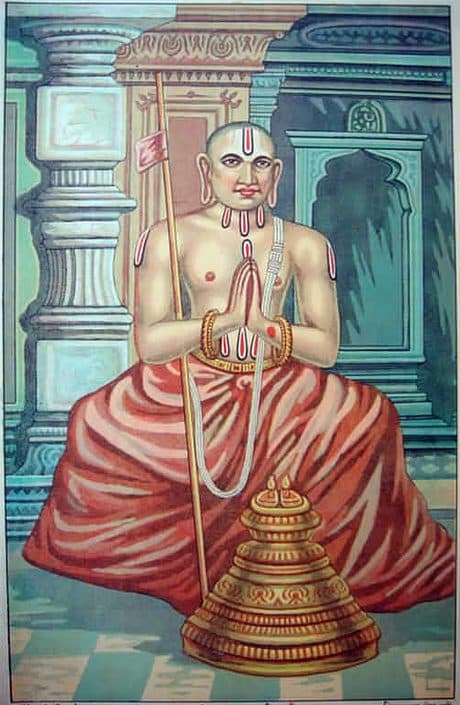
Rāmānuja · Viśiṣṭādvaita
English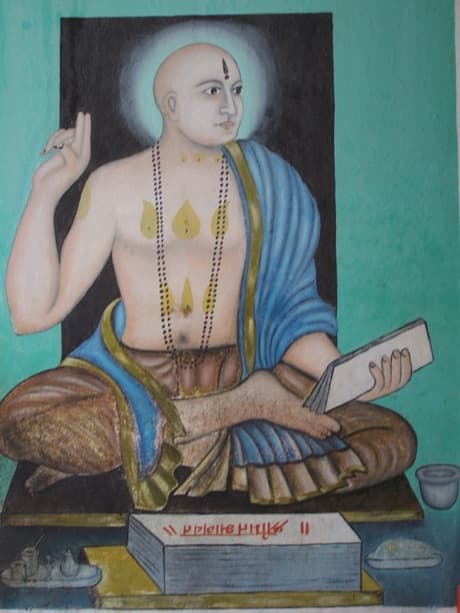
Madhvācārya · Dvaita
Madhva BhāṣyaSanskritEnglishOn verses 6.7–6.8
“जितात्मनः फलमाह - जितात्मन इति | जितात्मा हि प्रशान्तो भवति | न तस्य मनः प्रायो विषयेषु गच्छति | तदा च परमात्मा सम्यक् ह्याहितः सन्निहितो भवति ५५ अपरोक्षज्ञानी भवति इत्यर्थः | अपरोक्षज्ञानिनो लक्षणं स्पष्टयति - शीतोष्णः इत्यादिना | शीतोष्णादिषु कूटस्थः | ज्ञानविज्ञानतृप्तात्मा विजितेन्द्रिय इति कूटस्थत्वे हेतुः | विज्ञानाम् विशेष अपरोक्ष ज्ञानम् | अपरोक्षज्ञानं वा ||” - He speaks of the fruits of success over senses in this verse. The one who has success over the senses alone will become tranquil. His mind is not ordinarily been attracted by sense-objects. Then the Supreme Self comprehensively and firmly is established in his heart, i.e. he becomes spiritually enlightened. The marks of the spiritually enlightened person are explained in the verse. In the space, without any form, aloof from cold or heat, being content with knowledge and wisdom and having won over senses, being established in the space within becomes his objective. विज्ञानम् means specialized Knowledge ज्ञान, or Wisdom experienced from supra-sensory sources.
“तच्चोक्तम् - सामान्यैर्यं त्वविज्ञेया विशेषा मम गोचराः | देवादीनां तु तज्ज्ञानं विज्ञानमिति कीर्तितम् || श्रवणान्मननाश्चैव यज्ज्ञानमुपजायते | तज्ज्ञानं दर्शनं विष्णोर्विज्ञानं शम्भुरववीत् || विज्ञानं ज्ञानमङ्गदेविश्रष्टं दर्शनं यथा || इत्यादिः ||” - That which becomes known generally through special receptivity relating to the gods is special Wisdom. That which becomes known through listening and reflection is the special, supra-sensory awareness being receptive to Sri Vishnu, thus says Shambhu. विज्ञानम् is also supra-sensory Wisdom through perception acquired from scriptures.
“कूटस्थो निर्विकारः | कूटवत् स्थितः इति व्यत्यते || कूटमाकाशं | कूटं च विदलं व्योमसन्धिराकाशं उच्यते इत्यभिदानात् | योगी योग कुर्वन् | युक्तः योगसम्पूर्णः | एवमभतो योगानुष्ठाता योगसम्पूर्ण उच्यते इत्यर्थः ||” - One who abides in Space is the formless, since he abides like Space. आकाश is space, also known as enclosure, expanse, inclusive, encompassing, and unifying etc. योगी is one whose actions are equanimous. युक्तः is one who is completely in communion (with the Supreme Lord). Remaining ever in this manner he abides in equanimity with complete communion. This is the meaning.
Madhvācārya · Dvaita
Gītā Tātparya NirṇayaSanskritEnglishOn verses 6.7–6.8
“सर्वत्र विष्णोरुक्श्रज्ञानं ज्ञानमितीयते | तद्विशेषपरिज्ञानं विज्ञानमिति गीयते ||” - In all the places the awareness of supremacy of Sri Vishnu is known as jnyaana (awareness); and special knowledge about Him, is विज्ञान (Supra-sensory awareness).

Jñāneśvar · Vārkarī
English7 “Of one who has conquered his self and has attained tranquillity, his self abides in perfect repose in the presence of cold-heat, pleasure-pain (and other dualities), as also in the matter of honour and dishonour. (81)
To one who has conquered his mind, and has thus all his desires fulfilled, the Supreme Soul is neither separate from his own essential being nor far off. Just as the gold gets pure as soon as the alloy in it is burned down, so the finite soul becomes the Supreme Soul as soon as his mind rids itself of fanciful notions of worldly being. With the crashing of the pitcher (form) its internal cavity (घटाकाश) needs no movement to become one with the infinite space. In that way, when the false belief of the bodily existence is all dropped, the finite soul is one with the Supreme Spirit, since true Atman is already completely and eternally there. To such a one there exists nothing like the sensation as cold or hot or any thought of pleasure or pain or any language of honour or dishonour. Wherever the Sun may go, that locality gets flooded with light; in that way whatever such a one meets with, becomes absorbed in him viz, it becomes one with such a person. Just as the showers descending from the clouds above do not pierce the sea, in the same way the good or evil things do not in any way touch the Yogin, he having become one with the Supreme Self.
Swami Ramsukhdas · Modern
English[In the sixth verse, the term 'Anātmanaḥ' (of unconquered self), and the term 'Jitātmanaḥ' (of the self-controlled), have been used. It means that man who accepts his affinity of 'I'ness and 'Mineness', with the body etc., his own self, acts as the foe. But a self-controlled person, who does not accept his affinity, with mundane objects, such as body etc., as his own self is his friend. In this way, the man of unconquered self, ruins himself, while a self-controlled man, remains in communion with the Supreme-Spirit.]
'Jitātmanaḥ'—One, who has not the least, affinity with the mundane, such as body, senses, mind and intellect etc., is self-disciplined or self-controlled. Such a self-controlled man, does good to himself, as well as to the world.
'Śītoṣṇasukhaduhkheṣu praśāntasya'—Here, 'Śīta' and 'Uṣṇa' do not denote only cold and heat, 'Śīta' and 'Uṣṇa' are merely, objects of touch. A self-controlled person, is really he who controls all senses, from sense-objects. Therefore, 'Śīta' and 'Uṣṇa', cannot be taken in a limited sense. They denote, favourable and unfavourable circumstances. It means, that one should not be pleased with favourable circumstances and incidents etc., or displeased with unfavourable circumstances and incidents etc., but remain perfectly calm, in the midst of the two.
In favourable circumstances, a man feels a sort of, coolness, while in unfavourable circumstances he feels a kind of warmth. A striver, should be cautious that his permanent peace is not disturbed, by this seemingly cold and heat. He should not be happy and sad, with favourable and unfavourable circumstances.
Now let us try to understand what 'Joy', and 'Sorrow', imply:
(i) Generally, people think that a person who lives in luxury is joyful, but one who cannot enjoy luxuries, is sorrowful.
(ii) A man, does not possess even the bare necessities of
life, but is satisfied with what he possesses, and is joyful, while the man who leads a life of luxury is worried at heart, lest the luxuries should be lost and is sad or sorrowful.
In the *Gītā*, 'sukha' and 'duḥkha', have been described, in two ways. The favourable circumstances and pleasure derived out of these is called 'sukha'. Similarly, unfavourable circumstances and sorrow derived from these is called 'duḥkha'. Where in the *Gītā* it is said, 'samaduḥkhasukhaḥ' (12/13; 14/24), 'śītoṣṇasukhaduḥkheṣu samaḥ' (12/18), it means, that he remains even minded in 'sukha', and 'duḥkha'. But where the *Gītā* says, 'Dvandvairvimuktāḥ sukhaduḥkhasañjñaiḥ', there, it refers to the void of 'sukha' (pleasure) and 'duḥkha' (pain). In the former case, 'sukha' and 'duḥkha', have their entities but one remains equanimous, without being affected by them. In the latter case, there is no entity of either 'sukha' or 'duḥkha'. In sum total, both lead to the same goal.
Now, a question rises, why Lord Kṛṣṇa, has used two pairs of opposites 'Śīta and Uṣṇa' (cold and heat) and 'Sukhaduḥkha' (joy and sorrow), when 'cold' and 'heat' also stand for favourable and unfavourable circumstances. The explanation, is that past-actions result in favourable and unfavourable circumstances, while actions of the present, result in success and failure, (joy and sorrow). But a self-controlled man, remains perfectly calm and serene, in both states.
This explanation, seems to fit the context, because the expression 'Nendriyārtheṣu anuṣajjate', used in the fourth verse of this chapter, has been referred to here, by the expression 'Śīta-Uṣṇa', while the expression 'Na karmasu anuṣajjate' used there has been specified by the expression 'Sukha-Duḥkha'. It means, that where it is mentioned that he remains detached in favourable and unfavourable circumstances as a result of the fruit of past actions, while in success and failure, as the fruit of present actions. Here, it is mentioned that he remains calm, in both cases.
**'Tathā mānāpamānayoḥ'**—He is perfectly calm in honour and dishonour also. Now, a question arises, that honour or dishonour, is also a result of actions of the past, and therefore, is included in favourable and unfavourable circumstances. The explanation, is that in favourable and unfavourable circumstances, no one else, becomes an instrument, while in honour and dishonour (including praise and censure), someone else, becomes the instrument. But, the self-controlled man remains calm, whether he is honoured or dishonoured, by others.
How to Remain Calm in Honour and Dishonour?
In honour, a striver should not think that it is the result of his virtuous or good actions, but he should consider it, a virtue of the person who has shown honour to him. While, he should think of dishonour, as a result of his past actions, and feel obliged to the other person, who has purged him of his sins, by becoming an instrument of dishonour. Thus a striver, will become calm in honour and dishonour.
**'Paramātmā samāhitaḥ'**—Equanimity, in cold and heat, joy and sorrow, honour and dishonour, proves that he has attained God-realization, because without internal bliss, a man cannot remain calm, in both favourable and the unfavourable circumstances, success and failure or honour and dishonour. Therefore, Lord Kṛṣṇa, in the Gītā has declared in 5/19, 'Men whose mind is established in equanimity, have conquered, the mortal plane'; and in 6/22, He declares, 'Getting into the infinite beatitude of the Self, he does not reckon any other gain greater than that, and wherein established he is not moved, even by the heaviest affliction' and so on.
**Appendix**—He, whose own self is like a friend viz., who has not the sense of 'I' and 'mine' in the body, remains equanimous and unaffected in favourable and unfavourable circumstances, pleasure and pain, honour and dishonour. Such a man is an
enlightened Karmayogī viz., he has realized God—this should be recognised. The reason is that favourable and unfavourable circumstances, pleasure and pain, honour and dishonour are fleeting but God ever remains the same.

Ādi Śaṅkarācārya · Advaita
Sanskritजितात्मनः कार्यकरणसङ्घात आत्मा जितो येन सः जितात्मा तस्यजितात्मनः, प्रशान्तस्य प्रसन्नान्तःकरणस्य सतः सन्न्यासिनः परमात्मा समाहितः साक्षादात्मभावेन वर्तते इत्यर्थः । किञ्च शीतोष्णसुखदुःखेषु तथा माने अपमाने च मानापमानयोः पूजापरिभवयोः समः स्यात् ॥
Ādi Śaṅkarācārya · Advaita
Hindiजिसने मन, इन्द्रिय आदिके संघातरूप इस शरीरको अपने वशमें कर लिया है और जो प्रशान्त है— जिसका अन्तःकरण सदा प्रसन्न रहता है उस संन्यासीको भली प्रकारसे सर्वत्र परमात्मा प्राप्त है अर्थात् साक्षात् आत्मभावसे विद्यमान है।
तथा वह सर्दी-गर्मी और सुख-दुःखमें एवं मान और अपमानमें यानी पूजा और तिरस्कारमें भी (सम हो जाता है)
Jñāneśvar · Vārkarī
Marathiतया स्वांतःकरणजिता । सकळकामोपशांता । परमात्मा परौता । दुरी नाहीं ॥ ८१ ॥
जैसा किडाळाचा दोषु जाये । तरी पंधरे तेंचि होये । तैसें जीवा ब्रम्हत्व आहे । संकल्पलोपीं ॥ ८२ ॥
हा घटाकारु जैसा । निमालिया तया अवकाशा । नलगे मिळो जाणें आकाशा । आना ठाया ॥ ८३ ॥
तैसा देहाहंकारु नाथिला । हा समूळ जयाचा नाशिला । तोचि परमात्मा संचला । आधींचि आहे ॥ ८४ ॥
आतां शीतोष्णाचिया वाहणी । तेथ सुखदुःखाची कडसणीं । इयें न समाती कांही बोलणीं । मानापमानांची ।। ८५ ॥
जे जिये वाटा सुर्यु जाये । तेउतें तेजाचें विश्व होये । तैसे तया पावे तें आहे । तोचि म्हणऊनि ॥ ८६ ॥
देखैं मेघौनि सुटती धारा । तिया न रुपती जैसिया सागरा । तैशी शुभाशभें योगीश्वरा । नव्हती आनें ॥ ८७ ॥
Jñāneśvar · Vārkarī
Hindi(6.81) अन्तःकरण को जीतनेहारे तथा सकल कामना के शमन करनेहारे उससे परमात्मा कुछ जुदी और दूरस्थ वस्तु नहीं है।
(6.82) जैसे सोने का मैल निकल जाय तो वह खरा सोना बना ही हुआ है, वैसे ही संकल्प का नाश होते ही जीव को ब्रह्मत्व ही प्राप्त है।
(6.83) जैसे घटाकाश का नाश हो तो उसे आकाश में मिल जाने के लिए किसी दूसरी जगह जाना नहीं पड़ता (6.84) वैसे ही जिसका मिथ्या देहाभिमान बिल्कुल नष्ट हो जाता है वह पहले से ही सब जगह भरा हुआ परमात्मरूप ही है।
(6.85) उसमें शीत और उष्ण के प्रवाह, सुख-दुःख के विचार, मान- अपमान के शब्द, इत्यादि बातों का समावेश नहीं होता।
(6.86) क्योंकि जैसे जिस मार्ग से सूर्य्य जाता है वह विश्वप्रदेश तेजरूप हो जाता है, वैसे ही वह जो वस्तु प्राप्त करता है तद्रूप ही हो जाता है।
(6.87) देखो, मेघों से निकली हुई वर्षा की धाराएँ जैसी समुद्र में गड़ी हुई जुदी नहीं रहतीं, वैसे ही योगीश्वर शुभाशुभ कर्म जुदे
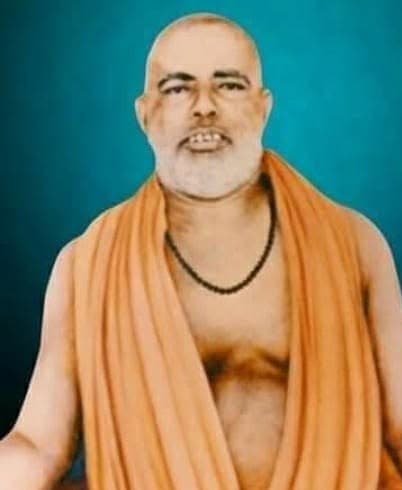
Sri Udiya Baba · Modern
Hindiसंगति— अब अगले चार श्लोकों में योगारूढ़ के लक्षण कहते हैं—
भावार्थ— मन को जीतने वाले, शान्तचित्त पुरुष का अन्तःकरण शीत-उष्ण, सुख-दुःख और मान-अपमान आदि द्वन्द्वों में भी शान्त रहता है।
व्याख्या— जो जितात्मा है अर्थात् जिसने कर्मेन्द्रिय-ज्ञानेन्द्रिय और अन्तःकरण के सच्चातरूप इस शरीर को जीत लिया है तथा जो प्रशान्त है—अध्यस्त वस्तुओं का अत्यन्ताभाव देखने के कारण जिसका चित्त शान्त है उसी का परमात्मा (अन्तःकरण) समाहित होता है अर्थात् उसके हृदय में परमात्मा स्थिर हो जाता है। अथवा जो जितात्मा होगा वही प्रशान्त होगा और उसी के लिये शीतोष्णादि द्वन्द्व समान होंगे तथा उसीमें विपरीत समय का अभाव होगा। विपरीत प्रत्यय (अनात्मा में आत्म-बुद्धि) अभ्यास से दूर होती है और तभी जितात्मा होता है। जिसका चित्त अपने में लगा है वही शीतोष्णादि द्वन्द्वों को सहन कर सकता है तथा अनात्म वस्तुओं से असंग होने पर जीव ही ब्रह्म है।
Swami Ramsukhdas · Modern
Hindi[छठे श्लोकमें 'अनात्मनः' पद और यहाँ 'जितात्मनः' पद आया है। इसका तात्पर्य है कि जो 'अनात्मा' होता है, वह शरीरादि प्राकृत पदार्थोंके साथ 'मैं' और 'मेरा'-पन करके अपने साथ शत्रुताका बर्ताव करता है और जो 'जितात्मा' होता है, वह शरीरादि प्राकृत पदार्थोंसे अपना सम्बन्ध न मानकर अपने साथ मित्रताका बर्ताव करता है। इस तरह अनात्मा मनुष्य अपना पतन करता है और जितात्मा मनुष्य अपना उद्धार करता है।]
**'जितात्मनः'**—जो शरीर, इन्द्रियाँ, मन, बुद्धि आदि किसी भी प्राकृत पदार्थकी अपने लिये सहायता नहीं मानता और उन प्राकृत पदार्थोंके साथ किंचिन्मात्र भी अपनेपनका सम्बन्ध नहीं जोड़ता, उसका नाम 'जितात्मा' है। जितात्मा मनुष्य अपना तो हित करता ही है, उसके द्वारा दुनियाका भी बड़ा भारी हित होता है।
**'शीतोष्णसुखदुःखेषु प्रशान्तस्य'**—यहाँ 'शीत' और 'उष्ण'—इन दोनों पदोंपर गहरा विचार करें तो ये सरदी और गरमीके वाचक सिद्ध नहीं होते; क्योंकि सरदी और गरमी—ये दोनों केवल त्वगिन्द्रियके विषय हैं। अगर जितात्मा पुरुष केवल एक त्वगिन्द्रियके विषयमें ही शान्त रहेगा तो श्रवण, नेत्र, रसना और घ्राण—इन इन्द्रियोंके विषय बाकी रह जायेंगे, अर्थात् इनमें उसका प्रशान्त रहना बाकी रह जायगा तो उसमें पूर्णता नहीं आयेगी। अतः यहाँ 'शीत' और 'उष्ण' पद अनुकूलता और प्रतिकूलताके वाचक हैं।
शीत अर्थात् अनुकूलताकी प्राप्ति होनेपर भीतरमें एक तरहकी शीतलता मालूम देती है और उष्ण अर्थात् प्रतिकूलताकी प्राप्ति होनेपर भीतरमें एक तरहका सन्ताप मालूम देता है। तात्पर्य है कि भीतरमें न शीतलता हो और न सन्ताप हो, प्रत्युत एक समान शान्ति बनी रहे अर्थात् इन्द्रियोंके अनुकूल-प्रतिकूल विषय, वस्तु, व्यक्ति, घटना, परिस्थिति आदिकी प्राप्ति होनेपर भीतरकी शान्ति भंग न हो। कारण कि भीतरमें जो स्वतःसिद्ध शान्ति है, वह अनुकूलतामें
राजी होनेसे और प्रतिकूलतामें नाराज होनेसे भंग हो जाती है। अतः शीत-उष्णमें प्रशान्त रहनेका अर्थ हुआ कि बाहरसे होनेवाले संयोग-वियोगका भीतर असर न पड़े।
अब यह विचार करना चाहिये कि 'सुख' और 'दुःख' पदसे क्या अर्थ लें। सुख और दुःख दो-दो तरहके होते हैं—
(१) साधारण लौकिक दृष्टिसे जिसके पास धन-सम्पत्ति-वैभव, स्त्री-पुत्र आदि अनुकूल सामग्रीकी बहुलता हो, उसको लोग 'सुखी' कहते हैं। जिसके पास धनसम्पत्ति-वैभव, स्त्री-पुत्र आदि अनुकूल सामग्रीका अभाव हो, उसको लोग 'दुःखी' कहते हैं।
(२) जिसके पास बाहरकी सुखदायी सामग्री नहीं है, वह भोजन कहाँ करेगा—इसका पता नहीं है, पासमें पहननेके लिये पूरे कपड़े नहीं हैं, रहनेके लिये स्थान नहीं है, साथमें कोई सेवा करनेवाला नहीं है—ऐसी अवस्था होनेपर भी जिसके मनमें दुःख-सन्ताप नहीं होता और जो किसी वस्तु, व्यक्ति, परिस्थिति आदिकी आवश्यकताका अनुभव भी नहीं करता, प्रत्युत हर हालतमें बड़ा प्रसन्न रहता है, वह 'सुखी' कहलाता है। परन्तु जिसके पास बाहरकी सुखदायी सामग्री पूरी है, भोजनके लिये बढ़िया-से-बढ़िया पदार्थ हैं, पहननेके लिये बढ़िया-से-बढ़िया कपड़े हैं, रहनेके लिये बहुत बढ़िया मकान है, सेवाके लिये कई नौकर हैं—ऐसी अवस्था होनेपर भी भीतरमें रात-दिन चिन्ता रहती है कि मेरी यह सामग्री कहीं नष्ट न हो जाय! यह सामग्री कायम कैसे रहे, बड़े कैसे? आदि। इस तरह बाहरकी सामग्री रहनेपर भी जो भीतरसे दुःखी रहता है, वह 'दुःखी' कहलाता है।
उपर्युक्त दो प्रकारसे सुख-दुःख कहनेका तात्पर्य है—बाहरकी सामग्रीको लेकर सुखी-दुःखी होना और भीतरकी प्रसन्नता-खिन्नताको लेकर सुखी-दुःखी होना। गीतामें जहाँ सुख-दुःखमें 'सम' होनेकी बात आयी है, वहाँ बाहरकी
सामग्रीमें सम रहनेके लिये कहा गया है; जैसे— ‘समदुःखसुखः’ (१२।१३; १४।२४), ‘शीतोष्ण-सुखदुःखेषु समः’ (१२।१८) आदि। जहाँ सुख-दुःखसे ‘रहित’ होनेकी बात आयी है, वहाँ भीतरकी प्रसन्नता और खिन्नतासे रहित होनेके लिये कहा गया है; जैसे— ‘द्वन्द्वैर्विमुक्ताः सुखदुःखसंज्ञैः’ (१५।५) आदि। जहाँ सुख-दुःखमें सम होनेकी बात है, वहाँ सुख-दुःखकी सत्ता तो है, पर उसका असर नहीं पड़ता और जहाँ सुख-दुःखसे रहित होनेकी बात है, वहाँ सुख-दुःखकी सत्ता ही नहीं है। इस तरह चाहे बाहरकी सुखदायी-दुःखदायी सामग्री प्राप्त होनेपर भीतरसे सम होना कहें, चाहे भीतरसे सुख-दुःखसे रहित होना कहें—दोनोंका तात्पर्य एक ही है; क्योंकि सम भी भीतरसे है और रहित भी भीतरसे है।
यहाँ शीत-उष्ण और सुख-दुःखमें प्रशान्त (सम) रहनेकी बात कही गयी है। अनुकूलतासे सुख होता है— ‘अनुकूलवेदनीयं सुखम्’ और प्रतिकूलतासे दुःख होता है— ‘प्रतिकूलवेदनीयं दुःखम्’। इसलिये अगर शीत-उष्णका अर्थ अनुकूलता-प्रतिकूलता लिया जाय तो सुख-दुःख कहना व्यर्थ हो जायगा और सुख-दुःख कहनेसे शीत-उष्ण कहना व्यर्थ हो जायगा; क्योंकि सुख-दुःख पद शीत-उष्ण (अनुकूलता-प्रतिकूलता) के ही वाचक हैं। फिर यहाँ शीत-उष्ण और सुख-दुःख पदोंकी सार्थकता कैसे सिद्ध होगी? इसके लिये ‘शीत-उष्ण’ पदसे प्रारब्धके अनुसार आनेवाली अनुकूलता-प्रतिकूलताको लिया जाय और ‘सुख-दुःख’ पदसे वर्तमानमें किये जानेवाले क्रियमाण कर्मोंकी पूर्ति-अपूर्ति तथा उनके तात्कालिक फलकी सिद्धि-असिद्धिको लिया जाय तो इन पदोंकी सार्थकता सिद्ध हो जाती है। तात्पर्य यह निकला कि चाहे प्रारब्धकी अनुकूल-प्रतिकूल परिस्थिति हो, चाहे क्रियमाणकी तात्कालिक सिद्धि-असिद्धि हो—इन दोनोंमें ही प्रशान्त (निर्विकार) रहे।
इस प्रकरणके अनुसार भी उपर्युक्त अर्थ ठीक दीखता है। कारण कि इसी अध्यायके चौथे श्लोकमें आये ‘नेन्द्रियार्थेषु (अनुषज्जते)’ पदको यहाँ ‘शीत-उष्ण’ पदसे कहा गया है और ‘न कर्मसु अनुषज्जते’ पदोंको यहाँ सुख-दुःख पदसे कहा गया है अर्थात् वहाँ प्रारब्धके अनुसार आयी हुई अनुकूल-प्रतिकूल परिस्थितिमें और क्रियमाण कर्मोंकी पूर्ति-अपूर्ति तथा तात्कालिक फलकी सिद्धि-असिद्धिमें आसक्तिरहित होनेकी बात आयी है और यहाँ उन दोनोंमें प्रशान्त होनेकी बात आयी है।
‘तथा मानापमानयोः’—ऐसे ही जो मान-अपमानमें भी प्रशान्त है। अब यहाँ कोई शंका करे कि मान-अपमान भी तो प्रारब्धका फल है; अतः यह शीत-उष्ण (अनुकूल-प्रतिकूल परिस्थिति) के ही अन्तर्गत आ गया। फिर इसको अलगसे क्यों लिया गया? मान-अपमानको अलगसे इसलिये लिया गया है कि शीत-उष्ण तो देवेच्छा-(अनिच्छा-) कृत प्रारब्धका फल है, पर मान-अपमान परेच्छाकृत प्रारब्धका फल है। यह परेच्छाकृत प्रारब्ध मान-बड़ाईमें भी होता है और निन्दा-स्तुति आदिमें भी होता है। इसलिये ‘मान-अपमान’ पदमें निन्दा-स्तुति लेना चाहें, तो ले सकते हैं। तात्पर्य यह हुआ कि कर्मयोगी दूसरोंके द्वारा किये गये मान-अपमानमें भी प्रशान्त रहता है अर्थात् उसकी शान्तिमें किंचिन्मात्र भी फर्क नहीं पड़ता।
मान-अपमानमें प्रशान्त रहनेका उपाय—साधकका कोई मान-आदर करे, तो साधक यह न माने कि यह मेरे कर्मोंका, मेरे गुणोंका, मेरी अच्छाईका फल है, प्रत्युत यही माने कि यह तो मान-आदर करनेवालेकी सज्जनता है, उदारता है। उसकी सज्जनताको अपना गुण मानना ईमानदारी नहीं है। अगर कोई अपमान कर दे, तो ऐसा माने कि यह मेरे कर्मोंका ही फल है। इसमें अपमान करनेवालेका कोई दोष नहीं है, प्रत्युत वह तो दयाका पात्र है; क्योंकि उस बेचारेने मेरे पापोंका फल भुगतानेमें निमित्त बनकर मेरेको शुद्ध कर दिया है। इस तरह माननेसे साधक मान-अपमानमें प्रशान्त, निर्विकार हो जायगा। अगर वह मानको अपना गुण और अपमानको दूसरोंका दोष मानेगा, तो वह मान-अपमानमें प्रशान्त नहीं हो सकेगा।
‘परमात्मा समाहितः’—शीत-उष्ण, सुख-दुःख और मान-अपमान—इन छहोंमें प्रशान्त, निर्विकार रहनेसे सिद्ध होता है कि उसको परमात्मा प्राप्त है। कारण कि भीतरसे विलक्षण आनन्द मिले बिना बाहरकी अनुकूलता-प्रतिकूलता, सिद्धि-असिद्धि और मान-अपमानमें वह प्रशान्त नहीं रह सकता। वह प्रशान्त रहता है, तो उसको एकरस रहनेवाला विलक्षण आनन्द मिल गया है। इसलिये गीताने जगह-जगह कहा है कि ‘जिन पुरुषोंका मन साम्यावस्थामें स्थित है, उन पुरुषोंने इस जीवित-अवस्थामें ही संसारको जीत लिया है’ (पाँचवें अध्यायका उन्नीसवाँ श्लोक); जिस लाभकी प्राप्ति होनेपर उससे अधिक लाभका होना मान ही नहीं सकता और जिसमें स्थित होनेपर बड़े भारी दुःखसे भी विचलित नहीं हो सकता (छठे अध्यायका बाईसवाँ श्लोक), आदि-आदि।
**परिशिष्ट भाव**—जिसकी आत्मा मित्रकी तरह है अर्थात् जिसका शरीरमें मैं-पन और मेरा-पन नहीं है, वह अनुकूलता-प्रतिकूलता, सुख-दुःख और मान-अपमान प्राप्त होनेपर भी सम, निर्विकार रहता है। ऐसा मनुष्य सिद्ध कर्मयोगी है अर्थात् उसको परमात्माका अनुभव हो चुका है—ऐसा मानना चाहिये। कारण कि अनुकूलता-प्रतिकूलता, सुख-दुःख और मान-अपमान तो आते-जाते हैं, पर परमात्मतत्त्व ज्यों-का-त्यों रहता है।
When the mind is well governed and under control, when it is incapable of being affected by the dualities such as heat and cold, joy and grief, praise and ridicule, when in equanimity it has become completely tranquil and equipoised; at that time the exalted ātma or eternal soul can be realised within.
The word samāhitaḥ means situated in samādhi or deep meditation and denotes that ātma or soul has been realised in its true transcendental essence.
Lord Krishna uses the word paramātmā meaning in this instance parama or exalted and ātma or soul and refers to the individual soul and not the Supreme Soul as normally assumed.
Designating the individual soul in this way is to show special deference to one who is endowed with the aforementioned quality of being situated deep in meditation enough to perceive and realise the eternal and transcendental sublime ātma.