

Bhagavad Gītā · Chapter 6 · Dhyāna Yoga
यं लब्ध्वा चापरं लाभं मन्यते नाधिकं ततः
यस्मिन्स्थितो न दुःखेन गुरुणापि विचाल्यते
yaṃ labdhvā cāparaṃ lābhaṃ manyate nādhikaṃ tataḥ|
yasminsthito na duḥkhena guruṇāpi vicālyate||
Translation
And having obtained which he does not reckon any other gain as greater than that, and established in which he is not shaken even by the heaviest of sorrows.
Commentary
The commentators seated around this verse
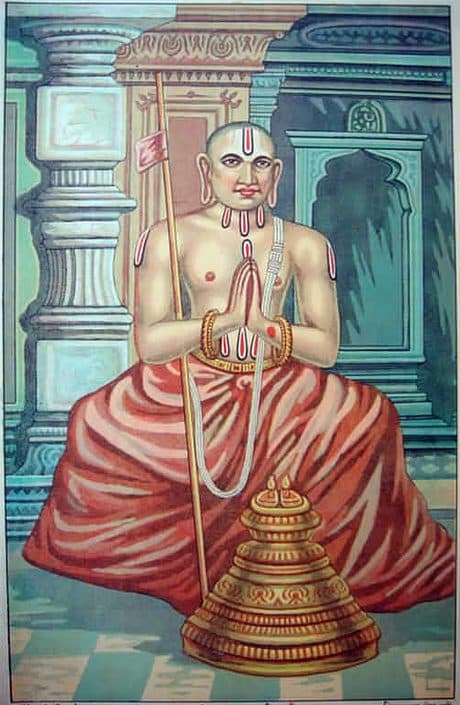
Rāmānuja · Viśiṣṭādvaita
EnglishOn verses 6.20–23
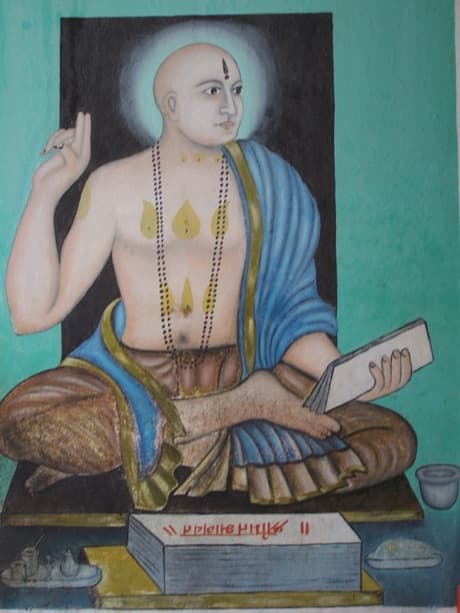
Madhvācārya · Dvaita
SanskritEnglishOn verses 6.21–6.22
“तत्त्वतः भगवद्गुपात् |” — तत्त्वतः means in form of supreme Lord.

Jñāneśvar · Vārkarī
English22 "Gaining which, no other gain does he deem higher than that, and steadies, wherein, he is not shaken by even a heavy calamity; (369)
The mind is not then shaken, even mountains of misery bigger than even Meru, are to crash down on its person, nor does that mind which is reposing in the Supreme bliss of the essence of the Self, get awakened in the least, even if cleaved with a weapon or if the body falls into fire; when the mind is thus merged in the essence of the Self, it does not even care to look in the direction of the body. It forgets the pains and pleasures of the body, having secured the unique Self-bliss.
Swami Ramsukhdas · Modern
English'Yaṁ labdhvā cāparaṁ lābhaṁ manyate nādhikaṁ tataḥ'—When a person, expects more happiness in something else, than what he possesses, there is every possibility of his reverting to that. A man, wants to attain Supreme Bliss, or infinite bliss, and he runs after sleep, indolence and heedlessness, the tāmasika joys. But he abandons these, because he feels that the joy derived from the contact of the senses with their objects is more pleasant than this one. He abandons it, also when he feels that Sāttvika joy which is born by placidity of mind, by meditation on God, is superior to it. He abandons it too, when he feels, the Supreme Bliss. There is no greater bliss than this. By gaining this, he has nothing else to seek, because there is no gain, greater than this.
'Yasminsthito na duḥkhena guruṇāpi vicālyate'—A man, may also abandon something, if it results in affliction in spite of its gain. A man, may abandon an attempt to achieve a goal, if he feels that there is some danger. But here Lord Kṛṣṇa, says that a Yogī having been established in the Supreme Bliss, cannot be shaken even by the greatest suffering. If he is hanged or his limbs are broken to pieces, or his body, is ground to powder between mill-stones or his skin is stripped off his body, or, his body is put into boiling oil, yet he is not shaken.
Why is he not shaken even by the greatest punishment? The reason, is that a Yogī established in the Supreme Bliss, has no body consciousness. So the harm inflicted on the body, does not affect him. He feels pain or affliction, only if he identifies himself with matter (Gītā 13/21). But, when he by breaking off his affinity, with matter, is established in the Supreme Bliss, of the self, afflictions or sufferings cannot have any access to him, and so he is not shaken even by the heaviest suffering.
**Appendix**—This verse is the touchstone for all disciplines. A striver following any discipline—Karmayoga, Jñānayoga, Dhyānayoga and Bhaktiyoga etc., should test himself on this touchstone. In order to know his state this verse is very useful for a striver. Every being has an aim to wipe out sufferings and to attain bliss. Therefore every striver should attain the state described in this verse. If this state has not been attained, it means that his spiritual discipline has not attained perfection. A striver may not discontinue his practice or he may regard his imperfection as perfection, so this verse should be the criterion.
A man can attain such a rare state—in which there is endless gain and there is not an iota of suffering but by indulging in accumulation and enjoyments he causes limitless harm to himself.
*Link:—Now in the next verse Lord Kṛṣṇa gives inspiration to gain that Supreme Bliss.*

Ādi Śaṅkarācārya · Advaita
Sanskritयं लब्ध्वा यं आत्मलाभं लब्ध्वा प्राप्य च अपरं अन्यत् लाभं लाभान्तरं ततः अधिकं अस्तीति न मन्यते न चिन्तयति । किञ्च, यस्मिन् आत्मतत्त्वे स्थितः दुःखेन शस्त्रनिपातादिलक्षणेन गुरुणा महता अपि न विचाल्यते ॥
``यत्रोपरमते'' (भ. गी. ६-२०) इत्याद्यारभ्य यावद्भिः विशेषणैः विशिष्ट आत्मावस्थाविशेषः योगः उक्तः --
Ādi Śaṅkarācārya · Advaita
Hindiजिस आत्मप्राप्तिरूप लाभको प्राप्त होकर उससे अधिक कोई दूसरा लाभ है ऐसा नहीं मानता, दूसरे लाभको स्मरण भी नहीं करता। एवं जिस आत्मतत्त्वमें स्थित हुआ योगी शस्त्राघात आदि बड़े भारी दुःखोंद्वारा भी विचलित नहीं किया जा सकता
Jñāneśvar · Vārkarī
Marathiमग मेरुपासूनि थोरें । देह दुःखाचेनि डोंगरे । दाटिजो पां परि भरें । चित्त न दटे ॥ ३६९ ॥
कां शस्त्रें वरी तोडिलिया । देह अग्निमाजीं पडलिया । चित्त महासुखीं पहुडलिया । चेवोचि नये ॥ ३७० ॥
ऐसें आपणपां रिगोनि ठाये । मग देहाची वास न पाहे । आणिकचि सुख होऊनि जाये । म्हणूनि विसरे ॥ ३७१ ॥
Jñāneśvar · Vārkarī
Hindi(6.369) फिर मेरु पर्वत से भी बड़े देह-दुःख का दबाव आ पड़े तो भी उस बोझ से उसका चित्त नहीं दबता।
(6.370) अथवा शस्त्र से देह काटा जाय, अथवा आग में फेंक दिया जाय, तो भी महासुख में सोया हुआ उसका चित्त जागृत नहीं होता।
(6.371) इस प्रकार वह निज में प्रवेश कर स्थिर हो रहता है। वह देह की बाट नहीं जोहता। वह दूसरे ही सुख से एकरूप हो जाता है, इसलिए देह को भूल जाता है।
Sri Udiya Baba · Modern
Hindiसंगति— अगले श्लोक में बतलाते हैं कि इस आत्मप्राप्ति रूप स्थिति को प्राप्त कर लेने पर फिर कुछ और पाने की इच्छा नहीं रहती। इस श्लोक में कहीं हुई स्थिति से उत्थान होने पर उसे कैसा लगता है इसका योगवासिष्ठ में बड़ा सुन्दर प्रसंग दिया है। कच जब सब ओर घूमने पर भी तृप्त नहीं हुआ तब वह अपने पिता वृहस्पति के पास आया। उनसे यह उपदेश सुनकर कि शब्दादि विषयों से वैराग्य हुए बिना ज्ञान नहीं होता और बिना ज्ञान हुए शान्ति नहीं होती, कच को समाधि हो गयी। उससे उत्थान होने पर कच को सम्पूर्ण सृष्टि मरुभूमि में प्रतीत होने वाले जल के समान प्रतीत होने लगी। उसे अनुभव हुआ कि यह सब मेरा ही स्वरूप है। मैं किसे त्यागूँ और किसे ग्रहण करूँ। त्याग-ग्रहण की इच्छा जो अविवेक-काल में होती है, बोध होने पर कर्तृत्व भोक्तृत्व की निवृत्ति होते ही नष्ट हो जाती है, इसलिए बोधवान् में त्याग या ग्रहण नहीं रहते। इस बात की पुष्टि श्लोक में की गयी है—
भावार्थ— जिस निरतिशय लाभ के प्राप्त होने पर जिज्ञासु उससे बढ़कर कोई और सुख नहीं मानता तथा जिसमें स्थित होने पर बहुत बड़े दुःख से भी [अपनी निष्ठा से] विचलित नहीं होता।
व्याख्या— आत्मा की प्राप्ति होने पर योग-सिद्धि या ब्रह्म लोकादि भी उससे अधिक नहीं जान पड़ते। आत्मानन्द में स्थिति होने पर बड़े से बड़े दुःख से भी विचलित नहीं होता। किसी भी प्रतिकूल परिस्थिति के आने पर वह घबराता नहीं, क्योंकि वह सभी को तुच्छ या मायिक अथवा अपना स्वरूप ही देखता है।
प्रश्न— स्वरूपस्थिति कब समझनी चाहिये।
उत्तर— जिस समय संकल्प होते ही स्वरूप की स्मृति हो जाय। जो ऐसे लक्षण से सम्पन्न है वही वास्तव में योगी है। यहाँ बोध का प्रसंग है। योगी समाधिस्थ होने पर दुःख से चलायमान नहीं होता, परन्तु बोधवान् समाधि न होने पर भी अडिग रहता है, क्योंकि उसकी विवेकवती वृत्ति निरन्तर जगी रहती है। इसलिये सुख-दुःख उसे चलायमान नहीं कर सकते।
Swami Ramsukhdas · Modern
Hindi‘यं लब्ध्वा चापरं लाभं मन्यते नाधिकं ततः’—मनुष्यको जो सुख प्राप्त है, उससे अधिक सुख दीखता है तो वह उसके लोभमें आकर विचलित हो जाता है। जैसे, किसीको एक घंटेके सौ रुपये मिलते हैं। अगर उतने ही समयमें दूसरी जगह हजार रुपये मिलते हों, तो वह सौ रुपयोंकी स्थितिसे विचलित हो जायगा और हजार रुपयोंकी स्थितिमें चला जायगा। निद्रा, आलस्य और प्रमादका तामस सुख प्राप्त होनेपर भी जब विषयजन्य सुख ज्यादा अच्छा लगता है, उसमें अधिक सुख मालूम देता है, तब मनुष्य तामस सुखको छोड़कर विषयजन्य सुखकी तरफ लपककर चला जाता है। ऐसे ही जब वह विषयजन्य सुखसे ऊँचा उठता है, तब वह सात्त्विक सुखके लिये विचलित हो जाता है और जब सात्त्विक सुखसे भी ऊँचा उठता है, तब वह आत्यन्तिक सुखके लिये विचलित हो जाता है। परन्तु जब आत्यन्तिक सुख प्राप्त हो जाता है, तो फिर वह उससे विचलित नहीं होता; क्योंकि आत्यन्तिक सुखसे बढ़कर दूसरा कोई सुख, कोई लाभ है ही नहीं। आत्यन्तिक सुखमें सुखकी हद हो जाती है। ध्यानयोगीको जब ऐसा सुख मिल जाता है, तो फिर वह इस सुखसे विचलित हो ही कैसे सकता है?
**‘यस्मिन्स्थितो न दुःखेन गुरुणापि विचाल्यते’**—विचलित होनेका दूसरा कारण है कि लाभ तो अधिक होता हो, पर साथमें महान् दुःख हो, तो मनुष्य उस लाभसे विचलित हो जाता है। जैसे, हजार रुपये मिलते हों, पर साथमें प्राणोंका भी खतरा हो, तो मनुष्य हजार रुपयोंसे
**परिशिष्ट भाव**—यह श्लोक सभी साधनोंकी कसौटी है। कर्मयोग, ज्ञानयोग, ध्यानयोग, भक्तियोग आदि किसी भी साधनसे यह कसौटी प्राप्त होनी चाहिये। अपनी स्थिति समझनेके लिये यह श्लोक साधकके लिये बहुत उपयोगी है। जीवमात्रका ध्येय यही रहता है कि मेरा दुःख मिट जाय और सुख मिल जाय। अतः इस श्लोकमें वर्णित स्थिति साधकमात्रको प्राप्त करनी चाहिये, अन्यथा उसकी साधना पूर्ण नहीं हुई। साधक बीचमें अटक न जाय, अपनी अधूरी स्थितिको ही पूर्ण न मान ले, इसके लिये उसको यह श्लोक सामने रखना चाहिये।
जिसमें लाभका तो अन्त नहीं और दुःखका लेश भी नहीं—ऐसा दुर्लभ पद मनुष्यमात्रको मिल सकता है! परन्तु वह भोग और संग्रहमें लगकर कितना अनर्थ कर लेता है, जिसका कोई पारावार नहीं!
**सम्बन्ध**—जिस सुखकी प्राप्ति होनेपर उससे अधिक लाभकी सम्भावना नहीं रहती और जिसमें स्थित होनेपर बड़ा भारी दुःख भी विचलित नहीं करता, ऐसे सुखकी प्राप्तिके लिये आगेके श्लोकमें प्रेरणा करते हैं।
Lord Krishna is revealing the superior meditation wherein as a result of dedicated effort one completely immerses their mind in the delight of spiritual transcendence,
wherein as the mind perceiving the ātma or soul receives the greatest satisfaction and contentment realising there is nothing else to be desired for,
wherein the consciousness experiences that sublime and ineffable bliss beyond the scope of the senses to comprehend, wherein once established one never for a moment has the desire to relinquish the exquisite bliss experienced,
wherein perfection of meditation is even once achieved one desires nothing else even in the times of not meditating,
and wherein once established whether immersed in meditation or on the way to perfection one does not become shaken by adversity or disturbed by afflictions even as grave and devastating as the premature death of a beloved family member,
One should learn this superior meditation which severs all connection with sorrow and misery.
Knowing the intrinsic nature of meditation to be thus one should perform meditation with full trust and faith, free from all doubts with the mind happy and content.