

Bhagavad Gītā · Chapter 6 · Dhyāna Yoga
आरुरुक्षोर्मुनेर्योगं कर्म कारणमुच्यते
योगारूढस्य तस्यैव शमः कारणमुच्यते
ārurukṣormuneryogaṃ karma kāraṇamucyate|
yogārūḍhasya tasyaiva śamaḥ kāraṇamucyate||
Word meanings
योगम् = yoga
आरुरुक्षोः = desiring to climb to
मुनेः = of the contemplative sage
कर्म = action
कारणम् = the means
उच्यते = is said
तस्य, एव = of that same one, indeed
योगारूढस्य = of one established in yoga
शमः = stillness
कारणम् = the means
उच्यते = is said
Translation
To the contemplative soul who desires to climb to the heights of Karmayoga, disinterested action is spoken of as the stepping-stone; for the same man when he is established in Yoga, absence of all thoughts of the world is said to be the way to blessedness.
Commentary
The commentators seated around this verse
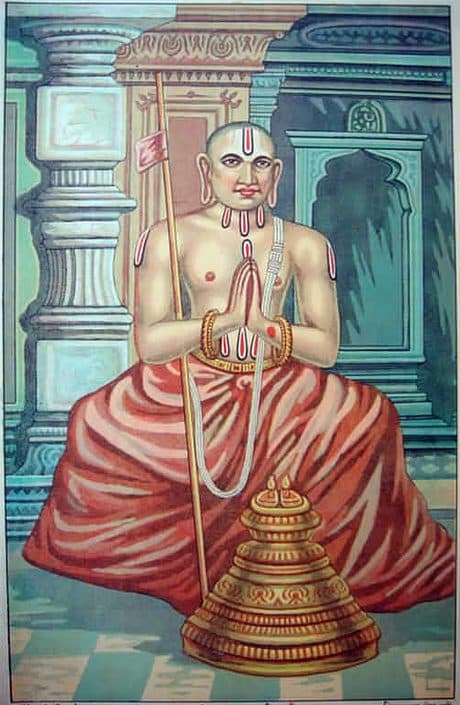
Rāmānuja · Viśiṣṭādvaita
English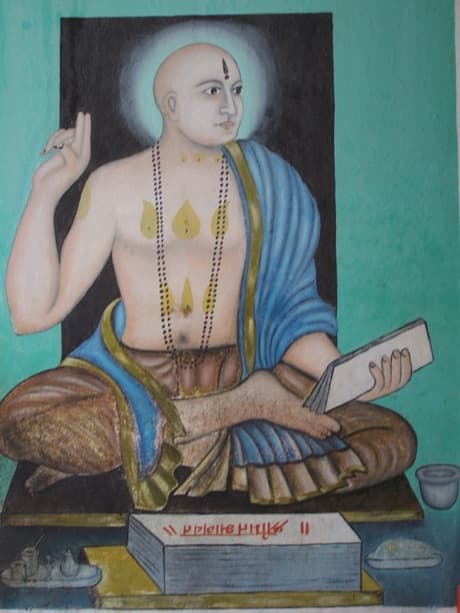
Madhvācārya · Dvaita
Madhva BhāṣyaSanskritEnglish“कियत्कालं कर्मकर्तव्यम् इत्याह – आरुक्षोमनि इति | योगमारुक्षोः उपायसम्पूर्तिमिच्छोः | योगारूढस्य सम्पूर्णोपायस्य | अपरोक्षज्ञानिन इत्यर्थः | कारणम् परमसुखकारणम् | अपरोक्षज्ञानिनोऽपि समाध्यादिफलमुक्तम् | तस्य सर्वोपमशेन समाधिरेव कारणं प्राधान्येनेत्यर्थः | तथाऽपि यदा भोक्तव्योपरमस्तदैव सम्यगसम्प्रज्ञातसमाधिर्जायते | अन्यदा तु भगवच्चरितादौ स्थितिः |” - How long should actions be performed? By fulfilling the performing the intended actions. For one who desires fulfillment, the very performance of action is the ultimate communion. Supra-sensory wisdom verily is the consequential-fruit, that is the meaning. That is the supreme pleasure. For the one experiencing supra-sensory wisdom there is deliverance from all the fruits of equanimous intelligence. By elimination of all those the state equanimous intelligence primarily becomes established, this is the meaning. Even then when the praarabdha (consequential) karmas are being experienced, then all comprehensive and conscious equanimous intellect is said to come about. During the rest of the time one is expected to abide in activities pertaining to the Lord.
तच्चोक्तं – “ये त्वां पश्यन्ति भगवस्त्व एव सुखिनः परम् | तेपामेव सम्यक् तु समाधिर्जायते नृणाम् | भोक्तव्यकर्मयक्षिणे जपेन कथयाऽपि वा | वर्तयन्ति माहात्मानस्त्वदभक्तास्त्वत्परायणः || इति ||” - O Lord, only those who have perceived You, they alone experience supreme happiness. They alone have equanimous intellect. With praarabdha Karmas eliminated, those who are superior souls and ever devoted to you they spend their time in recitation or listening to your deeds, thus has been spoken.
Madhvācārya · Dvaita
Gītā Tātparya NirṇayaSanskritEnglish“सम्पूर्णोपायो योगारूढः |” - The comprehensive means (for liberation) is abidance in equanimity. “नानाजनस्य सुश्रुषा कर्मख्या करवन्मितेः | योगार्थिना तु सा कार्या योगस्थेन हरी स्थितः || तेनापि स्वात्मानां तु कार्याऽन्यैरखिलेष्वपि | शक्तिः करणीयेति विशेषोऽसिद्धसिद्धयोः || प्राप्तोपायस्तु सिद्धः स्यात् प्रेष्युः साधक उच्यते | तस्य प्राण्युपकारेण सन्तुष्टो भवतीश्वरः || सिद्धोपायेन विष्णोस्तु ध्यानव्याख्यार्चनादिकम् | कार्ये नान्यत् तस्य तेन तुष्टो भवति केशवः || इति प्रवृत्तवचनान् विरोधः ||” - (As in the case of) collection of the taxes, diverse people are required to perform diverse activities, योगार्थी is one who desires equanimity. Those who are equanimous in intellect in performing their action abide in Sri Hari. Even from them service is expected according to the totality of work. The performance according to their ability determines, in particular, success or non-success. The one who acquires the same is called the qualified. The one who ever tries are called the aspirant. His becoming useful to creatures makes the Lord pleased. The qualified one pleases Sri Vishnu through meditation, speech, worship etc. There is no other work for him. By performance of these actions alone, Keshava becomes pleased with him, thus according to Pravritti text.
“शमो मन्निष्ठता बुद्धेर्दम इन्द्रियनिग्रहः | इति भागवते ||” - There is no contradiction here. Serenity, abidance of mind in intellect, self-control and restraint of senses, thus, in Bhagavat Puraana.
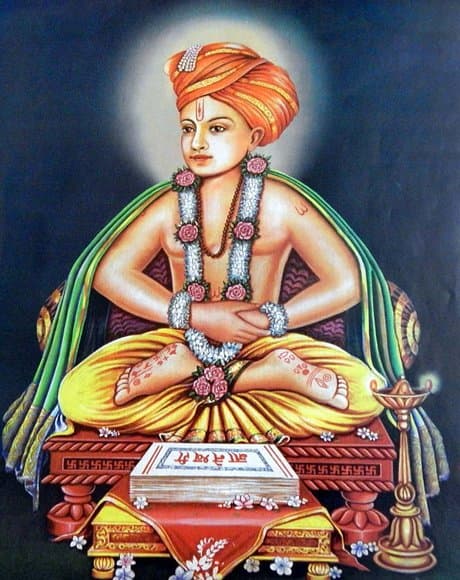
Jñāneśvar · Vārkarī
English3 "While the aspirant is scaling the (ladder of) Yoga (each antecedent equanimous) action is said to be the mark and means (unto the final goal of perfect equanimity): (and) *after the same person has achieved the ascent, the ensuing peaceful mood is said to be the mark and means (for retaining what he has gained).* (54)
Should one be desirous of reaching the top of the uphill path of the Yoga, he must not leave off the step-stones on the path of actions. With the help of these steps he should direct his course to the foot-path of the Yogic-postures along the foot of the mountain in the form of self-restraint and comprehensive self-governance (यमनियम). He should then ascend to the top of the precipice in the form of regulating the breath (प्राणायाम). There he is confronted with a steep precipice in the form of restraining the senses from their objects, which is so slippery that even the intellect cannot fix or make firm its foot on it. Here the Hathayogins even lose their balance and get themselves precipitated downwards. But with the constant study and practice, the nails of ascetism could get fixed up in the over-hanging way to the restraint of the senses referred to, and in this way could be reached the wide region in the form of the abstraction of the mind, along the plateau in the form of breath. This same region should be passed through until the point of profound and abstract contemplation is reached. Here ends that way and also ceases to exist one's clinging to actions, as the end and the means meet here in an embrace and become one in form. Here ends all talk of taking a step further, while past remembrances get obliterated and the Yogin abides steady on the clear and even ground of enrapt concentration of spiritual meditation. I shall now narrate to you the marks of one, who has reached the highest position, through rapt concentration of spiritual meditation by these means and hear about them.
Swami Ramsukhdas · Modern
English'Ārurukṣormuneryogaṁ karma kāraṇamucyate'—He, who desires to rise to the heights of Yoga (equanimity), action without motive, is spoken of as the means. Every human being, who is born, nourished and is living his life has been dependent on others. All his possessions, body, senses, mind, intellect and ego all are evolutes of nature. Therefore, till he through these does not render service to others, he will not rise to the height of Karmayoga, or in other words, he will not attain equanimity. It means, that a man should discharge his duty, by rendering service to others with all his means, because whatever means (including his body, senses, mind, intellect and ego) he possesses, belong to society; and all the things have identity with the world, not with the self. By rendering service to others, the flow of actions, will be directed towards the world, and man himself will attain equanimity. The same fact, has been explained, by Lord Kṛṣṇa (in Gītā 4/23), 'He, who performs actions, for the welfare of others, his actions melt away viz., do not lead him to bondage.' And, in Gītā 3/9 He declares, 'Man is bound by actions, other than those performed for the sake of sacrifice viz., he is bound, when he performs these with a selfish motive.'
How is action without motive, the means to rise to the heights of Karmayoga (equanimity)? The answer is, that our equanimity will be judged, only when we perform actions. While performing actions if we aim to remain equanimous, in pleasure and pain, it means that our action, is the means to rise to the height of Yoga, otherwise not.
'Yogārūḍhasya tasyaiva śamaḥ kāraṇamucyate'—Affinity for the unreal, causes disquietude, because the Self is eternal and permanent, while all the worldly objects such as bodies etc., are transient and kaleidoscopic. But when the Self accepts his affinity with them and foresees their destruction or they actually perish, he becomes disquiet. But, if he utilizes them in rendering
service to others, his affinity breaks off, he rises to heights of Yoga and attains, tranquillity. If he enjoys that tranquillity, it will delay his progress. But, if he does not get attached to it, and does not enjoy it, that tranquillity becomes the means of his God-realization.
**Appendix**—The striver who desires to attain to the height of Karmayoga (equanimity), action without motive is said to be the means; and the serenity thus attained, is the means to God-realization. It means that an action is not the means to attain God but serenity attained by renouncing affinity for actions, is the reason. This serenity is a means rather than an end.
When actions are performed discriminately, attachment (impetus) to actions is wiped out, because actions have no power to wipe out attachment but through discrimination it is possible. He, who desires to attain to the height of Karmayoga, performs all actions discriminately. When discrimination develops, then a striver realizes helplessness in the fulfilment of his desire and feels a lack (shortage) in its unfulfilment. No one wants dependence and shortage but a man does not get rid of these two by having a desire.
Having attained to the height of Karmayoga, a striver should not be pleased because this pleasure will arrest his progress and so God-realization will be delayed (Gītā 14/6). As a boy takes interest in games and sports, but when he grows up, he starts taking interest in earning money, then his taste for play is naturally wiped out. Similarly until God is realized, a striver relishes serenity. But if he does not relish that serenity and becomes indifferent to it, his relish is naturally wiped out and very soon he realizes God.
To attain to the height of yoga, action is the means viz., while performing actions for the welfare of others without any selfish motive, a striver gets detached from all actions etc., then he attains to the height of yoga. Actions come to an end but
yoga (equanimity) ever persists.
A Karmī (Bhogī) performs actions and a Karmayogī also performs actions but there is a vast difference in their aims. The former performs actions to satisfy his desire, while the latter performs actions in order to renounce attachment. A 'Bhogī' (pleasure-seeker) works for himself while a Karmayogī works for others. Therefore though both are equal as far as performance of actions with attachment is concerned, yet the striver who works for others in order to renounce attachment, attains to the height of yoga. A yogī's equanimity will be judged only when he performs actions without attachment 'vṛddhā nārī pativratā' (an old woman is chaste).
What has been called 'Śama' (serenity) here, the same has been called 'prasāda' (placidity or purity of mind) (Gītā 2/64). If a striver does not take delight in this serenity, he attains everlasting peace (Supreme Bliss) (Gītā 6/15). Renunciation of the fruit of action leads to supreme peace (Gītā 12/12). If a striver does not take delight in peace (serenity), he attains uninterrupted relish (Self-realization) and if he is not satisfied with 'akhaṇḍa rasa' (unbroken relish), he attains infinite Bliss (supreme love).
Link:—What are the marks of a Yogī who has risen to the heights of Karmayoga? The explanation, comes in the next verse.
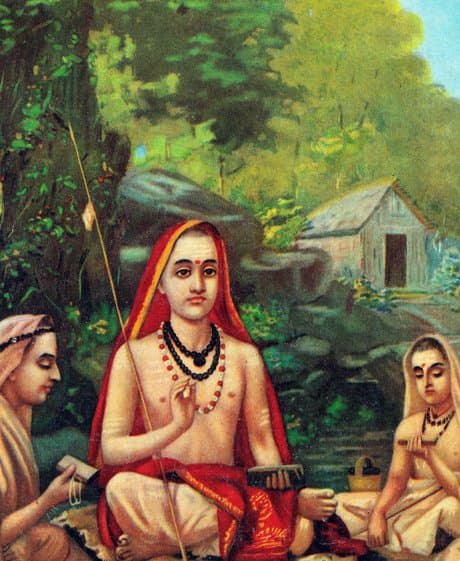
Ādi Śaṅkarācārya · Advaita
Sanskritआरुरुक्षोः आरोढुमिच्छतः, अनारूढस्य, ध्यानयोगे अवस्थातुमशक्तस्यैवेत्यर्थः । कस्य तस्य आरुरुक्षोः ? मुनेः, कर्मफलसन्न्यासिन इत्यर्थः । किमारुरुक्षोः ? योगम् । कर्म कारणं साधनं उच्यते । योगारूढस्य पुनः तस्यैव शमः उपशमः सर्वकर्मभ्यो निवृत्तिः कारणं योगारूढस्य साधनं उच्यते इत्यर्थः । यावद्यावत् कर्मभ्यः उपरमते, तावत्तावत् निरायासस्य जितेन्द्रियस्य चित्तं समाधीयते । तथा सति स झटिति योगारूढो भवति । तथा चोक्तं व्यासेन --''नैतादृशं ब्राह्मणस्यास्ति वित्तं यथैकता समता सत्यता च । शीलं स्थितिर्दण्डनिधानमार्जवं ततस्ततश्चोपरमः क्रियाभ्यः'' (मो. ध. १७५-३७) इति ॥ अथेदानीं कदा योगारूढो भवति इत्युच्यते --
Ādi Śaṅkarācārya · Advaita
Hindiफलेच्छासे रहित जो कर्मयोग है वह ध्यानयोगका बहिर्गुण साधन है, इस उद्देश्यसे उसकी संन्यासरूपसे स्तुति करके अब यह भाव दिखलाते हैं कि कर्मयोग ध्यानयोगका साधन है—
जो ध्यानयोगमें आरूढ़ नहीं—ध्यानयोगमें स्थित नहीं रह सकता है, ऐसे योगारूढ़ होनेकी इच्छावाले मुनि अर्थात् कर्मफलत्यागी पुरुषके लिये ध्यानयोगपर आरूढ़ होनेका साधन 'कर्म' बतलाया गया है ।
तथा वही जब योगारूढ़ हो जाता है तो उसके लिये योगारूढ़ता (ध्यानयोगमें सदा स्थित रहनेका) साधन शम—उपशम यानी 'सर्व कर्मोंसे निवृत्त होना' बतलाया गया है ।
(मनुष्य) जितना-जितना कर्मोंसे उपरत होता जाता है, उतना-उतना ही उस परिश्रमरहित जितेन्द्रिय पुरुषका चित्त समाहित होता जाता है । ऐसा होनेसे वह झटपट योगारूढ़ हो जाता है ।
व्यासजीने भी यही कहा है कि 'ब्राह्मणके लिये दूसरा ऐसा कोई धन नहीं है, जैसा कि एकता, समता, सत्यता, शील, स्थिति, अहिंसा, आर्जव और उन-उन क्रियाओंसे उपराम होना है'
Jñāneśvar · Vārkarī
Marathiआतां योगाचळाचा निमथा । जरी ठाकावा आथि पार्था । तरी सोपाना या कर्मपथा । चुका झणीं ॥ ५४ ॥
येणें यमनियमाचेनि तळवटें । रिगे असनाचिये पाउलवाटें । येई प्राणायामाचेनि आडकंठें । वरौता गा ॥ ५५ ॥
मग प्रत्याहाराचा आधाडा । बुध्दीचियाहि पाया निसरडा । जेथ हटिये सांडिती होडा । कडेलग ॥ ५६ ॥
तरी अभ्यासाचेनि बळें । प्रत्याहारीं निराळें । नखी लागेल ढाळें ढाळें । वैराग्याची ॥ ५७ ॥
ऐसा पवनाचेनि पाठारें । येतां धारणेचेनि पैसारें । क्रमी ध्यानाचें चवरें । सांडे तंव ॥ ५८ ॥
मग तया मार्गाची धांव । पुरेल प्रवृत्तीचि हांव । जेथ साध्यसाधना खेंव । समरसें होय ॥ ५९ ॥
जेथ पुढील पैस पारुखे । मागील स्मरावें तें ठाके । ऐसिया सरिसीये भूमिके । समाधी राहे ॥ ६० ॥
येणें उपायें योगारूढु । जो निरवधि जाहला प्रौढु । तयाचिया चिन्हांचा निवाडु । सांगेन आइकें ॥ ६१ ॥
Jñāneśvar · Vārkarī
Hindi(6.54) अब हे पार्थ! यदि योगरूपी पर्वत के शिखर पर पहुँचना हो तो यह कर्ममार्गरूपी जीना मत छोड़ो।
(6.55) इस मार्ग के द्वारा यम-नियमरूपी आधारभूमि पर से आसनरूपी पगडण्डी पकड़ कर प्राणायाम की कगार से ऊपर चढ़ो।
(6.56) फिर प्रत्याहार मध्यभाग है, जहाँ बुद्धि के भी पैर फिसलते हैं और जिसका आक्रमण करते समय हठयोगी भी गिरने के डर से अपनी प्रतिज्ञाओं का परित्याग कर देते हैं,
(6.57) तथापि अभ्यास के बल से उस प्रत्याहार के निरालम्ब आकाश में भी धीरे-धीरे वैराग्य का आश्रय प्राप्त हो जावेगा।
(6.58) इस प्रकार वायुरूप घोड़े पर सवार हो धारणा के मार्ग से चलते रहो जब तक कि ध्यान की सीमा के पार न निकल जाओ। (6.59) तब फिर इस मार्ग से चलना बन्द हो जावेगा। प्रवृत्ति की इच्छा भी बन्द हो जावेगी। ब्रह्मानन्द की एकता प्राप्त होने से साध्य और साधन एक में मिल जावेंगे।
(6.60) आगे चलना बन्द हो जावेगा और पिछला स्मरण भी रुक जावेगा। ऐसी समान भूमिका पर समाधि लग जावेगी।
(6.61) इस उपाय से योगारूढ़ हो जो अत्यन्त प्रबुद्ध हो जाता है उसके लक्षणों का हम निर्णय करते हैं, सुनो।
Sri Udiya Baba · Modern
Hindiसंगति— अब जिज्ञासु और जीवन्मुक्त के कर्म कहते हैं—
भावार्थ— योगारूढ़ होने की इच्छा वाले मुनि के लिये निष्काम कर्म ही करना कहा है और जो योगारूढ़ है उसके लिये शम ही कर्तव्य कहा जाता है।
व्याख्या— ‘मुनि’ बोधवान् को कहते हैं। परन्तु यहाँ जिज्ञासु को ही मुनि कहा है, क्योंकि उसका ध्येय भी ज्ञानप्राप्ति ही है। निष्काम कर्म तथा निष्काम उपासना से अन्तःकरण शुद्ध होकर जिज्ञासा होती है और तब महावाक्य द्वारा ज्ञान होता है। जिज्ञासा होने पर आगे ज्ञान तो हो ही जायगा, अतः वह भावी (भविष्य में होने वाला) मुनि ही है। इसी से उसे ‘मुनि’ कहा है। बोध या भगवत्साक्षात्कार शुद्ध अन्तःकरण वाले को ही होता है, केवल शास्त्रादि अध्ययन करने वाले को नहीं। किन्तु जिसे बोध प्राप्त हो गया है उसे कर्म करने की आवश्यकता नहीं है, क्योंकि कर्म तो बोध प्राप्ति के लिये ही किये जाते हैं। हाँ, वह लोकसंग्रह के लिये भले ही कर्म करे।
‘शम’ शब्द का अर्थ है नाम-रूप का बाध करके आत्मा में स्थित होना। ‘शम’ शब्द समाधि का वाचक है अतः निरन्तर आत्मकारवृत्ति रखना ही शम है। ऐसे महापुरुष की चलते-फिरते, खाते-पीते निरन्तर शान्तवृत्ति रहनी चाहिये।
इसका तात्पर्य यह है कि तत्त्ववेत्ता सदा निवृत्तिपरायण ही होते हैं, बोध होने पर शम की ही मुख्यता रहती है। इसमें श्रुति-स्मृति सभी एक मत हैं। कहा भी है—
न पाणिपादचपलो न नेत्रचपलो यतिः। न वाक्चपलश्चैव शिष्टस्यैतद्धि लक्षणम्॥
अर्थात्—यति के हाथ, पैर, नेत्र कुछ भी चंचल नहीं होने चाहिये और न वाणी ही चंचल होनी चाहिये। यही शिष्ट पुरुष का लक्षण है।
Swami Ramsukhdas · Modern
Hindi'आरुरुक्षोर्मुनेर्योगं कर्म कारणमुच्यते'— जो योग-(समता-) में आरूढ होना चाहता है, ऐसे मननशील योगीके लिये (योगारूढ होनेमें) निष्कामभावसे कर्तव्य-कर्म करना कारण है। तात्पर्य है कि करनेका वेग मिटानेमें प्राप्त कर्तव्य-कर्म करना कारण है; क्योंकि कोई भी व्यक्ति जन्मा है, पला है और जीवित है तो उसका जीवन दूसरोंकी सहायताके बिना चल ही नहीं सकता। उसके पास शरीर, इन्द्रियाँ, मन, बुद्धि और अहमूतक कोई ऐसी चीज नहीं है, जो प्रकृतिकी न हो। इसलिये जबतक
वह इन प्राकृत चीजोंको संसारकी सेवामें नहीं लगाता, तबतक वह योगारूढ नहीं हो सकता अर्थात् समतामें स्थित नहीं हो सकता; क्योंकि प्राकृत वस्तुमात्रकी संसारके साथ एकता है, अपने साथ एकता है ही नहीं।
प्राकृत पदार्थोंमें जो अपनापन दीखता है, उसका तात्पर्य है कि उनको दूसरोंकी सेवामें लगानेका दायित्व हमारेपर है। अतः उन सबको दूसरोंकी सेवामें लगानेका भाव होनेसे सम्पूर्ण क्रियाओंका प्रवाह संसारकी तरफ हो जायगा और वह स्वयं योगारूढ हो जायगा। यही बात भगवान्ने दूसरी
जगह अन्वय-व्यतिरेक रीतिसे कही है कि यज्ञके लिये अर्थात् दूसरोंके हितके लिये कर्म करनेवालोंके सम्पूर्ण कर्म लीन हो जाते हैं अर्थात् किंचिन्मात्र भी बन्धनकारक नहीं होते (गीता—चौथे अध्यायका तेईसवाँ श्लोक) और यज्ञसे अन्यत्र अर्थात् अपने लिये किये गये कर्म बन्धनकारक होते हैं (गीता—तीसरे अध्यायका नवाँ श्लोक)।
योगारूढ़ होनेमें कर्म कारण क्यों हैं? क्योंकि फलकी प्राप्ति-अप्राप्तिमें हमारी समता है या नहीं, उसका हमारेपर क्या असर पड़ता है—इसका पता तभी लगेगा, जब हम कर्म करेंगे। समताकी पहचान कर्म करनेसे ही होगी। तात्पर्य है कि कर्म करते हुए यदि हमारेमें समता रही, राग-द्वेष नहीं हुए, तब तो ठीक है; क्योंकि वह कर्म 'योग'में कारण हो गया। परन्तु यदि हमारेमें समता नहीं रही, राग-द्वेष हो गये; तो हमारा जड़ताके साथ सम्बन्ध होनेसे वह कर्म 'योग'में कारण नहीं बना।
**'योगारूढ़स्य तस्यैव शमः कारणमुच्यते'—** असत् के
**परिशिष्ट भाव—**योगारूढ़ होनेकी इच्छावाले साधकके लिये योगारूढ़ होनेमें निष्कामभावसे कर्म करना कारण है और उससे प्राप्त होनेवाली शान्ति परमात्मप्राप्तिमें कारण है। तात्पर्य है कि परमात्मप्राप्तिमें कर्म कारण नहीं हैं, प्रत्युत कर्मोंके सम्बन्ध-विच्छेदसे होनेवाली शान्ति कारण है। यह शान्ति साधन है, सिद्धि नहीं।
विवेकपूर्वक कर्म करनेसे ही कर्मोंका राग (वेग) मिटता है, क्योंकि राग मिटानेकी शक्ति कर्ममें नहीं है, प्रत्युत विवेकमें है। जिसकी योगारूढ़ होनेकी लालसा है, वह सब कर्म विवेकपूर्वक ही करता है। विवेक तब विकसित होता है, जब साधक कामनाकी पूर्तिमें परतन्त्रताका और अपूर्तिमें अभावका अनुभव करता है। परतन्त्रता और अभावको कोई नहीं चाहता, जबकि कामना करनेसे ये दोनों ही नहीं छूटते।
योगारूढ़ अवस्थामें राजी नहीं होना है, क्योंकि राजी होनेसे साधक वही अटक जायगा, जिससे परमात्मप्राप्ति होनेमें बहुत समय लग जायगा (गीता—चौदहवें अध्यायका छठा श्लोक)। जैसे, पहले बालककी खेलमें रुचि रहती है। परन्तु बड़े होनेपर जब उसकी रुचि रूपयोंमें हो जाती है, तब खेलकी रुचि अपने-आप मिट जाती है। ऐसे ही जबतक परमात्मप्राप्तिका अनुभव नहीं हुआ है, तबतक उस शान्तिमें रुचि रहती है अर्थात् शान्ति बहुत बढ़िया मालूम देती है। परन्तु उस शान्तिका उपभोग न किया जाय, उससे उपराम हो जायें तो उसकी रुचि अपने-आप मिट जाती है और बहुत जल्दी परमात्मप्राप्तिका अनुभव हो जाता है।
योगारूढ़ होनेमें कर्म करना कारण है अर्थात् निःस्वार्थभावसे दूसरोंके हितके लिये कर्म करते-करते जब सबका वियोग हो जाता है, तब साधक योगारूढ़ हो जाता है। कर्मोंकी समाप्ति हो जाती है और योग नित्य रहता है।
कर्मों (भोगी) भी कर्म करता है और कर्मयोगी भी कर्म करता है, पर उन दोनोंके उद्देश्यमें बड़ा भारी अन्तर रहता है। एक आसक्ति रखनेके लिये अथवा कामनापूर्तिके लिये कर्म करता है और एक आसक्तिका त्याग करनेके लिये कर्म करता है। भोगी अपने लिये कर्म करता है और कर्मयोगी दूसरोंके लिये कर्म करता है। अतः आसक्तिपूर्वक कर्म करनेमें समान होनेपर भी जो आसक्ति-त्यागके उद्देश्यसे दूसरोंके लिये कर्म करता है, वह योगी (योगारूढ़) हो जाता है। कर्म करनेसे ही योगीकी पहचान होती है, अन्यथा 'वृद्धा नारी पतिव्रता'!
यहाँ जिसको 'शम' (शान्ति) कहा गया है, उसीको दूसरे अध्यायके चौसठवें श्लोकमें 'प्रसाद' (अन्तःकरणकी प्रसन्नता) कहा गया है। इस शान्तिमें रमण न करनेसे 'निर्वाणपरमा शान्ति' की प्राप्ति होती है (गीता—छठे अध्यायका पन्द्रहवाँ श्लोक)। त्यागसे शान्ति मिलती है (गीता—बारहवें अध्यायका बारहवाँ श्लोक)। शान्तिमें रमण न करनेसे अखण्डरस (तत्त्वज्ञान) मिलता है और अखण्डरसमें भी सन्तोष न करनेसे अनन्तरस (परमप्रेम) मिलता है।
सम्बन्ध—योगारूढ़ कौन होता है—इसका उत्तर आगेके श्लोकमें देते हैं।
Karma yoga or prescribed Vedic activities are the the means for ascending in spiritual knowledge and achieving renunciation in a quest for ātma tattva or realisation of the soul, explained by Lord Krishna.
But once a person has actually achieved renunciation and is securely situated then the cessation of activities is the rule and meditation, introspection and reflection becomes the means for attaining ātma tattva.
Exactly when one is considered to be well established and securely situated in dhyāna yoga or the science of the individual consciousness attaining communion with the ultimate consciousness by meditation is described next.