

Bhagavad Gītā · Chapter 6 · Dhyāna Yoga
सुखमात्यन्तिकं यत्तद्बुद्धिग्राह्यमतीन्द्रियम्
वेत्ति यत्र न चैवायं स्थितश्चलति तत्त्वतः
sukhamātyantikaṃ yattadbuddhigrāhyamatīndriyam|
vetti yatra na caivāyaṃ sthitaścalati tattvataḥ||
Word meanings
यत् = which
सुखम् = happiness
आत्यन्तिकम् = absolute
अतीन्द्रियम् = beyond the senses
बुद्धिग्राह्यम् = graspable by the intellect
तत् = that (bliss)
यत्र = where
वेत्ति = knows
च = and
स्थितः = established
अयम् = this one
तत्त्वतः = in truth
एव = indeed
न, चलति = does not waver
Translation
Nay, in which the soul experience the eternal and supersensuous job which can be apprehended only through the subtle and purified intellect, and wherein established the said Yogi moves not from Truth on any account.
Commentary
The commentators seated around this verse
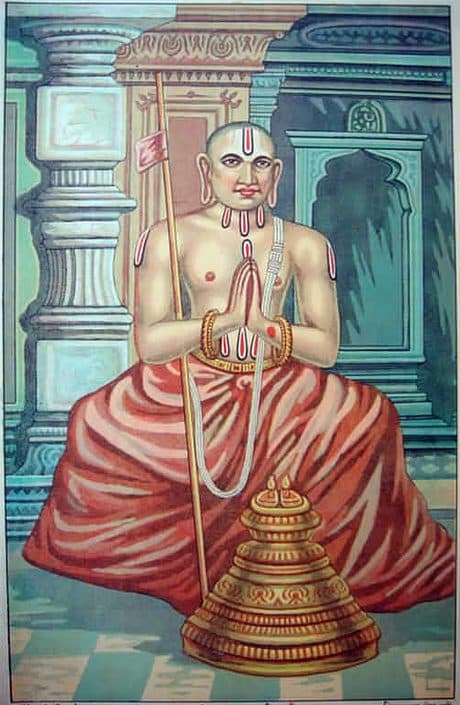
Rāmānuja · Viśiṣṭādvaita
EnglishOn verses 6.20–23
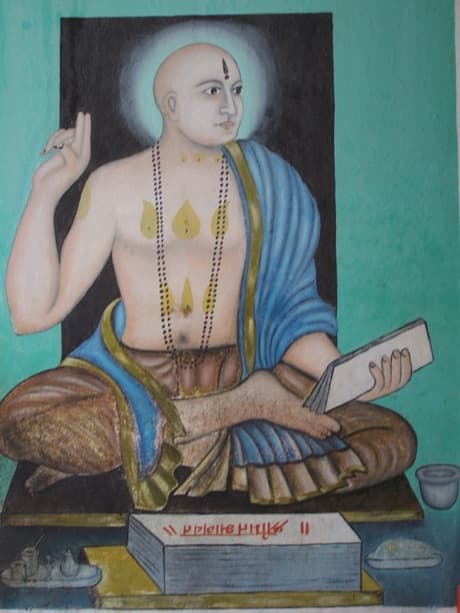
Madhvācārya · Dvaita
SanskritEnglishOn verses 6.21–6.22
“तत्त्वतः भगवद्गुपात् |” — तत्त्वतः means in form of supreme Lord.
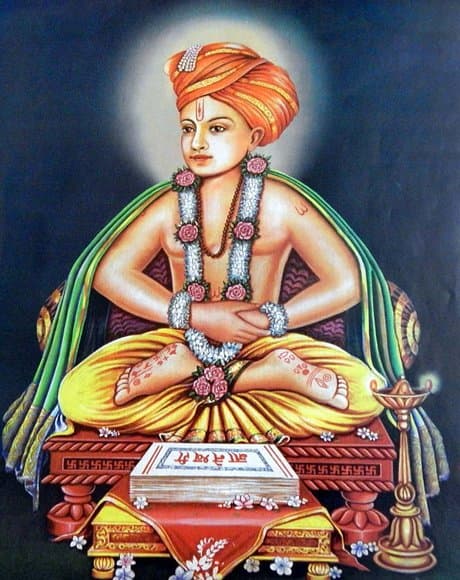
Jñāneśvar · Vārkarī
EnglishOn verses 6.20–6.21
20 “Wherein the mind, held under restraint by the practice of Yogic discipline, ceases functioning, and wherein, by his own self seeing the Self within his own self, he finds contentment:
21 “Wherein, that paramount bliss that there exists—beyond the reach of senses, and to be grasped by intellect alone—he realises; nor does he, once steadied, swerve from the Reality; (364)
Therefore, the practising of the ‘Yoga’ Discipline, on a firm seat as indicated, will (alone) secure an effective restraint over the senses, since the mind enters into the form of the Supreme Self, only when the senses get restrained through the practice of ‘Yoga’ Discipline. Then it returns from there and turns its back on it (the self) and looks at its own Self and identifies it to be just the same as the Supreme Self. With such identification, it enjoys permanent bliss, with the result, that the mind automatically becomes one with the Supreme Spirit of the Self. It becomes absorbed in that, beyond which there is nothing and which is beyond the reach of the senses and it abides in Self-bliss in its own Self.
Swami Ramsukhdas · Modern
English'Sukhamātyantikam yat'—The bliss which a Yogī feels, is infinite and there cannot be any bliss greater than this because it transcends the three attributes (modes) and is axiomatic. This bliss, has been called an imperishable bliss (5/21), infinite bliss (6/28) and absolute bliss (14/27).
This bliss, has been called infinite here, because, it is superior to Sāttvika joy, which is born of placidity of mind by meditation, on God. This infinite bliss, is not born, but it is unborn and axiomatic.
'Atindriyam'—This supreme bliss, transcends sensual pleasures. It means, that it is superior to rājasika joy, which is derived from the contact of senses with their objects. It is beyond our
power, to obtain rājasika joy because it is beyond our power to obtain individual's desired sense-objects. So, we are dependent to obtain these, while there is no such dependence in attaining infinite bliss. That can be felt in the self by one's own self. In attaining it you don't require any individual, any sense-object and even your mind and senses. You are quite free in having it by your own self.
'Buddhigrāhyam'—It means, that it is superior to the tāmasika joy, which arises from sleep, indolence and carelessness. A man derives joy from sound sleep, but in sound sleep, his mind is merged. Joy is also derived from indolence and heedlessness but at that time mind is not awake and discrimination is lost. But in infinite bliss, the mind is not merged, nor is discrimination lost. It is beyond the access of intellect, being an evolute of matter, while bliss, is the characteristic of the Self, which is beyond matter.
Thus in this verse, it has been explained that the supreme bliss, is far superior to the sāttvika, rājasika and tāmasika joy, and it transcends all the three modes.
'Vetti yatra na caivāyam sthitaścalati tattvataḥ'—A Yogī feels bliss in his own self, and established there, he does not move from reality viz., this bliss continues endlessly and spontaneously. When, the muslims imprisoned Śivājī's son, Saṃbhājī, made him blind and removed his skin off, to force him to embrace their religion, but he did not do so and thus he did not go astray and discard his religion. It means, that nothing can force a person to move away from his beliefs. When no force, makes a person to change his beliefs, how can anyone force a Yogī to deviate from supreme bliss, or how can he himself abandon that supreme bliss? He cannot.
It means, that a man never moves from Supreme Bliss, because it is a characteristic of the Self (Soul). He changes only, when there is the least affinity with matter. Thus, by affinity for
matter, a man may have a fall, even from a trance. So long as, he has affinity for matter, his self cannot merge, in the Cosmic Self, because matter is always active.
**Appendix**—Having realized the self, a Dhyānayogī feels imperishable and integral bliss which is ātyantika (infinite) (supreme) viz., it is superior to Sāttvika joy; 'atindriyam' viz., it is superior to Rājasika joy and 'buddhigrāhya' viz., it is superior to Tāmasika joy.
When the Lord declares the imperishable bliss as 'buddhigrāhya' He does not mean that it can be intuited (attained) by intellect. The reason is that intellect is the evolute of Prakṛti, then how can it have an access to the bliss which transcends Prakṛti? Therefore the purpose in declaring it as 'buddhigrāhya' is that it is superior to Tāmasa joy. The joy, which is derived from sleep, indolence and carelessness, is Tāmasa (Gītā 18/39). In sound sleep intellect merges in ignorance; and in indolence and heedlessness, intellect does not remain fully awake. But in self-evident imperishable bliss, intellect does not merge in ignorance but remains fully awake—jñānadīpite' (Gītā 4/27). Therefore it has been called 'buddhigrāhya' because intellect remains awake but intellect has no access to it.
As in a mirror there is reflection of the sun, the sun is not there, similarly in the intellect there is reflection of that bliss, the bliss is not there; therefore it is called 'buddhigrāhya'.
It means that the integral bliss is far superior to Sāttvika, Rājasa and Tāmasa joy, it transcends them. In spite of being called as 'buddhigrāhya', it totally transcends intellect.
The self associated with the intellect (Prakṛti) is 'buddhigrāhya', not the pure Self. In fact the self cannot be attached to Prakṛti but he (self) assumes his attachment to Prakṛti—'yayedam dhāryate jagat' (Gītā 7/5).
*Link:—Why a Yogī, does not move from Reality, is described in the next verse.*
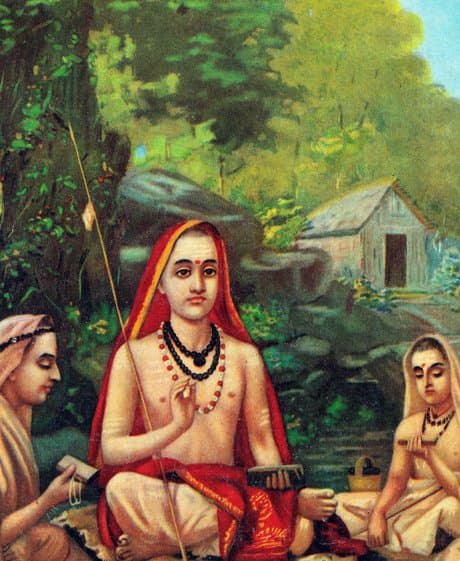
Ādi Śaṅkarācārya · Advaita
Sanskritसुखं आत्यन्तिकं अत्यन्तमेव भवति इत्यात्यन्तिकं अनन्तमित्यर्थः, यत् तत् बुद्धिग्राह्यं बुद्ध्यैव इन्द्रियनिरपेक्षया गृह्यते इति बुद्धिग्राह्यम् अतीन्द्रियं इन्द्रियगोचरातीतं अविषयजनितमित्यर्थः, वेत्ति तत् ईदृशं सुखमनुभवति यत्र यस्मिन् काले, न च एव अयं विद्वान् आत्मस्वरूपे स्थितः तस्मात् नैव चलति तत्त्वतः तत्त्वस्वरूपात् न प्रच्यवते इत्यर्थः ॥
किञ्च --
Ādi Śaṅkarācārya · Advaita
Hindiजो सुख अत्यन्त यानी अन्तसे रहित—अनन्त है, जो इन्द्रियोंकी कुछ भी अपेक्षा न करके केवल बुद्धिसे ही ग्रहण किया जानेयोग्य है, जो इन्द्रियोंकी पहुँचसे अतीत है यानी जो विषयजनित सुख नहीं है, ऐसे सुखको यह योगी जिस कालमें अनुभव कर लेता है, जिस कालमें अपने स्वरूपमें स्थित हुआ यह ज्ञानी उस तत्त्वसे—वास्तविक स्वरूपसे चलायमान नहीं होता—विचलित नहीं होता
Jñāneśvar · Vārkarī
MarathiOn verses 6.20–6.21
म्हणोनि आसनाचिया गाढीका । जो आम्ही अभ्यासु सांगितला निका । तेणे होईल तरी हो कां । निरोधु यया ॥ ३६४ ॥
एऱ्हवी तरी येणें योगें । जै इद्रिंया विंदाण लागे । तै चित्त भेटों रिगे । आपणपेयां ॥ ३६५ ॥
परतोनि पाठिमोरें ठाके । आणि आपणियांते आपण देखे । देखतखेवों वोळखे । म्हणे तत्त्व हें मी ॥ ३६६ ॥
तिये ओळखीचिसरिसें । सुखाचिया साम्राज्यीं बैसे । मग चित्तपण समरसें । विरोनि जाय ॥ ३६७ ॥
जयापरतें आणिक नाहीं । जयातें इद्रिंयें नेणती कहीं । तें आपणचि आपुलिया ठायीं । होऊनि ठाके ॥ ३६८ ॥
Jñāneśvar · Vārkarī
HindiOn verses 6.20–6.21
(6.364) इसलिए हमने जो आसन की दृढ़ता सहित उत्तम अभ्यास बताया है उससे इन इन्द्रियों का निरोध — हो सका तो — होगा।
(6.365) सामान्यतः इस योग से ज्योंही इन्द्रियों का निग्रह होता है त्योंही चित्त आत्मस्वरूप की भेंट के लिए प्रवृत्त होता है,
(6.366) पीछे पलट कर ठहरता है, और आप अपनी ही ओर देखता है तो देखते ही पहचान जाता है कि यह तत्व मैं ही हूँ।
(6.367) पहचानते ही वह सुख के साम्राज्य पर बैठता है और फिर अपनी एकता में विलीन हो जाता है।
(6.368) और, जिसके परे और कुछ नहीं है, जिसे इन्द्रियाँ कभी नहीं जानती, वह वस्तु स्वयं आप ही हो रहता है।
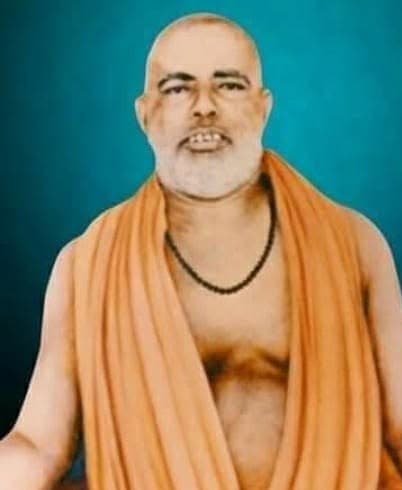
Sri Udiya Baba · Modern
Hindiसंगति— अब अगले श्लोक में उपरोक्त श्लोक की ही पुष्टि करते हैं—
भावार्थ— उस समय वह उस आत्यन्तिक सुख का अनुभव करता है जो सूक्ष्म बुद्धि से ग्राह्य होता है और इन्द्रियों से परे है तथा जिसमें स्थित होने पर यह स्वरूप से विचलित नहीं होता।
व्याख्या— आत्यन्तिक सुख—जो सुख विषय-सुख से विलक्षण है। अथवा जो सुख-दुःख दोनों को त्यागकर चिन्मात्र रूप से स्थित होने से मिलता है। जिस सुख को योग में स्थित हुआ पुरुष इस रूप में अनुभव करता है कि इन्द्रियग्राह्य नहीं, अपितु शुद्धबुद्धिग्राह्य है। अध्याय-३[ श्लोक-४२ ] में उसे 'यों बुद्धेः परतस्तु सः' कहकर बुद्धि से अतीत बतलाया है और यहाँ उसे बुद्धिग्राह्य कहा है। अतः वहाँ व्यावहारिक बुद्धि समझनी चाहिये और यहाँ शुद्धबुद्धि। इस प्रकार जो व्यावहारिक बुद्धि से अतीत है वही शुद्धबुद्धि से ग्राह्य है। यहाँ अभ्यग्न का प्रकरण है, इसलिये जो निर्विकल्प समाधि का सुख है उसी को बुद्धिग्राह्य कहा गया है। जिस सुख को बुद्धि और इन्द्रियाँ दोनों
ग्रहण करें वह विषयजनित सुख होता है। यहाँ 'अतीन्द्रियम्' विशेषण दिया गया है, इसलिये यह विषय-सुख नहीं हो सकता।
Swami Ramsukhdas · Modern
Hindi‘सुखमात्यन्तिकं यत्’—ध्यानयोगी अपने द्वारा अपने-आपमें जिस सुखका अनुभव करता है, प्राकृत संसारमें उस सुखसे बढ़कर दूसरा कोई सुख हो ही नहीं सकता और होना सम्भव ही नहीं है। कारण कि यह सुख तीनों गुणोंसे अतीत और स्वतःसिद्ध है। यह सम्पूर्ण सुखोंकी आखिरी हद है—‘सा काष्ठा सा परा गतिः’। इसी सुखको अक्षय सुख (पाँचवें अध्यायका इक्कीसवाँ श्लोक), अत्यन्त सुख (छठे अध्यायका अट्ठाईसवाँ श्लोक) और ऐकान्तिक सुख (चौदहवें अध्यायका सत्ताईसवाँ श्लोक) कहा गया है।
इस सुखको यहाँ ‘आत्यन्तिक’ कहनेका तात्पर्य है कि यह सुख सात्त्विक सुखसे विलक्षण है। कारण कि सात्त्विक सुख तो परमात्मविषयक बुद्धिकी प्रसन्नतासे उत्पन्न होता है (गीता—अठारहवें अध्यायका सैंतीसवाँ श्लोक); परन्तु यह आत्यन्तिक सुख उत्पन्न नहीं होता, प्रत्युत यह स्वतःसिद्ध अनुत्पन्न सुख है।
‘अतीन्द्रियम्’—इस सुखको इन्द्रियोंसे अतीत बतानेका तात्पर्य है कि यह सुख राजस सुखसे विलक्षण है। राजस सुख सांसारिक वस्तु, व्यक्ति, पदार्थ, परिस्थिति आदिके सम्बन्धसे पैदा होता है और इन्द्रियोंद्वारा भोगा जाता है। वस्तु, व्यक्ति आदिका प्राप्त होना हमारे हाथकी बात नहीं है और प्राप्त होनेपर उस सुखका भोग उस विषय (वस्तु, व्यक्ति आदि) के ही अधीन होता है। अतः राजस सुखमें पराधीनता है। परन्तु आत्यन्तिक सुखमें पराधीनता नहीं है। कारण कि आत्यन्तिक सुख इन्द्रियोंका विषय नहीं है।
इन्द्रियोंकी तो बात ही क्या है, वहाँ मनकी भी पहुँच नहीं है। यह सुख तो स्वयंके द्वारा ही अनुभवमें आता है। अतः इस सुखको अतीन्द्रिय कहा है।
‘बुद्धिग्राह्यम्’—इस सुखको बुद्धिग्राह्य बतानेका तात्पर्य है कि यह सुख तामस सुखसे विलक्षण है। तामस सुख निद्रा, आलस्य और प्रमादसे उत्पन्न होता है। गाढ़ निद्रा-(सुषुप्ति) में सुख तो मिलता है, पर उसमें बुद्धि लीन हो जाती है। आलस्य और प्रमादमें भी सुख होता है, पर उसमें बुद्धि ठीक-ठीक जाग्रत् नहीं रहती तथा विवेकशक्ति भी लुप्त हो जाती है। परन्तु इस आत्यन्तिक सुखमें बुद्धि लीन नहीं होती और विवेकशक्ति भी ठीक जाग्रत् रहती है। पर इस आत्यन्तिक सुखको बुद्धि पकड़ नहीं सकती; क्योंकि प्रकृतिका कार्य बुद्धि प्रकृतिसे अतीत स्वरूपभूत सुखको पकड़ ही कैसे सकती है?
यहाँ सुखको आत्यन्तिक, अतीन्द्रिय और बुद्धिग्राह्य बतानेका तात्पर्य है कि यह सुख सात्त्विक, राजस और तामस सुखसे विलक्षण अर्थात् गुणातीत स्वरूपभूत है।
‘वेत्ति यत्र न चैवायं स्थितश्चलति तत्त्वतः’—ध्यानयोगी अपने द्वारा ही अपने-आपके सुखका अनुभव करता है और इस सुखमें स्थित हुआ वह कभी किंचिन्मात्र भी विचलित नहीं होता अर्थात् इस सुखकी अखण्डता निरन्तर स्वतः बनी रहती है। जैसे, मुसलमानोंने धोखेसे शिवाजीके पुत्र संभाजीको कैद कर लिया और उनसे मुस्लिम-धर्म स्वीकार करनेके लिये कहा। परन्तु जब संभाजीने उसको स्वीकार नहीं किया, तब मुसलमानोंने
उनकी आँखें निकाल लीं, उनकी चमड़ी खींच ली, तो भी वे अपने हिन्दूधर्मसे किंचिन्मात्र भी विचलित नहीं हुए। तात्पर्य यह निकला कि मनुष्य जबतक अपनी मान्यताको स्वयं नहीं छोड़ता, तबतक उसको दूसरा कोई छुड़ा नहीं सकता। जब अपनी मान्यताको भी कोई छुड़ा नहीं सकता, तो फिर जिसको वास्तविक सुख प्राप्त हो गया है, उस सुखको कोई कैसे छुड़ा सकता है और वह स्वयं भी उस सुखसे कैसे विचलित हो सकता है? नहीं हो सकता।
मनुष्य उस वास्तविक सुखसे, ज्ञानसे, आनन्दसे कभी
चलायमान नहीं होता—इससे सिद्ध होता है कि मनुष्य सात्त्विक सुखसे भी चलायमान होता है; उसका समाधिसे भी व्युत्थान होता है। परन्तु आत्यन्तिक सुखसे अर्थात् तत्त्वसे वह कभी विचलित और व्युत्थित नहीं होता; क्योंकि उसमें उसकी दूरी, भेद, भिन्नता मिट गयी और अब केवल वह-ही-वह रह गया। अब वह विचलित और व्युत्थित कैसे हो? विचलित और व्युत्थित तभी होता है, जब जड़ताका किंचिन्मात्र भी सम्बन्ध रहता है। जबतक जड़ताका सम्बन्ध रहता है, तबतक वह एकरस नहीं रह सकता; क्योंकि प्रकृति सदा ही क्रियाशील रहती है।
**परिशिष्ट भाव**—स्वरूपका अनुभव होनेपर ध्यानयोगीको उस अविनाशी, अखण्ड सुखकी अनुभूति हो जाती है, जो 'आत्यन्तिक' अर्थात् सात्त्विक सुखसे विलक्षण, 'अतीन्द्रिय' अर्थात् राजस सुखसे विलक्षण और 'बुद्धिग्राह्य' अर्थात् तामस सुखसे विलक्षण है।
अविनाशी सुखको 'बुद्धिग्राह्य' कहनेका तात्पर्य यह नहीं है कि वह बुद्धिकी पकड़में आनेवाला है। कारण कि बुद्धि तो प्रकृतिका कार्य है, फिर वह प्रकृतिसे अतीत सुखको कैसे पकड़ सकती है? इसलिये अविनाशी सुखको बुद्धिग्राह्य कहनेका तात्पर्य उस सुखको तामस सुखसे विलक्षण बतानेमें ही है। निद्रा, आलस्य और प्रमादसे उत्पन्न होनेवाला सुख तामस होता है (गीता—अठारहवें अध्यायका उनतालीसवाँ श्लोक)। गाढ़ निद्रा-(सुषुप्ति) में बुद्धि अविद्यामें लीन हो जाती है और आलस्य तथा प्रमादमें बुद्धि पूरी तरह जाग्रत् नहीं रहती। परन्तु स्वतःसिद्ध अविनाशी सुखमें बुद्धि अविद्यामें लीन नहीं होती, प्रत्युत पूरी तरह जाग्रत् रहती है—'ज्ञानदीपिते' (गीता ४। २७)। अतः बुद्धिकी जागृतिकी दृष्टिसे ही उसको 'बुद्धिग्राह्य' कहा गया है। वास्तवमें बुद्धि वहाँतक पहुँचती ही नहीं।
जैसे दर्पणमें सूर्य नहीं आता, प्रत्युत सूर्यका बिम्ब आता है, ऐसे ही बुद्धिमें वह अविनाशी सुख नहीं आता, प्रत्युत उस सुखका बिम्ब आभास आता है, इसलिये भी उसको 'बुद्धिग्राह्य' कहा गया है।
तात्पर्य यह हुआ कि स्वयंका अखण्ड सुख सात्त्विक, राजस और तामस सुखसे भी अत्यन्त विलक्षण अर्थात् गुणातीत है। उसको बुद्धिग्राह्य कहनेपर भी वास्तवमें वह बुद्धिसे सर्वथा अतीत है।
बुद्धियुक्त (प्रकृतिसे मिला हुआ) चेतन ही बुद्धिग्राह्य है, शुद्ध चेतन नहीं। वास्तवमें स्वयं प्रकृतिसे मिल सकता ही नहीं, पर वह अपनेको मिला हुआ मान लेता है—'ययेदं धार्यते जगत्' (गीता ७। ५)।
सम्बन्ध—ध्यानयोगी तत्त्वसे चलायमान क्यों नहीं होता—इसका कारण आगेके श्लोकमें बताते हैं।
Lord Krishna is revealing the superior meditation wherein as a result of dedicated effort one completely immerses their mind in the delight of spiritual transcendence,
wherein as the mind perceiving the ātma or soul receives the greatest satisfaction and contentment realising there is nothing else to be desired for,
wherein the consciousness experiences that sublime and ineffable bliss beyond the scope of the senses to comprehend, wherein once established one never for a moment has the desire to relinquish the exquisite bliss experienced,
wherein perfection of meditation is even once achieved one desires nothing else even in the times of not meditating,
and wherein once established whether immersed in meditation or on the way to perfection one does not become shaken by adversity or disturbed by afflictions even as grave and devastating as the premature death of a beloved family member,
One should learn this superior meditation which severs all connection with sorrow and misery.
Knowing the intrinsic nature of meditation to be thus one should perform meditation with full trust and faith, free from all doubts with the mind happy and content.