

Bhagavad Gītā · Chapter 6 · Dhyāna Yoga
योगी युञ्जीत सततमात्मानं रहसि स्थितः
एकाकी यतचित्तात्मा निराशीरपरिग्रहः
yogī yuñjīta satatamātmānaṃ rahasi sthitaḥ|
ekākī yatacittātmā nirāśīraparigrahaḥ||
Word meanings
अपरिग्रहः = without possessions
निराशीः = free from desire
यतचित्तात्मा = with mind and self controlled
योगी = a yogī
एकाकी = alone
रहसि = in solitude
Translation
Living in seclusion all by himself, the Yogi who has controlled his mind and body, and is free from desires and void of possessions, should constantly engage his mind in meditation.
Commentary
The commentators seated around this verse
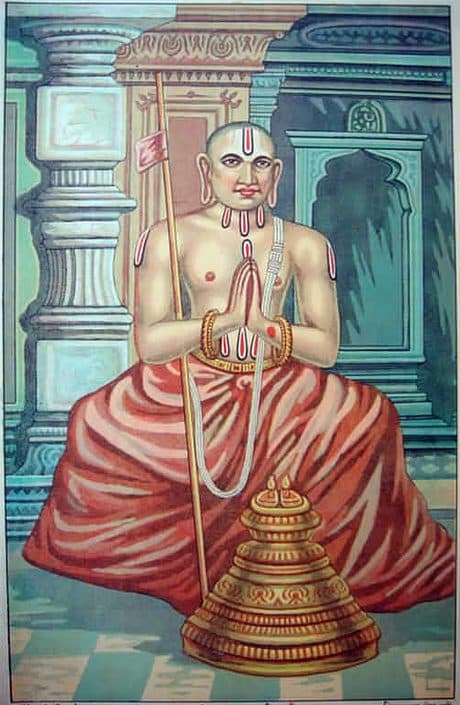
Rāmānuja · Viśiṣṭādvaita
English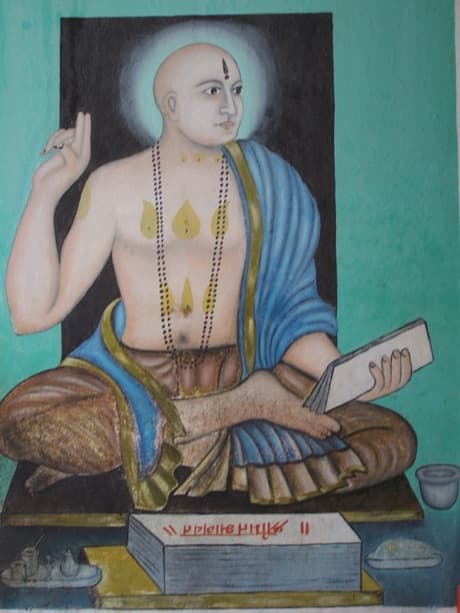
Madhvācārya · Dvaita
SanskritEnglishOn verses 6.10–6.11
“समाधियोगप्रकारमाह - योगी युज्जित इत्यादिना | युज्जित समाधियोगं कुर्यात् | आत्मानम् मनः |” - In this verse Sri Krishna speaks योग the process of Equanimity. युज्जित means ever persevering in meditation etc. आत्मानम् means in the mind.
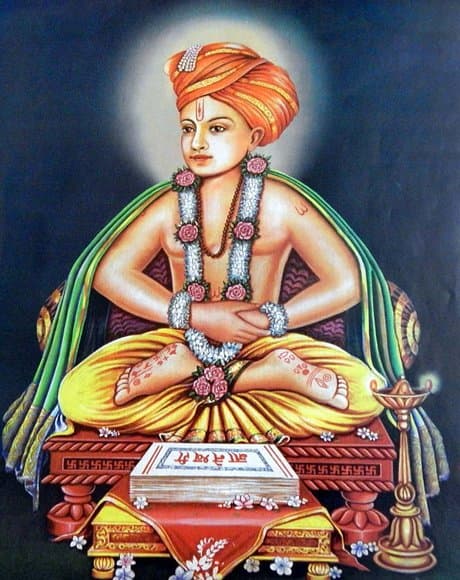
Jñāneśvar · Vārkarī
English10 "The man of Discipline should continually exercise his self, abiding in sequestered spot, all alone with controlled mind and body, rid of all cravings and divested of all attachments. (105)
One in whom dawns the never-setting Sun of the eternal undivided Being abides forever steadied in the true being of the absolute Self, O Pārtha, he is the Soul the one without a second, who experiences real being of things as undivided unity, since pervading entirely all the three worlds, he himself abides free from all the paraphernalia of individual selfish possessions. In this way, Lord Krishna extolled the visible marks which show the perfect one, and in doing this the Lord showed the perfect one's glory to be even greater than his own divine glory. (Lord Krishna further went on), 'The Yogin is the very elect among the seers, nay, the very light of their vision, and the very Almighty Power whose will brings the universe into being. The fine literary garment of the Vedic lore woven in the marketplace of 'Omkār', falls short adequately to clothe his glory: the power of his light moves the Sun and the Moon in their daily rounds and so the universe will be reduced to inert mass of dead matter without his brilliance. Not only this, but the wide sky looks small by the side of the vast glory of the name of the Yogin. How will you (then) be able to grasp individually each one of his best qualities? Enough therefore of this praise of the perfect one: I do not myself realise whose marks I was extolling and why I avail myself of this occasion to narrate these qualities. Were I to disclose clearly to you the Brahman-lore, which wipes out clean the very last trace of plural existence, that would put an end to the very sweet experience in the idea of Arjuna being my darling. This talk of mine is not thus a true account of the real, undivided, unitary experience; but there is left some loophole in it, the motive being that my mind should have a little separate existence to be able to enjoy the happiness of your love and devotion. Alas! how I wish that evil eye (हृष्ट) of those that are hankering after release and are lost in meditation of the form 'I am myself the Brahman' does not pollute and snap, the delicate tie of love between yourself and myself'. Lord Krishna thought, 'Should the I-ness in Arjuna vanish and he were to get one with the essence of my divine being as the result of this talk as the highest experience of the one undivided being, what could I, alone and single handed, do? Who else would be left, on seeing whom I could have peace of mind and with whom I could hold free talk, or whom I should hold in fond embrace? Were Arjuna to get absorbed in myself, with whom I could talk over the good things that may overflow my heart?' Overcome with such feelings, Lord Krishna on the pretext of talking on other topics of advice, while discoursing on the non-dual true being, attracted Arjuna's mind towards his own. This sort of description might be jarring to the ears of hearers, but it must be remembered that Arjuna was the very embodiment of the Divine Love and happiness of Lord Krishna. At this unique moment Lord Krishna found himself in the very enviable position of a barren old woman, who being blessed into a mother (at such too advanced a stage) dances with the pure joy of maternal love; certainly I could not have given such a description, had Lord Krishna's love for Arjuna, not burst in exuberance. Oh how wonderfully unique the situation! There is the roar of violence and carnage of battle-field threatening to envelope the world! And in the midst of it the high theme of divine experience rolls on and we see before us the dance of a doll of love incarnate! How else could one meet with pairs of opposites like love and shame, vice and exhaustion, waywardness and state of awakening? Where there is love, shame must make its exit, exhaustion must disappear where there is vice, while there could be no place for the state of awakening where there is waywardness. In short, Arjuna was the very repository of the Lord's love, or the mirror (reflecting) the interior of Lord Krishna's heart fully blown with happiness. Because of his great and holy merit, he became eligible like fertile soil into which was to be sown the seed of devotion through Lord Krishna's favour: or Arjuna was the very deity of the eighth kind of worship named 'Sakhya' (सख्य—fellowship or familiar intercourse) which lay at the foot of the 9th and last of the nine kinds of worship named 'Atmanivedana' (आत्मनिवेदन—consecration of one-self into). Arjuna was such a favourite of Lord Krishna, that He (Lord Krishna) permitted the singing of the praise of his servant Arjuna instead of his own praise being sung, although himself abiding close by. Just see, a loyal wife serves her husband with exclusive love, while the husband holds her in great honour. Is not such a loyal wife praised more than her husband? In that way I am led to praise Arjuna specially, since he alone possessed the merit of all the three worlds. The Supreme Lord, although formeless himself had to assume human form for the sake of his affection for Arjuna, to whom he had surrendered himself. (Thus) he, who was perfect by himself, was pursued by intense longing for Arjuna. Hearing all this the hearers said, 'What a luck for us? What unique excellence is stored in these words of secret meaning of beauty? Its elegance exceeds in sweetness even the melody of the seven notes in music. What a wonderful thing it is? This excellence and grandeur of words is hardly to be met with in the common man's tongue. See how in a discourse even on a (dry) subject like oneness of being, it spreads out a network of different colours in the form of diverse metaphors of exquisite art. Even in this Marathi language the moonlight of divine knowledge is shining all white, while the pleasant coolness in the form of mystic meaning is spread out all over, with the result that the lotuses in the form of the Gita-teachings show themselves in fully blown natural perfection'. The great import of the words made the saintly hearers full of desire and their souls became enrapt with internal bliss. Perceiving the state of the hearers the disciple of Nivritti said, 'Be attentive: what a wondrous glory! The Sun of Divine Krishna's grace has burst into a dawn of the morning for the Pāṇḍava family. Devakī bore Lord Krishna in her womb, Yeshodā brought him up with great exertions, and ultimately his divine personality happened to be at the service of the Pāṇḍavas! Luckily he (Arjuna) had neither to serve long nor to wait for a suitable occasion for making a request (to secure the Lord's favour). I now end this digression and proceed with the original story. Hearing Lord Krishna's talk, Pārtha said fondly 'None of the marks of a saint you talked of are found in me. In truth I feel myself unworthy of that task of securing even the first essentials of these marks, yet I shall (try to) be great and able to secure these through your words of grace. And I am certain I shall be the Supreme Brahman myself, should you will it to make me so; I shall act up to your words. When I praise the history (description) you narrated, without even knowing to whom it referred, there would be no limit to my happiness, were I myself to be like him (that person). Therefore, Oh you good Preceptor, do tell me about the path that should make me reach the level of this perfect person.' Lord Krishna smiled at this and said, 'Very well, I shall do as you desire! Indeed, so long as one does not live in the ecstasy of divine contentment, he must feel the hankering after happiness. Once he secures that contentment, there remains nothing wanting and nothing to be desired. Similarly, one who lives the life of devotion to the Supreme, easily reaches the state of absorption into the Brahman.' But see, how Arjuna's good luck has borne abundance of fruit. Words cannot describe the abundance of divine grace by which Arjuna had at his service the mighty power of the Supreme Being, whom a thousand lives of Indra and others could not bring nearer. God, Lord Krishna, fully heard what Arjuna said, asking to be transformed into the Supreme Being. Lord Krishna thought to himself, 'Since Pārtha is having an intense longing—similar to the longings of women particularly during the period of conception, for being likened unto the Supreme itself, in the womb of his intellect, renunciation is being conceived. Even though the fœtus of asceticism is not yet fully developed, yet with the advent of the spring season, it has overgrown with the blossom in the form of mental feeling that “I am the Supreme Brahman”, and consequently it would not take him long to bear the fruit in the form of the attainment of Supreme Brahman, since he has fully mastered the spirit of renunciation”. Thus Lord Krishna felt confident about Arjuna and thought that (now that he had attained perfection), whatever he (Arjuna) would think of, would in advance come to fruition and that any advice on the study of Yoga preached to him would not be fruitless. Thinking in this way Srihari then said, “Hear, O Arjuna, about the royal road to the study of Yoga. Here at the foot of the tree of activity can be seen bunches of fruit of absolute quiet and peace. It is the path of Yoga, on which even God Mahesha (God Shiva) is still a pilgrim. In the beginning many other Yogins went astray on wrong by-paths, but ultimately followed this well-trodden path after gaining experience. They left other ignorant misleading ones, and went straight by the way of self-realisation and reached the highest goal. After them the great sages followed the same course and reached perfection through the stage of seekers. Great seekers after ‘the Self’ attained greatness also by following the same course. One forgets even hunger and thirst, once he sees the royal road to the study of Yoga. There is no distinction of time such as day or night on this road. Wherever one sets his foot while proceeding along the road, there opens out a mine of liberation, and should there arise any obstacle in the way, at least the attainment of the heavenly bliss is guaranteed. One may move in any direction; his journey on the road is sure of being peaceful and unerring accomplishment, O Dhananjaya. Once one reaches the destination along this road, he himself becomes one with that place of destination and this need not be told to you, since you will come to know of it later on by personal experience.” Arjuna said on this, “Oh God, when that ‘later on’ would be? I want it. I am sinking in the ocean of ardent wish and should you not take me out?” Lord Krishna then said, “How do you talk so wildly? I am, of my own accord, going to tell it to you and yet you interrupt me and ask (questions)!”
Swami Ramsukhdas · Modern
English[Here Lord Kṛṣṇa is describing in detail, the Discipline of Meditation, which was referred to in brief, in the twenty-seventh
and twenty-eighth verses of the fifth chapter. Here, the word 'Yoga', which has been derived, from the root 'Yuj samādhau' means, controlling the activities of the mind.]
**'Aparigrahaḥ'**—Meditation, is practised by disinclination for the world, and inclination for God. For its practice, the first means to be adopted, is 'Aparigrahaḥ'. 'Aparigrahaḥ' means freedom from accumulation of possessions. Nothing, should be accumulated for one's pleasures, because mind is attracted towards possessions and pleasures, and so it cannot be engaged in meditation.
**'Nirāṣīḥ'**—It means, that a striver should not be free from outward prosperity and pleasures only, but also should get rid of desires and hopes for prosperity and pleasures, because these are all obstacles to God-realization. Therefore, a striver should always be aware of these desires and hopes.
**'Yatacittātmā'**—Even, by renouncing pleasures and prosperity, and also desire for them, there is possibility of attachment. Therefore, a striver should keep his body and mind under control. By controlling them, new attachment will not be aroused. The means to control them, is that no action should be performed being attached to it, because attachment leads a body to laziness and idleness, and senses, to pleasures, and mind, to the thought of pleasures and futile thinking.
**'Yogī'**—A Yogī, is one who is devoted to meditation, whose aim is only God-realization, rather than enjoyment and accomplishment.
**'Ekākī'**—A striver, should live alone, without any assistant, because in company he is likely to be engaged in conversation. In the absence of company because of attachment to him he is likely to be haunted by that. Thus he will not be able to meditate on God.
**'Rahasi sthitaḥ'**—A striver, should live in seclusion, on the banks of a river, or in a forest, or a temple, or a lonely room, meant for adoration and meditation only. The atmosphere, should
be such, that there is no hindrance in meditation.
**'Ātmānaṁ satataṁ yuñjita'**—Thus a striver, living alone in seclusion, as mentioned above, should concentrate his mind on God, with a firm determination to be engaged only, in meditation without having the least thought, of worldly affairs, whatsoever might happen. He, should be on the alert, because alertness is spiritual discipline.
A striver, should think of God, not only at the time of meditation, but also while performing other actions, without any attachment to these, because the thought of God, helps in meditation, while the thought of God in meditation, helps a striver in thinking of Him, during his mundane affairs. It means, that a striver should always remember that he is a striver viz., he should always remember God, and think of Him, even when he performs worldly actions. He should harbour, no thought of any worldly transaction, otherwise it will be a hindrance, in his meditation. Therefore, while sitting for meditation, he should have a firm resolve, that he has to meditate only on God, whatever may happen. By this resolve, it will be easy for him to meditate on God.
A striver has a complaint, that he cannot concentrate his mind, on God. The reason, is that he wants to concentrate his mind on God, without breaking off his affinity, for the world. Therefore, a striver should break off his affinity, for the world as it is this affinity or attachment, or a sense of mine, which influences the mind. Therefore, a striver can concentrate his mind and engage in meditation, by only having the aim of God-realization and being detached from all persons and things etc. If such detachment is not there, these will haunt his memory.
An Exceptional Fact
Initially, Arjuna was prepared to wage the war and he also got prepared at last. But, in between he thought that to wage
war was a sin. Thus, it was a question, of performing an action or not to perform it. So, it arose in the context of the Discipline of Action. But how other disciplines, such as of Knowledge, Devotion and Meditation were explained, in Gītā.
Arjuna retreats from the war, because he thinks that sin, would accrue to him, by killing his kinsmen. So he requests Lord Kṛṣṇa, to tell him what was good for him (2/7; 3/2; 5/1). Therefore, Lord Kṛṣṇa explains to him, the different means including gifts, rituals, penances, study of the Vedas and different kinds of disciplines leading to God-realisation. But, in all the means, Lord Kṛṣṇa has emphasized the fact that the aim to attain perishable things, is the main obstacle, to God-realization. If a striver, has only the aim of God-realization, and performs actions with equanimity those actions, would lead him to salvation or God-realization.
**Appendix—**Karmayoga,* Jñānayoga and Bhaktiyoga are the Karaṇanirapekṣa disciplines (independent of sense and other organs) but Dhyānayoga (the Discipline of Meditation) is a Karaṇasāpekṣa discipline (dependent on sense and other organs). Now the Lord starts the description of Dhyānayoga.
*Link:—In the previous verse, Lord Kṛṣṇa offered inspiration for meditation. Now, in the next three verses, He explains what sort of setting, one should have and what process he should undergo.*
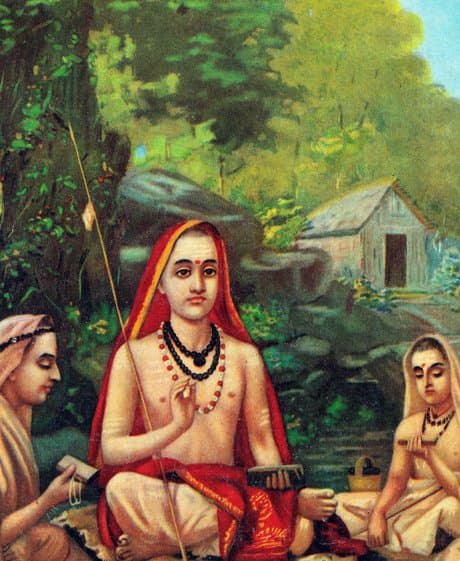
Ādi Śaṅkarācārya · Advaita
Sanskritयोगी ध्यायी युञ्जीत समादध्यात् सततं सर्वदा आत्मानं अन्तःकरणं रहसि एकान्ते गिरिगुहादौ स्थितः सन् एकाकी असहायः । ``रहसि स्थितः एकाकी च'' इति विशेषणात् सन्न्यासं कृत्वा इत्यर्थः । यतचित्तात्मा चित्तम् अन्तःकरणं आत्मा देहश्च संयतौ यस्य सः यतचित्तात्मा, निराशीः वीततृष्णः अपरिग्रहः परिग्रहरहितश्चेत्यर्थः । सन्न्यासित्वेऽपि त्यक्तसर्वपरिग्रहः सन् युञ्जीत इत्यर्थः ॥ अथेदानीं योगं युञ्जतः आसनाहारविहारादीनां योगसाधनत्वेन नियमो वक्तव्यः, प्राप्तयोगस्य लक्षणं तत्फलादि च, इत्यत आरभ्यते । तत्र आसनमेव तावत् प्रथममुच्यते --
Ādi Śaṅkarācārya · Advaita
Hindiअतः ऐसे उत्तम फलकी प्राप्तिके लिये—
ध्यान करनेवाला योगी अकेला—किसीको साथ न लेकर पहाड़की गुफा आदि एकान्त स्थानमें स्थित हुआ, निरन्तर अपने अन्तःकरणको ध्यानमें स्थिर किया करे।
‘एकान्त स्थानमें स्थित हुआ’ और ‘अकेला’ इन विशेषणोंसे यह भाव पाया जाता है कि संन्यास ग्रहण करके योगका साधन करे।
जिसका चित्त—अन्तःकरण और आत्मा—शरीर (दोनों) जीते हुए हैं ऐसा यतचित्तात्मा, निराशी—तृष्णाहीन और संग्रहरहित होकर अर्थात् संन्यासी होनेपर भी सब संग्रहका त्याग करके योगका अभ्यास करे
Jñāneśvar · Vārkarī
Marathiपुढती अस्तवेना ऐसें । जया पाहलें अद्वैतदिवसें । मग आपणपांचि आपण असे । अखंडित ॥ १०५ ॥
ऐसिया दृष्टी जो विवेकी । पार्था तो एकाकी । सहजें अपरिग्रही जो तिहीं लोकी । तोचि म्हणऊनि ॥ १०६ ॥
ऐसियें असाधारणें । निष्पन्नाचीं लक्षणें । आपुलेनि बहुवसपणें । श्रीकृष्ण बोले ॥ १०७ ॥
जो ज्ञानियांचा बापु । देखणेयांचे दिठीचा दीपु । जया दादुलयाचा संकल्पु । विश्व रची ॥ १०८ ॥
प्रणवाचिये पेठे । जाहलें शब्दब्रह्म माजिठें । तें जयाचिया यशा धाकुटें । वेढूं न पुरे ॥ १०९ ॥
जयाचेनि आंगीकें तेजें । आवो रविशशीचिये वणिजे । म्हणौनि जग हें वेसजे- । वीण असे तया ॥ ११० ॥
हां गा नांवचि एक जयाचें । पाहतां गगनही दिसे टांचे । गुण एकेक काय तयाचे । आकळशील तूं ॥ १११ ॥
म्हणोनि असो हें वानणें । सांगों नेणों कवणांची लक्षणें । दावावीं मिषें येणें । कां बोलिलों तें ॥ ११२ ॥
ऐकें द्वैताचा ठावोचि फेडी । ते ब्रह्मविद्या कीजेल उघडी । तरी अर्जुना पढिये हे गोडी । नासेल हन ॥ ११३ ॥
म्हणोनि तें तैसे बोलणें । नव्हे सपातळ आड लावणें । केलें मनचि वेगळवाणें । भोगावया ॥ ११४ ॥
जया सोहंभाव अटकु । मोक्षसुखालागोनि रंकु । तयाचिये दिठीचा झणें कळंकु । लागेल तुझिया प्रेमा ॥ ११५ ॥
विपायें अंहभाव ययाचा जाईल । मी तेंचि हो जरी होईल । तरी मग काय कीजेल । एकलेया ॥ ११६ ॥
दिठीचि पाहतां निविजे । कां तोंड भरोनि बोलिजे । नातरी दाटुनि खेंव दीजे । ऐसें कोण आहे ॥ ११७ ॥
आपुलिया मना बरवी । असमाई गोठी जीवीं । ते कवणेंसि चावळावी । जरी ऐक्य जाहलें ॥ ११८ ॥
इया काकुळती जनार्दनें । अन्योपदेशाचेनि हातासनें । बोलामाजि मन मनें । आलिंगुं सरले ॥ ११९ ॥
हें परिसतां जरी कानडें । तरी जाण पां पार्थ उघडें । कृष्णसुखाचेंचि रुपडें । वोतलें गा ॥ १२० ॥
हें असो वयसेचिये शेवटीं । जैसें एकचि विये वांझोटी । मग ते मोहाची त्रिपुटी । नाचों लागे ॥ १२१ ॥
तैसें जाहले अनंता । ऐंसे तरी मी न म्हणतां । जरी तयाचा न देखतां । अतिशयो एथ ॥ १२२ ॥
पाहा पां नवल कैसें चोज । कें उपदेशु केउतें झुंज । परी पुढें वालभाचे भोज । नाचत असे ॥ १२३ ॥
आवडी आणि लाजवी । व्यसन आणि शिणवी । पिसें आणि न भुलवी । तरी तेंचि काइ ॥ १२४ ॥
म्हणउनि भावार्थु तो ऐसा । अर्जुन मैत्रियेचा कुवासा । कीं सुखे श्रृंगारलिया मानसा । दर्पणु तो ॥ १२५ ॥
यावरी बाप पुण्यपवित्र । जगीं भक्तिबीजासि सुक्षेत्र । तो कृष्णकृपे पात्र । याचिलागीं ॥ १२६ ॥
हो का आत्मनिवेदनातळींची । जे पीठिका होय सख्याची । पार्थु अधिष्ठात्री तेथिंची । मातृका गा ॥ १२७ ॥
पासींचि गोसावी न वर्णिजे । मग पाइकाचा गुण घेईजे । ऐसा अर्जुने तो सहजें । पढिये हरी ॥ १२८ ॥
पाहां पां अनुरागें भजे । जे प्रियोत्तमें मानिजे । ते पतीहून काय न वर्णिजे । पतिव्रता ॥ १२९ ॥
तैसा अर्जुनचि विशेषें स्तवावा । ऐसें आवडलें मज जीवा । जे तो त्रिभुवनाचिया दैवां । एकायतनु जाहला ।। १३० ॥
जयाचिया आवडीचेनि पांगें । अमूर्तुही मूर्ति आवगे । पूर्णाहि परी लागे । अवस्था जयाची ॥ १३१॥
तंव श्रोते म्हणती दैव । कैसी बोलाची हवाव । काय नादातें हन बरव । जिणोनी आली ॥१३२॥
हां हो नवल नोहे देशी । मऱ्हाटी बोलिजे तरी ऐसी । वाणें उमटताहे आकाशीं । साहित्यरंगाचें ॥१३३॥
कैसें उन्मेखचांदिणें तार । आणि भावार्था पडे गार । हेचि श्लोकार्थकुमुदी तरी फार । साविया होती ॥१३४॥
चाडचि निचाडां करी । ऐसी मनोरथीं ये थोरी । तेणें विवळले अंतरी । तेथ डोलु आला ॥१३५॥
तें निवृत्तिदासें जाणितलें । मग अवधान द्या म्हणितलें ॥ नवल पांडवकुळीं पाहलें । कृष्णदिवसें ॥१३६॥
देवकीया उदरीं वाहिला। यशोदा सायासें पाळिला ॥ कीं शेखीं उपेगा गेला । पांडवासी ॥१३७॥
म्हणऊनि बहु दिवस वोगळावा । कां अवसरु पाहोनि विनवावा । हाही सोसु तया सदैवा । पडेचिना ॥१३८॥
हें असो कथा सांगें वेगीं । मग अर्जुन म्हणे सलगी । देवा इयें संतचिन्हें हन आंगीं । न ठकती माझां ॥१३९॥
एऱ्हवीं या लक्षणांचिया निजसारा । मी अपाडें कीर अपुरा । परि तुमचेनि बोलें अवधारा । थोरावें जरी ॥१४०॥
जी तुम्ही चित्त देयाल । तरी ब्रह्म मियां होईजेल । काय जाहलें अभ्यासिजेल । सांगाल जे ॥ १४१ ॥
हां हो नेणों कवणाची काहाणी । आइकोनि श्लाघत असों अंतःकरणीं । ऐसी जाहलेपणाची शिरयाणी । कायसी देवा ॥ १४२ ॥
हें आंगे म्या होइजो का । येतुलें गोसावी आपुलेपणें कीजो कां । तंव हांसोनि श्रीकृष्ण हो कां । करुं म्हणती ॥ १४३ ॥
देखा संतोषु एक न जोडे । तंवचि सुखाचें सैंघ सांकडें । मग जोडलिया कवणीकडे । अपुरें असे ।। १४४ ॥
तैसा सर्वेश्वरु बळिया सेवकें । म्हणोनि ब्रह्मही होय तो कौतुकें । परि कैंसा भारें आतला पिके । दैवाचेनि ॥ १४५ ॥
जो जन्मसहस्रांचियासाठीं । इंद्रादिकांही महागु भेटी । तो आधीनु केतुला किरीटी । जे बोलुहि न साहे ॥ १४६ ॥
मग ऐका जें पांडवें । म्हणितले ब्रह्म म्यां होआवें । तें अशेषही देवें । अवधारिलें ॥ १४७ ॥
तेथ ऐसेंचि एक विचारिलें । जे या ब्रह्मत्वाचे डोहळे जाहले । परि उदरा वैराग्य आहे आलें । बुध्दीचिया ॥ १४८ ॥
एऱ्हवीं दिवस तरी अपुरे । परि वैराग्यवसंताचेनि भरें । जे सोंहभाव महुरें । मोडोनि आला ॥ १४९ ॥
म्हणोनि प्राप्तिफळीं फळतां । यासि वेळु न लागेल आतां । हो विरक्तु ऐसा अंनता । भरंवसा जाहला ॥ १५० ॥
म्हणे जें जें हा अधिष्ठील। तें आरंभींच यया फळेल । म्हणौनि सांगितला न वचेल । अभ्यासु वायां ॥ १५१ ॥
ऐसें विवरोनियां श्रीहरी । म्हणितलें तिये अवसरीं । अर्जुना हा अवधारीं । पंथराजु ॥ १५२ ॥
तेथ प्रवृत्तितरुच्या बुडीं । दिसती निवृत्तिफळाचिया कोडी । जिये मार्गीचा कापडी । महेशु आझुनि ॥ १५३ ॥
पैं योगवृंदे वहिलीं । आडवीं आकाशीं निघालीं । कीं तेथ अनुभवाच्या पाउलीं । धोरणु पडिला ॥ १५४ ॥
तिहीं आत्मबोधाचेनि उजुकारें । धांव घेतली एकसरें । कीं येर सकळ मार्ग निदसुरे । सांडुनियां ॥ १५५ ॥
पाठीं महर्षी येणें आले । साधकांचे सिध्द जाहाले । आत्मविद थोरावले । येणेंचि पंथें ॥ १५६ ॥
हा मार्गु जैं देखिजे । तैं तहान भूक विसरिजे । रात्रिदिवसु नेणिजे । वाटे इये ॥ १५७ ॥
चालतां पाऊल जेथ पडे । तेथ अपवर्गाची खाणी उघडे । आव्हांटलिया तरी जोडे । स्वर्गसुख ॥ १५८ ॥
निगिजे पूर्वींलिया मोहरा । कीं येइजे पश्चिमेचिया घरा । निश्चळपणें धनुर्धरा । चालणें येथिंचें ॥ १५९ ॥
येणें मार्गें जया ठाया जाइजे । तो गांवो आपणचि होइजे । हें सांगो काय सहजें । जाणसी तूं ॥ १६० ॥
तेथ म्हणितलें देवा । तरी तेंचि मग केव्हां । कां आर्तीसमुद्रौनि न काढावा । बुडतु जी मी ॥ १६१ ॥
तवं श्रीकृष्ण म्हणती ऐसें । हें उत्संखळ बोलणें कायसें । आम्हीं सांगतसों आपैसें । वरि पुशिले तुवां ॥ १६२ ॥
Jñāneśvar · Vārkarī
Hindi(6.105) जिसे ऐसे अद्वैत रूपी दिन का उदय हुआ है कि जो पुनः कभी अस्त नहीं होता, और जो निरन्तर अपने आप में निमग्न रहता है,
(6.106) हे पार्थ! जो इस प्रकार विवेकी है वही अद्वितीय है, क्योंकि तीनों लोकों में वही है जो परिवार-रहित है।
(6.107) श्रीकृष्ण ने, जहाँ तक उनसे हो सका वहाँ तक, सिद्धों के इस प्रकार असाधारण लक्षण वर्णन किये
(6.108) और कहा कि जो सब ज्ञानियों में श्रेष्ठ है, जो देखनेवालों की दृष्टि का प्रकाशक है, जिस प्रभु के संकल्प से विश्व की रचना होती है,
(6.109) ओंकाररूपी हाट में जो शब्दब्रह्मरूपी वस्त्र मिलता है वह भी जिसकी कीर्ति के सामने अल्प होता हुआ उसका आच्छादन करने के लिए बस नहीं होता, (6.110) जिसके शरीर के तेज से सूर्य और चन्द्र के व्यापार की महिमा है, (तो फिर उसके बिना इस जगत् के प्रकाशित होने की वार्ता ही क्या है?)
(6.111) अजी जिसके केवल नाम के सामने गगन भी अल्प दिखाई देता है, उसका एक-एक गुण तुम कहाँ तक जान सकोगे?
(6.112) अतएव यह स्तुति रहने दो। हम नहीं कह सकते कि इस स्तुति के मिस से हमने किसके लक्षणों का वर्णन किया अथवा यह वर्णन ही क्यों किया?
(6.113) सुनो, द्वैत का जो निशान मिटा देती है वह ब्रह्मविद्या यदि व्यक्त कर दी जाय तो हे अर्जुन! प्रेम का माधुर्य चला जावेगा।
(6.114) इसी लिए हमने वैसा वर्णन नहीं किया। हमने प्रेम का भोग लेने के लिए एक पतले से परदे की आड़ रख कर मन को अलग-सा कर दिया।
(6.115) जो सोहंभाव में अटके हुए हैं, जो मोक्ष-सुख के लिए दीन हो रहे हैं उनकी दृष्टि का कलंक अपने जैसे भक्त के प्रेम को न लगने दो।
(6.116) कदाचित् भक्त का अहंकार चला जाय और वह मद्रूप हो जाय तो फिर मैं अकेला क्या करूँगा? (6.117) फिर ऐसा कौन रहेगा कि जिसे देखकर हमारी दृष्टि जुड़ावे, अथवा जिसे हम मनमाना वार्तालाप कर सके, अथवा जिसे दृढ़ आलिंगन दे सके?
(6.118) यदि हमारा ऐक्य हो जाय तो अपने हृदय की उत्तम और मन में न समानेवाली बातें हम किनसे कहेंगे?
(6.119) इस प्रकार प्रेम की दीनता के वश हो श्रीकृष्ण ने अर्जुन को उपदेश करने के बहाने अपने ही मन से मन को आलिंगन देने की चेष्टा की।
(6.120) यह बात सुनने में औघट जान पड़ती है परन्तु पार्थ को स्पष्ट श्रीकृष्ण-सुख की ढली हुई मूर्ति ही समझो।
(6.121) और तो क्या, जैसे बाँझ स्त्री को वृद्धापकाल में एक ही पुत्र होता है और फिर उस में जैसी मोह की प्रपंच-रचना प्रकट होने लगती है
(6.122) वैसा ही हाल श्रीकृष्ण का हुआ। यह बात मैं न कहता यदि मैं उनके प्रेम की अधिकता न देखता।
(6.123) देखो, प्रेम कैसी आश्चर्यकारक वस्तु है! कहाँ उपदेश और कहाँ युद्ध, परन्तु बीच में प्रेमियों का प्रेम ही प्रकट हो रहा है। (6.124) प्रेम और लजावे नहीं, व्यसन और थकावे नहीं, भ्रम और भुलावे नहीं, तो फिर बात ही क्या रही?
(6.125) भावार्थ यह है कि अर्जुन मैत्री का आश्रयस्थान है, अथवा मानों सुख-शृंगार किये हुए मन का दर्पण है।
(6.126) इस प्रकार वह अत्यन्त पुण्य और पवित्र है, तथा संसार में भक्तिरूपी बीज बोने के लिए मानों एक उत्तम खेत है। इसलिए वह श्रीकृष्ण की कृपा का पात्र हुआ है।
(6.127) अथवा आत्मनिवेदन के पूर्व जो सख्य नामक एक भूमिका है अर्जुन उसकी आश्रयभूत देवी है।
(6.128) वह श्रीकृष्ण को इस प्रकार प्यारा है कि उसके पास खड़े हुए स्वयं श्रीकृष्ण की स्तुति चाहे न की जाय पर सेवक की स्तुति अवश्य करनी चाहिए।
(6.129) देखो, जो प्रेम से पति की सेवा करती है और पति जिसका आदर करता है वह पतिव्रता, पति की अपेक्षा, क्या अधिक नहीं बखानी जाती?
(6.130) वैसे ही मेरे हृदय में अर्जुन की विशेष स्तुति करना ही भाता है। क्योंकि वही एक त्रिभुवन के भाग्य का अधिष्ठान हो रहा है। (6.131) उसके प्रेम के वश से निराकार परमात्मा ने भी साकारता स्वीकारी है और स्वयं पूर्ण होते भी उसे उसकी उत्कण्ठा लग रही है।
(6.132) तब श्रोताओं ने कहा — "अहो भाग्य है! कैसी सुन्दर वाणी है! अजी आश्चर्य नहीं, भाषा हो तो ऐसी ही हो। मानों आकाश में अलंकाररूपी नाना प्रकार के रंग उठ रहे हैं।
(6.134) कैसी स्वच्छ ज्ञानरूपी चाँदनी चमकी है, और भावार्थरूपी शीतलता छा रही है, तथा श्लोकार्थरूपी कमलिनी सहज विकसित हो रही है!
(6.135) इससे मनोरथों की ऐसी बाढ़ हुई है कि निष्काम लोगों को भी कामना उत्पन्न होगी।" इस प्रकार श्रोतागण अन्तःकरण में आनन्दित हो डोलने लगे।
(6.136) यह देखकर निवृत्तिदास ज्ञानेश्वर ने कहा — "ध्यान दीजिए। पाण्डवकुल में कृष्णरूपी एक अनोखे सूर्य का प्रकाश हो रहा है।
(6.137) उसे देवकी ने गर्भ में धारण किया, यशोदा ने कष्ट कर पालन किया, परन्तु निदान में वह पाण्डवों का उपयोगी हुआ। (6.138) इसलिए कई दिनों तक सेवा करने का और फिर अवसर से विनती करने का कष्ट उस भाग्यवान अर्जुन को नहीं पड़ा।
(6.139) परन्तु यह बात रहने दो। अब शीघ्र कथा-निरूपण करता हूँ। "अर्जुन ने प्रेम से कहा कि हे देव! आपके वर्णन किये हुए सन्तों के लक्षण मुझमें नहीं है।
(6.140) यों तो इन लक्षणों के तात्पर्य के माप से मैं निश्चय से अल्प हूँ, तथापि सुनिए, मैं आपके वचनों से श्रेष्ठता पर सकता हूँ।
(6.141) यदि आप मन में लावें तो मैं ब्रह्म हो सकता हूँ। कुछ भी हो, आप जो कहें सो अभ्यास कर सकता हूँ।
(6.142) आपने न जाने किसका वर्णन किया परन्तु उसे सुनकर मेरे अन्तःकरण में उसकी श्लाघा उत्पन्न होती है, तो फिर वैसी योग्यता प्राप्त होने से कितना आनन्द होगा?
(6.143) क्या मैं ऐसा बन सकूँगा? हे गोस्वामी! क्या आप अपनी ओर से इतनी कृपा करेंगे? तब श्रीकृष्ण ने हँस कर कहा — "हाँ हाँ, करेंगे।"
(6.144) देखो, जब तक एक सन्तोष प्राप्त नहीं होता तभी तक सुखप्राप्ति के विषय में बहुतेरी कठिनता मालूम होती है। परन्तु सन्तोष प्राप्त होते ही क्या कभी सुख की न्यूनता रहती है? (6.145) वैसे ही अर्जुन सर्वेश्वर जैसे समर्थ धनी का सेवक था इसलिए वह सहज ही ब्रह्म हो गया। वह कैसा भाग्यरूपी पकी हुई फसल के बोझ से झुक रहा है।
(6.146) जिसकी भेंट इन्द्रादि देवताओं को भी सहस्रावधि जन्मों में होना दुर्लभ है वह इस अर्जुन के अधीन हो गया है कि उसका एक शब्द भी विफल नहीं होने देता!
(6.147) अर्जुन ने जो ब्रह्म होने की इच्छा प्रकट की वह श्रीकृष्ण ने सुन ली।
(6.148) उन्होंने सोचा कि उसे ब्रह्मत्व के दोहद हो रहे हैं जिससे यह जाना जाता है कि इसकी बुद्धि के पेट में वैराग्य का गर्भ है।
(6.149) यों तो, इसके दिन पूरे नहीं हुए हैं, तथापि यह अर्जुन-वृक्ष वैराग्य-वसन्त की बहार के कारण सोहंभावरूपी बौर से झुक रहा है;
(6.150) एवं श्रीकृष्ण को यह निश्चय हुआ कि अर्जुन ऐसा विरक्त हो रहा है कि उसे मोक्ष-प्राप्ति-रूपी फल पाने में विलम्ब न लगेगा। (6.151) वे जान गये कि जो जो तत्व यह ग्रहण करेगा सो आरम्भ करते ही इसे फलद्रूप होगा। इस लिए इसे जो अभ्यास बताया जाय वह वृथा न जावेगा।
(6.152) यह समझ कर उस समय श्रीहरि ने अर्जुन से कहा कि अब हम तुम्हें सब योगों में श्रेष्ठ योग बताते हैं, सो सुनो।
(6.153) उस मार्ग में संसार-रूपी वृक्ष के नीचे करोड़ो मोक्ष-फल बिछे हैं। उस मार्ग से श्रीशंकर अभी तक यात्रा कर रहे हैं।
(6.154) प्रथम योगीजन चिदाकाश में आड़े-टेढ़े मार्ग से ही गये थे। परन्तु वहाँ उनके अनुभवरूपी पाँव के चिह्न बन जाने से एक रास्ता बन गया।
(6.155) इसलिए उनके अनुगामी, और सब अज्ञानरूपी मार्गों को छोड़कर, इसी आत्मज्ञानरूपी सीधे मार्ग से दौड़ते चले।
(6.156-57) इसी मार्ग से साधक सिद्ध हो गये तथा तत्त्वज्ञानी श्रेष्ठ हो गये। यह मार्ग देखो तो भूख-प्यास भूल जाती है तथा रात और दिन नहीं जान पड़ते।
(6.158) चलते समय जहाँ पाँव पड़ जाय वहीं मोक्ष की खानि प्रकट हुई दिखाई देती है, तथा टेढ़े-मेढ़े जाने से भी स्वर्गसुख प्राप्त होता है। (6.159) पूर्व दिशा की ओर मुँह करके निकलिए तो शान्तता से पश्चिम के घर पहुँच जाते हैं। हे धनुर्धर! इस मार्ग पर चलना ऐसा ही है।
(6.160) इस मार्ग से जिस गाँव को जाइए वह गाँव अपना ही बन जाते हैं। यह मैं क्या वर्णन करूँ, तुम्हें सहज ही मालूम हो जावेगा।
(6.161) तब पार्थ ने पूछा कि हे देव! तो फिर कब मालूम हो जावेगा? इस उत्कण्ठारूपी समुद्र में डूबे हुए मुझको आप बाहर क्यों नहीं निकालते?
(6.162) तब श्रीकृष्ण ने कहा, ऐसे अधीर वचन क्यों बोलते हो? हम स्वयं कहनेवाले ही थे कि इतने में तुमने प्रश्न किया।
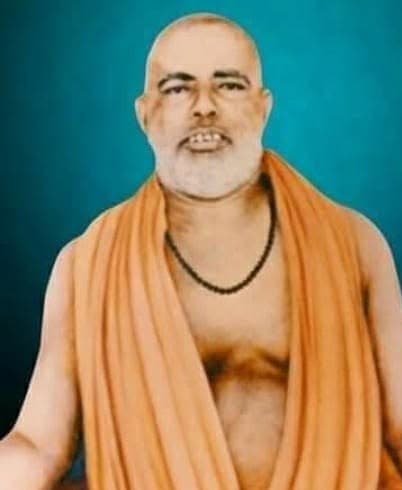
Sri Udiya Baba · Modern
Hindiभावार्थ— योगी सब प्रकार की आशा त्यागकर तथा [कौपीन-कन्यादि के अतिरिक्त] सब परिग्रह छोड़कर अकेला ही एकान्त स्थान में रहकर तथा मन और शरीर का संयम करके चित्त को निरन्तर आत्मा में लगाता रहे।
व्याख्या— यहाँ जो 'निराशीः' शब्द आया है वह ध्यान का सूचक है। ध्यान के प्रसंग में यह शब्द कई बार आया है। योग के जो अनेक द्वार बताये हैं उनमें 'निराशीः' भी एक द्वार है। कहा भी है—
योगस्य प्रथमं द्वारं वाङ्निरोधोऽपरिग्रहः। निराशा च निरीहा च नित्यमेकान्तशीलता॥
अर्थात्—'गोपशवादिवद्भ्रन्निरोधः' इस सूत्र के अनुसार वाणी का संयम, अपरिग्रह, निराशा निश्चलता और सर्वदा एकान्तसेवन—ये योग के प्रथम द्वार हैं। एक अन्य स्थान में कहा है—
एकान्तवासो लघुभोजनादि मौनं निराशा करणावरोधः। मुनेरसोः संयमनं षडेते चित्तप्रसादं जनयन्ति शीघ्रम्॥
अर्थात् एकान्त में रहना, अल्पाहार, मौन, निराशा, इन्द्रियनिग्रह और प्राणायाम—ये छः साधन मुनि को शीघ्र ही अन्तःकरण का प्रसाद प्राप्त करा देते हैं।
जिसमें ये गुण नहीं होंगे वह ध्यान कर ही नहीं सकता। यह नियम है कि जिस आशा को लेकर अभ्यास किया जायगा वह अवश्य फलीभूत होगी। किन्तु उससे ध्यान में विघ्न उपस्थित हो जायगा। इसलिये आशा का त्याग ध्यानाभ्यास के लिए अत्यन्त आवश्यक है।
जो एकाकी, यतचित्तात्मा, निराशी और अपरिग्रही होगा वह अवश्य योगी हो जायगा। योगी दो प्रकार के होते हैं—युज्जान और युक्त। युज्जान साधक होते हैं और युक्त सिद्ध।
अब अगले श्लोक में आसन का वर्णन करते हैं—
Swami Ramsukhdas · Modern
Hindi[पाँचवें अध्यायके सताईसवें-अट्ठाईसवें श्लोकोंमें जिस ध्यानयोगका संक्षेपसे वर्णन किया था, अब यहाँ उसीका विस्तारसे वर्णन कर रहे हैं।
'युज् समाधौ' धातुसे जो 'योग' शब्द बनता है, जिसका अर्थ चित्तवृत्तियोंका निरोध करना है, उस योगका वर्णन यहाँ दसवें श्लोकसे आरम्भ करते हैं।]
'अपरिग्रहः'—चित्तवृत्तियोंके निरोधरूप योगका साधन संसारमात्रसे विमुख होकर और केवल परमात्माके सम्मुख होकर किया जाता है। अतः उसके लिये पहला साधन बताते हैं—'अपरिग्रहः' अर्थात् अपने लिये सुखबुद्धिसे कुछ भी संग्रह न करे। कारण कि अपने सुखके लिये भोग और संग्रह करनेसे उसमें मनका खिंचाव रहेगा, जिससे साधकका मन ध्यानमें नहीं लगेगा। अतः ध्यानयोगके साधकके लिये अपरिग्रह होना जरूरी है।
'निराशीः'—पहले 'अपरिग्रहः' पदसे बाहरके भोग-पदार्थोंका त्याग बताया, अब 'निराशीः' पदसे भीतरकी भोग और संग्रहकी इच्छाका त्याग करनेके लिये कहते हैं। तात्पर्य यह है कि भीतरमें किसी भी भोगको भोगबुद्धिसे भोगनेकी इच्छा, कामना, आशा न रखे। कारण कि मनमें उत्पत्ति-विनाशशील पदार्थोंका महत्त्व, आशा, कामना परमात्मप्राप्तिमें महान् बाधक है। अतः इसमें साधकको सावधान रहना चाहिये।
'यतचित्तात्मा'—बाहरसे अपने सुखके लिये पदार्थ और संग्रहका त्याग तथा भीतरसे उनकी कामना-आशाका त्याग होनेपर भी अन्तःकरण आदिमें नया राग होनेकी सम्भावना रहती है, अतः यहाँ तीसरा साधन बताते हैं—'यतचित्तात्मा' अर्थात् साधक अन्तःकरणसहित शरीरको वशमें रखनेवाला हो। इनके वशमें होनेपर फिर नया राग पैदा नहीं होगा। इनको वशमें करनेका उपाय है—कोई भी नया काम रागपूर्वक न करे। कारण कि रागपूर्वक प्रवृत्ति होनेसे शरीरकी आराम-आलस्यमें, इन्द्रियोंकी भोगोंमें और मनकी भोगोंके चिन्तनमें अथवा व्यर्थ चिन्तनमें प्रवृत्ति होती है, इसलिये अन्तःकरण और शरीरको वशमें करनेकी बात कही गयी है।
'योगी'—जिसका ध्येय, लक्ष्य केवल परमात्मामें लगनेका ही है अर्थात् जो परमात्मप्राप्तिके लिये ही ध्यानयोग करनेवाला है, सिद्धियों और भोगोंकी प्राप्तिके लिये नहीं, उसको यहाँ 'योगी' कहा गया है।
'एकाकी'—ध्यानयोगका साधक अकेला हो, साथमें कोई सहायक न हो; क्योंकि दो होंगे तो बातचीत होने लग जायगी और साथमें कोई सहायक होगा तो रागके कारण उसकी याद आती रहेगी, जिससे मन भगवान्में नहीं लगेगा।
'रहसि स्थितः'—साधकको कहाँ स्थित होना
१-'योगश्चित्तवृत्तिनिरोधः' (पातंजलयोगदर्शन १।२)
२-'आशिष्' नाम इच्छाका है और 'निस्' नाम रहित होनेका है; अतः 'निराशीः' का अर्थ हुआ—इच्छासे रहित होना।
चाहिये—इसके लिये बताते हैं कि वह एकात्ममें स्थित रहे अर्थात् ऐसे स्थानमें स्थित रहे, जहाँ ध्यानके विरुद्ध कोई वातावरण न हो। जैसे, नदीका किनारा हो, वनमें एकात्म स्थान हो, एकात्म मन्दिर आदि हो अथवा घरमें ही एक कमरा ऐसा हो, जिसमें केवल भजन-ध्यान किया जाय। उसमें न तो स्वयं भोजन-शयन करे और न कोई दूसरा ही करे।
‘आत्मानं सततं युज्जीत’—उपर्युक्त प्रकारसे एकात्ममें बैठकर मनको निरन्तर भगवान्में लगाये। मनको निरन्तर भगवान्में लगानेके लिये खास बात है कि जब ध्यान करनेके लिये एकात्म स्थानपर जाय, तब जानेसे पहले ही यह विचार कर ले ‘अब मेरेको संसारका कोई काम नहीं करना है, केवल भगवान्का ध्यान ही करना है। अब भगवान्के सिवाय दूसरेका चिन्तन करना ही नहीं है’—इस बातको लेकर निरन्तर सावधान रहे; क्योंकि सावधानी ही साधना है।
साधकके लिये इस बातकी बड़ी आवश्यकता है कि वह ध्यानके समय तो भगवान्के चिन्तनमें तत्परतापूर्वक लगा रहे, व्यवहारके समय भी निलिप्त रहते हुए भगवान्का चिन्तन करता रहे; क्योंकि व्यवहारके समय भगवान्का चिन्तन न होनेसे संसारमें लिप्तता अधिक होती है। व्यवहारके समय भगवान्का चिन्तन करनेसे ध्यानके समय चिन्तन करना सुगम होता है और ध्यानके समय ठीक तरहसे चिन्तन होनेसे व्यवहारके समय भी चिन्तन होता रहता है अर्थात् दोनों समयमें किया गया चिन्तन एक-दूसरेका सहायक होता है। तात्पर्य है कि साधकका साधकपना हर समय जाग्रत् रहे। वह संसारमें तो भगवान्को मिलाये, पर भगवान्में संसारको न मिलाये अर्थात् सांसारिक कार्य करते समय भी भगवत्स्मरण करता रहे।
यदि ध्यानके लिये बैठते समय साधक ‘अमुक काम करना है, इतना लेना है, इतना देना है, अमुक जगह जाना है, अमुकसे मिलना है’ आदि कार्योंको मनमें जमा रखेगा अर्थात् मनमें इनका संकल्प करेगा, तो उसका मन भगवान्के ध्यानमें नहीं लगेगा। अतः ध्यानके लिये बैठते समय यह दृढ़ निश्चय कर ले कि चाहे जो हो जाय, गरदन भले ही कट जाय, मेरेको केवल भगवान्का ध्यान ही
**परिशिष्ट भाव**—कर्मयोग*, ज्ञानयोग और भक्तियोग तो करणनिरपेक्ष साधन हैं, पर ध्यानयोग करणसापेक्ष साधन है। अब भगवान् ध्यानयोगका वर्णन आरम्भ करते हैं।
करना है। ऐसा दृढ़ विचार होनेसे भगवान्में मन लगानेमें बड़ी सुविधा हो जायगी।
साधककी यह शिकायत रहती है कि भगवान्में मन नहीं लगता, तो इसका कारण क्या है? इसका कारण यह है कि साधक संसारसे सम्बन्ध तोड़कर ध्यान नहीं करता, प्रत्युत संसारसे सम्बन्ध जोड़कर करता है। अतः अपने सुख, सेवाके लिये भीतरसे किसीको भी अपना न माने अर्थात् किसीमें ममता न रखे; क्योंकि मन वहीं जायगा, जहाँ ममता होगी। इसलिये उद्देश्य केवल परमात्माका रहे और सबसे निलिप्त रहे, तो भगवान्में मन लग सकता है।
विशेष बात
अर्जुन पहले भी युद्धके लिये तैयार थे और अन्तमें भी उन्होंने युद्ध किया। केवल बीचमें वे युद्धको पाप समझने लगे थे तो भगवान्के समझा देनेसे उन्होंने युद्ध करना स्वीकार किया। इस तरह प्रसंग कर्मोंका होनेसे गीतामें कर्मयोगका विषय आना तो ठीक ही था, पर इसमें ज्ञानयोग, भक्तियोग आदि कई पारमार्थिक साधनोंका वर्णन कैसे आया है? उनमें भी यहाँ ध्यानयोगका वर्णन आया, जिसमें केवल एकात्ममें बैठकर ध्यान लगाना पड़ता है। यह प्रसंग ही यहाँ क्यों आया?
अर्जुन पापके भयसे युद्धसे उपरत होते हैं, तो उनके भीतर कल्याणकी इच्छा जाग्रत् होती है। अतः वे भगवान्से प्रार्थना करते हैं कि जिससे मेरा निश्चित श्रेय (कल्याण) हो, वह बात आप कहिये (दूसरे अध्यायका सातवाँ, तीसरे अध्यायका दूसरा और पाँचवें अध्यायका पहला श्लोक)। इसपर भगवान्को श्रेय करनेवाले जितने मार्ग हैं, वे सब बताने पड़े। उनमें दान, यज्ञ, तप, वेदाध्ययन, प्राणायाम, ध्यानयोग, हठयोग, लययोग आदिको कहना भी कर्तव्य हो जाता है। इसलिये भगवान्ने गीतामें कल्याणकारक साधन बताये हैं। उन सब साधनोंमें भगवान्ने यह बात बतायी कि उत्पत्ति-विनाशशील वस्तुओंका जो लक्ष्य है, वही खास बन्धनकारक है। अगर साधकका लक्ष्य केवल परमात्माका है, तो फिर उसके सामने कोई भी कर्तव्य-कर्म आ जाय, उसको समभावसे करना चाहिये। समभावसे किये गये सब-के-सब कर्तव्य-कर्म कल्याण करनेवाले होते हैं।
* कर्मयोगमें ‘कर्म’ तो करणसापेक्ष है, पर ‘योग’ करणनिरपेक्ष है।
सम्बन्ध—पूर्वश्लोकमें भगवान्ने ध्यानयोगके लिये प्रेरणा की। ध्यानयोगका साधन कैसे करे—इसके लिये अब आगेके तीन श्लोकोंमें ध्यानयोगकी उपयोगी बातें बताते हैं।
Lord Krishna is stating that a yogi or one who is perfecting the science of the individual consciousness attaining the ultimate consciousness in this case is by meditation.
Satatam means constant, fixed in a daily routine. yuñjīta ātmānaṃ means attentively concentrating on the soul. Rahasi means in a solitary location away from people.
ekākī means alone by oneself. The compound word yata cittātmā means checking the capricious stream of thoughts that cascade in the mind.
nirāśīr means to be weaned from every impetus except the impetus for ātma tattva or realisation of the soul. aparigrahaḥ means being devoid of every single possession and conception of possession except the ātma or soul.