

Bhagavad Gītā · Chapter 11 · Viśvarūpa Darśana Yoga
किरीटिनं गदिनं चक्रहस्त
मिच्छामि त्वां द्रष्टुमहं तथैव
तेनैव रूपेण चतुर्भुजेन
सहस्रबाहो भव विश्वमूर्ते
kirīṭinaṃ gadinaṃ cakrahasta
micchāmi tvāṃ draṣṭumahaṃ tathaiva|
tenaiva rūpeṇa caturbhujena
sahasrabāho bhava viśvamūrte||
Word meanings
अहम् = I
त्वाम् = you
तथा = likewise
एव = indeed
किरीटिनम् = wearing the diadem
गदिनम् = holding the mace
चक्रहस्तम् = discus in hand
द्रष्टुम् = to see
इच्छामि = I wish
सहस्रबाहो = O thousand-armed one
विश्वमूर्ते = O form of the universe
तेन, एव* = in that very
चतुर्भुजेन, रूपेण = four-armed form
भव = become again
Translation
I wish to see You adorned in the same way with a diadem on the head, and holding a mace and a discus in two of Your hands. O Lord with a thousand arms, O Universal Being, appear again in the same four-armed Form.
Commentary
The commentators seated around this verse
Rāmānuja · Viśiṣṭādvaita
English
Madhvācārya · Dvaita
SanskritEnglishOn verses 11.43–11.46
“तेनैव रूपेण भवति अनन्तरूपगोपनेन तदेव प्रकाशयेत्यर्थः | पञ्चाननं चिन्त्यमचिन्त्यरूपं पद्मासनं गोपितविश्वरूपम् || इति हि वैहायसंहितायाम् |” - You show your own form; the purport being to show the original form by concealing the universal form. Concealing the inconceivable form sitting on the lotus, the human form should be meditated upon, thus, in Vaihaya Samhita.
Jñāneśvar · Vārkarī
English46 "Wearing a crown, with mace and discus in hand, thus I desire to behold Thee, just this very wise. In that same four-armed form, O Thou of thousand arms, do Thou appear, Thou that assumest every form". (600)
And what a lustre is shed by that Body. That lustre is the very fount of the colour of the blue lotus and the azure of the sky, the splendour of sapphire itself (the jewel called Indramani). The graceful twist and bent of waist above the knees, Cupid himself simulates, and it appears as though emerald is whipping fragrant odour and as though blissful rapture has bodied itself forth in sprouting arms. And the mind waveringly asks—does the head wear the crown or is the crown adorned by the head; in truth thy Body's splendour adds lustre to the ornaments. Here Shārangpani has worn round his neck the necklace Vaijayanti (वैजयन्ती) that resembles clouds clustering round the arch of the rainbow on the firmament. And how is that mace of Thine, which makes even the demons as blessed in the gift of salvation, and how softly lustrous is that wheel Thy hand wields. That divine Body incarnate, Oh Master, I have become impatient to behold, and so I pray, be merciful and reveal Thyself in that incarnate body. My eyes are now sated with this festival of vision of thine Omnipresent Image, I am now thirsting to behold the Divine Image of Lord Krishna incarnate. Naught but this Divine Body of Lord Krishna, I yearn to behold; all is void, if Lord Krishna's body does not meet my eyes.
Both worldly joy and release from birth and death are nought without the divine Image of Lord Krishna incarnate. Be merciful and take this away to become Lord Krishna in body.
Swami Ramsukhdas · Modern
English'Kiriṭinaṁ gadinaṁ cakrahastamicchāmi tvāṁ draṣṭumahaṁ tathaiva'—Arjuna, desired to see the Lord crowned, holding a mace and a discus i.e., the Lord's four-armed divine form.
By using the term 'Tathaiva', Arjuna means to say, that when he expressed his wish to see His cosmic form, He revealed that form to him (11/3). So, now he wants to see His four-armed divine form only which he saw in His cosmic form.
'Tenaiva rūpeṇa caturbhujena sahasrabāho bhava viśvamūrte'—The term 'Eva' (only), has been used, for the negation of cosmic form, mentioned in the fifteenth and the seventeenth verses, the expression 'Tena caturbhujena rūpeṇa', for the four-armed form and the term 'Bhava' for 'be' or 'appear'. In the previous verse, the term, 'Tadeva', and in this verse, the terms 'Tathaiva' and 'Tenaiva', indicate that Arjuna was very much terrified, of the cosmic form and so he uttered the term 'Eva' (only), three times to express his desire to have a vision of His four-armed form only. Arjuna, did not want to see the four-armed form, in the cosmic form.
* The terms 'Idam' denotes nearness, 'Etat' denotes much nearness, 'Adas' denotes distance and 'Tat' denotes invisibility (out of sight). For the Lord's cosmic form the term 'Idam' has been used in the eighteenth and the nineteenth verses for Bhīṣma and Droṇa etc., who were very near, the term 'Etat' has been used in the thirty-third verse for the gods etc., seen in the cosmic body at a far distance, the term 'Adas' has been used in the twenty-first, twenty-sixth and twenty-eighth verses and for the four-armed form of Lord Viṣṇu seen in the first phase of the cosmic form (being out of sight at that time) the term 'Tat' has been used.
Arjuna addresses the Lord as 'Sahasrabāho' (a thousand-armed), to pray Him to withdraw that cosmic form, and become only four-armed, while the vocative 'Viśvamūte' (Universal Form), indicates that Arjuna wanted the Lord to withdraw His cosmic form, and become a four-armed Viṣṇu.
**Appendix**—Though in this verse there is mention of a mace and a discus which the Lord holds but because here it has been mentioned that He is four-armed, so in the other two arms, he is holding a conch and a lotus—it should be understood.
*Link:— In the thirty-first verse, Arjuna asked Lord Kṛṣṇa Who He was, so fierce in form. Lord Kṛṣṇa replied that He was the mighty world-destroying Kāla, then engaged in wiping out the world. Hearing this reply and beholding the Lord's terrible cosmic form. Arjuna thought, that He was very angry. So Arjuna prayed to Him again and again, to be pleased with him. The Lord, in the next verse comments in order to remove his misconception.*
Ādi Śaṅkarācārya · Advaita
Sanskritकिरीटिनं किरीटवन्तं तथा गदिनं गदावन्तं चक्रहस्तं इच्छामि त्वां प्रार्थये त्वां द्रष्टुं अहं तथैव, पूर्ववत् इत्यर्थः । यतः एवम्, तस्मात् तेनैव रूपेण वसुदेवपुत्ररूपेण चतुर्भुजेन, सहस्रबाहो वार्तमानिकेन विश्वरूपेण, भव विश्वमूर्ते; उपसंहृत्य विश्वरूपम्, तेनैव रूपेण भव इत्यर्थः ॥ अर्जुनं भीतं उपलभ्य, उपसंहृत्य विश्वरूपम्, प्रियवचनेन आश्वासयन् श्रीभगवान् उवाच --
Ādi Śaṅkarācārya · Advaita
Hindiमैं आपको वैसे ही अर्थात् पहलेहीकी भाँति सिरपर मुकुट धारण किये, हाथोंमें गदा और चक्र लिये हुए देखना चाहता हूँ।
जब कि यह बात है तो हे सहस्रबाहो! हे विश्वमूर्ते! अर्थात् वर्तमान विश्वरूपसे (युक्त) भगवन्! आप उसी अपने वसुदेव-पुत्ररूप चतुर्भुज-स्वरूपसे युक्त होइये। अर्थात् इस विश्वरूपका उपसंहार करके आप वसुदेव- पुत्र—श्रीकृष्णके स्वरूपसे स्थित होइये
Jñāneśvar · Vārkarī
Marathiकैसें नीलोत्पलातें रांवित । आकाशाही रंगु लावित । तेजाची वोज दावित । इंद्रनीळा ॥ ६०० ॥ जैसा परिमळ जाहला मरगजा । कां आनंदासि निघालिया भुजा । ज्याचे जानुवरी मकरध्वजा । जोडली बरव ॥ ६०१ ॥ मस्तकीं मुकुटातें ठेविलें । कीं मुकुटा मुकुट मस्तक झालें । शृंगारा लेणें लाधलें । आंगाचेनि जया ॥ ६०२ ॥ इंद्रधनुष्याचिये आडणी । माजीं मेघ गगनरंगणीं । तैसें आवरिलें शारङ्गपाणी । वैजयंतिया ॥ ६०३ ॥ आतां कवणी ते उदार गदा । असुरां देत कैवल्य पदा । कैसें चक्र हन गोविंदा । सौम्यतेजें मिरवे ॥ ६०४ ॥ किंबहुना स्वामी । तें देखावया उत्कंठित पां मी । म्हणौनि आतां तुम्हीं । तैसया होआवें ॥ ६०५ ॥ हे विश्वरूपाचे सोहळे । भोगूनि निवाले जी डोळे । आतां होताति आंधले । कृष्णमूर्तीलागीं ॥ ६०६ ॥ तें साकार कृष्णरूपडें । वांचूनि पाहों नावडे । तें न देखतां थोडें । मानिताती हे ॥ ६०७ ॥ आम्हां भोगमोक्षाचिया ठायीं । श्रीमूर्तीवांचूनि नाहीं । म्हणौनि तैसाचि साकारु होईं । हें सांवरीं आतां ॥ ६०८ ॥
Jñāneśvar · Vārkarī
Hindi(11.600) जो शरीर नीलकमलों के लिए भी छवि का नमूना है, जो आकाश में भी रंग लगाता है (यानी जिससे आकाश नीला होता है), तथा इन्द्रनील को भी तेज की प्रभा दिखाता है;
(11.601) जो ऐसा है कि मानों मरकत मणि में सुगन्ध उत्पन्न हुई हो या आनन्द के भुजाएँ फूटी हों, जिसकी गोद में मदन सुशोभित होता है,
(11.602) जिसके मस्तक ने मुकुट को अलंकृत किया है, अथवा जिसका मस्तक मानों मुकुट का मुकुट बन रहा है, तथा जिससे शृंगार का अलंकार प्राप्त हुआ है (11.603) वह आपका शरीर, हे शार्ईपाणि, आकाश में इन्द्रधनुष से वेष्टित जैसे मेघ दिखाई देता है वैसे वैजयन्ती माला से वेष्टित था।
(11.604) आप की गदा कितनी उदार थी जो असुरों को भी मोक्ष देती थी! हे गोविन्द! आपका चक्र कैसा सौम्य प्रकाश से शोभा दे रहा था!
(11.605) बहुत क्या वर्णन करूँ? हे स्वामी! वही रूप देखने के लिए मेरी उत्कण्ठा हो रही है। इसलिए अब आप वही रूप लीजिए।
(11.606) अजी, इस विश्वरूप का सुख भोग कर आँखें जुड़ा गई और अब कृष्ण-मूर्ति के लिए प्यासी हो रही है।
(11.607) इन आँखें का उस साकार कृष्णरूप के अतिरिक्त कुछ देखना नहीं भाता। उसे न देखने पर ये देखने का कुछ मोल नहीं समझतीं।
(11.608) हमें भोग और मोक्ष दोनों देनेहारी श्रीमूर्ति के सिवाय कोई वस्तु नहीं है। इसलिए आप वैसे ही साकार हूजिए और इस रूप का उपसंहार कीजिए।
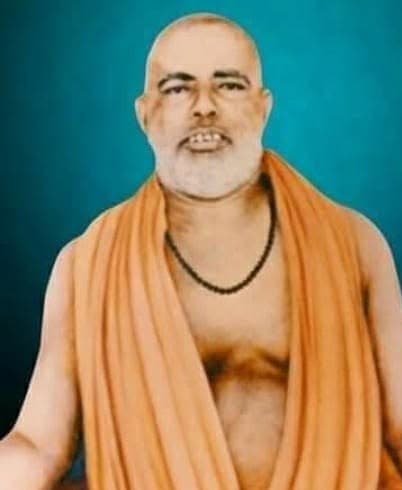
Sri Udiya Baba · Modern
Hindiभावार्थ— हे सहस्र भुजाओं वाले विश्वरूप! आप उस चतुर्भुज रूप में ही हो जाइये। मैं उसी प्रकार आपको मुकुट धारण किये तथा हाथ में गदा और चक्र लिये देखना चाहता हूँ।
Swami Ramsukhdas · Modern
Hindi‘किरीटिनं गदिनं चक्रहस्तमिच्छामि त्वां द्रष्टुमहं तथैव’—जिसमें आपने सिरपर दिव्य मुकुट तथा हाथोंमें गदा और चक्र धारण कर रखे हैं, उसी रूपको मैं देखना चाहता हूँ।
‘तथैव’ कहनेका तात्पर्य है कि मेरे द्वारा ‘द्रष्टुमिच्छामि ते रूपम्’ (११।३) ऐसी इच्छा प्रकट करनेसे आपने विराट् रूप दिखाया। अब मैं अपनी इच्छा बाकी क्यों रखूँ? अतः मैंने आपके विराट् रूपमें जैसा सौम्य चतुर्भुज रूप देखा है, वैसा-का-वैसा ही रूप मैं अब देखना चाहता हूँ—‘इच्छामि त्वां द्रष्टुमहं तथैव’।
‘तेनैव रूपेण चतुर्भुजेन सहस्रबाहो भव विश्वमूर्ति’—पंद्रहवें और सत्रहवें श्लोकमें जिस विराट् रूपमें चतुर्भुज विष्णुरूपको देखा था, उस विराट् रूपका निषेध करनेके लिये अर्जुन यहाँ ‘एव’ पद देते हैं। तात्पर्य यह है कि ‘तेन चतुर्भुजेन रूपेण’—ये पद तो चतुर्भुज रूप दिखानेके
**परिशिष्ट भाव**—यद्यपि मूल श्लोकमें भगवान् को गदा और चक्र धारण किये हुए बताया गया है, तथापि ‘चतुर्भुजेन’ पद आनेसे यहाँ चारों भुजाओंमें गदा और चक्रके साथ-साथ शंख और पद भी समझ लेने चाहिये।
**सम्बन्ध**—इकतीसवें श्लोकमें अर्जुनने पूछा कि उग्ररूपवाले आप कौन हैं, तो भगवान् ने उत्तर दिया कि मैं काल हूँ और सबका संहार करनेके लिये प्रवृत्त हुआ हूँ। ऐसा सुनकर तथा अत्यन्त विकरालरूपको देखकर अर्जुनको ऐसा लगा कि भगवान् बड़े क्रोधमें हैं। इसलिये अर्जुन भगवान् से बार-बार प्रसन्न होनेके लिये प्रार्थना करते हैं। अर्जुनकी इस भावनाको दूर करनेके लिये भगवान् कहते हैं—
श्रीभगवानुवाच
Addressing Lord Krishna as sahasra-bāho meaning: “O' thousand-armed one”, Arjuna now is specifically requesting to see the catur-bhujena or four- armed form of Lord Krishna wearing kirīṭinaṃ or jewelled studded golden crown and holding gadinam or mace and cakra or discus.