

Bhagavad Gītā · Chapter 11 · Viśvarūpa Darśana Yoga
नभःस्पृशं दीप्तमनेकवर्णं
व्यात्ताननं दीप्तविशालनेत्रम्
दृष्ट्वा हि त्वां प्रव्यथितान्तरात्मा
धृतिं न विन्दामि शमं च विष्णो
nabhaḥspṛśaṃ dīptamanekavarṇaṃ
vyāttānanaṃ dīptaviśālanetram|
dṛṣṭvā hi tvāṃ pravyathitāntarātmā
dhṛtiṃ na vindāmi śamaṃ ca viṣṇo||
Word meanings
हि = for
विष्णो = O Viṣṇu
दीप्तम् = blazing
अनेकवर्णम् = many-colored
नभःस्पृशम् = touching the sky
व्यात्ताननम् = with mouth wide open
दीप्तविशाल- = blazing, wide
त्वाम् = you
दृष्ट्वा = having seen
प्रव्यथितान्तरात्मा = with inner self trembling
धृतिम् = steadiness
च = and
शमम् = peace
न, विन्दामि = do not find
Translation
Lord, seeing Your Form reaching the heavens, effulgent, multi-coloured, having its mouth wide open and possessing large flaming eyes, I, with my inmost self frightened, have lost self-control and find no peace.
Commentary
The commentators seated around this verse
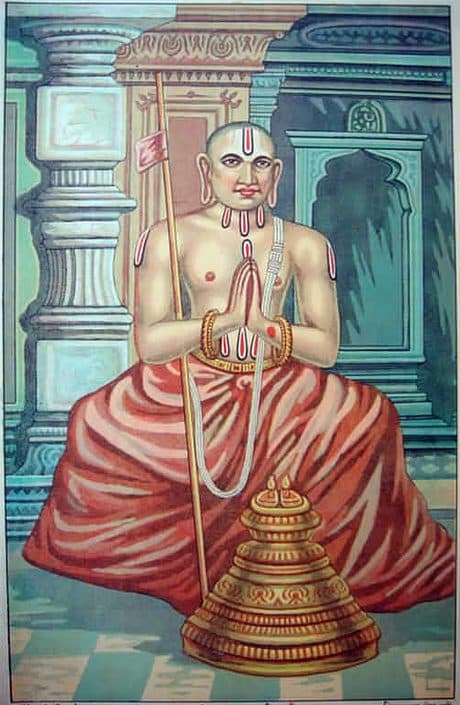
Rāmānuja · Viśiṣṭādvaita
English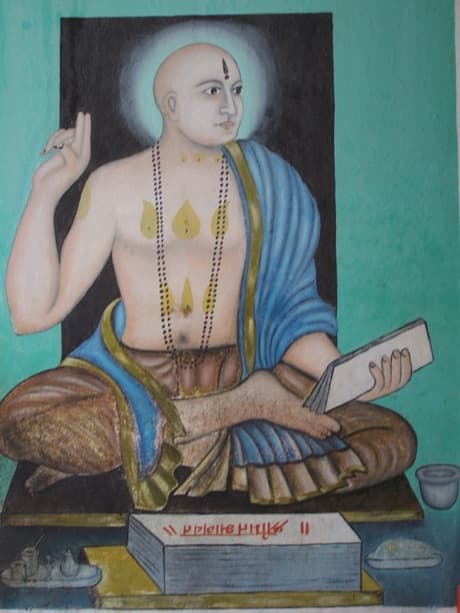
Madhvācārya · Dvaita
SanskritEnglishOn verses 11.22–11.27
“अनन्यचेष्टां कुर्वतामपि भगवच्चेष्टयैव प्रलयोदके प्रजानां प्रवेशवत् प्रवेशो युज्यते | सेनामध्यतो भगवन्मुखानामुभयाभिमुखत्वाच्चोभे सेने तत्र प्रविशतः | ये तु तस्मिन्नेव महुर्ते मरिष्यन्ति तेषां दशान्तरे चूर्णितमपि शिरः सूक्ष्मदृष्टिगोचरत्वान्मनुपदृष्ट्या तथा न दृश्यते | तथा भिन्नमपि घटादिकं यावत् पृथक् न पतति तावन्मन्ददृष्टिनां न ज्ञायते | यथा पुरुषो जगाऽशिवभ्यामेव दृष्टा ||” - Like other activities of the Lord eternal waters of dissolution at the time of creative cycle, people were entering His mouth. Established in the middle of the armies with mouths directed both ways, both the armies were entering His mouth. Those who were about to die at the commencement of the war, their heads were seen turning to powder between the teeth of the Lord. Since the sight being subtle can be seen only by few, all others cannot see it. Like a pot which is broken can be seen by ordinary people only when the pieces fall down, this sight is visible to ordinary eyes. It is similar to the case of Puru whose old age was seen only by Ashvins and not by others.
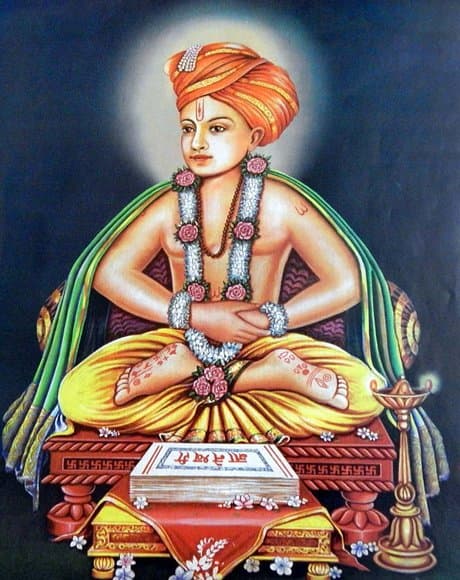
Jñāneśvar · Vārkarī
English24 “For, as I behold Thee, radiant, touching the skies, of manifold hue, with gaping mouths and large blazing eyes, I, with my inmost soul in trepidation, find neither courage nor tranquillity, O Vishnu. (353)
Thou hast indeed these several angry mouths and faces, which have beaten hollow the great destroyer Himself in striking terror, and with their ever-widening gape have made the very sky itself shrink. The great expanse of sky itself limits it not, nor does the wind careering in the three worlds enfold it; and see how the vapours that can consume fire itself, are cracking all around. And again, not one is like another, being of diverse colours; thus helped by these colours, the world-destroying fires dissolve the world. Of such unmeasurable heat are these vapours that they might turn the whole frame of the universe to ashes, and yet in the mouths the teeth and the jaws are visible. (It looks) as though the very wind is being convulsed into spasms: or the very sea is being swallowed by an inflow of high floods, or that the fire of the all-consuming poison is out to destroy with the help of the sea-stirring fire, or again as though the deadliest poison is drunken with fire, or death itself has started as an unrelenting carnage. Such an all-devouring mouth has gaped forth as it were, under the cover of the deadly fire of this thy person. And it is as wide as the cavity of the sky itself when it is torn asunder and bursts open: or it looks as though the deep void of the nether world is rent open by Lord Shiva, when Hiranyaksha (brother of Hiranyakashyapu) whisked off the earth under his armpit and took shelter in a hold underground. So vastly stretches out from end to end to infinity this mouth with the tongues lolling out so furiously. The whole universe cannot make a single morsel for it, and is thus saved from its ravenous sport. And in the cavity of the jaws yawning the valley of Death, the tongue lolling looks like the venomous flames reaching out into the sky from the hissing dragons of the nether world. The teeth too in their glowing lustre stick out on the lips and resemble the ramparts in the city of clouds decorated with bands of world-consuming lightnings. And how horrid the eyes look out from the hollow of the forehead and frightening terror itself as if the violent outburst of death incarnate is blazing out from the dark. What mayest thou intend to fulfil by this mask of terror is indeed out of my ken. Yet certain it is that I am struck with death-terror. In fond conceit did I yearn to set my eyes on thine all-filling presence, and how richly have I deserved all this as the fruit of that unearthly longing! What an exquisite vision, O Lord, have I beheld of thine all-filling presence!! My eyes are now sated with that pleasure. Earthy is this body, and who indeed cares if it perishes? Now my very soul and spirit is in peril, and I gravely doubt if that spirit would remain. For, terror may shake the body, or at most might distress the mind, and even unnerve the intellect: but now the inner soul itself, that is beyond and above all these, enjoying its blissful state—that very tranquil soul is a sickening sight: or what a tremendous power this realisation of thine all-pervading Presence is? It has even dislodged the illumination of self-knowledge; and my tie of discipleship to thee—my divine master—is itself in peril. Oh God, in the presence of thy all-pervading being, my heart is almost in a dead faint and I am struggling to gird it with courage. Courage has lost her ground in my name and then I have had this vision of thine all-pervading Presence. Be that as it may, thy spiritual precept has totally bewildered me. Oh, my poor helpless soul, that is running wild, eager to find a heaven of rest and finds it not. Life itself has fled before this great rack and ruin in the shape of this spectacle of thine all-filling divinity. How then should I live at all if I were to keep quiet?
Swami Ramsukhdas · Modern
English[In the twentieth verse, Arjuna described the Lord's height and breadth, while here he describes His tremendous height, only.]
'Viṣṇo'—Arjuna says that it was the all-pervading Lord Viṣṇu Himself, Who incarnated as Kṛṣṇa, in order to lighten the burden of the earth.
'Diptamanekavarṇam'—The Lord's terrible cosmic form, was multicoloured and effulgent.
'Nabhaḥspṛśam'—His form was so tall, that it was touching
the sky. It means, that as far as Arjuna could see he beheld the cosmic form of the Lord meeting the sky. It indicates, that even divine sight could not have access to the end, of the limitless cosmic form of the Lord.
'Vyāttānanam diptaviśālanetram'— Just like a wild beast, the Lord's mouth was wide open, to ingest the entire universe.
His eyes were large, shining and fiery.
'Dṛṣṭvā hi tvām pravyathitāntarātmā dhṛtim na vindāmi śamaṇ ca viṣṇo'— Arjuna says, that he was very much frightened at the sight of the Lord's cosmic form, and he lost his courage, self control and peace of mind.
Here a question arises, that Arjuna besides being a valiant warrior of extraordinary calibre, was blessed with divine eye by the Lord, yet he trembled with fear, while beholding the Lord's cosmic form, but Sañjaya was not terror-struck. Why?
The answer is, that saints say that Bhīṣma, Vidura, Sañjaya and Kuntī, knew the Lord in reality, while Arjuna did not know Him fully. Arjuna's, delusion was not completely destroyed (11/49). So, he trembled with fear. But Sañjaya, knew the reality, about the Lord viz., he had delusion. So Sañjaya was not terror-struck.
It proves, that the Lord and saints, shower their grace, even on unqualified and undeserving persons, but qualified and deserving persons, know the reality about Him, in the same way, as a mother loves her innocent child more than she loves a grown up son, while the grown up son knows her and her loving nature more than an innocent child. The Lord, loved the simple and innocent cowherds, cowherdesses and cows, more than He loved the liberated souls, though the latter knew His true self. Similarly, Sañjaya deserved to have a vision of the Lord's cosmic form, and so he could behold, it without requesting the Lord, while the Lord Himself had to arouse curiosity in Arjuna, and revealed to him this cosmic form, as Arjuna regarded the Lord as his friend, not as the Lord. So the Lord, was more gracious
to Arjuna and it was by His grace, that Arjuna's delusion was destroyed (Gītā 18/73). It proves, that the Lord by His grace, destroys the delusion, of His devotees.
**Appendix**—Here the term 'nabhaḥspṛśam' denotes the infinity of God's cosmic form. As far as Arjuna's eye can reach, he sees only the cosmic form—'sā kāṣṭha sā parā gatiḥ' (Kaṭha. 1/3/11) viz., that God is the last limit and the supreme goal.
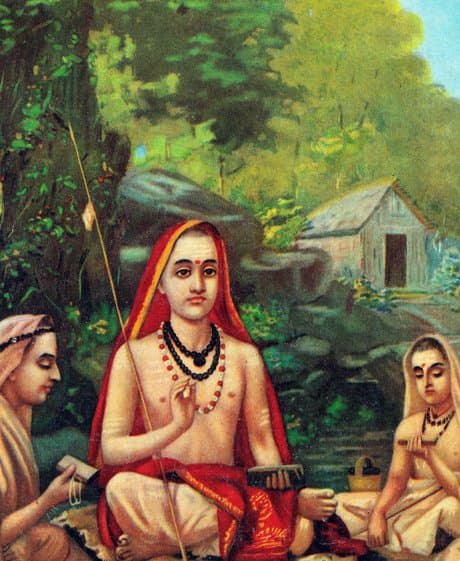
Ādi Śaṅkarācārya · Advaita
Sanskritनभःस्पृशं द्युस्पर्शं इत्यर्थः, दीप्तं प्रज्वलितम्, अनेकवर्णं अनेके वर्णाः भयङ्कराः नानासंस्थानाः यस्मिन् त्वयि तं त्वाम् अनेकवर्णम्, व्यात्ताननं व्यात्तानि विवृतानि आननानि मुखानि यस्मिन् त्वयि तं त्वां व्यात्ताननम्, दीप्तविशालनेत्रं दीप्तानि प्रज्वलितानि विशालानि विस्तीर्णानि नेत्राणि यस्मिन् त्वयि तं त्वां दीप्तविशालनेत्रं दृष्ट्वा हि त्वां प्रव्यथितान्तरात्मा प्रव्यथितः प्रभीतः अन्तरात्मा मनः यस्य मम सः अहं प्रव्यथितान्तरात्मा सन् धृतिं धैर्यं न विन्दामि न लभे शमं च उपशमनं मनस्तुष्टिं हे विष्णो ॥ कस्मात् --
Ādi Śaṅkarācārya · Advaita
Hindiउसमें यह कारण है कि—
आपको आकाशका स्पर्श किये हुए यानी स्वर्गतक व्याप्त, प्रदीप्त—प्रकाशमान और अनेक वर्णोंवाले अर्थात् अनेक भयंकर आकृतियोंसे युक्त देखकर तथा फैलाये हुए मुखोंवाले—जिस शरीरमें फैलाये हुए बहुत-से मुख हैं ऐसे और दीप्त विशाल नेत्रोंवाले—जिसके बड़े-बड़े नेत्र प्रज्वलित हो रहे हैं ऐसे, देखकर हे विष्णो! प्रव्यथित-अन्तरात्मा—अत्यन्त भयभीत अन्तःकरणवाला मैं अर्थात् जिसका मन भयसे व्याकुल हो रहा है, ऐसा, मैं धैर्य और उपशमको अर्थात् मनकी तृप्तिरूप शान्तिको नहीं पा रहा हूँ
Jñāneśvar · Vārkarī
Marathiठेलीं महाकाळेंसि हटेंतटें । तैसी किती{ए}कें मुखें रागिटें । इहीं वाढोनियां धाकुटें । आकाश केलें ॥ ३५३ ॥ गगनाचेंनि वाडपणें नाकळे । त्रिभुवनींचियाही वारिया न वेंटाळे । ययाचेनि वाफा आगी जळे । कैसें धडाडीत असे ॥ ३५४ ॥ तेवींचि एकसारिखें एक नोहे । एथ वर्णावर्णाचा भेदु आहे । हो कां जें प्रळयीं सावावो लाहे । वन्ह्ं ययाचा ॥ ३५५ ॥ जयाचिये आंगींची दीप्ती येवढी । जे त्रैलोक्य कीजे राखोंडी । कीं तयाही तोंडें आणि तोंडीं । दांत दाढा ॥ ३५६ ॥ कैसा वारया धनुर्वात चढला । समुद्र कीं महापुरीं पडिला । विषाग्नि मारा प्रवर्तला । वडवानळासी ॥ ३५७ ॥ हळाहळ आगी पियालें । नवल मरण मारा प्रवर्तलें । तैसें संहारतेजा या जाहलें । वदन देखा ॥ ३५८ ॥ परी कोणें मानें विशाळ । जैसें तुटलिया अंतराळ । आकाशासि कव्हळ । पडोनि ठेलें ॥ ३५९ ॥ नातरी काखे सूनि वसुंधरी । जैं हिरण्याक्षु रिगाला विवरीं । तैं उघडले हाटकेश्वरीं । जेवीं पाताळकुहर ॥ ३६० ॥ तैसा वक्त्रांचा विकाशु । माजीं जिव्हांचा आगळाचि आवेशु । विश्व न पुरे म्हणौनि घांसु । न भरीचि कोंडें ॥ ३६१ ॥ आणि पाताळव्याळांचिया फूत्कारीं । गरळज्वाळा लागती अंबरीं । तैसी पसरलिये वदनदरी- । माजीं हे जिव्हा ॥ ३६२ ॥ काढूनि प्रळयविजूंचीं जुंबाडें । जैसें पन्नासिलें गगनाचे हुडे । तैसे आवाळुवांवरी आंकडे । धगधगीत दाढांचे ॥ ३६३ ॥ आणि ललाटपटाचिये खोळे । कैसें भयातें भेडविताती डोळे । हो कां जे महामृत्यूचे उमाळे । कडवसां राहिले ॥ ३६४ ॥ ऐसें वाऊनि भयाचें भोज । एथ काय निपजवूं पाहातोसि काज । तें नेणों परी मज । मरणभय आलें ॥ ३६५ ॥ देवा विश्वरूप पहावयाचे डोहळे । केले तिये पावलों प्रतिफळें । बापा देखिलासि आतां डोळे । निवावे तैसे निवाले ॥ ३६६ ॥ अहो देहो पार्थिव कीर जाये । ययाची काकुळती कवणा आहे । परि आतां चैतन्य माझें विपायें । वांचे कीं न वांचे ॥ ३६७ ॥ एऱ्हवीं भयास्तव आंग कांपे । नावेक आगळें तरी मन तापे । अथवा बुद्धिही वासिपे । अभिमानु विसरिजे ॥ ३६८ ॥ परी येतुलियाही वेगळा । जो केवळ आनंदैककळा । तया अंतरात्मयाही निश्चळा । शियारी आली ॥ ३६९ ॥ बाप साक्षात्काराचा वेधु । कैसा देशधडी केला बोधु । हा गुरुशिष्यसंबंधु । विपायें नांदे ॥ ३७० ॥ देवा तुझ्या ये दर्शनीं । जें वैकल्य उपजलें आहे अंतःकरणीं । तें सावरावयालागीं गंवसणी । धैर्याची करितसें ॥ ३७१ ॥ तंव माझेनि नामें धैर्य हारपलें । कीं तयाहीवरी विश्वरूपदर्शन जाहलें । हें असो परि मज भलें आतुडविलें । उपदेशा इया ॥ ३७२ ॥ जीव विसंवावयाचिया चाडा । सैंघ धांवाधांवी करितसे बापुडा । परि सोयही कवणेंकडां । न लभे एथ ॥ ३७३ ॥ ऐसें विश्वरूपाचिया महामारी । जीवित्व गेलें आहें चराचरीं । जी न बोलें तरि काय करीं । कैसेनि राहें ? ॥ ३७४ ॥
Jñāneśvar · Vārkarī
Hindi(11.353) जिन्होंने महाकाल को भी जीत लिया है ऐसे आपके कई एक सुख इतने विस्तृत हो रहे हैं कि उनके सन्मुख आकाश भी अल्प दिखाई देता है।
(11.354) वे आकाश के विस्तार में भी नहीं समा सकते। त्रिभुवन की वायु से भी वे आच्छादित नहीं किये जा सकते। इनकी भाफ से अग्नि भी जलती है। ये कैसे भड़कते हुए दिखाई दे रहे हैं!
(11.355) वैसे ही ये एक दूसरे के समान भी नहीं हैं। इनमें नाना वर्णों के भेद हैं, मानों प्रलय-काल की वहिन इन्हीं की सहायता लेती हो। (11.356) इनका इतना तेज है कि ये त्रैलोक्य को राख कर सकते हैं। इन मुखों में और भी मुख हैं और उनमें दाँत और दाढ़े हैं।
(11.357) इस संहार-तेज के मुख ऐसे उत्पन्न हुए हैं मानों वायु का अत्यन्त धनुर्वात हुआ हो, अथवा समुद्र महाबाढ़ में डूबा हो, अथवा विषाग्नि बड़वानल का नाश करने के लिए उद्यत हुई हो,
(11.358) अग्नि ने हलाहल विष पिया हो, अथवा कोई अनोखी मृत्यु नाश करने के लिए आई हो।
(11.359) और ये कितने विशाल हैं! मानों अन्तराल टूटकर आकाश के चहुँओर घिर गया हो
(11.360) अथवा, बगल में पृथ्वी को दबा कर जब हिरण्याक्ष गुहा में घुस गया था तब शंकर ने जैसी पाताल-गुहा प्रकट की थी
(11.361) वैसा ही इन सुखों का विकास दिखाई देता है। बीच में जिह्वाओं का अत्यन्त आवेश है जिसके लिए विश्व भी बस नहीं होता। इसीलिए मानों आप कुतूहल से उसका कौर नहीं भरते
(11.362) और जैसे पाताल-सर्पों की फुफकारों से उठी हुई विष की ज्वालाएँ आकाश को जा लगती हैं, वैसे ही आपकी मुखरूपी गुहाओं में ये जिह्वाएँ विस्तृत हो रही हैं। (11.363) प्रलय-विद्युत् के समुदाय से चित्रित जैसा आकाश में किलों का विस्तार दिखाई देता है वैसी ही आपके ओठों के बाहर निकली हुई तीव्र दाढ़े दिखाई देती हैं।
(11.364) आपके नेत्र मानों ललाट पर के खोल में से भय का डरा रहे हैं अथवा महामृत्यु के प्रवाह अँधेरे में छिपे हुए हैं।
(11.365) इस प्रकार भय का रूप लेकर आप न जाने कौन-सा कार्य कराना चाहते हैं। परन्तु मुझे मरणप्राय भय प्राप्त हो रहा है।
(11.366) हे देव! मैंने विश्वरूप देखने की जो इच्छा की उसका फल भर पाया। महाराज। मैं आपका रूप देख चुका। आँखें तृप्त करनी थीं सो हो गईं।
(11.367) अजी, मिट्टी की देह चाहे चली जाय; उसका दुःख किसे है! परन्तु मेरा तो चैतन्य ही कदाचित् बचे या न बचे।
(11.368) यों तो भय से शरीर क्षण भर काँपे तो मन तप जाता है, बुद्धि गल जाती है और अभिमान हवा हो जाता है।
(11.369) परन्तु इन सबों से भिन्न जो केवल आनन्द की ही एक कला है वह मेरा निश्चल अन्तरात्मा भी काँप उठा है। (11.370) साक्षात्कार का बड़ा ही प्रताप है! ज्ञान तो हद के पार हो गया तथा यह गुरुशिष्य-सम्बन्ध भी टिकना कठिन हो रहा है।
(11.371) हे देव! आपके इस दर्शन से मेरे अन्तःकरण में जो विकलता उत्पन्न हुई है उसे सँभालने के लिए मैं उस पर जो धैर्य का आच्छादन करने जाता हूँ
(11.372) तो मेरे नाम से धैर्य भी लुप्त हो जाता है, मानों उसे भी विश्वरूप का दर्शन हुआ हो। अस्तु, आपने इस उपदेश में मुझे खूब उलझा लिया।
(11.373) जीव बेचारा विश्राम लेने की इच्छा से चहुँओर दौड़-धूप करता है परन्तु उसे किसी ओर भी मार्ग नहीं मिलता।
(11.374) महाराज! इस प्रकार 'विश्वरूप'-महामारी में चराचर का जीवन नष्ट हो रहा है। न कहूँ तो क्या करूँ? बचूँगा कैसे?
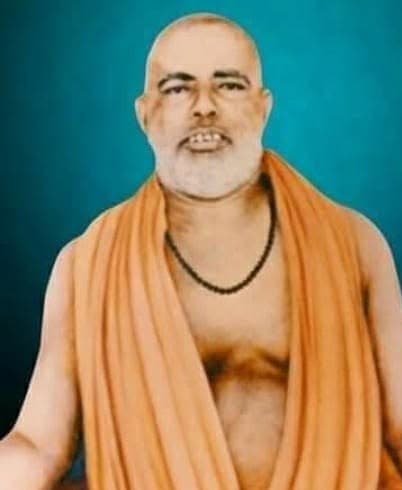
Sri Udiya Baba · Modern
Hindiभावार्थ— हे विष्णो! आपको आकाश को स्पर्श करने वाला, देदीप्यमान, अनेकों वर्णों वाला, फैलाये हुए मुखवाला और दीप्तिशाली विशाल नेत्रों वाला देखकर मैं व्यथित चित्त हूँ। मुझे न धैर्य होता है और न शान्ति।
व्याख्या— यहाँ 'विष्णो' सम्बोधन से भगवान् की व्यापकता सूचित की गयी है। अर्थात् आप सर्वरूप और सर्वव्यापक हैं। नाना वर्णों वाले हैं, क्योंकि सब वर्ण आपसे ही उत्पन्न हुए हैं। आकाश के समान विशाल हैं, परन्तु अभावरूप या जड़ नहीं देदीप्यमान हैं— प्रकाशपुञ्ज या ज्ञानस्वरूप हैं।
Swami Ramsukhdas · Modern
Hindi[बीसवें श्लोकमें तो अर्जुनने विराट् रूपकी लम्बाई-चौड़ाईका वर्णन किया, अब यहाँ केवल लम्बाईका वर्णन करते हैं।]
**‘विष्णो’**—आप साक्षात् सर्वव्यापक विष्णु हैं, जिन्होंने पृथ्वीका भार दूर करनेके लिये कृष्णरूपसे अवतार लिया है।
**‘दीप्तमनेकवर्णम्’**—आपके काले, पीले, श्याम, गौर आदि अनेक वर्ण हैं, जो बड़े ही देदीप्यमान हैं।
**‘नभःस्पृशम्’**—आपका स्वरूप इतना लम्बा है कि वह आकाशको स्पर्श कर रहा है।
वायुका गुण होनेसे स्पर्श वायुका ही होता है, आकाशका नहीं। फिर यहाँ आकाशको स्पर्श करनेका तात्पर्य क्या है? मनुष्यकी दृष्टि जहाँतक जाती है, वहाँतक तो उसको आकाश दीखता है, पर उसके आगे कालापन दिखायी देता है। कारण कि जब दृष्टि आगे नहीं जाती, थक जाती है, तब वह वहाँसे लौटती है, जिससे आगे कालापन दीखता है। यही दृष्टिका आकाशको स्पर्श करना है। ऐसे ही अर्जुनकी दृष्टि जहाँतक जाती है, वहाँतक उनको भगवान्का विराट् रूप दिखायी देता है। इसका तात्पर्य यह हुआ कि भगवान्का विराट् रूप असीम है, जिसके सामने दिव्यदृष्टि भी सीमित ही है।
**‘व्यात्ताननं दीप्तविशालनेत्रम्’**—जैसे कोई भयानक जन्तु किसी जन्तुको खानेके लिये अपना मुख फैलाता है, ऐसे ही मात्र विश्वको चट करनेके लिये आपका मुख फैला हुआ दीख रहा है।
आपके नेत्र बड़े ही देदीप्यमान और विशाल दीख रहे हैं।
**‘दृष्ट्वा हि त्वां प्रव्यथितान्तरात्मा धृतिं न विन्दामि**
**शमं च विष्णो’**—इस तरह आपको देखकर मैं भीतरसे बहुत व्यथित हो रहा हूँ। मेरेको कहींसे भी धैर्य नहीं मिल रहा है और शान्ति भी नहीं मिल रही है।
यहाँ एक शंका होती है कि अर्जुनमें एक तो खुदकी सामर्थ्य है और दूसरी, भगवत्प्रदत्त सामर्थ्य (दिव्यदृष्टि) है। फिर भी अर्जुन तो विश्वरूपको देखकर डर गये, पर संजय नहीं डरे। इसमें क्या कारण है? सन्तोंसे ऐसा सुना है कि भीष्म, विदुर, संजय और कुन्ती—ये चारों भगवान् श्रीकृष्णके तत्त्वको विशेषतासे जाननेवाले थे। इसलिये संजय पहलेसे ही भगवान्के तत्त्वको, उनके प्रभावको जानते थे, जब कि अर्जुन भगवान्के तत्त्वको उतना नहीं जानते थे। अर्जुनका विमूढ़भाव (मोह) अभी सर्वथा दूर नहीं हुआ था (गीता—ग्यारहवें अध्यायका उनचासवाँ श्लोक)। इस विमूढ़भावके कारण अर्जुन भयभीत हुए। परन्तु संजय भगवान्के तत्त्वको जानते थे अर्थात् उनमें विमूढ़भाव नहीं था; अतः वे भयभीत नहीं हुए।
उपर्युक्त विवेचनसे एक बात सिद्ध होती है कि भगवान् और महापुरुषोंकी कृपा विशेषरूपसे अयोग्य मनुष्योंपर होती है, पर उस कृपाको विशेषरूपसे योग्य मनुष्य ही जानते हैं। जैसे, छोटे बच्चेपर माँका अधिक स्नेह होता है, पर बड़ा लड़का माँको जितना जानता है, उतना छोटा बच्चा नहीं जानता। ऐसे ही भोले-भाले, सीधे-सादे ब्रजवासी, ग्वालबाल, गोप-गोपी और गाय—इनपर भगवान् जितना अधिक स्नेह करते हैं, उतना स्नेह जीवन्मुक्त महापुरुषोंपर नहीं करते। परन्तु जीवन्मुक्त महापुरुष ग्वालबाल आदिकी अपेक्षा भगवान्को विशेषरूपसे जानते हैं। संजयने विश्वरूपके लिये प्रार्थना भी नहीं की और विश्वरूपको देख लिया। परन्तु विश्वरूप देखनेके लिये अर्जुनको स्वयं
भगवान्ने ही उत्कण्ठित किया और अपना विश्वरूप भी दिखाया; क्योंकि संजयकी अपेक्षा भगवान्के तत्त्वको जाननेमें अर्जुन छोटे थे और भगवान्के साथ सखाभाव रखते थे। इसलिये अर्जुनपर भगवान्की कृपा अधिक थी।
**परिशिष्ट भाव**—यहाँ आया 'नभःस्पृशम्' पद विराट्कूपकी अनन्तताका द्योतक है। अर्जुनकी दृष्टि जहाँतक जाती है, वहाँतक उनको विराट्कूप ही दीखता है—'सा काष्ठा सा परा गतिः' (कठ० १।३।११) अर्थात् वह परमात्मा सबकी परम अवधि और परम गति है।
इस कृपाके कारण अन्तमें अर्जुनका मोह नष्ट हो गया—'नष्टो मोहः' 'त्वत्प्रसादात्' (गीता १८।७३)। इससे सिद्ध होता है कि कृपापात्रका मोह अन्तमें नष्ट हो ही जाता है।
Lord Krishna is addressed as Vishnu or He which is all pervading.
The words nabhaḥ means the firmament above and is in reference to the parama-vyoma which is the supreme region
beyond even the heavenly planets and celestial spheres which are still subject to prakṛti or the material substratum pervading physical existence consisting of the three guṇas or modes of material nature being passion, goodness and ignorance.
Several examples are given in the Vedic scriptures such as:
‘That is in the Imperishable Supreme Heaven’ (Ma. Na. Up.1;2)
‘He, refulgent as the Sun and beyond darkness’ (Sve. Up. 3.8, Taitt. Aran. 3:12:9)
The dweller beyond the Rajas’ (Rg Sam, 2.6.25.5, Taitt. Sam 2:12:5) and
‘He who is the president in the Highest Heaven’ (Rg Sam. 10:129:7).
To use the two words nabhaḥ-spṛśaṃ means pervading the firmament and denotes that Lord Krishna's Viśvarūpa or divine universal form is infinite and the shelter of all the modifications found in prakṛti or the material substratum pervading all physical existence.
The words pravyathitāntarātmā means extremely agitated mind and substantiates why Arjuna is unable to be dhritim composed and feel saman or peaceful.
This was due to witnessing the terrifying awful apparition aspect of the Viśvarūpa which made his mind recoil, his limbs quiver uncontrolled and all his senses aghast.