

Bhagavad Gītā · Chapter 11 · Viśvarūpa Darśana Yoga
दिव्यमाल्याम्बरधरं दिव्यगन्धानुलेपनम्
सर्वाश्चर्यमयं देवमनन्तं विश्वतोमुखम्
divyamālyāmbaradharaṃ divyagandhānulepanam|
sarvāścaryamayaṃ devamanantaṃ viśvatomukham||
Translation
Arjuna saw the supreme Deity possessing many mouths and eyes, presenting many a wonderful sight, decked with many divine ornaments, wielding many uplifted divine weapons, wearing divine garlands and clothes, besmeared all over with divine sandal-pastes, full of all wonders, infinite and having faces on all sides.
verses 10–11
Commentary
The commentators seated around this verse
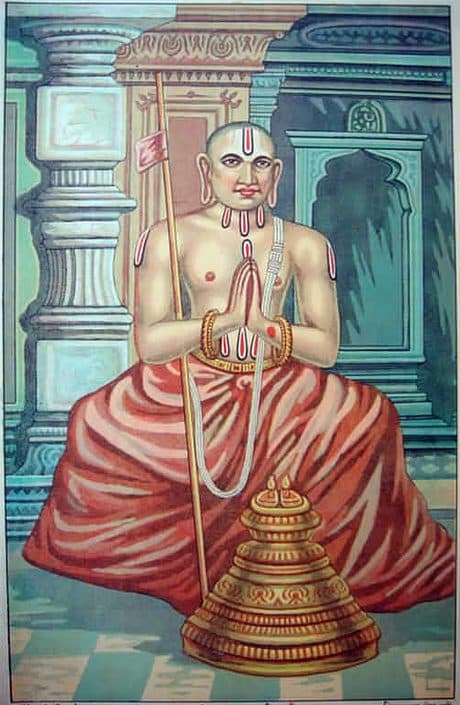
Rāmānuja · Viśiṣṭādvaita
EnglishOn verses 11.10–11
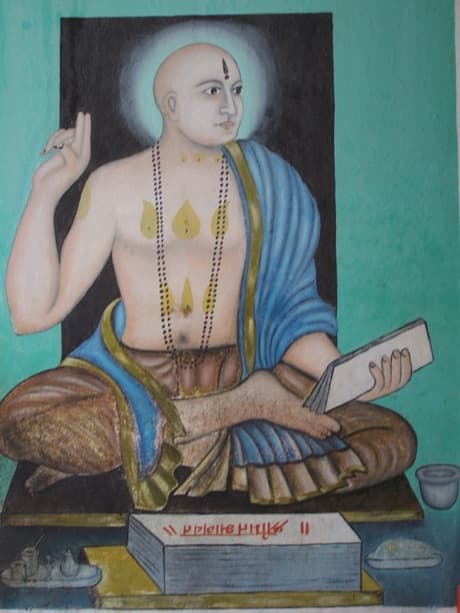
Madhvācārya · Dvaita
SanskritEnglishOn verses 11.10–11.12
“सर्वाश्चर्यमयम् सर्वाव्येत्सकाम् ||” - of wonderful form, of wonderful Self. “सहस्र शब्दोऽनन्तवाची | तदपि पाकशासनविक्रम इत्यादिवत् प्रत्यायनार्थमेव | तथा हि ऋग्वेदखिलेषु - अनन्तशक्तिः परमोऽनन्तवीर्यः सोऽनन्ततेजाश्च ततस्ततोऽपि इति | महातात्पर्याच्च प्राबल्यम् | न च परिमाणोक्त्या किञ्चित् प्रयोजनम् ||” - सहस्र means innumerable. Like the thousands of heroic deeds, for elucidation of the eternal power and eternal energy, resplendent splendor even exceeding the Sun, in Rig Veda, therefore no use to compare it with anything else.
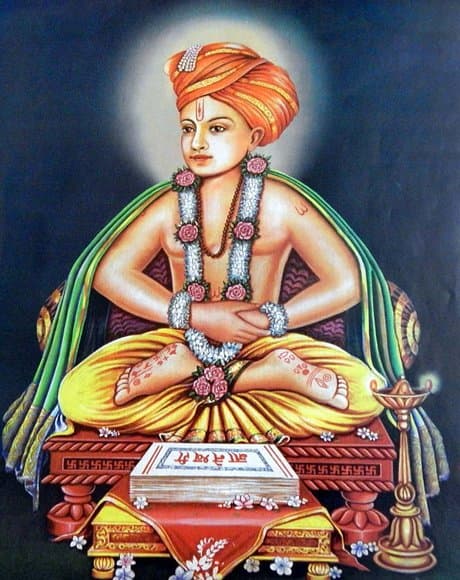
Jñāneśvar · Vārkarī
English11 "Bedecked with Heavenly flowers and raiments—anointed with Divine perfumes—instinct with every marvel—the God Infinite, facing everyway. (218)
Then withdrawing his vision for fear (from the hands) Kiriti glanced over the neck and the crown where he saw wreaths of flowers—beautiful flowers—which Arjuna mused with wonder, to be the source from which the Kalpa-tree (desire-fulfilling divine tree) takes root, on the very original fountainhead (मूळपीठ) of the great occult powers, (or) the very home to which the tired Goddess Lakshmi repairs for rest. Such lotuses the supreme person wore. Bunches of flowers hung out from the crown; on the limbs rolled flower armlets and plated network, wreaths dangled down the back. The sparkling yellowish silken raiment, girded the waist down to the loins like the splendour of the sun filling the sky. Further he beheld the divine Omnipresent Person—anointed with sandalpaste that looked like the mount Meru covered with gold plate, or Shiva bedaubed with camphor, or the milky ocean wrapped with milky white cloth, or the sky overlaid with a cloth unfolded of moon light. And what fragrance it was beggars description—fragrance that brightens the very lustre of self-illumination, that cools the warmth and sweat of divine ecstasy, that embalms the sweet fragrance of earth, that enthralls even the ascetic recluse, and that besmears the very person of cupid. Arjuna with his astonished gaze fixed on the entrancing vision of surpassing grandeur, was at his wits' end to make out if the supreme person was standing up, or sitting, or lying down. All around, the image of the supreme Presence met the eye as Arjuna opened it outside; shutting it out in silent wonder, he stood face to face with the supreme Person's Presence over again. In front, the supreme Person confronted him with countless faces; and as he turned back in dismay, there too Arjuna beheld the same sight of Omnipresence with innumerable faces, hands and feet. Indeed, it is no wonder that the all-pervading Deity appeared in that vision when Arjuna opened his eyes; that the Omnipresence was visible even when the eyes were shut, is a veritable miracle. How gracious was Lord Nārāyana? For he made himself manifest as filling all being—both what fell within Arjuna's seeing and what did not. Thus then did Arjuna struggle through a flood of wonders to get a foothold as solid ground; and suddenly he found himself thrown headlong into an ocean of miracles. With such uncommonly superb workmanship of his myriad forms did Nārāyana wrap Arjuna in that Omnipresent vision. In his own being, the Lord is an all-pervading presence, and was now besought by the Son of Pāṇḍu to reveal himself in a direct vision of universal Presence. Hence the Lord became one and all. And the sight which the Lord of Vaikunth bestowed on Arjuna, is not sight that sees with the help of candle-light, or daylight, nor does it cease to work when shut. Therefore, Kiriti saw the Omnipresence at either end and even in the dark. 'Hear this, Oh King Dhritarāshtra.' So Sanjaya said to King Dhritarāshtra at Hastinapura. Sanjaya added 'Oh king, do bear this in mind, that Pārtha beheld the vision of the divine Omnipresence with myriad faces bedecked with ornaments of varied kinds.'
Swami Ramsukhdas · Modern
EnglishOn verses 11.10–11.11
'Anekavaktranayanam'—All the mouths and eyes of the Supreme Deity, were divine. The mouth, eyes, arms and legs etc., of other beings, seen in his cosmic body were also His, because He had revealed Himself, as the Supreme Deity is His cosmic form.
'Anekādbhutadarśanam'—In the cosmic body of the Lord, innumerable, unusual and marvellous forms, shapes and colours, were beheld by Arjuna.
'Anekadivyābharaṇam'—All the ornaments of diverse forms on hands, feet, ears, noses and necks in the cosmic body of the Lord, were divine, because the Lord revealed Himself in ornaments.
'Divyānekodyatāyudham'—The Lord held, in His raised hands, many divine weapons, such as discus, club, bow, arrows and spear etc.
'Divyamālyāmbaradharam'—The Lord in his cosmic form, had many divine garlands of flowers, gold, silver, pearls, gems etc., around His neck, and was clad in various kinds of divine costumes of red, yellow, green, white, brown, and many other colours.
'Divyagandhānulepanam'—The Lord in his cosmic form, was besmeared with divine fragrances, such as musk, sandal and vermilion pastes on His face, head, as well as, all over his body.
'Sarvāścaryamayaṃ devamanantaṃ viśvatomukham'— The cosmic body, revealed by the Lord, was infinite and unbounded by space and the innumerable faces, forming part of that body covered all sides. Everything in the cosmic form, was wondrous.
If a man thinks that he is bathing in the Ganges at Haridvāra, though there is neither Haridvāra nor the Ganges, yet his mind forms different images of Haridvāra, the Ganges, bridge and people bathing there, similarly, the Lord manifested Himself in numberless forms, with ornaments, weapons, garlands, clothes and perfumes etc.
It is mentioned in the Śrīmadbhāgavata, that when Brahmā, the creator, stole some calves and the cowherds of Lord Kṛṣṇa, the Lord manifested Himself, not only as calves and cowherds, but also as canes, horns, flutes, clothes and ornaments (Śrīmadbhā. 10/13/19).
Appendix—In the second chapter there is mention of the marvellous nature of the soul which is a fragment of God (Gītā 2/29). Here is the mention of the wondrous (marvellous) form of the Lord. The more the Lord is beheld, the more singularity is perceived in Him. The singularity of the Lord is infinite (endless).
Link:—In the next verse, Sañjaya describes the effulgence, of the Lord's cosmic form.
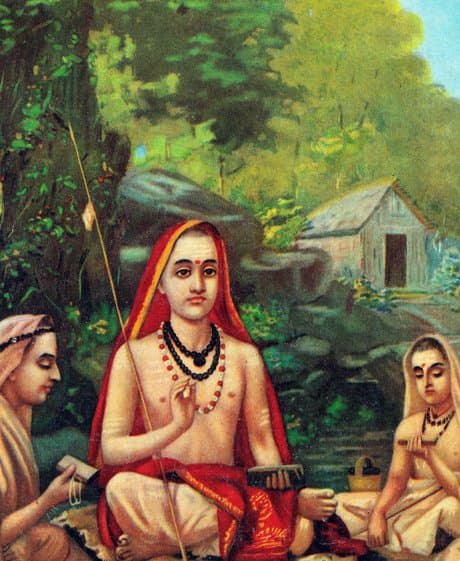
Ādi Śaṅkarācārya · Advaita
Sanskritदिव्यमाल्याम्बरधरं दिव्यानि माल्यानि पुष्पाणि अम्बराणि वस्त्राणि च ध्रियन्ते येन ईश्वरेण तं दिव्यमाल्याम्बरधरम्, दिव्यगन्धानुलेपनं दिव्यं गन्धानुलेपनं यस्य तं दिव्यगन्धानुलेपनम्, सर्वाश्चर्यमयं सर्वाश्चर्यप्रायं देवं अनन्तं न अस्य अन्तः अस्ति इति अनन्तः तम्, विश्वतोमुखं सर्वतोमुखं सर्वभूतात्मभूतत्वात्, तं दर्शयामास । ``अर्जुनः ददर्श'' इति वा अध्याह्रियते ॥ या पुनर्भगवतः विश्वरूपस्य भाः, तस्या उपमा उच्यते --
Ādi Śaṅkarācārya · Advaita
Hindiजिस ईश्वरने दिव्य पुष्पमालाओं और वस्त्रोंको धारण कर रखा है, जिसने दिव्य गन्धका अनुलेपन कर रखा है, जो समस्त आश्चर्यमय दृश्योंसे युक्त है, जो सब भूतोंका आत्मा होनेके कारण सब ओर मुखवाला है तथा जिसका अन्त नहीं है ऐसा अनन्त और दिव्य विराट्कूप भगवान्ने अर्जुनको दिखलाया, इस प्रकार पूर्वश्लोकसे अन्वय कर लेना चाहिये अथवा अर्जुनने ऐसा रूप 'देखा' इस प्रकार अध्याहार कर लेना चाहिये
Jñāneśvar · Vārkarī
Marathiकीं भेणें तेथूनि काढिली दिठी । मग कंठमुगुट पहातसे किरीटी । तंव सुरतरूची सृष्टी । जयांपासोनि कां जाहली ॥ २१८ ॥ जिये महासिद्धींचीं मूळपीठें । शिणली कमळा जेथ वावटे । तैसीं कुसुमें अति चोखटें । तुरंबिलीं देखिलीं ॥ २१९ ॥ मुगुटावरी स्तबक । ठायीं ठायीं पूजाबंध अनेक । कंठीं रुळताति अलौकिक । माळादंड ॥ २२० ॥ स्वर्गें सूर्यतेज वेढिलें । जैसें पंधरेनें मेरूतें मढिलें । तैसें नितंबावरी गाढिलें । पीतांबरु झळके ॥ २२१ ॥ श्रीमहादेवो कापुरें उटिला । कां कैलासु पारजें डवरिला । नाना क्षीरोदकें पांघरविला । क्षीरार्णवो जैसा ॥ २२२ ॥ जैसी चंद्रमयाची घडी उपलविली । मग गगनाकरवीं बुंथी घेवविली । तैसीं चंदनपिंजरी देखिली । सर्वांगीं तेणें ॥ २२३ ॥ जेणें स्वप्रकाशा कांतीं चढे । ब्रह्मानंदाचा निदाघु मोडे । जयाचेनि सौरभ्यें जीवित जोडे । वेदवतीये ॥ २२४ ॥ जयाचे निर्लेप अनुलेपु करी । जे अनंगुही सर्वांगीं धरी । तया सुगंधाची थोरी । कवण वानी ? ॥ २२५ ॥ ऐसी एकैक शृंगारशोभा । पाहतां अर्जुन जातसें क्षोभा । तेवींचि देवो बैसला कीं उभा । का शयालु हें नेणवें ॥ २२६ ॥ बाहेर दिठी उघडोनि पाहे । तंव आघवें मूर्तिमय देखत आहे । मग आतां न पाहें म्हणौनि उगा राहे । तरी आंतुही तैसेंचि ॥ २२७ ॥ अनावरें मुखें समोर देखे । तयाभेणें पाठीमोरा जंव ठाके । तंव तयाहीकडे श्रीमुखें । करचरण तैसेचि ॥ २२८ ॥ अहो पाहतां कीर प्रतिभासे । एथ नवलावो काय असे ? । परि न पाहतांही दिसे । चोज आइका ॥ २२९ ॥ कैसें अनुग्रहाचें करणें । पार्थाचें पाहणें आणि न पाहणें । तयाही सकट नारायणें । व्यापूनि घेतलें ॥ २३० ॥ म्हणौनि आश्चर्याच्या पुरीं एकीं । पडिला ठायेठाव थडीं ठाकी । तंव चमत्काराचिया आणिकीं । महार्णवीं पडे ॥ २३१ ॥ तैसा अर्जुनु असाधारणें । आपुलिया दर्शनाचेनि विंदाणें । कवळूनि घेतला तेणें । अनंतरूपें ॥ २३२ ॥ तो विश्वतोमुख स्वभावें । आणि तेचि दावावयालागीं पांडवें । प्रार्थिला आतां आघवें । होऊनि ठेला ॥ २३३ ॥ आणि दीपें कां सूर्यें प्रगटे । अथवा निमुटलिया देखावेंचि खुंटे । तैसी दिठी नव्हे जे वैकुंठें । दिधली आहे ॥ २३४ ॥ म्हणौनि किरीटीसि दोहीं परी । तें देखणें देखें अंधारी । हें संजयो हस्तिनापुरीं । सांगतसे राया ॥ २३५ ॥ म्हणे किंबहुना अवधारिलें । पार्थें विश्वरूप देखिलें । नाना आभरणीं भरलें । विश्वतोमुख ॥ २३६ ॥
Jñāneśvar · Vārkarī
Hindi(11.218) अर्जुन ने डर कर वहाँ से दृष्टि हटा ली। वह कण्ठ और मुकुट देखने लगा तो जिनसे कल्पवृक्ष की सृष्टि उत्पन्न हुई हो,
(11.219) अथवा जो महासिद्धियों के आद्यस्थान हो, अथवा शान्त हुई लक्ष्मी जहाँ विश्राम लेती हो, ऐसे अत्यन्त निर्मल पुष्प धारण किये हुए कण्ठ और मुकुट उसे दिखाई दिये।
(11.220) मुकुट के ऊपर जहाँ तहाँ फूलों के गुच्छे और पूजोपचार बँधे हुए और कण्ठ में असाधारण पुष्पमालाएँ झूलती हुई दिखाई दीं।
(11.221) जैसे स्वर्ग ने सूर्य के प्रकाश का आच्छादन किया हो, अथवा जैसे मेरु पर्वत सोने से मढ़ दिया गया हो, अथवा मेरु पर्वत सोने से मढ़ दिया गया हो ऐसा नितम्ब पर पहना हुआ पीताम्बर शोभा दे रहा था। (11.222) और मानों श्रीशंकर का कपूर का उबटन किया हो, अथवा कैलास को पारे का लेप कर दिया गया हो, अथवा क्षीरसमुद्र पर सफेद वस्त्र का आच्छादन किया गया हो,
(11.223) जैसे चन्द्रिका की तह खोली गई हो और आकाश ने उसे ओढ़ कर घूँघट कर लिया हो, इस प्रकार उसने सर्वांग में चन्दन का उबटन लगा हुआ देखा।
(11.224) जिस सुगन्ध के द्वारा स्वप्रकाश अधिक कान्तिमान् होता है तथा ब्रह्मानन्द की भी दाह शान्त होती है, और जिस सुगन्ध से पृथ्वी को जीवन प्राप्त होता है,
(11.225) जिसके लेप से निर्मलता प्राप्त होती है, जिसे शरीर-रहित ब्रह्म भी सर्वांग में धारण करता है उस सुगन्ध की महिमा कौन वर्णन कर सकता है?
(11.226) इस प्रकार एक एक शृंगारशोभा देखते हुए अर्जुन घबड़ा उठा और यह भी न जान सका कि देव बैठे हैं, खड़े हैं, या सम्मुख हैं।
(11.227) बाहर आँखें खेल कर देखता है तो सब मूर्तिमय दिखाई देता है, और फिर आँखें मूँदकर चुप रहता है तो भीतर भी वही दृश्य दिखाई देता है। (11.228) सामने अगणित मुख दिखलाई देते हैं। उनके डर से जो पीछे की ओर देखता है तो वहाँ भी वैसे ही श्रीमुख, कर, चरण इत्यादि दिखाई देते हैं।
(11.229) अजी, देखने से दिखाई देंगे इसमें क्या आश्चर्य है, परन्तु यह नई बात देखिए कि न देखते हुए भी दिखाई देते हैं।
(11.230) अनुग्रह का कैसा कार्य है कि पार्थ का देखना और न देखना स्वयं पार्थ के सहित श्रीनारायण ने व्याप्त कर डाला है।
(11.231) और, अर्जुन ज्योंही एक आश्चर्य की बाढ़ में पड़ कर तत्काल किनारे पर आता है त्योंही दूसरे चमत्कार के महासमुद्र में जा पड़ता है।
(11.232) इस प्रकार अनन्तरूप श्रीकृष्ण ने अर्जुन का अपने दर्शन की असाधारण कुशलता से लिपटा लिया।
(11.233) वह स्वभावतः विश्वतोमुख है, और यही विश्वरूप देखने के लिए अर्जुन ने प्रार्थना की थी। अतएव वह सम्पूर्ण विश्वमय हो रहा।
(11.234) जो दृष्टि श्रीकृष्ण ने अर्जुन को दी थी वह ऐसी नहीं थी कि दीपक या सूर्य के प्रकाश में ही प्रकट हो और आँख मीचते ही उसका देखना बन्द हो जावे। (11.235) अतएव अर्जुन का दोनों ओर वह स्वरूप दिखाई देता ही था। यह बात संजय ने हस्तिनापुर में धृतराष्ट्र से निवेदन की
(11.236) और कहा कि बहुत क्या कहें, यह जान ले कि अर्जुन ने नाना अलंकार पहने हुए विश्वतोमुख विश्वरूप का दर्शन किया।
Sri Udiya Baba · Modern
HindiOn verses 11.10–11.11
भावार्थ— वह रूप अनेक मुख, अनेक नेत्र और अनेकों अद्भुत दर्शनों से युक्त था। उसने अनेकों दिव्य आभूषण और दिव्य शस्त्रास्त्र धारण किये हुए थे। वह दिव्य मालाएँ और वस्त्र तथा दिव्य गन्ध और अनुलेपन से सुसज्जित था। इस प्रकार वह सब प्रकार के आश्चर्यों से युक्त, दिव्य, अनन्त और सब ओर मुखवाला था।
Swami Ramsukhdas · Modern
HindiOn verses 11.10–11.11
‘अनेकवक्त्रनयनम्’—विराट्रूपसे प्रकट हुए भगवान्के जितने मुख और नेत्र दीख रहे हैं, वे सब-के-सब दिव्य हैं। विराट्रूपमें जितने प्राणी दीख रहे हैं, उनके मुख, नेत्र, हाथ, पैर आदि सब-के-सब अंग विराट्रूप भगवान्के हैं। कारण कि भगवान् स्वयं ही विराट्रूपसे प्रकट हुए हैं।
‘अनेकाद्भुतदर्शनम्’—भगवान्के विराट्रूपमें जितने रूप दीखते हैं, जितनी आकृतियाँ दीखती हैं, जितने रंग दीखते हैं, जितनी उनकी विचित्र रूपसे बनावट दीखती है, वह सब-की-सब अद्भुत दीख रही है।
‘अनेकदिव्याभरणम्’—विराट्रूपमें दीखनेवाले अनेक रूपोंके हाथोंमें, पैरोंमें, कानोंमें, नाकोंमें और गलोंमें जितने गहने हैं, आभूषण हैं, वे सब-के-सब दिव्य हैं। कारण कि भगवान् स्वयं ही गहनोंके रूपमें प्रकट हुए हैं।
‘दिव्यानेकोद्यतायुधम्’—विराट्रूप भगवान्ने अपने हाथोंमें चक्र, गदा, धनुष, बाण, परिघ आदि अनेक प्रकारके जो आयुध (अस्त्र-शस्त्र) उठा रखे हैं, वे सब-के-सब दिव्य हैं।
‘दिव्यमाल्याम्बरधरम्’—विराट्रूप भगवान्ने गलेमें फूलोंकी, सोनेकी, चाँदीकी, मोतियोंकी, रत्नोंकी, गुंजाओं आदिकी अनेक प्रकारकी मालाएँ धारण कर रखी हैं। वे सभी दिव्य हैं। उन्होंने अपने शरीरोंपर लाल, पीले, हरे, सफेद, कपिश आदि अनेक रंगोंके वस्त्र पहन रखे हैं, जो सभी दिव्य हैं।
‘दिव्यगन्धानुलेपनम्’—विराट्रूप भगवान्ने ललाटपर
दिव्यगन्धानुलेपनम् = जिनके ललाट तथा शरीरपर दिव्य चन्दन, कुंकुम आदि लगा हुआ है, सर्वाश्चर्यमयम् = ऐसे सम्पूर्ण आश्चर्यमय, अनन्तम् = अनन्त रूपोंवाले (तथा) विश्वतोमुखम् = सब तरफ मुखोंवाले देवम् = देव-(अपने दिव्य स्वरूप-) को (भगवान्ने दिखाया)।
कस्तूरी, चन्दन, कुंकुम आदि गन्धके जितने तिलक किये हैं तथा शरीरपर जितने लेप किये हैं, वे सब-के-सब दिव्य हैं।
‘सर्वाश्चर्यमयं देवमनन्तं विश्वतोमुखम्’—इस प्रकार देखते ही चकित कर देनेवाले, अनन्तरूपवाले तथा चारों तरफ मुख-ही-मुखवाले अपने परम ऐश्वर्यमय रूपको भगवान्ने अर्जुनको दिखाया।
जैसे, कोई व्यक्ति दूर बैठे ही अपने मनसे चिन्तन करता है कि मैं हरिद्वारमें हूँ तथा गंगाजीमें स्नान कर रहा हूँ, तो उस समय उसको गंगाजी, पुल, घाटपर खड़े स्त्री-पुरुष आदि दीखने लगते हैं तथा मैं गंगाजीमें स्नान कर रहा हूँ—ऐसा भी दीखने लगता है। वास्तवमें वहाँ न हरिद्वार है और न गंगाजी हैं; परन्तु उसका मन ही उन सब रूपोंमें बना हुआ उसको दीखता है। ऐसे ही एक भगवान् ही अनेक रूपोंमें, उन रूपोंमें पहने हुए गहनोंके रूपमें, अनेक प्रकारके आयुधोंके रूपमें, अनेक प्रकारकी मालाओंके रूपमें, अनेक प्रकारके वस्त्रोंके रूपमें प्रकट हुए हैं। इसलिये भगवान्के विराट्रूपमें सब कुछ दिव्य है।
श्रीमद्भागवतमें आता है कि जब ब्रह्माजी बछड़ों और ग्वालबालोंको चुराकर ले गये, तब भगवान् श्रीकृष्ण स्वयं ही बछड़े और ग्वालबाल बन गये। बछड़े और ग्वालबाल ही नहीं, प्रत्युत उनके बेंत, सींग, बाँसुरी, वस्त्र, आभूषण आदि भी भगवान् स्वयं ही बन गये (श्रीमद्भा०, दसवाँ स्कन्ध, तेरहवाँ अध्याय, उन्नीसवाँ श्लोक)।
**परिशिष्ट भाव**—दूसरे अध्यायमें तो भगवान्के अंश जीवका सब कुछ आश्चर्यमय बताया गया है (गीता—दूसरे अध्यायका उन्तीसवाँ श्लोक), यहाँ भगवान्का सब कुछ आश्चर्यमय बताते हैं। भगवान्को ज्यों देखें, त्यों-ही विलक्षणता दीखती चली जाती है। भगवान्की विलक्षणता अनन्त है।
सम्बन्ध—अब संजय विश्वरूपके प्रकाशका वर्णन करते हैं।
Sanjaya who could visually see everything that transpired on the battlefield by the grace of Vedavyāsa, uses the word divya meaning divine, to show the resplendent and celestial quality of everything associated with the Supreme Lord Krishna.
The word anantam means unlimited - denoting that the Viśvarūpa or divine universal form is the refuge for all creation from the past, in the present and into the future and not subject to time and space.
The words viśvato-mukham means many faces in every direction. So the Viśvarūpa is exhibited with the appropriate divine weapons, divine ornaments and divine apparel.