

Bhagavad Gītā · Chapter 11 · Viśvarūpa Darśana Yoga
श्री भगवानुवाच
कालोऽस्मि लोकक्षयकृत्प्रवृद्धो
लोकान्समाहर्तुमिह प्रवृत्तः
ऋतेऽपि त्वां न भविष्यन्ति सर्वे
येऽवस्थिताः प्रत्यनीकेषु योधाः
śrī bhagavānuvāca
kālo'smi lokakṣayakṛtpravṛddho
lokānsamāhartumiha pravṛttaḥ|
ṛte'pi tvāṃ na bhaviṣyanti sarve
ye'vasthitāḥ pratyanīkeṣu yodhāḥ||
Word meanings
लोकक्षयकृत् = the destroyer of worlds
प्रवृद्धः = grown mighty
कालः = time
अस्मि = I am
इह = here
लोकान् = worlds
समाहर्तुम् = to destroy
प्रवृत्तः = engaged
प्रत्यनीकेषु = in the opposing ranks
ये = who
योधाः = warriors
अवस्थिताः = arrayed
सर्वे = all
त्वाम् = you
ऋते = without
अपि = also
न = not
भविष्यन्ति = will be
Translation
Sri Bhagavan said: I am inflamed Kala (the eternal Time-Spirit), the destroyer of the worlds. I am out to exterminate these people. Even without you all those warriors arrayed in the enemy's camp must die.
Commentary
The commentators seated around this verse
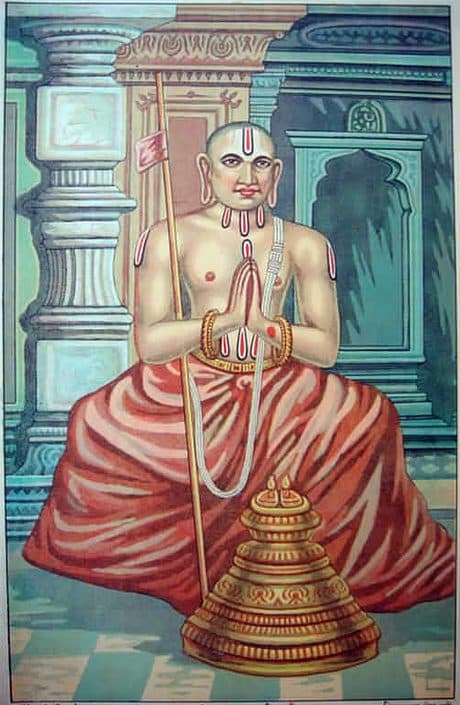
Rāmānuja · Viśiṣṭādvaita
English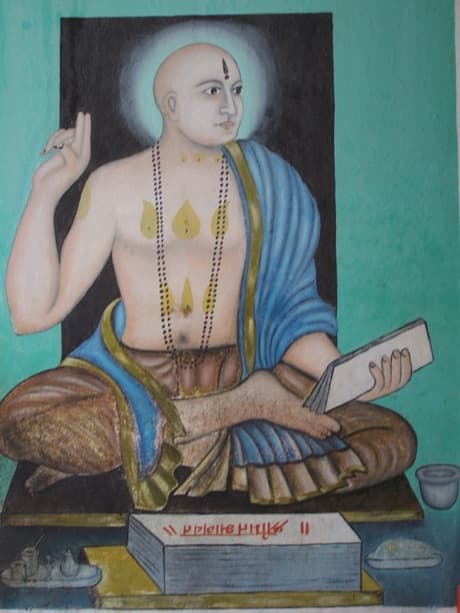
Madhvācārya · Dvaita
Madhva BhāṣyaSanskritEnglish“काल शब्दो जगद्वन्धनच्छेदनज्ञानादि सर्वभगवद्वर्मवाची | कल वन्धने, कल छेदने, कल कमधेनुः इति हि पठन्ति | प्रसिद्धश्च स शब्दो भगवति | नियतं कालपाशेन बद्धं शक विकलयसे | अयं स पुरुषः श्यामो लोकस्य हरति प्रजाः | बद्ध्वा तिष्ठति मां रौद्रः पशून् रशनया यथा | इति मोक्षधर्मे विष्णुना बद्धो बलिवक्ति | विष्णो चाधीश्वरं चित्तं धारयन् कालविग्रहे इति हि भागवते ||” - The word काल means Time that binds as well as disintegrates, embodiment of Wisdom and the Perennial Principles established by Resplendent Lord. The word Kaala derived from the root कल, as that which binds, severs and provider of all desires and popularly known as the Resplendent Lord, used by Bali when he addressed Indra – “O Indra, you are praising yourself before me who is bound by the shackles of Time. The Time, verily, is the Sri Hari. He is the Person dark in colour who binds the people of the world, and once having bound and pulling them stands out terrible as Time”. “Sri Vishnu as the symbol of Time draws towards Himself the mind of the people”, thus in Bhagavat Puraana.
“प्रबुद्धः परिपूर्णोऽनादिर्वा - ऋतं सत्यं चाभीद्वात्, इति हि श्रुतिः | एतन् महद् भूतमनन्तम् इति च | प्र विष्णुर् अस्तु तवसस् तवीयान् त्वेशं ह्यस्य स्थविरस्य नाम | इति च || न तु बद्धनम् - नासौ जजान न मरिष्यति नैधतेऽसौ | इति हि भागवते | यस्य दिव्यं हि तद् रूपं हीयते बद्धते न च | इति मोक्षधर्मे | न कर्मणा इति तु कर्मणोऽपि न, किमु स्वयम् इति | लोकान् समहर्तुमिह विशेषेण प्रवृत्तः | भावादिश्वतं इति अपि शब्दः | प्रत्यनीकत्वं तु परस्परतया | सर्वे हि न भविष्यन्ति | अक्षोभिर्यादिभेदेन बहुवचनं च युक्तम् ||” - प्रबुद्धः means one who is complete, in entirety, since the beginning. As said in scriptures, “From Him in ancient times, cosmic Law and Truth were born”. “This is the great and the perennial past event”. Here it refers to Sri Vishnu and his propitiation is truly extolling his name. He is not subject to बद्धनम् - growing up. “He is neither born, nor does He die, nor does He grow either”, thus in Bhagavat Puraana. “Whose form, verily, is divine, for Him there is neither contraction nor expansion”, thus in Moksha Dharma. न कर्मणा - not by action. When He cannot grow by performance of actions, how could there be from any exertion? He is capable of destruction of all at one moment; therefore, the adjective इह is used. Excepting Pandava brothers, to convey this message the word अपि is used. प्रत्यनीक means of both sides (not Kauravas alone). Because of the many subdivisions of the armies, the plural word प्रत्यनीकेषु is used.
Madhvācārya · Dvaita
Gītā Tātparya NirṇayaSanskritEnglish“कालः कलितसम्पूर्णसद्गुणत्वाज्जनार्दनः | संहारात् सर्वविच्चाद् वा सर्वविद्रावणेन वा | इति महावराहे | अपि शब्देन भावदीनप्युते ||” - Since the Lord is endowed with complete attributes, destroys the worlds, is the knower of all, and the one who moves all, He is known as Kaala. Thus in Varaha Puraana. By using the adjective अपि, the exclusion of his brothers is suggested.
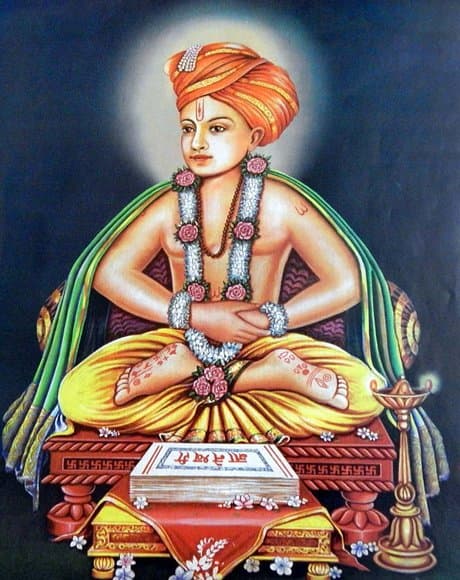
Jñāneśvar · Vārkarī
English32 “The Exalted-one spake: “I am the Time (—Spirit), grown to maturity and causing the destruction of the worlds, who am busy (now) in withdrawing the world (within Me). Even without thee they would cease to be: all the warriors that are stationed in the hostile armies. (451)
Hear then, “I am in very truth the Time (—Spirit—काळ) that has grown to fullness for world destruction. See these innumerable mouths of mine that have yawned and I shall now swallow the universe.” At this Arjuna said, “Alas, in my first distress, I turned to Lord Krishna for help, and besought Him for relief; and with what a tremendous fury He has burst upon me!” Lord Krishna too fearing that His harsh words might cut Arjuna to the heart, spake thus:—“Mark ye, Oh Kiriti, one thing that relieves the fury of this destruction; ye Pandavas shall enjoy a secure existence out of this universal destruction.” These words gave Arjuna a fresh lease of life that was almost departing, for he was indeed in the very clutches of death; and now recalled to life, he became heedful of Lord Krishna’s words. Lord Krishna said, “Oh Arjuna, mark ye, that ye Pandavas are dear to Me; so you Pandavas shall be safe, while everything else is being engulfed by me. The universe you have seen going into my mouths, is verily like a morsel of butter, falling into the dreadful thunderbolt fire, and doubt not for a moment what is hidden behind this terrific sight. These armies are vainly indulging in empty talk. On the strength of this four-limbed army, they are vying with the great destroyer, being infatuated with the conceit of their power! They aver that they counter-plot the creation of a new universe itself (सृष्टीवरी सृष्टि), and would vow vengeance against the great slayer, and would drain to the dregs, in a single draught, the entire world. They would gulp down the entire earth, would burn the very canopy of sky, just as it hangs, and nail down with arrows the wind to one single spot. Thus these assembled hosts of warriors are seething with the lust of battle and vaunting their valour to scoff at the God of Death. With their words cutting sharper than their weapons, and with their eyes glowing with a glare, fiercer than fire, they make the malignant virulence of even the deadliest poison taste sweet. But know these to be nothing more than mansions in air-cities of cloud-land, or mere men of straw stuffed with void. Or they are like paper-fruits drawn in pictures. It is as though a mirage is in floods; or a snake made of rags and not a real army is facing you. They are thus mere well-decorated puppet show.
Swami Ramsukhdas · Modern
English[After reflection, the Lord's cosmic form, seems very extraordinary, because even for Arjuna, possessing the divine eyes it was hard to look at (11/17). Being terrified, Arjuna asked him Who, He was. It seems, that if Arjuna had not put this question to Him, He might have continued to reveal Himself,
to him. But when Arjuna, questioned Him, He ceased revealing Himself and answered his question.]
'Kālo'smi lokakṣayakṛtpravṛddhah'—In the preceding verse, Arjuna asked the Lord, Who He was. So the Lord replied, that He was the mighty world-destroying Time.
'Lokānsamāhartumiha pravṛttaḥ'—Arjuna, said to the Lord, that he did not know His purpose, what He wanted to do. So the Lord answered, that He wanted to exterminate, the warriors of the two armies.
'Rte'pi tvām na bhaviṣyanti sarve ye'vasthitāḥ pratyamikeṣu yodhāḥ'—Arjuna had said that he would not fight (2/9). So Lord Kṛṣṇa says, that even without him, the warriors arrayed in the hostile army will not survive, because He Himself is bent upon their destruction, and their chances for survival, are nil. Moreover, he himself has seen that the warriors of both the armies were rushing headlong, into His terrible mouths.
Here a doubt arises, that Arjuna saw the warriors of both the armies, rushing headlong into the Lord's mouth, why does the Lord, refer only to the warriors of the hostile army that they will not survive, even without him? The clarification is that Arjuna while fighting, was going to kill the warriors of the hostile army. So, the Lord says that even if he does not kill the warriors of the hostile army, they will not be spared; their destruction is inevitable.
Now, another doubt arises as to why warriors such as Aśvatthāmā etc., were saved. The clarification is, that the Lord talks only about those warriors, who would be killed by Arjuna. The Lord means to say to Arjuna, that the destruction of those warriors of his hostile army, who would be killed by him, is inevitable because they have already been slain by Him, he should become, merely an instrument (11/33).
Link:—In the above verse, the Lord declared, that even without Arjuna, the warriors of his hostile army would not survive. Why then should Arjuna at all engage himself, in this carnage? The answer is given, in the next two verses, by the Lord.
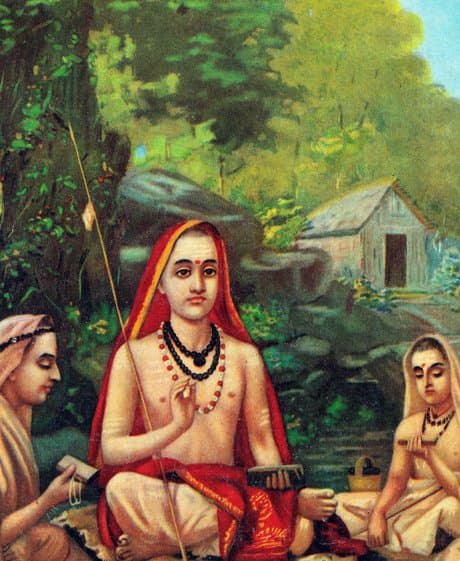
Ādi Śaṅkarācārya · Advaita
Sanskritकालः अस्मि लोकक्षयकृत् लोकानां क्षयं करोतीति लोकक्षयकृत् प्रवृद्धः वृद्धिं गतः । यदर्थं प्रवृद्धः तत् शृणु -- लोकान् समाहर्तुं संहर्तुं इह अस्मिन् काले प्रवृत्तः । ऋतेऽपि विनापि त्वा त्वां न भविष्यन्ति भीष्मद्रोणकर्णप्रभृतयः सर्वे, येभ्यः तव आशङ्का, ये अवस्थिताः प्रत्यनीकेषु अनीकमनीकं प्रति प्रत्यनीकेषु प्रतिपक्षभूतेषु अनीकेषु योधाः योद्धारः ॥ यस्मात् एवं --
Ādi Śaṅkarācārya · Advaita
Hindiमैं लोकोंका नाश करनेवाला बढ़ा हुआ काल हूँ। मैं जिस लिये बढ़ा हूँ वह सुन, इस समय मैं लोकोंका संहार करनेके लिये प्रवृत्त हुआ हूँ, इससे तेरे बिना भी (अर्थात् तेरे युद्ध न करनेपर भी) ये सब भीष्म, द्रोण और कर्ण प्रभृति शूरवीर—योद्धालोग जिनसे तुझे आशङ्का हो रही है एवं जो प्रतिपक्षियोंकी प्रत्येक सेनामें अलग-अलग डटे हुए हैं—नहीं रहेंगे
Jñāneśvar · Vārkarī
Marathiतरी मी काळु गा हें फुडें । लोक संहारावयालागीं वाढें । सैंघ पसरिलीं आहातीं तोंडें । आतां ग्रासीन हें आघवें ॥ ४५१ ॥ एथ अर्जुन म्हणे कटकटा । उबगिलों मागिल्या संकटा । म्हणौनि आळविला तंव वोखटा । उवाइला हा ॥ ४५२ ॥ तेवींचि कठिण बोलें आसतुटी । अर्जुन होईल हिंपुटी । म्हणौनि सवेंचि म्हणे किरीटी । परि आन एक असे ॥ ४५३ ॥ तरी आतांचिये संहारवाहरे । तुम्हीं पांडव असा बाहिरे । तेथ जातजातां धनुर्धरें । सांवरिले प्राण ॥ ४५४ ॥ होता मरणमहामारीं गेला । तो मागुता सावधु जाहला । मग लागला बोला । चित्त देऊं ॥ ४५५ ॥ ऐसें म्हणिजत आहे देवें । अर्जुना तुम्ही माझें हें जाणावें । येर जाण मी आघवें । सरलों ग्रासूं ॥ ४५६ ॥ वज्रानळीं प्रचंडीं । जैसी घापे लोणियाची उंडी । तैसें जग हें माझिया तोंडीं । तुवां देखिलें जें ॥ ४५७ ॥ तरी तयामाझारीं कांहीं । भरंवसेनि उणें नाहीं । इये वायांचि सैन्यें पाहीं । बरवतें आहाती ॥ ४५८ ॥ ऐसा चतुरंगाचिया संपदा । करित महाकाळेंसीं स्पर्धा । वांटिवेचिया मदा । वघळले जे ॥ ४५९ ॥ हे जे मिळोनियां मेळे । कुंथती वीरवृत्तीचेनि बळें । यमावरी गजदळें । वाखाणिजताती ॥ ४६० ॥ म्हणती सृष्टीवरी सृष्टी करूं । आण वाहूनि मृत्यूतें मारूं । आणि जगाचा भरूं । घोंटु यया ॥ ४६१ ॥ पृथ्वी सगळीचि गिळूं । आकाश वरिच्यावरी जाळूं । कां बाणवरी खिळूं । वारयातें ॥ ४६२ ॥ बोल हतियेराहूनि तिखट । दिसती अग्निपरिस दासट । मारकपणें काळकूट । महुर म्हणत ॥ ४६३ ॥ तरी हे गंधर्वनगरींचे उमाळे । जाण पोकळीचे पेंडवळें । अगा चित्रीव फळें । वीर हे देखें ॥ ४६४ ॥ हां गा मृगजळाचा पूर आला । दळ नव्हे कापडाचा साप केला । इया शृंगारूनियां खाला । मांडिलिया पैं ॥ ४६५ ॥
Jñāneśvar · Vārkarī
Hindi(11.451) तो वास्तव में मैं काल हूँ और लोक-संहार के लिए बढ़ रहा हूँ तथा चहुँओर जो मैंने मुख फैलाये हैं उनमें मैं इस सम्पूर्ण विश्व को ग्रस लूँगा।
(11.452) तब अर्जुन ने कहा, हाय हाय! पिछले संकट से उकता कर प्रार्थना की तो और भी बुराई उपस्थित हुई। (11.453) परन्तु यह जानकर कि इन कठिन शब्दों का सुन कर अर्जुन निराश और दुःखी होगा श्रीकृष्ण ने साथ ही यह कह दिया कि एक बात और है,
(11.454) तुम पाण्डव इस संहाररूपी संकट के बाहर हो। तब कहीं अर्जुन के प्राण जाते जाते बचे।
(11.455) वह मृत्युरूपी महामारी के अधीन हो गया था, सो फिर सचेत हुआ और श्रीकृष्ण के वचनों की ओर चित्त देने लगा।
(11.456) श्रीकृष्ण ने कहा कि हे अर्जुन! ध्यान रखो कि तुम मुझे प्रिय हो। तुम्हारे अतिरिक्त और सबों को ग्रसने के लिए मैं तैयार हूँ।
(11.457) प्रचण्ड वज्राग्नि में जैसे कोई माखन की गोली डाली जाय वैसा ही सब जगत् मेरे मुँह में पड़ा है। यह तुमने देखा
(11.458) इसमें निश्चय से कुछ अन्तर नहीं है। ये सेनाएँ देखो, वृथा वल्गना कर रही हैं।
(11.459) चतुरंग सेना के ये सब वीर जो पराक्रममद के वश हो महाकाल से स्पर्धा करते हैं,
(11.460) जो सब इकट्ठे मिल कर शूरवृत्ति के बल से गरज रहे हैं, (11.461) जो कह रहे हैं कि हम ऐसी ही दूसरी सृष्टि निर्मित करेंगे, प्रतिज्ञा-पूर्वक मृत्यु का भी मारेंगे तथा जगत् का घूँट पियेंगे,
(11.462) सम्पूर्ण पृथ्वी लील लेंगे, ऊपर के ऊपर ही आकाश का जला डालेंगे, तथा वायु की बात ही क्या है, उसे बाणों से जर्जर कर डालेंगे,
(11.463) जिनके वचन शस्त्रों से भी तीक्ष्ण हैं, जो अग्नि के समान दाहक दिखाई देते हैं, तथा जो मारने के काम में कालकूट को भी मधुर कहवाते हैं,
(11.464) वे सब वीर देखे, केवल गन्धर्व नगरी के भवके अथवा पोलेपन के बने हुए गोले वा चित्र में लिखे हुए पुतले हैं,
(11.465) मानों कोई मृगजल की बाढ़ आई हो; अथवा यह सेना नहीं, मानों कोई कपड़े का साँप बनाया हुआ है, अथवा कोई गुड़िया सिंगार कर खड़ी की गई है।
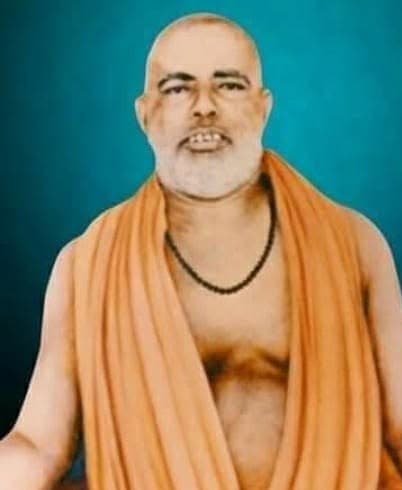
Sri Udiya Baba · Modern
Hindiभावार्थ— श्री भगवान् बोले—मैं लोकों का संहार करने के लिये बड़ा हुआ काल हूँ। यहाँ लोकों का संहार करने में ही लगा हुआ हूँ। इस दोनों सेनाओं में जो वीर विद्यमान हैं वह तेरे बिना भी [अर्थात् तेरे युद्ध न करने पर भी] बचेंगे नहीं।
व्याख्या— श्री भगवान् ने यहाँ अपने को काल कहा है, क्योंकि अगले श्लोक में वे कहेंगे कि ये सब मेरे द्वारा मारे हुए हैं, तू केवल निमित्तमात्र हो जा। अर्थात् तेरे सिवा मैं सभी का संहार करूँगा। भगवान् अपने अभक्तों का, दुष्टों का या रजोगुणी-तमोगुणी भक्तों का संहार करते हैं। यहाँ यद्यपि भीष्मादि सात्त्विक भक्त हैं तथापि दुर्योधनादि दुष्टों का संग करने से वे भी बध के योग्य हो गये हैं। इसलिये उनका भी संहार करेंगे। यहाँ 'न भविष्यन्ति सर्वे' ऐसा बहुवचन है। इसका अर्थ यह है कि जैसे केवल स्वप्न-द्रष्टा ही रह जाता है और सब स्वप्न-पुरुष जगने पर नहीं रहते उसी प्रकार अब बोध होने पर तेरे सिवा और सम्पूर्ण दृश्य सत्ताशून्य हो जायगा।
Swami Ramsukhdas · Modern
Hindi[ भगवान्का विश्वरूप विचार करनेपर बहुत विलक्षण मालूम देता है; क्योंकि उसको देखनेमें अर्जुनकी दिव्यदृष्टि भी पूरी तरहसे काम नहीं कर रही है और वे विश्वरूपको कठिनतासे देखे जानेयोग्य बताते हैं— ‘दुर्निरीक्ष्यं समन्तात्’ (११।१७)। यहाँ भी वे भगवान्से पूछ बैठते हैं कि उग्ररूपवाले आप कौन हैं? ऐसा मालूम देता है कि अगर अर्जुन भयभीत होकर ऐसा नहीं पूछते तो भगवान् और भी अधिक विलक्षणरूपसे प्रकट होते चले जाते। परन्तु अर्जुनके बीचमें ही पूछनेसे भगवान्ने और आगेका रूप दिखाना बन्द कर दिया और अर्जुनके प्रश्नका उत्तर देने लगे।]
**‘कालोऽस्मि लोकक्षयकृत्प्रवृद्धः’**—पूर्वश्लोकमें अर्जुनने पूछा था कि उग्ररूपवाले आप कौन हैं— ‘आख्याहि मे को भवानुग्ररूपः, उसके उत्तरमें विराट् रूप भगवान् कहते हैं कि मैं सम्पूर्ण लोकोका क्षय (नाश) करनेवाला बड़े भयंकररूपसे बड़ा हुआ अक्षय काल हूँ।
**‘लोकान्ममाहर्तुमिह प्रवृत्तः’**—अर्जुनने पूछा था कि मैं आपकी प्रवृत्तिको नहीं जान रहा हूँ— ‘न हि प्रजानामि तव प्रवृत्तिम्’ अर्थात् आप यहाँ क्या करने आये हैं? उसके उत्तरमें भगवान् कहते हैं कि मैं इस समय दोनों सेनाओंका संहार करनेके लिये ही यहाँ आया हूँ।
**‘ऋतेऽपि त्वां न भविष्यन्ति सर्वे येऽवस्थिताः प्रत्यनीकेषु योधाः’**—तुमने पहले यह कहा था कि मैं युद्ध नहीं करूँगा— ‘न योत्ये’ (२।९), तो क्या तुम्हारे युद्ध किये बिना ये प्रतिपक्षी नहीं मरेंगे? अर्थात् तुम्हारे युद्ध
करने और न करनेसे कोई फर्क नहीं पड़ेगा। कारण कि मैं सबका संहार करनेके लिये प्रवृत्त हुआ हूँ। यह बात तुमने विराट् रूपमें भी देख ली है कि तुम्हारे पक्षकी और विपक्षकी दोनों सेनाएँ मेरे भयंकर मुखोंमें प्रविष्ट हो रही हैं।
यहाँ एक शंका होती है कि अर्जुनने अपनी और कौरवपक्षकी सेनाके सभी लोगोंको भगवान्के मुखोंमें जाकर नष्ट होते हुए देखा था, तो फिर भगवान्ने यहाँ केवल प्रतिपक्षकी ही बात क्यों कही कि तुम्हारे युद्ध किये बिना भी ये प्रतिपक्षी नहीं रहेंगे? इसका समाधान है कि अगर अर्जुन युद्ध करते तो केवल प्रतिपक्षियोंको ही मारते और युद्ध नहीं करते तो प्रतिपक्षियोंको नहीं मारते। अतः भगवान् कहते हैं कि तुम्हारे मारे बिना भी ये प्रतिपक्षी नहीं बचेंगे; क्योंकि मैं कालरूपसे सबको खा जाऊँगा। तात्पर्य यह है कि इन सबका संहार तो होनेवाला ही है, तुम केवल अपने युद्धरूप कर्तव्यका पालन करो।
एक शंका यह भी होती है कि यहाँ भगवान् अर्जुनसे कहते हैं कि प्रतिपक्षके योद्धालोग तुम्हारे युद्ध किये बिना भी नहीं रहेंगे, फिर इस युद्धमें प्रतिपक्षके अश्वत्थामा आदि योद्धा कैसे बच गये? इसका समाधान है कि यहाँ भगवान्ने उन्हीं योद्धाओंके मरनेकी बात कही है, जिनको अर्जुन मार सकते हैं और जिनको अर्जुन आगे मारेंगे। अतः भगवान्के कथनका तात्पर्य है कि जिन योद्धाओंको तुम मार सकते हो, वे सभी तुम्हारे मारे बिना ही मर जायेंगे। जिनको तुम आगे मारोगे, वे मेरे द्वारा पहलेसे ही मारे हुए हैं— ‘मयैवैते निहताः पूर्वमेव’ (११।३३)।
**सम्बन्ध**—पूर्वश्लोकमें भगवान्ने कहा था कि तुम्हारे मारे बिना भी ये प्रतिपक्षी योद्धा नहीं रहेंगे। ऐसी स्थितिमें अर्जुनको क्या करना चाहिये—इसका उत्तर भगवान् आगेके दो श्लोकोंमें देते हैं।
The word kāla or time is derived from kālayati which is synonymous with gaṇayati which is to calculate or count.
Lord Krishna declares He is time which controls the life span of all living entities and will determine when Duryodhana, Bhīshma, Droṇa and other royal dignitaries along with all the warriors will expire.
Lord Krishna presently exhibited the terrible aspect of the Viśvarūpa or divine universal form in order to show He was directly pravṛttaḥ engaged to complete the activity of their destruction.
By a mere miniscule fiat of His will, Lord Krishna can accomplish this action without the assistance of anything or anyone else and all the warriors of both armies. Kaurāva and Pāṇḍava will soon meet with their destruction except Arjuna and his four brothers.