

Bhagavad Gītā · Chapter 11 · Viśvarūpa Darśana Yoga
अनादिमध्यान्तमनन्तवीर्य
मनन्तबाहुं शशिसूर्यनेत्रम्
पश्यामि त्वां दीप्तहुताशवक्त्रम्
स्वतेजसा विश्वमिदं तपन्तम्
anādimadhyāntamanantavīrya
manantabāhuṃ śaśisūryanetram|
paśyāmi tvāṃ dīptahutāśavaktram
svatejasā viśvamidaṃ tapantam||
Translation
I see You without beginning, middle or end, possessing unlimited prowess and endowed with numberless arms, having the moon and the sun for Your eyes, and blazing fire for Your mouth, and scorching this universe by Your radiance.
Commentary
The commentators seated around this verse

Rāmānuja · Viśiṣṭādvaita
English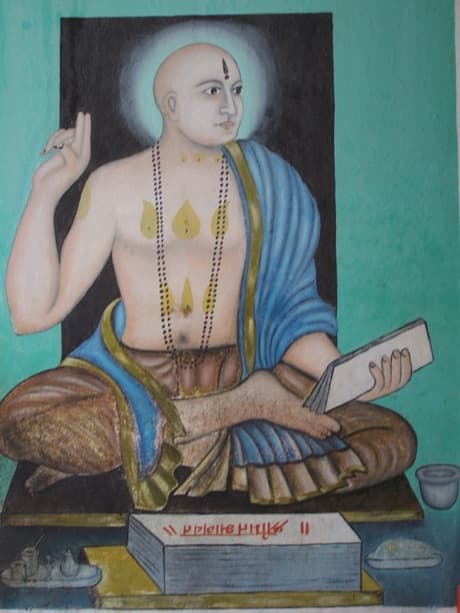
Madhvācārya · Dvaita
SanskritEnglishOn verses 11.18–11.19
“शशिसूर्यनेत्रम् इत्यपि अहं कर्तुः इत्यादिवत् - तदङ्गजाः सर्वसुरादयोऽपि तस्मात् तगङ्गोति ऋषिभिस्तुतास्ते ॥ इति ऋग्वेदखिलेषु ॥ चन्द्रमा मनसो जातश्चक्षोः सूर्यो अजायत ॥ इति च ऽ बहुरूपत्वाद् ब्रह्मङ्गत्वं च तेषां युक्तम् ।” - eyes like Moon and the Sun should be understood as in the case of I am the sacrifice (as originating from Him). This would then be according to Rigvedic statement – “Since all the gods having been produced from his parts, they and the seers are praised as the parts of the Lord”. Similarly, “From the mind the Moon was born, from the eyes the Sun was born”. In view of the multitude of forms, it is proper that in the multitude of forms shelter is said to have been taken.”

Jñāneśvar · Vārkarī
English19 *“Without beginning, middle, or end; of exhaustless potence, countless—armed, with the Moon and the Sun for Thine eyes; I behold Thee, with the blazing Oblation—consumer (Fire) for Thy mouth, and, in Thine own radiance, searing-up the universe. (310)*
Thou art without beginning, middle or end: thou art of unfathomed might that works by myriads of hands and feet spread in the whole universe. The moon and the sun are thine eyes that sportively bespeak thy mercy and wrath; the fury of the one frowns chastisement on some, while the benign glance of the other bedews another with protective grace. In sooth I behold the fulfilling of thy will in these many ways. Thy mouth is emitting light like the all-consuming flames of the world-destroying fire, like the wild flames of (forest) fire on a mountain that envelope whatever comes in their way. Thy tongue lolls between (the rows of) teeth, licking the jaws. And caught in the all consuming fire of its flames the whole universe is being tormented with a scarring that threatens to destroy it.
Swami Ramsukhdas · Modern
English'Anādimadhyāntam'—Arjuna saw the Lord, without a beginning, middle or end i.e., He had no limits.
In the sixteenth verse, Arjuna also said, "I see, neither Your beginning, nor middle, nor end." This statement conveys the infinitude of the cosmic body i.e., infinitude in space, while in the nineteenth verse, it is in the context of the infinitude of time. It means, that the Lord, is beyond limits of time, space and causation. All, the space, time and causation, are within Him. Then how can He be encompassed by space, time and causation. In other words, He cannot be measured, by space, time and causation.
'Anantavīryam'—Arjuna, wants to convey, that the Lord's power, strength, glory and energy, are unlimited.
'Anantabāhum'*—The Lord is endowed, with numberless arms.
'Śasisūryanetram'—The sun and the moon, which illuminate the entire universe, are the Lord's eyes. Thus, the universe is illuminated by His light.
'Diptahutāśavaktram'—The Lord's mouth, is the blazing fire,
* In the sixteenth verse Arjuna said that the Lord had numerous arms while here he says that He is endowed with infinite arms. It seems that there is repetition. But actually it is not so. There is the description of the divine (mild) form of the Lord while here is the description of His fierce and terrible form.
which receives various articles offered, when religious sacrifice, is performed.
'Svatejasā viśvamidaṁ tapantam'—The Lord warms the universe, with His radiance. It means, that persons, things and incidents etc., that create unfavourable and undesirable circumstances, to torture beings, and those who are affected by those circumstances are, fragments of the cosmic form, of the Lord.
**Appendix**—This verse means that God is endless in all ways. The universe, which is scorched by the Lord's blazing fire is not different from Him. Therefore He, Who scorches with the blazing fire, and the universe, which is scorched with that blazing fire—both are the manifestations of God.
Ādi Śaṅkarācārya · Advaita
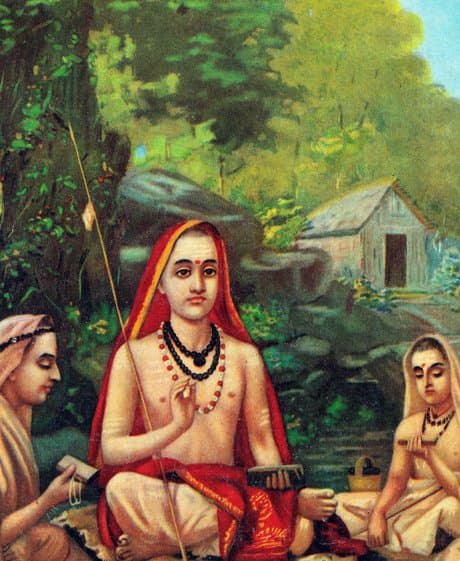
Sanskritअनादिमध्यान्तं आदिश्च मध्यं च अन्तश्च न विद्यते यस्य सः अयं अनादिमध्यान्तः तं त्वां अनादिमध्यान्तम्, अनन्तवीर्यं न तव वीर्यस्य अन्तः अस्ति इति अनन्तवीर्यः तं त्वां अनन्तवीर्यम्, तथा अनन्तबाहुम् अनन्ताः बाहवः यस्य तव सः त्वम्, अनन्तबाहुः तं त्वां अनन्तबाहुम्, शशिसूर्यनेत्रं शशिशूर्यौ नेत्रे यस्य तव सः त्वं शशिसूर्यनेत्रः तं त्वां शशिसूर्यनेत्रं चन्द्रादित्यनयनम्, पश्यामि त्वां दीप्तहुताशवक्त्रं दीप्तश्च असौ हुताशश्च वक्त्रं यस्य तव सः त्वं दीप्तहुताशवक्त्रः तं त्वां दीप्तहुताशवक्त्रम्, स्वतेजसा विश्वं इदं समस्तं तपन्तम् ॥
Ādi Śaṅkarācārya · Advaita
Hindi(मैं) आपको आदि, मध्य और अन्तसे रहित अर्थात् जिसका आदि, मध्य और अन्त नहीं है, ऐसे रूपवाला और अनन्तवीर्य—अनन्त सामर्थ्यसे युक्त देखता हूँ, आपकी सामर्थ्यका अन्त नहीं है, इसलिये आप अनन्तवीर्य हैं तथा मैं आपको अनन्त भुजाओंसे युक्त, चन्द्रमा और सूर्यरूप नेत्रोंवाला, प्रज्वलित अग्निरूप मुखोंवाला और अपने तेजसे इस जगत्को तपायमान करते हुए देखता हूँ अर्थात् जिस रूपके अनन्त हाथ हों, चन्द्रमा और सूर्य ही जिसके नेत्र हों, प्रज्वलित अग्नि ही जिसका मुख हो और जो अपने तेजसे इस सारे विश्वको तपायमान करता हो, ऐसा रूप धारण किये आपको देख रहा हूँ
Jñāneśvar · Vārkarī
Marathiतूं आदिमध्यांतरहितु । स्वसामर्थ्यें तूं अनंतु । विश्वबाहु अपरिमितु । विश्वचरण तूं ॥ ३१० ॥ पैं चंद्र चंडांशु डोळां । दावितासि कोपप्रसाद लीळा । एकां रुससी तमाचिया डोळां । एकां पाळितोसि कृपादृष्टी ॥ ३११ ॥ जी एवंविधा तूंतें । मी देखतसें हें निरुतें । पेटलें प्रळयाग्नीचें उजितें । तैसें वक्त्र हें तुझें ॥ ३१२ ॥ वणिवेनि पेटले पर्वत । कवळूनि ज्वाळांचे उभड उठत । तैसी चाटीत दाढा दांत । जीभ लोळे ॥ ३१३ ॥ इये वदनींचिया उबा । आणि जी सर्वांगकांतीचिया प्रभा । विश्व तातलें अति क्षोभा । जात आहे ॥ ३१४ ॥
Jñāneśvar · Vārkarī
Hindi(11.310) आप आदि, मध्य और अन्त से रहित हैं; आप स्वपराक्रमी हैं, आप अनन्त हैं, विश्वबाहु हैं, अपरिमित हैं, और विश्वचरण हैं।
(11.311) चन्द्र और सूर्यरूपी नेत्रों से आप प्रसाद और कोप की लीला दिखाते हैं; किसी को तमोरूप नेत्र से शासन करते हैं, और किसी का कृपादृष्टि से पालन करते हैं।
(11.312) अजी, इस प्रकार मैं आपको स्पष्ट देख रहा हूँ। आपका मुख प्रलयकाल की अग्नि के समान दिखाई दे रहा है।
(11.313) दावाग्नि से जलते हुए पर्वत से लिपट कर जैसे ज्वालाओं की भभक उठती है वैसे ही दाँतों में, दाढ़ें चाटती हुईं, आपकी जीभ लटक रही है।
(11.314) उस बदन की गरमी से और सर्वांग के तेज की प्रभा से विश्व तप कर अत्यन्त क्षुब्ध हो रहा है।
Sri Udiya Baba · Modern
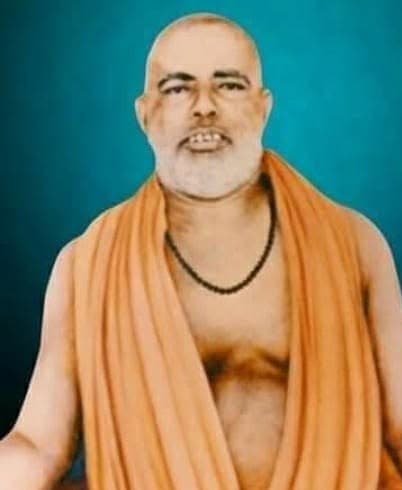
Hindiभावार्थ— मैं आपको आदि मध्य और अन्त से रहित, अनन्तवीर्य, अनन्तबाहु और चन्द्रमा तथा सूर्यरूप नेत्रों वाले देखता हूँ। आपके मुख से प्रज्वलित अग्नि निकल रही है तथा आप अपने तेज से इस विश्व को तपा रहे हैं।
व्याख्या— आप आदि मध्य और अन्त से रहित हैं, इसी से आप अनन्तवीर्य हैं। परन्तु आपको अनन्तवीर्य इसलिये नहीं कहा कि आपने पहाड़ उठा लिया था। पहाड़ तो हनुमान जी ने भी उठा लिया था और शेषजी तो सारी पृथ्वी को धारण किये हुए हैं। अतः यह बल तो सीमावद्ध है, आपका पराक्रम तो असीम है। इसी प्रकार अनेक रूप हो जाना भी आपके बल का सूचक नहीं है क्योंकि ऐसी शक्ति तो योगियों में भी होती है, रावण ने भी युद्ध स्थल में अनेक रूप धारण कर लिये थे। आपका अनन्त बल तो यही है कि सम्पूर्ण विश्व रूप में विराजमान हैं। और अपने तेज से इस सम्पूर्ण विश्व को आलोकित और सन्तप्त कर रहे हैं।
Swami Ramsukhdas · Modern
Hindi‘अनादिमध्यान्तम्’—आप आदि, मध्य और अन्तसे रहित हैं अर्थात् आपकी कोई सीमा नहीं है।
सोलहवें श्लोकमें भी अर्जुनने कहा है कि मैं आपके आदि, मध्य और अन्तको नहीं देखता हूँ। वहाँ तो ‘देशकृत’ अनन्तताका वर्णन हुआ है और यहाँ ‘कालकृत’ अनन्तताका वर्णन हुआ है। तात्पर्य है कि देशकृत, कालकृत, वस्तुकृत आदि किसी तरहसे भी आपकी सीमा नहीं है। सम्पूर्ण देश, काल आदि आपके अन्तर्गत हैं, फिर आप देश, काल आदिके अन्तर्गत कैसे आ सकते हैं? अर्थात् देश, काल आदि किसीके भी आधारपर आपको मापा नहीं जा सकता।
‘अनन्तवीर्यम्’—आपमें अपार पराक्रम, सामर्थ्य, बल और तेज है। आप अनन्त, असीम, शक्तिशाली हैं।
‘अनन्तबाहुम्’—* आपकी कितनी भुजाएँ हैं, इसकी
परिशिष्ट भाव—इस श्लोकका तात्पर्य है कि भगवान् सब तरहसे अनन्त हैं। उनके तेजसे तपनेवाला विश्व भगवान्से अलग नहीं है। अतः तपानेवाला और तपनेवाला—दोनों ही भगवान्के स्वरूप हैं।
Lord Krishna's Viśvarūpa or divine universal form is infinite being devoid of beginning, middle or end.
The word Anantā means unlimited and vīryam means powerful so the Viśvarūpa is unlimitedly powerful without any restrictions.
Other qualities are also implied by ananta such as cognizance, dominion, might, strength, etc.
The words ananta- bāhuṃ meaning unlimited arms also infers unlimited hands, chests, legs, feet, etc. as well.
śaśi-sūrya netram means eyes like the sun and moon.
The moon's rays denote the cool gentle beaming look that gladdens as it shines upon the Supreme Lords servitors the devas and His votaries the devotees with compassion.
The sun's glowing rays denotes the hot, burning eye that scorches the inimical hosts of asuras or demons and Rākṣasas or devils who are devoid of righteousness to others.
dīpta hutāśa vaktraṃ meaning with fire emitting from their mouths denotes the fire of universal destruction contained within the bosom of time raged therein.
Sva-tejasi means dazzling splendour and unprecedented radiance which illuminated everything around it. This glorious life giving energy flows unrestrictedly throughout all the universes.
Arjuna is explaining that he has seen the reality of the Viśvarūpa according to the manner in which Lord Krishna deigned to teach him by exhibiting the Viśvarūpa in before him
and practically demonstrating that He is the complete creator, the complete sustainer, the total refuge of all and the absolute destroyer as well as being the receptacle for all divine qualities and transcendental attributes such as omniscience, omnipotence and omnipresence.
The question may arise as to how is it possible for unlimited bodily parts to be functioning all in one body.
The answer to this would be that one can imagine a single bodily midsection of vast proportions with unlimited chests, arms, hands necks and heads branching upwards from it in every direction and with every head having two eyes, two ears, a nose and a mouth.
Also branching downwards in every direction it is possible to imagine unlimited legs and feet as well.
So this conception is clearly not impossibility and seeing it along with choice devas and exalted liberated beings they were all inspired with awe and reverence.