

Bhagavad Gītā · Chapter 11 · Viśvarūpa Darśana Yoga
तत्रैकस्थं जगत्कृत्स्नं प्रविभक्तमनेकधा
अपश्यद्देवदेवस्य शरीरे पाण्डवस्तदा
tatraikasthaṃ jagatkṛtsnaṃ pravibhaktamanekadhā|
apaśyaddevadevasya śarīre pāṇḍavastadā||
Word meanings
तदा = then
पाण्डवः = the son of Pāṇḍu
देवदेवस्य = of the god of gods
तत्र = there
शरीरे = in the body
एकस्थम् = in one place
अनेकधा = in many ways
प्रविभक्तम् = divided
कृत्स्नम् = entire
जगत् = the world
अपश्यत् = saw
Translation
Concentrated at one place in the person of that supreme Deity, Arjuna then beheld the whole universe with its manifold divisions.
Commentary
The commentators seated around this verse
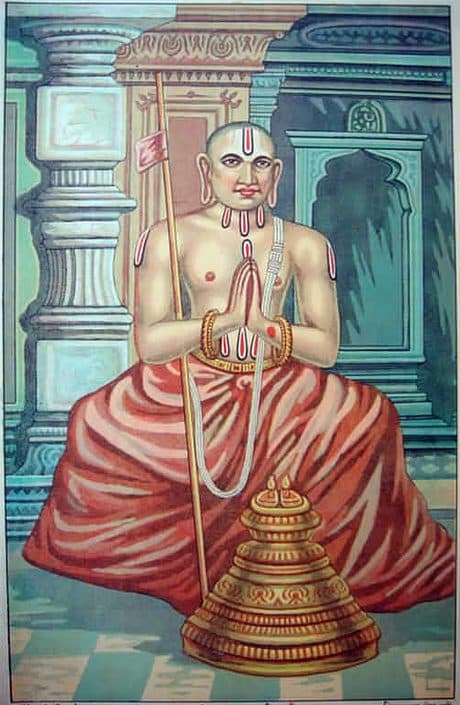
Rāmānuja · Viśiṣṭādvaita
English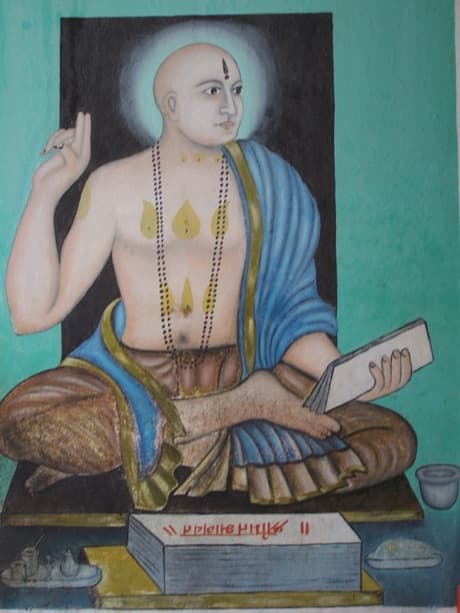
Madhvācārya · Dvaita
Madhva BhāṣyaSanskritEnglishOn verses 11.13–11.16
“अनेकशब्दो अनन्तवाची | अनन्तवाहूम् इति वक्ष्यति | सर्वतः पाणिपादं तत् इत्यादि च | विश्वतश्चक्षुर उत विश्वतोमुखो विश्वतोवाहुर उत विश्वतस्पात् | सम् बाहुभ्यां धर्मति सम् पतङ्गैर् धावाभूमी जनयन् देव एकः || इति ऋग्वेदे | विश्वतश्चक्षुरुत विश्वतोमुखो विश्वतोहस्त उत विश्वतस्पात् | सं बाहुभ्यां नमति सं पतङ्गैर् धावापृथिवी जनयन् देव एकः || इति यजुर्वेदे च || विश्व शब्दश्चानन्तवाची - सर्वं समस्तं विश्वं चानन्तं पूर्वमेव च | इत्याभिधानात् | अनन्तपादं तमनन्तवाहुं अनन्तवक्त्रं पुरुषं रूपमेकम् इति वाभव्यशाखायाम् || महात्त्वायुक्तिस्तु तदात्मकत्वेनापि भवति | अन्यथा, अनादिमत् परं ब्रह्म इत्याद्युक्तम् स्यात्? | एकत्र त्वनन्तान्यस्य रूपाणि इति अनन्तरूपः | अन्यत्र त्वपरिमाण इति | उक्तं ह्युभयापि - परात् परं यन्महतो महान्तम् यदेकमव्यक्तमनन्तरूपम् | इति यजुर्वेदे || अव्यक्तस्यानन्तत्वादेव महतो महत्वेऽपरिमेयत्वं सिद्धयति - महान्तं च समावत्य प्रधानं समवस्थितम् | अनन्तस्य न तस्यान्तः संख्यानं चापि विद्यते || इत्यादिपुराणे | तानि चैकैकानि रूपाण्यनन्तानि इति चैकत्र भवन्ति - असङ्गयाता ज्ञानकास्तस्य देहाः सर्वे परिमाणविवर्जिताश्च | इति ऋग्वेदखिलेषु || यावान् वाऽयमाकाशस्तावानेपोऽन्तर्हदयः आकाशः | उभेऽस्मिन् धावापृथिवी अन्तरेव समाहिते | उभवारिमश्च वायुश्च सूर्याचन्द्रमासावुभौ || इति च |” - अनेक symbolizes innumerable number. innumerable arms, thus they say. 'Then there were everywhere hands and feet' also in Rigveda and 'Of unlimited vision, He has unlimited countenance, with unlimited arms and also unlimited feet. With His shoulders That One Lord creates the gross forms and the three spaces and the earth as well' in Yajurveda.
विश्व denotes the unlimited, everything, and everywhere, unlimited, endless and complete in all respects, thus also having been said. “Endless arms, endless feet, endless forms, this One Lord possesses” - thus in Babhravya section. If the word महात् is understood as His Self, then the subsequent statement ‘supreme Brahman without beginning’ becomes contradictory. अनन्तान्यस्य रूपाणि means innumerable are his forms and also his forms are innumerable “Superior to the Supreme, who is greater than mahat, who is One, the unmanifest unlimited forms”, thus in Yajurveda. The unlimited form of the unmanifest (prakriti) having unlimited form, mahat been established. “Having enveloped the mahat and being the representative form of the Primal Person, without beginning or no end to the Prakriti or its activities”, thus in Aditya Puraana. There is no limitation to any of His forms. His body is spoken as having many forms of Wisdom, all are without any conclusive termination, thus in Rigveda. Whatever limit there is in the outward space, the same space is within the heart also. Both space and the earth are, verily, encompassed within similarly by Agni, Vayu, the Sun and the Moon as well.
“कृष्णस्य गर्भजगतोऽतिभरावसन्नपाणिप्रहार परिगुणफणातपत्रम् ॥ इति भागवते | न चैतदयुक्तम् | अचिन्त्यशक्तित्वादिश्वरस्य | अचिन्त्याः खलु ये भावा न तान् तर्केण योजयेत् | इति च विष्णुपुराणे | नैषा तर्केण मतिरापनेया | इति च श्रुतिः | अतिप्रसङ्गस्तु महातात्पर्यवशाद् वाक्यबलाच्छापनेयः | नहि घटवत् कश्चिदपि पदार्थो न दुष्टः इत्येतावता प्रमाणदृष्टः स निराक्रियते | केषुचित् पदार्थेषु वाक्यव्यवस्थाऽचिन्त्यशक्तित्वाभावादङ्गीक्रियते ॥ गुणाः श्रुताः सुविद्व्याश्च देवे सन्न्यश्रुता अपि नैवात्र शंका | चिन्त्या अचिन्त्याश्च तथैव दोषाः श्रुताश्च नाङ्गीर्हि तथा प्रतीताः | एवं परेऽन्यत्र श्रुताश्रुतानां गुणागुणानां च क्रमाद् व्यवस्था ॥ इति जावालखिलश्रुतेश्च ॥ उपचारत्वपरिहाराय न मध्यम् इति | अन्यथा आद्यन्ताभावेनैव तत्तिष्ठे ॥ विश्वरूपः पूर्णरूपः स विश्वरूपोऽनुरूपो यतोऽयं सोऽनन्तो नहि नाशोऽस्ति तस्य | इति शाण्डिल्यशाखायाम् ॥” - Having been bent over by the weight of Sri Krishna and having been hurt on the back by His kick, Sheha having head like an umbrella, hid behind his wife, thus in Bhagavat Puraana. This is not improbable because of the inconceivable power of the supreme Lord. “Inconceivable, indeed are these responses; they are not possible to be resolved by arguments” thus in Vishnu Puraana. Not by reasoning can the probable or improbable (events in Lord’s life) can be explained, thus avers the scripture. Otherwise, by conclusive evidences strange inferences can be drawn (like non-awareness by Him who is the very embodiment of Wisdom). Otherwise it will be like saying that there is nothing like a pot without having seen earlier anything of the form of a pot. “One hears of attributes in the Lord, which contradict in reference to other people. But this does not constitute any defect in the Lord. They are to be considered in that manner only from the view point of one who is unaware. But the defects which are heard in others are seen to have been so established according to their capability”. Thus in Jabala scripture. It is only as a form of normal usage that the word in the middle is used. Otherwise it is clearly established when the words, neither in the beginning nor in the end are used. Universal Form (Vishwaroop) means complete form in entirety (not of the form of the universe) “He is of innumerable forms; not of limited forms. Since there is no end to His forms they are called anant - without any end”, thus in Shandilya section
Madhvācārya · Dvaita
Gītā Tātparya NirṇayaSanskritEnglishOn verses 11.13–11.16
“कमलासने ब्रह्मणि स्थितं रुद्रं विष्णु समाश्रितो ब्रह्म ब्रह्मणोऽङ्कतो हरः । हरस्याङ्गविशेषेषु देवाः सर्वं अपि संस्थिताः ॥ इति पादमे ॥” - Rudra was settled, on the lap of Brahma, Brahma was sheltered in the lotus emanating from Sri Vishnu and various gods were established in the various parts of Hari, thus in Padma Puraana.
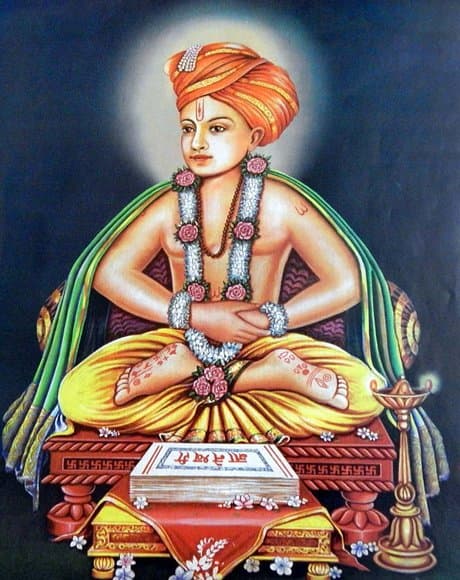
Jñāneśvar · Vārkarī
English13 "There-concentred in one place-within the body of that Deity of Deities, the son of Pāndu beheld the entire Universe in its manifold divisions. (242)
And in one corner of that Omnipresent vision, was stored up the whole expanse of the created universe in its manifold variety. And like bubbles floating on the surface of the ocean, or like a Gandharva-nagar (गंधर्व नगर—the enchanted city of Gandharvas, heavenly musicians, believed to appear and disappear suddenly) suddenly tossing in the sky, or again an ant-hill on earth built by ants or like atoms (of earth) clustering on the Mountain Meru, Arjuna beheld the entire universe within the body of the Supreme Person (Deity of Deities).
Swami Ramsukhdas · Modern
English'Tatraikastham jagatkṛtsnam pravibhaktamanekadhā'—Arjuna with divine eye, beheld the entire universe with its manifold divisions, such as the gods, human beings, beasts, birds, earth, ocean, sky and stars etc. It means, that Arjuna in a part of the body of the Lord, beheld the entire universe, with animate and inanimate beings, divided into different worlds, as a world of the gods, and a world of human beings, and so on.*
'Apaśyaddevadevasya śarīre pāṇḍavastadā'—'Tadā' means that Arjuna saw Lord Kṛṣṇa's cosmic form, as soon as, He revealed it. 'Apaśyat' means, that Arjuna saw the same form, which the Lord revealed to him by bestowing upon him divine vision. Arjuna, saw the same cosmic form, as has already been described by Sañjaya.
As the world of the gods, is superior to the mortal world, so is the Lord far superior to the world of the gods, as all the worlds including the paradise, the world of the gods are of matter, while the Lord is beyond Matter. So God, is the Lord of the gods.
**Appendix—**Arjuna beheld in the body of the Lord, the whole universe with its many divisions concentrated at one place—creatures born from the womb, creatures born from eggs, vegetation sprouting up from the earth, louse etc., born of sweat, immovable and movable creatures, birds etc., which
* In Śrīmadbhāgavata there is an anecdote. Once Yaśodā beheld the Lord's cosmic form in Kṛṣṇa's small mouth. Think over it that out of infinite universes there is one universe in which there is India. In India there is Vraja zone. In Vraja zone there is Nandagaon. In Nandagaon there is Nanda's house. In Nanda's house the child Kṛṣṇa is standing. Kṛṣṇa's mother named Yaśodā threateningly asked Him why He had eaten dust and ordered Him to open His mouth. When He opened His mouth, Yaśodā beheld the entire world, Nandagaon, Nanda's house and also herself (Śrīmadbhāgavata 10/8/39). Similarly Arjuna also beheld the entire universe in a part of the Lord's body.
fly in the sky, creatures which live in water and creatures that live on the earth. The universe may seem to be endless but it is held in a fragment of the Lord's body (Gītā 10/42). In whatever part of the Lord's body, Arjuna had a look, he saw the infinite universes there.
*Link:—Saṅjaya in the next verse, describes how Arjuna felt, after beholding the cosmic form of the Lord.*
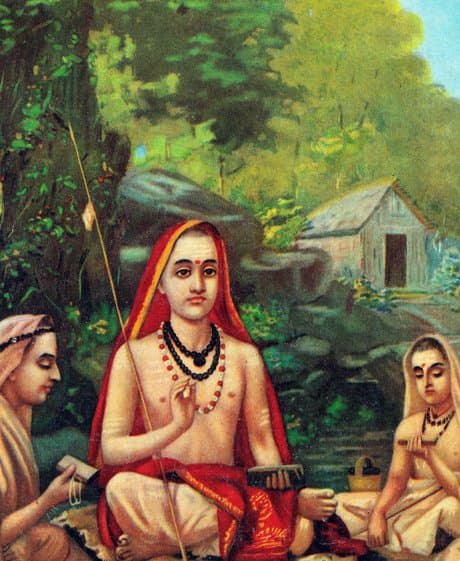
Ādi Śaṅkarācārya · Advaita
Sanskritतत्र तस्मिन् विश्वरूपे एकस्मिन् स्थितं एकस्थं जगत् कृत्स्नं प्रविभक्तं अनेकधा देवपितृमनुष्यादिभेदैः अपश्यत् दृष्टवान् देवदेवस्य हरेः शरीरे पाण्डवः अर्जुनः तदा ॥
Ādi Śaṅkarācārya · Advaita
Hindiउस समय पाण्डुपुत्र अर्जुनने देव, पितृ और मनुष्यादि भेदसे अनेक प्रकार विभक्त हुए समस्त जगत्को उस विश्वरूप देवाधिदेव हरिके शरीरमें ही एकत्र स्थित देखा
Jñāneśvar · Vārkarī
Marathiआणि तिये विश्वरूपीं एकीकडे । जग आघवें आपुलेनि पवाडें । जैसे महोदधीमाजीं बुडबुडे । सिनानें दिसती ॥ २४२ ॥ कां आकाशीं गंधर्वनगर । भूतळीं पिपीलिका बांधे घर । नाना मेरुवरी सपूर । परमाणु बैसले ॥ २४३ ॥ विश्व आघवेंचि तयापरी । तया देवचक्रवर्तीचिया शरीरीं । अर्जुन तिये अवसरीं । देखता जाहला ॥ २४४ ॥
Jñāneśvar · Vārkarī
Hindi(11.242) और इस विश्वरूप में एक ओर सम्पूर्ण जग अपने विस्तार-सहित ऐसा दिखाई देता था मानों महासमुद्र में अलग अलग बुलबुले उठ रहे हों,
(11.243) अथवा आकाश में जैसे गन्धर्वनगर हो, अथवा पृथ्वी में जैसे चिउँटी के बनाये हुए घर हों, अथवा मेरु पर्वत पर जैसे छोटे छोटे परमाणु भरे हों।
(11.244) उस देव-चक्रवर्ती के शरीर में अर्जुन ने उस समय इस प्रकार सम्पूर्ण जगत् देखे। (44)
Sri Udiya Baba · Modern
Hindiभावार्थ— तब अर्जुन ने देवाधिदेव भगवान् के शरीर में एक ही जगह अनेक प्रकार से विभक्त सम्पूर्ण संसार देखा।
Swami Ramsukhdas · Modern
Hindiतत्रैकस्थं जगत्कृत्स्नं प्रविभक्तमनेकधा— अनेक प्रकारके विभागोंमें विभक्त अर्थात् ये देवता हैं, ये मनुष्य हैं, ये पशु-पक्षी हैं, यह पृथ्वी है, ये समुद्र हैं, यह आकाश है, ये नक्षत्र हैं, आदि-आदि विभागोंके सहित (संकुचित नहीं, प्रत्युत विस्तारसहित) सम्पूर्ण चराचर जगत्को भगवान्के शरीरके भी एक देशमें अर्जुनने भगवान्के दिये हुए दिव्यचक्षुओंसे प्रत्यक्ष देखा। तात्पर्य यह हुआ कि भगवान् श्रीकृष्णके छोटे-से शरीरके भी एक अंशमें चर-अचर, स्थावर-जंगमसहित सम्पूर्ण संसार है। वह संसार भी अनेक ब्रह्माण्डोंके रूपमें, अनेक देवताओंके लोकोंके रूपमें, अनेक व्यक्तियों और पदार्थोंके रूपमें विभक्त और विस्तृत है—इस प्रकार अर्जुनने
**परिशिष्ट भाव—**अर्जुनने भगवान्के शरीरमें एक जगह स्थित जरायुज, अण्डज, उद्भिज्ज, स्वेदज; स्थावर-जंगम; नभचर-जलचर-थलचर; चौरासी लाख योनियाँ; चौदह भुवन आदि अनेक विभागोंमें विभक्त जगत्को देखा। जगत् भले ही अनन्त हो, पर है वह भगवान्के एक अंशमें ही (गीता—दसवें अध्यायका बयालीसवाँ श्लोक)! अर्जुन भगवान्के शरीरमें जहाँ भी दृष्टि डालते हैं, वहीं उनको अनन्त जगत् दीखता है!
**सम्बन्ध—**भगवान्के अलौकिक विराट् रूपको देखनेके बाद अर्जुनकी क्या दशा हुई—इसका वर्णन संजय आगेके श्लोकमें करते हैं।
In the Supreme Lord Krishna's divine, transcendental and phenomenal Viśvarūpa or divine universal form infinitely high and unfathomably wide
with splendorous effulgence and unlimited faces, heads, eyes and bodies, with unlimited celestial weapons and unlimited celestial ornaments accompanied by celestial unguents, divine garlands and raiment's, all interacting with unlimited wonders and marvels,
Arjuna could clearly see manifested in a single location within the universal form all of creation with its unlimited multifarious and variegated details from the greatly powerful Brahma and all devas down to a humble blade of grass.
He could see the complete animal, vegetable and mineral kingdoms and all the diverse planetary systems all composed of prakṛti or the material substratum pervading material existence from the highest Bhur, Bhuvaḥ, Svaḥ etc. all the way down to the lowest planetary system of Pāṭala with all there varying inhabitants, habitats and habits.
He could also perceive the Brāhman or the spiritual substratum pervading all existence with its sublimely subtle transcendental presence imperceptible to normal eyes.
All this was seen by Arjuna due to the divine vision bequeathed upon him by Lord Krishna substantiating His declarations in chapter 10 such as verse 39:
That He is the origin of all and nothing can exist separately, independent from Him
and in verse 42 He states that by a mere fraction of His potency He maintains and sustains all moving and stationary beings.