

Bhagavad Gītā · Chapter 11 · Viśvarūpa Darśana Yoga
सखेति मत्वा प्रसभं यदुक्तं
हे कृष्ण हे यादव हे सखेति
अजानता महिमानं तवेदं
मया प्रमादात्प्रणयेन वापि
sakheti matvā prasabhaṃ yaduktaṃ
he kṛṣṇa he yādava he sakheti|
ajānatā mahimānaṃ tavedaṃ
mayā pramādātpraṇayena vāpi||
Word meanings
for verses 11.41–11.42
तव = your
इदम् = this
महिमानम् = greatness
अजानता = not knowing
सखा = friend
इति = thus (saying)
मत्वा = knowing this
मया = by me
प्रमादात् = through carelessness
वा = or
प्रणयेन = out of affection
अपि = also
प्रसभम् = impulsively
हे, कृष्ण = O Kṛṣṇa
हे, यादव = O Yādava
हे, सखे = O friend
इति = thus
यत् = whatever
उक्तम् = spoken
च = and
अच्युत = O Acyuta (unfailing one)
अवहासार्थम् = in jest
विहारशय्यासन- = while playing, resting, or sitting
भोजनेषु = or at meals
एकः = alone
अथवा = or
तत्समक्षम् = in front of others
यत् = whatever
असत्कृतः = disrespected
असि = you are
अप्रमेयम् = O immeasurable one
तत् = all that
त्वाम् = from you
अहम् = I
क्षामये = I beg forgiveness
Translation
The way in which I have importunately called out, either through intimacy or even through want of thought, "Ho Krsna! Ho Yadava! Ho Comrade!" and so on, suspecting not this greatness of Yours, and thinking You only to be a friend, and the way in which You have been slighted by me in jest, O sinless one, while at play, reposing, sitting or at meals, either alone or even in the presence of other— for all that I crave forgiveness from You, who are infinite.
verses 41–42
Commentary
The commentators seated around this verse
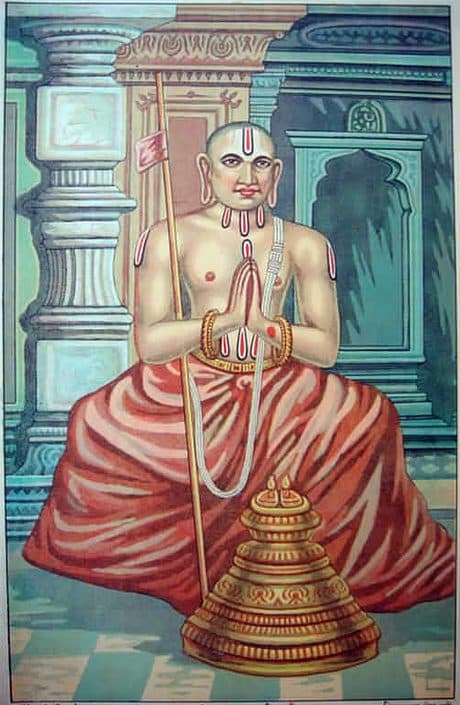
Rāmānuja · Viśiṣṭādvaita
EnglishOn verses 11.41–42
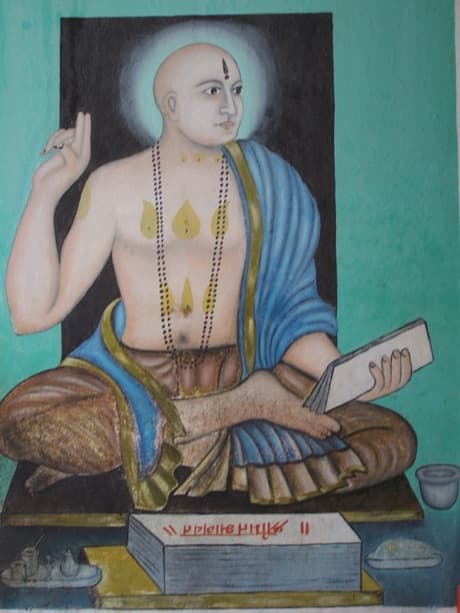
Madhvācārya · Dvaita
Madhva BhāṣyaSanskritEnglishOn verses 11.40–11.42
“एकस्त्वमेव कारयिता, नान्योऽस्ति, अथापि ||” - एक is one who is singularly supreme, no one else. Also knower of all things.
Madhvācārya · Dvaita
Gītā Tātparya NirṇayaSanskritEnglishOn verses 11.40–11.42
“एकः सर्वोत्तमोऽप्यसत्कृतः | एकः सर्वाधिको ज्ञेय एक एव करोति यत् | इति च ||” - The Lord is supreme among all and the performer of noble deeds. One should know that He alone is the one who performs.
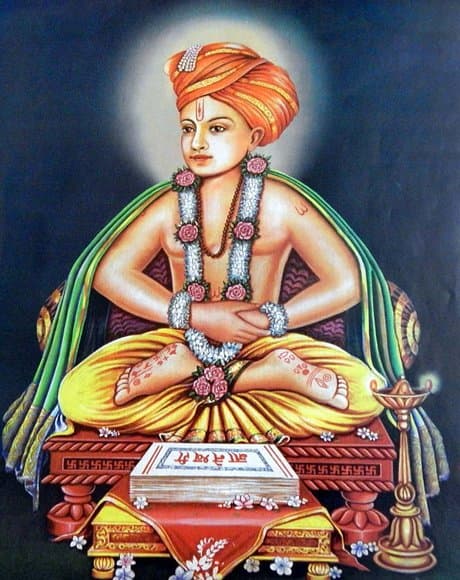
Jñāneśvar · Vārkarī
English41 "Deeming Thee as a comrade, whatever of uncivil I have spoken, (to wit) 'O Krishna,' 'O Scion of Yadu,' or 'O Comrade': it is as not knowing Thine greatness that it was thus spoken by me, through heedlessness or may be, through fondness.
But of this thine exalted eminence, Oh Master, we knew little, and dealt by thee, reckoning thee as but a kinsman! How grievous have been our misdeeds? We wasted away ambrosial drink on dusting and brooming floors (समार्जन), we bartered away a wish-fulfilling cow (कामधेनु) for a lamb. We chanced upon a rock of Paris (Stone which changes other metals into gold) but we broke it into metal for ground-work. We cut down a Kalpataru tree for fencing in our fields. We fooled away thy Presence with us simply as mere friendship, as one stumbling upon a mine of Chintamani gems might waste them away for the purpose of hurling them at stray cattle to scare them away. Why go so far as that? Just take the present occasion. What a paltry business of warfare! Yet we have dragged thee down, the very Supreme Brahman, to become a charioteer. We sent you, Oh generous one, to the house of the wicked Kauravas, as arbitrator of our quarrel. In this way, alas Oh Lord of the Universe, thou hast been bartered away by us for paltry gains. To the yogic seers, Thou art the blissful raptures of Samādhi (Meditations), and what a pity it is that unmindful of all this, I gloated over jesting talk with thee.
Swami Ramsukhdas · Modern
EnglishOn verses 11.41–11.42
[Having seen the terrible form, of the Lord, when Arjuna is terror-struck, he forgets that He is Śrī Kṛṣṇa, and so he asks Him Who He is. But, when he regains his memory, he comes to know, that He is the same Lord Kṛṣṇa, his friend. So he prays
to Lord Kṛṣṇa, to forgive him for any of his past offence.]
'Sakheti matvā prasabhaṁ yaduktaṁ he kṛṣṇa he yādava he sakheti ajānatā mahimānaṁ tavedam mayā pramādātpranayena vāpi'—Those, who are venerable do not, called by personal names. They are addressed as your highness, your honour, or sire or sir, etc. Arjuna, did not pay due regard and reverence to Kṛṣṇa. Who was no other than the Lord, Himself. He did not know Him and His glory, in reality. So, he instead of addressing Him, as sir or sire etc., addressed Him in a familiar and friendly way, as 'Kṛṣṇa' or 'friend', due to carelessness or love. Arjuna, knew the Lord's real self and His glories, to some extent, because he rejecting the powerful Nārāyaṇī army (consisting of 1,09,350 foot-soldiers, 65,610 horses, 21,870 chariots and 21,870 elephants) and opted for Him, Who would remain unarmed in the war. But, he did not know, that the Lord holds infinite universes, in one of His limbs and His glories, are infinite. So he realized that he was an ordinary mortal, while the Lord is the greatest master of even gods, and His merits, are numberless. In fact, no one can know the glory of the Lord, in its entirety. It is infinite. In case, it is known, it becomes finite. When even glories emanating from His power, are countless, how can His own glories be finite, and be counted and grasped?
'Yaccāvahāsārthamasatkṛto' si vihāraśayyāsanabhojaneṣu eko'thavāpyacynta tatsamakṣaṁ tatkṣāmaye tvāmahamaprameyam'—Arjuna, realized that he by regarding the Lord as his equal and friend, had slighted and shown disrespect to Him, the Infinite, in jest, while playing, reposing, sitting or dining, either alone or in company, and it was quite improper and unseemly, on his part, to do so. So, he humbly sought His pardon, for his past misbehaviour.
Arjuna and Lord Kṛṣṇa were, indeed very intimate friends. Both of them were very frank with each other, while playing, bathing, reposing, sitting or dining etc. So, Arjuna might not have
behaved with decorum and poked fun at him. Arjuna addressed the Lord as infinite, because He was beyond the limit, of even divine eyes.
**Appendix**—Arjuna regarded Lord Kṛṣṇa as his friend but having seen the Lord's glory, he forgets the notion of friendship with Him and he is surprised and terrified. He could never think of such a grandeur of the Lord.
*Link:— In the next two verses, Arjuna describing His glories, pleads for forgiveness again.*
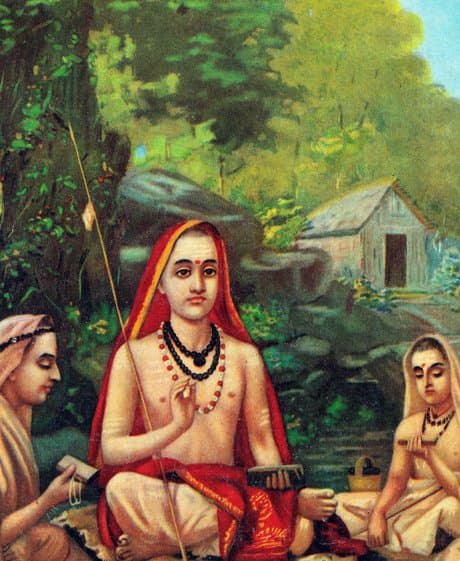
Ādi Śaṅkarācārya · Advaita
Sanskritसखा समानवयाः इति मत्वा ज्ञात्वा विपरीतबुद्ध्या प्रसभं अभिभूय प्रसह्य यत् उक्तं हे कृष्ण हे यादव हे सखेति च अजानता अज्ञानिना मूढेन; किम् अजानता इति आह -- महिमानं महात्म्यं तव इदं ईश्वरस्य विश्वरूपम् । ``तव इदं महिमानं अजानता'' इति वैयधिकरण्येन सम्बन्धः । ``तवेमम्'' इति पाठः यदि अस्ति, तदा सामानाधिकरण्यमेव । मया प्रमादात् विक्षिप्तचित्ततया, प्रणयेन वापि, प्रणयो नाम स्नेहनिमित्तः विस्रम्भः तेनापि कारणेन यत् उक्तवान् अस्मि ॥
Ādi Śaṅkarācārya · Advaita
Hindiक्योंकि मैं आपकी महिमाको न जाननेका अपराधी रहा हूँ, इसलिये—
आपकी महिमाको अर्थात् आप ईश्वरके इस विश्वरूपको न जाननेवाले मुझ मूढ़द्वारा विपरीत बुद्धिसे आपको मित्र—समान अवस्थावाला समझकर जो अपमानपूर्वक हटसे हे कृष्ण! हे यादव! हे सखे! इत्यादि वचन कहे गये हैं—
‘तव इदं महिमानम् अजानता’ इस पाठमें ‘इदम्’ शब्द नपुंसक लिङ्ग है और ‘महिमानम्’ शब्द पुंछिङ्ग है, अतः इनका आपसमें वैयधिकरण्यसे विशेष्य—विशेषणभाव—सम्बन्ध है। यदि ‘इदम्’ की जगह ‘इमम्’ पाठ हो तो सामानाधिकरण्यसे सम्बन्ध हो सकता है।
इसके सिवा प्रमादसे यानी विश्विसचित होनेके कारण अथवा प्रणयसे भी—स्नेहनिमित्तक विश्वासका नाम प्रणय है, उसके कारण भी मैंने जो कुछ कहा है
Jñāneśvar · Vārkarī
Marathiपरि ऐसिया तूतें स्वामी । कहींच नेणों जी आम्ही । म्हणौनि सोयरे संबंधधर्मीं । राहाटलों तुजसीं ॥ ५३७ ॥ अहा थोर वाउर जाहलें । अमृतें संमार्जन म्यां केलें । वारिकें घेऊनि दिधलें । कामधेनूतें ॥ ५३८ ॥ परिसाचा खडवाचि जोडला । कीं फोडोनि आम्ही गाडोरा घातला । कल्पतरू तोडोनि केला । कूंप शेता ॥ ५३९ ॥ चिंतामणीची खाणी लागली । तेणें करें वोढाळें वोल्हांडिली । तैसी तुझी जवळिक धाडिली । सांगातीपणें ॥ ५४० ॥ हें आजिचेंचि पाहें पां रोकडें । कवण झुंज हें केवढें । एथ परब्रह्म तूं उघडें । सारथी केलासी ॥ ५४१ ॥ यया कौरवांचिया घरा । शिष्टाई धाडिलासि दातारा । ऐसा वणिजेसाठीं जागेश्वरा । विकलासि आम्हीं ॥ ५४२ ॥ तूं योगियांचें समाधिसुख । कैसा जाणेचिना मी मूर्ख । उपरोधु जी सन्मुख । तुजसीं करूं ॥ ५४३ ॥
Jñāneśvar · Vārkarī
Hindi(11.537) परन्तु है स्वामी। आपको हमने ऐसा कभी न जाना था, इस लिए हम आपसे सगे सहोदर के नाते से व्यवहार करते रहे। (11.538) अजी बड़ी बुरी बात हुई। मैंने अमृत का उपयोग आँगन सींचने के काम में किया, अथवा घोड़े के बदले में मानों कामधेनु दे दी।
(11.539) पारस का पर्वत हाथ लगा था, उसे फोड़ कर मानों हमने नींव में भर दिया, अथवा कल्पवृक्ष तोड़ कर उसकी खेत की बागुर बना दी।
(11.540) जैसे चिन्तामणि की खानि हाथ लगे परन्तु परख न होने के कारण उसका त्याग किया जाय, वैसे ही आपकी सन्निद्धता का लाभ हमने हेल-मेल में खो दिया।
(11.541) आज का ही युद्ध यथार्थ में देखिए तो कितनी सी बात थी? परन्तु हे परब्रह्म! इसमें हमने आपको खुल्लमखुल्ला सारथी बनाया है।
(11.542) हे दाता! इन कौरवों के घर हमने आपको वसीठ बना कर भेजा था। हे जगदीश्वर! इस प्रकार हमने आपका व्यवहार में उपयोग किया।
(11.543) मुझ मूर्ख ने यह कैसा न जाना कि आप योगियों के समाधि-सुख हैं, और आपके सन्मुख कैसा उपरोध किया!
Sri Udiya Baba · Modern
HindiOn verses 11.41–11.42
संगति— जब अर्जुन ने जाना कि भगवान् सर्वरूप हैं तो उसे चेत हुआ और उसने सोचा कि इनसे बराबरी का बर्ताव करके मैंने बड़ा अपराध किया है, अतः वह क्षमायाचना करने लगा।
भावार्थ— मैंने आपकी यह महिमा न जानकर और अपना सखा मानकर प्रमाद या प्रीतिवश हठपूर्वक आपसे 'हे कृष्ण! हे यादव! हे सखा!' ऐसा सम्बोधन किया है, तथा आपकी हँसी करने के लिए क्रीड़ा, शयन, आसन और भोजन के समय एकान्त में अथवा दूसरों के सामने आपका अपमान किया है वह सब मैं आपसे क्षमा चाहता हूँ, क्योंकि आप तो अचिन्त्य प्रभाववाले हैं।
Swami Ramsukhdas · Modern
HindiOn verses 11.41–11.42
[जब अर्जुन विराट् भगवान्के अत्युत्तरोपको देखकर भयभीत होते हैं, तब वे भगवान्के कृष्णरूपको भूल जाते हैं और पूछ बैठते हैं कि उग्ररूपवाले आप कौन हैं? परन्तु जब उनको भगवान् श्रीकृष्णकी स्मृति आती है कि वे ये ही हैं, तब भगवान्के प्रभाव आदिको देखकर
उनको सखाभावसे किये हुए पुराने व्यवहारकी याद आ जाती है और उसके लिये वे भगवान्से क्षमा माँगते हैं।]
**‘सखेति मत्वा प्रसभं यदुक्तं हे कृष्ण हे यादव हे सखेति’**—जो बड़े आदमी होते हैं, श्रेष्ठ पुरुष होते हैं, उनको साक्षात् नामसे नहीं पुकारा जाता। उनके लिये तो
‘आप’, ‘महाराज’ आदि शब्दोंका प्रयोग होता है। परन्तु मैंने आपको कभी ‘हे कृष्ण’ कह दिया, कभी ‘हे यादव’ कह दिया और कभी ‘हे सखे’ कह दिया। इसका कारण क्या था? ‘अजानता महिमानं तवेदम्’ इसका कारण यह था कि मैंने आपकी ऐसी महिमाको और स्वरूपको जाना नहीं कि आप ऐसे विलक्षण हैं। आपके किसी एक अंशमें अनन्तकोटि ब्रह्माण्ड विराजमान हैं—ऐसा मैं पहले नहीं जानता था। आपके प्रभावकी तरफ मेरी दृष्टि ही नहीं गयी। मैंने कभी सोचा-समझा ही नहीं कि आप कौन हैं और कैसे हैं।
यद्यपि अर्जुन भगवान्के स्वरूपको, महिमाको, प्रभावको पहले भी जानते थे, तभी तो उन्होंने एक अक्षौहिणी सेनाको छोड़कर निःशस्त्र भगवान्को स्वीकार किया था; तथापि भगवान्के शरीरके किसी एक अंशमें अनन्तकोटि ब्रह्माण्ड यथावकाश स्थित हैं—ऐसे प्रभावको, स्वरूपको, महिमाको अर्जुनने पहले नहीं जाना था। जब भगवान्ने कृपा करके विश्वरूप दिखाया, तब उसको देखकर ही अर्जुनकी दृष्टि भगवान्के प्रभावकी तरफ गयी और वे भगवान्को कुछ जानने लगे। उनका यह विचित्र भाव हो गया कि ‘कहाँ तो मैं और कहाँ ये देवोंके देव! परन्तु मैंने प्रमादसे अथवा प्रेमसे हठपूर्वक, बिना सोचे-समझे, जो मनमें आया, वह कह दिया—‘मया प्रमादात्प्रणयेन वापि।’ बोलनेमें मैंने बिलकुल ही सावधानी नहीं बरती।’
वास्तवमें भगवान्की महिमाको सर्वथा कोई जान ही नहीं सकता; क्योंकि भगवान्की महिमा अनन्त है। अगर वह सर्वथा जाननेमें आ जायगी तो उसकी अनन्तता नहीं रहेगी, वह सीमित हो जायगी। जब भगवान्की सामर्थ्यसे उत्पन्न होनेवाली विभूतियोंका भी अन्त नहीं है, तब भगवान् और उनकी महिमाका अन्त आ ही कैसे सकता है? अर्थात् आ ही नहीं सकता।
‘यच्चावहासार्थमसत्कृतोऽसि विहारशय्यासन-
भोजनेषु’—मैंने आपको बराबरीका साधारण मित्र समझकर हँसी-दिल्लगी करते समय, रास्तेमें चलते-फिरते समय, शय्यापर सोते-जागते समय, आसनपर उठते-बैठते समय, भोजन करते समय जो कुछ अपमानके शब्द कहे, आपका असत्कार किया अथवा हे अच्युत! आप अकेले थे, उस समय या उन सखाओं, कुटुम्बीजनों, सभ्य व्यक्तियों आदिके सामने मैंने आपका जो कुछ तिरस्कार किया है, वह सब मैं आपसे क्षमा करवाता हूँ—‘एकोऽथवाप्यच्युत तत्समक्षं तत्क्षामये त्वामहमप्रमेयम्।’
अर्जुन और भगवान्की मित्रताका ऐसा वर्णन आता है कि जैसे दो मित्र आपसमें खेलते हैं, ऐसे ही अर्जुन भगवान्के साथ खेलते थे। कभी स्नान करते तो अर्जुन हाथोंसे भगवान्के ऊपर जल फेंकते और भगवान् अर्जुनके ऊपर। कभी अर्जुन भगवान्के पीछे दौड़ते तो कभी भगवान् अर्जुनके पीछे दौड़ते। कभी दोनों आपसमें हँसते-हँसाते। कभी दोनों परस्पर अपनी-अपनी विशेष कलाएँ दिखाते। कभी भगवान् सो जाते तो अर्जुन कहते—‘तुम इतने फैलकर सो गये हो, क्या कोई दूसरा नहीं सोयेगा? तुम अकेले ही हो क्या?’ कभी भगवान् आसनपर बैठ जाते तो अर्जुन कहते—‘आसनपर तुम अकेले ही बैठोगे क्या? और किसीको बैठने दोगे कि नहीं? अकेले ही आधिपत्य जमा लिया! जरा एक तरफ तो खिसक जाओ।’ इस प्रकार अर्जुन भगवान्के साथ बहुत ही घनिष्ठताका व्यवहार करते थे। अब अर्जुन उन बातोंको याद करके कहते हैं कि ‘हे भगवन्! मैंने आपके न जाने कितने-कितने तिरस्कार किये हैं। मेरेको तो सब याद भी नहीं हैं। यद्यपि आपने मेरे तिरस्कारोंकी तरफ खयाल नहीं किया, तथापि मेरे द्वारा आपके बहुत-से तिरस्कार हुए हैं, इसलिये मैं अप्रमेयस्वरूप आपसे सब तिरस्कार क्षमा करवाता हूँ।’ भगवान्को ‘अप्रमेय’ कहनेका तात्पर्य है कि दिव्यदृष्टि होनेपर भी आप दिव्यदृष्टिके अन्तर्गत नहीं आते हैं।
१-‘महिमानं तव इदम्’—इसमें आया ‘इदम्’ पद ‘महिमानम्’ का विशेषण नहीं है; क्योंकि ‘महिमानम्’ पद पुल्लिंगमें आया है और ‘इदम्’ पद नपुंसकलिंगमें आया है। अतः यहाँ ‘इदम्’ का अर्थ ‘स्वरूप’ लिया गया है। इस दृष्टिसे ‘महिमानं तव इदम्’ का अर्थ हुआ—आपकी महिमा और स्वरूप।
२-शय्यासनातनविकल्पभोजनादिष्वैक्याद् वयस्य ऋतवानिति विप्रलब्धः।
सख्यः सखेव पितृवचनयस्य सर्वं सहे महान् महितया कुमतेऽयं मे॥ (श्रीमद्भा० १।१५।१९)
अर्जुन कहते हैं—‘भगवान् श्रीकृष्णके साथ सोने, बैठने, घूमने, बातचीत करने और भोजनादि करनेमें मेरा-उनका ऐसा सहज भाव हो गया था कि मैं कभी-कभी ‘हे सखे! तुम बड़े सच बोलनेवाले हो!’ ऐसा कहकर आक्षेप भी करता था। परन्तु वे महात्मा प्रभु अपने बड़प्पनके अनुसार मुझ कुबुद्धिके उन समस्त तिरस्कारोंको वैसे ही सहा करते थे, जैसे सखा अपने सखाके या पिता अपने पुत्रके तिरस्कारको सहा करता है।’
**परिशिष्ट भाव**—अर्जुनका भगवान्के साथ सखाभाव था, पर भगवान्के ऐश्वर्यको देखनेसे वे अपना सखाभाव भूल जाते हैं और भगवान्को देखकर आश्चर्य करते हैं, भयभीत होते हैं। उनके मनमें यह सम्भावना ही नहीं थी कि भगवान् ऐसे हैं!
*सम्बन्ध—अब आगेके दो श्लोकोंमें अर्जुन भगवान्की महत्ता और प्रभावका वर्णन करके पुनः क्षमा करनेके लिये प्रार्थना करते हैं।*
**पितासि लोकस्य चराचरस्य त्वमस्य पूज्यश्च गुरुर्गीयान्।**
In regard to not knowing the extent of Lord Krishna's glory, His infinite power, His immeasurable prowess, His omnipresent nature as being all pervasive, His greatness as the sole creator of all creation;
Arjuna is apologising that he might have through heedlessness, or folly due to familiarity might have put himself on equal status as the Supreme Lord
and out of affection and friendship might have addressed Him disrespectfully by calling Him simply as He Krishna or He sakhe O' friend or He Yādava which is the name of the family clan in which He appeared.
Addressing the Supreme Lord such could be taken as lacking in humility.
Also on occasions of jesting and merriment while sitting, eating and resting together if any impropriety or omission of proper respect was inadvertently committed then for all these indiscretions Lord Krishna is being humbly beseeched to forgive.