

Bhagavad Gītā · Chapter 4 · Jñāna Karma Sannyāsa Yoga
दैवमेवापरे यज्ञं योगिनः पर्युपासते
ब्रह्माग्नावपरे यज्ञं यज्ञेनैवोपजुह्वति
daivamevāpare yajñaṃ yoginaḥ paryupāsate|
brahmāgnāvapare yajñaṃ yajñenaivopajuhvati||
Word meanings
अपरे = others
योगिनः = yogis
दैवम् = divine (offering to the gods)
यज्ञम् = sacrifice
एव = indeed
पर्युपासते = perform / worship
अपरे = others
ब्रह्माग्नौ = in the fire of brahman
यज्ञेन = through sacrifice
एव = indeed
यज्ञम् = sacrifice
उपजुह्वति = offer as oblation
Translation
Other yogis duly offer sacrifice only in the shape of worship to gods. Others pour into the fire of Brahma the very sacrifice in the shape of the self through the sacrifice known as the perception of identity.
Commentary
The commentators seated around this verse
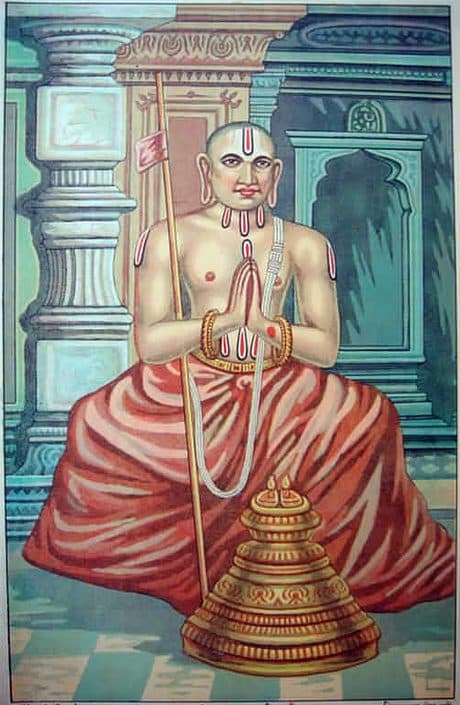
Rāmānuja · Viśiṣṭādvaita
English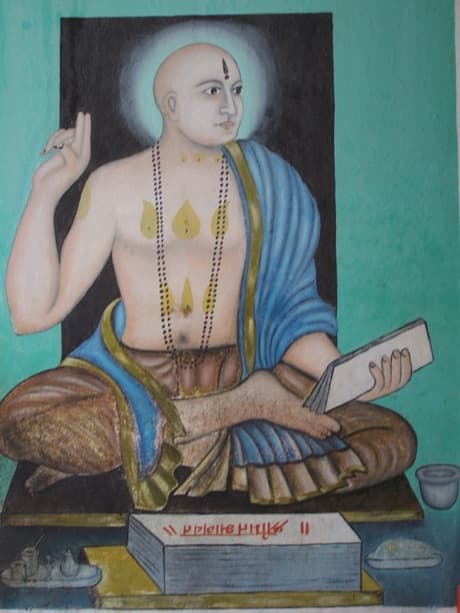
Madhvācārya · Dvaita
SanskritEnglishOn verses 4.25–4.26
“यज्ञभेदनाह देवम् इत्यादिना | देवम् भगवन्तम् | स एव तेषां यज्ञः | भगवदुपासनम् | यज्ञम् इति क्रियाविशेषणम् | नान्यत् तेषामस्ति यतीनां केषाश्चित् | यज्ञम् भगवन्तम् | यज्ञेन यज्ञम् | यज्ञो विषुर्देवता इत्यादिश्रुतिभ्यः | यज्ञेन प्रसिद्धेनैव | यज्ञं प्रति यज्ञेन जुत्वति इति सर्वत्र समम् तं यज्ञम् इत्यदौ | उक्तं विष्णुं रुद्रेण पशुना ब्रह्मा ज्येष्ठेन मुनुना | अयजन्मानसे यज्ञे पितरं प्रपितामहः ||” - Krishna speaks of the different forms of sacrifices to the divinities and others, देवम् means to the Resplendent Lord. He, verily, is the Sacrifice for them. The propitiation of the Resplendent Lord is the sacrifice; this is the distinctive attribute of performance of action. For the recluse apart from this, there exists nothing else. यज्ञ, Sacrifice itself is the Resplendent Lord. By performance of Sacrifice in the Sacrifice, Sacrifice is the Divine Vishnu thus, the scriptures have spoken. यज्ञेन means that which has become famous as sacrifice. Through performance of sacrificial act यज्ञ, the oblations are offered in the sacrifice, यज्ञम्, thus everything is said to be तां यज्ञम् - to Him are the Sacrifices. Brahma, the Grandsire, by way of mental sacrifice, offered his eldest son, Rudra himself, as the animal, (as sacrificial oblation), to his father Vishnu, thus has it been said.

Jñāneśvar · Vārkarī
English25 "Some devoted experts there are who elevate into the highest worship just the (ordinary) sacrifice intended for Gods; others offer, into the Fire in the form of Brahman, "Sacrifice" itself (conceived as an oblation) by means of "Sacrifice" (conceived as an implement of offering). (123)
Such ones alone, should do the sacrifice in the form of Yoga. O Son of Pandu, that sacrifice, the performance of which secures for one the bliss of the Self-vision is called Devayajna (देवयज्ञ). Now hear about some more kinds of sacrifices. Those that maintain sacrificial fire in the form of Brahman, and offer into this fire, the sacrifice itself (conceived as an oblation), by means of sacrifice (conceived as implement of offerings):
Swami Ramsukhdas · Modern
English'Daivamevāpare yajñam yoginah paryupāsate'—In the preceding verse, the Lord described, a striver who beholds God,
in all objects and actions. Here, by using the term 'apare' He describes strivers, who perform sacrifice, but who are different from those mentioned, in the preceding verse.
Here the term 'Yoginaḥ', stands for those strivers, who perform actions, without expecting any reward.
Those who instead of regarding actions and objects as theirs and for them, regard these as the Lord's and for Him, perform sacrifice to God, as He is the Lord, even of the gods. Therefore, those persons who, without having the least attachment, a sense of mine and desire for objects and actions, hold that they are only of the Lord, perform sacrifice to Him.
'Brahmāgnāvapare yajñam yajñenaivopajuhvati'—The term 'apare', has been used, to bring out the distinction between sacrifice mentioned in the first half of this verse, and the second half.
When, the soul identifies itself with matter, It becomes an embodied soul. But when a person (the soul), by discrimination, having a total disinclination for matter, merges in God i.e., has not the least separate existence, apart from God, it is called sacrifice.
Appendix—The expression 'brahmāgnāvapare yajñam yajñenaivopajuhvati' may also mean other Yogīs in order to serve Brahma—the embodied world perform duty sacrifice for the sacrifice in the form of welfare of others viz., they perform all actions for the welfare of others (Gītā 3/9, 4/23).

Ādi Śaṅkarācārya · Advaita
Sanskritदैवमेव देवा इज्यन्ते येन यज्ञेन असौ दैवो यज्ञः तमेव अपरे यज्ञं योगिनः कर्मिणः पर्युपासते कुर्वन्तीत्यर्थः । ब्रह्माग्नौ ``सत्यं ज्ञानमनन्तं ब्रह्म'' (तै. उ. २-१-१) ''विज्ञानमानन्दं ब्रह्म'' ``यत् साक्षादपरोक्षात् ब्रह्म य आत्मा सर्वान्तरः'' (बृ. उ. ३-४-१) इत्यादिवचनोक्तम् अशनायादिसर्वसंसारधर्मवर्जितं ``नेति नेति'' (बृ. उ. ४-४-२२) इति निरस्ताशेषविशेषं ब्रह्मशब्देन उच्यते । ब्रह्म च तत् अग्निश्च सः होमाधिकरणत्वविवक्षया ब्रह्माग्निः । तस्मिन् ब्रह्माग्नौ अपरे अन्ये ब्रह्मविदः यज्ञं -- यज्ञशब्दवाच्य आत्मा, आत्मनामसु यज्ञशब्दस्य पाठात् -- तं आत्मानं यज्ञं परमार्थतः परमेव ब्रह्म सन्तं बुद्ध्याद्युपाधिसंयुक्तं अध्यस्तसर्वोपाधिधर्मकम् आहुतिरूपं यज्ञेनैव आत्मनैव उक्तलक्षणेन उपजुह्वति प्रक्षिपन्ति, सोपाधिकस्य आत्मनः निरुपाधिकेन परब्रह्मस्वरूपेणैव यद्दर्शनं स तस्मिन् होमः तं कुर्वन्ति ब्रह्मात्मैकत्वदर्शननिष्ठाः सन्न्यासिनः इत्यर्थः ॥ सोऽयं सम्यग्दर्शनलक्षणः यज्ञः दैवयज्ञादिषु यज्ञेषु उपक्षिप्यते ``ब्रह्मार्पणम्'' इत्यादिश्लोकैः प्रस्तुतः ``श्रेयान् द्रव्यमयाद्यज्ञात् ज्ञानयज्ञः परन्तप'' (भ. गी. ४-३३)इत्यादिना स्तुत्यर्थं --
Ādi Śaṅkarācārya · Advaita
Hindiउपर्युक्त श्लोकमें यथार्थ ज्ञानको यज्ञरूपसे सम्पादन करके अब उसकी स्तुति करनेके लिये 'दैवम् एव' इत्यादि श्लोकोंसे दूसरे-दूसरे यज्ञोंका भी उल्लेख किया जाता है—
जिस यज्ञके द्वारा देवोंका पूजन किया जाता है वह देवसम्बन्धी यज्ञ है, अन्य (कितने ही) योगी अर्थात् कर्म करनेवाले लोग उस दैव-यज्ञका ही अनुष्ठान किया करते हैं ।
अन्य (ब्रह्मवेत्ता पुरुष) ब्रह्माग्निमें (हवन करते हैं) अर्थात् 'ब्रह्म सत्य-ज्ञान-अनन्तस्वरूप है' 'विज्ञान और आनन्द ही ब्रह्म है' 'जो साक्षात् अपरोक्ष (प्रत्यक्ष) है वह ब्रह्म है' 'जो सर्वान्तर आत्मा है वह ब्रह्म है' इत्यादि वचनोंसे जिसका वर्णन किया गया है, जो भूख-प्यास आदि समस्त सांसारिक धर्मोंसे रहित है, जो 'ऐसा नहीं' 'ऐसा नहीं' इस प्रकार वेदवाक्योंद्वारा सब विशेषणोंसे परे बतलाया गया है, वह ब्रह्म शब्दसे कहा जाता है ।
हवनका अधिकरण बतलानेके लिये उस ब्रह्मको ही यहाँ अग्नि कह दिया है । उस ब्रह्मरूप अग्निमें कितने ही ब्रह्मवेत्ता—ज्ञानी यज्ञद्वारा यज्ञको हवन करते हैं । आत्माके नामोंमें यज्ञ शब्दका पाठ होनेसे आत्माका नाम यज्ञ है जो कि वास्तवमें परब्रह्म ही है, परंतु बुद्धि आदि उपाधियोंसे युक्त हुआ उपाधियोंके धर्मोंको अपनेमें मान रहा है । उस आहुतिरूप आत्माको उपर्युक्त आत्माद्वारा ही हवन करते हैं ।
सारांश यह कि उपाधियुक्त आत्माको जो उपाधि- रहित परब्रह्मरूपसे साक्षात् करना है, वही उसका उसमें हवन करना है; ब्रह्म और आत्माके एकत्वज्ञानमें स्थित हुए वे संन्यासी लोग ऐसा हवन किया करते हैं ।
'श्रेयान्द्रव्यमयाद्यज्ञाज्ञानयज्ञः परन्तप' इत्यादि श्लोकोंसे स्तुति करनेके लिये यह सम्यग्दर्शनरूप यज्ञ 'ब्रह्मार्पणम्' इत्यादि श्लोकोंद्वारा देवयज्ञ आदि यज्ञोंमें सम्मिलित किया जाता है
Jñāneśvar · Vārkarī
Marathiजे यजनशील अहर्निशीं । जिहीं अविद्या हविली मनेंसी । गुरुवाक्यहुताशीं । हवन केलें ॥ १२३ ॥
तिहीं योगाग्निकीं यजिजे । तो दैवयज्ञु म्हणिजे । जेणे आत्मसुख कामिजे । पंडुकुमरा ॥ १२४ ॥
दैवास्तव देहाचे पाळण । ऐसा निश्चयो परिपूर्ण । जो चिंतीना देहभरण । तो महायोगी जाण दैवयोगें ॥ १२५ ॥
आतां अवधारीं सांगेन आणिक । जे ब्रह्माग्नी साग्निक । तयांते यज्ञेंचि यज्ञु देख । उपासिजे ॥ १२६ ॥
Jñāneśvar · Vārkarī
Hindi(4.123) जो दिन-रात यज्ञ करते हैं, मन-सहित अविद्या को गुरुवाक्यरूपी अग्नि में हवन करते हैं, (4.124) हे पाण्डुकुँवर! ऐसे योगाग्निहोत्री जो यज्ञ करते हैं वह दैवयज्ञ कहा जाता है, जिससे आत्मसुख की इच्छा पूर्ण हो सकती है।
(4.125) जिसका पालन प्रारब्ध कर्म के अनुसार होता है उस शरीर के पोषण की चिन्ता जो नहीं करता उसे दैवयोग से महायोगी जानो।
(4.126) अब सुनो, हम और दूसरे ब्रह्माग्निहोत्रियों का वर्णन करते हैं जो यज्ञ कर्मों से परमात्मा की उपासना करते हैं।

Sri Udiya Baba · Modern
Hindiसंगति— आगे के श्लोकों में अनेक प्रकारों के यज्ञों का निरूपण किया जाता है—
भावार्थ— कोई योगिजन (श्रोत-स्मार्त-कर्म करने वाले गृहस्थ) देवयज्ञ (इन्द्रादि देवताओं की प्रसन्नता के लिये किये जाने वाले यज्ञ) करते हैं। और कोई दूसरे (ब्रह्मवेत्ता विरक्त) ब्रह्मरूप अग्नि में यज्ञ (आत्मज्ञान) के द्वारा यज्ञ (जीवात्मा) का हवन करते हैं। अर्थात् सोपाधिक जीवदृष्टि को त्यागकर निर्विशेष ब्रह्मदृष्टि करते हैं।
व्याख्या— यहाँ से आगे भगवान् ने बारह प्रकार के यज्ञों का वर्णन किया है। ये एक-दूसरे से सर्वथा भिन्न हैं। परन्तु इनमें से किसी एक का भी अनुष्ठान करने से ब्रह्मप्राप्ति हो सकती है। यहाँ ब्रह्म को अग्नि इसलिये कहा है कि उसमें सोपाधिक आत्मा हवन करने पर अविद्या और काम-क्रोधादि दग्ध हो जाते हैं। इस श्लोक का पूर्वार्द्ध गृहस्थ कर्मयोगियों के लिये है और उत्तरार्द्ध संन्यासी ब्रह्मवेत्ताओं के लिये। वे ही सोपाधिक ब्रह्म अर्थात् जीवात्मा को निरुपाधिक ब्रह्म में होमते हैं। अर्थात् अनात्माकारवृत्ति को हटाकर आत्माकारवृत्ति करते हैं। ब्रह्माकारवृत्ति ही ज्ञानयज्ञ है और यही सब यज्ञों में श्रेष्ठ है।
Swami Ramsukhdas · Modern
Hindi‘दैवमेवापरे यज्ञं योगिनः पर्युपासते’—पूर्वश्लोकमें भगवान्ने सर्वत्र ब्रह्मदर्शनरूप यज्ञ करनेवाले साधकका वर्णन किया। यहाँ भगवान् ‘अपरे’ पदसे उससे भिन्न प्रकारके यज्ञ करनेवाले साधकोंका वर्णन करते हैं।
यहाँ ‘योगिनः’ पद यज्ञार्थ कर्म करनेवाले निष्काम साधकोंके लिये आया है।
सम्पूर्ण क्रियाओं तथा पदार्थोंको अपना और अपने लिये न मानकर उन्हें केवल भगवान्का और भगवान्के लिये ही मानना ‘दैवयज्ञ’ अर्थात् भगवदर्पणरूप यज्ञ है। भगवान् देवोंके भी देव हैं, इसलिये सब कुछ उनके अर्पण कर देनेको ही यहाँ ‘दैवयज्ञ’ कहा गया है।
किसी भी क्रिया और पदार्थमें किंचिन्मात्र भी आसक्ति, ममता और कामना न रखकर उन्हें सर्वथा भगवान्का मानना ही दैवयज्ञका भलीभाँति अनुष्ठान करना है।
‘ब्रह्माग्नावपरे यज्ञं यज्ञेनैवोपजुह्वति’—इस श्लोकके पूर्वार्धमें बताये गये दैवयज्ञसे भिन्न दूसरे यज्ञका वर्णन करनेके लिये यहाँ ‘अपरे’ पद आया है।
चेतनका जड़से तादात्म्य होनेके कारण ही उसे जीवात्मा कहते हैं। विवेक-विचारपूर्वक जड़से सर्वथा विमुख होकर परमात्मामें लीन हो जानेको यहाँ यज्ञ कहा गया है। लीन होनेका तात्पर्य है—परमात्मतत्त्वसे भिन्न अपनी स्वतन्त्र सत्ता किंचिन्मात्र न रखना।
परिशिष्ट भाव—‘ब्रह्माग्नावपरे यज्ञं यज्ञेनैवोपजुह्वति’ का यह अर्थ भी ले सकते हैं—दूसरे योगीलोग संसाररूप ब्रह्मकी सेवाके लिये केवल लोकसंप्रहरूप यज्ञके लिये कर्तव्य-कर्मरूप यज्ञ करते हैं अर्थात् यज्ञार्थ कर्म करते हैं (गीता—तीसरे अध्यायका नवों और चौथे अध्यायका तेईसवों श्लोक)।
Lord Krishna begins with the word daivam meaning devas.
Karma yogis or those following the path of prescribed Vedic activities being on a lower platform devotedly worship devas such as Indra for rainfall and Surya for sunlight and derive the desired results sought.
While the jñāna yogis those following the path of cultivating knowledge offer all their oblations such as ghee or clarified butter and food grains exclusively into the fire
as offerings to the Brahman or spiritual substratum pervading all existence and this is their yajña or worship to the Supreme.