

Bhagavad Gītā · Chapter 4 · Jñāna Karma Sannyāsa Yoga
न मां कर्माणि लिम्पन्ति न मे कर्मफले स्पृहा
इति मां योऽभिजानाति कर्मभिर्न स बध्यते
na māṃ karmāṇi limpanti na me karmaphale spṛhā|
iti māṃ yo'bhijānāti karmabhirna sa badhyate||
Word meanings
for verses 4.13–4.14
मया = by me
गुणकर्मविभागशः = according to the division of guṇas and actions
चातुर्वर्ण्यम् = the fourfold order (varṇa)
सृष्टम् = was created
तस्य = of that (creation)
कर्तारम् = the doer
अपि = also
माम् = me
अव्ययम् = the imperishable one
अकर्तारम् = a non-doer
विद्धि = know
कर्मफले = in the fruit of action
मे = my
स्पृहा = longing
न = there is none
माम् = me
कर्माणि = actions
न, लिम्पन्ति = do not taint
इति = thus
यः = who
माम् = me
अभिजानाति = understands in truth
सः = he
कर्मभिः = by actions
न = not
बध्यते = is bound
Translation
Since I have no craving for the fruit of acions; actions do not contaminate Me, Even he who thus knows Me in reality is not bound by actions.
Commentary
The commentators seated around this verse
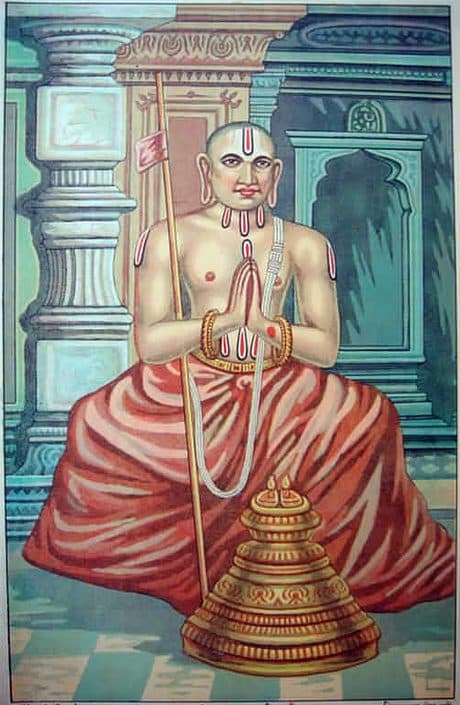
Rāmānuja · Viśiṣṭādvaita
English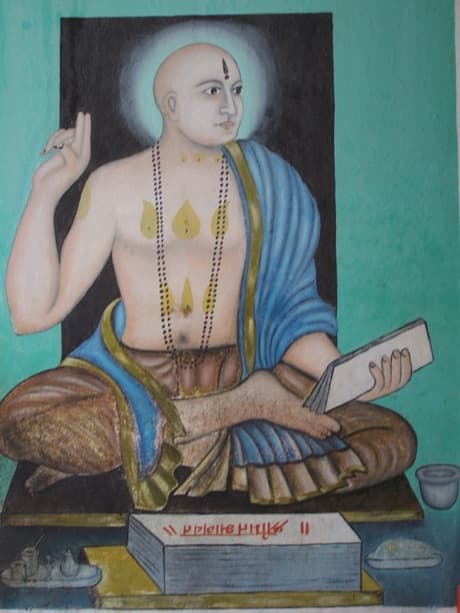
Madhvācārya · Dvaita
SanskritEnglishOn verses 4.14–4.16
“अत एव न मां कमाणिलिम्पान्ति | इतच्च न लिम्पान्ति इत्याह न मे कर्मफले स्पृहा | इच्छा मात्रं त्वस्ति | न तु तत्राभिमानिवेशः | तच्चोक्तम् – आकाङ्क्षन्नपि देवोसी नेच्छते लोकवत् परः | नक्ष्याग्रहस्तस्य विष्णोर्ज्ञानं कामो हि तस्य तु || इति न च्छीति कर्मेण सर्वमुक्तिः | तथाहि श्रुतिः – ज्ञात्वा तमेनमनसा हृदा च भूयो | न मृत्युमुपयति विद्वानिति कथं वा | इत्यनन्ता इत्यनन्तवदिति होवाच || इति ||” - Sri Krishna says that actions do not bind Him since he does not have craving for the fruits of His actions. But there is desire (for the good of the people), which is not craving (similar to those of human beings). Therefore it is said even though the Supreme Being has interest in the fruits of His action, he has no craving like human beings. There is no intensity in such desires. The knowledge of the Lord removes misconception; even his desires do not turn to be cravings. Not that people attain liberation progressively, in which case in course of time all would attain liberation. Therefore it is said, Knowing Your Self through mind and heart, death does not come to the wise. How could this come about? Because, even as the Jiva is अनन्त, without end so the Time is also अनन्त, without end.
“एवं ज्ञात्वा कर्मकरणे आचारोऽप्यस्ति इत्याह एवम् इति | पूर्वतरं कर्म पूर्वभावीत्यर्थः ||” – In the previous verse, he said, perform your Actions. Since the advise was not clear, he speaks here in detail, what constitutes Action. “कर्म कुरु” इत्युक्तम् | तस्य कर्मणो दुर्जयत्वमाह सम्यग् वक्तुम् किं कर्म इति |” – having spoken about performance of action, Sri Krishna now clarifies the nature of actions.
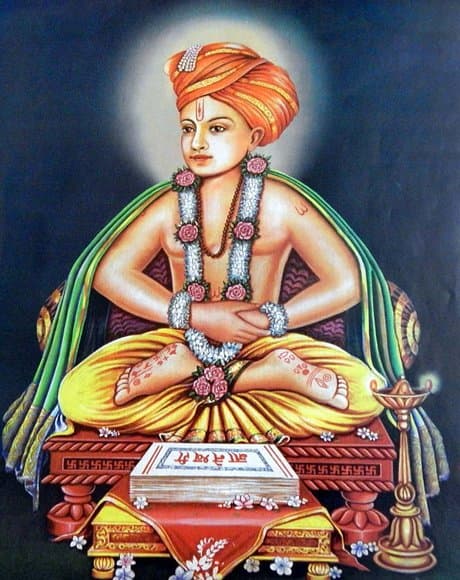
Jñāneśvar · Vārkarī
EnglishOn verses 4.14–4.15
14 "Actions cling not unto Me (as) there is no yearning in Me for the fruit of actions. He who thus recognises Me, is not fettered in actions. 15 Thus knowing, even the Ancients, seeking liberation, took to action. Do thou therefore just take to action, which has been performed by the Ancients (and by their predecessors), in (ancient and) still remote ancient days. (81)
Although all this ordered life emanated from Me, yet I was not the author of it; and take it that those that have fully realised this truth are free from the touch of worldly action and they have reached the stage of emancipation. Former seekers of divine life (striving after final emancipation) devoted themselves to action knowing this my original divine essence, O Dhanurdhara. Just see, as burnt seed can never germinate, in the same way, motiveless actions free from attachment (on their part) become the cause of their emancipation. There is one thing more to be specially remembered and it is that a right-minded seeker after truth ought never to consider this question of action or inaction according to his sweet choice and pleasure.
Swami Ramsukhdas · Modern
EnglishOn verses 4.13–4.14
'Cāturvarṇyam mayā sṛṣṭam guṇakarmavibhāgaśaḥ'—The Lord, created the four castes (order)—Brāhmaṇa, Kṣatriya, Vaiśya and Śūdra, according to the modes of nature, and actions of previous birth.* Besides human beings, the Lord created the gods, manes and other forms of life also, according to the modes of their nature and action, without showing the least partiality.
The fourfold caste (order), does not apply only to human beings, but also to birds, beasts and trees etc. Among birds, pigeons are regarded as Brāhmaṇa; hawks, kites and crows are regarded respectively as Kṣatriya, Vaiśya and Śūdra. Similarly Pipala, Nīma, Tamarind and Acacia, are regarded respectively as Brāhmaṇa, Kṣatriya, Vaiśya and Śūdra. But, here the term 'Cāturvarṇyam' stands only for human beings, because they can understand this distinction and can perform their duty, accordingly.
When the Lord declares, that the fourfold caste was created by Him, He means to say that all of these are his fragments and He is their disinterested friend. Therefore, He always thinks of their welfare. On the other hand, they are neither fragments of the gods nor are the gods their disinterested friends. So they should worship Him, only though the performance of their own duty (Gītā 18/46).
* The four castes (orders of society) (Brāhmaṇa, Kṣatriya, Vaiśya and Śūdra) are classified according to the mode of nature. In Brāhmaṇa the mode of goodness predominates; in Kṣatriya the mode of passion predominates, while the modes of goodness is secondary; in Vaiśya the mode of passion predominates, while the mode of ignorance is secondary (subordinate); while in Śūdra the mode of ignorance predominates. Thus the castes were determined on the basis of the mode of nature.
'Tasya kartāramapi māṁ viddhyakartāramavyayam'—Though, the Lord creates, preserves and destroys the entire universe yet He remains unconnected, (untainted) as He has no feeling of doership. He is called 'Avyayam' (unspent) only He is the material, as well as, the efficient cause of creation. For example, in a pot of clay, clay is material cause and the potter is the efficient cause, because while creating the world He remains uniform; neither His energy is spent to create it, like the potter who spends his energy to make a pot, nor is the material consumed, when the pot is made.
The soul, being a fragment of God is also imperishable. But, a man does not realize this fact, because he regards the acquired body, senses, mind, intellect, wealth and property etc., as his own, and for himself. As soon as, he regards these as the world's and for the world, he will realize his immortality.
By using the term 'Viddhi', the Lord urges strivers, to understand the divine nature of His actions. When actions are performed without having any affinity for those or, the material and the fruit of actions, then these become divine.
'Na māṁ karmāṇi limpanti na me karmaphale sprhā'—When the Lord, creates the universe, He has not the least affinity for his actions, nor is there any flaw or partiality etc., in His actions, nor any attachment or feeling of 'mine', or desire for the fruit of actions. So those actions do not taint Him.
All perishable objects, are fruits of actions. The Lord urges strivers, that they, like Him should have no craving for the fruit of actions. If they perform actions, without having any craving for the fruit of actions, the actions will not bind them.
In the thirteenth verse, the Lord explained that He is a non-doer i.e., He has no sense of doership, in spite of performing all actions, such as the creation of the universe etc. In this verse, He explains that He has no craving for the fruit of actions. Therefore, a striver should also perform actions, without
a sense of doership and without having any desire for the fruit of actions. By doing so, he is automatically liberated from the bondage of actions.
**'Iti māṁ yo'bhijānāti'**—Desires are born, when a man has an eye on the perishable mundane objects and then he cannot know the reality about God, Who is immortal. As soon as, desires are renounced, the inner sense is purified and then naturally one reflects on God. By having an eye on Him, he comes to know that, He is a disinterested friend of all beings, and all actions performed by Him, aim at the welfare, of all beings. The Lord, bestows this human body upon us, in order to enable us to be liberated from the bondage of actions. But, a man without knowing this fact, assumes his affinity for actions, and is thus held captive. Therefore the Lord in spite of having, neither a sense of doership, nor, desire for fruit, creates the universe by His grace, so as to inspire human beings, to attain salvation, by becoming free from the bondage of actions. When a man knows Him thus (in reality), he is attracted to Him. So Lord Śiva in the Rāmacaritamānasa says to Umā, 'He who knows the nature of Lord Rāma, ever remains engrossed in His adoration' (5/34/2).
**'Karmabhirna sa badhyate'**—The Lord's actions are ever divine. The actions of saints and sages also become divine. Not only saints and sages, but also men can make their actions divine, by doing away with desire, attachment and a sense of 'mine', which are impurities in actions. When actions are purged of impurities, these become divine and they do not bind men. These lead them, as well as others, (who follow them), to salvation.
An easy means, to make actions divine is to use the objects etc., acquired from the world, to render service to the world, without regarding these as one's own, and for one's own self.
We should give a serious thought to the fact, that we neither brought the objects, such as the body etc., with us, when we
came, nor can we carry these with us when we go, or change these of our own accord, nor maintain them. Similarly, the subtle and the causal bodies, being the evolutes of nature (prakṛti), also undergo modifications and therefore, we have no affinity for these. Moreover, those objects are not for us, because had they been for us, or having acquired them, there would have been no further desire, to acquire anything else. So it is a blunder to accept these as ours, and for us. They seem to us to be ours, so that we use them in rendering service to others rather than to lay a claim on them.
We should have no desire to acquire anything from the world nor even, to gain any favour from God. We should rather surrender ourselves to Him. The Lord Himself, has provided all the necessities of life to us, because He is very gracious and merciful. He knows our needs more than we know ours as we are dull-witted while, He is very sharp. So, without desiring anything, we should use the things that we possess, for the welfare of others without any selfish motive. By doing so our affinity for actions and objects etc., is renounced and God, Who is an embodiment of Bliss is realized.
**Appendix**—Though the author of worldly creation, the non-doership of God remains unaffected, similarly the non-doership of the self also remains unaffected—‘śarīrastho’pi kaunteya na karoti na lipyate’ (Gītā 13/31). But being deluded, he thinks that he is the doer—‘ahaṅkāravimūḍhātmā kartāhamiti manyate’ (Gītā 3/27).
‘Karma’, ‘Kriyā’ and ‘Līlā’—the three may appear to be the same but really they are totally different. The ‘Kriyā’ which is done with the sense of egoism and bears desirable and undesirable fruit, is called ‘Karma’ (action). The ‘kriyā’ (activity) which is done without the sense of doership and which does not bear fruit, is called ‘kriyā’ as breathing, opening and closing the eyes, movement of the pulse, beating of the heart
etc. The 'Kriyā' which is free from the sense of doership and from the desire for fruit, and also divine, and for the welfare of the world, is called 'Līlā'. Actions done by worldly people are karma and by liberated people are kriyā* and by God they are mere sports or say 'Līlā'—'lokavattu līlākaivalyam' (Brahmasūtra 2/1/33) viz., as the world without real existence appears to be existing, similarly the Lord's activity such as the creation of the universe etc., is merely His pastime. It means that the Lord in spite of being the non-doer seems to be a doer because of His pastime.
'Cāturvarṇyam mayā sṛṣṭam guṇakarmavibhāgaśaḥ'—this expression proves that according to the Gītā a person's caste is determined by his birth. A person's caste or Varṇa (order of life) is determined by the caste of his parents. The word 'jāti' is made from the root 'janī prādurbhāve' which proves that the caste is determined by birth. By 'Karma' there is the word 'kṛti' which is made from the root 'ḍukṛñ karaṇe'. But the caste is fully preserved by only discharging the duty prescribed for one's own caste.
*Link:—Describing the divine character of His actions, in the preceding verse, and citing examples of ancient seekers of liberation, in the next verse, the Lord advices Arjuna to perform his duty disinterestedly.*
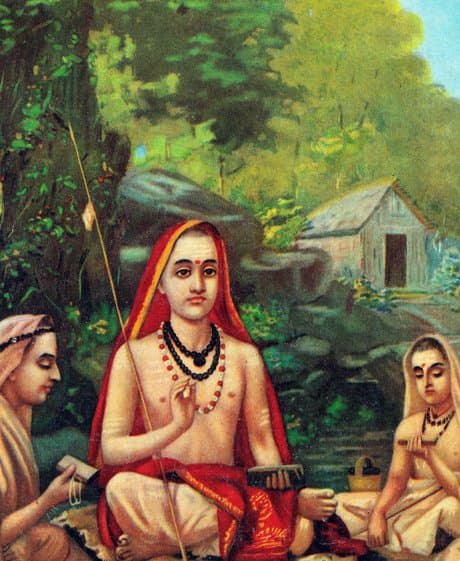
Ādi Śaṅkarācārya · Advaita
Sanskritन मां तानि कर्माणि लिम्पन्ति देहाद्यारम्भकत्वेन, अहङ्काराभावात् । न च तेषां कर्मणां फलेषु मे मम स्पृहा तृष्णा । येषां तु संसारिणाम् ``अहं कर्ता'' इत्यभिमानः कर्मसु, स्पृहा तत्फलेषु च, तान् कर्माणि लिम्पन्ति इति युक्तम्, तदभावात् न मां कर्माणि लिम्पन्ति । इति एवं यः अन्योऽपि मां आत्मत्वेन अभिजानाति ``नाहं कर्ता न मे कर्मफले स्पृहा'' इति सः कर्मभिः न बध्यते, तस्यापि न देहाद्यारम्भकाणि कर्माणि भवन्ति इत्यर्थः ॥ ``नाहं कर्ता न मे कर्मफले स्पृहा'' इति --
Ādi Śaṅkarācārya · Advaita
Hindiजिन कर्मोंका तू मुझे कर्ता मानता है, वास्तवमें मैं उनका अकर्ता ही हूँ, क्योंकि—
मुझमें अहंकारका अभाव है, इसलिये वे कर्म देहादिकी उत्पत्तिके कारण बनकर मुझे लिप्त नहीं करते और उन कर्मोंके फलमें मेरी लालसा अर्थात् तृष्णा भी नहीं है।
जिन संसारी मनुष्योंका कर्मोंमें 'मैं कर्ता हूँ' ऐसा अभिमान रहता है, एवं जिनकी उन कर्मोंमें और उनके फलोंमें लालसा रहती है, उनको कर्म लिप्त करते हैं यह ठीक है, परंतु उन दोनोंका अभाव होनेके कारण वे (कर्म) मुझे लिप्त नहीं कर सकते।
इस प्रकार जो कोई दूसरा भी मुझे आत्मरूपसे जान लेता है कि 'मैं कर्मोंका कर्ता नहीं हूँ' 'मेरी कर्मफलमें स्पृहा भी नहीं है' वह भी कर्मोंसे नहीं बँधता अर्थात् उसके भी कर्म देहादिके उत्पादक नहीं होते
Jñāneśvar · Vārkarī
Marathiहें मजचिस्तव जाहलें । परी म्यां नाहीं केलें । ऐसे जेणे जाणितलें । तो सुटला गा ॥ ८१ ॥
Jñāneśvar · Vārkarī
Hindi(4.81) इस प्रकार जो यह जान लेता है कि ये भेद मेरे ही कारण उत्पन्न हुए हैं परन्तु मैंने नहीं बनाये हैं, वही कर्म से छुटकारा पाता है।
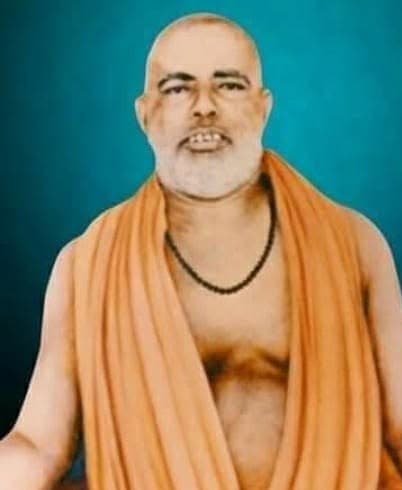
Sri Udiya Baba · Modern
Hindiसंगति— भगवान् सब कुछ करते हुए भी अकर्ता हैं, अतः अगले श्लोक में कहते हैं—
भावार्थ— मुझे कर्मफल की इच्छा नहीं है और कर्म मुझे बाँध नहीं सकते—इस प्रकार जो मुझे भली भाँति जानता है वह कर्मों से नहीं बँधता।
व्याख्या— यह श्लोक जीवनमुक्त और ईश्वर दोनों ही के विषय में लग सकता है। गीता में यह दिखाया है कि भक्ति करते हुए भी कर्म
नहीं बाँध सकते, फिर ज्ञान के विषय में तो कहा ही है कि 'ज्ञानाग्निः सर्वकर्माणि भस्मसात् कुरुते तथा' अर्थात् अर्जुन! ज्ञानरूप अग्नि सभी कर्मों को भस्मीभूत कर देता है। यहाँ यह कहा है कि निष्काम-कर्म बन्धन के कारण नहीं बनते। यह कितनी कठिन बात है जो रोटी बनाता हो उसके कपड़ों में हल्दी आदि का धब्बा न लगे। इसी प्रकार कर्म करते हुए भी उनसे लिप्त न हो यह बड़ी कठिन बात है। 'इति मां योऽभिजानाति' (जो ऐसा अच्छी तरह जानता है)-इसका भी तात्पर्य केवल जानने में नहीं, प्रत्युत शास्त्रद्वारा ऐसा अनुभव करने में है कि मैं कर्म और योग से सर्वथा असंग हूँ। ऐसा होने पर ही विद्वान् कर्मों से लिप्त नहीं होता। ऐसी स्थिति सिद्ध पुरुषों की ही होती है। वे बन्धन में नहीं पड़ते और ऐसा जानकर ही पूर्ववर्ती मुमुक्षुओं ने कर्म किये थे। तुम भी मुमुक्षु हो, इसलिए ऐसा ही करो। यही बात आगे कहते हैं-
Swami Ramsukhdas · Modern
HindiOn verses 4.13–4.14
‘चातुर्वर्ण्यं * मया सृष्टं गुणकर्म-विभागशः’—पूर्वजन्मोंमें किये गये कर्मोंके अनुसार सत्त्व, रज और तम—इन तीनों गुणोंमें न्यूनाधिकता रहती है। सृष्टि-रचनाके समय उन गुणों और कर्मोंके अनुसार
* ‘चत्वारो वर्णश्चातुर्वर्ण्यम्’ यहाँपर ‘चतुर्वर्णादीनां स्वार्थं उपसंख्यानम्’ इस वार्तिकसे स्वार्थमें ‘व्यज प्रत्यय’ किया गया है।
भगवान् ब्राह्मण, क्षत्रिय, वैश्य और शूद्र—इन चारों वर्णोंकी रचना करते हैं। मनुष्यके सिवाय देव, पितर, तिर्यक् आदि दूसरी योनियोंकी रचना भी भगवान् गुणों और कर्मोंके अनुसार ही करते हैं। इसमें भगवान्की किंचिन्मात्र भी विषमता नहीं है।
‘चातुर्वर्ण्यम्’ पद प्राणिमात्रका उपलक्षण है। इसका तात्पर्य है कि मनुष्य ही चार प्रकारके नहीं होते, अपितु पशु, पक्षी, वृक्ष आदि भी चार प्रकारके होते हैं; जैसे—पक्षियोंमें कबूतर आदि ब्राह्मण, बाज आदि क्षत्रिय, चील आदि वैश्य और कौआ आदि शूद्र पक्षी हैं। इसी प्रकार वृक्षोंमें पीपल आदि ब्राह्मण, नीम आदि क्षत्रिय, इमली आदि वैश्य और बबूल (कीकर) आदि शूद्र वृक्ष हैं। परन्तु यहाँ ‘चातुर्वर्ण्यम्’ पदसे मनुष्योंको ही लेना चाहिये; क्योंकि वर्ण-विभागको मनुष्य ही समझ सकते हैं और उसके अनुसार कर्म कर सकते हैं। कर्म करनेका अधिकार मनुष्यको ही है।
चारों वर्णोंकी रचना मैंने ही की है—इससे भगवान्का यह भाव भी है कि एक तो ये मेरे ही अंश हैं; और दूसरे, मैं प्राणिमात्रका सुहृद हूँ, इसलिये मैं सदा उनके हितको ही देखता हूँ। इसके विपरीत ये न तो देवताके अंश हैं और न देवता सबके सुहृद ही हैं। इसलिये मनुष्यको चाहिये कि वह अपने वर्णके अनुसार समस्त कर्तव्यकर्मोंसे मेरा ही पूजन करे (गीता—अठारहवें अध्यायका छियालीसवाँ श्लोक)।
‘तस्य कर्तारमपि मां विद्व्यकर्तारमव्ययम्’—यहाँ ‘अकर्तारम्’ पद कर्म करते हुए भी कर्तृत्वाभिमानका अभाव बतानेके लिये आया है। सृष्टिकी रचना, पालन, संहार आदि सम्पूर्ण कर्मोंको करते हुए भी भगवान् उन कर्मोंसे सर्वथा अतीत, निलिप्त ही रहते हैं।
सृष्टि-रचनामें भगवान् ही उपादान कारण हैं और वे ही निमित्त कारण हैं। मिट्टीसे बने पात्रमें मिट्टी उपादान कारण है और कुम्हार निमित्त कारण है। मिट्टीसे पात्र बननेमें मिट्टी व्यय (खर्च) हो जाती है और उसे बनानेमें कुम्हारकी शक्ति भी खर्च होती है; परन्तु सृष्टि-रचनामें भगवान्का कुछ भी व्यय नहीं होता। वे ज्यों-के-त्यों ही रहते हैं। इसलिये उन्हें ‘अव्ययम्’ कहा गया है।
जीव भी भगवान्का अंश होनेसे अव्यय ही है। विचार
करें कि शरीरादि सब वस्तुएँ संसारकी हैं और संसारसे ही मिली हैं। अतः उन्हें संसारकी ही सेवामें लगा देनेसे अपना क्या व्यय हुआ? हम तो (स्वरूपतः) अव्यय ही रहे। इसलिये यदि साधक शरीर, इन्द्रियाँ, मन, बुद्धि, धन, सम्पत्ति आदि मिले हुए सांसारिक पदार्थोंको अपना और अपने लिये न माने, तो फिर उसे अपनी अव्ययताका अनुभव हो जायगा।
यहाँ ‘विद्धि’ पदसे भगवान्ने अपने कर्मोंकी दिव्यताको समझनेकी आज्ञा दी है। कर्म करते हुए भी कर्म, कर्म-सामग्री और कर्मफलसे अपना कोई सम्बन्ध न रहना ही कर्मोंकी दिव्यता है।
‘न मां कर्माणि लिम्पन्ति न मे कर्मफले स्पृहा’—विश्व-रचनादि समस्त कर्म करते हुए भी भगवान्का उन कर्मोंसे कुछ भी सम्बन्ध नहीं है। उनके कर्मोंमें विषमता, पक्षपात आदि दोष लेशमात्र भी नहीं हैं। उनकी कर्म-फलमें किंचिन्मात्र भी आसक्ति, ममता या कामना नहीं है। इसलिये वे कर्म भगवान्को लिप्त नहीं करते।
उत्पत्ति-विनाशशील वस्तुमात्र कर्मफल है। भगवान् कहते हैं कि जैसे मेरी कर्मफलमें स्पृहा नहीं है, ऐसे ही तुम्हारी भी कर्मफलमें स्पृहा नहीं होनी चाहिये। कर्मफलमें स्पृहा न रहनेसे सम्पूर्ण कर्म करते हुए भी तुम कर्मोंसे बँधोगे नहीं।
पीछेके (तेरहवें) श्लोकमें भगवान्ने बताया कि सृष्टि-रचनादि समस्त कर्मोंका कर्ता होते हुए भी मैं अकर्ता हूँ अर्थात् मुझमें कर्तृत्वाभिमान नहीं है और इस श्लोकमें बताते हैं कि कर्मफलमें मेरी स्पृहा नहीं है अर्थात् मुझमें भोक्तृत्वाभिमान भी नहीं है। अतः साधकको भी इन दोनोंसे रहित होना चाहिये। फलेच्छाका त्याग करके केवल दूसरोंके लिये कर्म करनेसे कर्तृत्व और भोक्तृत्व—दोनों ही नहीं रहते। कर्तृत्व-भोक्तृत्व ही संसार है। अतः इनके न रहनेसे मुक्ति स्वतःसिद्ध ही है।
‘इति मां योऽभिजानाति’—मनुष्यमें जब कामनाएँ उत्पन्न होती हैं, तब उसकी दृष्टि उत्पत्ति-विनाशशील पदार्थोंपर रहती है। उत्पत्ति-विनाशशील (अनित्य) पदार्थोंपर दृष्टि रहनेसे वह नित्य भगवान्को तत्त्वसे नहीं जान सकता। पर कामनाओंके मिटनेसे जब अन्तःकरण शुद्ध हो जाता है, तब भगवान्की ओर स्वतः दृष्टि जाती है।
* सत्त्वगुणकी प्रधानतासे ब्राह्मणकी, रजोगुणकी प्रधानता तथा सत्त्वगुणकी गौणतासे क्षत्रियकी, रजोगुणकी प्रधानता तथा तमोगुणकी गौणतासे वैश्यकी और तमोगुणकी प्रधानतासे शूद्रकी रचना की गयी है।
भगवान्की ओर दृष्टि जानेपर मनुष्य जान जाता है कि भगवान् प्राणिमात्रके परम सुहृद् हैं, इसलिये उनके द्वारा होनेवाली मात्र क्रियाएँ प्राणिमात्रके हितके लिये ही होती हैं। भगवान् तो जीवोंको कर्म-बन्धनसे रहित करनेके लिये ही उन्हें मनुष्य-शरीर देते हैं, पर इस बातको न समझनेके कारण जीव कर्मोंसे नये-नये सम्बन्ध मानकर और बन्धन उत्पन्न कर लेता है। इसलिये कर्तापन और फलेच्छा न होनेपर भी वे केवल कृपा करके जीवोंको कर्म-बन्धनसे रहित करके उनका उद्धार करनेके लिये ही सृष्टि-रचनाका कार्य करते हैं। भगवान्को इस तरह जान लेनेसे मनुष्य भगवान्की ओर खिंच जाता है—
**उमा राम सुभाउ जेहिं जाना। ताहि भजनु तजि भाव न आना॥**
(मानस ५। ३४। २)
‘कर्मभिर्न स बध्यते’—भगवान्के कर्म तो दिव्य हैं ही, सन्त-महात्माओंके कर्म भी दिव्य हो जाते हैं। वास्तवमें सन्त-महात्मा ही नहीं, मनुष्यमात्र अपने कर्मोंको दिव्य बना सकता है। जब कर्मोंमें मलिनता (कामना, ममता, आसक्ति आदि) होती है, तब वे कर्म बाँधनेवाले हो जाते हैं। जब मलिनताके दूर हो जानेपर कर्म दिव्य हो जाते हैं, तब वे उसे नहीं बाँधते। इतना ही नहीं, वे कर्म उस कर्ताको और दूसरोंको भी (उसके अनुसार आचरण करनेसे) मुक्त करनेवाले हो जाते हैं।
अपने कर्मोंको दिव्य बनानेका सरल उपाय है—संसारसे मिली हुई वस्तुओंको अपनी और अपने लिये न मानकर (संसारकी और संसारके लिये मानते हुए) संसारकी सेवामें लगा देना।
विचार करना चाहिये कि हमारे पास शरीर आदि जितनी भी बाह्य वस्तुएँ हैं, उन सबको हम साथ लाये नहीं
**परिशिष्ट भाव**—जैसे सृष्टि-रचना आदि करनेपर भी भगवान्का अकर्तापन सुरक्षित (ज्यों-का-त्यों) रहता है, ऐसी ही जीवका भी स्वरूपसे अकर्तापन स्वतः सुरक्षित रहता है—‘शरीरस्थोऽपि कौन्तेय न करोति न लिप्यते’ (गीता १३। ३१)। परन्तु वह मूढ़तापूर्वक अपनेमें कर्तापन स्वीकार कर लेता है—‘अहंकारविमूढात्मा कर्ताहमिति मन्यते’ (गीता ३। २७)।
कर्म, क्रिया और लीला—तीनों एक दीखते हुए भी वास्तवमें सर्वथा भिन्न हैं। जो क्रिया कर्तृत्वाभिमानपूर्वक की जाय तथा अनुकूल-प्रतिकूल फल देनेवाली हो, वह क्रिया ‘कर्म’ कहलाती है। जो कर्तृत्वाभिमानपूर्वक न की जाय तथा जो फल देनेवाली भी न हो, वह ‘क्रिया’ होती है; जैसे—श्वासोंका आना-जाना, आँखका खुलना और बन्द होना, नाड़ियोंका चलना, हृदयका धड़कना आदि। जो क्रिया कर्तृत्वाभिमान तथा फलेच्छासे रहित तो होती ही है, साथ-साथ दिव्य तथा दुनियामात्रका हित करनेवाली भी होती है, वह ‘लीला’ होती है। सांसारिक लोगोंके द्वारा ‘कर्म’ होता है, मुक्त पुरुषोंके
और जायेंगे तब साथ ले जा सकते नहीं, उनके रहते हुए उनमें इच्छानुसार परिवर्तन कर सकते नहीं, उन्हें इच्छानुसार रख सकते नहीं अर्थात् उनपर हमारा कोई आधिपत्य नहीं है। इसी प्रकार जन्म-जन्मान्तरोंसे साथ आये सूक्ष्म और कारण-शरीर भी परिवर्तनशील और प्रकृतिके कार्य हैं, इसलिये उनके साथ भी हमारा सम्बन्ध नहीं है। वे वस्तुएँ अपने लिये भी नहीं हैं; क्योंकि उनके मिलनेपर भी ‘और मिले’ यह इच्छा रहती है। यदि वे वस्तुएँ अपने लिये होतीं तो और मिलनेकी इच्छा नहीं रहती। ऐसा होनेपर भी उन वस्तुओंको अपनी और अपने लिये मानना कितनी बड़ी भूल है? उन वस्तुओंमें जो अपनापन दीखता है, वह वास्तवमें केवल उनका सदुपयोग करनेके लिये है, उनपर अपना अधिकार जमानेके लिये नहीं।
सेवा करनेके लिये तो सब अपने हैं, पर लेनेके लिये कोई अपना नहीं है। संसारकी तो बात ही क्या है, भगवान् भी लेनेके लिये अपने नहीं हैं अर्थात् भगवान्से भी कुछ नहीं लेना है, प्रत्युत अपने-आपको ही भगवान्के समर्पित करना है। कारण कि जो वस्तु हमें चाहिये और हमारे हितकी है, वह भगवान्ने हमें पहलेसे ही बिना माँगे दे रखी है; और ज्यादा दे रखी है, कम नहीं। हमारी जरूरतको जितना भगवान् समझते हैं, उतना हम समझ भी नहीं सकते; क्योंकि भगवान्की उदारता अपार है। उनके सामने हमारी समझ तो बहुत ही अल्प है। इसलिये उनसे माँगना किस बातका? जो कुछ हमें मिला है, उसीका हमें सदुपयोग करना है। वस्तुओंको अपनी और अपने लिये न मानकर निष्कामभावपूर्वक दूसरोंके हितमें लगा देना ही वस्तुओंका सदुपयोग है। इससे कर्मों और पदार्थोंसे सम्बन्ध-विच्छेद हो जाता है और महान् आनन्दस्वरूप परमात्माका अनुभव हो जाता है।
द्वारा 'क्रिया' होती है और भगवान्के द्वारा 'लीला' होती है—'लोकवत्तु लीलाकैवल्यम्' (ब्रह्मसूत्र २।१।३३) अर्थात् जैसे संसार न होते हुए भी दीखता है, ऐसे ही भगवान्का सृष्टि-रचना आदि कार्य केवल लीलामात्र है। तात्पर्य है कि भगवान् कर्ता न होते हुए भी लीलासे कर्ता दीखते हैं।
'चातुर्वर्ण्यं मया सृष्टं गुणकर्मविभागशः' पदोंसे सिद्ध होता है कि गीता जन्म (उत्पत्ति)-से ही जाति मानती है। जो मनुष्य जिस वर्णमें जिस जातिके माता-पितासे पैदा हुआ है, उसीसे उसकी जाति मानी जाती है। 'जाति' शब्द ही 'जनी प्रादुर्भावे' धातुसे बनता है जो जन्मसे जातिको सिद्ध करता है। कर्मसे तो 'कृति' शब्द होता है, जो 'डुकृञ् करणे' धातुसे बनता है। हाँ, जातिकी पूर्ण रक्षा उसके अनुसार कर्तव्य-कर्म करनेसे ही होती है।
सम्बन्ध—पूर्वश्लोकमें अपना उदाहरण देकर अब आगेके श्लोकमें भगवान् मुमुक्षु पुरुषोंका उदाहरण देते हुए अर्जुनको निष्कामभावपूर्वक अपना कर्तव्य-कर्म करनेकी आज्ञा देते हैं।
Whosoever understands Lord Krishna as being the origin of all as well as being transcendental to all will cease to entangle themselves with desires and attachments to rewards which results in acquiring karma or reactions to actions which binds one to samsāra or the cycle of birth and death.
It is from past karmas that one exists in their present lifetime position. Such a person possessing such knowledge and acting upon it appropriately as described in these verses will no longer be bound by karma.