

Bhagavad Gītā · Chapter 4 · Jñāna Karma Sannyāsa Yoga
काङ्क्षन्तः कर्मणां सिद्धिं यजन्त इह देवताः
क्षिप्रं हि मानुषे लोके सिद्धिर्भवति कर्मजा
kāṅkṣantaḥ karmaṇāṃ siddhiṃ yajanta iha devatāḥ|
kṣipraṃ hi mānuṣe loke siddhirbhavati karmajā||
Word meanings
कर्मणाम् = of actions
सिद्धिम् = success / fruition
काङ्क्षन्तः = desiring
देवताः = the gods
यजन्ते = worship
हि = for
इह = in this
मानुषे, लोके = in the world of men
कर्मजा = born of action
सिद्धिः = success
क्षिप्रम् = quickly
भवति = comes about
Translation
In this world of human beings; men seeking the fruition of their activities worship the gods; for success born of actions follow quickly.
Commentary
The commentators seated around this verse
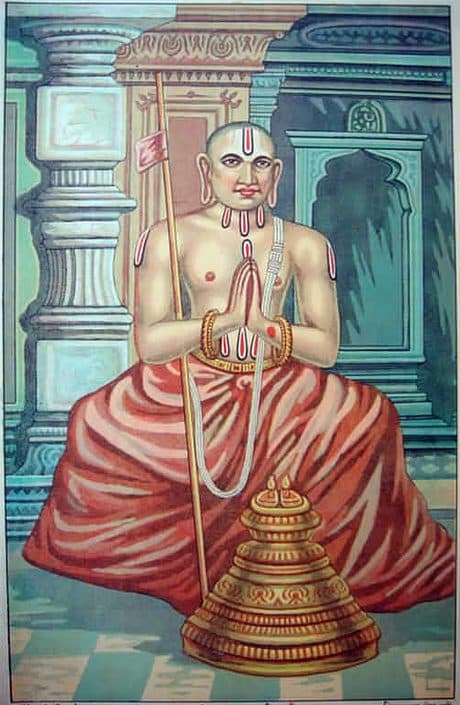
Rāmānuja · Viśiṣṭādvaita
English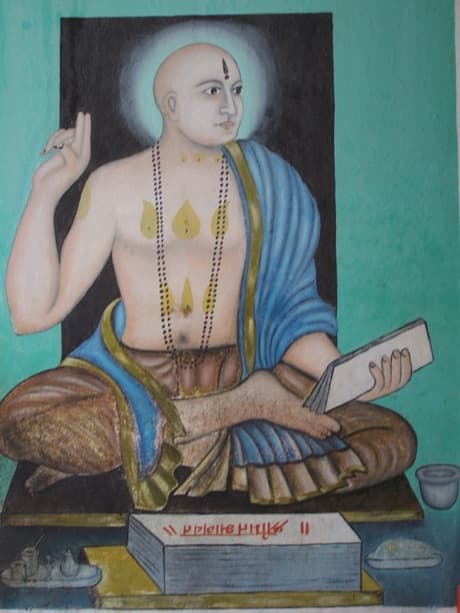
Madhvācārya · Dvaita
Madhva BhāṣyaSanskritEnglishOn verses 4.11–4.12
“न च मद्भजनमात्रेण मुक्तर्भवत्यन्यदेवतादिरूपेण | तथाऽपि चर्वेषामानुरूपेण फलं ददामि | इत्याह - ये यथा इति | सेवयामि फलदानेन | न तु गुणभावेन | कथमयं विशेष इत्यत आह - मम वर्त्म इति | अन्यदेवता यजन्तोऽपि मम वर्त्मैवानुवर्तन्ते | सर्वकर्मकर्तृत्वाद् भापक्तृत्वाच्च मम इति हि श्रुतिः | भगवांश्च तत्राभिधीयते | अजस्य नभावध्ये कर्मार्पितम् इति लिङ्गात् ||” - Not by propitiating Sri Krishna alone will there be deliverance, deliverance is possible even in other ways also. Responds by granting appropriate fruits, not serving by inclination. Those who propitiate other gods also propitiate him alone, because he is the energizer of all the actions and the enjoyer of all things, he being referred among all the gods as the One alone, as in Vedas. The Resplendent Lord (Sri Vishnu) alone is referred there. In the navel of the Immortal is all these offered. Thus, His form of Lotus-like navel is shown in symbolic manner.
“कृतो मम वर्त्मानुवर्तन्ते, क्षिप्र हि | अत एव हि फलप्राप्तिः | तस्मात्ते धनसनयः || इति हि श्रुतिः ||” - By following other gods, how are they said to be following Sri Krishna alone? This has been mentioned in the later part of this verse. quick indeed are the fruits attained. From Sri Hari alone are the fruits of labour - thus in Chhandogya. Up.
Madhvācārya · Dvaita
Gītā Tātparya NirṇayaSanskritEnglishOn verses 4.11–4.12
“तथैव भजामि | तदनुसारिफलदानरूपेण | अन्यदेवतायाजिनामपि मत्समर्पणेन वैष्णवमार्गानुवर्तनेनैव सम्यक् फलं भवति || अन्यदेवतपूजाऽपि यस्मिन्नन्ते समर्पिता | स्वर्गादिफलहेतुः स्यान्न्यथा तं भजेन्द्रिम् || इत्याग्नये ||” - the Lord grants fruits appropriate to their deeds. Even those who propitiate other gods, having surrendered to him, even though not following the Vaishnava path, appropriate fruits are made available. Worship to other gods also comes to be offered to Me in the end. The object of getting the fruits of heaven becomes possible; not otherwise. Therefore propitiate Him, thus, in Agni Puraana.
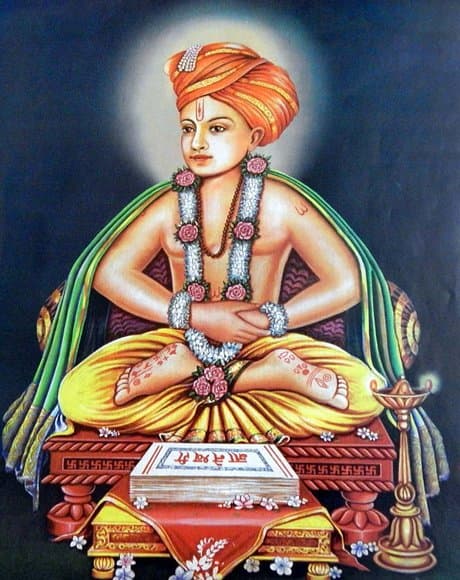
Jñāneśvar · Vārkarī
English12 "Desiring that (their) actions bear fruit, they worship on earth the (minor) Divinities; for, in this world of men, there ensues quick fruition of actions. (71)
Out of diverse motives and objects in mind they worship, following prescribed procedure, their favourite deities, and they succeed in securing all they expect from them. But be sure of this, that it is all definitely the fruit of their actions. As a matter of fact the giver as also the taker in this action, are the actions themselves. Only actions bear fruit in this world. Whatever is sown in the land, is to be reaped as fruit, or whatever is held before the mirror is alone reflected in it; or whatever is uttered, sitting at the bottom—base—of a mountain is only reverberated. In that way although I am the basis of the faith of this worship of the diverse deities, yet the fruit secured is just according to the measure of desires of the seekers.
Swami Ramsukhdas · Modern
English'Kāṅkṣantaḥ karmaṇām siddhiṁ yajanta iha devatāḥ'—A man, is eligible to perform new actions, and it is seen that success is attained through action. So, he firmly believes that God is also realized, through action (penance, meditation and trance etc.,) just as, worldly objects are acquired through actions. He, does not pay attention to the fact, that worldly things are acquired
through actions, as they are limited, they are not ever attained, they are separate from us, and they are changeful, while the Lord cannot be acquired, through action, as He is not a product of action. He pervades everywhere, is ever attained, is not separate from us (the self) and is unchanging. So, He can be attained, as soon as a keen desire to realize Him, is aroused. Keen desire for God-realization, is not aroused, because of the preference, for worldly pleasures and prosperity.
The Lord, is like a father, while the gods are like shopkeepers. We can take a thing from a shopkeeper, only by paying the money but we can take it from the father, free of cost. Similarly, we have to perform rituals according to scriptural methods for gods, in order to obtain fruits from them, while God bestows upon us our necessities, free of cost. Moreover, as a shopkeeper gives even hazardous things, such as, a match box or a knife etc., to a boy on payment, but if the boy wants such things from his father, the latter will not only refuse but take away, the money also. A father gives only beneficial things to a boy. The gods, also bestow upon their devotees, harmful gifts without thinking of their welfare, at the due completion of a ritual. But the Lord, like a father, bestows only those gifts, which are for the welfare of devotees. In spite of this fact, the ignorant or dull-witted people, because of their attachment, sense of mine and desire for the perishable materials, worship other gods, as they do not realise the glory, the benevolence and selflessness, friendliness of the Lord (Gītā 7/20—23; 9/23-24).
'Kṣipram hi mānuṣe loke siddhirbhavati karmajā'—This human world, is the field for actions. Besides this, other worlds, such as heaven and hell etc., are for reaping fruits of past actions. The Lord also declares, 'Below in the world of men stretch forth the roots (of the universe as a tree) entangling man, in the bondage of actions (Gītā 15/2). But the other worlds (heaven and hell etc.,) exist, so that human beings may reap desirable or undesirable fruits respectively of their virtuous and evil actions.
Only human beings, are eligible to perform new actions, which bear fruit here, as well as hereafter. Beasts and birds etc., cannot perform new actions.
In this human world those people, who are attached to action, live (Gītā 14/15). It is because of their attachment to actions, that they are charmed by success, which is attained through action. This success is attained quickly, but it is shortlived. When actions are transitory, how could success attained through actions, be permanent? Therefore, the fruit of perishable actions, is also perishable. Those who perform actions with a desire for fruit, think of the fruit only, they do not think of the perishable nature, of that fruit. They take refuge in the gods and worship them, only because they bestow upon them success quickly, when rituals are duly completed. But because of their desire for fruit of action, they never get liberated, from the bondage of action. Consequently, they have to follow the cycle of birth and death.
The real success of human life is God-realization and that cannot be attained, through action. A striver cannot even follow, the Disciplines of Action, Knowledge and Devotion, which are the means of God-realization, through action. He can attain Yoga, not through action but through the, renouncement of actions.
**Question:**—Action is, said to be, the means to attain Yoga (Gītā 6/3). Then, how is it, that a man cannot attain Yoga through action?
**Answer:**—In Karmayoga, actions are performed, in order to renounce affinity for actions, and the material for actions. Yoga (union with God) is natural. So Yoga or God-realization cannot be attained through actions. In fact, actions are unreal, but when these are performed for the sake of the Supreme, they are called 'Sat' viz., real (Gītā 17/27).
When a person, performs action with a selfish motive, he does not realize Yoga (i.e., eternal union with God). In Karmayoga, actions are performed for others, not for one's own self i.e., not
for their fruit (Gītā 2/47). Actions, which are performed with a selfish motive, bind a man (Gītā 3/9) while actions, which are performed for others, liberate him, from the bondage of actions (Gītā 4/23). When actions are performed for others, affinity for actions and their fruit is renounced, and that renouncement is conducive to the realization of Yoga i.e., union with God.
While performing actions, a man has to depend on the changing objects, such as the body, senses, mind, intellect, person etc., which are different from the self (soul). The self, ever remains uniform without undergoing any modification, at all. Therefore, in Self-realization there is no need, in the least for the objects, such as the body etc., which are different from the self. A man, naturally realizes the self, as soon as he renounces his assumed affinity for worldly objects etc., which are different from him (the self).
*Link:—Having described the object of His manifestation, in the eighth verse, the Lord explains the merit of knowing the divine character of his actions, in the ninth verse. There He explained, that actions lose their divine character i.e., become impure, when these are performed with a desire for fruit. In the next two verses, the Lord specially, explains how, they gain their divine character (purity).*
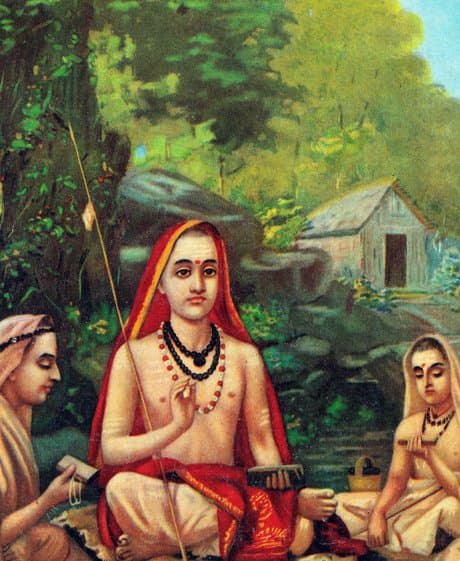
Ādi Śaṅkarācārya · Advaita
Sanskritकाङ्क्षन्तः अभीप्सन्तः कर्मणां सिद्धिं फलनिष्पत्तिं प्रार्थयन्तः यजन्ते इह अस्मिन् लोके देवताः इन्द्राग्न्याद्याः ; ``अथ योऽन्यां देवतामुपास्ते अन्योऽसावन्योऽहमस्मीति न स वेद यथा पशुरेवं स देवानाम्'' (बृ. उ. १-४-१०) इति श्रुतेः । तेषां हि भिन्नदेवतायाजिनां फलाकाङ्क्षिणां क्षिप्रं शीघ्रं हि यस्मात् मानुषे लोके, मनुष्यलोके हि शास्त्राधिकारः । ``क्षिप्रं हि मानुषे लोके'' इति विशेषणात् अन्येष्वपि कर्मफलसिद्धिं दर्शयति भगवान् । मानुषे लोके वर्णाश्रमादिकर्माणि इति विशेषः, तेषां च वर्णाश्रमाद्यधिकारिकर्मणां फलसिद्धिः क्षिप्रं भवति । कर्मजा कर्मणो जाता ॥ मानुषे एव लोके वर्णाश्रमादिकर्माधिकारः, न अन्येषु लोकेषु इति नियमः किन्निमित्त इति ? अथवा वर्णाश्रमादिप्रविभागोपेताः मनुष्याः मम वर्त्म अनुवर्तन्ते सर्वशः इत्युक्तम् । कस्मात्पुनः कारणात् नियमेन तवैव वर्त्म अनुवर्तन्ते न अन्यस्य इति ? उच्यते --
Ādi Śaṅkarācārya · Advaita
Hindiयदि रागादि दोषोंका अभाव होनेके कारण सभी प्राणियोंपर आप ईश्वरकी दया समान हैं एवं आप सब फल देनेमें समर्थ भी हैं तो फिर सभी मनुष्य मुमुक्षु होकर—यह सारा विश्व वासुदेवरूप है—इस प्रकारके ज्ञानसे केवल आपको ही क्यों नहीं भजते? इसका कारण सुन—
कर्मोंकी सिद्धि चाहनेवाले अर्थात् फलप्राप्तिकी कामना करनेवाले मनुष्य इस लोकमें इन्द्र, अग्नि आदि देवोंकी पूजा किया करते हैं।
श्रुतिमें कहा है कि ‘जो अन्य देवताकी इस भावसे उपासना करता है कि वह (देवता) दूसरा है और मैं (उपासक) दूसरा हूँ वह कुछ नहीं जानता, जैसे पशु होता है वैसे ही वह देवताओंका पशु है।’
ऐसे उन भिन्नरूपसे देवताओंका पूजन करनेवाले फलेच्छुक मनुष्योंकी इस मनुष्यलोकमें (कर्मसे उत्पन्न हुई) सिद्धि शीघ्र ही हो जाती है; क्योंकि मनुष्य-लोकमें शास्त्रका अधिकार है (यह विशेषता है)।
‘क्षिप्रं हि मानुषे लोके’ इस वाक्यमें क्षिप्रं विशेषणसे भगवान् अन्य लोकोंमें भी कर्मफलकी सिद्धि दिखलाते हैं।
पर मनुष्य-लोकमें वर्ण-आश्रम आदिके कर्मोंका अधिकार है, यह विशेषता है। उन वर्णाश्रम आदिमें अधिकार रखनेवालोंके कर्मोंकी कर्मजनित फलसिद्धि शीघ्र होती है
Jñāneśvar · Vārkarī
Marathiमग नानाहेतुप्रकारें । यथोचितें उपचारें । मानिलीं देवतांतरें । उपासिती ॥ ७१ ॥
तेथ जें जें अपेक्षित । तें तैसेंचि पावति समस्त । परी ते कर्मफळ निश्चित । वोळख तूं ॥ ७२ ॥
वाचूंनि देतें घेतें आणिक । निभ्रांत नाही सम्यक । एथ कर्मचि फळसूचक । मनुष्यलोकीं ॥ ७३ ॥
जैसें क्षेत्रीं जें पेरिजे । तेंवांचूनि आन न निपजे । कां पाहिजे तेंचि देखिजे । दर्पणाधारें ॥ ७४ ॥
ना तरी कडेयातळवटीं । जैसा आपुलाचि बोलु किरीटी । पडिसादु होऊनि उठी । निमित्तयोगें ॥ ७५ ॥
तैसा समस्तां यां भजनां । मी साक्षिभूतु पैं अर्जुना । एथ प्रतिफळे भावना । आपुलाली ॥ ७६ ॥
Jñāneśvar · Vārkarī
Hindi(4.71) तथा अनेक हेतु मन में रखकर और अनेक प्रकार से मनमाने उपचारों से मनाये हुए अनेक देवताओं की उपासना करते हैं।
(4.72) ऐसा करने से जो-जो उनका इच्छित हेतु रहता है, वह सम्पूर्ण उन्हें प्राप्त होता है। परन्तु वास्तव में वह उनके कर्म का फल समझो।
(4.73) इसके सिवाय फल देने या लेने वाला कोई भी दूसरा नहीं है। यह सत्य जानो कि इस मनुष्यलोक में कर्म ही फल देनेहारा होता है।
(4.74) जैसे खेत में जो कुछ बोया जाय उसके सिवाय दूसरी वस्तु वहाँ उत्पन्न नहीं होती, अथवा दर्पण के आधार से जो देखना चाहो वही वस्तु दिखाई देती है, (4.75) अथवा हे किरीटी! पर्वत के कगार पर जैसे अपना ही शब्द प्रतिध्वनित हो उठता है,
(4.76) वैसे ही इन सब भजनों का मैं साक्षिभूत हूँ, परन्तु इनमें अपनी-अपनी भावना ही फल-रूपिणी होती है।
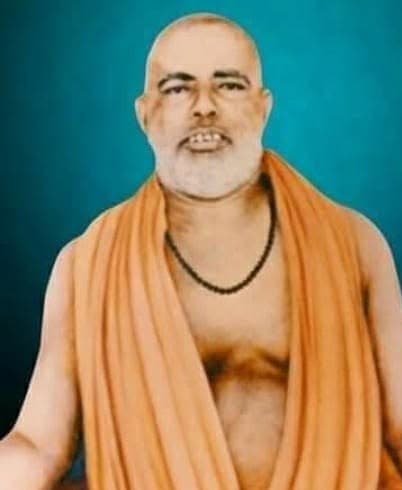
Sri Udiya Baba · Modern
Hindiभावार्थ— जो लोग कर्मों से होने वाली सिद्धि की आकांक्षा करते हुए देवताओं की पूजा करते हैं उन्हें इस मनुष्यलोक में वह कर्मजनित सिद्धि शीघ्र ही प्राप्त हो जाती है।
व्याख्या— यहाँ 'मनुष्यलोक' इसलिये कहा है क्योंकि मनुष्यों में ही वर्णाश्रम विभाग है, अतः उन्हें ही श्रौत-स्मार्त कर्म करते हुए सिद्धि प्राप्त हो सकती है।
प्रश्न— आप कर्मयोग की महत्ता का प्रतिपादन करते हैं, किन्तु ज्ञान को छोड़कर कर्म की ओर कौन जाना चाहेगा।
उत्तर— ज्ञानयोग की प्राप्ति के लिये अन्तःकरण की शुद्धि आवश्यक है और उसके लिये निष्काम कर्म करना चाहिये। अतः पहले कर्मयोग का आश्रय लिये बिना ज्ञानयोग में प्रवेश कैसे होगा?
प्रश्न— अन्तःकरण की शुद्धि तो हठयोग से भी हो सकती है, फिर हम कर्म क्यों करें?
उत्तर— यदि हृदय में सकामता रहे तो हठयोग से शरीर भले ही शुद्ध हो जाय अन्तःकरण शुद्ध नहीं हो सकता। फिर इस साधना की क्षमता प्रत्येक शरीर में होती भी नहीं। यदि खान-पान अनुकूल न हो तो उल्टे शरीर रोगी और मन विक्षिप्त हो सकता है। चित्त की शुद्धि तो निष्काम कर्मयोग से ही शीघ्र होती है।
Swami Ramsukhdas · Modern
Hindi‘काङ्क्षन्तः कर्मणां सिद्धिं यजन्त इह देवताः’—मनुष्यको नवीन कर्म करनेका अधिकार मिला हुआ है। कर्म करनेसे ही सिद्धि होती है—ऐसा प्रत्यक्ष देखनेमें आता है। इस कारण मनुष्यके अन्तःकरणमें यह बात दृढ़तासे बैठी हुई है कि कर्म किये बिना कोई भी वस्तु नहीं मिलती। वे ऐसा समझते हैं कि सांसारिक वस्तुओंकी तरह भगवान्की प्राप्ति भी कर्म (तप, ध्यान, समाधि आदि) करनेसे ही होती है। नाशवान् पदार्थोंकी कामनाओंके कारण उनकी दृष्टि इस वास्तविकताकी ओर जाती ही नहीं कि सांसारिक वस्तुएँ कर्मजन्य हैं, एकदेशीय हैं, हमें नित्य प्राप्त नहीं हैं, हमारेसे अलग हैं और परिवर्तनशील हैं, इसलिये उनकी प्राप्तिके लिये कर्म करने आवश्यक हैं। परन्तु भगवान् कर्मजन्य नहीं हैं, सर्वत्र परिपूर्ण हैं, हमें नित्यप्राप्त हैं, हमारेसे अलग नहीं हैं और अपरिवर्तनशील हैं इसलिये भगवत्प्राप्तिमें सांसारिक वस्तुओंकी प्राप्तिका नियम नहीं चल सकता। भगवत्प्राप्ति केवल उत्कट अभिलाषासे होती है। उत्कट अभिलाषा जाग्रत् न होनेमें खास कारण सांसारिक भोगोंकी कामना ही है।
भगवान् तो पिताके समान हैं और देवता दूकानदारके समान। अगर दूकानदार वस्तु न दे, तो उसको पैसे लेनेका अधिकार नहीं है; परन्तु पिताको पैसे लेनेका भी अधिकार है और वस्तु देनेका भी। बालकको पितासे कोई वस्तु लेनेके लिये कोई मूल्य नहीं देना पड़ता, पर दूकानदारसे वस्तु लेनेके लिये मूल्य देना पड़ता है। ऐसे ही भगवान्से कुछ लेनेके लिये कोई मूल्य देनेकी जरूरत नहीं है; परन्तु देवताओंसे कुछ प्राप्त करनेके लिये विधिपूर्वक कर्म करने पड़ते हैं। दूकानदारसे बालक दियासलाई, चाकू आदि हानिकारक वस्तुएँ भी पैसे देकर खरीद सकता है; परन्तु यदि वह पितासे ऐसी हानिकारक वस्तुएँ माँगे तो वे उसे नहीं देंगे और पैसे भी ले लेंगे। पिता वही वस्तु देते हैं, जिसमें बालकका हित हो। इसी प्रकार देवतालोग अपने उपासकोंको (उनकी उपासना सांगोपांग होनेपर) उनके हित-अहितका विचार किये बिना उनकी इच्छित वस्तुएँ दे देते हैं; परन्तु परमपिता भगवान् अपने भक्तोंको अपनी
इच्छासे वे ही वस्तुएँ देते हैं, जिसमें उनका परमहित हो। ऐसा होनेपर भी नाशवान् पदार्थोंकी आसक्ति, ममता और कामनाके कारण अल्प-बुद्धिवाले मनुष्य भगवान्की महत्ता और सुहृताको नहीं जानते, इसलिये वे अज्ञानवश देवताओंकी उपासना करते हैं (गीता—सातवें अध्यायके बाईसवेंसे तेईसवें श्लोकतक तथा नवें अध्यायका तेईसवाँ-चौबीसवाँ श्लोक)।
**‘क्षिप्रं हि मानुषे लोके सिद्धिर्भवति कर्मजा’**—यह मनुष्यलोक कर्मभूमि है—**‘कर्मानुबन्धीनि मनुष्यलोके’** (गीता १५। २)। इसके सिवाय दूसरे लोक (स्वर्ग-नरकादि) भोगभूमियाँ हैं। मनुष्यलोकमें भी नया कर्म करनेका अधिकार मनुष्यको ही है, पशु-पक्षी आदिको नहीं। मनुष्य-शरीरमें किये हुए कर्मोंका फल ही लोक तथा परलोकमें भोगा जाता है।
मनुष्यलोकमें कर्मोंकी आसक्तिवाले मनुष्य रहते हैं—**‘कर्मसङ्गुष्ठ जायते’** (गीता १४। १५)। कर्मोंकी आसक्तिके कारण वे कर्मजन्य सिद्धिपर ही लुब्ध होते हैं। कर्मोंसे जो सिद्धि होती है, वह यद्यपि शीघ्र मिल जाती है, तथापि वह सदा रहनेवाली नहीं होती। जब कर्मोंका आदि और अन्त होता है, तब उनसे होनेवाली सिद्धि (फल) सदा कैसे रह सकती है? इसलिये नाशवान् कर्मोंका फल भी नाशवान् ही होता है। परन्तु कामनावाले मनुष्यकी दृष्टि शीघ्र मिलनेवाले फलपर तो जाती है, पर उसके नाशकी ओर नहीं जाती। विधिपूर्वक सांगोपांग किये गये कर्मोंका फल देवताओंसे शीघ्र मिल जाया करता है; इसलिये वे देवताओंकी ही शरण लेते हैं और उन्हींकी आराधना करते हैं। कर्मजन्य फल चाहनेके कारण वे कर्मबन्धनसे मुक्त नहीं होते और परिणामस्वरूप बारंबार जन्मते-मरते रहते हैं।
जो वास्तविक सिद्धि है, वह कर्मजन्य नहीं है। वास्तविक सिद्धि ‘भगवत्प्राप्ति’ है। भगवत्प्राप्तिके साधन—कर्मयोग, ज्ञानयोग और भक्तियोग भी कर्मजन्य नहीं हैं। योगकी सिद्धि कर्मोंके द्वारा नहीं होती, प्रत्युत कर्मोंके सम्बन्ध-विच्छेदसे होती है।
शंका—**‘कर्मयोग’** की सिद्धि तो कर्म करनेसे ही बतायी गयी है—**‘आरुरुक्षोर्मुनेयोगं कर्म कारणमुच्यते’**
(गीता ६।३), तो फिर कर्मयोग कर्मजन्य कैसे नहीं है?
**समाधान**—कर्मयोगमें कर्मोंसे और कर्म-सामग्रीसे सम्बन्ध-विच्छेद करनेके लिये ही कर्म किये जाते हैं। योग (परमात्माका नित्य-सम्बन्ध) तो स्वतःसिद्ध और स्वाभाविक है। अतः योग अथवा परमात्मप्राप्ति कर्मजन्य नहीं है। वास्तवमें कर्म सत्य नहीं है, प्रत्युत परमात्मप्राप्तिके साधनरूप कर्मोंका विधान सत्य है। कोई भी कर्म जब सत्के लिये किया जाता है, तब उसका परिणाम सत् होनेसे उस कर्मका नाम भी सत् हो जाता है—‘कर्म चैव तदर्थीयं सदित्येवाभिधीयते’ (गीता १७।२७)।
अपने लिये कर्म करनेसे ही ‘योग’-(परमात्माके साथ नित्ययोग-) का अनुभव नहीं होता। कर्मयोगमें दूसरोंके लिये ही सब कर्म किये जाते हैं, अपने लिये अर्थात् फल-प्राप्तिके लिये नहीं—‘कर्मण्येवाधिकारस्ते मा फलेषु
कदाचन’ (गीता २।४७)। अपने लिये कर्म करनेसे मनुष्य बँधता है (गीता—तीसरे अध्यायका नवाँ श्लोक) और दूसरोंके लिये कर्म करनेसे वह मुक्त होता है (गीता—चौथे अध्यायका तेईसवाँ श्लोक)। कर्मयोगमें दूसरोंके लिये ही सब कर्म करनेसे कर्म और फलसे सम्बन्ध-विच्छेद हो जाता है, जो ‘योग’का अनुभव करानेमें हेतु है।
कर्म करनेमें ‘पर’ अर्थात् शरीर, इन्द्रियाँ, मन, बुद्धि, पदार्थ, व्यक्ति, देश, काल आदि परिवर्तनशील वस्तुओंकी सहायता लेनी पड़ती है। ‘पर’की सहायता लेना परतन्त्रता है। स्वरूप ज्यों-का-त्यों है। उसमें कभी कोई परिवर्तन नहीं होता। इसलिये उसकी अनुभूतिमें ‘पर’ कहे जानेवाले शरीरादि पदार्थोंके सहयोगकी लेशमात्र भी अपेक्षा, आवश्यकता नहीं है। ‘पर’से माने हुए सम्बन्धका त्याग होनेसे स्वरूपमें स्वतःसिद्ध स्थितिका अनुभव हो जाता है।
**सम्बन्ध**—आठवें श्लोकमें अपने अवतारके उद्देश्यका वर्णन करके नवें श्लोकमें भगवान्ने अपने कर्मोंकी दिव्यताको जाननेका माहात्म्य बताया। कर्मजन्य सिद्धि चाहनेसे ही कर्मोंमें अदिव्यता (मलिनता) आती है। अतः कर्मोंमें दिव्यता (पवित्रता) कैसे आती है—इसे बतानेके लिये अब भगवान् अपने कर्मोंकी दिव्यताका विशेष वर्णन करते हैं।
**चातुर्वर्ण्यं मया सृष्टं गुणकर्मविभागशः।**
For the most part persons who desire the material fruits of their actions never worship the Supreme Lord Krishna who is the super soul existing within all living beings and who is the ultimate recipient of all worship and offerings as confirmed in the previous verse.
It is very rarely seen that the materialists are inclined to His worship. Instead they worship the demi-gods and other lesser entities.
Why is this so?
It is because by worshipping them the seekers of material possessions such as wealth, power and dominion find quick results in the fulfilment of their material desires.
mānuṣe loke means in the mortal worlds. This includes all material worlds everywhere in creation.
Such persons in these worlds oblivious to the true purpose of human existence due to a vast accumulation of sinful reactions that have not been exhausted from time immemorial, desire immediate results for their actions causing them to get more and more reactions.
Such people worship that which gives temporary material rewards and foolishly pursue transient material objectives even foolishly attempting to gain immortality in their corporeal physical body.
Only such a rare being who fearful of samsāra or transmigration from physical body to physical body in the endless cycle of birth and death, who aspires for mokṣa or liberation from the cycle of birth and death,
only this rare being would engage themselves in karma yoga or the performance of prescribed Vedic activities as propitiation to the Supreme Lord Krishna.
The next verse reveals how to release oneself from sin which obscures one's perception from realising the need to engage in karma yoga.