

Bhagavad Gītā · Chapter 3 · Karma Yoga
प्रकृतेः क्रियमाणानि गुणैः कर्माणि सर्वशः
अहङ्कारविमूढात्मा कर्ताऽहमिति मन्यते
prakṛteḥ kriyamāṇāni guṇaiḥ karmāṇi sarvaśaḥ|
ahaṅkāravimūḍhātmā kartā'hamiti manyate||
Translation
All actions are being performed by the modes of Prakrti (Primordial Matter). The fool, whose mind is deluded by egoism, thinks: "I am the doer."
Commentary
The commentators seated around this verse
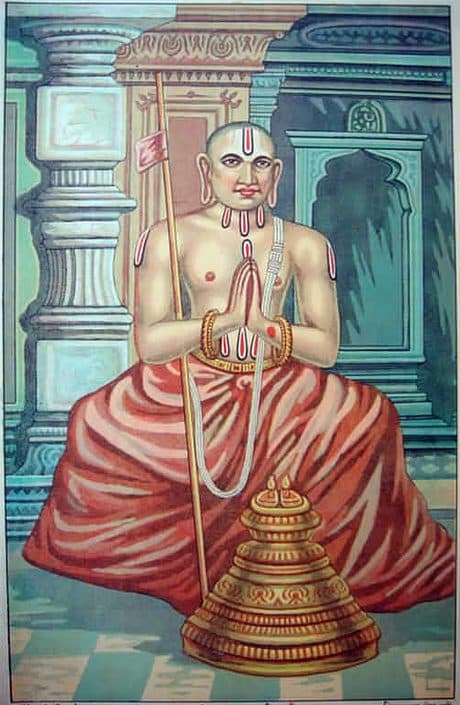
Rāmānuja · Viśiṣṭādvaita
EnglishOn verses 3.27–28
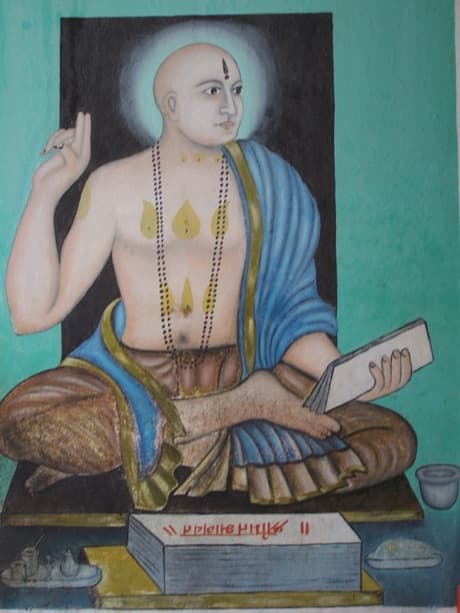
Madhvācārya · Dvaita
Madhva BhāṣyaSanskritEnglishOn verses 3.27–3.32
“विद्वद्विदुषाः कर्मभेदमाह - प्रकृतेः इति | प्रकृतेः गुणैः इन्द्रियाभिः | प्रकृतिमपेक्ष्य गुणभूतानि हि तानि | रसम्बन्धीन्नि च | न हि प्रतिविम्बस्य क्रिया ||” - The difference between actions of the wise one and of the ignorant one is shown here, qualifying with words like प्रकृतेः - by nature, गुणैः by attributes. इन्द्रियाभिः - influenced by the senses. The senses are lower than प्रकृति and गुणः. Further because of the association (of the senses), not actions of the प्रतिविम्ब - the Jiva.
“कर्मभेदस्य गुणभेदस्य च तत्त्ववित् | गुणाः इन्द्रयादीनि | गुणेषु विषयेषु | प्रकृतेः गुणेषु इन्द्रियादिषु समुद्याः इन्द्रियाद्यभिमानाद्वि विषयादिसङ्गः | गुणकर्मसु विषयेषु कर्मसु च | “शब्दाद्या इन्द्रियाद्याश्च सत्वाद्याश्च शुभानि च | अप्रधानानि च गुणा निगद्यन्ते निरुक्तिगैः || इत्यभिधानात् | सत्वाद्यङ्गीकारे गुणा गुणेषु इत्युक्तं स्यात्? ||” - Knowing in principle the distinction between actions and attributes). गुण here means the senses. Therefore, गुणेषु means by the senses-objects The attributes of nature are those influenced by senses, therefore become deluded. Being influenced by the ego-sense and associated with sense-objects. Here गुण कर्मसु means sense attributes and consequential actions. Sense objects like sound etc., senses like eye and the rest, auspicious attributes like luminosity (Satva) etc. should be understood as Secondary attributes, thus according to the meaning in the dictionary. By association of attributes like satva etc.
“अतः सर्वाणि कर्माणि मध्येय सन्न्यस्य भान्तितो जीवऽध्यारोपितानि मध्येय विमुच्य - भगवानेव सर्वाणि कर्माणि करोति इति मत्सुजा इति च | आत्मानं मामधिकृत्य यच्चेतः तदध्यात्मचेतः | सन्न्यस्यास्तु भगवान् करोति इति | निर्ममत्वं नाहं करोमि इति ||” - Surrendering all the actions to Me alone, giving up all the actions done by the Jiva from deluded feeling (that he is the doer), and (realizing that) the Lord alone performs all actions he (the wise-one) worships Me. सन्न्यास means realizing that all actions are performed by the Lord alone. निर्ममत्वम् means Jiva does not perform any actions at all.
“फलमाह - य मे इति | ये त्वेवं निवृत्तकर्मिणस्तेऽपि मुच्यन्ते ज्ञानद्वारा | किं वाऽपरोक्षज्ञानिनः ? न तु साधनान्तरमुच्यते - निवृत्तादीनि कर्माणि ह्यपरोक्षशुद्ध्य | अपरोक्षदृष्टिस्तु मुक्तौ किञ्चिद्मम मार्गते | सर्वे तादन्ताराधाय मुक्तये साधनं भवेत् | न किञ्चिदन्ताराधाय निर्वाणायापरोक्षदृक् || - इति ह्युक्तं नारायणाष्टाक्षकल्पे | अत एव समुच्चयनियमोऽपि निराकृतः ||” - Sri Krishna speaks about the fruits of listening to advise. Those who perform actions with the sense of renunciation, are released through the path of Wisdom. What is there then to be spoken of those who have attained realization? Performance of action is not suggested as an alternate medium. Renunciation etc. of the actions is for the sake of realization of the Lord alone. For realization of the Lord, liberation does not depend on anyone particular Path. All depending upon them (Performance of unattached actions) become liberated through its means. But renunciation by itself, not dependent on anything else, will liberate one completely. thus, in Narayanaa shtkakshara Kalpa Therefore, contention that Wisdom and performance of Action alone constitute for deliverance is not correct.
Madhvācārya · Dvaita
Gītā Tātparya NirṇayaSanskritEnglishOn verses 3.27–3.32
“नाहं कर्ता हरिः कर्ता तत्पूजा कर्मचारिलम् | तथाऽपि मत्कृता पूजा तत्प्रसादेन नान्यथा || तदभक्तिस्तत्फलं मह्यं तत्प्रसादात् पुनः पुनः | कर्मन्यासो हरावेवं विष्णोस्तुत्पत्तिकरः सदा || यस्मात् स्वतन्त्रकर्तृत्वं विष्णोरेव न चान्यगम् | तदधीनं स्वतन्त्रत्वं स्वावरापेक्षयैव तु || जीवस्य विकृतिर्नाम कर्तृत्वं जडसंश्रयम् | पुमान् देया च गौर्दीन्धी स्तनो दोग्धेतिवत् क्रमात् || इति ब्रह्मतर्कवचनादीशद्ववरजीवप्रकृत्यादीनां कर्तृत्वमकर्तृत्वं च विभागेन ज्ञातव्यं सर्वत्र |” - Jiva is not the doer but Sri Hari alone is the doer. His adoration, verily, is the performance of all actions. Even the worship done by one is due to His Grace alone, not otherwise. Devotion towards Him is its own reward and reiteration of Grace. Performance of such action towards Sri Hari alone constitutes the ordained action. Sri Vishnu alone is endless fulfillment. By Sri Vishnu alone is independent performance of action, not from any one else. Dependent on Him, who is independent of others. The actions of the Jiva are fraught with adaptations, due to existence of grossness. Like the person being free as the milkman, the cow being the dependent as the instrument and the nipples being affected due to modifications in that order. One should always understand the performance and non-performance of action as differentiate between those of the Lord, the Jiva and the Prakriti, thus, in Brahma Tarka.
“क्वचित् स्वभावः प्रकृतिः क्वचित् त्रिगुणात्मिका | क्वचित् प्रकृष्टकर्तृत्वाद् भगवान् प्रकृतिर्हरिः | इति शब्दनिर्णये | स्वभावतस्त्रीधा जीवा उत्तमाधमध्यमाः | उत्तमास्तत्र देवाद्या मर्त्यमध्यास्तु मध्यमाः || अधमा असुराद्याश्च नैषामस्त्यन्यथाभवः | शरीरमात्रान्यथाल्ये स्वजातिं पुनरेष्यति || उत्तमा मुक्तियोग्याच्च मृत्तियोग्यास्तु मध्यमाः | अपरेऽन्यतमोयोग्याः प्राप्तिः साधनपूर्तितः || पूज्यभावे न सवपपानादि संसृति स्मृता | नैव पूतिश्च सवेषां नित्यकालहरिच्छया || अतोऽनुवर्तते नित्यं संसारोऽयमनादिमान् | अतोऽधमनां जीवानां मिथ्याज्ञानादयोऽखिलाः || स्वाभाविका गुणा ज्ञेया मध्यमर्त्येषु मिश्रिताः | तत्त्वज्ञानं विष्णुभक्तिरित्याद्या देवतादिषु || कार्यते स्ववशः कर्म सर्वैरैः प्राकृतगुणैः | स्वाभाविकगुणनेतान् हेतु कृत्यैव विष्णामाणेषु कर्ताहमिति मृदुधीः | मन्यते तत्त्वविद् विष्णुगुणा इच्छादयस्तु ये || स्वाभाविकेषु जीवस्य कामाद्येषु सदैव तु | प्रेरकत्वेन वर्तन्ते स्वातन्त्र्यं मम न क्वचित् || इति मत्वा न सक्तः स्यात् प्रीताऽस्य भवति प्रभुः | स्वभावगुणसमृद्धा ज्ञानादिगुणवत्तरम् || स्वातन्त्र्येणैव कर्तारं चाऽस्मानं प्रतिजानते | तान् गुणान् कर्म तच्चैव विष्णवधीनं न ते विदुः | तेष्वयोग्येषु तत्त्वज्ञस्तत्त्वं नातिप्रकाशयेत् || वेदेद् विवाहरूपेण नोपदेशात्मना क्वचित् | सभ्यरूपेण वा वीयात् पृष्ठेऽव्यक्तिकृदेव वा || बुद्धवाऽप्यसी यतो नित्यं स्वभावानुगच्छितः | स्वभावं यान्ति भूतानि निग्रहः किं करिष्यति || इत्यादिप्रकाशसंन्यासम् |” - Prakriti is to be understood in some cases as one's inclination (svabhaava) and in other cases as the three-fold attributes. Yet in other cases because of His superior creative act, Sri Hari should be so understood, thus, in Shabda Nirnaya. By attributes and inclination, the Jiva is three-fold, the best, the worst and the intermediate. The gods being the best, the asuras being the worst and the mortals being the intermediate. There can be no change in their (respective) attributes and inclination. Even though externally they may appear to be different (than what they are), internally they revert back to their own attributes and inclination. The best ones are qualified for moksha, deliverance, the intermediate ones are qualified for primordial life and others, the worst ones live in eternal darkness. The deliverance is only by performing actions fulfilling each one's attributes and inclination. In the absence of being properly inclined, all continue to flow indefinitely like a river. Since there is eternal continuity of the Primordial world according to the will of Sri Hari there is eternal continuity. Therefore for the worst of the Jivas there would always be distorted knowledge. The intermediate mortal beings will have mixed knowledge suited to their natural attributes and inclination. Wisdom of essential principles and devotion to Sri Vishnu will only be for gods and the like ones. Jivas being subservient to the Supreme Being each one performs their actions according to their natural attributes and inclination. Sri Vishnu gets the performance done from them according to their individual sva-bhaava. The deluded people consider themselves to be the performers of the actions. But those who know in principle that the nature of the attributes and inclination attributes and inclination are energized as willed by Sri Vishnu's will, have no independence of actions. In them the Lord becomes exceedingly pleased. The deluded ones influenced by their attributes and inclination consider themselves to be wise and independent and do not consider their attributes and inclination, knowledge and actions to be dependent upon Sri Vishnu. Being thus not qualified, they would not be illumined. They would only be convinced through arguments, and not through scriptural instructions. In general assembly, (where both noble and evil persons gather) general guidance may be given, so that it may enlighten at least the noble ones. Even though spoken by the wise, they (the evil ones) will react according to their attributes and inclination. Since they act according to their attributes, who and what is the use of controlling (their behaviour)? Thus, according to Prakasha Samhita.

Jñāneśvar · Vārkarī
English27 *“Of actions which, in every wise, are the doings of the Primal Nature’s constituent-aspects: one, whose intellect is deluded by egotism, regards himself as their author.”* (177)
Were you to take on your head, the load of another, tell me O Dhan-nurdhara, whether you would not be bent under it? In that way actions good or bad arising out of the primal nature’s constituent properties are shifted on to himself through a delusion by the ignorant, who fancies himself to be their author. To the bigoted, selfish, short-sighted and foolish persons, the mystery of this spiritual knowledge should not be revealed: Suffice this for the present. O Arjuna, hear attentively what I shall now tell you for your good.
Swami Ramsukhdas · Modern
English'Prakṛteḥ kriyamāṇāni guṇaiḥ karmāṇi sarvaśaḥ'—All the functions of the world, such as birth and growth of bodies and plants, flow of the Ganges and changes in worldly things etc., as well actions, such as seeing, hearing, eating and drinking etc., are carried out by the modes of nature. But, a man deluded by egoism divides all activities performed by cosmic energy, into two parts—To the first part, belong actions, which he thinks he does not perform but occur naturally—such as formation of the body and digestion of food etc. The second part, consists of those actions which he thinks he performs, such as seeing, speaking and eating etc. A man out of delusion regards himself as the
doer of the latter class of actions. Intellect, ego, mind, five subtle elements, ten organs of perception and actions, and five objects of senses—these are also called the modes of nature, because they are the evolutes of the three modes of nature, (goodness, passion and ignorance). The Lord declares that all actions are performed by the modes of nature, not by the self.
'Ahaṅkāravimūḍhātmā'—'Egoism' is a state of mind, while he (the self) is the knower of that state. But by an error, he identifies the self with that state, and thus he is deluded by egoism.
As a body denoted by the term 'Idam', is different from the self, so is egoism. 'Idam' cannot be 'I'—this is the rule. But, when he regards egoism as self, he is known as 'ahaṅkāravimūḍhātmā' (one whose mind is deluded by egoism). This assumed egoism is not wiped out by efforts, as these involve the ego. But, it is wiped out by non-acceptance viz., non-assumption.
An Important Fact
Egoism is of two kinds:—
- (i) Real* as 'I am' (relating to one's existence). - (ii) Unreal (assumed)—as 'I am body'.
'Real egoism' is natural and eternal, while unreal egoism', is unnatural and perishable. Real egoism, can be forgotten but cannot perish, while unreal egoism may appear, but cannot exist. A man commits an error, that he forgets real egoism (self) and assumes the unreal egoism (I am the body) to be true.
'Kartāhamiti manyate'—Though all actions are performed by modes of nature, yet a person whose mind is deluded by egoism,
*Real egoism in fact is not egoism. It is an aggregate of Truth, Knowledge and Bliss. It is called, 'real', because it never changes, while the unreal egoism, changes. Today a man is uneducated. Having received schooling he says he is educated. Thus the unreal egoism changes. But he (the self) remains the same. As soon as he ceases to identify himself with the unreal egoism, the real egoism, as the aggregate of Truth, Consciousness and Bliss, remains.
thinks that he is the doer, because he regards egoism, as the self. It is because of this egoism that he identifies the self with the body, senses, mind and thus regards the self as the doer. This egoism is self-made and so it can be eliminated by the self. The method, to throw it out is, through non-assumption. This false assumption, can be rooted out, if he realizes that he (the self) is different from the body, senses and mind etc.
Performance of actions and non-performance of actions—all are activities. Sleeping, waking, sitting, walking and trance etc., are included in activities, which take place in nature, while the self is free from performance and non-performance of actions. The self is the illuminator and knower of them. A man automatically remains established in the self, but the self assumes its affinity for actions. This assumed affinity, is called 'egoism'.
An Important Fact
As a wave is a part of an ocean, so the ocean and the wave belong to the same class. Similarly a body, a fragment of the world and the world, belong to the same class. The soul (self) is different from the world or the body. Man does not take the world, to be his own Self 'I' but he does take, even though wrongly, his body to be so.
Just as a wave without an ocean, has no independent existence of its own, similarly, without the world, there cannot be any separate existence of the body. But, when a man, whose mind is deluded by egoism, identifies the self with the body, several desires are born in him, as he has desire for family, riches, praise and pleasures etc. He does not realize, that by identifying the self with the body, he is already a captive and these desires will strengthen the bondage and will hurl him into the abyss of adversity.
Even though a striver during his disciplining period, may not feel that he is above and beyond the modes of prakṛti but
when he accepts to be so with a strong faith, he starts feeling himself beyond *prakṛti*. Thus, just as a person, is bound due to his wrong assumptions, in the same way he is freed from his shackles through correct assumptions, because it is a principle that an assumed fact, ceases to be by unassuming it. The same fact, has been pointed out by the Lord, in the eighth verse of the fifth chapter by the term 'manyeta' (should believe) when He declares, 'The man, who is united with the Divine and knows the truth, thinks that he does nothing at all'. By such thinking, a striver realizes the truth.
When even the unreal assumptions such as 'I am the body', 'I am doer', become so steady, that it seems difficult to renounce these; why would the reality, 'I am not the body' and 'I am not a doer', not become steady? And once the reality is confirmed, how can it be abandoned?
**Appendix**—All actions take place in the material realm. In the sentient realm there is no action at all. He whose mind is beguiled by egoism thinks 'I am the doer.' 'The mind being beguiled by egoism' means to assume the self's identity with ego, a fragment of *Aparā* (lower or insentient) *Prakṛti* (nature) viz., to assume ego as the self (I am this). This is known identification.
He who regards himself as the doer is sentient but he regards the insentient 'ego' as the 'self'. It means that he who regards ego as the self, who assumes himself unrepresent, is in fact a fragment of God. In that self no sense of doership is possible (*Gītā* 13/29). In fact the self can't be identified with the body—'śarīrastho'pi kaunteya na karoti na lipyate' (*Gītā* 13/31) but he assumes his identification with the body 'kartāhamitimanyate'. In fact there is no identification, it is merely an assumption. It means that the self does not become a doer but there is only assumption of doership due to lack of discrimination—'manyate'. As soon as he thinks himself to be the doer, scriptural sanction-prohibition applies to him and he has to become the enjoyer (experiencer) of the fruit of action.
In the self there is no action. An action takes place where there is some empty space. How can an action take place in the solid self? But when a person assumes himself to be a doer, the action of Prakṛti, with which he accepts his relationship, bears fruit for him, which he has to endure. The reason is that he, who is a doer, is an experiencer.
The self has no relationship at all with any 'Kāraka' (case). Therefore in the self there is not even an iota of doership. The realm of doership is different. By now the actions which have been performed in the species of gods, men, animals, birds, gnomes and devils etc., out of them no action could have an access to the self, nor the body could have an access to the self, because the division of action and object (body) is quite different, from the division of the self. But without attaching importance to this discrimination, a man gets bound by action and its fruit.
He who feels that something is to be done, has affinity with ego because without the sense of doership no action is possible. The sense of doership crops up as one thinks of doing something. With the sense of doership, there is performance of action and by performing an action, the sense of doership is strengthened. Therefore by practising the spiritual discipline being an agent a striver can't be free from egoism. An action done with the sense of egoism, can never lead to salvation, because egoism is the root of all misfortunes, of birth and death. If actions are not performed for one's own self, affinity for egoism does not persist viz., affinity for the entire nature (Prakṛti) is renounced. Therefore a striver instead of attaching importance to the performance of action, should attach importance to discrimination. By attaching importance to discrimination, discrimination is naturally revealed clearly and it guides a seeker. Afterwards this discrimination is transformed into Real-Knowledge.
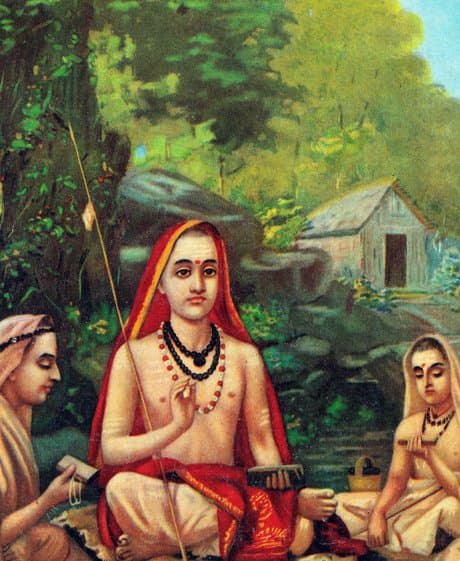
Ādi Śaṅkarācārya · Advaita
Sanskritप्रकृतेः प्रकृतिः प्रधानं सत्त्वरजस्तमसां गुणानां साम्यावस्था तस्याः प्रकृतेः गुणैः विकारैः कार्यकरणरूपैः क्रियमाणानि कर्माणि लौकिकानि शास्त्रीयाणि च सर्वशः सर्वप्रकारैः अहङ्कारविमूढात्मा कार्यकरणसङ्घातात्मप्रत्ययः अहङ्कारः तेन विविधं नानाविधं मूढः आत्मा अन्तःकरणं यस्य सः अयं कार्यकरणधर्मा कार्यकरणाभिमानी अविद्यया कर्माणि आत्मनि मन्यमानः तत्तत्कर्मणां अहं कर्ता इति मन्यते ॥
यः पुनर्विद्वान् --
Ādi Śaṅkarācārya · Advaita
Hindiमूर्ख अज्ञानी मनुष्य कर्मोंमें किस प्रकार आसक्त होता है? सो कहते हैं—
सत्त्व, रजस् और तमस्—इन तीनों गुणोंकी जो साम्यावस्था है, उसका नाम प्रधान या प्रकृति है, उस प्रकृतिके गुणोंसे अर्थात् कार्य और करणरूप समस्त विकारोंसे लौकिक और शास्त्रीय सम्पूर्ण कर्म सब प्रकारसे किये जाते हैं। परंतु अहंकारविमूढात्मा—कार्य और करणके संघातरूप शरीरमें आत्मभावकी प्रतीतिका नाम अहंकार है, उस अहंकारसे जिसका अन्तःकरण अनेक प्रकारसे मोहित हो चुका है ऐसा—देहेन्द्रियके धर्मको अपना धर्म माननेवाला, देहाभिमानी पुरुष अविद्यावश प्रकृतिके कर्मोंको अपनेमें मानता हुआ उन—उन कर्मोंका 'मैं कर्ता हूँ' ऐसा मान बैठता है
Jñāneśvar · Vārkarī
Marathiदेखें पुढिलाचें वोझें । जरी आपुला माथां घेईजे । तरी सांगे कां न दाटिजे । धनुर्धरा ॥ १७७ ॥
तैसी शुभाशुभें कर्में । जिये निफजति प्रकृतिधर्में । तियें मूर्ख मतिभ्रमें । मी कर्ता म्हणे ॥ १७८ ॥
ऐसा अहंकाराधिरूढ । एकदेशी मूढ । तया हा परमार्थ गूढ । प्रगटावा ना ॥ १७९ ॥
हें असो प्रस्तुत । सांगिजेल तुज हित । तें अर्जुना देऊनि चित्त । अवधारी पां ॥ १८० ॥
Jñāneśvar · Vārkarī
Hindi(3.177) हे धनुर्धर! देखो, यदि दूसरे का बोझा अपने सिर लिया जाय तो क्या वह भारी न लगेगा?
(3.178) वैसे ही प्रकृति के धर्म से जो भले-बुरे कर्म उपजते हैं मूर्ख लोग बुद्धि के भ्रम के कारण निज को ही उनका कर्ता समझते हैं। (3.179) ऐसे जो अहंकार से भरे हुए, केवल देह को आत्मा समझनेवाले मूर्ख हैं, उनपर इस गहन परमार्थ को प्रकट करना उचित नहीं।
(3.180) अब सम्प्रति तुम्हें एक हितकारी बात बताते हैं; हे अर्जुन! ध्यान देकर सुनो।
Sri Udiya Baba · Modern
Hindiभावार्थ— सम्पूर्ण कर्म सर्वथा प्रकृति के गुणों द्वारा हो रहे हैं, उन्हें अहंकार से मोहित चित्तवाला 'मैं कर्ता हूँ' ऐसा मानता है।
व्याख्या— यहाँ तत्त्वज्ञान की दृष्टि से अज्ञानी को 'विमूढ़' कहा है, कर्म की दृष्टि से नहीं। कर्मकाण्डी वास्तव में मूढ़ नहीं होता, किन्तु विचार-दृष्टि से जहाँ भी कर्ता-भोक्तापन होगा वहाँ अविवेक रहेगा, उस अविवेकी को ही 'मूढ़' कहा है।
पश्चभूत और शब्दादि विषय कार्यवर्ग के अन्तर्गत हैं। पाँच कर्मेन्द्रियाँ, पाँच ज्ञानेन्द्रियाँ और मनःकरण हैं तथा इनकी हेतु प्रकृति है। 'विमूढ़ात्मा' शब्द में जो 'आत्मा' पद है उसका अर्थ अन्तःकरण है।
Swami Ramsukhdas · Modern
Hindiप्रकृतेः क्रियमाणानि गुणैः कर्माणि सर्वशः—जिस समष्टि शक्तिसे शरीर, वृक्ष आदि पैदा होते और बढ़ते-घटते हैं, गंगा आदि नदियाँ प्रवाहित होती हैं, मकान आदि पदार्थोंमें परिवर्तन होता है, उसी समष्टि शक्तिसे मनुष्यकी देखना, सुनना, खाना-पीना आदि सब क्रियाएँ होती हैं। परन्तु मनुष्य अहंकारसे मोहित होकर, अज्ञानवश एक ही समष्टि शक्तिसे होनेवाली क्रियाओंके दो विभाग कर लेता है—एक तो स्वतः होनेवाली क्रियाएँ; जैसे—शरीरका बनना, भोजनका पचना इत्यादि; और दूसरी, ज्ञानपूर्वक होनेवाली क्रियाएँ; जैसे—देखना, बोलना, भोजन करना इत्यादि। ज्ञानपूर्वक होनेवाली क्रियाओंको मनुष्य अज्ञानवश अपने द्वारा की जानेवाली मान लेता है।
प्रकृतिसे उत्पन्न गुणों—(सत्त्व, रज और तम-) का कार्य होनेसे बुद्धि, अहंकार, मन, पंचमहाभूत, दस इन्द्रियाँ और इन्द्रियोंके शब्दादि पाँच विषय—ये भी प्रकृतिके गुण कहे जाते हैं। उपर्युक्त पदोंमें भगवान् स्पष्ट करते हैं कि सम्पूर्ण क्रियाएँ (चाहे समष्टिकी हों या व्यष्टिकी) प्रकृतिके गुणों द्वारा ही की जाती हैं, स्वरूपके द्वारा नहीं।
**‘अहङ्कारविमूढात्मा’**—‘अहंकार’ अन्तःकरणकी एक वृत्ति है। ‘स्वयं’ (स्वरूप) उस वृत्तिका ज्ञाता है। परन्तु भूलसे ‘स्वयं’ को उस वृत्तिसे मिलाने अर्थात् उस वृत्तिको ही अपना स्वरूप मान लेनेसे यह मनुष्य विमूढात्मा कहा जाता है।
जैसे शरीर ‘इदम्’ (यह) है, ऐसे ही अहंकार भी ‘इदम्’ (यह) है। ‘इदम्’ (यह) कभी ‘अहम्’ (मैं) नहीं हो सकता—यह सिद्धान्त है। जब मनुष्य भूलसे ‘इदम्’ को ‘अहम्’ अर्थात् ‘यह’ को ‘मैं’ मान लेता है, तब वह
‘अहङ्कारविमूढात्मा’ कहलाता है। यह माना हुआ अहंकार उद्योग करनेसे नहीं मिटता; क्योंकि उद्योग करनेमें भी अहंकार रहता है। माना हुआ अहंकार मिटता है—अस्वीकृतिसे अर्थात् ‘न मानने’ से।
विशेष बात
‘अहम्’ दो प्रकारका होता है—
(१) वास्तविक (आधाररूप) ‘अहम्’*; जैसे—‘मैं हूँ’ (अपनी सत्तामात्र)।
(२) अवास्तविक (माना हुआ) ‘अहम्’; जैसे—‘मैं शरीर हूँ’।
‘वास्तविक अहम्’ स्वाभाविक एवं नित्य और ‘अवास्तविक अहम्’ अस्वाभाविक एवं अनित्य होता है। अतः ‘वास्तविक अहम्’ विस्मृत तो हो सकता है, पर मिट नहीं सकता; और ‘अवास्तविक अहम्’ प्रतीत तो हो सकता है, पर टिक नहीं सकता। मनुष्यसे भूल यह होती है कि वह ‘वास्तविक अहम्’—(अपने स्वरूप-) को विस्मृत करके ‘अवास्तविक अहम्’—(मैं शरीर हूँ-) को ही सत्य मान लेता है।
**‘कर्ताहमिति मन्यते’**—यद्यपि सम्पूर्ण कर्म सब प्रकारसे प्रकृतिजन्य गुणोंके द्वारा ही किये जाते हैं, तथापि अहंकारसे मोहित अन्तःकरणवाला अज्ञानी मनुष्य कुछ कर्मोंका कर्ता अपनेको मान लेता है। कारण कि वह अहंकारको ही अपना स्वरूप मान बैठता है। अहंकारके कारण ही मनुष्य शरीर, इन्द्रियाँ, मन आदिमें ‘मैं’-पन कर लेता है और उन-(शरीरादि) की क्रियाओंका कर्ता अपनेको मान लेता है। यह विपरीत मान्यता मनुष्यने स्वयं की है, इसलिये इसको मिटा भी वही सकता है। इसको मिटानेका उपाय है—इसे विवेक-विचारपूर्वक न मानना;
* जिसको यहाँ ‘वास्तविक अहम्’ कहा है, वह वास्तवमें ‘अहम्’ नहीं है, प्रत्युत सत्-रूप, चित्-रूप तत्त्व है। उसको ‘वास्तविक अहम्’ इसलिये कहा है कि वह कभी बदलता नहीं, जबकि ‘अवास्तविक अहम्’ बदलता है। जैसे, कोई व्यक्ति पढ़ा-लिखा नहीं है, तो वह कहता है कि ‘मैं मूर्ख हूँ, अपढ़ हूँ’ और पढ़-लिखकर वही व्यक्ति कहता है कि ‘मैं विद्वान् हूँ, पढ़ा-लिखा हूँ’। इस प्रकार ‘अहम्’ के बदलनेपर भी अपनी सत्ता (‘मैं हूँ’) नहीं बदली। माने हुए ‘अहम्’ के साथ सदा रहनेसे ही उस सत्ताको ‘वास्तविक अहम्’ कहते हैं। माने हुए ‘अहम्’ का साथ मिटते ही अर्थात् वहाँसे दृष्टि हटते ही वह ‘वास्तविक अहम्’ सच्चिदानन्दस्वरूप हो जाता है।
क्योंकि मान्यतासे ही मान्यता कटती है।
एक 'करना' होता है, और एक 'न करना'। जैसे 'करना' क्रिया है, ऐसे ही 'न करना' भी क्रिया है। सोना, जागना, बैठना, चलना, समाधिस्थ होना आदि सब क्रियाएँ हैं। क्रिया मात्र प्रकृतिमें होती है। 'स्वयं'-(चेतन स्वरूप-) में करना और न करना-दोनों ही नहीं हैं; क्योंकि वह इन दोनोंसे परे है। वह अक्रिय और सबका प्रकाशक है। यदि 'स्वयं' में भी क्रिया होती, तो वह क्रिया (शरीरादिमें परिवर्तनरूप क्रियाओं) का ज्ञाता कैसे होता? करना और न करना वहाँ होता है, जहाँ 'अहम्' (मैं) रहता है। 'अहम्' न रहनेपर क्रियाके साथ कोई सम्बन्ध नहीं रहता। करना और न करना-दोनों जिससे प्रकाशित होते हैं, उस अक्रिय तत्त्व (अपने स्वरूप)-में मनुष्यमात्रकी स्वाभाविक स्थिति है। परन्तु 'अहम्' के कारण मनुष्य प्रकृतिमें होनेवाली क्रियाओंसे अपना सम्बन्ध मान लेता है। प्रकृति-(जड-) से माना हुआ सम्बन्ध ही 'अहम्' कहलाता है।
विशेष बात
जिस प्रकार समुद्रका ही अंश होनेके कारण लहर और समुद्रमें जातीय एकता है अर्थात् जिस जातिकी लहर है, उसी जातिका समुद्र है, उसी प्रकार संसारका ही अंश होनेके कारण शरीरकी संसारसे जातीय एकता है। मनुष्य संसारको तो 'मैं' नहीं मानता, पर भूलसे शरीरको 'मैं' मान लेता है।
जिस प्रकार समुद्रके बिना लहरका अपना कोई स्वतन्त्र अस्तित्व नहीं है, उसी प्रकार संसारके बिना
**परिशिष्ट भाव**—सम्पूर्ण क्रियाएँ जड़-विभागमें ही होती हैं। चेतन-विभागमें कभी किंचिन्मात्र भी कोई क्रिया नहीं होती। अहंकारसे अन्तःकरण मोहित होनेके कारण अज्ञानी मनुष्य 'मैं कर्ता हूँ'—ऐसा मान लेता है। अहंकारसे अन्तःकरण मोहित होनेका तात्पर्य है—अपरा प्रकृतिके अंश अहम् के साथ अपना सम्बन्ध मान लेना अर्थात् अहम् को अपना स्वरूप मान लेना कि यही मैं हूँ। इसीको तादात्म्य कहते हैं।
अपनेको कर्ता माननेवाला तो चेतन है, पर वह जड़ अहम् को अपना स्वरूप मान लेता है। तात्पर्य है कि अहम् को अपना स्वरूप माननेवाला, अपनेको एकदेशीय माननेवाला स्वयं परमात्माका अंश है। उस स्वयंमें कर्तापन सम्भव ही नहीं है (गीता—तेरहवें अध्यायका उन्तीसवाँ श्लोक)। वास्तवमें स्वयं शरीरसे मिल सकता ही नहीं—'शरीरस्थोऽपि कौन्तेय न करोति न लिप्यते' (गीता १३। ३१), पर मनुष्य मिला हुआ मान लेता है—'कर्ताहमिति मन्यते।' वास्तवमें तादात्म्य होता नहीं, प्रत्युत तादात्म्य माना जाता है। तात्पर्य है कि स्वयं कर्ता बनता नहीं, केवल अविवेकपूर्वक अपनेमें कर्तापनकी मान्यता कर लेता है—'मन्यते।' अपनेको कर्ता मानते ही उसपर शास्त्रीय विधि-निषेध लागू हो जाते हैं और उसको कर्मफलका भोक्ता बनना पड़ता है।
स्वरूप (स्वयं)-में कोई क्रिया नहीं है। क्रिया वहीं होती है, जहाँ कुछ खाली जगह हो। सर्वथा ठोस स्वरूपमें क्रिया कैसे हो सकती है? परन्तु अपनेको कर्ता मान लेनेसे वह प्रकृतिकी जिस क्रियाके साथ सम्बन्ध जोड़ता है, वह क्रिया
शरीरका अपना कोई अस्तित्व नहीं है। परन्तु अहंकारसे मोहित अन्तःकरणवाला मनुष्य जब शरीरको 'मैं' (अपना स्वरूप) मान लेता है, तब उसमें अनेक प्रकारकी कामनाएँ उत्पन्न होने लगती हैं; जैसे—मुझे स्त्री, पुत्र, धन आदि पदार्थ मिल जायें, लोग मुझे अच्छा समझें, मेरा आदर-सम्मान करें, मेरे अनुकूल चलें इत्यादि। उसका इस ओर ध्यान ही नहीं जाता कि शरीरको अपना स्वरूप मानकर मैं पहलेसे ही बँधा बैठा हूँ, अब कामनाएँ करके और बन्धन बढ़ा रहा हूँ—अपनेको और विपत्तिमें डाल रहा हूँ।
साधनकालमें 'मैं' (स्वयं) प्रकृतिजन्य गुणोंसे सर्वथा अतीत हूँ—ऐसा अनुभव न होनेपर भी जब साधक ऐसा मान लेता है, तब उसे वैसा ही अनुभव हो जाता है। इस प्रकार जैसे वह गलत मान्यता करके बँधा था, ऐसे ही सही मान्यता करके मुक्त हो जाता है; क्योंकि मानी हुई बात न माननेसे मिट जाती है—यह सिद्धान्त है। इसी बातको भगवान् पाँचवें अध्यायके आठवें श्लोकमें—'नैव किंचित् करोमीति युक्तो मन्येत तत्त्ववित्' पदोंमें 'मन्येत' पदसे प्रकट किया है कि 'मैं कर्ता हूँ'—इस अवास्तविक मान्यताको मिटानेके लिये 'मैं कुछ भी नहीं करता'—ऐसी वास्तविक मान्यता करनी होगी।
'मैं शरीर हूँ; मैं कर्ता हूँ' आदि असत्य मान्यताएँ भी इतनी दृढ़ हो जाती हैं कि उन्हें छोड़ना कठिन मालूम देता है; फिर 'मैं शरीर नहीं हूँ; मैं अकर्ता हूँ' आदि सत्य मान्यताएँ दृढ़ कैसे नहीं होंगी? और एक बार दृढ़ हो जानेपर फिर कैसे छूटेंगी?
उसके लिये फलजनक 'कर्म' बन जाती है, जिसका फल उसको भोगना ही पड़ता है। कारण कि जो कर्ता होता है, वही भोक्ता होता है।
स्वरूपका कारकमात्रसे सर्वथा सम्बन्ध-विच्छेद है। इसलिये स्वरूपमें लेशमात्र भी कर्तृत्व नहीं है। कर्तृत्वका विभाग ही अलग है। आजतक देवता, मनुष्य, पशु, पक्षी, यक्ष, राक्षस आदि अनेक शरीरों (योनियों)-में जो भी कर्म किये गये हैं, उनमेंसे कोई भी कर्म स्वरूपतक नहीं पहुँचा तथा कोई भी शरीर स्वरूपतक नहीं पहुँचा; क्योंकि कर्म और पदार्थ (शरीर)-का विभाग ही अलग है और स्वरूपका विभाग ही अलग है। परन्तु इस विवेकको महत्त्व न देनेके कारण मनुष्य कर्म और फलमें बँध जाता है।
जबतक 'करना' है, तबतक अहंकारके साथ सम्बन्ध है; क्योंकि अहंकार (कर्तापन)-के बिना 'करना' सिद्ध नहीं होता। करनेका भाव होनेपर कर्तृत्वाभिमान हो ही जाता है। कर्तृत्वाभिमान होनेसे 'करना' होता है और करनेसे कर्तृत्वाभिमान पुष्ट होता है। इसलिये किये हुए साधनसे साधक कभी अहंकाररहित हो ही नहीं सकता। अहंकारपूर्वक किया गया कर्म कभी कल्याण नहीं कर सकता; क्योंकि सब अनर्थका, जन्म-मरणका मूल अहंकार ही है। अपने लिये कुछ न करनेसे अहंकारके साथ सम्बन्ध नहीं रहता अर्थात् प्रकृतिमात्रसे सम्बन्ध-विच्छेद हो जाता है। इसलिये साधकको चाहिये कि वह क्रियाको महत्त्व न देकर अपने विवेकको महत्त्व दे। विवेकको महत्त्व देनेसे विवेक स्वतः स्पष्ट होता रहता है और साधकका मार्गदर्शन करता रहता है। आगे चलकर यह विवेक ही तत्त्वज्ञानमें परिणत हो जाता है।
It is the Gunas of Prakṛti —Sattva, Rajas & Tamas, that perform all their respective activities.
That person who is blinded by false ego and bewildered by material nature believes they themselves are the root cause and sole determining factor of all actions they engage in.
In the previous verse the word ahaṁkāra means bewildered by ego identification or misidentifying the body to be the ātma or soul.
Such a person is situated in nescience thinking that the interactions of the three gunas in the physical body are the actions of the ātma, such a one foolishly considers that they are the doer of their actions.
But the tattva- viṭ or knower of the truth is competent in discerning in all activities the properties and influences of the three gunas as they manifest themselves through one's actions.
Whoever becomes proficient in discerning the manifestation of the three gunas in all actions will not commit the error of thinking that they through their body are the doer.