

Bhagavad Gītā · Chapter 3 · Karma Yoga
एवं प्रवर्तितं चक्रं नानुवर्तयतीह यः
अघायुरिन्द्रियारामो मोघं पार्थ स जीवति
evaṃ pravartitaṃ cakraṃ nānuvartayatīha yaḥ|
aghāyurindriyārāmo moghaṃ pārtha sa jīvati||
Word meanings
पार्थ = O Pārtha
यः = he who
इह = in this world
एवम् = thus
प्रवर्तितम् = set in motion
चक्रम् = the wheel
न, अनुवर्तयति = does not follow
सः = that
इन्द्रियारामः = one who delights in the senses
अघायुः = living sinfully
मोघम् = in vain
जीवति = lives
Translation
Arjuna, he who does not follow the wheel of creation thus set going in this world (i.e., does not perform his duties), sinful and sensual, he lives in vain.
Commentary
The commentators seated around this verse

Rāmānuja · Viśiṣṭādvaita
English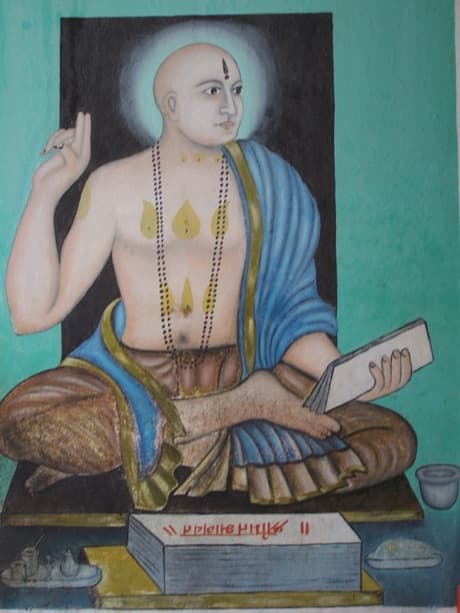
Madhvācārya · Dvaita
Madhva BhāṣyaSanskritEnglishOn verses 3.14–3.16
“हेतन्तरमाह – अनन्त इति | यज्ञः पर्जन्यान्नत्वात् तत्कारणं उच्यते | पूर्वयज्ञविवक्षायां चक्रं तस्य चक्रप्रवेशो न भवति | तद्व्यापाद्यं कर्मविधये | न तु सामान्यमात्रेणेनादानीं कार्यम् | मेघचक्राभिमानी च पर्जन्यः | तच्च यज्ञाद् भवति | अग्नौ प्रास्ताऽऽहुतिः सम्यगादित्यमुपतिष्ठति | आदित्यात्मायते वृष्ट्विष्टिरन्नं ततः प्रजाः || इति स्मृतेश्च | उभयवचनादादित्यात् समुद्राच्चाविरोधः | अतश्च यज्ञात् पर्जन्योद्भवः सम्भवति | यज्ञो देवतामुद्दिश्य द्रव्यत्यागः | कर्म इतरकर्मा ||” - Another purpose is proposed here in the verse ‘From food’ etc. Sacrifice and the rains are said to be the result of such offering of food. The earlier reference of sacrifice in cyclical form is not made here. Only the future course of the actions is indicated. These actions are not recommended merely for the sake of similarity. Of course, the clouds are the generating force for the rains, which, in turn, are born out of sacrifice. “When the oblation is offered in (sacrificial) fire in the prescribed manner, it reaches the Sun. From the Sun the rains are produced, food from the rains and thereafter the creatures”, thus, speak the scriptures. There is no contradiction in both the statements that the rains are the product of the Sun and the Ocean. Thus out of the sacrifice, the rains are produced. The offering of oblations to the Gods is referred as sacrifice. Actions are the other acts to be performed.
“कर्म ब्रह्मो जायते एष ह्येव साधु कर्म कारयति | बुद्धिर्ज्ञानम् इत्यादिभ्यः | न च मुख्ये सम्भाव्यमाने पारम्पर्येण पेचरिकं कर्तव्यम् | न च जडानां स्वतः प्रवृत्तिः सम्भवति | एतस्य वा अक्षरस्य इत्यादिसर्वं नियमनश्रुतेश्च | द्रव्यं कर्म च | इत्यादेश्च | अचिन्त्यशक्तिश्चोक्ता | जीवस्य च प्रतिबिम्बस्य विम्बपूर्ववच चेष्टा | न कर्तृत्वम् इत्यादिनिषेधाश्च ||” - Actions are born of Brahman. “Verily, from Him are the noble actions come to be performed”. Similarly, ‘intelligence, wisdom’. When primary meaning is possible, it is not proper to accept secondary meaning as is often done traditionally. Because the gross things cannot manifest by themselves. ‘By Him or by the Imperishable’ are (therefore) the normal words used in the scriptures. ‘The elements, the actions, and the Time’ etc., thus inconceivable power is indicated here. Since the Jivas are but the reflections (pratibimba), all actions, verily, flow from the Bimba (Lord). ‘not the predicated actions’ such statement is made for the sake of denial (to the Jivas).
“अक्षराणि प्रसिद्धानि | तेभ्यो ह्यभिव्यजायते परं ब्रह्म | अन्यथाऽनदिनिधनं अचिन्त्यं परिपूर्णमपि ब्रह्म को जानाति? न च रूढी विना योगाङ्कीकारो युक्तः | परमशाच्च – तस्मात् सर्वगतं ब्रह्म इति | नद्यपकाशब्देन द्विगुक्तेन भेदश्रुतिं विना वस्तुद्वयं कुत्रचिदुच्यते || तानि चाक्षराणि नित्यानि – वाचा विरूप नित्यया, अनाधिनिधना नित्या वागुत्पृष्टा स्वयंभूवा, अत एव च नित्यत्वम् इत्यादि श्रुतिस्मृतिभगवद्वचनेभ्यः || दोषश्चेत्तः सकर्तृत्वे | नचावृद्धिपूर्वमुत्पन्नानि | तत्प्रमाणाभावात् | निश्चित्तशब्दस्त्वत्केशाभिप्रायः | नावृद्धिपूर्वाभिप्रायः ||” - अक्षराणि (immutable Vedas) are those which are well known. From them, the Supreme Brahman came to be revealed. How would Brahman who, though complete in Himself and is without beginning or end and inconceivable, would otherwise have been known? Therefore, it is not proper to accept meaning by inference without discarding the generality of meaning. Therefore, understanding the statement 'all-comprehending Brahman' (is the correct meaning). Because, when in a statement the same word is used twice then there is no justification for applying two separate meanings for the same word. There is also no reason to understand the same word in different senses. The words अक्षराणि, being eternal, statements are made in Shruti, Smriti and Gita, like 'Recite, O Virupa, the eternal (words): Without beginning or end is the speech uttered by the self-evolved (Lord)'. 'Because He is eternal, these (Vedas) are also eternal.' If any one considers Vedas to have been created, then the flaw in such arguments has been referred earlier. Since it could not have been created without prior knowledge. There also being no evidence to that effect, because of the word 'exhaling', used indicates that it is (spontaneous) without any efforts. Not with prior conscious effort is, therefore, the inference.
“सोऽकामयतपत्यादश्च | इष्टः हुतम् | इत्यादि रूपप्रलम्बसहादिनाच्च | महाताप्यविरोधाच्च तच्चोक्तं पतस्तात् | न ह्यस्वत्वातन्त्र्येण कर्तुं प्राधान्यम् | अस्वातन्त्र्यं च तदमतिपूर्वकत्वेन भवति | यथा रोगदीनां पुरुषस्य तज्जत्वेपि | उत्पत्तिवचनान्यभिव्यक्त्यर्थान्यभिमानिदेवताविषयाणि च | नित्या इत्युक्त्वा उत्पृष्टा इति वचनात् | अभिव्यञ्जकं कतवचनं चाति | कृत्स्नं शतपथं चक्रे इति कथमादित्यस्तथा वेदास्तेनैव क्रियन्ते? वचनामात्राच्च निर्णं यात्मकशरीरकोक्तं वलवत् | शास्त्रं योनियस्य इति तु शास्त्रयोनित्वम् | जन्माद्यस्य यतः | इत्युक्ते, प्रमाणं हि तत्रपेक्षितम् | न तु तस्य जातत्वं वेदकारणत्वं वा | नहि वेदकारणत्वं वा | नहि वेदकारणत्वं जगत्कारणत्वं हेतुः | नहि विचित्रजगत्पृष्टैर्वेदमुष्टिरशक्या मृज्यत्वे | न च सर्वज्ञत्वे | यदि वेदमुष्टा सर्वज्ञः किमिति न जगत्पृष्टा? तस्माद् वेदप्रमाणकत्वमेवात्र विवक्षितम् | अतो नित्यान्यक्षराणि | यत् एव परम्पराया यज्ञाभिव्यङ्गं ब्रह्म तस्मात् तन् नित्यं यज्ञं प्रतिष्ठितम् ||” - He desired, also because of such statements. Similarly, because of the statement like fulfilment of desire - the world of forms. Because it is against the ultimate conclusions being arrived at. This fact has already been clarified earlier. Creation by one who is not independent cannot grant Primacy. His non-Independence (would be established) only if creation is considered to have come about without His prior desire. Then it will be like illness which comes about without person's desire. While referring to the Creation etc. the subject of the presiding divinities comes to be alluded to. In view of it being Eternal, the statement of its having been created etc. has to be understood as 'manifested'. In the process of creation, actuality of creation is assumed. Shatapatha Brahmana is said to have been created (by Yajnyavalkya). How can the Vedas, which were posited in the Sun, may be said to have been created (by Yajnyavalkya)? The statement clarified after deliberation is better than the one spoken on the spu of the moment. The Vedas are the sources, origin, hence, the statement शास्त्रयोनित्वम्. Because of the previous sutra (1.1.2) जन्माद्यस्य - from whom were created - is the evidence which can be quoted. It does neither suggest 'from whom (it - the Vedas) is born' nor His being the cause of Vedas. The object of creating the worlds does not suggest the creation of the Vedas. Because the creation of the wonderful World is in no way superior to the emanation of the Vedas. But this does not lead to the conclusion that 'Brahman is all-comprehending'. If creation of the Vedas is 'all-comprehending', then why not the creator of the world be considered 'all-comprehending one'? Therefore, 'Vedas as the evidence' has only been clarified here. Similarly, 'Akshara' the words as 'nitya' - Eternal etc. Just as by such tradition, Brahman becomes revealed through sacrifices, even so from Him alone those (Vedas) become eternally established in sacrifice. From the Vedas the Jivas become established. This is the (eternal) cycle.
Madhvācārya · Dvaita
Gītā Tātparya NirṇayaSanskritEnglishOn verses 3.14–3.16
“जननात् परस्यादेः पर्जन्यो मेघसन्ततिः | य यज्ञात् कर्मणः सोऽपि समस्तं कर्म केशवात् || स नित्योऽप्यक्षरततीरूपाद् वाक्याद्विः गम्यते | वाक्यमुचायते | भूतेस्तान्यन्नात् तच्च मेघतः || तस्मात् सर्वगतो विष्णुनित्यं यज्ञे प्रतिष्ठितः | एव प्रवर्तितं चक्रं नानुवर्तयतीह यः | स पापो विश्ववहन्तुत्वान्नरके मज्जति ध्रुवम् || वाचिको मानसो यज्ञो न्यासिनां तु विशेषतः | वनस्थस्याकार्यज्ञः क्त्यादिगृहिणोऽखिलः || शुश्रुपाद्यात्मको यज्ञो विहितो ब्रह्मचारिणः | विद्याऽभयादिदानं च सर्वेषामपि सम्मतम् || गृहिणो वित्तदानं तु वनस्थयान्नपूर्वकम् | सर्वैः कार्ये तपो घेरामिति सर्वे त्रिकर्मिणः | इति नारदीये | ब्रह्माक्षरशब्दार्थयोर्व्यत्यासे तस्मात् सर्वपगतं ब्रह्म इति |
प्रत्यभिज्ञाविरोधद्वचक्राकाऽप्रवेशश्च ||” -For giving birth to vegetation etc. the clouds are known as पर्जन्यः. The actions come to be due to sacrifices and all actions flow from and towards Keshava. Even though He is eternal, He comes to be known through the अक्षर (Vedas). The speech comes to be caused by the creatures; the creatures from food and the food from the clouds. From it the all-comprehending Sri Vishnu comes to be established in sacrifices. Whoever does not maintain this cycle which has thus been set in motion, he indeed, becomes evil and goes to eternal perdition having destroyed the worlds. For ascetics, the sacrifice through mentally spoken speech is suitable. For the forest-dweller, austerities are the sacrifices; while for the householders the performance of all the recommended actions. For those who aspire wisdom of the Brahman, celibacy, reflection, service to the Teacher and such other actions are the proper sacrifices. Fearlessness, charity and study of the Self are the accepted means for all. For householders, charity of wealth and for the forest-dwellers charity of food (is recommended). All these actions should be intensely austere and are for all, thus in Narada Puraana. The words Brahman (the foundation of all manifest forms) and akshara (the Vedas which reveals) are distinct or else the statement ‘from it the all-comprehending Brahman’ becomes contradictory and his place in the cyclical sacrifices becomes uncertain.

Jñāneśvar · Vārkarī
English16 "Whoso here, that does not co-operate in rotating (anuvarta-yati) the Wheel (of the Sacrifice) thus set in rotation, he lives a life of sin, finding delight in (mere) things of sense; he, O Son of Pṛthā, lives his life in vain. (138)
Such is the old traditional lore of the sacrifices that I have told you, in brief, Oh Dhanurdhara; and, therefore, one who being blinded by self-conceit omits to live in the path of prescribed sacrifices which are the core of proper religion, is indeed to be treated as a compact mass of sins incarnate and only a dead burden to the earth fully given up, as he is, to indulgence of sensuous pleasures. His existence is as barren as the unseasonal clouds overspreading the sky. One, who turns away from the path of his own religious sacrifices, leads a life of utter futility which is worthless as the fleshy nipples hanging down from the neck of goats (अजागलस्तन). Therefore, hear, Oh, ye Pāṇḍav, none should forsake his own religion: it is the only path that should always be followed whole-heartedly. The soul has to come to sojourn in this body and bodily life, and carries with it the actions and duties of course. Why then should one grudge to perform the duties prescribed for us? Hear, Oh ye Savyasāchi (an epithet of Arjuna). Those who having reached a state of existence, are averse to perform their duties are certainly rustics.
Swami Ramsukhdas · Modern
English[Here the Lord, while concluding the topic started in the ninth verse, addresses Arjuna as 'Pārtha' to remind him that he is the son of Pṛthā (Kuntī) who performed her duty even by suffering troubles throughout her life. So he should also perform his duty. In fact the action which he was regarding as terrible, was not really terrible, it was a sacrifice (duty). He who performs his duty, follows the wheel of creation, while he who does not perform his duty, does not follow this cycle.]
'Evaṁ pravartitaṁ cakram nānuvartayatiha yaḥ'—As a broken
fragment of the wheel of a chariot, gives a series of jerks to the charioteer, as well as to the driver, similarly a man who does not follow the wheel of creation, creates an obstacle in the smooth running of that wheel.
As the limbs and body, have close affinity, so have man and the world. When a man performs his duty by renouncing desire, feeling of 'mine', attachment and egoism etc., he gratifies the entire creation.
'Indriyārāmaḥ'—Sensual is he, who enjoys the worldly objects through his senses, by having desire and being attached to the sense-objects. Such a person is inferior even to beasts, because beasts instead of performing sinful actions, are purified by receiving the fruit of their sins of the past. But a man committing new sins, has a downfall and by creating disturbance in the wheel of creation, hurts the entire creation.
'Aghāyuḥ'—The life of such a man is sinful, because he who wants to enjoy sensual pleasures, cannot escape sin. The person who hankers after selfishness, pride, pleasures and prosperity, causes suffering to others and thus he is of a sinful nature. Saint Tulasīdāsa in the Rāmacaritamānasa declares, 'Those who are malicious, engrossed in adultery, slanderous and hanker after the riches of others, are vile and sinful devils in human forms' (7/39).
'Mogham pārtha sa jīvati'—The Lord condemns such a person who does not perform his duty by saying, that such a person lives in vain i.e., it will be better if he were dead. If such a man dies, people will not have to suffer without him. During the exile of Lord Rāma, the wild tribes said, that if they did not steal anyone's clothes and utensils, it meant that they were rendering service to Him (Mānasa 2/251/2). Similarly, such persons who do not perform their duty, should not at least disturb the wheel of creation. By doing so they could render service to creation.
Such a person who does not follow the cycle of creation, has been said to be a thief (3/12), feeding on sin (3/13) and a
sinful and sensual person, who lives in vain by this verse.
Gosvāmī Tulasīdāsa also in the Rāmacaritamānasa, declares about such a person—His envy is like fire, anger like that of the god of death, sins and evils are like the treasure of the god of wealth and he does evil to others like the comet. It is good if such a person like Kumbhakarṇa goes on sleeping for a long time (1/4/3).
**Appendix**—The description, which has been given from the ninth to this verse, means only to render selfless service to others.
*Link:—The Lord has condemned the person who does not perform his duty, in order to renounce his affinity with the world, in the preceding verse. Now, in the next two verses, He talks about the enlightened soul, who having performed his duty, has renounced affinity for the world.*
Ādi Śaṅkarācārya · Advaita
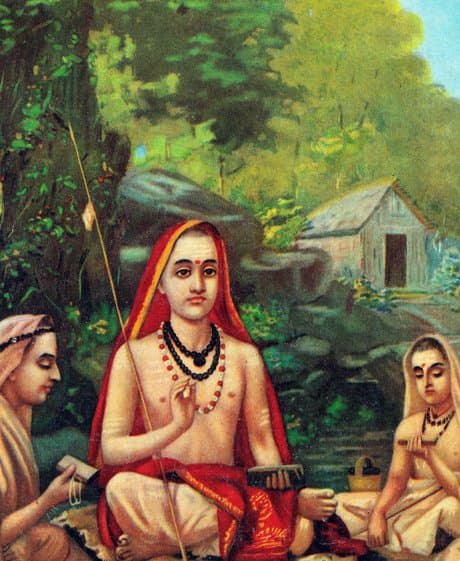
Sanskritएवं इत्थं ईश्वरेण वेदयज्ञपूर्वकं जगच्चक्रं प्रवर्तितं न अनुवर्तयति इह लोके यः कर्मणि अधिकृतः सन् अघायुः अघं पापम् आयुः जीवनं यस्य सः अघायुः, पापजीवनः इति यावत् । इन्द्रियारामः इन्द्रियैः आरामः आरमणं आक्रीडा विषयेषु यस्य सः इन्द्रियारामः मोघं वृथा हे पार्थ, स जीवति ॥ तस्मात् अज्ञेन अधिकृतेन कर्तव्यमेव कर्मेति प्रकरणार्थः । प्राक् आत्मज्ञाननिष्ठायोग्यताप्राप्तेः तादर्थ्येन कर्मयोगानुष्ठानं अधिकृतेन अनात्मज्ञेन कर्तव्यमेवेत्येतत् ``न कर्मणामनारम्भात्'' (भ. गी. ३-४) इत्यत आरभ्य``शरीरयात्रापि च ते न प्रसिध्येदकर्मणः'' (भ. गी. ३-८) इत्येवमन्तेन प्रतिपाद्य, ``यज्ञार्थात् कर्मणोऽन्यत्र'' (भ. गी. ३-९)इत्यादिना ``मोघं पार्थ स जीवति'' (भ. गी. ३-१६) इत्येवमन्तेनापि ग्रन्थेन प्रासङ्गिकम् अधिकृतस्य अनात्मविदः कर्मानुष्ठाने बहु कारणमुक्तम् । तदकरणे च दोषसङ्कीर्तनं कृतम् ॥ एवं स्थिते किमेवं प्रवर्तितं चक्रं सर्वेणानुवर्तनीयम्, आहोस्वित् पूर्वोक्तकर्मयोगानुष्ठानोपायप्राप्यां अनात्मविदः ज्ञानयोगेनैव निष्ठां आत्मविद्भिः साङ्ख्यैः अनुष्ठेयामप्राप्तेनैव, इत्येवमर्थं अर्जुनस्य प्रश्नमाशङ्क्य स्वयमेव वा शास्त्रार्थस्य विवेकप्रतिपत्त्यर्थं ``एतं वै तमात्मानं विदित्वा निवृत्तमिथ्याज्ञानाः सन्तः ब्राह्मणाः मिथ्याज्ञानवद्भिः अवश्यं कर्तव्येभ्यः पुत्रैषणादिभ्यो व्युत्थायाथ भिक्षाचर्यं शरीरस्थितिमात्रप्रयुक्तं चरन्ति न तेषामात्मज्ञाननिष्ठाव्यतिरेकेण अन्यत् कार्यमस्ति'' (बृ. उ. ३-५-१) इत्येवं श्रुत्यर्थमिह गीताशास्त्रे प्रतिपिपादयिषितमाविष्कुर्वन् आह भगवान् --
Ādi Śaṅkarācārya · Advaita
Hindiइस लोकमें जो मनुष्य कर्माधिकारी होकर इस प्रकार ईश्वरद्वारा वेद और यज्ञपूर्वक चलाये हुए इस जगत्-चक्रके अनुसार (वेदाध्ययन-यज्ञादि) कर्म नहीं करता, हे पार्थ! वह पापायु अर्थात् पापमय जीवनवाला और इन्द्रियारामी अर्थात् इन्द्रियोंद्वारा विषयोंमें रमण करनेवाला व्यर्थ ही जीता है—उस पापीका जीना व्यर्थ ही है।
इसलिये इस प्रकरणका अर्थ यह हुआ कि अज्ञानी अधिकारीको कर्म अवश्य करना चाहिये।
अनात्मज्ञ अधिकारी पुरुषको आत्मज्ञानकी योग्यता प्राप्त होनेके पहले ज्ञाननिष्ठा-प्राप्तिके लिये कर्मयोगका अनुष्ठान अवश्य करना चाहिये, यह 'न कर्मणामनारम्भात्' यहाँसे लेकर 'शरीरयात्रापि च ते न प्रसिद्ध्येदकर्मणः' इस श्लोकतकके वर्णनसे प्रतिपादन करके—
'यज्ञार्थात्कर्मणोऽन्यत्र' से लेकर 'मोघं पार्थ स जीवति' तकके ग्रन्थसे भी आत्मज्ञानसे रहित कर्माधिकारीके लिये कर्मोंके अनुष्ठान करनेमें बहुत-से प्रसङ्गानुकूल कारण कहे गये तथा उन कर्मोंके न करनेमें बहुत-से दोष भी बतलाये गये
Jñāneśvar · Vārkarī
Marathiऐशीं आदि हे परंपरा । संक्षेपे तुज धनुर्धरा । सांगितली या अध्वरा । लागौनियां ॥ १३८ ॥
म्हणून समूळ हा उचितु । स्वधर्मरूप क्रतु । नानुष्ठी जो मत्तु । लोकीं इये ॥ १३९ ॥
तो पातकांची राशी । जाण भार भूमीसी ॥ जो कुकर्में इंद्रियांसी । उपेगा गेला ॥ १४० ॥
तें जन्म कर्म सकळ । अर्जुना अति निष्फळ । जैसे कां अभ्रपटळ । अकाळींचे ॥ १४१ ॥
कां गळा स्तन अजेचे । तैसें जियालें देखें तयाचें । जया अनुष्ठान स्वधर्माचें । घडेचिना ॥ १४२ ॥
म्हणोनि ऐकें पांडवा । हा स्वधर्मु कवणे न संडावा । सर्वभावें भजावा । हाचि एकु ॥ १४३ ॥
हां गा शरीर जरी जाहलें । तरी कर्तव्य वोघें आले । मग उचित कां आपुले । वोसंडावे ॥ १४४ ॥
परिस पां सव्यसाची । मूर्ती लाहोनि देहाचि । खंती करिती कर्माची । ते गावंढे गा ॥ १४५ ॥
Jñāneśvar · Vārkarī
Hindi(3.138) हे धनुर्धर! यह यज्ञसम्बन्धी आदि परम्परा हमने तुम्हें संक्षेप से कह सुनाई;
(3.139) एवं जो उन्मत्त पुरुष इस संसार में सर्वथा उचित स्वधर्मरूपी यज्ञ का अनुष्ठान नहीं करता,
(3.140) और जो कुकर्म के द्वारा इन्द्रियों के उपयोगी होता है उसे पातकों की राशि और भूमि का केवल भारभूत जानो।
(3.141) उसका सकल जन्म और कर्म अत्यन्त निष्फल जानो। जैसे अकालिक आये हुए मेघ,
(3.142) अथवा बकरी के गले के थन व्यर्थ है वैसा ही स्वधर्मानुसार आचरण न करनेहारे का जीवन जानो। (3.143) इसलिए हे पाण्डव! सुनो, स्वधर्म किसी को न छोड़ना चाहिए। सम्पूर्ण भावों में इसी एक की सेवा करनी चाहिए।
(3.144) अजी, यदि शरीर है तो उसके साथ कर्तव्य सहज ही प्राप्य है, तो फिर अपना उचित धर्म क्यों छोड़ा जाय?
(3.145) हे सव्यसाची! मनुष्यदेह पाकर जो कर्म का आलस करते हैं उन्हें मूढ़ समझना चाहिए।

Sri Udiya Baba · Modern
Hindiसंगति— कर्मयोग का प्रतिपादन चतुर्थ श्लोक से आरम्भ हुआ था। वह अगले श्लोक में समाप्त होता है। तथापि प्रसंगवश कहीं-कहीं कर्म का उल्लेख आगे भी मिलेगा।
भावार्थ— इस प्रकार ईश्वर द्वारा प्रवर्तित चक्र के अनुकूल जो नहीं वतता और इन्द्रियों को भोगों में लगाये रखता है वह पुरुष पाप आयु वाला है और वृथा ही जीवित रहता है।
व्याख्या— अतः कर्म करने वाले ही श्रेष्ठ हैं, क्योंकि उनसे अन्तःकरण शुद्ध होकर अन्त में उनका कल्याण हो जाता है।
Swami Ramsukhdas · Modern
Hindi‘पार्थ’—नवें श्लोकमें प्रारम्भ किये हुए प्रकरणका उपसंहार करते हुए भगवान् यहाँ अर्जुनके लिये ‘पार्थ’ सम्बोधन देकर मानो यह कह रहे हैं कि तुम उसी पृथा-(कुन्ती-) के पुत्र हो, जिसने आजीवन कष्ट सहकर
भी अपने कर्तव्यका पालन किया था। अतः तुम्हारेसे भी अपने कर्तव्यकी अवहेलना नहीं होनी चाहिये। जिस युद्धको तू घोर कर्म कह रहा है, वह तेरे लिये घोर कर्म नहीं, प्रत्युत यज्ञ (कर्तव्य) है। इसका पालन करना ही सृष्टि-चक्रके
* मनुष्यसे इतर सभी स्थावर-जंगम प्राणियोंद्वारा स्वतः यज्ञ (परोपकार) होता रहता है, पर वे यज्ञका अनुष्ठान बुद्धिपूर्वक नहीं कर सकते। बुद्धिपूर्वक यज्ञका अनुष्ठान मनुष्य ही कर सकता है; क्योंकि इसकी योग्यता और अधिकार मनुष्यको ही है।
अनुसार बरतना है और इसका पालन न करना सृष्टि-चक्रके अनुसार न बरतना है।
‘एवं प्रवर्तितं चक्रं नानुवर्तयतीह यः’—जैसे रथके पहियेका छोटा-सा अंश भी टूट जानेपर रथके समस्त अंगोंको एवं उसपर बैठे रथी और सारथिको धक्का लगता है, ऐसे ही जो मनुष्य चौदहवें-पन्द्रहवें श्लोकोंमें वर्णित सृष्टि-चक्रके अनुसार नहीं चलता वह समष्टि सृष्टिके संचालनमें बाधा डालता है।
संसार और व्यक्ति दो (विजातीय) वस्तु नहीं हैं। जैसे शरीरका अंगोंके साथ और अंगोंका शरीरके साथ घनिष्ठ सम्बन्ध है, ऐसे ही संसारका व्यक्तिके साथ और व्यक्तिका संसारके साथ घनिष्ठ सम्बन्ध है। जब व्यक्ति कामना, ममता, आसक्ति और अहंताका त्याग करके अपने कर्तव्यका पालन करता है, तब उससे सम्पूर्ण सृष्टिमें स्वतः सुख पहुँचता है।
‘इन्द्रियारामः’—जो मनुष्य कामना, ममता, आसक्ति आदिसे युक्त होकर इन्द्रियोंके द्वारा भोग भोगता है, उसे यहाँ भोगोंमें रमण करनेवाला कहा गया है। ऐसा मनुष्य पशुसे भी नीचा है; क्योंकि पशु नये पाप नहीं करता; प्रत्युत पहले किये गये पापोंका ही फल भोगकर निर्मलताकी ओर जाता है; परन्तु ‘इन्द्रियाराम’ मनुष्य नये-नये पाप करके पतनकी ओर जाता है और साथ ही सृष्टि-चक्रमें बाधा उत्पन्न करके सम्पूर्ण सृष्टिको दुःख पहुँचाता है।
‘अघायुः’—सृष्टि-चक्रके अनुसार न चलनेवाले मनुष्यकी आयु, उसका जीवन केवल पापमय है। कारण कि इन्द्रियोंके द्वारा भोगबुद्धिसे भोग भोगनेवाला मनुष्य हिंसारूप पापसे बच ही नहीं सकता। स्वार्थी, अभिमानी और भोग तथा संग्रहको चाहनेवाले मनुष्यके द्वारा दूसरोंका अहित
परिशिष्ट भाव—नवें श्लोकसे लेकर यहाँतक जो वर्णन आया है, उसका तात्पर्य निःस्वार्थभावसे दूसरोंकी सेवा करनेमें ही है।
सम्बन्ध—संसारसे ‘सम्बन्ध-विच्छेद करनेके लिये जो अपने कर्तव्यका पालन नहीं करता, उस मनुष्यकी पूर्वश्लोकमें ताड़ना की गयी है। परन्तु जिसने अपने कर्तव्यका पालन करके संसारसे सम्बन्ध-विच्छेद कर लिया है, उस महापुरुषकी स्थितिका वर्णन भगवान् आगेके दो श्लोकोंमें करते हैं।
So from actions comes yajña, from yajña - rain, from rainfall food and from food - embodied beings. This cycle was set into motion by the Supreme Lord Krishna at the beginning of creation.
This cycle is never ending and was designed to exist perpetually providing all necessities for the embodied beings allowing them to prosper and flourish.
Whoever is born on this Earth whether they are performers of actions or contemplators of the ultimate truth, the Supreme Brahman –
if they fail to adhere to and follow and adhere to this cycle leads a sinful life for the simple reason that they fail to even support and preserve their own embodied existence by sanctifying it with the daily food remnants eaten that was first offered in yajña.
The word agha-ayuh means full of sin, this can be either that one's life is committed to making sins or that one is living a life perpetuated by sin or it can even mean both.
In this way such a sinner bg-sky becomes an indriyaramah or one who only seeks delights in the beguiling garden of the senses using their valuable human life only for the pursuit of pleasure, a slave under the control of sense delights.
Therefore such a one never takes delight in the soul and is the antithesis of an ātmaramah or one who delights in the garden of the ātma or soul.
Food eaten that was not first sanctified by being consecrated in yajña or offering of worship beforehand ignites rajas or passions in one and incites tamas or darkness of intellect.
A person in whom these dispositions are prominent becomes hostile to achieving an even rudimental spiritual illumination let alone ātma-tattva or self-realisation of the soul. Such a hostile person only finds pleasure in pursuing pleasure to gratify their senses.
Blessed with the gift of a human body which is suitable for offering Divine worship in yajña and which therefore must be nourished with sanctified food duly consecrated so ones actions fulfil their purpose.
If one errs and fails to honour and respect this eternal cycle given in the Vedic injunctions, then all their hopes for spiritual realisation will not be fulfilled and all their efforts are destined to failure. Their complete life was lived in vain.
So from this it can be understood that the necessity for the actions of yajña as prescribed in the Vedic scriptures are essential and indispensable for the different varṇas or castes and āśramas or stages of society.
Only that person who has attained mokṣa or complete liberation from the cycle of birth and death in the material nature is under no obligation to in any way whatsoever to perform any activity due to the fact that the achievement of ātma-tattva self-realisation of the soul has already been attained.