

Bhagavad Gītā · Chapter 3 · Karma Yoga
न मे पार्थास्ति कर्तव्यं त्रिषु लोकेषु किञ्चन
नानवाप्तमवाप्तव्यं वर्त एव च कर्मणि
na me pārthāsti kartavyaṃ triṣu lokeṣu kiñcana|
nānavāptamavāptavyaṃ varta eva ca karmaṇi||
Word meanings
पार्थ = O Pārtha
मे = for me
त्रिषु = in the three
लोकेषु = worlds
न = neither
किञ्चन = anything
कर्तव्यम् = duty
अस्ति = there is
च = and
न = not
अवाप्तव्यम् = to be attained
अनवाप्तम् = unattained
कर्मणि = in action
एव = indeed
वर्त = I remain engaged
Translation
Arjuna, there is nothing in all the three worlds for Me to do, nor is there anything worth attaining unattained by Me. Yet I continue to work.
Commentary
The commentators seated around this verse
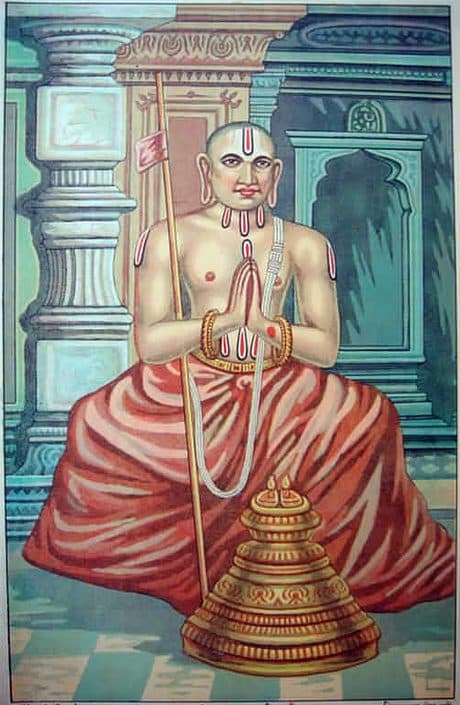
Rāmānuja · Viśiṣṭādvaita
English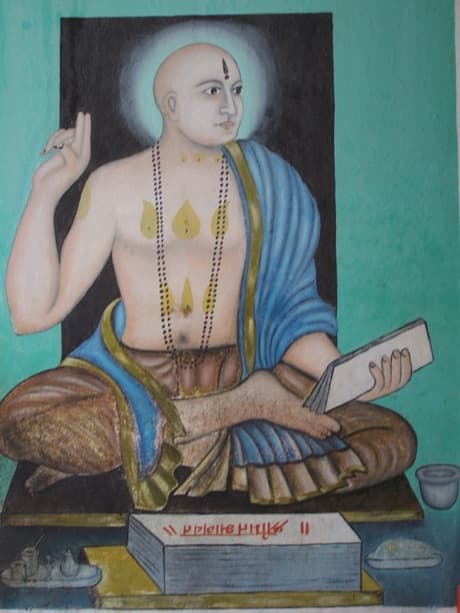
Madhvācārya · Dvaita
Madhva BhāṣyaSanskritEnglishOn verses 3.20–3.26
“आचारोप्यस्ति इत्याह - कर्मणेव इति | कर्मणा सह कर्मकुवन्त एव | इत्यर्थः | कर्म कृत्वेव ततो ज्ञानं प्राप्य वा | न तु ज्ञानं विना | प्रसिद्धं हि तेषां ज्ञानित्वं भारतादिषु | तमेव विद्वान् इत्योदिश्रुतिभ्यश्च | अत्रापि कर्म णां ज्ञानसाधनत्वोपतत्प्रेक्ष्य - बुद्धियुक्तः | इति | गत्यन्तरं च नान्यः पन्थाः इत्यस्य नास्ति | इतरेषां ज्ञानद्वाराऽप्यविरोधः | यत्र च तीर्थादेव मुक्तिआधनमुच्यते - ब्रह्मज्ञानेन वा मुक्तिः प्रयागमरणेन वा | अथवा स्नानमात्रेण गोमत्यां कृष्णमन्त्रिधौ | इत्यादी तत्र पापादिमुक्तः | स्तुतिपरता च | तत्रापि हि कुत्रचिद् ब्रह्मज्ञानसाधनत्वमेवोच्यतेऽन्यथामुक्तिं निषिद्धय - ब्रह्मज्ञानं विना मुक्तिर्न कथञ्चिदपीप्यते | प्रयागादेस्तु या मुक्तिर्ज्ञानोपायत्वमेव हि || - इत्यादी | न च तीर्थस्तुतिवाक्यानि तत्पस्तावेऽप्युक्तज्ञाननियमं घन्ति | यथा किञ्चिद् दक्षं भूत्वं प्रत्युक्तानि - अयमेव हि राज किं राज्ञा इत्यादीनि | याथाऽह भगवान् - यान तीर्थादिवाक्यानि कर्मा दिविपयाणि च | स्तावकान्वेव तानि स्युरज्ञानां मोहकानि वा | भवेन्मोक्षस्तु मृदुष्टेनान्यस्तु कथञ्चन || इति नारदीये || अतोऽपरोक्षज्ञानादेव मोक्षः | कर्म तु तत्साधनमेव ||” - Even examples of precedents do exist, thus he
says in this verse. कर्मणा means together with performance of actions. Or it can mean by performing actions and thereby gaining wisdom. Not that (by performance alone) without having wisdom. They (Janaka and others) have been famous in Bharata as men of Wisdom. “They alone are the Wise” has been comparable statement in scriptures. Here also the performance of action together with wisdom is spoken, “Be well-established in Intelligence”. There could be no other meaning for the statement नान्य पन्थाः - there is no other path etc. Even in other instances, there exists no disagreement for the Path of Wisdom. Wherever for the sake of liberation, visits to the sacred rivers have been suggested; as in “Liberation (is assured) by Wisdom of Brahman or by death in Prayaga or by bathing in Gomati in the presence of Krishna”, liberation from demerits alone is referred. It is also for praising these places. Because even where bathing in sacred rivers is mentioned, the wisdom of Brahman also has been mentioned as the primary basis for liberation. Without the Wisdom of Brahman liberation is in not possible. Only death or taking bath in pilgrim centres like Prayag is commended as sure Way to be in Krishna’s company, thus . because that becomes the basis for wisdom”. Such words eulogizing the sacred rivers do not in any manner contradict the need for wisdom for deliverance. As in the case of a conscientious servant who is referred to as ‘He is, verily, the King, by King alone it can be done’ as a matter of praise. Statements recommending bathing in sacred rivers or performance of rituals etc. are meant for the simple minded people or for attracting those who are bewildered. But Liberation is possible only from realizing Me, not otherwise, thus by Vyasa in Narada Purana. Therefore, spiritual realization alone is Liberation. Performance of action is only the means (to Liberation). “स यत् वाक्यादिकं प्रमाणीकुरुते, तदुक्तप्रकारेण तिष्ठति | इत्यर्थः |” - He acts in the world as an example to follow. In whatever manner He speaks, in that manner they act, this is the meaning.
Madhvācārya · Dvaita
Gītā Tātparya NirṇayaSanskritEnglishOn verses 3.20–3.26
“सहैव कर्मणा सिद्धिमास्थिता जनकादयः | ज्ञाननिष्ठा अपि ततः कार्यं वर्णाश्रमोचितः || इति च | अज्ञानां ज्ञानदं कर्म ज्ञानिना लेकसंग्रहात् | अद्वैत तुष्टिदं मह्यं सा मुक्तानन्दपूर्तिदा || ममेव केवलं नास्ति केनाप्यर्थं स्थाप्यहम् | कर्मकुल्लोकक्षायै तस्मात् कुर्वीत मत्परः || इति कृष्णसंहितायाम् | रक्षया वाऽथ मुष्ट्या वा संहत्योन् नु क्वचित् | अर्थो विपणोस्तथाऽप्येष स्वभावात् सर्वकर्मकृत् || मत्तो नृतादिकं यद्वत् कुर्यात् सुखविशेषतः | परमानन्दरूपत्वात् कुर्याद् विष्णुस्तथैव तु || इति वर्कश्रुतिः ||” - Janaka and other kings performing actions with wisdom and according to one’s stage of life and classification attained deliverance. For ignorant ones performance of action with wisdom and for the wise ones performance of action for and by the way of sacrifice. For the Lord there exists no actions to be performed. Hence the need of performance of action for the pleasure of the divine. By sustenance, by maintenance and by destruction the Supreme Lord has nothing to gain. Without any objective whatsoever the Supreme Lord Krishna according to His creative impulse performs all actions perpetually throughout all of creation. Just as a person who is extremely happy may spontaneously sing and dance to express their special pleasure in the same way the Supreme Lord performs all actions to express His consciousness which is perpetually in a state of Supreme Bliss.

Jñāneśvar · Vārkarī
English22 "There exists not for me, O Pṛthā's Son, anything at all in the three worlds that has to be done, nor anything to be obtained that has not been obtained: yet I continue to be in action. (160)
Why should I, O Pārtha, give you examples of other people? I myself follow in the same path. Should it be possible to say that I observe the prescribed religion in order to protect myself (from coming calamity), or for achieving some object in the world? No one, as you know, is as perfect as I am, and none possessed of such extraordinary power as I do have. (Yet) you have seen with your own eyes—the miraculous achievement—how with my unique power I recalled to life (from the region of Yama the God of Death) the soul of the son of the preceptor. In this way, I too perform dispassionately the prescribed duties.
Swami Ramsukhdas · Modern
English'Na me pārthāsti kartavyam triṣu lokeṣu kiñcana nānavāptamavāptavyam'—The Lord is not confined to one world. So He is saying that there is nothing in the three worlds, that should be done by Him. All men, beasts and birds etc., perform actions, in order to attain something or the other. But the Lord mentions here, an uncommon fact, that He also performs action, though there is nothing which should be done or attained by Him.
Though God has nothing to do for Himself, yet He incarnates for the welfare of others and performs action for the protection of
the good, for the destruction of the wicked and for the establishment of righteousness (Gītā 4/8). The Lord creates the universe, also for the salvation of creatures. He has created heavens, so that beings may reap the fruit of their virtuous actions. Eighty-four lac, forms of lives and hells, have been created, so that beings may reap the fruit of their evil actions, while human life has been created so that a human being, having transcended virtues and vices, may attain salvation viz., God-realization. This is possible, only when he does nothing for himself. All his activities—actions, with the gross body, thinking with the subtle body and trance with the causal body, should be applied to the welfare of the world. The reason is, that this threefold body, is not of one's own, but it belongs to the world. Therefore, a Karmayogī considers the body, senses, mind, intellect and all the matter etc., of the world, (which in fact belong to the world) and he utilizes them in rendering service to the world. If he uses these in order to enjoy pleasures, he commits a blunder. When a person accepts worldly things as his own he wants to reap the fruit and in order to reap the fruit, he has to perform action. Thus, so long as a man perform action in order to attain something, his duty remains to be performed by him.
If we give a serious thought to the subject, we realise that a man has to do nothing for himself, because God Who is to be attained is ever-attainable and the self is eternal while actions and their fruits are perishable. So, how can the perishable (actions and their fruits) have their affinity for the imperishable (self)? Actions have their affinity for the body and the world, rather than the self. Therefore, there is nothing to be done for the self. When there is nothing to be done for the self, how can there be anything to do for God?
While talking about an enlightened soul, who has attained perfection through the Discipline of Action, the Lord (in the seventeenth and eighteenth verses of this chapter) declared, 'There
exists no action to be done, by such an enlightened soul who is delighted, satisfied and contented, in the self. Such a soul has nothing to do with the performance or non-performance of actions, and he has not the least affinity for selfishness, with any being. Yet he performs actions for the welfare of the world.' Similarly, the Lord declares, for Himself, there is nothing that should be done by Him, yet He is engaged in action for the welfare of the world. It means that an enlightened soul becomes identical with the Lord (Gītā 14/2) and as the Lord is a model in the three worlds (Gītā 3/23; 4/11), similarly an enlightened soul is a model in this world (Gītā 3/25).
'Varta eva ca karmaṇi'—Here, the Lord by the term 'eva' (only) means to say, that He performs actions enthusiastically, promptly, carefully and thoroughly.
As the compartments of a train attached to an engine, follow the engine, similarly the Lord and the saints (who have nothing to do and nothing more to attain), perform their duty and other people follow them. These latter people have a desire to act and to attain, something or the other. They get rid of this desire by performing their duty, without expecting any reward. If the Lord and the saints, did not perform their duty, the people would also follow their path, and they would become indolent and heedless and would perform forbidden actions. So they would not get rid of desires. Therefore, duty is automatically performed by the Lord and the saints, for the welfare of the whole humanity.
As the Lord always performs His duty, He never abandons it, similarly a striver should always perform his duty, so that he may attain God easily. If an aspirant does not perform his duty, he remains deprived of God-realization.
**Appendix**—In Mahābhārata the Lord has declared His duty in the three worlds to sage Uttāṅka—
**dharmasaṃrakṣaṇārthāya dharmasaṃsthāpanāya ca taistairveṣaiśca rūpaiśca triṣu lokeṣu bhārgava** (Āśva. 54/13-14)
'For the protection and establishment of righteousness, I manifesting Myself in several Form and guise, behave (act) accordingly.'
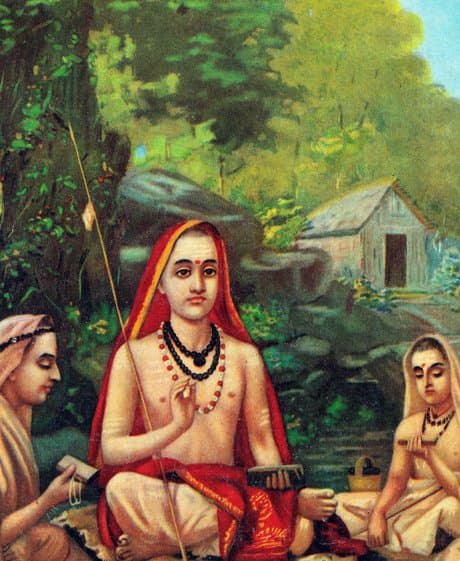
Ādi Śaṅkarācārya · Advaita
Sanskritन मे मम पार्थ न अस्ति न विद्यते कर्तव्यं त्रिषु अपि लोकेषु किञ्चन किञ्चिदपि । कस्मात् ? न अनवाप्तं अप्राप्तं अवाप्तव्यं प्रापणीयम्, तथापि वर्ते एव च कर्मणि अहम् ॥
Ādi Śaṅkarācārya · Advaita
Hindiयदि इस लोकसंग्रहकी कर्तव्यतामें तुझे कुछ शंका हो तो तू मुझे क्यों नहीं देखता—
हे पार्थ! तीनों लोकोंमें मेरा कुछ भी कर्तव्य नहीं है अर्थात् मुझे कुछ भी करना नहीं है; क्योंकि मुझे कोई भी अप्राप्त वस्तु प्राप्त नहीं करनी है तो भी मैं कर्मोंमें बर्तता ही हूँ
Jñāneśvar · Vārkarī
Marathiआता आणिकाचिया गोठी । तुज सांगो काय किरीटी । देखें मीचि इये राहाटी । वर्तत असे ॥ १६० ॥
काय सांकडे कांही मातें । कीं कवणें एकें आर्तें । आचरें मी धर्मातें । म्हणसी जरी ॥ १६१ ॥
तरी पुरतेपणालागी । आणिकु दुसरा नाहीं जगीं । ऐसी सामुग्री माझां अंगी । जाणसी तूं ॥ १६२ ॥
मृत गुरूपुत्र आणिला । तो तुवां पवाडा देखिला । तोही मी उगला । कर्मीं वर्ते ॥ १६३ ॥
Jñāneśvar · Vārkarī
Hindi(3.160) अब दूसरों की बातें क्या कहूँ? हे किरीटी! देखो, मैं भी इसी मार्ग से चलता हूँ।
(3.161) क्या मुझ पर कुछ संकट पड़ा है? अथवा यदि यह समझा जाय कि मैं कोई एक इच्छा रख कर धर्म का आचरण करता हूँ, (3.162) तो तुम्हें तो मालूम है कि मैं इतना समर्थ हूँ कि पूर्णता के विषय संसार में मुझसे कोई भी श्रेष्ठ नहीं है।
(3.163) मैंने अपने मरे हुए गुरुपुत्र को जीवित कर लिया। इस प्रकार मेरा माहात्म्य तुमने देखा। पर वही मैं, कुछ इच्छा न रहते भी, कर्म का आचरण करता हूँ।
Sri Udiya Baba · Modern
Hindiसंगति— जिज्ञासु तो बोध-प्राप्ति के लिये कर्म करता है; परन्तु बोधवान् को तो कुछ भी प्राप्त करना नहीं है, इसलिये यद्यपि उसे कर्म करना आवश्यक नहीं है, तो भी वह कर्म करता ही है—यही बात अगले दो श्लोकों से स्पष्ट करते हैं—
भावार्थ— अर्जुन! मुझे तीनों लोकों में कुछ भी कर्तव्य नहीं है और न कोई प्राप्त करने योग्य वस्तु अप्राप्त ही है, (क्योंकि मैं पण्डेय-सम्पन्न और आप्तकाम हूँ) फिर भी मैं कर्म करता ही हूँ।
Swami Ramsukhdas · Modern
Hindi‘न मे पार्थास्ति ... नानवाप्तमवाप्तव्यम्’—भगवान् किसी एक लोकमें सीमित नहीं हैं। इसलिये वे तीनों लोकोंमें अपना कोई कर्तव्य न होनेकी बात कह रहे हैं।
भगवान्के लिये त्रिलोकीमें कोई भी कर्तव्य शेष नहीं है; क्योंकि उनके लिये कुछ भी पाना शेष नहीं है। कुछ-न-कुछ पानेके लिये ही सब (मनुष्य, पशु, पक्षी आदि) कर्म करते हैं। भगवान् उपर्युक्त पदोंमें बहुत विलक्षण बात कह रहे हैं
कि कुछ भी करना और पाना शेष न होनेपर भी मैं कर्म करता हूँ!
अपने लिये कोई कर्तव्य न होनेपर भी भगवान् केवल दूसरोंके हितके लिए अवतार लेते हैं और साधु पुरुषोंका उद्धार, पापी पुरुषोंका विनाश तथा धर्मकी संस्थापना करनेके लिये कर्म करते हैं (गीता ४।८)। अवतारके सिवाय भगवान्की सृष्टि-रचना भी जीवमात्रके उद्धारके लिये ही होती है। स्वर्गलोक पुण्यकर्मोंका फल भुगतानेके लिये है और चौरासी लाख योनियाँ एवं नरक पाप-कर्मोंका फल भुगतानेके लिये हैं। मनुष्य-योनि पुण्य और पाप-दोनोंसे ऊँचे उठकर अपना कल्याण करनेके लिये है। ऐसा तभी सम्भव है, जब मनुष्य अपने लिये कुछ न करे। वह सम्पूर्ण कर्म-स्थूल शरीरसे होनेवाली 'क्रिया', सूक्ष्म शरीरसे होनेवाला 'चिन्तन' और कारण शरीरसे होनेवाली 'स्थिरता' केवल दूसरोंके हितके लिये ही करे, अपने लिये नहीं। कारण कि जिनसे सब कर्म किये जाते हैं, वे स्थूल, सूक्ष्म और कारण-तीनों ही शरीर संसारके हैं, अपने नहीं। इसलिये कर्मयोगी शरीर, इन्द्रियाँ, मन, बुद्धि, पदार्थ आदि सम्पूर्ण सामग्रीको (जो वास्तवमें संसारकी ही है) संसारकी ही मानता है और उसे संसारकी सेवामें लगाता है। अगर मनुष्य संसारकी वस्तुको संसारकी सेवामें न लगाकर अपने सुख-भोगमें लगाता है तो बड़ी भारी भूल करता है। संसारकी वस्तुको अपनी मान लेनेसे ही फलकी इच्छा होती है और फलप्राप्तिके लिये कर्म होता है। इस तरह जबतक मनुष्य कुछ पानेकी इच्छासे कर्म करता है, तबतक उसके लिये कर्तव्य अर्थात् 'करना' शेष रहता है।
गम्भीरतापूर्वक विचार किया जाय तो मालूम होता है कि मनुष्यमात्रका अपने लिये कोई कर्तव्य है ही नहीं। कारण कि प्रापणीय वस्तु (परमात्मतत्त्व) नित्यप्राप्त है और स्वयं (स्वरूप) भी नित्य है, जबकि कर्म और कर्म-फल अनित्य अर्थात् उत्पन्न एवं नष्ट होनेवाला है। अनित्य-(कर्म और फल-) का सम्बन्ध नित्य-(स्वयं-) के साथ ही ही कैसे सकता है! कर्मका सम्बन्ध 'पर'-(शरीर और संसार-) से है 'स्व' से नहीं। कर्म सदैव 'पर' के द्वारा और 'पर' के लिये ही होता है। इसलिये अपने लिये कुछ करना है ही नहीं। जब मनुष्यमात्रके लिये कोई कर्तव्य नहीं है, तब भगवान्के लिये कोई कर्तव्य हो ही कैसे सकता है!
कर्मयोगसे सिद्ध हुए महापुरुषके लिये भगवान्ने इसी अध्यायके सत्रहवें-अठारहवें श्लोकोंमें कहा है कि उस महापुरुषके लिये कोई कर्तव्य नहीं है; क्योंकि उसकी रति, तृप्ति और संतुष्टि अपने-आपमें ही होती है। इसलिये उसे संसारमें करने अथवा न करनेसे कोई प्रयोजन नहीं रहता तथा उसका किसी भी प्राणीसे किंचिन्मात्र भी स्वार्थका सम्बन्ध नहीं रहता। ऐसा होनेपर भी वह महापुरुष लोकसंग्रहार्थ कर्म करता है। इसी प्रकार यहाँ भगवान् अपने लिये कहते हैं कि कोई भी कर्तव्य न होने तथा कुछ भी पाना बाकी न होनेपर भी मैं लोकसंग्रहार्थ कर्म करता हूँ। तात्पर्य है कि तत्त्वज्ञ महापुरुषकी भगवान्के साथ एकता होती है-'**मम साधर्म्यमागताः**' (गीता १४।२)। जैसे भगवान् त्रिलोकीमें आदर्श पुरुष हैं (गीता-तीसरे अध्यायका तेईसवाँ और चौथे अध्यायका ग्यारहवाँ श्लोक), ऐसे ही संसारमें तत्त्वज्ञ पुरुष भी आदर्श हैं (गीता-तीसरे अध्यायका पचीसवाँ श्लोक)।
'**वर्त एव च कर्मणि**'-यहाँ '**एव**' पदसे भगवान्का तात्पर्य है कि मैं उत्साह एवं तत्परतासे, आलस्यरहित होकर, सावधानीपूर्वक, सांगोपांग कर्तव्यकर्मोंको करता हूँ। कर्मोंका न त्याग करता हूँ, न उपेक्षा।
जैसे इंजनके पहियोंके चलनेसे इंजनसे जुड़े हुए डिब्बे भी चलते रहते हैं, ऐसे ही भगवान् और सन्त-महापुरुष (जिनमें करने और पानेकी इच्छा नहीं है) इंजनके समान कर्तव्य-कर्म करते हैं, जिससे अन्य मनुष्य भी उन्हींका अनुसरण करते हैं। अन्य मनुष्योंमें करने और पानेकी इच्छा रहती है। ये इच्छाएँ निष्कामभावपूर्वक कर्तव्य-कर्म करनेसे ही दूर होती हैं। यदि भगवान् और सन्त-महापुरुष कर्तव्य-कर्म न करें तो दूसरे मनुष्य भी कर्तव्य-कर्म नहीं करेंगे, जिससे उनमें प्रमाद-आलस्य आ जायगा और वे अकर्तव्य करने लग जायेंगे! फिर उन मनुष्योंकी इच्छाएँ कैसे मिटेंगी! इसलिये सम्पूर्ण मनुष्योंके हितके लिये भगवान् और सन्त-महापुरुषोंके द्वारा स्वाभाविक ही कर्तव्य-कर्म होते हैं।
भगवान् सदैव कर्तव्यपरायण रहते हैं, कभी कर्तव्यच्युत नहीं होते। अतः भगवत्परायण साधकको भी कभी कर्तव्यच्युत नहीं होना चाहिये। कर्तव्यच्युत होनेसे ही वह भगवतत्त्वके अनुभवसे वंचित रहता है। नित्य कर्तव्य-परायण रहनेसे साधकको भगवतत्त्वका अनुभव सुगमता-पूर्वक हो सकता है।
परिशिष्ट भाव—महाभारतमें भगवान्ने उत्तक ऋषिको भी तीनों लोकोंमें अपना कर्तव्य बताया है—
धर्मसंरक्षणार्थाय धर्मसंस्थापनाय च।
तैस्तैर्वैषैश्च रूपैश्च त्रिषु लोकेषु भार्गव॥ (महा० आश्व० ५४।१३-१४)
‘मैं धर्मकी रक्षा और स्थापनाके लिये तीनों लोकोंमें बहुत-सी योनियोंमें अवतार धारण करके उन-उन रूपों और वेषोंद्वारा तदनुरूप बर्ताव करता हूँ।’
यदि ह्यहं न वर्तेयं जातु कर्मण्यतन्द्रितः।
For Me, who am the Lord of all, who has all desires fulfilled, who is omniscient, whose will is [unfailingly] true, and who at My own pleasure, choose to remain in the three worlds in the forms of gods, humans and such other beings, there is nothing whatever to achieve.
Therefore, even though there is nothing lacking for Me i.e., nothing yet to be achieved by work, yet still I continue working for the maintenance of the world