

Bhagavad Gītā · Chapter 13 · Kṣetra Kṣetrajña Vibhāga Yoga
यदा भूतपृथग्भावमेकस्थमनुपश्यति
तत एव च विस्तारं ब्रह्म सम्पद्यते तदा
yadā bhūtapṛthagbhāvamekasthamanupaśyati|tata eva ca vistāraṃ brahma sampadyate tadā||
Word meanings
यदा = when
भूतपृथग्भावम् = the separate existence of beings
एकस्थम् = as founded in one
अनुपश्यति = perceives
च = and
ततः = from that
एव = indeed
विस्तारम् = the expansion
तदा = then
ब्रह्म = Brahman
सम्पद्यते = attains
Translation
The moment man perceives the diversified existence of beings as rooted in the one supreme Spirit, and the spreading forth of all beings from the same, that very moment he attains Brahma (who is Truth, Consciousness and Bliss solidified).
Commentary
The commentators seated around this verse

Rāmānuja · Viśiṣṭādvaita
English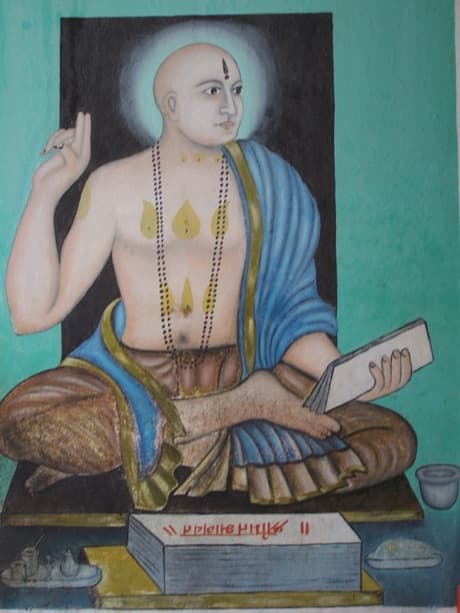
Madhvācārya · Dvaita
Madhva BhāṣyaSanskritEnglish“न च व्ययादिस्तस्य इत्याह - अनादित्वात् इति | सादि हि प्रायो व्ययि गुणात्मकं च | न करोति इत्यादेरर्थं उक्तं पुरस्तात् | न लौकिकः क्रियादिस्तस्य | अतो न प्रज्ञम् इत्यादिवदिति ||” - In this verse, He explains that, for Him there is no annihilation etc. Normally things wear out and are subject to the three-fold attributes. ‘He does not act’ in this way, He having clarified earlier that He does not have worldly activities to be performed nor is He affected.
Madhvācārya · Dvaita
Gītā Tātparya NirṇayaSanskritEnglish“शरीरस्थो जीवः | स्वप्नेन शरीरमभिप्रहत्यासुप्तः सुप्तानभिचकशीति | इति श्रुतिः || शरीरस्थस्तु संसारी शरीराभिमतैर्मतः | विष्णुः शरीरगोऽप्येष न शरीरस्थ उच्यते | शरीराभिमतिर्यस्यान्वेवास्यास्ति कदाचन | तदगतानां तु दुःखानां भोगोऽभिमतिरुच्यते | तदभावान्नाभिमानी भगवान् पुरुषोत्तमः || इति च | अनादित्वान्निर्गुणत्वाच्च परमात्मा जीवोऽपि न | किमुत जडं न भवतीति? शरीरोत्पत्तिलक्षणमप्या तदस्तीति | सच्चादिगुणवर्जितः | सर्वे करोति परमात्मा | तथापि न लिप्यते | वादिप्रसिद्धत्वाच्च | कुर्वाणोऽपि यतः सर्वे पुण्यपापैः न लिप्यते | जन्ममृत्युदिरहितः सच्चादिगुणवर्जितः | विष्णुस्तद्विपरीतस्तु जीवोऽतस्तौ पृथक् सदा || इति च | स एष नेति नेति || इत्यादि च || - Jiva is established in the body. “Giving sleep to the Jiva established in the body, He remaining Himself without sleep, gives illumination to the sleeping one”, thus has been said in scriptures. “The worldly Jiva established in the body, is proud of his body. Sri Vishnu even though dwelling in every body is not called शरीरस्थ - established in body, because he has never any pride of that body. Experiencing the pleasures and pains is what makes one to be proud of his body. In the absence of such experiences, the Supreme Lord does not have any pride for the said body”. Because of His being without any beginning and without the (threefold) attributes, the Supreme Self is distinct from the Jiva. Especially the marks of the body being born etc. do not exist in the Supreme being. Only for the Jivas, they do exist, like the relationship of attributes like Satva etc. Everything is done by the Supreme self alone. Even then there is no attachment to Him. Even though there exist disputants, even though He performs every action, merits or demerits do not attach to Him. He being without birth or death or devoid of the Satva and such other attributes. Sri Vishnu is distinctive from all these being ever different from the Jiva. Therefore, नेति नेति - not this, not this etc.

Jñāneśvar · Vārkarī
English30 "When he by degrees comes to perceive the diversity of beings as rooted in unity, and (perceives) the spreading out (of it) from that same, then does he attain Brahman. (1084)
It is only then, Oh Arjuna, when the diversity of forms of the beings are viewed as components of a grand totality, that the state of their having attained the Supreme Brahman is experienced. Just as there are ripples in water, or atoms in the earth, or rays in the sun, or different organs in the body, or different sorts of feelings in the mind, different sparks in one fire,—in that way the diverse forms of the beings are of only one single soul and when this is perceived through the vision of knowledge, then only, the ship containing the wealth (in the form) of Supreme Brahman comes into one's possession. And then where-soever one casts his glance one sees and discovers nothing else but the Supreme Brahman; in short this brings him infinite Bliss. In this way, Oh Pārtha, has been explained and brought home to you, the entire arrangement in regard to Prakriti and Purusha, through a vivid description of its working in each and every branch. You should consider it as an achievement of as much concern and importance as you would, the acquisition of a mouthful of nectar, or the discovery of a hidden treasure. You will certainly not be called upon, Oh husband of Subhadrā, to construct your metaphysical theory before getting full realisation about this subject (that is yet to come). I have, however, to say a couple of words of profound import to you, but before you hear them you first do deliver up to me, as a guarantee, your mind in its entirety." The Lord said this and then started his discourse, which Pārtha heard with perfect concentration.
Swami Ramsukhdas · Modern
English[Prakṛti can be seen in two forms—actions and things (objects). In the twenty-ninth verse, there is mention of how to renounce affinity with actions, while in this verse there is description of how to renounce, affinity with objects.]
'Yadā bhūtapṛthagbhāvamekasthamanupaśyati tata eva ca vistāraṁ brahma sampadyate tadā'—When a striver, realizes the whole variety of beings, whether born from the womb or
egg and ground or sweat, with gross, subtle and causal bodies, as centred in Prakṛti, he attains Brahma.
The bodies, names, shapes, forms, mental projections, qualities, modifications, birth, sustenance and, death, of all beings of the three worlds, are born of prakṛti. The bodies of all beings, evolve from prakṛti, rest in prakṛti and merge in it. He, who realizes this fact, attains Brahma i.e., he realizes the Self or the Absolute. Actually, Brahma is already attained, it was only the affinity with Prakṛti, which was an obstacle to this attainment. When he realizes, that all beings rest in Prakṛti, and are born of Prakṛti, he realizes, the axiomatic self.
All the moving and unmoving bodies, born of the earth, rest on the earth, undergo changes and activities*, on the earth and merge in the earth. It means, that they are nothing else, besides the earth. Similarly, all bodies of beings, are born of Prakṛti, rest in it and merge in it. So, they are nothing else, besides prakṛti. In the same way, the self always rests, in the Supreme Soul. Though it undergoes modifications, because of its assumed affinity with prakṛti; yet really, it is unattached. If a person, realizes this fact, he attains, Brahma.
Attachment and aversion, are born out of affinity with prakṛti. A man, perceives virtues in others, if he has attachment for them, but perceives vices, out of aversion. So, this veil of attachment and aversion, conceals reality. But, when a striver, realizes that his so-called, gross, subtle and causal bodies, as well as the bodies of other beings, emanate from prakṛti, rest in it, and merge in it, then he realizes the negation of the three bodies in the self, the veil of attachment and aversion is removed, and he realizes God, Who is ever realized.
**Appendix**—In the preceding verse there is mention of the
* There are two kinds of activities—those which happen (occur) and those which are performed. The growth of a boy to youth and old age are the activities which happen while eating and drinking etc., are the activities which are performed. All these activities take place in bodies.
person while in the verse there is mention of time.
In the topic of devotion, the Lord declares that diverse feelings of creatures emanate from Him alone—'bhavanti bhāvā bhūtānām matta eva pṛthagvidhāḥ' (10/5); but here in the topic of knowledge, He declares that diverse feelings of creatures are centred in 'Prakṛti'. It means that where there is the distinction between the real and the unreal, there all the feelings are centred in the unreal but where there is the description of the entire form of God, there all feelings emanate from Him. In the entire form, the real and the unreal—'All is God'—'sadasaccāham' (9/19).
*Link:—In the next verse, the Lord describes the self, to whom Brahma is attained, which has been mentioned in the preceding verse, and which in the twenty-second verse of this chapter, has been described, as detached from the body.*
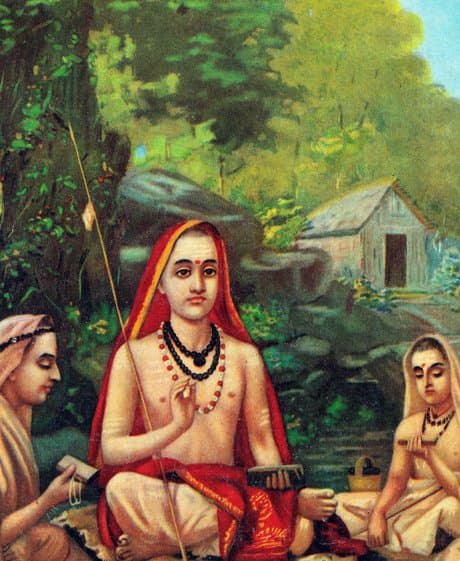
Ādi Śaṅkarācārya · Advaita
Sanskritयदा यस्मिन् काले भूतपृथग्भावं भूतानां पृथग्भावं पृथक्त्वम् एकस्मिन् आत्मनि स्थितं एकस्थं अनुपश्यति शास्त्राचार्योपदेशम्, अनु आत्मानं प्रत्यक्षत्वेन पश्यति ``आत्मैव इदं सर्वम्'' (छा. उ. ७-२५-२) इति, तत एव च तस्मादेव च विस्तारं उत्पत्तिं विकासं ``आत्मतः प्राण आत्मत आशा आत्मतः स्मर आत्मत आकाश आत्मतस्तेज आत्मत आप आत्मत आविर्भावतिरोभावावात्मतोऽन्नम्'' (छा. उ. ७-२६-१) इत्येवमादिप्रकारैः विस्तारं यदा पश्यति, ब्रह्म सम्पद्यते ब्रह्मैव भवति तदा तस्मिन् काले इत्यर्थः ॥ एकस्य आत्मानः सर्वदेहात्मत्वे तद्दोषसम्बन्धे प्राप्ते, इदं उच्यते --
Ādi Śaṅkarācārya · Advaita
Hindiफिर भी, उसी यथार्थ ज्ञानकी दूसरे शब्दोंसे व्याख्या करते हैं—
जिस समय (यह विद्वान्) भूतोंके अलग-अलग भावोंको—भूतोंकी पृथक्त्ताको, एक आत्मामें ही स्थित देखता है अर्थात् शास्त्र और आचार्यके उपदेशसे मनन करके आत्माको इस प्रकार प्रत्यक्षभावसे देखता है कि 'यह सब कुछ आत्मा ही है।'
तथा उस आत्मासे ही सारा विस्तार—सबकी उत्पत्ति—विकास देखता है अर्थात् जिस समय ‘आत्मासे ही प्राण, आत्मासे ही आशा, आत्मासे ही संकल्प, आत्मासे ही आकाश, आत्मासे ही तेज, आत्मासे ही जल, आत्मासे ही अन्न, आत्मासे ही सबका प्रकट और लीन होना’ इत्यादि प्रकारसे सारा विस्तार आत्मासे ही हुआ देखने लगता है; उस समय वह ब्रह्मको प्राप्त हो जाता है—ब्रह्मरूप ही हो जाता है
Jñāneśvar · Vārkarī
Marathiएऱ्हवीं तैंचि अर्जुना । होईजे ब्रह्मसंपन्ना । जैं या भूताकृती भिन्ना । दिसती एकी ॥ १०८४ ॥ लहरी जैसिया जळीं । परमाणुकणिका स्थळीं । रश्मीकरमंडळीं । सूर्याच्या जेवीं ? ॥ १०८५ ॥ नातरी देहीं अवेव । मनीं आघवेचि भाव । विस्फुलिंग सावेव । वन्हीं एकीं ॥ १०८६ ॥ तैसे भूताकार एकाचे । हें दिठी रिगे जैं साचें । तैंचि ब्रह्मसंपत्तीचें । तारूं लागे ॥ १०८७ ॥ मग जया तयाकडे । ब्रह्मेचि दिठी उघडे । किंबहुना जोडे । अपार सुख ॥ १०८८ ॥ येतुलेनि तुज पार्था । प्रकृतिपुरुषव्यवस्था । ठायें ठावो प्रतीतिपथा- । माजीं जाहली ? ॥ १०८९ ॥ अमृत जैसें ये चुळा । कां निधान देखिजे डोळां । तेतुला जिव्हाळा । मानावा हा ॥ १०९० ॥ जी जाहलिये प्रतीती । घर बांधणें जें चित्तीं । तें आतां ना सुभद्रापती । इयावरी ॥ १०९१ ॥ तरी एक दोन्ही ते बोल । बोलिजती सखोल । देईं मनातें वोल । मग ते घेईं ॥ १०९२ ॥ ऐसें देवें म्हणितलें । मग बोलों आदरिलें । तेथें अवधानाचेचि केलें । सर्वांग येरें ॥ १०९३ ॥
Jñāneśvar · Vārkarī
Hindi(13.1085) किन्तु हे अर्जुन! मनुष्य तभी ब्रह्म सम्पन्न होता है जब ये भिन्न-भिन्न भूताकार एकरूप दिखाई दे।
(13.1086) जल में जैसी लहरें, स्थल में जैसे परमाणुओं के कण, सूर्य के मण्डल में जैसी किरणें,
(13.1087) अथवा देह में जैसे अवयव, मन में जैसे सम्पूर्ण भाव, एक ही वहिन में जैसी सब चिनगारियाँ,
(13.1088) वैसे ही ये सब भूताकार एक ही के हैं ऐसा जब यथार्थ में दिखाई देता है तभी ब्रह्मसम्पत्तिरूपी जहाज हाथ लगता है।
(13.1089) फिर जहाँ-तहाँ ब्रह्म ही दिखलाई देता है, किंबहुना अपार सुख का लाभ प्राप्त होता है।
(13.1090) हे पार्थ! इस विवेचन से तुम्हें प्रकृतिपुरुषव्यवस्था की यथार्थ प्रतीति हो चुकी होगी।
(13.1091) अमृत का जैसे चुल्लू में लेना, अथवा द्रव्य के निधान को जैसे आँखों से देखना, वैसे ही यह लाभ समझना चाहिए।
(13.1092) अजी, इस अनुभव के बल से तुम जो अपने चित्त में विचार कर रहे हो वह अभी मत करो,
(13.1093) परन्तु एक-दो गहन विचार हम तुम्हें और बताते हैं उन्हें मन लगा कर सुनो। (13.1094) इस प्रकार देव ने कहा और निरूपण का आरम्भ किया, त्योंही अर्जुन सब शरीर अवधानमय कर सुनने लगा।

Sri Udiya Baba · Modern
Hindiभावार्थ— जिस समय तत्त्वज्ञ भूतों के पृथक्-पृथक् भाव को एक आत्मतत्त्व में ही स्थित देखता है और इस सम्पूर्ण प्रपञ्च के विस्तार को भी उसी से हुआ जानता है उस समय वह ब्रह्म को प्राप्त हो जाता है।
व्याख्या— जब तक भेद-दृष्टि है तभी तक अज्ञान है; जो अध्यस्त को अधिष्ठान में और अधिष्ठान को अध्यस्त में देखता है वही यथार्थदर्शी है। आकाशादि पाँचों भूत और शब्दादि विषय ये सब ब्रह्मरूप ही हैं, उससे भिन्न इनकी सत्ता नहीं है तथा उसी से इनका विस्तार हुआ है—ऐसा जो देखता है वही यथार्थ देखता है। अथवा जो पृथ्वी को जल में, जल को तेज में, तेज को वायु में, वायु को आकाश में, आकाश को अहंकार में, अहंकार को महत्त्व में और महत्त्व को प्रकृति में स्थित देखता है तथा प्रकृति से ही इस सम्पूर्ण प्रपञ्च का विस्तार देखता है वह उसी समय ब्रह्मभाव को प्राप्त हो जाता है। इसी भाव को आगे ३४ वें श्लोक में विशेष स्पष्ट करेंगे।
Swami Ramsukhdas · Modern
Hindi[प्रकृतिके दो रूप हैं—क्रिया और पदार्थ। क्रियासे सम्बन्ध-विच्छेद करनेके लिये उन्तीसवाँ श्लोक कहा, अब पदार्थसे सम्बन्ध-विच्छेद करनेके लिये यह तीसवाँ श्लोक कहते हैं।]
'यदा भूतपृथग्भावं ... ब्रह्म सम्पद्यते तदा'—जिस कालमें साधक सम्पूर्ण प्राणियोंके अलग-अलग भावोंको अर्थात् त्रिलोकीमें जितने जरायुज, अण्डज, उद्भिज्ज और स्वेदज प्राणी पैदा होते हैं, उन प्राणियोंके स्थूल, सूक्ष्म और कारण-शरीरोंको एक प्रकृतिमें ही स्थित
यहाँ क्रियाओंको प्रकृतिके द्वारा होनेवाली बताया है, कहीं गुणोंके द्वारा होनेवाली बताया है और कहीं इन्द्रियोंके द्वारा होनेवाली बताया है—ये तीनों बातें एक ही हैं। प्रकृति सबका कारण है, गुण प्रकृतिके कार्य हैं और गुणोंका कार्य इन्द्रियाँ हैं। अतः प्रकृति, गुण और इन्द्रियाँ—इनके द्वारा होनेवाली सभी क्रियाएँ प्रकृतिके द्वारा होनेवाली ही कही जाती हैं।
देखता है, उस कालमें वह ब्रह्मको प्राप्त हो जाता है। त्रिलोकीके स्थावर-जंगम प्राणियोंके शरीर, नाम, रूप, आकृति, मनोवृत्ति, गुण, विकार, उत्पत्ति, स्थिति, प्रलय आदि सब एक प्रकृतिसे ही उत्पन्न हैं। सम्पूर्ण प्राणियोंके शरीर प्रकृतिसे ही उत्पन्न होते हैं, प्रकृतिमें ही स्थित रहते हैं और प्रकृतिमें ही लीन होते हैं। इस प्रकार देखनेवाला ब्रह्मको प्राप्त हो जाता है अर्थात् प्रकृतिसे अतीत स्वतःसिद्ध अपने स्वरूप परमात्मतत्त्वको प्राप्त हो जाता है। वास्तवमें वह पहलेसे ही प्राप्त था, केवल प्रकृतिजन्य पदार्थोंके साथ
अपना सम्बन्ध माननेसे ही उसको अपने स्वरूपका अनुभव नहीं होता था। परन्तु जब वह सबको प्रकृतिमें ही स्थित और प्रकृतिसे ही उत्पन्न देखता है, तब उसको अपने स्वतःसिद्ध स्वरूपका अनुभव हो जाता है।
जैसे पृथ्वीसे उत्पन्न होनेवाले स्थावर-जंगम जितने भी शरीर हैं तथा उन शरीरोंमें जो कुछ भी परिवर्तन होता है, रूपान्तर होता है क्रियाएँ होती हैं वे सब पृथ्वीपर ही होती हैं। ऐसे ही प्रकृतिसे उत्पन्न होनेवाले जितने गुण, विकार हैं तथा उनमें जो कुछ परिवर्तन होता है, घट-बढ़ होती है, वह सब-की-सब प्रकृतिमें ही होती है। तात्पर्य है कि जैसे पृथ्वीसे पैदा होनेवाले पदार्थ पृथ्वीमें ही स्थित रहनेसे और पृथ्वीमें लीन होनेसे पृथ्वीरूप ही हैं, ऐसे ही प्रकृतिसे पैदा होनेवाला सब संसार प्रकृतिमें ही स्थित रहनेसे और प्रकृतिमें ही लीन होनेसे प्रकृतिरूप ही है। इसी प्रकार स्थावर-जंगम प्राणियोंके रूपमें जो चेतन-तत्त्व है, वह निरन्तर परमात्मामें
ही स्थित रहता है। प्रकृतिके संगसे उसमें कितने ही विकार क्यों न दीखें, पर वह सदा असंग ही रहता है। ऐसा स्पष्ट अनुभव हो जानेपर साधक ब्रह्मको प्राप्त हो जाता है।
यह नियम है कि प्रकृतिके साथ अपना सम्बन्ध माननेके कारण स्वार्थ-बुद्धि, भोग-बुद्धि, सुख-बुद्धि आदिसे प्राणियोंको अलग-अलग भावसे देखनेपर राग-द्वेष पैदा हो जाते हैं। राग होनेपर उनमें गुण दिखायी देते हैं और द्वेष होनेपर दोष दिखायी देते हैं। इस प्रकार दृष्टिके आगे राग-द्वेषरूप परदा आ जानेसे वास्तविकताका अनुभव नहीं होता। परन्तु जब साधक अपने कहलानेवाले स्थूल, सूक्ष्म और कारण-शरीरसहित सम्पूर्ण प्राणियोंके शरीरोंकी उत्पत्ति, स्थिति और विनाशको प्रकृतिमें ही देखता है तथा अपनेमें उनका अभाव देखता है, तब उसकी दृष्टिके आगेसे राग-द्वेषरूप परदा हट जाता है और उसको स्वतःसिद्ध परमात्म-तत्त्वका अनुभव हो जाता है।
**परिशिष्ट भाव**—पूर्वश्लोकमें व्यक्तिकी बात और प्रस्तुत श्लोकमें कालकी बात आयी है।
भक्तिके प्रकरणमें भगवान्ने सम्पूर्ण भावोंको अपनेमें बताया है—‘**भवन्ति भावा भूतानां मत्त एव पृथग्विधाः**’ (१०।५), पर यहाँ ज्ञानके प्रकरणमें सम्पूर्ण भावोंको प्रकृतिमें बताया है। तात्पर्य है कि जहाँ सत्-असत्का विभाग किया है, वहाँ सब भाव असत्में कहे हैं और जहाँ समग्रकी बात कही है, वहाँ सब भाव अपनेमें कहे हैं। समग्रमें सत्-असत् सब कुछ परमात्मा ही हैं—‘**सदसच्चाहम्**’ (९।१९)
सम्बन्ध—बाईसवें श्लोकमें जिसको देहसे पर बताया है और पीछेके (तीसवें) श्लोकमें जिसका ब्रह्मको प्राप्त होना बताया है, उस पुरुष-(चेतन-) के वास्तविक स्वरूपका वर्णन आगेके श्लोकमें करते हैं।
Lord Krishna is stating that one must realizes that all the diversity of forms throughout creation is manifested by the medium of prakṛti or the material substratum pervading physical existence, which gives rise to unlimited bodies and their correlating senses.
All Jīvas or embodied beings whether devas, humans or animals are constituted of the dual natures of Puruṣa, the supreme spirit, and prakṛti.
The compound word eka-stham meaning situated in one refers to the singularity of prakṛti which the Kṣetra or sphere of activity exists within.
The word vistāram meaning expansion refers to the variegated myriads of differentiated existences in successive form manifestations such as children, grandchildren, great grandchildren all uniquely emanating from the same principle of prakṛti.
Whosoever understands that all external appearing differences have their origin in prakṛti and not in Puruṣa or the supreme spirit nor paramātma the supreme soul; such a person attains the realization of the Brāhman or spiritual substratum pervading all existence.