

Bhagavad Gītā · Chapter 13 · Kṣetra Kṣetrajña Vibhāga Yoga
ध्यानेनात्मनि पश्यन्ति केचिदात्मानमात्मना
अन्ये सांख्येन योगेन कर्मयोगेन चापरे
dhyānenātmani paśyanti kecidātmānamātmanā|anye sāṃkhyena yogena karmayogena cāpare||
Word meanings
केचित् = some
ध्यानेन = through meditation
अन्ये = others
योगेन = through the discipline of knowledge
च = and
अपरे = others
कर्मयोगेन = through the yoga of action
आत्मना = by the self
आत्मनि = in the self
आत्मानम् = the self
पश्यन्ति = behold
Translation
Some by meditation behold the supreme Spirit in the heart with the help of their refined and sharp intellect; others realize It through the discipline of Knowledge, and others, again, through the discipline of Action.
Commentary
The commentators seated around this verse
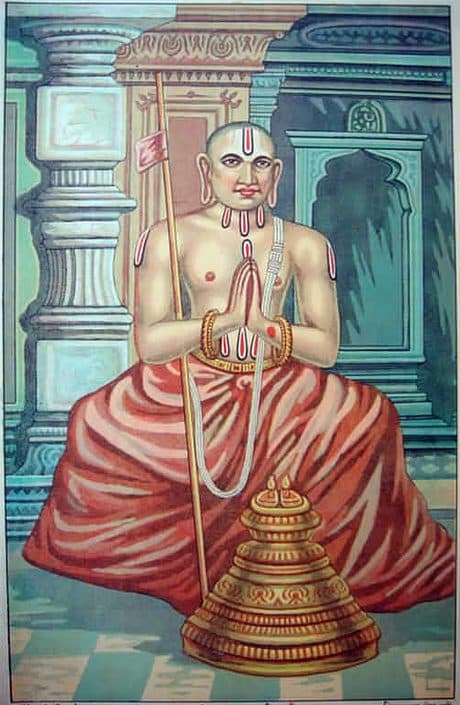
Rāmānuja · Viśiṣṭādvaita
English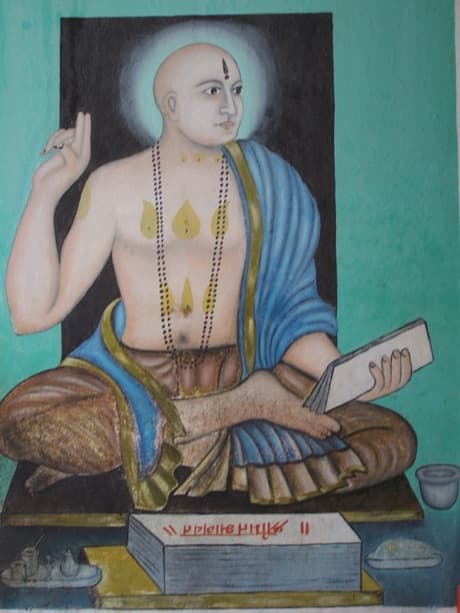
Madhvācārya · Dvaita
Madhva BhāṣyaSanskritEnglishOn verses 13.24–13.25
“सांख्येन वेदोक्तभगवत्स्वरूपज्ञानेन | कर्मिणामपि ज्ञात्वा ध्यात्वा दृष्टिः | श्रावकाणां च ज्ञात्वा ध्यात्वा | सांख्यानां च ध्यात्वा च ध्यात्वा | तथाच गौपवनश्रुतिः - कर्मकृच्चापि तं श्रुत्वा ज्ञात्वा ध्यात्वाऽनुपश्यति | श्रावकोऽपि तथा ज्ञात्वा ध्यात्वा ज्ञान्यपि पश्यति || इति | अन्यथा तस्य दृष्टिर्हि कथञ्चिन्नोपजायते || इति | अन्ये इत्यशक्तानामप्युपायः दर्शनार्थम् ||” - सांख्येन means knowing the form of the Lord as narrated in Vedas. कर्मिणा - by Action means by listening, knowing, meditating, this is the view. For the सांख्याः primarily through meditation. “The Performers of Actions, listening to His exploits, understanding them, meditating on them realize Him. He who listens should understand and meditate on Him. The man of wisdom can realise Him only after meditating on Him. Otherwise His experience will never be possible for any one”, thus in Gaupavana Shruti. By mentioning अन्ये the method for the others who are not so qualified, is suggested.
Madhvācārya · Dvaita
Gītā Tātparya NirṇayaSanskritEnglishOn verses 13.24–13.25
“अनदियोग्यताभेदात् पुंसा दर्शनसाधनम् | नानैव तत्र विष्णोऽस्तु प्रसादात् वैष्णवं वपुः | स्वयं विज्ञायते किञ्चित् श्रूयते किञ्चिदन्तः | तथा ज्ञात्वा हरिं ध्यात्वा स्वन्तः पश्यन्ति केचन | ऋषयः केचिदृषयो नारदाद्या वहिरस्वपि | देवा विष्णुप्रसादेन लब्धसत्प्रतिभावलत् | सर्वे क्रमेण विज्ञाय प्रतिभास्पष्टताक्रमात् || पश्यन्ति वहिरन्तश्च विष्णुं ध्यानमृतेऽपि तु | येषां ध्यानमृते दृष्टिस्तेषां ध्यानेऽपि दर्शनम् | स्यादेव सांख्ययोगास्ते देवा ब्रह्मदिकोऽत्र च | केचितु क्षत्रियवरा अश्वमेधादिकर्मभिः | यजन्तो भक्तिमन्तश्च यज्ञभागार्थमागतम् | श्रवणप्रतिभाभ्यां च स्मरन्तः पुरुषोत्तमम् | पश्यन्त्यन्ते तथान्येभ्यः सर्वे श्रुत्वाऽनुमत्य च | उपास्यैव तु पश्यन्ति नान्यथा तु कथञ्चन | ऋषीन् राज्ञस्तथाऽऽरभ्य प्रतिमाऽभ्यधिका क्रमात् | यावद् ब्रह्म ब्रह्मणस्तु प्रायो नाप्रतिभासितम् | विष्णोः प्रीत्यर्थमेवास्य श्रोतव्यं प्रायशो हरेः | आन्येषां श्रवणज्ञानं क्रमशो मानुपोत्तरम् | अत्यल्पप्रतिभनत्वान्मानुषाः श्रुतवेदिनः | सर्वे ते दर्शनात् तस्मात् स्वयोग्यान्मुक्तिगामिनः || इति च || अन्येषामपि किञ्चिद्वृग्वणे विद्यमानेऽपि मनुष्याणामल्पप्रतिभनत्वात् | श्रुत्वाऽन्यभ्यः इति विशेषणम् | मनुष्याणां प्रतिभामूलप्रमाणापेक्षा प्रायो न सम्यगुप्तद्यतेऽल्पा चेति श्रुतिपरायणाः || इति ||” - According to the eternal difference in attributes and qualification, the Paths for perception for human beings have been recommended differently. There is no substitute for devotees other than Sri Vishnu's Grace. They know some things on their own and some things listening from others. Knowing Sri Hari in this manner, and meditating on Him, some realize (Him) in their heart. Some seers like Narada and others see him outwardly also. Having known in the beginning with the Grace of the Lord and gradually consolidating that knowledge by their own efforts, they perceive Sri Vishnu outwardly without the need of meditation. The one who has the experience without the need of meditation, they perceive Him even without meditating on Him. These are the Sankhyas, having equanimity, among whom the four faced Brahma is the supreme. In some cases the best of the Kshatriyas who performing Horse Sacrifice, have become devoted and thus have seen the Lord, when He came to participate in the sacrificial offerings. Sometimes after listening to the scriptures and being enlightened thereby same have seen the Lord, best of the Persons
The others experience the Lord by listening from others all about Him, by reflection and meditating thereupon. There is no other way than these. Beginning from Seers and Kings the strength of illumination gradually increases till Brahma, whose illumination cannot be matched with any one other. For the sake of the pleasure of Sri Vishnu alone he was, others acquired knowledge through listening gradually from the human beings upward. Since the human beings are endowed with little illumination, they are only the listeners of the Vedas. All these will realize the Lord according to their capability and competence. While for others listening is generally recommended, human beings being less illumined, listening has been recommended specially. The illumination of the human beings being basically weak, they are not capable of having full realization. Therefore, since they have to take shelter of Shrutis (Vedas), they are called shruti-paraayanaah. Those who, without having to listen to the scriptures, have acquired the illumined knowledge, and their such knowledge is not contrary to the scriptures, such human beings even though they are born humans life must be understood to be the very gods.
“अश्रुतप्रतिभा यस्य श्रुतिस्मृत्यविरोधिनी । विश्रुता नृपुं जातं च तं विद्याद् देवसत्तमम् । यश्च स्वमुखमानेन नवाधादेहवान् पुमान् । अष्टमानवती स्त्री च पण्यवत्यङ्गुली पुनः । दशताली सप्तपादौ विद्यात् तौ च सुरोत्तमी । यावत् पञ्चाङ्गुलोनं तद्वैवं मानं क्रमात्परम् । पादे त्वङ्गुलमात्रोनं तदूने चतुरङ्गुलम् । यावद्वैवोपदेवानां पादे चोनाङ्गुलं पुनः । तावन्मनुष्यामानं स्यात् ततोऽधस्वासुरं स्मृतम् । द्विचत्वार्याधिकं तस्मात् पण्यवत्यङ्गुलदधः । ज्ञेयमङ्गुलमानं तदुपदेवादिषु स्फुटम् । देवेष्ववरवज्जेयमृषिणां चक्रवर्तीनाम् । यावद् यावत् प्रियो विष्णोस्तावत् स्त्रीपुंस्वरूपिणः । हरेः सादृश्यमस्य स्वदनादिक्रमुस्स्थिरम् ॥ इति च ॥” -The male who measures from his neck downwards nine times the size of his face and similarly the female who measures her neck down eight measures of the size of the face and those males and females who measure with their ninety six fingers, with their palms to the extent of ten in number, and with their feet to the extent of seven in number, should be considered similar to great gods. The gradation from the supreme one gets reduced in decreasing order by the measure of five fingers. Similarly the measure of feet also goes on reducing till it reaches one feet. This is in reference to the gods who are not among the supreme Gods. From the measure which has been mentioned in respect of the gods, the measure gets reduced by four fingers. And similarly by the measure of seven feet spoken for the gods gets reduced by one measure in respect of Gandharvas etc. The above measures is in respect of Gandharvas elevated from humans, Kings, and best of the human beings. Less than eighty seven measures puts one in amongst the Asuras and the human beings who are destined for eternal samsara. The measure between ninety six and eighty seven keeps the Gandharvas of divine origin. Seers are less than ninety two measures from the lowest among the order of the gods. In accordance to the measure of the pleasure of Sri Vishnu, each one of the male or female assumes similarity to Him.
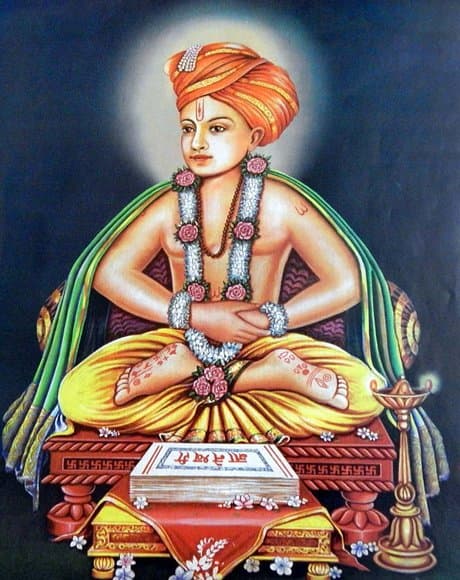
Jñāneśvar · Vārkarī
English24 *'Few there be who, by their own effort, realise, by means of concentrated-meditation, the Self within their own self—a moiety (of them) by following the Method of Discriminating-Pose, moiety by (following the Method of) Even tempered—Activism.* (1037)
Some, Oh, the best of warriors, kindle the fire of reason and therein give a coating (of knowledge) to the impure (portion) in regard to the spiritual and the non-spiritual, and thus separate pure gold (in the form of Supreme Brahman) by removing the thirty-six different shades of fineness, and then through the vision of concentrated meditation see within Supreme Brahman, their own self. Others through good luck concentrate on Supreme Brahman through the Sāmkhya Path, while some others secure it by following the path of event-tempered activism,
Swami Ramsukhdas · Modern
English'Dhyānenātmani paśyanti kecidātmanāmāmānā'—Strivers, by meditation on the Supreme Soul, Who is formless and attributeless, as well as, endowed with attributes and form etc., (as described in the twenty-seventh and twenty-eighth verses of the fifth chapter, from the tenth to the twenty-eighth verses of the sixth chapter and from the eighth to the fourteenth verses of the eighth chapter), according to their faith and taste, realize, the self or God.
As by knowledge of the distinction between, Prakṛti and Puruṣa, one's affinity with Prakṛti is eliminated, so is this affinity, discarded by meditation. No meditation is possible, when mind is either in a deluded state, or in the volatile state. Meditation begins, in the non-volatile state. When the mind is concentrated in the self, that is the state of trance, in which there is no thought, of the world,
body or any inclination etc. Then a Dhyānayogī, by perceiving the self in the self, by the self gets self-satisfied (Gītā 6/19-20).
'Anye sāṅkhyena yogena'—Several strivers realize, the self by the self, through the Discipline of Knowledge, as has been described (from the eleventh to the thirtieth verses of the second chapter, from the thirty-third to the thirty-ninth verses of the fourth chapter, in the eighth and ninth verses as well as from the thirteenth to the twenty-sixth verses of the fifth chapter and in the fourth and fifth verses etc., of the twelfth chapter).
Here, the Discipline of Knowledge, stands for discrimination. A devotee, following the Discipline of Knowledge, discriminates between the real and the unreal. The real is eternal, all-pervading, unchanging, immovable, unmanifest and unthinkable, while the unreal is transitory, kaleidoscopic, movable and it always, undergoes modifications. Thus a devotee following this discipline, by discriminating the real from the unreal, isolates himself from prakṛti and its evolutes and realizes, the self in the self, by the self.
'Karmayogena cāpare'—Some strivers, attain the Supreme, through the Discipline of Action, as has been mentioned (from the forty-seventh to the fifty-third verses of the second chapter, from the seventh to the nineteenth verses of the third chapter, from the sixteenth to the thirty-second verses of the fourth chapter, in the sixth and seventh verses etc., of the fifth chapter). A devotee following the Discipline of Action, performs all his duties as well as religious sacrifice, charity, penance and pilgrimage etc., for the welfare of others. By doing so, his affinity with things, objects and persons etc., is renounced and he realizes the Supreme.
A man, has assumed his identification with the body. In order to do away with the assumption, he should assume his identification with the Lord, as he identified himself with the body. This identification with the Lord is not through senses etc. In knowing, the oversoul through instruments, dependence on matter subsists. Unless, affinity with Prakṛti is renounced, he cannot get himself established, in the Supreme Soul. Therefore,
Self-realization is beyond instruments.
**Appendix**—As in the preceding verse the Lord stated that attaching importance to discrimination is a means for salvation, similarly here in this verse He mentions others means such as meditation etc., to attain salvation. In the Gītā, God-realization has been mentioned—by meditation in the twenty-eighth verse of the sixth chapter, by Jñānayoga (Sāṅkhyayoga) in the fifteenth verse of the second chapter and by Karmayoga (Discipline of Action) in the seventy-first verse of the second chapter. All these are independent means for God-realization.
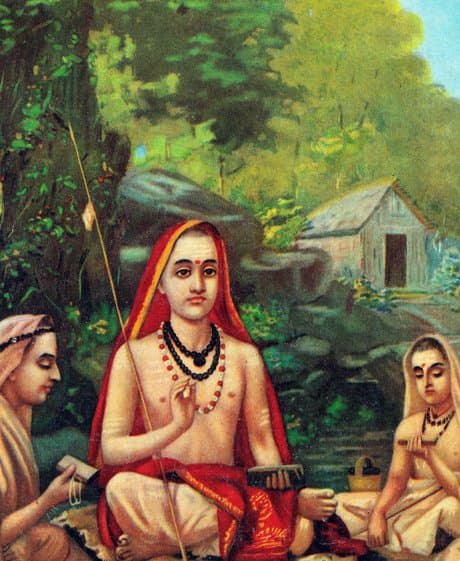
Ādi Śaṅkarācārya · Advaita
Sanskritध्यानेन, ध्यानं नाम शब्दादिभ्यो विषयेभ्यः श्रोत्रादीनि करणानि मनसि उपसंहृत्य, मनश्च प्रत्यक्चेतयितरि, एकाग्रतया यत् चिन्तनं तत् ध्यानम्; तथा, ध्यायतीव बकः, ध्यायतीव पृथिवी, ध्यायन्तीव पर्वताः इति उपमोपादानात् । तैलधारावत् सन्ततः अविच्छिन्नप्रत्ययो ध्यानम्; तेन ध्यानेन आत्मनि बुद्धौ पश्यन्ति आत्मानं प्रत्यक्चेतनम् आत्मना स्वेनैव प्रत्यक्चेतनेन ध्यानसंस्कृतेन अन्तःकरणेन केचित् योगिनः । अन्ये साङ्ख्येन योगेन, साङ्ख्यं नाम ``इमे सत्त्वरजस्तमांसि गुणाः मया दृश्या अहं तेभ्योऽन्यः तद्व्यापारसाक्षिभूतः नित्यः गुणविलक्षणः आत्मा'' इति चिन्तनं एषः साङ्ख्यो योगः, तेन ``पश्यन्ति आत्मानमात्मना'' इति वर्तते । कर्मयोगेन, कर्मैव योगः, ईश्वरार्पणबुद्ध्या अनुष्ठीयमानं घटनरूपं योगार्थत्वात् योगः उच्यते गुणतः; तेन सत्त्वशुद्धिज्ञानोत्पत्तिद्वारेण च अपरे ॥
Ādi Śaṅkarācārya · Advaita
Hindiयहाँ आत्मदर्शनके विषयमें ये ध्यान आदि भिन्न- भिन्न साधन विकल्पसे कहे जाते हैं—
शब्दादि विषयोंसे श्रोत्रादि इन्द्रियोंको हटाकर उनका मनमें निरोध करके और मनको अन्तरात्मामें (निरोध करके) जो एकाग्रभावसे चिन्तन करते रहना है, उसका नाम ध्यान है। तथा 'जैसे बगुला ध्यान करता है' 'जैसे पृथिवी ध्यान करती है' 'जैसे पर्वत ध्यान करते हैं' इत्यादि उपमा दी जानेके कारण तैलधाराकी भाँति निरन्तर अविच्छिन्नभावसे चिन्तन करनेका नाम ध्यान है, उस ध्यानद्वारा कितने ही योगीलोग आत्मामें—बुद्धिमें, आत्माको यानी प्रत्यक् चेतनको आत्मासे—ध्यानाभ्यासद्वारा शुद्ध हुए अन्तःकरणसे—देखते हैं ।
अन्य कई योगीजन सांख्ययोगके द्वारा (देखते हैं)—'सत्त्व, रज और तम—ये तीनों गुण मुझसे देखे जानेवाले हैं और मैं उनसे भिन्न उनके व्यापारका साक्षी, उन गुणोंसे विलक्षण और नित्य (चेतन) आत्मा हूँ' इस प्रकारके चिन्तनका नाम सांख्य है, यही योग है, ऐसे सांख्ययोगके द्वारा—'आत्मामें आत्माको देखते हैं ।'
तथा अपर योगीजन कर्मयोगके द्वारा ईश्वरार्पणबुद्धिसे अनुष्ठान की हुई चेष्टाका नाम कर्म है, वही योगका साधन होनेके कारण गौणरूपसे योग कहा जाता है, उस कर्मयोगके द्वारा अन्तःकरणकी शुद्धि और ज्ञानप्राप्तिके क्रमसे (आत्मामें आत्माको देखते हैं)
Jñāneśvar · Vārkarī
Marathiकोणी एकु सुभटा । विचाराचा आगिटां । आत्मानात्मकिटा । पुटें देउनी ॥ १०३७ ॥ छत्तीसही वानी भेद । तोडोनियां निर्विवाद । निवडिती शुद्ध । आपणपें ॥ १०३८ ॥ तया आपणपयाच्या पोटीं । आत्मध्यानाचिया दिठी । देखती गा किरीटी । आपणपेंचि ॥ १०३९ ॥ आणिक पैं दैवबगें । चित्त देती सांख्ययोगें । एक ते अंगलगें । कर्माचेनी ॥ १०४० ॥
Jñāneśvar · Vārkarī
Hindi(13.1037) हे सुभट! कोई विचार की अँगूठी बना कर उसमें आत्मा के अनात्मरूपी हलके सोने की पुट दे (13.1038) छत्तीस प्रकार के कस के भेदों का नाश कर निश्चय से शुद्ध आत्मरूपी सोना चुन लेते हैं।
(13.1039) कोई उस आत्मा को आत्मध्यान की दृष्टि से, आत्मरूप हो, देखते हैं;
(13.1040) कोई भाग्यवशात् सांख्य-योग की रीति से तथा कोई कर्म के आश्रय से उस आत्मा में चित्त को लाते हैं।
(13.1041) इन चार प्रकारों से जो मुझमें पूर्ण मिल जाते हैं उन्हें कुछ भोक्तव्य नहीं बचता।
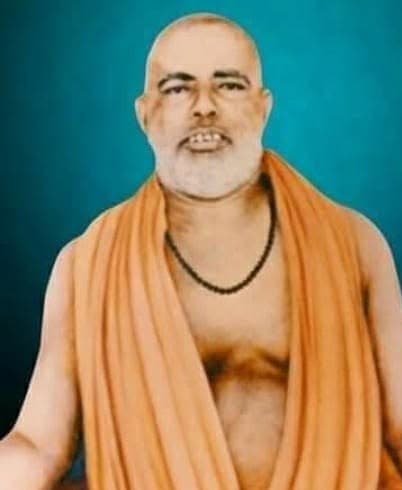
Sri Udiya Baba · Modern
HindiOn verses 13.24–13.25
संगति— यह सिद्धान्त कहा गया। अब अगले दो श्लोकों में यह बतलायेंगे कि किन-किन साधनों से इसकी प्राप्ति होती है—
भावार्थ— कोई तो आत्मा का अन्तःकरण द्वारा ध्यान से साक्षात्कार करते हैं। कोई सांख्ययोग के द्वारा और कोई कर्मयोग से उसका अनुभव करते हैं। दूसरे जो इन साधनों से अपरिचित हैं वे अन्य (गुरुजनों) से सुनकर आत्मा की उपासना करते हैं और वे श्रवणपरायण पुरुष भी मृत्युरूप संसार से पार हो ही जाते हैं।
व्याख्या— चार प्रकार के अधिकारी होते हैं—उत्तम, मध्यम, कनिष्ठ और कनिष्ठतर उनके लिये यहाँ चार ही प्रकार के साधन बताये गये हैं। उत्तम तो ध्यान (निदिध्यासन) के द्वारा आत्मा का अपने शुद्ध अन्तःकरण में साक्षात्कार करते हैं। मध्यम सांख्ययोग के द्वारा विवेपूर्वक उसका अनुभव करते हैं। कनिष्ठ कर्मयोग के द्वारा अन्तःकरण की शुद्धि होने पर उसकी उपलब्धि करते हैं और कनिष्ठतर गुरुजनों से श्रवण करके फिर भजन-उपासना द्वारा उसे प्राप्त करते हैं। इस प्रकार ये चारों ही मृत्युरूप संसार से पार हो जाते हैं। अधिकारी-भेद से इन चारों के ही मार्ग यथार्थ हैं।
यहाँ जो निष्काम कर्मयोगी को कनिष्ठ और श्रुतिपरायण को कनिष्ठतर अधिकारी बताया है उसका कारण यह है कि उन्हें वैराग्य नहीं होता। इन्हें परम्परा से आत्मतत्त्व की उपलब्धि होती है।
प्रश्न— पहले जो दो साधन निदिध्यासन और विवेक बतलाये हैं उनमें क्या अन्तर है?
उत्तर— शब्द, स्पर्श, रूप, रस, गंध और सुख-दुःख—ये मुझसे पृथक् हैं, मैं इनका साक्षी हूँ, इनसे मेरा कोई सम्बन्ध नहीं है—ऐसी वृत्ति जाग्रत रखना विवेक है। तथा इनका निषेध होने पर जो आत्माकार वृत्ति होती है उसका प्रवाह एवं विजातीय वृत्ति का त्याग निदिध्यासन या ध्यान है। ये दोनों जिज्ञासु के साधन हैं। जब ऐसा
अनुभव हो कि इन शब्दादि की कोई सत्ता नहीं है, ये केवल प्रतीतिमात्र हैं, तो इनसे असंग रहना अथवा इन्हें अपना स्वरूप ही मानना ब्रह्माभ्यास या ब्रह्माकार वृत्ति है। यह बोधवान् का अभ्यास है। यद्यपि वृत्ति ब्रह्म का आकार धारण नहीं कर सकती, अतः ब्रह्माकार वृत्ति कहना बनता नहीं तथापि जब कोई भी संकल्प न रहे तो वह आप ही रह जाता है, इसलिए इसे ब्रह्माकार वृत्ति कहते हैं; जैसे कमरे में से सब सामान निकाल लिया जाय तो फिर कमरा स्वयं ही रह जाता है।
प्रश्न— आत्मा तो देखने में नहीं आता, फिर उसका ध्यान कैसे होगा?
उत्तर— आत्मा देखने की वस्तु नहीं, क्योंकि वह स्वयं है तथा आत्मा दिखाने या छिपाने की वस्तु नहीं, क्योंकि वह स्वयं है अथवा यों कहो कि आत्मा देखने में नहीं आता—यही आत्मा को देखना है, यही उसका ध्यान है और यही ज्ञान है। स्वरूप को देखने की इच्छा करना ही अज्ञान है। अरे! कोई को हटा देना ही तो जल को देखना है। जल तो वहाँ है ही, केवल कोई ने उसे ढँक लिया है। इसी प्रकार यह संसार वास्तव में है नहीं—ऐसा अनुभव होने पर वह स्वयं ही रह जाता है।
Swami Ramsukhdas · Modern
Hindi'ध्यानेनात्मनि पश्यन्ति केचिदात्मानमात्मना'—पाँचवें अध्यायके सत्ताईसवें-अट्ठाईसवें श्लोकोंमें; छठे अध्यायके दसवेंसे अट्ठाईसवें श्लोकतक; और आठवें अध्यायके आठवेंसे चौदहवें श्लोकतक जो सगुण-साकार, निर्गुण-निराकार आदिके ध्यानका वर्णन हुआ है, उस ध्यानमें जिसकी जैसी रुचि, श्रद्धा-विश्वास और योग्यता है, उसके अनुसार ध्यान करके कई साधक अपने-आपसे अपनेमें परमात्मतत्त्वका अनुभव करते हैं।
जो सम्बन्ध-विच्छेद प्रकृति और पुरुषको अलग-अलग जाननेसे होता है, वह सम्बन्ध-विच्छेद ध्यानसे भी होता है। ध्यान न तो चित्तकी मूढ़ वृत्तिमें होता है और न क्षिप्त वृत्तिमें होता है। ध्यान विक्षिप्त वृत्तिमें आरम्भ होता है। चित्त जब स्वरूपमें एकाग्र हो जाता है, तब समाधि हो जाती है। एकाग्र होनेपर चित्त निरुद्ध हो जाता है। इस
तरह जिस अवस्थामें चित्त निरुद्ध हो जाता है। उस अवस्थामें चित्त संसार, शरीर, वृत्ति, चिन्तन आदिसे भी उपरत हो जाता है। उस समय ध्यानयोगी अपने-आपसे अपने-आपमें अपना अनुभव करके सन्तुष्ट हो जाता है (गीता—छठे अध्यायका उन्नीसवाँ-बीसवाँ श्लोक)।
'अन्ये साङ्ख्येन योगेन'—दूसरे अध्यायके ग्यारहवेंसे तीसवें श्लोकतक; चौथे अध्यायके तैंतीसवेंसे उन्तालीसवें श्लोकतक; पाँचवें अध्यायके आठवें, नवें तथा तेरहवेंसे छब्बीसवें श्लोकतक; और बारहवें अध्यायके चौथे-पाँचवें आदि श्लोकोंमें कहे हुए सांख्ययोगके द्वारा कई साधक अपने-आपसे अपनेमें परमात्मतत्त्वका अनुभव करते हैं।
सांख्ययोग नाम है विवेकका। उस विवेकके द्वारा सत्-असत् का निर्णय हो जाता है कि 'सत्' नित्य है,
सर्वव्यापक है, स्थिर स्वभाववाला है, अचल है, अव्यक्त है, अचिन्त्य है; और 'असत्' चल है, अनित्य है, विकारी है, परिवर्तनशील है। ऐसे विवेक-विचारसे सांख्ययोगी प्रकृति और उसके कार्यसे बिलकुल अलग हो जाता है और अपने-आपसे अपने-आपमें परमात्मतत्त्वका अनुभव कर लेता है।
**'कर्मयोगेन चापरे'**—दूसरे अध्यायके सैंतालीसवेंसे तिरपनवें श्लोकतक; तीसरे अध्यायके सातवेंसे उन्नीसवें श्लोकतक; चौथे अध्यायके सोलहवेंसे बत्तीसवें श्लोकतक; पाँचवें अध्यायके छठे-सातवें आदि श्लोकोंमें कहे हुए कर्मयोगके द्वारा कई साधक अपने-आपसे अपनेमें परमात्मतत्त्वका अनुभव करते हैं।
जो सम्बन्ध-विच्छेद प्रकृति और पुरुषको अलग-अलग जाननेसे होता है, वह सम्बन्ध-विच्छेद कर्मयोगसे भी होता है। कर्मयोगी जो कुछ भी करे, वह केवल
**परिशिष्ट भाव**—जैसे पूर्वश्लोकमें विवेकके महत्त्वको मुक्तिका उपाय बताया, ऐसे ही यहाँ ध्यानयोग आदि अन्य उपाय बताते हैं। गीतामें ध्यानयोगसे परमात्मप्राप्तिकी बात छठे अध्यायके अट्ठाईसवें श्लोकमें कही है, सांख्ययोगसे परमात्मप्राप्तिकी बात दूसरे अध्यायके पन्द्रहवें श्लोकमें कही है और कर्मयोगसे परमात्मप्राप्तिकी बात दूसरे अध्यायके इकहत्तरवें श्लोकमें कही है। ये सभी परमात्मप्राप्तिके स्वतन्त्र साधन हैं।
Lord Krishna expounds here that some humans having become perfect in yoga perceive by the lucidness of their mind the ātma or immortal soul within the physical body by means of dhyānena or devotional meditation.
Others who are novice in yoga develop their minds by jñāna or Vedic knowledge and sāṅkhyena or subtle discrimination between spirit and matter and applying it diligently soon perceive the ātma as well.
Still others who are unfit for the regiment of jñāna yoga and those who are fit but prefer an easier method and those whose duty it is to set an example for the common man –
they all follow the path of karma yoga or the path of actions devoted to the Supreme Lord that embody devotion and training their minds to control the senses become established in yoga and eventually perceive the ātma also.