

Bhagavad Gītā · Chapter 9 · Rāja Vidyā Rāja Guhya Yoga
यथाऽऽकाशस्थितो नित्यं वायुः सर्वत्रगो महान्
तथा सर्वाणि भूतानि मत्स्थानीत्युपधारय
yathā''kāśasthito nityaṃ vāyuḥ sarvatrago mahān|
tathā sarvāṇi bhūtāni matsthānītyupadhāraya||
Word meanings
यथा = just as
सर्वत्रगः = moving everywhere
महान् = vast
वायुः = wind
नित्यम् = always
आकाश- = in space
स्थितः = situated
तथा = so too
सर्वाणि = all
भूतानि = all beings
मत्स्थानि = abide in me
इति = thus (saying)
उपधारय = know this
Translation
Just as the extensive air, which is moving everywhere, (being born of ether) ever remains in ether, likewise know that all beings (who have originated from My thought) abide in Me.
Commentary
The commentators seated around this verse
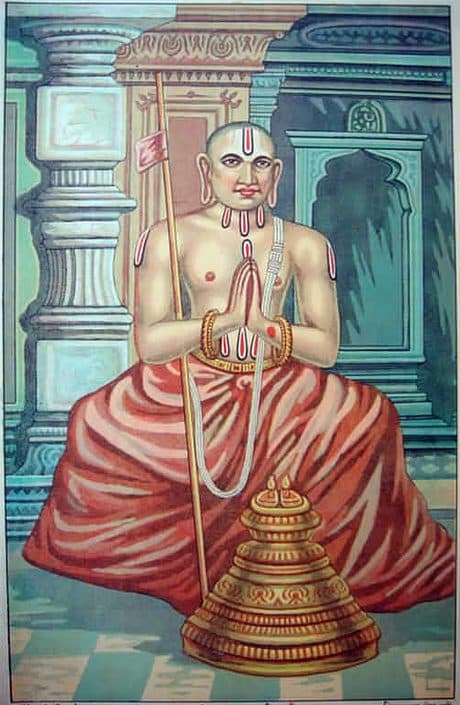
Rāmānuja · Viśiṣṭādvaita
English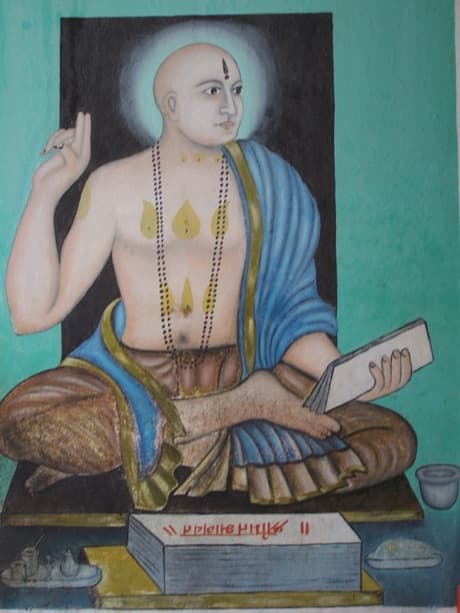
Madhvācārya · Dvaita
SanskritEnglish“मत्स्थानि, न च मत्स्थानि इत्यस्य दृष्टान्तमाह - यथाऽऽकाशस्थित इति । नद्याकाशस्थितोऽपि वायुः स्पर्शादि अप्नोति ॥” - In Brahman, yet as if not in Brahman, as in the case though abiding in the space, not touched by air.

Jñāneśvar · Vārkarī
English6 "Just as, ever reposed within the Ether is the great Wind that moves everywhere; even so are all the beings reposed within Me: to this do thou hold fast. (89)
The air spread in the sky is as wide as the mighty sky itself and makes its presence felt only when it is made to move. Otherwise the sky and the air are one. In that way, all created beings appear to be in Me as Phantasy pictures them. But drop that Phantasy and the beings melt away: there then remains nothing but My pure Divine-Self. Thus it is all the work of Fantasy that the created beings are or are not. So when Fantasy, as the root-cause, ceases, what can be there that is or is not through its actions? So now know ye, once again this Yoga of glory—union with the glory of Divine Being (ऐश्वर्ययोग). Be thou only as a ripple over the surface of ocean of Divine Life, and thou shalt realize thyself as the all-pervading self.” Lord Krishna further said, “you are now awakened and are you not in the light of the supreme knowledge? The dream of duality has it not now vanished with this awakening? Were your reason to become drowsy again, by the action of Fantasy, this realization of unity (अभेद) will again give place to the dreamy state. Therefore, I now disclose to you the secret of Truth, which shall uproot the path of the sleep of Fantasy, and keep you eternally awake in the illumination of the Absolute Self. Therefore, oh courageous Dhanurdhara, attend to what I say, that it is the Māyā (Primal Nature) that makes and breaks all the beings.
Swami Ramsukhdas · Modern
English'Yathākāśasthito nityaṁ vāyuḥ sarvatrago mahān'—As the mighty wind, moving everywhere, ever rests in ether, as breeze, air or wind, similarly, all beings animate or inanimate, revolving in the three worlds, and fourteen spheres, dwell in the Lord.
The Lord, has used the term, 'Matsthāni', from the fourth verse to the sixth verse, three times. It means, that all the beings rest in Him, they cannot be separated from Him, even though they accept their affinity with matter (nature) and its evolutes, and bodies etc.
Just as, wind is born of ether, remains in ether, and merges in ether, man (soul) emanates, from the Lord, dwells in Him, and merges into Him. When wind merges in ether, it has no existence of its own, only ether remains. Similarly when the soul merges, into the Lord, only He remains.
Unlike wind, this soul, does not move everywhere. But, when it accepts its affinity of 'Tness and 'Mineness' with this body,
the movement of the body seems to it as its own movement, though it always rests in the Lord. Therefore, the Lord, in the twenty-fourth verse of the second chapter, has declared the soul to be eternal, omnipresent, immovable, constant and everlasting. Here it has been called 'all-pervading', because of the movement of the body, otherwise it is immovable and constant. So, the Lord declares, that all beings, rest in Him immovably and constantly.
It means, that beings of all the world, have no independent existence of their own, they ever rest, in the Lord. But, they do not realize this fact, because they assume their affinity, with the body. If they renounce this assumed affinity of 'I'ness and 'Mineness' with the body, they can secure infinite bliss. So, the Lord by warning human beings, declares that they ever rest in Him, so no labour or time is required, to attain Him. The only obstacle is, that they do not realize the fact.
'*Iti upadhāraya*'—A striver, should know the fact, that all beings totally rest in Him. By knowing this fact, he will have a disinclination for the world, and then realize Him. To realize Him, a striver should assume, with determination, that the Lord, Who pervades everywhere, in all the things and persons etc., is his, and he is His, while neither things and men etc., are his, nor he is theirs.
An Important Fact
All beings rest, in the Lord. But, the bodies are born, they live and die, because, they are transitory, while the soul undergoes, no change. This soul, has its identity with God, but when it assumes, its identity with the body, by having a disinclination for God, it becomes conscious of its separate entity, as 'I am a body'. This 'I'ness consists of two fragments—the self, and non-self, or it is called the embodied soul. In this 'I'ness, the fragment of non-self, is naturally attracted towards nature. Having
identity with, a fragment of nature, the embodied soul, mistakes this attraction of nature towards Nature, as its own and thinks, 'I should get riches, pleasures and worldly enjoyments.' Thus, he has disinclination towards God, to a great extent. It accepts the body's death, as its own. Actually this soul, is an eternal portion of the Lord, but by having affinity with the world, it wants to enjoy worldly pleasures, and to maintain the body forever. Actually, this desire is to remain with God forever because, he has his real affinity, with Him. However he (embodied soul) may identify himself, with the body, yet his affinity and attraction towards God, can neither vanish nor is there any possibility of their vanishing. 'I should ever live; I should ever be happy; I should attain supreme joy'—in this form, attraction for God, subsists in him. But he commits a blunder, that he wants to attain this supreme joy, through worldly objects. By an error, he has a desire for pleasure, which are transitory. If he realizes the reality, that all worldly pleasures are perishable, and sources of pain, then his desire for them perishes, and his desire to attain eternal bliss is aroused. The more this desire, (want) is aroused, the more disinclination, a striver has for perishable objects etc. When he has a total disinclination, for them, he realizes that he has rested in the Lord, since time immemorial.
**Appendix**—As the wind is born of ether, stays in ether and merges into ether viz., the wind has no independent existence besides ether, similarly all beings are born of God, abide in God and merge into God viz., beings have no independent existence besides God—if a striver accepts this fact firmly, he will realize the reality—'all is God'.
In order to understand this verse the idea of cause and effect is more apt than 'Vivartavāda'. 'Vivartavāda' means opposite appearance. The thing which actually does not exist but seems to exist, as the appearance of a snake in a rope—this is Vivartavāda. In Vivartavāda two entities are necessary; as the
rope and the snake which appears—both are separate entities (one real and the other merely appearance). But in this verse there is the example of ether and the wind (air), both have the same entity. It means that just like the snake in the rope, the wind in ether is not merely an appearance but air is the effect of ether. The effect has its identification with the cause viz., the effect and the cause—both have one entity as gold and ornaments (effect) made of gold are the same. As gold and ornaments—in both there is only gold, similarly God and all beings—in both there is only God. This idea has been mentioned in the *Gītā* by the expressions ‘Vāsudevaḥ sarvam’ (7/19) and ‘sadasaccāham’ (9/19) which is the chief principle of the *Gītā*. Vivartavāda is not a principle but is a means to be free from the wrong notion of regarding the world as real (existent).
If there is pulsation (movement) in air, then there is air in ether and ether is in air. If there is no pulsation in air, there is neither air in ether nor ether in air viz., there is only ether. In other words, so long as there is assumption of the independent existence of air, there is air in ether and ether in air. But if we see from the realistic point of view, there is neither air in ether nor ether in air viz., there is only ether. Similarly from the realistic point of view, there are neither beings in God nor God in beings, only God exists viz., all is God (*Gītā* 9/4-5).
In this verse for air (wind) two adjectives ‘sarvatragaḥ’ and ‘mahān’ have been used. By this it should be understood that the soul also from the worldly point of view (because of attachment with Prakṛti) is ‘sarvatragaḥ’ as it wanders in eighty-four lac wombs, three worlds and fourteen spheres. The term ‘mahān’ should mean the beings (group of beings) of infinite universes. As wind always stays in the sky viz., wind has its eternal relationship with ether, similarly the beings have their eternal relation (eternal union) with God.
Link:—In the previous verse, Lord Kṛṣṇa explained, that all beings dwell in Him. But He did not explain, their new creation and final dissolution, which are going to be explained, in the next two verses.

Ādi Śaṅkarācārya · Advaita
Sanskritयथा लोके आकाशस्थितः आकाशे स्थितः नित्यं सदा वायुः सर्वत्र गच्छतीति सर्वत्रगः महान् परिमाणतः, तथा आकाशवत् सर्वगते मयि असंश्लेषेणैव स्थितानि इत्येवं उपधारय विजानीहि ॥ एवं वायुः आकाशे इव मयि स्थितानि सर्वभूतानि स्थितिकाले ; तानि --
Ādi Śaṅkarācārya · Advaita
Hindiउपर्युक्त दो श्लोकोद्वारा कहे हुए अर्थको दृष्टान्तसे सिद्ध करते हुए कहते हैं—
लोकमें जैसे (यह प्रसिद्ध है कि) सब जगह विचरनेवाला परिमाणमें अति महान् वायु सदा आकाशमें ही स्थित है, वैसे ही आकाशके समान सर्वत्र परिपूर्ण मुझ परमात्मामें समस्त भूत निलिसभावसे स्थित हैं, ऐसा तू जान
Jñāneśvar · Vārkarī
Marathiपैं गगन जेवढें जैसें । पवनु गगनीं तेवढाचि असे । सहजें हालविलिया वेगळा दिसे । एऱ्हवीं गगन तेंचि ते ॥ ८९ ॥
तैसें भूतजात माझां ठायीं । कल्पिजे तरी आभासें कांहीं । निर्विकल्पीं तरि नाहीं । तेथ मीच मी आघवे ॥ ९० ॥
म्हणऊनि नाहीं आणि असे । हें कल्पनेचेनि सौरसें । जे कल्पनालोपें भ्रंशें । आणि कल्पनेसवें होय ।। ९१ ॥
तेंचि कल्पितें मुदल जाये । तैं असें नाहीं हें कें आहे । म्हणऊनि पुढती तूं पाहें । हा ऐश्वर्ययोगु ॥ ९२ ॥
ऐसिया प्रतीतिबोधसागरीं । तूं आपणपेयातें कल्लोळु एक करीं । मग जंव पाहासी चराचरीं । तंव तूचि आहासी ॥ ९३ ॥
या जाणणेयाचा चेवो । तुज आला ना म्हणती देवो । तरी आतां द्वैतस्वप्न वावो । जालें कीं ना ॥ ९४ ॥
तरी पुढती जरी विपायें । बुद्धीसि कल्पनेची झोंप ये । तरी अभेदबोधु जाये । जैं स्वप्नीं पडिजे ॥ ९५ ॥
म्हणोनि ये निद्रेची वाट मोडे । निखळ उद्बोधाचेंचि आपणपें घडे । ऐसें वर्म जें आहे फुडें । तें दावो आतां ॥ ९६ ॥
तरी धनुर्धरा धैर्या । निकें अवधान देईं बा धनंजया । पैं सर्व भूतांतें माया । करि हरि गा ॥ ९७ ॥
Jñāneśvar · Vārkarī
Hindi(9.89) देखो, गगन जितना बड़ा है उतना ही बड़ा गगन में मिला हुआ पवन भी हो रहता है, परन्तु वह जैसे हिलाये जाने से सहज में भिन्न दिखाई देता है — अन्यथा वह गगन ही है,
(9.90) वैसे ही प्राणिगण मुझमें कल्पना करने से ही दिखाई देते हैं। कल्पना न रहते नहीं दिखाई देते। उस समय सब मैं ही मैं हो रहता हूँ।
(9.91) नाश और उत्पत्ति कल्पना के ही सम्बन्ध से होती है। कल्पना के लोप से नाश होता है और कल्पना उत्पन्न होते ही उत्पत्ति होती है।
(9.92) यदि कल्पना करनेहारा न रहे तो उत्पत्ति और नाश कहाँ रह सकते हैं? इसलिए पुनः मेरा ऐश्वर्ययोग देखो।
(9.93) इस अनुभवज्ञानरूपी समुद्र में मुझको एक तरंग बना लो। फिर चराचर में जहाँ देखो तहाँ तुम्हीं भर रहोगे।
(9.94) देव ने पूछा, इस ज्ञान का प्रकाश तुम्हें प्राप्त हुआ या नहीं? तुम्हारा द्वैतरूपी स्वप्न अब मिथ्या हो गया कि नहीं?
(9.95) तथापि यदि कदाचित् फिर से बुद्धि को कल्पना की नींद आ जाय तो स्वप्न में पड़ते ही अभेदज्ञान चला जावेगा, (9.96) इसलिए अब हम तुम्हारा ऐसा सत्य मर्म प्रकट करते हैं कि जिससे निद्रा का मार्ग ही मिट जाय और सब कुछ ज्ञानरूप ही दिखाई दे।
(9.97) इसलिए हे धैर्यवान धनुर्धर, हे धनंजय! अच्छी तरह सुनो।
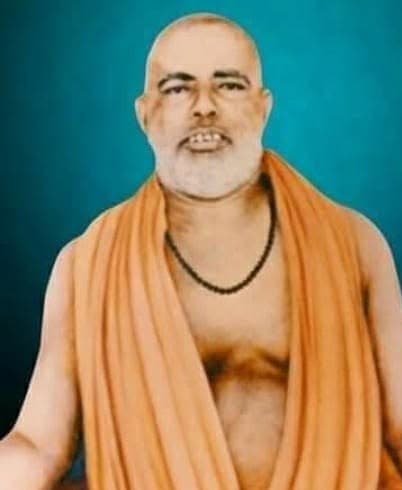
Sri Udiya Baba · Modern
Hindiसंगति— अगले श्लोक में सम्पूर्ण भूतों की स्थिति अपने में बतलाते हैं—
भावार्थ— जिस प्रकार सर्वत्र गमन करने वाला वायु सर्वदा आकाश में रहता है वैसे ही सम्पूर्ण भूत मुझमें स्थित हैं।
व्याख्या— जिस प्रकार आकाश में वायु कभी शान्त और कभी गतिशील हुआ निरन्तर सदा ही स्थित रहता है, किन्तु निर्मल आकाश उससे निर्लिप्त ही रहता है, कभी मलिन नहीं होता, उसी प्रकार पञ्चकोशों के रहने पर भी आत्मा कभी उनसे लिप्त नहीं होता तथा जिस प्रकार निर्विकार आकाश से चंचल वायु की उत्पत्ति होती है, उसी प्रकार निर्विकार आत्मा से इस दृश्य-प्रपञ्च की उत्पत्ति होती है। श्रुति भी कहती है 'अजायमानो बहुधा व्यजायते' 'एकधा बहुधा चैव दृश्यते जलचन्द्रवत्' इत्यादि।
Swami Ramsukhdas · Modern
Hindi‘यथाकाशस्थितो नित्यं वायुः सर्वत्रगो महान्’—जैसे सब जगह विचरनेवाली महान् वायु नित्य ही आकाशमें स्थित रहती है अर्थात् वह कहीं निःस्पन्दरूपसे रहती है, कहीं सामान्यरूपसे क्रियाशील रहती है, कहीं बड़े वेगसे चलती है आदि, पर किसी भी रूपसे चलनेवाली वायु आकाशसे अलग नहीं हो सकती। वह वायु कहीं रुकी हुई मालूम देगी और कहीं चलती हुई मालूम देगी, तो भी वह आकाशमें ही रहेगी। आकाशको छोड़कर वह कहीं रह ही नहीं सकती। ऐसे ही तीनों लोकों और चौदह भुवनोंमें घूमनेवाले स्थावर-जंगम सम्पूर्ण प्राणी मेरेमें ही स्थित रहते हैं—‘तथा सर्वाणि भूतानि मत्स्थानि’।
भगवान्ने चौथे श्लोकसे छठे श्लोकतक तीन बार ‘मत्स्थानि’ शब्दका प्रयोग किया है। इसका तात्पर्य यह हुआ कि ये सम्पूर्ण प्राणी मेरेमें ही स्थित हैं। मेरेको छोड़कर ये कहीं जा सकते ही नहीं। ये प्राणी प्रकृति और
प्रकृतिके कार्य शरीर आदिके साथ कितना ही घनिष्ठ सम्बन्ध मान लें, तो भी वे प्रकृति और उसके कार्यसे एक हो सकते ही नहीं; और अपनेको मेरेसे कितना ही अलग मान लें, तो भी वे मेरेसे अलग हो सकते ही नहीं।
वायुको आकाशमें नित्य स्थित बतानेका तात्पर्य यह है कि वायु आकाशसे कभी अलग हो ही नहीं सकती। वायुमें यह किंचिन्मात्र भी शक्ति नहीं है कि वह आकाशसे अलग हो जाय; क्योंकि आकाशके साथ उसका नित्य-निरन्तर घनिष्ठ सम्बन्ध अर्थात् अभिन्नता है। वायु आकाशका कार्य है और कार्यकी कारणके साथ अभिन्नता होती है। कार्य केवल कार्यकी दृष्टिसे देखनेपर कारणसे भिन्न दीखता है; परन्तु कारणसे कार्यकी अलग सत्ता नहीं होती। जिस समय कार्य कारणमें लीन रहता है, उस समय कार्य कारणमें प्रागभावरूपसे अर्थात् अप्रकटरूपसे रहता है, उत्पन्न होनेपर कार्य भावरूपसे अर्थात् प्रकटरूपसे रहता है और लीन
‘पूर्वोक्त साधन करनेवाले भक्तका ‘सब कुछ परमात्मस्वरूप ही है’ ऐसा निश्चय हो जाता है। फिर वह इस अध्यात्मविद्या (ब्रह्मविद्या) द्वारा सब प्रकारसे संशयरहित होकर सब जगह परमात्माको भलीभाँति देखता हुआ उपराम हो जाय अर्थात् ‘सब कुछ परमात्मा ही है’ यह चिन्तन भी न रहे, प्रत्युत साक्षात् परमात्मा ही दीखने लगे।’
होनेपर कार्य प्रध्वंसाभावरूपसे अर्थात् कारणरूपसे रहता है। कार्यका प्रध्वंसाभाव नित्य रहता है, उसका कभी अभाव नहीं होता; क्योंकि वह कारणरूप ही हो जाता है। इस रीतिसे वायु आकाशसे ही उत्पन्न होती है, आकाशमें ही स्थित रहती है और आकाशमें ही लीन हो जाती है अर्थात् वायुकी स्वतन्त्र सत्ता न रहकर आकाश ही रह जाता है। ऐसे ही यह जीवात्मा परमात्मासे ही प्रकट होता है, परमात्मामें ही स्थित रहता है और परमात्मामें ही लीन हो जाता है अर्थात् जीवात्माकी स्वतन्त्र सत्ता न रहकर केवल परमात्मा ही रह जाते हैं।
जैसे वायु गतिशील होती है अर्थात् सब जगह घूमती है, ऐसे यह जीवात्मा गतिशील नहीं होता। परन्तु जब यह गतिशील प्रकृतिके कार्य शरीरके साथ अपनापन (मैं-मेरापन) कर लेता है, तब शरीरकी गति इसको अपनी गति दीखने लग जाती है। गतिशीलता दीखनेपर भी यह नित्य-निरन्तर परमात्मामें ही स्थित रहता है। इसलिये दूसरे अध्यायके चौबीसवें श्लोकमें भगवान्ने जीवात्माको नित्य, सर्वगत, अचल, स्थाणु और सनातन बताया है। यहाँ शरीरोंकी गतिशीलताके कारण इसको 'सर्वगत' बताया है। अर्थात् यह सब जगह विचरनेवाला दीखता हुआ भी अचल और स्थाणु है। यह स्थिर स्वभाववाला है। इसमें हिलने-डुलनेकी क्रिया नहीं है। इसलिये भगवान् यहाँ कह रहे हैं कि सब प्राणी अटलरूपसे नित्य-निरन्तर मेरेमें ही स्थित हैं।
तात्पर्य हुआ कि तीनों लोक और चौदह भुवनोंमें घूमनेवाले जीवोंकी परमात्मासे भिन्न किंचिन्मात्र भी स्वतन्त्र सत्ता नहीं है और हो सकती भी नहीं अर्थात् सब योनियोंमें घूमते रहनेपर भी वे नित्य-निरन्तर परमात्माके सच्चिदानन्दधन-स्वरूपमें ही स्थित रहते हैं। परन्तु प्रकृतिके कार्यके साथ अपना सम्बन्ध माननेसे इसका अनुभव नहीं हो रहा है। अगर ये मनुष्य-शरीरमें अपनापन न करें, मैं-मेरापन न करें तो इनको असीम आनन्दका अनुभव हो जाय। इसलिये मनुष्यमात्रको चेतावनी देनेके लिये यहाँ भगवान् कहते हैं कि तुम मेरेमें नित्य-निरन्तर स्थित हो, फिर मेरी प्राप्तिमें परिश्रम और देरी किस बातकी? मेरेमें अपनी स्थिति न माननेसे और न जाननेसे ही मेरेसे दूरी प्रतीत हो रही है।
**'इति उपधारय'**—यह बात तुम विशेषतासे धारण कर लो, मान लो कि चाहे सर्ग-(सृष्टि-) का समय हो, चाहे
प्रलयका समय हो, अनन्त ब्रह्माण्डोंके सम्पूर्ण प्राणी सर्वथा मेरेमें ही रहते हैं; मेरेसे अलग उनकी स्थिति कभी हो ही नहीं सकती। ऐसा दृढ़तासे मान लेनेपर प्रकृतिके कार्यसे विमुखता हो जायगी और वास्तविक तत्त्वका अनुभव हो जायगा।
इस वास्तविक तत्त्वका अनुभव करनेके लिये साधक दृढ़तासे ऐसा मान ले कि जो सब देश, काल, वस्तु, व्यक्ति आदिमें सर्वथा परिपूर्ण हैं, वे परमात्मा ही मेरे हैं। देश, काल, वस्तु, व्यक्ति आदि कोई भी मेरा नहीं है और मैं उनका नहीं हूँ।
विशेष बात
सम्पूर्ण जीव भगवान्में ही स्थित रहते हैं। भगवान्में स्थित रहते हुए भी जीवोंके शरीरोंमें उत्पत्ति, स्थिति और प्रलयका क्रम चलता रहता है; क्योंकि सभी शरीर परिवर्तनशील हैं और यह जीव स्वयं अपरिवर्तनशील है। इस जीवकी परमात्माके साथ तात्त्विक एकता है। परन्तु जब यह जीव परमात्मासे विमुख होकर शरीरके साथ अपनी एकता मान लेता है, तब इसे 'मैं'-पनकी स्वतन्त्र सत्ताका भान होने लगता है कि 'मैं शरीर हूँ।' इस 'मैं'-पनमें एक तो परमात्माका अंश है और एक प्रकृतिका अंश है—यह जीवका स्वरूप हुआ। जीव अंश तो है परमात्माका, पर पकड़ लेता है प्रकृतिके अंशको।
इस 'मैं'-पनमें जो प्रकृतिका अंश है, वह स्वतः ही प्रकृतिकी तरफ खिंचता है। परन्तु प्रकृतिके अंशके साथ तादात्म्य होनेसे परमात्माका अंश जीव उस खिंचावको अपना खिंचाव मान लेता है और 'मुझे सुख मिल जाय, धन मिल जाय, भोग मिल जाय'—ऐसा भाव कर लेता है। ऐसा भाव करनेसे वह परमात्मासे विशेष विमुख हो जाता है। उसमें 'संसारका सुख हरदम रहे; पदार्थोंका संयोग हरदम रहे; यह शरीर मेरे साथ और मैं शरीरके साथ सदा रहूँ'—ऐसी जो इच्छा रहती है, यह इच्छा वास्तवमें परमात्माके साथ रहनेकी है; क्योंकि उसका नित्य सम्बन्ध तो परमात्माके साथ ही है।
जीव शरीरोंके साथ कितना ही घुल-मिल जाय, पर परमात्माकी तरफ उसका खिंचाव कभी मिटता नहीं, मिटनेकी सम्भावना ही नहीं। 'मैं नित्य-निरन्तर रहूँ, सदा रहूँ, सदा सुखी रहूँ तथा मुझे सर्वोपरि सुख मिले'—इस रूपमें परमात्माका खिंचाव रहता ही है। परन्तु उससे भूल यह होती है कि वह (जड़-अंशकी मुख्यतासे) इस सर्वोपरि
सुखको जडके द्वारा ही प्राप्त करनेकी इच्छा करता है। वह भूलसे उस सुखको चाहने लगता है, जिस सुखपर उसका अधिकार नहीं है। अगर वह सजग, सावधान हो जाय और 'भोगोंमें कोई सुख नहीं है, आजतक कोई-सा भी संयोग नहीं रहा, रहना सम्भव ही नहीं'—ऐसा समझ ले, तो सांसारिक संयोगजन्य सुखकी इच्छा मिट जायगी और
वास्तविक, सर्वोपरि, नित्य रहनेवाले सुखकी इच्छा (जो कि आवश्यकता है) जाग्रत हो जायगी। यह आवश्यकता ज्यों-ज्यों जाग्रत होगी, त्यों-ही-त्यों नाशवान् पदार्थोंसे विमुखता होती चली जायगी। नाशवान् पदार्थोंसे सर्वथा विमुखता होनेपर 'मेरी स्थिति तो अनादिकालसे परमात्मामें ही है'—इसका अनुभव हो जायगा।
**परिशिष्ट भाव**—जैसे वायु आकाशसे ही उत्पन्न होती है, आकाशमें ही स्थित रहती है तथा आकाशमें ही लीन हो जाती है अर्थात् आकाशको छोड़कर वायुकी स्वतन्त्र सत्ता है ही नहीं, ऐसे ही सम्पूर्ण प्राणी भगवान्से ही उत्पन्न होते हैं, भगवान्में ही स्थित रहते हैं तथा भगवान्में ही लीन हो जाते हैं अर्थात् भगवान्को छोड़कर प्राणियोंकी स्वतन्त्र सत्ता है ही नहीं—इस बातको साधक दृढ़तासे स्वीकार कर ले तो उसको 'सब कुछ भगवान् ही हैं' इस वास्तविक तत्त्वका अनुभव हो जायगा।
इस श्लोकको समझनेके लिये कार्य-कारणभाव जैसा ठीक बैठता है, वैसा विवर्तवाद ठीक नहीं बैठता। 'विवर्त' का अर्थ है— विरुद्ध बर्ताव। जो नहीं है और दीखता है, जैसे रस्सीमें साँप दीखना—यह विवर्तवाद है। विवर्तवादमें दो सत्ता होना आवश्यक है; जैसे—रस्सी और उसमें दीखनेवाला साँप—दोनोंकी अलग-अलग (व्यावहारिक और प्रातिभासिक) सत्ता है। परन्तु गीताके इस श्लोकमें आकाश और वायुका दृष्टान्त दिया गया है, जो दोनों एक ही (व्यावहारिक) सत्ता है। तात्पर्य है कि रस्सीमें साँपकी तरह आकाशमें वायु अध्यस्त नहीं है अथवा आकाशमें वायुकी प्रतीतिमात्र नहीं है, प्रत्युत वायु आकाशका कार्य है। कार्यकी कारणके साथ अभिन्नता होती है अर्थात् कार्य और कारणकी एक सत्ता होती है; जैसे—सोना और उसका कार्य गहने—दोनोंकी एक सत्ता है। अतः जैसे सोना और गहने—दोनोंमें तत्त्वसे एक सोना-ही-सोना है, ऐसे ही परमात्मा और सम्पूर्ण प्राणी—दोनोंमें तत्त्वसे एक परमात्मा-ही-परमात्मा है। इसी बातको गीताने 'वासुदेवः सर्वम्' (७। १९) और 'सदसच्चाहम्' (९। १९) पदोंसे कहा है, जो गीताका खास सिद्धान्त है। विवर्तवाद सिद्धान्त नहीं है, प्रत्युत संसारमें सत्यत्वबुद्धि हटानेका एक साधन है।
अगर वायु स्पन्दित हो तो वायुमें आकाश है और आकाशमें वायु है। अगर वायु स्पन्दित न हो तो न वायुमें आकाश है, न आकाशमें वायु है अर्थात् आकाश-ही-आकाश है। दूसरे शब्दोंमें, जबतक वायुकी स्वतन्त्र सत्ताकी मान्यता है, तबतक आकाशमें वायु और वायुमें आकाश है। परन्तु तात्त्विक दृष्टिसे देखें तो न आकाशमें वायु है, न वायुमें आकाश है अर्थात् आकाश-ही-आकाश है। इसी तरह तात्त्विक दृष्टिसे न परमात्मामें प्राणी हैं, न प्राणियोंमें परमात्मा है अर्थात् परमात्मा-ही-परमात्मा है (गीता—इसी अध्यायका चौथा-पाँचवाँ श्लोक)।
इस श्लोकमें वायुके लिये दो पद आये हैं—'सर्वत्रगः' और 'महान्'। इससे यह समझना चाहिये कि जीवात्मा भी संसारकी दृष्टिसे (प्रकृतिके सम्बन्धसे) चौरासी लाख योनियाँ, तीन लोक, चौदह भुवन आदिमें घूमनेके कारण 'सर्वत्रगः' है। 'महान्' पदसे अनन्त ब्रह्माण्डोंके सभी जीव (जीव-समुदाय) समझना चाहिये। जैसे वायु नित्य ही आकाशमें स्थित रहती है अर्थात् वायुका आकाशके साथ नित्य सम्बन्ध है, ऐसे ही जीवमात्रका परमात्माके साथ नित्य सम्बन्ध (नित्ययोग) है।
सम्बन्ध—पूर्वश्लोकमें भगवान्ने सम्पूर्ण प्राणियोंकी स्थिति अपनेमें बतायी, पर उनके महासर्ग और महाप्रलयका वर्णन करना बाकी रह गया। अतः उसका वर्णन आगेके दो श्लोकोंमें करते हैं।
The mighty wind exists and moves everywhere in space without any perceivable support.
So it has to be admitted that the powerful air-current is dependent on Me for its existence and is being upheld by Me alone. Even so, know that all entities abide in Me, who am invisible to them, and that they are upheld by Me alone. The Vedic sages declare thus: —
The origin of clouds, the waters of the ocean remaining within bounds, the phases of the moon, the strong movements of the gale, the flash of lightning and the movements of the sun—all these are marvellous manifestations of the power of Vishnu. (?)
The meaning is that they are all the marvellous miracles which are unique to Vishnu. The Vedas and other texts also declare likewise:
‘Verily O Gārgī, at the command of that imperishable One, the sun and the moon stand apart’ (Br. Up., 3.8.9,)
‘Through the fear of Him the wind blows, through the fear of Him the sun rises, through the fear of Him Agni and Indra perform their duties’ (Tai. Up., 2.8.1).
It has been declared that the existence and activity of all beings originate by the will of the Supreme Being, who is totally independent. Now Śrī Krishna declares that the origin and dissolution of all entities also are accomplished by His will only:—