

Bhagavad Gītā · Chapter 9 · Rāja Vidyā Rāja Guhya Yoga
समोऽहं सर्वभूतेषु न मे द्वेष्योऽस्ति न प्रियः
ये भजन्ति तु मां भक्त्या मयि ते तेषु चाप्यहम्
samo'haṃ sarvabhūteṣu na me dveṣyo'sti na priyaḥ|
ye bhajanti tu māṃ bhaktyā mayi te teṣu cāpyaham||
Word meanings
अहम् = I
सर्वभूतेषु = among all beings
समः = equal
न = not
मे = my
द्वेष्यः = hateful
अस्ति = is
न = nor
प्रियः = dear
तु = but
ये = who
भक्त्या = with devotion
माम् = Me
भजन्ति = worship
ते = they
मयि = in me
च = and
अहम् = I
अपि = also
तेषु = in them
Translation
I am equally present in all beings; there is none hateful or dear to Me. They, however, who devoutly worship Me abide in Me; and I too stand revealed in them.
Commentary
The commentators seated around this verse
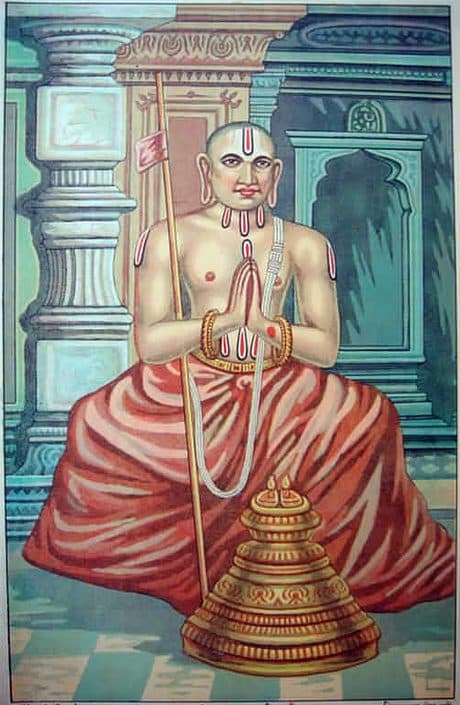
Rāmānuja · Viśiṣṭādvaita
EnglishOn verses 9.28–29
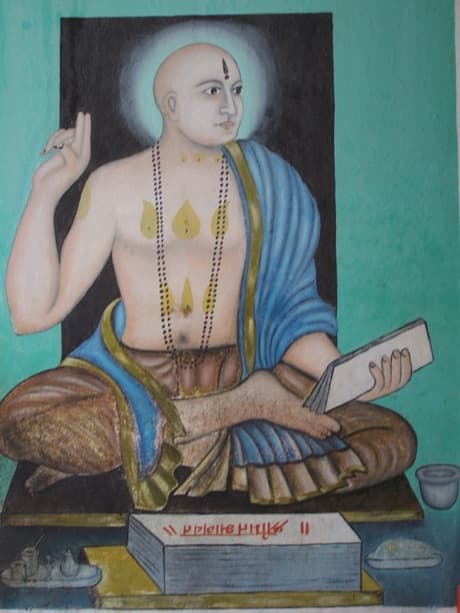
Madhvācārya · Dvaita
Madhva BhāṣyaSanskritEnglishतर्हि स्नेहादिमत्वादल्पभक्तस्यापि कस्यचिद् बहुफलं ददासि, विपरितस्यापि कस्यचिद् विपरीतम् इत्यत आह - समोऽहम् इति । तर्हि न भक्तिप्रयोजनम् इत्यत आह - ये भजन्ति इति । मयि ते तेषु चाप्यहम् इति । मम ते विशस्तेषामह वश इति । उक्तं च पैड्गीखिलेषु - ये वै भजन्ते परमं पुमांसं तेषां वशः स तु ते तद्दशाश्च इति । तद्दशा एव ते सर्वे सर्वदा । तथाऽपि बुद्धिपूर्वकत्वाबुद्धिपूर्वकत्वेन भपदः । उद्धवादिवत् शिशुपालोदवच्च । तच्चोक्तं तत्रैव - अबुद्धिपूर्वाद् योऽवशस्तस्य ध्यानात् पुनर्वशो भवते बुद्धिपूर्वम् इति ॥” – As one who loves his devotees, whatever little is offered He gives them great fruits. Even in the case of hatred He does not bear dislike towards them, saying thus in this verse - alike am I. Lest it be misunderstood that devotion towards Him is not needed he clarifies to those who propitiate Him, they are His as much as He is theirs. They are under my obligation as much I am in their obligation. “Those who propitiate great persons they in turn come under their obligation”, thus in Paingi scripture. In fact, everyone is subservient to Him. Even though in the beginning, they do not realize this, later after proper thinking they realize their dependence. They become arrogant like Shishupala. Therefore, in Paingi texts it has also been said: “Because of ignorance they do not realize in the beginning, but by meditation on Him they come again under His shelter”.
Madhvācārya · Dvaita
Gītā Tātparya NirṇayaSanskritEnglish“नास्य भक्तोऽपि ये ह्येषो नचाभक्तोऽपि यः प्रियः । किन्तु भक्त्यनुसारेण फलदोऽतः समो हरिः ॥ इति पादमे ॥ प्रीत्या मयि ते ॥” – “The one who is devoted to Him can never be inimical to Him; nor one who is inimical could ever be His devotee. But He is equitable in giving the fruits according to one's devotion, thus in Padma Puraana. To those who are devoted.
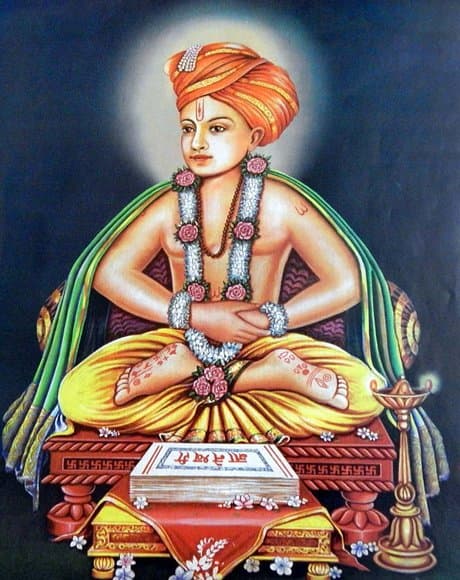
Jñāneśvar · Vārkarī
English29 *“Of even mind am I unto all beings: no one is for Me an object of hate or affection; those, however, who worship Me in devotion, they (abide) in Me, and I also in them.”* (407) If you wish to know that eternal being, I shall say that it is the abiding essence in all created things in which sink all feelings of separateness of 'I' and 'thou'. And those seers that realize My true and eternal being, breaking the sanctuary of all egotism, worship Me wholeheartedly in thought, word and deed. They seem to live in the world in their bodily life, but truly abide entirely in My eternal being and no less surely do I eternally abide in them, like the Banian tree that is contained in a small seed, which has sprung from that *Vata*-tree itself. Thus I and My devotees are separate only outwardly and in name; but in very truth I and they are one; and their wearing a bodily vesture is as unmeaning and empty as the wearing of a borrowed ornament. It endures till life's lease ends like the flower bereft of fragrance that is blown by the breeze. His sense of self-hood being raised to My divine eternal self, is entirely merged in Me.
Swami Ramsukhdas · Modern
English'Samo'ham sarvabhūteṣu'—The Lord, pervades the whole universe (Gītā 9/4) and He is a disinterested friend, of all beings (Gītā 5/29).
The Lord pervades everywhere, equally from a small ant, to a big elephant and from the vilest sinner, to the most virtuous saint, because all souls are His fragments of His own Self. So they cannot be separated from Him, and He cannot be separated, from them. The beings can be different by birth, by actions, by circumstances, by incidents and by union and disunion etc., but He always and equally, pervades all of them.
'Na me dveṣyo'sti na priyaḥ\*'—The Lord, has neither attachment for the virtuous persons, nor aversion to, the evil ones. He loves, all beings equally. But, the virtuous people, desiring fruits for their virtuous actions, go to higher regions, while evil-doers go to hell, and pass eighty-four lac forms of lives.
The Lord, provides earth, water, fire, air and ether, equally to all beings because these are His portion. As a man, has neither attachment to a healthy limb, nor aversion for a diseased one, the Lord, has neither attachment for the virtuous persons, who follow His precepts, nor aversion to the evil-doers as also, His critics because, He is the same, to all beings. He has no partiality. It is partiality, from which attachment and aversion, evolve.
'Ye bhajanti tu mām bhaktyā mayi te teṣu cāpyaham'—Those, who worship the Lord with devotion, without having any attachment for the world, and work to please Him, are in Him and He is in them (Gītā 9/14; 10/9).
It does not mean, that other beings are not in Him, but it means that they do not accept this fact, they think that they are
\* Here the term 'Priyah' stands for attachment not for loving because all beings are loving to the Lord as they are born of him (Mānasa 7/85/2). The Lord always emphasizes the fact that one should be free from attachment and aversion. So here the term has been used for attachment.
worldly and so they remain established, in the world, and a body, which are transitory. But those, who regard the Lord, as pervading everywhere, all the time, in all things, incidents, circumstances and beings, are specially, in Him and He is specially, in them.
Secondly, those who have this affinity, that they are the Lord's and He is theirs, they become so much intimate, that they become one. So they are in Him, and He is in them.
Thirdly, their Thess comes to an end. So they dwell, in Him.
Now a question arises here that it might mean, the Lord is not the same, for all beings. He loves His devotees, more than He loves other beings. So He is not just. The answer is, that the Lord has declared, 'Howsoever men approach Me, even so, do I seek them' (Gītā 4/11). Therefore, though the Lord is the same, and just, for all beings, yet it is the devotion of devotees, which attracts the Lord, towards them. If He is not attracted towards them, it means that He is ungrateful and unjust.
As a son, is called worthy or unworthy, because of his virtuous and evil actions, so a louse like insect, sucks blood, instead of milk from the udders of a cow, and as with the same electricity, in a refrigerator water is frozen to ice, while in a heater fire is burnt, because of their different characteristics. Similarly, persons because of their different characteristics, have different grasping capacity, to receive His grace. As a good conductor of heat, or electricity, conducts heat or electricity, but some other substances, do not conduct, at all. The defect does not lie, with the source of energy, but with an instrument. Similarly, God's grace or His sameness is equal, to all. But evil-doers, because of their ignorance do not realize His grace, and equivalence. The Lord's grace, manifests itself among His devotees, according to their devotion, while it is not revealed, among those, who have no devotion, and who are non-believers.
It means, that men because of their worldly attachment, think that they are worldly. If they start worshipping the Lord, their
attachment is wiped out and they start feeling, that they are in God and God is in them. Actually, they are ever in God and God is ever, in them, but the reality, is veiled by attachment.
The Lord, has used the term 'Ye' (who), which means, that whosoever worships Him with devotion, is in Him and He is in His devotee; he may be of any caste, creed, colour and country etc.
**Appendix**—'Samo'ham sarvabhūteṣu'—A man (the self) may or may not dedicate (offer) his actions and objects to God, it does not make any difference in God. He ever remains the same. The Lord is not at all touched by any particular 'Varṇa' (order of life), particular āśrama (stage of life), particular caste, particular action and particular ability etc. Therefore a person of every Varṇa, Āśrama, Caste etc., can have an inclination to Him, can be a devotee to Him and can attain Him.
'Na me dveṣyo'sti na priyah'—From the view-point of God, there is no one else besides Him, then how can the question arise of His being hateful or dear to anyone? A man (the self) is bound by having attachment and aversion to good and bad actions and their fruit; and by renouncing attachment and aversion, he is liberated viz., he attains salvation. Therefore only the individual self, not God is bound and liberated. The self has partiality; in God there is no partiality at all, He ever remains the same to all beings.
In the eleventh verse of the fourth chapter the Lord declared—'ye yathā māṁ prapadyante tāmstathaiva bhajāmyaham', the same notion has been expressed here by the expression 'ye bhajanti tu māṁ bhaktyā mayi te teṣu cāpyaham'. God pervades all beings equally, He has no partiality. But those who worship God with devotion, they are in God and God is in them viz., God is specially revealed in them. As in the earth, water pervades everywhere, but it is specially revealed in a well, similarly God in spite of pervading the entire universe, is specially revealed in devotees. This speciality is the fruit of God's grace because
devotees worship God with wholehearted devotion. As ghee (clarified butter) present in the body of the cow, is of no use to the cow, but the ghee extracted from her milk (curd) is of use to her, similarly people are not purged of their sins by God merely by His pervasion in the entire universe but only those, who have an inclination to God and worship Him with devotion, are purged of their sins.* Common people in spite of being within God, don't behold Him, but devotees behold God everywhere (Gītā 6/30). Devotees love God and God loves His devotees—'priyo hi jāñino'tyarthamaham sa ca mama priyaḥ' (Gītā 7/17). Therefore the devotees are in God and God is in devotees—'mayi te teṣu cāpyaham'. It means that there is no partiality in God but the people who have disinclination for God, have developed partiality.
In essence (reality) God is 'samo'ham sarvabhūteṣu'—(I am the same to all beings); but the devotees realize 'mayi te teṣu cāpyaham'—(they are in Me and I am in them). It means that though the Lord equally pervades all beings, yet only the devotees realize this fact; other beings don't realize it. In fact this power of realization has been bestowed upon people by God only. The only duty of a man is to turn towards God.
In Rāmacaritamānasa it is mentioned—
sātavā sama mohi maya jaga dekhā moteṁ saṁta adhika kari lekhā
(Mānasa, Araṇya 36/2)
It means that God equally pervades all beings, He equally loves them, equally showers His grace on them and has very close intimacy with them but His love, grace and intimacy etc., specially appear in devotees. These special traits are bestowed upon devotees by His grace and by God only, when devotees love God. Other people don't get engrossed (absorbed) in God
* sanamukha hoi jīva mohi jabahīṁ janma koṭi agha nāsahim tabahīṁ (Mānasa 5/44/1)
and they don't love Him so much as devotees do. Therefore devotees are also loving to God. The natural love between God and a devotee has been mentioned by the expression, 'mayi te teṣu cāpyaham' (devotees are in Me and I am in them).
*Link:—Now, in the next verse the Lord expounds the greatness of devotion and devotees.*
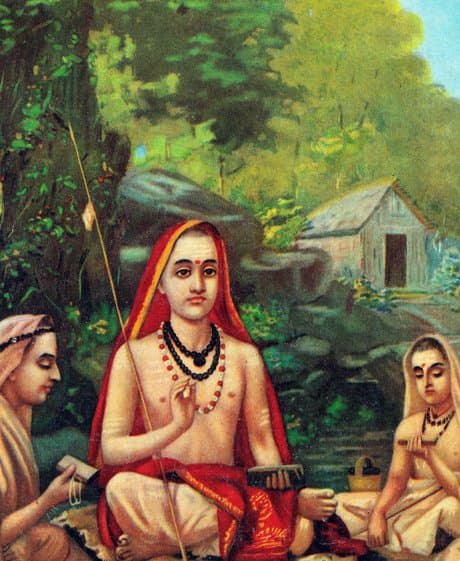
Ādi Śaṅkarācārya · Advaita
Sanskritसमः तुल्यः अहं सर्वभूतेषु । न मे द्वेष्यः अस्ति न प्रियः । अग्निवत् अहं -- दूरस्थानां यथा अग्निः शीतं न अपनयति, समीपं उपसर्पतां अपनयति ; तथा अहं भक्तान् अनुगृह्णामि, न इतरान् । ये भजन्ति तु मां ईश्वरं भक्त्या मयि ते -- स्वभावत एव, न मम रागनिमित्तं -- वर्तन्ते । तेषु च अपि अहं स्वभावत एव वर्ते, न इतरेषु । न एतावता तेषु द्वेषो मम ॥ शृणु मद्भक्तेर्माहात्म्यं --
Ādi Śaṅkarācārya · Advaita
Hindi(यदि कहो कि) तब तो भगवान् राग-द्वेषसे युक्त हैं; क्योंकि वे भक्तोंपर ही अनुग्रह करते हैं दूसरोंपर नहीं करते, तो यह कहना ठीक नहीं है—
मैं सभी प्राणियोंके प्रति समान हूँ, मेरा न तो (कोई) द्वेष है और न (कोई) प्रिय है। मैं अग्निके समान हूँ। जैसे अग्नि अपनेसे दूर रहनेवाले प्राणियोंके शीतका निवारण नहीं करता, पास आनेवालोंका ही करता है, वैसे ही मैं भक्तोंपर अनुग्रह किया करता हूँ, दूसरोंपर नहीं।
जो (भक्त) मुझ ईश्वरका प्रेमपूर्वक भजन करते हैं, वे मुझमें स्वभावसे ही स्थित हैं, कुछ मेरी आसक्तिके कारण नहीं और मैं भी स्वभावसे ही उनमें स्थित हूँ, दूसरोंमें नहीं। परंतु इतनेहीसे यह बात नहीं है कि मेरा उनमें (दूसरोंमें) द्वेष है
Jñāneśvar · Vārkarī
Marathiतो मी पुससी कैसा । तरि जो सर्वभूतीं सदा सरिसा । जेथ आपपरु ऐसा । भागु नाहीं ॥ ४०७ ॥
जे ऐसिया मातें जाणोनि । अहंकाराचा कुरुठा मोडोनि । जे जीवें कर्मे करुनि । भजती मातें ॥ ४०८ ॥
ते वर्तत दिसती देहीं । परि ते देहीं ना माझां ठायीं । आणि मी तयांचा हृदयीं । समग्र असें ॥ ४०९ ॥
सविस्तर वटत्व जैसें । बीजकणिकेमाजीं असे । आणि बीजकणु वसे । वटीं जेवीं ॥ ४१० ॥
तेवीं आम्हां तयां परस्परें । बाहेरी नामाचींचि अंतरें । वांचुनि आंतुवट वस्तुविचारें । मी तेचि ते ॥ ४११ ॥
आतां जायांचें लेणें । जैसें आंगावरी आहाचवाणें । तैसें देह धरणें । उदास तयांचें ॥ ४१२ ॥
परिमळु निघालिया पवनापाठीं । मागें वोस फूल राहे देठीं । तैसें आयुष्याचिये मुठी । केवळ देह ॥ ४१३ ॥
येर अवष्टंभु जो आघवा । तो आरुढोनि मद्भावा । मजचि आंतु पांडवा । पैठा जाहला ॥ ४१४ ॥
Jñāneśvar · Vārkarī
Hindi(9.407) वह मैं कैसा हूँ — पूछो तो मैं सर्वदा सब भूतों में समान हूँ और मुझमें अपना-पराया भाव नहीं है।
(9.408) जो मुझे ऐसा जानकर, अहंकार का घर मिटाकर, कर्म करके अन्तःकरण से मेरा भजन करते हैं
(9.409) वे शरीर से व्यापार करते हुए दिखाई तो देते हैं परन्तु शरीर में नहीं रहते किन्तु मुझमें रहते हैं और मैं सम्पूर्ण उनके हृदयों में रहता हूँ।
(9.410) जैसे बड़ का वृक्ष विस्तार-समेत अपने बीज में रहता है और बीजकण जैसे बड़ में रहता है,
(9.411) वैसे ही हम में और उनमें परस्पर बाह्य नामों का ही अन्तर है, अन्यथा अन्तःस्थ वस्तु के विचार से वे मद्दूप ही हैं। (9.412) और पराये माँग कर लाये हुए अलंकारों की जैसे शरीर पर केवल दिखावट ही होती है वैसे ही वे उदासीनता से देह धरते हैं।
(9.413) वायु के साथ ही सुगन्ध निकल जाने पर फूल जैसे डण्ठल में ही निर्गन्ध पड़ जाता है वैसे ही उनका देह केवल आयुष्य की मुट्ठी में रहता है,
(9.414) और जो सब अहंकार है वह मेरी भक्ति को प्राप्त होने से मुझ में ही आ मिलता है।
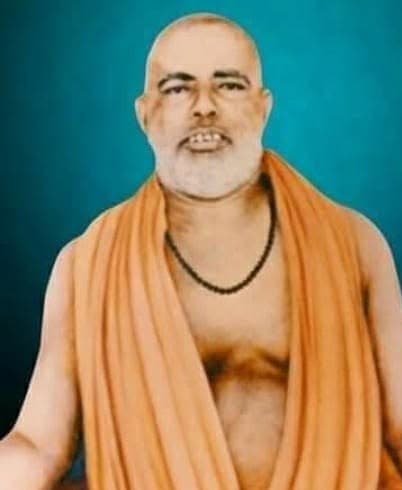
Sri Udiya Baba · Modern
Hindiसंगति— अब अगले श्लोक में भगवान् अपनी समता दिखलाते हैं—
भावार्थ— मैं सब भूतों में समान हूँ। मेरा न कोई द्वेष्य (द्वेष्यके योग) है, न प्रिय है। किन्तु जो मुझे भक्तिपूर्वक भजते हैं वे मुझमें रहते हैं और मैं उनमें रहता हूँ।
व्याख्या— यहाँ भगवान् अपनी समता व्यक्त करते हुए भक्तों के साथ अपनी अभिन्नता प्रकट करते हैं। भगवान् तो शत्रुओं का भी मङ्गल करते हैं। उनका कोई शत्रु या मित्र नहीं है, किन्तु भक्तों के शत्रु ही उनके शत्रु हैं और भक्तों के मित्र ही उनके मित्र हैं। इसीसे वे सम और निर्विकार होने पर भी विषम और विकारी से जान पड़ते हैं।
प्रश्न— भगवान् को दयालु और न्यायकारी कहा जाता है। न्यायकारी तो अपराधी के प्रति दया नहीं कर सकता। फिर भगवान् इन विरुद्ध धर्मों का निर्वाह कैसे करते हैं?
उत्तर— दया भगवान् का गुण नहीं स्वभाव है। जैसे प्रकाश सूर्य का स्वभाव ही है। परन्तु बादल होने पर वह ढक जाता है और उससे शीत एवं अंधकार का दुःख दूर नहीं होता। इसी प्रकार भगवान् की दया में कभी कोई कमी नहीं आती। किन्तु बादल रूप विषयासक्ति के कारण उसकी अनुभूति नहीं होती। जब भगवद्भक्तिरूप वायु से विषयासक्तिरूप बादल हट जाते हैं तब उसकी अनुभूति होने लगती है। अतः भगवान् स्वभावतः सम और दयामय होने पर भी लोगों को अपने विभिन्न आचरणों के कारण उनके अनुसार विषम और न्यायकारी जान पड़ते हैं। इससे उनके स्वभाव में कोई अन्तर नहीं आता।
‘सम’ शब्द के अनेक अर्थ हैं। किन्तु यहाँ भगवान् ही सम हैं। जिस प्रकार दीपक शुभाशुभ अनेकों क्रियाएँ होने पर भी उनसे अलिप्त और सम रहता है, विषमता उसके विषयों में ही रहती है तथा विषयों के न रहने पर वह स्वयं सम रह जाता है, इसी प्रकार विषयों के त्यागने पर जीव भी सम रह जाता है। परमात्मा तो सम है ही, अतः शुद्ध साक्षी की परमात्मा से एकता हो जाती है। यही भक्त और भगवान् का मिलन है। इसीसे भगवान् कहते हैं कि वह मुझमें है और मैं उसमें हूँ।
Swami Ramsukhdas · Modern
Hindi‘समोऽहं सर्वभूतेषु’—मैं स्थावर-जंगम आदि सम्पूर्ण प्राणियोंमें व्यापकरूपसे और कृपा-दृष्टिसे सम हूँ। तात्पर्य है कि मैं सबमें समानरूपसे व्यापक, परिपूर्ण हूँ—‘मया ततमिदं सर्वं जगदव्यक्तमूर्तिना’ (गीता ९।४), और मेरी सबपर समानरूपसे कृपादृष्टि है—‘सुहृदं सर्वभूतानाम्’ (गीता ५।२९)।
मैं कहीं कम हूँ और कहीं अधिक हूँ अर्थात् चींटी छोटी होनेसे उसमें कम हूँ और हाथी बड़ा होनेसे उसमें अधिक हूँ; अन्यजमें कम हूँ और ब्राह्मणमें अधिक हूँ; जो मेरे प्रतिकूल चलते हैं, उनमें मैं कम हूँ और जो मेरे अनुकूल चलते हैं, उनमें मैं अधिक हूँ—यह बात है ही नहीं। कारण कि सब-के-सब प्राणी मेरे अंश हैं, मेरे स्वरूप हैं। मेरे स्वरूप होनेसे वे मेरेसे कभी अलग नहीं हो सकते और मैं भी उनसे कभी अलग नहीं हो सकता। इसलिये मैं सबमें समान हूँ, मेरा कहीं कोई पक्षपात नहीं है। तात्पर्य यह हुआ कि प्राणियोंमें जन्मसे, कर्मसे, परिस्थितिसे, घटनासे, संयोग, वियोग आदिसे अनेक तरहसे विषमता होनेपर भी मैं सर्वथा-सर्वदा सबमें समान रीतिसे व्यापक हूँ, कहीं कम और कहीं ज्यादा नहीं हूँ।
‘न मे द्वेष्योऽस्ति न प्रियः’—पहले भगवान्ने कहा कि मैं सम्पूर्ण प्राणियोंमें समान हूँ, अब उसीका विवेचन करते हुए कहते हैं कि कोई भी प्राणी मेरे राग-द्वेषका
विषय नहीं है। तात्पर्य है कि मेरेसे विमुख होकर कोई प्राणी शास्त्रीय यज्ञ, दान आदि कितने ही शुभकर्म करे, तो भी वह मेरे ‘राग’ का विषय नहीं है और दूसरा शास्त्रनिषिद्ध अन्याय, अत्याचार आदि कितने ही अशुभकर्म करे, तो भी वह मेरे ‘द्वेष’ का विषय नहीं है। कारण कि मैं सम्पूर्ण प्राणियोंमें समान रीतिसे व्याप्त हूँ, सबपर मेरी समान रीतिसे कृपा है और सब प्राणी मेरे अंश होनेसे मेरेको समान रीतिसे प्यारे हैं। हाँ, यह बात जरूर है कि जो सकामभावपूर्वक शुभकर्म करेगा, वह ऊँची गतिमें जायगा और जो अशुभ-कर्म करेगा, वह नीची गतिमें अर्थात् नरकों तथा चौरासी लाख योनियोंमें जायगा। परन्तु वे दोनों पुण्यात्मा और पापात्मा होनेपर भी मेरे राग-द्वेषके विषय नहीं हैं।
मेरे रचे हुए पृथ्वी, जल, अग्नि, वायु और आकाश—ये भौतिक पदार्थ भी प्राणियोंके अच्छे-बुरे आचरणों तथा भावोंको लेकर उनको रहनेका स्थान देनेमें, उनकी प्यास बुझानेमें, उनको प्रकाश देनेमें, उनको चलने-फिरनेके लिये अवकाश देनेमें राग-द्वेषपूर्वक विषमता नहीं करते, प्रत्युत सबको समान रीतिसे देते हैं। फिर प्राणी अपने अच्छे-बुरे आचरणोंको लेकर मेरे राग-द्वेषके विषय कैसे बन सकते हैं? अर्थात् नहीं बन सकते। कारण कि वे साक्षात् मेरे ही अंश हैं, मेरे ही स्वरूप हैं।
जैसे, किसी व्यक्तिके एक हाथमें पीड़ा हो रही है, वह
१-इस श्लोकके दो विभाग हैं—पूर्वार्धमें तो भजन न करनेवालोंका वर्णन है और उत्तरार्धमें भजन करनेवालोंका वर्णन है।
२-यहाँ ‘प्रिय’ शब्दको रागका ही वाचक मानना चाहिये; क्योंकि प्राणिमात्रपर भगवान्की समान रीतिसे प्रियता है—‘सब मम प्रिय सब मम उपजाए’ (मानस ७।८६।२); अतः भगवान् इसका निषेध कैसे कर सकते हैं? दूसरी बात, ‘द्वेष्य’ शब्दके साथ ‘राग’ शब्द ही ठीक बैठ सकता है; क्योंकि राग और द्वेष—यह द्वन्द्व है। इसी द्वन्द्वका यहाँ निषेध किया गया है।
हाथ शरीरके किसी काममें नहीं आता, दर्द होनेसे रातमें नींद नहीं लेने देता, काम करनेमें बाधा डालता है और दूसरा हाथ सब प्रकारसे शरीरके काम आता है। परन्तु उस व्यक्तिका किसी हाथके प्रति राग या द्वेष नहीं होता कि यह तो अच्छा है और यह मन्दा है; क्योंकि दोनों ही हाथ उसके अंग हैं और अपने अंगके प्रति किसीके राग-द्वेष नहीं होते। ऐसे ही कोई मेरे वचनों, सिद्धान्तोंके अनुसार चलनेवाला हो, पुण्यात्मा-से-पुण्यात्मा हो और दूसरा कोई मेरे वचनों, सिद्धान्तोंका खण्डन करनेवाला हो, मेरे विरुद्ध चलनेवाला हो, पापी-से-पापी हो, तो उन दोनोंको लेकर मेरे राग-द्वेष नहीं होते। उनके अपने-अपने बर्तावोंमें, आचरणोंमें भेद है, इसलिये उनके परिणाम-(फल-) में भेद होगा, पर मेरा किसीके प्रति राग-द्वेष नहीं है। अगर किसीके प्रति राग-द्वेष होता; तो 'समोऽहं सर्वभूतेषु' यह कहना ही नहीं बनता; क्योंकि विषमताके कारण ही राग-द्वेष होते हैं।
'ये भजन्ति तु मां भक्त्या मयि ते तेषु चाप्यहम्'—परन्तु जो भक्तिपूर्वक मेरा भजन करते हैं अर्थात् जिनकी संसारमें आसक्ति, राग, खिंचाव नहीं है, जो केवल मेरेको ही अपना मानते हैं, केवल मेरे ही परायण रहते हैं, केवल मेरी प्रसन्नताके लिये ही रात-दिन काम करते हैं और जो शरीर, इन्द्रियाँ, मन, वाणीके द्वारा मेरी तरफ ही चलते हैं (गीता—नवें अध्यायका चौदहवाँ और दसवें अध्यायका नवाँ श्लोक), वे मेरेमें हैं और मैं उनमें हूँ।
प्रेमपूर्वक मेरा भजन करनेवाले मेरेमें हैं और मैं उनमें हूँ—इसका तात्पर्य यह नहीं है कि जो सामान्य जीव हैं तथा मेरी आज्ञाके विरुद्ध चलनेवाले हैं, वे मेरेमें और मैं उनमें नहीं हूँ, प्रत्युत वे अपनेको मेरेमें मानते ही नहीं। वे ऐसा कह देते हैं कि हम तो संसारी जीव हैं, संसारमें रहनेवाले हैं! वे यह नहीं समझते कि संसार, शरीर तो कभी एकरूप, एकरस रहता ही नहीं, तो ऐसे संसार, शरीरमें हम कैसे स्थित रह सकते हैं? इसको न जाननेके कारण ही वे अपनेको संसार, शरीरमें स्थित मानते हैं। उनकी अपेक्षा जो रात-दिन मेरे भजन-स्मरणमें लगे हुए हैं, बाहर-भीतर, ऊपर-नीचे, सब देशमें, सब कालमें, सब वस्तु, व्यक्ति, घटना, परिस्थिति, क्रिया आदिमें और अपने-आपमें भी मेरेको ही मानते हैं, वे मेरेमें विशेषरूपसे
हैं और मैं उनमें विशेषरूपसे हूँ।
दूसरा भाव यह है कि जो मेरे साथ 'मैं भगवान्का हूँ और भगवान् मेरे हैं' ऐसा सम्बन्ध जोड़ लेते हैं, उनकी मेरे साथ इतनी घनिष्ठता हो जाती है कि मैं और वे एक हो जाते हैं—'**तस्मिंस्तज्जने भेदाभावात्**' (नारदभक्तिसूत्र ४१)। इसलिये वे मेरेमें और मैं उनमें हूँ।
तीसरा भाव यह है कि उनमें 'मैं'-पन नहीं रहता; क्योंकि 'मैं'-पन एक परिच्छिन्नता है। इस परिच्छिन्नता-(एक-देशीयता-) के मिटनेसे वे मेरेमें ही रहते हैं।
अब कोई भगवान्से कहे कि आप भक्तोंमें विशेषतासे प्रकट हो जाते हैं और दूसरोंमें कमरूपसे प्रकट होते हैं—यह आपकी विषमता क्यों? तो भगवान् कहते हैं कि भैया! मेरेमें यह विषमता तो भक्तोंके कारण है। अगर कोई मेरा भजन करे, मेरे परायण हो जाय, शरण हो जाय और मैं उससे विशेष प्रेम न करूँ, उसमें विशेषतासे प्रकट न होऊँ; तो यह मेरी विषमता हो जायगी। कारण कि भजन करनेवाले और भजन न करनेवाले—दोनोंमें मैं बराबर ही रहूँ, तो यह न्याय नहीं होगा; प्रत्युत मेरी विषमता होगी। इससे भक्तोंके भजनका और उनका मेरी तरफ लगनेका कोई मूल्य ही नहीं रहेगा। यह विषमता मेरेमें न आ जाय, इसलिये जो जिस प्रकार मेरी शरण लेते हैं, मैं भी उसी प्रकार उनको आश्रय देता हूँ—'**ये यथा मां प्रपद्यन्ते तांस्तथैव भजाम्यहम्**' (गीता ४। ११)। अतः यह विषमता मेरेमें भक्तोंके भावोंको लेकर ही है।*
जैसे, कोई पुत्र अच्छा काम करता है तो सुपुत्र कहलाता है और खराब काम करता है तो कुपुत्र कहलाता है। यह सुपुत्र-कुपुत्रका भेद तो उनके आचरणोंके कारण हुआ है। माँ-बापके पुत्रभावमें कोई फरक नहीं पड़ता। गायके थनोंमें चाँचड़ रहते हैं, वे दूध न पीकर खून पीते हैं, तो यह विषमता गायकी नहीं है, प्रत्युत चाँचड़ोंकी अपनी बनायी हुई है। बिजलीके द्वारा कहीं बर्फ जम जाती है और कहीं आग पैदा हो जाती है, तो यह विषमता बिजलीकी नहीं है, प्रत्युत यन्त्रोंकी है। ऐसे ही जो भगवान्में रहते हुए भी भगवान्को नहीं मानते, उनका भजन नहीं करते, तो यह विषमता उन प्राणियोंकी ही है, भगवान्की नहीं। जैसे लकड़ीका टुकड़ा,
* तदपि करहि सम विषम विहारा। भगत अभगत हृदय अनुसारा॥ (मानस २। २१९। ३)
केवल भगवान्में ही नहीं, प्रत्युत जीवन्मुक्त श्रेष्ठ महापुरुषोंमें भी सामनेवालेके गुणों, भावों, आचरणों आदिको लेकर पक्षपात हो जाता है—
वीतस्मृहाणामपि मुक्तिभाजां भवन्ति भव्येषु हि पक्षपाताः॥ (किराता ३। १२)
काँचका टुकड़ा और आतशी शीशा—इन तीनोंमें सूर्यकी कोई विषमता नहीं है; परन्तु सूर्यके सामने (धूपमें) रखनेपर लकड़ीका टुकड़ा सूर्यकी किरणोंको रोक देता है, काँचका टुकड़ा किरणोंको नहीं रोकता और आतशी शीशा किरणोंको एक जगह केन्द्रित करके अग्नि प्रकट कर देता है। तात्पर्य है कि यह विषमता सामने आनेवाले पदार्थोंकी है, सूर्यकी नहीं। सूर्यकी किरणें तो सबपर एक समान ही पड़ती हैं। वे पदार्थ उन किरणोंको जितनी पकड़ लेते हैं, उतनी ही वे किरणें उनमें प्रकट हो जाती हैं। ऐसे ही भगवान् सब प्राणियोंमें समानरूपसे व्यापक हैं, परिपूर्ण हैं। परन्तु जो प्राणी भगवान्के सम्मुख हो जाते हैं, भगवान्का और भगवान्की कृपाका प्राकट्य उनमें विशेषतासे हो जाता है। उनकी भगवान्में जितनी अधिक प्रियता होती है, भगवान्की भी उतनी ही अधिक प्रियता प्रकट हो जाती है। वे अपने-आपको भगवान्को दे देते हैं, तो भगवान् भी अपने-आपको उनको दे देते हैं। इस प्रकार भक्तोंके भावोंके अनुसार ही भगवान्की विशेष कृपा, प्रियता आदि प्रकट होती है।
**परिशिष्ट भाव—‘समोऽहं सर्वभूतेषु’**—जीव भगवान्को अपनी क्रियाएँ और पदार्थ अर्पण करे अथवा न करे, भगवान्में कुछ फर्क नहीं पड़ता। वे तो सदा समान ही रहते हैं। किसी वर्णविशेष, आश्रमविशेष, जातिविशेष, कर्मविशेष, योग्यताविशेष आदिका भी भगवान्पर कोई असर नहीं पड़ता। अतः प्रत्येक वर्ण, आश्रम, जाति आदिका मनुष्य उनके सम्मुख हो सकता है, उनका भक्त हो सकता है, उनको प्राप्त कर सकता है।
**‘न मे द्वेषोऽस्ति न प्रियः’**—भगवान्की दृष्टिमें भगवान्के सिवाय दूसरा कोई है ही नहीं, फिर उनके द्वेष और प्रेमका विषय दूसरा कैसे हो सकता है? जीव ही शुभाशुभ-कर्म और उनके फलसे राग-द्वेष करके संसारमें बँध जाता है और राग-द्वेषका त्याग करके मुक्त हो जाता है। इसलिये बन्धन और मुक्ति जीवकी ही होती है, भगवान्की नहीं। विषमता जीव करता है, भगवान् नहीं। भगवान् तो ज्यों-के-त्यों ही रहते हैं।
चौथे अध्यायके ग्यारहवें श्लोकमें भगवान्ने कहा था—**‘ये यथा मां प्रपद्यन्ते तांस्तथैव भजाम्यहम्’**, वही बात भगवान्ने यहाँ **‘ये भजन्ति तु मां भक्त्या मयि ते तेषु चाप्यहम्’** पदोंसे कही है। भगवान् सम्पूर्ण प्राणियोंमें समानरूपसे परिपूर्ण हैं, उनमें विषमता नहीं है। परन्तु जो प्रेमपूर्वक भगवान्का भजन करते हैं, वे भगवान्में हैं और भगवान् उनमें हैं अर्थात् भगवान् उनमें विशेषरूपसे प्रकट हैं। तात्पर्य है कि जैसे पृथ्वीमें जल सब जगह रहता है, पर कुएँमें वह विशेष प्रकट (आवरणरहित) होता है, ऐसे ही भगवान् संसारमात्रमें परिपूर्ण होते हुए भी भक्तोंमें विशेष प्रकट होते हैं। भक्तोंमें यह विलक्षणता प्रेमपूर्वक भगवान्का भजन करनेसे भगवत्कृपासे ही आयी है। जैसे गायके शरीरमें रहनेवाला घी गायके काम नहीं आता, प्रत्युत उसके दूधसे निकाला हुआ घी ही उसके काम आता है, ऐसे ही संसारमें परिपूर्ण होनेमात्रसे भगवान्के द्वारा लोगोंके पाप नहीं कटते, प्रत्युत जो भगवान्के सम्मुख होते हैं, प्रेमपूर्वक उनका भजन करते हैं, उनके ही पाप कटते हैं। सामान्य प्राणी भगवान्के अन्तर्गत होते हुए भी भगवान्को नहीं देखते, पर भक्त सब जगह भगवान्को देखते हैं (गीता—छठें अध्यायका तीसवाँ श्लोक)। भक्त भगवान्से प्रेम करते हैं और भगवान् भक्तसे प्रेम करते हैं—**‘प्रियो हि ज्ञानिनोऽत्यर्थमहं स च मम प्रियः’** (गीता ७। १७)। इसलिये भक्त भगवान्में हैं और भगवान् भक्तोंमें
तात्पर्य यह हुआ कि मनुष्य सांसारिक रागके कारण ही अपनेको संसारमें मानते हैं। जब वे भगवान्का प्रेमपूर्वक भजन करने लग जाते हैं, तब उनका सांसारिक राग मिट जाता है और वे अपनी दृष्टिसे भगवान्में हो जाते हैं और भगवान् उनमें हो जाते हैं। भगवान्की दृष्टिसे तो वे वास्तवमें भगवान्में ही थे और भगवान् भी उनमें थे। केवल रागके कारण वे अपनेको भगवान्में और भगवान्को अपनेमें नहीं मानते थे।
भगवान्ने यहाँ **‘ये भजन्ति’** पदोंमें **‘ये’** सर्वनाम पद दिया है, जिसका तात्पर्य है कि मनुष्य किसी भी देशके हों, किसी भी वेशमें हों, किसी भी अवस्थाके हों, किसी भी सम्प्रदायके हों, किसी भी वर्णके हों, किसी भी आश्रमके हों, कैसी ही योग्यतावाले हों, वे अगर भक्तिपूर्वक मेरा भजन करते हैं, तो वे मेरेमें और मैं उनमें हूँ। अगर भगवान् यहाँ किसी वर्ण, आश्रम, सम्प्रदाय, जाति आदिको लेकर कहते, तब तो भगवान्में विषमता, पक्षपातका होना सिद्ध हो जाता। परन्तु भगवान्ने **‘ये’** पदसे सबको भजन करनेकी और **‘मैं भगवान्में हूँ और भगवान् मेरेमें हैं’**—इसका अनुभव करनेकी पूरी स्वतन्त्रता दे रखी है।
* सनमुख होइ जीव मोहि जबहीं। जन्म कोटि अघ नासहि तबहीं॥ (मानस, सुन्दर० ४४। १)
हैं—‘मयि ते तेषु चाप्यहम्’। तात्पर्य यह निकला कि विषमता भगवान्में नहीं है, प्रत्युत प्राणियोंने ही विषमता की है, जो कि भगवान्से विमुख हैं।
तत्त्वसे तो भगवान् ‘समोऽहं सर्वभूतेषु’ हैं, पर अनुभव करनेमें भगवान् ‘मयि ते तेषु चाप्यहम्’ हैं। तात्पर्य है कि सम्पूर्ण प्राणियोंमें समानरूपसे परिपूर्ण होनेपर भी भगवान्का अनुभव भक्त ही करते हैं, अन्य प्राणी नहीं। वास्तवमें अनुभव करनेकी शक्ति भी भगवान्से ही प्राप्त होती है। मनुष्यका काम केवल भगवान्के सम्मुख होना है।
रामायणमें आया है—
**सातवें सम मोहि मय जग देखा। मोतें संत अधिक करि लेखा॥**
(मानस, अरण्य० ३६। २)
तात्पर्य है कि भगवान्की सम्पूर्ण प्राणियोंमें समान व्यापकता, प्रियता, कृपा तथा आत्मीयता है, पर भक्तोंमें वे विशेष दीखते हैं। भक्तोंमें यह विशेषता भगवान्में प्रेम होनेसे भगवत्कृपासे आती है और भगवान्की ही दी हुई होती है। भक्तोंकी भगवान्में जैसी तल्लीनता, प्रियता होती है, वैसी दूसरोंकी नहीं होती। इसलिये भगवान्की भी भक्तोंमें प्रियता होती है। भक्त और भगवान्की परस्पर प्रियताको ‘मयि ते तेषु चाप्यहम्’ पदोंसे कहा गया है।
सम्बन्ध—पूर्वश्लोकमें भगवान्ने ‘ये भजन्ति तु मां भक्त्या’ पदोंसे भक्तिपूर्वक अपना भजन करनेकी बात कही। अब आगेके श्लोकमें भजन करनेवालोंका विवेचन आरम्भ करते हैं।
**अपि चेत्सुदुराचारो भजते मामनन्यभाक्।**
“Being the refuge for all, I am the same to all beings, be they gods, animals, humans or plants in their multitude of forms from the highest to the lowest, being differentiated according to birth, form, character and consciousness. With regard to those seeking refuge, none is offensive to Me because of inferiority in status, birth, form, character, consciousness etc. No one is discarded as an object of abhorrence. Likewise, those who do take refuge in Me are not esteemed on account of any consideration like birth, status etc. —the fact that one has surrendered toMe is the only consideration.”
The meaning is no one is chosen for Liberation for reasons like birth, status, character etc.
But Krishna appreciates those who adore Him as their only exceedingly beloved objective, and because they find it impossible to sustain themselves without worshipping Him. So they abide in Him, irrespective of their qualities such as high or low birth, etc. They remain with Krishna at ease, as if they possess qualities equal to His. He also abides in them, as if they are His superiors.