

Bhagavad Gītā · Chapter 16 · Daivāsura Sampad Vibhāga Yoga
अहिंसा सत्यमक्रोधस्त्यागः शान्तिरपैशुनम्
दया भूतेष्वलोलुप्त्वं मार्दवं ह्रीरचापलम्
ahiṃsā satyamakrodhastyāgaḥ śāntirapaiśunam|dayā bhūteṣvaloluptvaṃ mārdavaṃ hrīracāpalam||
Word meanings
अहिंसा = non-violence
सत्यम् = truthfulness
अक्रोधः = freedom from anger
त्यागः = renunciation
शान्तिः = tranquility
द्वेषजनित हलचलका = freedom from the agitation of attachment and aversion
मार्दवम् = gentleness
अपैशुनम् = not slandering
भूतेषु = towards (all) beings
दया = compassion
अलोलुप्त्वम् = absence of greed
अचापलम् = steadiness, absence of fickleness
Translation
Non-violence in thought, word and deed, truthfulness and geniality of speech, absence of anger even on provocation, disclaiming doership in respect of actions, quietude or composure of mind, abstaining from malicious gossip compassion towards all creatures, absence of attachment to the objects of senses even during their contact with the senses, mildness, a sense of shame in transgressing against the scriptures or usage, and abstaining from frivolous pursuits;
Commentary
The commentators seated around this verse
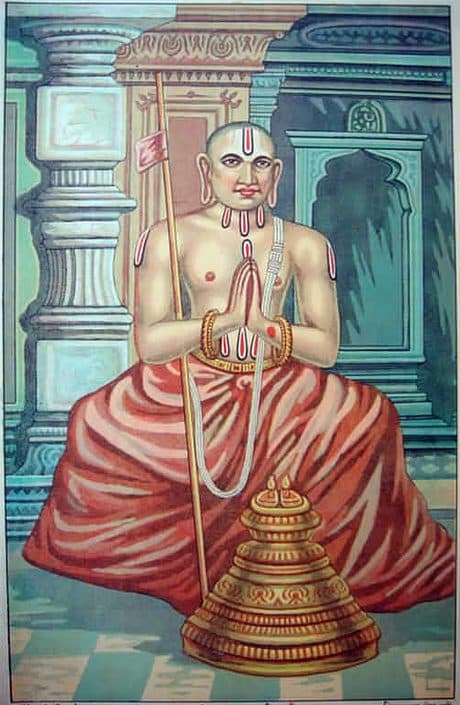
Rāmānuja · Viśiṣṭādvaita
EnglishOn verses 16.1–3
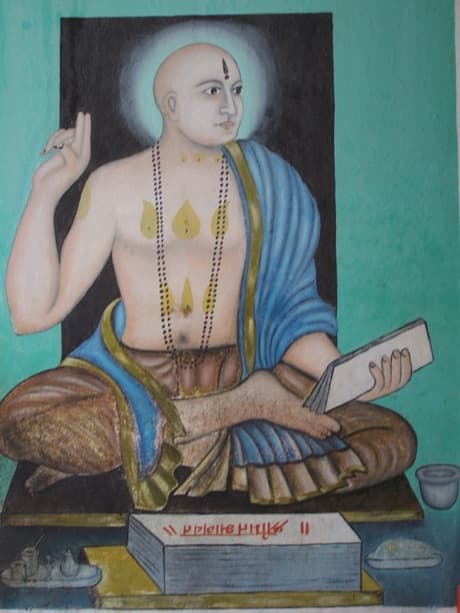
Madhvācārya · Dvaita
SanskritEnglishOn verses 16.1–16.3
“तपो ब्रह्मचर्यादि | ब्रह्मचर्यादिकं तपः | इति ह्यभिधानम् || पैशुनं परोपद्रवनिमित्तानां राजादेः कथनम् - परोपद्रवहेतूनां दोषाणां पैशुनं वचः | राजादेस्तु मदाद् भीतेरदृष्टिर्दर्प उच्यते | इति ह्यभिधानम् | लील्यं रागः - रागो लील्यं तथा रक्तिः | इत्यभिधानात् | अचापलम् स्थैर्यम् - चपलश्चञ्चलोऽस्थिरः | इत्यभिधानात् | क्षमा तु क्रोधाभावेन सहपकर्तुरनुप्रकृतिः | अक्रोधोऽदोष कृच्छ्रोक् क्षमावान् तु निगद्यते | इत्यभिधानात् ||” - By emphasizing austerity, adherence to Brahmic values etc. ‘Following the Brahmic values itself is austerity’, thus having been spoken. Animosity having been spoken as the intent to create injury to others, is the defect pointed among the rulers and others. “Intention to harm others is said to be the defect of animosity”, rulers and others being proud perceiving others without fear is said to gives rise to arrogance. Fickleness gives rise to affection. ‘Affection is attachment as well as fickleness’. Absence of unsteadiness is steadfastness, चपल (wavering), चञ्चल (unsteadiness) अस्थिरः (non-constant) are same, thus having been said. Forgiveness is refraining from harming through anger even those who have harmed. The one who has absence of anger even towards those who have caused harm is said to be forgiver.
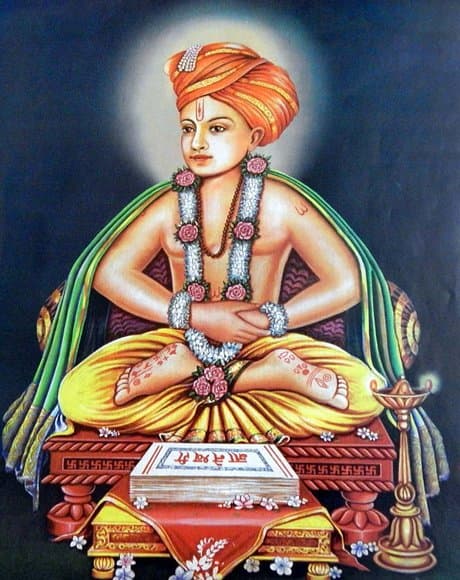
Jñāneśvar · Vārkarī
English2 'Non-violence, Veracity, Absence of wrath, Self-abandonment, Peacefulness, Absence of slander, Compassion towards beings, Non-covetousness, Gentleness, Modesty, Absence of fitfulness; (114)
To conduct oneself bodily, in speech and in mind, with the sole object of making the world happy is the form of Non-violence (अहिंसा). The bud of jasmine (flower) although pointed, is by nature soft; or the moonlight although lustrous is cool; there does not exist any medicine that stops ailment merely by looking at it or which does not even taste bitter. How can such a medicine (that does not exist at all) be made use of for comparison (with a non-violent person)? Water on account of its softness causes no hurt to an eye-ball while struggling (coming into contact) with it; (yet) the same (water) pierces through hard rocks. In that way the speech that proves as hard as iron in cutting through doubt should sound sweet to the ears, so much so that the ears should get mouths created on them (to taste the sweetness of speech): yet it should pierce through (point the way) to attain Supreme Brahman on the strength of its own truthfulness. In short it (speech) should not mislead anyone, even though (it is) pleasant and sweet, and should not also prick (wound the feelings of the hearers) even though true. The hunter's song is sweet to the ears; still it proves disastrous to the deer: or, although fire does the work of purification still it completely burns the thing; fie upon such outrageous, plain truth (which is devastating like fire). A speech although it is sweet to hear, yet its import cuts the heart to pieces; such a speech cannot be said to be eloquent, but must be compared to a demoness. A mother shows wrath at an undesirable and shameful act on the part of a child; yet she is tender even more than a flower in upbraiding the child. The speech should be like a mother's talk pleasing to hear and prove wholesome in its consequence, but should at the same time be free from any tinge of evil feelings (such as passion, etc.). Such a speech indeed is 'veracity' (सत्य). There could never shoot up any sprouts from a rock, even though it is watered copiously: or there could not be secured any butter by churning gruel (कांजी). The (worn out and discarded) skin of a serpent cannot raise its hood even though it is trampled under foot; or the sky cannot yield flowers even in the spring season: or even the sight of the beautiful face of Rambhā (a nymph of Heaven) cannot excite any passion in the mind of the sage Shuka: or the pouring of clarified butter over fire reduced to ashes cannot make the fire blaze forth: in that way the words, the mere utterance of which is bound to create passion and wrath in others, even if spoken to him in volumes do not create any sort of wrath (in him) just as a dead one cannot rise again even if you implore by prostrating before God Brahmadev: such a state of mind', said Lord Shriñivās (Krishna) 'is what is called 'absence of wrath' (अक्रोधत्व). The abandonment of 1) clay or 2) thread, or 3) seed, or 4) a wall, or 5) sleep, or 6) water, or 7) monsoon, or 8) riches, automatically brings about the abandonment respectively of 1) earthen pot, 2) fabric 3) tree, 4) painting, 5) dream, 6) ripples, 7) clouds, 8) and enjoyment of (sense) objects. In that way, dropping of all conceit for the body, sweeping out all worldly affairs, by men of intellect, is what is called 'self-abandonment' (त्याग)' said the Lord of Sacrifices: Getting inwardly impressed, lucky Arjuna said, 'Tell me more clearly the signs of peacefulness', at which God said, 'Very good: hear thou attentively. When the man of knowledge and knowledge itself both secure the object of knowledge, and then they themselves get extinguished, that state is called 'peacefulness' (शांति). The waters of deluge at the time of world dissolution, drown the entire universe and pervade through and through everywhere. There then remains no trace whatever of the distinctive terms, such as 'source', 'current', or 'sea,' there pervading only one uniform sheet of water everywhere: nay, there survives no one to know of that state (deluge). In that way with the attainment of the object of knowledge, the state of being the knower also ceases to exist: what then is left behind, Oh Kiriti, is the aspect of peacefulness. (Now hear what constitutes absence of slander). A good physician keenly desirous of curing a malady does not pause, before giving treatment, to find out if the patient belongs to his own (circle), or is a stranger; one seeing a cow stuck up in mud, feels greatly afflicted at (the sight of) her sufferings, without pausing to see if she is a milch or a barren animal; or a man, full of compassion, seeing someone getting drowned in water thinks (as his duty) only of going to his rescue and save his life, without inquiring if he is a Brahmin or a person of the lowest caste: or a true gentleman would never think of looking at a female, made stark naked by some wicked person in a dreadful forest—before she is furnished with and actually dressed up in a garment. In that way, they (men without slander) give away all theirs to those that are ignorant and full of faults and who through their (evil) destiny are entirely addicted to despicable acts, and communicating to them their benevolent disposition make them forget the miseries that rankled in their heart. They remove by their favourable glance the weak points in others, and then look at them as good people; or they worship the Gods and then meditate upon them; or sow the field and then go to look after the crop; or secure his (guest's) blessing by satisfying him, by their welcome to him, an uninvited guest. In that way they make up first the deficiency in others by their own merit and then look at them with favour; or they never cause pain to anyone by taunting, wounding deeply their heart, never entangle anyone in evil action nor address anybody in a way that reminds him of his weak points. The tendency of such a person is to raise up one who has fallen down and also to support him, but he never thinks of stabbing one in the heart (vital parts). It is never in his nature to treat one as insignificant indirectly, by treating another as important, Oh Kiriti. His vision never engages itself in searching out the faults of others. All these constitute 'absence of slander,' (अपैशुन्य) Oh Arjuna, and know further that this is a principal place of (taking) rest, on the road to liberation. Now about 'compassion towards beings' (दया भूतेषु). It is like the moon of the Full Moon day, who makes no distinction such as this is an insignificant or a great person or thing, while dispensing comforting coolness. Similarly, he never thinks of making any discrimination such as this is the best or the worst, while relieving the miseries of the distressed. Even a (common) thing like water, while spending itself out, keeps alive the straw that was withering. In that way, he feels so much compassion for the sufferings of others, that he considers (it) as a very small sacrifice, if he gives all he has in its entirety in securing relief to the sufferers. A flow of water coming across a ditch in its course, does not proceed a step further, before filling up the ditch first; in the same way he takes a step forward only after making one contented who is coming in front of him. A thorn piercing one's sole gives pain which is (immediately) impressed on his (mind) face; in that way his heart burns (feels acute pangs) at seeing other people suffering. He feels very happy himself at seeing others happy, just as the eyes get the benefit of cooling sensation as the result of cool and soothing treatment applied to the sole; nay his very living is entirely for (removing) the miseries of others, in the way, water is created in the world for the thirsty. Such a person, Oh Warrior, is compassion incarnate and I feel indebted to him lifelong. (Now hear about 'non-covetousness'—अलोलुपत्व). Although the blowing fully open on the part of a lotus follows the sunrise, yet, the Sun never even touches its fragrance; or even though the loveliness of the wood is infinitely enhanced at the advent of Vasant (Spring season), and although it stands face to face with it, yet the Spring season passes on without enjoying that loveliness; or even though Shri Lakshmi (Goddess of Wealth) accompanied by all the occult powers (महासिद्धि) approaches Lord Vishnu, still Lord Vishnu takes no count of her (but retains his tranquillity). In that way, even though the pleasures of this world as also in the Heavens become his willing servants, yet it never pleases his mind to enjoy them. In short, when the stage is reached in the being in which there remains no greedy desire for the enjoyment of any (sense) objects—that stage is what is known as 'non-covetousness'. (Now hear about 'gentleness'—मार्दव). (It is) what the honeycomb is to the bees or water to aquatic animals, or the sky (cavity) to the birds or the mother's fondling to an infant, or the gentle touch of Vasant (Spring season) to the soft Malaya (southern mountain) breeze, or the sight of dear ones to the eyes, or the (fond) look of a (female) tortoise to her young ones—in that way gentleness is universal softness (kindness) towards the entire class of beings; Camphor, so soft for touch, savoury to the mouth (tongue), fragrant to nostrils, clean and clear in appearance—that camphor, had it been harmless even if taken in any desired quantity, it would have served the purpose of a simile (for the gentleness). It would carry all the gross elements in its stomach (compass), or be contained even in a small atom, or can be spread out into a world-form (like the sky)—what more should I say! That which in this way conducts itself heart and soul with the entire world—that, I name as 'gentleness' (मार्दव). (Now I define modesty—हि-लाज). A king when defeated feels depressed and mortified; or one with a deep sense of self-respect (मानी) is dispirited (निस्तेज) when reduced to the lowest position; or a worthy ascetic (Sanyāsi) feels ashamed in mind at finding himself, by mistake, at the house of a low caste person; or, just as it is intolerable to see the shameful episode of a member of warrior class fleeing from battle-field; or a great Sati (a virtuous woman with the husband living) exposed to a call of widowhood; or a handsome person feels it a deathblow to contract the taint of white leprosy; and a respectable person has the same feeling when (he is) accused of a heinous act. In that way, he (one of modesty) feels it a great shame to live as a corpse in a three and a half cubit (high) body and to take birth and die again and again and to be a statue cast of blood and urine in a fatty mould in the form of a womb. In short, there is nothing more disgraceful than to get into such a body and assume name and form. The nausea felt for such a ghastly body is 'modesty' (लाज), and it is felt by clean (hearted) persons while the shameless consider it (body) as an abode of pleasure. (Now hear about 'absence of fitfulness')! The movements of a dancing doll are stopped with the snapping of the thread connecting it (with the thread-puller); in that way with the control of the life-wind (प्राणजये), come to a stand still the functions of the organs of action; or with the setting of the Sun ends the spreading out of his rays: such is the state of (sense-organs) with the restraint of the mind. In short, with the conquest of the mind and the lifewind all the ten senses are thus reduced to complete inactivity and this state is 'absence of fitfulness' (अचापत्यं).
Swami Ramsukhdas · Modern
English'Ahiṭṭā' (Non-violence)—Infliction of pain or injury, on any being through body, mind, speech or feeling etc., is violence. Non-injury, is known as non-violence. When a person, instead of having an inclination for the world, has an inclination only, for the Lord, he observes non-violence, in the true sense of the term. But, he who has desire and attachment, to enjoy worldly pleasure and also enjoys them, cannot be free from violence. He degrades himself, and also destroys sense-objects, which he enjoys. He, who enjoys limited worldly enjoyment, considering these as his own, does violence. It is also violence, to regard worldly objects which have been bestowed upon us, for the service of the world, as ours. But, a person, who uses available resources and persons, in the service of the world, without having any attachment for them, becomes free, from violence.
When a person enjoys worldly pleasure with a selfish motive, he inflicts pain, on those needy people who suffer shortage, because they feel miserable and agonised, when they notice the former's, enjoyment. Thus he commits violence. It is because of one's selfishness and enjoyment that he does not care, for others. But, the great souls (saints), who satisfy bare necessities of their life, in order to do, welfare to others, commit no sins or violence (Gītā 4/21), though a person may feel aggrieved, because of his mean mentality and evil nature, when he sees those great souls, satisfying their necessities.
A striver, who is devoted to God, never enjoys sense-objects and so he never, commits violence. He never, inflicts the least pain, on anyone through his body, mind or speech. He is, ever engrossed in the welfare of all beings, without causing pain to anyone even mentally. If anyone becomes a stumbling block, in his spiritual path, he is neither angry with him, nor does he think of doing evil, to him. He being sad invokes the Lord, to remove the stumbling block. But, he has neither anger, envy nor jealousy.
against the person who was as obstacle, to his spiritual progress. He becomes, rather more prompt and more alert, because of his inclination towards God. If he bears malice towards a person, who creates an obstacle, it is his obstinacy in his discipline and this shows, his lack of promptness in his practice.
In a striver, there are two traits—1-Promptness 2-Insistence. The former, proves that he has interest in spiritual practice, while the latter shows, that he is attached to spiritual practice. Due to relish, he comes to know of his deficiency, and he develops power to remove that deficiency, and makes an attempt to remove it. But, when there is attachment, there is possibility of a feeling of malice, against the person who creates, the hurdle. The fact is, that if anybody creates an obstacle, it is because of the striver's lack of interest. In case his relish is not lacking, nobody will create any hindrance, but he will become indifferent, to the striver, thinking that the latter is obstinate and so, let him do as he pleases.
As a flower, emits sweet fragrance automatically, so do spiritual molecules emanate from a striver and the environment is purified. His feelings and activities, naturally are helpful for the welfare of all beings. Thus, he perpetrates non-violence. But he who pollutes the environment, through evil feelings and bad conduct, commits, the evil of violence.
'Satyam'—Truth, consists in speaking agreeable words, honestly and faithfully, of what has been heard, seen or experienced, for the welfare of others, and by giving up selfishness and pride. A striver, remains true through his mind, speech and actions, because his only aim, is to realize the Truth namely God.
'Akrodhaḥ'—Excitement caused, in mind to do evil to others, is anger. This burning sensation of the mind finds outer expression in the form of a burning sensation, in the body. Freedom from anger, is 'Akrodha'. If there is no feeling to do evil to others tell them it is mere excitement not angers.
A striver, having God-realization as the aim of his life, is not angry, even with those who do him wrong. He thinks that he is receiving the fruit of his wrong actions, in the form of pain or unfavourable circumstances. Such persons become instrumental in purifying him, of his sins. They are, rather his benefactors, who are warning him to be careful, in future. They are just like a surgeon, who performs an operation on a diseased part, to make it healthy.
A striver, is not angry with those who exhaust his virtues, by praising and serving him. He thinks, that he does not deserve praise or service, and it is out of their good and virtuous nature, that they do so. His virtues are not exhausted, because he does not enjoy their praise or service etc., i.e., he does not derive pleasure, out of these.
‘Tyāgah’—Real renunciation, consists in having detachment, from the world. A striver, should have external, as well as internal, renunciation. He should renounce sinful, unjust and evil actions, and should not enjoy worldly pleasures. Besides, he should renounce desire for the perishable, worldly things and objects etc., from his heart. Renunciation of desire, from the heart, is superior to outward physical renunciation. Renunciation, leads to immediate peace (Gītā 12/12).
The desire for perishable, is the main obstacle to one’s spiritual progress. When a striver, instead of having the aim of gaining worldly pleasures and prosperity, has only an aim for God-realization, his desires go on disappearing. The more, he renounces desire, the more, he advances spiritually.
‘Śāntih’—Absence of distractions, which evolve out of attachment and aversion, is tranquillity or placidity. A striver, remains tranquil in unfavourable circumstances, also by thinking, that these destroy sins, and purify his inner sense of favourable circumstances eat away virtues and there is every possibility of degradation, rather than of progress.
If by chance, his tranquillity is disturbed, out of attachment or aversion, he at once becomes cautious, that being a striver, he should not be affected, either by attachment or aversion. Thus tranquillity, is regained and with passage of time, it is fixed.
'Apaiśunam'—Exposing the faults of others, is 'Paiśuna' and total absence of this tendency is 'Apaiśuna'. When a man aims at God-realization, he does not expose, the faults of others. The more and more, a striver advances spiritually the more, his feelings of malice and backbiting, are lessened and pure feelings develop. Feelings of pride, do not haunt him. He does not regard anyone inferior to him, because he knows that no one has any affinity with Matter (Nature), the affinity is only, assumed. So, how can he expose the faults, of anyone?
A striver, following the Discipline of Devotion, beholds the Lord, pervading everywhere, a striver following the Discipline of Knowledge, remains established in the self i.e., beholds the self alone everywhere while a striver, following the Discipline of Action sees the served everywhere. So, how can a striver, find fault with others.
'Dayā bhūteṣu'—The urge to relieve a being of his suffering, is 'Dayā' (compassion). The Lord, saints, strivers and common men, all possess this urge for compassion, but it is of different types.
(1) The Lord's compassion:—The Lord showers His compassions, on all beings, in order to, purify them. The Lord's compassion is of two types—(a) To create unfavourable circumstances, to purge them of their sins is 'Kṛpā' (b) to create favourable circumstances, is 'Dayā.'
(2) The saints' compassion:—The saints are sad, and happy, with the sadness and happiness, of other beings. Their mercy, is pure and holy. In fact, they are neither grieved, through their own suffering nor through the sufferings, of others. They behold the Lord's grace, in their own unfavourable circumstances. They take upon themselves the sufferings of others, in order to make
them happy, Indra, the king of gods, beheaded the innocent sage Dadhīci, out of anger. But, when Indra demanded his bones for his own safety, the latter sacrificed his life, and gave his bones, to the former. Thus, they sacrifice their life, in order to do good, to others even though, other persons do wrong to them. Similarly, Karṇa offered his skin and Śibi offered his flesh, for the welfare of others, like the clouds, which offer their life for the good of others.
(3) Strivers' compassion:— A striver, tries his best to remove the sufferings of other beings. His heart melts, when he sees the sufferings of others. He has a feeling, that all should be liberated, and all should get bliss, no one should suffer. His mind, is filled with these sentiments. He also makes efforts, for the same. But he does not feel elevated and is not proud in anyway, by doing so. When he beholds people, performing sinful actions, he instead of being angry, with them, takes pity upon them, and tries his best to save them, from such sins. He also prays to God, to free them from their sins. He thinks and acts, for their welfare. By finding himself weak, he invokes the Lord, 'O Lord, let them be relieved of their sufferings, and be, Your devotees.'
(4) Compassion of common men:—A common man, pities other persons with feelings that he is very kind and good. He considers himself superior, to others and expects to receive honour and praise etc., as a reward for his compassion. He shows mercy, with a feeling of vanity. In that mercy, the element of mercy is good, while the feeling of pride, is an impurity.
There are other common men, who pity only those who belong to their family, sect or religion etc. This sort of mercy, is more impure because of feelings of mineness and partiality. Those who pity others, for their selfish motive, are even more inferior to them.
Thus, compassion of common people, is impure.
'Aloluptvam'—The attraction of senses, towards the objects
of senses, when they come in contact, or when one sees other beings enjoying them, is 'Loluptvam' (Covetousness), and the total absence of this sort of covetousness, is 'Aloluptvam' (freedom from covetousness).
The means, that to be free from covetousness:
(i) A striver, should neither enjoy worldly pleasures nor be proud, that he has controlled his senses.
(ii) He should always think, that his aim is God-realization. If sometime he feels any attraction or excitement, he should, invoke the Lord, 'O Lord, save me, protect me.'
(iii) He should not watch the lustful actions of living beings. However if they come to his sight, he should think that they are gateways to hell and eighty-four lac forms, of lives, but he has to be free from the cycle of birth and death, and, to attain salvation. Such thinking is necessary to guard him. It should be kept intact.
'Mārdavam'—Lack of sternness, viz., mildness of mind, even for those, who have feelings of enmity towards him, and who trouble him is 'Mārdavam'.*
A striver, is mild and gentle, even toward the evil-doers. He tries his best to be mild, in feelings and speech, for all beings. Sometimes strivers, following different paths, as of Action, Knowledge and Devotion, may not appear equally mild, in their dealings, but all of them are very mild, at heart.
'Hrīḥ'—'Hrīḥ', is shame or hesitation, felt in the performance of actions, contrary to ordinance of scriptures and society, either in loneliness or in company. When a striver, changes his egoism and accepts that he is a devotee, or a striver whose aim is God-realization, he hesitates, in performing forbidden actions.
* 'Ārjavam' is used when there is prominence of the body while 'Mārdavam' is used when there is prominence of the mind.
'Acāpalam'—Absence of fickleness is 'Acāpalam'. If anyone is fickle, it does not mean, that the work is done quickly by him. When a person, of the mode of goodness, performs an action with steadiness, and patience, by giving up fickleness, it is performed, properly and promptly. When work is done well, he becomes free from anxieties, and worries. In the absence of fickleness, there attaches no evil of procrastination. As he has no desire, besides performing his duty, his mind does not get bewildered and volatile (Gītā 18/26).
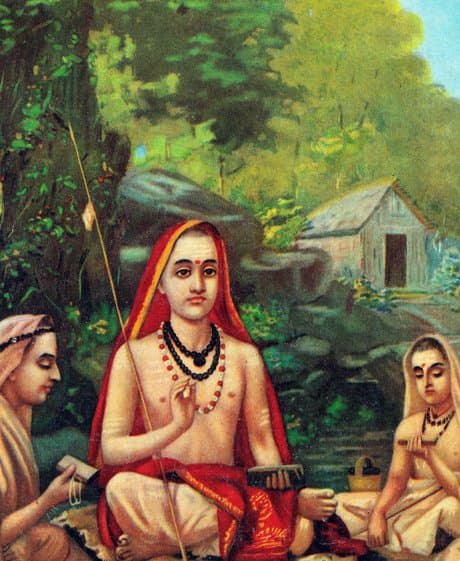
Ādi Śaṅkarācārya · Advaita
Sanskritअहिंसा अहिंसनं प्राणिनां पीडावर्जनम् । सत्यं अप्रियानृतवर्जितं यथाभूतार्थवचनम् । अक्रोधः परैः आक्रुष्टस्य अभिहतस्य वा प्राप्तस्य क्रोधस्य उपशमनम् । त्यागः सन्न्यासः, पूर्वं दानस्य उक्तत्वात् । शान्तिः अन्तःकरणस्य उपशमः । अपैशुनं अपिशुनता; परस्मै पररन्ध्रप्रकटीकरणं पैशुनम्, तदभावः अपैशुनम् । दया कृपा भूतेषु दुःखितेषु । अलोलुप्त्वं इन्द्रियाणां विषयसन्निधौ अविक्रिया । मार्दवं मृदुता अक्रौर्यम् । ह्रीः लज्जा । अचापलं असति प्रयोजने वाक्पाणिपादादीनां अव्यापारयितृत्वम् ॥ किञ्च --
Ādi Śaṅkarācārya · Advaita
Hindiअहिंसा—किसी भी प्राणीको कष्ट न देना, सत्य— अप्रियता और असत्यसे रहित यथार्थ वचन।
अक्रोध—दूसरोंके द्वारा गाली दी जाने या ताड़ना दी जानेपर उत्पन्न हुए क्रोधको शान्त कर लेना। त्याग—संन्यास (दान नहीं) क्योंकि दान पहले कहा जा चुका है।
शान्ति—अन्तःकरणका संकल्परहित होना, अपैशुन—अपिशुनता; किसी दूसरेके सामने पराये छिद्रोंको प्रकट करना पिशुनता (चुगली) है, उसका न होना अपिशुनता है।
भूतोंपर दया—दुखी प्राणियोंपर कृपा करना, अलोलुपता—विषयोंके साथ संयोग होनेपर भी इन्द्रियोंमें विकार न होना, मार्दव—कोमलता अर्थात् अक्रूरता।
ही—लज्जा और अचापलता—बिना प्रयोजन वाणी, हाथ, पैर आदिकी व्यर्थ क्रियाओंका न करना
Jñāneśvar · Vārkarī
Marathiआणि जगाचिया सुखोद्देशें । शरीरवाचामानसें । राहाटणें तें अहिंसे । रूप जाण ॥ ११४ ॥ आतां तीख होऊनि मवाळ । जैसें जातीचें मुकुळ । कां तेज परी शीतळ । शशांकाचें ॥ ११५ ॥ शके दावितांचि रोग फेडूं । आणि जिभे तरी नव्हे कडु । ते वोखदु नाहीं मा घडू । उपमा कैंची ॥ ११६ ॥ तरी मऊपणें बुबुळे । झगडतांही परी नाडळे । एऱ्हवीं फोडी कोंराळें । पाणी जैसें ॥ ११७ ॥ तैसें तोडावया संदेह । तीख जैसें कां लोह । श्राव्यत्वें तरी माधुर्य । पायीं घालीं ॥ ११८ ॥ ऐकों ठातां कौतुकें । कानातें निघती मुखें । जें साचारिवेचेनि बिकें । ब्रह्मही भेदी ॥ ११९ ॥ किंबहुना प्रियपणे । कोणातेंही झक{ऊं} नेणे । यथार्थ तरी खुपणें । नाहीं कवणा ॥ १२० ॥ एऱ्हवीं गोरी कीर काना गोड । परी साचाचा पाखाळीं कीड । आगीचें करणें उघड । परी जळों तें साच ॥ १२१ ॥ कानीं लागतां महूर । अर्थें विभांडी जिव्हार । तें वाचा नव्हे सुंदर । लांवचि पां ॥ १२२ ॥ परी अहितीं कोपोनि सोप । लालनीं मऊ जैसें पुष्प । तिये मातेचें स्वरूप । जैसें कां होय ॥ १२३ ॥ तैसें श्रवणसुख चतुर । परीणमोनि साचार । बोलणें जें अविकार । तें सत्य येथें ॥ १२४ ॥ आतां घालितांही पाणी । पाषाणीं न निघे आणी । कां मथिलिया लोणी । कांजी नेदी ॥ १२५ ॥ त्वचा पायें शिरीं । हालेयाही फडे न करी । वसंतींही अंबरीं । न होती फुलें ॥ १२६ ॥ नाना रंभेचेनिही रूपें । शुकीं नुठिजेचि कंदर्पें । कां भस्मीं वन्हि न उद्दीपे । घृतेंही जेवीं ॥ १२७ ॥ तेवींचि कुमारु क्रोधें भरे । तैसिया मंत्राचीं बीजाक्षरें । तियें निमित्तेंही अपारें । मीनलिया ॥ १२८ ॥ परी धातयाही पायां पडतां । नुठी गतायु पंडुसुता । तैसी नुपजे उपजवितां । क्रोधोर्मी गा ॥ १२९ ॥ अक्रोधत्व ऐसें । नांव तें ये दशे । जाण ऐसें श्रीनिवासें । म्हणितलें तया ॥ १३० ॥ आतां मृत्तिकात्यागें घटु । तंतुत्यागें पटु । त्यजिजे जेवीं वटु । बीजत्यागें ॥ १३१ ॥ कां त्यजुनि भिंतिमात्र । त्यजिजे आघवेंचि चित्र । कां निद्रात्यागें विचित्र । स्वप्नजाळ ॥ १३२ ॥ नाना जळत्यागें तरंग । वर्षात्यागें मेघ । त्यजिजती जैसे भोग । धनत्यागें ॥ १३३ ॥ तेवीं बुद्धिमंतीं देहीं । अहंता सांडूनि पाहीं । सांडिजे अशेषही । संसारजात ॥ १३४ ॥ तया नांव त्यागु । म्हणे तो यज्ञांगु । हे मानूनि सुभगु । पार्थु पुसे ॥ १३५ ॥ आतां शांतीचें लिंग । तें व्यक्त मज सांग । देवो म्हणती चांग । अवधान देईं ॥ १३६ ॥ तरी गिळोनि ज्ञेयातें । ज्ञाता ज्ञानही माघौतें । हारपें निरुतें । ते शांति पैं गा ॥ १३७ ॥ जैसा प्रळयांबूचा उभडु । बुडवूनि विश्वाचा पवाडु । होय आपणपें निबिडु । आपणचि ॥ १३८ ॥ मग उगम ओघ सिंधु । हा नुरेचि व्यवहारभेदु । परी जलैक्याचा बोधु । तोही कवणा ? ॥ १३९ ॥ तैसी ज्ञेया देतां मिठी । ज्ञातृत्वही पडे पोटीं । मग उरे तेंचि किरीटी । शांतीचें रूप ॥ १४० ॥ आतां कदर्थवीत व्याधी । बळीकरणाचिया आधीं । आपपरु न शोधी । सद्वैद्यु जैसा ॥ १४१ ॥ का चिखलीं रुतली गाये । धडभाकड न पाहे । जो तियेचिया ग्लानी होये । कालाभुला ॥ १४२ ॥ नाना बुडतयातें सकरुणु । न पुसे अंत्यजु कां ब्राह्मणु । काढूनि राखे प्राणु । हेंचि जाणे ॥ १४३ ॥ कीं माय वनीं पापियें । उघडी केली विपायें । ते नेसविल्यावीण न पाहे । शिष्टु जैसा ॥ १४४ ॥ तैसे अज्ञानप्रमादादिकीं । कां प्राक्तनहीन सदोखीं । निंदत्वाच्या सर्वविखीं । खिळिले जे ॥ १४५ ॥ तयां आंगीक आपुलें । देऊनियां भलें । विसरविजती सलें । सलतीं तियें ॥ १४६ ॥ अगा पुढिलाचा दोखु । करूनि आपुलिये दिठी चोखु । मग घापे अवलोकु । तयावरी ॥ १४७ ॥ जैसा पुजूनि देवो पाहिजे । पेरूनि शेता जाइजे । तोषौनि प्रसादु घेइजे । अतिथीचा ॥ १४८ ॥ तैसें आपुलेनि गुणें । पुढिलाचें उणें । फेडुनियां पाहणें । तयाकडे ॥ १४९ ॥ वांचूनि न विंधिजें वर्मीं । नातुडविजे अकर्मीं । न बोलविजे नामीं । सदोषीं तिहीं ॥ १५० ॥ वरी कोणे एकें उपायें । पडिलें तें उभें होये । तेंच कीजे परी घाये । नेदावे वर्मीं ॥ १५१ ॥ पैं उत्तमाचियासाठीं । नीच मानिजे किरीटी । हें वांचोनि दिठी । दोषु न घेपे ॥ १५२ ॥ अगा अपैशून्याचें लक्षण । अर्जुना हें फुडें जाण । मोक्षमार्गींचें सुखासन । मुख्य हें गा ॥ १५३ ॥ आतां दया ते ऐसी । पूर्णचंद्रिका जैसी । निववितां न कडसी । सानें थोर ॥ १५४ ॥ तैसें दुःखिताचें शिणणें । हिरतां सकणवपणें । उत्तमाधम नेणें । विवंचूं गा ॥ १५५ ॥ पैं जगीं जीवनासारिखें । वस्तु अंगवरी उपखें । परी जातें जीवित राखे । तृणाचेंहि ॥ १५६ ॥ तैसें पुढिलाचेनि तापें । कळवळलिये कृपें । सर्वस्वेंसीं दिधलेंहि आपणपें । थोडेंचि गमे ॥ १५७ ॥ निम्न भरलियाविणें । पाणी ढळोंचि नेणे । तेवीं श्रांता तोषौनि जाणें । सामोरें पां ॥ १५८ ॥ पैं पायीं कांटा नेहटे । तंव व्यथा जीवीं उमटे । तैसा पोळे संकटें । पुढिलांचेनि ॥ १५९ ॥ कां पावो शीतळता लाहे । कीं ते डोळ्याचिलागीं होये । तैसा परसुखें जाये । सुखावतु ॥ १६० ॥ किंबहुना तृषितालागीं । पाणी आरायिलें असे जगीं । तैसें दुःखितांचे सेलभागीं । जिणें जयाचें ॥ १६१ ॥ तो पुरुषु वीरराया । मूर्तिमंत जाण दया । मी उदयजतांचि तया । ऋणिया लाभें ॥ १६२ ॥ आतां सूर्यासि जीवें । अनुसरलिया राजीवें । परी तें तो न शिवे । सौरभ्य जैसें ॥ १६३ ॥ कां वसंताचिया वाहाणीं । आलिया वनश्रीच्या अक्षौहिणी । ते न करीतुचि घेणी । निगाला तो ॥ १६४ ॥ हें असो महासिद्धीसी । लक्ष्मीही आलिया पाशीं । परी महाविष्णु जैसी । न गणीच ते ॥ १६५ ॥ तैसे ऐहिकींचे कां स्वर्गींचे । भोग पाईक जालिया इच्छेचे । परी भोगावे हें न रुचे । मनामाजीं ॥ १६६ ॥ बहुवें काय कौतुकीं । जीव नोहे विषयाभिलाखी । अलोलुप्त्वदशा ठाउकी । जाण ते हे ॥ १६७ ॥ आतां माशियां जैसें मोहळ । जळचरां जेवीं जळ । कां पक्षियां अंतराळ । मोकळें हें ॥ १६८ ॥ नातरी बाळकोद्देशें । मातेचें स्नेह जैसें । कां वसंतीच्या स्पर्शें । मऊ मलयानिळु ॥ १६९ ॥ डोळ्यां प्रियाची भेटी । कां पिलियां कूर्मीची दिठी । तैसीं भूतमात्रीं राहटी । मवाळ ते ॥ १७० ॥ स्पर्शें अतिमृदु । मुखीं घेतां सुस्वादु । घ्राणासि सुगंधु । उजाळु आंगें ॥ १७१ ॥ तो आवडे तेवढा घेतां । विरुद्ध जरी न होतां । तरी उपमे येता । कापूर कीं ॥ १७२ ॥ परी महाभूतें पोटीं वाहे । तेवींचि परमाणूमाजीं सामाये । या विश्वानुसार होये । गगन जैसें ॥ १७३ ॥ काय सांगों ऐसें जिणें । जें जगाचेनि जीवें प्राणें । तया नांव म्हणें । मार्दव मी ॥ १७४ ॥ आतां पराजयें राजा । जैसा कदर्थिजे लाजा । कां मानिया निस्तेजा । निकृष्टास्तव ॥ १७५ ॥ नाना चांडाळ मंदिराशीं । अवचटें आलिया संन्याशी । मग लाज होय जैसी । उत्तमा तया ॥ १७६ ॥ क्षत्रिया रणीं पळोनि जाणें । तें कोण साहे लाजिरवाणें । कां वैधव्यें पाचारणें । महासतियेतें ॥ १७७ ॥ रूपसा उदयलें कुष्ट । संभावितां कुटीचें बोट । तया लाजा प्राणसंकट । होय जैसें ॥ १७८ ॥ तैसें औटहातपणें । जें शव होऊनि जिणें । उपजों उपजों मरणें । नावानावा ॥ १७९ ॥ तियें गर्भमेदमुसें । रक्तमूत्ररसें । वोंतीव होऊनि असे । तें लाजिरवाणें ॥ १८० ॥ हें बहु असो देहपणें । नामरूपासि येणें । नाहीं गा लाजिरवाणें । तयाहूनी ॥ १८१ ॥ ऐसैसिया अवकळा । घेपे शरीराचा कंटाळा । ते लाज पैं निर्मळा । निसुगा गोड ॥ १८२ ॥ आतां सूत्रतंतु तुटलिया । चेष्टाचि ठाके सायखडिया । तैसें प्राणजयें कर्मेंद्रियां । खुंटे गती ॥ १८३ ॥ कीं मावळलिया दिनकरु । सरे किरणांचा प्रसरु । तैसा मनोजयें प्रकारु । ज्ञानेंद्रियांचा ॥ १८४ ॥ एवं मनपवननियमें । होती दाही इंद्रियें अक्षमें । तें अचापल्य वर्में । येणें होय ॥ १८५ ॥
Jñāneśvar · Vārkarī
Hindi(16.114) जगत् के सुख के हेतु शरीर से, वाणी से और अन्तःकरण से चेष्टा करना अहिंसा का रूप जाना।
(16.115) अब, जो तीक्ष्ण ही परन्तु मृदु हो, जैसे कोई चमेली की खिली हुई कली अथवा चन्द्रमा का शीतल तेज,
(16.116) दिखाने के साथ ही जो रोग का निवारण करती है और जीभ को भी जो कड़वी नहीं लगती वह औषधि ही नहीं, तो फिर उसे उपमा क्या दी जा सकती है? (16.117) परन्तु जैसे पानी ऐसा मृदु रहता है कि कमलदल उसमें हिलोरते हैं तो भी नहीं चुभता और वैसे तो पहाड़ के भी फोड़ डालता है
(16.118) वैसे ही जो सन्देह का नाश करने में लोहे के समान तीक्ष्ण होता है, परन्तु श्रव्यगुण में जो मधुरता का भी लजाता है,
(16.119) जिसे कुतूहल से सुनते ही कानों को वाणी-सी फूटती है और यथार्थता के बल से जो ब्रह्म का भी भेद करता है,
(16.120) बहुत क्या कहें, प्रिय होने के कारण जो किसी की प्रतारणा नहीं कर सकता और यथार्थ होता है तथापि जो किसी का मर्मभेद नहीं करता,
(16.121) (अन्यथा बहेलिये का गायन भी सचमुच मधुर रहता है परन्तु वास्तव में देखे तो वह घातक होता है, अग्नि भी सब प्रत्यक्ष करती है परन्तु ऐसे सत्य का नाश हो!,
(16.122) श्रवण में मधुर हो पर अर्थ में जो हृदय के टुकड़े करे वह वाणी नहीं राक्षसी है
(16.123) परन्तु जैसे अपराध के समय माता का स्वरूप ऊपर से क्रोधयुक्त और लालन करने में पुष्प के समान कामल होता है, (16.124) वैसे ही जो सुनने में सुखदायक होता है और परिणाम में यथार्थ होता है उस विकार-रहित भाषण का सत्य कहते हैं।
(16.125) अब, पत्थर पर जल सींचते ही रहो तथापि जैसे उसमें अंकुर नहीं फूटते, अथवा काँजी का कितना भी मन्थन करो तथापि इसमें से जैसे मक्खन नहीं निकलता,
(16.126) साँप की केंचुली के सिर पर लात मारने से भी जैसे वह फन नहीं फैलाती, अथवा वसन्तकाल भी हो तथापि जैसे आकाश में फूल नहीं लगते,
(16.127) अथवा रम्भा के स्वरूप का देख कर भी जैसे शुक्राचार्य के मन में काम नहीं उत्पन्न हुआ, अथवा राख में घी छोड़ने से भी जैसे अग्नि प्रदीप्त नहीं होती,
(16.128) वैसे ही जिन शब्दों से बालक भी क्रोधयुक्त हो जाय ऐसे शब्दों के बीजाक्षर भी यदि क्रोध लाने के हेतु इकट्ठे किये जायें
(16.129) तथापि जैसे ब्रह्मदेव के पाँव पड़ने से भी मृत मनुष्य सजीव नहीं होता वैसे ही जिसमें यत्न करने से भी क्रोध की लहर न उठें,
(16.130) ऐसी अवस्था को अक्रोधत्व जानो। इस प्रकार श्रीकृष्ण ने अर्जुन से वर्णन किया। (16.131) अब, मृत्तिका का त्याग करने से जैसे घट का भी त्याग हो चुका, अथवा तन्तु के त्याग से वस्त्र का या बीज के त्याग से वटवृक्ष का भी त्याग हो चुका,
(16.132) अथवा जैसे भीत का त्याग करने से उस पर लिखे हुए सम्पूर्ण चित्रों का भी त्याग हो चुका अथवा निद्रा के त्याग से जैसे नाना प्रकार के स्वप्नजाल का भी त्याग हो चुका,
(16.133) अथवा जल के त्याग से जैसे उसकी तरंगों का, वर्षा के त्याग से जैसे मेघों का, अथवा धन के त्याग से जैसे उपभोगों का भी त्याग हो चुकता है,
(16.134) वैसे ही बुद्धिमानों को देहात्मबुद्धि का त्याग कर सम्पूर्ण सांसारिक विषयों का त्याग कर देना चाहिए।
(16.135) श्रीकृष्ण कहते हैं कि इसका नाम त्याग है। यह सुन कर भाग्यवान अर्जुन ने कहा ठीक है,
(16.136) अब मुझे शान्ति का लक्षण स्पष्ट कर बताइए तब श्रीकृष्ण ने कहा बहुत अच्छा, सुनो।
(16.137) ज्ञेय और ज्ञाता को विलीन कर जब वास्तव में ज्ञान भी विलीन हो जाता है उस स्थिति को शान्ति कहते हैं। (16.138) प्रलयकाल का जल जैसे जगत् के विस्तार को डुबा कर, केवल आप ही घना भरा रह जाता है
(16.139) और फिर व्यवहार में यह भेद नहीं रहता कि यह उसका उद्गम है, यह प्रवाह है या यह समुद्र है; (बल्कि यह जाननेवाला भी कौन बच रहता है कि यह सब जल ही है)
(16.140) वैसे ही ज्ञेय से आलिंगन देते ही ज्ञातृत्व ही पेट में समा जाय और फिर जो बच रहे वही हे किरीटी! शान्ति का रूप है।
(16.141) अब, उत्तम वैद्य जैसे पीड़ाकारक रोग के निवारण करने के पूर्व यह नहीं सोचता कि यह अपना है और यह पराया है,
(16.142) अथवा गाय के कीचड़ में फँसी हुई देख कर उसके दुःख से व्याकुल होनेवाला मनुष्य जैसे यह नहीं सोचता कि यह दुधैल है या नहीं,
(16.143) अथवा डूबते हुए का निकालनेहारा कोई सकरुण मनुष्य जैसे उससे यह नहीं पूछता कि तू ब्राह्मण है या शूद्र बल्कि वह यही चाहता है कि इसे निकाल कर इसके प्राण बचाऊँ,
(16.144) अथवा किसी पापी ने दुर्भाग्य से किसी पतिव्रता को नग्न किया हो, तथापि जैसे शिष्ट पुरुष उसे वस्त्र पहनाये बिना नहीं देखता (16.145) वैसे अज्ञान, प्रमाद, इत्यादि दोषों के कारण या पूर्व-जन्मकृत दोषों के कारण जो सब निन्द्य विषयों में डूबे हुए रहते हैं
(16.146) उन्हें उत्तम रीति से सहाय कर उनके सलते हुए दुःख भुलवाना,
(16.147) दूसरों के दोषों का अपनी दृष्टि से शुद्ध कर फिर उन पर कृपा करना,
(16.148) जैसे पूजा कर फिर देव का दर्शन लेना, बीज बो कर फिर खेत में जाना, अतिथि को सन्तुष्ट कर प्रसाद ग्रहण करना है,
(16.149) वैसे ही अपने गुणों से दूसरों की न्यूनता दूर कर फिर उनकी ओर दृष्टि देना,
(16.150) कभी भी उनका मर्मभेद न करना, उनके दुष्कर्म प्रकट न करना, उन्हें नाम न रखना,
(16.151) वरन् जिस उपाय से वे पतित जन फिर से उठ खड़े हों वही करना, पर उनके मर्मों पर कभी घाव न करना,
(16.152) है किरीटी! नीच को भी उत्तम की बराबरी का समझने के अतिरिक्त दृष्टि में किसी दोष का न होना, (16.153) यह सब अपैशुन्य का स्पष्ट लक्षण है। यह मोक्ष-मार्ग की एक मुख्य पालकी है।
(16.154) अब, दया ऐसी होती है। जैसे पूर्ण चन्द्र की चाँदनी शीतलता देने के विषय में यह नहीं देखती कि यह छोटा है या यह बड़ा है
(16.155) वैसे ही जो सदयता से दुखियों के दुःख हरने के विषय में यह विवेचना नहीं करता कि यह उत्तम मनुष्य है या अधम,
(16.156) संसार में जल जैसे आप शरीर से नष्ट हो जाता है पर तृण के भी छूटते हुए प्राणों की रक्षा करता है,
(16.157) वैसे ही जो दूसरों के दुःख से सदयता से व्याकुल हो निज के प्राण देना भी अल्प समझता है,
(16.158) गढ़ा भरे बिना पानी जैसे बाहर नहीं बहता वैसे ही जो थके हुए मनुष्य का सन्तोष किये बिना आगे नहीं बढ़ता,
(16.159) पाँव में काँटा चुभे तो जैसी व्यथा होता है, वैसा जो दूसरों के संकटों से दुःखी होता है,
(16.160) अथवा कोई शीतल पदार्थ पाँव में लगने से जैसे आँखों को तरावट पहुँचती है. वैसे ही जो दूसरों के सुख से सुखी होता रहता है, (16.161) बहुत क्या कहें, संसार में जल जैसे तृषितों के लिए ही भरा रक्खा है, वैसे ही दुःखितों के हितार्थ ही जिसका जीवन है,
(16.162) उस पुरुष को हे वीरराज मूर्तिमान् दया जानो। उसका जन्म होते ही मैं उसका ऋणी हो उसे प्राप्त हो जाता हूँ।
(16.163) अब, कमल का फूल अन्तःकरण-पूर्वक सूर्य का अनुसरण करता है पर सूर्य जैसे उसकी सुगन्ध में हाथ नहीं लगाता,
(16.164) अथवा वसन्त के पीछे-पीछे वन-शोभा की अक्षौहिणी ही प्राप्त होती है पर वह जैसे उसका स्वीकार न करता चला जाता है,
(16.165) यह रहने दो, महासिद्धि-सहित लक्ष्मी भी प्राप्त हो तथापि महाविष्णु के निकट उसकी कुछ भी गिनती नहीं,
(16.166) वैसे ही ऐहिक वा पारलौकिक भोग अपनी इच्छा के सेवक बन रहें तथापि उनका उपभोग लेने का विचार भी मन में न लाना चाहिए।
(16.167) बहुत क्या, जिसमें कुतूहल से भी अन्तःकरण में विषय की अभिलाषा न हो ऐसी दशा का अलोलुपता जानो।
(16.168) अब, मधुमक्खी का जैसा उसका छत्ता, जलचरों को जैसा जल, अथवा पक्षियों को जैसा यह प्रतिबन्ध-रहित आकाश, (16.169) अथवा बालक पर जैसा माता का स्नेह अथवा वसन्त के स्पर्श से युक्त जैसी मलयगिरि की कोमल वायु,
(16.170) नेत्रों को जैसे प्रियजन की भेंट, अथवा कछुई के बच्चों पर जैसी उसकी दृष्टि, वैसी ही कोमल रीति से सब भूतमात्र में व्यापार करना,
(16.171) – स्पर्श में अति मृदु, खाने में स्वादयुक्त, सूँघने में सुगन्धित और शरीर से जो उज्ज्वल है
(16.172) ऐसा कपूर बहुतेरा खाने से यदि हानिकारक न होता तो उक्त कोमलता को कपूर की उपमा दी जा सकती थी,
(16.173) पर गगन जैसे महाभूतों को निज में लिये है तथा परमाणु में भी समाया हुआ है एवं विश्व के ही स्वरूप का है
(16.174) वैसे ही, बहुत क्या कहूँ, जगत् के जी और प्राणों के अनुसार अपना जीवन रखना ही — मार्दव है।
(16.175) अब, हार जाने से जैसे राजा लज्जा से दुःखी होता है, अथवा नीच स्थिति में जाने से जैसे मानी मनुष्य तेजहीन हो जाता है,
(16.176) अथवा अकस्मात् चाण्डाल के घर आ जाने से जैसे संन्यासी का अत्यन्त लज्जा उत्पन्न होती है, (16.177) रण में से क्षत्रियों के भाग जाने की लज्जास्पद बात जैसे कौन सह सकता है? अथवा पतिव्रता का जैसे वैधव्य निमन्त्रण दें,
(16.178) रूपवती को कोढ़ हो जाय, किसी माननीय सज्जन को कोई निन्दास्पद दोष लगाया जाय तो जैसे उसके प्राणों पर संकट बीतता है,
(16.179) वैसे ही इस साढ़े तीन हाथ के शरीर में शव के समान जीते रहना तथा बारबार उत्पन्न हो-हो कर मरना,
(16.180) गर्भ के रक्त या मूत्र के रस की मूर्ति बन कर रहना,
(16.181) बहुत रहने दो, देह धारण कर नामरूप का स्वीकार करना आदि बातों से अधिक और कुछ लज्जास्पद नहीं है,
(16.182) अतः ऐसे-ऐसे सम्पूर्ण दोषों के कारण शरीर से उकता जाना ही है लज्जा है जो साधुओं को हुआ करती है। निर्लज्जों का उपर्युक्त बातें प्रिय होती हैं।
(16.183) अब, डोरी टूटने से जैसे कठपुतलियों का नाचना बन्द हो जाता है वैसे ही प्राणायाम से कर्मेन्द्रियों का व्यवहार बन्द हो जाता है, (16.184) अथवा सूर्य के अस्त होने के कारण जैसे उसकी किरणों का विस्तार भी बन्द हो जाता है, वैसा ही हाल मनोजय करने से बुद्धि और इन्द्रियों का होता है;
(16.185) एवं मन और प्राणों का संयमन करने से दसों इन्द्रियों का पंगु हो जाना उक्त लक्षण के कारण अचापलय कहलाता है।
Sri Udiya Baba · Modern
HindiOn verses 16.1–16.3
संगति— पन्द्रहवें अध्याय के अन्त में सिद्धान्त बतलाया और कहा कि ऐसा जानकर तू कृतकृत्य हो जा। अब इस अध्याय में कृतकृत्य होने का उपाय बतलाते हैं। हमारे आचार्यों का नियम है कि पहले सिद्धान्त (फल) बताकर फिर साधन का वर्णन करते हैं। व्यवहार में भी यही बात देखने में आती है ठेकेदार लाभ का अनुमान लगाकर ही कार्य आरम्भ करते हैं। पन्द्रहवें अध्याय में पुरुषोत्तम का स्वरूप बतलाया गया। इस अध्याय में पहले तीन श्लोकों में दैवी सम्पत्ति का वर्णन किया जाता है, क्योंकि चाहे कर्मकाण्डी हो या जिज्ञासु, दैवी सम्पत्ति के बिना कोई भी पुरुषोत्तम की प्राप्ति नहीं कर सकता।
भावार्थ— निर्भयता, अन्तःकरण की शुद्धि, ज्ञानयोग में स्थिति, दान, इन्द्रियनिग्रह, यज्ञ, स्वाध्याय, तप, सरलता, अहिंसा, सत्य, अक्रोध, त्याग, शान्ति, चुगली न करना, प्राणियों पर दया, अलोलुपता, मृदुता, लज्जा, अचंचलता, तेज, क्षमा, धैर्य, पवित्रता, अद्रोह और निरभिमानिता—हे भरतनन्दन! दैवी सम्पद में उत्पन्न हुए पुरुष में ये सब गुण होते हैं।
व्याख्या— यहाँ सबसे पहले 'अभय' कहा गया है। जब तक भय रहेगा तब तक ईश्वर या आत्मा की प्राप्ति नहीं हो सकती। संसार
में भक्त या ज्ञानी दो ही निर्भय होते हैं। जैसे मीरा, प्रह्लाद, नरसी आदि भक्त और जड़भरत आदि ज्ञानी। जड़भरत को बलि चढ़ाने ले गये, परन्तु उन्हें कोई भय नहीं हुआ। प्रह्लाद को अग्नि में जलाया और अनेकों कष्ट दिये, परन्तु वे निर्भय रहे। ये लोग असह्य कष्ट आने पर भी अपनी निष्ठा से विचलित नहीं हुए। ये निन्दा-स्तुति में समान रहते हैं, इसलिये भी इन्हें भय नहीं होता। विरक्त-पुरुषों को संसारी लोगों से इसलिये भी भय नहीं होता, क्योंकि वे सब प्रकार का परिग्रह त्यागकर एकान्त में रहते हैं। भय तो परिग्रही या पापी लोगों को होता है।
सत्त्वसंशुद्धि—अन्तःकरण की शुद्धि। ज्ञानयोग में स्थिति अर्थात् अध्यात्म-शास्त्रों का पठन-पाठन एवं परस्पर अध्यात्म-चर्चा करना। ज्ञान-विचार और योग-एकाग्रता ये दोनों ही होने चाहिये।
दान—जो अपने पूज्य पुरुषों को दिया जाय। भूखे और कंगालों को देना दान नहीं, दया है। भक्त और ज्ञानी दोनों में ही दान की प्रवृत्ति होती है। भक्त शुभ कर्मों में द्रव्यादि लगाता है और विचारवान् (विरक्त) सबका बाध करता है—यही उसका दान है। भक्त और ज्ञानी दोनों ही दानी होते हैं, क्योंकि भक्त भी सर्वत्याग करता है और ज्ञानी सबको मरुमरीचिका के समान समझता है।
दम—इन्द्रियों को वश में रखना। यज्ञ—जो बारह प्रकार के यज्ञ चतुर्थ अध्याय में कहे हैं। स्वाध्याय—अपने इष्टमन्त्र या शास्त्र का नियमपूर्वक पारायण करना। तप—सत्रहवें वृत्ति या आत्माकार वृत्ति ही हैं। आर्जव—सरलता! ऐसी सरलता हो कि जो मन में हो वही वाणी में हो और वही आचरण में भी हो। छल-कपट तनिक भी न हो।
अहिंसा—स्वार्थ त्याग अर्थात् मन वाणी या शरीर से किसी को कोई कष्ट न देना। वाणी मनुष्य की बहुत बड़ी निधि है। इसके दूषित होने से मन और वीर्य भी दूषित हो जाते हैं, जिससे ब्रह्मचर्यादि तप में भी बाधा पड़ती है और आध्यात्मिक उन्नति नहीं हो पाती। अतः वाणी के दोष से बचना बहुत आवश्यक है।
सत्य—देखे-सुने को ज्यों का त्यों कह देना सत्य है। उसे कुछ भी घटावे-बढ़ावे नहीं। सत्य ही भगवान् है। इस सत्यरूप भगवान् की प्राप्ति सत्यभाषण से ही होती। इसकी गणना जो अत्यन्त महत्त्वपूर्ण पाँच धर्म हैं उनमें भी है। वे पाँच धर्म ये हैं—(१) सत्य से बढ़कर कोई धर्म नहीं। (२) मौन से बढ़कर कोई तप नहीं। (३) जप से बढ़कर कोई यज्ञ नहीं। (४) विचार से बढ़कर कोई ज्ञान नहीं। (५) त्याग से बढ़कर कोई सुख नहीं।
क्रोध— अपने विपरीत कोई बात सुनकर जो उत्तेजना होती है उसे क्रोध कहते हैं। यह साधक का अपना बनाया हुआ शत्रु है। इससे जितनी क्षति उसकी होती है, उतनी उसकी नहीं होती जिस पर क्रोध किया जाता है। यदि अपने अपराधी पर क्रोध करना ही है तो क्रोध पर ही क्रोध करना चाहिये—‘अपराधिनि कोपश्चेत् कोपे कोपो कथम् न ते।’
त्याग— सर्वत्र उपरति होना अथवा श्रौत-स्मार्त आदि कर्मों का फल ईश्वरार्पण-बुद्धि से त्याग देना इससे चित्त में शान्ति और प्रसन्नता रहती है। शान्ति-प्राप्ति के चार साधन हैं—क्षमा, दान, सत्य और अहिंसा। गीता में अन्य चार प्रकार से भी शान्ति की प्राप्ति बतलायी है; यथा—
१. कर्म-फल त्याग से—‘युक्तः कर्मफलं त्यक्त्वा शान्ति-माप्नोति नैष्ठिकीम्।’ (५/१२)
२. उपासना से—‘क्षिप्रं भवति धर्मात्मा शश्वच्छान्तिं निगच्छति।’ (९/३१)
३. ज्ञान से—ज्ञानं लब्ध्वां परां शान्तिमचिरेणाधिगच्छति।’ (४/३९)
४. ज्ञान निष्ठा से—
युज्जन्नेवं सदात्मानं योगी नियतमानसः। शान्ति निर्वाणपरमां मन्संस्थामधिगच्छति॥
(६/१५)
प्रश्न— 'ज्ञानादेव तु कैवल्यम्' इस वाक्य के अनुसार शान्ति तो ज्ञान होने पर ही जाती है, फिर ज्ञाननिष्ठा से और कैसी शान्ति मिलती है?
उत्तर— ज्ञाननिष्ठा से जो शान्ति मिलती है वह चित्त की ही उपरति है। उसे निवृत्ति का सुख भी कह सकते हैं। वह वास्तविक शान्ति नहीं है। सच्ची शान्ति तो ज्ञान होने पर हो चुकी।
प्रश्न— क्या आत्मनिष्ठा और जीवन्मुक्ति का सुख एक ही बात है?
उत्तर— नहीं, दोनों भिन्न हैं। आत्मनिष्ठा तो गृहस्थ और विरक्त दोनों को हो सकती है, परन्तु जीवन्मुक्ति का सुख केवल विरक्त को ही होता है।
प्रश्न— आप कहते हैं कि आत्मनिष्ठा गृहस्थ और विरक्त दोनों को हो सकती है, परन्तु भगवान् भाष्यकार तो 'सर्वधर्मान् परित्यज्य' इत्यादि श्लोक के भाष्य में आत्मनिष्ठा के लिये चतुर्थाश्रम का ग्रहण करने का विधान करते हैं।
उत्तर— भाई! आत्मनिष्ठा तो दोनों को हो सकती है, परन्तु भाष्यकार ने ऐसा विधान इसलिए किया है कि ज्ञान होने पर वैराग्य ढीला पड़ जाता है। वैराग्य तो रहता है, परन्तु उत्कट वैराग्य नहीं रहता। वैराग्य की जो नशे की-सी लहरें उठती हैं वे नहीं रहती। इसलिये प्राचीन ऋषियों ने विरक्ति पर जोर डाला है और इसीलिये गृहस्थ को वेदान्त-श्रवण का निषेध करते हुए ऐसी व्यवस्था की है कि संन्यास लेकर ही वेदान्त श्रवण करे।
अपैशुन— किसी व्यक्ति की अनुपस्थिति में उसके दोष बतलाना पैशुन या चुगली है। यह दोष न होना अपैशुन है। चुगली करने से बड़े भीषण परिणाम निकलते हैं। गोसाईं तुलसीदासजी कहते हैं—'परनिन्दा सम अघ न गिरिन्दा।' ईसामसीह ने तो इसका बहुत तिरस्कार किया है। किसी गाँव में वर्षा न होने पर उन्होंने उसका कारण वहाँ एक चुगलखोर की उपस्थिति बतलायी थी। जब उनसे उसका
नाम पूछा तो उन्होंने कहा कि यदि मैं उसका नाम बतला दूँ तो मैं भी चुगलखोर हो जाऊँगा। सारांश यह कि इस अवगुण को किसी प्रकार अपने में न आने दें।
दया—प्राणियों के अवगुणों को छुड़ाने का प्रयत्न करना अर्थात् सबका कल्याण चाहना ही सच्ची दया है।
अलोलुपता—जो मिल जाय उसी में सन्तुष्ट रहे। विषयों की सन्निधि में भी उन्हें पाने का लोभ न हो।
मार्दव—मृदुलता, कठोर शब्द या कठोर वाणी न होना। अथवा दृष्टि, वाणी या व्यवहार सभी में मधुर होना।
लज्जा—शास्त्रविरुद्ध कर्म करने में सङ्कोच होना। ऐसा सङ्कोच पापाचरण से बचा लेता है। इसी से लज्जा कुल स्त्री का आभूषण कही गई है।
अचापल—अचपलता या व्यर्थ चेष्टा का अभाव। मन, वाणी और शरीर की चञ्चलता दूर हुए बिना शान्ति, ममता, ज्ञान, भक्ति कुछ भी नहीं हो सकते। इसलिये यति के लिये कहा है—
न पाणिपादचपलो न नेत्रचपलो यतिः।
न च वाक्चपलश्चैवमिति शिष्टस्य लक्षणम्॥
अर्थात् यति को हाथ पैर नेत्र और वाणी की चपलता से शून्य होना चाहिये। यही शिष्ट पुरुष का लक्षण है।
तेज—खाने-पीने से सुन्दर स्वास्थ्य होना तेज नहीं है, अपितु अपनी प्रतिज्ञा और नियमों में दृढ़ निष्ठा होना ही तेज है। अथवा चरित्र या बुद्धि का बल तेज कहा जाता है। यह ऐसी दिव्यशक्ति है जिसके कारण सभी प्रेम और आदर करते हैं। यह बुद्धि का बल है जो अहिंसा, सत्य और ब्रह्मचर्य का पालन करने से बढ़ता है।
क्षमा—दूसरे का अपराध से क्षुभित न होना अथवा सहनशीलता। क्षमाशील सबको अपने अधीन कर लेता है।
धृति—धैर्य या धारण शक्ति, जिससे देह, इन्द्रिय मन और प्राण अपने अधीन रहते हैं। वास्तव में तो जितने उपस्थ और रसनेन्द्रिय
को वश में कर लिया है वही धृतिमान् है। ज्ञानेन्द्रियों में नेत्र और कर्मेन्द्रियों में वाणी प्रबल है, इन्हें वश में करने का सामर्थ्य धीर पुरुष में ही होता है।
शौच— बाह्य और आन्तरिक पवित्रता। बाह्य पवित्रता जल और मृत्तिका आदि से होती है तथा आन्तर पवित्रता के लिए राग-द्वेष का त्याग प्रधान साधन है। मिथ्या भाषण के त्याग से मुख की शुद्धि होती है, परान्त त्याग से रसना की, प्रतिग्रह के त्याग से हाथों की, शास्त्रविहित ब्रह्मचर्य के पालन से कक्ष की, धर्मानुकूल धनोपार्जन से धन की और शास्त्रानुकूल आचरण से कर्म की शुद्धि होती है।
अद्रोह— किसी के प्रति शत्रुता न रखना। अपना अनिष्ट करने वाले के प्रति भी प्रतिकार की भावना न रखकर उसके लिए भगवान् से दया और बुद्धि-शुद्धि की प्रार्थना करना।
नातिमानिता— बड़प्पन के अभिमान से रहित होना। ऊँचा आसन प्राप्त होने की इच्छा न रखना।
ये दैवी सम्पद् के लक्षण किन्हीं में जन्म से ही होते हैं। उन्हें इनका अभ्यास नहीं करना पड़ता। जिनमें ये लक्षण होते हैं वे ही भगवान् का यथार्थ भजन कर सकते हैं। जैसा कि भगवान् ने अध्याय ९ श्लोक १३ में कहा है—
महात्मानस्तु मां पार्थ दैवीं प्रकृतिमाश्रिताः। भजन्त्यनन्यमनसो ज्ञात्वा भूतादिमव्ययम् ॥
यहाँ भगवान् ने जो दैवी सम्पत्ति बतलायी है वह अर्जुन को यह दिखलाने के लिये है कि तू भी जन्म से ही दैवी सम्पत् सम्पन्न है, इसलिये तुझे अधीर नहीं होना चाहिये, तेरा अवश्य कल्याण होगा।
प्रश्न— दैवी सम्पत्तिवानपुरुष से सब क्यों प्रसन्न रहते हैं?
उत्तर— आत्मा काम-क्रोधादि विकारों से रहित है। दैवी सम्पत्तिवानपुरुष में आत्मा के लक्षण आ जाते हैं, और आत्मा सबको प्रिय है, इसलिये स्वस्वरूपभूत होने के कारण वे सबको प्रिय लगते हैं।
प्रश्न— क्या बोध होने पर भी दैवी सम्पत्तिवान् होना आवश्यक है?
उत्तर— यद्यपि ज्ञानी के लिये शास्त्र का कोई शासन नहीं है, तथापि यह तो नियम ही है कि बोध की प्राप्ति अन्तःकरण शुद्ध होने पर ही होती है। चित्तशुद्धि बिना निष्काम कर्म के नहीं होती और निष्काम कर्म दैवी सम्पत्तिवान् ही कर सकता है। इसलिये दैवी सम्पत्ति तो उसका स्वभाव ही बन जाता है।
प्रश्न— आपने जो कहा वह तो ठीक है, परन्तु ऐसा देखा गया है कि दुर्वासा आदि में आसुर भाव था तथा असुरों में भी कोई-कोई ज्ञानी हो गये हैं।
उत्तर— दुर्वासा आदि तो कारक पुरुष थे। उनका क्रोध तो लीला मात्र था। तथा असुरों में ज्ञानी हुए हैं वे जन्म से ही असुर थे, स्वभाव से नहीं। फिर भी ये अपवादमात्र ही समझने चाहिये। इन्हें आदर्श नहीं कह सकते। आदर्श तो ऋभु, निदाघ, वशिष्ठ और वामदेव आदि ही हैं। मेरा तो यही सिद्धान्त है कि तत्त्ववेत्ता में दैवी सम्पत्ति अवश्य होनी चाहिये, जैसा कि कहा है—
अक्रोधवैराग्यजितेन्द्रियत्वं क्षमादयासर्वजनप्रियत्वम्। निलोभदानं भयशोकहानं ज्ञानस्य चिह्नं दशलक्षणानि॥
अर्थात् अक्रोध, वैराग्य, जितेन्द्रियता, क्षमा, दया, सर्वप्रियता, लोभहीनता, दान, निर्भयता और निःशोकता— ये दश लक्षण ज्ञान के चिह्न हैं।
यों तो बोधवान् की दृष्टि में चराचर जगत् की सत्ता नहीं रहती फिर दैवी सम्पद् कहाँ रहेगी। परन्तु वास्तव में यह भी उसी में और उसी की तो है, इसलिये उसका स्वभाव ही है।
Swami Ramsukhdas · Modern
Hindi*व्याख्या*—'अहिंसा'—शरीर, मन, वाणी, भाव आदिके द्वारा किसीका भी किसी प्रकारसे अनिष्ट न करनेको तथा अनिष्ट न चाहनेको 'अहिंसा' कहते हैं। वास्तवमें सर्वथा अहिंसा तब होती है, जब मनुष्य संसारकी तरफसे विमुख होकर परमात्माकी तरफ ही चलता है। उसके द्वारा 'अहिंसा' का पालन स्वतः होता है। परन्तु जो रागपूर्वक, भोग-बुद्धिसे भोगोंका सेवन करता है; वह कभी सर्वथा अहिंसक नहीं हो सकता। वह अपना पतन तो करता ही है, जिन पदार्थों आदिको वह भोगता है, उनका भी नाश करता है।
जो संसारके सीमित पदार्थोंको व्यक्तिगत (अपने) न होनेपर भी व्यक्तिगत मानकर सुखबुद्धिसे भोगता है, वह हिंसा ही करता है। कारण कि समष्टि संसारसे सेवाके लिये मिले हुए पदार्थ, वस्तु, व्यक्ति आदिमेंसे किसीको भी अपने भोगके लिये व्यक्तिगत मानना हिंसा ही है। यदि मनुष्य समष्टि संसारसे मिली हुई वस्तु, पदार्थ, व्यक्ति आदिको संसारकी ही मानकर निर्ममतापूर्वक संसारकी सेवामें लगा दे, तो वह हिंसासे बच सकता है और वही अहिंसक हो सकता है।
जो सुख और भोग-बुद्धिसे भोगोंका सेवन करता है, उसको देखकर, जिनको वे भोग-पदार्थ नहीं मिलते—ऐसे अभावग्रस्तोंको दुःख-संताप होता है। यह उनकी हिंसा ही
है; क्योंकि भोगी व्यक्तिमें अपना स्वार्थ और सुख-बुद्धि रहती है तथा दूसरोंके दुःखकी लापरवाही रहती है। परन्तु जो संत-महापुरुष केवल दूसरोंका हित करनेके लिये ही जीवन-निर्वाह करते हैं, उनको देखकर किसीको दुःख हो भी जायगा, तो भी उनको हिंसा नहीं लगेगी; क्योंकि वे भोग-बुद्धिसे जीवन-निर्वाह करते ही नहीं—'शरीरं केवलं कर्म कुर्वन्नाप्नोति किल्विषम्' (गीता ४। २१)।
केवल परमात्माकी ओर चलनेवालेके द्वारा हिंसा नहीं होती; क्योंकि वह भोग-बुद्धिसे पदार्थ आदिका सेवन नहीं करता। परमात्माकी ओर चलनेवाला साधक शरीर, मन, वाणीके द्वारा कभी किसीको दुःख नहीं पहुँचाता। यदि उसकी बाह्य क्रियाओंसे किसीको दुःख होता है, तो यह दुःख उसके खुदके स्वभावसे ही होता है। साधककी तो भीतरसे कभी किसीको किंचिन्मात्र भी दुःख देनेकी भावना नहीं होनी चाहिये। उसका भाव निरन्तर सबका हित करनेका होना चाहिये—'सर्वभूतहिते रताः।'
साधककी साधनामें कोई बाधा डाल दे, तो उसे उसपर क्रोध नहीं आता और न उसके मनमें उसके अहितकी भावना (हिंसा) ही पैदा होती है। हाँ, परमात्माकी ओर चलनेमें बाधा पड़नेसे उसको दुःख हो सकता है, पर वह दुःख भी सांसारिक दुःखकी तरह नहीं होता। साधकको बाधा लगती है, तो वह भगवान्को पुकारता है कि
* मनस्येकं वचस्येकं कर्मण्येकं महात्मनाम्। मनस्य्यद् वचस्य्यत् कर्मण्य्यद् दुरात्मनाम्॥
'महात्माओंके मन, वचन और कर्म—तीनोंमें एक ही बात होती है; परन्तु दुरात्माओंके मन, वचन और कर्म—तीनोंमें ही अलग-अलग बातें होती हैं।'
‘हे नाथ! मेरी कहाँ भूल हुई, जिससे बाधा लग रही है!’ ऐसा विचार करके उसे रोना आ सकता है; पर बाधा डालनेवालेके प्रति क्रोध, द्वेष नहीं हो सकता। बाधा लगनेपर साधकमें तत्परता और सावधानी आती है। यदि उसमें बाधा डालनेवालेके प्रति द्वेष होता है, तो जितने अंशमें द्वेष-वृत्ति रहती है, उतने अंशमें तत्परताकी कमी है, अपने साधनका आग्रह है।
साधकमें एक तत्परता होती है और एक आग्रह होता है। तत्परता होनेसे साधनमें रुचि रहती है और आग्रह होनेसे साधनमें राग रहता है। रुचि होनेसे अपने साधनमें कहाँ-कहाँ कमी है, उसका ज्ञान होता है और उसे दूर करनेकी शक्ति आती है तथा उसे दूर करनेकी चेष्टा भी होती है। परन्तु राग होनेसे साधनमें विघ्न डालनेवालेके साथ द्वेष होनेकी सम्भावना रहती है। वास्तवमें देखा जाय तो साधनमें हमारी रुचि कम होनेसे ही दूसरा हमारे साधनमें बाधा डालता है। अगर साधनमें हमारी रुचि कम न हो तो दूसरा हमारे साधनमें बाधा नहीं डालेगा, प्रत्युत यह सोचकर उपेक्षा कर देगा कि यह जिद्दी है, मानेगा नहीं; अतः जैसा चाहे, वैसा करने दो।
जैसे पुष्पसे सुगन्ध स्वतः फैलती है, ऐसे ही साधकसे स्वतः पारमार्थिक परमाणु फैलते हैं और वायुमण्डल शुद्ध होता है। इससे उसके द्वारा स्वतः-स्वाभाविक प्राणिमात्रका बड़ा भारी उपकार एवं हित होता रहता है। परन्तु जो अपने दुर्गुण-दुराचारोंके द्वारा वायुमण्डलको अशुद्ध करता रहता है, वह प्राणिमात्रकी हिंसा करनेका अपराधी होता है।
‘सत्यम्’—अपने स्वार्थ और अभिमानका त्याग करके केवल दूसरोंके हितकी दृष्टिसे जैसा सुना, देखा, पढ़ा, समझा और निश्चय किया है, उससे न अधिक और न कम—वैसा-का-वैसा प्रिय शब्दोंमें कह देना ‘सत्य’ है।
सत्यस्वरूप परमात्माको पाने और जाननेका एकमात्र उद्देश्य हो जानेपर साधकके द्वारा मन, वाणी और क्रियासे असत्य-व्यवहार नहीं हो सकता। उसके द्वारा सत्य-व्यवहार, सबके हितका व्यवहार ही होता है। जो सत्यको जानना चाहता है, वह सत्यके ही सम्मुख रहता है। इसलिये उसके मन-वाणी-शरीरसे जो क्रियाएँ होती हैं, वे सभी उत्साहपूर्वक सत्यकी ओर चलनेके लिये ही होती हैं।
‘अक्रोधः’—दूसरोंका अनिष्ट करनेके लिये अन्तः-करणमें जो जलनात्मक वृत्ति पैदा होती है, वह ‘क्रोध’ है। पर जबतक अन्तःकरणमें दूसरोंका अनिष्ट करनेकी भावना पैदा नहीं होती, तबतक वह ‘क्षोभ’ है, क्रोध नहीं।
परमात्मप्राप्तिके उद्देश्यसे साधन करनेवाला मनुष्य अपना अपकार करनेवालेका भी अनिष्ट नहीं करना चाहता। वह इस बातको समझता है कि अनिष्ट करनेवाला व्यक्ति वास्तवमें हमारा अनिष्ट कभी कर ही नहीं सकता। यह जो हमें दुःख देनेके लिये आया है, यह हमने पहले कोई गलती की है, उसीका फल है। अतः यह हमें शुद्ध कर रहा है, निर्मल कर रहा है। जैसे, डॉक्टर किसी रुग्ण अंगको काटता है, तो उसपर रोगी क्रोध नहीं करता, प्रत्युत उसे अच्छा मानता है, ठीक मानता है। उसके रुग्ण अंगको काटना तो उसे ठीक करनेके लिये ही है। ऐसे ही साधकको कोई अहितकी भावनासे किसी तरहसे दुःख देता है, तो उसमें यह भाव पैदा होता है कि वह मेरेको शुद्ध, निर्मल बनानेमें निमित्त बन रहा है; अतः उसपर क्रोध कैसे? वह तो मेरा उपकार कर रहा है और भविष्यके लिये सावधान कर रहा है कि जो गलती पहले की है, आगे वैसी गलती न करें।
जो लोग साधकका हित करनेवाले हैं, उसकी सेवा करनेवाले हैं, वे तो साधकको सुख पहुँचाकर उसके पुण्योंका नाश करते हैं। पर साधकको उनपर (उसके पुण्योंका नाश करनेके कारण) क्रोध नहीं आता। उनपर साधकको यह विचार आता है कि वे जो मेरी सेवा करते हैं, मेरे अनुकूल आचरण करते हैं, यह तो उनकी सज्जनता है, उनका श्रेष्ठ भाव है। परन्तु पुण्योंका नाश तो तब होता है, जब मैं उनकी सेवासे सुख भोगता हूँ। इस प्रकार साधककी दृष्टि सेवा करनेवालोंकी अच्छाई, शुद्ध नीयतपर ही जाती है। अतः साधकको न तो दुःख देनेवालोंपर क्रोध होता है और न सुख देनेवालोंपर।
‘त्यागः’—संसारसे विमुख हो जाना ही असली त्याग है। साधकके जीवनमें बाहरका और भीतरका—दोनोंका ही त्याग होना चाहिये। जैसे, बाहरसे पाप, अन्याय, अत्याचार, दुराचार आदिका और बाहरी सुख-आराम आदिका त्याग भी करना चाहिये, और भीतरसे सांसारिक नाशवान् वस्तुओंकी कामनाका त्याग भी करना चाहिये। इसमें भी बाहरके त्यागकी अपेक्षा भीतरकी कामनाका त्याग श्रेष्ठ है। कामनाका सर्वथा त्याग होनेपर तत्काल शान्तिकी प्राप्ति होती है—‘त्यागाच्छान्तिरनन्तरम्’ (गीता १२। १२)।
साधकके लिये उत्पन्न और नष्ट होनेवाली वस्तुओंकी कामना ही वास्तवमें सबसे ज्यादा बाधक होती है। अतः कामनाका सर्वथा त्याग करना चाहिये। त्याग कब होता है?
जब साधकका उद्देश्य एकमात्र परमात्मप्राप्तिका ही हो जाता है, तब उसकी कामनाएँ दूर होती चली जाती हैं। कारण कि सांसारिक भोग और संग्रह साधकका लक्ष्य नहीं होता। अतः वह सांसारिक भोग और संग्रहकी कामनाका त्याग करते हुए अपने साधनमें आगे बढ़ता रहता है।
‘शान्तिः’—अन्तःकरणमें राग-द्वेषजनित हलचलका न होना ‘शान्ति’ है; क्योंकि संसारके साथ राग-द्वेष करनेसे ही अन्तःकरणमें अशान्ति आती है और उनके न होनेसे अन्तःकरण स्वाभाविक ही शान्त, प्रसन्न रहता है।
अनुकूलतासे पुराने पुण्योंका नाश होता है और उसमें अपना स्वभाव सुधरनेकी अपेक्षा बिगड़नेकी सम्भावना अधिक रहती है। परन्तु प्रतिकूलता आनेपर पापोंका नाश होता है और अपने स्वभावमें भी सुधार होता है। इस बातको समझनेपर प्रतिकूलतामें भी स्वतः शान्ति बनी रहती है।
किसी परिस्थिति आदिको लेकर साधकमें कभी राग-द्वेषका भाव हो भी जाता है तो उसके मनमें अशान्ति पैदा हो जाती है और अशान्ति होते ही वह तुरंत सावधान हो जाता है कि राग-द्वेषपूर्वक कर्म करना मेरा उद्देश्य नहीं है। इस विचारसे फिर शान्ति आ जाती है और समय पाकर स्थिर हो जाती है।
‘अपैशुनम्’—किसीके दोषको दूसरेके आगे प्रकट करके दूसरोंमें उसके प्रति दुर्भाव पैदा करना पिशुनता है और इसका सर्वथा अभाव ही ‘अपैशुन’ है। परमात्मप्राप्तिका ही उद्देश्य होनेसे साधक कभी किसीकी चुगली नहीं करता। ज्यों-ज्यों उसका साधन आगे बढ़ता चला जाता है, त्यों-ही-त्यों उसकी दोषदृष्टि और द्वेषवृत्ति मिटकर दूसरोंके प्रति उसका स्वतः ही अच्छा भाव होता चला जाता है। उसके मनमें यह विचार भी नहीं आता कि मैं साधन करनेवाला हूँ और ये दूसरे (साधन न करनेवाले) साधारण मनुष्य हैं, प्रत्युत तत्परतासे साधन होनेपर उसे जैसी अपनी स्थिति (जडतासे सम्बन्ध न होना) दिखायी देती है, वैसी ही दूसरोंकी स्थिति भी दिखायी देती है कि वास्तवमें उनका भी जडतासे सम्बन्ध नहीं है, केवल सम्बन्ध माना हुआ है। इस तरह जब उसकी दृष्टिमें किसीका भी जडतासे सम्बन्ध है ही नहीं, तो वह किसीका
दोष किसीके प्रति क्यों प्रकट करेगा?
भक्तिमार्गवाला सर्वत्र अपने प्रभुको देखता है, ज्ञानमार्गवाला केवल अपने स्वरूपको ही देखता है और कर्मयोगमार्गवाला अपने सेव्यको देखता है। इसलिये साधक किसीकी बुराई, निन्दा, चुगली आदि कर ही कैसे सकता है?
‘दया भूतेषु’—दूसरोंको दुःखी देखकर उनका दुःख दूर करनेकी भावनाको ‘दया’ कहते हैं। भगवान्की, संत-महात्माओंकी, साधकोंकी और साधारण मनुष्योंकी दया अलग-अलग होती है—
(१) भगवान्की दया—भगवान्की दया सभीको शुद्ध करनेके लिये होती है। भक्तलोग इस दयाके दो भेद मानते हैं—कृपा और दया। मात्र मनुष्योंको पापोंसे शुद्ध करनेके लिये उनके मनके विरुद्ध (प्रतिकूल) परिस्थितिको भेजना ‘कृपा’ है और अनुकूल परिस्थितिको भेजना ‘दया’ है।
(२) संत-महात्माओंकी दया—संत-महात्मालोग दूसरोंके दुःखसे दुःखी और दूसरोंके सुखसे सुखी होते हैं—‘पर दुख दुख सुख सुख देखे पर’ (मानस ७।३८।१)। पर वास्तवमें उनके भीतर न दूसरोंके दुःखसे दुःख होता है और न अपने दुःखसे ही दुःख होता है। कारण कि तत्त्वमें न सुख है, न दुःख। जैसे समुद्रके ऊपर लहरें उठती दीखती हैं, पर समुद्रके भीतर कोई लहर नहीं होती, भीतरसे समुद्र शान्त (सम) रहता है, ऐसे ही व्यवहारमें सन्त दुःखी होते हुए दीखते हैं, पर उनके भीतर न सुख है, न दुःख। तात्पर्य है कि वास्तवमें वे दुःखी नहीं होते, प्रत्युत उनके द्वारा दूसरेका दुःख दूर करनेकी चेष्टा होती है। अपनेपर प्रतिकूल परिस्थिति आनेपर वे उसमें भगवान्की कृपाको देखते हैं, पर दूसरोंपर दुःख आनेपर उन्हें सुखी करनेके लिये वे उनके दुःखको स्वयं अपनेपर ले लेते हैं। जैसे, इन्द्रने क्रोधपूर्वक बिना अपराधके दधीचि ऋषिका सिर काट दिया था, पर जब इन्द्रने अपनी रक्षाके लिये उनकी हड्डियाँ माँगी, तब दधीचिने सहर्ष प्राण छोड़कर उन्हें अपनी हड्डियाँ दे दीं। इस प्रकार संत-महापुरुष दूसरेके दुःखको सह नहीं सकते, प्रत्युत उन्हें सुख पहुँचानेके लिये अपनी सुख-सामग्री और प्राणतक दे देते हैं, चाहे दूसरा उनका अहित करनेवाला ही क्यों न हो! इसलिये संत-
* कर्णस्वयं शिविमांसं जीवं जीमूतवाहनः। ददौ दधीचिरस्थीनि नास्त्यदेयं महात्मनाम्॥
‘कर्णने अपनी त्वचा, शिविने अपना मांस, दधीचिने अपनी हड्डियाँ और जीमूतवाहनने अपना जीवन (शरीर) दे दिया। सच है, महात्माओंके लिये (परहितके लिये) कुछ भी अदेय नहीं है।’
महात्माओंकी दया विशेष शुद्ध, निर्मल होती है।
(३) **साधकोंकी दया**—साधक अपने मनमें दूसरोंका दुःख दूर करनेकी भावना रखता है और उसके अनुसार उनका दुःख दूर करनेकी चेष्टा भी करता है। दूसरोंको दुःखी देखकर उसका हृदय द्रवित हो जाता है; क्योंकि वह अपनी ही तरह दूसरोंके दुःखको भी समझता है। इसलिये उसका यह भाव रहता है कि सब सुखी कैसे हों? सबका भला कैसे हो? सबका उद्धार कैसे हो? सबका हित कैसे हो? अपनी ओरसे वह ऐसी ही चेष्टा करता है; परन्तु मैं सबका हित करता हूँ, सबके हितकी चेष्टा करता हूँ—इन बातोंको लेकर उसके मनमें अभिमान नहीं होता। कारण कि दूसरोंका दुःख दूर करनेका सहज स्वभाव बन जानेसे उसे अपने इस आचरणमें कोई विशेषता नहीं दीखती। इसलिये उसको अभिमान नहीं होता।
जो प्राणी भगवान्की ओर नहीं चलते, दुर्गुण-दुराचारोंमें रत रहते हैं, दूसरोंका अपराध करते हैं और अपना पतन करते हैं—ऐसे मनुष्योंपर साधकको क्रोध न आकर दया आती है। इसलिये वह हृदय ऐसी चेष्टा करता रहता है कि ये लोग दुर्गुण-दुराचारोंसे ऊपर कैसे उठें? इनका भला कैसे हो? कभी-कभी वह उनके दोषोंको दूर करनेमें अपनेको निर्बल मानकर भगवान्से प्रार्थना करता है कि 'हे नाथ! ये लोग इन दोषोंसे छूट जायँ और आपके भक्त बन जायँ।'
(४) **साधारण मनुष्योंकी दया**—साधारण मनुष्यकी दयामें थोड़ी मलिनता रहती है। वह किसी जीवके हितकी चेष्टा करता है, तो यह सोचता है कि 'मैं कितना दयालु हूँ! मैंने इस जीवको सुख पहुँचाया, तो मैं कितना अच्छा हूँ! हरेक आदमी मेरे-जैसा दयालु नहीं है, कोई-कोई ही होता है, इत्यादि।' इस प्रकार लोग मुझे अच्छा समझेंगे, मेरा आदर करेंगे आदि बातोंको लेकर, अपनेमें महत्त्वबुद्धि रखकर जो दया की जाती है, उसमें दयाका अंश तो अच्छा है, पर साथमें उपर्युक्त मलिनताएँ रहनेसे उस दयामें अशुद्धि आ जाती है।
इनसे भी साधारण दर्जेके मनुष्य दया तो करते हैं, पर उनकी दया ममतावाले व्यक्तियोंपर ही होती है। जैसे, ये हमारे परिवारके हैं, हमारे मत और सिद्धान्तको माननेवाले हैं, तो उनका दुःख दूर करनेकी इच्छासे उन्हें सुख-आराम
देनेका प्रयत्न करते हैं। यह दया ममता और पक्षपातयुक्त होनेसे अधिक अशुद्ध है।
इनसे भी घटिया दर्जेके वे मनुष्य हैं, जो केवल अपने सुख और स्वार्थकी पूर्तिके लिये ही दूसरोंके प्रति दयाका बर्ताव करते हैं।
'**अलोलुप्तम्**'—इन्द्रियोंका विषयोंसे सम्बन्ध होनेसे अथवा दूसरोंको भोग भोगते हुए देखनेसे मनका (भोग भोगनेके लिये) ललचा उठनेका नाम 'लोलुपता' है और उसके सर्वथा अभावका नाम 'अलोलुप्तम्' है।
**अलोलुपताके उपाय**—(१) साधकके लिये विशेष सावधानीकी बात है कि वह अपनी इन्द्रियोंसे भोगोंका सम्बन्ध न रखे और मनमें कभी भी ऐसा भाव, ऐसा अभिमान न आने दे कि मेरा इन्द्रियोंपर अधिकार है अर्थात् इन्द्रियाँ मेरे वशमें हैं; अतः मेरा क्या बिगड़ सकता है?
(२) 'मैं हृदयसे परमात्माकी प्राप्ति चाहता हूँ, अगर कभी हृदयमें विषय-लोलुपता हो गयी, तो मेरा पतन हो जायगा और मैं परमात्मासे विमुख हो जाऊँगा'—इस प्रकार साधक खूब सावधान रहे और कहीं अचानक विचलित होनेका अवसर आ जाय, तो 'हे नाथ! बचाओ; हे नाथ! बचाओ' ऐसे सच्चे हृदयसे भगवान्को पुकारे।
(३) स्त्री-पुरुषोंकी तथा जन्तुओंकी कामविषयक चेष्टा न देखे। यदि दीख जाय, तो ऐसा विचार करे कि 'यह तो बिलकुल चौरासी लाख योनियोंका रास्ता है। यह चीज तो मनुष्य, पशु-पक्षी, कीट-पतंग, राक्षस-असुर, भूत-प्रेत आदि मात्र जीवोंमें भी है। पर मैं तो चौरासी लाख योनियों अर्थात् जन्म-मरणसे ऊँचा उठना चाहता हूँ। मैं जन्म-मरणके मार्गका पथिक नहीं हूँ। मेरेको तो जन्म-मरणादि दुःखोंका अत्यन्त अभाव करके परमात्माकी प्राप्ति करना है।' इस भावको बड़ी सावधानीके साथ जाग्रत रखे और जहाँतक बने, ऐसी काम-चेष्टा न देखे।
'**मार्दवम्**'—बिना कारण दुःख देनेवालों और वैर रखनेवालोंके प्रति भी अन्तःकरणमें कठोरताका भाव न होना तथा स्वाभाविक कोमलताका रहना 'मार्दव' है*।
साधकके हृदयमें सबके प्रति कोमलताका भाव रहता है। उसके प्रति कोई कठोरता एवं अहितका बर्ताव भी करता है, तो भी उसकी कोमलतामें अन्तर नहीं आता। यदि साधक कभी किसी बातको लेकर किसीको कठोर जवाब
* शरीरकी प्रधानताको लेकर 'आर्जव' और अन्तःकरणकी प्रधानताको लेकर 'मार्दव' कहा जाता है—यही इन दोनोंमें अन्तर है।
भी दे दे, तो वह कठोर जवाब भी उसके हितकी दृष्टिसे ही देता है। पर पीछे उसके मनमें यह विचार आता है कि मैंने उसके प्रति कठोरताका व्यवहार क्यों किया? मैं प्रेमसे या अन्य किसी उपायसे भी समझा सकता था—इस प्रकारके भाव आनेसे कठोरता मिटती रहती है और कोमलता बढ़ती रहती है।
यद्यपि साधकोंके भावोंमें और वाणीमें कोमलता रहती है, तथापि उनकी भिन्न-भिन्न प्रकृति होनेसे सबकी वाणीमें एक समान कोमलता नहीं होती। परन्तु हृदयमें साधकोंका सबके प्रति कोमल भाव रहता है। ऐसे ही कर्मयोग, ज्ञानयोग और भक्तियोग आदिका साधन करनेवालोंके स्वभावमें विभिन्नता होनेसे उनके बर्ताव सबके प्रति भिन्न-भिन्न होते हैं; अतः उनके आचरणोंमें एक-जैसी कोमलता नहीं दीखती, पर भीतरमें बड़ी भारी कोमलता रहती है।
‘ह्रीः’—शास्त्र और लोक-मर्यादाके विरुद्ध काम करनेमें जो एक संकोच होता है, उसका नाम ‘ह्रीः’ (लज्जा) है। साधकको साधन-विरुद्ध क्रिया करनेमें लज्जा आती है। वह लज्जा केवल लोगोंके देखनेसे ही नहीं आती, प्रत्युत उसके मनमें अपने-आप ही यह विचार आता है कि ‘राम-राम, मैं ऐसी क्रिया कैसे कर सकता हूँ? क्योंकि मैं तो परमात्माकी तरफ चलनेवाला (साधक) हूँ। लोग भी मुझे परमात्माकी तरफ चलनेवाला समझते हैं।
अतः ऐसी साधन-विरुद्ध क्रियाओंको मैं एकात्ममें अथवा लोगोंके सामने कैसे कर सकता हूँ?’—इस लज्जाके कारण साधक बुरे कर्मोंसे बच जाता है एवं उसके आचरण ठीक होते चले जाते हैं। जब साधक अपनी अहंता बदल देता है कि मैं सेवक हूँ, मैं जिज्ञासु हूँ, मैं भक्त हूँ, तब उसे अपनी अहंताके विरुद्ध क्रिया करनेमें स्वाभाविक ही लज्जा आती है। इसलिये पारमार्थिक उद्देश्य रखनेवाले प्रत्येक साधकको अपनी अहंता ‘मैं साधक हूँ, मैं सेवक हूँ, मैं जिज्ञासु हूँ, मैं भगवद्भक्त हूँ’—इस प्रकारसे यथारुचि बदल लेनी चाहिये, जिससे वह साधन-विरोधी कर्मोंसे बचकर अपने उद्देश्यको जल्दी प्राप्त कर सकता है।
‘अचापलम्’—कोई भी कार्य करनेमें चपलताका अर्थात् उतावलापनका न होना ‘अचापल’ है। चपलता (चंचलता) होनेसे काम जल्दी होता है, ऐसी बात नहीं है। सात्त्विक मनुष्य सब काम धैर्यपूर्वक करता है; अतः उसका काम सुचारुरूपसे और ठीक समयपर हो जाता है। जब कार्य ठीक हो जाता है, तब उसके अन्तःकरणमें हलचल, चिन्ता नहीं होती। चपलता न होनेसे कार्यमें दीर्घसूत्रताका दोष भी नहीं आता, प्रत्युत कार्यमें तत्परता आती है, जिससे सब काम सुचारुरूपसे होते हैं। अपने कर्तव्य-कर्मोंको करनेके अतिरिक्त अन्य कोई इच्छा न होनेसे उसका चित्त विक्षिप्त और चंचल नहीं होता (गीता—अठारहवें अध्यायका छब्बीसवाँ श्लोक)।
Lord Krishna begins by describing the 26 divine qualities:
1) abhayaṃ is fearlessness due to the absence of anxiety which arises from the dread of harm to the physical body or the prospect of losing what is precious.
2) sattva-saṃśuddhiḥ is purification of one's existence and denotes purity of heart consisting of pure goodness undefiled with the taint of passion and ignorance.
3) jñāna-yoga- vyavasthitaḥ means situated in the knowledge of devotion resulting from discriminating the ātma or immortal soul from physical matter as the individual consciousness attains communion with the ultimate consciousness.
4) dānaṃ is the charity given to worthy recipients from what one legitimately owns.
5) damaḥ is self-restraint, controlling the mind to be uninfluenced by sense objects.
6) yajña is Vedic authorised ritualistic ceremonies in propitiation and devotion to the Supreme Lord Krishna exclusively for His satisfaction without any self-interests. This also applies to His authorised incarnations and expansions.
7) svādhyāya is devoted study of Vedic scriptures, knowing that they alone teach the glories of the Supreme Lord and are the quintessence of all that is spiritual.
8) tapas is austerity and penance.
Performing expiatory activities is a duty for all human beings such as Ekādaśī which is mandatory fasting from all grains on the 11th day of the waxing and waning moons.
As well there are occasional expiatory activities such as Chāndrāyaṇa which are fasts synchronised with the cycles of the moon and also kricchra which is extreme ascetic penance performed under very hot or very cold conditions and Prājāpatya and Śāntapana.
Such activities purify an aspirant and prepare and qualify him for devotion to the Supreme Lord.
9) ārjavam is simplicity, straight forwardness to others in thought, word and deeds.
10) ahimsa is non-violence to all living entities by thought, word and deed.
11) satyam is truthfulness verily speaking what is true that is beneficial to all beings.
12) akrodha is freedom from anger due to absence of resentment for others.
13) tyāgaḥ is renunciation of whatever is opposed to ātma-tattva or soul realisation.
14) śāntiḥ is tranquillity, keeping the senses peaceful and impervious to agitation.
15) apaiśunam is aversion to fault finding and slandering others even if warranted.
16) dayā is mercy, sympathy for life, empathy for the distress and misery of others.
17) aloluptaṃ is absence of greed for sense gratification.
18) mārdavaṃ is gentleness and humility which is appropriate for saintly association.
19) hrīḥ is modesty, the feeling of shame at the thought of anything inappropriate.
20) acāpalam is determination to remain firm against temptations presented to one.
21) tejas is radiance, lustre. The illustrious proof of the efficacy of spiritual practice.
22) Kṣamā is forgiveness. The absence of vengeful feelings against those harmed by.
23) dhṛtiḥ is fortitude. The capacity for righteousness while enduring great duress.
24) śaucaṃ is cleanliness both internally and externally to be spiritually worthy.
25) adrohaḥ is absence of envy, non-interference in the interests of others.
26) nātimānitā absence of false ego, lack of desire for honour and prestige.
The divine qualities and nature are for those aspiring to activate their divinity following the time tested eternal, divine ordinances and injunctions as revealed in the Vedic scriptures by the Supreme Lord Krishna. Their virtues of these 26 qualities are revealed by following them and living them in this manner.
The word abhijātasya refers to those who were born with the divine nature destined to follow the divine path and who are naturally in harmony with divinity.