
Jñāneśvar · Vārkarī
English

Chapter 16 · 24 verses
The Yoga of the Division between the Divine and the Demoniac
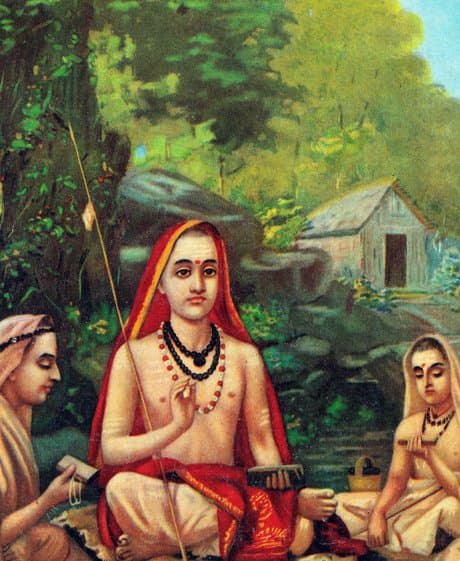 Ādi Śaṅkarācārya · Jñāneśvar expands this whole chapterAdvaita · Vārkarī · English · Sanskrit · Marathi · Hindi
Krishna. Fearlessness, singleness of soul, the will Always to strive for wisdom; opened hand And governed appetites; and piety, And love of lonely study; humbleness, Uprightness, heed to injure nought which lives, Truthfulness, slowness unto wrath, a mind That lightly letteth go what others prize; And equanimity, and charity Which spieth no man's faults; and tenderness Towards all that suffer; a contented heart, Fluttered by no desires; a bearing mild, Modest, and grave, with manhood nobly mixed, With patience, fortitude, and purity; An unrevengeful spirit, never given To rate itself too high;--such be the signs, O Indian Prince! of him whose feet are set On that fair path which leads to heavenly birth! Deceitfulness, and arrogance, and pride, Quickness to anger, harsh and evil speech, And ignorance, to its own darkness blind,-- These be the signs, My Prince! of him whose birth Is fated for the regions of the vile. The Heavenly Birth brings to deliverance, So should'st thou know! The birth with Asuras Brings into bondage. Be thou joyous, Prince! Whose lot is set apart for heavenly Birth. Two stamps there are marked on all living men, Divine and Undivine; I spake to thee By what marks thou shouldst know the Heavenly Man, Hear from me now of the Unheavenly! They comprehend not, the Unheavenly, How Souls go forth from Me; nor how they come Back unto Me: nor is there Truth in these, Nor purity, nor rule of Life. "This world Hath not a Law, nor Order, nor a Lord," So say they: "nor hath risen up by Cause Following on Cause, in perfect purposing, But is none other than a House of Lust." And, this thing thinking, all those ruined ones-- Of little wit, dark-minded--give themselves To evil deeds, the curses of their kind. Surrendered to desires insatiable, Full of deceitfulness, folly, and pride, In blindness cleaving to their errors, caught Into the sinful course, they trust this lie As it were true--this lie which leads to death-- Finding in Pleasure all the good which is, And crying "Here it finisheth!" Ensnared In nooses of a hundred idle hopes, Slaves to their passion and their wrath, they buy Wealth with base deeds, to glut hot appetites; "Thus much, to-day," they say, "we gained! thereby Such and such wish of heart shall have its fill; And this is ours! and th' other shall be ours! To-day we slew a foe, and we will slay Our other enemy to-morrow! Look! Are we not lords? Make we not goodly cheer? Is not our fortune famous, brave, and great? Rich are we, proudly born! What other men Live like to us? Kill, then, for sacrifice! Cast largesse, and be merry!" So they speak Darkened by ignorance; and so they fall-- Tossed to and fro with projects, tricked, and bound In net of black delusion, lost in lusts-- Down to foul Naraka. Conceited, fond, Stubborn and proud, dead-drunken with the wine Of wealth, and reckless, all their offerings Have but a show of reverence, being not made In piety of ancient faith. Thus vowed To self-hood, force, insolence, feasting, wrath, These My blasphemers, in the forms they wear And in the forms they breed, my foemen are, Hateful and hating; cruel, evil, vile, Lowest and least of men, whom I cast down Again, and yet again, at end of lives, Into some devilish womb, whence--birth by birth-- The devilish wombs re-spawn them, all beguiled; And, till they find and worship Me, sweet Prince! Tread they that Nether Road. The Doors of Hell Are threefold, whereby men to ruin pass,-- The door of Lust, the door of Wrath, the door Of Avarice. Let a man shun those three! He who shall turn aside from entering All those three gates of Narak, wendeth straight To find his peace, and comes to Swarga's gate. . . . . . . . . . . . . HERE ENDETH CHAPTER XVI. OF THE BHAGAVAD-GITA, Entitled "Daivasarasaupadwibhagayog," Or "The Book of the Separateness of the Divine and Undivine."
Edwin Arnold · Poetic (Victorian) — Public domain
Expansions that unfold the whole chapter, not verse by verse
Jñāneśvar · Vārkarī
EnglishĀdi Śaṅkarācārya · Advaita
Sanskritदैवी आसुरी राक्षसी इति प्राणिणां प्रकृतयः नवमे अध्याये सूचिताः । तासां विस्तरेण प्रदर्शनाय ``अभयं सत्त्वसंशुद्धिः'' इत्यादिः अध्यायः आरभ्यते । तत्र संसारमोक्षाय दैवी प्रकृतिः, निबन्धाय आसुरी राक्षसी च इति दैव्याः आदानाय प्रदर्शनं क्रियते, इतरयोः परिवर्जनाय च ॥
Jñāneśvar · Vārkarī
Marathi॥ ॐ श्री परमात्मने नमः ॥ ॥ अथ श्रीमद्भगवद्गीता ॥ । अथ षोडशोशोऽध्यायः - अध्याय सोळावा । । । दैवासुरसंपत्तिविभागयोगः ।
मावळवीत विश्वाभासु । नवल उदयला चंडांशु । अद्वयाब्जिनीविकाशु । वंदूं आतां ॥ १ ॥ जो अविद्याराती रुसोनियां । गिळी ज्ञानाज्ञानचांदणिया । जो सुदिनु करी ज्ञानियां । स्वबोधाचा ॥ २ ॥ जेणें विवळतिये सवळे । लाहोनि आत्मज्ञानाचे डोळे । सांडिती देहाहंतेचीं अविसाळें । जीवपक्षी ॥ ३ ॥ लिंगदेहकमळाचा । पोटीं वेंचु तया चिद्भ्रमराचा । बंदिमोक्षु जयाचा । उदैला होय ॥ ४ ॥ शब्दाचिया आसकडीं । भेद नदीच्या दोहीं थडीं । आरडाते विरहवेडीं । बुद्धिबोधु ॥ ५ ॥ तया चक्रवाकांचें मिथुन । सामरस्याचें समाधान । भोगवी जो चिद्गगन । भुवनदिवा ॥ ६ ॥ जेणें पाहालिये पाहांटे । भेदाची चोरवेळ फिटे । रिघती आत्मानुभववाटे । पांथिक योगी ॥ ७ ॥ जयाचेनि विवेककिरणसंगें । उन्मेखसूर्यकांतु फुणगे । दीपले जाळिती दांगें । संसाराचीं ॥ ८ ॥ जयाचा रश्मिपुंजु निबरु । होता स्वरूप उखरीं स्थिरु । ये महासिद्धीचा पूरु । मृगजळ तें ॥ ९ ॥ जो प्रत्यग्बोधाचिया माथया । सोऽहंतेचा मध्यान्हीं आलिया । लपे आत्मभ्रांतिछाया । आपणपां तळीं ॥ १० ॥ ते वेळीं विश्वस्वप्नासहितें । कोण अन्यथामती निद्रेतें । सांभाळी नुरेचि जेथें । मायाराती ॥ ११ ॥ म्हणौनि अद्वयबोधपाटणीं । तेथ महानंदाची दाटणी । मग सुखानुभूतीचीं घेणीं देणीं । मंदावो लागती ॥ १२ ॥ किंबहुना ऐसैसें । मुक्तकैवल्य सुदिवसें । सदा लाहिजे कां प्रकाशें । जयाचेनि ॥ १३ ॥ जो निजधामव्योमींचा रावो । उदैलाचि उदैजतखेंवो । फेडी पूर्वादि दिशांसि ठावो । उदोअस्तूचा ॥ १४ ॥ न दिसणें दिसणेंनसीं मावळवी । दोहीं झांकिलें ते सैंघ पालवी । काय बहु बोलों ते आघवी । उखाचि आनी ॥ १५ ॥ तो अहोरात्रांचा पैलकडु । कोणें देखावा ज्ञानमार्तंडु । जो प्रकाश्येंवीण सुरवाडु । प्रकाशाचा ॥ १६ ॥ तया चित्सूर्या श्रीनिवृत्ती । आतां नमों म्हणों पुढतपुढती । जे बाधका येइजतसे स्तुती । बोलाचिया ॥ १७ ॥ देवाचें महिमान पाहोनियां । स्तुति तरी येइजे चांगावया । जरी स्तव्यबुद्धीसीं लया । जाईजे कां ॥ १८ ॥ जो सर्वनेणिवां जाणिजे । मौनाचिया मिठीया वानिजे । कांहींच न होनि आणिजे । आपणपयां जो ॥ १९ ॥ तया तुझिया उद्देशासाठीं । पश्यंती मध्यमा पोटीं । सूनि परेसींही पाठीं । वैखरी विरे ॥ २० ॥ तया तूतें मी सेवकपणें । लेववीं बोलकेया स्तोत्राचें लेणें । हें उपसाहावेंही म्हणतां उणें । अद्वयानंदा ॥ २१ ॥ परी रंकें अमृताचा सागरु । देखिलिया पडे उचिताचा विसरु । मग करूं धांवे पाहुणेरु । शाकांचा तया ॥ २२ ॥ तेथ शाकुही कीर बहुत म्हणावा । तयाचा हर्षवेगुचि तो घ्यावा । उजळोनि दिव्यतेजा हातिवा । ते भक्तीचि पाहावी ॥ २३ ॥ बाळा उचित जाणणें होये । तरी बाळपणचि कें आहे ? । परी साचचि येरी माये । म्हणौनि तोषे ॥ २४ ॥ हां गा गांवरसें भरलें । पाणी पाठीं पाय देत आलें । तें गंगा काय म्हणितलें । परतें सर ? ॥ २५ ॥ जी भृगूचा कैसा अपकारु । कीं तो मानूनि प्रियोपचारु । तोषेचिना शारङ्गधरु । गुरुत्वासीं ? ॥ २६ ॥ कीं आंधारें खतेलें अंबर । झालेया दिवसनाथासमोर । तेणें तयातें पऱ्हा सर । म्हणितलें काई ? ॥ २७ ॥ तेवीं भेदबुद्धीचिये तुळे । घालूनि सूर्यश्लेषाचें कांटाळे । तुकिलासि तें येकी वेळे । उपसाहिजो जी ॥ २८ ॥ जिहीं ध्यानाचा डोळां पाहिलासी । वेदादि वाचां वानिलासी । जें उपसाहिलें तयासी । तें आम्हांही करीं ॥ २९ ॥ परी मी आजि तुझ्या गुणीं । लांचावलों अपराधु न गणीं । भलतें करीं परी अर्धधणीं । नुठी कदा ॥ ३० ॥ मियां गीता येणें नांवें । तुझें पसायामृत सुहावें । वानूं लाधलों तें दुणेन थावें । दैवलों दैवें ॥ ३१ ॥ माझिया सत्यवादाचें तप । वाचा केलें बहुत कल्प । तया फळाचें हें महाद्वीप । पातली प्रभु ॥ ३२ ॥ पुण्यें पोशिलीं असाधरणें । तियें तुझें गुण वानणें । देऊनि मज उत्तीर्णें । जालीं आजी ॥ ३३ ॥ जी जीवित्वाच्या आडवीं । आतुडलों होतों मरणगांवीं । ते अवदसाची आघवी । फेडिली आजी ॥ ३४ ॥ जे गीता येणें नांवें नावाणिगी । जे अविद्या जिणोनि दाटुगी । ते कीर्ती तुझी आम्हांजोगी । वानावया जाली ॥ ३५ ॥ पैं निर्धना घरीं वानिवसें । महालक्ष्मी येऊनि बैसे । तयातें निर्धन ऐसें । म्हणों ये काई ? ॥ ३६ ॥ कां अंधकाराचिया ठाया । दैवें सुर्यु आलिया । तो अंधारुचि जगा यया । प्रकाशु नोहे ? ॥ ३७ ॥ जया देवाची पाहतां थोरी । विश्व परमाणुही दशा न धरी । तो भावाचिये सरोभरी । नव्हेचि काई ? ॥ ३८ ॥ तैसा मी गीता वाखाणी । हे खपुष्पाची तुरंबणी । परी समर्थें तुवां शिरयाणी । फेडिली ते ॥ ३९ ॥ म्हणौनि तुझेनि प्रसादें । मी गीतापद्यें अगाधें । निरूपीन जी विशदें । ज्ञानदेवो म्हणे ॥ ४० ॥ तरी अध्यायीं पंधरावा । श्रीकृष्णें तया पांडवा । शास्त्रसिद्धांतु आघवा । उगाणिला ॥ ४१ ॥ जे वृक्षरूपक परीभाषा । केलें उपाधि रूप अशेषा । सद्वैद्यें जैसें दोषा । अंगलीना ॥ ४२ ॥ आणि कूटस्थु जो अक्षरु । दाविला पुरुषप्रकारु । तेणें उपहिताही आकारु । चैतन्या केला ॥ ४३ ॥ पाठीं उत्तम पुरुष । शब्दाचें करूनि मिष । दाविलें चोख । आत्मतत्त्व ॥ ४४ ॥ आत्मविषयीं आंतुवट । साधन जें आंगदट । ज्ञान हेंही स्पष्ट । चावळला ॥ ४५ ॥ म्हणौनि इये अध्यायीं । निरूप्य नुरेचि कांहीं । आतां गुरुशिष्यां दोहीं । स्नेहो लाहणा ॥ ४६ ॥ एवं इयेविषयीं कीर । जाणते बुझावले अपार । परी मुमुक्षु इतर । साकांक्ष जाले ॥ ४७ ॥ त्या मज पुरुषोत्तमा । ज्ञानें भेटे जो सुवर्मा । तो सर्वज्ञु तोचि सीमा । भक्तीचीही ॥ ४८ ॥ ऐसें हें त्रैलोक्यनायकें । बोलिलें अध्यायांत श्लोकें । तेथें ज्ञानचि बहुतेकें । वानिलें तोषें ॥ ४९ ॥ भरूनि प्रपंचाचा घोंटु । कीजे देखतांचि देखतया द्रष्टु । आनंदसाम्राज्यीं पाटु । बांधिजे जीवा ॥ ५० ॥ येवढेया लाठेपणाचा उपावो । आनु नाहींचि म्हणे देवो । हा सम्यक्ज्ञानाचा रावो । उपायांमाजीं ॥ ५१ ॥ ऐसे आत्मजिज्ञासु जे होते । तिहीं तोषलेनि चित्तें । आदरें तया ज्ञानातें । वोंवाळिलें जीवें ॥ ५२ ॥ आतां आवडी जेथ पडे । तयाचि अवसरीं पुढें पुढें । रिगों लागें हें घडे । प्रेम ऐसें ॥ ५३ ॥ म्हणौनि जिज्ञासूंच्या पैकीं । ज्ञानी प्रतीती होय ना जंव निकी । तंव योग क्षेमु ज्ञानविखीं । स्फुरेलचि कीं ॥ ५४ ॥ म्हणौनि तेंचि सम्यक् ज्ञान । कैसेनि होय स्वाधीन । जालिया वृद्धियत्न । घडेल केवीं ॥ ५५ ॥ कां उपजोंचि जें न लाहे । जें उपजलेंही अव्हांटा सूये । तें ज्ञानीं विरुद्ध काय आहे । हें जाणावें कीं ॥ ५६ ॥ मग जाणतयां जें विरू । तयाचीं वाट वाहती करूं । ज्ञाना हित तेंचि विचारूं । सर्वभावें ॥ ५७ ॥ ऐसा ज्ञानजिज्ञासु तुम्हीं समस्तीं । भावो जो धरिला असे चित्तीं । तो पुरवावया लक्ष्मीपती । बोलिजेल ॥ ५८ ॥ ज्ञानासि सुजन्म जोडे । आपली विश्रांतिही वरी वाढे । ते संपत्तीचे पवाडे । सांगिजेल दैवी ॥ ५९ ॥ आणि ज्ञानाचेनि कामाकारें । जे रागद्वेषांसि दे थारे । तिये आसुरियेहि घोरे । करील रूप ॥ ६० ॥ सहज इष्टानिष्टकरणी । दोघीचि इया कवतुकिणी । हे नवमाध्यायीं उभारणी । केली होती ॥ ६१ ॥ तेथ साउमा घेयावया उवावो । तंव वोडवला आन प्रस्तावो । तरी तयां प्रसंगें आतां देवो । निरूपीत असे ॥ ६२ ॥ तया निरूपणाचेनि नांवें । अध्याय पद सोळावें । लावणी पाहतां जाणावें । मागिलावरी ॥ ६३ ॥ परी हें असो आतां प्रस्तुतीं । ज्ञानाच्या हिताहितीं । समर्था संपत्ती । इयाचि दोन्ही ॥ ६४ ॥ जे मुमुक्षुमार्गींची बोळावी । जे मोहरात्रीची धर्मदिवी । ते आधीं तंव दैवी । संपत्ती ऐका ॥ ६५ ॥ जेथ एक एकातें पोखी । ऐसे बहुत पदार्थ येकीं । संपादिजती ते लोकीं । संपत्ति म्हणिजे ॥ ६६ ॥ ते दैवी सुखसंभवी । तेथ दैवगुणें येकोपजीवीं । जाली म्हणौनि दैवी । संपत्ति हे ॥ ६७ ॥
Jñāneśvar · Vārkarī
Hindi(16.1) अब मैं विश्वाभास का अस्त कर उदित होनेवाले और अद्वैत-रूपी कमलिनी का विकास करनेहारे अनोखे सूर्य का वन्दन करता हूँ
(16.2) जो अविद्यारूपी रात्रि को दूर कर ज्ञानाज्ञानरूपी चाँदनियों का नाश करता है, और ज्ञानियों के लिए आत्मबोधरूपी सुदिन प्रकाशित करता है,
(16.3) जिसका प्रातःकाल होते ही जीवरूपी पक्षी आत्मज्ञान रूपी आँखें खोलते और देहाभिमानरूपी घोंसलों में से बाहर निकलते हैं,
(16.4) जिसका उदय होते ही सूक्ष्म-देहरूपी कमल के गर्भ में क्षीण हो रहनेवाला जीव-चैतन्यरूपी भ्रमर बन्ध से मुक्त हो जाता है,
(16.5) शास्त्र इत्यादि-रूपी विकट स्थलों में भेदरूपी नदी के दोनों तीरों पर जो बुद्धि और ज्ञान विरह से व्याकुल हो आक्रोश कर रहे हैं (16.6) उन चक्रवाकों की जोड़ी को जो चिदाकाशभुवन का दीपक समाधानरूपी मेल के भोग का लाभ करा देता है,
(16.7) जिसके प्रातःकाल का प्रकाश होते ही भेदरूपी चोरी का समय बीत जाता है और पान्थिक योगी आत्मसाक्षात्काररूपी बाट चलने लगते हैं,
(16.8) जिसकी विवेकरूपी किरणों के संग से ज्ञानरूपी सूर्यकान्तमणि की चिनगारियाँ झड़तीं और संसाररूपी अरण्य का जलाती हैं,
(16.9) जिसके तीव्र किरणसमूह के, आत्मस्वरूपरूपी पथरीली धरती पर स्थिर होते ही महासिद्धिरूपी मृगजल की बाढ़ आती है,
(16.10) जिसके सोहंरूपी मध्याह्नकाल के समय आत्मबोधरूपी शिखर पर आते ही आत्मभ्रमरूपी परछाई पावों-तले छिप जाती है,
(16.11) उस समय जब मायारूपी रात ही नहीं रहती तो विश्वरूपी स्वप्नसहित अन्यथाज्ञानरूपी निद्रा को कौन आश्रय देता है?
(16.12) अतएव उस अद्वैतज्ञान-रूपी नगर में महानन्द की भीड़ लग जाती है और
सुखानुभव के लेन-देन की मन्दी हो जाती है; (16.13) बहुत क्या कहें, इस प्रकार जिसके उत्तम दिन प्रकाश से सर्वदा मुक्त कैवल्य का लाभ होता है,
(16.14) जो निजधामाकाश का राजा सर्वदा उदित है और उदित होते ही पूर्व इत्यादि दिशाओं-सहित उदय और अस्त का नाश कर देता है,
(16.15) और जो ज्ञान सहित अज्ञान का अन्त कर देता है, तथा ज्ञान और अज्ञान दोनों से छिपी हुई जो वस्तु है उसे प्रकट करता है। बहुत क्या वर्णन करें, वह सम्पूर्ण उपाकाल कुछ भिन्न ही वस्तु
(16.16) वह ज्ञानसूर्य दिन और रात का परतीर है। उसे कौन देख सकता है? जिसने प्रकाशितव्य पदार्थों के बिना ही प्रकाश का सुकाल कर दिया है
(16.17) उस ज्ञानसूर्य श्रीनिवृत्ति को मैं बारबार केवल नमस्कार ही करता हूँ। क्योंकि स्तुति करना शब्दों की बाधा ही करना है।
(16.18) देव की महिमा के प्रमाण से स्तुति तभी ठीक है। सकती है जब स्तुति का विषय बुद्धि के संग विलीन हो जाय। (16.19) जो सम्पूर्ण विषयों के न जानने से ही जाना जा सकता है, मौन को आलिंगन देने से हो जिसकी स्तुति हो सकती है, अन्य रूप न होने से ही जिसकी प्रतीति निज में हो सकती है,
(16.20) जिसकी स्तुति करने के लिए वैखरी वाणी पश्यन्ती और मध्यमा को लील लेती और फिर परा सहित विलीन हो जाती है,
(16.21) ऐसे आपको हे गुरु! मैं सेवकरूप से इस वाचनिक स्तुति के अलंकार पहनाता हूँ। हे अद्वयानन्द आपसे इनके स्वीकार की विनती करना भी न्यून है।
(16.22) परन्तु दरिद्रों यदि अमृत का सागर देखे तो उसे योग्यायोग्य स्वागत की विस्मृति हो जाती है और वह साग-भाजी से ही उसकी पहुँच करने के लिए दौड़ता है।
(16.23) उस समय वस्तुतः उसकी साग-भाजी का ही बहुत समझना चाहिए। उसके हर्षवेग की ओर ही ध्यान देना चाहिए। आरती कर दिव्यस्वरूप देवता को प्रकाशित करने की चेष्टा में आरती करनेहारे की भक्ति ही देखनी चाहिए।
(16.24) बालक यदि योग्यायोग्य जाने तो बालकपन ही क्या रहा? पर सचमुच वह माता ही है जो उससे सन्तुष्ट होती है। (16.25) अजी! गंगा के पीछे-पीछे नाले का जल भी आ मिलता है तो क्या वह उसे 'दूर हट' कहती है?
(16.26) भृगु का कितना अपराध था पर उसको प्रेम का उपचार समझ कर क्या शार्इधर उनके गुरुत्व से सन्तुष्ट नहीं हुए?
(16.27) अथवा अन्धकारमय आकाश जब दिनपति के सन्मुख आता है तो क्या वह उसे 'दूर हट' कह देता है?
(16.28) वैसे ही मैंने आपको भेद-बुद्धि की तुला में रख सूर्योपमा के माप से तौलने की जो चेष्टा की उसके लिए एक बार क्षमा कीजिए।
(16.29) जिन्होंने आपको ध्यानरूपी नेत्रों से देखा और वेद इत्यादि वाणियों से आपकी स्तुति की, जैसे उनकी चेष्टाएँ आपने सह लीं वैसे मुझे भी क्षमा कीजिए;
(16.30) तथा मैं एक सामान्य मनुष्य और आपके गुणों पर लुब्ध हुआ हूँ, इसे अपराध न समझिए। चाहे जो कीजिए परन्तु मैं कभी अतृप्त न उठूँगा।
(16.31) मैं गीतारूपी आपके सुन्दर प्रसादामृत का वर्णन करने के लिए उद्यत हुआ तो उससे भाग्यवशात् मुझे दुगुने बल का लाभ हो गया। (16.32) मेरी वाचा ने कई कल्पों तक सत्यालाप का तप किया होगा जिससे हे प्रभु! मुझे इस गीतारूपी महाद्वीप की फल-प्राप्ति हुई।
(16.33) मैंने अनेक असाधारण पुण्यों का आचरण किया होगा वही पुण्य आज मुझे आपके गुण-वर्णन का बल समर्पण कर उत्तीर्ण हो गये।
(16.34) अजी! मैं जीवित्वरूपी अरण्य में एक मरणरूपी गाँव में आ पड़ा था, वह संकट आज बिलकुल मिट गया।
(16.35) जो गीता-नाम से प्रसिद्ध है, जो अविद्या का जीत कर बलवती हुई है वह आपकी कीर्ति सर्वथा स्तुत्य है।
(16.36) यदि निर्धन के घर कुतूहल से महालक्ष्मी आ बैठे तो क्या उसे निर्धन कहा जा सकता है?
(16.37) अथवा अन्धकार के स्थान में भाग्य से सूर्य आ जावे तो क्या वह अन्धकार ही संसार के लिए प्रकाशरूप न हो जावेगा?
(16.38) जिस देव की महिमा ऐसी हैं कि सम्पूर्ण विश्व उसके एक परमाणु की भी बराबरी नहीं कर सकता वह देव भी क्या, भाव के बल से, प्राप्त नहीं हो सकता? (16.39) वैसे ही वास्तव में मेरा गीता का निरूपण करना आकाश-पुष्प का सूँघना है परन्तु आप समर्थ ने वह इच्छा पूर्ण कर दी है।
(16.40) (ज्ञानदेव कहते हैं कि) अतएव मैं आपकी कृपा से गीता के इन अगाध श्लोकों का स्पष्ट निरूपण करता हूँ।
(16.41) पन्द्रहवें अध्याय में श्रीकृष्ण ने अर्जुन से सम्पूर्ण शास्त्रसिद्धान्त का विवरण किया।
(16.42) उत्तम वैद्य जैसे शरीरगत दोषों के रूप का वर्णन करता है वैसे ही श्रीकृष्ण ने सम्पूर्ण उपाधि का वृक्षोपमा की परिभाषा द्वारा निरूपण किया।
(16.43) और अविनाशी जीवात्मा का जो पुरुषरूप वर्णन किया उससे उपाधिगत चैतन्य का स्वरूप भी स्पष्ट कर दिया।
(16.44) अनन्तर 'उत्तम पुरुष' के बहाने शुद्ध आत्मतत्त्व ही प्रकट कर दिया
(16.45) तथा आत्मप्राप्ति का आन्तरिक और श्रेष्ठ साधन जो ज्ञान है उसका रूप भी विशद कर दिया।
(16.46) इसलिए अब इस अध्याय में निरूपण करने योग्य कुछ नहीं बचा है। अब केवल गुरु और शिष्य दोनों का प्रेम ही दिखाई दे रहा है,
(16.47) एवं ज्ञानी इस विषय को पूर्णतः समझ चुके हैं, परन्तु अन्य मुमुक्षु जन शंकित होते हैं।
(16.48) हे मर्मज्ञ! जो ज्ञान के द्वारा मुझ पुरुषोत्तम से आ मिलता है वही सर्वज्ञ है तथा वही भक्ति की सीमा है —
(16.49) यह बात जो पन्द्रहवें अध्याय के एक श्लोक में त्रैलोक्यनायक श्रीकृष्ण ने कही उसमें इन्होंने सन्तोष के साथ प्रायः ज्ञान की ही स्तुति की।
(16.50) जिससे द्रष्टा, प्रपंच का नाश कर, दर्शन के साथ ही दृष्ट-रूप हो जाय और जीव आनन्द के साम्राज्य पर आरूढ़ हो जाय
(16.51) ऐसा बलवत्तर उपाय ज्ञान के अतिरिक्त दूसरा नहीं है। देव कहते हैं कि यथार्थ ज्ञान सम्पूर्ण उपायों में राजा है।
(16.52) अतएव आत्म-जिज्ञासुओं ने, अन्तःकरण में प्रसन्न हो, उस ज्ञान पर से अपने जीव की निछावर कर डाली है।
(16.53) परन्तु यह प्रेम का लक्षण है कि जिस वस्तु में वह लग जाता है उसमें अधिकाधिक बढ़ता ही जाता है (16.54) अतएव जिज्ञासुओं का जब तक भली भाँति ज्ञान की प्रतीति नहीं होती तब तक उन्हें अप्राप्त ज्ञान की प्राप्ति करने की और प्राप्त ज्ञान की रक्षा करने की उत्कण्ठा अवश्य होगी।
(16.55) इसलिए — वह यथार्थ ज्ञान कैसे अधीन किया जा सकता है तथा अधीन होने पर उसकी वृद्धि की चेष्टा कैसे की जा सकती है,
(16.56) अथवा ऐसी कौन-सी विरोधी वस्तु है जो ज्ञान का उपजने ही नहीं देती और उपजे तो उसे टेढ़े-मेढ़े मार्ग में लगा देती है — इत्यादि बातें जिससे मालूम हों।
(16.57) और जो ज्ञानियों का विघ्नकर्ता है उसे रास्ते से लगा दें तथा ज्ञान का जो हितकारी है उसी का सब भावों से विचार करें
(16.58) ऐसी जो आप सब जिज्ञासुओं के मन में इच्छा उत्पन्न हुई है उसे पूर्ण करने के लिए श्रीलक्ष्मीपति और अधिक निरूपण करते हैं।
(16.59) अब वे उस दैवी सम्पत्ति की प्रशंसा बखानेंगे जिससे ज्ञानियों का उत्तम जन्म का लाभ होता है तथा उनकी शान्ति की भी वृद्धि होती है। (16.60) अज्ञान के अधीन होने से जिस में राग और द्वेष का आश्रय मिलता है उस घोर
आसुरी सम्पत्ति का भी वे वर्णन करेंगे।
(16.61) इष्ट या अनिष्टकारक दोनों कुतूहल-कारिणी सम्पत्तियाँ यही हैं। इस बात का उपक्रम नवें अध्याय में हो चुका है।
(16.62) वहीं उनका आगे विचार किया जाता परन्तु उतने में दूसरा प्रस्ताव आ पड़ा; तथापि देव अब प्रसंगानुसार निरूपण करते हैं।
(16.63) उस निरूपण के लिए इस सोलहवें अध्याय का सम्बन्ध पिछले अध्याय से लगाना चाहिए।
(16.64) परन्तु अस्तु, प्रस्तावित ज्ञान के हित या अहित के लिए यही दोनों सम्पत्तियाँ समर्थ हैं।
(16.65) इनमें से प्रथम उस देवी सम्पत्ति का वर्णन सुनो जो मुमुक्षु-मार्ग को पहुँचाती हैं, तथा जो मोहरूपी रात्रि में धर्मरूपी मशाल है।
(16.66) संसार में सम्पत्ति उसे कहते हैं जिस एक के सम्पादन से एक दूसरे की वृद्धि करनेवाले अनेक पदार्थों की प्राप्ति हो सकती है। (16.67) इस देवी सम्पत्ति से सुख की प्राप्ति होती है, और देवगुण के कारण वही एक आश्रय करने के योग्य है, अतएव उसे देवी सम्पत्ति कहते हैं।
Obeisance to the wonderful rising Sun (in the form of) the preceptor, who dispels the illusion of the world-existence and blows open the lotus of monism. He dispels the night of ignorance, and extinguishing the stars in the form of both knowledge and ignorance, shows to the learned, the auspicious day of self-realization. His appearance in the morning gives vision of knowledge of the Self, making the birds in the form of beings leave their nests in the form of conceit for their bodies. The black bee in the form of sentience, shut up in the lotus in the form of human body, is released from imprisonment at the (Sun) rise of the preceptor. The couple of Chakravāka birds (चक्रवाक—the Brahmany goose) in the form of intellect and knowledge (बुद्धिबोध), getting trapped in the difficult situation in the form of Scriptures involving infatuation of intellect, lament their separation from each other, on either bank of the river in the form of distinction; that couple secures happiness in the form of getting re-united with the rise of the Sun, who illumines the entire sky in the form of sentience, just as the lamp lights a house. With the dawn (appearance of the Sun), the fearful time of thieves in the form of distinction vanishes and then the wayfarer—Yogin—walks along the path of the realisation of the Supreme Self. With the touch of the Sun's rays in the form of right discrimination, sparks issue forth from the Sūryakānta (सूर्यकांत—a fabulous stone bright and glittering and sending forth flames when sunbeams strike upon it) in the form of knowledge, and burn the forests of world-affairs. There is a flood of the mirage in the form of occult powers when the cluster of his (Sun's) rays gets hardened (becomes fierce) and steadies itself on the sandy plain in the form of the Self; but when the (Sun) gets to the top of the Knowledge of the Self and sparkles at the meridian in the form of Brahmic state, the shadow of the soul in the form of illusion hides itself (i.e. becomes non-existent) under his own feet (rays). Where could then the dream of the universe, as also the slumber of the adverse knowledge get any shelter, when there exists no longer the night of illusion, with the result that dealing in the form of experience of happiness becomes dull, the town of the realization of monism being fully packed up with Supreme Bliss. In short, with the light of the Sun (preceptor) is secured the perpetual benefit of the auspicious day of complete liberation. The moment he, the king of the Sky, in the form of the abode of the Self, rises all trace, not only of the rising and of the setting, but even of all directions such as the East and others, vanishes. He dispels both the knowledge as also the ignorance, and displays the spirit of the Self, which had remained hidden under them, and in this way, creates a unique dawn; what to say more? Who is able enough to see such a Sun of knowledge, far beyond the region of day and night—the Sun who is a globe of illumination without being a thing that could be illuminated? To such a Sun of knowledge of the Supreme (चित्तूर्य) — Shri Nivrittināth — I bow again and again, since words are routed (prove too feeble), when one attempts to praise him through their medium. Were the object of the praise as also the intellect (of the composer of praise), to identify themselves with each other, realizing in the heart the glory of the preceptor, then only the praise would attain excellence. He can be known only with the wiping off of name and form, and can be praised while in the embrace of silence, and can be attained by the experience of forgetting one's egoism (in the Self). While singing your praise adequately, the 'Parā' and 'Vaikharī' enter into the womb of 'Pashyantī' and 'Madhyamā' and get extinguished there. Such a one you are and I, as your devoted servant, shall make you wear ornaments in the form of praise sung by me, which (you) Oh preceptor, do please accept even though doing such a thing will amount to bringing ridicule to the bliss of non-duality (preceptor). An humble person, seeing the ocean of nectar, gets confounded and forgetting the proper form of reception runs about to extend a welcome to it by offering vegetable dishes! But on an occasion like this, the vegetable offerings should be considered greatly befitting, taking into account the fervent joy the person feels in offering it. In that way you should light up your own splendour and view the stickwick (काडवात) in the form of my devotion. Who could call it a small child, were it to realize what is desirable (and what is not so) for it; yet, in truth, its mother feels gratified at it (inspite of its ignorance). Oh, the dirty water of a village site flows and treads over (runs into) the holy Ganges: does the Ganges ever tell it to go back? Oh, what a grave offence did sage Bhrigu commit in giving a kick (to Lord Vishnu)! Yet, did not God Vishnu (शारंगधर) take it as an affectionate treatment and receive it with satisfaction considering it a mark of honour? Does the Sun ever ask contemptuously the sky—which is overcast with darkness and which confronts him—to move away? In that way, you should put up (with my action) were I, once in a way, to weigh you in the (pair of) scales in the form a pun (श्लेष) in regard to the Sun, hung on the beam in the form of duality. The Yogins discerned you through their concentrated meditation of you, and the Vedas praised you in words (spoken); and you have put up with all this! In the same way put up also with me. I have taken to singing fondly your praise; and (you) do not count it as an offence on my part. Whatever you might do, I would not rise up (from here) half-fed (i.e. I would sing your praises to my satisfaction). By my good luck, my strength is increased two-fold, just as I began singing, with great liking, the praise of your gift of nectar in the form of Gītā—teaching. I have secured this fruit in the form of a great island named Gītā, as the result of austerities I observed for ages, of speaking only the truth. The inordinate merit, I have been able to secure so far, has this day, discharged its obligations to me, by making me sing your praise. I was fettered in the town of Death, having entered into the forest of living beings. I am now discharged from that predicament. I have now been enabled to sing your fame, which is well-known by the name of Gītā teaching and which possesses the power of vanquishing the sturdy and rude ignorance. When the Goddess of Riches—the Great Lakshmi—visits the house of a poor man how could such a one be called poverty-stricken? or were the Sun to visit the house of darkness, could not that very darkness give light to the world? The entire world could not compare even as a small atom, placed side by side with the glory of God; yet what form would He (God) not assume for the sake of his devotee, once He finds Himself in the flood of His devotion. In that way, my preaching the Gītā, is like smelling the sky-flower; yet your strength has gratified this ambition on my part. Therefore Jñāneshwar said, 'I shall, through your grace, preach in an easy and clear way, the Gītā verses whose sense is so profound (unfathomable). In Chapter XV Lord Krishna preached the established truths (theorems—सिद्धांत) contained in different Scriptures. He (Lord Krishna) discoursed in figurative language, on the entire universe full of attributes by resorting to the metaphor of a tree naming its soul as 'Purusha'—the unperturbed Akshara (Immutable), in the way a good doctor diagnoses a chronic disease (of a patient). He also preached how the attributes permeated the sentience (by making it take a form), and then giving it the name 'Highest Person' (Purushottam), he explained the clear essence of his own Self. Next, he explained in a clear way how knowledge is the strong internal means for securing the Self. There is thus left nothing (new) to be preached in this Chapter. (There have only remained) the cordial relation between the preceptor and the disciple. The learned and the wise have thus fully understood the subject; yet there are other seekers, who have got doubts lingering in their minds. In the previous Chapter the Lord of the three worlds said, 'He is all-knowing, and he alone has reached the acme of (my) devotion who has through knowledge attained me—the 'Highest Person', and has described in different ways the importance of knowledge. God said that there was no other (more) effective remedy than knowledge—in fact the very king amongst all the remedies—that could bring about results such as the dissolution of all worries arising out of worldly affairs, the union of the seer and the object of seeing as also securing mastery over the empire of Supreme Bliss. Those that were eager to secure knowledge, waved their very lives around it (knowledge) with great regard and with minds all pleased. The more the mind feels a liking for a subject, the more that subject enters into the mind, this is what is called 'love' (प्रेम). Therefore, such of those as are eager, but have not experienced any such love of knowledge, naturally felt anxious as to how to secure it and having secured it, how to retain the same (knowledge). It must, therefore, first be considered how right knowledge could be secured and how it could be increased once it is secured: or why knowledge could not be secured or whether there is any strong anti-knowledge agency or force that would lead astray, (into wrong channels) knowledge which is already secured. These (forces) which stand blocking the way—these that are obstructions to knowledge must be cleared off; then we should take zealously into consideration, such (forces) as are conducive to the increase of it (knowledge). Oh for you all, who cherish in your hearts the desire to have knowledge, the Lord of Lakshmi will now hold a discourse in order to fulfill your desire. He will sing the glory of the 'Divine Estate' that gives birth to knowledge and also increases the peace of mind. He will also describe the terrible aspect of the 'Demoniac Estate' that lends support to the disorders such as wrath and hatred, with the help of knowledge of sense-objects. It has, by way of an introduction to the subject, been mentioned in Chapter IX before, that both these (Divine and Demoniac) Estates that assume airs and affectations, lead naturally to the performance of good and evil acts respectively. It was proposed to deal with these directly there; but other subjects intervened and (this topic was crowded out and) so God is preaching that subject now. This Chapter XVI should, therefore, be taken as a continuation of the former portion. Suffice this for the present. Both these Estates alone are capable of being conducive to and destructive of knowledge respectively. Hear now first about the 'Divine Estate', which leads the seekers to the path of salvation and like (the flame of) a holy lamp sheds light on the darkness of the night of infatuation. To bring together into one place, diverse matters mutually supporting one another, is what is popularly called an 'Estate'. Because it produces divine happiness and since in it alone are concentrated (all) Godly virtues, it is (called) 'Divine Estate'.