

Bhagavad Gītā · Chapter 5 · Karma Sannyāsa Yoga
प्रलपन्विसृजन्गृह्णन्नुन्मिषन्निमिषन्नपि
इन्द्रियाणीन्द्रियार्थेषु वर्तन्त इति धारयन्
pralapanvisṛjangṛhṇannunmiṣannimiṣannapi|
indriyāṇīndriyārtheṣu vartanta iti dhārayan||
Word meanings
for verses 5.8–5.9
तत्त्ववित् = the knower of truth
युक्तः = the disciplined one
पश्यन् = seeing
शृण्वन् = hearing
स्पृशन् = touching
जिघ्रन् = smelling
अश्नन् = eating
गच्छन् = walking
गृह्णन् = grasping
प्रलपन् = speaking
विसृजन् = excreting
स्वपन् = sleeping
श्वसन = breathing
उन्मिषन् = opening the eyes
निमिषन् = closing the eyes
अपि = also
इन्द्रियाणि = the senses
इन्द्रियार्थेषु = among the objects of the senses
वर्तते = move
इति = thus (saying)
धारयन् = holding (in mind)
किञ्चित् = anything
एव = indeed
न = not
करोमि = I do
इति = thus (saying)
मन्येत = should think
Translation
The Sankhyayogi, however, who knows the reality of things, must believe, even though seeing, hearing, touching, smelling, eating or drinking, walking, sleeping, breathing, speaking, answering the calls of nature, grasping and opening or closing the eyes, that he does nothing, holding that it is the senses that are moving among their objects.
verses 8–9
Commentary
The commentators seated around this verse

Rāmānuja · Viśiṣṭādvaita
EnglishOn verses 5.8–9
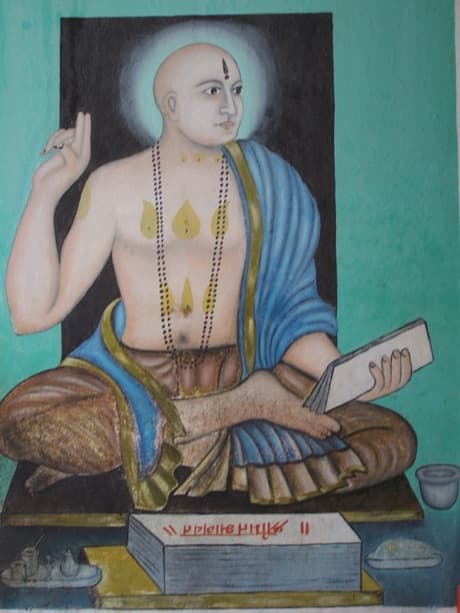
Madhvācārya · Dvaita
Madhva BhāṣyaSanskritEnglishOn verses 5.8–5.9
“सन्यासं स्पष्टयति पुनः श्लोकद्वयेन” - He further clarifies renunciation in these two verses.
Madhvācārya · Dvaita
Gītā Tātparya NirṇayaSanskritEnglishOn verses 5.8–5.9
“यथा न्यासस्य तथाऽऽह नैव किञ्चित् इत्यादिना | विष्णुनार्थैर्विरितानि मन आदिनी सर्वसः | वर्तं नेऽन्यो न स्वतन्त्र इति जानन् हि तत्त्ववित् || इति च |” - How renunciation could become the form of equanimity is explained in these two verses. Energized by Sri Vishnu alone the mind and all the rest become active. The knowledge that all the others are not independent in themselves is, verily, the essential Truth.

Jñāneśvar · Vārkarī
EnglishOn verses 5.8–5.9
8 'I do not do any action at all:' so should one intent upon Yoga think-knower of Truth that he is—even when, all the while, he is seeing, hearing, touching, tasting, eating, walking, sleeping, breathing: 9 Talking, ejecting, grasping, opening (eyes) as also closing (them): holding (always) that it is the sense-centres (that are) busied with the sense-objects. (38)
In this way are seen, in a Karmayogi Saint following the path of even-tempered activity, the visible signs of the Perfect Life of the Supreme Invisible Brahman, even before he leaves his body. Usually he could be seen in his body-form and doing all sorts of actions like other persons. The Karmayogin, just as others do, sees with his eyes, hears with his ears,—but the wonder of it is that he does not get entangled into them. He has the touch-sense and he is mindful of smelling. He can talk as suits the occasion. He takes food, avoids prohibited things, and enjoys sound sleep in proper time. He moves as he likes. In this way he performs all the actions. What more, he breathes, he winks, and does all other things but abides forever as one free from action on the strength of his personal pure self-experience gained as a Karmayogin. For, now with the Sunrise of Pure Knowledge he has awakened out of the slumbers which he had on the bed of ignorance and error that possessed him with the dreamy sense of happiness.
Swami Ramsukhdas · Modern
EnglishOn verses 5.8–5.9
'Tattvavit yuktah'—Here, this expression, stands for the wise striver following the Discipline of Knowledge, who has realized the truth, that all actions are performed by prakṛti (nature) and he has no affinity for them, he is merely a witness, of the activities of senses.
A 'Tattvavit' (knower of the truth), is he who thinks, that he (the self) is not the doer; is different from the body, senses,
mind, intellect and life-breath, which perform the activities.
In fact, a man (the self) is a non-doer, but by an error he regards the self, as a doer (Gītā 3/27). Actually all the cosmic, as well as individual actions are performed by Nature. But a man, by identifying himself with the body, regards its action as his action. So long as, he has in the least a sense of doership, he is called a striver. But when he realizes, that the Self is not at all the doer, he is called a great soul, who knows the truth. As a person, having awakened from sleep, has nothing to do with a dream, so has a great soul, having known the truth, no affinity for actions performed by the body and the senses etc.
Such a great soul, knows the truth that the self is different from the modes of nature by which actions, are performed. The self, is the base and illuminator of all the objects and actions etc., It pervades everywhere, and does not undergo any change, while objects and actions, undergo. The same fact, of distinction between the nature (Kṣetra) and soul (Kṣetrajña), has been pointed out by the Lord, in the sixteenth verse of the second chapter, in the fourth and the fifth verses of the seventh chapter and in the second, the nineteenth, the twenty-third and the thirty-fourth verses, of the thirteenth chapter.
'Paśyañśrṇvansprśañ...unmiṣannimiṣannapi'—Here, the five actions—seeing, hearing, touching, smelling and eating, pertain to five senses (eye, ear, skin, nose and tongue), while walking, grasping, speaking and emitting, these four actions relate to the five organs of actions*—feet, hands, tongue, genital organ and anus. Sleeping, is an activity of the mind, breathing of life-breath, opening and closing the eyes, of the sub-life-breath named Kūrma.
Thus, by mentioning the above thirteen actions, the Lord has
* Here the description of the five organs of action has been included in four actions, i.e., within 'emitting' the actions of both the genital organ and the anus have been included.
described all possible actions performed by sense-organs, organs of action, mind, life-breath and sub-life-breath. It means that all actions are performed by the body, senses, mind, intellect and life-breath etc., the evolutes of nature, rather than by the self. Secondly, it also denotes that a Sāṅkhyayogī can also perform other acts, such as eating or drinking, business, preaching, writing, reading, hearing and thinking etc., and also other acts for maintaining the body according to caste, order of life, nature and circumstances etc.
A man, considers himself a doer of those acts, which he performs intentionally i.e., by applying his mind and intellect etc., such as reading, writing, thinking, seeing and eating etc. But there are several other activities, such as breathing, opening and closing the eyes, which are performed unintentionally. Then, why has the Lord mentioned, in this verse, that a man should not regard himself as a doer of these acts? The answer is, that breathing is a natural activity, yet in breath-restraint (prāṇāyāma) etc., breathing becomes an intentional activity. Similarly, eyes can also be opened and shut intentionally. So the Lord, has mentioned that a man should not hold, that he is a doer. Secondly, the Lord by mentioning, breathing, opening and closing the eyes, wants to convey, that as a man during these activities thinks that he does nothing, so should he consider himself a non-doer, while other activities are performed.
All the above-mentioned activities, cannot be performed, without a base and an illuminator. The Lord, mentions these activities, in order to draw the attention of the strivers, to the self, which in spite of being the base, and illuminator of all these activities, does nothing.
'Indriyāṇīndriyārthesu vartanta iti dhārayan'—The question arises, how are actions performed, when there is no doership in the self. The Lord, answers the question, by declaring that actions are performed, when senses move among the sense-objects
i.e., the self remains the non-doer (untainted).
The term 'Indriyāṇi' (senses) includes the sense-organs, the organs of action, mind, life-breath and sub-life-breath etc. There are five objects of senses—sound, touch, sight, taste and smell. The senses move among these objects. All the senses and objects of senses, are the evolutes of nature. So all the actions are performed, by nature. The Lord declares:—
'All kinds of actions are done, by the modes of nature' (Gītā 3/27).
'All actions are performed by nature, alone' (Gītā 13/29).
The senses, and the sense-objects, being the evolutes of modes of nature, are called modes. So it is said, 'It is the modes, which are acting on the modes' (Gītā 3/28). 'There is no agent, other than the modes' (Gītā 14/19). It means, that when it is said that actions are performed by prakṛti (nature), or by modes of nature or by the senses—these three amount to one and the same.
Nature, always undergoes modifications, while the self never undergoes any. It ever remains free from a sense of doership. Nature can never be inactive, while in the self, no action is possible. The self is the illuminator of actions, while actions are subject to illumination.
'Naiva kiñcitkaromīti manyeta'—It means, that the self, was neither a doer in the past, nor is at present, or will be in future. Nature is ever active and all actions are performed by Nature, while the self, does nothing. But when the self identifies Itself with the evolute of Nature, and regards the activities of nature as Its activities, It becomes, a doer (Gītā 3/27).
As a man, sitting in the compartment of a moving train, does not move himself but he cannot remain without covering the distance covered by the train, while he is seated in a compartment. Similarly, when a man, assumes his affinity for the physical (gross), subtle or causal body, which are the evolutes of active Nature, he becomes a doer of actions performed by these.
A Sāṅkhyayogī, never assumes his affinity for the body, senses and mind etc., so he never regards himself, as a doer (Gītā 5/13). As actions, such as the growth of a boy from childhood to youth, changing of black hair into grey and white, digestion of food and weakening or strengthening of a body automatically take place, so does a Sāṅkhyayogī think, that all other activities are undertaken naturally and he is not their doer.
In the Gītā, a person who regards himself as a doer of actions, has been spoken of adversely. The Lord declares, 'He whose mind is deluded by egoism, thinks that he is the doer' (3/27). 'He who looks upon himself as the doer (agent), he of perverted mind and untrained understanding, does not see (truly)' (18/16). But the Lord praises a person, who sees the self as actionless, by declaring, 'He who sees that all actions are performed by nature (prakṛti) alone, and likewise that the self is not the doer, he verily sees (13/29).
The Lord, uses the term 'eva' (even), in order to convey that a striver should never think, that he is a doer. By doing so, his sense of doership comes to an end and his actions change into inaction. The same idea, has been conveyed by the Lord, in the thirty-third verse of the third chapter, by the term 'Ceṣṭate', which means that his actions are nothing more than mere gestures, of actions.
The second interpretation of the term 'Eva', is that even when a man identifies himself with the body and considers himself the doer, he cannot be the doer. It is merely an assumption, which can never come true. The Lord, in the thirty-first verse of the thirteenth chapter, declares, 'The imperishable supreme self, though dwelling in the body, neither acts nor is tainted.' 'The soul, residing in Nature experiences pleasure and pain' (Gītā 13/21). In spite of experiencing the modes born of nature, the man (self), ever remains the same. But he gets tainted, because he does not see, the self.
The Self, is sentient while the world, including the body, is insentient. So the self experiences pleasure and pain. Why? The reason is, that it identifies itself with the body (world) and experiences pleasure and pain. But if It knows, its true nature that It is imperishable, uniform and untainted, while nature in the form of the world, the body and pleasures and pains, is perishable, then it cannot be an experiencer, of pleasures and pains etc.
An Important Fact
The Lord, in the twenty-seventh verse of the third chapter, declared, 'He whose mind is deluded by egoism, thinks that he is the doer.' Here, in this verse also, the same fact has been pointed out by the Lord through a negative inference, when He declares, 'The Sāṅkhyayogī who knows the truth realizes that he does nothing. Here the term, 'Manyeta' (think) does not mean, 'to assume' but 'to realize'. The self, remains a non-doer during the performance and non-performance of actions, equally. So, the great soul who has known the truth, realizes that the self ever remains the same, as a non-doer, either during the performance or non-performance of actions. The self, as the base and illuminator, never undergoes the least modification.
The self, never lacks anything, but when It identifies Itself with nature, It feels a deficiency in It, and so It desires objects, in order to make up. In order to fulfil that desire, It becomes a doer.
No action, can be performed without nature, because the instruments, such as the senses and the body etc., with which actions are performed, belong to nature. So a doer, has to depend on them. As a goldsmith howsoever an expert he may be, cannot prepare ornaments, without instruments, such as an anvil and a hammer etc. In the same way, a doer cannot perform action without instruments. Thus qualifications, ability and instruments—all the three belong to nature (prakṛti), but these appear to be in the
self, because of affinity for Nature. The instruments, undergo modifications while the self ever remains the same. Therefore, they have no affinity for the self.
A man (the self) thinks, that he is a doer by assuming his affinity for Nature, otherwise there is no doership, in him. As a Brāhmaṇa ever remains convinced that he is a Brāhmaṇa, so does a great soul, who knows the truth, believe that he is not a doer.
**Appendix**—A discriminating Jñānayogī by performing actions with senses of perception, organs of actions, mind (internal instrument) and life-breath first assumes 'I myself do nothing' and afterwards he realizes it. In fact in the Divine Existence neither an action is performed nor any activity happens. All actions performed in the gross, subtle and causal bodies actually take place in Prakṛti, not in the self. Therefore the self has no connection at all with any action.
Through ignorance a man by identifying 'ego' with the self, is deluded—'ahaṅkāra vimūḍhātmā' (Gītā 3/27); the same man by the use of discrimination by detaching the self from ego, becomes 'tattvavit' (an enlightened soul) viz., he has no sense of doership. He ever remains established in the divine self.
The self, being deluded by egoism by an error, thinks itself a doer and is thus bound by actions and their fruit and paves the way to eighty-four lac forms of lives. Now if a man regards himself as detached from egoism and does not consider himself a doer viz., realizes the self as it is, there is no surprise about his being an enlightened soul (liberated soul). It means that by assuming the unreal as real, unreal appears to be real, then what is the surprise, if by accepting the real as real, it is seen real?
In fact when a man assumes the self as a doer and an enjoyer, at that time also he is neither a doer nor an enjoyer—'śarīra-stho'pi kaunteya na karoti na lipyate' (Gītā 13/31). The reason is that the self is merely an Ever-Existent Reality. In that Reality
there is no ego and ego has no existence. Therefore 'I am a doer'—however firm this assumption may be but it is certainly an error. An error is wiped out as soon as it is realized that it is an error—this is the rule. A cave may have been dark for hundreds of years, but darkness disappears immediately as soon as there is light, it doesn't need years and months to disappear. Therefore a striver should firmly hold 'I am not a doer'. Then this assumption will no longer remain an assumption but it will be transformed into realization.
'I' this is identification of both sentient and insentient.' 'I' is used for matter (identified ego) and also for the sentient (self). For example—'I am a doer'—in it there is perception of insentient and 'I am not a doer'—in it (being negation of matter) the self is perceived. He, who has an eye on matter viz., regards ego as the self, is deluded—*ahamkāra vimūdhātmā*' and who has an eye on the sentient (the self free from ego) is an enlightened soul.
When a striver at present 'I myself do nothing'—thus endeavours to realize the self as a non-doer, he faces a serious problem. When he remembers virtuous actions done in the past, he gets pleased that he had done very good actions. When he remembers the forbidden actions done in the past, he becomes sad that he had done such a sinful act and he had committed such a blunder. Thus the impression of the past actions make him happy and sad. In this connection there is a vital point which needs attention. The self is never a doer—neither at present nor in the past nor in the future. Therefore a striver should perceive that as the self is a non-doer at present, so was it in the past. The reason is that the present has become the past. The self is merely an Ever Existent Entity in which no performance of action is possible. Actions are performed only by an ignorant man whose mind is deluded by egoism (Gītā 3/27). A striver feels happy and sad and is worried by remembering the past actions, that is also really because of egoism. At present being deluded by egoism
viz., by having affinity for egoism, a striver feels happy and sad. If we perceive from the cursory (gross) point of view, as the past has no existence now, so are the actions of the past clearly non-existent. If we perceive from the subtle point of view, we perceive that as in the past, the present was non-existent, so was the past also non-existent. Similarly as the past is non-existent now, so is the present non-existent now. But the entity (the self) ever exists. It means that the self is totally free from the limits of past, present and future time. The self transcends the limits of time. Therefore the self is never a doer. In that entity, which transcends time and state (condition), imposition of doership and enjoyership by connecting it with a particular time or situation, is ignorance. Therefore the memory of the actions performed in the past, is the memory of the person whose mind is deluded by egoism rather than of an enlightened soul.
'Naiva kiñcitkaromi' means that actions have no existence but the entity exists. Therefore a striver should have an eye on that entity. That entity being divine is 'Knowledge personified' and being immutable is 'bliss personified'. This bliss is integral, quiet and immutable (uniform).
Because of the identification of the self with the body, in every action a man thinks that he himself is the doer as 'I see, I hear etc.' An action takes place in the body but a man assumes it in the self. In the self there is no action, the self is free from the performance or non-performance of actions (Gītā 3/18). Therefore even when the actions are performed by the body, a man should have an eye on the self and hold, 'I do nothing at all.'
*Link:—Having described, in the seventh verse, how a Karmayogī remains untainted by actions, and in the eighth and the ninth verses, how a Sāṅkhyayogī remains untainted, the Lord, in the next verse, describes how a Bhaktiyogī, remains untainted by actions.*
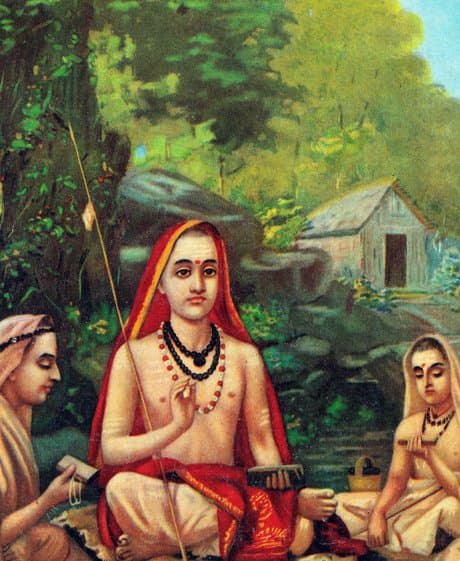
Ādi Śaṅkarācārya · Advaita
SanskritOn verses 5.8–5.9
नैव किञ्चित् करोमीति युक्तः समाहितः सन् मन्येत चिन्तयेत्, तत्त्ववित् आत्मनो याथात्म्यं तत्त्वं वेत्तीति तत्त्ववित् परमार्थदर्शीत्यर्थः ॥ कदा कथं वा तत्त्वमवधारयन् मन्येत इति, उच्यते -- पश्यन्निति । मन्येत इति पूर्वेण सम्बन्धः । यस्य एवं तत्त्वविदः सर्वकार्यकरणचेष्टासु कर्मसु अकर्मैव, पश्यतः सम्यग्दर्शिनः तस्य सर्वकर्मसन्न्यासे एव अधिकारः, कर्मणः अभावदर्शनात् । न हि मृगतृष्णिकायां उदकबुद्ध्या पानाय प्रवृत्तः उदकाभावज्ञानेऽपि तत्रैव पानप्रयोजनाय प्रवर्तते ॥
यस्तु पुनः अतत्त्ववित् प्रवृत्तश्च कर्मयोगे --
Ādi Śaṅkarācārya · Advaita
HindiOn verses 5.8–5.10
वास्तवमें वह कुछ करता भी नहीं है, इसलिये—
आत्माके यथार्थ स्वरूपका नाम तत्त्व है उसको जाननेवाला तत्त्वज्ञानी-परमार्थदर्शी, समाहित होकर ऐसे माने कि मैं कुछ भी नहीं करता।
तत्त्वको समझकर कब और किस प्रकार ऐसे माने? सो कहते हैं—
(देखता, सुनता, छूता, सूँघता, खाता, चलता, सोता, श्वास लेता, बोलता, त्याग करता, ग्रहण करता तथा आँखोंको खोलता और मूँदता हुआ भी इन्द्रियाँ इन्द्रियोंके विषयमें बर्त रही हैं ऐसे समझकर) ऐसे माने कि 'मैं कुछ भी नहीं करता।' इस प्रकार इसका पहलेके आधे श्लोकसे सम्बन्ध है।
जो इस प्रकार तत्त्वज्ञानी है अर्थात् सब इन्द्रियाँ और अन्तःकरणोंकी चेष्टारूप कर्मोंमें अकर्म देखनेवाला है, वह अपनेमें कर्मोंका अभाव देखता है, इसलिये उस यथार्थ ज्ञानीका सर्वकर्मसंन्यासमें ही अधिकार है।
क्योंकि मृगतृष्णिकामें जल समझकर उसको पीनेके लिये प्रवृत्त हुआ मनुष्य उसमें जलके अभावका ज्ञान हो जानेपर फिर भी वही जल पीनेके लिये प्रवृत्त नहीं होता
परंतु जो तत्त्वज्ञानी नहीं है और कर्मयोगमें लगा हुआ है (यानी)—
जो 'स्वामीके लिये कर्म करनेवाले नौकरकी भाँति मैं ईश्वरके लिये करता हूँ' इस भावसे सब कर्मोंको ईश्वरमें अर्पण करके यहाँतक कि मोक्षरूप फलकी भी आसक्ति छोड़कर कर्म करता है।
वह, जैसे कमलका पत्ता जलमें रहकर भी उससे लिप नहीं होता, वैसे ही पापोंसे लिप नहीं होता
Jñāneśvar · Vārkarī
MarathiOn verses 5.8–5.9
जे पार्था तया देहीं । मी ऐसा आठऊ नाहीं । तरी कर्तृत्व कैचें काई । उरे सांगे ॥ ३८ ॥
ऐसें तनुत्यागेंवीण । अमूर्ताचे गुण । दिसती संपूर्ण । योगयुक्तां ॥ ३९ ॥
एऱ्हवीं आणिकांचिये परी । तोही एक शरीरी । अशेषाही व्यापारीं । वर्ततु दिसे ॥ ४० ॥
तोही नेत्रीं पाहे । श्रवणीं ऐकतु आहे । परि तेथींचा सर्वथा नोहे । नवल देखें ॥ ४१ ॥
स्पर्शासि तरी जाणे । परिमळु सेवी घ्राणें । अवसरोचित बोलणें । तयाहि आथी ॥ ४२ ॥
आहारातें स्वीकारी । त्यजावें तें परिहरि । निद्रेचिया अवसरीं । निदिजे सुखें ॥ ४३ ॥
आपुलेनि इच्छावशें । तोही गा चालतु दिसे । पैं सकळ कर्म ऐसें । रहाटे कीर ॥ ४४ ॥
हें सांगों काई एकैक । देखें श्वासोच्छासादिक । आणि निमिषोन्निमिष । आदिकरुनि ॥ ४५ ॥
पार्था तयाचे ठायीं । हें आघवेंचि आथि पाहीं । परि तो कर्ता नव्हे कांही । प्रतीतिबळें ॥ ४६ ॥
जैं भ्रांती सेजे सुतला । तैं स्वप्नसुखें भुतला । मग तो ज्ञानोदयी चेइला । म्हणोनियां ॥ ४७ ॥
Jñāneśvar · Vārkarī
HindiOn verses 5.8–5.9
(5.38) क्योंकि, हे पार्थ, उसे इस बात का स्मरण नहीं रहता कि मैं देह रूप हूँ। फिर कहो उसे क्या कर्तृत्व बाकी रह जाता है?
(5.39) इस प्रकार योगयुक्त पुरुषों में देहत्याग के बिना ही परब्रह्म के सम्पूर्ण गुण दिखाई देते हैं।
(5.40) यों तो अन्यों के समान वह भी एक देहधारी है और अशेष कर्मों में व्यवहार करता हुआ दिखाई देता है।
(5.41) वह भी नेत्रों से देखता है, कानों से सुनता है परन्तु आश्चर्य देखो कि वह उन इन्द्रियों में सर्वथा आसक्त नहीं रहता।
(5.42) उसे स्पर्श का ज्ञान होता है, वह नाक से सुगन्ध सूँघता है, जिसका त्याग करना चाहिए, समयोचित भाषण भी करता है,
(5.43) आहार को स्वीकार करता है, जिसका त्याग करना चाहिए उसे छोड़ता है, निद्रा के समय सुख से सोता है,
(5.44) अपने इच्छानुसार चलता हुआ दिखाई देता है। इस प्रकार वह निश्चय से सब कर्मों में व्यवहार करता है। (5.45) एक-एक बात क्या कहें, श्वास और उच्छ्वास करना और पलक मुँदना-खोलना आदि
(5.46) सब बातें हे पार्थ! वह करता है, तथापि वह अनुभव-बल के कारण इन सब कर्मों का कर्ता नहीं कहा जा सकता।
(5.47) क्योंकि जब वह भ्रान्तिरूपी शय्या पर सोया था तब उसे स्वप्नरूपी सुख का अनुभव होता था, परन्तु अब वह ज्ञानोदय-काल में जागृत हो गया है।

Sri Udiya Baba · Modern
HindiOn verses 5.8–5.9
संगति— वह किस प्रकार का आचरण करने वाले लिप्त नहीं होता यह बात आगे के दो श्लोकों में दिखलाते हैं—
भावार्थ— योगयुक्त तत्त्ववेत्ता इन्द्रियाँ ही इन्द्रियों के विषयों में प्रवृत्त होती हैं—ऐसी धारणा रखकर देखता हुआ, सुनता हुआ, स्पर्श करता हुआ, सूँघता हुआ, भोजन करता हुआ, जाता हुआ, सोता हुआ, श्वास लेता हुआ, प्रलाप करता हुआ, त्यागता हुआ, ग्रहण करता हुआ और निमेषीन्मेष करता हुआ भी ऐसा जाने कि मैं कुछ भी नहीं करता।
व्याख्या— यह ज्ञानवान् की निष्ठा है। जो यह जानता है कि यह सब प्रपञ्च मृगतृष्णा के जल के समान है। वह प्रथम तो जल लेने जाता ही नहीं, यदि अज्ञानियों के साथ या उनके आग्रह से जाता है तो भी जानता है कि यह मैं खेल ही कर रहा हूँ वहाँ मिलने वाला कुछ नहीं है। अज्ञानियों को उसकी कोई क्रिया शास्त्रविरुद्ध भी जान पड़े तथापि अपनी दृष्टि में तो वह ठीक ही करता है। उसकी वृत्ति निरन्तर आत्माकार रहती है, अतः सब कुछ करते हुए भी अपनी दृष्टि में वह कुछ नहीं करता।
प्रश्न— उपर्युक्त नवम श्लोक में कहा है कि मैं कुछ नहीं करता, इन्द्रियाँ ही इन्द्रियों के विषयों में वर्तती हैं—ऐसा किस प्रकार होता है?
उत्तर— जितने भी विषय हैं उन्हें इन्द्रियाँ ही भोगती हैं। इसी से रसना में कोई दोष रहने से रसका स्वाद प्रतीत नहीं होता। यदि आत्मा भोक्ता होता तो रसनेन्द्रिय के बिना भी स्वाद को ग्रहण कर सकता था। इसी प्रकार अन्य इन्द्रियों और उनके विषयों के विषय में समझना चाहिये। अथवा यों समझो जब तत्त्वज्ञ की दृष्टि में क्रिया और कर्ता की ही सत्ता नहीं है तो वह अपने को कर्ता कैसे मानेगा।
Swami Ramsukhdas · Modern
HindiOn verses 5.8–5.9
‘तत्त्ववित् युक्तः’—यहाँ ये पद सांख्य-योगके विवेकशील साधकके वाचक हैं, जो तत्त्ववित् महापुरुषकी तरह निर्भ्रान्त अनुभव करनेके लिये तत्पर रहता है। उसमें ऐसा विवेक जाग्रत् हो गया है कि सब क्रियाएँ प्रकृतिमें ही हो रही हैं, उन क्रियाओंका मेरे साथ कोई सम्बन्ध है ही नहीं।
जो अपनेमें अर्थात् स्वरूपमें कभी किंचिन्मात्र भी किसी क्रियाके कर्तापनको नहीं देखता, वह ‘तत्त्ववित्’ है। उसमें नित्य-निरन्तर स्वाभाविक ही यह सावधानी रहती है कि स्वरूपमें कर्तापन है ही नहीं। प्रकृतिके कार्य शरीर, इन्द्रियाँ, मन, बुद्धि, प्राण आदिके साथ वह कभी भी अपनी एकता स्वीकार नहीं करता, इसलिये इनके द्वारा होनेवाली क्रियाओंको वह अपनी क्रियाएँ मान ही कैसे सकता है?
वास्तवमें उपर्युक्त स्थिति स्वरूपसे सभी मनुष्योंकी है; परन्तु वे भूलसे स्वरूपको क्रियाओंका कर्ता मान लेते हैं (गीता—तीसरे अध्यायका सताईसवाँ श्लोक)। परमात्माकी जिस शक्तिसे समष्टि संसारकी क्रियाएँ हो रही हैं, उसी शक्तिसे व्यष्टि शरीरकी क्रियाएँ भी हो रही हैं। परन्तु समष्टिके ही शुद्ध अंश व्यष्टिके साथ अपना सम्बन्ध मान लेनेके कारण मनुष्य व्यष्टिकी कुछ क्रियाओंको अपनी क्रियाएँ मानने लग जाता है। इस मान्यताको हटानेके लिये ही भगवान् कहते हैं कि साधक अपनेको कभी कर्ता न माने। जबतक किसी भी अंशमें कर्तापनकी मान्यता है, तबतक वह साधक कहा जाता है। जब अपनेमें कर्तापनकी मान्यताका सर्वथा अभाव होकर अपने स्वरूपका अनुभव हो जाता है, तब वह तत्त्ववित् महापुरुष कहा जाता है। जैसे स्वप्नसे जगनेपर मनुष्यका स्वप्नसे बिलकुल सम्बन्ध नहीं रहता, ऐसे ही तत्त्ववित् महापुरुषका शरीरादिसे होनेवाली
क्रियाओंसे बिलकुल सम्बन्ध (कर्तापन) नहीं रहता।
यहाँ ‘तत्त्ववित्’ वही है, जो प्रकृति और पुरुषके विभागको अर्थात् गुण और क्रिया सब प्रकृतिमें है, प्रकृतिसे अतीत तत्त्वमें गुण और क्रिया नहीं है—इसको ठीक-ठीक जानता है। प्रकृतिसे अतीत निर्विकार तत्त्व तो सबका प्रकाशक और आधार है। सबका प्रकाशक होता हुआ भी वह प्रकाश्यके अन्तर्गत ओत-प्रोत है। प्रकाश्य (शरीर आदि) में घुला-मिला रहनेपर भी प्रकाशक प्रकाशक ही है और प्रकाश्य प्रकाश्य ही है। ऐसे ही वह सबका आधार होता हुआ भी सबके (आधेयके) कण-कणमें व्याप्त है; पर वह कभी आधेय नहीं होता। कारण कि जो प्रकाशक और आधार है, उसमें करना और होना नहीं है। करना और होनारूप परिवर्तन तो प्रकाश्य अथवा आधेयमें ही है। इस तरह प्रकाशक और प्रकाश्य, आधार और आधेयके भेद-(विभाग-) को जो ठीक तरहसे जानता है, वही ‘तत्त्ववित्’ है। इसी प्रकृति (क्षेत्र) और पुरुष-(क्षेत्रज्ञ-) के विभागको जाननेकी बात भगवान्ने पहले दूसरे अध्यायके सोलहवें श्लोकमें और आगे सातवें अध्यायके चौथे-पाँचवें तथा तेरहवें अध्यायके दूसरे, उन्नीसवें, तेईसवें और चौतीसवें श्लोकमें कही है।
‘पश्यञ्शृण्वन्स्पृशन्... उन्मिषन्निमिषन्नपि’—यहाँ देखना, सुनना, स्पर्श करना, सूँघना और खाना—ये पाँचों क्रियाएँ (क्रमशः नेत्र, श्रोत्र, त्वचा, घ्राण और रसना—इन पाँच) ज्ञानेन्द्रियोंकी हैं। चलना, ग्रहण करना, बोलना और मल-मूत्रका त्याग करना—ये चारों क्रियाएँ (क्रमशः पाद, हस्त, वाक्, उपस्थ और गुदा—इन पाँच) कर्मेन्द्रियोंकी हैं। सोना—यह एक क्रिया अन्तःकरणकी है। श्वास लेना—यह एक क्रिया प्राणकी और आँखें खोलना
* यहाँ पाँचों कर्मेन्द्रियोंकी क्रियाओंका वर्णन चार क्रियाओंके अन्तर्गत किया गया है अर्थात् ‘विसृजन्’ क्रियाके अन्तर्गत ही उपस्थ और गुदाकी क्रियाओंका वर्णन किया गया है।
तथा मूँदना—ये दो क्रियाएँ ‘कूर्म’ नामक उपप्राणकी हैं। उपर्युक्त तेरह क्रियाएँ देकर भगवान्ने ज्ञानेन्द्रियाँ, कर्मेन्द्रियाँ, अन्तःकरण, प्राण और उपप्राणसे होनेवाली सम्पूर्ण क्रियाओंका उल्लेख कर दिया है। तात्पर्य यह है कि सम्पूर्ण क्रियाएँ प्रकृतिके कार्य शरीर, इन्द्रियाँ, मन, बुद्धि, प्राण आदिके द्वारा ही होती हैं, स्वयंके द्वारा नहीं। दूसरा एक भाव यह भी प्रतीत होता है कि सांख्ययोगिके द्वारा वर्ण, आश्रम, स्वभाव, परिस्थिति आदिके अनुसार शास्त्रविहित शरीर-निर्वाहकी क्रियाएँ, खान-पान, व्यापार करना, उपदेश देना, लिखना, पढ़ना, सुनना, सोचना आदि क्रियाएँ न होती हैं—ऐसी बात नहीं है। उसके द्वारा ये सब क्रियाएँ हो सकती हैं।
मनुष्य अपनेको उन्हीं क्रियाओंका कर्ता मानता है, जिनको वह जानकर अर्थात् मन-बुद्धिपूर्वक करता है; जैसे पढ़ना, लिखना, सोचना, देखना, भोजन करना आदि। परन्तु अनेक क्रियाएँ ऐसी होती हैं, जिन्हें मनुष्य जानकर नहीं करता; जैसे—श्वासका आना-जाना, आँखोंका खुलना और बंद होना आदि। फिर इन क्रियाओंका कर्ता अपनेको न माननेकी बात इस श्लोकमें कैसे कही गयी? इसका उत्तर यह है कि सामान्यरूपसे श्वासोंका आना-जाना आदि क्रियाएँ स्वाभाविक होनेवाली हैं; किन्तु प्राणायाम आदिमें मनुष्य श्वास लेना आदि क्रियाएँ जानकर करता है। ऐसे ही आँखोंको खोलना और बंद करना भी जानकर किया जा सकता है। इसलिये इन क्रियाओंका कर्ता भी अपनेको न माननेके लिये कहा गया है। दूसरी बात, जैसे मनुष्य ‘श्वसन उन्मिषन् निमिषन्’ (श्वास लेना, आँखोंको खोलना और मूँदना)—इन क्रियाओंको स्वाभाविक मानकर इनमें अपना कर्तापन नहीं मानता, ऐसे ही अन्य क्रियाओंको भी स्वाभाविक मानकर उनमें अपना कर्तापन नहीं मानना चाहिये।
यहाँ ‘पश्यन्’ आदि जो तेरह क्रियाएँ बतायी हैं, इनका बिना किसी आधारके होना सम्भव नहीं है। ये क्रियाएँ जिसके आश्रित होती हैं अर्थात् इन क्रियाओंका जो आधार है, उसमें कभी कोई क्रिया नहीं होती। ऐसे ही प्रकाशित होनेवाली ये सम्पूर्ण क्रियाएँ बिना किसी प्रकाशके सिद्ध नहीं हो सकती। जिस प्रकाशसे ये क्रियाएँ प्रकाशित होती हैं, जिस प्रकाशके अन्तर्गत होती हैं, उस प्रकाशमें कभी कोई क्रिया हुई नहीं, होती नहीं, होगी नहीं, हो सकती नहीं और होनी सम्भव भी नहीं। ऐसा वह तत्त्व सबका आधार, प्रकाशक और स्वयं प्रकाशस्वरूप
है। वह सबमें रहता हुआ भी कुछ नहीं करता। उस तत्त्वकी तरफ लक्ष्य करानेमें ही उपर्युक्त इन तेरह क्रियाओंका तात्पर्य है।
‘इन्द्रियाणीन्द्रियार्थेषु वर्तन्त इति धारयन्’—जब स्वरूपमें कर्तापन है ही नहीं, तब क्रियाएँ कैसे और किसके द्वारा हो रही हैं?—इस प्रश्नका उत्तर देते हुए भगवान् उपर्युक्त पदोंमें कहते हैं कि सम्पूर्ण क्रियाएँ इन्द्रियोंके द्वारा इन्द्रियोंके विषयोंमें ही हो रही हैं। यहाँ भगवान्का तात्पर्य इन्द्रियोंमें कर्तृत्व बतानेमें नहीं है, प्रत्युत स्वरूपको कर्तृत्वरहित (निलिप्त) बतानेमें है।
ज्ञानेन्द्रियाँ, कर्मेन्द्रियाँ, अन्तःकरण, प्राण, उपप्राण आदि सबको यहाँ ‘इन्द्रियाणि’ पदके अन्तर्गत लिया गया है। इन्द्रियोंके पाँच विषय हैं—शब्द, स्पर्श, रूप, रस और गन्ध। इन विषयोंमें ही इन्द्रियोंका बर्ताव होता है। सम्पूर्ण इन्द्रियाँ और इन्द्रियोंके विषय प्रकृतिका कार्य हैं। इसलिये इन्द्रियोंके द्वारा होनेवाली सम्पूर्ण क्रियाएँ प्रकृतिमें ही हो रही हैं—
( १ ) प्रकृतेः क्रियमाणानि गुणैः कर्माणि सर्वशः। (गीता ३। २७)
( २ ) प्रकृत्यैव च कर्माणि क्रियमाणानि सर्वशः। (गीता १३। २९)
गुणोंका कार्य होनेसे इन्द्रियों और उनके विषयोंको ‘गुण’ ही कहा जाता है। अतः गुण ही गुणोंमें बरत रहे हैं—‘गुणा गुणेषु वर्तन्ते’ (गीता ३। २८)। गुणोंके सिवाय दूसरा कोई कर्ता नहीं है—‘नान्यं गुणेभ्यः कर्तारं यदा द्रष्टानुपश्यति’ (गीता १४। १९)। तात्पर्य यह है कि क्रियामात्रको चाहे प्रकृतिसे होनेवाली कहें, चाहे प्रकृतिके कार्य गुणोंके द्वारा होनेवाली कहें, चाहे इन्द्रियोंके द्वारा होनेवाली कहें, बात वास्तवमें एक ही है।
क्रियाका तात्पर्य है—परिवर्तन। परिवर्तनरूप क्रिया प्रकृतिमें ही होती है। स्वरूपमें परिवर्तनरूप क्रिया लेशमात्र भी नहीं है। कारण कि प्रकृति निरन्तर क्रियाशील है और स्वरूप कर्तापनसे रहित है। प्रकृति कभी अक्रिय नहीं हो सकती और स्वरूपमें कभी क्रिया नहीं हो सकती। क्रियामात्र प्रकाश्य है और स्वरूप प्रकाशक है।
‘नैव किञ्चित्करोमीति मन्येत’—यहाँ ‘मैं (स्वरूपसे) कर्ता नहीं हूँ’—इसका तात्पर्य यह नहीं है कि मैं (स्वरूप) पहले कर्ता था। स्वरूपमें कर्तापन न तो वर्तमानमें है, न भूतमें था और न भविष्यमें ही होगा।
क्रियामात्र प्रकृतिमें ही हो रही हैं; क्योंकि प्रकृति सदा क्रियाशील है और पुरुष अर्थात् चेतन-तत्त्व सदा क्रियारहित है। जब चेतन अनादि भूलसे प्रकृतिके कार्यके साथ तादात्म्य कर लेता है, तब वह प्रकृतिकी क्रियाओंको अपनी क्रियाएँ मानने लग जाता है और उन क्रियाओंका कर्ता स्वयं बन जाता है (गीता—तीसरे अध्यायका सत्ताईसवाँ श्लोक)।
जैसे, एक मनुष्य चलती हुई रेलगाड़ीके डिब्बेमें बैठा हुआ है, चल नहीं रहा है; परन्तु रेलगाड़ीके चलनेके कारण उसका चले बिना ही चलना हो जाता है। रेलगाड़ीमें चढ़नेके कारण अब वह चलनेसे रहित नहीं हो सकता। ऐसे ही क्रियाशील प्रकृतिके कार्यरूप स्थूल, सूक्ष्म और कारण—किसी भी शरीरके साथ जब स्वयं अपना सम्बन्ध जोड़ लेता है, तब स्वयं कर्म न करते हुए भी वह उन शरीरोंसे होनेवाली क्रियाओंका कर्ता हुए बिना रह नहीं सकता।
सांख्ययोगी शरीर, इन्द्रियाँ, अन्तःकरण आदिके साथ कभी अपना सम्बन्ध नहीं मानता, इसलिये वह कर्मोंका कर्तापन अपनेमें कभी अनुभव नहीं करता (गीता—पाँचवें अध्यायका तेरहवाँ श्लोक)। जैसे शरीरका बालकसे युवा होना, बालोंका कालेसे सफेद होना, खाये हुए अन्नका पचना, शरीरका सबल अथवा निर्बल होना आदि क्रियाएँ स्वाभाविक (अपने-आप) होती हैं, ऐसे ही दूसरी सम्पूर्ण क्रियाओंको भी सांख्ययोगी स्वाभाविक होनेवाली अनुभव करता है। तात्पर्य है कि वह अपनेको किसी भी क्रियाका कर्ता अनुभव नहीं करता।
गीतामें स्वयंको कर्ता माननेवालेकी निन्दा की गयी है (तीसरे अध्यायका सत्ताईसवाँ श्लोक)। इसी प्रकार शुद्ध स्वरूपको कर्ता माननेवालेको मलिन अन्तःकरणवाला और दुर्मति कहा गया है (अठारहवें अध्यायका सोलहवाँ श्लोक)। परन्तु स्वरूपको अकर्ता माननेवालेकी प्रशंसा की गयी है (तेरहवें अध्यायका उन्तीसवाँ श्लोक)।
‘एव’ पद देनेका तात्पर्य है कि साधक कभी किंचिन्मात्र भी अपनेमें कर्तापनकी मान्यता न करे अर्थात् कभी किसी भी अंशमें अपनेको किसी कर्मका कर्ता न माने। इस प्रकार जब अपनेमें कर्तापनका भाव नहीं रहता, तब उसके द्वारा होनेवाले कर्मोंकी संज्ञा ‘कर्म’ नहीं रहती, प्रत्युत ‘क्रिया’ रहती है। उन्हें ‘चेष्टामात्र’ कहा जाता है। इसी लक्ष्यसे तीसरे अध्यायके तैंतीसवें श्लोकमें ज्ञानी महापुरुषसे होनेवाली क्रियाको ‘चेष्टते’ पदसे कहा गया है।
यहाँ ‘एव’ पद देनेका दूसरा तात्पर्य यह है कि स्वयंका शरीरके साथ तादात्म्य होनेपर भी, शरीरके साथ कितना ही घुल-मिल जानेपर भी और अपनेको ‘मैं कर्ता हूँ’ ऐसे मान लेनेपर भी स्वयंमें कभी कर्तृत्व आता ही नहीं और न कभी आ ही सकता है। किंतु प्रकृतिके साथ तादात्म्य करके यह स्वयं अपनेमें कर्तृत्व मान लेता है; क्योंकि इसमें मानने और न माननेकी सामर्थ्य है, स्वतन्त्रता है, इसलिये यह अपनेको कर्ता भी मान लेता है और जब यह अपनी तरफ देखता है तो अकर्तापन भी इसके अनुभवमें आता है। ये दोनों बातें (अपनेमें कर्तृत्व मानना और न मानना) होनेपर भी स्वयंमें कभी कर्तृत्व आता ही नहीं। तेरहवें अध्यायके इकतीसवें श्लोकमें भगवान्ने कहा है—शरीरमें रहता हुआ भी वह न करता है और न लिप्त ही होता है। भोक्ता तो प्रकृतिस्थ पुरुष ही बनता है (गीता—तेरहवें अध्यायका इक्कीसवाँ श्लोक)। गुणोंका—क्रियाफलका भोक्ता बननेपर भी वह वास्तवमें अपने स्वरूपसे कभी च्युत नहीं होता; किन्तु अपने स्वरूपकी तरफ दृष्टि न रहनेसे अपनेमें लिप्तताका भाव पैदा होता है।
यद्यपि पुरुष स्वयं स्वरूपसे निर्लिप्त है, उसमें भोक्तापन है नहीं, हो सकता नहीं, तथापि सुख-दुःखका भोक्ता तो स्वयं पुरुष (चेतन) ही बनता है अर्थात् सुखी-दुःखी तो स्वयं पुरुष (चेतन) ही होता है, जड़ नहीं; क्योंकि जड़में सुखी-दुःखी होनेकी शक्ति और योग्यता नहीं है। तो फिर पुरुषमें भोक्तापन है नहीं और सुख-दुःखका भोक्ता पुरुष ही बनता है—ये दोनों बातें कैसे? भोगके समय जो भोगाकार—सुख-दुःखाकार वृत्ति बनती है, वह तो प्रकृतिकी होती है और प्रकृतिमें ही होती है। परन्तु उस वृत्तिके साथ तादात्म्य होनेसे सुखी-दुःखी होना अर्थात् ‘मैं सुखी हूँ, मैं दुःखी हूँ’—ऐसी मान्यता अपनेमें स्वयं पुरुष ही करता है। कारण कि यह मानना पुरुषके बिना नहीं होता अर्थात् यह मानना पुरुषमें ही हो सकता है, जड़में नहीं; इस दृष्टिसे पुरुष भोक्ता कहा गया है। सुखी-दुःखी होना अपनेमें माननेपर भी अर्थात् सुखके समय सुखी और दुःखके समय दुःखी—ऐसी मान्यता अपनेमें करनेपर भी पुरुष स्वयं अपने स्वरूपसे निर्लिप्त और सुख-दुःखका प्रकाशकमात्र ही रहता है; इस दृष्टिसे पुरुषमें भोक्तापन है नहीं और हो सकता ही नहीं। कारण कि एकदेशीयपनसे ही भोक्तापन होता है और एकदेशीयपन अहंकारसे होता है। अहंकार प्रकृतिका कार्य है और प्रकृति जड़ है; अतः उसका कार्य भी जड़ ही होता
है अर्थात् भोक्तापन भी जड़ ही होता है। इसलिये भोक्तापन पुरुष-(चेतन-) में नहीं है। अगर यह पुरुष सुखके समय सुखी और दुःखके समय दुःखी होता तो इसका स्वरूप परिवर्तनशील ही होता; क्योंकि सुखका भी आरम्भ और अन्त होता है तथा दुःखका भी आरम्भ और अन्त होता है। ऐसे ही यह पुरुष भी आरम्भ और अन्तवाला हो जाता, जो कि सर्वथा अनुचित है। कारण कि गीताने इसको अक्षर, अव्यय और निलिप्त कहा है और तत्त्वज्ञ पुरुषोंने इसका स्वरूप एकरस, एकरूप माना है। अगर इस पुरुषको सुखके समय सुखी और दुःखके समय दुःखी होनेवाला ही मानें, तो फिर पुरुष सदा एकरस, एकरूप रहता है—ऐसा कैसे कह सकते हैं?
विशेष बात
तीसरे अध्यायके सताईसवें श्लोकमें 'अहङ्कारविमूढात्मा कर्ताहमिति मन्यते'—इसमें आये 'मन्यते' पदसे जो बात आयी थी, उसीका निषेध यहाँ 'नैव किञ्चित्करोमीति युक्तो मन्येत तत्त्ववित्'—इसमें आये 'मन्यते' पदसे किया गया है। 'मन्यते' पदका अर्थ मानना नहीं है, प्रत्युत अनुभव करना है; क्योंकि स्वरूपमें क्रिया नहीं है—यह अनुभव है, मान्यता नहीं। कर्म करते समय अथवा न करते समय—दोनों अवस्थाओंमें स्वरूपमें अकर्तापन ज्यों-का-त्यों है। इसलिये तत्त्ववित् पुरुष यह अनुभव करता है कि कर्म करते समय भी मैं वही था और कर्म न करते समय भी मैं वही रहा; अतः कर्म करने अथवा न करनेसे अपने स्वरूप-(अपनी सत्ता-) में क्या फर्क पड़ा? अर्थात् स्वरूप तो अकर्ता ही रहा। इस प्रकार प्रकृतिके परिवर्तनका ज्ञान (अनुभव) तो सबको होता है, पर अपने स्वरूपके
परिवर्तनका ज्ञान किसीको नहीं होता। स्वरूप सम्पूर्ण क्रियाओंका निलिप्तरूपसे आश्रय, आधार और प्रकाशक है। उसमें कभी किंचिन्मात्र भी परिवर्तनकी सम्भावना नहीं है।
स्वरूपमें कभी अभाव नहीं होता। जब वह प्रकृतिके साथ रागसे तादात्म्य मान लेता है, तब उसे अपनेमें अभाव प्रतीत होने लग जाता है। उस अभावकी पूर्तिके लिये वह पदार्थोंकी कामना करने लग जाता है। कामनाकी पूर्तिके लिये उसमें कर्तापन आ जाता है; क्योंकि कामना हुए बिना स्वरूपमें कर्तापन नहीं आता।
प्रकृतिसे सम्बन्धके बिना स्वयं कोई क्रिया नहीं कर सकता। कारण कि जिन करणोंसे कर्म होते हैं, वे करण प्रकृतिके ही हैं। कर्ता करणके अधीन होता है। जैसे कितना ही योग्य सुनार क्यों न हो, पर वह अहरन, हथौड़ा आदि औजारोंके बिना कार्य नहीं कर सकता, ऐसे ही कर्ता करणोंके बिना कोई क्रिया नहीं कर सकता। इस प्रकार योग्यता, सामर्थ्य और करण—ये तीनों प्रकृतिमें ही हैं और प्रकृतिके सम्बन्धसे ही अपनेमें प्रतीत होते हैं। ये तीनों घटते-बढ़ते हैं और स्वरूप सदा ज्यों-का-त्यों रहता है। अतः इनका स्वरूपसे सम्बन्ध है ही नहीं।
कर्तापन प्रकृतिके सम्बन्धसे है, इसलिये अपनेको कर्ता मानना परधर्म है। स्वरूपमें कर्तापन नहीं है, इसलिये अपनेको अकर्ता मानना स्वधर्म है। जैसे ब्राह्मण अपने ब्राह्मणपन-(मैं ब्राह्मण हूँ, इस-) में निरन्तर स्थित रहता है, ऐसे ही तत्त्ववित् अपने अकर्तापन-(स्वधर्म-) में निरन्तर स्थित रहता है—यही 'नैव किञ्चित्करोमीति युक्तो मन्येत तत्त्ववित्' पदोंका भाव है।
**परिशिष्ट भाव**—विवेकशील ज्ञानयोगी पहले ज्ञानेन्द्रियाँ, कर्मेन्द्रियाँ, अन्तःकरण तथा प्राणोंसे होनेवाली क्रियाओंको करते हुए भी 'मैं स्वयं कुछ भी नहीं करता हूँ'—ऐसा मानता है, फिर उसको ऐसा अनुभव हो जाता है। वास्तवमें चिन्मय सत्तामात्रमें न करना है, न होना है! स्थूल, सूक्ष्म और कारणशरीरमें होनेवाली सम्पूर्ण क्रियाएँ प्रकृतिमें ही होती हैं, स्वयंमें नहीं। अतः स्वयंका किसी भी क्रियासे किंचिन्मात्र भी सम्बन्ध नहीं है।
अविवेकपूर्वक अहमूको अपना स्वरूप माननेसे जो 'अहङ्कारविमूढात्मा' हो गया था (गीता ३। २७), वही विवेकपूर्वक अपनेको अहमूसे अलग अनुभव करनेपर 'तत्त्ववित्' हो जाता है अर्थात् उसमें कर्तृत्व नहीं रहता। वह निरन्तर चिन्मय तत्त्वमें ही स्थित रहता है।
अहंकारसे मोहित होकर स्वयंने भूलसे अपनेको कर्ता मान लिया तो वह कर्मोंसे तथा उनके फलोंसे बँध गया और चौरासी लाख योनियोंमें चला गया। अब अगर वह अपनेको अहमूसे अलग माने और अपनेको कर्ता न माने अर्थात् स्वयं वास्तवमें जैसा है, वैसा ही अनुभव कर ले तो उसके तत्त्ववित् (मुक्त) होनेमें आश्चर्य ही क्या है? तात्पर्य है कि जो असत्य है, वह भी जब सत्य मान लेनेसे सत्य दीखने लग गया, तो फिर जो वास्तवमें सत्य है, उसको मान लेनेपर
वह वैसा ही दीखने लग जाय तो इसमें क्या आश्चर्य है?
वास्तवमें स्वयं जिस समय अपनेको कर्ता-भोक्ता मानता है, उस समय भी वह कर्ता-भोक्ता नहीं है—‘शरीरस्थोऽपि कौन्तेय न करोति न लिप्यते’ (गीता १३। ३१)। कारण कि अपना स्वरूप सत्तामात्र है। सत्तामें अहम् नहीं है और अहमूकी सत्ता नहीं है। अतः ‘मैं कर्ता हूँ’—यह मान्यता कितनी ही दृढ़ हो, है तो भूल ही! भूलको भूल मानते ही भूल मिट जाती है—यह नियम है। किसी गुफामें सैकड़ों वर्षोंसे अन्धकार हो तो प्रकाश करते ही वह तत्काल मिट जाता है, उसके मिटनेमें अनेक वर्ष-महीने नहीं लगते। इसलिये साधक दृढ़तासे यह मान ले कि ‘मैं कर्ता नहीं हूँ।’ फिर यह मान्यता मान्यतारूपसे नहीं रहेगी, प्रत्युत अनुभवमें परिणत हो जायगी।
जड़-चेतनका तादात्म्य होनेसे ‘मैं’ का प्रयोग जड़ (तादात्म्यरूप अहम्) के लिये भी होता है और चेतन (स्वरूप) के लिये भी होता है। जैसे, ‘मैं कर्ता हूँ’—इसमें जड़की तरफ दृष्टि है और ‘मैं कर्ता नहीं हूँ’—इसमें (जड़का निषेध होनेसे) चेतनकी तरफ दृष्टि है। जिसकी दृष्टि जड़की तरफ है अर्थात् जो अहमूकी अपना स्वरूप मानता है, वह ‘अहंकारविमूढात्मा’ है और जिसकी दृष्टि चेतन (अहंकारविमूढात्मा) की तरफ है, वह ‘तत्त्ववित्’ है।
जब साधक वर्तमानमें ‘मैं स्वयं कुछ भी नहीं करता हूँ’—इस प्रकार स्वयंको अकर्ता अनुभव करनेकी चेष्टा करता है, तब उसके सामने एक बड़ी समस्या आती है। जब उसको भूतकालमें किये हुए अच्छे कर्मोंकी याद आती है, तब वह प्रसन्न हो जाता है कि मैंने बहुत अच्छा काम किया, बहुत ठीक किया! और जब उसको निषिद्ध कर्मोंकी याद आती है, तब वह दुःखी हो जाता है कि मैंने बहुत बुरा काम किया, बहुत गलती की। इस प्रकार भूतकालमें किये गये कर्मोंके संस्कार उसको सुखी-दुःखी करते हैं। इस विषयमें एक मार्मिक बात है। स्वरूपमें कर्तापन न तो वर्तमानमें है, न भूतकालमें था और न भविष्यमें ही होगा। अतः साधकको यह देखना चाहिये कि जैसे वर्तमानमें स्वयं अकर्ता है, ऐसे ही भूतकालमें भी स्वयं अकर्ता ही था। कारण कि वर्तमान ही भूतकालमें गया है। स्वरूप सत्तामात्र है और सत्तामात्रमें कोई कर्म करना बनता ही नहीं। कर्म केवल अहंकारसे मोहित अन्तःकरणवाले अज्ञानी मनुष्यके द्वारा ही होते हैं (गीता—तीसरे अध्यायका सत्ताईसवाँ श्लोक)। साधकको भूतकालमें किये हुए कर्मोंकी याद आनेसे जो सुख-दुःख होता है, चिन्ता होती है, यह भी वास्तवमें अहंकारके कारण ही है। वर्तमानमें अहंकारविमूढात्मा होकर अर्थात् अहंकारके साथ अपना सम्बन्ध मानकर ही साधक सुखी-दुःखी होता है। स्थूलदृष्टिसे देखें तो जैसे अभी भूतकालका अभाव है, ऐसे ही भूतकालमें किये गये कर्मोंका भी अभी प्रत्यक्ष अभाव है। सूक्ष्मदृष्टिसे देखें तो जैसे भूतकालमें वर्तमानका अभाव था, ऐसे ही भूतकालका भी अभाव था। इसी तरह वर्तमानमें जैसे भूतकालका अभाव है, ऐसे ही वर्तमानका भी अभाव है। परन्तु सत्ताका नित्य-निरन्तर भाव है। तात्पर्य है कि सत्तामात्रमें भूत, भविष्य और वर्तमान—तीनोंका ही सर्वथा अभाव है। सत्ता कालसे अतीत है। अतः वह किसी भी कालमें कर्ता नहीं है। उस कालातीत और अवस्थातीत सत्तामें किसी कालविशेष और अवस्थाविशेषको लेकर कर्तृत्व तथा भोक्तृत्वका आरोप करना अज्ञान है। अतः भूतकालमें किये गये कर्मोंकी स्मृति अहंकारविमूढात्माकी स्मृति है, तत्त्ववित्की नहीं।
‘नैव किञ्चित्करोऽपि’ का तात्पर्य है कि क्रिया नहीं है, पर सत्ता है। अतः साधककी दृष्टि सत्तामात्रकी तरफ रहनी चाहिये। वह सत्ता चिन्मय होनेसे ज्ञानस्वरूप है और निर्विकार होनेसे आनन्दस्वरूप है। यह आनन्द अखण्ड, शान्त, एकरस है।
शरीरसे तादात्म्य होनेके कारण प्रत्येक क्रियामें स्वयंकी मुख्यता रहती है कि मैं देखता हूँ, मैं सुनता हूँ आदि। क्रिया तो होती है शरीरमें, पर मान लेते हैं अपनी। स्वयंमें कोई क्रिया नहीं है, वह करने और न करने—दोनोंसे रहित है (गीता—तीसरे अध्यायका अठारहवाँ श्लोक), इसलिये शरीरके द्वारा क्रिया होनेपर भी सत्तामात्र अपने स्वरूपपर दृष्टि रहनी चाहिये कि मैं कुछ भी नहीं करता हूँ।
सम्बन्ध—सातवें श्लोकमें कर्मयोगीकी और आठवें-नवें श्लोकमें सांख्ययोगीकी कर्मोंसे निलिप्तता बताकर अब भगवान् भक्तियोगीकी कर्मोंसे निलिप्तता बताते हैं।
One who has realised the nature of the ātma or soul knows the true nature of reality.
Such a person reflects that through the senses of perception such as eyes and ears, the senses of action such as the voice, the prāṇas or life breaths, the physical body functions with all its corresponding objects;
but factually I am separate as an individual consciousness from all these activities and virtually do not do any of these actions.
The conception of doership is derived from contact with the senses which a living entity is coerced to accept from time immemorial due to past actions in past lives.
But this doership is not an essential attribute of the ātma and thus it is not necessary to accept. So I shall not accept it as being my essential nature.
Thus does one situated in ātma tattva or soul realisation reflect.