

Bhagavad Gītā · Chapter 5 · Karma Sannyāsa Yoga
योगयुक्तो विशुद्धात्मा विजितात्मा जितेन्द्रियः
सर्वभूतात्मभूतात्मा कुर्वन्नपि न लिप्यते
yogayukto viśuddhātmā vijitātmā jitendriyaḥ|
sarvabhūtātmabhūtātmā kurvannapi na lipyate||
Word meanings
जितेन्द्रियः = with senses mastered
विशुद्धात्मा = pure of heart
विजितात्मा = self-controlled
सर्वभूतात्म-भूतात्मा = whose self has become the self of all beings
कुर्वन् = while acting
अपि = also
न, लिप्यते = is not tainted
Translation
The Karamayogi, who has fully conquered his mind and mastered his senses, whose heart is pure, and who has identified himself with the self of all beings (viz, God), remains untainted, even though performing action.
Commentary
The commentators seated around this verse
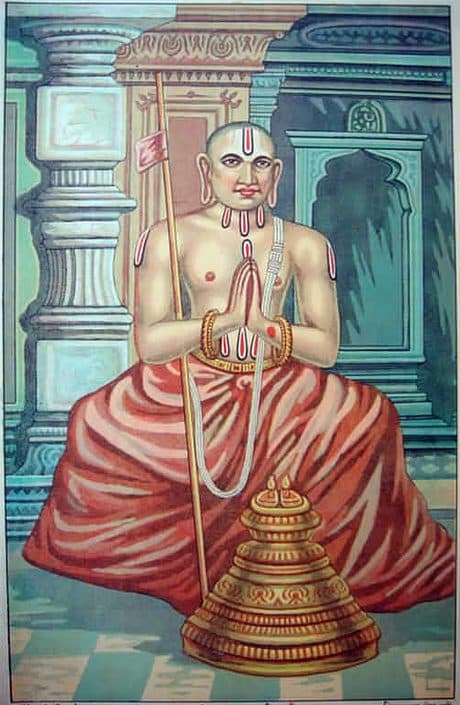
Rāmānuja · Viśiṣṭādvaita
English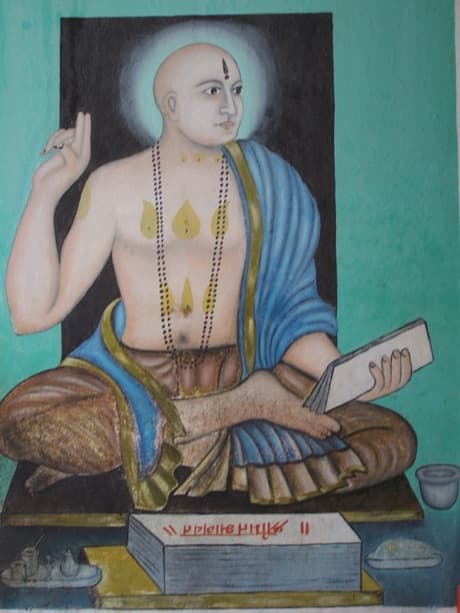
Madhvācārya · Dvaita
Madhva BhāṣyaSanskritEnglish“एतदेव प्रपञ्चयति - योगयुक्त इति | सर्वभूतात्मभूतः परमेश्वरः | यश्चाऽप्नोति इत्यादेः | स आत्मभूतः स्वममीपं प्रत्यादानादिकर्ता यस्य, सर्वभूतात्मभप्तात्मा ||” - In this manner alone is the performance to be done. This has been explained in this verse. One who is indweller in all the creatures is the Supreme Lord. “One who gives...” etc. He who dwells in the self being nearest is the ancient creator, he is said to be Indweller of all the creatures.
Madhvācārya · Dvaita
Gītā Tātparya NirṇayaSanskritEnglish“सर्वभूतात्मभतात्मा इति मुख्ययोगः | आदानात्मसर्वभूतानां विष्णुरात्मा प्रकीर्ततः | सर्वभूतात्मभूतात्मा तत्र भूतमनाः पुमान् || इति च |” - Considering the Supreme Lord as the indweller of creatures is the prime form of equanimity. Knowing all creatures subservient to the Supreme Lord is knowing Sri Vishnu as the Supreme Self and also becoming one having all pervading vision of the Lord, thus in Agni Purana.
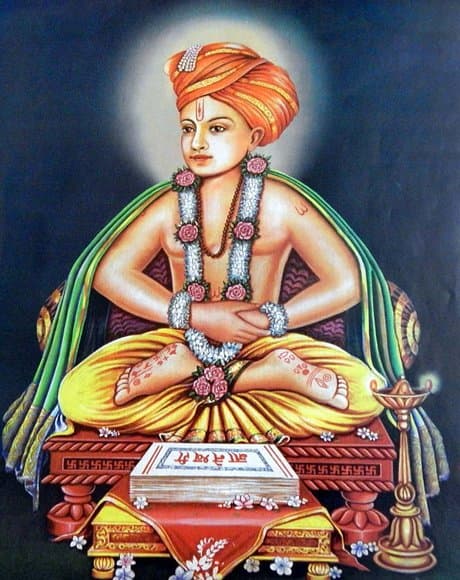
Jñāneśvar · Vārkarī
English7 "One steadied in Yoga, with pure self and subdued spirit, with the sense-centres under control, and realising the oneness of his Self with the Inner Self of all beings—he, even when doing actions, incurs no contamination. (34)
He is one who has wrenched out his mind free from the snare of worldly delusion and the infatuation of Māyā and has his mind cleansed of all defilement with the secret initiatory word of the preceptor, and has fixed it on the essence of the Supreme Self; just as salt looks separate and a trifle, so long it has not fallen into the ocean, but once it drops into the sea and is one with it, it becomes as vast as the sea itself; in the same way one whose mind has freed itself from all cravings and desires and has merged with pure sentience, such a one becomes an absolute universal Presence, although looking like others an individual circumscribed by place, time and other limitations. To such a one words like "doer", "actions to be done" etc. of course cease to have any meaning; he is ordinarily seen doing actions of all sorts and yet he abides in his pure essence free from the fetters of action. How could, O Pārtha, such a one feel in him the position as a 'doer' when he is not aware even of his individual existence?
Swami Ramsukhdas · Modern
English'Yogayuktah'—The Karmayogī, whose mind is pure, who has controlled the body, who has subdued his senses and whose self is the Self of all beings, is called 'Yogayuktah' (devoted to the path of action).
A striver, is not naturally inclined towards spiritual discipline, because his aim and his inclination, are different. So long as, there is importance of the world in the mind, there is struggle between the aim and inclination. Generally, a striver's aim is to realize God, Who is imperishable while his inclination is towards perishable, worldly beings, objects and circumstances. When his aim and inclination, are identified, spiritual discipline is automatically practised, speedily. Here the term 'Yogayuktah' (devoted to the path of action), has been used for such a Karmayogī, whose aim and inclination, have become one i.e., God-realization.
In Karmayoga, there is no desire in the least, for fruit of actions, but there is certainly an aim, to be achieved. The fruit and the aim, are different. An aim is one, which can be ever achieved by everyone. Thus, one's aim is God-realization and He can be realized, without any action and practice. The fruit is perishable, while God is eternal. A Karmayogī, does not desire the perishable, because this desire is an obstacle to God-realization. When a Karmayogī's, only aim is God-realization, he is called 'Yogayukta' (devoted to the path of action).
He, who has been called 'Yogayuktaḥ' here, has been called 'Yogārūḍhaḥ' (one who has attained to Yoga), in the fourth verse of the sixth chapter.
'Kurvannapi na lipyate'—A Karmayogī, in spite of performing actions is not bound by actions. A sense of mine, for actions, desire for the fruit of actions, and for pleasure, and a sense of doership* bind a man, to actions. The gist is, that desire to acquire something or the other, leads, a man to bondage. As a Karmayogī, has no desire to acquire anything, he is not tainted (bound) i.e., his actions change into inaction.
A Sāṅkhyayogī, is not bound by actions, because he thinks that it is the modes which are acting on the modes (Gītā 3/28); while a Karmayogī is not bound, as he performs actions, for the welfare of others, without any selfish motive.
The term 'api' (even), shows that a Karmayogī remains untainted, not only during the performance of action but also during their non-performance (Gītā 4/18). He has no interest, in the performance or non-performance of actions (Gītā 3/18). He always remains, untainted.
It means that, a Sāṅkhyayogī having renounced his affinity for the insentient, identifies himself with the sentient, while a Karmayogī identifies his so-called body, mind, senses, objects and actions etc., with the world i.e., instead of regarding them as of his and for himself, he regards them as the world and for the world. With this attitude of mind, he cannot have any egoistic feeling, in providing comfort to others, doing good to them and performing righteous acts, for them. Therefore, while performing action, he has no sense of doership i.e., is not tainted by action.
* The Lord while describing Karmayoga, in the forty-seventh verse of the second chapter by the expression 'Mā karmaphalaheturbhiḥ' means to say that a striver should renounce the sense of mine, the desire for pleasure and the sense of doership while by the expression 'Mā phaleṣu kadācana' He exhorts him to renounce the desire for the fruit of action.
**Appendix**—When a Karmayogi having renounced affinity for the body, senses and mind (inner sense) realizes his identity with all beings, then in spite of performing actions, the egoistic notion does not persist in him. Being free from egoism, the actions performed by him don't lead to bondage (Gītā 18/17).
*Link:—Having described the marks of a Karmayogi, the Lord in the next two verses, describes the attitude of a Sāṅkhyayogi, while undertaking activities, with the senses.*
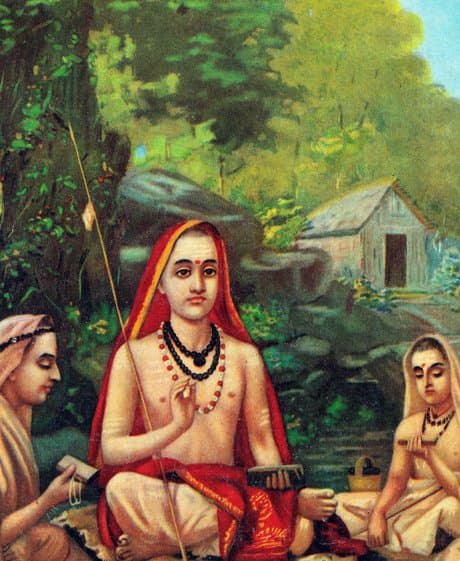
Ādi Śaṅkarācārya · Advaita
Sanskritयोगेन युक्तः योगयुक्तः, विशुद्धात्मा विशुद्धसत्त्वः, विजितात्मा विजितदेहः, जितेन्द्रियश्च, सर्वभूतात्मभूतात्मा सर्वेषां ब्रह्मादीनां स्तम्बपर्यन्तानां भूतानां आत्मभूतः आत्मा प्रत्यक्चेतनो यस्य सः सर्वभूतात्मभूतात्मा सम्यग्दर्शीत्यर्थः, स तत्रैवं वर्तमानः लोकसङ्ग्रहाय कर्म कुर्वन्नपि न लिप्यते न कर्मभिः बध्यते इत्यर्थः ॥ न च असौ परमार्थतः करोतीत्यतः --
Ādi Śaṅkarācārya · Advaita
Hindiजब यह पुरुष सम्यक् ज्ञानप्राप्तिके उपायरूप—
योगसे युक्त, विशुद्ध अन्तःकरणवाला, विजितात्माशरीरविजयी, जितेन्द्रिय और सब भूतोंमें अपने आत्माको देखनेवाला अर्थात् जिसका अन्तरात्मा ब्रह्मासे लेकर स्तम्भपर्यन्त सम्पूर्ण भूतोंका आत्मरूप हो गया हो; ऐसा, यथार्थ ज्ञानी हो जाता है ।
तब इस प्रकार स्थित हुआ वह पुरुष लोकसंग्रहके लिये कर्म करता हुआ भी उनसे लिप्य नहीं होता अर्थात् कर्मोंसे नहीं बँधता
Jñāneśvar · Vārkarī
Marathiजेणें भ्रांतीपासूनि हिरतलें । गुरुवाक्यें मन धुतलें । मग आत्मस्वरुपीं घातलें । हारौनियां ॥ ३४ ॥
जैसें समुद्रीं लवण न पडे । तवं वेगळे अल्प आवडे । मग होय सिंधूचि एवढें । मिळे तेव्हां ॥ ३५ ॥
तैसें संकल्पोनि काढिलें । जयाचें मनचि चैतन्य जाहलें । तेणें एकदेशियें परि व्यापिलें । लोकत्रय ॥ ३६ ॥
आतां कर्ता कर्म करावें । हें खुंटलें तया स्वभावें । आणि करी जऱ्ही आघवें । तऱ्ही अकर्ता तो ॥ ३७ ॥
Jñāneśvar · Vārkarī
Hindi(5.34) जिसने अपना मन भ्रम की ओर से हटाकर, गुरुवाक्य से शुद्ध कर, दृढ़ता से आत्मस्वरूप में लगा दिया है;
(5.35) जब तक समुद्र में लवण नहीं गिरता तब तक जैसे किंचित भिन्न दिखाई देता है परन्तु समुद्र में मिलते ही समुद्र जैसा हो जाता है,
(5.36) वैसे ही जिसका संकल्प की ओर से हटाया हुआ मन चैतन्यरूप हो जाता है, वह यद्यपि परिच्छिन्न है तथापि तीनों लोकों में व्यापक हो जाता है।
(5.37) फिर आप ही आप कर्ता, कर्म और क्रिया तीनों का अन्त हो जाता है और वह मनुष्य कर्म करता हो तथापि अकर्ता बना रहता है।
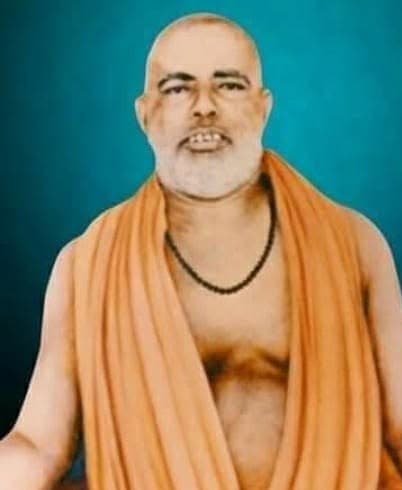
Sri Udiya Baba · Modern
Hindiसंगति— अब अगले श्लोक में यह बतलाया जाता है कि तत्त्वज्ञ का व्यवहार कैसा होता है—
भावार्थ— जो योगयुक्त, विशुद्धचित्त, संयत शरीर और जितेन्द्रिय है तथा सम्पूर्ण जीवों का आत्मा ही जिसका आत्मा है वह कर्म करते हुए भी लिप्त नहीं होता।
व्याख्या— 'योगयुक्तः'—जिसे अभ्यास करते-करते विषयों का विस्मरण हो गया है, अथवा ज्ञानयोगयुक्त अर्थात् श्रवणादि में लगा हुआ जिज्ञासु, अथवा श्रौत-स्मार्त कर्मों का अनुष्ठान करने वाला गृहस्थ, अथवा निरन्तर ब्रह्माकारवृत्ति रखने वाला कौपीन-कन्याधारी विरक्त—ये सभी योगयुक्त कहे जा सकते हैं। 'विशुद्धात्मा'—जिसकी बुद्धि राग-द्वेष से शून्य है, जिसका अन्तःकरण निष्काम कर्म या उपासना करने से शुद्ध हो गया है, ऐसा पूर्ण वैराग्यवान् ही विशुद्धात्मा कहा गया है। 'विजितात्मा'—जिसने अभ्यास द्वारा शरीर को जीत लिया अर्थात् स्थिर कर लिया है। 'जितेन्द्रियः'—ज्ञानेन्द्रिय और कर्मेन्द्रियों को जीतने वाला। 'सर्वभूतात्मभूतात्मा'—जो अपने और सम्पूर्ण भूतों के आत्मा को एक ही देखता है। अथवा जिसका सम्पूर्ण प्राणियों में आत्मभाव है तथा जो सम्पूर्ण प्राणियों को अपने में और अपने को सम्पूर्ण प्राणियों में देखता है। इन सम्पूर्ण गुणों से सम्पन्न पुरुष कर्म करता हुआ भी उनसे लिप्त नहीं होता।
साधक योगयुक्त होने से विशुद्धात्मा होता है, विशुद्धात्मा होने से विजितात्मा होता है, विजितात्मा होने से जितेन्द्रिय होता है तथा जितेन्द्रिय होने से अपने को सम्पूर्ण भूतों में और सम्पूर्ण भूतों को अपने में देखता है।
इस श्लोक से यह सिद्ध होता है कि ज्ञानी के लिए कर्म करने का निषेध नहीं है। इसमें से पहले चार लक्षण तो योगी में भी हो सकते हैं, परन्तु सर्वभूतात्मभूतात्मा तो तत्त्वज्ञ ही होता है। बोध भी उसी को होता है जिसमें ये चारों लक्षण हों। ऐसा महापुरुष सब कुछ करता हुआ भी पुण्य-पाप से लिप्त नहीं होता।
Swami Ramsukhdas · Modern
Hindi‘जितेन्द्रियः’—इन्द्रियाँ वशमें होनेका तात्पर्य है—इन्द्रियोंका राग-द्वेषसे रहित होना। राग-द्वेषसे रहित होनेपर इन्द्रियोंमें मनको विचलित करनेकी शक्ति नहीं रहती। साधक उनको अपने मनके अनुकूल चाहे जहाँ लगा सकता है।
कर्मयोगके साधकके लिये इन्द्रियोंका वशमें होना आवश्यक है। इसीलिये भगवान् कर्मयोगके प्रकरणमें इन्द्रियोंको वशमें करनेकी बात विशेषरूपसे कहते हैं; जैसे—‘यस्त्विन्द्रियाणि मनसा नियम्य’ (३।७); ‘तस्मात्त्वमिन्द्रियाण्यादौ नियम्य’ (३।४१)। कर्मयोगीका कर्मोंके साथ अधिक सम्बन्ध रहता है; इसलिये इन्द्रियाँ वशमें न होनेसे उसके विचलित होनेकी सम्भावना रहती है। कर्मयोगके साधनमें दूसरोंके हितके लिये सेवारूपसे कर्तव्य-कर्म करना आवश्यक है, जिसके लिये इन्द्रियोंका वशमें होना बहुत जरूरी है। इन्द्रियाँ वशमें हुए बिना कर्मयोगका साधन होना कठिन है।
‘विशुद्धात्मा’—अन्तःकरणकी मलिनतामें हेतु है—सांसारिक पदार्थोंका महत्त्व। जहाँ पदार्थोंका महत्त्व रहता है, वहीं उनकी कामनाएँ रहती हैं। साधक निष्काम तभी होता है, जब उसके अन्तःकरणमें सांसारिक पदार्थोंका
महत्त्व नहीं रहता। जबतक पदार्थोंका महत्त्व है, तबतक वह निष्काम नहीं हो सकता।
एक परमात्मप्राप्तिका दृढ़ उद्देश्य होनेसे अन्तःकरणकी जितनी जल्दी और जैसी शुद्धि होती है, उतनी जल्दी और वैसी शुद्धि दूसरे किसी अनुष्ठानसे नहीं होती। इसलिये कर्मयोगमें एक उद्देश्य होनेकी जितनी महिमा है, उतनी किसीकी नहीं।
‘विजितात्मा’—कर्मयोगमें शरीरके सुख-आरामका त्याग करनेकी बड़ी भारी आवश्यकता है। अगर शरीरसे आलस्य-प्रमाद होगा, तो कर्मयोगका अनुष्ठान नहीं हो पायेगा। अतः यहाँ भगवान्ने शरीरको वशमें करनेकी बात कही है।
‘सर्वभूतात्मभूतात्मा’—कर्मयोगीको सम्पूर्ण प्राणियोंके साथ अपनी एकताका अनुभव हो जाता है। जैसे शरीरके किसी एक अंगमें चोट लगनेसे दूसरा अंग उसकी सेवा करनेके लिये सहजभावसे, किसी अभिमानके बिना, कृतज्ञता चाहे बिना स्वतः लग जाता है, ऐसे ही कर्मयोगीके द्वारा दूसरोंको सुख पहुँचानेकी चेष्टा सहजभावसे, किसी अभिमान या कामनाके बिना, कृतज्ञता चाहे बिना स्वतः होती है। वह सेवा करनेके लिये किसी भी
१-श्रुत्वा स्पृष्ट्वा च दृष्ट्वा च भुक्त्वा भ्रात्वा च यो नरः । न ह्येति ग्लायति वा स विज्ञेयो जितेन्द्रियः ॥
(मनुस्मृति २।१८)
‘जो पुरुष सुनकर, छूकर, देखकर, खाकर और सूँघकर न तो प्रसन्न होता है और न खिन्न होता है, उसे ही जितेन्द्रिय जानना चाहिये।’
२-चाहे अपने शरीरसे असंग हो जायें, चाहे अपने शरीर-जैसे सम्पूर्ण प्राणियोंके शरीरोंसे एकता मान लें—दोनोंका परिणाम एक ही होगा। ज्ञानयोगी अपने शरीरसे असंग होता है और कर्मयोगी सब शरीरोंके साथ अपने शरीरकी एकता मानता है। एकता माननेसे वह उदार हो जाता है।
प्राणीको अपनेसे अलग नहीं समझता, सबको अपने ही अंग मानता है।
जैसे अपने शरीरमें भिन्न-भिन्न अवयवोंसे भिन्न-भिन्न व्यवहार होनेपर भी सब अवयवोंके साथ अपनापन समान (एक ही) रहता है, ऐसे ही कर्मयोगीके द्वारा मर्यादाके अनुसार संसारमें यथायोग्य भिन्न-भिन्न व्यवहार होनेपर भी सबके साथ अपनापन समान रहता है।
अपना राग मिटानेके लिये 'सर्वभूतात्मभूतात्मा' होना अर्थात् सब प्राणियोंके साथ अपनी एकता मानना बहुत आवश्यक है। कर्मयोगीका स्वभाव है—उदारता। सर्वभूतात्मभूतात्मा हुए बिना उदारता नहीं आती।
विशेष बात
क्रिया और पदार्थके साथ हम निरन्तर नहीं रह सकते और वे हमारे साथ निरन्तर नहीं रह सकते। कारण यह है कि क्रिया और पदार्थमें निरन्तर परिवर्तन होता है, पर हमारेमें (स्वरूपसे) कभी परिवर्तन नहीं होता। इसलिये क्रिया और पदार्थ निरन्तर हमारा त्याग कर रहे हैं। हम भी इनका त्याग करके ही मुक्ति पा सकते हैं, परमशान्ति पा सकते हैं। इनके साथ रहकर हम मुक्ति, परमशान्ति नहीं पा सकते; क्योंकि इनके साथ रहनेका हमारा स्वभाव नहीं है और हमारे साथ रहनेका इनका स्वभाव नहीं है। इसलिये क्रिया और पदार्थको दूसरोंकी सेवामें लगाना है। दूसरोंकी सेवामें लगाना हमारी महत्ता नहीं है, प्रत्युत वास्तविकता है। जो वास्तविकता होती है, वह सहज होती है अर्थात् उसमें परिश्रम और अभिमान नहीं होता। अवास्तविकतामें ही परिश्रम और अभिमान होता है।
क्रिया और पदार्थ दूसरोंकी सेवामें तभी लग सकते हैं, जब हमारेमें 'उदारता' आ जाय। यहाँ ध्यान देनेकी बात है कि उदारता हमारा स्वरूप है*। इसलिये उदारतामें न तो धन खर्च करनेकी आवश्यकता है और न परिश्रम करनेकी आवश्यकता है। आवश्यकता केवल इसी बातकी है कि हम सुखीको देखकर प्रसन्न हो जायँ और दुःखीको देखकर करुणित, दयालु हो जायँ। हृदयमें यह करुणा पैदा हो जाय कि यह सुखी कैसे हो? सुखीको
देखकर ऐसा भाव हो जाय कि सभी सुखी हो जायँ और दुःखीको देखकर ऐसा भाव हो जाय कि कोई दुःखी न रहे।
भगवान्ने भोग और संग्रहको साधनमें बाधक बताया है (गीता—दूसरे अध्यायका चौवालीसवाँ श्लोक)। सुखीको देखकर प्रसन्न होनेसे भोग भोगनेकी इच्छा मिट जाती है; क्योंकि भोग भोगनेमें जो सुख मिलता है, वह सुख हमें दूसरोंको सुखी देखकर विशेषतासे मिल जायगा तो हमें भोग भोगनेकी आवश्यकता नहीं रहेगी। दुःखीको देखकर दुःखी होनेसे संग्रह करनेकी इच्छा मिट जाती है; क्योंकि अपना दुःख मिटानेके लिये जिन वस्तुओंका हम संग्रह करते हैं और व्यय करते हैं, वे स्वतः दूसरोंका दुःख दूर करनेमें लग जायँगी। जैसे अपनेपर कोई दुःख आनेसे हम उसे दूर करनेकी चेष्टा करते हैं, ऐसे ही दूसरोंको दुःखी देखकर अपनी शक्तिके अनुसार उनका दुःख दूर करनेकी चेष्टा होने लगेगी।
प्रसन्नता और करुणामें एक विलक्षण रस है। वह रस क्रिया और पदार्थसे सम्बन्ध-विच्छेद करके जीवको परमात्मस्वरूप नित्य रसके साथ अभिन्न करा देता है।
'योगयुक्तः'—जितेन्द्रिय, विशुद्धात्मा, विजितात्मा और सर्वभूतात्मभूतात्मा—इन चार पूर्वोक्त लक्षणोंसे युक्त जो कर्मयोगी है, उसे ही यहाँ 'योगयुक्तः' कहा गया है।
साधनमें स्वाभाविक प्रवृत्ति न होनेमें कारण है—उद्देश्य और रुचिमें भिन्नता। जबतक अन्तःकरणमें संसारका महत्त्व है, तबतक उद्देश्य और रुचिका संघर्ष प्रायः मिटता नहीं। उद्देश्य अविनाशी परमात्माका होता है और रुचि प्रायः नाशवान् संसारके प्राणी, पदार्थ, परिस्थिति आदिकी होती है। उद्देश्य और रुचि अभिन्न हो जानेपर साधन स्वतः तेजीसे होने लगता है। यहाँ 'योगयुक्तः' पद ऐसे कर्मयोगीके लिये आया है, जिसका उद्देश्य और रुचि अभिन्न हो गयी है अर्थात् उद्देश्य और रुचि—दोनों एक परमात्मामें ही हो गये हैं।
उत्पन्न और नष्ट होनेवाला फल किंचिन्मात्र भी न चाहें, तभी कर्मयोग होता है। फल और उद्देश्य दोनों भिन्न-भिन्न होते हैं। कर्मयोगीमें फलकी इच्छा तो नहीं होती, पर उद्देश्य
* उदारता गुण भी है और अपना स्वरूप भी। हमारे पास जो पदार्थ हैं, वे दूसरोंकी सेवामें लग जायँ—इस भावसे उन्हें दूसरोंकी सेवामें लगाया जाय, यह उदारता 'गुण' है। हमारे पास जो पदार्थ हैं, वे हमारे हैं ही नहीं—ऐसा समझकर उन्हें दूसरोंकी सेवामें लगाया जाय, यह उदारता हमारा 'स्वरूप' है; क्योंकि इसमें पदार्थोंसे सम्बन्ध-विच्छेद हो जाता है और स्वरूप ज्यों-का-त्यों रह जाता है।
अवश्य होता है। कर्मयोगीका उद्देश्य वही होता है, जो सबको मिल सकता है और सदा साथ रहता है। जो किसीको मिलता है, किसीको नहीं मिलता और कभी रहता है, कभी नहीं रहता, वह उसका उद्देश्य नहीं होता है। इस दृष्टिसे उद्देश्य सदा परमात्मतत्त्वका ही होता है। परमात्मतत्त्व किसी कर्म, अभ्यास आदिका फल नहीं है। फल उत्पन्न और नष्ट होनेवाला होता है, पर परमात्मा नित्य रहते हैं। उत्पन्न और नष्ट होनेवाली वस्तुको कर्मयोगी चाहता ही नहीं; क्योंकि उसकी चाहना ही परमात्मप्राप्तिमें बाधक है। एकमात्र परमात्माका ही उद्देश्य होनेसे कर्मयोगीको 'योगयुक्त' कहा गया है।
यहाँ जिसे 'योगयुक्तः' कहा गया है, उसे ही छठे अध्यायके चौथे श्लोकमें 'योगारूढः' कहा गया है।
'कुर्वन्नपि न लिप्यते'—कर्मयोगी कर्म करते हुए भी कर्मोंसे नहीं बँधता। कर्मोंके बन्धनमें हेतु हैं—कर्मोंके प्रति ममता, कर्मोंके फलकी इच्छा, कर्मजन्य सुखकी इच्छा तथा उसका भोग और कर्तृत्वाभिमान*। सारांशमें कर्मोंसे कुछ-न-कुछ पानेकी इच्छा ही बन्धनमें कारण है। किंचिन्मात्र भी पानेकी इच्छा न होनेके कारण कर्मयोगी कर्म करते हुए भी उनसे बँधता नहीं अर्थात् उसके कर्म अकर्म हो जाते हैं।
सांख्ययोगी तो 'गुणा गुणेषु वर्तन्ते' (गीता ३।२८) 'गुण ही गुणोंमें बरत रहे हैं'—ऐसा मानकर कर्मोंसे नहीं
परिशिष्ट भाव—शरीर, इन्द्रियाँ और अन्तःकरणसे सम्बन्ध-विच्छेद होनेके कारण जब कर्मयोगीको सम्पूर्ण प्राणियोंके साथ अपनी एकताका अनुभव हो जाता है, तब कर्म करते हुए भी उसमें कर्तापन नहीं रहता। कर्तापन न रहनेसे उसके द्वारा होनेवाले कर्म बन्धनकारक नहीं होते (गीता—अठारहवें अध्यायका सत्रहवाँ श्लोक)।
सम्बन्ध—कर्मोंके होनेके विषयमें कर्मयोगीकी बात कहकर अब भगवान् आगेके दो श्लोकोंमें सांख्ययोगके साधनकी बात कहते हैं।
One who performs karma yoga or prescribed Vedic activities without desire for rewards is the one who factually fulfils the sacred canons of the Vedic scriptures which are actually the method of worshipping the Supreme Lord.
By such worship one becomes viśuddh-ātmā or of purified intelligence and is vijitātmā or of controlled mind being absorbed in such worship and by this absorption one is jitendriyaḥ or of restrained senses.
Such a person is sarva-bhūtātmā or one who realising their own ātma or soul and perceiving the ātma in all beings as being the same ātma existing within unlimited variegated forms.
Such a person views all beings not by the manifest forms they exhibit in their lifetime; but rather the intrinsic nature of the eternal ātma within which is the essential nature of all embodied beings.
A person situated in this consciousness is never infatuated or deluded by the erroneous idea of thinking that a temporary material substance can ever by equated to the eternal soul.
Such a person due to this understanding is never bound by actions although performing activities and in a relatively short time achieves ātma tattva or realisation of the soul.
As karma yoga has been declared to be easy to perform and soon to reach fulfilment, the means required to enable one to accomplish it Lord Krishna describes next.