

Bhagavad Gītā · Chapter 5 · Karma Sannyāsa Yoga
ज्ञेयः स नित्यसंन्यासी यो न द्वेष्टि न काङ्क्षति
निर्द्वन्द्वो हि महाबाहो सुखं बन्धात्प्रमुच्यते
jñeyaḥ sa nityasaṃnyāsī yo na dveṣṭi na kāṅkṣati|
nirdvandvo hi mahābāho sukhaṃ bandhātpramucyate||
Word meanings
महाबाहो = O mighty-armed one
यः = he who
न = nor
द्वेष्टि = hates
न = not
काङ्क्षति = desires
सः = he
नित्यसन्न्यासी = ever a renouncer
ज्ञेयः = should be known
हि = for
निर्द्वन्द्वः = free from the pairs of opposites
सुखम् = easily
बन्धात् = from bondage
प्रमुच्यते = is freed
Translation
The Karmayogi who neither hates nor desires should be ever considered a renouncer. For, Arjuna, he who is free from the pairs of opposites is easily freed from bondage.
Commentary
The commentators seated around this verse
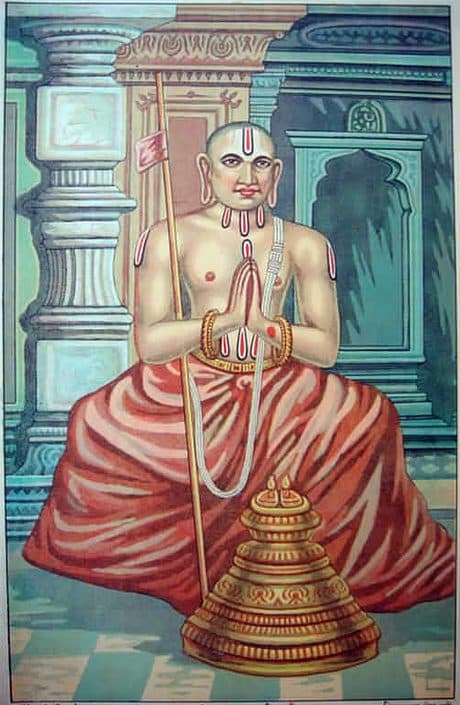
Rāmānuja · Viśiṣṭādvaita
English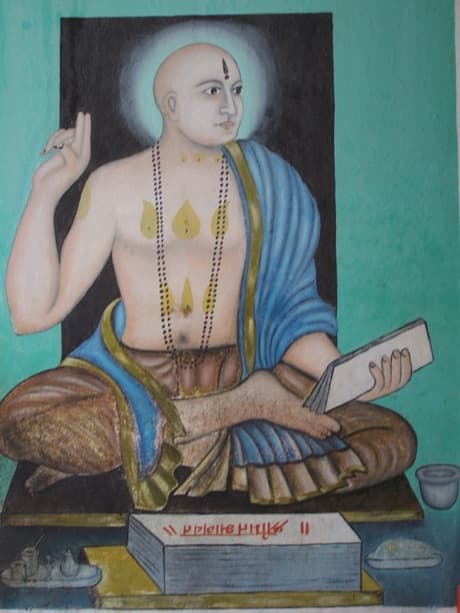
Madhvācārya · Dvaita
Madhva BhāṣyaSanskritEnglish“संन्यास शब्दार्थ आह - ज्ञेय इति | संन्यासस्य निःश्रेयस्करत्वं ज्ञापयितुं तच्छब्दर्थस्मारयति ज्ञेय इति ||” - Sri Krishna speaks about संन्यास in this verse, to emphasize the superiority of sanyaas as a means of deliverance reiterating the meaning earlier explained.
Madhvācārya · Dvaita
Gītā Tātparya NirṇayaSanskritEnglish“द्वेषविसर्जनमेव संन्यासशब्दार्थः न यत्प्रथमोऽत्राभिप्रेत इत्याह | ज्ञेय इति | न च काम्यानां कर्मणां कर्मणां न्यासम् इत्यनेन विरोधः | तेनापि सहितस्य न्यासत्वात् | न च त्यागस्य पृथग्वचना द्विरोधः | कुरुपांडवन्न्यासावान्तरभेदत्वात् त्यागस्य ||” - elimination of hatred is assuredly the meaning of the word संन्यास, not the life of an ascetic. संन्यास is not aversion of the actions performed with desires but being attached to them. Complete cessation of desire for the rewards of action as well as complete renunciation of the influence of all dualities such as happiness and distress is संन्यास, similar to the difference between Pandavas and Kauravas.
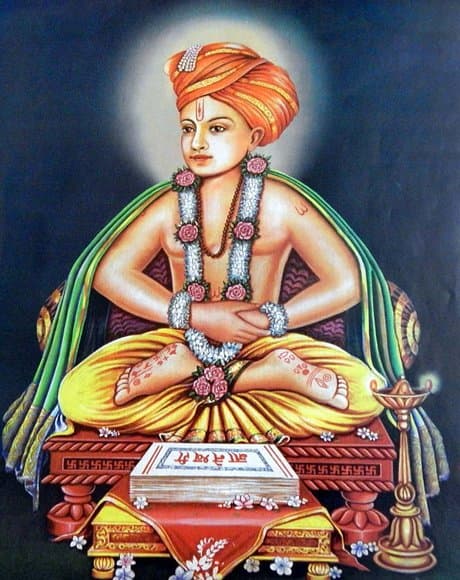
Jñāneśvar · Vārkarī
English3 *'He is to be deemed a person ever practising renunciation who (even while performing the actions) cherishes neither aversion nor inclination. For, having reduced the 'pairs of opposites' he, O Long-armed, is easily released from bondage.'* (19)
One who does not regret the loss of a thing or does not hanker after things not securable; who remains as firm as the very mountain Meru; one in whose mind there does not exist in the least any notion of 'me' or 'mine' should, O Pārtha, be considered as one ever-practising renunciation. One attaining this position is, forever, free from attachment to action. He is thus blessed with unbroken happiness. Such a one ever practising renunciation, is not required to abandon home, wife, and other possessions, since he abides in the realisation that he is attachment-free being, in no way concerned with any of them. Just see, the ashes remaining behind after the fire gets extinguished, could be held in a pinch along with cotton (for the purpose or spinning and converting it into a wick); in the same way, one cherishing neither aversion nor inclination, while encumbered with wordly concerns, never gets fettered by actions. Thus renunciation could be attained, only when one gets rid of aversion and inclination, and, for this reason both the path of renunciation of actions and the path of even-tempered action go together hand in hand.
Swami Ramsukhdas · Modern
English'Mahābāho'—The term 'Mahābāho', stands for one who is mighty-armed i.e., brave, and also for one, whose brothers and friends, are great men. Arjuna's friend, was Lord Kṛṣṇa, the disinterested friend of all beings, and his brother was Yudhiṣṭhira, the most righteous person, who had no enemy. By addressing Arjuna as 'Mahābāho', the Lord means to say, that he possesses the might to follow the path of action easily.
'Yo na dveṣṭi'—A Karmayogī, does not hate any being, object, circumstance or principle etc., but he renders selfless service to everyone. If he has the least, hatred for anyone, he cannot follow, the Discipline of Action, scrupulously. He should give priority, in rendering service, to a person for whom he bears, even a little
malice. The Lord, by using the expression 'Na dvești', first of all, wants to impress, that he who deems someone, as bad and wants to harm him, cannot grasp the secret of 'Karmayoga'.
A Vital Fact
For a Karmayogi, it is more significant to renounce evil, rather than to do good, for the welfare of others. Actions and objects are limited and, therefore, only limited service, can be rendered with such resources. But, when a man renounces evil, his unlimited inward feeling, is prominent. Secondly, by doing good to others, a person cultivates notion of pride, which is the root of all demoniac traits. Where there is imperfection, there is pride. On the contrary, where there is perfection, pride is out of the question.
If a serious thought is given, it becomes clear that no good can be done, without the help of perishable objects. In fact, those perishable objects are not ours, but they are of those, whose service is rendered with them. Then, if a man is proud of doing good, it is attachment to the perishable. So long as, a man is attached to the perishable, he cannot attain Yoga. The pride of doing good, is more disastrous, than other evils, because it settles, in the sense of Tness. Actions and their fruits disappear, but pride settled in the sense of Tness, never disappears. Secondly, an evil as an evil, can be easily renounced. But when an evil disguises itself as a virtue, it is difficult to renounce it. In the same way, we can easily discard iron hand cuffs, but we find it difficult to discard gold ones, because they look like ornaments. When evil is renounced, by a man, good to the entire world, is automatically done by him. A person, free from evil, does good to the entire universe, even while, leading a secluded life, in a Himalayan cave.
'Na kānkṣati'—Renunciation of desire, is very important, in Karmayoga. A Karmayogi does not desire, any being or object
or circumstance. Renunciation of desire, is very much connected with the welfare of others. By rendering service to others, we get the required strength to give up desire.
In Karmayoga, it is a doer who is desireless, not action. Being inert, actions are not desireless or otherwise. All actions, are dependent on the doer. A doer being desireless, his actions are called desireless. Those actions, without expectation of fruit, are called 'Karmayoga'. 'Karmayoga' and 'Niṣkāma-karma'—both are synonyms. 'Karmayoga' is never 'Sakāma' (with a selfish motive). The desireless doer, remains detached from the fruit of action.
When actions are performed without any selfish motive, it is called Karmayoga. When actions are performed in this way, the doer becomes detached, from the fruit of actions. But, when he performs actions by being attached to fruit of actions, he is bound (Gītā 5/12). When all actions are performed for the welfare of others, without any selfish motive, a striver is easily set free, from bondage. Therefore a doer should ever remain desireless. The more, selfless he is, the more efficient, the practice of the discipline. On being totally desireless, the Karmayogī reaches, consummation.
'Jñeyaḥ sa nityasannyāsī'—Arjuna thought it better to live in the world even by begging, than to fight (Gītā 2/5). So in response to his statement, the Lord seems to clarify, that such renunciation apprehending the death of teachers is external (outwardly); but real renunciation consists, in being free from attachment and aversion, while performing action.
Further, in the first verse of the sixth chapter also, the Lord declares, 'He who does not light the sacred fire, is not a Sannyāsī.' It means, that a person who renounces all actions, such as sacrificial fire etc., is not a Sannyāsī. Sannyāsa (renunciation), is an inward attitude, by which a Karmayogī renounces his dependence, on the world. Such a Karmayogī is a real Sannyāsī (renouncer).
Sannyāsa (renunciation), consists in the performance of actions without being attached to them, in anyway. A striver, who has no affinity for actions, has never to reap its fruit (Gītā 18/12). Therefore, a Karmayogī, while performing actions sanctioned by the scriptures, is ever a Sannyāsī (renouncer).
It is difficult to follow, the Discipline of Knowledge, without following the Discipline of Action. Therefore, a striver who follows the Discipline of Knowledge, is first a Karmayogī and then a Sannyāsī (Sāṅkhyayogī). But, for a Karmayogī it is not necessary to follow the Discipline of Knowledge. So, a Karmayogī is a Sannyāsī (renouncer), from the very beginning.
He, who has renounced attachment and aversion, need not go to the renounced order. When a striver resolves, that any person, object, senses, mind and intellect, are neither his nor for him; and he has neither attachment nor aversion for them, he is, ever a renouncer. A Karmayogī, while performing either mundane or spiritual actions, ever remains detached. This detachment is real renunciation. Therefore, he should be known, as one who has ever the spirit of renunciation.
'Nirdvandvo hi...sukham bandhātpramucyate'*—At the beginning of the spiritual discipline, a striver has opposite experiences in the form of attachment and aversion. He, through good company, study of scriptures and discrimination, decides on God-realization as his aim, but his so-called mind and senses, etc., are naturally, inclined towards pleasure and prosperity. Thus, sometimes he wants to attain God, while at other times, he hankers after worldly pleasures and prosperity. His inclination changes
* There is description of this sort of release from bondage in the Gītā in the following expressions:—'Shall cast off bondage of action' (2/39); 'protects one from great fear' (2/40); 'one casts off in this life both good and evil deeds' (2/50); 'shall be liberated from the evil' (4/16, 9/1); 'shall cross all sins' (4/36); 'having attained Me these great souls don't take birth here which is the place of pain and which is non-eternal' (9/28); and 'I straightway deliver from the ocean of death-bound existence' (12/7) and so on.
according to the company he keeps. But he cannot enjoy, the worldly pleasures undisturbed, because the latent impressions of good company etc., cause dispassion (disinclination for pleasures) in his mind. Thus, there is a duel between pleasure and spiritual practice. Egoism, hinges on this duel. When a striver, has a determinate intellect, only to realize God, rather than to hanker after worldly pleasures and prosperity, this duel comes to an end and his egoism, merges in God.
There is a struggle between, the pairs of opposites, so long as a man, derives pleasures out of the persons and objects etc. This inclination for pleasure does not let the determination for God-realization, become firm. So there is a struggle. When a striver has a determinate intellect, that he has to work for the welfare of others without hankering after worldly pleasures, he becomes free from the pairs of opposites.
By the expression 'Na dveṣṭi na kānkṣati', the Lord, advises strivers, that they should be free from antithetical feelings. Hate (aversion) and desire (attachment), are stumbling blocks to God-realization. A man, has to reap the fruit of his past actions, in the form of desirable and undesirable circumstances, whether he desires them or not. But, it is an error, that he is attached to desirable circumstances and has aversion for the undesirable ones. As soon as, this error is rectified through discrimination, he becomes free, from attachment and aversion.
Secondly, the self always exists independently, without the help of objects, persons and actions etc. A man, (the self) (the soul), has its existence, during sound sleep, also when he is oblivious of the entire world. In the wakeful and dreamy states, he can exist, even without any being and object. So, why should he have attachment or aversion for them? By thinking so, attachment and aversion, come to an end.
Attachment and aversion, are perishable, but a person being attached to persons and objects etc., wants to maintain these. As
far as desire for God-realization is concerned, it ever remains uniform, because the self is a fragment of God. But the desire seems to increase and decrease, because of his less and more attachment for the world, respectively. His desire to live, to know and to be happy, is in fact, the desire to attain the Truth, Knowledge and Bliss i.e., God. This desire, constantly prevails in a human being. When attachment to the world, is renounced and there is only one desire for God-realization, he becomes free, from the pair of opposites.
A striver, following anyone of the three paths—of action, of knowledge or of devotion, must be free from the pairs of opposites. So long as, there is delusion of the pairs of opposites, a man is not liberated from bondage (Gītā 7/27). Attachment and aversion, are enemies which are the stumbling blocks to God-realization (Gītā 3/34). When a striver, becomes free from dualities, (pairs of opposites), attachment and aversion perish, and then he attains, God easily.
It is because of attachment and aversion, that a man gets entangled in the worldly snare. All spiritual disciplines, are practised in order to, wipe out attachment and aversion.* When attachment and aversion are wiped out, the ever-present Lord is naturally attained without effort. The reason is, that He is not realized through unreal, but is realized, by renouncing the unreal. The unreal world seems to exist, because of attachment and aversion. It automatically goes, into extinction. So, if a striver is neither attached to nor has an aversion, for the perishable world, he will naturally attain salvation i.e., will be released, from bondage.
**Appendix**—Equanimity in favourable and unfavourable circumstances and freedom from the feeling of pleasure and pain is to be ‘nirdvandva’ viz., free from dualities (pairs of opposites).
* The only desired aim of all spiritual practices of Yogīs is to get rid of attachment to the entire world (Śrīmadbhāgavata 3/32/27).
In identification (of the self with the non-self), if there is predominance of the sentient, there is eagerness (curiosity) and if there is predominance of the insentient, there is desire. A man has the real hunger for the imperishable Divinity but he has the relish for the perishable because he wants to satisfy the hunger of the imperishable by the perishable. This duality between hunger and relish strengthens a man's worldly bondage. When his attachment and aversion to the world are wiped out, then his thirst for Self-realization is fulfilled and his desire is wiped out and he becomes free from dualities (pairs of opposites).
Link:—In the first half of the second verse of this chapter, the Lord declared, "Disciplines of Knowledge and Action—both lead to salvation." The Lord, explains the same point, in the next two verses.
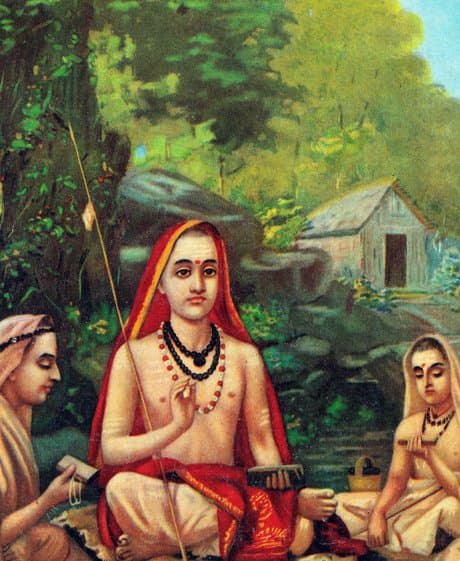
Ādi Śaṅkarācārya · Advaita
Sanskritज्ञेयः ज्ञातव्यः स कर्मयोगी नित्यसन्न्यासी इति यो न द्वेष्टि किञ्चित् न काङ्क्षति दुःखसुखे तत्साधने च । एवंविधो यः, कर्मणि वर्तमानोऽपि स नित्यसन्न्यासी इति ज्ञातव्यः इत्यर्थः । निर्द्वन्द्वः द्वन्द्ववर्जितः हि यस्मात् महाबाहो सुखं बन्धात् अनायासेन प्रमुच्यते ॥ सन्न्यासकर्मयोगयोः भिन्नपुरुषानुष्ठेययोः विरुद्धयोः फलेऽपि विरोधो युक्तः, न तु उभयोः निःश्रेयसकरत्वमेव इति प्राप्ते इदं उच्यते --
Ādi Śaṅkarācārya · Advaita
Hindi(कर्मयोग श्रेष्ठ) कैसे है? इसपर कहते हैं—
उस कर्मयोगीको सदा संन्यासी ही समझना चाहिये कि जो न तो द्वेष करता है और न किसी वस्तुकी आकाङ्क्षा ही करता है । अर्थात् जो सुख, दुःख और उनके साधनोंमें उक्त प्रकारसे राग- द्वेषरहित हो गया है, वह कर्ममें बर्तता हुआ भी सदा संन्यासी ही है ऐसे समझना चाहिये ।
क्योंकि हे महाबाहो! राग-द्वेषादि द्वन्द्वोंसे रहित हुआ पुरुष सुखपूर्वक—अनायास ही बन्धनसे मुक्त हो जाता है
Jñāneśvar · Vārkarī
Marathiतरी गेलियाचि से न करी । न पवतां चाड न धरी । जो सुनिश्चळु अंतरीं । मेरु जैसा ॥ १९ ॥
आणि मी माझें ऐसी आठवण । विसरले जयाचे अंतःकरण । पार्था तो संन्यासी जाण । निरंतर ॥ २० ॥
जो मनें ऐसा जाहला । संगी तोचि सांडिला । म्हणोनि सुखें सुख पावला । अखंडित ॥ २१ ॥
आतां गृहादिक आघवें । तें कांहीं नलगे त्यजावें । जें घेतें जाहलें स्वभावें । निःसंगु म्हणऊनि ॥ २२ ॥
देखें अग्नि विझोनि जाये । मग जे रांखोंडी केवळु होये । तैं ते कापुसें गिंवसूं ये । जियापरी ॥ २३ ॥
तैसा असतेनि उपाधी । नाकळिजे जो कर्मबंधीं । जयाचीचे बुद्धी । संकल्पु नाहीं ॥ २४ ॥
म्हणोनि कल्पना जैं सांडे । तैंचि गा संन्यासु घडे । या कारणे दोनी सांगडे । संन्यासयोगु ॥ २५ ॥
Jñāneśvar · Vārkarī
Hindi(5.19) जो गई बात का स्मरण नहीं करता, जो अप्राप्त वस्तु की इच्छा नहीं रखता, जो हृदय में मेरु जैसा अत्यन्त स्थिर रहता है,
(5.20) और जिसका अन्तःकरण "अहन्ता वा ममता" का स्मरण भी भूल जाता है उसे, हे पार्थ! निरन्तरसंन्यासी समझो।
(5.21) जो मन से इस प्रकार स्थिर हो गया है उसका संग विषय छोड़ देते हैं और उसे अनायास निरन्तर सुख प्राप्त होता है।
(5.22) तब फिर घर इत्यादि संसार छोड़ने की कुछ आवश्यकता नहीं रहती, क्योंकि इन विषयों का ग्रहण करनेहारा स्वभावतः निःसंग हो रहता है।
(5.23) देखो आग बुझ जाने पर केवल राख रह जाती है, उसका आच्छादन कपास जैसे बिना जले कर सकता है,
(5.24) वैसे ही जिसकी बुद्धि में संकल्प नहीं रह जाता वह मनुष्य कर्म के बन्ध से बाँधा नहीं जा सकता।
(5.25) अतएव जब कल्पना छूट जाती है तब संन्यास होता है, और इसी लिए संन्यास और कर्मयोग दोनों समान हैं।
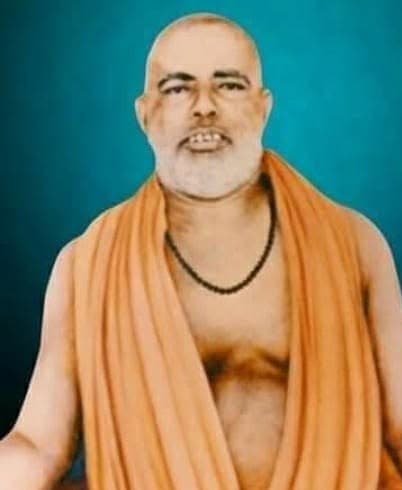
Sri Udiya Baba · Modern
Hindiसंगति— अब अगले श्लोक में यह बतलाते हैं कि कर्मयोगी किस प्रकार कर्म करता है—
भावार्थ— महाबाहो! जो न द्वेष करता है और न कुछ चाहता है तथा राग-द्वेषादि द्वन्द्वों से रहित है उसे [गृहस्थ होने पर भी]
सर्वदा संन्यासी ही समझना चाहिए। वह अनायास ही संसार के बन्धन से मुक्त हो जाता है।
व्याख्या— राग-द्वेष ही द्वन्द्व है। अतः जो कर्म करते हुए भी राग-द्वेष से रहित है वह नित्य-संन्यासी है। अर्थात् जिसमें राग-द्वेष न हों वही संन्यासी है।
प्रश्न— क्या जो उदासीन वृत्ति से रहता है वह निर्द्वन्द्व है?
उत्तर— वह निर्द्वन्द्व नहीं है, क्योंकि उसका उदासीनता में राग है। जब उसकी वृत्ति उदासीनता से भिन्न होगी तो उसे दुःख होगा। निर्द्वन्द्व तो वह है जो द्रष्टा-रूप से स्थित है। वास्तव में द्रष्टा ही निर्द्वन्द्व है। अतः जब तक राग-द्वेष है तब तक बोध नहीं होता।
Swami Ramsukhdas · Modern
Hindi‘महाबाहो’—‘महाबाहो’ सम्बोधनके दो अर्थ होते हैं—एक तो जिसकी भुजाएँ बड़ी और बलवान् हों अर्थात् जो शूरवीर हो; और दूसरा, जिसके मित्र तथा भाई बड़े पुरुष हों। अर्जुनके मित्र थे प्राणिमात्रके सुहृद् भगवान् श्रीकृष्ण और भाई थे अजातशत्रु धर्मराज युधिष्ठिर। इसलिये यह सम्बोधन देकर भगवान् अर्जुनसे मानो यह कह रहे हैं कि कर्मयोगके अनुसार सबकी सेवा करनेका बल तुम्हारेमें है। अतः तुम सुगमतासे कर्मयोगका पालन कर सकते हो।
‘यो न द्वेष्टि’—कर्मयोगी वह होता है, जो किसी भी प्राणी, पदार्थ, परिस्थिति, सिद्धान्त आदिसे द्वेष नहीं करता। कर्मयोगीका काम है सबकी सेवा करना, सबको सुख पहुँचाना। यदि उसका किसीके भी साथ किंचिन्मात्र भी द्वेष होगा तो उसके द्वारा कर्मयोगका आचरण सांगोपांग नहीं हो सकेगा। अतः जिससे कुछ भी द्वेष हो, उसकी सेवा कर्मयोगीको सर्वप्रथम करनी चाहिये।
सबसे पहले ‘न द्वेष्टि’ पद देनेका तात्पर्य यह है कि जो किसीको भी बुरा समझता है और किसीका भी बुरा चाहता है, वह कर्मयोगके तत्त्वको समझ ही नहीं सकता।
मार्मिक बात
प्राणिमात्रके हितके उद्देश्यसे कर्मयोगीके लिये बुराईका त्याग करना जितना आवश्यक है, उतना भलाई करना आवश्यक नहीं है। भलाई करनेसे केवल समाजका हित होता है; परन्तु बुराईरहित होनेसे विश्वमात्रका हित होता है। कारण यह है कि भलाई करनेमें सीमित क्रियाओं और पदार्थोंकी प्रधानता रहती है; परन्तु बुराईरहित होनेमें भीतरका असीम भाव प्रधान रहता है। यदि भीतरसे बुरा भाव दूर न हुआ हो और बाहरसे भलाई करें तो इससे अभिमान पैदा होगा, जो आसुरी सम्पत्तिका मूल है। भलाई करनेका अभिमान तभी पैदा होता है, जब भीतर कुछ-न-कुछ बुराई हो। जहाँ अपूर्णता (कमी) होती है, वहीं अभिमान पैदा होता है। परन्तु जहाँ पूर्णता है, वहाँ अभिमानका प्रश्न ही पैदा नहीं होता।
गहराईसे देखा जाय तो नाशवान् वस्तुओंकी सहायताके बिना भलाई नहीं की जा सकती। जिन वस्तुओंसे हम भलाई करते हैं, वे वस्तुएँ हमारी हैं ही नहीं; प्रत्युत उन्हींकी हैं, जिनकी हम भलाई करते हैं। फिर भी यदि भलाईका अभिमान होता है, तो यह नाशवान्का संग है। जबतक नाशवान्का संग है, तबतक ‘योग’की सिद्धि नहीं होती।
मैंने भलाई की—यह अभिमान बुराईसे भी अधिक भयंकर है; क्योंकि यह भाव मैं-पनमें बैठ जाता है। कर्म और फल तो मिट जाते हैं, पर जबतक मैं-पन रहता है, तबतक मैं-पनमें बैठा हुआ भलाईका अभिमान नहीं मिटता। दूसरी बात, बुराईको तो हम बुराईरूपसे जानते ही हैं, पर भलाईको बुराईरूपसे नहीं जानते। इसलिये भलाईके अभिमानका त्याग करना बहुत कठिन है; जैसे—लोहेकी हथकड़ीका तो त्याग कर सकते हैं; पर सोनेकी हथकड़ीका त्याग नहीं कर सकते; क्योंकि वह गहनारूपसे दीखती है। इसलिये बुराईरहित होकर ही भलाई करनी चाहिये। वास्तवमें बुराईका त्याग होनेपर विश्वमात्रकी भलाई अपने-आप होती है, करनी नहीं पड़ती। इसलिये बुराईरहित महापुरुष अगर हिमालयकी एकान्त गुफामें भी बैठा हो, तो भी उसके द्वारा विश्वका बहुत हित होता है।
‘न काङ्क्षति’— कर्मयोगमें कामनाका त्याग मुख्य है। कर्मयोगी किसी भी प्राणी, पदार्थ, परिस्थिति आदिकी कामना नहीं करता। कामना-त्याग और परहितमें परस्पर घनिष्ठ सम्बन्ध है। निष्काम होनेके लिये दूसरेका हित करना आवश्यक है। दूसरेका हित करनेसे कामनाके त्यागका बल आता है।
कर्मयोगमें कर्ता निष्काम होता है, कर्म नहीं; क्योंकि जड़ होनेके कारण कर्म स्वयं निष्काम या सकाम नहीं हो सकते। कर्म कर्ताके अधीन होते हैं, इसलिये कर्मोंकी अभिव्यक्ति कर्तासे ही होती है। निष्काम कर्ताके द्वारा ही निष्काम-कर्म होते हैं, जिसे कर्मयोग कहते हैं। अतः चाहे ‘कर्मयोग’ कहें या ‘निष्काम-कर्म’—दोनोंका अर्थ एक ही होता है। सकाम कर्मयोग होता ही नहीं। निष्काम होनेसे कर्ता कर्मफलसे असंग रहता है; परन्तु जब कर्तामें सकामभाव आ जाता है, तब वह कर्मफलसे बँध जाता है (गीता—पाँचवें अध्यायका बारहवाँ श्लोक)। सकामभाव तभी नष्ट होता है, जब कर्ता कोई भी कर्म अपने लिये नहीं करता, प्रत्युत सम्पूर्ण कर्म दूसरोंके हितके लिये ही करता है। इसलिये कर्ताका भाव नित्य-निरन्तर निष्काम रहना चाहिये। कर्तामें जितना निष्कामभाव होगा, उतना ही कर्मयोगका सही आचरण होगा। कर्ताके सर्वथा निष्काम होनेपर कर्मयोग सिद्ध हो जाता है।
‘ज्ञेयः स नित्यसन्न्यासी’—अर्जुनने युद्ध न करके भिक्षा माँगकर जीवन-निर्वाह करनेकी इच्छा प्रकट की
थी—‘गुरुनहत्वा हि महानुभावान् श्रेयो भोक्तुं भैक्ष्यमपीह लोके’ (गीता २।५) अर्थात् गुरुजनोंको न मारकर संन्यास लेना ही श्रेष्ठ है। भगवान् उसी बातका उत्तर देते हुए मानो कह रहे हैं कि हे अर्जुन! वह संन्यास तो गुरुजनोंके मर जानेके भयसे किया जानेवाला बाहरी संन्यास है, पर कर्मयोगीका संन्यास राग-द्वेषके त्यागसे होनेवाला नित्य संन्यास अर्थात् भीतरी एवं सच्चा संन्यास है।
आगे छठे अध्यायके पहले श्लोकमें भी भगवान्ने केवल अग्निका त्याग करनेवाले अर्थात् संन्यास-आश्रममात्र ग्रहण करनेवाले पुरुषको संन्यासी न कहकर भीतरसे संसारके आश्रयका त्याग करनेवाले कर्मयोगीको ही संन्यासी कहा है। इस प्रकार भगवान्के मतमें कर्मयोगी ही वास्तविक संन्यासी है।
कर्म करते हुए भी कर्मोंसे किसी प्रकारका सम्बन्ध न रखना ही संन्यास है। कर्मोंसे किसी प्रकारका सम्बन्ध न रखनेवालेको कर्मोंका फल कभी किसी अवस्थामें किंचिन्मात्र भी नहीं मिलता—‘न तु संन्यासिनां क्वचित्’ (गीता १८।१२)। इसलिये शास्त्र-विहित समस्त कर्म करते हुए भी कर्मयोगी सदा संन्यासी ही है।
कर्मयोगका अनुष्ठान किये बिना सांख्ययोगका पालन करना कठिन है। इसलिये सांख्ययोगका साधक पहले कर्मयोगी होता है, फिर संन्यासी (सांख्ययोगी) होता है। परन्तु कर्मयोगके साधकके लिये सांख्ययोगका अनुष्ठान करना आवश्यक नहीं है। इसलिये कर्मयोगी आरम्भसे ही संन्यासी है।
जिसके राग-द्वेषका अभाव हो गया है, उसे संन्यास-आश्रममें जानेकी आवश्यकता नहीं है। कोई भी व्यक्ति, वस्तु, शरीर, इन्द्रियाँ, मन, बुद्धि आदि अपनी नहीं है और अपने लिये भी नहीं है—ऐसा निश्चय होनेके बाद राग-द्वेष मिटकर ऐसा ही यथार्थ अनुभव हो जाता है, फिर व्यवहारमें संसारसे सम्बन्ध दीखनेपर भी भीतरसे (राग-द्वेष न रहनेसे) सम्बन्ध होता ही नहीं। यही ‘नित्यसंन्यास’ है। लौकिक अथवा पारलौकिक प्रत्येक कार्य करते समय कर्मयोगीका संसारसे सर्वथा संन्यास रहता है, इसलिये वह नित्यसंन्यासी ही समझनेयोग्य है।
संसारसे सम्बन्ध-विच्छेद अर्थात् लिप्तताका अभाव ही संन्यास है और कर्मयोगीमें राग-द्वेष न रहनेसे संसारसे लिप्तता रहती ही नहीं। अतः कर्मयोगी नित्यसंन्यासी है।
‘निर्द्वन्द्वो हि ... सुखं बन्धात्ममुच्यते’*— साधनाके आरम्भमें साधकके अन्तःकरणमें द्वन्द्व रहता है। सत्संग, स्वाध्याय, विचार आदि करनेसे वह परमात्मप्राप्तिको अपना ध्येय तो मान लेता है, पर उसके अपने कहलानेवाले मन, इन्द्रियाँ आदिकी रुचि स्वाभाविक ही भोग भोगने तथा संग्रह करनेमें रहती है। इसलिये साधक कभी परमात्म-तत्त्वको प्राप्त करना चाहता है और कभी भोग एवं संग्रहको। उसे जैसा संग मिलता है, उसीके अनुसार उसके भावोंमें परिवर्तन होता रहता है। ऐसा होनेपर भी वह भोगोंको शान्तिसे नहीं भोग सकता; क्योंकि सत्संग आदिके संस्कार उसके अन्तःकरणमें वैराग्य (भोगोंसे अरुचि) पैदा करते रहते हैं। इस प्रकार साधकके अन्तःकरणमें द्वन्द्व (भोग भोगूँ या साधन करूँ) चलता रहता है। इस द्वन्द्वपर ही अहंभाव टिका हुआ है। हमें सांसारिक भोग और संग्रहमें लगना ही नहीं है, प्रत्युत एकमात्र परमात्मतत्त्वको ही प्राप्त करना है—ऐसा दृढ़ निश्चय होनेपर द्वन्द्व नहीं रहता और अहंभाव परमात्मतत्त्वमें लीन हो जाता है।
वास्तवमें संसारका महत्त्व अन्तःकरणमें अंकित हो जानेसे ही द्वन्द्व रहता है। भोग भोगते रहनेसे, दूसरोंसे सुख चाहते रहनेसे संसारके प्राणी-पदार्थोंका महत्त्व अन्तःकरणमें अंकित हो जाता है। उनसे सुख लेनेसे वह महत्त्व बढ़ता जाता है, जिससे उनको प्राप्त करनेकी रुचि प्रबल हो जाती है। वह रुचि एक परमात्मप्राप्तिके उद्देश्यको स्थायी और दृढ़ नहीं होने देती। इससे साधकमें द्वन्द्व बना रहता है। उद्देश्यकी दृढ़ताके लिये साधकको यह पक्का विचार करना चाहिये कि कितना ही सुख, आराम, भोग क्यों न मिल जाय, मुझे उसे लेना ही नहीं है, प्रत्युत परहितके लिये उसका त्याग करना है। यह विचार जितना दृढ़ होगा, उतना ही साधक निर्द्वन्द्व होगा।
निर्द्वन्द्व होनेकी मुख्य बात इसी श्लोकमें ‘न द्वेष्टि न काङ्क्षति’ पदोंसे कही गयी है; जिसका तात्पर्य है—राग-द्वेषसे रहित होना। राग-द्वेषको मिटानेके लिये यह विचार
* गीतामें आये ‘कर्मबन्धं प्रहास्यसि’ (२।३९); ‘त्रायते महतो भयात्’ (२।४०); ‘जहातीह उभे सुकृतदुष्कृते’ (२।५०); ‘मोक्ष्यसेऽशुभात्’ (४।१६, ९।१); ‘वृजिनं संतरिष्यसि’ (४।३६); ‘नाप्नुवन्ति दुःखालयमशाश्वतम्’ (८।१५); ‘शुभाशुभफलैरेवं मोक्ष्यसे कर्मबन्धनैः’ (९।२८); ‘मृत्युसंसारसागरात् समुद्धर्ता भवामि’ (१२।१७) आदि पद यहाँ आये ‘बन्धात् प्रमुच्यते’ पदोंके ही पर्यायवाची हैं।
करना चाहिये कि अपने न चाहनेपर भी अनुकूलता और प्रतिकूलता आती ही है अर्थात् अपने चाहनेपर अनुकूलता आती हो—ऐसी बात नहीं है और न चाहनेपर प्रतिकूलता न आती हो—ऐसी बात भी नहीं है। अनुकूलता-प्रतिकूलता तो प्रारब्धके फलस्वरूप आती-जाती रहती है, फिर इसके आने अथवा जानेकी चाहना क्यों करें? अनुकूलताके प्रति राग और प्रतिकूलताके प्रति द्वेष अपनी भूलसे होता है। इस प्रकार विचार करनेसे भूल मिटकर राग-द्वेष सर्वथा समाप्त हो जाते हैं।
दूसरी बात यह है कि अपनी (स्वयंकी) सत्ता स्वतन्त्र है, किसी पदार्थ, व्यक्ति, क्रियाके अधीन नहीं है; क्योंकि सुषुप्ति-अवस्थामें जब हम संसारको भूल जाते हैं, तब भी अपनी सत्ता बनी रहती है; जाग्रत् और स्वप्न-अवस्थामें भी हम प्राणी, पदार्थके बिना रह सकते हैं। फिर (अपनी स्वतन्त्र सत्ता होते हुए भी) उनमें राग-द्वेष करके हम उनके अधीन क्यों बनें? इस प्रकार विचार करनेसे भी राग-द्वेष मिट जाते हैं।
संसारका राग उत्पन्न और नष्ट होनेवाला है। यह राग कभी स्थायी नहीं रहता; किन्तु हम नये-नये प्राणी, पदार्थोंमें राग करके इसे बनाये रखनेकी चेष्टा करते हैं। परन्तु परमात्माकी अभिलाषा उत्पन्न और नष्ट होनेवाली नहीं है; क्योंकि परमात्माका ही अंश होनेके नाते जीवका परमात्मासे अखण्ड सम्बन्ध है। परमात्माकी अभिलाषा कभी घटती-बढ़ती भी नहीं। केवल संसारमें राग अधिक होनेपर वह
घटती हुई और राग कम होनेपर वह बढ़ती हुई दीखती है। इसलिये 'मैं सदा जीता रहूँ; मैं सब कुछ जान लूँ; मैं सदा सुखी रहूँ'—इस रूपमें सत्-चित्-आनन्दस्वरूप परमात्माकी अभिलाषा जीवमात्रमें निरन्तर रहती है। जब संसारका राग मिट जाता है और एकमात्र परमात्माकी अभिलाषा रह जाती है, तब द्वन्द्व नहीं रहता।
कर्मयोग, ज्ञानयोग और भक्तियोग—तीनों ही योग-मार्गोंमें निर्द्वन्द्व होना बहुत आवश्यक है। जबतक द्वन्द्व है, तबतक मुक्ति नहीं होती (गीता—सातवें अध्यायका सत्ताईसवाँ श्लोक)। परमात्मतत्त्वकी प्राप्तिमें राग और द्वेष—ये दो शत्रु हैं (गीता—तीसरे अध्यायका चौतीसवाँ श्लोक)। निर्द्वन्द्व होनेसे ये दोनों मिट जाते हैं और इनके मिटनेसे सुखपूर्वक परमात्मतत्त्वकी प्राप्ति हो जाती है।
संसारमें उलझनेके दो ही कारण हैं—राग और द्वेष। जितने भी साधन हैं, सब राग-द्वेषको मिटानेके लिये ही हैं। राग-द्वेषके मिटनेपर नित्यप्राप्त परमात्मतत्त्वकी अनुभूति स्वतःसिद्ध है। इसमें परिश्रम है ही नहीं। कारण कि परमात्मतत्त्वकी अनुभूति असत् के द्वारा नहीं होती, प्रत्युत असत् के त्यागसे होती है। असत् की सत्ता राग-द्वेषपर ही टिकी हुई है। असत् संसार तो स्वतः ही मिट रहा है, पर अपनेमें राग-द्वेषको पकड़नेसे संसार स्थिर दीखता है। अतः जो संसार निरन्तर मिट रहा है, उसमें राग-द्वेष न रहनेसे मुक्ति नहीं होगी तो क्या होगा? इसलिये निर्द्वन्द्व अर्थात् राग-द्वेषसे रहित पुरुष सुखपूर्वक संसार-बन्धनसे मुक्त हो जाता है।
**परिशिष्ट भाव**—बाहरके सुख-दुःख (सुखदायी-दुःखदायी परिस्थिति)-में सम और भीतरके सुख-दुःखसे रहित होना 'निर्द्वन्द्व' अर्थात् द्वन्द्वरहित होना है।
तादात्म्यमें चेतन-अंशकी मुख्यतासे 'जिज्ञासा' रहती है और जड़-अंशकी मुख्यतासे 'कामना' रहती है। मनुष्यमें भूख तो अविनाशी-तत्त्वकी रहती है, पर रुचि नाशवान्की रहती है; क्योंकि अविनाशीकी भूखको वह नाशवान्के द्वारा मिटाना चाहता है। भूख और रुचिका यह द्वन्द्व मनुष्यके संसार-बन्धनको दृढ़ करता है। जब मनुष्यका संसारमें राग-द्वेष नहीं रहता, तब उसकी जिज्ञासा पूर्ण हो जाती है और कामना मिट जाती है अर्थात् वह निर्द्वन्द्व हो जाता है।
सम्बन्ध—इस अध्यायके दूसरे श्लोकके पूर्वार्धमें भगवान्ने ज्ञानयोग और कर्मयोग—दोनोंको परम कल्याण करनेवाले बताया। उसकी व्याख्या अब आगेके दो श्लोकोंमें करते हैं।
One who is following karma yoga or prescribed Vedic activities and has achieved ātma tattva or realisation of the soul will not desire anything else other than the bliss of the ātma or soul.
In this position one is almost oblivious of the external world and has no urge to crave or hate anything and thus is also able to endure the dualities seeing them all as the same.
Such a person is known to be constantly situated in jñāna yoga or the cultivation of Vedic knowledge by every activity and is incessantly experiencing the bliss of the ātma.
Lord Krishna confirms that such a person easily performs karma yoga without effort and transcends samsara or the cycle of birth and death.
That both karma yoga and the renunciation of the rewards of actions which is included in jñāna yoga are both competent to give ātma tattva is shown next.