

Bhagavad Gītā · Chapter 5 · Karma Sannyāsa Yoga
कायेन मनसा बुद्ध्या केवलैरिन्द्रियैरपि
योगिनः कर्म कुर्वन्ति सङ्गं त्यक्त्वाऽऽत्मशुद्धये
kāyena manasā buddhyā kevalairindriyairapi|
yoginaḥ karma kurvanti saṅgaṃ tyaktvā''tmaśuddhaye||
Word meanings
योगिनः = yogis
सङ्गम् = attachment
त्यक्त्वा = having given up/risking
केवलैः = merely
इन्द्रियैः = with the senses
कायेन = with the body
मनसा = with the mind
बुद्ध्या = with the intellect
आत्मशुद्धये = for self-purification
अपि = indeed
कर्म = action
कुर्वन्ति = perform
Translation
The Karmayogis perform action only with their senses, mind, intellect and body as well, withdrawing the feeling of mine in respect of them and shaking off attachment simply for the sake of self-purification.
Commentary
The commentators seated around this verse
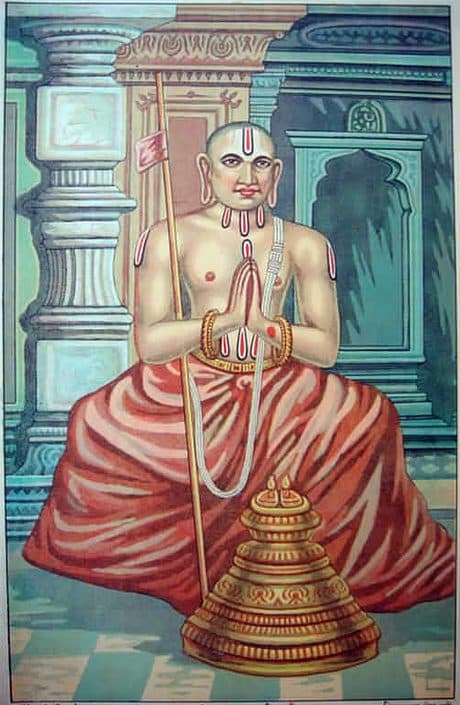
Rāmānuja · Viśiṣṭādvaita
English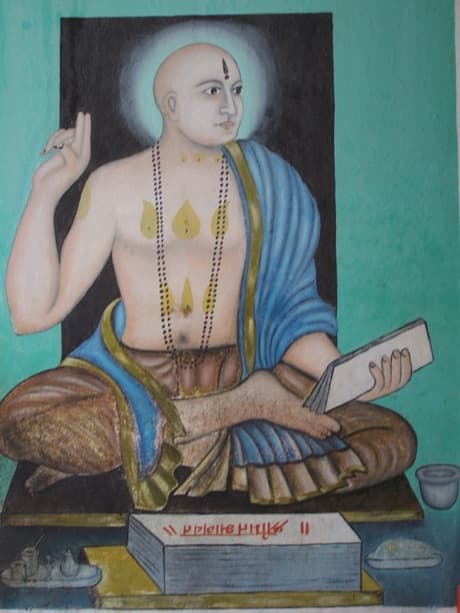
Madhvācārya · Dvaita
Madhva BhāṣyaSanskritEnglishOn verses 5.10–5.12
“संन्यासयोगयुक्त एव च कर्मणा न लिप्यत इत्याह - ब्रह्मणि इति | साधननियमोपचारत्वनिवृत्त्यर्थः पुनः पुनः फलकथनम् || एवश्चाऽऽचर इत्याह | कायेन इति | पुनर्युक्त्यादिनियमनार्थं युक्तायुक्तफलमाह युक्त इति | युक्तो योगयुक्तः ||” - One who is attuned to equanimity is not affected by performance of actions, thus has been said in this verse. For the sake of emphasizing the rules of observance for spiritual practice and for removal of casualness, the result is spoken again and again. This is the way of action, thus Sri Krishna says. For emphasizing the rules of observance for equanimity, the fruits of attainment are spoken again in this verse. In Communion means being unanimous with sense of renunciation.
Madhvācārya · Dvaita
Gītā Tātparya NirṇayaSanskritEnglishOn verses 5.10–5.12
“तत्पूजात्मकानि तत्कृतानि मम शुभार्थम् इति ब्रह्मणाधानम् । स्वातन्त्र्याभावा पेक्षयैव जीवस्याकर्तृत्वम् ॥ स्ववन्दनं यथा पित्रा कारितं शिशुकर्तृत्वम् । एवं पूजा विष्णवधीना भवेज्जीवकृतेत्यपि ॥ इति प्रवृत्ते ।” - By offering worship to the Supreme Lord and meditating on Brahman one is inclined to accept that all the actions performed are not independent. Being subservient become factually non-performer like children in respect to their father and mother, through propitiation of the Supreme Lord pervading all existence, thus in as Pravritti scripture. .
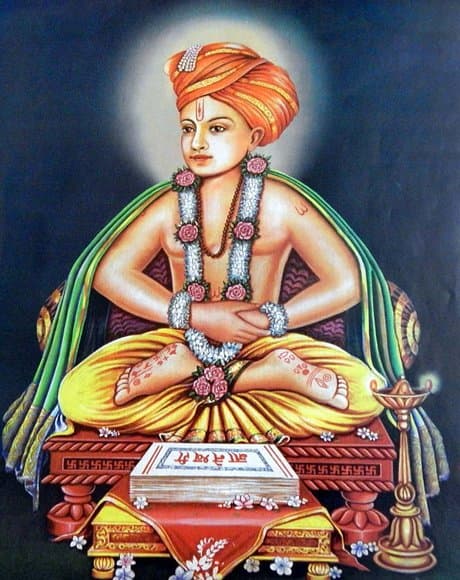
Jñāneśvar · Vārkarī
English11 *'Those practising Yoga take to actions, be it by the body (alone), by the mind (alone), by the intellect (alone), as also by the sense-centres alone, after abjuring all attachment, with a view to realise the Self.* (51)
That is body's activity in which the voice of the intellect is unheard, and the thinking mind has not yet sprouted. To put it in simple words, the Yogin's actions very much resemble the child's playful and aimless actions. And when this material body composed of the five gross elements falls in deep slumber, the mind alone functions as in a dream. Oh Dhanurdhara, note this wonderful thing—the beguiling power of desires in luring the body into the enjoyment of pleasure and pain, without letting it have even a scent of it. The activity then, to which the senses are strangers, are mental acts. The Yogins do such mental acts, but being free from contact with egoistic sense, they in no way get enmeshed by them. When the mind of an insane person is struck with hallucination, the actions of his senses appear out of sorts. He can see the things and human figures round him, he can hear if called on, he can talk with his mouth, but with all this, he does not appear to understand anything. No further elaboration seems needed. In short any action done without any motive is pure 'sense-action'. Any action done deliberately with full knowledge is the real 'action of intellect' so said Lord Krishna to Arjuna. Lord Krishna again said, 'Such ones perform actions with mind knowingly fixed on them, but they have an emancipated life being 'action-less' in the direction of mind. They are unmindful of anything like conceit of intellect, pinned down to their body, with the result that they are pure and spotless even while performing actions. O Arjuna, to perform actions without any egoistic sense is itself actionlessness and this secret truth is only to be realised from the spiritual Masters who have already seen it. And when such a state is reached, the stream of blissful ecstasy overflows its dams. That eternal truth which is beyond the power of words, I have spoken.' O hearers, those of you, whose senses have the bottom of their intense cravings completely knocked off, are only really qualified for such knowledge. Hearing this digression the hearers said, “Enough of this detailed description, and do not cut off the thread of the narrative, lest the significance of the verses be missed. You have been able to narrate to us, through sheer fortune’s favour of ours that secret truth which is difficult to be grasped by mind and which even the refined intellect does not reach. O, this truth which is indeed beyond the power of words, has yet been brought within the compass of your words. What more remains to be done? So stop here and proceed with the original narrative.” Seeing this ardent desire for hearing on the part of the hearers, Jñāneshwar, the disciple of Nivritti, said, “O Hearers, hear attentively the dialogue between Lord Krishna and Arjuna.” Lord Krishna then said to Pārtha. “I shall now tell you in clear words the complete marks of those Yogins that have attained perfection; just listen.”
Swami Ramsukhdas · Modern
English'Yoginah'—Here the term 'Yoginah', stands for Karmayogīs. The Yogīs, who perform actions, offering these to God, are called Bhaktiyogīs, while those, who perform these in order to render service to the world, without any selfish motive, are called, 'Karmayogīs'. A Karmayogī, while performing actions, regards his so-called body, senses and mind etc., as the worlds', and not his own, as they have their identity, with the world.
'Kāyena manasā buddhyā kevalairindriyairapi'—In fact, the body, senses, mind and intellect etc., which a common man regards as his own, are not his, because these have been acquired from the world and they will abandon him. So, it is an error on his part to assume, that these are his. All of these have their identity, with the world.
If we give a serious thought to it, we come to realise that the body etc., are not ours, in anyway. They belong either to God or to nature (prakṛti); or to the world. Thus, it is an error to regard these as ours, and to have a sense of mineness with them. The term 'Kevalaiḥ' (merely), has been used here to root out this sense of mineness with them.
Here, the term 'Kevalaiḥ', being plural, is an adjective, for senses. But, it does not mean that sense of mineness for mere senses, is to be renounced, it means that sense of mineness for the body, mind, intellect and the entire world, is to be abandoned, for which a person, has attachment. When a girl, is married
into a family, her relationship with her in-laws, is automatically established. In the same way, when a man is attached to any worldly object, he gets attached to the entire world. So the term 'Kevalaiḥ', should be taken as abandonment of sense of mineness for the body, senses, mind and intellect.
In fact, a doer (agent) himself, should become detached. By doing so, his attachment for body, senses, mind and intellect etc., is totally abandoned. The reason is, that the body, senses and mind etc., are, quite different from the self. A sense of mineness with these is merely assumed, it is not natural.
In the Discipline of Action, renunciation of the desire for fruit is important, (Gītā 5/12). Common people, perform actions in order to reap their fruit, but a Karmayogī performs these to root out attachment to the fruit. But a person, who regards the body, senses, mind, intellect and life-breath etc., as his own, cannot renounce, the desire for fruit,\* as he assumes, that when the body etc., are his, he should also reap the fruit of actions, performed by him. Therefore, if a striver wants to wipe out the desire for fruit, it is indispensable for him, that he should, not regard the body etc., as his own.
When it rains, it is useful for crops and people etc., but, rain is not aware of the fact, that it is falling and doing good, to the world. Similarly, senses should not have a feeling of doership, when they render service to others. But, if some service is rendered by the senses, body, mind or intellect, and gives us a sensation of elation, it means that the service has not been performed with a feeling of detachment. On the contrary it is a sign of attachment and possession.
'Saṅgaṁ tyaktvātmaśuddhaye'—[Vide the explanation in the tenth verse, for the expression 'Saṅgaṁ tyaktvā.']
\* If a person has no desire for the fruit but regards the body etc., as his own, the fruit of action becomes his motive which has been forbidden by the Lord by the declaration, 'Let not the fruit of action be thy motive' (Gītā 2/47).
Generally, it is thought that a heart is purified when sins (accumulated sin), volatility of mind and ignorance, are removed. But, in fact, purification of the heart, consists in total renunciation of attachment, (or a sense of mine), with the body, senses, mind and intellect. The body, etc., never regards us as theirs but, we assume these, as ours. This assumption of mineness, is impurity. Saint Tulasīdāsa in the Rāmacaritamānasa declares, 'Let the filth of the sense of mine, be burnt' (7/117 A). So, heart gets purified when there is total renunciation of affinity, of an egoistic notion and sense of mine etc.
The term 'Kevalaiḥ', denotes the aim of renunciation of the sense of 'mine', with the body, senses, mind and intellect, while the expression 'Ātmaśuddhaye', denotes total renunciation of a sense of 'mine'. When a striver's aim, is to renounce the sense of mine, yet this sense prevails, in its subtle form. When, this sense of mine in its subtle form, also perishes totally, it is known as a state of purification of the inner sense.
The sense of mine, also resides in egoism. When this sense of mine, is totally renounced, egoism also becomes free from this sense of mine, and the self (heart) is, totally purified.
'Karma kurvanti'—A Karmayogī, performs actions to totally renounce, a sense of mine, in its subtle form, from the body, senses, mind and intellect etc.
So long as, a person has a desire for the fruit of action, and so long as, he assumes that the body, senses and mind etc., are his own, he cannot be liberated from, the bondage of actions. Therefore, a Karmayogī performs actions for the welfare of others, without having a desire for the fruit of actions, and without regarding the objects of action (body, senses, mind and intellect etc.,) as his own. For a sage, who wishes to attain to Yoga, action (for the welfare of others), is said to be, the means (Gītā 6/3). The more, he continues working for the welfare of others, the more his attachment and sense of mine, are renounced
and thus his self (heart) is purified.
**Appendix**—The heart is not purified by trying to purify it because it is not purified so long as we regard it as ours, since the assumption of mineness with it is the main impurity. Therefore in the Rāmacaritamānasa it has been declared, 'Let the filth of mineness be burnt!' (Mānasa, Uttara. 117 A). The Lord here also by using the term 'kevalaiḥ' has mentioned not to have the sense of mineness with the inner sense. Purification of the inner sense consists in total renunciation of the sense of mineness with the body, senses, mind and intellect. Therefore Karmayogīs act in a detached manner in order to wipe out the sense of mineness totally from the inner sense. They don't perform any action for their own Self. The reason is that so long as the sense of mine persists, mere actions are performed, but Karmayoga is not practised. When actions are not performed for one's own self, then Karmayoga proceeds towards Self-realization.
A Karmayogī first acts aiming at freedom from the sense of mineness, then his aim is achieved.
*Link:—The Lord, in the next verse, explains the merit or glory of Karmayoga by positive, as well as negative inference.*
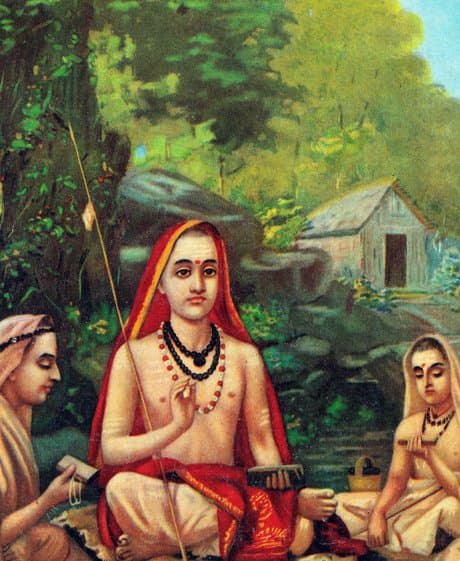
Ādi Śaṅkarācārya · Advaita
Sanskritकायेन देहेन मनसा बुद्ध्या च केवलैः ममत्ववर्जितैः ``ईश्वरायैव कर्म करोमि, न मम फलाय'' इति ममत्वबुद्धिशून्यैः इन्द्रियैरपि -- केवलशब्दः कायादिभिरपि प्रत्येकं सम्बध्यते -- सर्वव्यापारेषु ममतावर्जनाय । योगिनः कर्मिणः कर्म कुर्वन्ति सङ्गं त्यक्त्वा फलविषयम् आत्मशुद्धये सत्त्वशुद्धये इत्यर्थः । तस्मात् तत्रैव तव अधिकारः इति कुरु कर्मैव ॥ यस्माच्च --
Ādi Śaṅkarācārya · Advaita
Hindiउसके कर्मोंका फल तो केवल अन्तःकरणकी शुद्धिमात्र ही होता है, क्योंकि—
योगी लोग केवल यानी 'मैं सब कर्म ईश्वरके लिये ही करता हूँ, अपने फलके लिये नहीं।' इस भावसे जिनमें ममत्वबुद्धि नहीं रही है ऐसे शरीर, मन, बुद्धि और इन्द्रियोंसे फलविषयक आसक्तिको छोड़कर आत्मशुद्धिके लिये अर्थात् अन्तःकरणकी शुद्धिके लिये कर्म करते हैं। सभी क्रियाओंमें ममताका निषेध करनेके लिये 'केवल' शब्दका काया आदि सभी शब्दोंके साथ सम्बन्ध है।
तेरा भी उसीमें अधिकार है, इसलिये तू भी कर्म ही कर
Jñāneśvar · Vārkarī
Marathiदेखे बुध्दीची भाष नेणिजे । मनाचा अंकुर नुदैजे । ऐसा व्यापारु तो बोलिजे । शारीरु गा ॥ ५१ ॥
हेंच मराठे परियेशीं । तरी बाळकाची चेष्टा जैशी । योगिये कर्मे करिती तैशीं । केवळा तनू ॥ ५२ ॥
मग पांचभौतिक संचलें । जेव्हां शरीर असे निदेलें । तेथ मनचि राहाटें एकलें । स्वप्नीं जेवीं ॥ ५३ ॥
नवल ऐकें धनुर्धरा । कैसा वासनेचा संसारा । देहा होऊं नेदी उजगरा । परि सुखदुःखें भोगी ॥ ५४ ॥
इंद्रियांचां गांवीं नेणिजे । ऐसा व्यापारु जो निपजे । तो केवळु गा म्हणिजे । मानसाचा ॥ ५५ ॥
योगिये तोही करिती । परि कर्में तेणें न बंधिजती । जे सांडिली आहे संगती । अंहभावाची ॥ ५६ ॥
आतां जाहालिया भ्रमहत । जैसें पिशाचाचें चित्त । मग इंद्रियांचे चेष्टित । विकळु दिसे ॥ ५७ ॥
स्वरूप तरी देखे । आळविलें आइके । शब्दु बोले मुखें । परि ज्ञान नाही ॥५८ ॥
हें असो काजेंविण । जें जें काही कारण । तें केवळ कर्म जाण । इंद्रियांचे ॥ ५९ ॥
मग सर्वत्र जें जाणतें । ते बुद्धीचें कर्म निरूतें । वोळख अर्जुनातें । म्हणे हरि ॥ ६० ॥
ते बुद्धी धुरे करुनी । कर्म करिती चित्त देऊनी । परि ते नैष्कम्यापासुनी । मुक्त दिसती ॥ ६१ ॥
जें बुद्धीचिये ठावूनि देही । तयां अंहकाराची सेचि नाहीं । म्हणोनि कर्म करितां पाही । चोखाळले ॥ ६२ ॥
अगा करितेनवीण कर्म । तेंचि तें नैष्कर्म्य । हें जाणती सुवर्म । गुरुगम्य जें ॥ ६३ ॥
आतां शांतरसाचें भरितें । सांडीत आहे पात्रातें । जें बोलणें बोलापरौतें । बोलवलें ॥ ६४ ॥
एथ इंद्रियांचा पांगु । जया फिटला आहे चांगु । तयासीचि आथी लागु । परिसावया ॥ ६५ ॥
हा असो अतिप्रसंगु । न संडी पां कथालागु । होईल श्लोकसंगति भंगु । म्हणोनियां ॥ ६६ ॥
जें मना आकळितां कुवाडें । घाघुसितां बुद्धी नातुडे । तें दैवाचेनि सुरवाडें । सांगवलें तुज ॥ ६७ ॥
जें शब्दातीत स्वभावें । तें बोलींचि जरी फावे । तरी आणिकें काय करावें । सांगे कथा ॥ ६८ ॥
हा आर्तिविशेषु श्रोतयांचा । जाणोनि दास निवृतीचा । म्हणे संवादु दोघांचा । परिसोनि परिसा ॥ ६९ ॥
मग कृष्ण म्हणे पार्थातें । आतां प्राप्ताचें चिन्ह पुरतें । सांगेन तुज निरुतें । चित्त देई ॥ ७० ॥
Jñāneśvar · Vārkarī
Hindi(5.51) देखो, जो ऐसा कर्म है कि जिसमें बुद्धि का सम्बन्ध ही नहीं है, जिसमें मन का अंकुर भी नहीं उगता वह शरीर कर्म कहाता है।
(5.52) यही बात सुलभ रीति से कहिए, तो योगीजन बालक की चेष्टा के समान केवल शरीर से कर्म करते हैं।
(5.53) और यह पंचभूतात्मक शरीर मानों सो जाता है और केवल मन ही स्वप्नवत् व्यापार करता है,
(5.54) हे धनुर्धर! आश्चर्य देखो, वासना का कैसा विस्तार है कि वह देह को मालूम न होते हुए, सुख-दुःख भोगती हैं।
(5.55) इस प्रकार इन्द्रियों को कुछ भी मालूम न होते जो कर्म उत्पन्न होता है वह केवल मानस कर्म कहलाता है।
(5.56) योगीजन मानस कर्म भी करते हैं परन्तु वे उससे बाँधे नहीं जाते। क्योंकि उन्होंने अहंभाव की संगति छोड़ दी है।
(5.57) और भ्रमयुक्त हो जाने से जैसे इन्द्रियों की चेष्टा पिशाच के चित्त के समान अव्यवस्थित दिखाई देती है — जैसे
(5.58) स्वरूप का दिखाई देना, बुलाने से सुन पड़ना, मुख से शब्द निकलना परन्तु ज्ञान न होना — (5.59) वैसे जो कर्म, किंबहुना जो निष्कारण किया जाता है, वह केवल इन्द्रियों का कर्म समझो।
(5.60) और (श्रीहरि अर्जुन से कहते हैं कि) जो सर्वत्र जानने की क्रिया है वह बुद्धि का कर्म है।
(5.61) योगीजन बुद्धि को प्रमुख करके मन लगा कर भी कर्म करते हैं, परन्तु वस्तुतः वे कर्म से मुक्त रहते हैं।
(5.62) क्योंकि बुद्धि से लगाकर देह तक उन्हें अहंकार का स्मरण ही नहीं रहता। अतएव कर्म करते-करते वे शुद्ध हो गये हैं।
(5.63) अजी, कर्ता के बिना जो कर्म किया जाता है वही निष्कर्मता है। यह गुरुकृपा ही से समझने योग्य रहस्य योगीजन जानते हैं।
(5.64) अप इसका उपरान्त शान्तरस की ऐसी बाढ़ आई है कि वह पात्र में न समाकर उभरा रहा है क्योंकि अब जो वचन बोले जावेंगे वे वाणी के परे के हैं।
(5.65) जिनकी इन्द्रियों की इच्छा अच्छी तरह पूर्ण हो चुकी हो वे ही ये वचन श्रवण करने के योग्य हैं।
(5.66) परन्तु (श्रोताओं ने कहा कि) अब विषयान्तर रहने दो, कथा का सम्बन्ध मत छोड़ो, क्योंकि श्लोकसंगति का भंग होगा। (5.67) जो बात मन से ग्रहण करने के लिए कठिन है, प्रयत्न करने से भी बुद्धि को प्राप्त नहीं होती, उसका भाग्यवशात् तुमने उत्तम रीति से वर्णन किया है।
(5.68) जो वस्तु स्वभावतः शब्द के परे है वह यदि शब्दों से ही व्यक्त हो रही है तो और दूसरी बातों का क्या काम है? अतएव कहो।
(5.69) श्रोताओं की ऐसी उत्कट इच्छा जानकर निवृत्ति के दास बोले कि श्रीकृष्ण और अर्जुन का संवाद बार-बार सुनिए।
(5.70) श्रीकृष्ण ने कहा कि अब मैं तुम्हें पहुँचे हुए पुरुष का पूर्ण लक्षण बताता हूँ उसकी ओर चित दो।
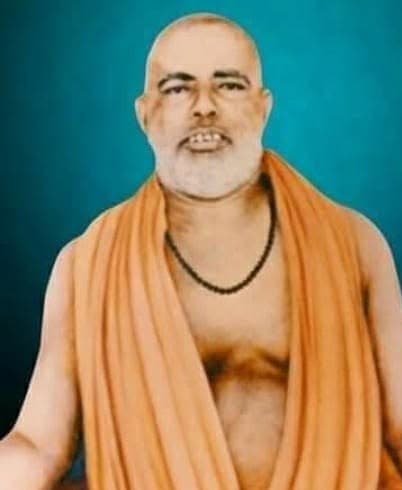
Sri Udiya Baba · Modern
Hindiसंगति— उपर्युक्त श्लोक में यह दिखलाया गया है कि निष्काम उपासक कर्मफल से लिप्त नहीं होता। अब यह बतलाते हैं कि वह चित्तशुद्ध के लिये केवल शरीर और इन्द्रियों से कर्म करता रहता है—
भावार्थ— निष्काम कर्मयोगी केवल शरीर से, केवल मन से, केवल बुद्धि से और केवल इन्द्रियों से भी अन्तःकरण की शुद्धि के लिये आसक्ति त्यागकर कर्म करते हैं।
व्याख्या— केवलैः—ममत्ववर्जितैः अर्थात् ममता न रखकर तथा सिद्धि-असिद्धि में समान रहकर, क्योंकि निष्काम होने के कारण सिद्धि न होने पर उन्हें कोई प्रत्यवाय (दोष) नहीं लगता। वे शरीर से तीर्थाटनादि, मन से भगवद्यानादि बुद्धि से ईश्वर विश्वासादि करते हैं। अर्थात् अपने मन बुद्धि और शरीर से वे अन्तःकरण की शुद्धि और भगवान् की प्रसन्नता के लिये सब प्रकार के कर्म करते रहते हैं। पहले बुद्धि से निश्चय करके ही कर्म किया जाता है, इसलिए बुद्धि से कर्म करना कहा। उपासना मन से होती है, इसलिए मन से कर्म करना कहा। इत्यादि।
Swami Ramsukhdas · Modern
Hindi'योगिनः'—यहाँ 'योगिनः' पद कर्मयोगीके लिये आया है। जो योगी भगवदर्पण-बुद्धिसे कर्म करते हैं, वे भक्तियोगी कहलाते हैं। परन्तु जो योगी केवल संसारकी सेवाके लिये निष्कामभावपूर्वक कर्म करते हैं, वे कर्मयोगी कहलाते हैं। कर्मयोगी अपने कहलानेवाले शरीर, इन्द्रियाँ, मन आदिसे कर्म करते हुए भी उन्हें अपना नहीं मानता, प्रत्युत संसारका ही मानता है। कारण कि शरीरादिकी संसारके साथ एकता है।
'कायेन मनसा बुद्ध्या केवलैरिन्द्रियैरपि'—जिनको साधारण मनुष्य अपनी मानते हैं, वे शरीर-इन्द्रियाँ-मन-बुद्धि वास्तवमें किसी भी दृष्टिसे अपनी नहीं हैं, प्रत्युत
अपनेको मिली हुई हैं और बिछुड़नेवाली हैं। इनको अपनी मानना सर्वथा भूल है। इन सबकी संसारके साथ स्वतःसिद्ध एकता है।
विचारपूर्वक देखा जाय तो शरीरादि पदार्थ किसी भी दृष्टिसे अपने नहीं हैं। मालिककी दृष्टिसे देखें तो ये भगवान्के हैं, कारणकी दृष्टिसे देखें तो ये प्रकृति हैं और कार्यकी दृष्टिसे देखें तो ये संसारके (संसारसे अभिन्न) हैं।
इस प्रकार किसी भी दृष्टिसे इनको अपना मानना, इनमें ममता रखना भूल है। ममताको सर्वथा मिटानेके लिये ही यहाँ 'केवलैः' पद प्रयुक्त हुआ है।
यहाँ 'केवलैः' पद बहुवचन होनेसे इन्द्रियोंका ही
* वदन्ति तत्तत्त्वविदस्तत्त्वं यज्ज्ञानमद्वयम्। ब्रह्मेति परमात्मेति भगवान्विति शब्द्यते ॥ (१। २। ११)
विशेषण है; परन्तु इन्द्रियोंसे ही ममता हटानेके लिये कहा जाय, शरीर-मन-बुद्धिसे नहीं—ऐसा सम्भव नहीं है। शरीरादिका सम्बन्ध समष्टि संसारके साथ है। व्यष्टि कभी समष्टिसे अलग नहीं हो सकती। इसलिये व्यष्टि-(शरीरादि-) से सम्बन्ध जोड़नेपर समष्टि-(संसार-) से स्वतः सम्बन्ध जुड़ जाता है। जैसे लड़कीसे विवाह होनेपर अर्थात् सम्बन्ध जुड़नेपर सास, ससुर आदि ससुरालके सभी सम्बन्धियोंसे अपने-आप सम्बन्ध जुड़ जाता है, ऐसे ही संसारकी किसी भी वस्तु-(शरीरादि-) से सम्बन्ध जुड़नेपर अर्थात् उसे अपनी माननेपर पूरे संसारसे अपने-आप सम्बन्ध जुड़ जाता है। अतः यहाँ 'केवलैः' पद शरीर-इन्द्रियाँ-मन-बुद्धि सबमें ही साधकको ममता हटानेकी प्रेरणा करता है।
वास्तवमें कर्ताका स्वयं निर्मम होना ही आवश्यक है। यदि कर्ता स्वयं निर्मम हो तो शरीर, इन्द्रियाँ, मन, बुद्धि आदि सब जगहसे ममता सर्वथा मिट जाती है। कारण कि वास्तवमें शरीर, इन्द्रियाँ आदि स्वरूपसे सर्वथा भिन्न हैं; अतः इनमें ममता केवल मानी हुई है, वास्तवमें है नहीं।
कर्मयोगकी साधनामें फलकी इच्छाका त्याग मुख्य है (गीता—पाँचवें अध्यायका बारहवाँ श्लोक)। साधारण लोग फलप्राप्तिके लिये कर्म करते हैं, पर कर्मयोगी फलकी आसक्तिको मिटानेके लिये कर्म करता है। परन्तु जो शरीर, इन्द्रियाँ, मन, बुद्धि, प्राण आदिको अपना मानता रहता है, वह फलकी इच्छाका त्याग कर ही नहीं सकता। कारण कि उसका ऐसा भाव रहता है कि शरीरादि अपने हैं तो उनके द्वारा किये गये कर्मोंका फल भी अपनेको मिलना चाहिये। इस प्रकार शरीरादिको अपना माननेसे स्वतः फलकी इच्छा उत्पन्न होती है। इसलिये फलकी इच्छाको मिटानेके लिये शरीरादिको कभी भी अपना न मानना अत्यन्त आवश्यक है।
'केवलैः'—पदका तात्पर्य है कि जैसे वर्षा बरसती है और उससे लोगोंका हित होता है; परन्तु उसमें ऐसा भाव नहीं होता कि मैं बरसती हूँ, मेरी वर्षा है जिससे दूसरोंका हित होगा, दूसरोंको सुख होगा। ऐसे ही इन्द्रियाँ आदिके द्वारा होनेवाले हितमें भी अपनापन मालूम न दे।
परन्तु शरीर, मन, बुद्धि, इन्द्रियोंके द्वारा किसीका अभीष्ट हो गया, किसीकी मनचाही बात हो गयी—इन क्रियाओंको लेकर अपने मनमें खुशी आती है तो मन, बुद्धि आदिमें केवलपना नहीं रहा, प्रत्युत उनके साथ सम्बन्ध जुड़ गया, ममता हो गयी।
'सङ्गं त्यक्त्वात्मशुद्धये'—पीछे दसवें श्लोकमें भी 'सङ्गं त्यक्त्वा' पद आये हैं; अतः इनकी व्याख्या वहीं देखनी चाहिये।
साधारणतः मल, विशेष और आवरण-दोषके दूर होनेको अन्तःकरणकी शुद्धि माना जाता है। परन्तु वास्तवमें अन्तःकरणकी शुद्धि है—शरीर-इन्द्रियाँ-मन-बुद्धिसे ममताका सर्वथा मिट जाना। शरीरादि कभी नहीं कहते कि हम तुम्हारे हैं और तुम हमारे हो। हम ही उनको अपना मान लेते हैं। उनको अपना मानना ही अशुद्धि है—'ममता मल जरि जाइ' (मानस ७। ११७ क)। अतः शरीरादिके प्रति अहंता-ममतापूर्वक माने गये सम्बन्धका सर्वथा अभाव ही आत्मशुद्धि है।
इस श्लोकमें आये 'केवलैः' पदसे शरीर-इन्द्रियाँ-मन-बुद्धिको अपना न माननेकी बात आयी है। 'केवलैः' पदमें अपनापन हटानेका उद्देश्य है और 'आत्मशुद्धये' पदमें अपनापन सर्वथा हटनेकी बात आयी है। तात्पर्य यह है कि अन्तःकरणकी शुद्धिके लिये (अपनापन सर्वथा हटानेके उद्देश्यसे) शरीर-इन्द्रियाँ-मन-बुद्धिको अपना न माननेपर भी इनमें सूक्ष्म अपनापन रह जाता है। उस सूक्ष्म अपनापनका सर्वथा मिटना ही आत्मशुद्धि अर्थात् अन्तःकरणकी शुद्धि है।
अहंतामें भी ममता रहती है। ममता सर्वथा मिटनेपर जब अहंतामें भी ममता नहीं रहती, तब सर्वथा शुद्धि हो जाती है।
'कर्म कुर्वन्ति'—शरीर-इन्द्रियाँ-मन-बुद्धिमें जो सूक्ष्म अपनापन रह जाता है, उसे सर्वथा दूर करनेके लिये कर्मयोगी कर्म करते हैं।
जबतक मनुष्य कर्म करते हुए अपने लिये किसी प्रकारका सुख चाहता है अर्थात् किसी फलकी इच्छा रखता है और शरीर, इन्द्रियाँ, मन आदि कर्म-सामग्रीको अपनी
१-यहाँ 'अर्थवशाद् विभक्तिपरिणामः' के अनुसार 'केवलैः' पदकी विभक्तिका परिणाम कर लेना चाहिये अर्थात् 'केवलैन कायेन', 'केवलैन मनसा', 'केवलया बुद्ध्या'—इस तरह विभक्तिको बदल लेना चाहिये।
२-यदि मनुष्य फलकी इच्छा न करे, तो भी शरीरादिको अपना माननेसे वह कर्मफलका हेतु बन ही जाता है, जिसका भगवान्ने निषेध किया है—'मा कर्मफलहेतुर्भूः' (गीता २। ४७)।
मानता है, तबतक वह कर्मबन्धनसे मुक्त नहीं हो सकता। इसलिये कर्मयोगी फलकी इच्छाका त्याग करके और कर्म-सामग्रीको अपनी न मानकर केवल दूसरोंके हितके लिये कर्म करता है। कारण कि योगारूढ़ होनेकी इच्छावाले मननशील योगीके लिये (दूसरोंके हितके लिये) कर्म
करना ही हेतु कहा जाता है—‘आरुरुक्षोर्मुनेर्योगं कर्म कारणमुच्यते’ (गीता ६।३)। इस प्रकार दूसरोंके हितके लिये वह ज्यों-ज्यों कर्म करता है, त्यों-ही-त्यों ममता-आसक्ति मिटती चली जाती है और अन्तःकरणकी शुद्धि होती चली जाती है।
**परिशिष्ट भाव**—शुद्ध करनेसे अन्तःकरण शुद्ध नहीं होता; क्योंकि शुद्ध करनेसे अन्तःकरणके साथ सम्बन्ध बना रहता है। जबतक ‘मेरा अन्तःकरण शुद्ध हो जाय’—यह भाव रहेगा, तबतक अन्तःकरणकी शुद्धि नहीं हो सकती; क्योंकि ममता ही खास अशुद्धि है। इसीलिये रामायणमें आया है—‘ममता मल जरि जाइ’ (मानस, उत्तर ११७ क)। भगवान्ने भी यहाँ ‘केवलैः’ पदसे अन्तःकरणके साथ ममता न रखनेकी बात कही है। शरीर, इन्द्रियाँ, मन और बुद्धिमें ममताका सर्वथा अभाव हो जाना ही अन्तःकरणकी शुद्धि है। अतः अन्तःकरणमें ममता (अपनापन) सर्वथा मिटानेके उद्देश्यसे कर्मयोगी अनासक्त भावसे कर्म करते हैं। वे अपने लिये कोई कर्म नहीं करते। कारण कि ममता रखनेसे कर्म होते हैं, कर्मयोग नहीं होता। अपने लिये कोई कर्म न करनेसे कर्मयोगीकी गति स्वरूपकी तरफ होती है।
कर्मयोगी पहले ममतारहित होनेका उद्देश्य बनाकर कर्म करता है, फिर उसके उद्देश्यकी सिद्धि हो जाती है।
सम्बन्ध—अब भगवान् आगेके श्लोकमें अन्वय और व्यतिरेक-रीतिसे कर्मयोगकी महिमाका वर्णन करते हैं।
**युक्तः कर्मफलं त्यक्त्वा शान्तिमाप्नोति नैष्ठिकीम्।**
Completely devoid of all cravings for the rewards of one's actions and endeavours even up to desiring entry to svargaloka or the heavenly spheres.
Those who have indeed become accomplished in karma yoga or prescribed Vedic activities without desiring rewards simply let their body, mind and senses perform their natural functions as instruments to effect ātma-śuddhi or self-purification which breaks the bonds of the past deeds which bind the ātma to samsara or the cycle of birth and death.
Karma yoga should be performed solely for this purpose and not for obtaining heavenly enjoyments in svargaloka.