

Bhagavad Gītā · Chapter 5 · Karma Sannyāsa Yoga
न प्रहृष्येत्प्रियं प्राप्य नोद्विजेत्प्राप्य चाप्रियम्
स्थिरबुद्धिरसम्मूढो ब्रह्मविद्ब्रह्मणि स्थितः
na prahṛṣyetpriyaṃ prāpya nodvijetprāpya cāpriyam|
sthirabuddhirasammūḍho brahmavidbrahmaṇi sthitaḥ||
Word meanings
प्रियम् = the pleasant
प्राप्य = having obtained
न, प्रहृष्येत = should not rejoice
च = and
अप्रियम् = the unpleasant
प्राप्य = having obtained
न, उद्विजेत = should not be perturbed
स्थिरबुद्धिः = of steady intellect
असम्मूढः = undeluded
ब्रह्मवित् = the knower of Brahman
ब्रह्मणि = in Brahman
स्थितः = abides
Translation
He who, with reason firm and free from doubt, rejoices not on obtaining what is pleasant and does not feel perturbed on meeting with the unpleasant, that knower of Brahma lives eternally in identity with Brahma.
Commentary
The commentators seated around this verse
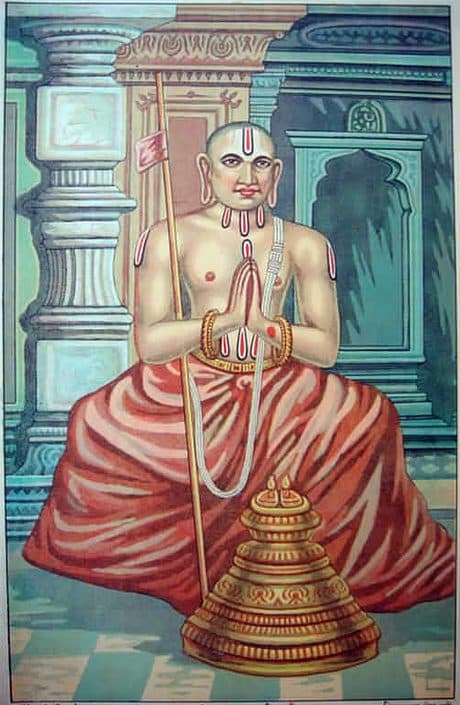
Rāmānuja · Viśiṣṭādvaita
English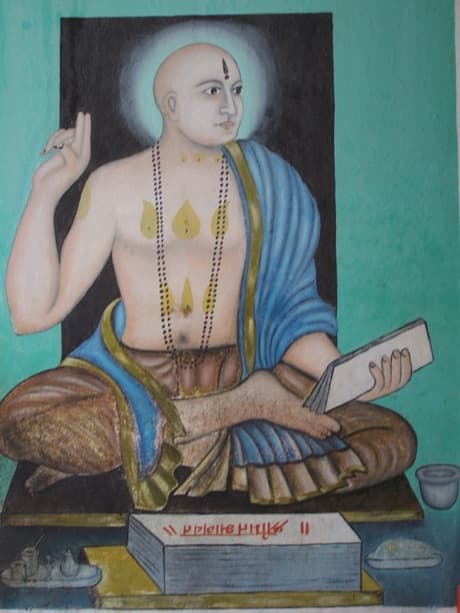
Madhvācārya · Dvaita
SanskritEnglishOn verses 5.19–5.20
“तदेव स्तौति इहैव इति | संयमयोगज्ञानानि मिलित्वा प्रपञ्चयत्यध्यायशेषेण |” - He praises the equanimous perception here in this verse. In the remaining part of the Chapter, renunciation, equanimous action and Wisdom are explained together.
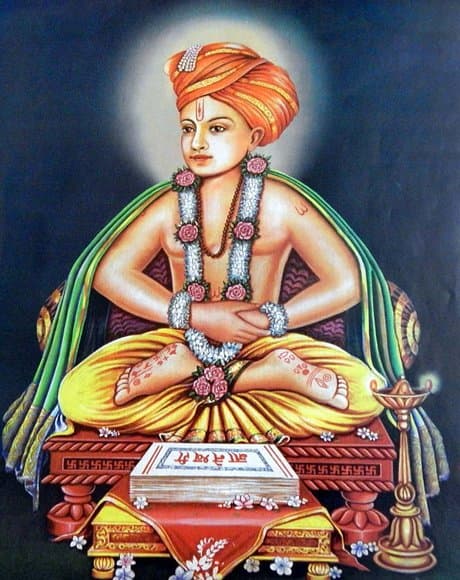
Jñāneśvar · Vārkarī
English20 “He should not be overjoyed, having secured what is pleasant; nor be dismayed, coming upon what is unpleasant; with a steadied intellect and free from confusion, he the knower of Brahman (should become) steadied in Brahman. (103)
“One, who is in no way perturbed or moved at the happening either of a good or a bad event, just as a mountain cannot be swept out by flood of mirage, should be known as really one, who is even-tempered and he is the very Supreme Brahman incarnate” said Lord Krishna to the Son of Pandu.
Swami Ramsukhdas · Modern
English'Na prahrṣyetpriyam prāpya nodvijetprāpya cāpriyam'—To get agreeable beings, objects, incidents and circumstances, appealing to the body, senses, mind, principles, caste, creed and scriptures, is called acquisition of 'priya' (agreeable) and what is contrary to it is 'apriya' (disagreeable). When, a striver obtains pleasant (desirable) beings, objects, and circumstances etc., according to his desire, he should not feel happy. Similarly, when he meets with unpleasant ones, he should not be sad. He knows the desirable and the undesirable ones, but he is neither attached to the desirable nor has an aversion for, the undesirable. Mere knowledge of the agreeable and disagreeable, is not a flaw, if one remains free from joy or grief.
The mind, knows the desirable (pleasant) and the undesirable (unpleasant), while the doer becomes happy and sad. Though all actions, are performed by the modes of nature, yet he whose mind is deluded, by egoism thinks, 'I am the doer,' feels happy and sad. But, he who knows the true character of the self (soul) and the modes of nature, understands, that it is the modes, which are acting on the modes (Gītā 3/28). So he knows, that he is not the doer and thus there is no question for him (the self) to be happy or sad.
'Sthirabuddhiḥ'—The self, can be known by the self, without the help of the instruments, such as the body, senses, mind and intellect etc. The knowledge, which is acquired with mind and intellect etc., is imperfect, as it is neither permanent nor certain (doubtless). But, the knowledge of the self by the self is permanent, uniform and certain. A great soul, who has realized this knowledge of the self, by the self has such a balanced and firm mind, that there remains, neither any doubt nor option nor contrary feelings in it. So, he is called 'sthira-buddhiḥ' (one with firm intellect or understanding).
'Asammūḍhaḥ'—Commonly, deluded people, do not behold
the omnipresent Lord, ever-pervading everywhere, they believe that the world (which is really transitory and unreal), is real. But, the undeluded, are those who are completely free from such belief.
**'Brahmavit'**—God, cannot be realized by a person, who does not identify himself with Him. But, when he identifies himself with Him, without having any separate entity, he realizes Him. In God-realization, the liberated soul, the means and God, all the three, become one. There remains no trio, only realization is left. In fact, who has realized God—this cannot be explained. The reason is, that such a liberated soul, becomes one with God (Brahma), and he has not the least pride of his achievement, that he has realized God.
**'Brahmani sthitah'**—In fact, all beings are essentially and constantly established in Brahma (God), but by an error they assume that they are established in body, senses, mind and intellect etc. So they cannot realize the truth, that they are established in Him. But a great soul, in all circumstances, realizes that he is established in Him, naturally and constantly.
An object may be established in another object, but establishment in God, is distinct from it. When a great soul identifies himself with God, only God remains, he completely loses his separate entity. So long as, he thinks that he is established in Him, it means that he has not fully identified himself with Him, and he still has finiteness.
**Appendix**—In sound sleep and in a swoon a man's affinity for the body is renounced involuntarily viz., due to ignorance the mind merges in ignorance. Therefore in these states a man does not feel pleasant and unpleasant and also bodily pain etc. But a liberated exalted soul renounces his affinity for the body discriminately. Therefore he knows the pleasant and the unpleasant and also bodily pain etc., but he does not feel rejoiced and agitated, happy and sad in them. His dependence on the body,
senses, mind and intellect is wiped out.
Knowing Brahma and getting established in Him—both are one and the same.
*Link:—A person is naturally established in God. The Lord, in the next verse, describes the means of attaining that state.*
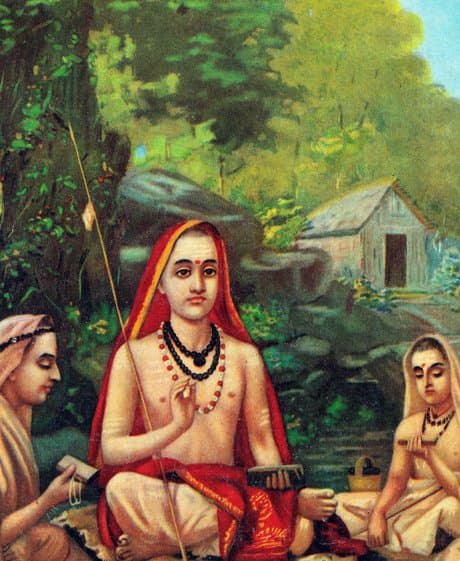
Ādi Śaṅkarācārya · Advaita
Sanskritन प्रहृष्येत् प्रहर्षं न कुर्यात् प्रियं इष्टं प्राप्य लब्ध्वा । न उद्विजेत् प्राप्य च अप्रियं अनिष्टं लब्ध्वा । देहमात्रात्मदर्शिनां हि प्रियाप्रियप्राप्ती हर्षविषादौ कुर्वाते, न केवलात्मदर्शिनः, तस्य प्रियाप्रियप्राप्त्यसम्भवात् । किञ्च -- ``सर्वभूतेषु एकः समः निर्दोषः आत्मा'' इति स्थिरा निर्विचिकित्सा बुद्धिः यस्य सः स्थिरबुद्धिः असम्मूढः सम्मोहवर्जितश्च स्यात् यथोक्तब्रह्मवित् ब्रह्मणि स्थितः, अकर्मकृत् सर्वकर्मसन्न्यासी इत्यर्थः ॥ किञ्च, ब्रह्मणि स्थितः --
Ādi Śaṅkarācārya · Advaita
Hindiक्योंकि निर्दोष और सम ब्रह्म ही आत्मा है, इसलिये—
प्रिय वस्तुको प्राप्त करके तो हर्षित न हो अर्थात् इष्टवस्तु पाकर तो हर्ष न माने और अप्रिय—अनिष्ट पदार्थके मिलनेपर उद्वेग न करे।
क्योंकि देहमात्रमें आत्मबुद्धिवाले पुरुषको ही प्रियकी प्राप्ति हर्ष देनेवाली और अप्रियकी प्राप्ति शोक उत्पन्न करनेवाली हुआ करती है, केवल उपाधिरहित आत्माका साक्षात् करनेवाले पुरुषको नहीं। कारण, उसके लिये (वास्तवमें) प्रिय और अप्रियकी प्राप्ति असम्भव है।
सब भूतोंमें आत्मा एक है, सम है और निर्दोष है, ऐसी संशय-रहित बुद्धि जिसकी स्थिर हो चुकी है और जो मोह—अज्ञानसे रहित है, वह स्थिरबुद्धि ब्रह्मज्ञानी ब्रह्ममें ही स्थित है। अर्थात् वह कर्म न करनेवाला—सर्व कर्मोंका त्यागी ही है
Jñāneśvar · Vārkarī
Marathiतरी मृगजळाचेनि पूरें । जैसें न लोटिजे कां गिरिवरें । तैसा शुभाशुभीं न विकरे । पातलां जो ॥ १०३ ॥
तोचि तो निरुता । समदृष्टी तत्वता । हरि म्हणे पंडुसुता । तोचि ब्रह्म ॥ १०४ ॥
Jñāneśvar · Vārkarī
Hindi(5.103) मृगजल की बाढ़ में जैसे पर्वत नहीं डिगते वैसे ही भला या बुरा अवसर प्राप्त होने से भी जिसे विकार उत्पन्न नहीं होता
(5.104) वही सच्चा है, वही तत्त्वतः समदर्शी है। श्रीकृष्ण कहते हैं, हे पाण्डुसुत! वही ब्रह्म है।
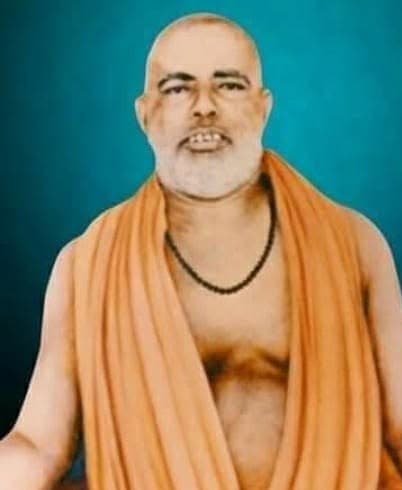
Sri Udiya Baba · Modern
Hindiभावार्थ— जो प्रिय की प्राप्ति में प्रसन्न और अप्रिय की प्राप्ति में अप्रसन्न नहीं होता, क्योंकि वह स्थिरबुद्धि और मोह रहित है, ऐसा ब्रह्मवेत्ता ब्रह्म में स्थित है।
व्याख्या— 'स्थिरबुद्धि'—जिसकी बुद्धि संशयरहित है अथवा जिसे ऐसा दृढ़ निश्चय है कि मुझे बोध हो गया है, इसलिये विक्षेप मेरा कुछ नहीं कर सकता। 'असम्मूढ'—संसार सत्ताशून्य है—ऐसा अनुभव होने के कारण जिसे मोह नहीं होता, 'ब्रह्मवित्'—निःसन्देह बोधवान्, जिसे ऐसा अनुभव है कि स्वरूप सत्ता से भिन्न कुछ भी नहीं है। 'ब्रह्मणि स्थितः'—ज्ञाननिष्ठ है, जिसकी बोधवृत्ति कभी नष्ट नहीं होती। यहाँ 'स्थिरबुद्धिः और असम्मूढः' ये ब्रह्मवित् के ही विशेषण हैं। परन्तु 'ब्रह्मणि स्थितः' केवल ब्रह्मवित् नहीं हो सकता, ऐसा तो ब्रह्मनिष्ठा होने पर ही होता है। बुद्धि उसकी स्थिर हो सकती है, जिसे ठीक-ठीक विवेक हुआ हो। 'ब्रह्मवित्' के लिये 'ज्ञानादेव तु कैवल्यम्' कहा जाता है तो 'ब्रह्मणि स्थितः' 'ब्रह्मसंस्थोऽमृतत्वमेति' है।
जिसमें ये उपर्युक्त चारों विशेषण होंगे वही राग-द्वेष से बच सकता है, केवल 'स्थिरबुद्धिः' होने से राग-द्वेष दूर नहीं होते, क्योंकि वह विवेकी और बोधवान् भी हो—यह जरूरी नहीं है। इसी प्रकार 'असम्मूढः' विवेकी तो होता है किन्तु ब्रह्मवित् हो ही यह नहीं कहा जा सकता तथा केवल 'ब्रह्मवित्' होने से भी राग-द्वेष दूर नहीं होते, उसे ब्रह्मनिष्ठा भी होना ही चाहिये। अतः ये चारों विशेषण उत्तरोत्तर श्रेष्ठ हैं। इससे सिद्ध हुआ कि राग-द्वेष की निवृत्ति के लिये बोध के पश्चात् बोधनिष्ठ होना भी परम आवश्यक है। इनमें से भी स्थिरबुद्धि, असम्मूढ और ब्रह्मवित्—ये तीन लक्षण तो गृहस्थ में भी हो सकते हैं, परन्तु उसके लिये 'ब्रह्मणि स्थितः' होना कठिन है।
प्रश्न— ज्ञान और अज्ञान में क्या अन्तर है और वास्तव में ज्ञाननिष्ठा क्या है?
उत्तर— यह बात याद रखो कि ज्ञान निर्विकल्प स्वरूप है और ज्ञाननिष्ठा निर्विकल्प अवस्था है। दोनों में अन्तर यह है कि ज्ञान में
तदाकारवृत्ति नहीं रहती, ज्ञाननिष्ठा में रहती है, क्योंकि ज्ञाननिष्ठा ज्ञानी में होती है और 'ज्ञानी' देहदृष्टि से कहा जाता है। ज्ञान तो स्वरूप ही है। और 'जो कुछ है वह स्वरूप ही है' इसका नाम ज्ञाननिष्ठा है। ज्ञाननिष्ठा का उपदेश जिज्ञासु के लिये है, जिससे जब तक प्रतीति है वह अभ्यास करता रहे। वास्तव में तो ज्ञान का किसी के साथ सम्बन्ध नहीं है और जब सम्बन्ध नहीं है तो निष्ठा किसकी किसमें होगी?
प्रश्न— जब स्वयं ब्रह्म ही है तो फिर ब्रह्म में उसकी स्थिति क्या होगी?
उत्तर— यद्यपि ज्ञान होने पर उसमें किसी अभ्यास की अपेक्षा नहीं है, क्योंकि 'ज्ञानादेव तु केवल्यम्' इत्यादि स्पष्ट प्रमाण हैं। तथापि जीवन्मुक्ति के विलक्षण सुख के लिये अभ्यास किया जाता है। वह सुख क्या है सो अगले श्लोक से बतलाते हैं—
Swami Ramsukhdas · Modern
Hindi‘न प्रहृष्येत्प्रियं प्राप्य नोद्विजेत्प्राप्य चाप्रियम्’—शरीर, इन्द्रियाँ, मन, बुद्धि, सिद्धान्त, सम्प्रदाय, शास्त्र आदिके अनुकूल प्राणी, पदार्थ, घटना, परिस्थिति आदिकी प्राप्ति होना ही ‘प्रिय’ को प्राप्त होना है।
शरीर, इन्द्रियाँ, मन, बुद्धि, सिद्धान्त, सम्प्रदाय, शास्त्र आदिके प्रतिकूल प्राणी, पदार्थ, घटना, परिस्थिति आदिकी प्राप्ति होना ही ‘अप्रिय’ को प्राप्त होना है।
प्रिय और अप्रियको प्राप्त होनेपर भी साधकके अन्तःकरणमें हर्ष और शोक नहीं होने चाहिये। यहाँ प्रिय और अप्रियकी प्राप्तिका यह अर्थ नहीं है कि साधकके हृदयमें अनुकूल या प्रतिकूल प्राणी-पदार्थोंके प्रति राग या द्वेष है, प्रत्युत यहाँ उन प्राणी-पदार्थोंकी प्राप्तिके ज्ञानको ही प्रिय और अप्रियकी प्राप्ति कहा गया है। प्रिय या अप्रियकी प्राप्ति अथवा अप्राप्तिका ज्ञान होनेमें कोई दोष नहीं है। अन्तःकरणमें उनकी प्राप्ति अथवा अप्राप्तिका असर पड़ना अर्थात् हर्ष-शोकादि विकार होना ही दोष है।
प्रियता और अप्रियताका ज्ञान तो अन्तःकरणमें होता है, पर हर्षित और उद्विग्न कर्ता होता है। अहंकारसे मोहित
अन्तःकरणवाला पुरुष प्रकृतिके करणोंद्वारा होनेवाली क्रियाओंको लेकर ‘मैं कर्ता हूँ’—ऐसा मान लेता है तथा हर्षित और उद्विग्न होता रहता है। परन्तु जिसका मोह दूर हो गया है, जो तत्त्ववेत्ता है, वह ‘गुण ही गुणोंमें बरत रहे हैं’—ऐसा जानकर अपनेमें (स्वरूपमें) वास्तविक अकर्तृत्वका अनुभव करता है (गीता—तीसरे अध्यायका अट्ठाईसवाँ श्लोक)। स्वरूपका हर्षित और उद्विग्न होना सम्भव ही नहीं है।
‘स्थिरबुद्धिः’—स्वरूपका ज्ञान स्वयंके द्वारा ही स्वयंको होता है। इसमें ज्ञाता और ज्ञेयका भाव नहीं रहता। यह ज्ञान करण-निरपेक्ष होता है अर्थात् इसमें शरीर, इन्द्रियाँ, मन, बुद्धि आदि किसी करणकी अपेक्षा नहीं होती। करणोंसे होनेवाला ज्ञान स्थिर तथा सन्देहहित नहीं होता, इसलिये वह अल्पज्ञान है। परन्तु स्वयं-(अपने होनेपन-) का ज्ञान स्वयंको ही होनेसे उसमें कभी परिवर्तन या सन्देह नहीं होता। जिस महापुरुषको ऐसे करण-निरपेक्ष ज्ञानका अनुभव हो गया है, उसकी कही जानेवाली बुद्धिमें यह ज्ञान इतनी दृढ़तासे उतर आता है कि उसमें कभी
विकल्प, सन्देह, विपरीत भावना, असम्भावना आदि होती ही नहीं। इसलिये उसे 'स्थिरबुद्धिः' कहा गया है।
'असम्भूतः'—जो परमात्मतत्त्व सदा-सर्वत्र विद्यमान है, उसका अनुभव न होना और जिसकी स्वतन्त्र सत्ता नहीं है, उस उत्पत्ति-विनाशशील संसारको सत्य मानना—ऐसी मूढ़ता साधारण मनुष्यमें रहती है। इस मूढ़ताका जिसमें सर्वथा अभाव हो गया है, उसे ही यहाँ 'असम्भूतः' कहा गया है।
'ब्रह्मवित्'—परमात्मासे अलग होकर परमात्माका अनुभव नहीं होता। परमात्माका अनुभव होनेमें अनुभविता, अनुभव और अनुभाव्य—यह त्रिपुटी नहीं रहती, प्रत्युत त्रिपुटीरहित अनुभवमात्र (ज्ञानमात्र) रहता है। वास्तवमें ब्रह्मको जाननेवाला कौन है—यह बताया नहीं जा सकता। कारण कि ब्रह्मको जाननेवाला ब्रह्मसे अभिन्न हो जाता है*, इसलिये वह अपनेको ब्रह्मवित् मानता ही नहीं अर्थात् उसमें 'मैं ब्रह्मको जानता हूँ' ऐसा अभिमान नहीं रहता।
**परिशिष्ट भाव**—सुषुप्ति और मूर्च्छामें मनुष्यका शरीरसे अज्ञानपूर्वक सम्बन्ध-विच्छेद होता है अर्थात् मन अविद्यामें लीन होता है; अतः इन अवस्थाओंमें मनुष्यको प्रिय और अप्रियका, शारीरिक पीड़ा आदिका ज्ञान ही नहीं होता। परन्तु जीवन्मुक्त महापुरुषका शरीरसे ज्ञानपूर्वक सम्बन्ध-विच्छेद होता है। इसलिये उसको प्रिय और अप्रियका, शरीरकी पीड़ा आदिका ज्ञान तो होता है, पर उनसे वह हर्षित-उद्विग्न, सुखी-दुःखी नहीं होता। उसकी शरीर-इन्द्रियाँ-मन-बुद्धिकी परवशता मिट जाती है।
ब्रह्मको जानना और उसमें स्थित होना—दोनों एक ही हैं।
सम्बन्ध—ब्रह्ममें अपनी स्वाभाविक स्थितिका अनुभव किस प्रकार होता है, इसका विवेचन आगेके श्लोकमें करते हैं।
बाह्यस्पर्शेष्वसक्तात्मा विन्दत्यात्मनि यत्सुखम्।
Agreeable and disagreeable situations occur in accordance to the physical body one happens to dwell in and the karma or reactions to past life actions an embodied being is subjected to which both exemplify the grave risks of material existence.
A person who would seek to scale the heights of spiritual knowledge should remain equipoised at all times and not feel elation at receiving something agreeable nor feel dejection at receiving something disagreeable.
How is this possible?
It is possible for one who is sthira-buddhir meaning steadfast intelligence. Such a person plants his mind and will in the stability of the ātma or soul.
The word asaṃmūḍho means “not subject to delusion”. If one is saṃmūḍho they are inflicted with delusion in the form of confusing the stable eternal ātma with the unstable temporary body.
How can one escape this delusion?
If a person is brahma- vid or a knower of the spiritual substratum pervading all existence from instruction and brahmani sthitah or perceiving and experiencing the spiritual substratum pervading all existence every moment.
The meaning Lord Krishna is conveying is that those who receive instructions from the bona fide spiritual preceptor in one of the four authorised sampradāyas or lines of disciplic succession shall learn the exact nature and means of attainment of the eternal ātma.
This is brahma-vid. Such a one through diligent and sincere application of this spiritual knowledge, always remembering and honouring the spiritual preceptor who mercifully gave such knowledge, in due course of time will achieve ātma tattva or realisation of the soul
and in such an elevated position one will blissfully commune internally with the eternal ātma and the eternal spiritual preceptor as well and from thenceforth nothing in the external world will ever again be perceived as being agreeable or being disagreeable.