

Bhagavad Gītā · Chapter 5 · Karma Sannyāsa Yoga
युक्तः कर्मफलं त्यक्त्वा शान्तिमाप्नोति नैष्ठिकीम्
अयुक्तः कामकारेण फले सक्तो निबध्यते
yuktaḥ karmaphalaṃ tyaktvā śāntimāpnoti naiṣṭhikīm|
ayuktaḥ kāmakāreṇa phale sakto nibadhyate||
Word meanings
युक्तः = the disciplined one
कर्मफलम् = the fruit of action
त्यक्त्वा = having given up/risking
नैष्ठिकीम् = abiding
शान्तिम् = peace
आप्नोति = attains
अयुक्तः = the undisciplined one
कामकारेण = driven by desire
फले = in the fruit
सक्तः = attached
निबध्यते = becomes bound
Translation
Offering the fruit of actions to God, the Karmayogi attains everlasting peace in the shape of God-Realization; whereas he who works with a selfish motive, being attached to the fruit of action through desire, gets tied down.
Commentary
The commentators seated around this verse

Rāmānuja · Viśiṣṭādvaita
English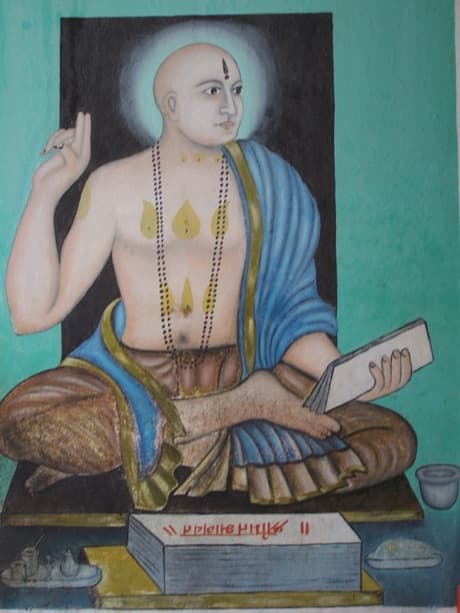
Madhvācārya · Dvaita
Madhva BhāṣyaSanskritEnglishOn verses 5.10–5.12
“संन्यासयोगयुक्त एव च कर्मणा न लिप्यत इत्याह - ब्रह्मणि इति | साधननियमोपचारत्वनिवृत्त्यर्थः पुनः पुनः फलकथनम् || एवश्चाऽऽचर इत्याह | कायेन इति | पुनर्युक्त्यादिनियमनार्थं युक्तायुक्तफलमाह युक्त इति | युक्तो योगयुक्तः ||” - One who is attuned to equanimity is not affected by performance of actions, thus has been said in this verse. For the sake of emphasizing the rules of observance for spiritual practice and for removal of casualness, the result is spoken again and again. This is the way of action, thus Sri Krishna says. For emphasizing the rules of observance for equanimity, the fruits of attainment are spoken again in this verse. In Communion means being unanimous with sense of renunciation.
Madhvācārya · Dvaita
Gītā Tātparya NirṇayaSanskritEnglishOn verses 5.10–5.12
“तत्पूजात्मकानि तत्कृतानि मम शुभार्थम् इति ब्रह्मणाधानम् । स्वातन्त्र्याभावा पेक्षयैव जीवस्याकर्तृत्वम् ॥ स्ववन्दनं यथा पित्रा कारितं शिशुकर्तृत्वम् । एवं पूजा विष्णवधीना भवेज्जीवकृतेत्यपि ॥ इति प्रवृत्ते ।” - By offering worship to the Supreme Lord and meditating on Brahman one is inclined to accept that all the actions performed are not independent. Being subservient become factually non-performer like children in respect to their father and mother, through propitiation of the Supreme Lord pervading all existence, thus in as Pravritti scripture. .

Jñāneśvar · Vārkarī
English12 “One intent (on Yoga) abjures the action’s fruit and wins Peace eternal; while one not intent (on Yoga), because actuated (in his actions) by desires, is attached to the fruit, and falls into fetters. (71)
One whose soul reposes in this self-vision loathes altogether the craving for the fruit of actions. He is assuredly sought after and espoused by the Blissful Peace, while others, O Kiriti, are tied to the stake in the form of enjoyment of fruit by the rope in the form of actions.
Swami Ramsukhdas · Modern
English'Yuktaḥ'—The meaning of this term, is taken according to the
context. In the eighth verse of this chapter, the term 'Yuktaḥ' has been used for the 'Sāṅkhyayogī', who does not regard himself, as a doer of actions, while here it has been used for the Karmayogī, who has renounced the fruit of action.
All strivers, whose aim is to attain equanimity, are 'Yuktaḥ' or 'Yogī'. In the present verse, it has been used for a Karmayogī, who having a determinate intellect, has renounced worldly desires.
'Karmaphalaṃ tyaktvā'—This expression, means the renunciation of desire for fruit and also, renunciation of attachment, because in fact it is not the fruit of actions which is renounced, it is desire for the fruit of actions, which is renounced. That fruit may be reaped, either immediately or in the future. When a striver, regards nothing as his, does nothing for him, desires nothing for him, it means that he has renounced, the desire for the fruit of actions.
A man's prārabdha (fate), is determined by the hoard of his past actions, and according to that he is born in good and evil wombs. In human life, actions which are performed, produce impressions that are added to the stock. But, when he renounces attachment to the fruit of actions, such actions cannot bear fruit, like roasted seed and these change, into inaction (Gītā 4/20). Because of the effect of actions, which are performed without desire for the fruit of actions, the latent impressions of the old actions, (accumulated of past actions), are reduced to nothing (Gītā 4/23). Thus, the cause of his rebirth, melts away.
Fruit of actions, is of four kinds:—
(1) Visible—The fruit of present actions, which is visible immediately, as satisfying one's hunger after having a meal, is a visible fruit.
(2) Unforeseen—Fruit, which will be reaped in future, in the form of favourable or unfavourable circumstances etc., here or hereafter. This fruit is unforeseen. At present the action goes to the accumulated stock of actions.
(3) Received as fruit of past actions:—The body (with its caste, order of life) wealth, property and favourable or unfavourable circumstances, which have been bestowed upon us, as a result of past deeds.
(4) Unreceived, fruits yet to be reaped in future:—Favourable and unfavourable circumstances, which we have to receive in future as ordained by destiny (prārabdha karma).
Out of the four kinds, of fruit of action, the visible and the unforeseen, depend on present actions, while the received and unreceived ones, depend on prārabdha karma. When a striver, does not desire the visible fruit, nor does he feel displeased or pleased, having received it; and does not expect the unforeseen one; nor is he attached to the received, fruit nor feels happy or sad having received it, and does not desire, the unreceived one, then, it is said that he has renounced, the fruit of action.
Common people, perform actions with a desire for the fruit of actions, and during performance, they go on thinking of that desire. As a businessman makes transactions for profit and goes on thinking about profit and feels happy with profit, and sad with loss; similarly, all people perform actions, having desire for favourable gains, such as wife, son, riches, honour and praise etc. But, a Karmayogī performs actions, by renouncing desire, for fruit.
Now a question arises, why should a man perform actions, if he has no desire? The answer is, that none can ever remain still for even a moment, without performing action (Gītā 3/5). Even if, it is accepted that a man can abandon actions, to a great degree, even then, so long as, he is attached to the world, he will think of sense-objects and that is also, an action. The thought, of sense-objects, finally leads him to ruin (Gītā 2/62-63). Therefore, so long as, a striver does not renounce attachment totally, he cannot be liberated, from the bondage of action. The old attachment, is wiped out by performance of action, while,
the new one does not arise, when actions are performed for the welfare of others, and without any selfish motive.
In fact, it is ignorance if actions are performed with desire for fruit, because firstly actions and their fruits are perishable, and secondly, these will bear fruit, according to fate whether desired or not. A man cannot have, increase or decrease in fruit, by mere desire.
When actions are performed for the welfare of others, without desire for fruit, affinity for these, is renounced. A Karmayogī, does not perform actions without an aim, like an insane man, but he performs these having a high aim of God-realization. To realize his aim, he works for the welfare of others. As he is not attached to the body, he performs actions, promptly and scrupulously, without such evils, as indolence and heedlessness.
A Vital Fact
If actions, which are performed, to acquire the worldly materials, are performed, for the welfare of the world, with the aim of God-realization, and without any selfish motive, these actions can lead a man to God-realization. In the twentieth verse of the third chapter, it has been declared, 'Janaka and others attained perfection, verily by action only,' while in the third verse of the sixth chapter, it has been stated, 'Action is said, to be the means with a sage, who wishes to attain to Yoga.' These facts, reveal that God can be realized by actions. Pārvatī and Manu-Śatarūpā etc., also realized God, through performance of actions, in the form of penance. It is also mentioned in the scriptures, that He can be realized through chanting, meditation, good company, study of scriptures and cognition etc. On the contrary, it is also mentioned, that He cannot be realized, through actions, such as penance etc., (Gītā 11/53). How to reconcile the two?
The answer is, that in fact God is not attained through any action. He is also, not a fruit of action. God pervades everywhere,
everything, incident, circumstance and person etc., all the time. He is ever-attainable to everyone, and everyone abides in Him, only. No one can ever be separate, from Him. But, a man being attached to perishable body, senses, mind, intellect and objects etc., which are evolutes of insentient nature, has a disinclination for God, Who is his. Spiritual discipline, is to be practised, in order to wipe out this attachment or affinity.
Through the performance of penance etc., when this affinity for the insentient, is renounced, God, Who is ever-attainable, is attained. This affinity can be very easily renounced, when actions are performed for the welfare of the world, without any selfish motive.
The sentient and eternal Lord, cannot be bought, for all the wealth of the world. All the worldly objects, stand nowhere, when all of them are compared to the imperishable Lord. Moreover, a thing which is bought for a particular amount, is cheaper than that amount. Thus if God is realized by performing actions, it means, that He is cheaper than actions.
Here is a vital point, which calls for attention. Generally, strivers during spiritual practice depend on and have affinity for the body, senses, mind, intellect etc., with which, they perform that spiritual activity. So long as, they have affinity for these i.e., the insentient, they cannot realize God. As soon as, this affinity is renounced, God is realized. God-realization is not possible, through matter, rather it is by snapping our connection with it.
The body, senses, mind and intellect etc., belong to the same class, to which the world belongs. So these should be utilized, in rendering service to the world (this is Karmayoga). A striver, should not accept his affinity for these, nor should be depend on them, as he cannot get rid of the unreal, by having affinity for the unreal. Actions are performed, without any selfish motive, in order to renounce affinity, for the unreal. When this affinity is totally renounced, disinclination for God perishes, and ever-attained God, is realized.
'Śāntimāpnoti naiṣṭhikim'—It has stood the test of experience, that when a person has neither desire, for the worldly objects, nor is attached to them, he attains peace. Even, during sound sleep when the world is forgotten, a man experiences peace. Similarly, one attains peace, when he completes any assignment or task, such as the marriage of his daughter. If he renounces his affinity, (desire and attachment) during wakefulness, he will attain peace. But if he enjoys this peace, he cannot attain everlasting peace or the supreme peace,* because this peace is not an end, but a means to attain the supreme peace, called Yoga (Gītā 6/3).
So long as, a striver remains attached to peace, which he attains by renouncing his affinity for the world, he is bound (Gītā 14/6) and he cannot attain, the supreme, uniform and eternal peace.
'Ayuktaḥ kāmakāreṇa phale sakto nibadhyate'—The term 'Ayuktaḥ', has been used for a person, who works with a selfish motive. Such a person, because of his several desires, being attached to fruit of actions, has to follow, the cycle of birth and death. A person cannot acquire things etc., merely by having a desire. Secondly he cannot possess these forever, even if he has acquired them. So, it is futile to have a desire for acquiring objects etc., saint Tulasīdāsa in the Vinaya-Patrikā declares, 'All worldly objects will abandon you, in the end; it is better, if you abandon, them right now' (198).
It does not mean, that their physical abandonment (renouncement) leads to salvation, or God-realization. Had it been so, all persons who left their bodies, (at the time of death) would have attained salvation. But, it is not so. In fact it is desire, a sense of mine and attachment to these which are to be renounced, because these lead to bondage i.e., end to the cycle
*This everlasting (supreme) peace is God-realization. It has been called 'eternal peace' (9/31), 'the supreme peace' (4/39; 18/62) and 'peace' (5/29, 2/70-71) in the Gītā.
of birth and death. When actions are performed, for the welfare of others, their flow is towards others, and any assumed affinity for them, is easily renounced.
**Appendix**—In fact practice of the spiritual discipline in order to attain salvation or God-realization is also attachment to the fruit of action. A man has formed the habit to do a piece of work with the desire for its fruit; therefore it is said that one should practise spiritual discipline for salvation or God-realization.
In fact spiritual practice is needed in order to wipe out attachment to the world; otherwise salvation is axiomatic. The Lord is ever attained. God-realization is not the fruit of an action. Therefore the yearning for the performance of action in order to attain God is also the desire for fruit.
A striver should not think that this spiritual practice will bear this fruit. Desiring the fruit is an attachment to the fruit which does not allow the spiritual discipline to be followed scrupulously. Therefore instead of thinking of the fruit, a striver should practise spiritual discipline promptly which will naturally lead him to divine perfection. If a striver goes on thinking for the fruit, he will not attain divine perfection.
We shall attain the transcendental state or the desireless state and then we shall be happy—in this way the desire to derive happiness or pleasure is also the desire for fruit which hinders a striver from becoming transcendental and desireless.
*Link:—Having dwelt upon Karmayoga, the Lord now comments at length, upon Sāṅkhyayoga.*
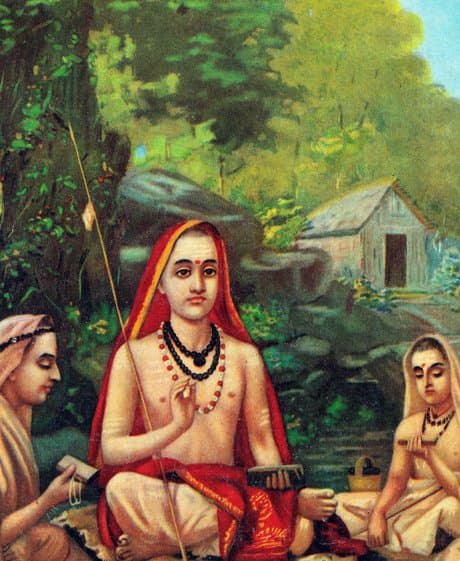
Ādi Śaṅkarācārya · Advaita
Sanskritयुक्तः ``ईश्वराय कर्माणि करोमि न मम फलाय'' इत्येवं समाहितः सन् कर्मफलं त्यक्त्वा परित्यज्य शान्तिं मोक्षाख्यां आप्नोति नैष्ठिकीं निष्ठायां भवां सत्त्वशुद्धिज्ञानप्राप्तिसर्वकर्मसन्न्यासज्ञाननिष्ठाक्रमेणेति वाक्यशेषः । यस्तु पुनः अयुक्तः असमाहितः कामकारेण करणं कारः कामस्य कारः कामकारः तेन कामकारेण, कामप्रेरिततयेत्यर्थः, ``मम फलाय इदं करोमि कर्म'' इत्येवं फले सक्तः निबध्यते । अतः त्वं युक्तो भव इत्यर्थः ॥ यस्तु परमार्थदर्शी सः --
Ādi Śaṅkarācārya · Advaita
Hindiक्योंकि—
'सब कर्म ईश्वरके लिये ही हैं, मेरे फलके लिये नहीं' इस प्रकार निश्चयवाला योगी, कर्मफलका त्याग करके ज्ञाननिष्ठामें होनेवाली मोक्षरूप परम शान्तिको प्राप्त हो जाता है।
यहाँ पहले अन्तःकरणकी शुद्धि, फिर ज्ञानप्राप्ति, फिर सर्व-कर्म-संन्यासरूप ज्ञाननिष्ठाकी प्राप्ति—इस प्रकार क्रमसे परम शान्तिको प्राप्त होता है, इतना वाक्य अधिक समझ लेना चाहिये।
परंतु जो अयुक्त है अर्थात् उपर्युक्त निश्चयवाला नहीं है वह कामकी प्रेरणासे 'अपने फलके लिये यह कर्म मैं करता हूँ' इस प्रकार फलमें आसक्त होकर बँधता है। इसलिये तू युक्त हो अर्थात् उपर्युक्त निश्चयवाला हो, यह अभिप्राय है। करणका नाम कार है, कामके करणका नाम कामकार है, उसमें तृतीया विभक्ति जोड़नेसे कामके कारणसे अर्थात् 'कामकी प्रेरणासे' यह अर्थ हुआ
Jñāneśvar · Vārkarī
Marathiतरी आत्मयोगें आथिला । जो कर्मफळाशीं विटला । तो घर रिघोनि वरिला । शांति जगीं ॥ ७१ ॥
येरु कर्मबधें किरीटी । अभिलाषाचिया गांठीं । कळासला खुंटी । फळभोगाचां ॥ ७२ ॥
Jñāneśvar · Vārkarī
Hindi(5.71) जो आत्मज्ञान से सम्पन्न है, जिसके हृदय में कर्म के फल का तिरस्कार उत्पन्न हुआ है, वह मनुष्य संसार में शान्ति के घर में घुस कर उसे वर लेता है
(5.72) परन्तु हे किरीटी! जो आत्मयोगी नहीं है वह कर्मबन्ध के कारण फलभोगरूपी खूँटी से फलेच्छा की गाँठ दे बाँधा जाता है।

Sri Udiya Baba · Modern
Hindiसंगति— अब अगले श्लोक में निष्काम और सकाम कर्म करने वालों की परिणाम में जैसी स्थिति होती है वह बतलाते हैं—
भावार्थ— युक्त अर्थात् निष्काम कर्मयोगी कर्मों के फल का त्याग करके नैष्ठिकी शान्ति अर्थात् अन्तःकरण की शुद्धि प्राप्त कर लेता है। किन्तु जो अयुक्त (सकामी) है वह फल में आसक्त होने के कारण कामनायुक्त प्रवृत्ति से बँध जाता है।
व्याख्या— जो मुमुक्षु या निष्काम कर्मयोगी होता है वही शान्ति प्राप्त करता है, क्योंकि निष्काम कर्म ही ज्ञाननिष्ठा का साधन है। यह भगवान् ने स्पष्ट कह दिया है सकाम पुरुष नैष्ठिकी (स्थायी) शान्ति प्राप्त नहीं कर सकता। वह तो केवल निष्काम कर्मयोगी को ही मिलती है। अध्याय २ श्लोक ७० में भी कहा है—‘स शान्तिमाप्नोति न कामकामी।’ इसलिये अर्जुन! तुम योगयुक्त हो जाओ।
Swami Ramsukhdas · Modern
Hindi‘युक्तः’—इस पदका अर्थ प्रसंगके अनुसार लिया जाता है; जैसे—इसी अध्यायके आठवें श्लोकमें अपनेको अकर्ता माननेवाले सांख्ययोगीके लिये ‘युक्तः’ पद आया है, ऐसे ही यहाँ कर्मफलका त्याग करनेवाले कर्मयोगीके लिये ‘युक्तः’ पद आया है।
जिनका उद्देश्य ‘समता’ है, वे सभी पुरुष युक्त अर्थात् योगी हैं। यहाँ कर्मयोगीका प्रकरण चल रहा है, इसलिये यहाँ ‘युक्तः’ पद ऐसे कर्मयोगीके लिये आया है, जिसकी बुद्धि व्यवसायात्मिका होनेसे जिसमें सांसारिक कामनाओंका अभाव हो गया है।
‘कर्मफलं त्यक्त्वा’—यहाँ कर्मफलका त्याग करनेका तात्पर्य फलकी इच्छा, आसक्तिका त्याग करना है; क्योंकि वास्तवमें त्याग कर्मफलका नहीं, प्रत्युत कर्मफलकी इच्छाका होता है। कर्मफलकी इच्छाका त्याग करनेका अर्थ है—किसी भी कर्म और कर्मफलसे अपने लिये कभी किंचिन्मात्र भी किसी प्रकारका सुख लेनेकी इच्छा न रखना। कर्म करनेसे एक तो तात्कालिक फल (सुख)
मिलता है और दूसरा परिणाममें फल मिलता है—इन दोनों ही फलोंकी इच्छाका त्याग करना है। अपना कुछ नहीं है, अपने लिये कुछ नहीं करना है और अपनेको कुछ नहीं चाहिये—इस प्रकार कर्ताके सर्वथा निष्काम होनेपर कर्मफलकी इच्छाका त्याग हो जाता है।
संचित-कर्मोंके अनुसार प्रारब्ध बनता है, प्रारब्धके अनुसार मनुष्यका जन्म होता है और मनुष्य-जन्ममें नये कर्म होनेसे नये कर्म-संस्कार संचित होते हैं। परन्तु कर्मफलकी आसक्तिका त्याग करके कर्म करनेसे कर्म भुने हुए बीजकी तरह संस्कार उत्पन्न करनेमें असमर्थ हो जाते हैं और उनकी संज्ञा ‘अकर्म’ हो जाती है (गीता—चौथे अध्यायका बीसवाँ श्लोक)। वर्तमानमें निष्कामभावपूर्वक किये कर्मोंके प्रभावसे उसके पुराने कर्म-संस्कार (संचित कर्म) भी समाप्त हो जाते हैं (गीता—चौथे अध्यायका तेईसवाँ श्लोक)। इस प्रकार उसके पुनर्जन्मका कारण ही समाप्त हो जाता है।
कर्मफल चार प्रकारके होते हैं—
(१) **दृष्ट कर्मफल**—वर्तमानमें किये जानेवाले नये कर्मोंका फल, जो तत्काल प्रत्यक्ष मिलता हुआ दीखता है; जैसे—भोजन करनेसे तृप्ति होना आदि।
(२) **अदृष्ट कर्मफल**—वर्तमानमें किये जानेवाले नये कर्मोंका फल, जो अभी तो संचितरूपसे संगृहीत होता है, पर भविष्यमें इस लोक और परलोकमें अनुकूलता या प्रतिकूलताके रूपमें मिलेगा।
(३) **प्राप्त कर्मफल**—प्रारब्धके अनुसार वर्तमानमें मिले हुए शरीर, जाति, वर्ण, धन, सम्पत्ति, अनुकूल या प्रतिकूल परिस्थिति आदि।
(४) **अप्राप्त कर्मफल**—प्रारब्ध-कर्मके फल-रूपमें जो अनुकूल या प्रतिकूल परिस्थिति भविष्यमें मिलनेवाली है।
उपर्युक्त चार प्रकारके कर्मफलोंमें दृष्ट और अदृष्ट कर्मफल 'क्रियमाण-कर्म' के अधीन हैं तथा प्राप्त और अप्राप्त कर्मफल 'प्रारब्ध-कर्म' के अधीन हैं। कर्मफलका त्याग करनेका अर्थ है—दृष्ट कर्मफलका आग्रह नहीं रखना तथा मिलनेपर प्रसन्न या अप्रसन्न न होना; अदृष्ट कर्मफलकी आशा न रखना; प्राप्त कर्मफलमें ममता न करना तथा मिलनेपर सुखी या दुःखी न होना और अप्राप्त कर्मफलकी कामना न करना कि मेरा दुःख मिट जाय और सुख हो जाय।
साधारण मनुष्य किसी-न-किसी कामनाको लेकर ही कर्मोंका आरम्भ करता है और कर्मोंकी समाप्तिक उस कामनाका चिन्तन करता रहता है। जैसे व्यापारी धनकी इच्छासे व्यापार आरम्भ करता है तो उसकी वृत्तियाँ धनके लाभ और हानिकी ओर ही रहती हैं कि लाभ हो जाय, हानि न हो। धनका लाभ होनेपर वह प्रसन्न होता है और हानि होनेपर दुःखी होता है। इसी तरह सभी मनुष्य स्त्री, पुत्र, धन, मान, बड़ाई आदि कोई-न-कोई अनुकूल फलकी इच्छा रखकर ही कर्म करते हैं। परन्तु कर्मयोगी फलकी इच्छाका त्याग करके कर्म करता है।
यहाँ स्वाभाविक प्रश्न उठता है कि अगर कोई इच्छा ही न हो तो कर्म करें ही क्यों? इसके उत्तरमें सबसे पहली बात तो यह है कि कोई भी मनुष्य किसी भी अवस्थामें कर्मोंका सर्वथा त्याग नहीं कर सकता (गीता—तीसरे अध्यायका पाँचवाँ श्लोक)। यदि ऐसा मान भी लिया जाय कि मनुष्य बहुत अंशोंमें कर्मोंका स्वरूपसे त्याग कर सकता है, तो भी
मनुष्यके भीतर जबतक संसारके प्रति राग है, तबतक वह शान्तिसे (कर्म किये बिना) नहीं बैठ सकता। उससे विषयोंका चिन्तन अवश्य होगा, जो कि कर्म है। विषयोंका चिन्तन होनेसे वह क्रमशः पतनकी ओर चला जायगा (गीता—दूसरे अध्यायका बासठवाँ-तिरसठवाँ श्लोक)। इसलिये जबतक रागका सर्वथा अभाव नहीं हो जाता, तबतक मनुष्य कर्मोंसे छूट नहीं सकता। कर्म करनेसे पुराना राग मिटता है और निःस्वार्थभावसे केवल परहितके लिये कर्म करनेसे नया राग पैदा नहीं होता।
विचारपूर्वक देखा जाय तो कर्मफलकी इच्छा रखकर कर्म करना बड़ी बेसमझी है। पहली बात तो यह है कि जब प्रत्येक कर्म आरम्भ और समाप्त होनेवाला है, तब उसका फल नित्य कैसे होगा? फल भी प्राप्त होकर नष्ट हो जाता है। तात्पर्य यह है कि कर्म और कर्मफल—दोनों ही नाशवान् हैं या तो फल नहीं रहेगा या हमारा कहलाने-वाला शरीर नहीं रहेगा। दूसरी बात, इच्छा रखें या न रखें, जो फल मिलनेवाला है, वह तो मिलेगा ही। इच्छा करनेसे अधिक फल मिलता हो और इच्छा न करनेसे कम फल मिलता हो, ऐसी बात नहीं है। अतः फलकी कामना करना बेसमझी ही है।
निष्कामभावसे अर्थात् फलकी कामना न रखकर लोकहितार्थ कर्म करनेसे कर्मोंसे सम्बन्ध-विच्छेद हो जाता है। कर्मयोगीके कर्म उद्देश्यहीन अर्थात् पागलके कर्मकी तरह नहीं होते, प्रत्युत परमात्मतत्त्वकी प्राप्तिका महान् उद्देश्य रखकर ही वह लोकहितार्थ सब कर्म करता है। उसके कर्मोंका लक्ष्य परमात्मतत्त्व रहता है, सांसारिक पदार्थ नहीं। शरीरमें ममता न रहनेसे उसमें आलस्य, अकर्मण्यता आदि दोष नहीं आते, प्रत्युत वह कर्मोंको सुचारुरूपसे और तत्परताके साथ करता है।
मार्मिक बात
जिन कर्मोंको करनेसे नाशवान् पदार्थोंकी प्राप्ति होती है, वे ही कर्म निष्कामभावपूर्वक एकमात्र परमात्मतत्त्वकी प्राप्तिका उद्देश्य रखकर लोकहितार्थ करनेसे नित्यसिद्ध परमात्मतत्त्वकी अनुभूतिमें हेतु बन सकते हैं। तीसरे अध्यायके बीसवें श्लोकमें कहा गया है कि कर्मोंके द्वारा ही जनकादि कर्मयोगियोंको परमात्मप्राप्तिरूप सिद्धि मिली; और छठे अध्यायके तीसरे श्लोकमें कहा गया है कि योगमें आरूढ़ होनेके लिये कर्म करना आवश्यक है। इन सब
बातोंसे यह अर्थ निकलता है कि परमात्मतत्त्वकी प्राप्ति कर्मोंसे होती है। पार्वती, मनु-शतरूपा आदिको भी तपरूप कर्मसे भगवत्प्राप्ति हुई। यह बात भी आती है कि जप, ध्यान, सत्संग, स्वाध्याय, श्रवण, मनन आदि साधनोंसे तत्त्वका साक्षात्कार हो जाता है। इसके विपरीत ऐसी बात भी आती है कि तप आदि कर्मोंसे भगवत्प्राप्ति नहीं होती (गीता-ग्यारहवें अध्यायका तिरपनवाँ श्लोक), परमात्मा किसी कर्मका फल नहीं हैं आदि। इन दोनों बातोंमें सामंजस्य कैसे हो?
इसका समाधान है कि वास्तवमें परमात्माकी प्राप्ति किसी कर्मसे नहीं होती। वे किसी कर्मका फल नहीं हैं। परमात्मा प्रत्येक देश, काल, वस्तु, व्यक्ति, घटना, परिस्थिति आदिमें सदा-सर्वदा विद्यमान हैं। वे सदा-सर्वदा सबको प्राप्त हैं और सभी प्राणियोंकी सदा-सर्वदा उन्हींमें स्थिति है। परमात्मासे कोई भी मनुष्य कभी अलग था नहीं, है नहीं, होगा नहीं और हो सकता भी नहीं। परन्तु जड़ प्रकृतिके कार्य शरीर, इन्द्रियाँ, मन, बुद्धि, पदार्थ आदिसे अहंता-ममतापूर्वक अपना सम्बन्ध मानते रहनेसे मनुष्य परमात्मासे विमुख हो जाता है और जो वास्तवमें अपने हैं, उन परमात्माको अपना न मानकर जो अपने हैं ही नहीं, उन नाशवान् पदार्थोंको अपना मानने लग जाता है। अतः जड़ पदार्थोंके साथ जीवका जो रागयुक्त सम्बन्ध है, उसे मिटानेमें ही सम्पूर्ण साधनोंकी सार्थकता है।
जड़तासे सर्वथा सम्बन्ध-विच्छेद होते ही नित्यप्राप्त परमात्माका अनुभव हो जाता है। अतः तप आदि साधन करते-करते जब जड़तासे सम्बन्ध-विच्छेद हो जाता है तभी परमात्मप्राप्ति होती है। वही सम्बन्ध-विच्छेद तब बहुत सुगमतासे हो जाता है, जब निष्कामभावसे केवल लोकहितके लिये कर्तव्य-कर्म किये जायें।
परमात्मा किसी साधनसे खरीदे नहीं जा सकते; क्योंकि प्रकृतिके सम्पूर्ण पदार्थ एक साथ मिलकर भी चिन्मय और अविनाशी परमात्माकी किंचिन्मात्र भी समानता नहीं कर सकते। दूसरी बात, मूल्य देकर जो वस्तु मिलती है, वह उस मूल्यसे कमजोर (कम मूल्यवाली) ही होती है। यदि कर्मोंसे परमात्मा मिल जायें तो वे कर्मोंसे कमजोर ही सिद्ध होंगे।
यहाँ एक मार्मिक बात समझनेकी है कि प्रायः साधक
जिन शरीर, इन्द्रियाँ, मन, बुद्धि आदिसे साधन करते हैं, उनका सम्बन्ध, महत्त्व और आश्रय रखते हुए ही साधन करते हैं। जबतक इन शरीरादिसे यत्किंचित् भी सम्बन्ध है; तबतक जड़तासे सम्बन्ध बना हुआ है। जड़तासे सम्बन्ध रखते हुए परमात्मतत्त्वका अनुभव नहीं होता। परमात्मतत्त्वकी प्राप्ति जड़ताके द्वारा नहीं होती, प्रत्युत जड़ताके त्यागसे होती है।
जिस जातिका संसार है, उसी जातिके ये शरीर, इन्द्रियाँ, मन, बुद्धि आदि हैं। अतः इन्हें संसारका ही मानकर, संसारकी ही सेवामें लगा दे (जो कर्मयोग है)। परन्तु इन शरीरादिसे किंचिन्मात्र भी अपना सम्बन्ध न माने, इन्हें महत्त्व न दे, इनका आश्रय न रखे; क्योंकि असतृसे सम्बन्ध रखते हुए असतृकी सर्वथा निवृत्ति नहीं हो सकती। असतृसे सम्बन्ध-विच्छेद करनेके लिये निष्कामभावसे किये हुए सब कर्म (साधन) सहायक होते हैं। असतृसे सर्वथा सम्बन्ध-विच्छेद होते ही परमात्मासे जो विमुखता हो रही थी, वह मिट जाती है और नित्यप्राप्त परमात्मतत्त्वकी अनुभूति हो जाती है।
‘शान्तिमाप्नोति नैष्ठिकीम्’—यह बात अनुभव-सिद्ध है कि सांसारिक पदार्थोंकी कामना और ममताके त्यागसे शान्ति मिलती है। सुषुप्तिमें जब संसारकी विस्मृति हो जाती है, तब उसमें भी शान्तिका अनुभव होता है। यदि जाग्रतमें ही संसारका सम्बन्ध-विच्छेद (कामना-ममताका त्याग) हो जाय, तो फिर कहना ही क्या है! ऐसे ही नींद आने, किसी कार्यके पूरा होने, लड़कीका विवाह होने आदिसे भी एक शान्ति मिलती है। तात्पर्य है कि सांसारिक कामना, ममता और आसक्तिका त्याग करते ही शान्ति प्राप्त होती है। परन्तु इस शान्तिका उपभोग करनेसे अर्थात् इसमें सुख लेनेसे और इसे ही लक्ष्य मान लेनेसे साधक इस शान्तिके फलस्वरूप मिलनेवाली ‘नैष्ठिकी शान्ति’* अर्थात् परमशान्तिसे वंचित रह जाता है। कारण कि यह शान्ति ध्येय नहीं है, प्रत्युत परमशान्तिका कारण है—‘योगारूढस्य तस्यैव शमः कारणमुच्यते’ (गीता ६। ३)।
संसारके सम्बन्ध-विच्छेदसे होनेवाली शान्ति सत्त्व-गुणसे सम्बन्ध रखनेवाली सात्त्विकी शान्ति है। जबतक साधक इस शान्तिका भोग करता है और इस शान्तिसे ‘मुझमें शान्ति है’ इस प्रकार अपना सम्बन्ध मानता है, तबतक
* यह ‘नैष्ठिकी शान्ति’ परमात्मप्राप्तिरूप ही है। इसे ही गीतामें कहीं ‘शशवच्छान्तिम्’ (९। ३१) पदसे, कहीं ‘परां शान्तिम्’ (४। ३९; १८। ६२) पदोंसे और कहीं ‘शान्तिम्’ (५। २९; २। ७०-७१) पदोंसे भी कहा गया है।
परिच्छिन्नता रहती है (गीता—चौदहवें अध्यायका छठा श्लोक) और जबतक परिच्छिन्नता रहती है, तबतक अखण्ड एकरस रहनेवाली वास्तविक शान्तिका अनुभव नहीं होता।
‘अयुक्तः कामकारेण फले सक्तो निबध्यते’—जो कर्मयोगी नहीं है, प्रत्युत कर्मी है, ऐसे सकाम पुरुषके लिये यहाँ ‘अयुक्तः’ पद आया है।
सकाम पुरुष नयी-नयी कामनाओंके कारण फलमें आसक्त होकर जन्म-मरणरूप बन्धनमें पड़ जाता है। कामनामात्रसे कोई भी पदार्थ नहीं मिलता, अगर मिलता भी है तो सदा साथ नहीं रहता—ऐसी बात प्रत्यक्ष होनेपर भी पदार्थोंकी कामना रखना प्रमाद ही है। तुलसीदासजी
**परिशिष्ट भाव**—वास्तवमें मुक्तिके लिये अथवा परमात्मप्राप्तिके लिये साधन करना भी फलासक्ति है। मनुष्यकी आदत पड़ी हुई है कि वह प्रत्येक कार्य फलकी कामनासे करता है, इसीलिये कहा जाता है कि मुक्तिके लिये, परमात्मप्राप्तिके लिये साधन करे। वास्तवमें साधन केवल असाधनको मिटानेके लिये है। मुक्ति स्वतःसिद्ध है। परमात्मा नित्यप्राप्त है। परमात्मप्राप्ति किसी क्रियाका फल नहीं है। अतः कुछ करनेसे परमात्मप्राप्ति होगी—ऐसी इच्छा रखना भी फलेच्छा है।
साधकको यह नहीं देखना चाहिये कि मैं यह साधन करूँगा तो इसका यह फल होगा। फलको देखना ही फलासक्ति है, जिससे वर्तमानमें साधन ठीक नहीं होता। अतः फलको न देखकर अपने साधनको देखना चाहिये, साधन तत्पर होकर करना चाहिये, फिर सिद्धि अपने-आप आयेगी। अगर साधक फलकी ओर देखता रहेगा तो सिद्धि नहीं होगी।
हम निर्विकल्प, निष्काम हो जायेंगे तो बड़ा सुख मिलेगा—इस प्रकार मूलमें सुख लेनेकी जो इच्छा रहती है, यह भी फलेच्छा है, जो साधकको निर्विकल्प, निष्काम नहीं होने देती।
सम्बन्ध—कर्मयोगका वर्णन करके अब भगवान् पुनः सांख्ययोगका विस्तारपूर्वक वर्णन करते हैं।
सर्वकर्माणि मनसा सन्यस्यास्ते सुखं वशी।
The word yuktah means united with renunciation.
It can also denote not wanting any reward other than realisation of the ātma or soul, both are meritorious and distinguished performance of actions.
Such a person relinquishes the desire for rewards for actions and instead utilises all actions for the purpose of self-purification soon attaining ātma tattva or realisation of the soul and the eternal beatitude of mokṣa or liberation from the material existence.
The word ayuktah means not united with renunciation and is unmeritorious and degraded. It can also denote desiring mundane material rewards not connected to the ātma.
Incited by cravings one lustfully desires the rewards of all actions. The actions of such a person perpetually binds them to captivity in samsara or the cycle of birth and death in material existence.
Hence that person who is completely weaned from all attachment to the rewards of their actions is able to delegate all their actions as a product of material nature manifesting itself in form of the senses and their sense objects.
This discernment facilitates the ātma's deliverance and redemption from material bondage.
Next Lord Krishna will show how the agency of action can be designated to the physical body as an aggregate of matter.