

Bhagavad Gītā · Chapter 5 · Karma Sannyāsa Yoga
श्री भगवानुवाच
संन्यासः कर्मयोगश्च निःश्रेयसकरावुभौ
तयोस्तु कर्मसंन्यासात्कर्मयोगो विशिष्यते
śrī bhagavānuvāca
saṃnyāsaḥ karmayogaśca niḥśreyasakarāvubhau|
tayostu karmasaṃnyāsātkarmayogo viśiṣyate||
Word meanings
सन्यासः = renunciation
च = and
कर्मयोगः = yoga of action
उभौ = both
निःश्रेयसकरौ = lead to the highest good
तु = but
तयोः = of the two
कर्मसंन्यासात् = than renunciation of action
कर्मयोगः = yoga of action
विशिष्यते = excels
Translation
Sri Bhagavan said: The Yoga of Knowledge and the Yoga of Action both lead to supreme Bliss. Of the two, however, the Yoga of Action (being easier of practice) is superior to the Yoga of Knowledge.
Commentary
The commentators seated around this verse
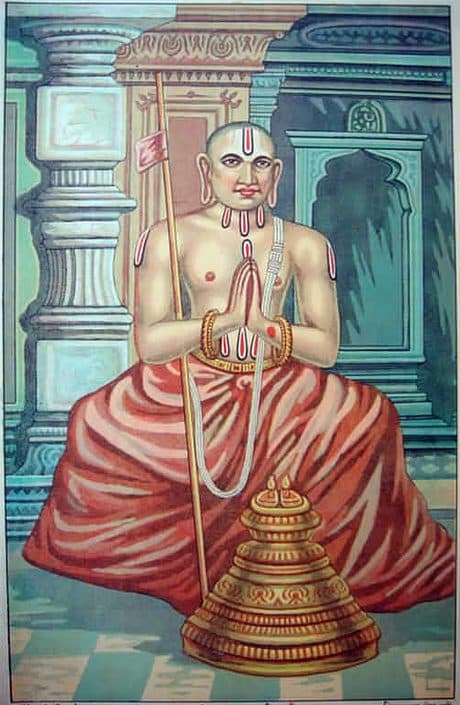
Rāmānuja · Viśiṣṭādvaita
English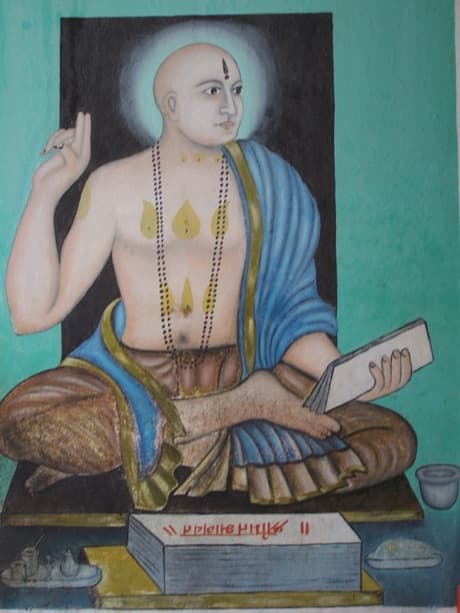
Madhvācārya · Dvaita
Madhva BhāṣyaSanskritEnglish“नार्यं संन्यासो यत्प्राश्रमः - द्वंद्वत्यागात् तु संन्यासात् मर्त्यजैव गरीयसि इति वचनात् । तानि वा एतान्यवर्णानि तपांसि न्यास एवात्यरेवचनात् इति च । संन्यासस्तु तुरीयो यो निष्क्रियाख्यः सधर्मकः । न तस्मादुत्तमो धर्मो लोके कश्चन विद्यते । तदभक्तोऽपि हि यद् गच्छेत् तदगृहस्थो न धार्मिकः । मद्भक्तिश्च विरक्तिस्तादधिकारो निगद्यते । यदाधिकारो भवति ब्रह्मचर्यापि प्रवजेत् ॥ इति नारदेये । ब्रह्मचर्यादिव प्रवजेत् । यदहरेव विरजेत् । इति च । संन्यासे तु तुरीये वै प्रीतिर्मम गरीयसि । येषमत्राधिकारो न तप्यां कर्मेति निश्चयः ॥ इत्यादेश्च ब्राह्मे । अतो नात्राऽश्रमसंन्यास उक्तः ||” - Renunciation of action is not same as the acceptance of asceticism. Because of the statement by renunciation of the dualities (of likes-dislikes, good-bad, proper-pleasant etc.) sanyaas becomes superior as adoration to the Lord. By these as well as by acceptance of austerities etc. renunciation should be adopted. Even though the state of renunciation appears superior because of absence of actions, ascetics also have actions prescribed for their order. Therefore there is no other righteousness (धर्म) in the world superior to renunciation of actions. One who is also devoted to the supreme Lord, in addition, reaches farther than a righteous householder. Lord’s status speaks of devotion as well as disinterestedness. If such qualification is acquired, then even a Brahmachari can become a Wandering ascetic, thus in Narada Puraana. In ascetic accomplishment is assuredly great love for the god and direct spiritual rewards of actions. Thus, here the state of renunciation alone has been spoken.
Madhvācārya · Dvaita
Gītā Tātparya NirṇayaSanskritEnglish“एकपुंयोग्यावेतौ तयोर्मध्ये योग एव विशिष्ट इति परिहाराभिप्रायः | उभौ समुचितौ | संन्यासस्तु महाबाहो दुःखमाप्नुमयोगतः इति वक्ष्यमाणत्वात् |” - One is benefitted by both, but between the two performance of action is preferable, thus he says.
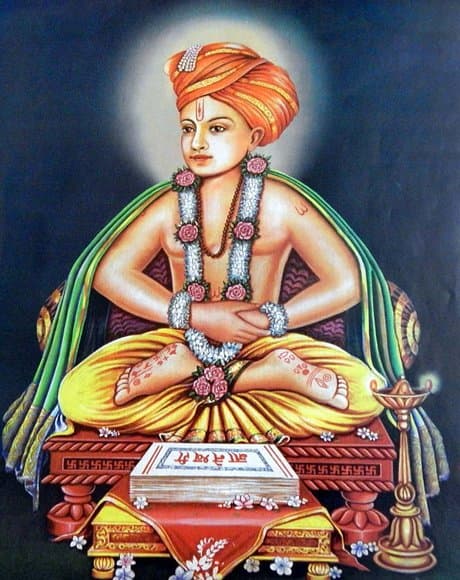
Jñāneśvar · Vārkarī
English2 *The Exalted one spake: 'Renunciation (of actions) and (even-tempered) application to actions do both make for the Highest Good. But out of these twain, as compared with Renunciation of actions, Application to actions is specially preferred.'* (15)
He (the Lord) said, 'O Son of Kunti, when considered properly both the renunciation of actions and the even-tempered application to actions make for emancipation. Yet, for both the learned and the ignorant, application to actions is indeed clear and easy. A boat is useful for ferrying women and children across a stream. In the same way, weighing the pros and cons, application to actions is easy for all alike. For application to actions easily secures for them the fruit of the path of renunciation of action too. I shall now speak to you of the marks of one renouncing actions to make you understand this, so that you can easily see that both the renunciation of actions and even-tempered application to actions are indistinguishable in essence.
Swami Ramsukhdas · Modern
English[According to the principle of the Lord every person can
follow the Disciplines of Action and Knowledge, (Renunciation of Actions) of whatever caste, order of life and sect etc., he may be because His precept is not for the people of any particular caste, order of life or sect etc. In the first verse of this chapter Arjuna called the customary method of gaining knowledge by approaching enlightened soul having renounced actions as 'Karmasannyāsa' (Renunciation of Actions). But according to the Lord's precept a person can gain knowledge by following the Discipline of knowledge even without renouncing actions. Therefore, the Lord, supporting the customary principle of Arjuna, answers the question according to His own tenet.]
'Sannyāsaḥ'—Here, this term, 'Sannyāsaḥ' stands for 'Sāṅkhyayoga' (Discipline of Knowledge), rather than renunciation of actions. While answering Arjuna's question, the Lord discusses the path of 'Sāṅkhyayoga', in order to gain knowledge. Through that Sāṅkhyayoga, every man, while performing his duty, according to his caste, order of life and sect etc., in every circumstance, can gain knowledge, of the self i.e., attain salvation.
In the 'Sāṅkhya' discipline, there is prominence given to discrimination. This discipline cannot be successful, without keen dispassion and discrimination. While following this discipline, a striver keeps his eye only on God, without accepting the independent existence of the world. So, the Lord declares, 'The goal of the Unmanifested, is hard to reach by the embodied being' (Gītā 12/5). In the sixth verse of this chapter, also the Lord declares, that Sannyāsa is difficult to attain without Karmayoga, and Karmayoga is an easy means, to get detached from the world.
'Karmayogaśca'—Every human being, has been attached to the performance of actions, from time immemorial. In order to, do away with this attachment, performance of action, is indispensable (Gītā 6/3). Karmayoga, is the art of performing actions, in order to, get rid of this attachment. In Karmayoga, (Discipline of Action), every action, whether trivial or otherwise,
is not to be taken note of; but it has to be performed, for the welfare of others without any selfish motive, in order to get detached from it. So long as, actions are performed with a desire for their reward, one remains attached to these.
'Niḥśreyasakarāvubhau'—In response to Arjuna's question, which he put in the first verse, the Lord says, that both Sāṅkhyayoga and Karmayoga, lead to salvation, because the same equanimity is attained, through both of these. The same fact, has been clarified, in the fourth and the fifth verses of this chapter. It has also been pointed out by the Lord, in the twenty-fourth verse of the thirteenth chapter, when He declares, 'Some attain knowledge, of the self by the path of knowledge, while others attain it by the path of action.' Thus, both the paths of knowledge and action, are independent paths, to attain God (Gītā 3/3).
'Tayostu karmasannyāsāt'—Sāṅkhyayoga, is of two kinds—one has been described, in the thirty-fourth verse of the fourth chapter, in which there is physical renunciation of actions, while the other has been described, from the eleventh to the thirtieth verses of the second chapter, in which there is no renunciation of actions. Here the expression 'Karmasannyāsāt' stands, for the two kinds of Sāṅkhyayoga.
'Karmayogo viśiṣyate'—The Lord, in the third verse, explains that a Karmayogī should be regarded as a perpetual Sannyāsī, (with the spirit of renunciation), because he is easily released from worldly bondage. Again, in the sixth verse, He declares that renunciation is difficult to attain, without Karmayoga and a Karmayogī quickly attains to the Absolute. It means, that in Sāṅkhyayoga (Discipline of Knowledge), there is need of Karmayoga, while in Karmayoga, there is none for Sāṅkhyayoga. Thus, out of the two, which lead to salvation, the path of action, has been declared to be superior, by the Lord.
A Karmayogī, performs actions for the welfare of the world and also to set an example to the masses (Gītā 3/20), without any
selfish motive. This sort of action is called a sacrifice in Gītā. He, who performs actions for himself is bound (Gītā 3/9, 13). But a Karmayogī, who works only for the welfare of the world without any selfish motive, is liberated from the bondage of all actions (Gītā 4/23). Therefore, Karmayoga is better of the two.
The path of action, can be followed by all the people, of all castes, creeds and order of life etc., under all circumstances. But the Karmasannyāsa (renunciation), Arjuna talks about, can be followed, only under special circumstances (Gītā 4/34), because all the people cannot come across such great men, who have realized the truth. Moreover, they cannot have full faith, in those great souls and have an opportunity to live, in their company. Thus Karmayoga, is better of the two.
Karmayoga, consists in making proper use of available circumstances, even savage deeds of fighting. No one is incapable, and dependent on following this path of action, because in it, there is no desire to acquire anything. It is the desire, which makes a man incapable and dependent.
A sense of doership, and the desire to reap the fruit of actions, lead to bondage. A Sāṅkhyayogī and a Karmayogī both, have to renounce their affinity, for the world. A Sāṅkhyayogī, roots out a sense of doership through dispassion and discrimination, while a Karmayogī, discards it by performing actions, for the welfare of others, without any desire for the fruit of actions. Thus, the former is liberated by renouncing a sense of doership, while the latter is liberated, by renouncing desire to reap the fruit of action. If a striver, renounces the sense of doership, his desire for the fruit of action, is also renounced; and if he renounces the desire for the fruit of action, his sense of doership is renounced. A man, has a sense of doership, only when he has a desire, to acquire something or the other. When actions are performed without desire for fruit, these change, into inaction. Thus a Karmayogī is like as instrument, has no sense of doership.
A striver, tries to renounce his attachment to the worldly beings, objects and circumstances etc., because it leads him to bondage. In order to renounce it, he does not consider any being or object etc., as his own nor does he do and desire anything, for himself. All his actions are performed for the welfare of others, without any selfish motive. The desire for fruit of action causes a sense of doership and a sense of 'mine'. If he has no desire for the fruit of action, his sense of doership, comes to an end. It is not actions, but attachment to them and the desire for fruit, which lead to bondage. When one does not derive pleasure out of actions, nor does he desire fruit, how can a sense of doership remain? When he has no desire for the fruit of action, his sense of doership merges, in the aim (God) for which action is performed and then only God remains.
The 'egoism' of a Karmayogī, perishes quickly and easily, because he works for others. So his egoism is, also absorbed in rendering service to others. But the egoism of a Jñānayogī, (he who follows the path of knowledge) continues to exist, as he holds that he is a 'Mumuḳṣu' (seeker of salvation) and he works for his salvation. A Karmayogī, performs all activities for the good of others. Thus his ego subsides. On the other hand, a Jñānayogī practises discipline, for his well-being. His ego subsists, as he practises discipline, for himself.
A prominent feature of 'the Discipline of Knowledge', is the lack of independent existence of the world; while an important feature of 'the Discipline of Action', is lack of attachment. A striver, following the Discipline of Knowledge, through discrimination, wants to hold that there is no independent existence of the world but due to his attachment to the worldly objects, it is very difficult for him to hold this opinion, in his practical life. But a striver, following the Discipline of Action, gets rid of his attachment automatically, as his aim, is to render service to others, without any selfish motive. Moreover, it is easy for a Karmayogī, to
renounce objects, as these will be utilized by others; while it is difficult for a Jñānayogī to renounce them, by regarding these, as transitory and illusive, unless his dispassion, is very keen. Secondly, a Jñānayogī easily abandons objects of inferior quality, but these of superior quality which he considers useful for him, cannot be easily abandoned. But a Karmayogī, may offer objects which are useful for him to others, easily, because he believes that these will be used by others. If there is, an extra slice of bread in a plate, we try to put away the one which is stale, spoiled and dry; but if we want to give a slice to anyone, we will give a good one, so that it may be used by him. So, the Discipline of Knowledge, is very difficult to practise, without renouncing attachment. It is because of attachment that a Jñānayogī, being entangled in worldly pleasures, may have a fall.
A man, cannot renounce attachment, merely by knowing the unreal, as unreal.* Though objects seen on a screen, in the cinema are unreal, yet a cinema-goer gets attached to the cinema and wastes his time, money, eyesight and character. It is attachment, rather than the object which bind a man. Thus, an object which may be either real or unreal, or it may transcend the two, but it binds a man if he is attached to it. So a striver, should try to root out this attachment.
**Appendix**—Though without 'Yoga' both 'Karma' and 'Jñāna' lead to bondage yet performance of actions does not lead to as much ruin as the bookish knowledge does. Mere bookish knowledge can lead to hells—
'ajñasyārdhaprabuddhasya sarvam brahmeti yo vadet mahānirayajāleṣu sa tena viniyojitaḥ (Yogavāsistha sthiti 39)
* A man can renounce the unreal by regarding it as unreal by being established in the self. This establishment in the self does not depend on instruments such as the mind and intellect etc., because they themselves are unreal. How can we get rid of the unreal while our affinity of the unreal subsists and we depend upon it for realising the Real?
'He, who preaches the gospel 'all is Brahma' to an ignorant man, condemns that man to the snare of fightful hells.'
Therefore the man who perform actions is superior to the man possessing bookish knowledge. Then what can be said about the superiority of the person who follows the Discipline of Action! A Jñānayogī is useful only for himself but a Karmayogī is useful for the entire universe. He, who is useful for the universe, is also useful for himself—this is the rule. Therefore a Karmayogī is superior to a Jñānayogī.
The Discipline of Action can be practised without the Discipline of Knowledge but the Discipline of Knowledge is difficult to attain without the Discipline of Action (Gītā 5/6). Therefore Karmayoga is superior to Sāṅkhyayoga, Discipline of Devotion is superior to Discipline of Action. Therefore in the Gītā there is description first of Sāṅkhyayoga, then of Karmayoga and afterwards of Bhaktiyoga.* In this order the Yogas have been discussed.
Karmayoga and Jñānayoga—both bear the same fruit (Gītā 5/4-5). In their practices 'Karmayoga' and 'Bhaktiyoga' are one—'maitraḥ karuṇa eva ca' (Gītā 12/13); because Karmayoga and Bhaktiyoga—in both, feeling of providing happiness to others reigns. In the performance of actions 'Karmī' (One who perform actions) and 'Karmayogī' (who without attachment acts for the welfare of others) are one (Gītā 3/25) and in the performance of actions, an enlightened soul and God are similar (one) (Gītā 3/22—26). In this way a Karmayogī becomes one with a Karmī,
* The same order has been followed in the Bhāgavata—
yogāstrayo mayā proktā nṛṇāth śreyovidhitasyā jñānaṁ karma ca bhaktiśca nopāyo'nyo'sti kutracit
(Śrīmadbhā. 11/20/6)
'I have mentioned three yogas for the men who want to attain salvation—Jñānayoga, Karmayoga and Bhaktiyoga. Besides these three there is no other way for salvation.'
a Jñānayogī, a Bhaktiyogī and God, all the four—this is the special characteristic of Karmayoga.
In 'Sāṅkhyayoga' a subtle trace of ego may persist but in 'Karmayoga' because of the total detachment from actions and objects, no subtle trace of ego subsists. In Karmayoga, 'Akarma' remains (Gītā 4/18) while in Sāṅkhyayoga the soul (self) remains (Gītā 6/29).
Link:—Now, the Lord in the next verse, explains why Karmayoga is better of the two.
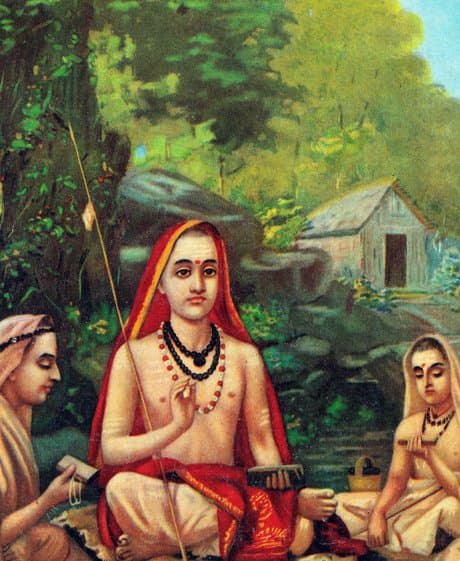
Ādi Śaṅkarācārya · Advaita
Sanskritसन्न्यासः कर्मणां परित्यागः कर्मयोगश्च तेषामनुष्ठानं तौ उभौ अपि निःश्रेयसकरौ मोक्षं कुर्वाते ज्ञानोत्पत्तिहेतुत्वेन । उभौ यद्यपि निःश्रेयसकरौ, तथापि तयोस्तु निःश्रेयसहेत्वोः कर्मसन्न्यासात् केवलात् कर्मयोगो विशिष्यते इति कर्मयोगं स्तौति ॥ कस्मात् इति आह --
Ādi Śaṅkarācārya · Advaita
Hindiअर्जुनके प्रश्नका निर्णय करनेके लिये भगवान् अपना अभिप्राय बतलाते हुए बोले—
संन्यास—कर्मोंका परित्याग और कर्मयोग उनका अनुष्ठान करना, ये दोनों ही कल्याणकारक अर्थात् मुक्तिके देनेवाले हैं ।
यद्यपि ज्ञानकी उत्पत्तिमें हेतु होनेसे ये दोनों ही कल्याणकारक हैं तथापि कल्याणके उन दोनों कारणोंमें ज्ञानरहित केवल संन्यासकी अपेक्षा कर्मयोग श्रेष्ठ है । इस प्रकार भगवान् कर्मयोगकी स्तुति करते हैं
Jñāneśvar · Vārkarī
Marathiतो म्हणे गा कुंतीसुता । हे संन्यासयोगु विचारितां । मोक्षकर तत्वता । दोनीहि होती ॥ १५ ॥
तरी जाणां नेणां सकळां । हा कर्मयोगु कीर प्रांजळा । जैसी नाव स्त्रियां बाळां । तोयतरणीं ॥ १६ ॥
तैसें सारासार पाहिजे । तरी सोहपा हाचि देखिजे । येणें संन्यासफळ लाहिजे । अनायासें ॥ १७ ॥
आतां याचिलागीं सांगेन । तुज संन्यासियाचे चिन्ह । मग सहजें हे अभिन्न । जाणसी तूं ॥ १८ ॥
Jñāneśvar · Vārkarī
Hindi(5.15) श्रीकृष्ण बोले - हे कुन्तीसुत! संन्यास और कर्मयोग दोनों का विचार करने से मालूम होगा कि तत्त्वतः दोनों ही मोक्ष के देनेवाले हैं।
(5.16) तथापि स्त्री बालादिकों को जल के पार जाने के लिए जैसे नाव है वैसे ही अज्ञानी सभी के लिए कर्मयोग निश्चय ही सुलभ है।
(5.17) तथा सारासार विचार करते कर्मयोग ही सुगम दिखाई देता है। इससे अनायास संन्यास के फल का लाभ होता है।
(5.18) अब इस पर हम तुम्हें संन्यासियों के लक्षण बताते हैं जिससे तुम्हें संन्यास और कर्मयोग की अभिन्नता का ज्ञान होगा।
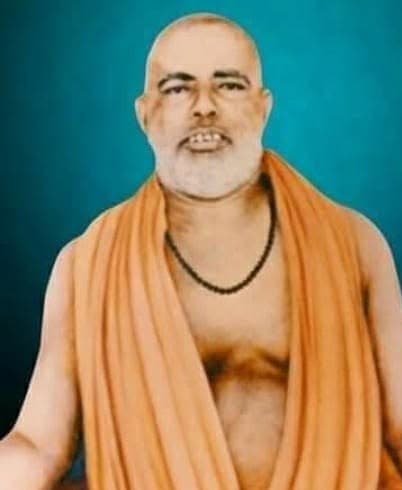
Sri Udiya Baba · Modern
Hindiसंगति— अगले श्लोक में भगवान् कर्म की प्रशंसा करते हैं—
भावार्थ— कर्मसंन्यास और कर्मयोग—ये दोनों ही कल्याणकारी हैं, तथापि इन दोनों में कर्मसंन्यास की अपेक्षा कर्मयोग श्रेष्ठ है।
व्याख्या— जो वैराग्य या जिज्ञासा न होने पर भी गृह-कलह आदि किसी कारण से घबराकर संन्यासाश्रम ग्रहण कर लेते हैं उन मलिन अन्तःकरण वालों के लिये कर्मसंन्यास की अपेक्षा कर्मयोग श्रेष्ठ है, क्योंकि निष्काम कर्म या निष्काम उपासना से अन्तःकरण शुद्ध होकर जिज्ञासा होगी और फिर ज्ञान हो जायगा। इस प्रकार कर्मयोग से उनकी क्रम-मुक्ति हो जायगी।
संन्यास दो प्रकार का होता है—देह से और गेह से। इनमें प्रथम संन्यास के भी दो भेद हैं—(१) सविकल्प समाधि, जिसमें अनात्म-प्रत्यय का त्याग हो जाता है और (२) निर्विकल्प समाधि, जिसमें वृत्ति ब्रह्म में लीन हो जाती है तथा दृश्य की प्रतीति नहीं होती। द्वितीय गेह से त्याग यह है कि घर, स्त्री, पुत्र एवं धन आदि छोड़कर गुरु के शरणापन्न हो जाय और संन्यास आश्रम ग्रहण कर ले। ऐसे विरक्तों के लिये तो कर्मों का संन्यास ही श्रेष्ठ है। किन्तु जो साधारण अविवेकी पुरुष हैं उनके लिये कर्मयोग अच्छा है।
भगवान् यहाँ संन्यास की निन्दा नहीं करते, केवल अधिकारी की दृष्टि से कर्मयोग की प्रशंसा करते हैं। वास्तव में तो दोनों ही साधन कल्याणकारी हैं। यहाँ कर्मयोग को श्रेष्ठ इसलिए कहा है कि निष्काम कर्म करते हुए मुक्त होना या भगवत्प्राप्ति करना सुगम है क्योंकि अधिक लोग तो सान के संस्कारों से शून्य ही होते हैं।
Swami Ramsukhdas · Modern
Hindi[भगवान्के सिद्धान्तके अनुसार सांख्ययोग और कर्मयोगका पालन प्रत्येक वर्ण, आश्रम, सम्प्रदाय आदिके मनुष्य कर सकते हैं। कारण कि उनका सिद्धान्त किसी वर्ण, आश्रम, सम्प्रदाय आदिको लेकर नहीं है। इसी अध्यायके पहले श्लोकमें अर्जुनने कर्मोंका त्याग करके विधिपूर्वक ज्ञान प्राप्त करनेकी प्रचलित प्रणालीको 'कर्मसंन्यास' नामसे कहा है। परन्तु भगवान्के सिद्धान्तके अनुसार ज्ञान-प्राप्तिके लिये सांख्ययोगका पालन प्रत्येक मनुष्य स्वतन्त्रतासे कर सकता है और उसका पालन करनेमें कर्मोंका स्वरूपसे त्याग करनेकी आवश्यकता भी नहीं है। इसलिये भगवान् प्रचलित मतका भी आदर करते हुए अपने सिद्धान्तके अनुसार अर्जुनके प्रश्नका उत्तर देते हैं।]
'सन्यासः'—यहाँ 'सन्यासः' पदका अर्थ 'सांख्य-योग' है, कर्मोंका स्वरूपसे त्याग नहीं। अर्जुनके प्रश्नका उत्तर देते हुए भगवान् कर्मोंके त्यागपूर्वक संन्यासका विवेचन न करके कर्म करते हुए ज्ञानको प्राप्त करनेका जो सांख्ययोगका मार्ग है, उसका विवेचन करते हैं। उस सांख्ययोगके द्वारा मनुष्य प्रत्येक वर्ण, आश्रम, सम्प्रदाय आदिमें रहते हुए प्रत्येक परिस्थितिमें स्वतन्त्रतापूर्वक ज्ञान प्राप्त कर सकता है अर्थात् अपना कल्याण कर सकता है।
सांख्ययोगकी साधनामें विवेक-विचारकी मुख्यता रहती है। विवेकपूर्वक तीव्र वैराग्यके बिना यह साधना सफल नहीं होती। इस साधनामें संसारकी स्वतन्त्र सत्ताका अभाव होकर एकमात्र परमात्मतत्त्वपर दृष्टि रहती है। राग मिटे
बिना संसारकी स्वतन्त्र सत्ताका अभाव होना बहुत कठिन है। इसलिये भगवान्ने देहाभिमानियोंके लिये यह साधन क्लेशयुक्त बताया है (गीता—बारहवें अध्यायका पाँचवाँ श्लोक)। इसी अध्यायके छठे श्लोकमें भी भगवान्ने कहा है कि कर्मयोगका साधन किये बिना संन्यासका साधन होना कठिन है; क्योंकि संसारसे राग हटानेके लिये कर्मयोग ही सुगम उपाय है।
'कर्मयोगश्च'—मानवमात्रमें कर्म करनेका राग अनादिकालसे चला आ रहा है, जिसे मिटानेके लिये कर्म करना आवश्यक है (गीता—छठे अध्यायका तीसरा श्लोक)। परन्तु वे कर्म किस भाव और उद्देश्यसे कैसे किये जायें कि करनेका राग सर्वथा मिट जाय, उस कर्तव्य-कर्मको करनेकी कलाको 'कर्मयोग' कहते हैं। कर्मयोगमें कार्य छोटा है या बड़ा, इसपर दृष्टि नहीं रहती। जो भी कर्तव्य-कर्म सामने आ जाय, उसीको निष्कामभावसे दूसरोंके हितके लिये करना है। कर्मोंसे सम्बन्ध-विच्छेद करनेके लिये यह आवश्यक है कि कर्म अपने लिये न किये जायें। अपने लिये कर्म न करनेका अर्थ है—कर्मोंके बदलेमें अपने लिये कुछ भी पानेकी इच्छा न होना। जबतक अपने लिये कुछ भी पानेकी इच्छा रहती है, तबतक कर्मोंके साथ सम्बन्ध बना रहता है।
'निःश्रेयसकरावुभौ'—अर्जुनका प्रश्न था कि सांख्ययोग और कर्मयोग—इन दोनों साधनोंमें कौन-सा साधन निश्चयपूर्वक कल्याण करनेवाला है? उत्तरमें
भगवान् कहते हैं कि हे अर्जुन! ये दोनों ही साधन निश्चयपूर्वक कल्याण करनेवाले हैं। कारण कि दोनोंके द्वारा एक ही समताकी प्राप्ति होती है। इसी अध्यायके चौथे-पाँचवें श्लोकोंमें भी भगवान्ने इसी बातकी पुष्टि की है। तेरहवें अध्यायके चौबीसवें श्लोकमें भी भगवान्ने सांख्ययोग और कर्मयोग—दोनोंसे परमात्मतत्त्वका अनुभव होनेकी बात कही है। इसलिये ये दोनों ही परमात्मप्राप्तिके स्वतन्त्र साधन हैं (गीता—तीसरे अध्यायका तीसरा श्लोक)।
‘तयोस्तु कर्मसंन्यासात्’—एक ही सांख्ययोगके दो भेद हैं—एक तो चौथे अध्यायके चौतीसवें श्लोकमें कहा हुआ सांख्ययोग, जिसमें कर्मोंका स्वरूपसे त्याग है और दूसरा, दूसरे अध्यायके ग्यारहवेंसे तीसवें श्लोकतक कहा हुआ सांख्ययोग, जिसमें कर्मोंका स्वरूपसे त्याग नहीं है। यहाँ ‘कर्मसंन्यासात्’ पद दोनों ही प्रकारके सांख्ययोगका वाचक है।
‘कर्मयोगो विशिष्यते’—आगेके (तीसरे) श्लोकमें भगवान्ने इन पदोंकी व्याख्या करते हुए कहा है कि कर्मयोगी नित्यसंन्यासी समझनेयोग्य है; क्योंकि वह सुखपूर्वक संसार-बन्धनसे मुक्त हो जाता है। फिर छठे श्लोकमें भगवान्ने कहा है कि कर्मयोगके बिना सांख्य-योगका साधन होना कठिन है तथा कर्मयोगी शीघ्र ही ब्रह्मको प्राप्त कर लेता है। तात्पर्य है कि सांख्ययोगमें तो कर्मयोगकी आवश्यकता है, पर कर्मयोगमें सांख्ययोगकी आवश्यकता नहीं है। इसलिये दोनों साधनोंके कल्याण-कारक होनेपर भी भगवान् कर्मयोगको ही श्रेष्ठ बताते हैं।
कर्मयोगी लोकसंग्रहके लिये कर्म करता है—‘लोक-सङ्ग्रहमेवापि सम्पश्यन्कर्तुमर्हसि’ (गीता—तीसरे अध्यायका बीसवाँ श्लोक)। लोकसंग्रहका तात्पर्य है—निःस्वार्थभावसे लोक-मर्यादा सुरक्षित रखनेके लिये, लोगोंको उन्मार्गसे हटाकर सन्मार्गमें लगानेके लिये कर्म करना अर्थात् केवल दूसरोंके हितके लिये कर्म करना। इसीको गीतामें ‘यज्ञार्थ कर्म’ के नामसे भी कहा गया है। जो केवल अपने लिये कर्म करता है, वह बँध जाता है (तीसरे अध्यायका नवाँ और तेरहवाँ श्लोक)। परन्तु कर्मयोगी निःस्वार्थभावसे केवल दूसरोंके हितके लिये कर्म करता है; अतः वह कर्मबन्धनसे सुगमतापूर्वक मुक्त हो जाता है (चौथे अध्यायका तेईसवाँ श्लोक)। इसलिये कर्मयोग श्रेष्ठ है।
कर्मयोगका साधन प्रत्येक परिस्थितिमें और प्रत्येक व्यक्तिके द्वारा किया जा सकता है, चाहे वह किसी भी
वर्ण, आश्रम, सम्प्रदाय आदिका क्यों न हो। परन्तु अर्जुन जिस कर्मसंन्यासकी बात कहते हैं, वह एक विशेष परिस्थितिमें किया जा सकता है (गीता—चौथे अध्यायका चौतीसवाँ श्लोक); क्योंकि तत्त्वज्ञ महापुरुषका मिलना, उनमें अपनी श्रद्धा होना और उनके पास जाकर निवास करना—ऐसी परिस्थिति हरेक मनुष्यको प्राप्त होनी सम्भव नहीं है। अतः प्रचलित प्रणालीके सांख्ययोगका साधन एक विशेष परिस्थितिमें ही साध्य है, जबकि कर्मयोगका साधन प्रत्येक परिस्थितिमें और प्रत्येक व्यक्तिके लिये साध्य है। इसलिये कर्मयोग श्रेष्ठ है।
प्राप्त परिस्थितिका सदुपयोग करना कर्मयोग है। युद्ध-जैसी घोर परिस्थितिमें भी कर्मयोगका पालन किया जा सकता है। कर्मयोगका पालन करनेमें कोई भी मनुष्य किसी भी परिस्थितिमें असमर्थ और पराधीन नहीं है; क्योंकि कर्मयोगमें कुछ भी पानेकी इच्छाका त्याग होता है। कुछ-न-कुछ पानेकी इच्छा रहनेसे ही कर्तव्य-कर्म करनेमें असमर्थता और पराधीनताका अनुभव होता है।
कर्तृत्व-भोक्तृत्व ही संसार है। सांख्ययोगी और कर्मयोगी—इन दोनोंको ही संसारसे सम्बन्ध-विच्छेद करना है, इसलिये दोनों ही साधकोंको कर्तृत्व और भोक्तृत्व—इन दोनोंको मिटानेकी आवश्यकता है। तीव्र वैराग्य और तीक्ष्ण बुद्धि होनेसे सांख्ययोगी कर्तृत्वको मिटाता है। उतना तीव्र वैराग्य और तीक्ष्ण बुद्धि न होनेसे कर्मयोगी दूसरोंके हितके लिये ही सब कर्म करके भोक्तृत्वको मिटाता है। इस प्रकार सांख्ययोगी कर्तृत्वका त्याग करके संसारसे मुक्त होता है और कर्मयोगी भोक्तृत्वका अर्थात् कुछ पानेकी इच्छाका त्याग करके मुक्त होता है। यह नियम है कि कर्तृत्वका त्याग करनेसे भोक्तृत्वका त्याग और भोक्तृत्वका त्याग करनेसे कर्तृत्वका त्याग स्वतः हो जाता है। कुछ-न-कुछ पानेकी इच्छासे ही कर्तृत्व होता है। जिस कर्मसे अपने लिये किसी प्रकारके भी सुखभोगकी इच्छा नहीं है, वह क्रियामात्र है, कर्म नहीं। जैसे यन्त्रमें कर्तृत्व नहीं रहता, ऐसे ही कर्मयोगीमें कर्तृत्व नहीं रहता।
साधकको संसारके प्राणी, पदार्थ, परिस्थिति आदिमें स्पष्ट ही अपना राग दीखता है। उस रागको वह अपने बन्धनका खास कारण मानता है तथा उसे मिटानेकी चेष्टा भी करता है। उस रागको मिटानेके लिये कर्मयोगी किसी भी प्राणी, पदार्थ आदिको अपना नहीं मानता*, अपने लिये
* कर्मयोगी सेवा करनेके लिये तो सबको अपना मानता है, पर अपने लिये किसीको भी अपना नहीं मानता।
कुछ नहीं करता तथा अपने लिये कुछ नहीं चाहता। क्रियाओंसे सुख लेनेका भाव न रहनेसे कर्मयोगीकी क्रियाएँ परिणाममें सबका हित तथा वर्तमानमें सबकी प्रसन्नता और सुखके लिये ही हो जाती हैं। क्रियाओंसे सुख लेनेका भाव होनेसे क्रियाओंमें अभिमान (कर्तृत्व) और ममता हो जाती है। परन्तु उनसे सुख लेनेका भाव सर्वथा न रहनेसे कर्तृत्व समाप्त हो जाता है। कारण कि क्रियाएँ दोषी नहीं हैं, क्रियाजन्य आसक्ति और क्रियाओंके फलको चाहना ही दोषी है। जब साधक क्रियाजन्य सुख नहीं लेता तथा क्रियाओंका फल नहीं चाहता तब कर्तृत्व रह ही कैसे सकता है? क्योंकि कर्तृत्व टिकता है भोक्तृत्वपर। भोक्तृत्व न रहनेसे कर्तृत्व अपने उद्देश्यमें (जिसके लिये कर्म करता है, उसमें) लीन हो जाता है और एक परमात्मतत्त्व शेष रह जाता है।
कर्मयोगीका 'अहम्' (व्यक्तित्व) शीघ्र तथा सुगमता-पूर्वक नष्ट हो जाता है, जबकि ज्ञानयोगीका 'अहम्' दूरतक साथ रहता है। कारण यह है कि 'मैं सेवक हूँ' (केवल सेव्यके लिये सेवक हूँ, अपने लिये नहीं)—ऐसा माननेसे कर्मयोगीका 'अहम्' भी सेव्यकी सेवामें लग जाता है; परन्तु 'मैं मुमुक्षु हूँ' ऐसा माननेसे ज्ञानयोगीका 'अहम्' साथ रहता है। कर्मयोगी अपने लिये कुछ न करके केवल दूसरोंके हितके लिये सब कर्म करता है, पर ज्ञानयोगी अपने हितके लिये साधन करता है। अपने हितके लिये साधन करनेसे 'अहम्' ज्यों-का-त्यों बना रहता है।
ज्ञानयोगकी मुख्य बात है—संसारकी स्वतन्त्र सत्ताका अभाव करना और कर्मयोगकी मुख्य बात है—रागका अभाव करना। ज्ञानयोगी विचारके द्वारा संसारकी सत्ताका अभाव तो करना चाहता है, पर पदार्थोंमें राग रहते हुए उसकी स्वतन्त्र सत्ताका अभाव होना बहुत कठिन है। यद्यपि विचारकालमें ज्ञानयोगके साधकको पदार्थोंकी स्वतन्त्र सत्ताका अभाव दीखता है, तथापि व्यवहारकालमें उन पदार्थोंकी स्वतन्त्र सत्ता प्रतीत होने लगती है। परन्तु कर्मयोगके साधकका लक्ष्य दूसरोंको सुख पहुँचानेका रहनेसे उसका राग स्वतः मिट जाता है। इसके अतिरिक्त मिली हुई सामग्रीका त्याग करना कर्मयोगीके लिये जितना सुगम पड़ता है, उतना ज्ञानयोगीके लिये नहीं। ज्ञानयोगकी
दृष्टिसे किसी वस्तुको मायामात्र समझकर ऐसे ही उसका त्याग कर देना कठिन पड़ता है; परन्तु वही वस्तु किसीके काम आती हुई दिखायी दे तो उसका त्याग करना सुगम पड़ता है। जैसे, हमारे पास कम्बल पड़े हैं तो उन कम्बलोंको दूसरोंके काममें आते जानकर उनका त्याग करना अर्थात् उनसे अपना राग हटाना साधारण बात है; परन्तु (यदि तीव्र वैराग्य न हो तो) उन्हीं कम्बलोंको विचारद्वारा अनित्य, क्षणभंगुर, स्वप्नके मायामय पदार्थ समझकर ऐसे ही छोड़कर चल देना कठिन है। दूसरी बात, मायामात्र समझकर त्याग करनेमें (यदि तेजीका वैराग्य न हो तो) जिन वस्तुओंमें हमारी सुखबुद्धि नहीं है, उन खराब वस्तुओंका त्याग तो सुगमतासे हो जाता है, पर जिनमें हमारी सुखबुद्धि है, उन अच्छी वस्तुओंका त्याग कठिनतासे होता है। परन्तु दूसरेके काम आती देखकर जिन वस्तुओंमें हमारी सुखबुद्धि है, उन वस्तुओंका त्याग सुगमतासे हो जाता है; जैसे—भोजनके समय थालीमेंसे रोटी निकालनी पड़े तो ठंडी, बासी और रूखी रोटी ही निकालेंगे। परन्तु यदि वही रोटी किसी दूसरेको देनी हो तो अच्छी रोटी ही निकालेंगे, खराब नहीं। इसलिये कर्मयोगकी प्रणालीसे रागको मिटाये बिना सांख्ययोगका साधन होना बहुत कठिन है। विचारद्वारा पदार्थोंकी सत्ता न मानते हुए भी पदार्थोंमें स्वाभाविक राग रहनेके कारण भोगोंमें फँसकर पतनतक होनेकी सम्भावना रहती है।
केवल असत् के ज्ञानसे अर्थात् असत् को असत् जान लेनेसे रागकी निवृत्ति नहीं होती*। जैसे, सिनेमामें दीखनेवाले पदार्थों आदिकी सत्ता नहीं है—ऐसा जानते हुए भी उसमें राग हो जाता है। सिनेमा देखनेसे चरित्र, समय, नेत्र-शक्ति और धन—इन चारोंका नाश होता है—ऐसा जानते हुए भी रागके कारण सिनेमा देखते हैं। इससे सिद्ध होता है कि वस्तुकी सत्ता न होनेपर भी उसमें राग अथवा सम्बन्ध रह सकता है। यदि राग न हो तो वस्तुकी सत्ता माननेपर भी उसमें राग उत्पन्न नहीं होता। इसलिये साधकका मुख्य काम होना चाहिये—रागका अभाव करना, सत्ताका अभाव करना नहीं; क्योंकि बाँधनेवाली वस्तु राग या सम्बन्ध ही है, सत्तामात्र नहीं। पदार्थ चाहे सत् हो,
* असत् को असत् जाननेसे उसकी निवृत्ति तभी होती है, जब अपने स्वरूपमें स्थित होकर असत् को असत् रूपसे जानते हैं। स्वरूपमें स्थिति करण-निरपेक्ष है। परन्तु बुद्धि आदि करणोंसे असत् को असत् जाननेसे उसकी निवृत्ति नहीं होती; क्योंकि बुद्धि आदि करण भी असत् हैं। अतः असत् के ही द्वारा असत् को जाननेसे उसकी निवृत्ति कैसे हो सकती है?
चाहे असत् हो, चाहे सत्-असत् से विलक्षण हो, यदि उसमें भी पदार्थ नहीं बाँधता। बाँधता है हमारा सम्बन्ध, जो राग से राग है तो वह बाँधने वाला हो ही जायगा। वास्तव में हमें कोई होता है। अतः हमारे पर राग मिटाने की जिम्मेवारी है।
**परिशिष्ट भाव**—यद्यपि 'योग' के बिना कर्म और ज्ञान—दोनों ही बन्धनकारक हैं, तथापि कर्म करने से उतना पतन नहीं होता, जितना पतन वाचिक (सीखे हुए) ज्ञान से होता है। वाचिक ज्ञान नरकों में ले जा सकता है—
**अज्ञस्थार्धप्रबुद्धस्य सर्वं ब्रह्मेति यो वदेत्। महानिर्यजालेषु स तेन विनियोजितः ॥**
(योगवासिष्ठ, स्थिति ३९)
'जो बेसमझ मनुष्यको 'सब कुछ ब्रह्म है' ऐसा उपदेश देता है, वह उस मनुष्यको महान् नरकों के जाल में डाल देता है।' अतः वाचक ज्ञानी की अपेक्षा कर्म करने वाला श्रेष्ठ है। फिर जो कर्मयोग का आचरण करता है, उसकी श्रेष्ठता का तो कहना ही क्या! ज्ञानयोगी तो केवल अपने लिये उपयोगी होता है, पर कर्मयोगी संसारमात्र के लिये उपयोगी होता है। जो संसार के लिये उपयोगी होता है, वह अपने लिये भी उपयोगी हो जाता है—यह नियम है। इसलिये कर्मयोग विशेष है।
सांख्ययोग के बिना तो कर्मयोग हो सकता है, पर कर्मयोग के बिना सांख्ययोग होना कठिन है (गीता—पाँचवें अध्याय का छठा श्लोक)। इसलिये सांख्ययोग की अपेक्षा कर्मयोग विशेष है। सांख्ययोग से कर्मयोग श्रेष्ठ है और कर्मयोग से भक्तियोग श्रेष्ठ है (गीता—छठे अध्याय का सैंतालीसवाँ श्लोक)। इसलिये गीतामें पहले सांख्ययोग, फिर कर्मयोग और फिर भक्तियोग—इस क्रम से विवेचन किया गया है*।
फल में कर्मयोग और ज्ञानयोग एक हैं (गीता—पाँचवें अध्याय का चौथा-पाँचवाँ श्लोक)। साधन में कर्मयोग और भक्तियोग एक हैं—'**मैत्रः करुण एव च**' (गीता १२।१३); क्योंकि कर्मयोग और भक्तियोग—दोनों में ही दूसरे को सुख देने का भाव रहता है। कर्म करने में कर्म और कर्मयोगी एक हैं (गीता—तीसरे अध्याय का पचीसवाँ श्लोक) तथा तत्त्वज्ञ महापुरुष और भगवान् भी कर्म करने में साथ हैं (गीता—तीसरे अध्याय के बाईसवें से छब्बीसवें श्लोक तक)। इस प्रकार कर्म, ज्ञानयोगी, भक्तियोगी और भगवान्—चारों के साथ कर्मयोगी एक हो जाता है—यह कर्मयोग की विशेषता है।
सांख्ययोग में तो अहम् का सूक्ष्म संस्कार रह सकता है, पर कर्मयोग में क्रिया और पदार्थ से सर्वथा सम्बन्ध-विच्छेद होने से अहम् का सूक्ष्म संस्कार भी नहीं रहता। कर्मयोग में अकर्म (अभाव) शेष रहता है (गीता—चौथे अध्याय का अठारहवाँ श्लोक) और सांख्ययोग में आत्मा शेष रहता है (गीता—छठे अध्याय का उन्तीसवाँ श्लोक)।
सम्बन्ध—अब भगवान् कर्मयोग को श्रेष्ठ कहने का कारण बताते हैं।
The word sannyāsa means renunciation denoting renunciation of the rewards of actions as well and therefore refers to jñāna yoga or the cultivation of Vedic knowledge.
Both jñāna yoga and karma yoga or performing prescribed Vedic activities are competent to award ātma tattva; but between the two karma yoga is the easier to perform and can in fact be performed with renunciation receiving benefits from both.
This is Lord Krishna's meaning.