

Bhagavad Gītā · Chapter 5 · Karma Sannyāsa Yoga
लभन्ते ब्रह्मनिर्वाणमृषयः क्षीणकल्मषाः
छिन्नद्वैधा यतात्मानः सर्वभूतहिते रताः
labhante brahmanirvāṇamṛṣayaḥ kṣīṇakalmaṣāḥ|
chinnadvaidhā yatātmānaḥ sarvabhūtahite ratāḥ||
Word meanings
यतात्मानः = whose self is disciplined
सर्वभूतहिते = in the welfare of all beings
रताः = engaged
छिन्नद्वैधाः = whose doubts are cut away
क्षीणकल्मषाः = whose sins are dwindled
ऋषयः = the seers
ब्रह्मनिर्वाणम् = the peace of Brahman
लभन्ते = attain
Translation
The seers whose sins have been wiped out, whose doubts have been dispelled by Knowledge, whose disciplined mind is firmly established in God and who are actively engaged in the service of all beings, attain Brahma, who is all peace.
Commentary
The commentators seated around this verse
Rāmānuja · Viśiṣṭādvaita
English
Madhvācārya · Dvaita
SanskritEnglish“पापाक्षयाच्चैतद् भवतीत्याह - लभन्त इति | क्षीणकल्मषा भूत्वा छिन्नद्वैधाययात्मानः द्वैधाभावो द्वैधं संशयो विपर्ययो वा || तच्चोक्तम् | विपर्ययः संशयो वा यद् द्वैधं त्वकृतात्मानाम् | ज्ञानासिना तु तच्छित्वा मुक्तसङ्गं परं व्रजेत् || - इति | छिन्नद्वैधास्त एवाऽऽयतात्मानः छिन्नद्वैधातयात्मनः | दीर्घमनसः सर्वज्ञा इत्यर्थः | तत एव छिन्नद्वैधा | तच्चोक्तम् - क्षीणपापा महज्ज्ञात्वा जायते गतसंशयः | इति वा || - On the demerits being diminished, the consequential results are explained. By destruction of demerits, the feeling of alienation of the self (from the supreme Lord) is severed. छिन्नद्वैधा means the sense of alienation, of doubt or of distinctiveness. Therefore, for those who are no pure in feelings for them doubts and delusions, known as द्वैधा, come about, which are required to be destroyed with the sword of wisdom by renouncing sense- attachment and reach the abode of Supreme. Destruction of the alienation means realization of self’s distinctive nature. The self which destroys such alienation is the one who is forward looking, knower of all. This is the meaning. Therefore, he is the one who has destroyed alienation (of his individual self from the Supreme Self). Therefore it is said that those who have destroyed demerits knowing the Supreme, abide with their doubts removed. Destruction of alienation and distinctiveness of Self are two different conditions.
Jñāneśvar · Vārkarī
EnglishOn verses 5.24–5.25
24 "He whose bliss is in himself; whose solace is in himself; and likewise who is an inner light unto himself: such a Yogin—realising his oneness of essence with Brahman—attains' extinguishment in Brahman. 25 "(Such) extinguishment in Brahman do the sages attain whose (liability to) defilement is at an end; who have cut asunder (all sense of) duality; and who, with disciplined selves, are intent upon securing the weal of all beings. (136)
Therefore, I say unto you, that this is indeed a vision unspeakable and truth that is unutterable. One that has experienced the being of Self, will be able to understand all through this intimation and suggestion. Those that have got intoxicated with this happiness of the Self and are absorbed in the Self—I take them all to be beings whose souls are cast in essence in the very unitary Being of the Supreme Brahman: they are the very embodied manifestation of joy, and in them is the blossom of happiness, and the dwelling or abode of the realisation of the Self. They should be taken to be the very (birth-), place of true vision, the very form itself of the essence of the Supreme Brahman, or the decorated organs of the Brahman lore. They should be known as the very essence that lives in the righteous or the very life of sentience itself. The hearers, at this stage of the fullness of the sermon, intervened and said, "Enough of this. In how many colours you are going to paint one and the same idea? You get enamoured of the praises of the saints and lose the thread of the narrative, and you feel a prompting to use elegant and flowery phraseology in propounding the qualityless (निर्गुण) theme (of Brahman). Curb the flow of this prompting and brighten the lamp of the Gita-teaching and create an auspicious dawn in the temple of the saints' hearts!" At this command of his master, the disciple of Nivrittinātha said to his hearers, "Hear what Lord Krishna said, "Oh Arjuna, those that have once reached the bottom of the unfathomable depth of the whole of the river in the form of the bliss of the Self, become steady there and get merged into it; or one who sees within himself with pure light of the knowledge of Self, the entire Universe, there is no objection to call such a one the embodied form of the Supreme Brahman. Those that are desireless only become qualified for this Vatan (hereditary birth-right) in the form of the Supreme Brahman, which is all real, the best of all, indestructible and limitless. This is reserved only for the great sages and comes to the share of the ascetics, its growth being doubtless perpetual.
Swami Ramsukhdas · Modern
English'Yatātmānaḥ'—The strivers, whose aim is God-realization, have not to control their minds, bodies, senses and intellects, but they are instinctively and easily controlled. When, they are controlled, strivers become free from evils, such as attachment and aversion, and all their activities are for the welfare of others.
So long as, a striver regards the body, senses, mind and intellect as his, and for him, these are not controlled by him; and they have such evils as attachment, aversion, desire and anger etc. So a striver is controlled by them. Therefore, a striver should not regard these as his, and for him. By doing so, they come under his control. Here the expression 'Yatātmānaḥ', has been used, for those cautious and alert strivers, who do not regard the body, senses, mind and intellect as theirs, and who consider these as different from the self.
'Sarvabhūtahite ratāḥ'—Egoistic ideas are the main stumbling block for a striver following Sāṅkhyayoga, in the way of God-realization. By effacing egoism, in order to realize the automatic identity with God, it is necessary to have sentiments of the welfare, of all beings. Those, who rejoice in the welfare of all beings, can easily wipe out their egoistic thoughts.
He, who wants to identify himself with the all-pervading Lord, must remain careful about the welfare of all beings. As a person, is careful about the welfare of all the parts of his body, which have different shapes, names and functions, so does a striver, think and work for the welfare of all beings, without any distinction of caste, creed, colour, order of life and spiritual practice etc. He beholds the Lord, pervading every being, equally. Therefore, when a person gets engrossed in the welfare of all beings, his selfishness easily comes to an end, and he realizes his identity with God.
'Chinnadvaidhā'—So long as, a striver does not have a firm resolve to realize God, he has duality, in his mind. But when
he has a firm resolve, his doubt or duality disappears, and he is promptly engaged in spiritual practice.
'Kṣīnakalmaṣāḥ'—Affinity for nature (prakṛti) is the root, of all sins and evils. When a striver realizes, that he (the self) is different from nature and its evolutes, such as body, senses, mind and intellect etc., he accordingly becomes free from all sins and evils.
'Rṣayaḥ'—The term 'Rṣ', means knowledge. He who attaches importance to knowledge (discrimination), is a 'Rṣi' (sage or holy man). In the olden days, sages attained God-realization, by leading a householder's life. In this verse also, there is a description of those strivers, who practise spiritual discipline with discrimination, in order to realize God while performing mundane duties. Therefore, strivers who attach importance to their discrimination, are also sages (holy men).
'Labhante brahmanirvāṇam'—In fact, Brahma (God) is attainable by all human beings. But having identified himself with the kaleidoscopic body etc., a person has a disinclination for God. When his affinity for the perishable objects, such as the body etc., is renounced, all sins, evils and doubts are destroyed, and he attains Brahma (God), Who pervades everywhere.
The Lord, explains by the word 'Labhante' (attains), that a Sāṅkhyayogī merges in Brahma (God), in the same way as waves merge in sea. As waves, are not different from the sea, as both of them are one and the same, in the same way, the soul and the supreme soul, are one and the same.
Appendix—From the view-point of the people a Jñānayogī is seen to be devoted to the welfare of others (sarvabhūtahite ratāḥ) but in fact he does not do good to others but good (welfare) to others is naturally done by him.
*Link:—In the twenty-fourth and twenty-fifth verses, the*
*Lord explained, how a striver following the path of Sāṅkhya (knowledge), can attain God. The Lord, in the next verse, explains the excellence of such God-realized souls.*
Ādi Śaṅkarācārya · Advaita
Sanskritलभन्ते ब्रह्मनिर्वाणं मोक्षं ऋषयः सम्यग्दर्शिनः सन्न्यासिनः क्षीणकल्मषाः क्षीणपापाः निर्दोषाः छिन्नद्वैधाः छिन्नसंशयाः यतात्मानः संयतेन्द्रियाः सर्वभूतहिते रताः सर्वेषां भूतानां हिते आनुकूल्ये रताः अहिंसका इत्यर्थः ॥ किञ्च --
Ādi Śaṅkarācārya · Advaita
Hindiऔर भी—
जिनके पापादि दोष नष्ट हो गये हैं, जिनके सब संशय क्षीण हो गये हैं, जो जितेन्द्रिय हैं, जो सब भूतोंके हितमें अर्थात् अनुकूल आचरणमें रत हैं अर्थात् अहिंसक हैं, ऐसे ऋषिजन—सम्यक् ज्ञानी— संन्यासी लोग ब्रह्मनिर्वाणको अर्थात् मोक्षको प्राप्त होते हैं
Jñāneśvar · Vārkarī
MarathiOn verses 5.24–5.25
म्हणोनि असो हें आघवें । एथ न बोलणें काय बोलावें । ते खुणाचि पावेल स्वभावें । आत्माराम ॥ १३६ ॥
जे ऐसेनि सुखें मातले । आपणपांचि आपण गुंतले । ते मी जाणे निखळ वोतले । साम्यरसाचे ॥ १३७ ॥
ते आनंदाचे अनुकार । सुखाचे अंकुर । कीं महाबोधें विहार । केले जैसे ॥ १३८ ॥
ते विवेकाचें गांव । की परब्रह्मीचे स्वभाव । नातरी अळंकारले अवयव । ब्रह्मविद्येचे ॥ १३९ ॥
ते सत्त्वाचे सात्त्विक । की चैतन्याचे आंगिक । हें बहु असो एकैक । वानिसी काई ॥ १४० ॥
तूं संतस्तवनी रतसी । तरी कथेची से न करिसी । कीं निराळी बोल देखसी । सनागर ॥ १४१ ॥
परि तो रसातिशयो मुकुळीं । मग ग्रंथार्थदीपु उजळीं । करी साधुहृदयराउळीं । मंगळ उखा ॥ १४२ ॥
ऐसा श्रीगुरुचा उवायिला । निवृत्तिदासासी पातला । मग तो म्हणे कृष्ण बोलिला । तेंचि आइका ॥ १४३ ॥
अर्जुना अंनत सुखाच्या डोहीं । एकसरा तळुचि घेतला जिहीं । मग स्थिराऊनी तेही । तेंचि जाहले ॥ १४४ ॥
अथवा आत्मप्रकाशें चोखें । जो आपणपेंचि विश्व देखे । तो देहेंचि परब्रह्म सुखें । मानूं येईल ॥ १४५ ॥
जें साचोकारें परम । ना तें अक्षर निःसीम । जिये गांवींचे निष्काम । अधिकारिये ॥ १४६ ॥
जे महर्षीं वाढले । विरक्तां भागा फिटलें । जे निःसंशया पिकलें । निरंतर ॥ १४७ ॥
Jñāneśvar · Vārkarī
HindiOn verses 5.24–5.25
(5.136) इसलिए सब वर्णन रहने दो। जो अकथनीय है उसका वर्णन कैसे किया जा सकता है? आत्मा ही स्वभावतः उस संकेत को पहचानेगा।
(5.137) जो इस सुख से मत्त हुए हैं, अपने स्वरूप में ही निमग्न रहते हैं, मैं समझता हूँ वे निखिल ब्रह्मानन्द से ही ढले हुए हैं।
(5.138) वे आनन्द के स्वरूप हैं, सुख के अंकुर हैं, अथवा मानो महाबोध के क्रीडास्थान हैं।
(5.139) वे विवेक के नगर हैं, अथवा परब्रह्म के स्वभाव हैं, अथवा ब्रह्मविद्या के अलंकार पहने हुए अवयव हैं।
(5.140) वे तत्व के सात्विक अंश हैं, अथवा चैतन्य के शरीर के अवयव हैं। 'बहुत हुआ, एक-एक बात क्या वर्णन करते हो?' (5.141) तुम सन्तों की स्तुति में रमते हो तो तुम्हें कथा का स्मरण भी नहीं रहता, और निरालम्ब स्वरूप का प्रेमयुक्त वर्णन करते रहते हो,
(5.142) परन्तु अब उस रस की अधिकता रहने दो, ग्रन्थार्थरूप दीपक प्रकाशित करो, और साधुओं के हृदयरूपी मन्दिरों में मंगलरूपी प्रातःकाल करो।"
(5.143) इस प्रकार गुरु का अभिप्राय पाते ही निवृत्तिदास बोले — सुनो, श्रीकृष्ण ने कहा
(5.144) हे अर्जुन! जो अनन्त सुख के देह में डूब कर एकदम तले जा बैठे हैं और वहाँ स्थिर रह कर तद्रूप हो गये हैं,
(5.145) अथवा जिन्हें शुद्ध आत्मज्ञान के सहाय से अपने ही आत्मा में सब संसार प्रतीत होता है, वे हैं तो मनुष्य-देह-धारी तथापि खुशी से परब्रह्म रूप माने जा सकते हैं।
(5.146) जो वास्तव में सब से परे है, अथवा जो अविनाशी और सीमा-रहित है, जिस नगर में रहने का अधिकार केवल निष्काम जनों को है,
(5.147) जो महर्षियों में उन्नत है, विरक्तों के ही हिस्से में आता है, जो निःसन्देह जनों को निरन्तर ही बना है,
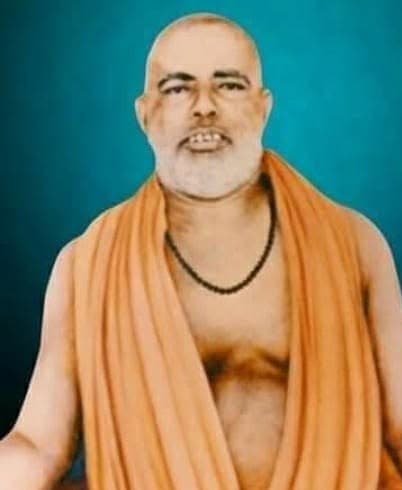
Sri Udiya Baba · Modern
Hindiभावार्थ— जिनके कल्मष (मल) नष्ट हो गये हैं, जिनके संशय दूर हो गये हैं। जिनका मन अपने अधीन है और जो सभी प्राणियों के हित में रत हैं वे ऋषि (तत्त्वदर्शी) ही ब्रह्मनिर्वाण प्राप्त करते हैं।
व्याख्या— सम्पूर्ण भूतों के हित में वही तत्पर होगा जो अहिंसक हो, राग-द्वेष से रहित हो, सबका भला चाहता हो तथा जिसका ऐसा सङ्कल्प हो कि सभी भगवान् के भक्त हो जाएँ। परन्तु सब भूतों का हित तो कोई नहीं कर सकता, क्योंकि सबका प्रारब्ध एक-सा नहीं होता। तथा ईश्वर ने जिसके लिये जो विधान निश्चित कर दिया है वह अमिट है। इसलिये यहाँ इसका अर्थ यह है कि सर्वभूतों का हित (प्रिय) भगवान् या आत्मा ही है, अतः जिसकी आत्मा या भगवान् में रति (प्रीति) है वही सर्वभूतहिते रत है। वही सबका प्यारा है, क्योंकि आत्मा सबका एक है, इसलिए जो आत्मा से प्रेम करता है वह सभी से प्रेम करता है। इसी से जो सन्त एकान्त में रहते हैं और किसी से कोई संपर्क नहीं रखते उनसे सभी प्रेम करते हैं। जब तक ये चारों विशेषण न हों किसी तत्त्वदर्शी को 'ऋषि' की पदवी नहीं मिलती। और इन गुणों से युक्त पुरुष को ही ब्रह्मनिर्वाण प्राप्त हो सकता है।
प्रश्न— ऋषि और मुनि में क्या अन्तर है?
उत्तर— जिन्हें वेद-मन्त्रों का साक्षात्कार हुआ है वे ऋषि हैं और जिन्हें मनन द्वारा आत्मा का साक्षात्कार हुआ है वे मुनि हैं। परन्तु किन्हीं-किन्हीं में ये दोनों ही बातें पायी जाती हैं तो वे दोनों ही उपाधियाँ प्राप्त कर लेते हैं जैसे श्रीनारदजी ऋषि भी हैं और मुनि भी।
प्रश्न— यहाँ 'छिन्नद्वैधा' का क्या अर्थ है?
उत्तर— आत्मा नित्य है अथवा अनित्य, जड़ है अथवा चेतन, ईश्वर और जीव में भेद है या अभेद तथा इस संसार की उत्पत्ति का कारण ईश्वर है या प्रकृति इत्यादि शंकाएँ ही 'द्वैधा' हैं, ये जिनकी निवृत्ति हो गयी हैं वे ही छिन्नद्वैधा हैं।
प्रश्न— प्रकृति, जीव, ईश्वर और ब्रह्म—इनमें परस्पर क्या अन्तर है?
उत्तर— प्रकृति सत् है, किन्तु जड़ है। जीव सत् और चैतन्य है, किन्तु उसमें अल्पकर्तृत्व और अल्पभोक्तृत्व है तथा ईश्वर सत्-
चित् तो है ही उसमें सर्वकर्तृत्व और सर्वभोक्तृत्व भी है। तथा ब्रह्म सत्-चित्-स्वरूप है, किन्तु उसमें कर्ताभोक्तापन नहीं है।
प्रश्न— ईश्वर और जीव में क्या अन्तर है?
उत्तर— ईश्वर सम्पूर्ण विभूतियों का स्वामी है और जीव विभूतियों के अधीन है। जीव अविद्या के वशीभूत है और ईश्वर मायापति है। जीव मानो मिट्टी के मकान में बन्द है और ईश्वर मानो काँच के मकान में बैठा हुआ है। अथवा 'गुणेष्वसक्तधीरीशः गुणसंगो विपर्ययः' अर्थात् जो गुणों में आसक्त नहीं है वह ईश्वर है और जो गुणों के अधीन है वह जीव है।
प्रश्न— क्या जीव और ईश्वर में एकता हो सकती?
उत्तर— जीव और ईश्वर की एकता नहीं हो सकती, क्योंकि इन दोनों के लक्षण विभिन्न हैं। जीव अल्प है और ईश्वर महान् है। हाँ, चेतनत्व की दृष्टि से इन दोनों में एकता है ही।'
प्रश्न— ब्रह्म और ईश्वर में क्या अन्तर है?
उत्तर— ब्रह्म निर्विशेष है और ईश्वर मायाविशिष्ट है। परन्तु तत्त्वतः ऐश्वर्य होने से जिसे भगवान् कहा जाता है, सबसे परे होने से उसी को परमात्मा कहते हैं, चैतन्यमात्र होने से वही ब्रह्म है और अपना-आप होने के कारण वही आत्मा है।
प्रश्न— ईश्वर और तत्त्ववेत्ता में क्या अन्तर है?
उत्तर— ईश्वर में सर्वकर्तृत्व और सर्वभोक्तृत्व है तो भी वह नित्यमुक्त है, किन्तु तत्त्ववेत्ता में अल्पकर्तृत्व और अल्पभोक्तृत्व होने पर भी वह जीवनमुक्त है। दोनों को उपाधियों में अन्तर है, स्वरूपपतः तो दोनों एक ही है।
Swami Ramsukhdas · Modern
Hindi'यतात्मानः'—नित्य सत्यतत्त्वकी प्राप्तिका दृढ़ लक्ष्य होनेके कारण साधकोंको शरीर-इन्द्रियाँ-मन-बुद्धि वशमें करने नहीं पड़ते, प्रत्युत ये स्वाभाविक ही सुगमतापूर्वक उनके वशमें हो जाते हैं। वशमें होनेके कारण इनमें राग-द्वेषादि दोषोंका अभाव हो जाता है और इनके द्वारा होनेवाली प्रत्येक क्रिया दूसरोंका हित करनेवाली हो जाती है।
शरीर-इन्द्रियाँ-मन-बुद्धिको अपने और अपने लिये मानते रहनेसे ही ये अपने वशमें नहीं होते और इनमें राग-द्वेष, काम-क्रोध आदि दोष विद्यमान रहते हैं। ये दोष
जबतक किंचिन्मात्र भी परिच्छिन्नता या व्यक्तित्व शेष है, तबतक वह तत्त्वनिष्ठ नहीं हुआ है। इसलिये इस अवस्थामें सन्तोष नहीं करना चाहिये।
'ब्रह्मनिर्वाणम्'—पदका अर्थ है—जिसमें कभी कोई हलचल हुई नहीं, है नहीं, होगी नहीं और हो सकती भी नहीं—ऐसा निर्वाण अर्थात् शान्त ब्रह्म।
जब ब्रह्मभूत सांख्ययोगीका व्यक्तित्व निर्वाण ब्रह्ममें लीन हो जाता है, तब एकमात्र निर्वाण ब्रह्म ही शेष रह जाता है अर्थात् साधक परमात्मतत्त्वके साथ अभिन्न हो जाता है—तत्त्वनिष्ठ हो जाता है, जो कि स्वतःसिद्ध है। ब्रह्मभूत अवस्थामें तो साधक ब्रह्ममें अपनी स्थितिका अनुभव करता है, पर व्यक्तित्वका नाश होनेपर अनुभव करनेवाला कोई नहीं रहता। साधक ब्रह्म ही होकर ब्रह्मको प्राप्त होता है—'ब्रह्मैव सन् ब्रह्माप्येति' (बृहदारण्यक० ४।४।६)।
जबतक विद्यमान रहते हैं, तबतक साधक स्वयं इनके वशमें रहता है। इसलिये साधकको चाहिये कि वह शरीरादिको कभी अपना और अपने लिये न माने। ऐसा माननेसे इनकी आग्रहकारिता समाप्त हो जाती है और ये वशमें हो जाते हैं। अतः जिनका शरीर-इन्द्रियाँ-मन-बुद्धिमें अपनेपनका भाव नहीं है तथा जो इन शरीरादिको कभी अपना स्वरूप नहीं मानते, ऐसे सावधान साधकोंके लिये यहाँ 'यतात्मानः' पद आया है।
'सर्वभूतहिते रताः'—सांख्ययोगकी सिद्धिमें व्यक्तित्वका अभिमान मुख्य बाधक है। इस व्यक्तित्वके
अभिमानको मिटाकर तत्त्वमें अपनी स्वाभाविक स्थितिका अनुभव करनेके लिये सम्पूर्ण प्राणियोंके हितका भाव होना आवश्यक है। सम्पूर्ण प्राणियोंके हितमें प्रीति ही उसके व्यक्तित्वको मिटानेका सुगम साधन है।
जो सर्वत्र परिपूर्ण परमात्मतत्त्वके साथ अभिन्नताका अनुभव करना चाहते हैं, उनके लिये प्राणिमात्रके हितमें प्रीति होनी आवश्यक है। जैसे अपने कहलानेवाले शरीरमें आकृति, अवयव, कार्य, नाम आदि भिन्न-भिन्न होते हुए भी ऐसा भाव रहता है कि सभी अंगोंको आराम पहुँचे, किसी भी अंगको कष्ट न हो, ऐसे ही वर्ण, आश्रम, सम्प्रदाय, साधन-पद्धति आदि भिन्न-भिन्न होते हुए भी सम्पूर्ण प्राणियोंके हितमें स्वाभाविक ही रति होनी चाहिये कि सबको सुख पहुँचे, सबका हित हो, कभी किसीको किंचिन्मात्र भी कष्ट न हो। कारण कि बाहरसे भिन्नता रहनेपर भी भीतरसे एक परमात्मतत्त्व ही समानरूपसे सबमें परिपूर्ण है। अतः प्राणिमात्रके हितमें प्रीति होनेसे व्यक्तिगत स्वार्थभाव सुगमतासे नष्ट हो जाता है और परमात्मतत्त्वके साथ अपनी अभिन्नताका अनुभव हो जाता है।
‘छिन्नद्वैधाः’—जबतक तत्त्वप्राप्तिका एक निश्चय दृढ़ नहीं होता, तबतक अच्छे-अच्छे साधकोंके अन्तःकरणमें भी कुछ-न-कुछ दुविधा विद्यमान रहती है। दृढ़ निश्चय होनेपर साधकोंको अपनी साधनामें कोई संशय, विकल्प, भ्रम आदि नहीं रहता और वे असंदिग्धरूपसे तत्परतापूर्वक अपने साधनमें लग जाते हैं।
**परिशिष्ट भाव**—लोगोंकी दृष्टिमें ज्ञानयोगी दूसरोंका हित करता हुआ (सर्वभूतहिते रताः) दीखता है, पर वास्तवमें वह दूसरोंका हित करता नहीं, प्रत्युत उसके द्वारा स्वतः-स्वाभाविक दूसरोंका हित होता है।
सम्बन्ध—चौबीसवें-पचीसवें श्लोकोंमें भगवान्ने सांख्ययोगके साधकोंद्वारा निर्वाण ब्रह्मको प्राप्त करनेकी बात कही। अब आगेके श्लोकमें यह बताते हैं कि निर्वाण ब्रह्मकी प्राप्ति होनेपर उसका कैसा अनुभव होता है?
The compound word chinna-dvaidha means those who are no longer influenced by dualities such as pleasure and pain, praise and ridicule, acceptance and rejection.
The word yatātmanaḥ means those who have conditioned their minds to focus on the ātma or soul.
The words sarva bhūta hite ratāḥ means those who always wish for all living beings the same happiness and righteousness as they would wish for themselves.
The word ṛṣayaḥ refers to the saintly sages who are focused and intent on obtaining ātma tattva or realisation of the soul. Those of this category abandon all impurities that are opposed to ātma realisation and by doing so they shortly attain the bliss of the ātma.
That the eternal ātma is very accessible and can be easily reached Lord Krishna will explain next.