

Bhagavad Gītā · Chapter 8 · Akṣara Brahma Yoga
कविं पुराणमनुशासितार
मणोरणीयांसमनुस्मरेद्यः
सर्वस्य धातारमचिन्त्यरूप
मादित्यवर्णं तमसः परस्तात्
kaviṃ purāṇamanuśāsitāra
maṇoraṇīyāṃsamanusmaredyaḥ|
sarvasya dhātāramacintyarūpa
mādityavarṇaṃ tamasaḥ parastāt||
Word meanings
यः = who
कविम् = the seer
पुराणम् = ancient
अनुशासितारम् = the ruler of all
अणोः = than the subtle
अणीयांसम् = subtler
सर्वस्य = of all
धातारम् = the sustainer
तमसः = than darkness
परस्तात् = beyond
आदित्यवर्णम् = radiant like the sun
अचिन्त्यरूपम् = of inconceivable form
अनुस्मरेत् = contemplates
Translation
He who contemplates on the all-wise, ageless Being, the Ruler of all, subtler than the subtle, the universal sustainer, possessing a Form beyond human conception, refulgent like the sun and far beyond the darkness of ignorance.
Commentary
The commentators seated around this verse
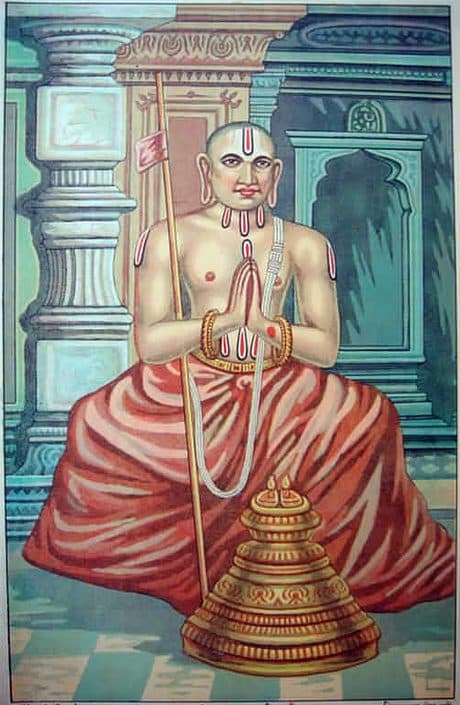
Rāmānuja · Viśiṣṭādvaita
English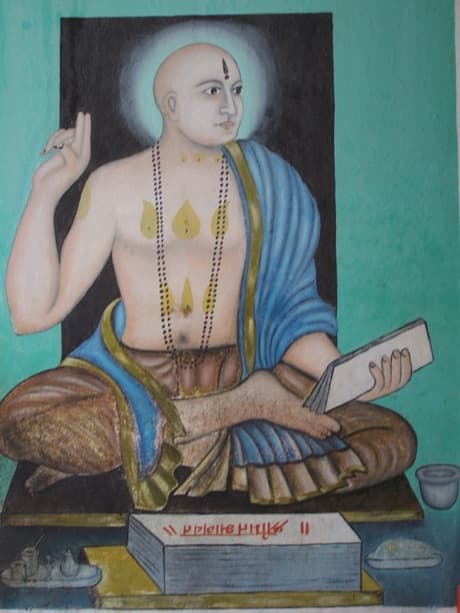
Madhvācārya · Dvaita
Madhva BhāṣyaSanskritEnglishOn verses 8.9–8.10
“ध्येयमाह - कवीम् इति | कावीम् सर्वज्ञम् - यः सर्वज्ञः इति हि श्रुति | त्वं कविः सर्ववेदनात्, इति ब्राह्मे | धातारम् - धारणपोषणकर्तारम् | दुधात्र धारणपोषणयोः इति धातोः | धाता विधाता परमोत सन्द्रग्न इति च श्रुतिः | ब्रह्मा स्थाणुः इत्यारभ्य, तस्यउसदास्छिन्ति तदादिष्टफलां गतिम् | इत्यादेश्च मोक्षधर्मे ||” - He speaks about the goal in this verse. kavi is the seer, all knower. ‘He who is all-knower’ thus in Brahma Puraana : “You are kavi, the all-knower, because of your knowing all things”. धातारम् means upholder, sustainer and the performer. धारण, पोषण have the roots दु, धा, and ज, “upholder, sustainer and the form of supreme wisdom”, thus in scriptures. “Commencing with Brahma and Rudra, all with His grace desiring the goal attain their desires”, thus in Moksha Dharma.
“तमसो अव्यक्तात् परतः स्थितम् | तमसः परस्तात् इति | अव्यक्तः वै तमः | परस्ताद्वि सत् ततः इति पिप्पलादशाखायाम् | मृत्युवाव तमः - मृत्युवै तमो ज्योतिरमृतम् इति श्रुतेः ||” - The Supreme Being is inconceivable by mind obscure transcending the manifest as well as the unmanifest - Prakriti.; unmanifest is indistinct, abiding supremely beyond, thus in Pippalada Samhita. Obscurity is verily death and Illumination verily immortality, thus in scriptures.
“वायुज्यादियोगयुक्तानां मृतिकालकर्तव्यमाह विशेषतः - प्रयाणकाल इति | वायुज्यादिरहितानामपि ज्ञानभक्तिवैराग्यसम्पूर्णानां भवत्येव मुक्तिः | तद्वतां त्वीपज्ञानाद्यसम्पूर्णानामपि निपुणानां तद्वलात् कथश्चिद् भवति || इति विशेषः ||” - The performance of actions at the time of death by those whose state (of equanimity being the victory over the breath etc.) is spoken here in this verse. Even for those who are bereft of victory over the breath etc. the full deliverance comes about through Wisdom, communion (Bhakti) and renunciation. Even in the absence of the fullness of Wisdom etc. deliverance comes about on the strength of equanimous attitude alone for these adepts.
“पानेन ते देवकथासुधायाः प्रवृद्धभक्त्या विशदाशया ये | वैराग्यसारं प्रतिलभ्य बोधं यथाऽज्जसा त्वाऽऽपुरकुण्ठधिष्ण्यम् | तथा परे त्वात्मसमाधियोगवलेन जित्वा प्रकृतिं बलिष्ठाम् | त्वामेव धीराः पुरुषं विशन्ते तेषां श्रमः स्यान्तु सेवयते || उक्तं च भागवते ||” - “O Lord ! Partaking the nectar like stories of Yours, prompted by devotion those who are pure in heart, have attained the wisdom which is the result of renunciation and also Yourself who is the dweller of Vaikuntha. While others having, through the method of equanimity of mind, won over the powerful Prakriti, the intelligent persons enter You alone. For them there is effort, not so for those who serve You”, thus in Bhagavat Puraana.
“ये तु तद्भाविता लोक एकान्तित्वं समाश्रिताः | एवदभ्यधिकं तेषां तत् तेजः प्रविशन्त्युत || इति च भागवते |” - “Those persons who propitiate You, taking refuge in single minded attention, attain Your presence, which is far superior to the one attained by others”, thus in Moksha Dharma. “संपूर्णानां भवेन्मोक्षो विरक्तिज्ञानभक्तिभिः | नियमेन तथाऽपीरजयादियुतयोगिनाम् | वश्यत्वान्मनसस्त्वीपत् पूर्वं मप्याते ध्रुवम् ||” - “Through complete observance of renunciation, knowledge and wisdom, deliverance is, surely, assured. But for those attuned to equanimity, deliverance is expeditiously available”, thus in Vyasa Yoga scripture text
Madhvācārya · Dvaita
Gītā Tātparya NirṇayaSanskritEnglishOn verses 8.9–8.10
“तमसः परस्तात् अप्राकृत देहः |” - तमसः परस्तत् means one who gone beyond the constraints, ignorance caused in the gross body.

Jñāneśvar · Vārkarī
EnglishOn verses 8.9–8.10
9 "Whoso would ponder upon that Primal Architect and Law-Giver, subtler than the subtle, the Sustainer of everything, whose form transcends thought, and who is effulgent like the Sun, and on the off-side of darkness: 10 "With steadfast mind, fixed in devotion, and by the power of Yogic practice correctly reposing, at the time of departure, the life-function (Prāna) betwixt the eyebrows: he attains that Person, Supreme and Divine. (86)
He, with tranquil mind, meditates at the time of his death, on the Perfect Brahman,—which is Pure Being without form or space, beyond birth and death, and all-pervading and all-seeing, which was prior to the sky itself, and which is more minute than an atom, and by whose power the Universe moves, which creates all that is visible, on which the entire Universe survives, from which reason turns away, and which is thus beyond the power of thought. It remains invisible darkness to the physical eye, even during day time, in the way the white ants cannot enter into fire, or darkness cannot enter into brilliance. It is Pure Being that is like a heap of pounded, cleaned (crushed) grain in the form of Sun's rays and which is ever an eternal light of seeing to persons that know, and in regard to which rising and setting are meaningless words. He, at the time of his death remembers, meditating with tranquil mind (on) the Supreme Brahman of such flawless and perfect form; and he sits in the position named “Padma” (पद्य) facing north, with his mind imbued with the eternal bliss of the Yoga of active life, and there eagerly awaits to be reabsored, with all his poses of mind united, in the essence of the Supreme Self, as speedily as he can, through his Yoga discipline, make the Sushumnā (name of a nādi or tubular vessel of the body) pass along the middle passage from the Ādhār to the region in the head known as Brahmarandhra; and when the life-wind named ‘Prāna’ enters the sky in the region of the head, he feels as merely an outwardly show, the union of the body and others with the mind; but he sustains himself on the strength of the tranquillity of his mind and gets full with deep devotion; and he exists as one perfect and ready, getting tried by the power of Yogic Discipline. He extinguishes all that is dense as well as subtle in the universe and abides concentrating the life-wind between the eye-brows. In such a tranquil state he leaves behind, his body (unperceived) in the way a light kept shut up under a pot gets extinguished or in the way the (metallic) sound of a bell gets extinguished in the bell itself. Such a one is the very Supreme Brahman. He abides in the form of the Self which is self-same and the very brilliance itself and which is known as the Supreme Male (Person) (परमपुरुष).
Swami Ramsukhdas · Modern
English'Kaviṁ'—The Lord, is Omniscient, because He knows all the beings, and their good and evil actions.
'Purāṇaṁ'—He is most ancient, because He is the origin of everything, sentient and insentient.
'Anuśāsitāraṁ'—He, is the Ruler and Illuminator of all the senses, mind, intellect and ego. Secondly, He through scriptures, preceptors and saints, guide men to perform their duties, and by creating favourable and unfavourable circumstances, according to their virtuous and evil actions, purifies them. He is called a Ruler, as He makes ordinance for prescription and prohibition, and also, destroys old actions, in the form of virtues and sins, by enabling them to reap their fruits.
'Aṇoraṇiyāṁsaṁ'—The Lord, is subtler, than even an atom. He is the subtlest of the subtle. He is, beyond the reach of mind and intellect. Even nature cannot be perceived, by them, because they are the evolutes of Nature. So, how can they have, an access to the subtlest Lord?
'Sarvasya dhātāraṁ'—He, is the supporter and sustainer of infinite universes. So He is called, the sustainer of all.
'Tamasaḥ parastāt'—He is, supremely above and beyond, the darkness of ignorance. He is also the illuminator of ignorance.
'Ādityavarṇam'—His colour, is like the sun i.e., just like the shining sun, the Lord is the illuminator of minds and intellects, of all beings. All beings, receive light from Him.
'Acintyarūpam'—His form, is inconceivable, to the mind and intellect.
'Anusmaret'—It means, that one should contemplate, on God. God knows all the beings and so He remembers them. Therefore, they should also remember Him.
Now, a doubt arises, as to how, to think of Him, when He is inconceivable. The clarification is, that a firm belief, that He is inconceivable, is in fact, the thought of Him.
Appendix—God has been called 'kavim' (omniscient) because there is nothing beyond His knowledge. He has been called 'purāṇam' because He is beginningless, He transcends the limits of time viz., is the illuminator of time. He has been called 'anuśāsitāram' because all are naturally governed by Him. He is the ruler of both—the individual soul and the world—
kṣaram pradhānamamṛtākṣaram haraḥ kṣarātmānaviśate deva ekaḥ
'Prakṛti is perishable and the soul, which enjoys it, is immortal and imperishable. God governs over these two—the perishable and the imperishable.'
The term—dhātāram' means that God sustains all beings (Gītā 15/17). The term 'ādityavarṇam' means that as there is naturally light in the sun always, similarly in God naturally there is always knowledge and enlightenment. God is an embodiment of knowledge and illumines the entire universe (Gītā 13/33). 'tamasaḥ parastāt'—this expression means that God transcends ignorance or aparā (the lower nature)—'yasmātkṣaramatīto'ham' (Gītā 15/18).
*Link:—In the next verse, Lord Kṛṣṇa explains, how a devotee according to the thought, which he has at the time of death, reaches Him.*

Ādi Śaṅkarācārya · Advaita
Sanskritकविं क्रान्तदर्शिनं सर्वज्ञं पुराणं चिरन्तनं अनुशासितारं सर्वस्य जगतः प्रशासितारं अणोः सूक्ष्मादपि अणीयांसं सूक्ष्मतरम् अनुस्मरेत् अनुचिन्तयेत् यः कश्चित्, सर्वस्य कर्मफलजातस्य धातारं विधातारं विचित्रतया प्राणिभ्यो विभक्तारम्, अचिन्त्यरूपं न अस्य रूपं नियतं विद्यमानमपि केनचित् चिन्तयितुं शक्यते इति अचिन्त्यरूपः तम्, आदित्यवर्णं आदित्यस्येव नित्यचैतन्यप्रकाशो वर्णो यस्य तं आदित्यवर्णम्, तमसः परस्तात् अज्ञानलक्षणात् मोहान्धकारात् परं तं अनुचिन्तयन् याति इति पूर्वेण सम्बन्धः ॥ किञ्च --
Ādi Śaṅkarācārya · Advaita
Hindiकिन लक्षणोंसे युक्त परम पुरुषको (योगी) प्राप्त होता है? इसपर कहते हैं—
जो पुरुष भूत, भविष्यत् और वर्तमानको जाननेवाले—सर्वज्ञ, पुरातन, सम्पूर्ण संसारके शासक और अणुसे भी अणु यानी सूक्ष्मसे भी सूक्ष्मतर परमात्माका, जो कि सम्पूर्ण कर्मफलका विधायक अर्थात् विचित्ररूपसे विभाग करके सब प्राणियोंको उनके कर्मोंका फल देनेवाला है तथा अचिन्त्यस्वरूप अर्थात् जिसका स्वरूप नियत और विद्यमान होते हुए भी किसीके द्वारा चिन्तन न किया जा सके ऐसा है एवं सूर्यके समान वर्णवाला अर्थात् सूर्यके समान नित्य चेतन प्रकाशमय वर्णवाला है और अज्ञानरूप मोहमय अन्धकारसे सर्वथा अतीत है, उसका बारम्बार स्मरण करता है।
(वह) उसका स्मरण करता हुआ उसीको प्राप्त होता है, इस प्रकार पूर्वश्लोकसे सम्बन्ध है
Jñāneśvar · Vārkarī
Marathiजयाचें आकारावीण असणें । जया जन्म ना निमणें । जें आघवेंचि आघवेपणें । देखत असे ॥ ८६॥
जें गगनाहून जुनें । जं परमाणूहूनि सानें । जयाचेनि सान्निधानें । विश्व चळे ॥ ८७॥
जें सर्वांतें यया विये । विश्व सर्व जेणें जिये । हेतु जया बिहे । अचिंत्य जें ॥ ८८॥
देखे वोळंबा इंगळु न चरे । तेजीं तिमिर न शिरे । जें दिहाचें आंधारें । चर्मचक्षूसीं ॥ ८९॥
सुसडा सूर्यकणांच्या राशी । जो नित्य उदो ज्ञानियांसी । अस्तमानाचें जयासी । आडनांव नाहीं ॥ ९०॥
Jñāneśvar · Vārkarī
Hindi(8.86) – जिसकी स्थिति आकाररहित है, जिसे जन्म अथवा मरण नहीं है, जो सर्वत्र व्यापक हो देख रहा है,
(8.87) जो आकाश से भी पुराना है, जो परमाणु से भी सूक्ष्म है, जिसके सान्निध्य के कारण जगत् हलचल करता है,
(8.88) जो सब जगत् को उत्पन्न करता है, जो सब जगत् का जीवन है, जो ऐसा अचिन्त्य है कि उससे शास्त्र का अनुमान भी डरता है,
(8.89) जैसे दीमक कभी अग्नि नहीं खाती, अथवा प्रकाश में कभी अंधेरा नहीं घुस सकता (वैसे ही जिसका अनुमान नहीं हो सकता), जो बाह्य-दृष्टि के लिए दिन-दोपहर ही अन्धकार के समान है,
(8.90) जो निर्मल सूर्यकिरणों की राशि के समान है, ज्ञानियों को जिसका नित्य उदय है और जिसमें अस्तमान का ना ही नहीं है,
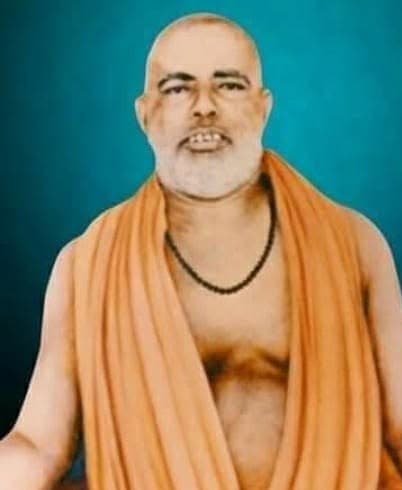
Sri Udiya Baba · Modern
HindiOn verses 8.9–8.10
भावार्थ— जो पुरुष प्राण-प्रयाण के समय प्राणों को भले प्रकार भ्रूमध्य में स्थापित कर भक्तिपूर्वक और योगबल से एकाग्र मन से उस कवि (सर्वज्ञ), पुरातन, सबके अनुशासक, अणु से भी अणु सबको धारण करने वाले, अचिन्त्य रूप, सूर्य के समान प्रकाशस्वरूप और अज्ञानान्धकार से अतीत परम पुरुष का निरन्तर स्मरण करता है, वह उस दिव्य पुरुष की ही प्राप्त कर लेता है।
व्याख्या— कवि-सब ओर से देखने वाला अथवा प्राणिमात्र के हृदय में विराजमान होकर उनके शुभाशुभ कर्मों को जानने वाला। पुराण-सबका आदिकारण। अनुशासिता—सबका अनुशासन करने वाला, जिसके भय से सूर्य चन्द्रमा आदि भी अपने-अपने व्यापारों में लगे हुए हैं तथा सब के शुभाशुभ कर्मों का फल देने वाला है। अणोरणीयान्—इसके साथ 'महतो महीयान्'—भी समझना चाहिए। अर्थात् जो अणु से अणु और महान् से महान् है। धाता-सबका धारण-पोषण करने वाला। अचिन्त्यरूप—निर्विशेष होने के कारण जिसके स्वरूप का चिन्तन नहीं हो सकता। आदित्यवर्ण—सूर्य के-से वर्णवाला, अर्थात् प्रकाशस्वरूप। तमसः परस्तात्—अन्धकार या अज्ञान से परे। भगवान् अचिन्त्य क्यों है? क्योंकि चिन्तन भाव या अभाव का हो सकता है और वे इन दोनों के आधार हैं, इसलिये अचिन्त्य हैं, किन्तु सगुण रूप में वे चिन्त्य भी हैं। श्री गोसाई जी कहते हैं—
अगुण अनाम अलेख एक रस। राम सगुन भये भगत प्रेम बस॥
उस परम पुरुष का जो स्मरण करता है तथा अन्तकाल में योग बल से इन्द्रियों को वश में करके भोहों के बीच में प्राणों को भले प्रकार स्थित करके निश्चल मन से ध्यान करता है वह उसी को प्राप्त हो जाता है। इस प्रकार का चिन्तन वही कर सकता है जिसने प्राण, बुद्धि को अपने अधीन कर लिया है।
प्रश्न— भूमध्य में प्राण रोकने का क्या आशय है?
उत्तर— यह चित्त को एकाग्र करने की एक प्रक्रिया है। प्राण को रोक कर तो सभी बैठ सकते हैं। परन्तु यहाँ भक्ति-समन्वित योग का वर्णन है। दीर्घकाल से अभ्यास करने वाले का प्राण तो सिद्धासन लगाकर बैठने से ही सुषुम्ना में चला जाता है। उसके पूर्व और पश्चिम दो मार्ग हैं। पश्चिम मार्ग में वायु खुल जाने से तीव्र वैराग्य की जागृति होती है और फिर षट्चक्र भेदन करे समाधि की प्राप्ति होती है। किन्तु पूर्व मार्ग में वायु खुलने से वैराग्य ढीला पड़ जाता है। परमार्थ के तीन मार्ग हैं—योग, भक्ति और ज्ञान। किसी में ये तीनों मार्ग पाये जाते हैं, किन्हीं में दो और किन्हीं में एक ही मार्ग खुलता है।
Swami Ramsukhdas · Modern
Hindi‘कविम्’—सम्पूर्ण प्राणियोंको और उनके सम्पूर्ण शुभाशुभ कर्मोंको जाननेवाले होनेसे उन परमात्माका नाम ‘कवि’ अर्थात् सर्वज्ञ है।
‘**पुराणम्**’—वे परमात्मा सबके आदि होनेसे ‘पुराण’ कहे जाते हैं।
‘**अनुशासितारम्**’—हम देखते हैं तो नेत्रोंसे देखते हैं।
नेत्रोंके ऊपर मन शासन करता है, मनके ऊपर बुद्धि और बुद्धिके ऊपर ‘अहम्’ शासन करता है तथा ‘अहम्’ के ऊपर भी जो शासन करता है, जो सबका आश्रय, प्रकाशक और प्रेरक है, वह (परमात्मा) ‘अनुशासिता’ है।
दूसरा भाव यह है कि जीवोंका कर्म करनेका जैसा-जैसा स्वभाव बना है, उसके अनुसार ही परमात्मा (वेद,
शास्त्र, गुरु, सन्त आदिके द्वारा) कर्तव्य-कर्म करनेकी आज्ञा देते हैं और मनुष्योंके पुराने पाप-पुण्यरूप कर्मोंके अनुसार अनुकूल-प्रतिकूल परिस्थिति भेजकर उन मनुष्योंको शुद्ध, निर्मल बनाते हैं। इस प्रकार मनुष्योंके लिये कर्तव्य-अकर्तव्यका विधान करनेवाले और मनुष्योंके पाप-पुण्यरूप पुराने कर्मोंका (फल देकर) नाश करनेवाले होनेसे परमात्मा 'अनुशासिता' हैं।
'अणोरणीयांसम्'—परमात्मा परमाणुसे भी अत्यन्त सूक्ष्म हैं। तात्पर्य है कि परमात्मा मन-बुद्धिके विषय नहीं हैं; मन-बुद्धि आदि उनको पकड़ नहीं पाते। मन-बुद्धि तो प्रकृति-का कार्य होनेसे प्रकृतिको भी पकड़ नहीं पाते, फिर परमात्मा तो उस प्रकृतिसे भी अत्यन्त परे हैं! अतः वे परमात्मा सूक्ष्मसे भी अत्यन्त सूक्ष्म हैं अर्थात् सूक्ष्मताकी अन्तिम सीमा हैं।
'सर्वस्य धातारम्'—परमात्मा अनन्तकोटि ब्रह्माण्डोंको धारण करनेवाले हैं, उनका पोषण करनेवाले हैं। उन सभीको परमात्मासे ही सत्ता-स्फूर्ति मिलती है। अतः वे परमात्मा सबका धारण-पोषण करनेवाले कहे जाते हैं।
'तमसः परस्तात्'—परमात्मा अज्ञानसे अत्यन्त परे हैं, अज्ञानसे सर्वथा रहित हैं। उनमें लेशमात्र भी अज्ञान नहीं
परिशिष्ट भाव—परमात्माको 'कविम्' कहनेका तात्पर्य है कि उसके ज्ञानके बाहर कुछ भी नहीं है। 'पुराणम्' कहनेका तात्पर्य है कि वह अनादि है, कालसे भी अतीत अर्थात् कालका भी प्रकाशक है। 'अनुशासितारम्' कहनेका तात्पर्य है कि सब स्वाभाविक ही उसके शासनमें हैं। वह जीव और जगत्—दोनोंका ही शासक है—
क्षरं प्रधानममृताक्षरं हरः क्षरात्मानावीशते देव एकः। (श्वेताश्वतरः १।१०)
'प्रकृति तो विनाशशील है और इसको भोगनेवाला जीवात्मा अमृतस्वरूप अविनाशी है। इन दोनों—(विनाशशील और अविनाशी-) को एक ईश्वर अपने शासनमें रखता है।'
'धातारम्' कहनेका तात्पर्य है कि वह परमात्मा सबका पालन-पोषण करनेवाला है (गीता—पन्द्रहवें अध्यायका सत्रहवाँ श्लोक)। 'आदित्यवर्णम्' कहनेका तात्पर्य है कि जैसे सूर्यमें स्वतः-स्वाभाविक नित्य प्रकाश रहता है, ऐसे ही परमात्मामें स्वतः-स्वाभाविक नित्य ज्ञान, बोध रहता है। वह परमात्मा ज्ञानस्वरूप है और सबका प्रकाशक है (गीता—तेरहवें अध्यायका तैंतीसवाँ श्लोक)। 'तमसः परस्तात्' कहनेका तात्पर्य है कि वह परमात्मा अज्ञानसे अथवा अपरासे अत्यन्त परे है—'यस्मात्क्षरमतीतोऽहम्' (गीता १५।१८)।
सम्बन्ध—अब अन्तकालके चिन्तनके अनुसार गति बताते हैं।
प्रयाणकाले मनसाचलेन भक्त्या युक्तो योगबलेन चैव।
Lord Krishna begins with the word kaviṃ meaning omniscient. Sarvasya meaning of everything refers to He who is omniscient of everything. Purāṇam means primeval or beginningless. Anuśāsitāram means the establisher of the rules of creation.
Dhātāram means the maintainer and sustainer of all. Acintya-rūpam means possessing an inconceivable form means not conceivable by comparing it with anything in the material existence.
Āditya-varnam means possessing a self-luminous resplendent and glorious divine glow far beyond our limited material conceptions.