

Bhagavad Gītā · Chapter 8 · Akṣara Brahma Yoga
ओमित्येकाक्षरं ब्रह्म व्याहरन्मामनुस्मरन्
यः प्रयाति त्यजन्देहं स याति परमां गतिम्
omityekākṣaraṃ brahma vyāharanmāmanusmaran|
yaḥ prayāti tyajandehaṃ sa yāti paramāṃ gatim||
Word meanings
for verses 8.12–8.13
सर्वद्वाराणि = all the gates of the senses
संयम्य = restraining
मनः = mind
हृदि = in the heart
निरुध्य = confining
च = and
आत्मनः = of the self
प्राणम् = life-breath
मूर्ध्नि = in the head
आधाय = placing
योगधारणाम् = in yogic concentration
आस्थितः = established
यः = who
ओम् = Om
इति = thus
एकाक्षरम् = the one syllable
ब्रह्म = Brahman
व्याहरन् = uttering
माम् = Me
अनुस्मरन् = remembering
देहम् = body
त्यजन् = leaving
प्रयाति = departs
सः = that
पराम् = supreme
गतिम् = state
याति = attains
Translation
Having closed all the doors of the senses, and firmly holding the mind in the cavity of the heart, and then fixing the life-breath in the head, and thus remaining steadfast in Yogic concentration on God, he who leaves the body and departs uttering the one indestructible Brahma, Om, and dwelling on Me in My absolute aspect, reaches the supreme goal.
verses 12–13
Commentary
The commentators seated around this verse
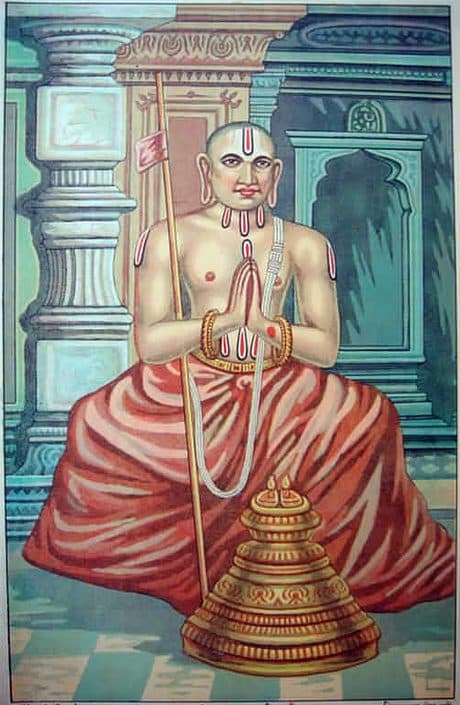
Rāmānuja · Viśiṣṭādvaita
English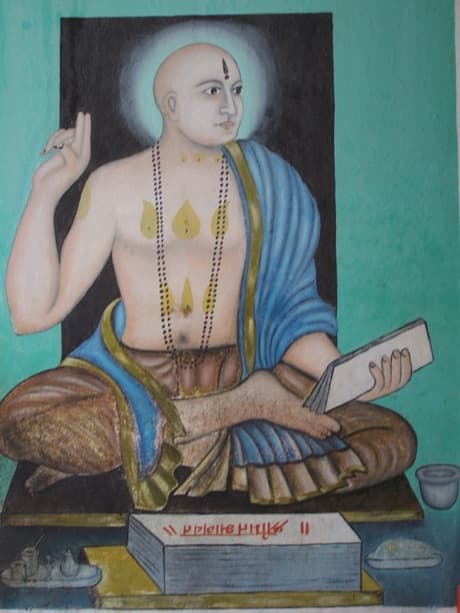
Madhvācārya · Dvaita
Madhva BhāṣyaSanskritEnglishOn verses 8.11–8.13
“तदेव सध्येयं प्रपञ्चयति - यदक्षरम् इत्यादिना | प्राप्यते मुमुक्षिभिः इति पदम् स्वरूपम् | पदलु गतौ, इति धातोः | तद् विष्णोः परमं पदम् इति श्रुतेश्च | गीयसे पदमित्येव मुनिभिः पद्यसे यतः | इति नारादीये ||” - The noble goal is explained explaining the immutable nature of the Lord. Since the aspirants attain that form, it is said to be पदम्. Since that state is reached it is designated by the root गतौ. “That supreme state which is Sri Vishnu”, thus in various scriptures. Since this state is acquired by ascetics, that state is पदम्, the state” thus in Narada Puraana.
“ब्रह्मनाडी विना यद्यन्यत्र गच्छति तर्हि विना मोक्षं स्थानान्तरं प्राप्नोति इति सर्वद्वाराणि संयम्य | निर्गं च्छश्चक्षुषा सूर्यं दिशः श्रोत्रेण चैवहि | इत्यादिवचनाद् व्यासयोगे मोक्षधर्मे च || हृदि नारायणे - हीयते त्वया जगद् यस्माद्वदित्येवं प्रभाप्यसे || इति हि पादमे | नहि मूर्ध्नि प्राणस्थितेः हृदि मनसः स्थितिः सम्भवति | यत्र प्राणो मनस्तत्र तत्र जीवः परस्तथा || इति व्यासयोगे | योगधारणामादिस्थतः योगभरण एवाभियुक्त इत्यर्थः ||” - Except through the Brahmanaadi, when the life goes over to other stages, the Jiva gets displaced without attaining deliverance. As said in Vyasa Yoga and Moksha Dharma, “When the Jiva goes through eyes, he goes to the Sun, similarly through the ears etc...”. hridi, in the heart means in Sriman Narayana. Thus, in Padma Puraana - “Attracts this world towards Yourself, therefore, You are known as the heart”. When the Primal Breath is stationed in the head, it is not possible to abide in the Heart, thus, in Vyas Yoga. “Wherever the Primal Breath abides, even there the Jiva and the Mind abide”. The one who is concentrating on equanimity he is fully equipped for equanimity. This is the meaning:
Madhvācārya · Dvaita
Gītā Tātparya NirṇayaSanskritEnglishOn verses 8.11–8.13
“मन आदिनां ब्रह्मणि चरणं ब्रह्मचर्यम् ।” – Brahmacharya means attuning one's mind etc. at the feet of the Lord. “एकाक्षरवच्चत्वादेकाक्षरं परं ब्रह्म ।” – Singular and immutable is the supreme Brahman.
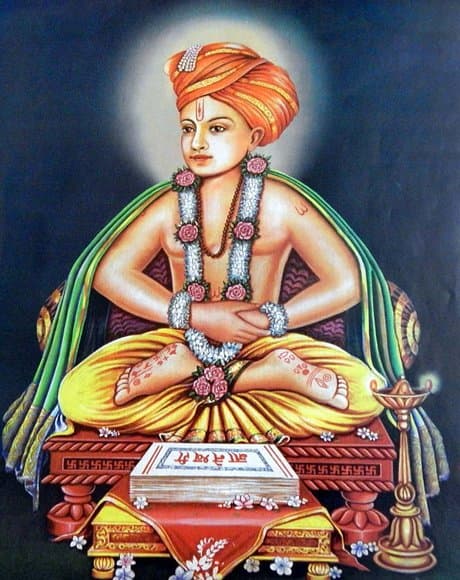
Jñāneśvar · Vārkarī
English13 'Repeating 'Om', (which is) the Brahman (in the form) of the Mono-syllable, and meditating upon Me, whoso departs, shedding off the body: he attains the Highest Goal. (117)
Then the life-wind should be steadied in the sky region (in the head) so that as the union is complete (with the sacred 'Om') the entire 'Om' (ओम) is in tune with the original Supreme Brahman. Then even the meditation of the Sacred Om stops and the life-breath itself is brought to rest; there is then left the pure form of the essence of the Supreme Brahman. What is called Pranava (Sacred 'Om') is only the mono-syllabic form of My own self. And one who leaves his body while meditating on this sacred letter 'Om' (Supreme), definitely reaches My pure essence and when this is reached, there remains nothing beyond it to reach. Now, Oh Arjuna, if there be a doubt haunting your mind as to how they remember Me, without fail, at the time of death,—doubt as to who would prepare and occupy the seat, who would restrain the senses, what mind could meditate upon the sacred 'Om', at a moment when the organs are all out of joint, the happy and contented state of the life has yielded place to vivid signs of death eclipsing the body internally and externally—you dispel all doubt in your mind and be assured that at the ebbing of life of one who uninterruptedly dedicated his life to meditation on Me, I am his servant to do his bidding.
Swami Ramsukhdas · Modern
EnglishOn verses 8.12–8.13
'Sarvadvārāṇi saṃyūnya'—(At the time of death), one should restrain all the media of perception (should close all the gates of the body), i.e., he should restrain his ears, skin, eyes, tongue and nose from the five senses of sound, touch, colour (form), taste and smell; and five organs of action—tongue, hands, feet, anus and generative organ, from acting, speaking, taking, going, passing stools and urine. Thus, the senses will be restrained.
'Mano hṛdi niradhya ca'—The mind should be fixed in the heart, so that it may not hanker after sensual pleasures.
'Mūrdhuyādhāyātmanaḥ prāṇam'—He, should fix his life-breath, in the head i.e., by controlling his life-breath, he should fix it in 'Brahmarandhra', the suture on the top of the head.
'Āsthito yogadhāraṇām'—He should become steadfast, in Yogic concentration i.e., he should neither use his sense-organs, in performing actions, nor think with his mind, and have a full command, over his life-breath.
'Omityekāksaraṃ brahma vyāharanmāmanusmaran'—After it, he should chant the one syllabled Brahma 'Om', with his mind and think of the Supreme Imperishable Brahma, Who is attributeless-formless (Who has been described in the third verse of this chapter). The thought about Him, is that He pervades everywhere, all the things, persons, incidents and circumstances etc., end at all times.
'Yaḥ prayāti tyajandehaṃ sa yāti paramāṃ gatim'—He, who thinking of the attributeless and formless Lord, departs leaving the body (i.e., his life-breath passes through the tenth exit), attains the Supreme Goal viz., the attributeless and formless Lord.
Appendix—In the verses there is the description of the non-
dualistic Yogī who practises yoga. The term 'Vyāharan' should mean mental pronunciation (utterance), because when the mind is fixed in the heart and the life-breath is fixed in the head, an articulate utterance is impossible.
*Link:—The above-mentioned method, of attaining the attributeless and formless Lord, which is subject to practice, for a long time, is difficult to practise, for a common man. Therefore, Lord Kṛṣṇa, in the next verse, explains an easy method, to attain the Lord, endowed with attributes and form.*
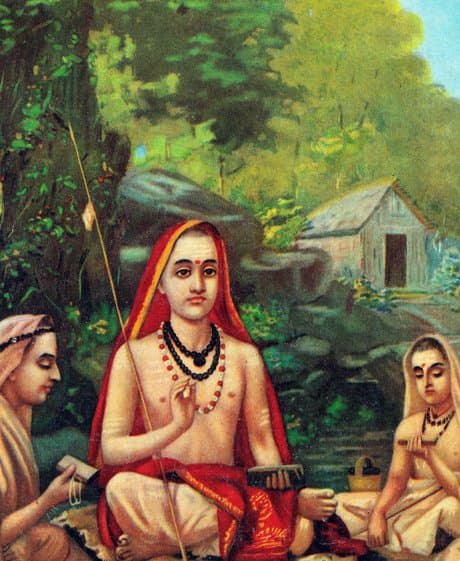
Ādi Śaṅkarācārya · Advaita
Sanskritओमिति एकाक्षरं ब्रह्म ब्रह्मणः अभिधानभूतं ओङ्कारं व्याहरन् उच्चारयन्, तदर्थभूतं मां ईश्वरं अनुस्मरन् अनुचिन्तयन् यः प्रयाति म्रियते, सः त्यजन् परित्यजन् देहं शरीरं -- ``त्यजन् देहम्'' इति प्रयाणविशेषणार्थम् देहत्यागेन प्रयाणं आत्मनः, न स्वरूपनाशेनेत्यर्थः -- सः एवं याति गच्छति परमां प्रकृष्टां गतिम् ॥ किञ्च --
Ādi Śaṅkarācārya · Advaita
Hindiउसी जगह (प्राणोंको) स्थिर रखते हुए—
‘ओम्’ इस एक अक्षररूप ब्रह्मका अर्थात् ब्रह्मके स्वरूपका लक्ष्य करानेवाले ओंकारका उच्चारण करता हुआ और उसके अर्थरूप मुझ ईश्वरका चिन्तन करता हुआ जो पुरुष शरीरको छोड़कर जाता है अर्थात् मरता है,
वह इस प्रकार शरीरको छोड़कर जानेवाला परम गतिको पाता है। यहाँ ‘त्यजन्देहम्’ यह विशेषण ‘मरण’ का लक्ष्य करानेके लिये है। अभिप्राय यह कि देहके त्यागसे ही आत्माका मरण है, स्वरूपके नाशसे नहीं
Jñāneśvar · Vārkarī
Marathiतैसें ॐ हें स्मरों सरे । आणि तेथेंचि प्राणु पुरे । मग प्रणवांतीं उरे । पूर्णघन जें ॥ ११७॥
म्हणोनि प्रणवैकनाम । हें एकाक्षर ब्रह्म । जो माझें स्वरूप परम । स्मरतसांता ॥१ १८॥
यापरी त्यजी देहातें । तो त्रिशुद्धी पावे मातें । जया पावनया परौतें । आणिक पावणें नाहीं ॥ ११९॥
तेथे अर्जुना जरी विपायें । तुझ्या जीवीं हन ऐसें जाये । ना हें स्मरण मग होये । कायसयावरी अंती ॥ १२०॥
इंद्रियां अनुघडु पडलिया । जीवितचें सुख बुडालिया । आंतुबाहेरी उघडलिया । मृत्युचिन्हें ॥ १२१॥
ते वेळीं बैसवेंचि कवणें । मग कवण निरोधी करणें । तेथे काह्याचेनि अंतकःरणें । प्रणव स्मरावा ॥ १२२॥
तरि गा ऐशिया ध्वनी । झणें थारा देशी हो मनीं । पैं नित्य सेविला मी निदानीं । सेवकु होयें ॥ १२३॥
Jñāneśvar · Vārkarī
Hindi(8.117) वैसे ही जब ओंकार का भी स्मरण बन्द हो जाता है और उसी समय प्राण भी निकल जाता है तब ओंकार के परे जो ब्रह्मानन्द-स्वरूप है वही बच रहता है। (8.118) अतएव, एक प्रणव ही जिसका नाम है, ऐसा जो एकाक्षर ब्रह्म, जो मेरा स्वरूप है उसका स्मरण करते हुए
(8.119) जो मनुष्य उपर्युक्त प्रकार से देह का त्याग करता है वह निश्चय से मुझे प्राप्त कर लेता है, जिसकी प्राप्ति के सिवाय और अधिक कोई लाभ नहीं है।
(8.120) हे अर्जुन! इस पर यदि तुम यह कहो कि अन्तकाल में यह स्मरण कैसे हो सकता है,
(8.121) इन्द्रियगणों को कष्ट हो रहा है, जीवन का सुख डूब रहा है, अन्तर-बाह्य मृत्यु के चिह्न प्रकट हो रहे हैं,
(8.122) उस समय कौन आसन डाल सकता है, कौन इन्द्रियों का निरोध कर सकता है, तथा किसका अन्तःकरण ओंकार का स्मरण कर सकता है?
(8.123) ऐसी आशंका को मन में स्थान मत दो, क्योंकि नित्य मेरी सेवा करनेवालों का निदान में, मैं ही सेवक बन जाता हूँ।
Sri Udiya Baba · Modern
HindiOn verses 8.12–8.13
संगति— अब हठयोगी के प्राण त्याग की प्रक्रिया बतलाते हैं—
भावार्थ— जो सम्पूर्ण इन्द्रिय-द्वारों को रोक कर, मन को हृदय में स्थापित कर, प्राणों को मूर्धा में ठहरा कर तथा योग-धारणा में स्थित होकर ॐ इस एकाक्षर ब्रह्म का उच्चारण करते तथा मेरा निरन्तर स्मरण करते हुए देह को त्याग कर जाता है, वह परम गति को प्राप्त होता है।
व्याख्या— यह प्रक्रिया उनके लिये है जो योग-मार्ग से देहत्याग करते हैं। यहाँ मन, प्राण और शरीर का निरोध बतलाया है। इसमें ध्यान योग की ही प्रधानता है। ‘व्याहरन्’-बोलते हुए और ‘अनुस्मरन्’- निरन्तर स्मरण करते हुए—इन दोनों शब्दों का प्रयोग होने से जान पड़ता है कि वह जप और ध्यान दोनों करता है।
प्रश्न— क्या जप और ध्यान दोनों एक साथ हो सकते हैं?
उत्तर— हाँ, जैसे हम तुमको देख भी रहे हैं और बातें भी कर रहे हैं।
Swami Ramsukhdas · Modern
HindiOn verses 8.12–8.13
'सर्वद्वाराणि संयम्य'—(अन्तसमयमें) सम्पूर्ण इन्द्रियोंके द्वारोंका संयम कर ले अर्थात् शब्द, स्पर्श, रूप, रस और गन्ध—इन पाँचों विषयोंसे श्रोत्र, त्वचा, नेत्र, रसना और नासिका—इन पाँचों ज्ञानेन्द्रियोंको तथा बोलना, ग्रहण करना, गमन करना, मूत्र-त्याग और मल-त्याग—इन पाँचों क्रियाओंसे वाणी, हाथ, चरण, उपस्थ और गुदा—इन पाँचों कर्मेन्द्रियोंको सर्वथा हटा ले। इससे इन्द्रियाँ अपने स्थानमें रहेंगी।
'मनो हृदि निरुध्य च'—मनका हृदयमें ही निरोध कर ले अर्थात् मनको विषयोंकी तरफ न जाने दे। इससे मन अपने स्थान-(हृदय-) में रहेगा।
'मूर्ध्न्याध्यात्मनः प्राणम्'—प्राणोंको मस्तकमें धारण कर ले अर्थात् प्राणोंपर अपना अधिकार प्राप्त करके दसवें द्वार—ब्रह्मरन्ध्रमें प्राणोंको रोक ले।
'आस्थितो योगधारणाम्'—इस प्रकार योगधारणामें
परिशिष्ट भाव—इन श्लोकोंमें योगाभ्यास करनेवाले अद्वैतवादीका वर्णन है। 'व्याहरन्' पदसे मानसिक उच्चारण समझना चाहिये; क्योंकि मनका हृदयमें निरोध करनेपर तथा प्राणोंको मस्तकमें स्थापित करनेपर वाचिक उच्चारण होना असम्भव है।
सम्बन्ध—जिसके पास योगका बल होता है और जिसका प्राणोंपर अधिकार होता है, उसको तो निर्गुण-निराकारकी प्राप्ति हो जाती है; परन्तु दीर्घकालीन अभ्यास-साध्य होनेसे यह बात सबके लिये कठिन पड़ती है। इसलिये भगवान् आगेके श्लोकमें अपनी अर्थात् सगुण-साकारकी सुगमतापूर्वक प्राप्तिकी बात कहते हैं।
अनन्यचेताः सततं यो मां स्मरति नित्यशः।
Systematically vibrating the singular syllable OM vibrated as A-U-M. It is the personal sign, symbol and sound of the akṣaram or imperishable. OM is the indicator and Lord Krishna is the indicated, who is to be to be profoundly and humbly meditated upon.
Whomsoever departs from this life at the moment of death fixing the prāṇa or life force in the crown of their head in the manner so indicated goes to the exalted, eternal spiritual worlds.
The words paramam gatim mean the supreme destination from where there is no return, granting mokṣa or liberation and includes ātma tattva or realisation of the soul,
which is in essence comparable to the Supreme Lord and contra distinguished from matter and everything material. More evidence of this will be given later in this chapter in verses 20 and 21:
“They describe that as the highest goal of the ātman, which is not destroyed when all things are destroyed, which is unmanifest and imperishable.” (8.20-21).
So the method of meditation for those who are atharthi or seekers of fortune and for those who are jijnansur or those aspiring realisation of the soul has been duly given being similar.
Next the method of divine meditation suited for the jñāni or the aspirant for the Supreme Lord and the nature of their goal will be revealed.